Addition Practice Worksheets for Ages 5-7 - Page 2
191 filtered results
-
From - To
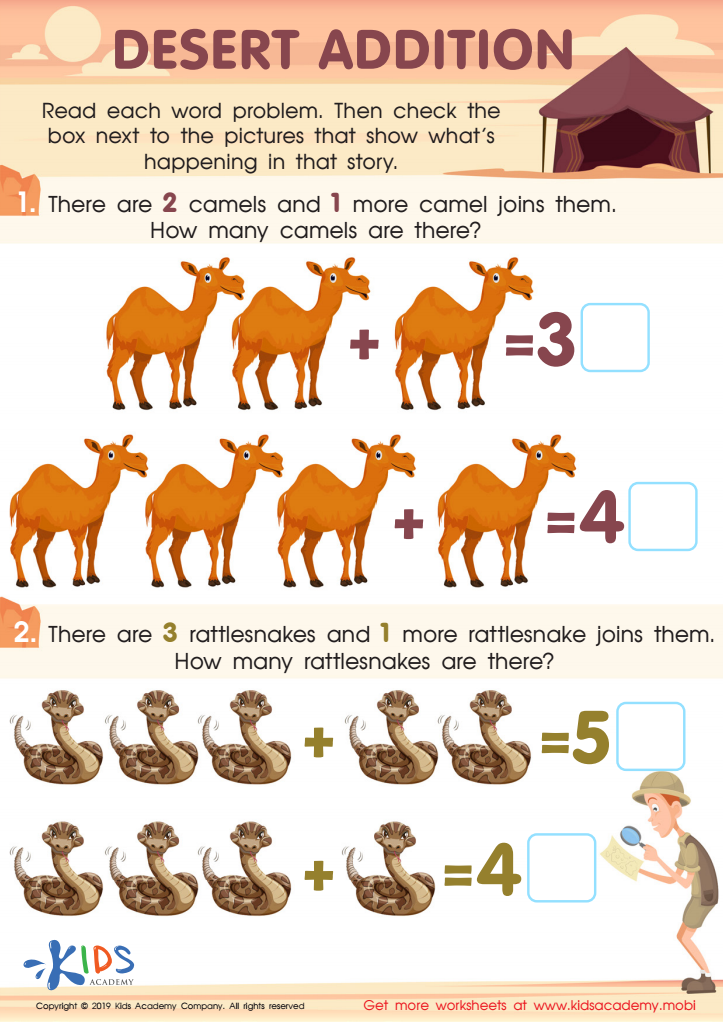
Desert Addition Worksheet
 Assign to My Students
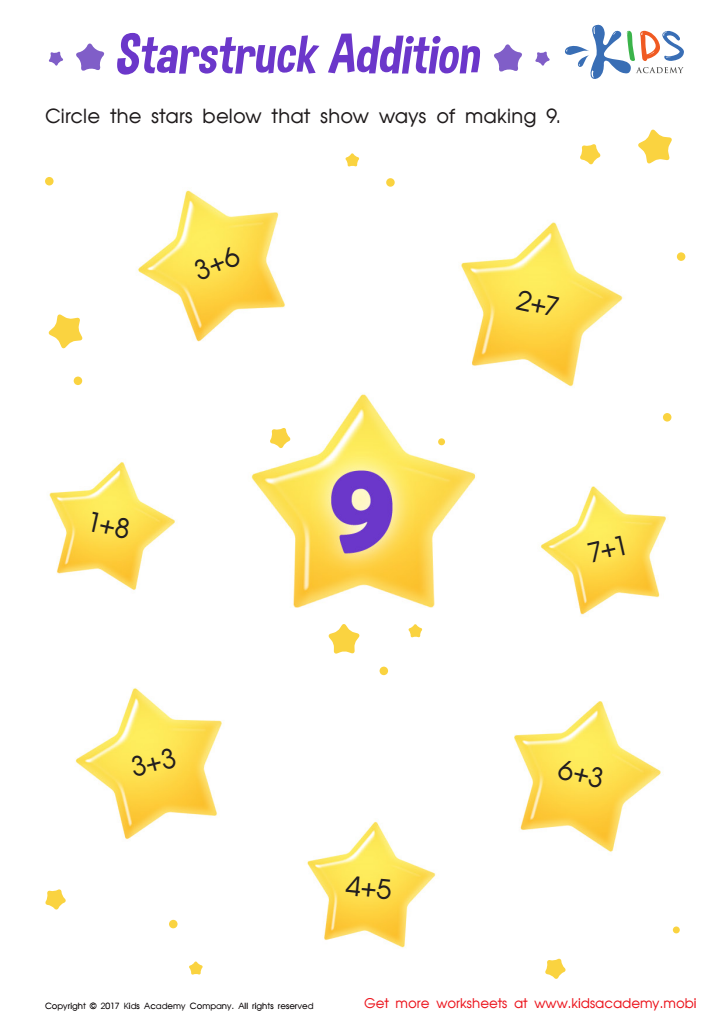
Starstruck Addition Printable
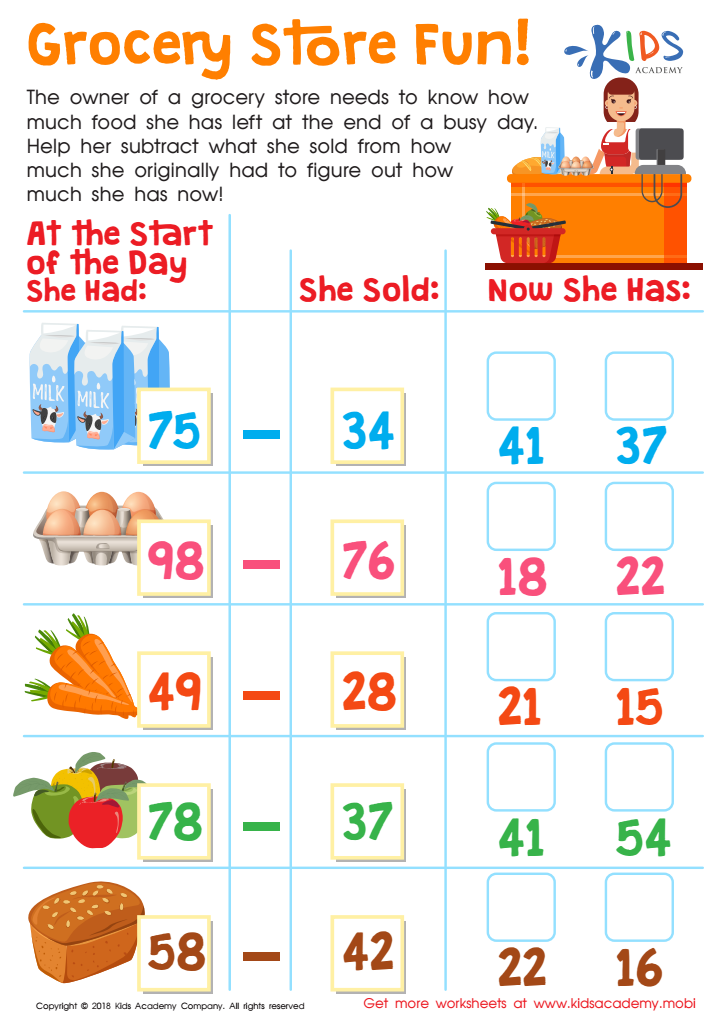
Grocery Store Fun! Worksheet
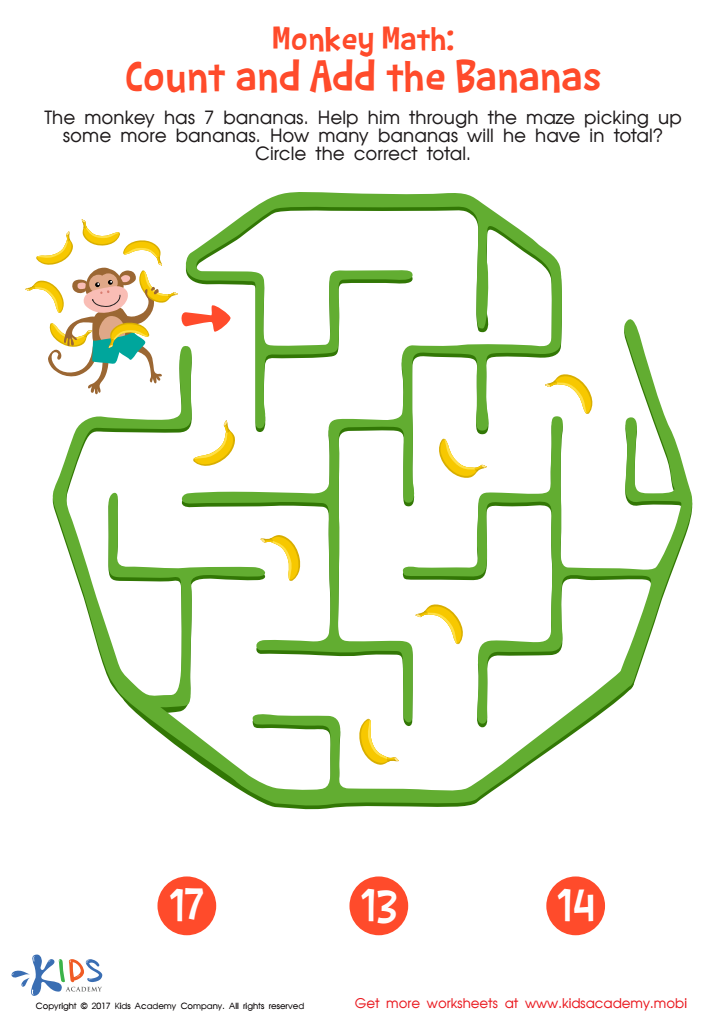
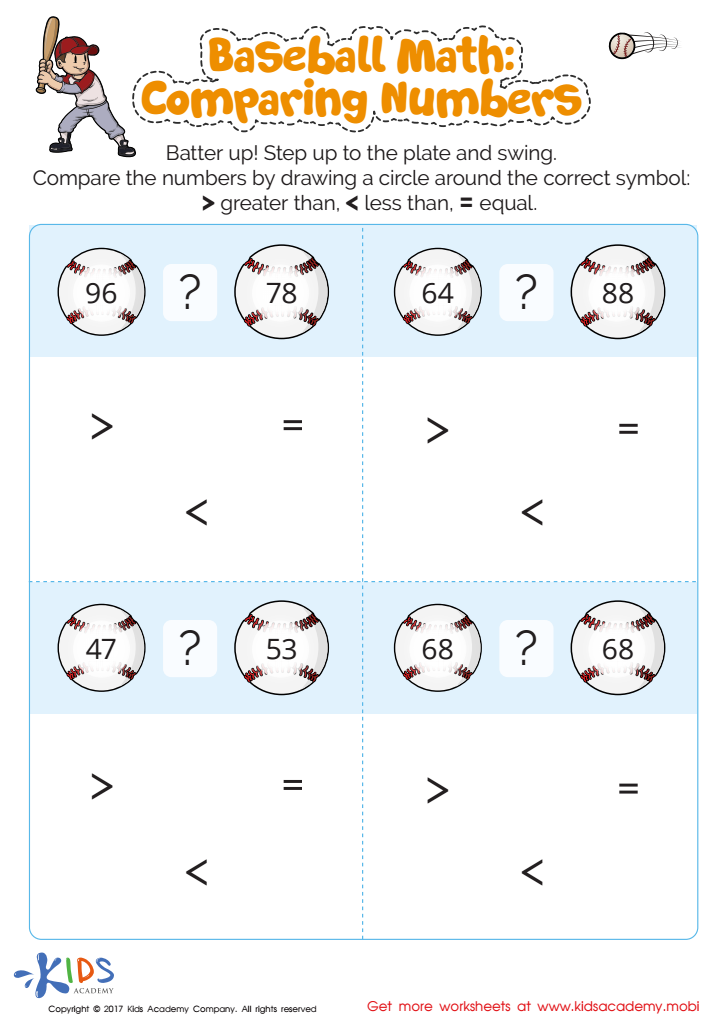
Compare Numbers Printable
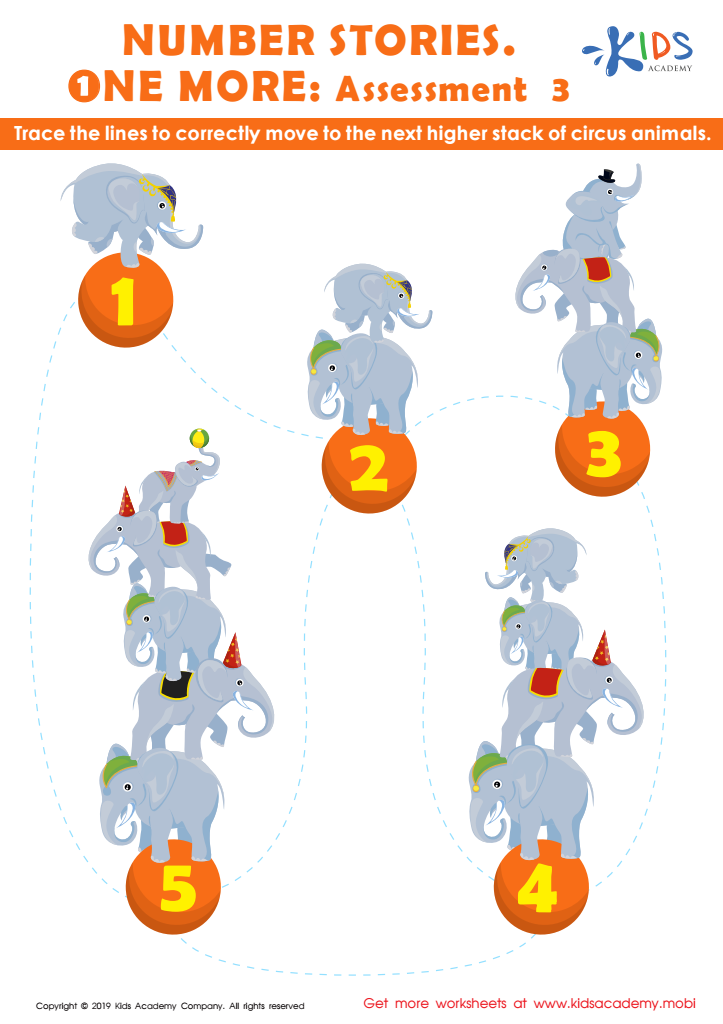
Number Stories One More: Assessment 3 Worksheet
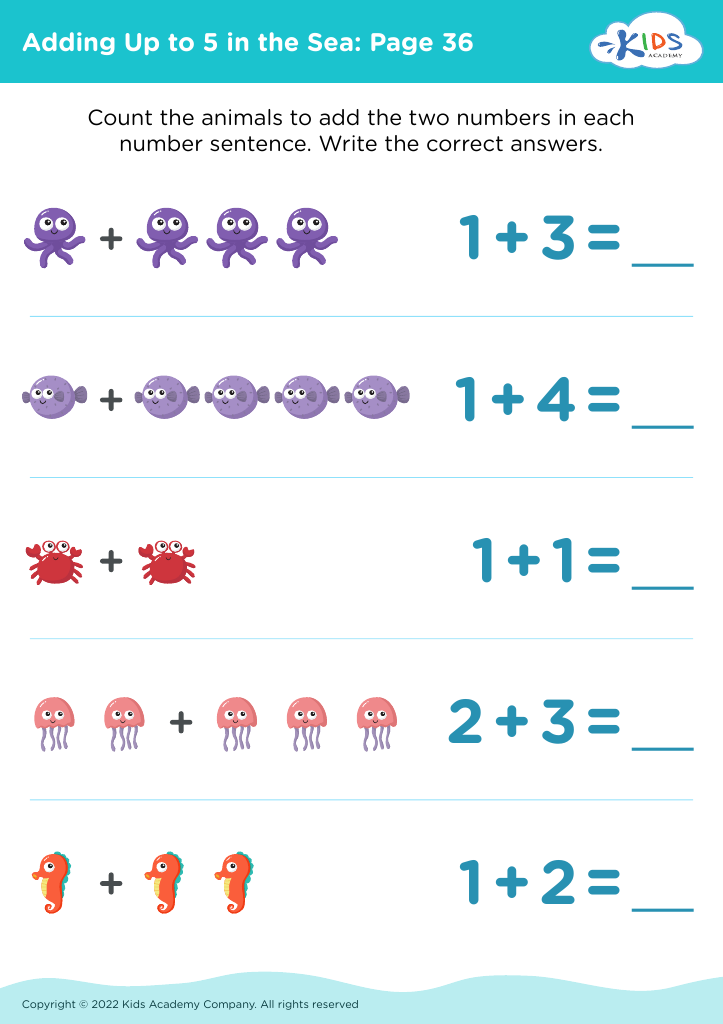
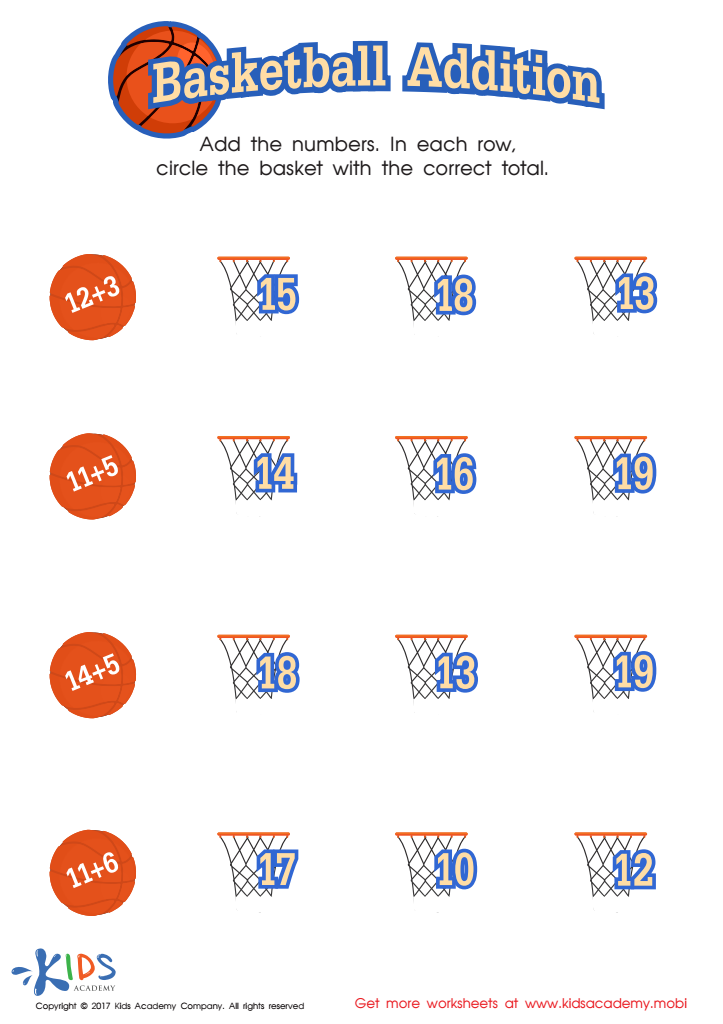
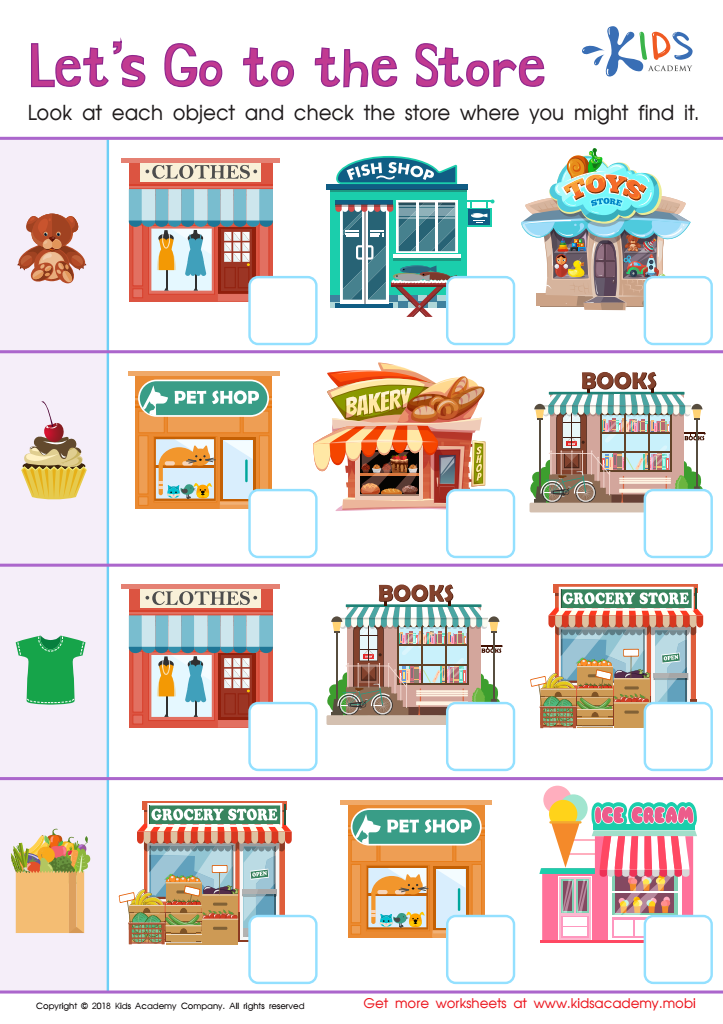
Let's Go to the Store! Worksheet
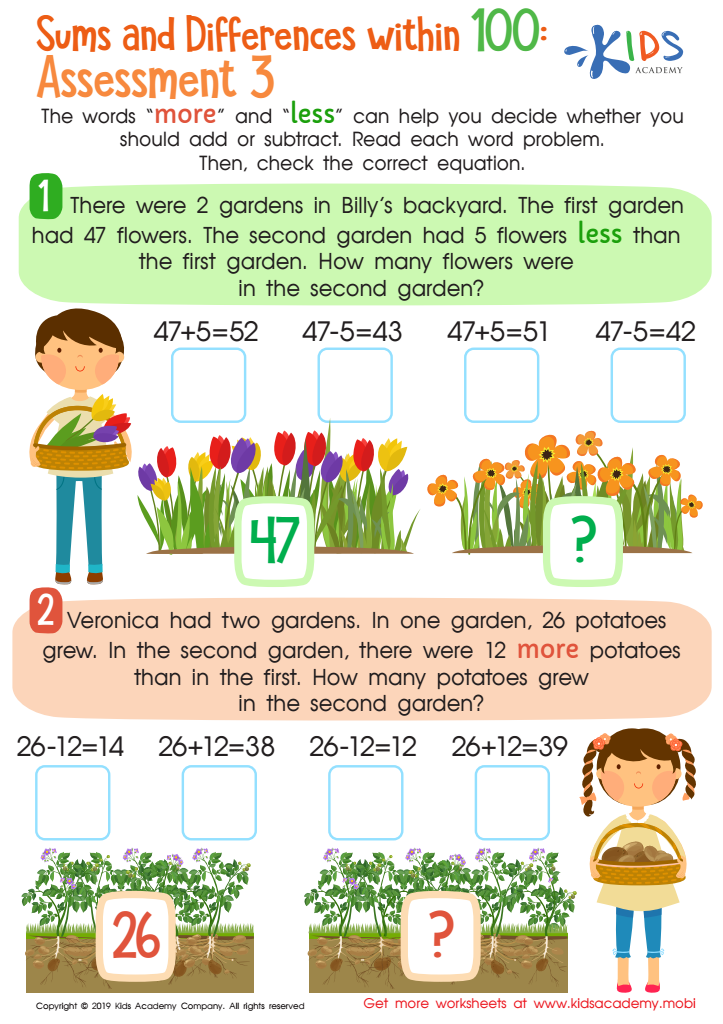
Sums and Differences Within 1 - Assessment 1 Worksheet
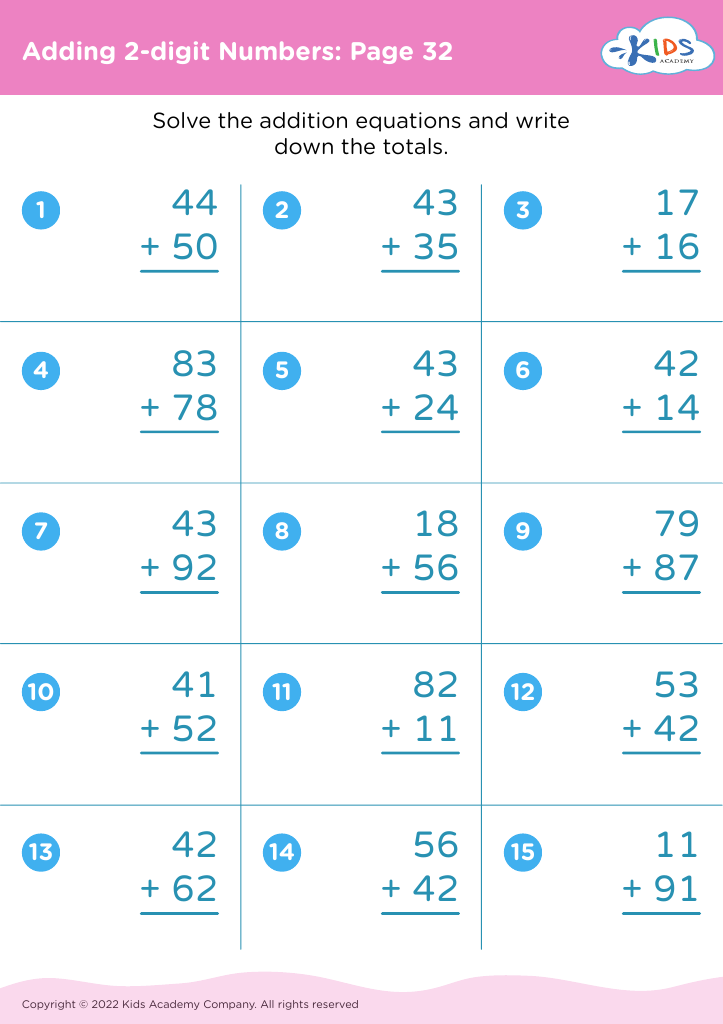
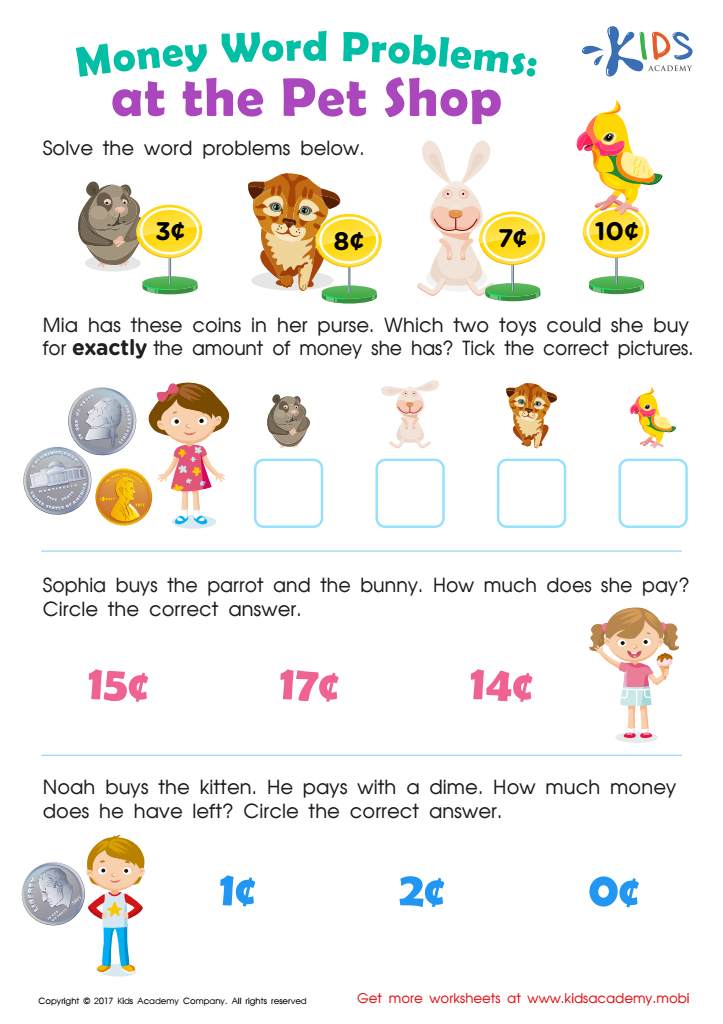
Pet Shop Worksheet
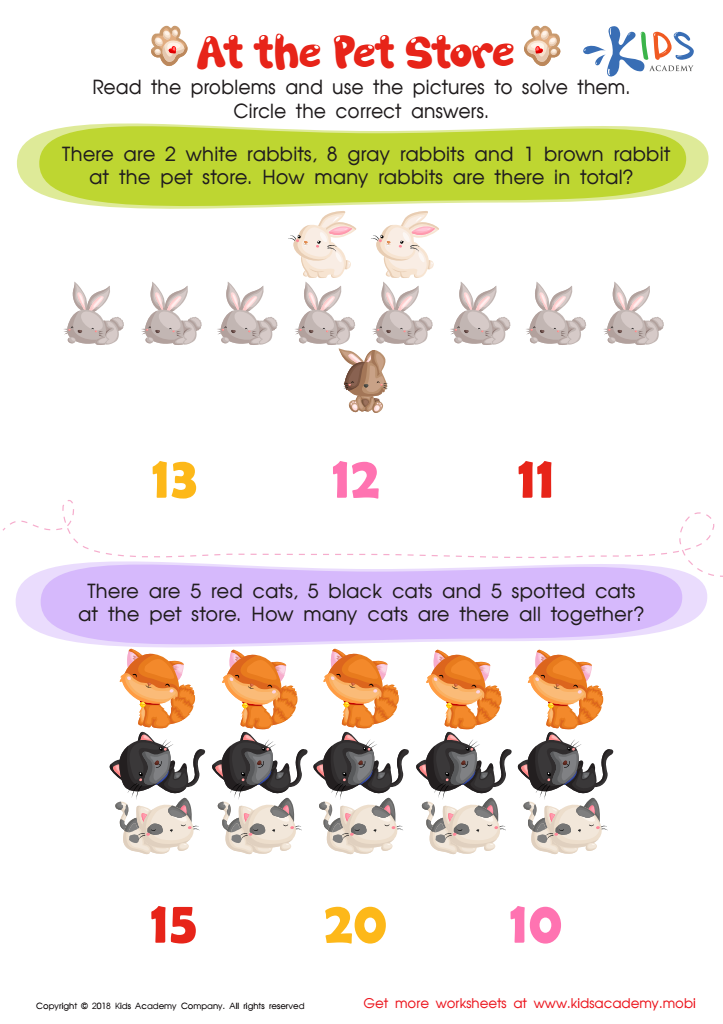
At the Pet Store Word Problems Worksheet
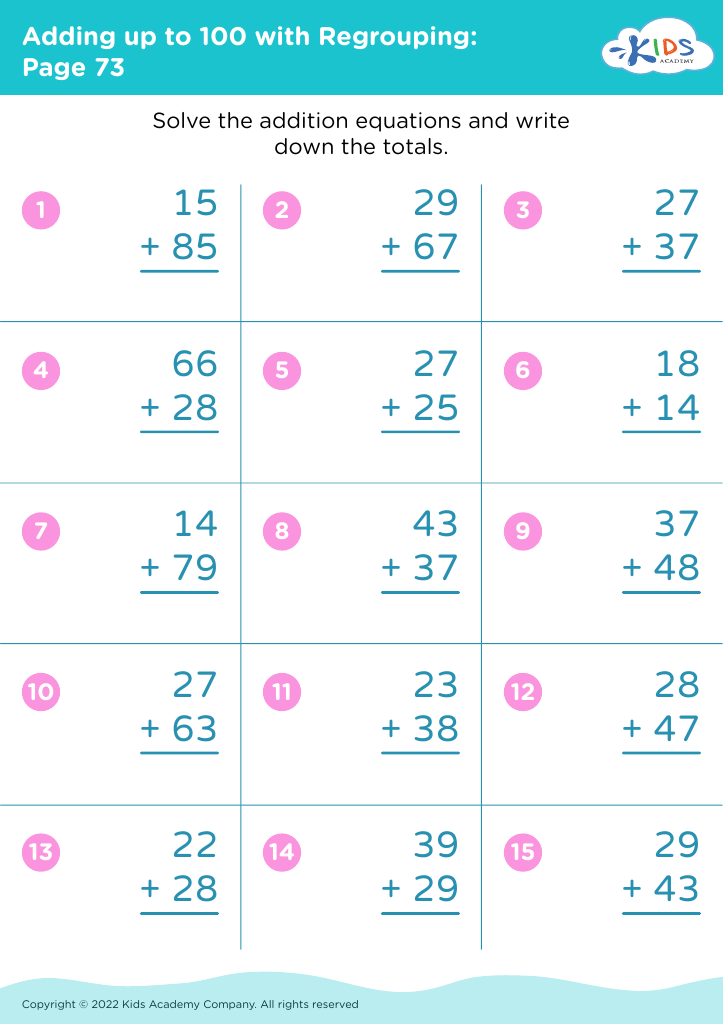
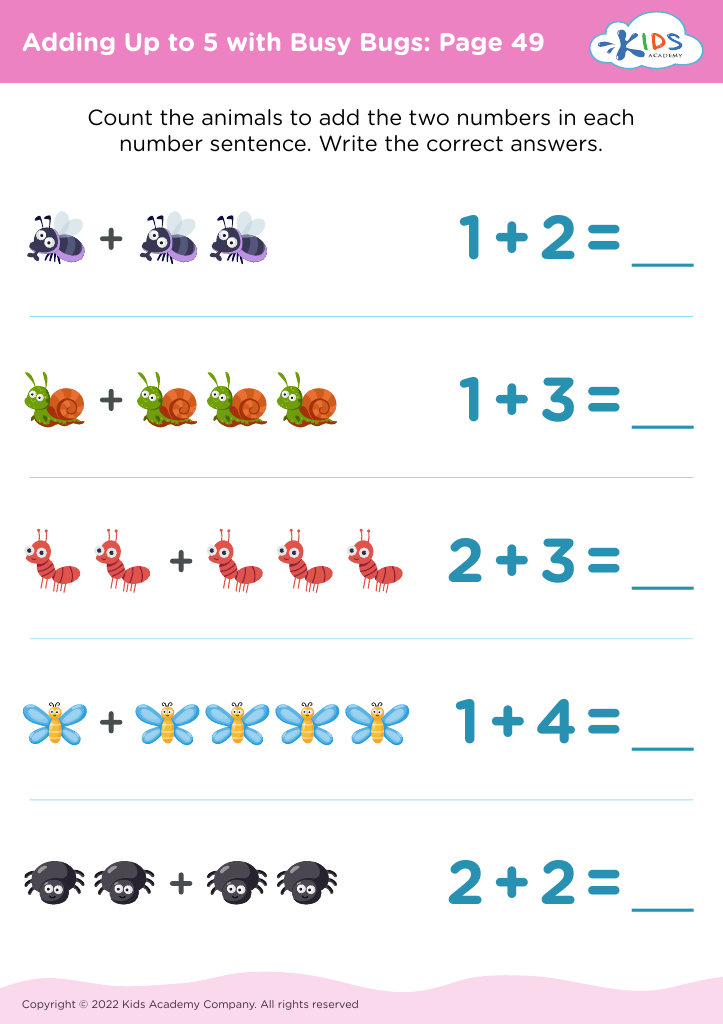
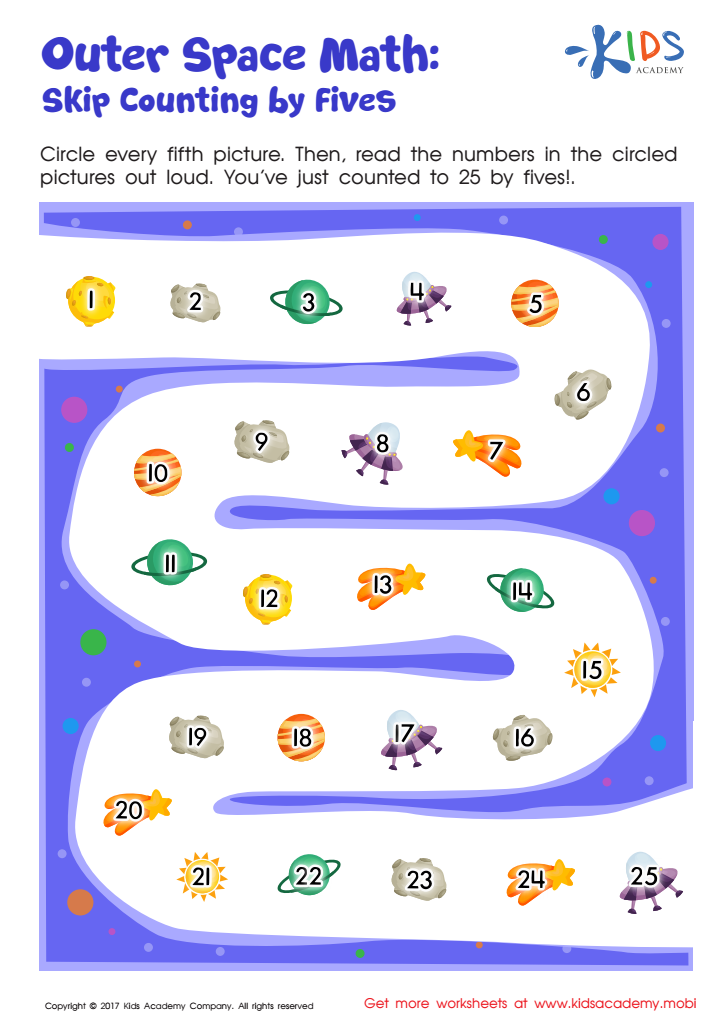
Skip Counting by 5s: Outer Space Math Printable
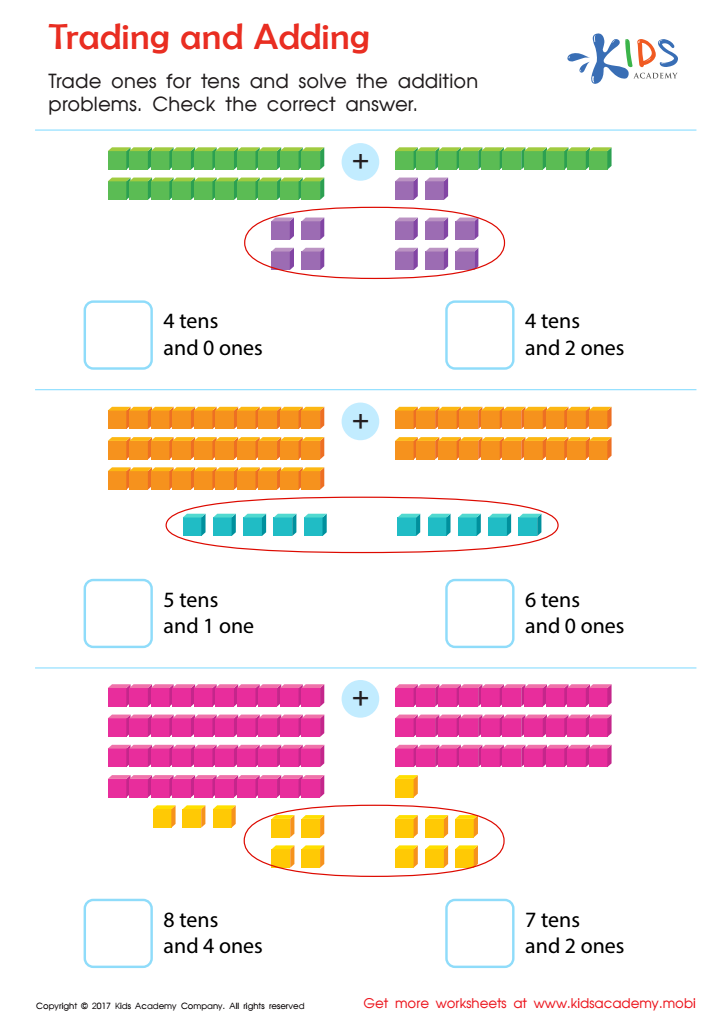
Trading and Adding Worksheet
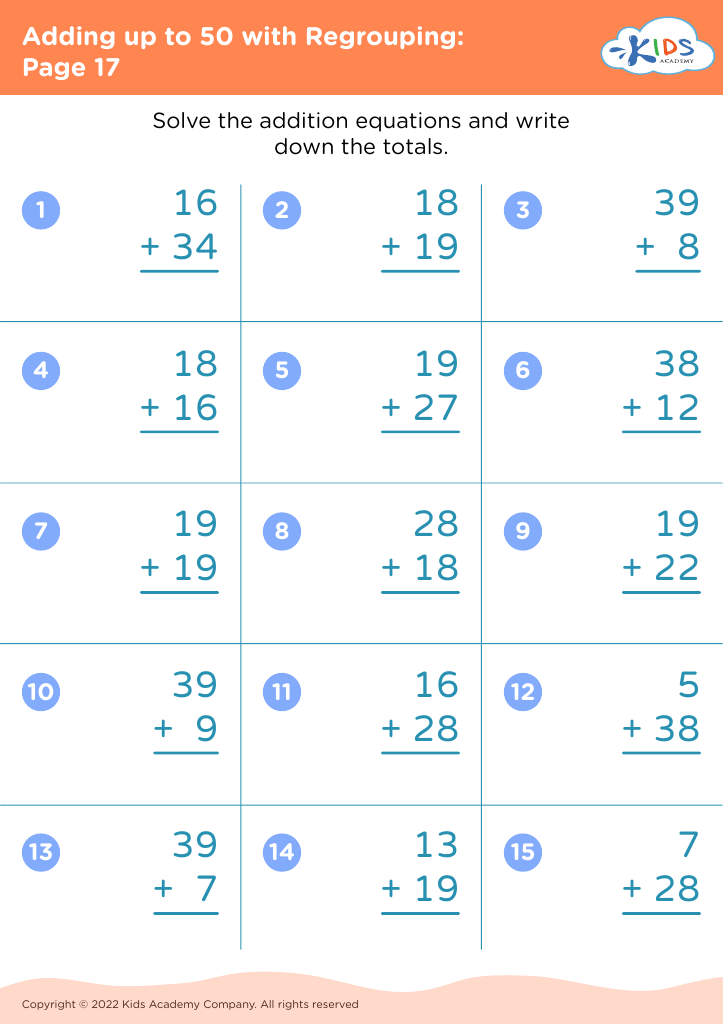
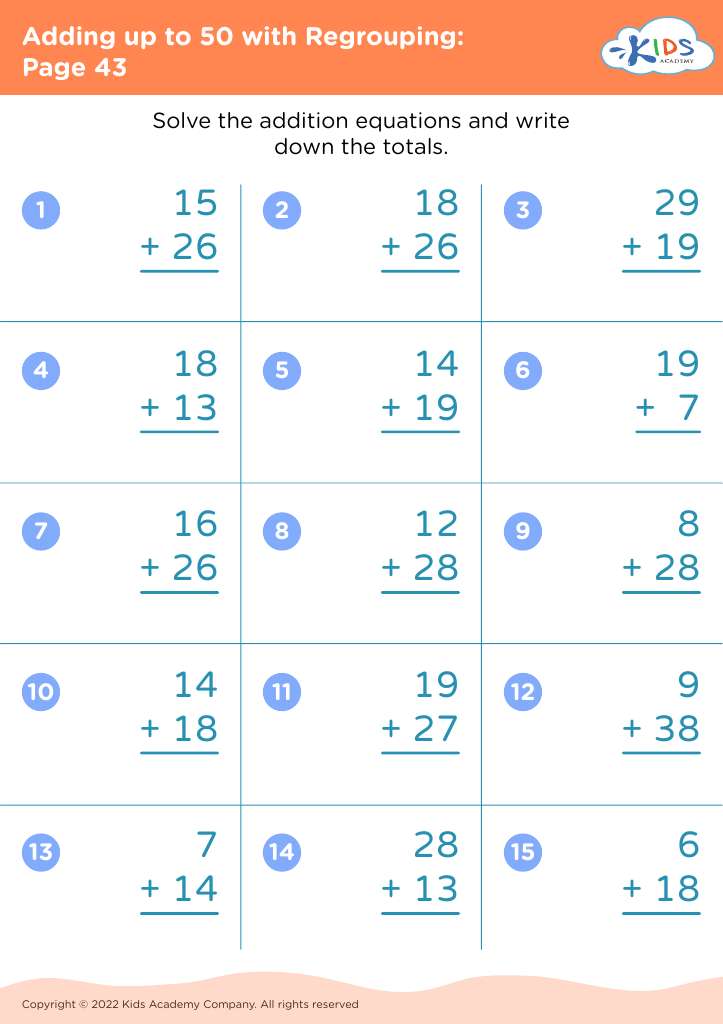
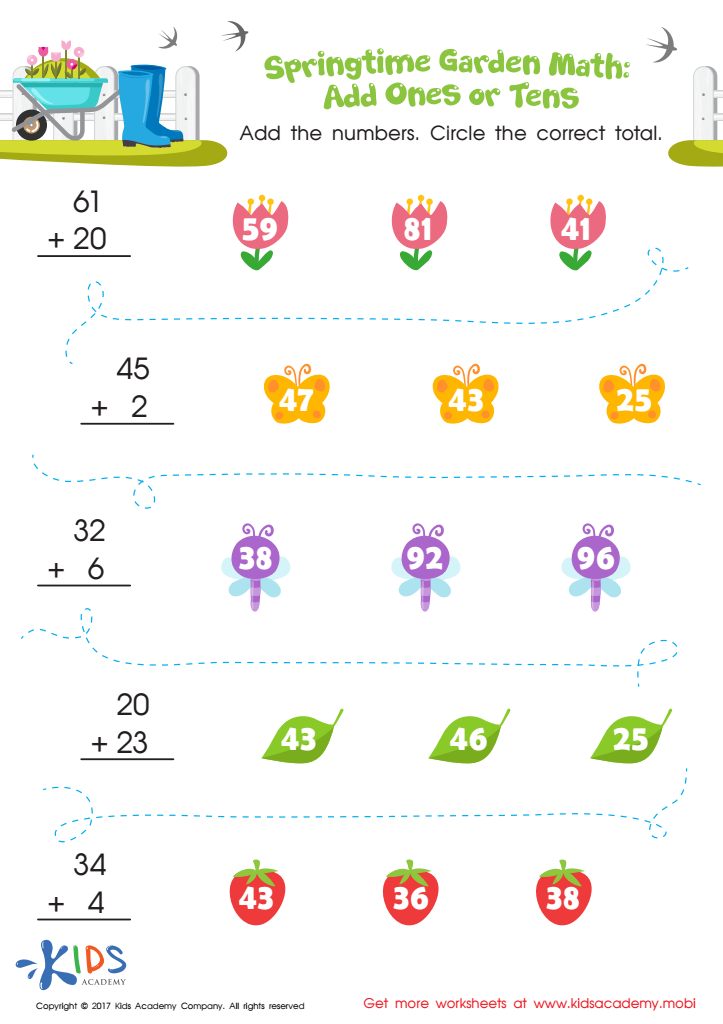
Springtime Garden Math Worksheet
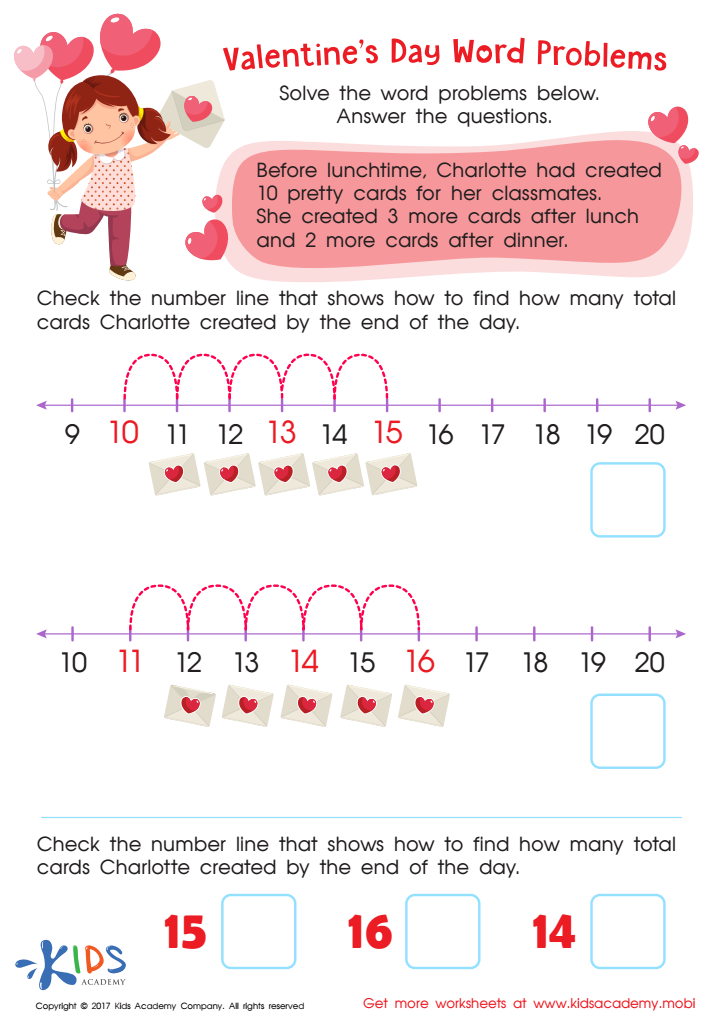
Valentines Day Word Problem Worksheet
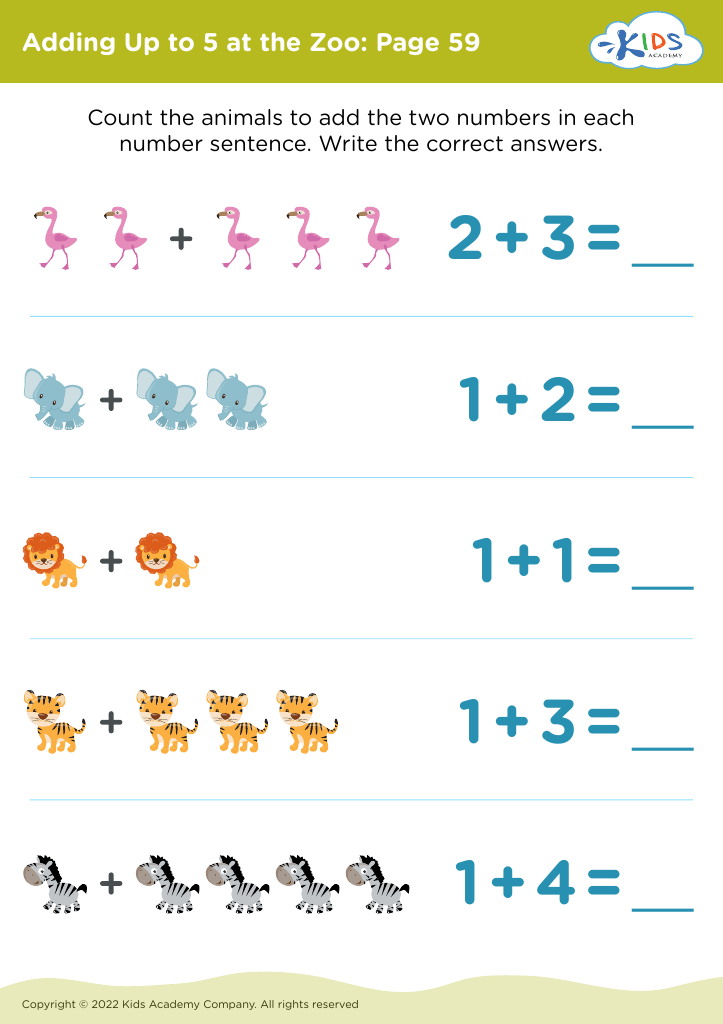
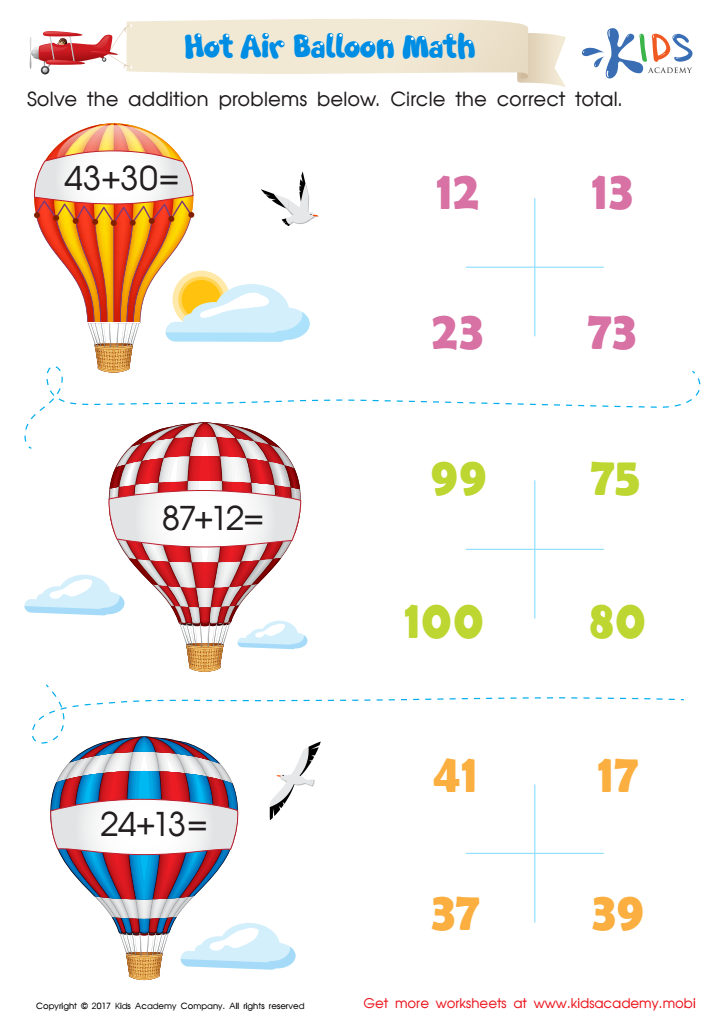
Hot Air Balloon Math Worksheet
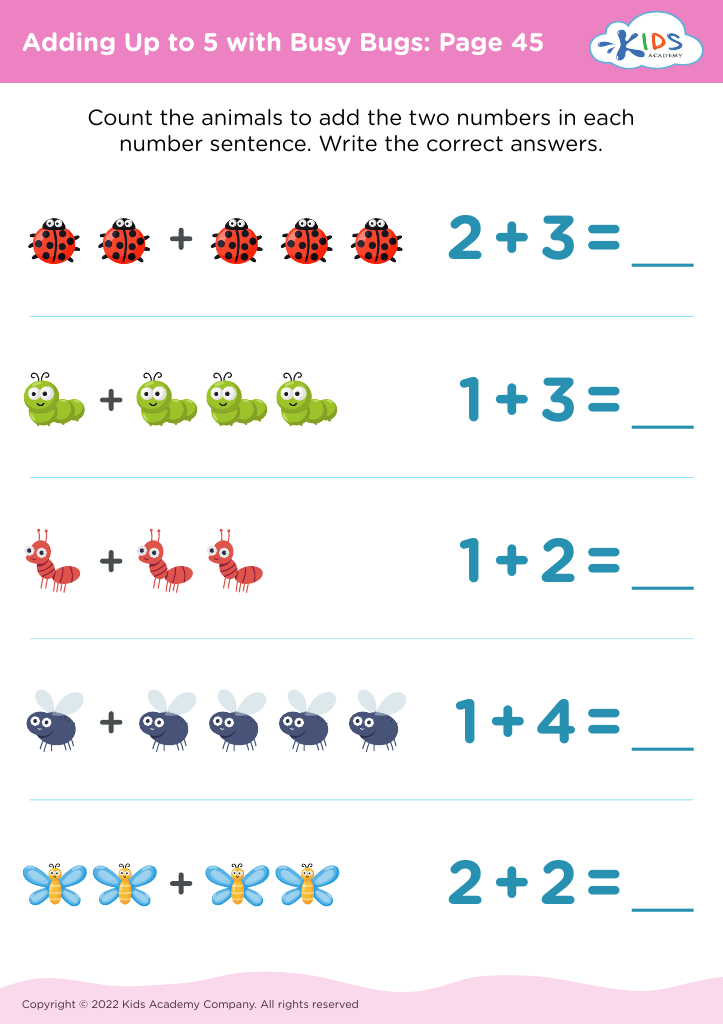







Parents and teachers should emphasize addition practice for children aged 5-7 as it's fundamental to their mathematical development and overall cognitive growth. In this critical developmental phase, understanding addition helps build a solid foundation for more advanced math concepts such as subtraction, multiplication, and division. Consistent addition practice engrains basic arithmetic skills, aiding in quick mental calculations which are essential for everyday problem-solving tasks.
Furthermore, mastering addition enhances a child's confidence and proficiency in math, a core subject in early education. It supports the development of logical thinking and pattern recognition, skills that are transferable to other academic areas and day-to-day activities. Additionally, engaging in math practice promotes patience, perseverance, and attention to detail, traits that are crucial for lifelong learning.
Moreover, early age math skills are predictors of future academic success. Research suggests a strong correlation between early math competence and higher overall academic performance. Therefore, consistent practice not only prepares children for higher grades but also for a successful educational journey.
In conclusion, prioritizing addition practice in early childhood sets the stage for essential numeracy skills, cognitive development, and academic confidence, laying the groundwork for continued academic and personal growth.








