Filters

73 filtered results

Clear all filters
Favorites
With answer key
Interactive

73 filtered results

Difficulty Level

Grade


Subject

    Boost your child's math skills with our "Adding up to 1000 Without Regrouping Worksheets" designed for ages 5-7. These engaging printable worksheets help young learners master addition within 1000, without confusing regrouping methods. Each worksheet features fun, kid-friendly themes and clear instructions, making learning both enjoyable and effective. Perfect for classroom reinforcement or additional home practice, these resources build solid foundations in math by focusing on simple, incremental steps. Sign up today at Kids Academy and watch your child's confidence soar as they excel in addition, all while having a great time!
    Check out this FREE Trial Lesson on Adding up to 1000 Without Regrouping for age 5-7!

    A

    Favorites
    With answer key
    Interactive
    • 5-7
    • Adding up to 1000 Without Regrouping
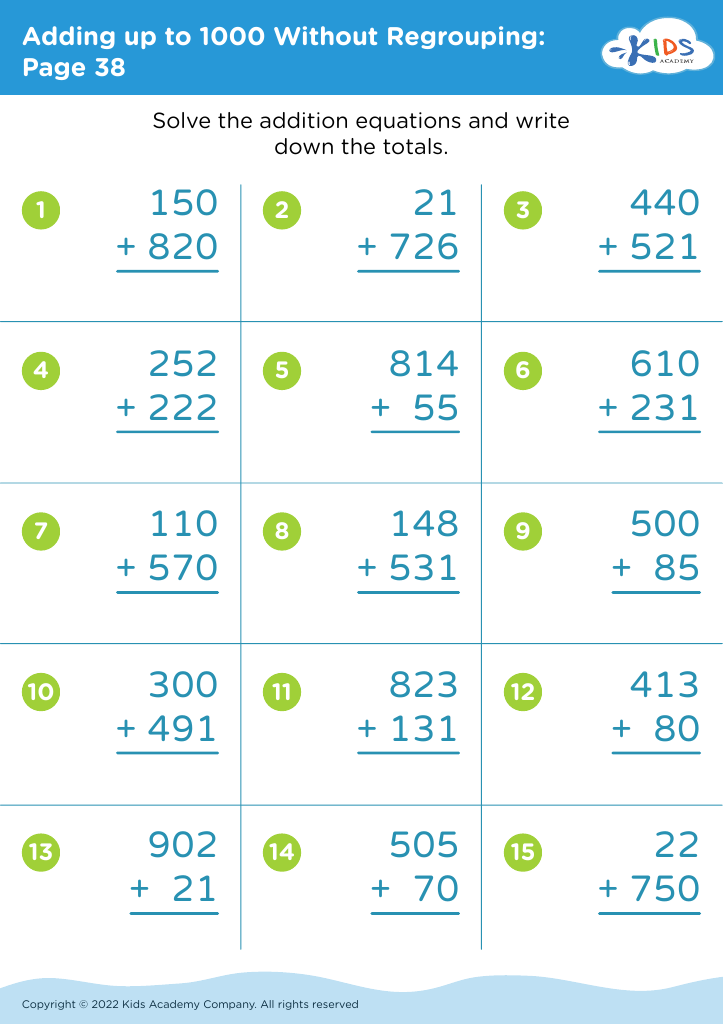
    Adding up to 1000 Without Regrouping: Page 38
    Adding up to 1000 Without Regrouping: Page 38
    Adding up to 1000 Without Regrouping: Page 38
    Worksheet
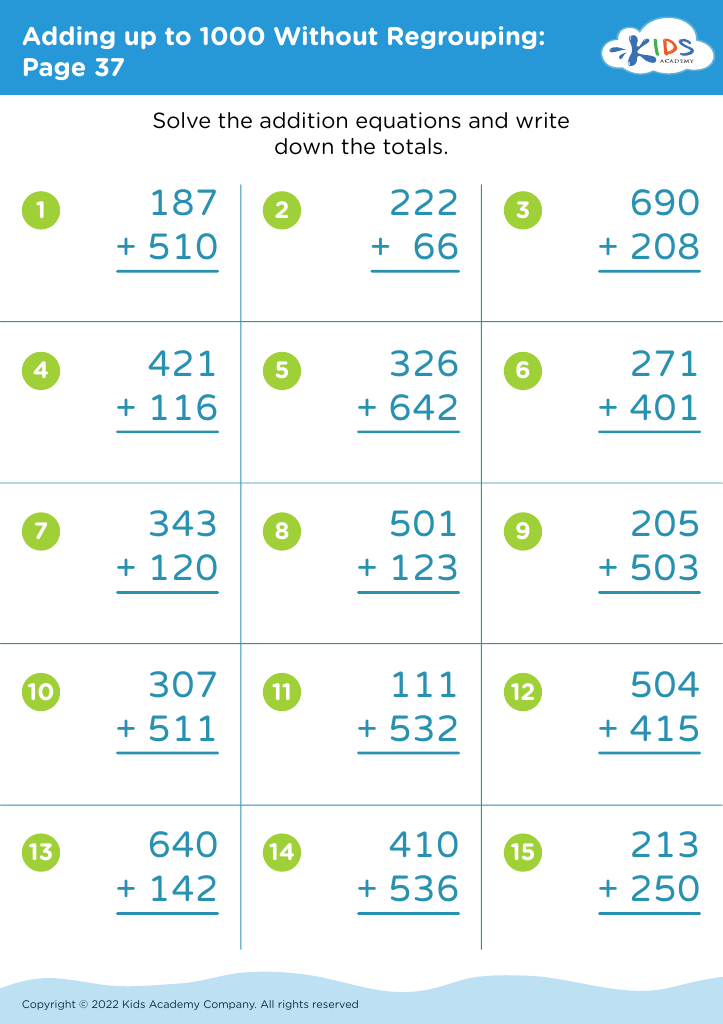
    Adding up to 1000 Without Regrouping: Page 37
    Adding up to 1000 Without Regrouping: Page 37
    Adding up to 1000 Without Regrouping: Page 37
    Worksheet
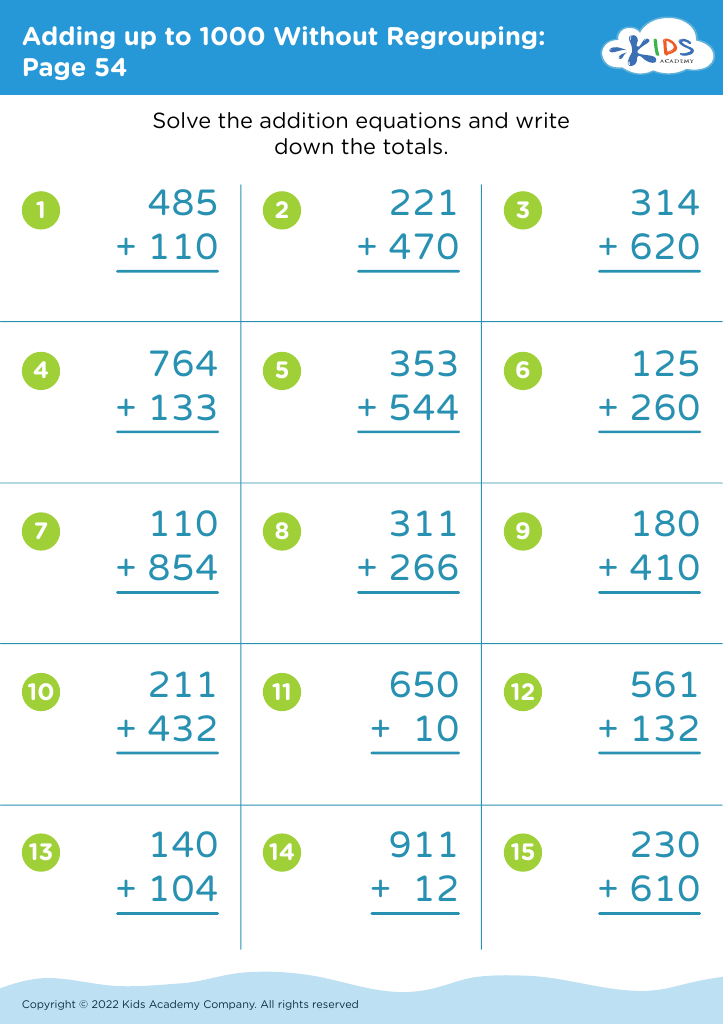
    Adding up to 1000 Without Regrouping: Page 54
    Adding up to 1000 Without Regrouping: Page 54
    Adding up to 1000 Without Regrouping: Page 54
    Worksheet
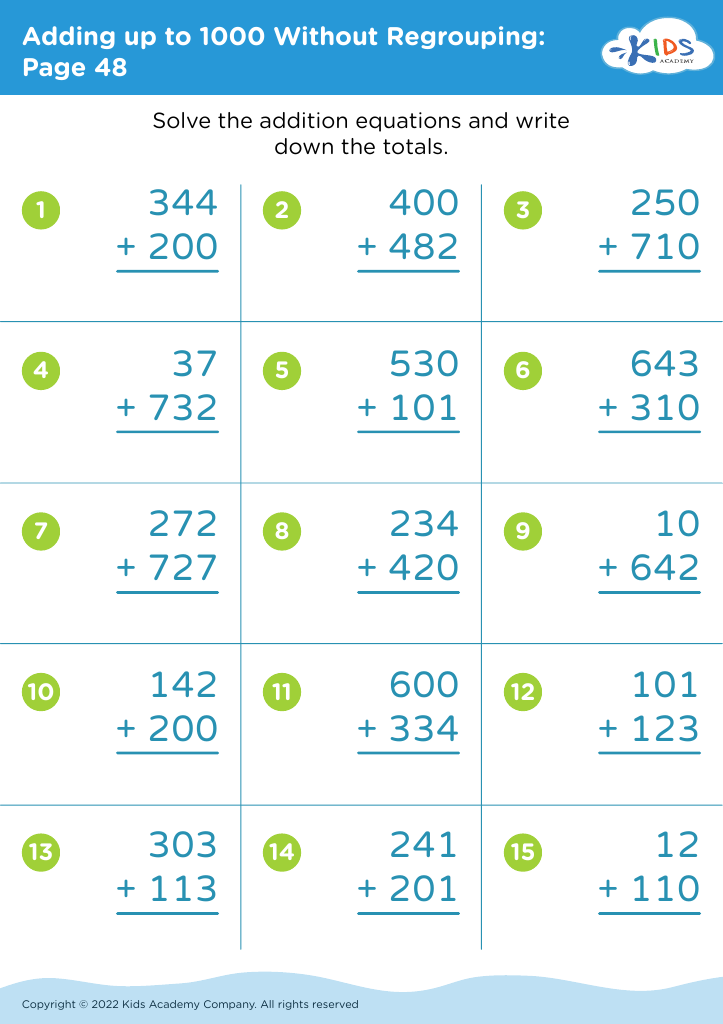
    Adding up to 1000 Without Regrouping: Page 48
    Adding up to 1000 Without Regrouping: Page 48
    Adding up to 1000 Without Regrouping: Page 48
    Worksheet
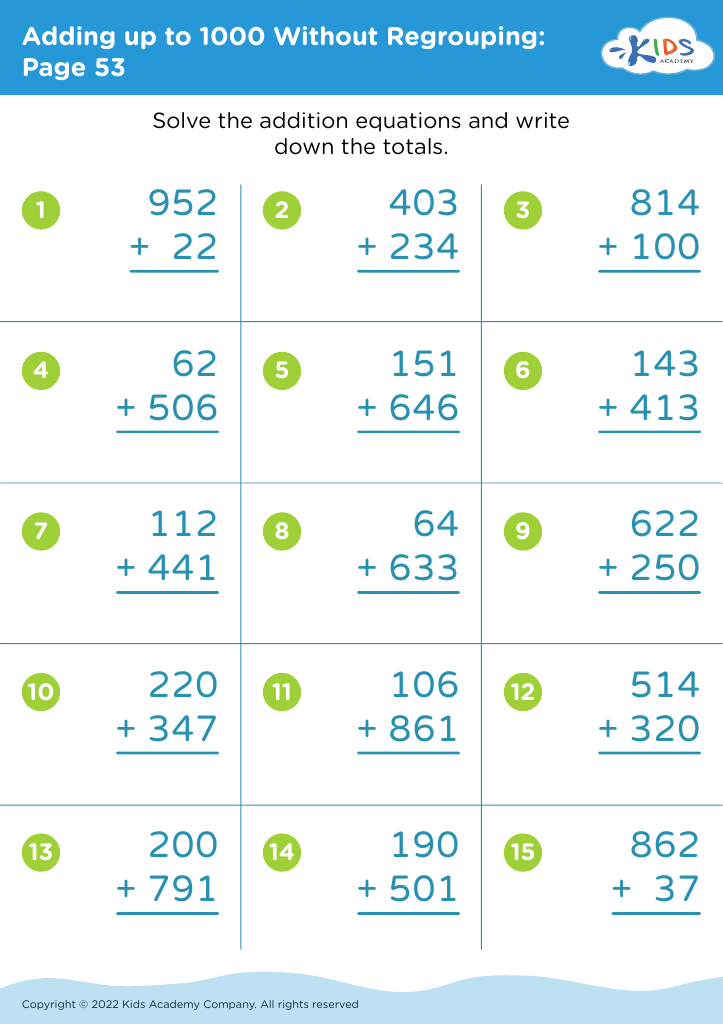
    Adding up to 1000 Without Regrouping: Page 53
    Adding up to 1000 Without Regrouping: Page 53
    Adding up to 1000 Without Regrouping: Page 53
    Worksheet
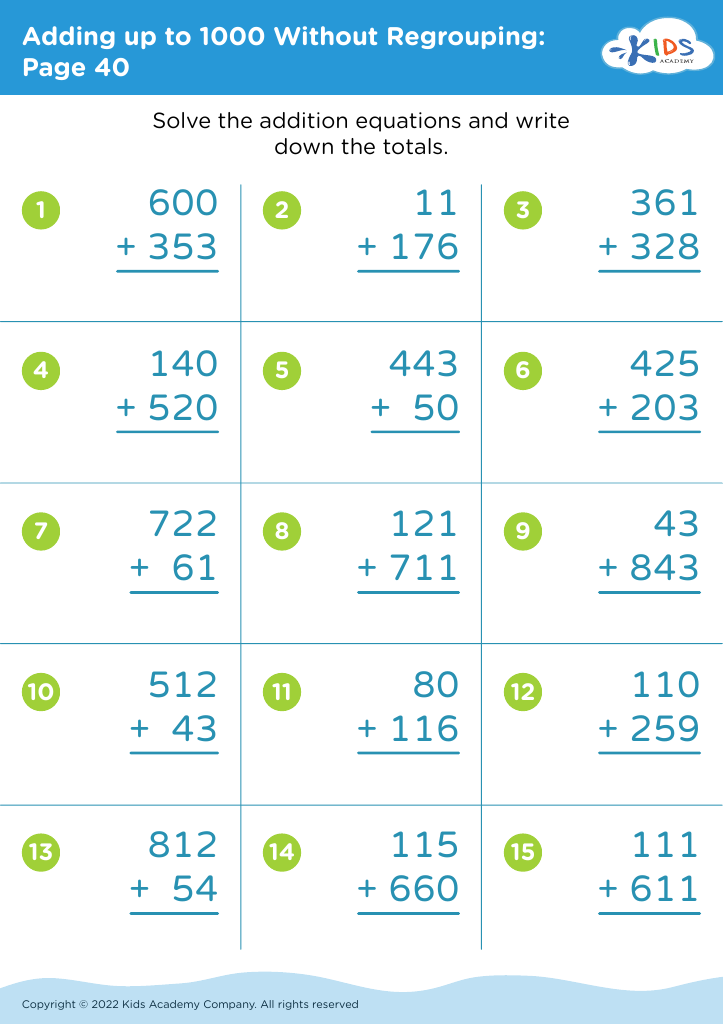
    Adding up to 1000 Without Regrouping: Page 40
    Adding up to 1000 Without Regrouping: Page 40
    Adding up to 1000 Without Regrouping: Page 40
    Worksheet
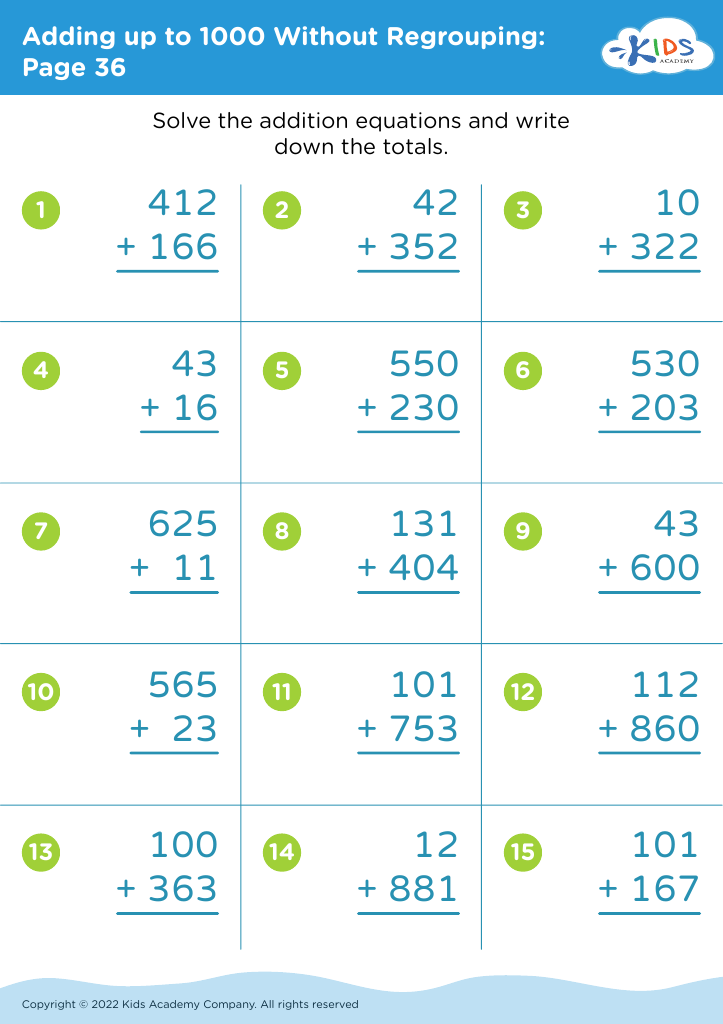
    Adding up to 1000 Without Regrouping: Page 36
    Adding up to 1000 Without Regrouping: Page 36
    Adding up to 1000 Without Regrouping: Page 36
    Worksheet
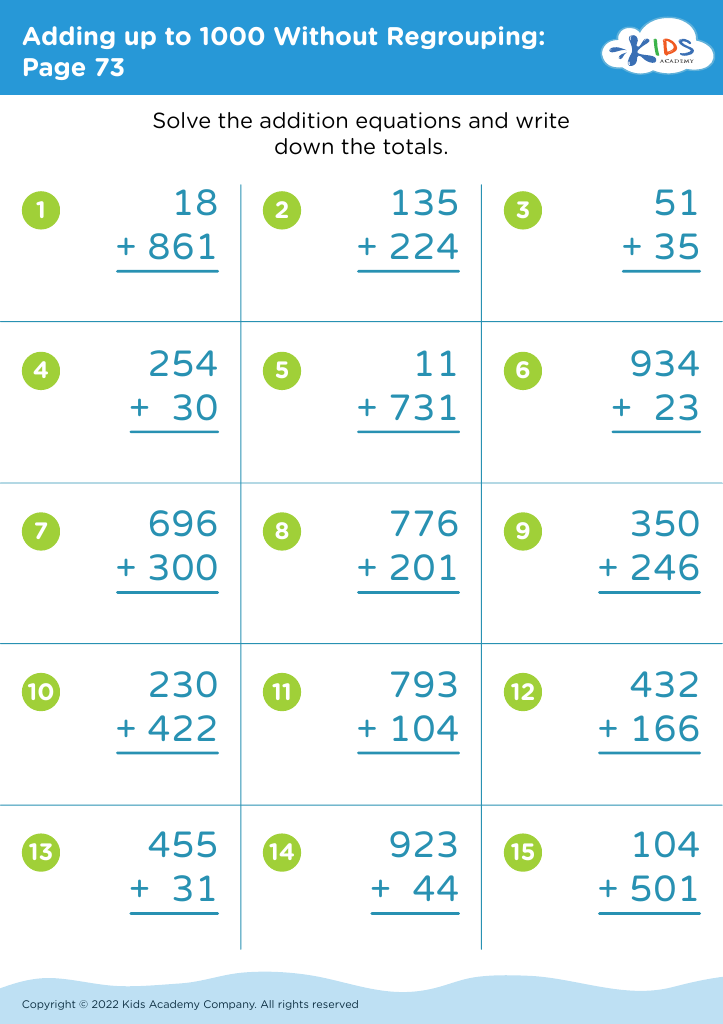
    Adding up to 1000 Without Regrouping: Page 73
    Adding up to 1000 Without Regrouping: Page 73
    Adding up to 1000 Without Regrouping: Page 73
    Worksheet
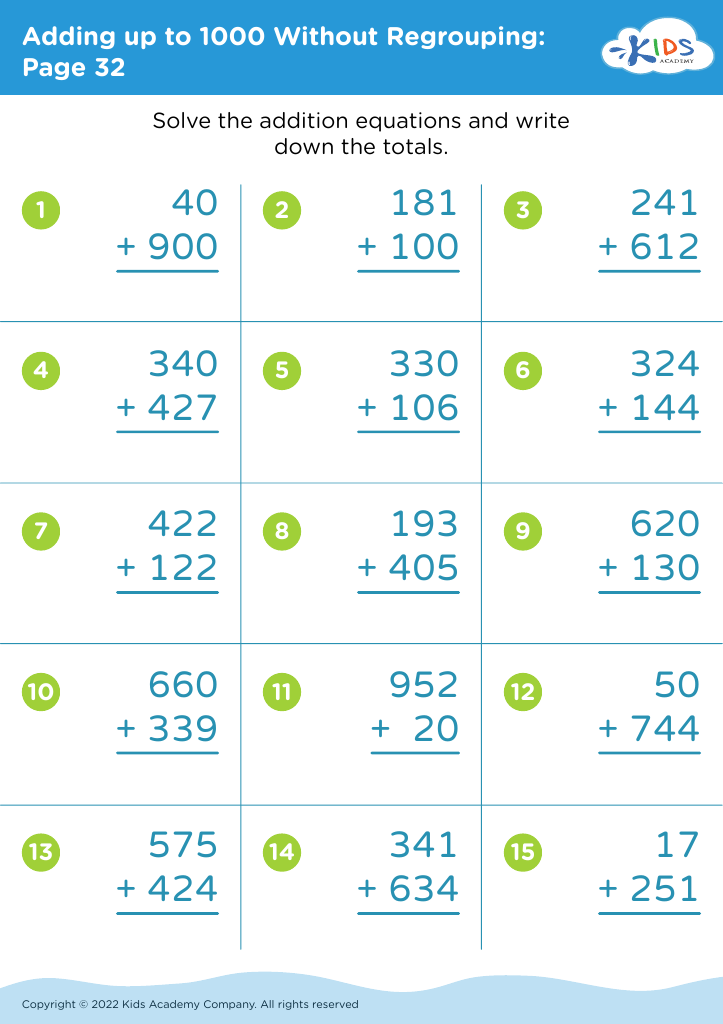
    Adding up to 1000 Without Regrouping: Page 32
    Adding up to 1000 Without Regrouping: Page 32
    Adding up to 1000 Without Regrouping: Page 32
    Worksheet
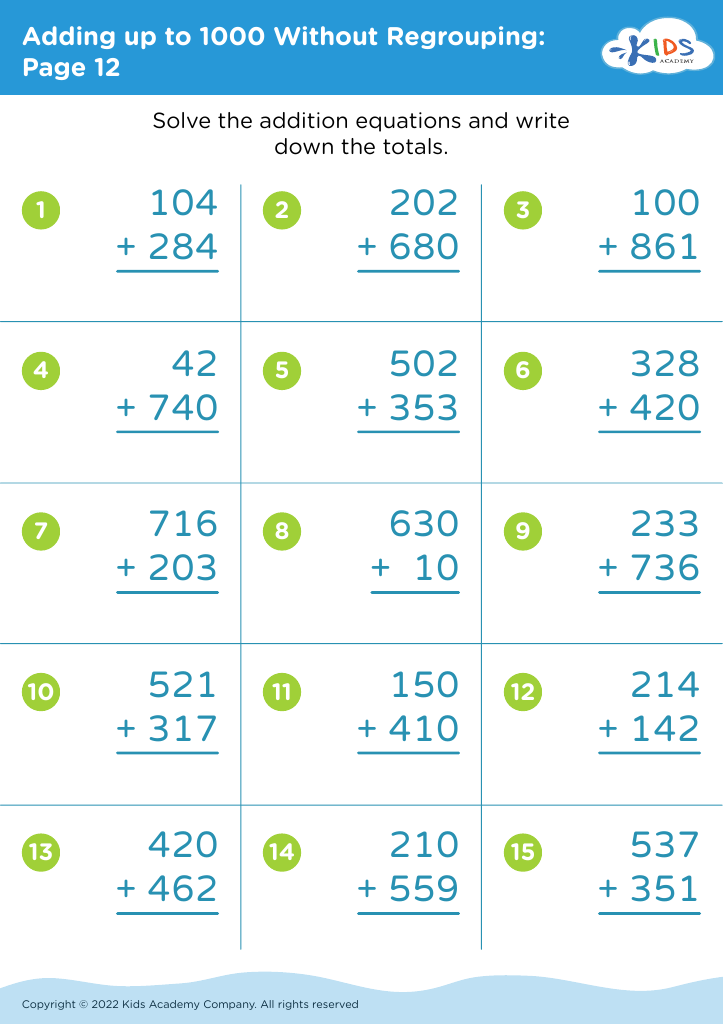
    Adding up to 1000 Without Regrouping: Page 12
    Adding up to 1000 Without Regrouping: Page 12
    Adding up to 1000 Without Regrouping: Page 12
    Worksheet
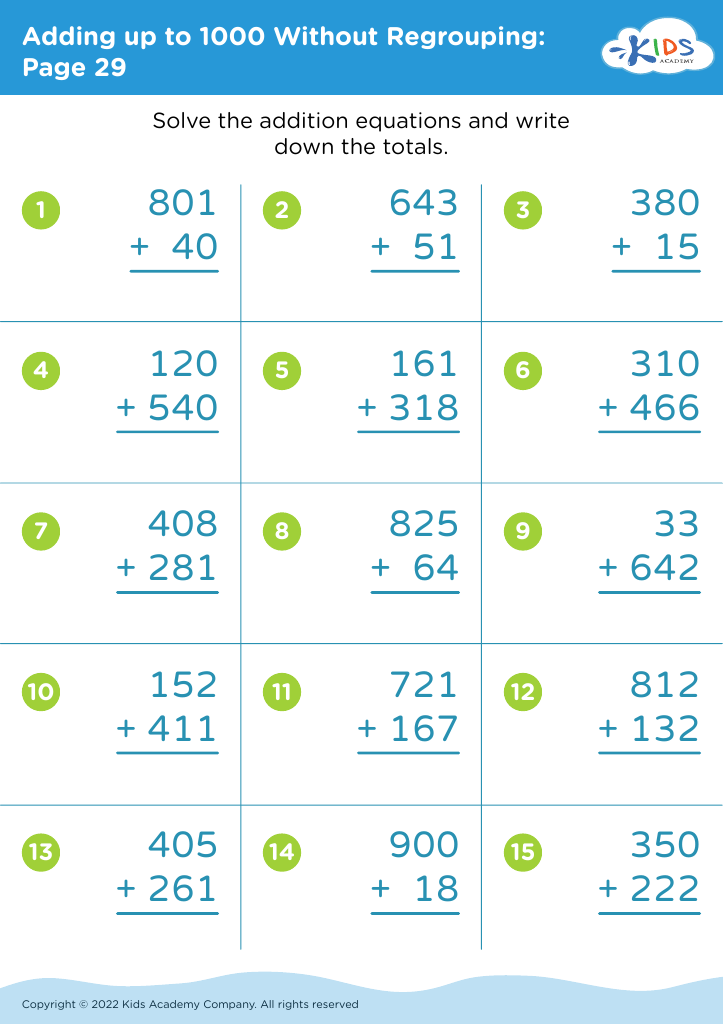
    Adding up to 1000 Without Regrouping: Page 29
    Adding up to 1000 Without Regrouping: Page 29
    Adding up to 1000 Without Regrouping: Page 29
    Worksheet
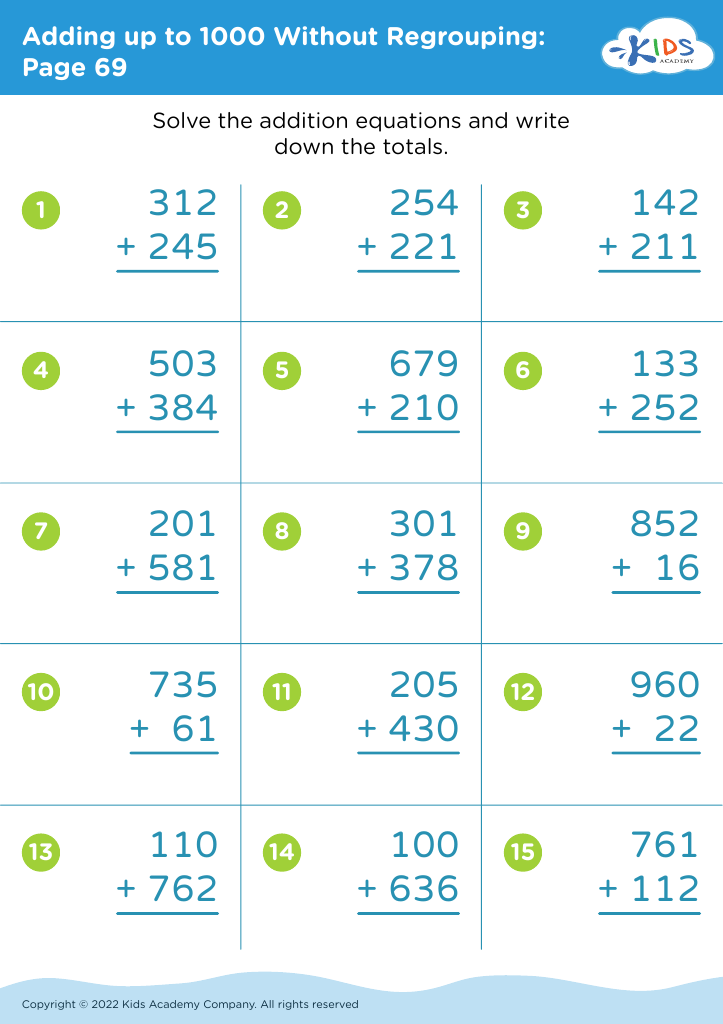
    Adding up to 1000 Without Regrouping: Page 69
    Adding up to 1000 Without Regrouping: Page 69
    Adding up to 1000 Without Regrouping: Page 69
    Worksheet
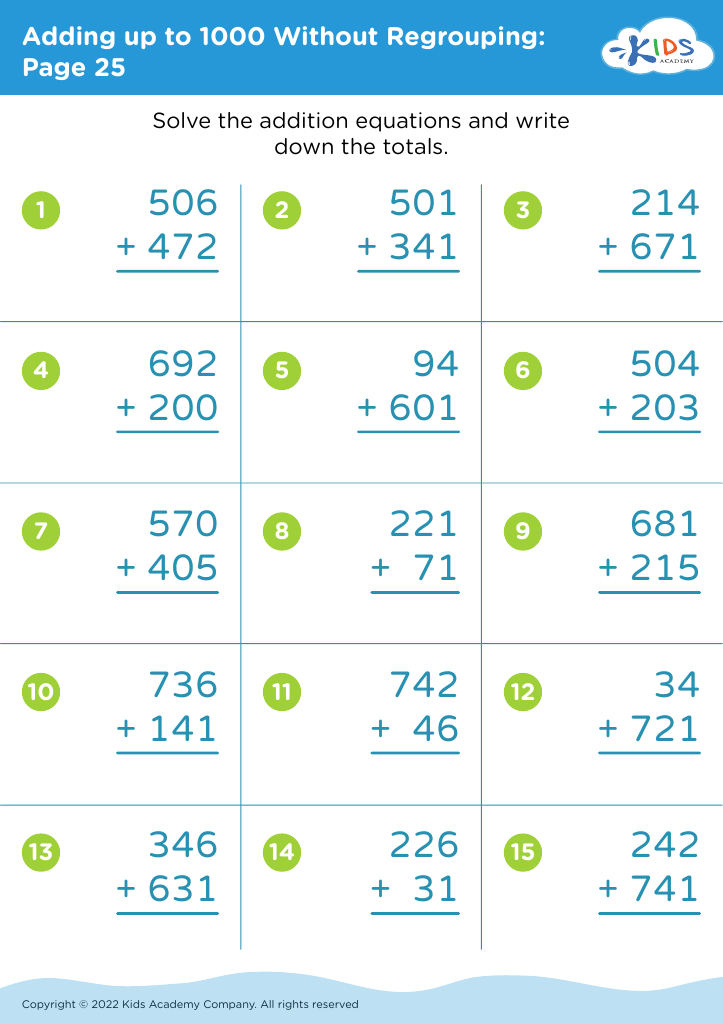
    Adding up to 1000 Without Regrouping: Page 25
    Adding up to 1000 Without Regrouping: Page 25
    Adding up to 1000 Without Regrouping: Page 25
    Worksheet
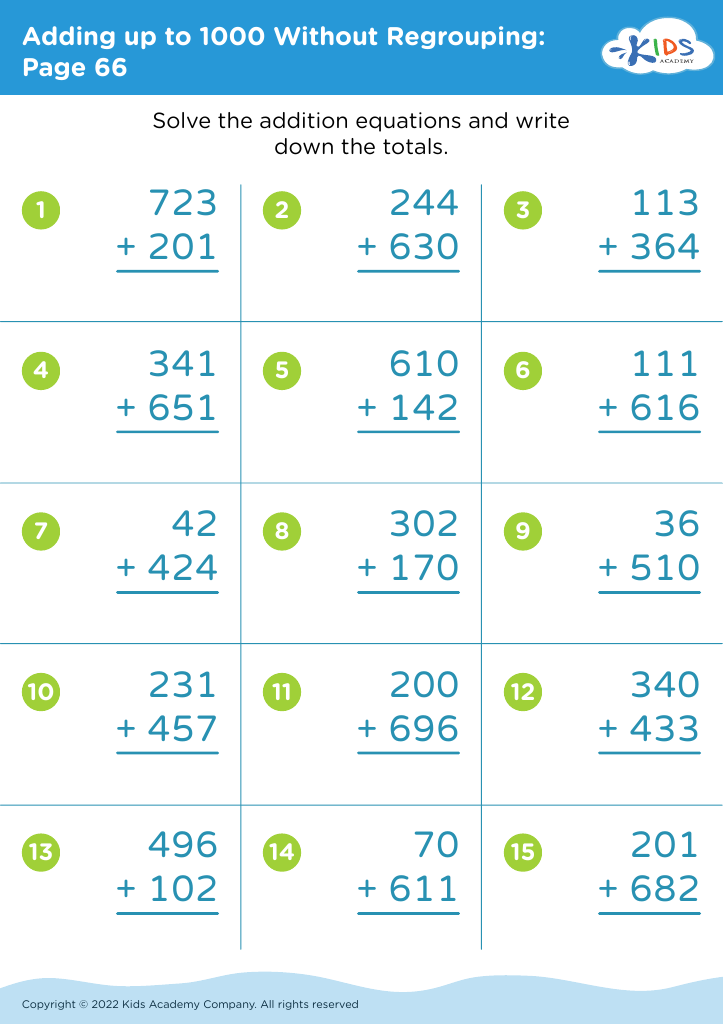
    Adding up to 1000 Without Regrouping: Page 66
    Adding up to 1000 Without Regrouping: Page 66
    Adding up to 1000 Without Regrouping: Page 66
    Worksheet
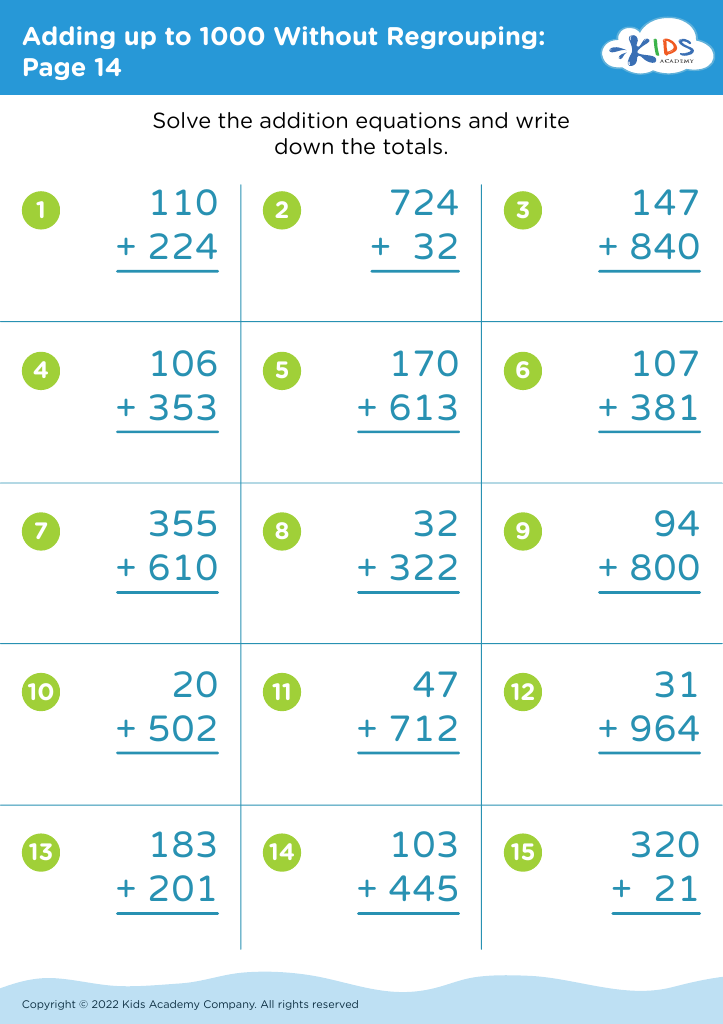
    Adding up to 1000 Without Regrouping: Page 14
    Adding up to 1000 Without Regrouping: Page 14
    Adding up to 1000 Without Regrouping: Page 14
    Worksheet
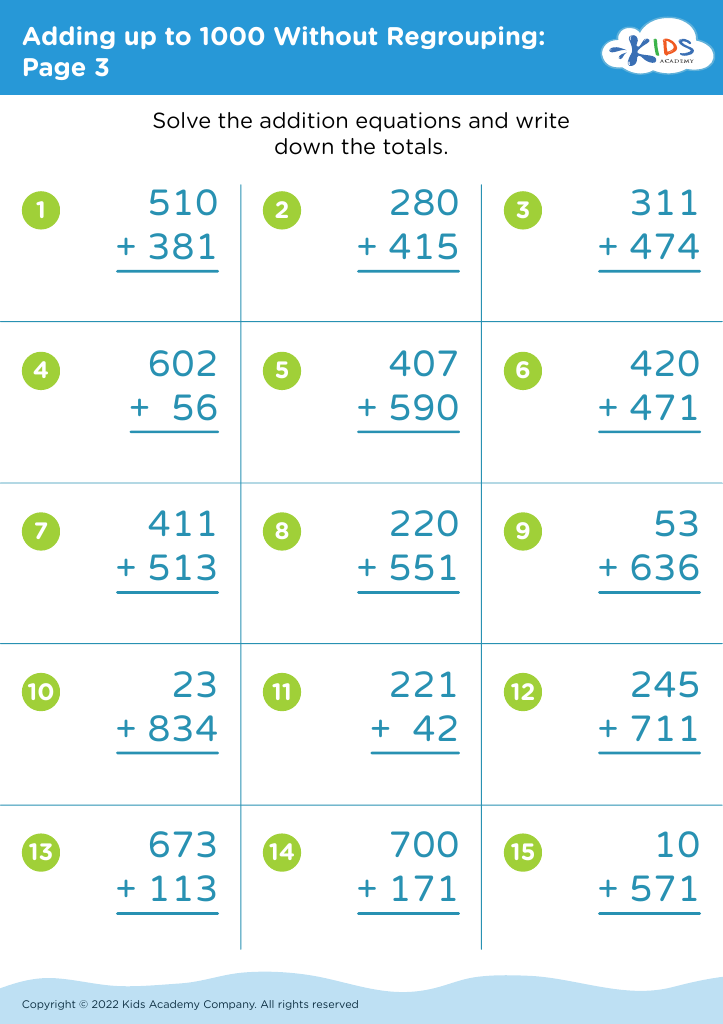
    Adding up to 1000 Without Regrouping: Page 3
    Adding up to 1000 Without Regrouping: Page 3
    Adding up to 1000 Without Regrouping: Page 3
    Worksheet
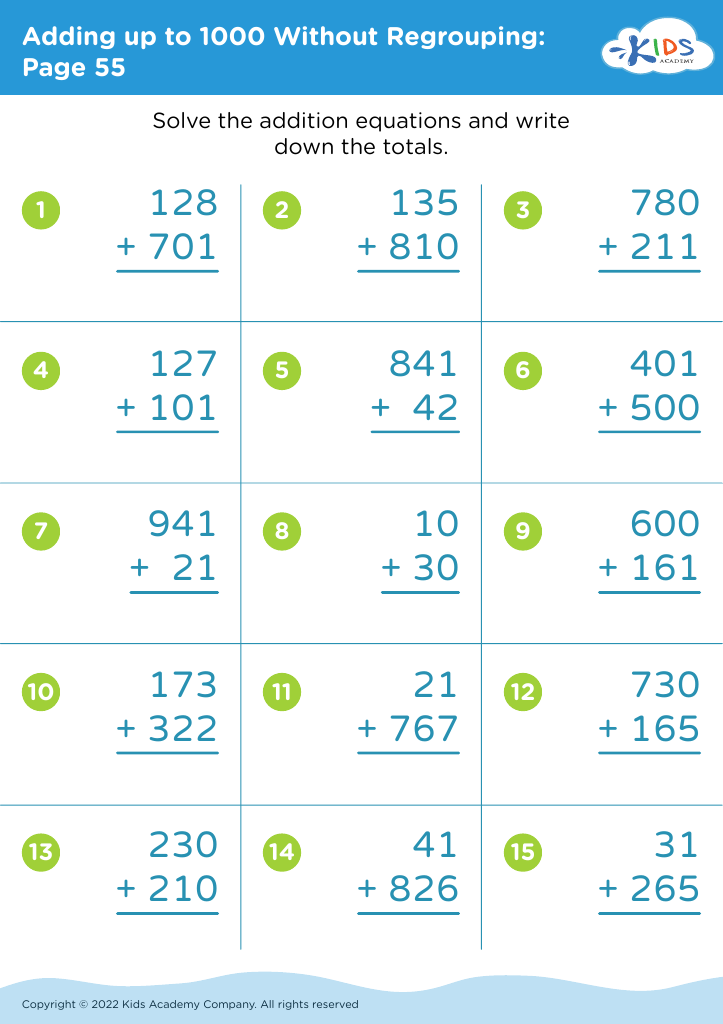
    Adding up to 1000 Without Regrouping: Page 55
    Adding up to 1000 Without Regrouping: Page 55
    Adding up to 1000 Without Regrouping: Page 55
    Worksheet
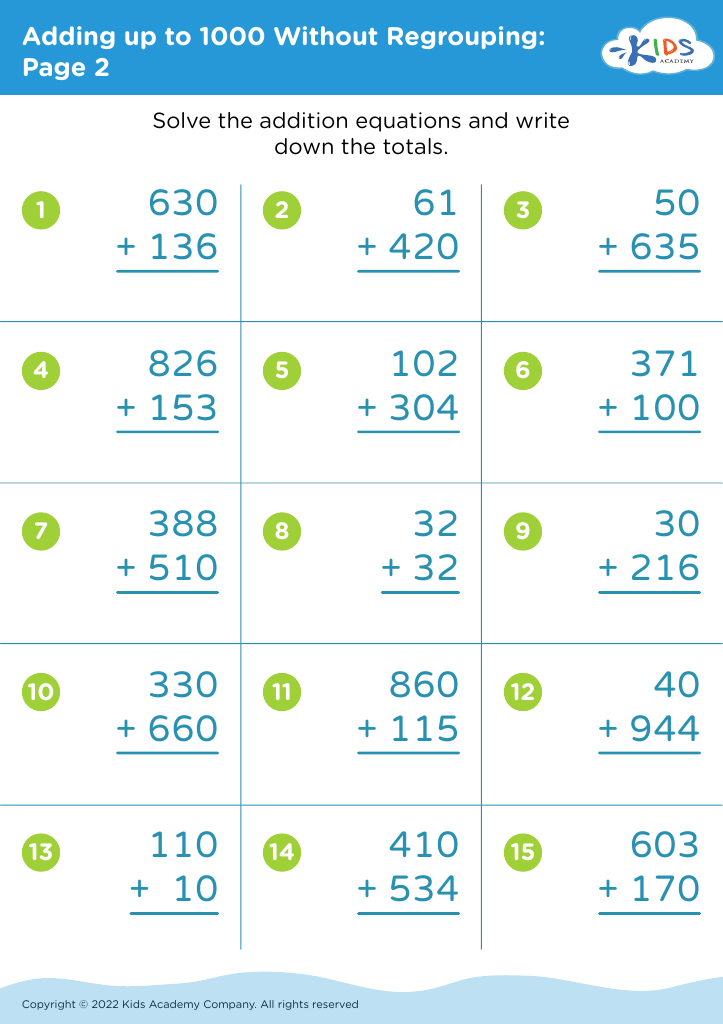
    Adding up to 1000 Without Regrouping: Page 2
    Adding up to 1000 Without Regrouping: Page 2
    Adding up to 1000 Without Regrouping: Page 2
    Worksheet
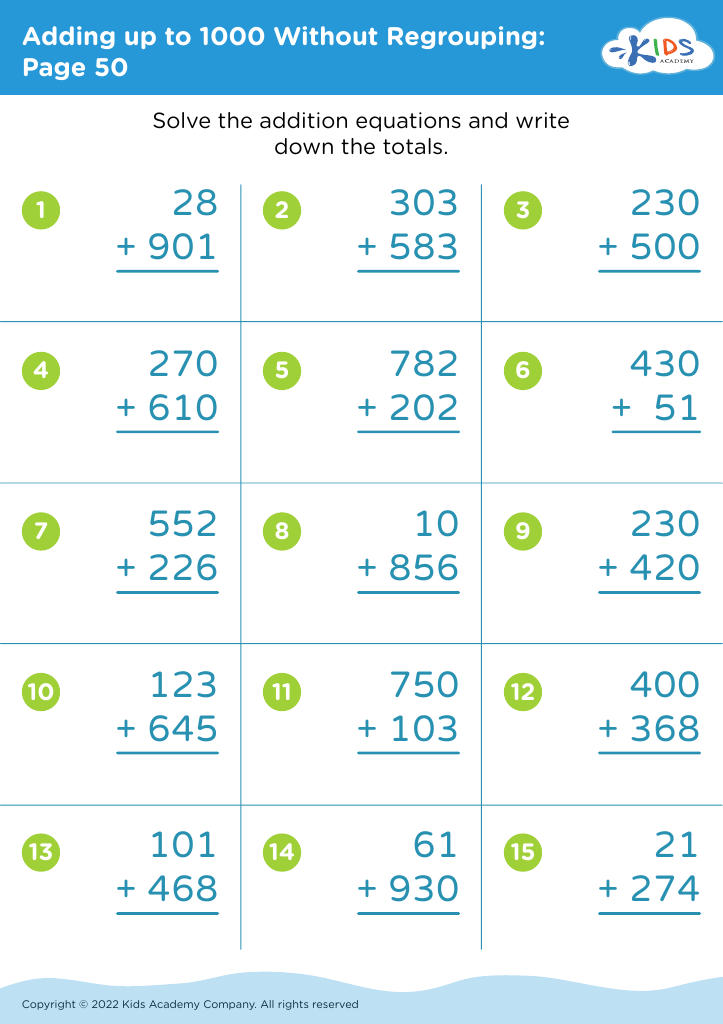
    Adding up to 1000 Without Regrouping: Page 50
    Adding up to 1000 Without Regrouping: Page 50
    Adding up to 1000 Without Regrouping: Page 50
    Worksheet
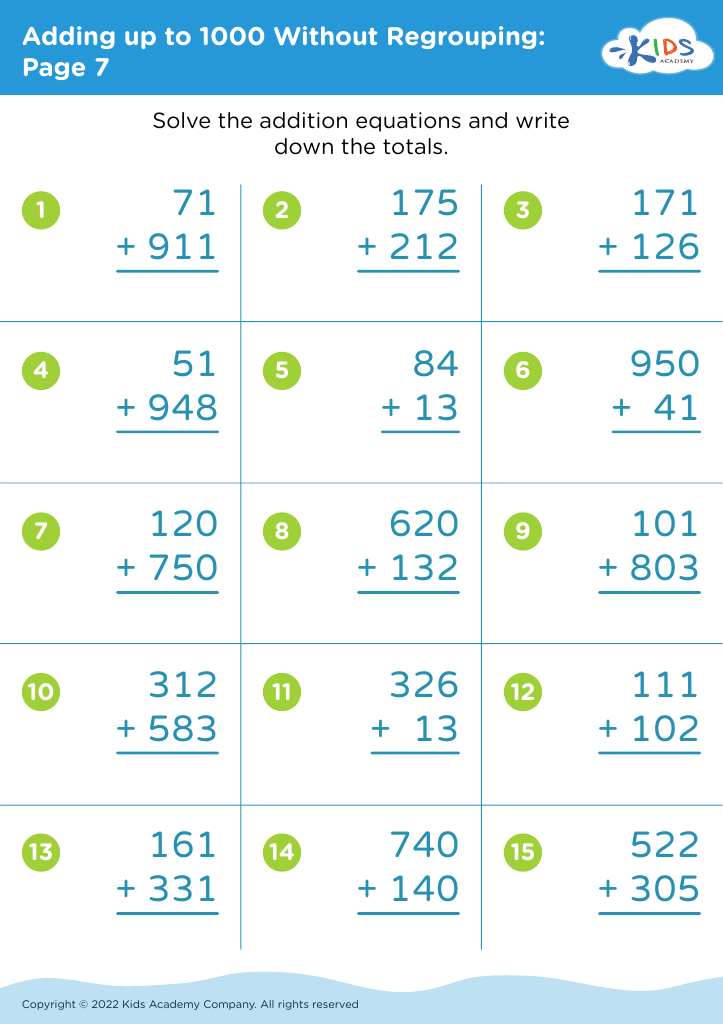
    Adding up to 1000 Without Regrouping: Page 7
    Adding up to 1000 Without Regrouping: Page 7
    Adding up to 1000 Without Regrouping: Page 7
    Worksheet
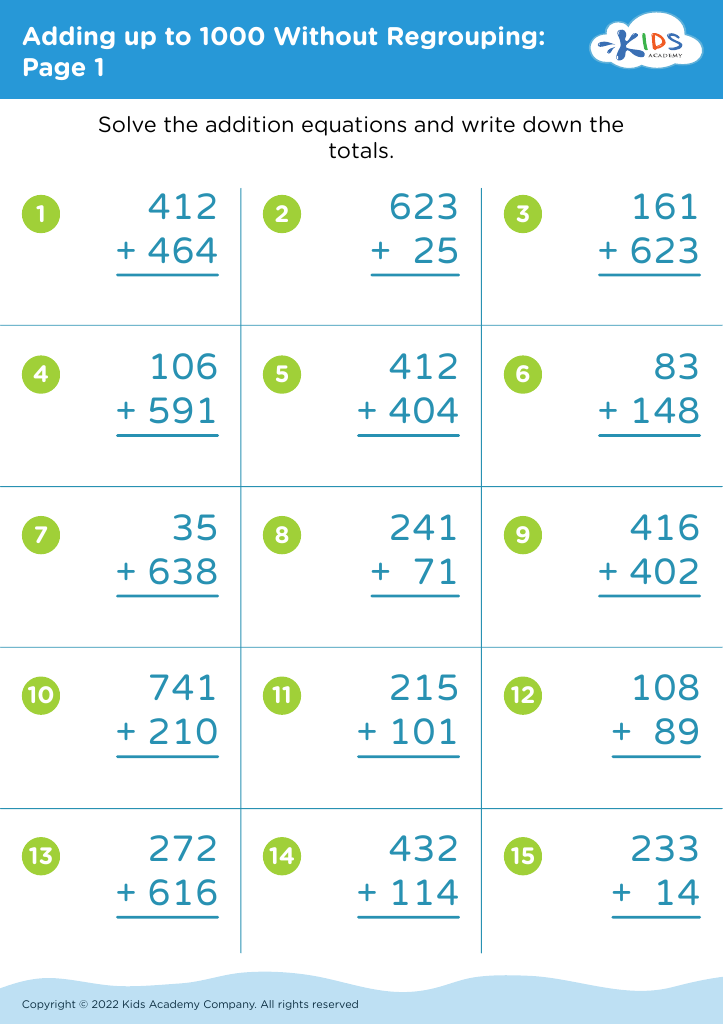
    Adding up to 1000 Without Regrouping: Page 1
    Adding up to 1000 Without Regrouping: Page 1
    Adding up to 1000 Without Regrouping: Page 1
    Worksheet
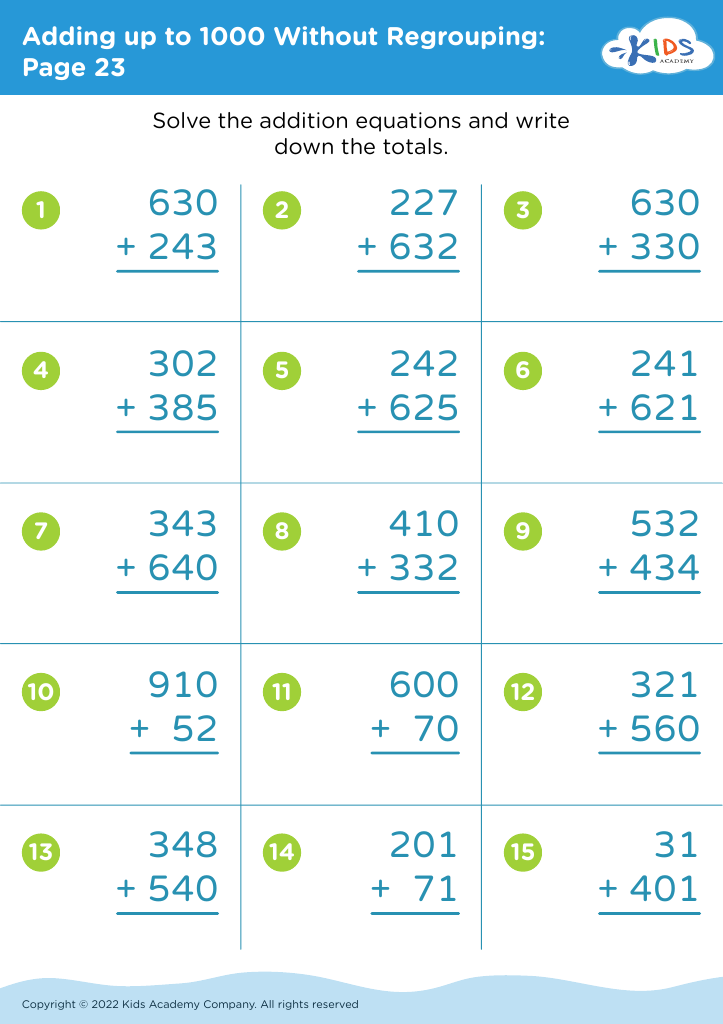
    Adding up to 1000 Without Regrouping: Page 23
    Adding up to 1000 Without Regrouping: Page 23
    Adding up to 1000 Without Regrouping: Page 23
    Worksheet
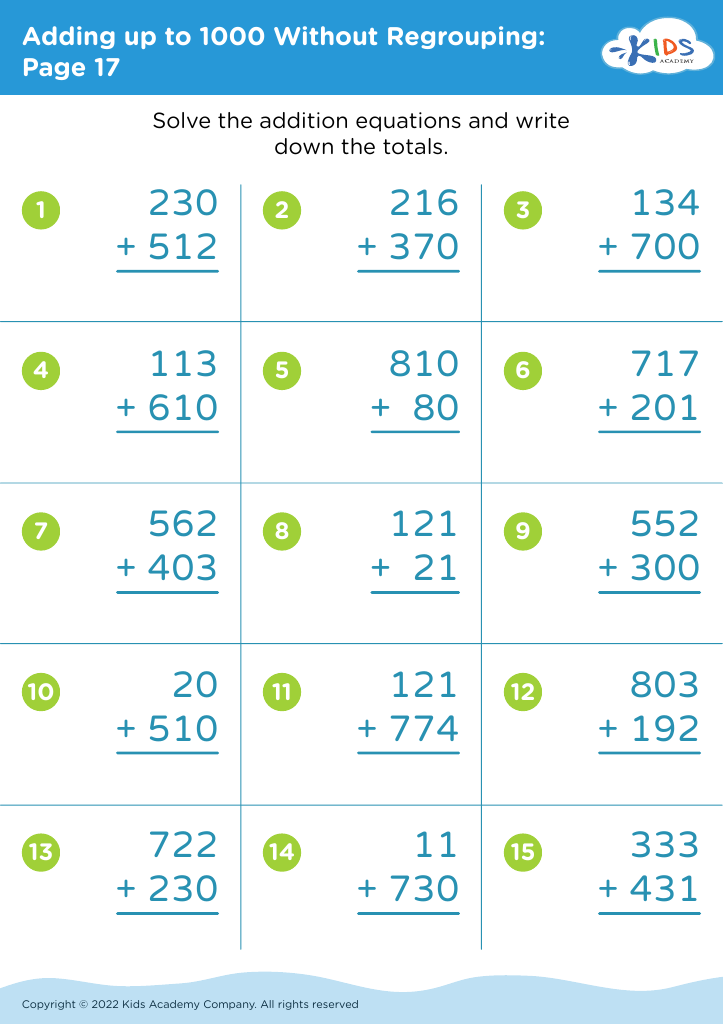
    Adding up to 1000 Without Regrouping: Page 17
    Adding up to 1000 Without Regrouping: Page 17
    Adding up to 1000 Without Regrouping: Page 17
    Worksheet
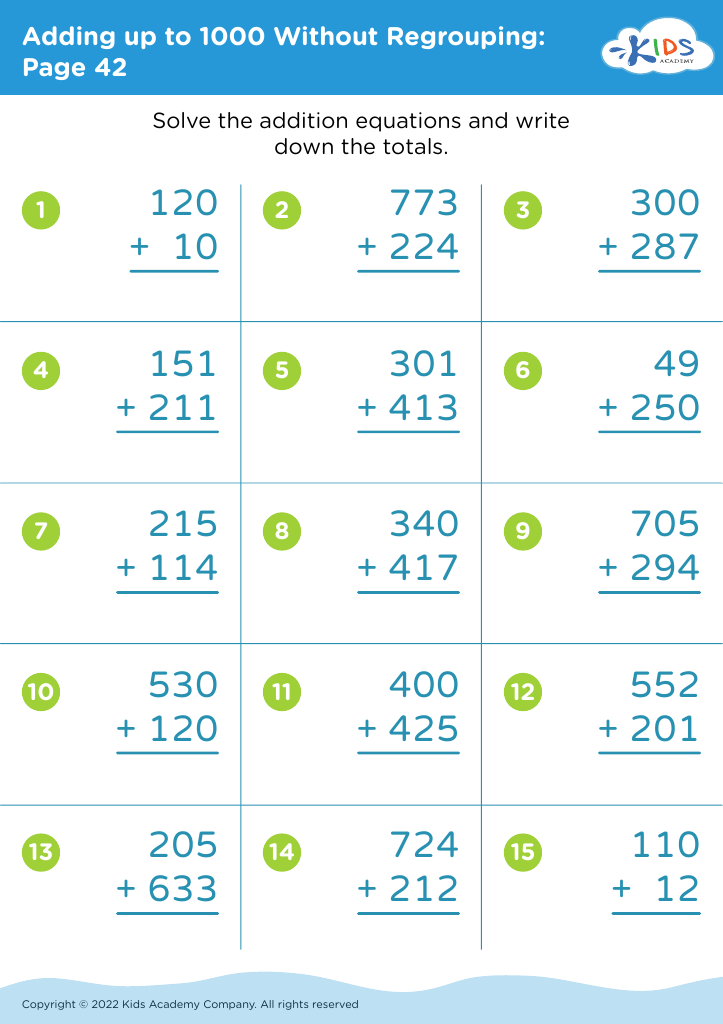
    Adding up to 1000 Without Regrouping: Page 42
    Adding up to 1000 Without Regrouping: Page 42
    Adding up to 1000 Without Regrouping: Page 42
    Worksheet


    Parents and teachers play critical roles in early childhood education, particularly in foundational math skills. Adding up to 1000 without regrouping for ages 5-7 can seem like an advanced concept, but it's beneficial in essential ways. First, tackling this type of addition helps build strong numerical reasoning and confidence in dealing with larger numbers. It introduces young learners to more complex mathematical structures, steering away from simplistic single or double-digit addition and encouraging a deeper understanding of place value.

    Without the challenge of regrouping, children concentrate on addition logic and patterns. This fundamental practice ensures that basic arithmetic principles solidify without the potential distraction or confusion that regrouping can introduce. Establishing this strong arithmetic base at an early age fosters smooth progression to more advanced concepts like regrouping and carrying over.

    Moreover, this skill paves the way for problem-solving proficiency. When kids grow comfortable adding large numbers, overcoming initial fears of large-scale calculations enhances their capability to tackle future numerical challenges with more significant confidence.

    Finally, fostering mathematical competence from a young age impacts overall cognitive development positively. The ability and willingness to engage with these problems can translate to better performance in various subjects, promoting academically well-rounded and proficient learners.