Shape Recognition Tracing Shapes Worksheets for Ages 5-7
13 filtered results
-
From - To
Boost your child’s early learning with our engaging Shape Recognition Tracing Worksheets, specially designed for ages 5-7. These interactive worksheets teach essential shape identification and tracing skills while making learning fun! Kids will practice drawing various shapes, including circles, squares, and triangles, enhancing their fine motor skills and hand-eye coordination. Each activity reinforces shape recognition in a playful context, fostering confidence and creativity. Ideal for at-home learning or classroom use, our worksheets are perfect for developing early math skills. Unlock your child's potential with these delightful and educational resources, ensuring a strong foundation for future learning adventures!
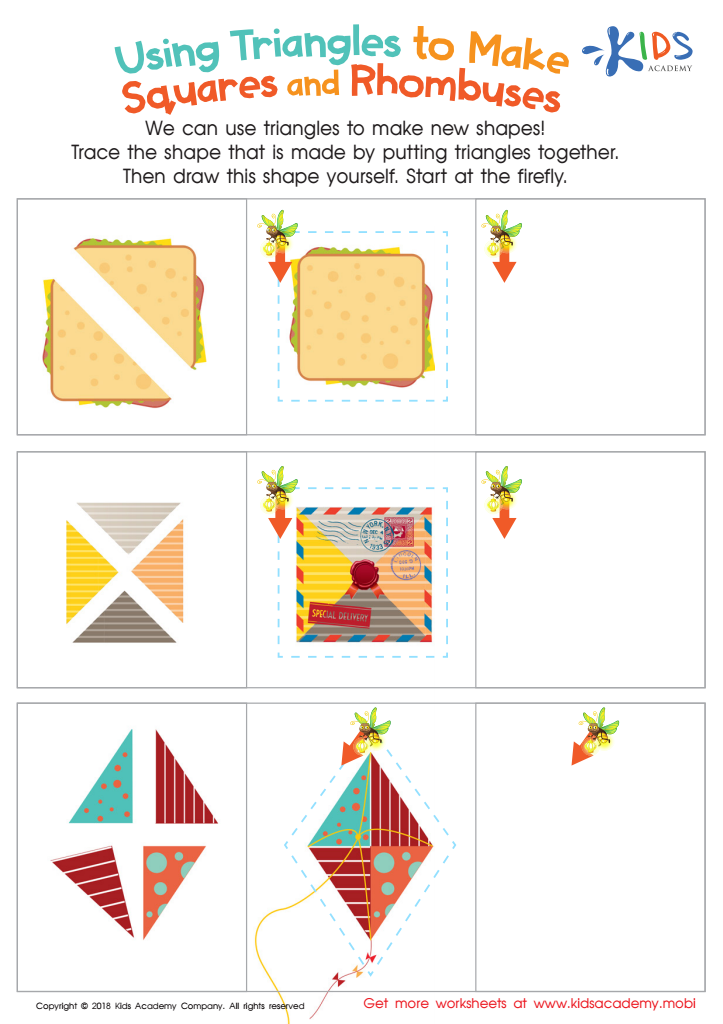
Using Triangles to Make Squares and Rhombuses Worksheet
 Assign to My Students
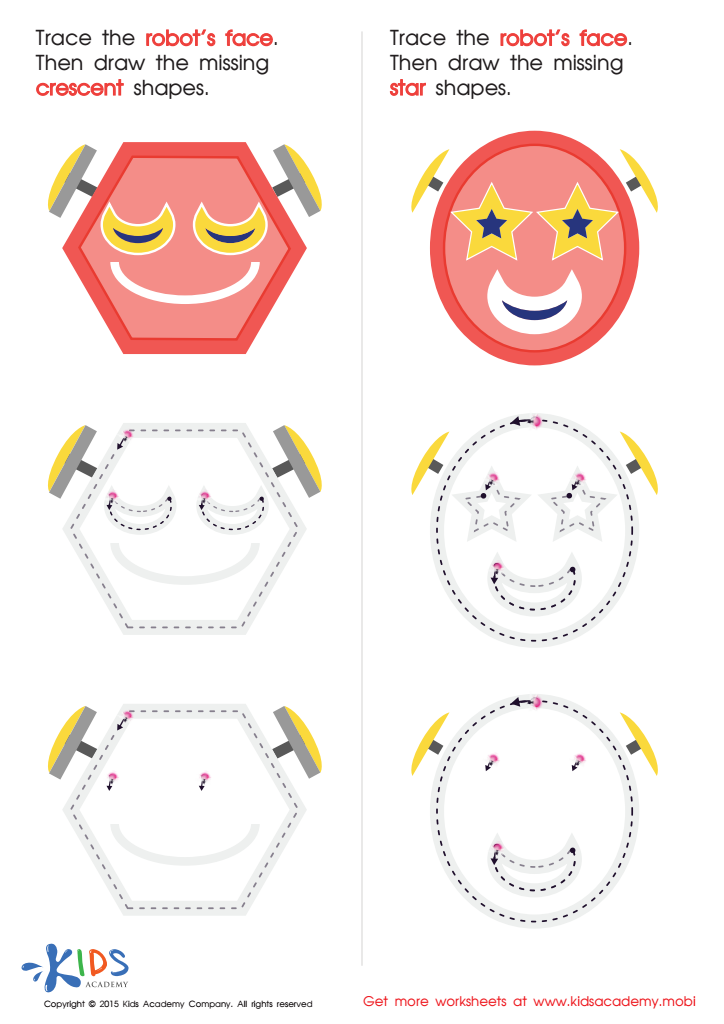
Composing a Robot's Face of Crescents And Stars Worksheet
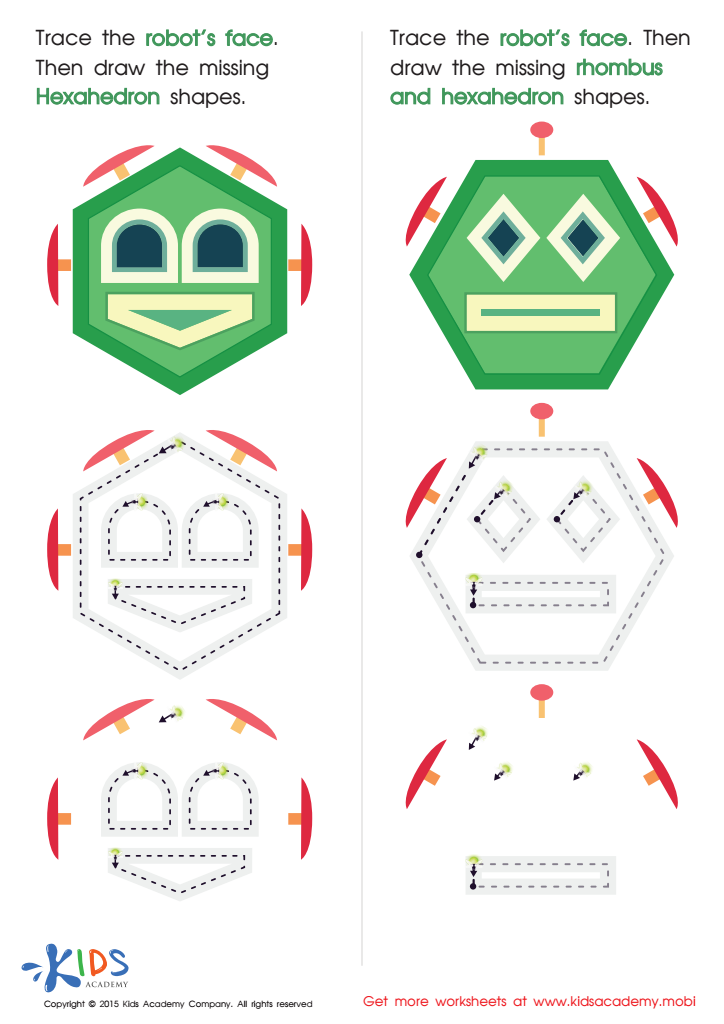
Practice Drawing Hexahedrons And a Rhombus Worksheet
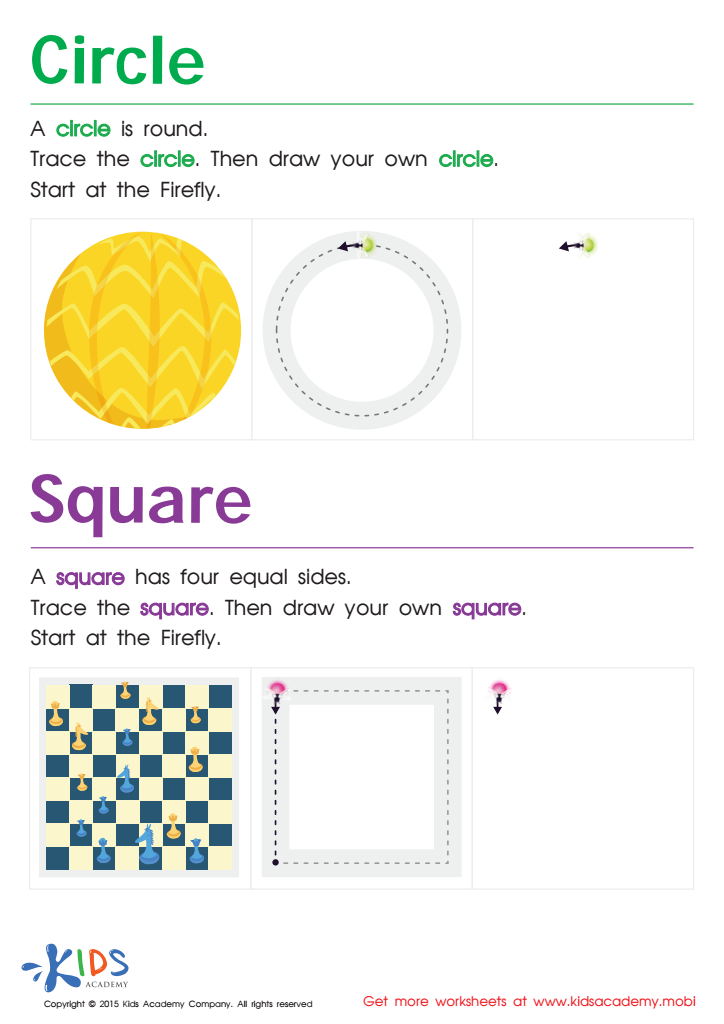
Trace And Draw a Circle And a Square Worksheet
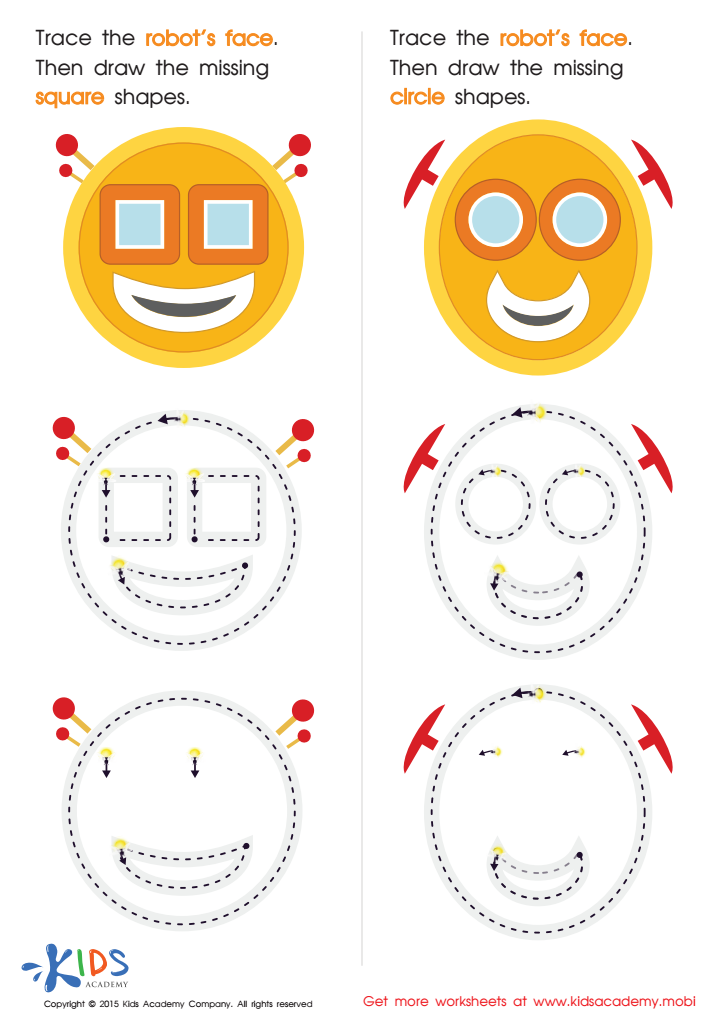
Practicing to Draw Circles And Squares Printable
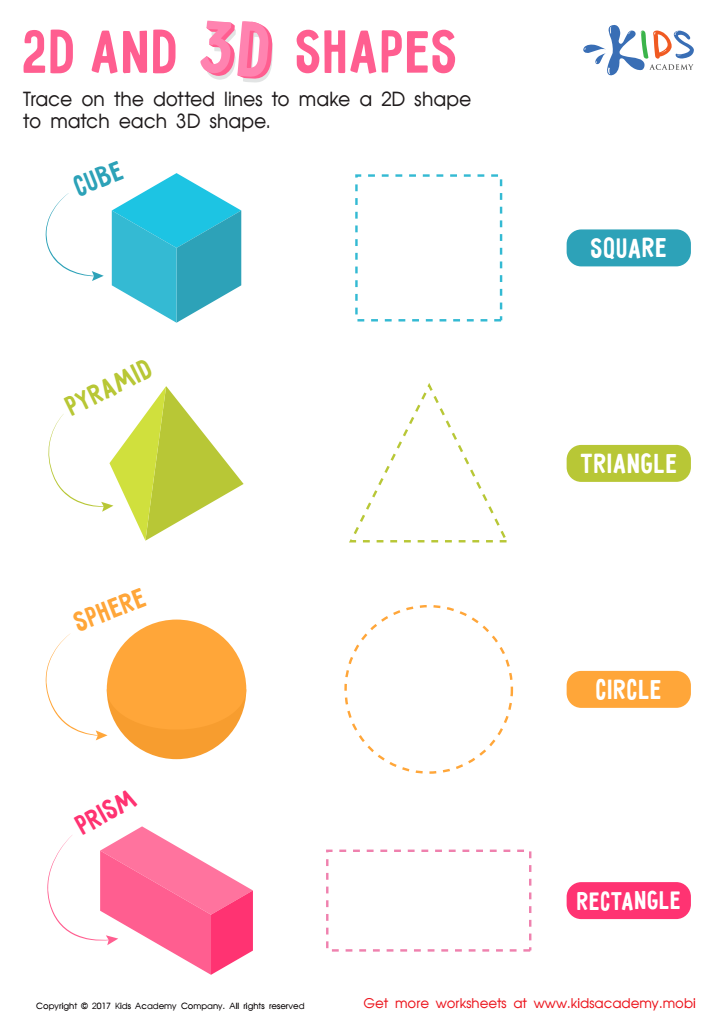
2D and 3D Shapes Worksheet
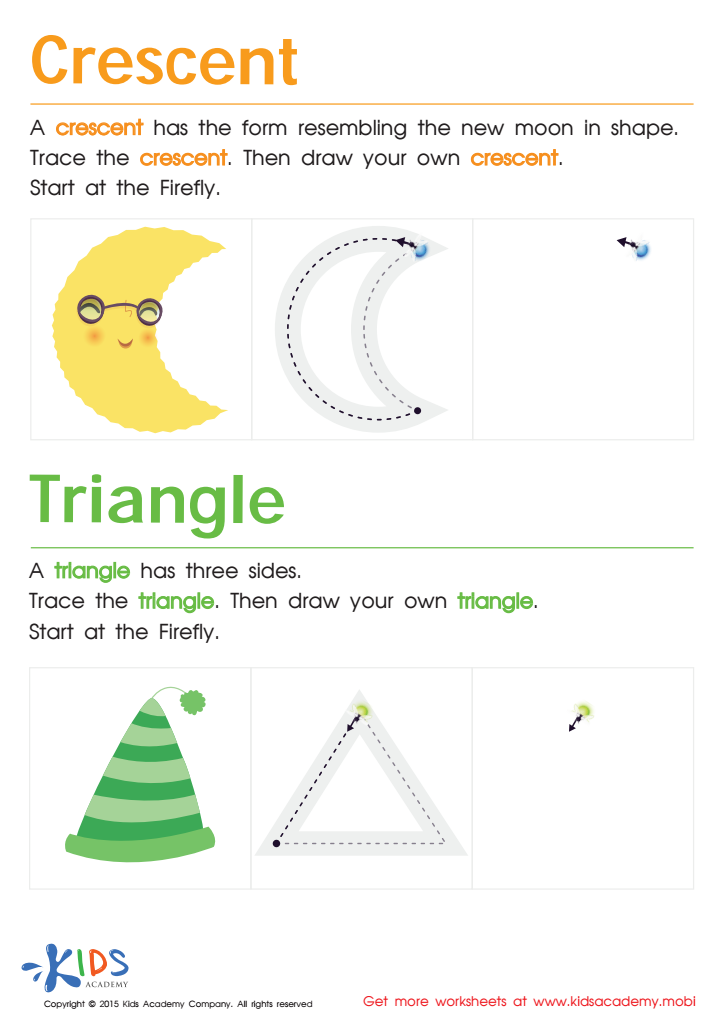
Learning to Draw Crescents And Triangles Worksheet
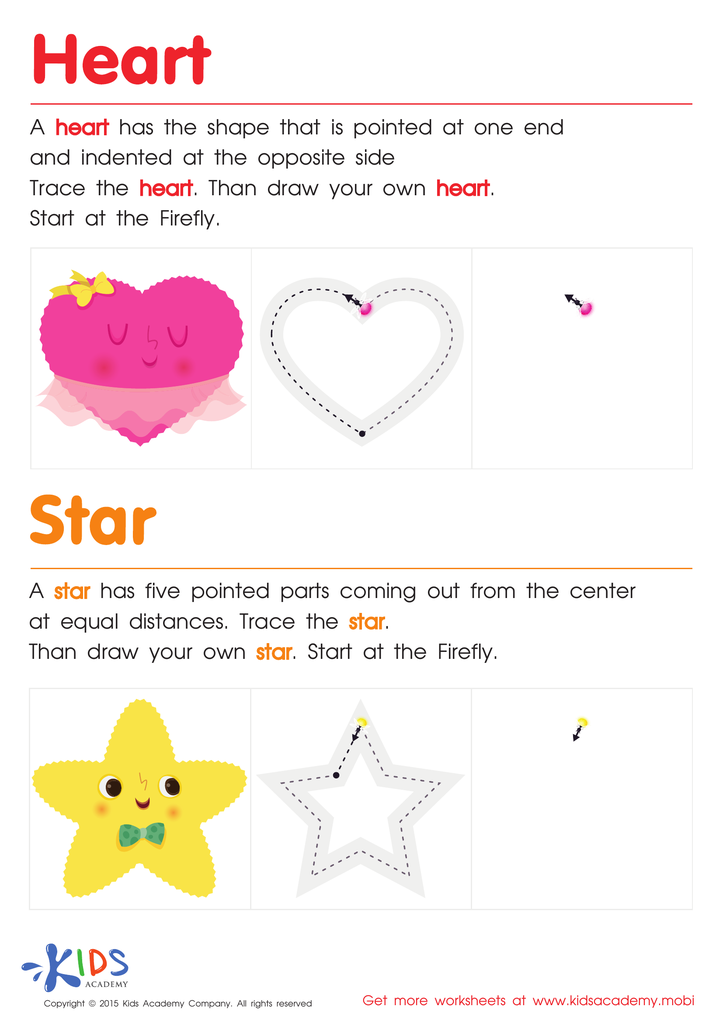
Let's Learn to Draw Hearts And Stars Printable
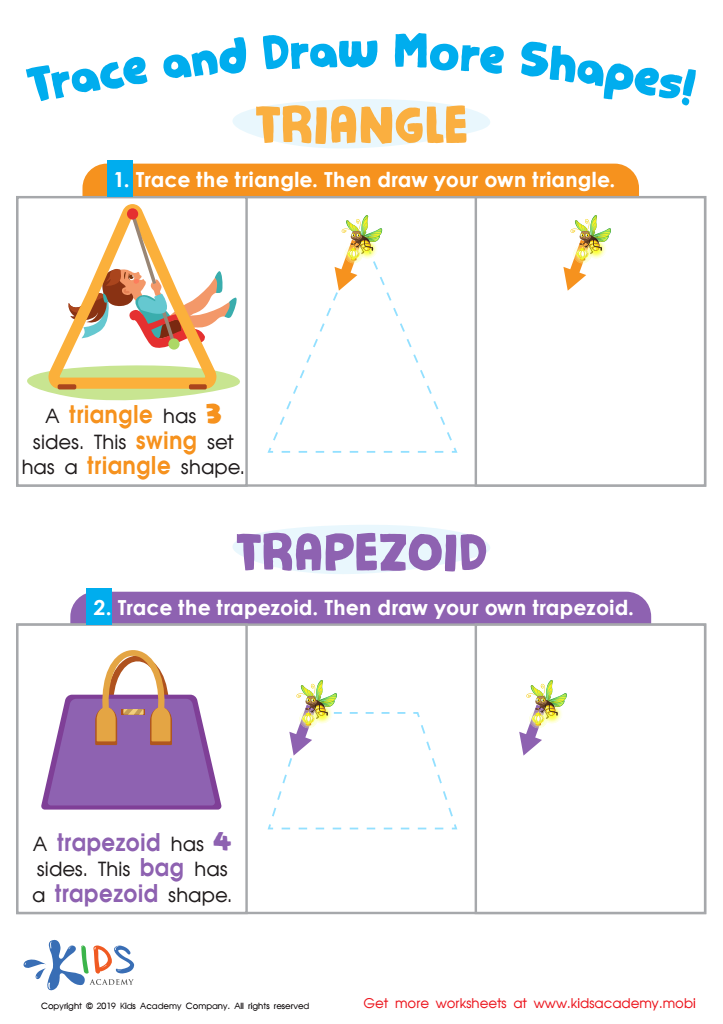
Trace and Draw More Shapes Worksheet
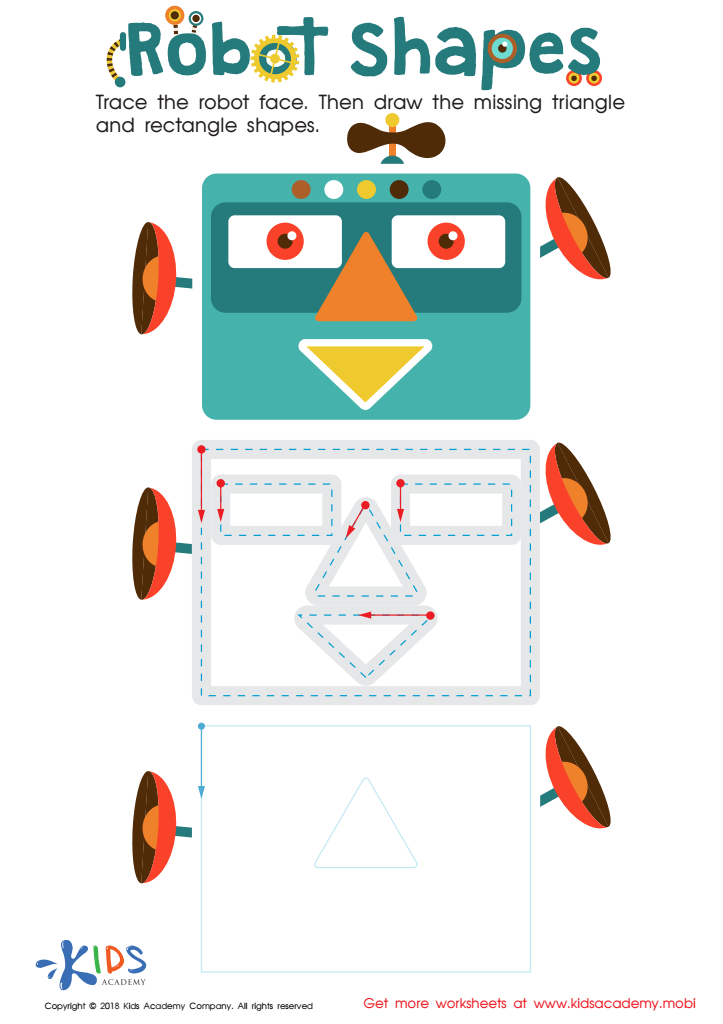
Robot Shapes Worksheet
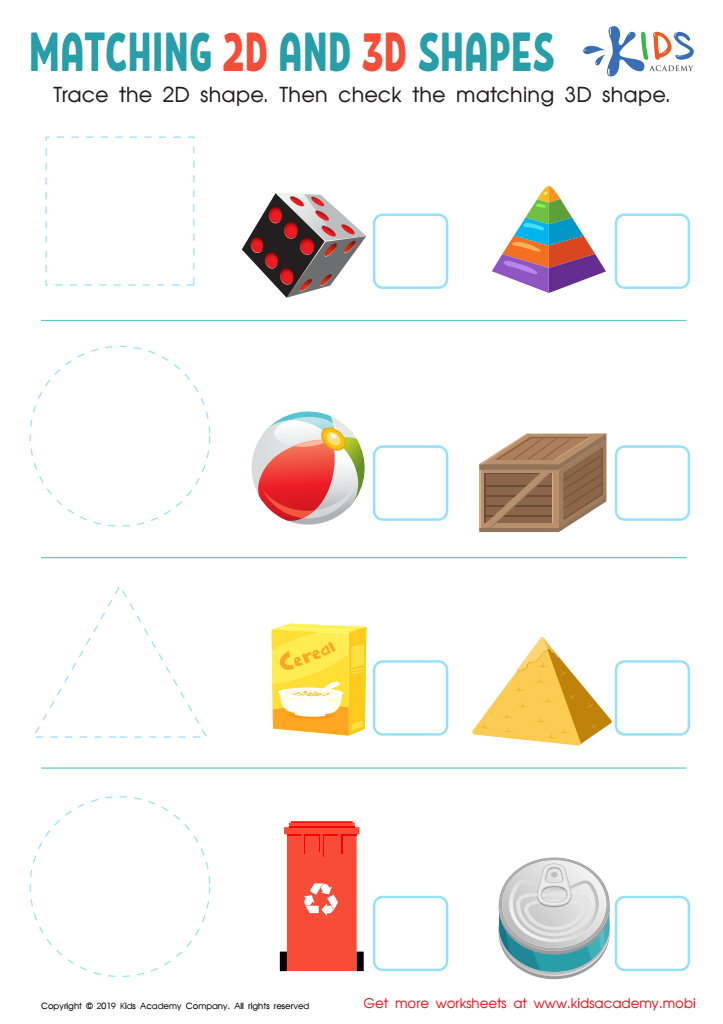
Matching 2D and 3D Shapes Worksheet
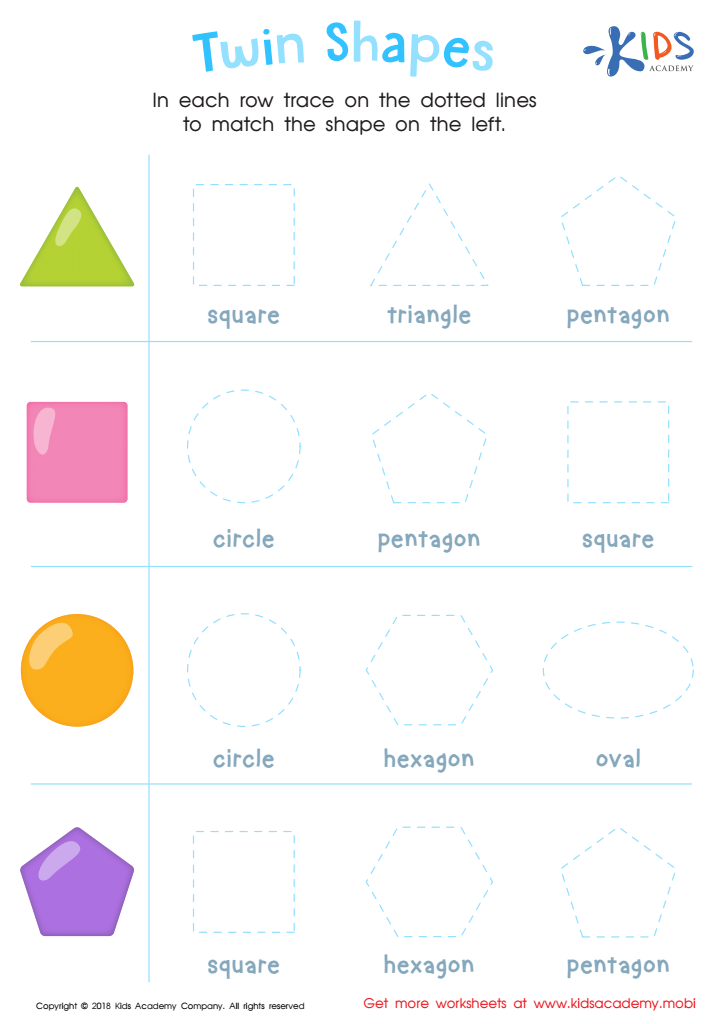
Twin Shapes Dot-to-Dot Worksheet
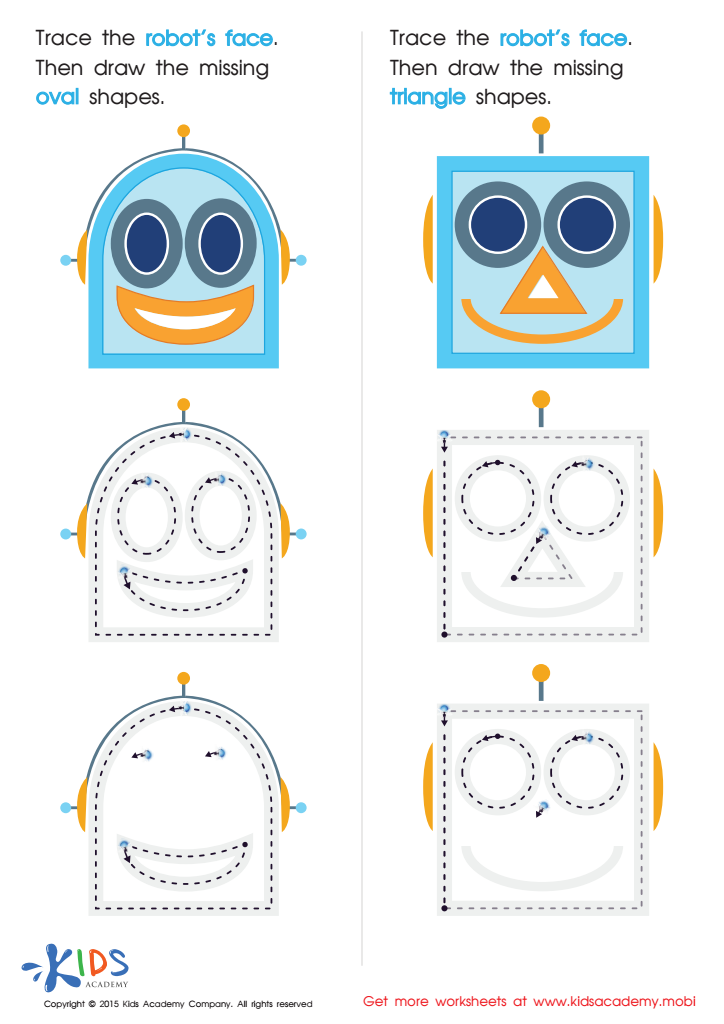
Drawing Ovals And Triangles with Fun Printable








Shape recognition and tracing are crucial learning activities for children ages 5-7, laying the foundation for many essential skills. At this developmental stage, children are not only learning about various geometric shapes but also enhancing their fine motor skills through tracing exercises. This hands-on approach helps improve hand-eye coordination, which is vital for later tasks like writing and drawing.
Furthermore, recognizing shapes helps children develop their spatial awareness and visual discrimination skills. These abilities are fundamental for math concepts, such as geometry, measurement, and problem-solving. Understanding shapes also contributes to cognitive development by encouraging critical thinking and classification skills.
Engaging in shape recognition activities stimulates curiosity and fosters creativity. When children identify and create shapes, they improve their observational skills, which are important for learning in multiple domains.
For parents and teachers, supporting this foundational learning reinforces their commitment to meeting educational milestones. It also fosters a positive learning environment that promotes independence and confidence in children as they discover their skills. Overall, investing time in shape recognition and tracing not only enriches a child's education but also equips them with lifelong capabilities that form the basis of more advanced learning.