Short Vowels Worksheets for Ages 6-9
22 filtered results
-
From - To
Short Vowels Worksheets for Ages 6-9 offer a fun and educational way to help children master essential phonics skills. Designed to reinforce the understanding of short vowel sounds, these worksheets provide engaging activities that sharpen reading and spelling abilities. Perfect for classroom use or homeschooling, kids will practice identifying, reading, and writing words with short vowel sounds through coloring, matching, and fill-in-the-blank exercises. Each worksheet is tailor-made to build confidence and improve literacy skills, setting a strong foundation for future learning. Explore our diverse collection to support your young reader’s journey today!
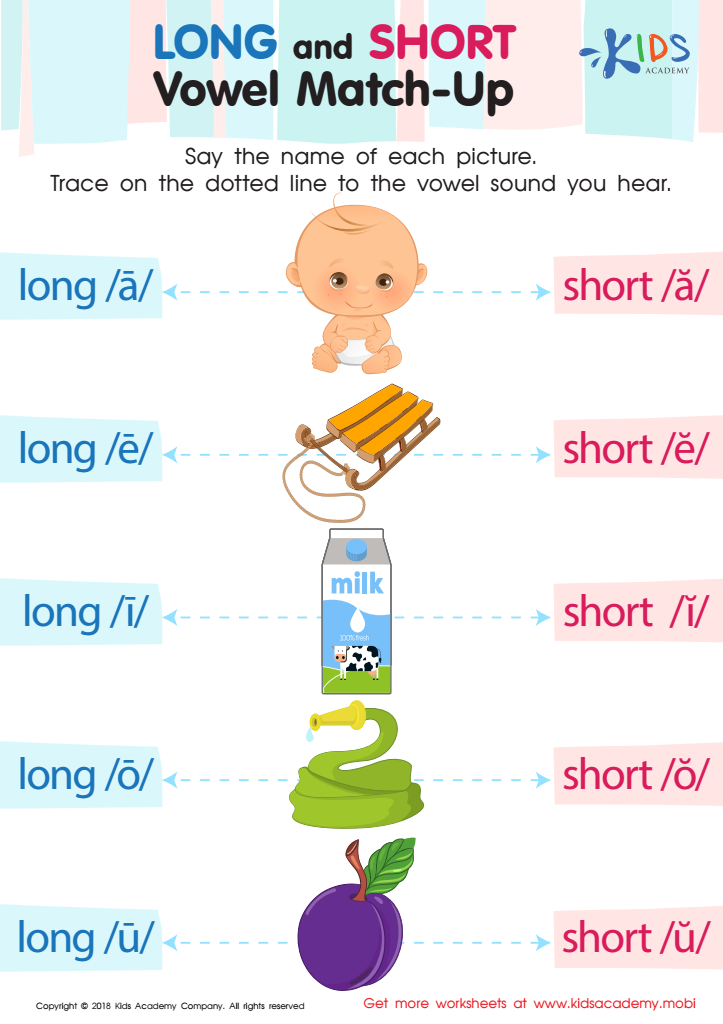
Long and Short Vowel Match up Reading Worksheet
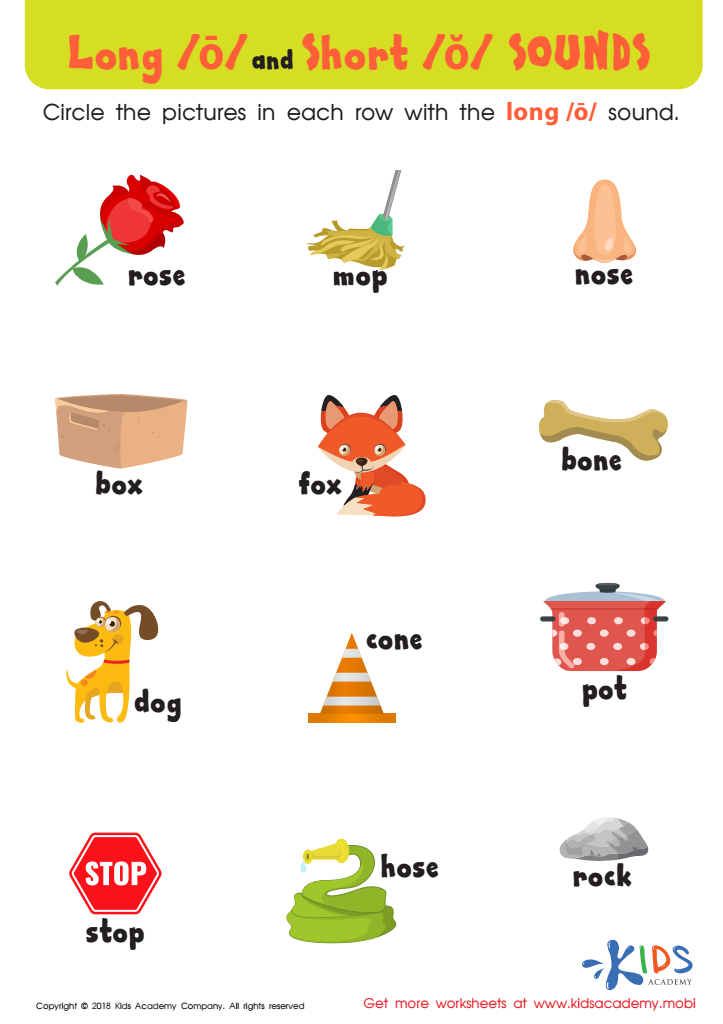
Reading: Long O and Short O Sounds Worksheet
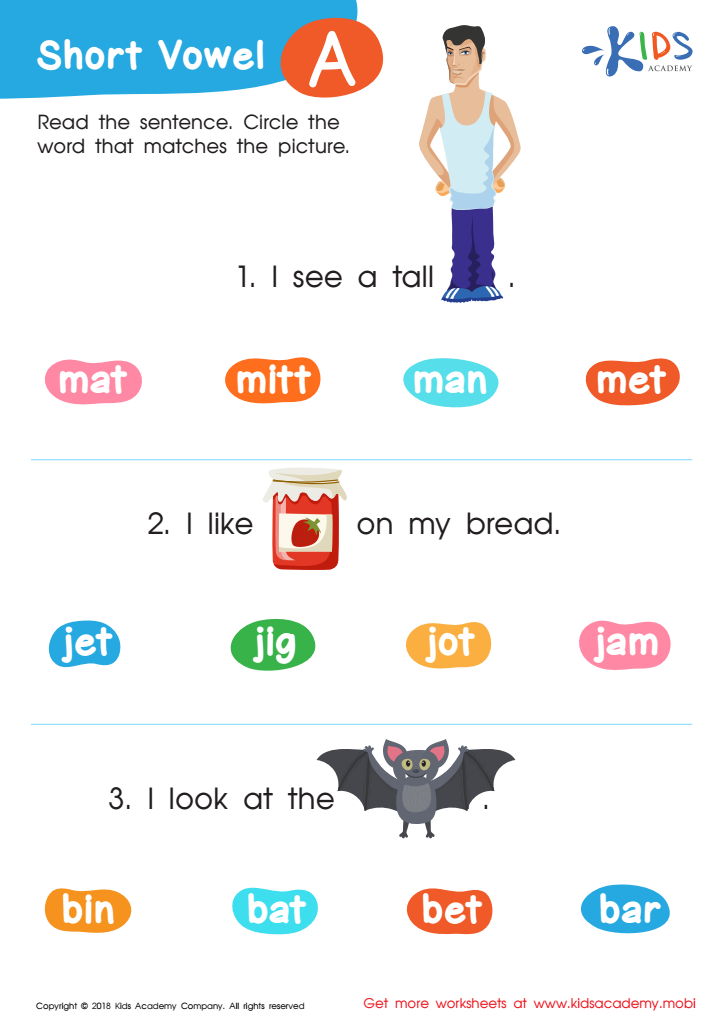
Short Vowel /a/ Worksheet
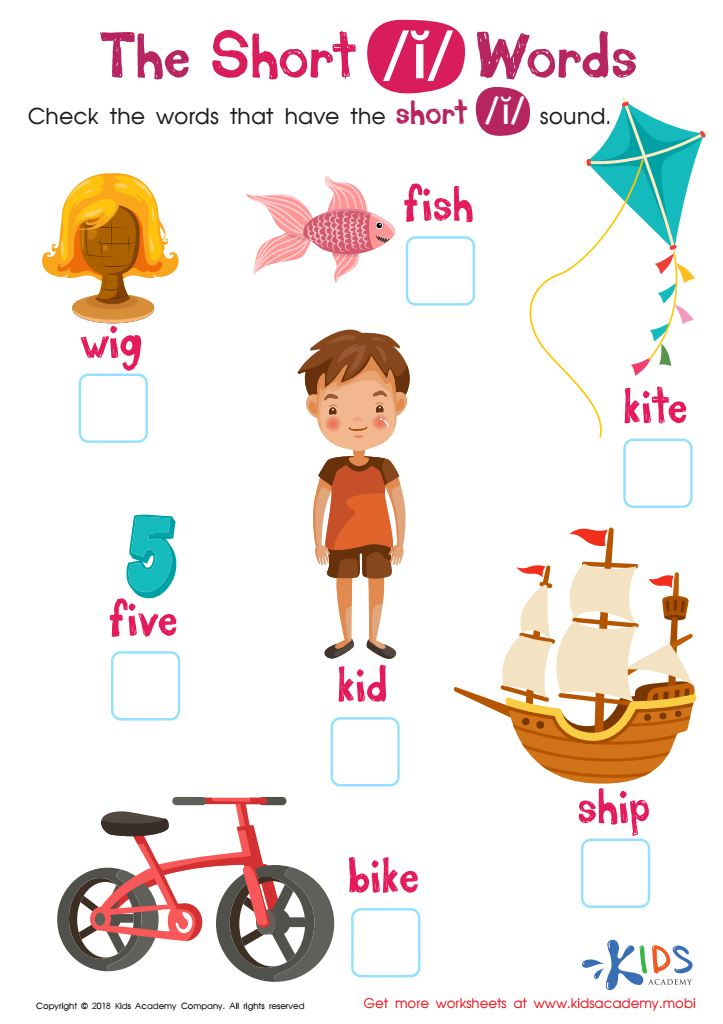
The Short I Words Reading Worksheet
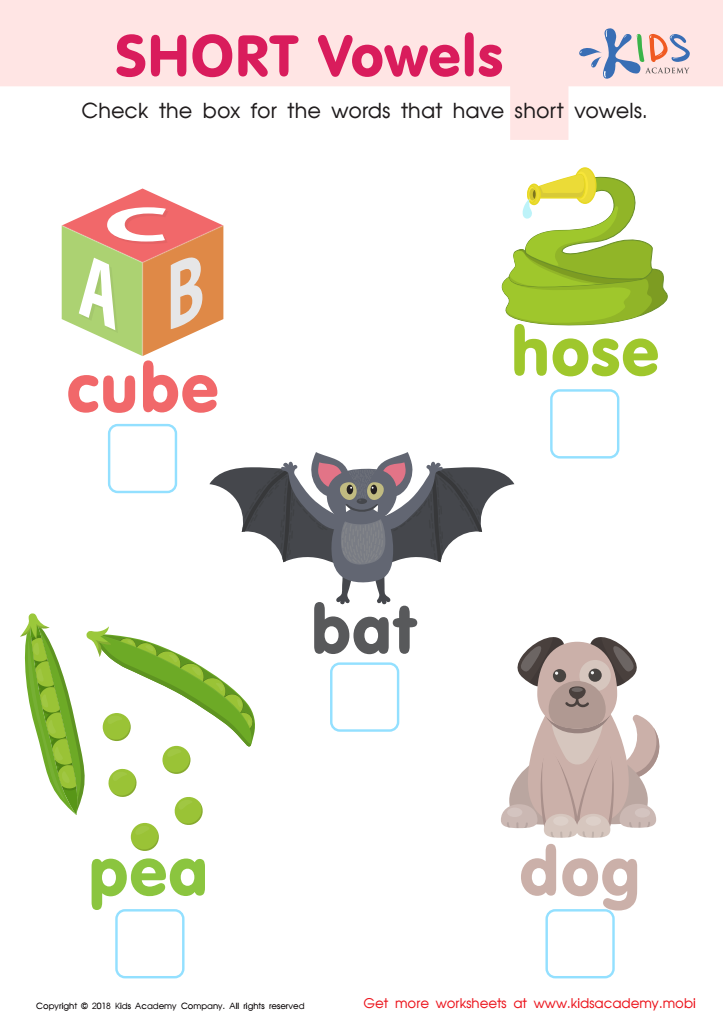
short vowels Worksheet
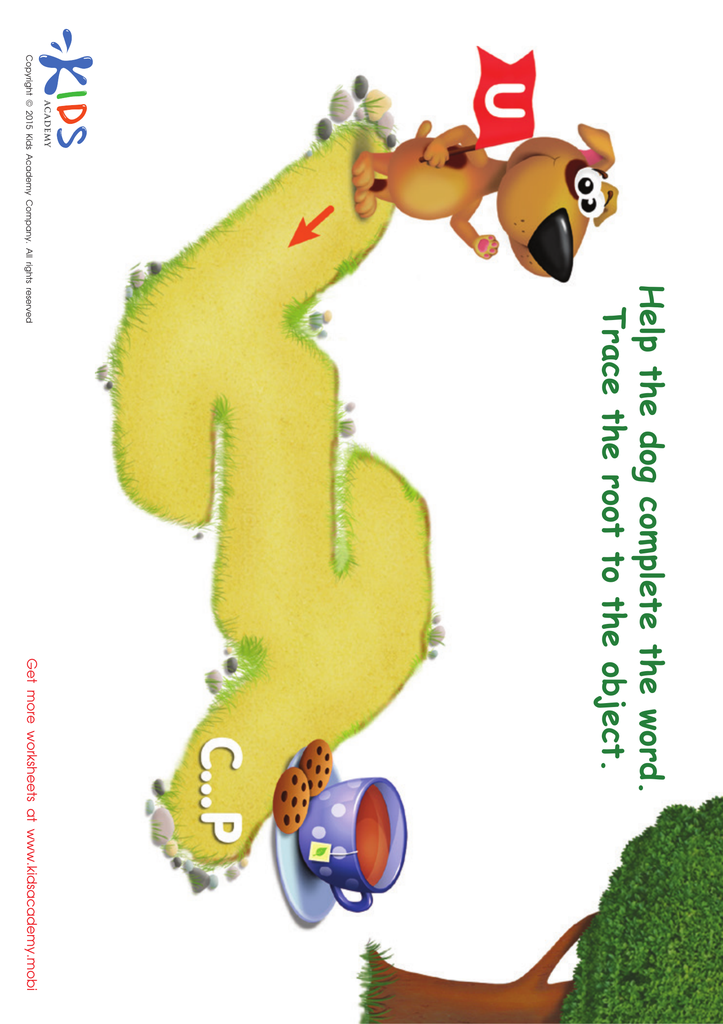
Short Vowel Sound U Worksheet Worksheet
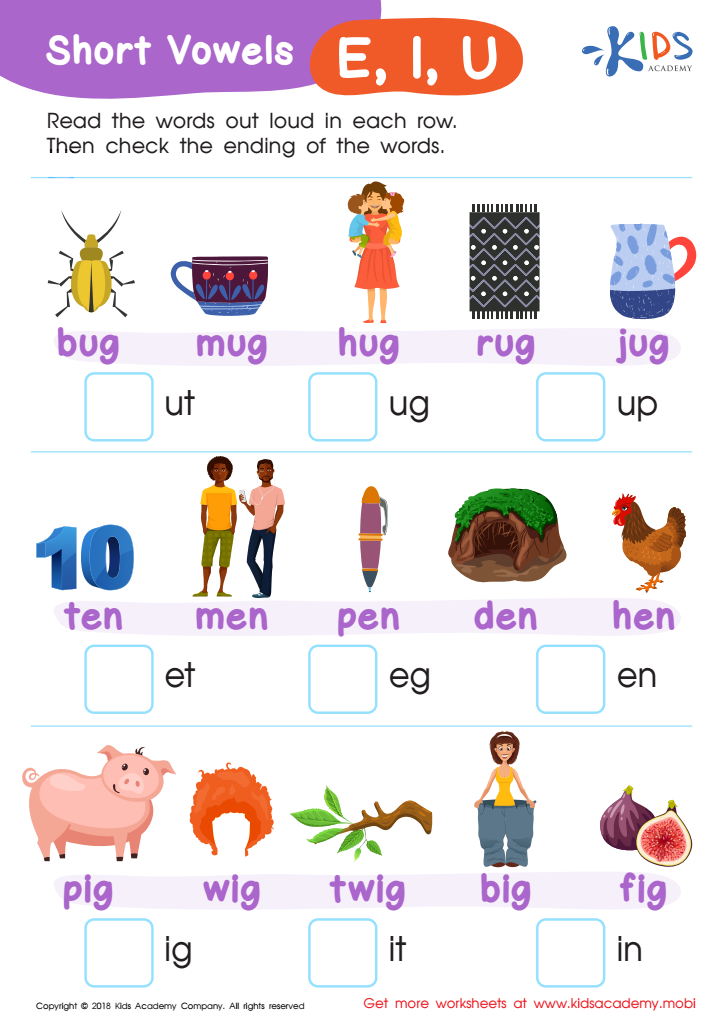
Short Vowels /e/, /i/, and /u/ Worksheet
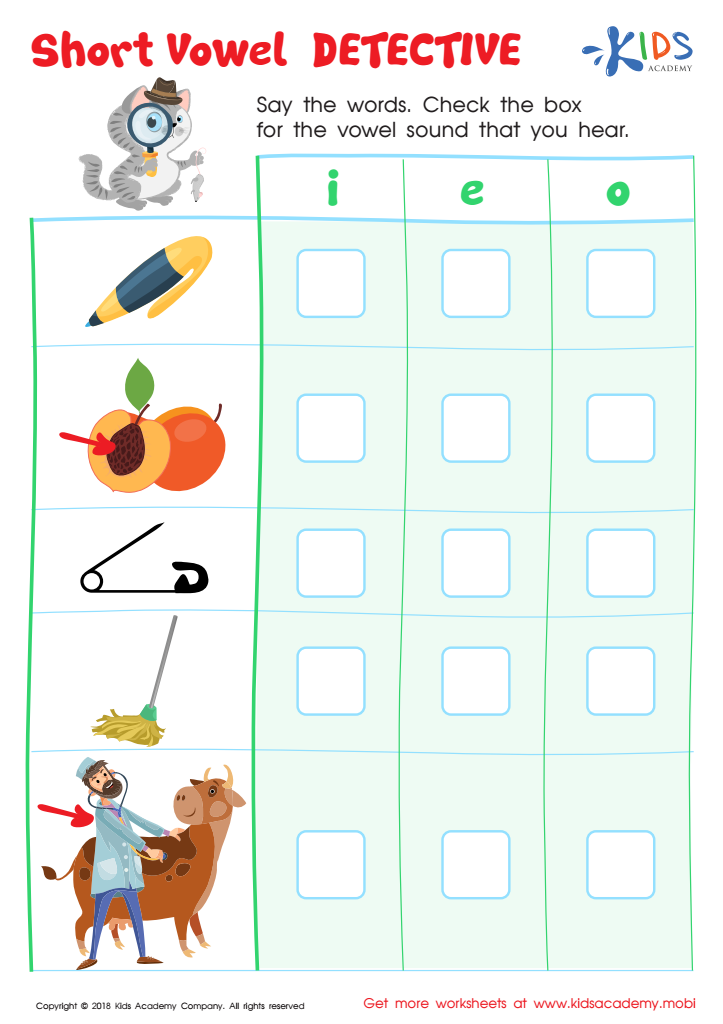
Short Vowel Detective Worksheet
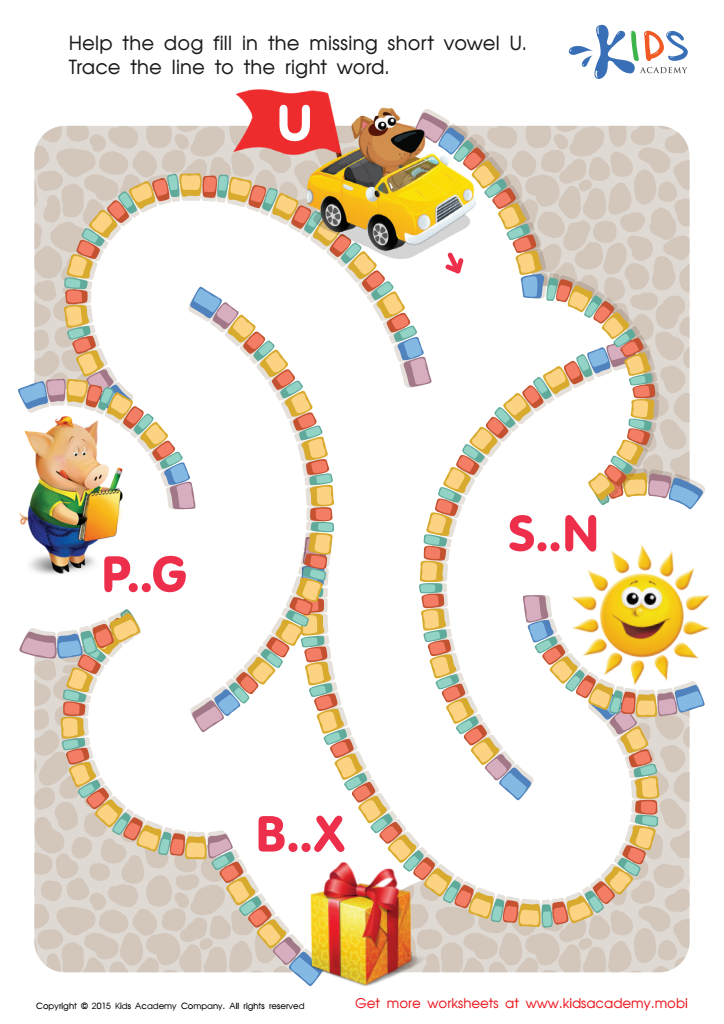
Short Vowel Sound U Worksheet
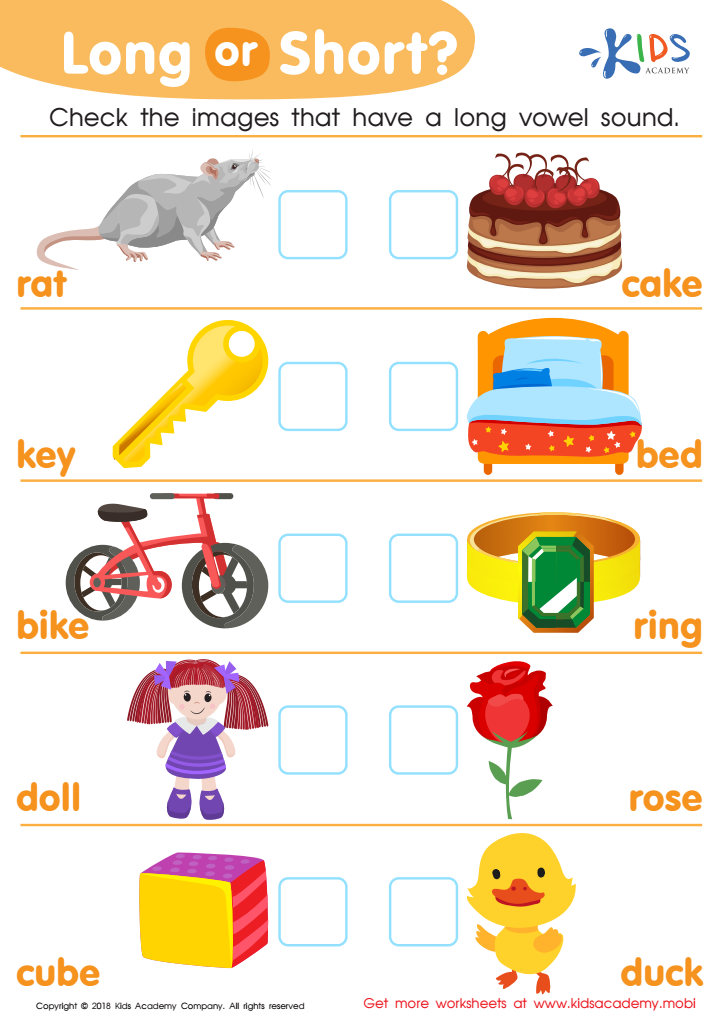
Long or Short Reading Worksheet
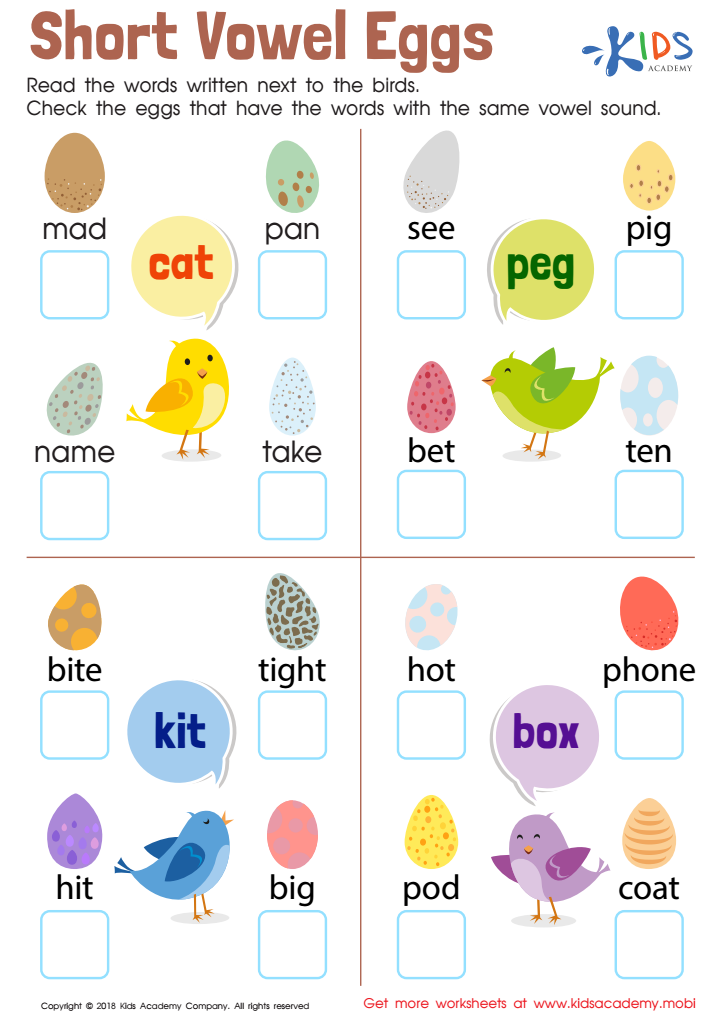
Short Vowel Eggs Worksheet
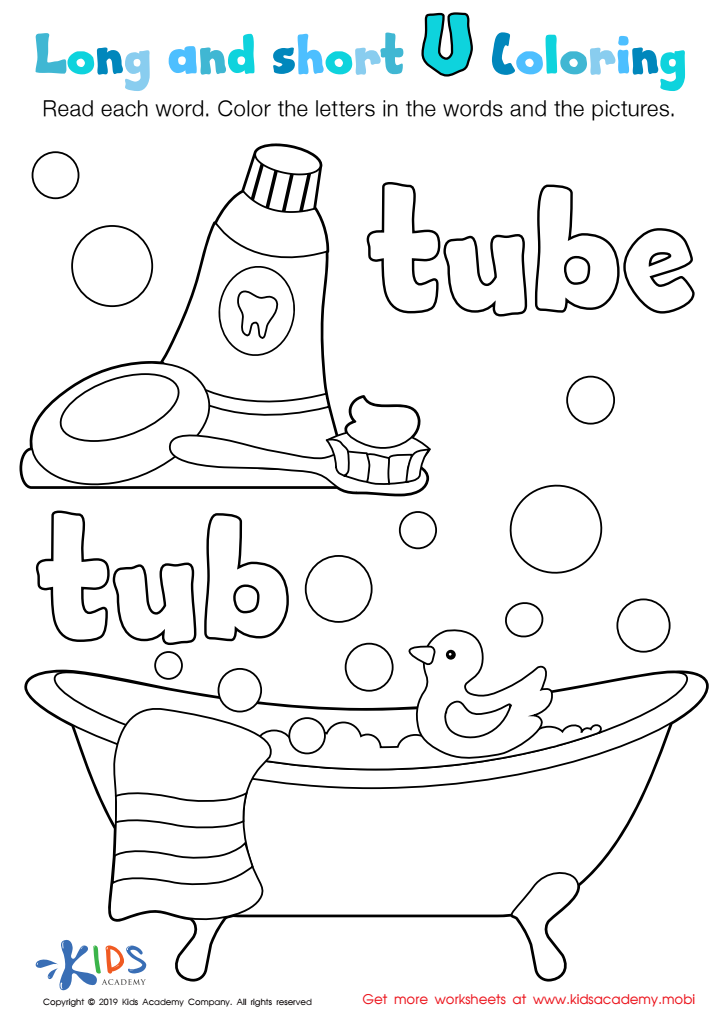
Long and Short U Worksheet
 Assign to My Students
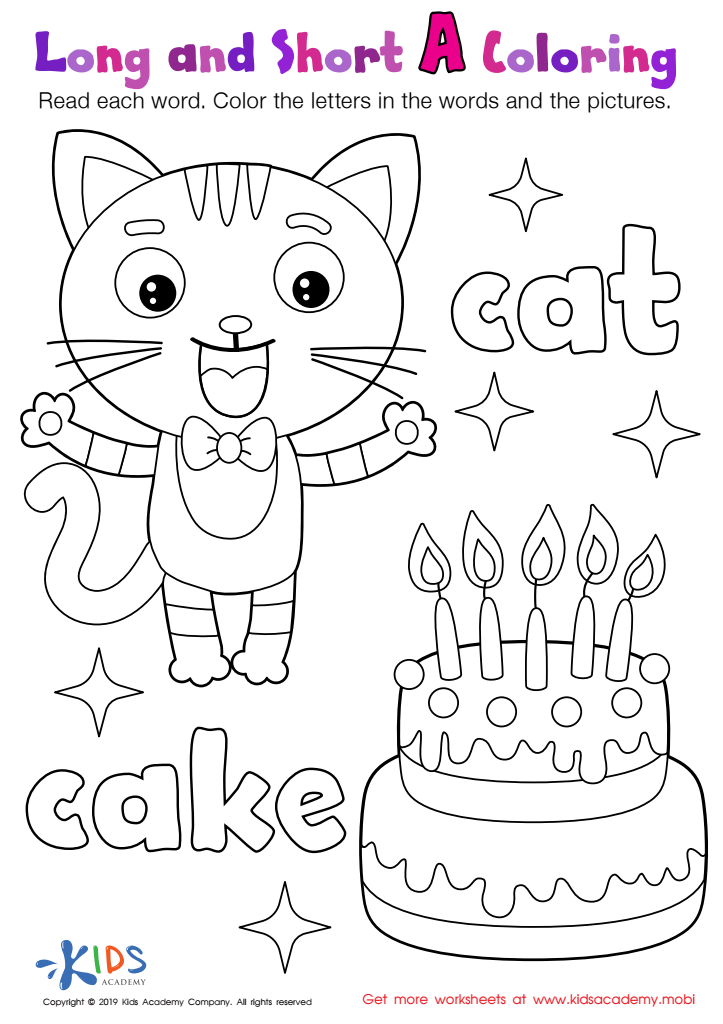
Long and Short A Worksheet
Assign to My Students
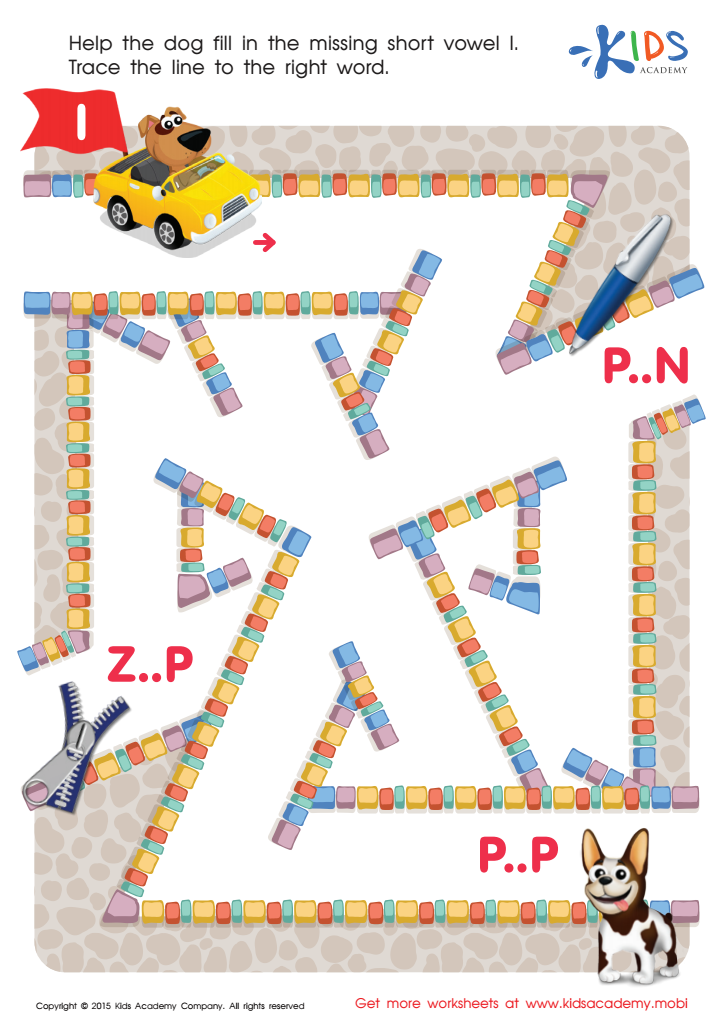
Short Vowel Sound I Worksheet
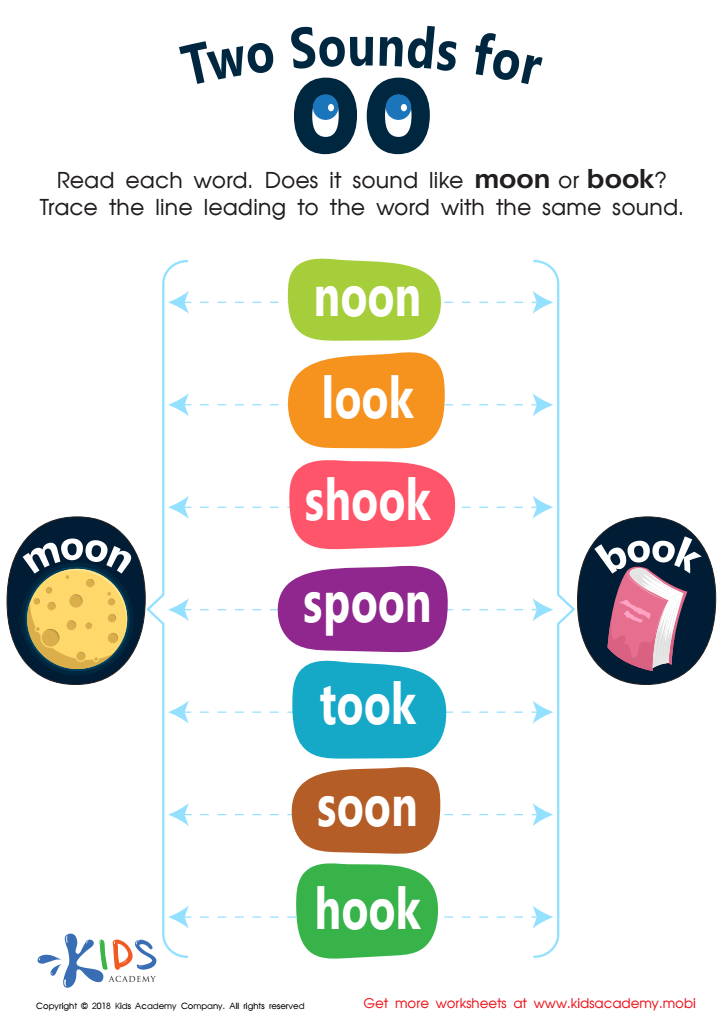
Two Sounds for OO Worksheet
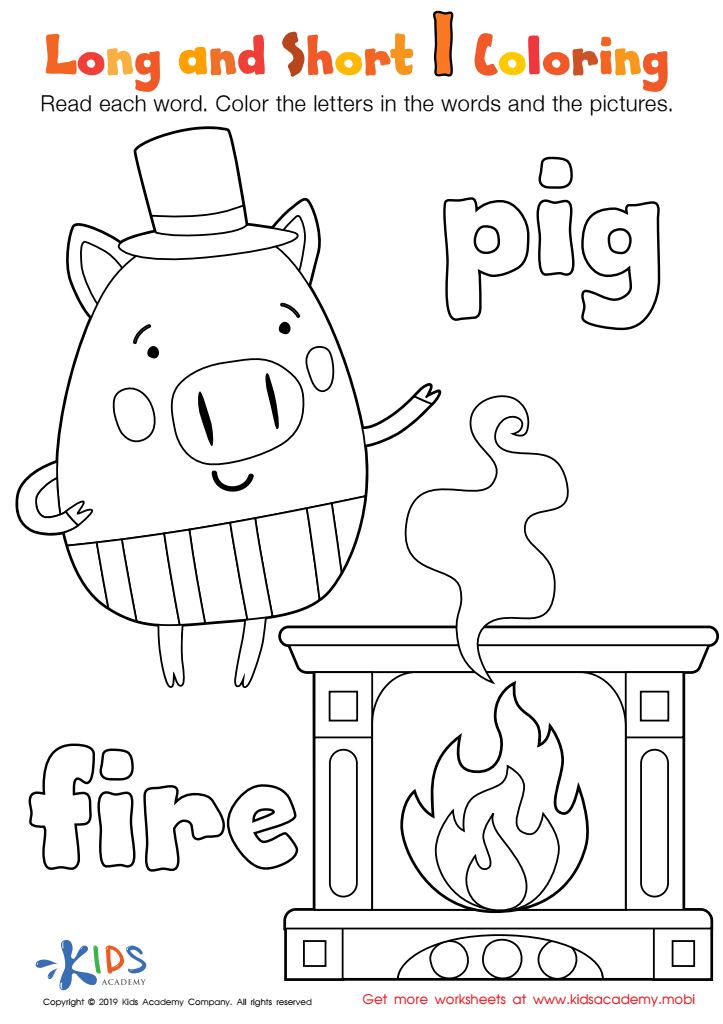
Long and Short I Worksheet
Assign to My Students
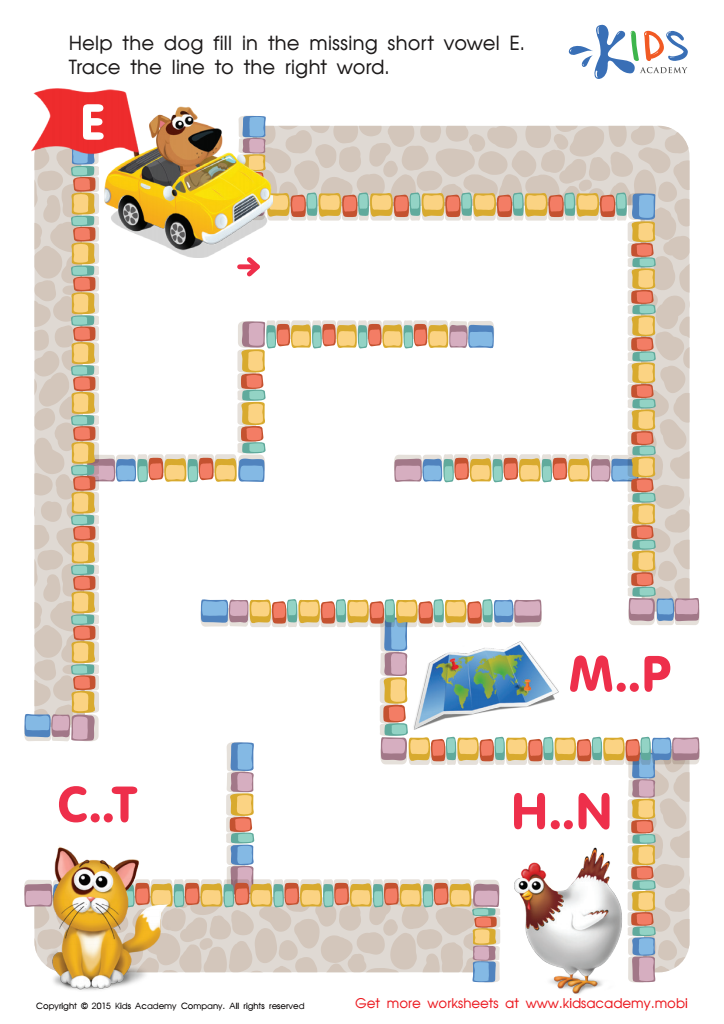
Short Vowel Sound E Worksheet
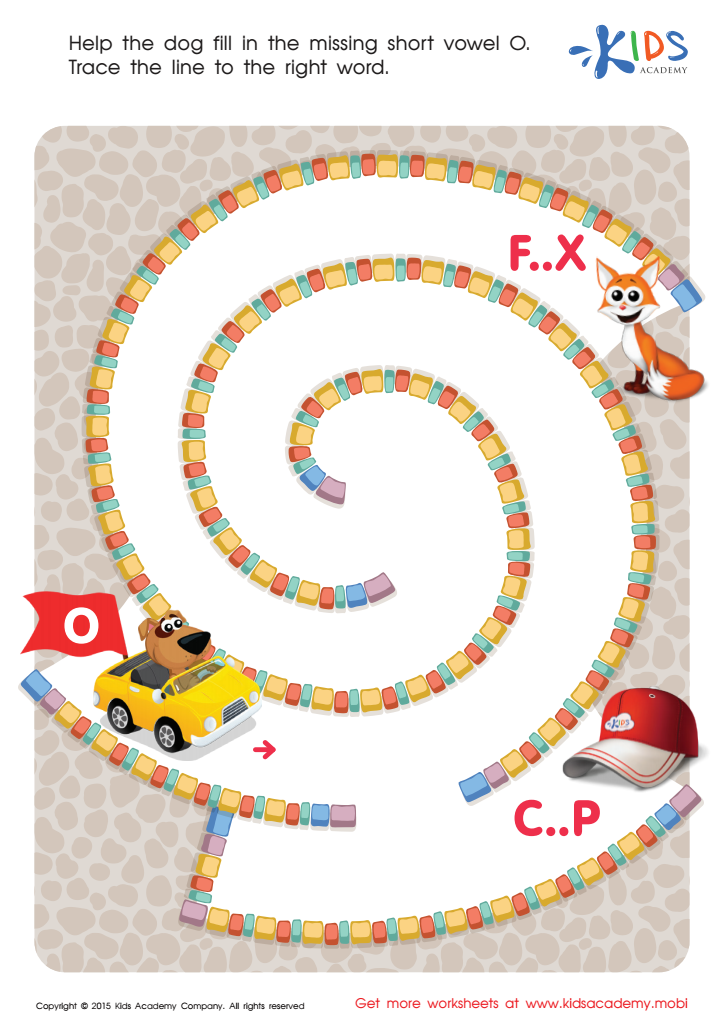
Short Vowel Sound O Worksheet
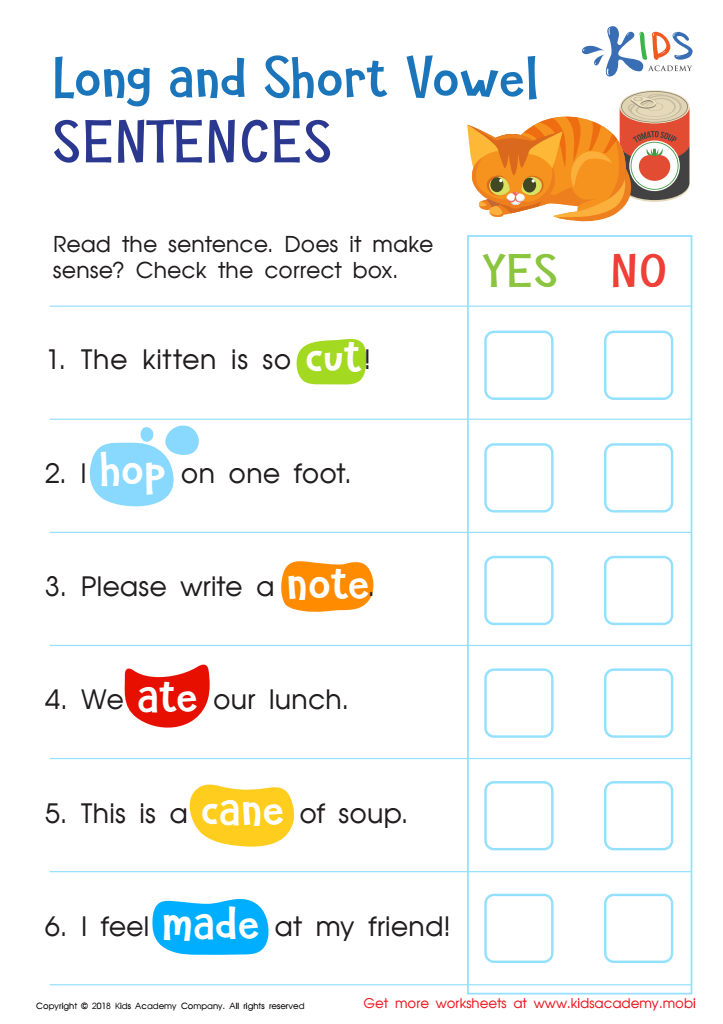
Long and Short Vowel Sentences: Assessment Worksheet
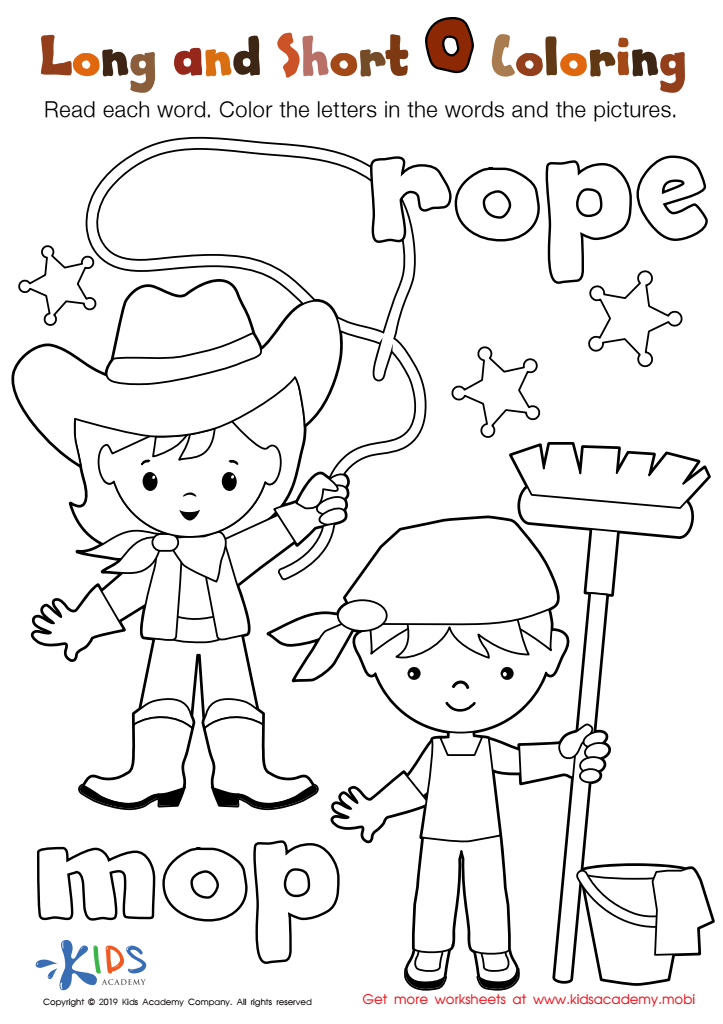
Long and Short O Worksheet
Assign to My Students
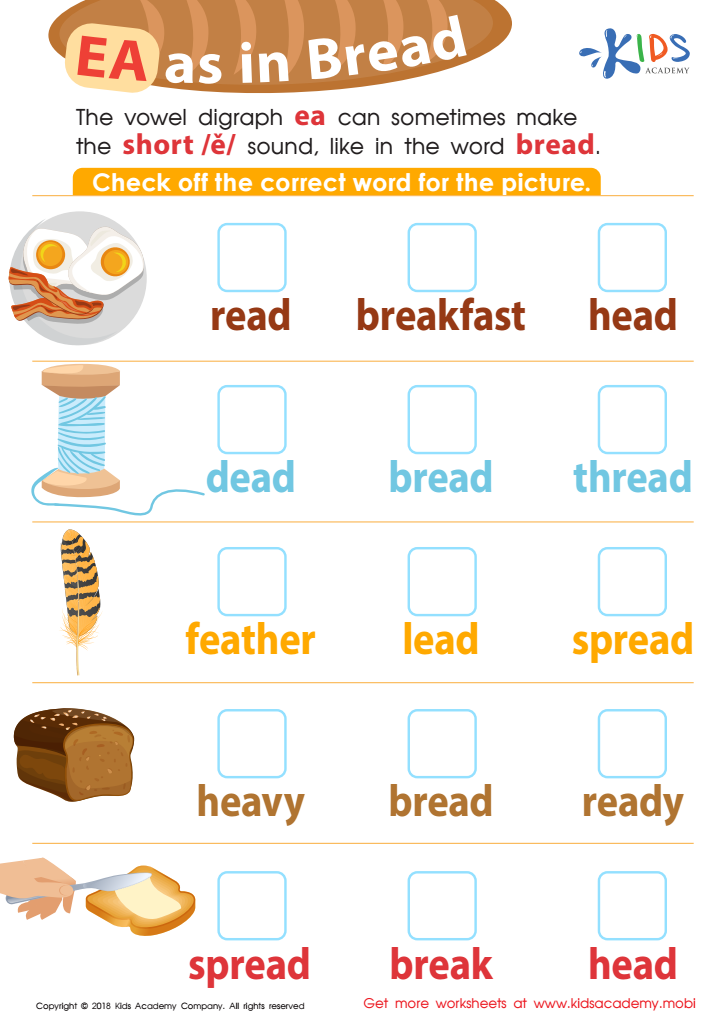
Reading: EA as in Bread Worksheet

Long and Short E Worksheet
Assign to My Students



Parents and teachers should care about short vowels for children ages 6-9 because these sounds are fundamental building blocks for early literacy skills. During these formative years, mastering short vowel sounds—like the "a" in "cat," "e" in "bed," "i" in "sit," "o" in "top," and "u" in "cup"—is crucial for developing strong reading and spelling abilities.
Understanding short vowels helps children decode words accurately and fluently, which boosts their confidence and fosters a love for reading. Phonemic awareness, or the ability to hear and manipulate sounds in words, is a key predictor of later reading success. Short vowels are often among the first sounds students learn to manipulate within phonics programs, setting the foundation for more complex reading tasks ahead.
Moreover, comprehension skills are closely tied to a child's ability to read words correctly. Misunderstanding vowel sounds can lead to misreading words, which can disrupt meaning and hinder understanding. By ensuring children grasp short vowels early on, parents and teachers help build a robust framework for literacy development. This attention to foundational skills significantly increases a child's chances of becoming a proficient reader and speller, contributing to overall academic success and a lifelong enjoyment of reading.








