
Understanding fractions Math Worksheets for 6-Year-Olds
25 filtered results
Difficulty Level
Grade
Age
-
From - To
Subject
Activity
Standards
Explore our engaging "Understanding Fractions Math Worksheets for 6-Year-Olds," designed to introduce early learners to the world of fractions in a fun and interactive way. These carefully crafted worksheets utilize visual aids and relatable examples, helping children grasp the fundamental concept of fractions effortlessly. With a variety of exercises ranging from pie charts to everyday objects, students will practice identifying, comparing, and using fractions in real-life scenarios. Our resources promote hands-on learning and foster a positive attitude toward math, setting the groundwork for future success. Access these worksheets today and watch your child develop a solid understanding of fractions!
Favorites
With answer key
Interactive
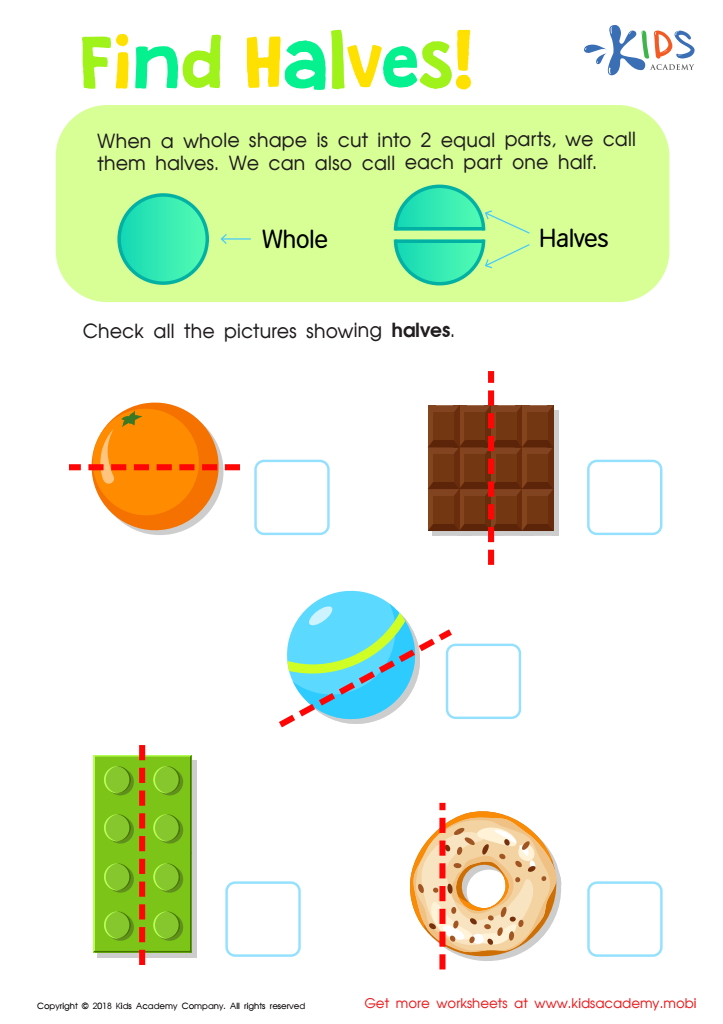
Find Halves Worksheet
If your child can tell you what two, three and four equal parts are called, give yourself a pat on the back! If not, this worksheet can help. Halves are two equal parts of a whole shape. Check the pictures in this printable pdf to help your child understand.
 Assign to My Students
Find Halves Worksheet
Worksheet
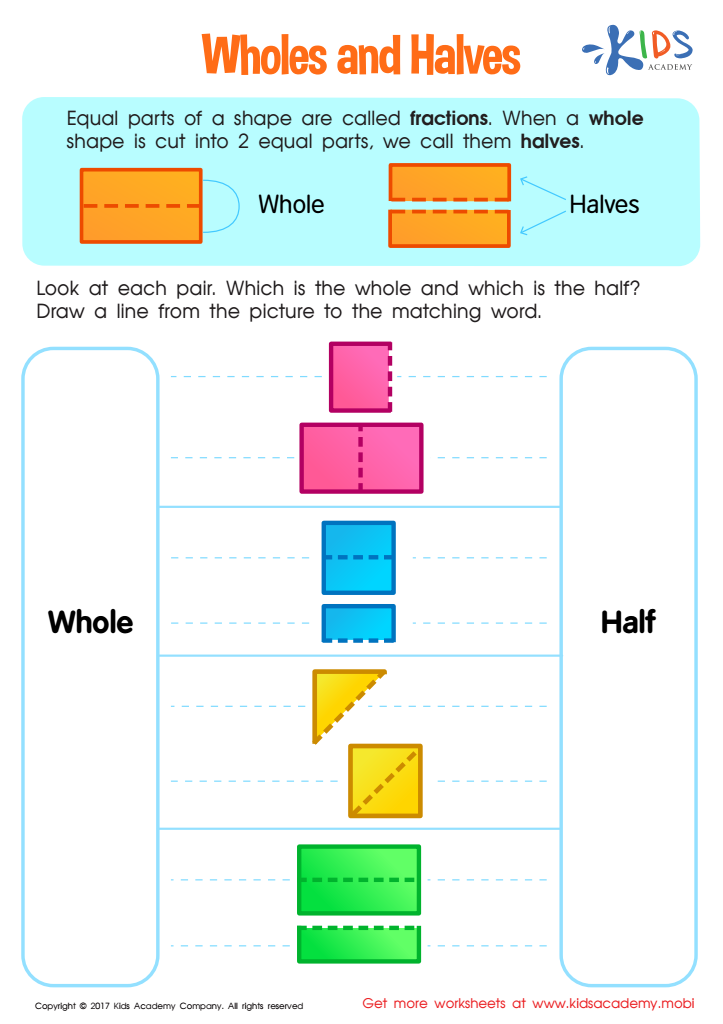
Wholes and Halves Worksheet
Students can feel overwhelmed with fractions. Help take the stress off by using a colorful worksheet to explain whole shapes and how to find halves. Ask them to identify the whole and point to the matching word for the half. A free printout can help guide them.
Wholes and Halves Worksheet
Worksheet
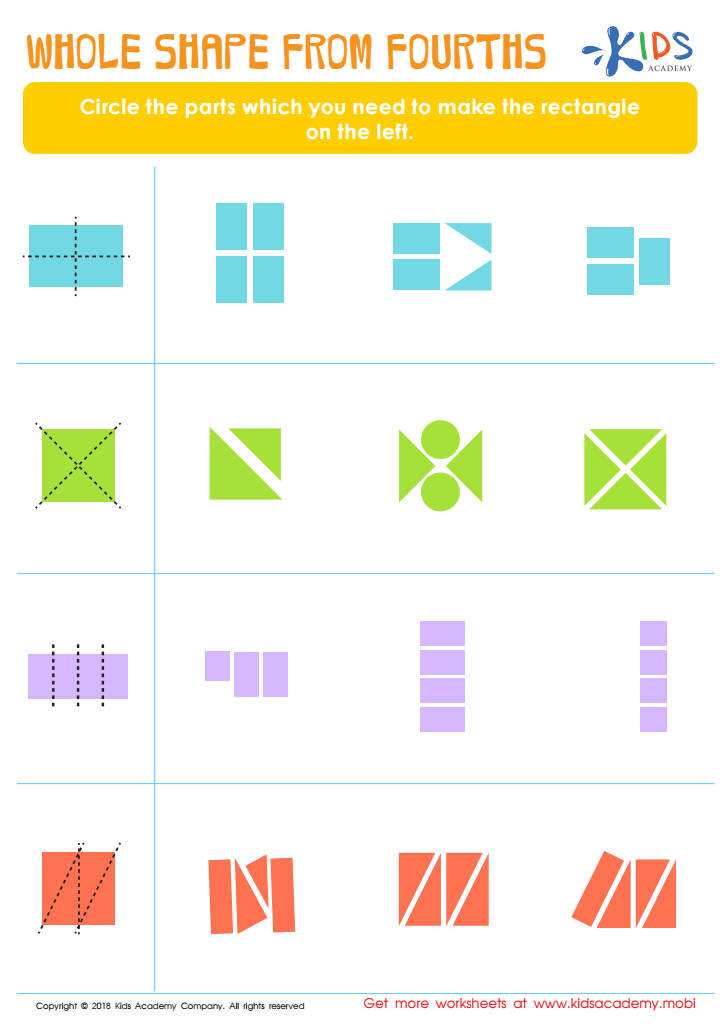
Whole Shape from Fourths Worksheet
Have your kids circle the shapes that'll form the rectangle on the left. It'll test their knowledge of shapes and ability to put them together to make a new one. Ask them to look at the parts on the right and circle the ones that'll form the rectangle.
Whole Shape from Fourths Worksheet
Worksheet
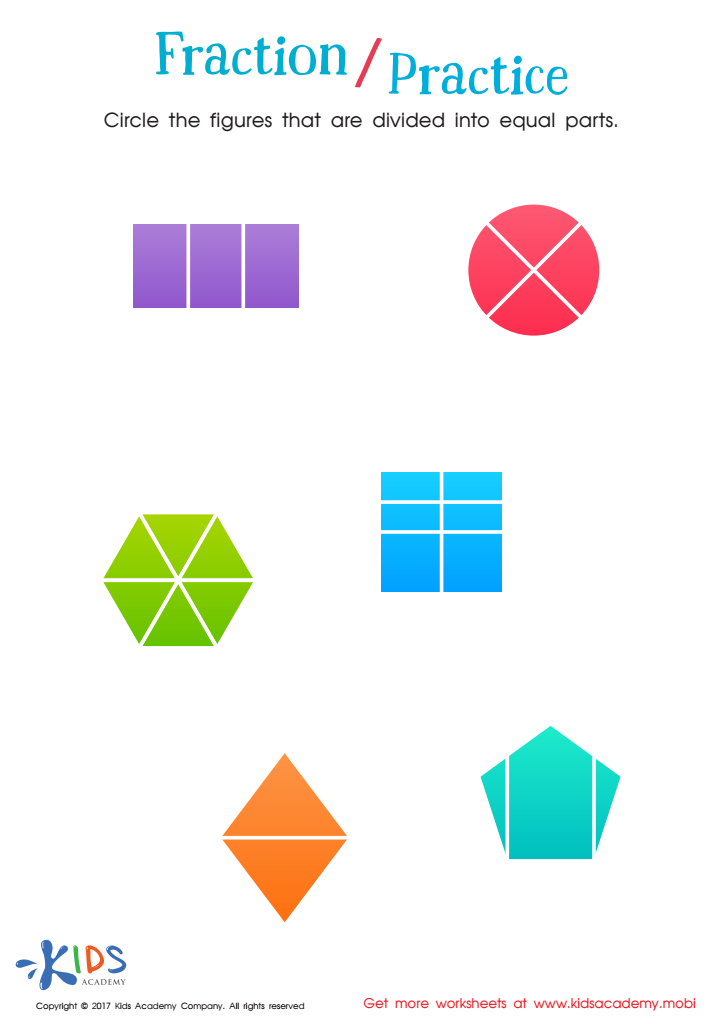
Fractions: Shapes Worksheet
Get your printable now.
Kids learn math differently today than you did in school; understanding concepts rather than memorizing facts. Help your child understand fractions with this printable worksheet. It'll help your child recognize parts of a whole, identify equal parts and build a foundation for numeracy. A better understanding sets kids up for math success! Get your printable now.
Fractions: Shapes Worksheet
Worksheet
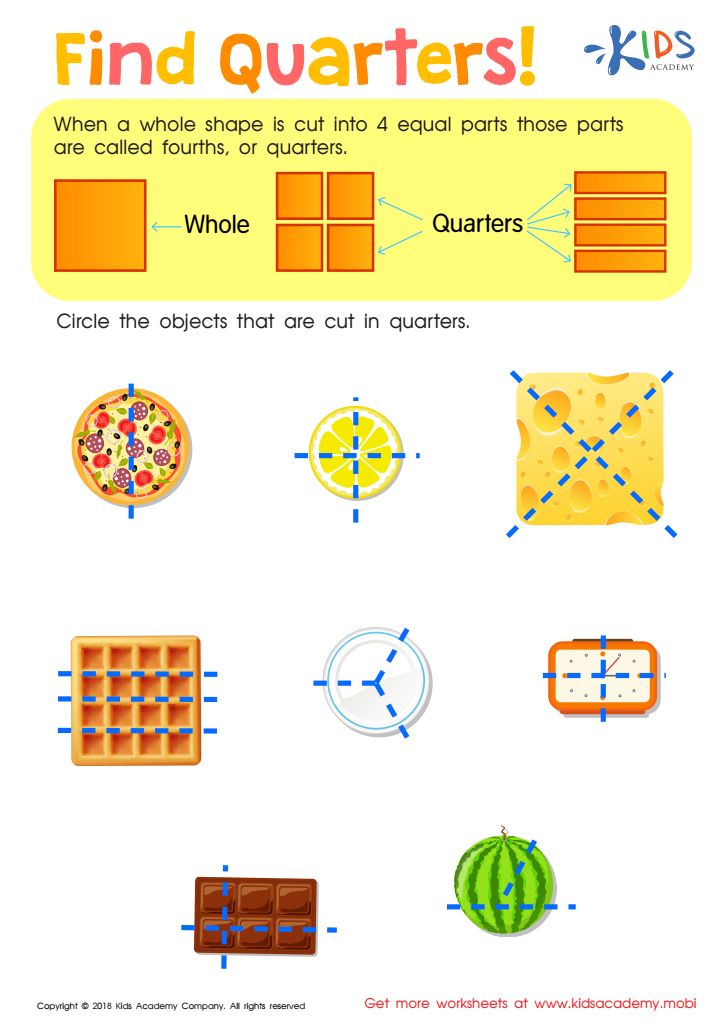
Find Quarters Worksheet
Ask your child if they know what it is called when a shape is cut into two equal parts. If yes, introduce them to quarters. Tell them that when a shape is cut into 4 equal parts, each part is called a quarter. Have them do this exercise by finding and circling objects split into quarters.
Find Quarters Worksheet
Worksheet
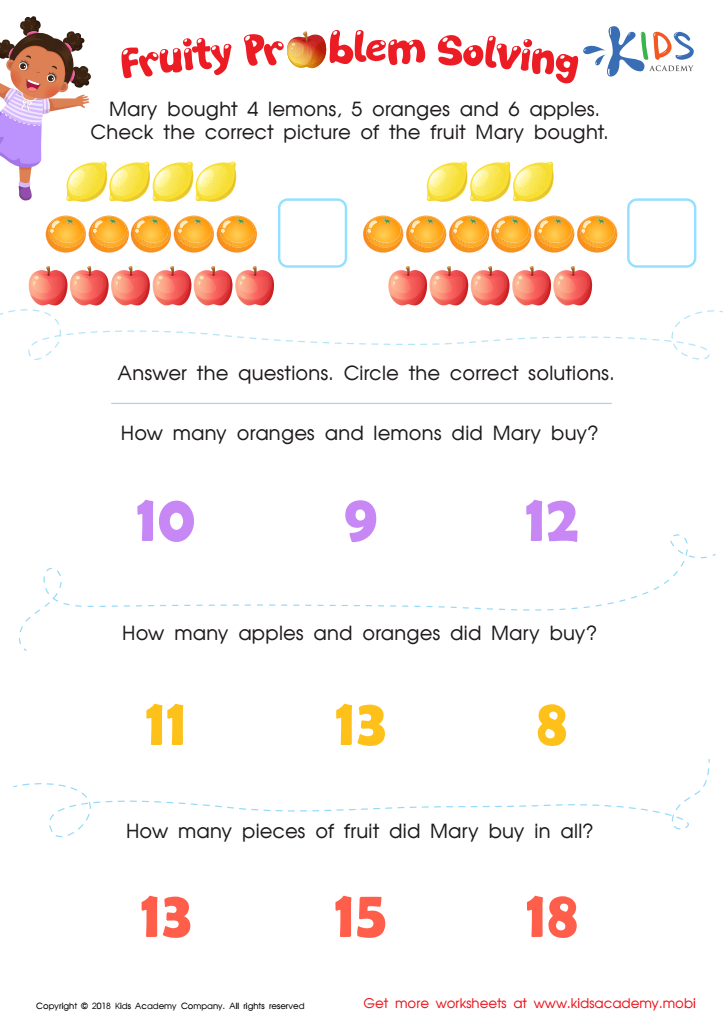
Fruity Problem Solving Worksheet
Practice addition word problems with young mathematicians using this PDF worksheet featuring fruit. As they read each problem carefully and circle the correct sums, they'll reinforce attention to detail and fine motor skills. Tangible representations are key to helping them with basic addition.
Fruity Problem Solving Worksheet
Worksheet
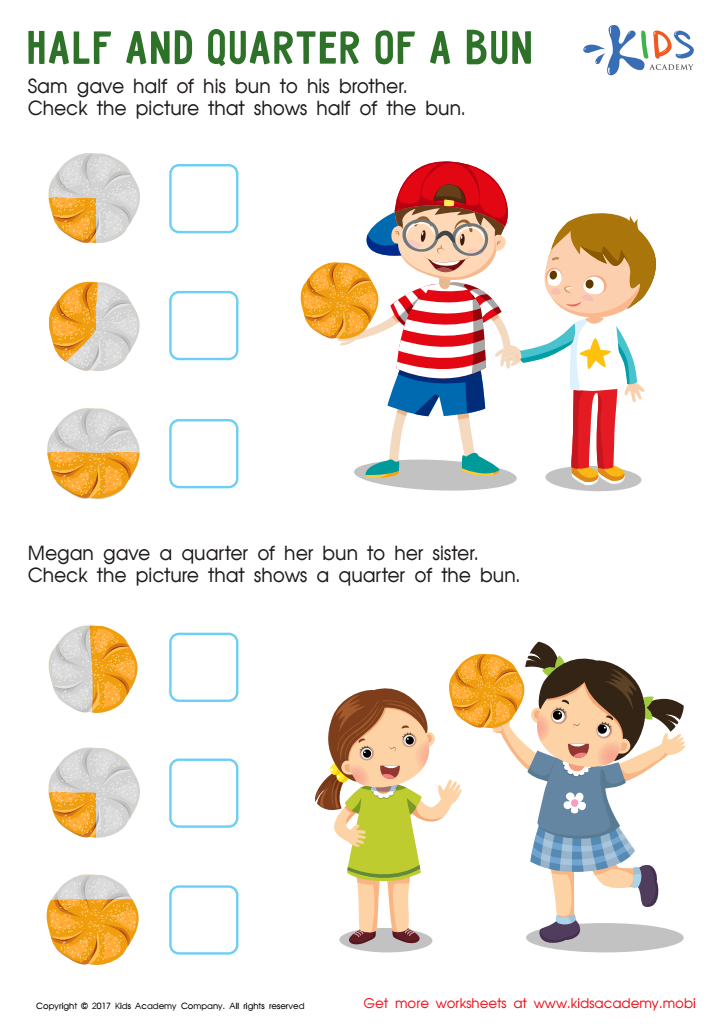
Half and Quarter of a Bun Worksheet
This worksheet introduces Sam, his brother and Megan, her sister, who are sharing buns. Show kids the picture of half and quarter to help them understand. Ask if they know what half and quarter of a shape is before progressing. Help them check the picture showing half and quarter of a bun.
Half and Quarter of a Bun Worksheet
Worksheet
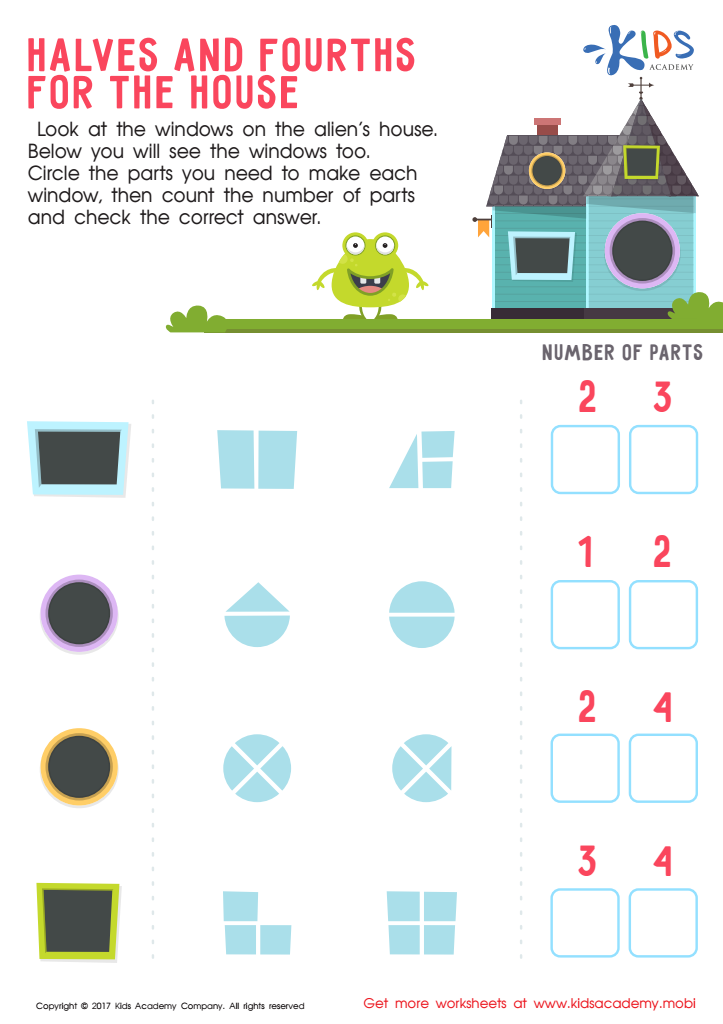
Halves and Fourths for the House Worksheet
Help your child become friends with the alien in this worksheet! If they're fans of alien books and movies, they'll love it. Ask them to circle the parts at the bottom that make each window, then count the number of parts and check the correct answer.
Halves and Fourths for the House Worksheet
Worksheet
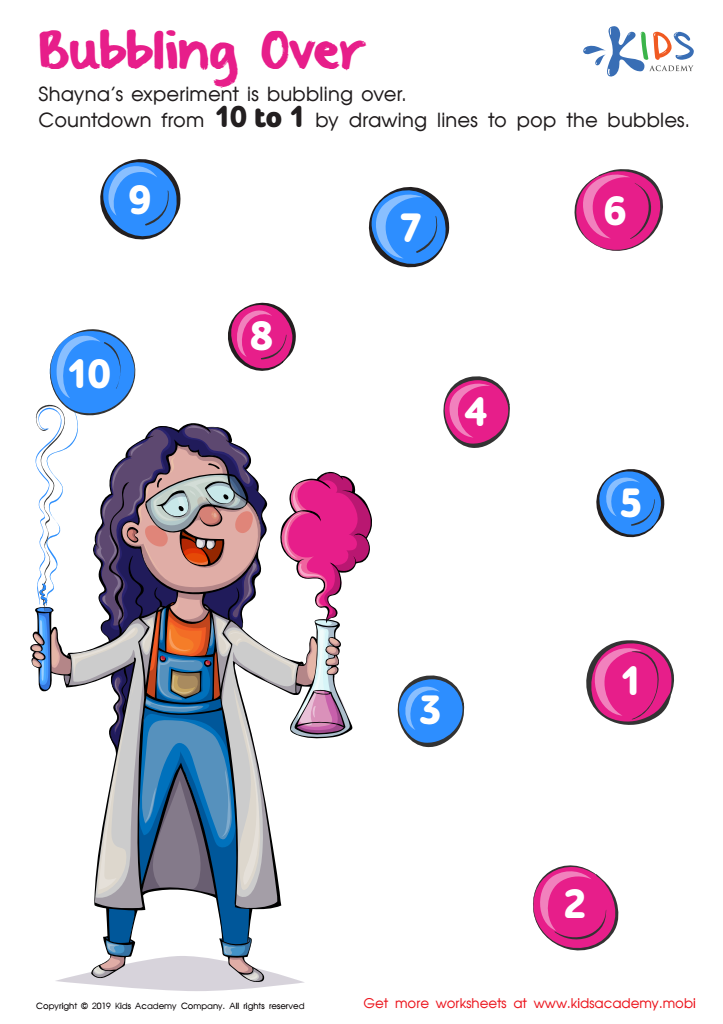
Bubbling Over Worksheet
Students love science experiments at the lab! They get to practice their counting skills while creating a masterpiece or an unexpected catastrophe! Ask them to count down from 10 to 1 by drawing lines to 'pop' the bubbles coming out of Shayna's experiment in the worksheet.
Bubbling Over Worksheet
Worksheet
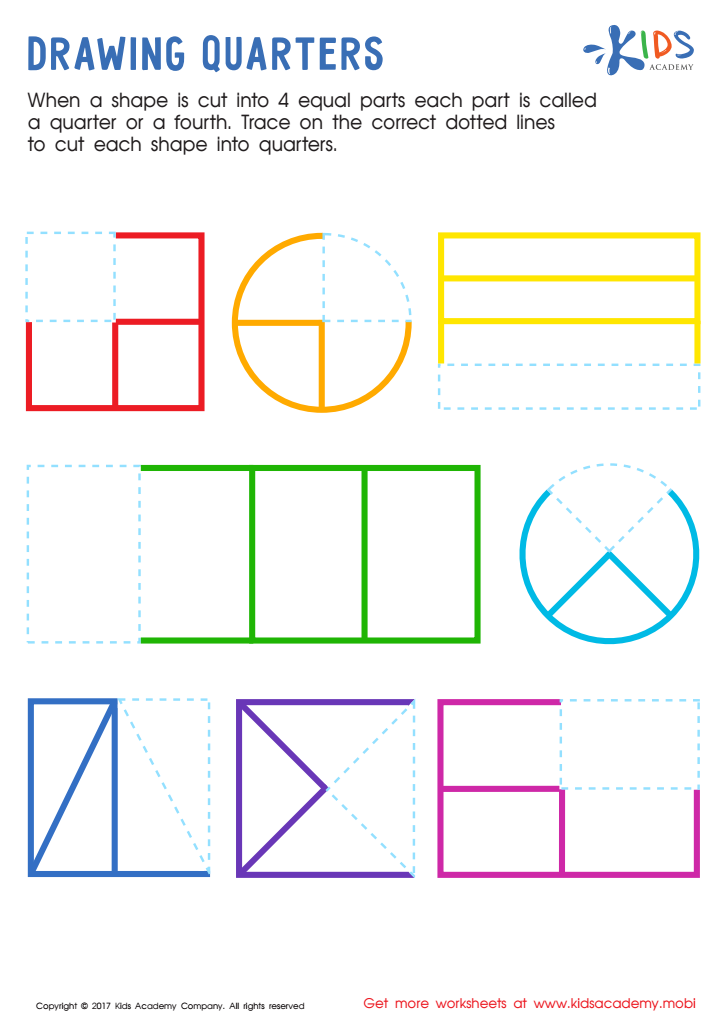
Drawing Quarters Worksheet
Help your kids divide shapes into quarters! Have them trace dotted lines to cut each shape into 4 equal parts. Each of the 4 parts is called a quarter or a fourth. This worksheet will help kids learn more about dividing shapes into four equal parts.
Drawing Quarters Worksheet
Worksheet
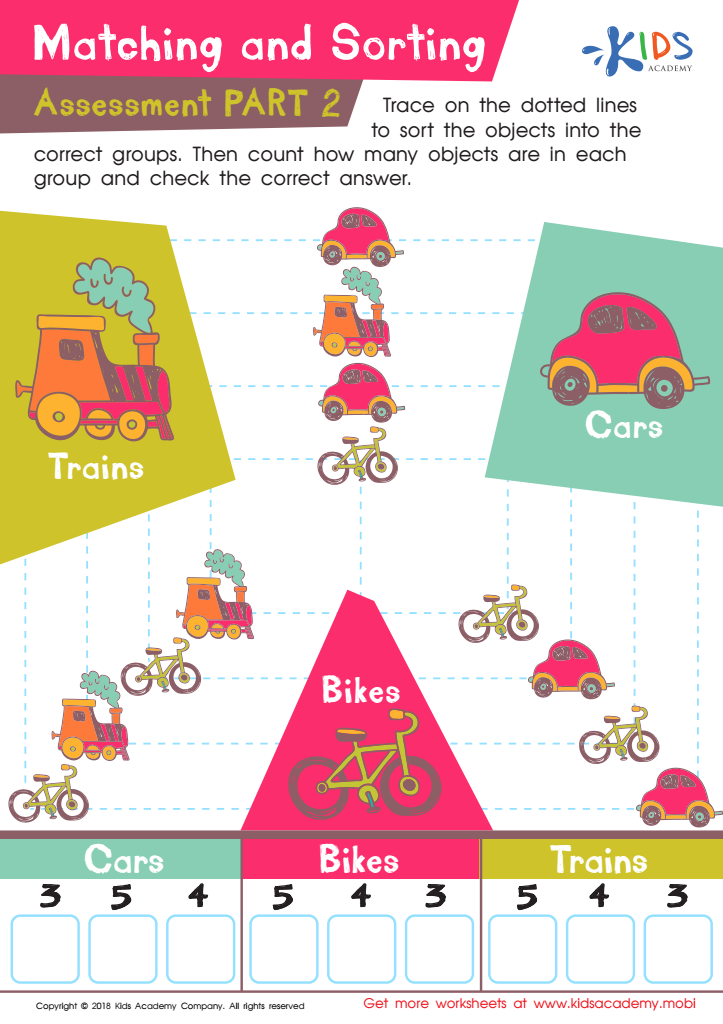
Matching and Sorting for Kindergarten: Assessment 2 Worksheet
This assessment tests matching, sorting and fine motor skills. It challenges kids to identify properties and attributes of pictures, trace guidelines and count the types of vehicles. It's a great way to practice basic number sense and hone in on important foundational skills.
Matching and Sorting for Kindergarten: Assessment 2 Worksheet
Worksheet
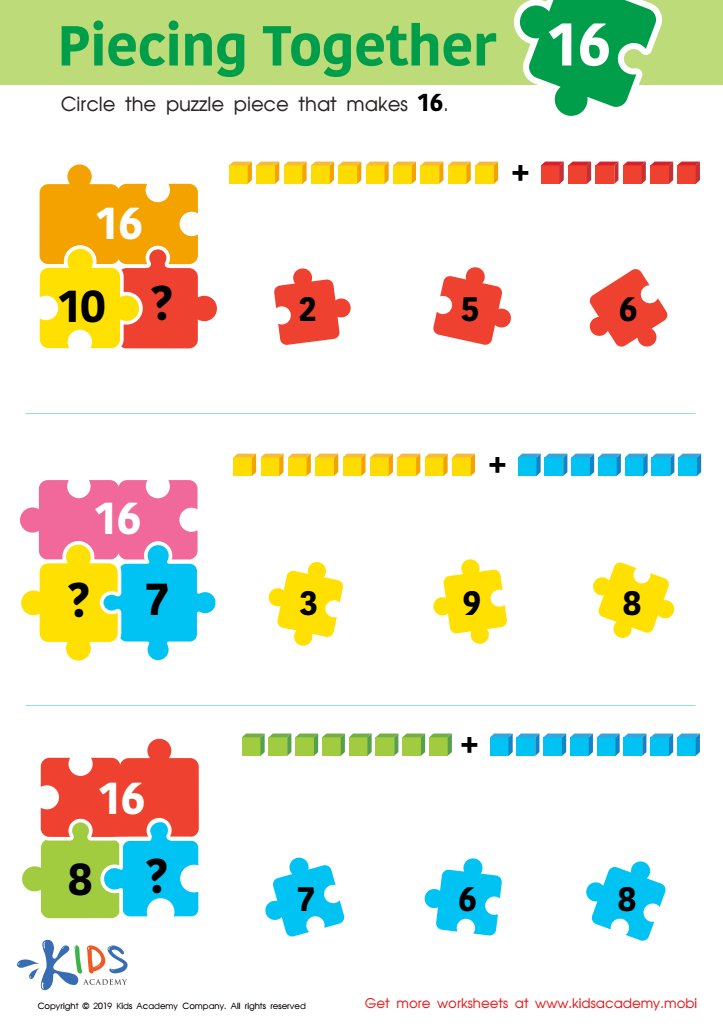
Piecing Together 16 Worksheet
Combine learning with fun using this colorful worksheet! Ask your preschoolers what they see in the picture, then help them solve the mathematical equations on the puzzle pieces. One equation is missing on each; have them circle the piece that will make the bottom puzzle piece numbers equal 16. Use puzzles and bright colors to teach - it's one of the best ways your kids can learn!
Piecing Together 16 Worksheet
Worksheet
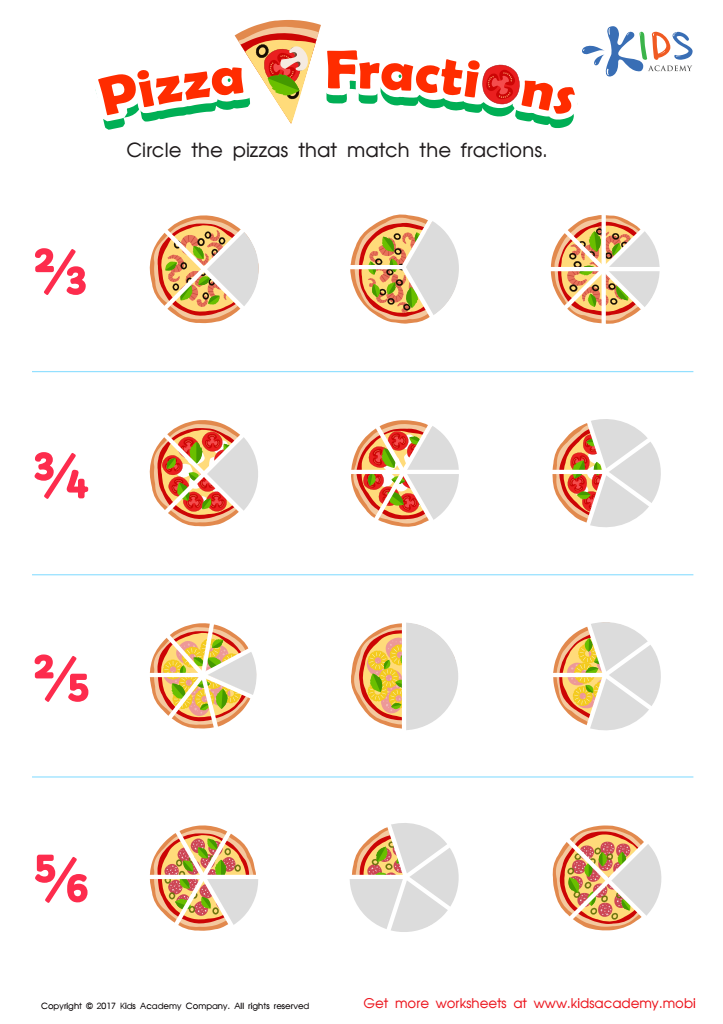
Fractions: Pizza Printable
Fractions can be tricky for kids, but this pizza fractions printable can help! Kids can understand fractions by seeing them, as they use one of their favorite foods. It helps them grasp the concept and gain a deeper understanding of what fractions represent. Extend their learning by quizzing them when you order pizza next time.
Fractions: Pizza Printable
Worksheet
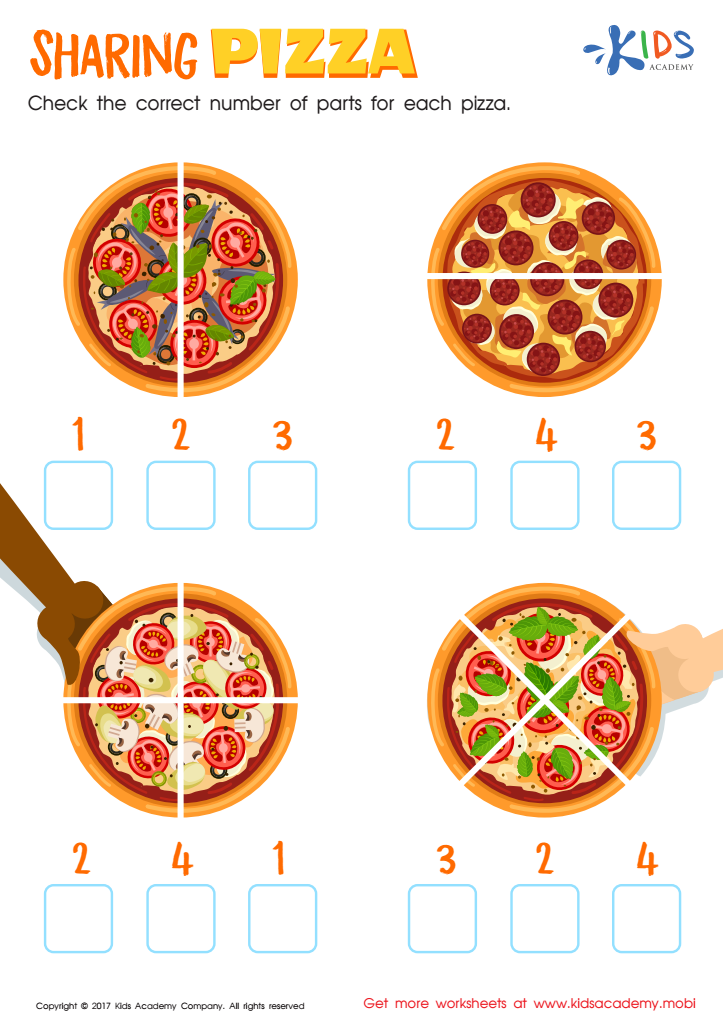
Sharing Pizza Worksheet
Show your child the four pizzas in this worksheet. Ask them to count the number of slices each one has. Help them count and check the answer for the first pizza, then do the same for the rest. Have fun counting the slices and see if they can spot the pizza!
Sharing Pizza Worksheet
Worksheet
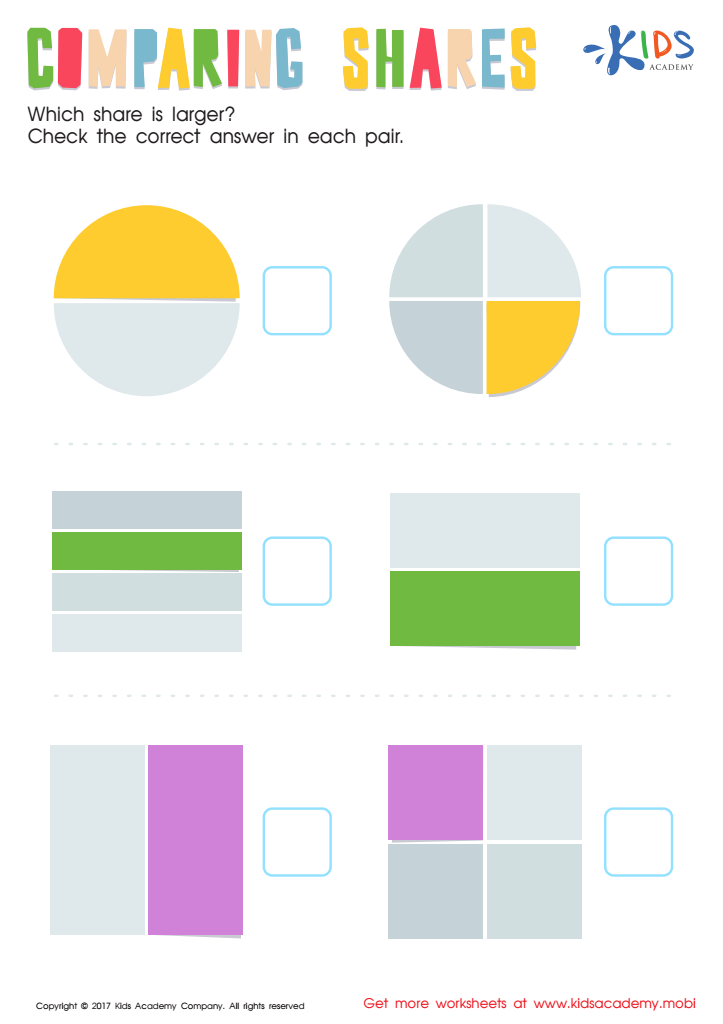
Comparing Shares Worksheet
Can your students identify and draw shapes correctly? If so, this exercise may be too easy. For those who are still learning, extra help may be needed. The worksheet requires students to select which shape is larger in each pair; circles and squares are included.
Comparing Shares Worksheet
Worksheet
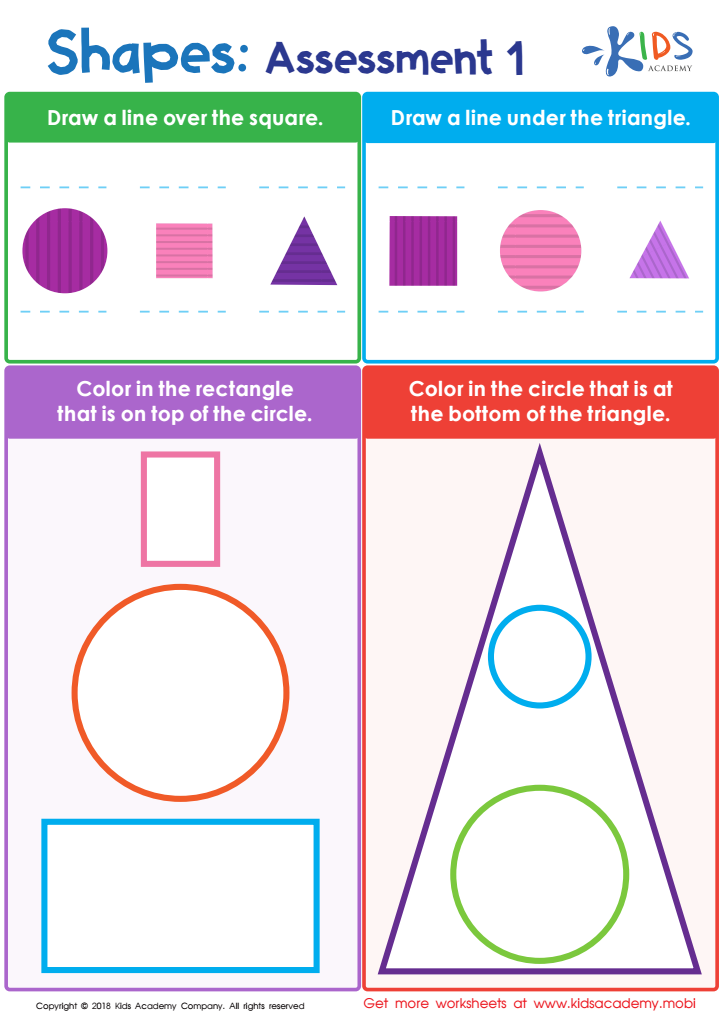
Shapes: Assessment 1 Worksheet
Test your students' understanding of the four basic shapes - circle, square, triangle and rectangle - with this assessment worksheet. Get them to draw a line over or under the shape indicated in the directions to show they can identify it correctly.
Shapes: Assessment 1 Worksheet
Worksheet
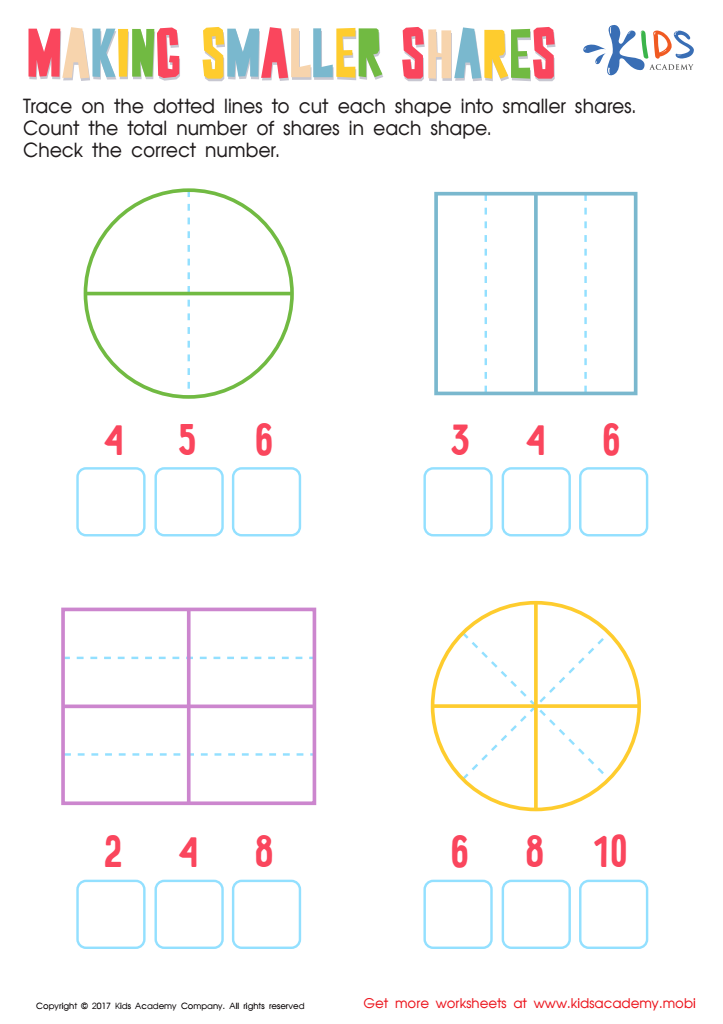
Making Smaller Shares Worksheet
Help your kids learn shapes by having them cut out shapes on this tracing sheet. Point out the dotted lines, then guide their hand as they trace them, breaking shapes into smaller parts. Ask your children to count the number of parts and check the answers given.
Making Smaller Shares Worksheet
Worksheet
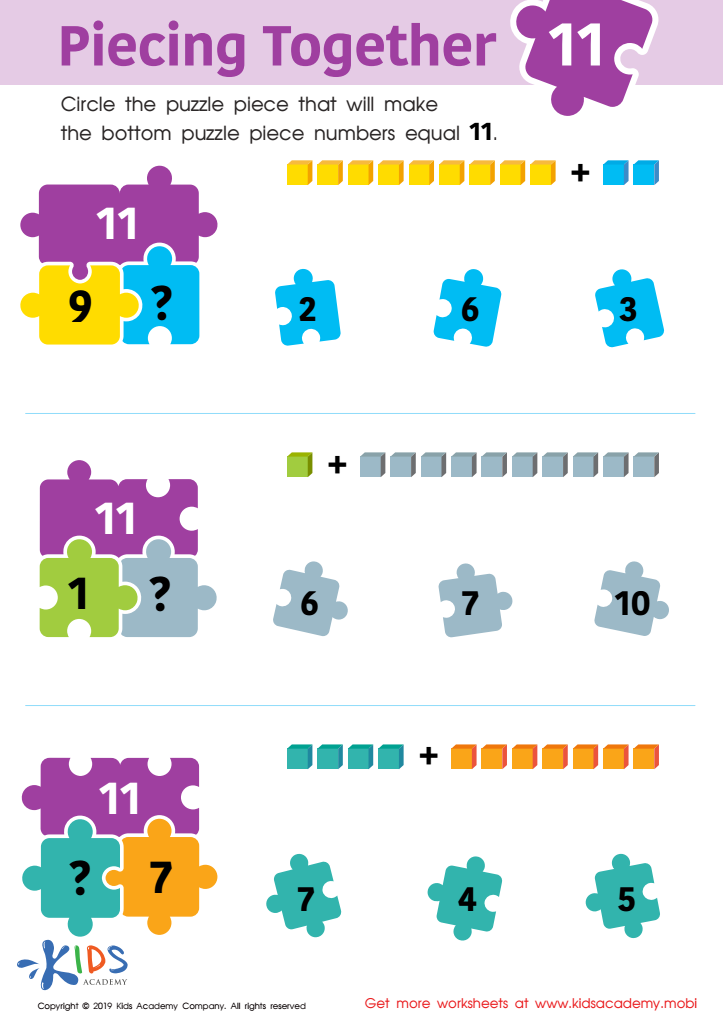
Piecing Together 11 Worksheet
Engage your preschoolers with learning-filled fun! Show them this colorful worksheet, and ask them to identify the figures. Each puzzle piece features an equation, except one which is missing. Help the kids solve the problems and circle the piece that'll make the numbers equal 11. It's a surefire way to make learning enjoyable!
Piecing Together 11 Worksheet
Worksheet
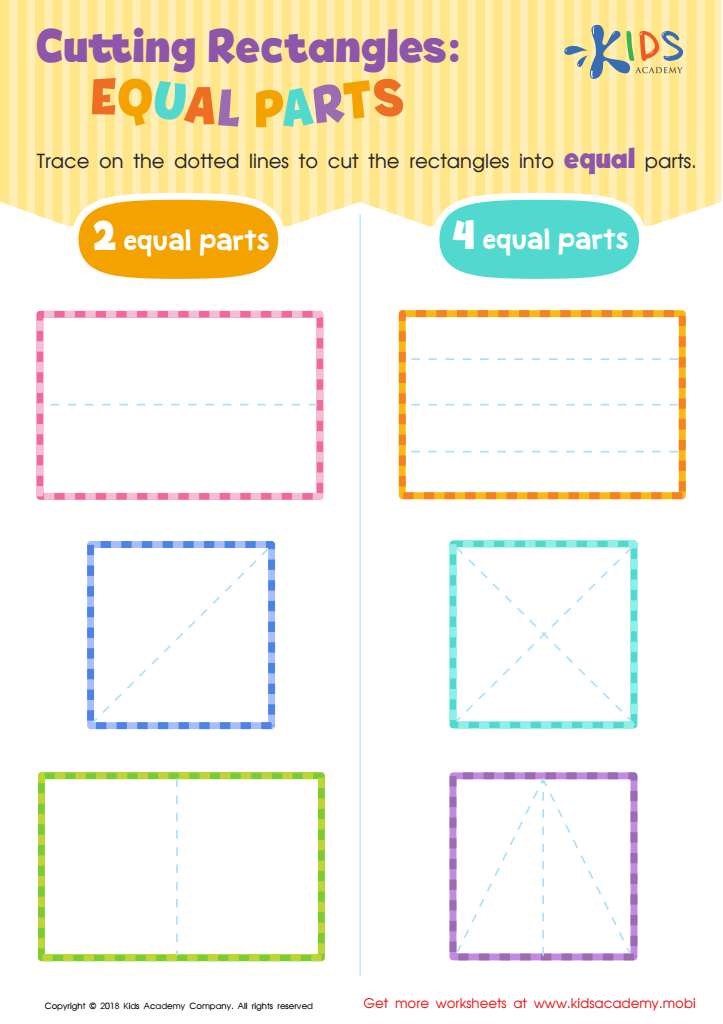
Cutting Rectangles: Equal Parts Worksheet
Help your child learn to divide shapes into two or four equal parts with this worksheet. It has six rectangles that need to be cut up as directed, following the dotted lines. Show it to your child and watch them gain confidence in mastering this skill.
Cutting Rectangles: Equal Parts Worksheet
Worksheet
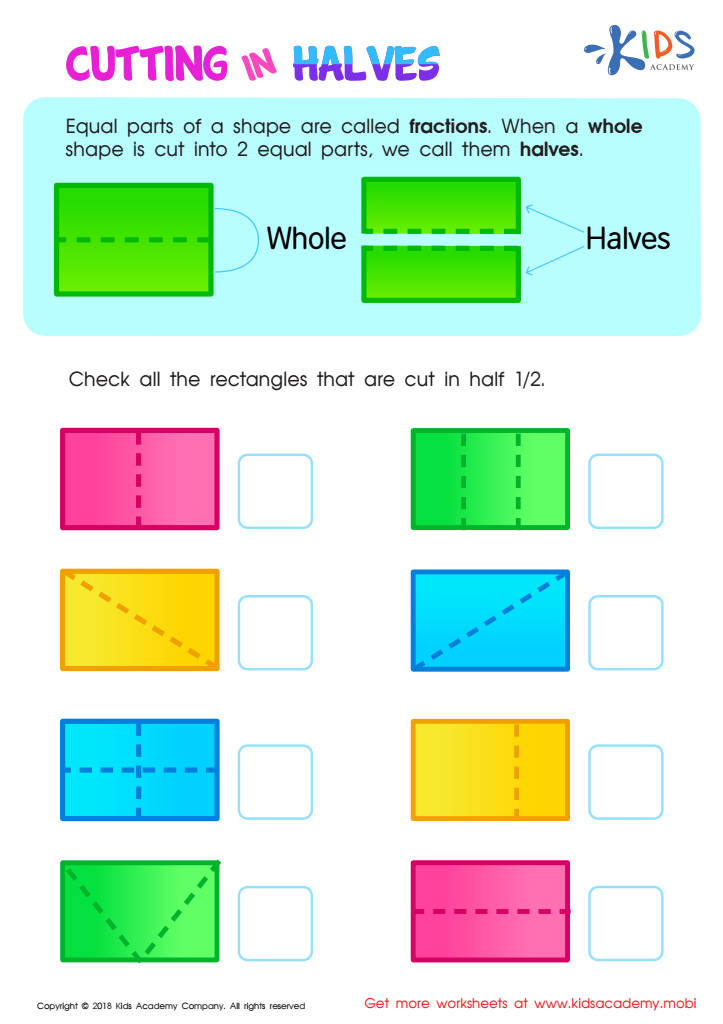
Cutting in Halves Worksheet
Show your child how to divide a whole shape, like a square, into smaller pieces to become fractions. Point out when a shape is divided into two equal parts, it's called a half. Look at the worksheet together, and identify all rectangles that are cut in half (½).
Cutting in Halves Worksheet
Worksheet
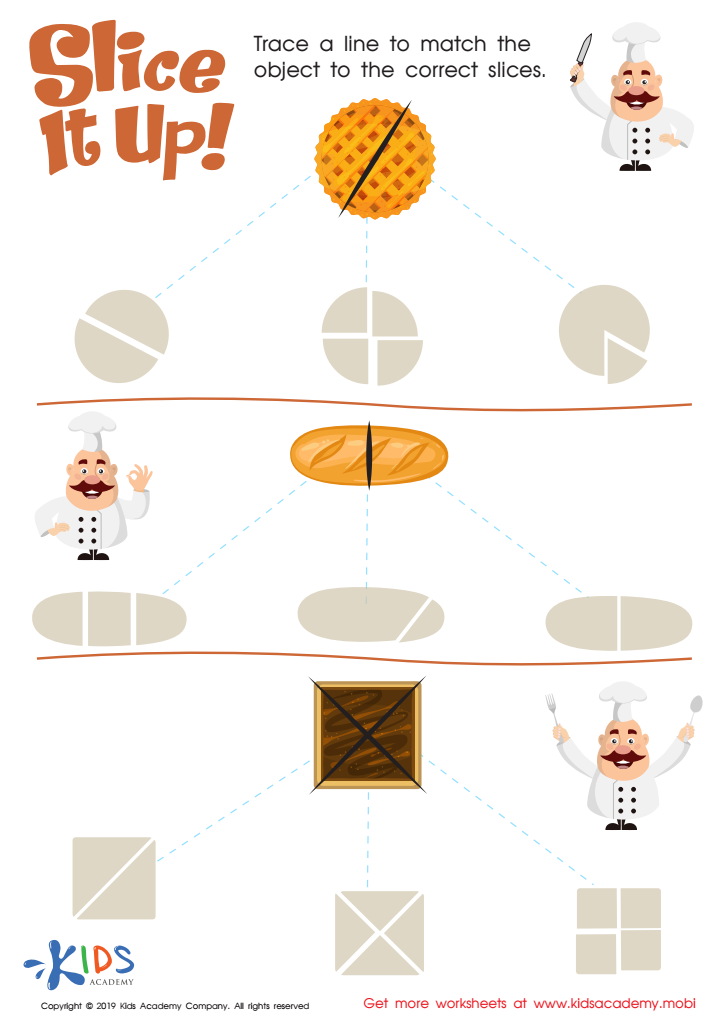
Slice It Up Worksheet
Try this fun math, reading and writing worksheet with your kids! They will love the colorful activities that perfect coordination and tracing. Engaging learning exercises help keep young minds sharp and boost skills. With these worksheets, your kids will be academically ahead of the curve!
Slice It Up Worksheet
Worksheet
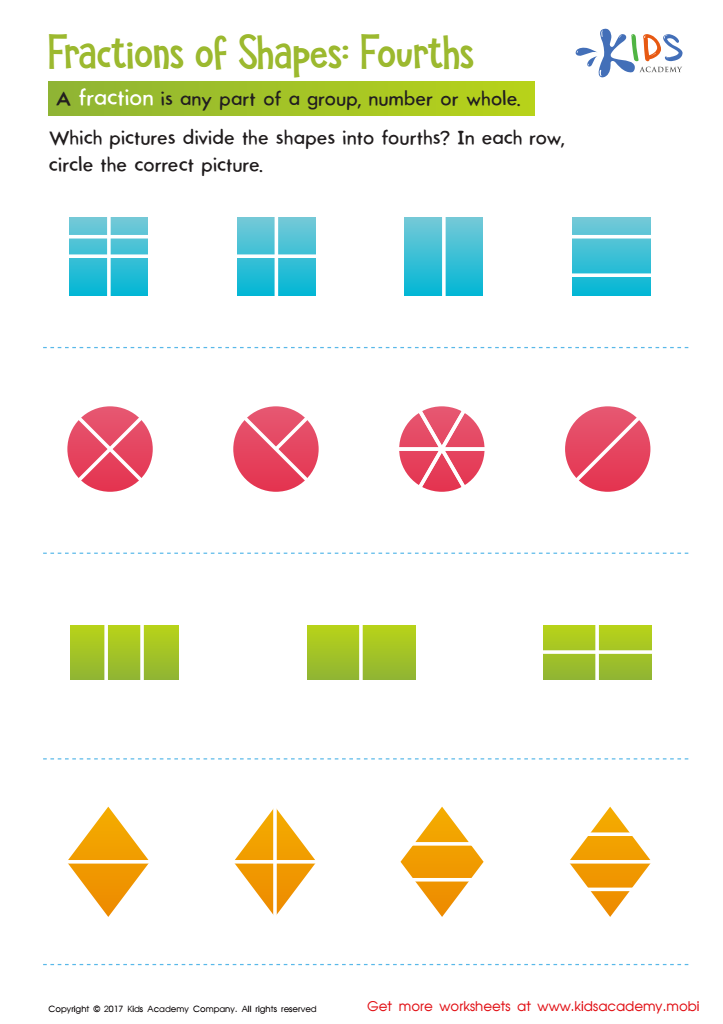
Fractions of Shapes Worksheet
It will also show them how fractions are represented in everyday shapes.
Fractions of Shapes Worksheet
Worksheet
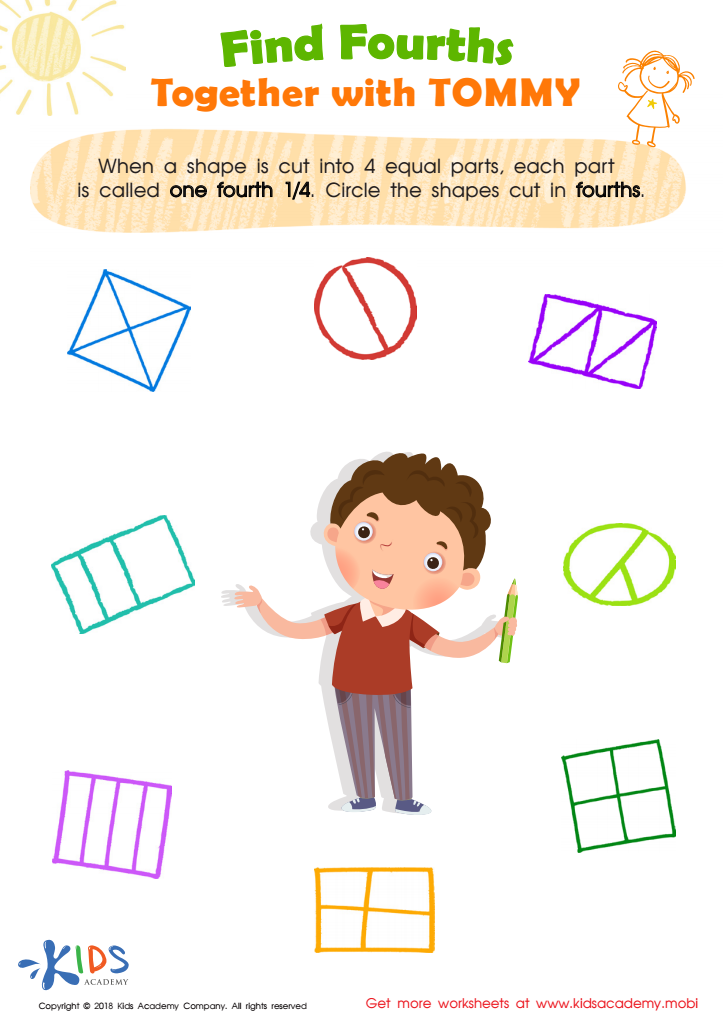
Find Fourths Together with Tommy Worksheet
Teach your kids fractions with this easy and fun worksheet! They should already know that two equal parts is a half, and three is a third. Now, help them understand one fourth (¼) by asking them to circle shapes that are divided into four parts. Make fractions learning stress-free for you and your children!
Find Fourths Together with Tommy Worksheet
Worksheet
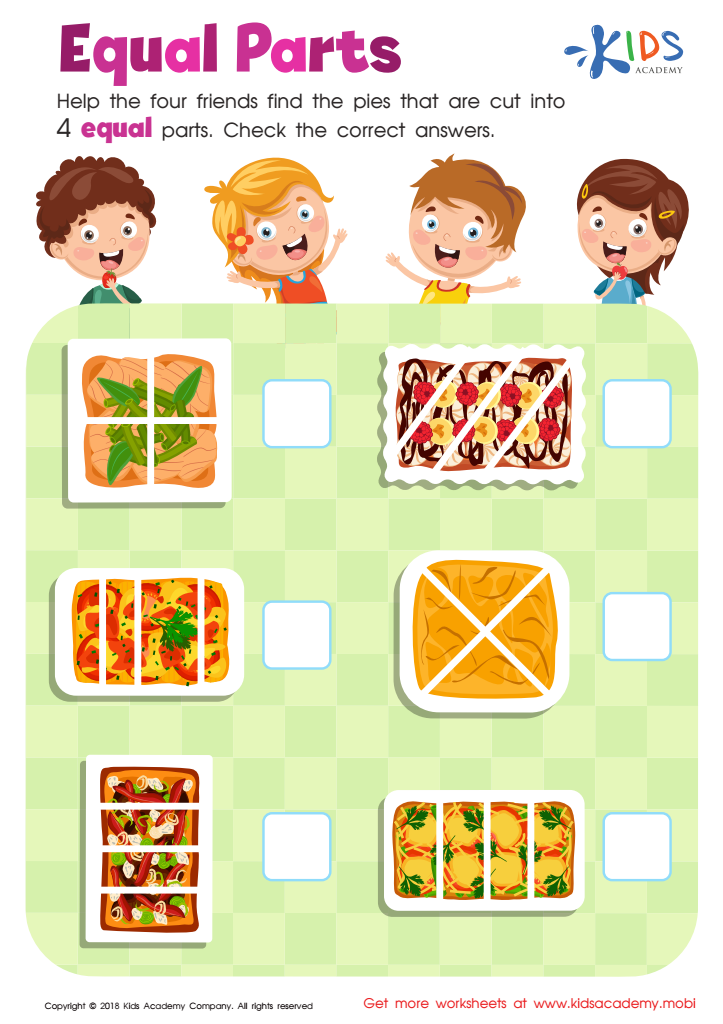
Equal Parts: Food Worksheet
Kids love pies! In this worksheet, they must help four friends share one equally. Six pictures of pies cut in different ways are provided. Your child must choose the one where the pie is divided into four equal parts. That way, each friend gets an equal share.
Equal Parts: Food Worksheet
Worksheet
Join Kids Academy for Free
Who is primarily going to use this learning content?







Understanding fractions is crucial for 6-year-olds, as it sets the foundation for their future mathematical knowledge and problem-solving skills. At this age, children are naturally curious and eager to learn, which makes it an optimal time to introduce mathematical concepts like fractions. Grasping the idea of fractions helps children comprehend division, ratios, and proportions more seamlessly as they progress in school.
Incorporating fractions into early education allows kids to relate abstract mathematical concepts to real-life scenarios. Whether it's sharing a pizza, dividing toys, or measuring ingredients for a recipe, finding fractions in everyday situations reinforces their understanding. This practical application makes math engaging and relatable.
Moreover, mastering fractions encourages critical thinking and cognitive development. It promotes logical reasoning and helps children learn to analyze problems from different perspectives—skills that are essential for academic success across all subjects.
For parents and teachers, fostering a solid understanding of fractions in young learners not only enhances mathematical competence but also builds confidence. Introducing fractions early empowers children to tackle more complex mathematical concepts in the future, ultimately laying the groundwork for lifelong learning and a positive attitude toward math. In essence, understanding fractions equips children with essential skills for both academic achievement and everyday life.








