Shape Recognition Tracing Shapes Worksheets for 6-Year-Olds
12 filtered results
-
From - To
Enhance your child's geometric skills with our Shape Recognition Tracing Shapes Worksheets designed especially for 6-year-olds. Through fun and engaging activities, your child will explore basic shapes like circles, squares, triangles, and more. These worksheets encourage fine motor skills by tracing and drawing different shapes, reinforcing shape names and attributes. Ideal for both classroom settings and home practice, our printable worksheets support young learners in developing essential foundational math skills. Visit Kids Academy now to access these valuable resources and provide your child with interactive learning experiences that make geometry both fun and effective.
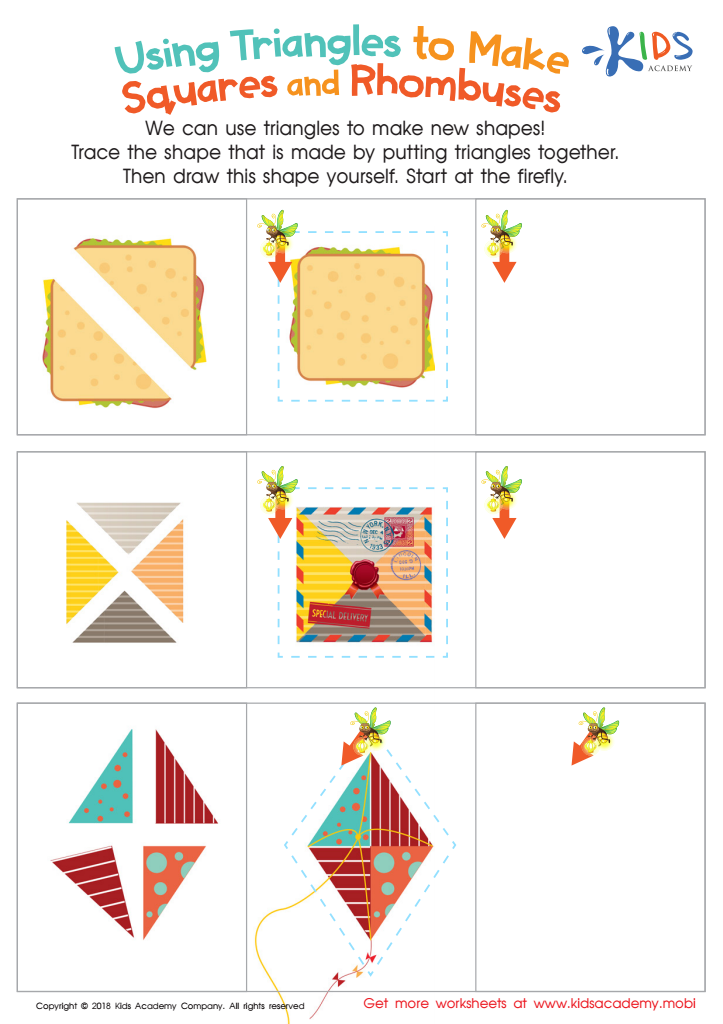
Using Triangles to Make Squares and Rhombuses Worksheet
 Assign to My Students
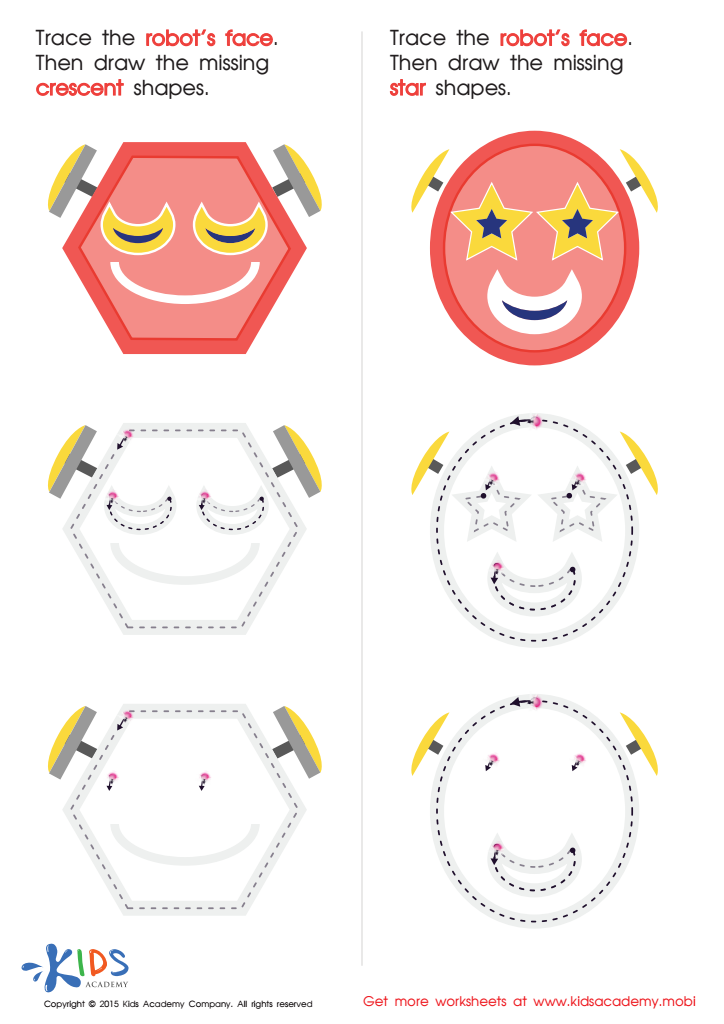
Composing a Robot's Face of Crescents And Stars Worksheet
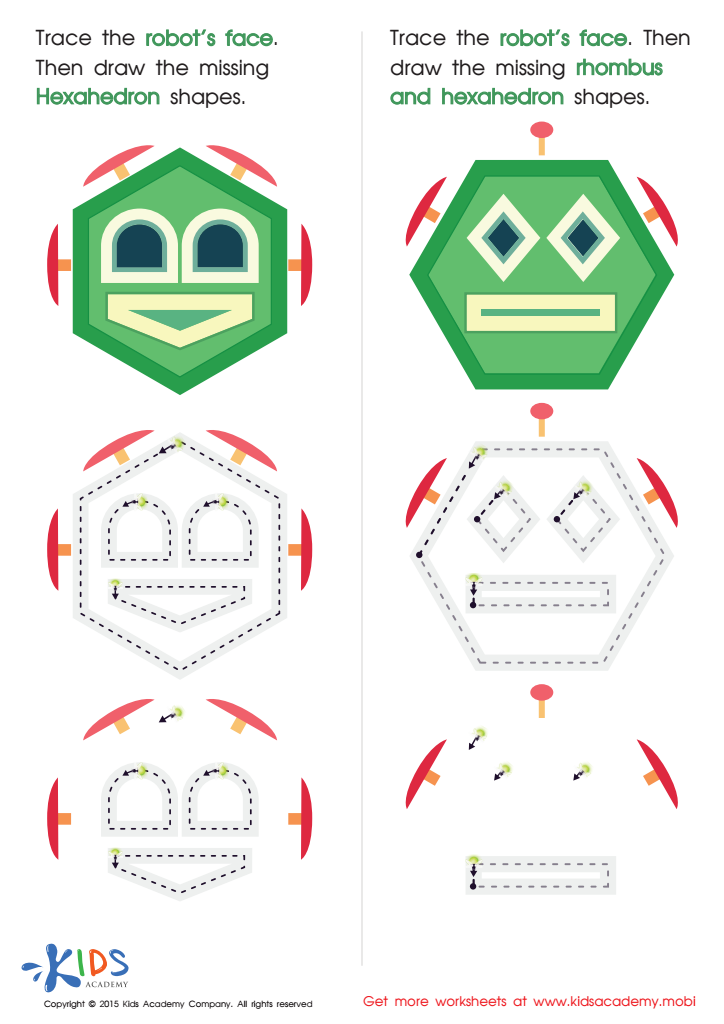
Practice Drawing Hexahedrons And a Rhombus Worksheet
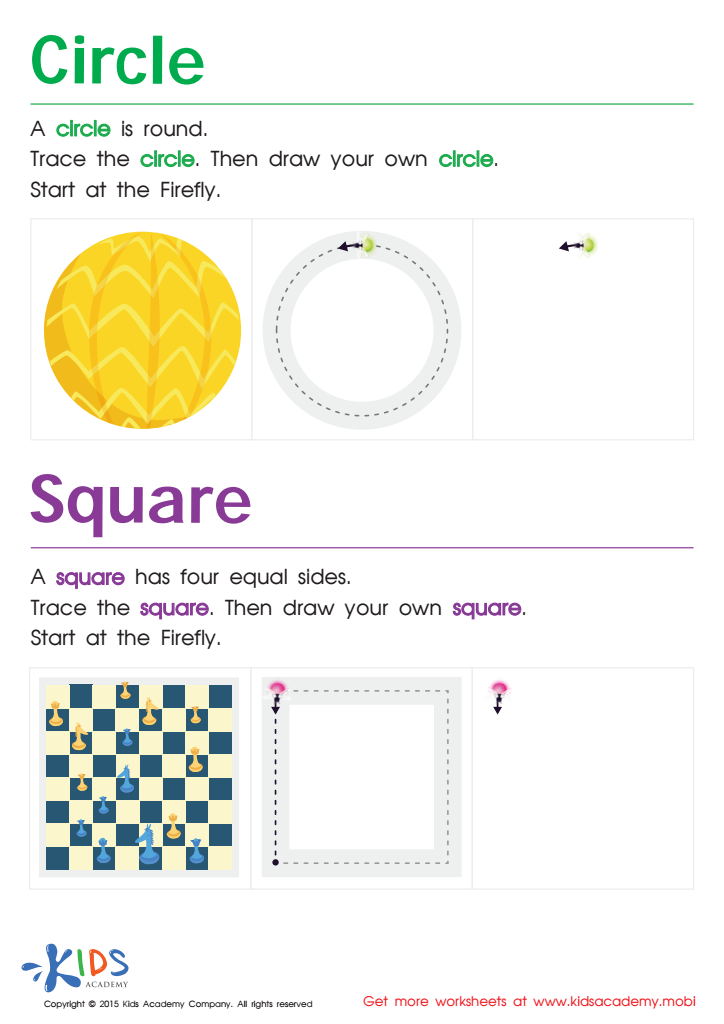
Trace And Draw a Circle And a Square Worksheet
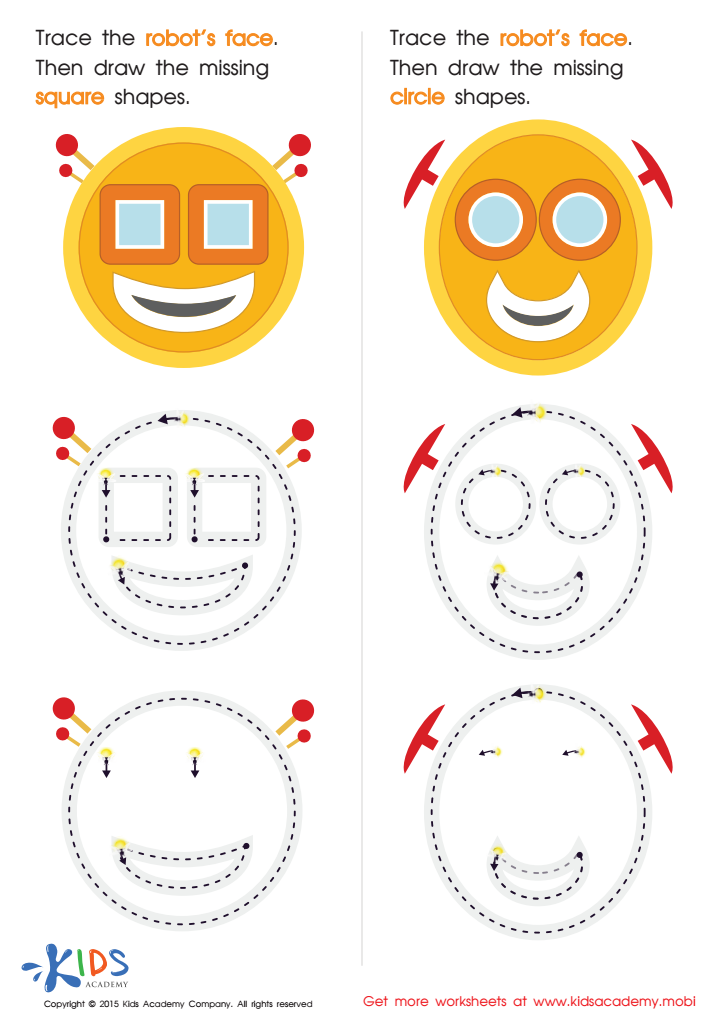
Practicing to Draw Circles And Squares Printable
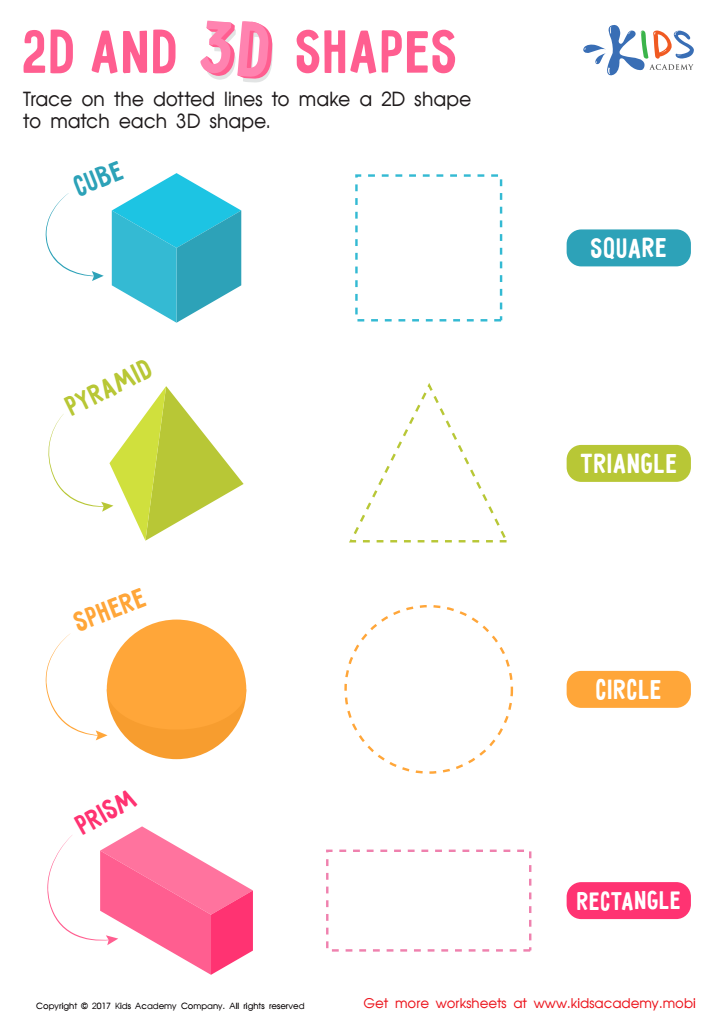
2D and 3D Shapes Worksheet
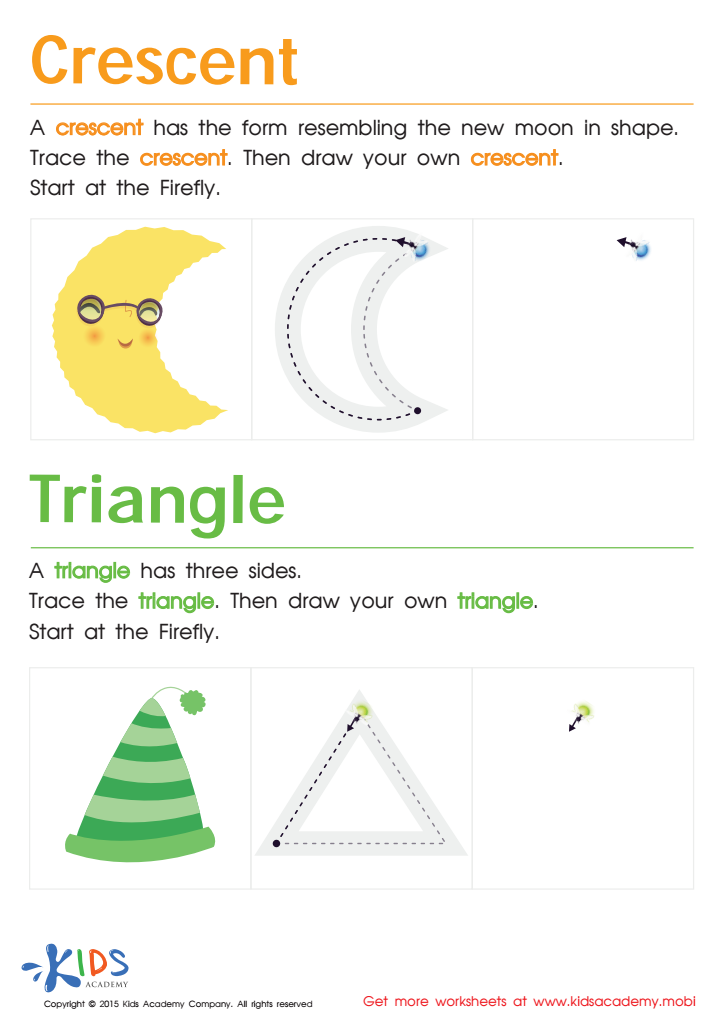
Learning to Draw Crescents And Triangles Worksheet
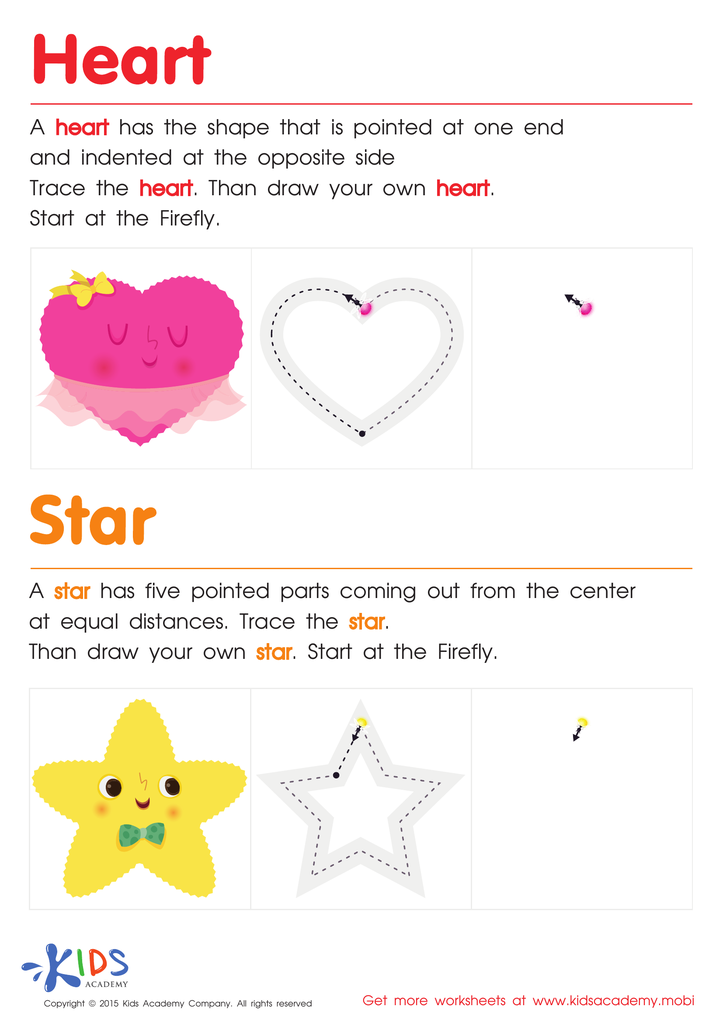
Let's Learn to Draw Hearts And Stars Printable
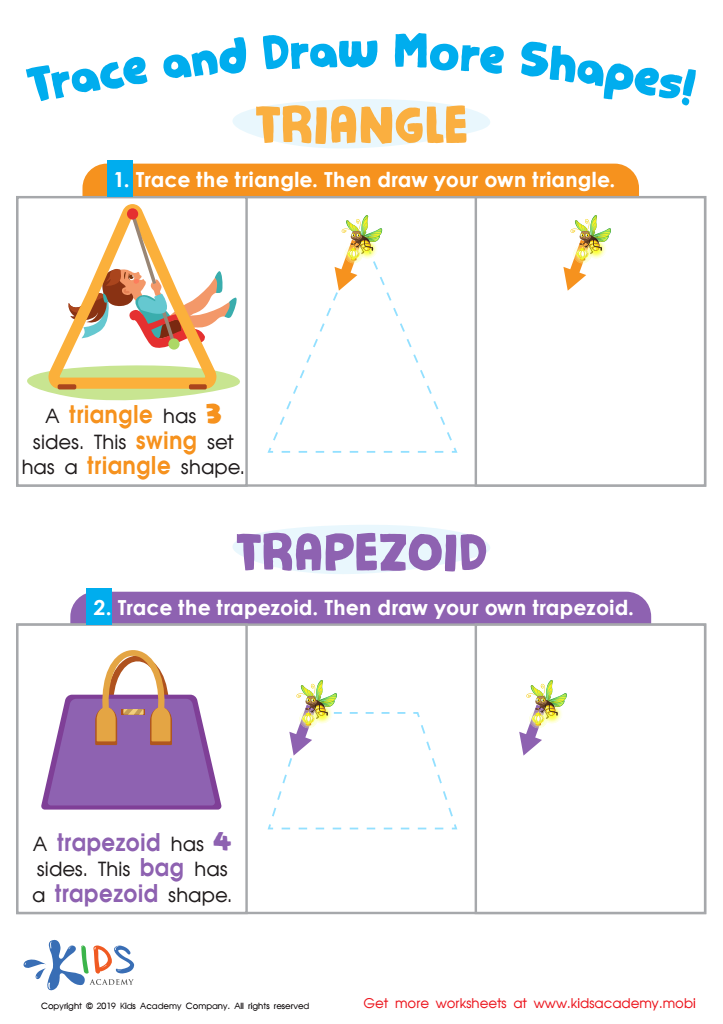
Trace and Draw More Shapes Worksheet
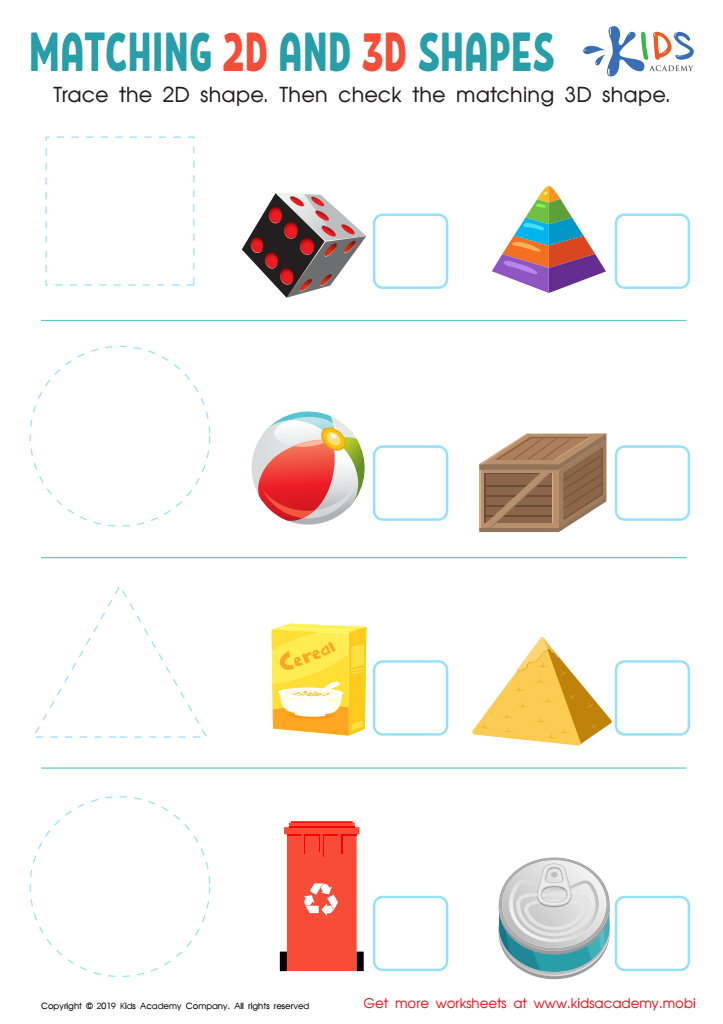
Matching 2D and 3D Shapes Worksheet
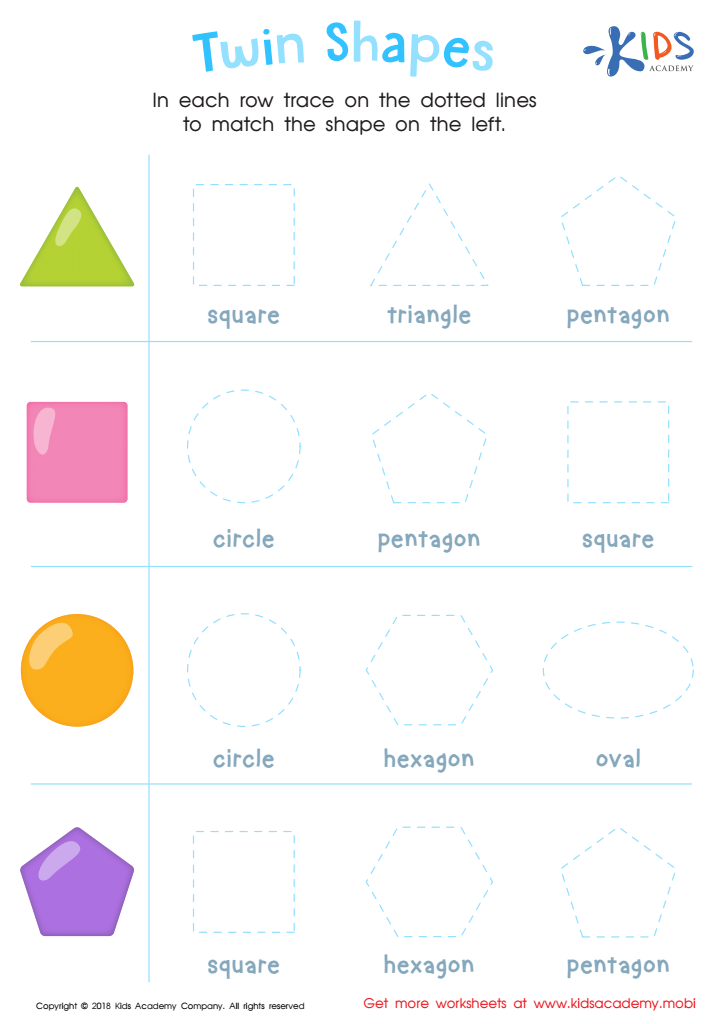
Twin Shapes Dot-to-Dot Worksheet
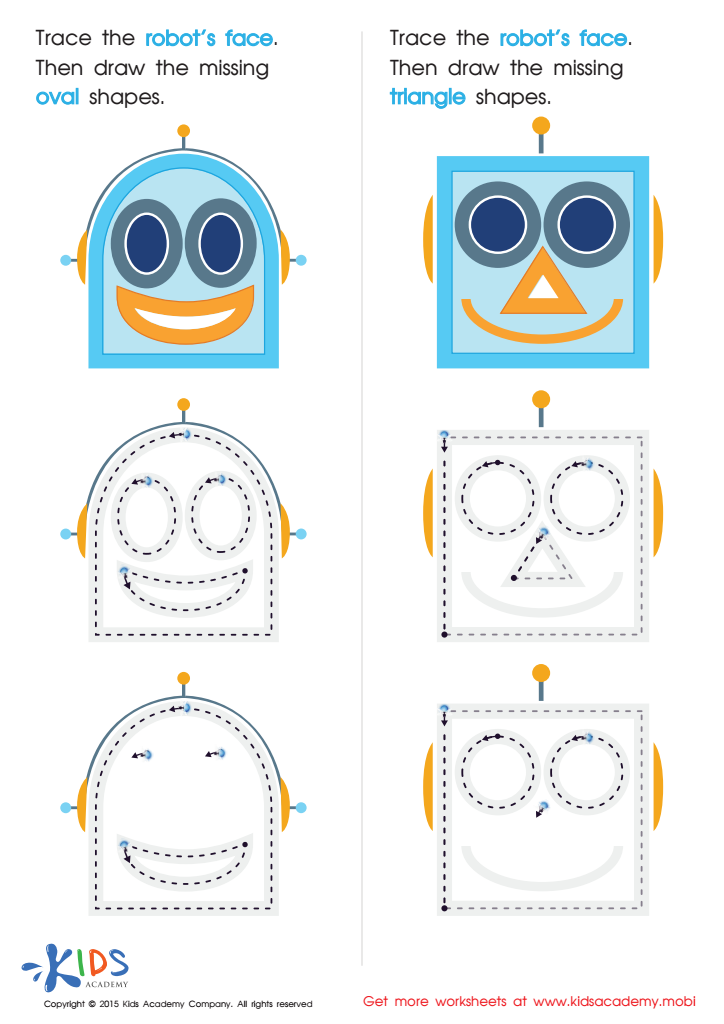
Drawing Ovals And Triangles with Fun Printable








Shape recognition and tracing shapes are foundational skills that form the building blocks for cognitive, literacy, and numeracy development in young children. At six years old, children are at a critical age for developing fine motor skills, eye-hand coordination, and spatial awareness. Engaging in activities like tracing shapes helps to refine these essential skills.
By focusing on shape recognition, children enhance their visual perception and memory, which are crucial for their reading and writing abilities. Recognizing shapes is not only about identifying circles, squares, and triangles; it cultivates the ability to notice differences and similarities, aiding in letter recognition and geometrical understanding.
Tracing shapes also strengthens a child's grip and control of writing instruments, preparing them for writing letters and numbers with precision. This process fosters patience, attention to detail, and perseverance—the same skills that are critical for academic success and daily tasks.
Furthermore, shape recognition is a foundational math skill. Understanding shapes and their properties introduces children to basic geometry concepts, setting the stage for more complex mathematical reasoning in later years. Parents and teachers invested in developing these skills are directly contributing to the child’s holistic academic growth, self-confidence, and readiness for more challenging learning milestones. Early attention to these areas ensures a solid base upon which a child can build future academic and life skills.