Understanding fractions Numbers Worksheets for 8-Year-Olds
14 filtered results
-
From - To
Understanding fractions can be challenging for young learners, but our "Understanding Fractions Numbers Worksheets" for 8-year-olds make the process engaging and fun. Designed to build foundational math skills, these printable worksheets offer a variety of exercises that simplify the concepts of numerators and denominators. Kids will delight in visually appealing activities, such as coloring and matching, which reinforce their comprehension of fractions in a practical and effective manner. Perfect for both classroom and home learning, these worksheets are ideal for promoting a confident grasp of fractions, setting the pathway for future math success. Download and print now!
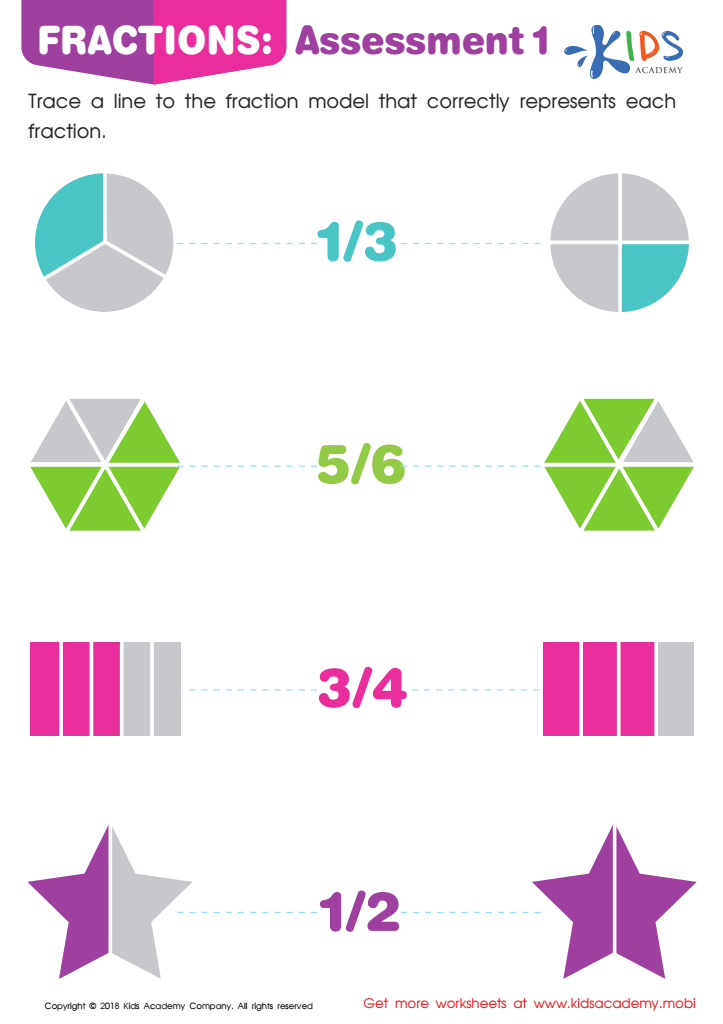
Fractions: Assessment 1 Worksheet
 Assign to My Students
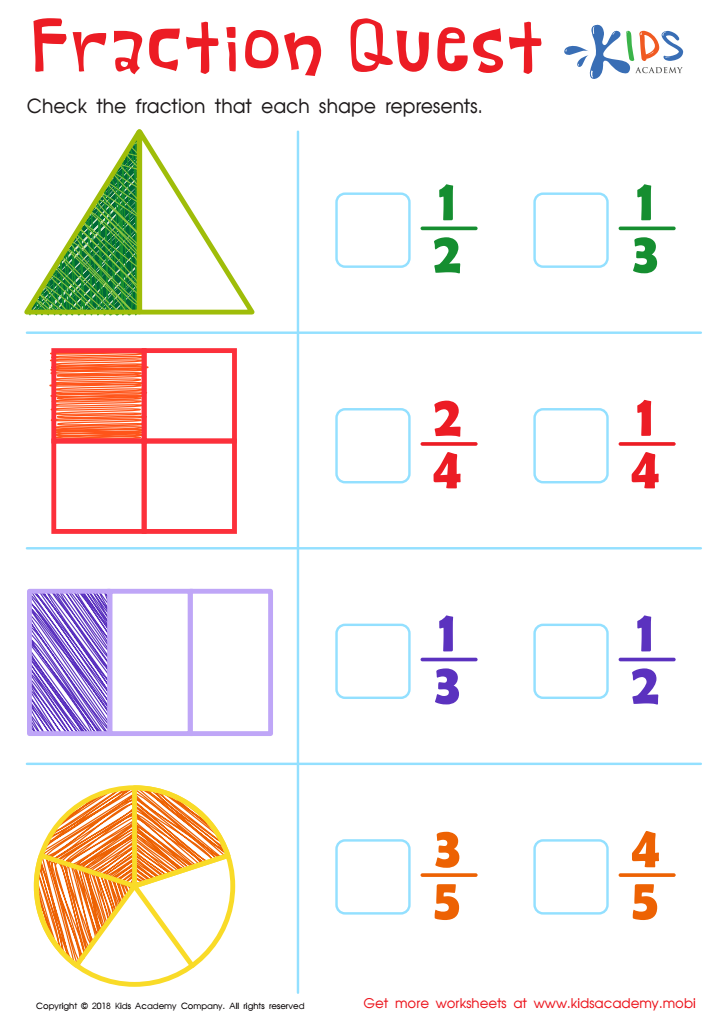
Fraction Quest Worksheet
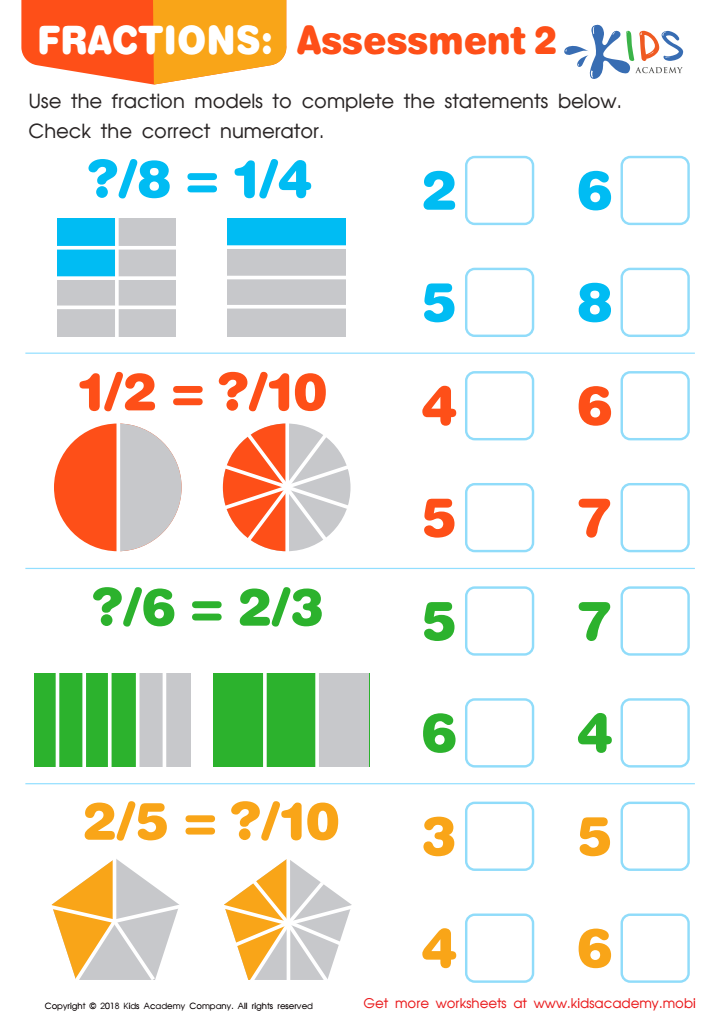
Fractions: Assessment 2 Worksheet
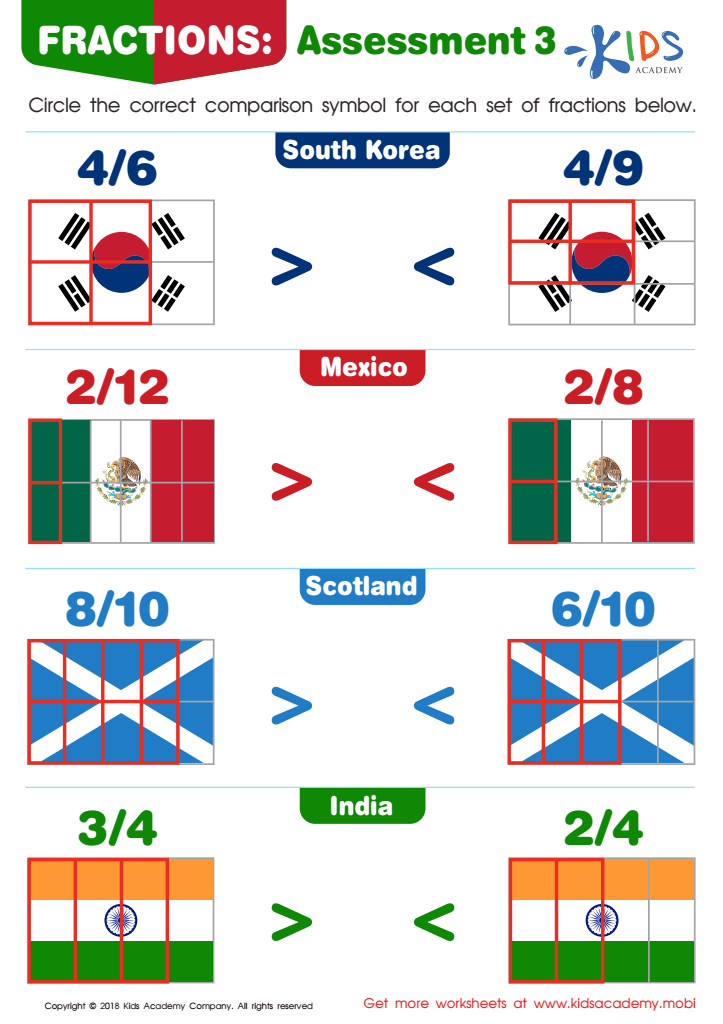
Fractions: Assessment 3 Worksheet
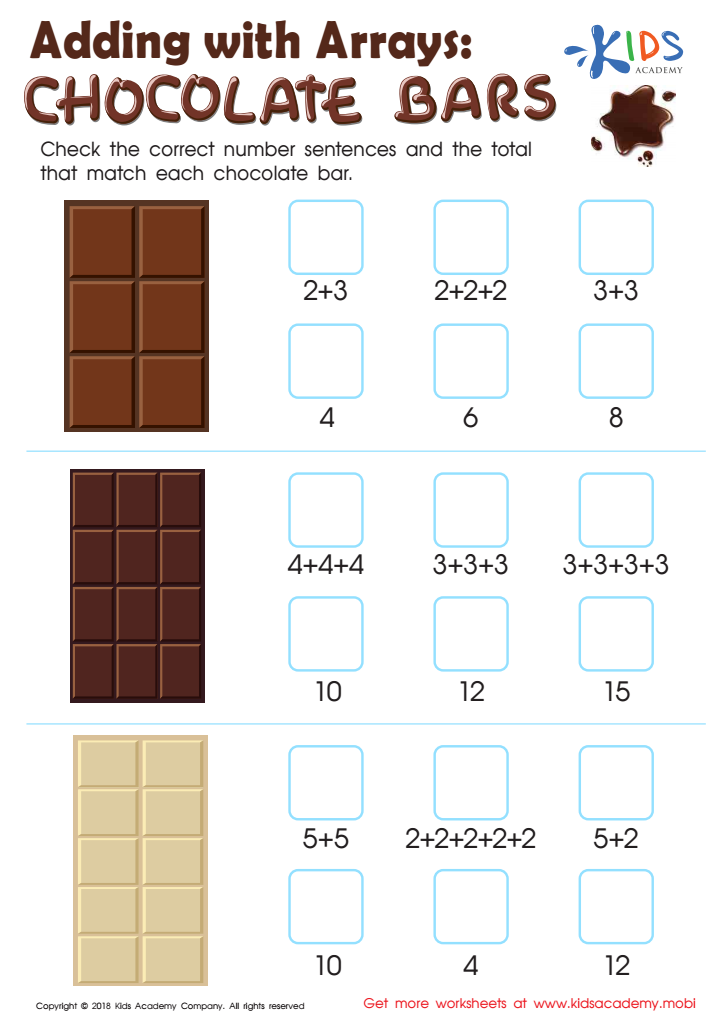
Adding with Arrays: Chocolate Bars Worksheet
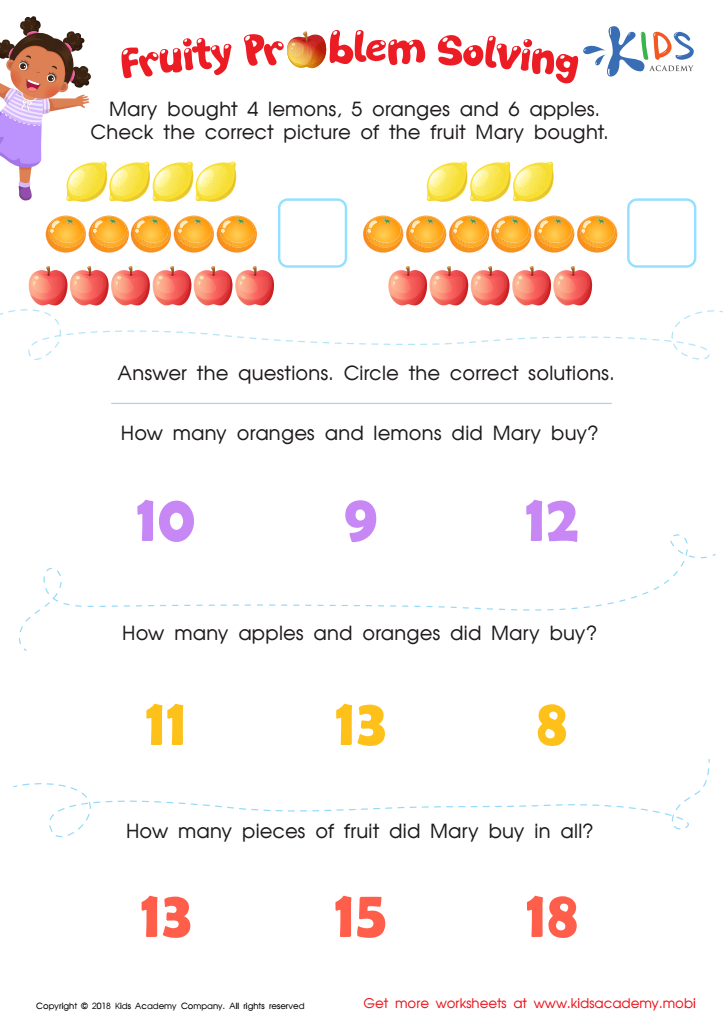
Fruity Problem Solving Worksheet
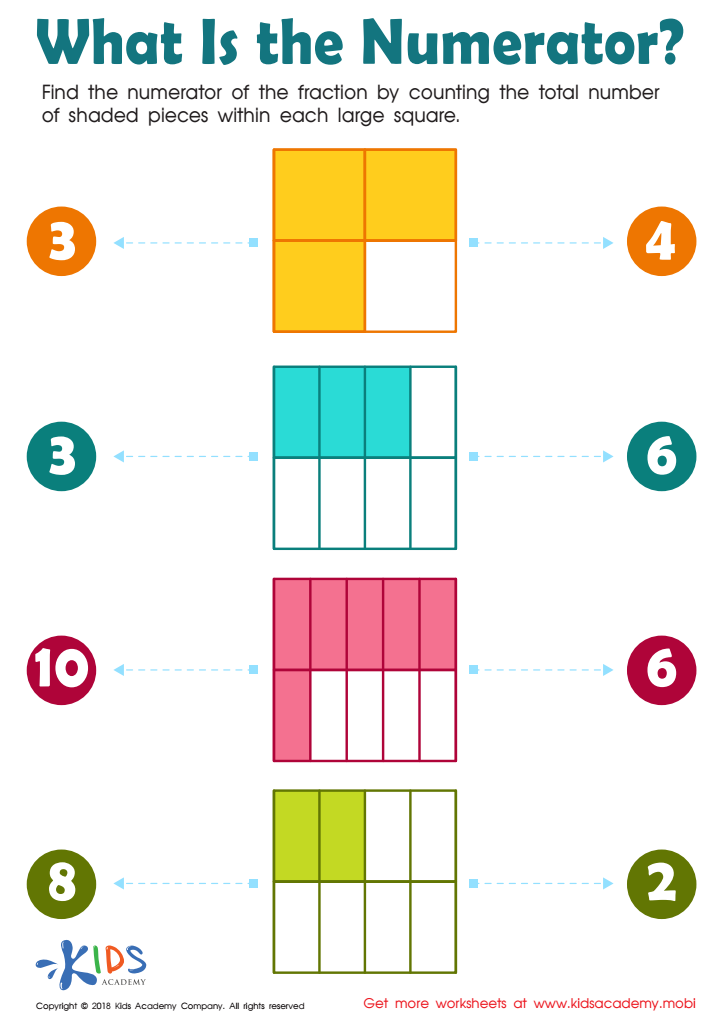
What Is the Numerator? Worksheet
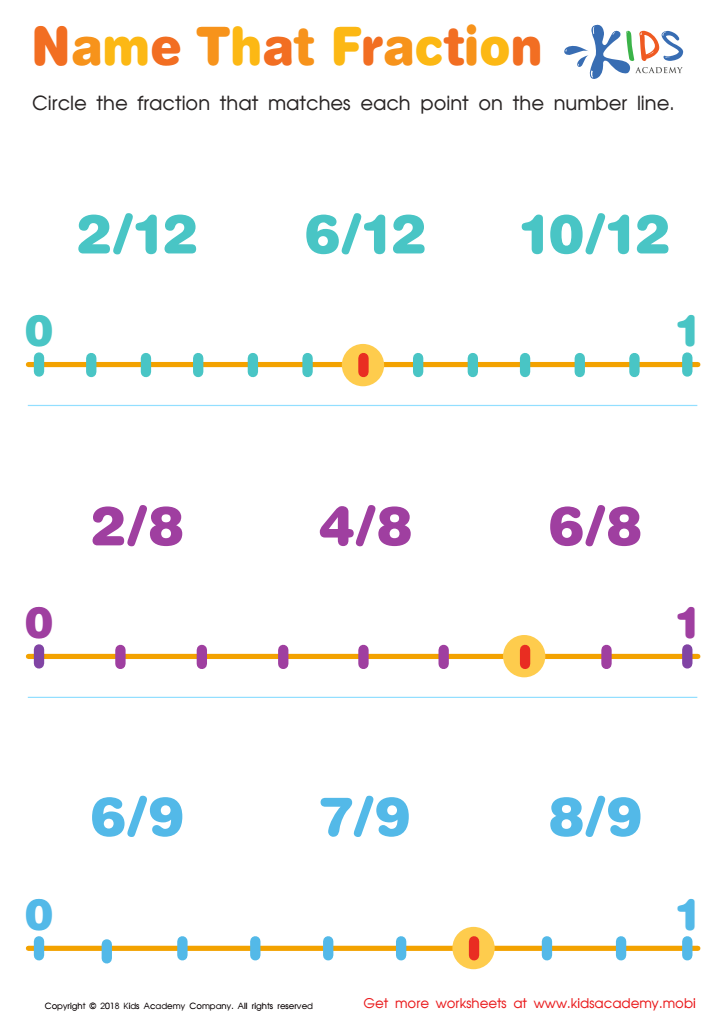
Name That Fraction Worksheet
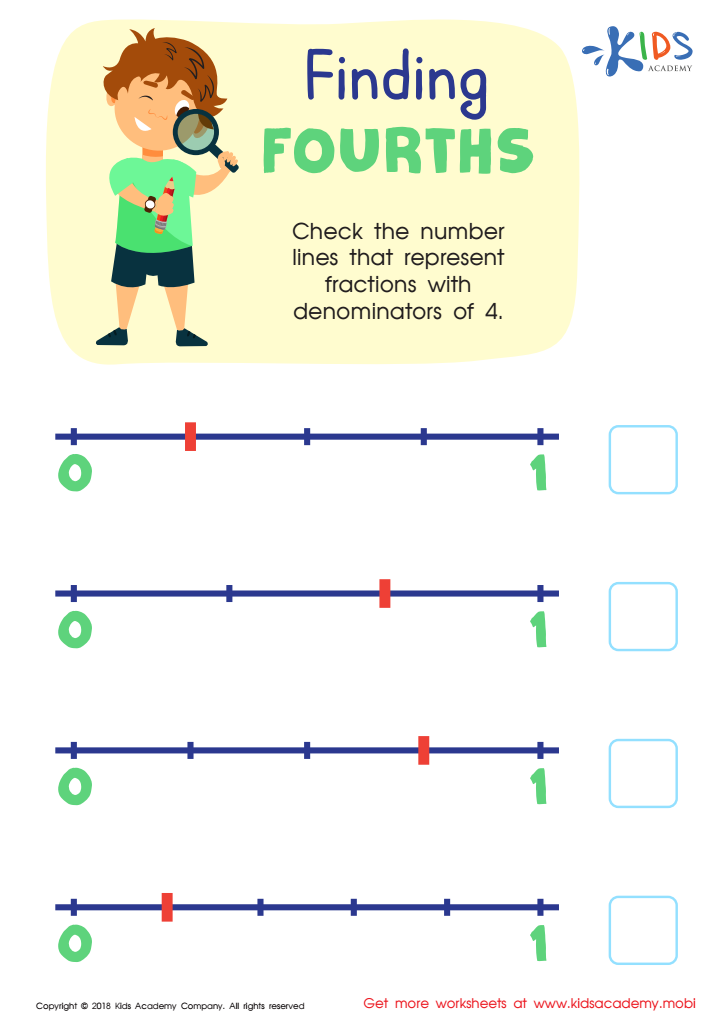
Finding Fourths Worksheet
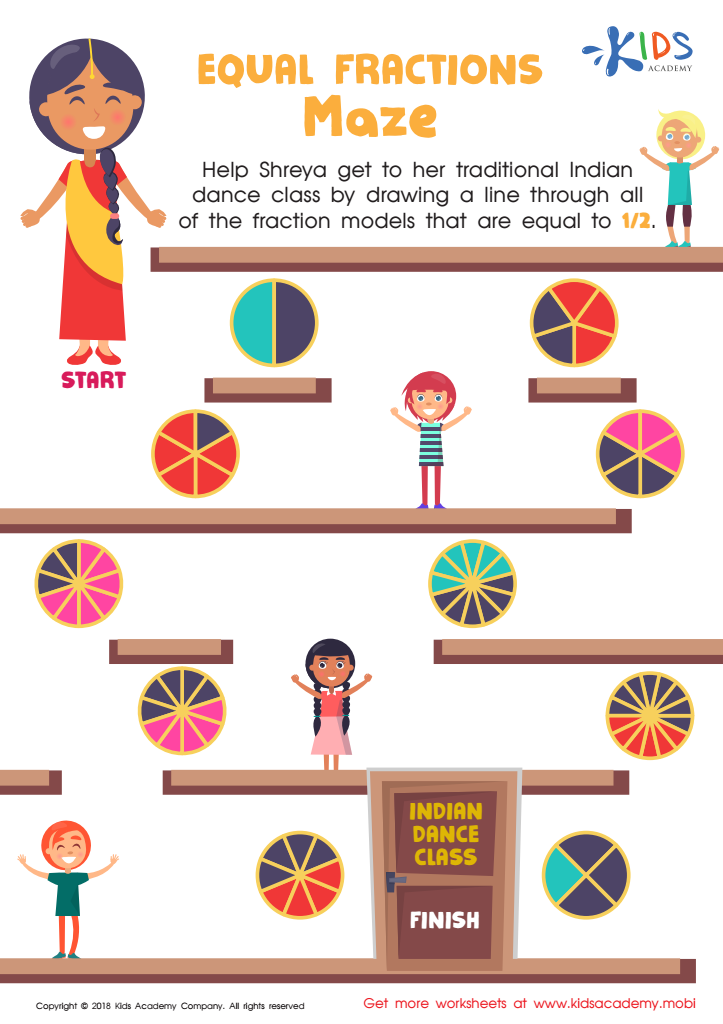
Equal Fractions Maze Worksheet
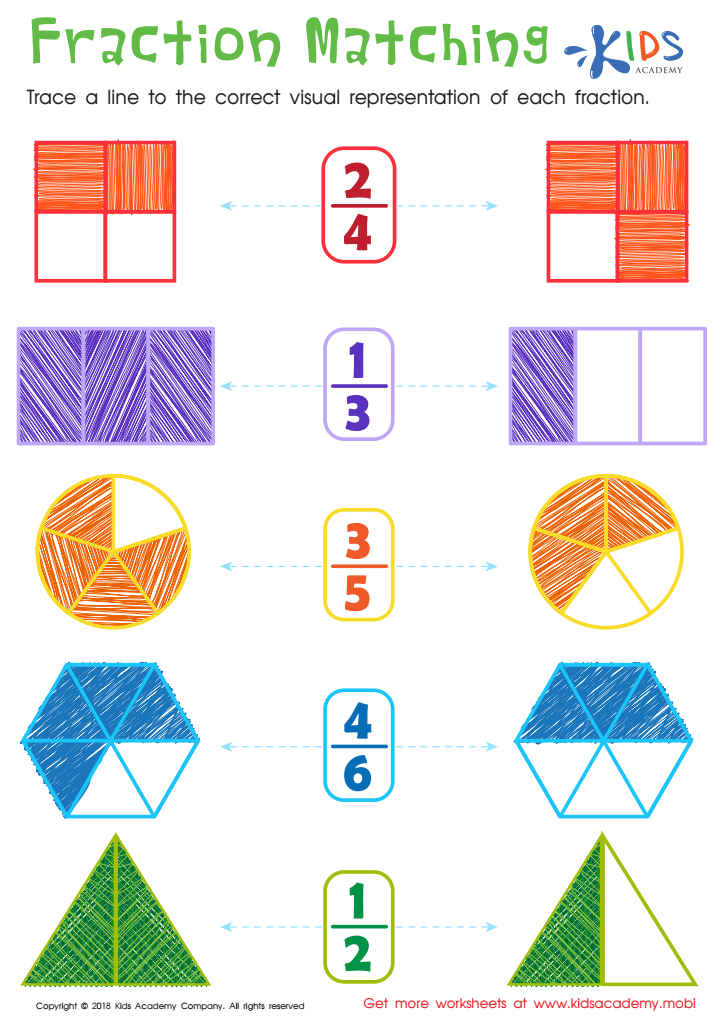
Fraction Matching Worksheet
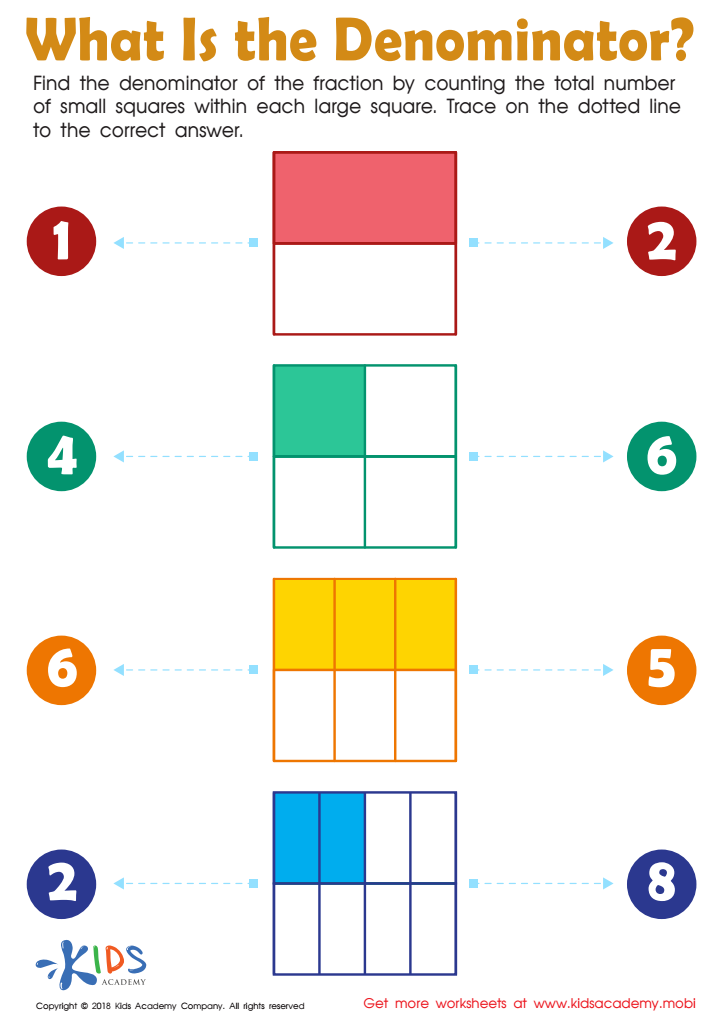
What Is the Denominator? Worksheet
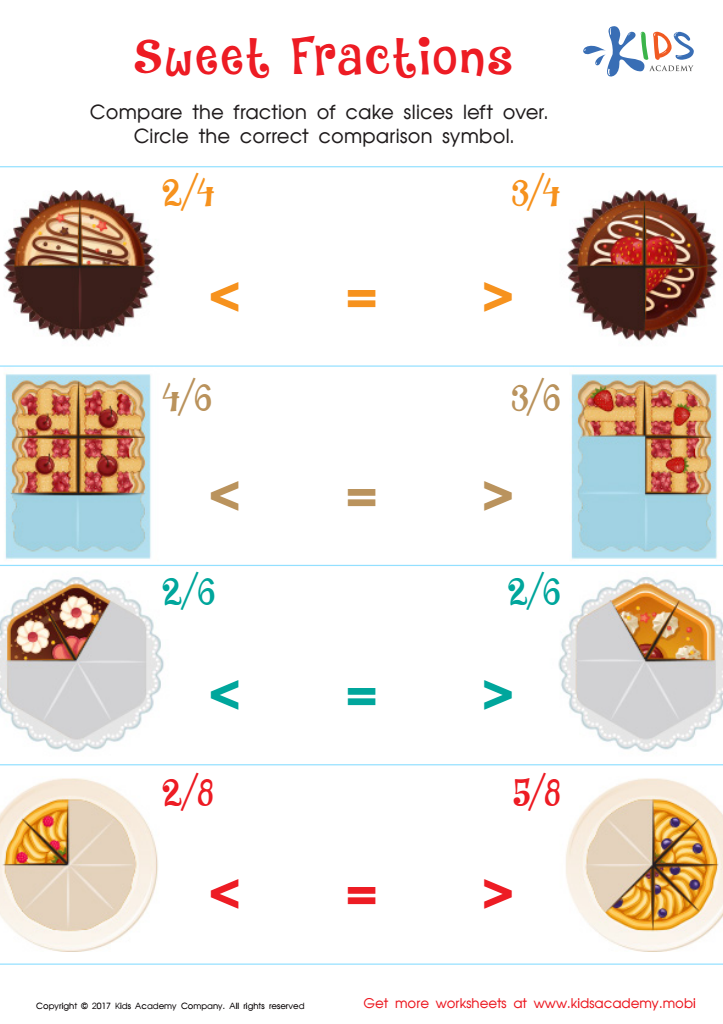
Compare Fractions Worksheet
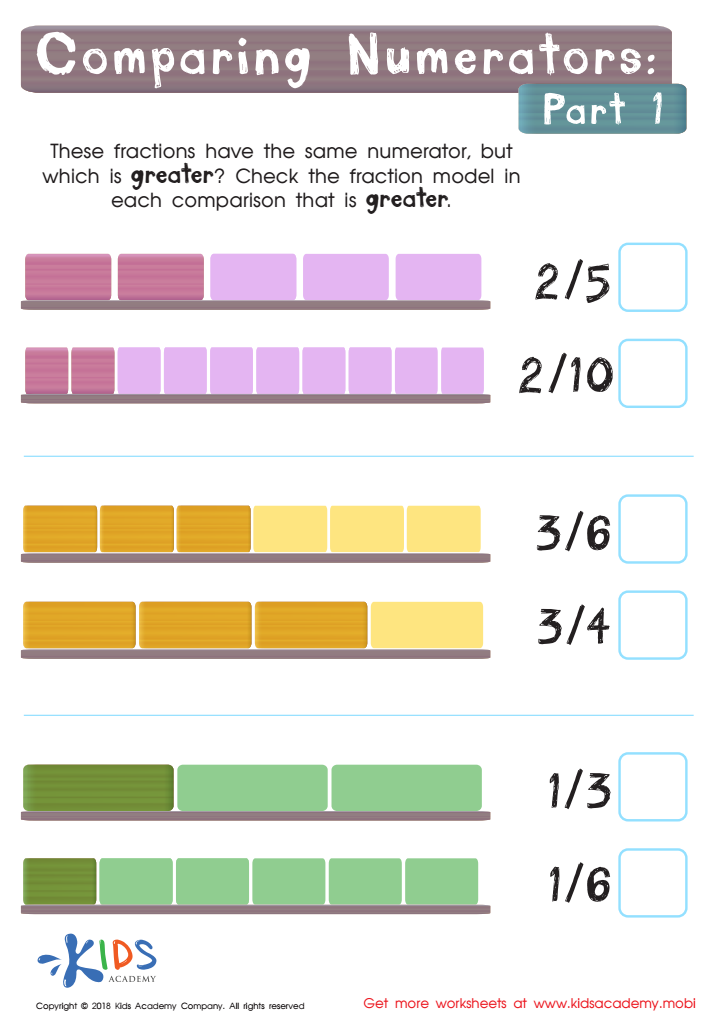
Comparing Numerators Part 1 Worksheet








Understanding fractions at the age of 8 is crucial for children's mathematical development and overall academic success. At this stage, children are transitioning from basic whole number operations to more complex concepts, and fractions are a fundamental part of this progression. Grasping fractions helps build a foundation for algebra, geometry, and higher-level math, ensuring that students are well-prepared for future learning.
For parents and teachers, emphasizing the importance of fractions enhances cognitive skills like logical thinking and problem-solving. Working with fractions often involves dividing objects or quantities into smaller parts and understanding the relationship between those parts and the whole, which enhances spatial reasoning and proportional thinking. These skills are not only vital for math but are transferable to subjects like science, where understanding ratios and measurements are paramount.
Additionally, fractions are applicable in many real-world scenarios. Cooking, budgeting, and even telling time involve fractions, making it essential for children to develop a practical understanding of them. By paying attention to how children grasp these concepts, parents and teachers ensure they develop confidence and a positive attitude toward math, mitigating anxiety and encouraging a lifelong appreciation for the subject. This holistic approach fosters both academic achievement and practical life skills, making mastery of fractions a priority.








