Filters

56 filtered results

Clear all filters
Favorites
With answer key
Interactive

56 filtered results

Difficulty Level

Grade


Check out this FREE Math Trial Lesson for age 3-7!

Sorting Objects into 3 Categories

Favorites
With answer key
Interactive
  • Math
  • 3-7
  • With answer key
Counting: Assessment 3 Worksheet

Counting: Assessment 3 Worksheet

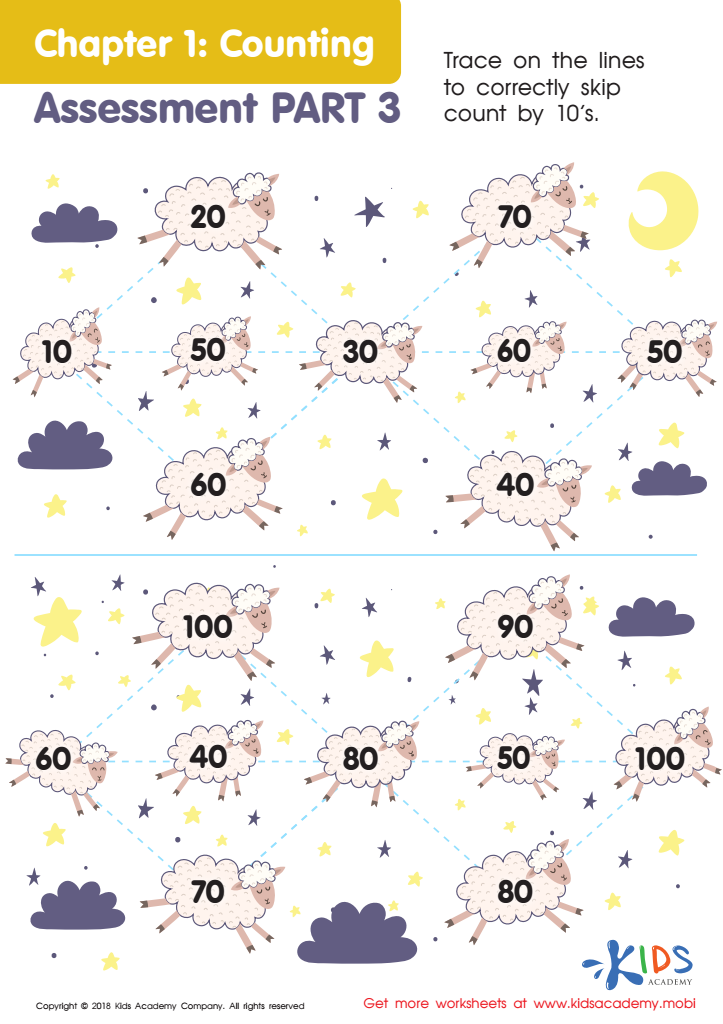
This worksheet is great for assessing your child's counting skills. It's a bit more challenging than the usual 'count to fifty' exercises. Have them trace the lines and skip count by 10's to help them learn counting in tens.
Counting: Assessment 3 Worksheet
Worksheet
The Unknown Number - Assessment 3 Worksheet

The Unknown Number - Assessment 3 Worksheet

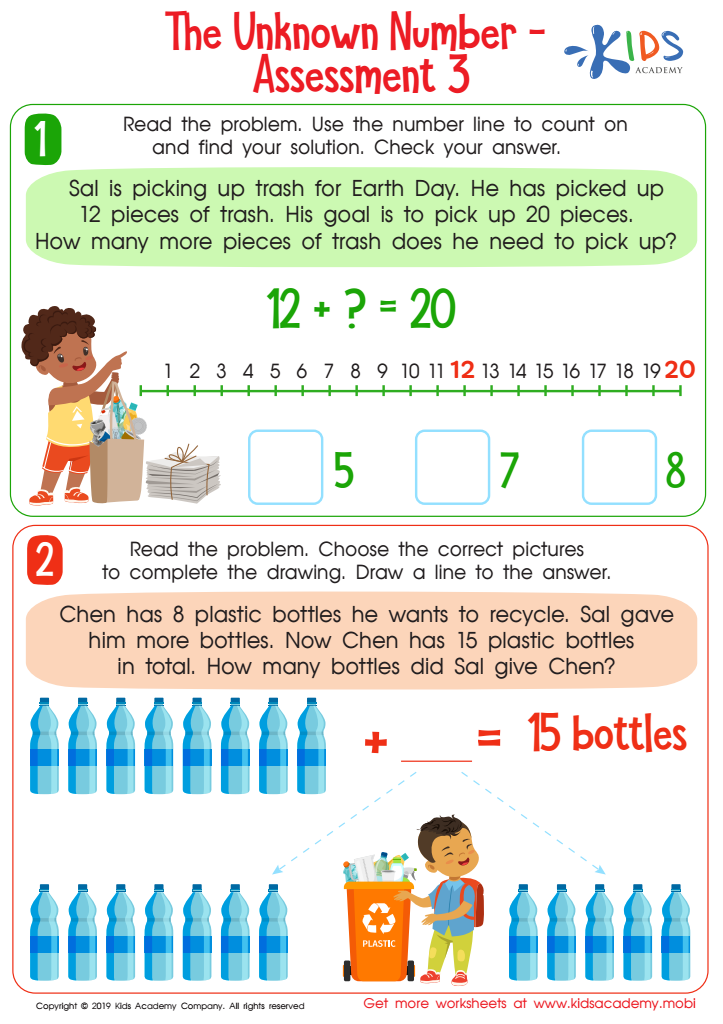
Read the Earth Day-themed word problem aloud to your kids, pointing to the pictures as you go. Use the number line to help them count on and find the answer. Then check it together. Doing this can help them learn more about Earth Day and meet other children who are doing their part to keep it clean.
The Unknown Number - Assessment 3 Worksheet
Worksheet
Data: Assessment 1 Worksheet

Data: Assessment 1 Worksheet

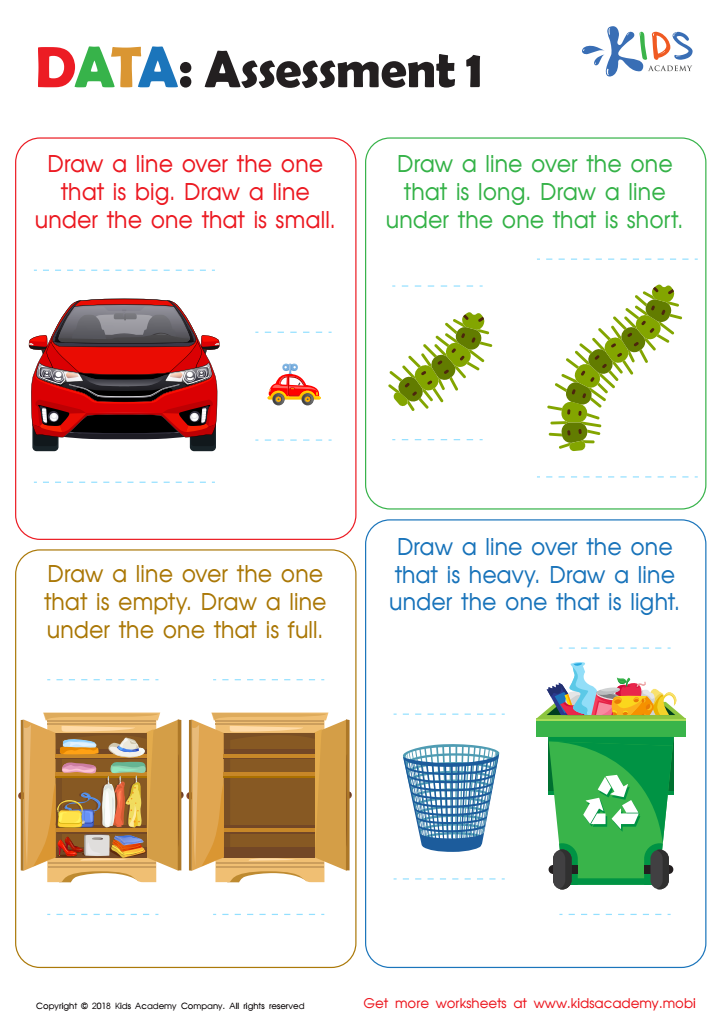
Assess your students' knowledge of measurement words with this worksheet. Have them compare and describe objects/quantities using words like "big", "small", "long", "short", "empty", "full", "heavy" and "light". Encourage further learning by asking students to provide examples of each word meaning.
Data: Assessment 1 Worksheet
Worksheet
Addition and Subtraction Within 1: Assessment 3 Worksheet

Addition and Subtraction Within 1: Assessment 3 Worksheet

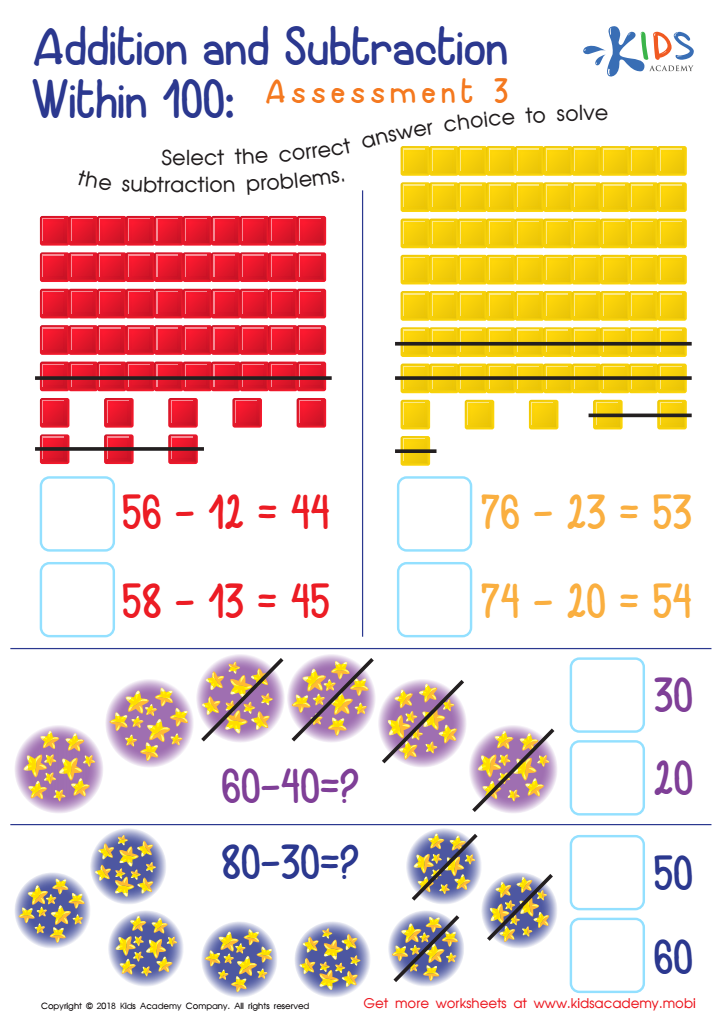
Help your kids count the base ten blocks in the picture. Then, count how many have been marked off. Ask them to select the correct answer choice to solve the subtraction problems based on the blocks counted. 80 words
Addition and Subtraction Within 1: Assessment 3 Worksheet
Worksheet
One Less: Assessment 1 Worksheet

One Less: Assessment 1 Worksheet

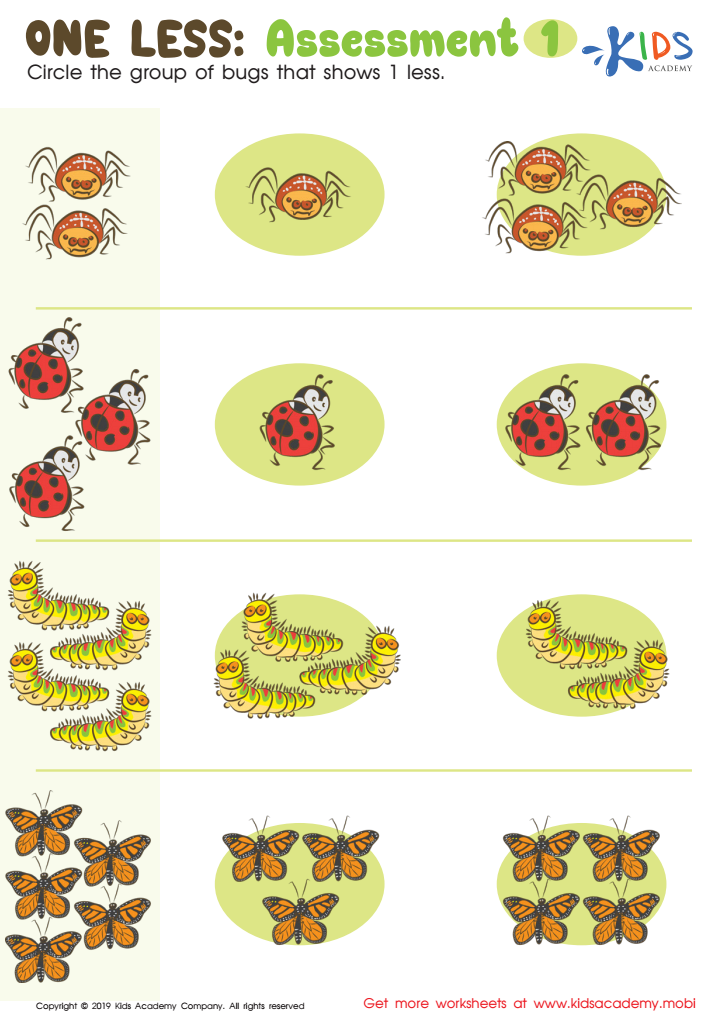
Help your kids with counting using this worksheet that has pictures of bugs! There are four different bugs and insects. Show them each one and ask them to count, then circle the group that has 1 less than the previous group. Don't worry if your kids don't like bugs - it's just a picture!
One Less: Assessment 1 Worksheet
Worksheet
Data: Assessment 2 Worksheet

Data: Assessment 2 Worksheet

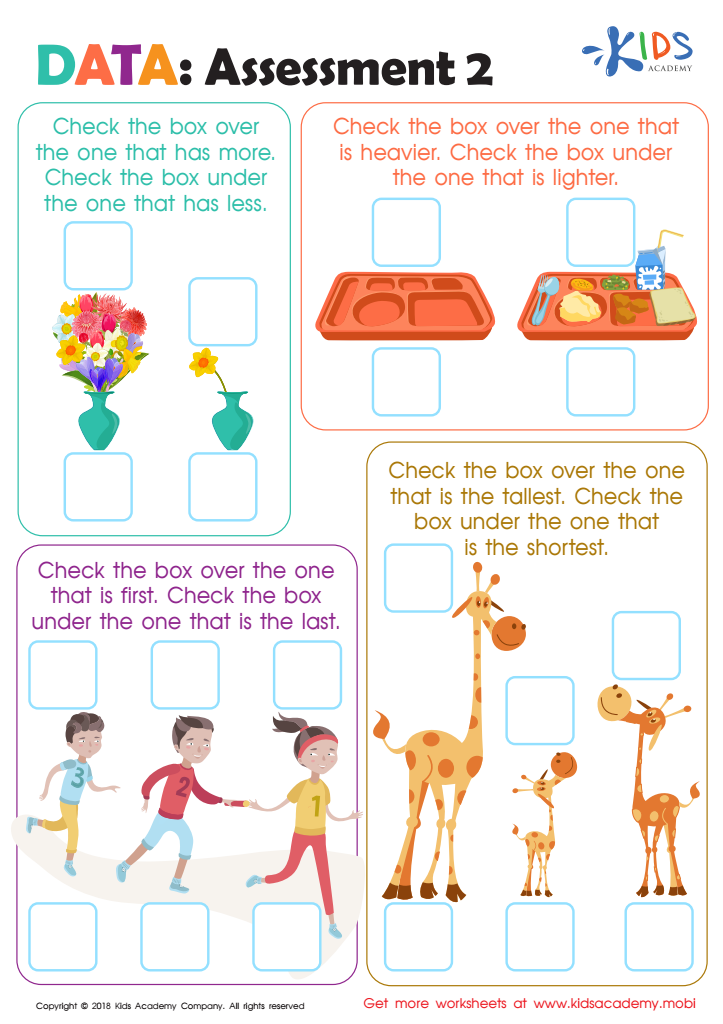
This printable worksheet tests students' understanding of words related to quantity and measurement, such as "more", "less", "heavy", "light", "first", "last", "tall", and "short". It helps children compare and contrast when solving measurement problems. Ideal for math classes, it encourages students to gain the essential skills needed in subjects like math, science, and reading.
Data: Assessment 2 Worksheet
Worksheet
Counting to 4 and 5: Assessment 2 Worksheet

Counting to 4 and 5: Assessment 2 Worksheet

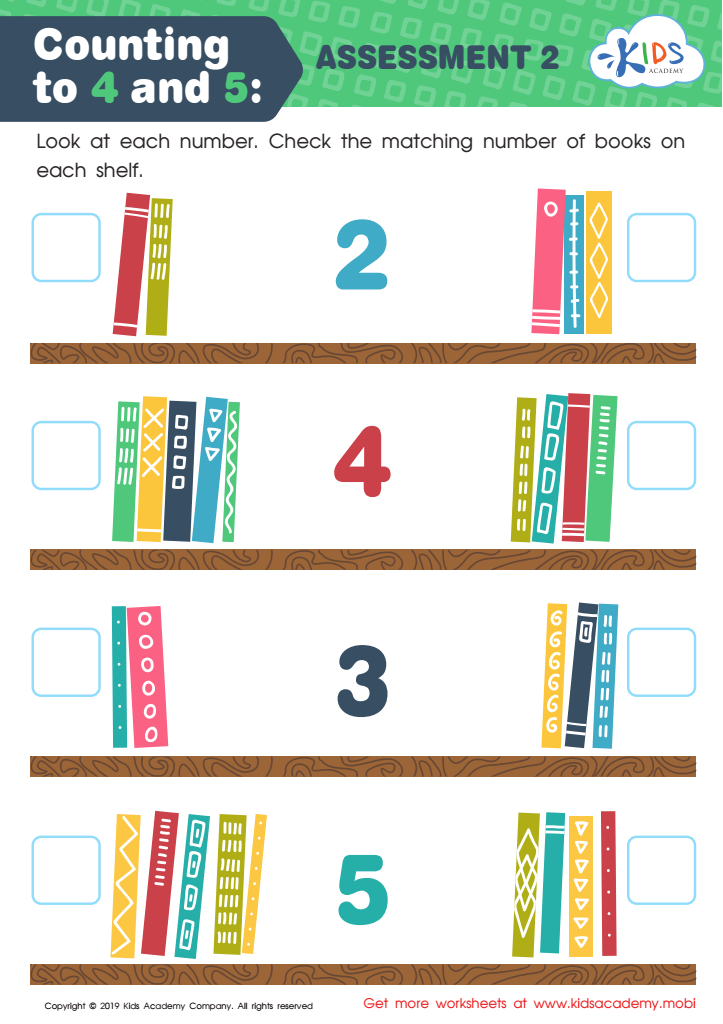
Counting is a key skill for math success. Help your kids get off to a good start by counting the books on each shelf in the pictured printout. Point to each set of books, counting aloud, and then look for the matching number in the centre. With this simple worksheet, your kids can get the practice they need before taking on more advanced math skills.
Counting to 4 and 5: Assessment 2 Worksheet
Worksheet
One Less: Assessment 2 Worksheet


One Less: Assessment 2 Worksheet

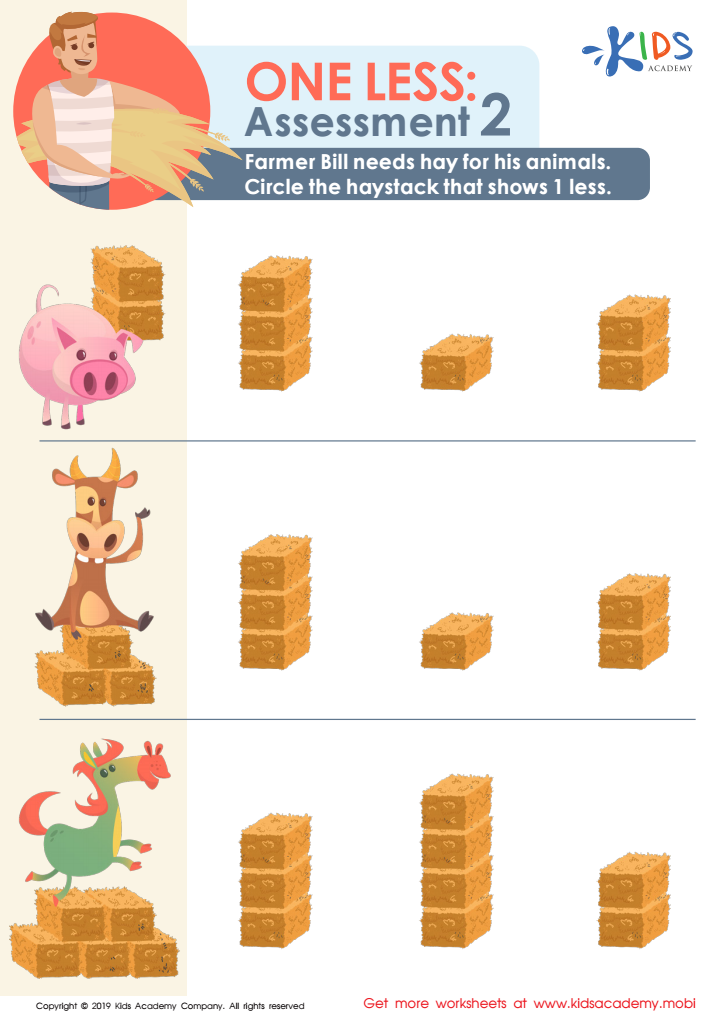
Farmers are vital to our community. They raise animals and crops which provide us with food. Kids can learn a lot by visiting a farm—ask them to name the animals and crops they saw! Farmer Bill in this worksheet needs hay. Point to the haystacks, and ask your child to circle the one with 1 less.
One Less: Assessment 2 Worksheet

Worksheet


... 2 3

Parents and teachers should prioritize math activities for children aged 3-7 because early math skills lay a crucial foundation for future academic success. Engaging young learners in math through fun and interactive activities fosters critical thinking, problem-solving, and logical reasoning. Such activities enhance their understanding of numbers, shapes, patterns, and basic operations, stimulating cognitive development.

Math activities tailored for this age group create an enjoyable learning environment, making abstract concepts more tangible. For young children, hands-on learning is essential; manipulatives like blocks or counters help visualize mathematical ideas. Activities that provide immediate feedback through answers allow children to assess their understanding, fostering a sense of accomplishment and confidence as they master new skills.

Moreover, incorporating math into daily routines encourages a positive attitude towards the subject and can alleviate math anxiety later in life. When children see math as an integral part of their world, they are more likely to engage with it meaningfully.

Incorporating math activities with answers helps parents and teachers track progress, identify challenges, and ensure that foundational concepts are firmly grasped. This proactive approach ensures that children build strong math skills essential for their ongoing education and lifelong learning.