Normal Building Vocabulary Worksheets Activities With Answers for Ages 4-9
3 filtered results
-
From - To
Enhance your child's language skills with our "Normal Building Vocabulary Worksheets Activities With Answers," designed specifically for ages 4-9. These engaging worksheets offer a fun, interactive way to enrich vocabulary through various activities, including word matching, fill-in-the-blanks, and picture associations. Each worksheet is crafted to promote learning while keeping kids entertained, making vocabulary building an enjoyable experience. With included answer keys, parents and teachers can easily assess progress and provide guidance. Perfect for homeschool settings or classroom use, these resources ensure that young learners develop a strong foundation in language arts as they embark on their educational journey. Explore our worksheets today!
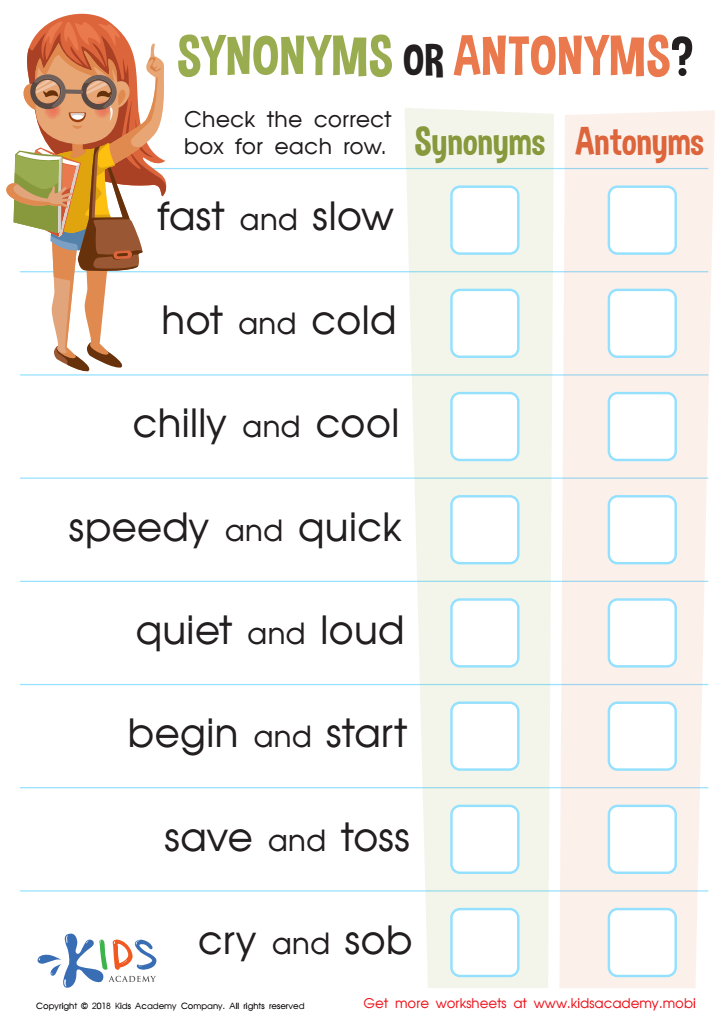
Synonyms or Antonyms: Assessment Worksheet
 Assign to My Students
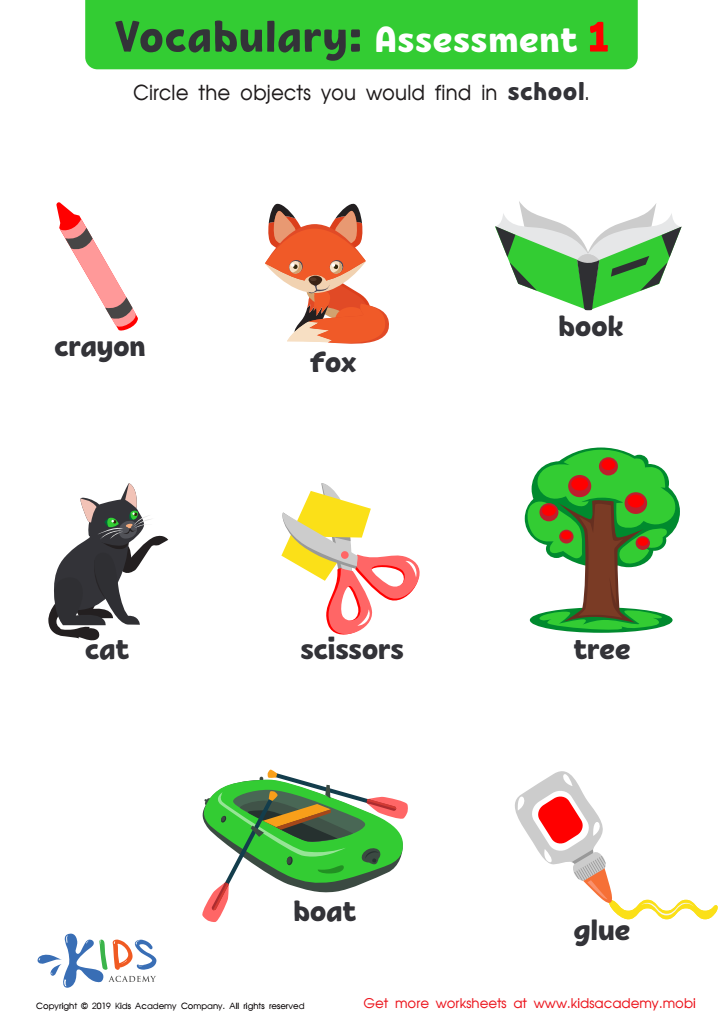
Vocabulary: Assessment 1 Worksheet
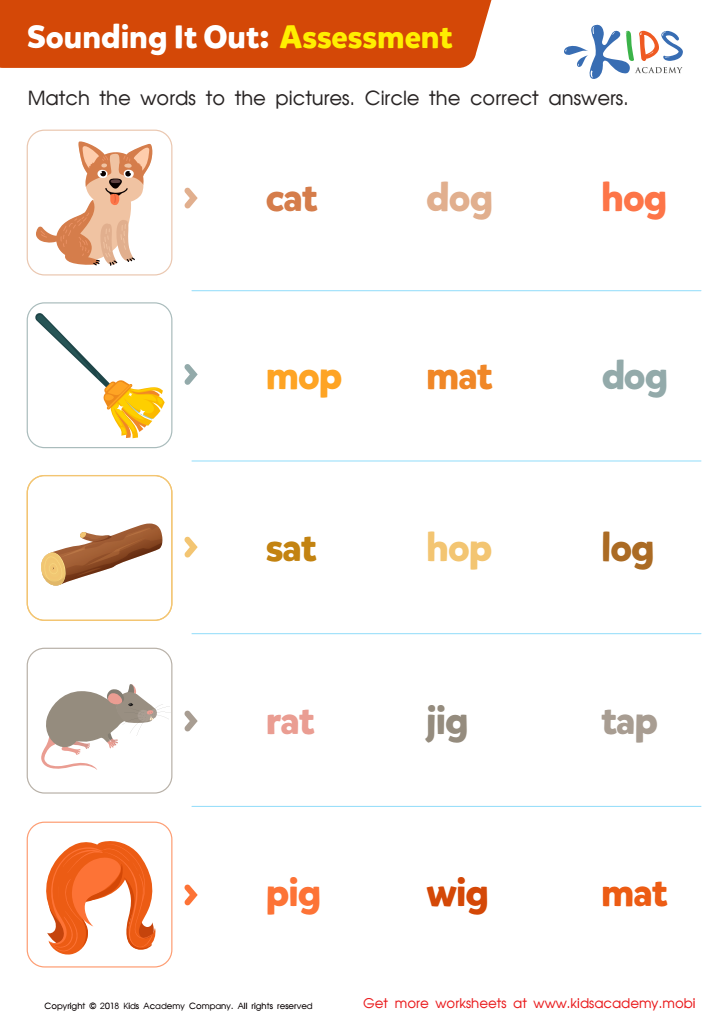
Sounding it Out: Assessment Worksheet







Parents and teachers should prioritize Normal Building Vocabulary Activities for children ages 4-9 because vocabulary development is foundational to literacy and overall academic success. During these critical early years, children are rapidly acquiring language skills. Engaging in vocabulary-building activities helps to enhance their understanding of words, enabling them to express themselves more effectively and comprehend what they read.
Moreover, a robust vocabulary leads to better reading comprehension, improved writing abilities, and more effective communication skills. When children are exposed to diverse vocabulary in a playful and interactive context, they are more likely to retain new words and integrate them into their everyday language.
Normal Building Vocabulary Activities are designed to be age-appropriate and stimulating, making learning fun. They often incorporate games, storytelling, and hands-on experiences, which hold children's attention and encourage participation. By including answers for these activities, educators and parents can actively engage with children in their learning process, identify areas where they need additional support, and celebrate their achievements. Ultimately, investing time in vocabulary activities lays a strong foundation for lifelong learning and cognitive development, equipping children with the essential language skills they need to thrive both academically and socially.








