Filters

6 filtered results

Clear all filters
Favorites
With answer key
Interactive

6 filtered results

Difficulty Level

Grade


Explore a world of imagination with our "Normal Reading Fiction Worksheets" designed specifically for ages 5-6. Our engaging activities boost literacy skills, enhance comprehension, and spark a love for reading. Each worksheet features enchanting stories that capture young minds, complemented by guided questions and fun exercises. Answer keys provide instant feedback for both educators and parents, ensuring a smooth learning experience. Foster creativity and critical thinking in your child with hands-on narratives that encourage discussion and reflection. Perfect for classroom use or home practice, these worksheets are a valuable resource for nurturing early readers. Start your adventure in fiction today!

Check out this FREE Reading Fiction Trial Lesson for age 5-6!

Answer Questions about Key Details in an Informational Text

Favorites
With answer key
Interactive
  • Reading Fiction
  • 5-6
  • With answer key
  • Normal
Finding the Details and Connections: Assessment 2 Worksheet

Finding the Details and Connections: Assessment 2 Worksheet

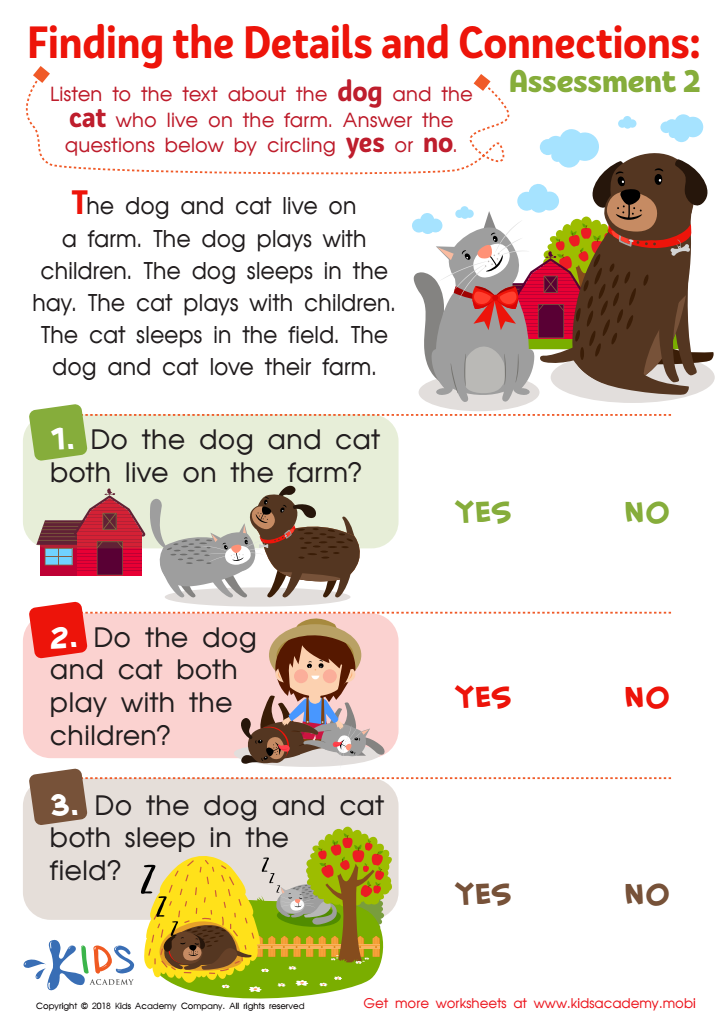
Does your child love animals? If you have pets, they'll relate to the text in this worksheet. Read it aloud to them and help them answer the simple questions by circling yes or no. The story is about a dog and cat living on a farm. Let your child read it aloud to you if they can.
Finding the Details and Connections: Assessment 2 Worksheet
Worksheet
Questions About Stories: Assessment 2 Worksheet

Questions About Stories: Assessment 2 Worksheet

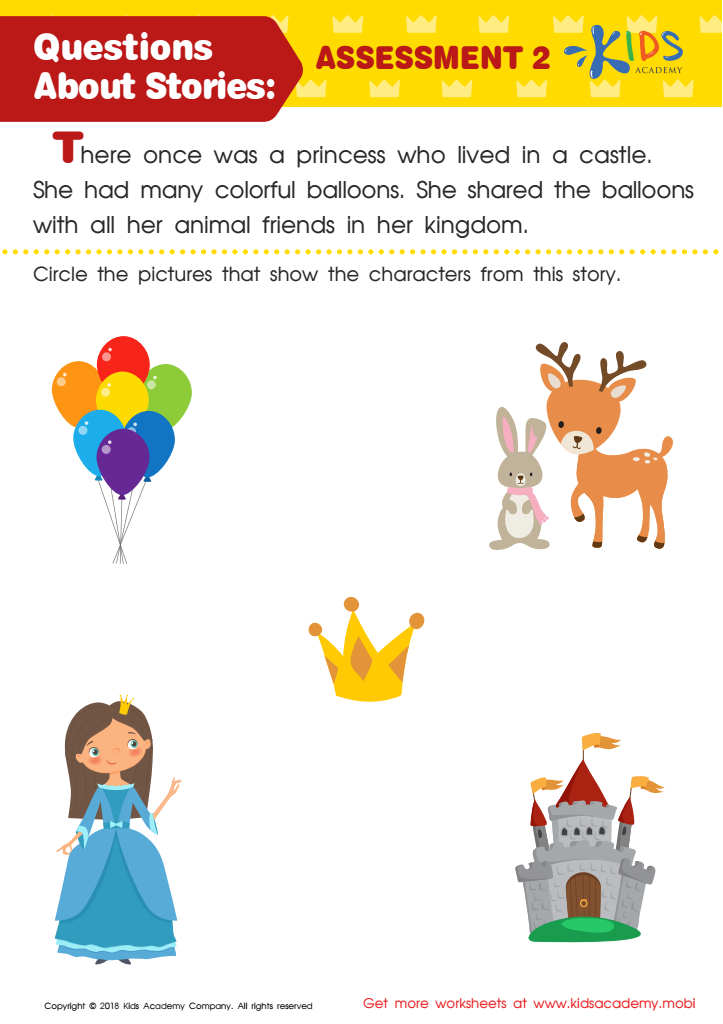
Talk to your child about what a princess is and what activities they associate with that word. Then, read the story to them and help them identify characters in the pictures. Look out for details and ask them questions to ensure they understand.
Questions About Stories: Assessment 2 Worksheet
Worksheet
Craft and Structure of Stories: Assessment 2 Worksheet

Craft and Structure of Stories: Assessment 2 Worksheet

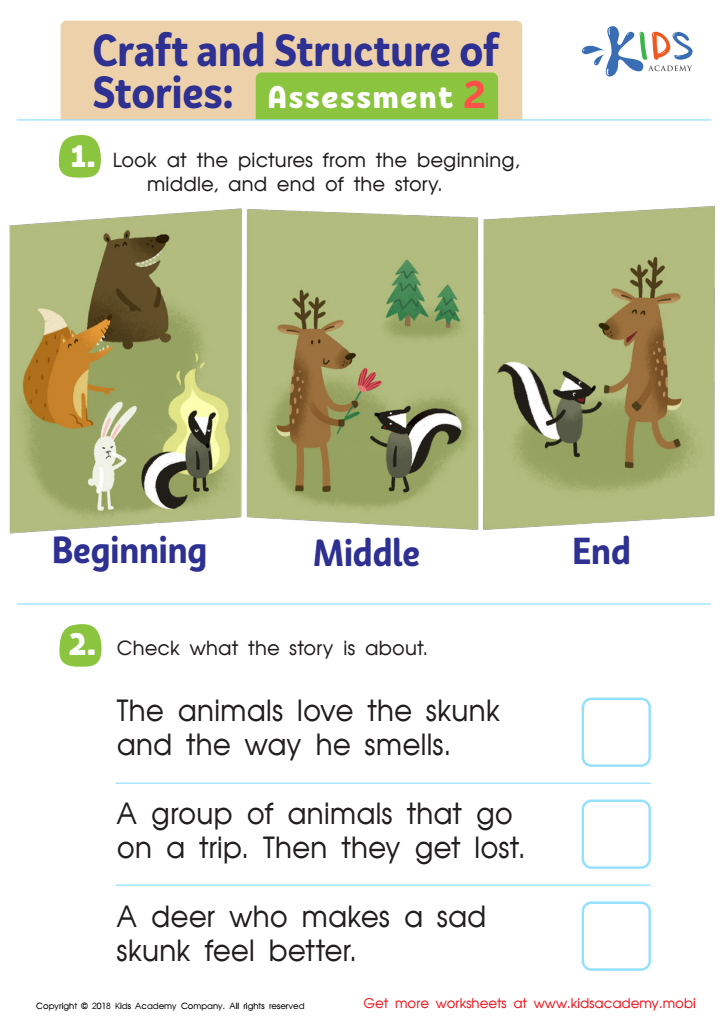
Help your child assess their story sequencing and reading comprehension skills using this cute worksheet! It encourages them to look at the three pictures on the page, each representing a scene from the beginning, middle and end. Ask them what the story is about, then let them check the box next to the correct answer. This is a great way to ensure they understand the main events of a story.
Craft and Structure of Stories: Assessment 2 Worksheet
Worksheet
Finding the Details and Connections: Assessment 1 Worksheet

Finding the Details and Connections: Assessment 1 Worksheet

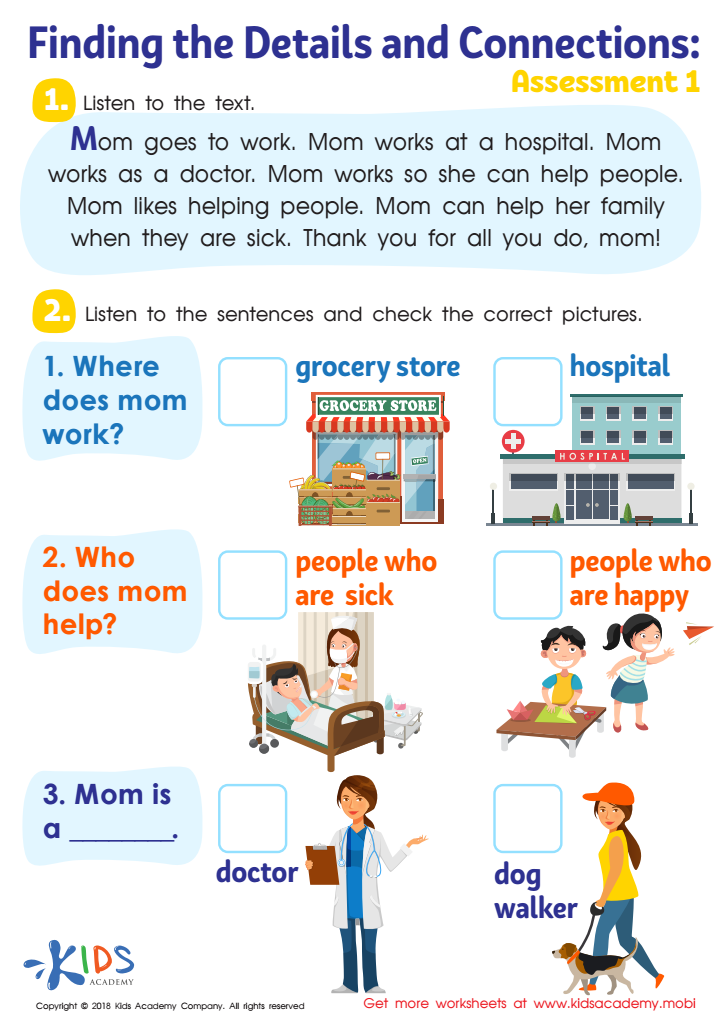
Ask your students what their parents do for a job. Do they know what profession their mom is in and where she works? Professionals have places they go to do their job. In this task, Mom goes to a hospital and is a doctor. Read the text and help them check the right pictures.
Finding the Details and Connections: Assessment 1 Worksheet
Worksheet
Craft and Structure of Informational Texts: Assessment 1 Worksheet

Craft and Structure of Informational Texts: Assessment 1 Worksheet

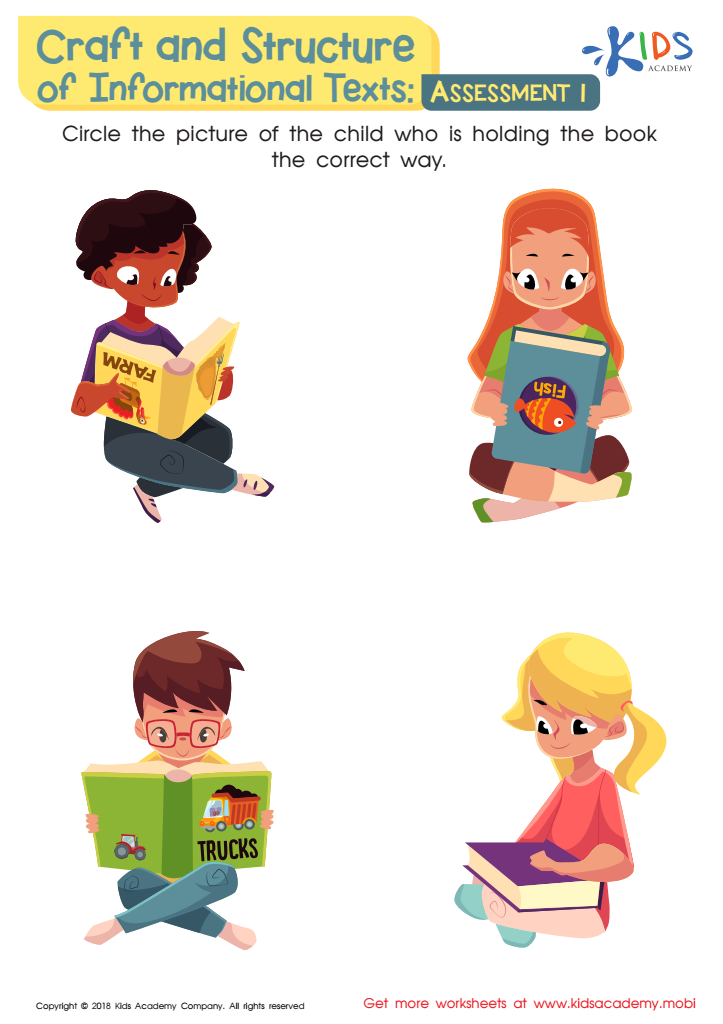
Young children need to know how to hold books correctly when they start reading. This assessment worksheet helps them show they know what to do. They'll look at the pictures and circle the child who is holding the book correctly. It's a great way to tell they are well on their way to becoming lifetime readers!
Craft and Structure of Informational Texts: Assessment 1 Worksheet
Worksheet
Craft and Structure of Informational Texts: Assessment 3 Worksheet


Craft and Structure of Informational Texts: Assessment 3 Worksheet

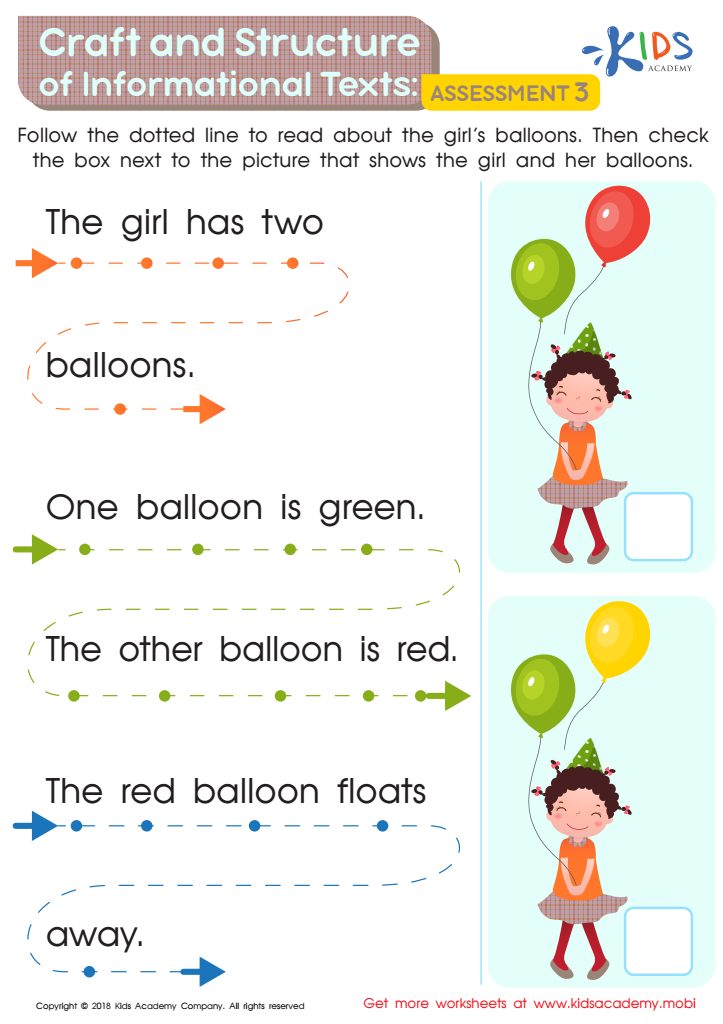
Test your beginning reader's understanding of left-to-right directionality and use of details from informational texts with this fun worksheet. Follow the traceable paths to find the right picture for each sentence. This will help your child gain confidence and be successful as a reader.
Craft and Structure of Informational Texts: Assessment 3 Worksheet

Worksheet


Parents and teachers should prioritize Normal Reading Fiction Activities for Ages 5-6 because these activities foster a foundation for lifelong literacy skills. At this age, children are naturally curious and eager to explore the world through stories. Fictional narratives stimulate their imagination while enhancing critical thinking and comprehension skills. Engaging with fictional texts helps children learn about various themes, cultures, and emotions, expanding their worldview in a fun and relatable manner.

Moreover, these activities often incorporate interactive elements—such as questions and answers—that encourage children to actively participate and think critically about what they read. This interaction not only reinforces their understanding but also nurtures important skills like inference and prediction. Additionally, reading fiction helps develop vocabulary and language skills, crucial components at this developmental stage.

Creating a habit of reading for pleasure also instills a love for books, making children more likely to pursue reading independently as they grow. Furthermore, such activities encourage bonding time between parents, teachers, and children, as they collaboratively explore stories. By investing time in reading fiction, similar to Normal Reading Fiction Activities, parents and teachers can significantly contribute to children's cognitive, emotional, and social development, setting them on a pathway for academic success.