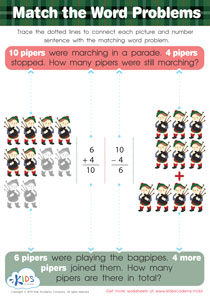
Normal Addition Worksheets for Ages 4-7 - Page 2
53 filtered results
-
From - To
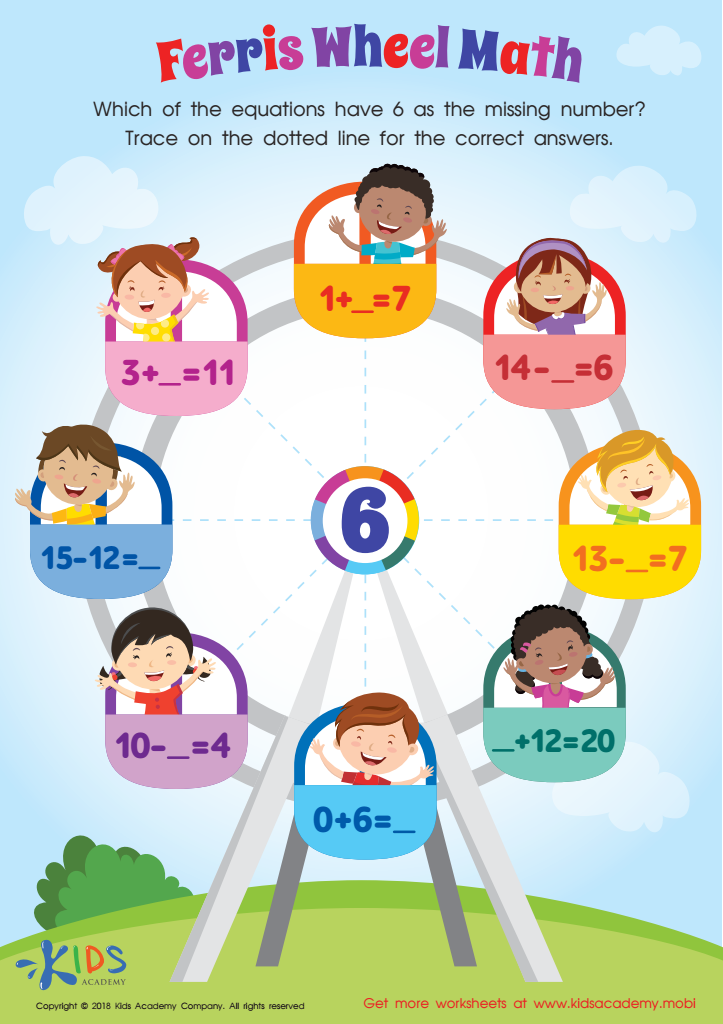
Missing Number: Ferris Wheel Math Worksheet
 Assign to My Students
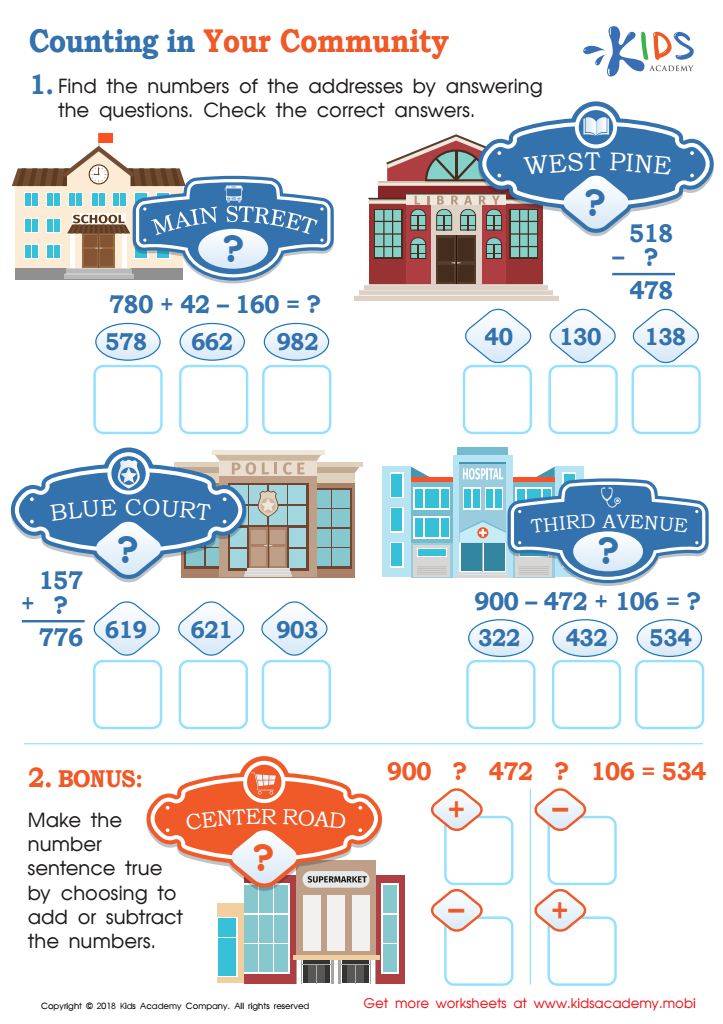
Counting in Your Community Worksheet
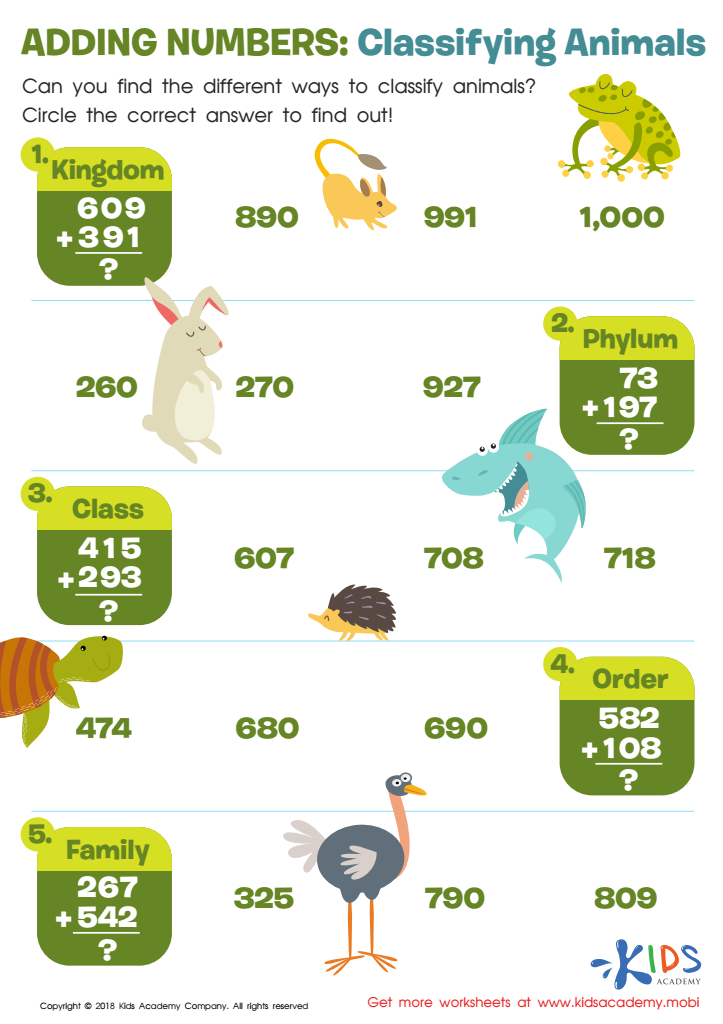
Adding Numbers: Classifying Animals Worksheet
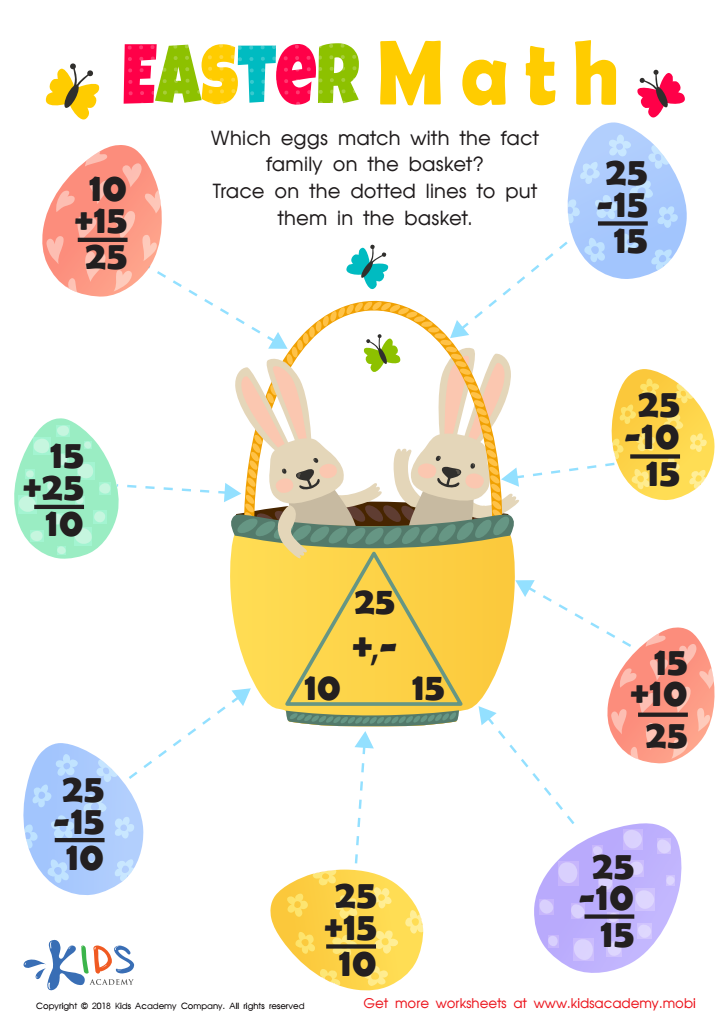
Fact Families: Easter Math Worksheet
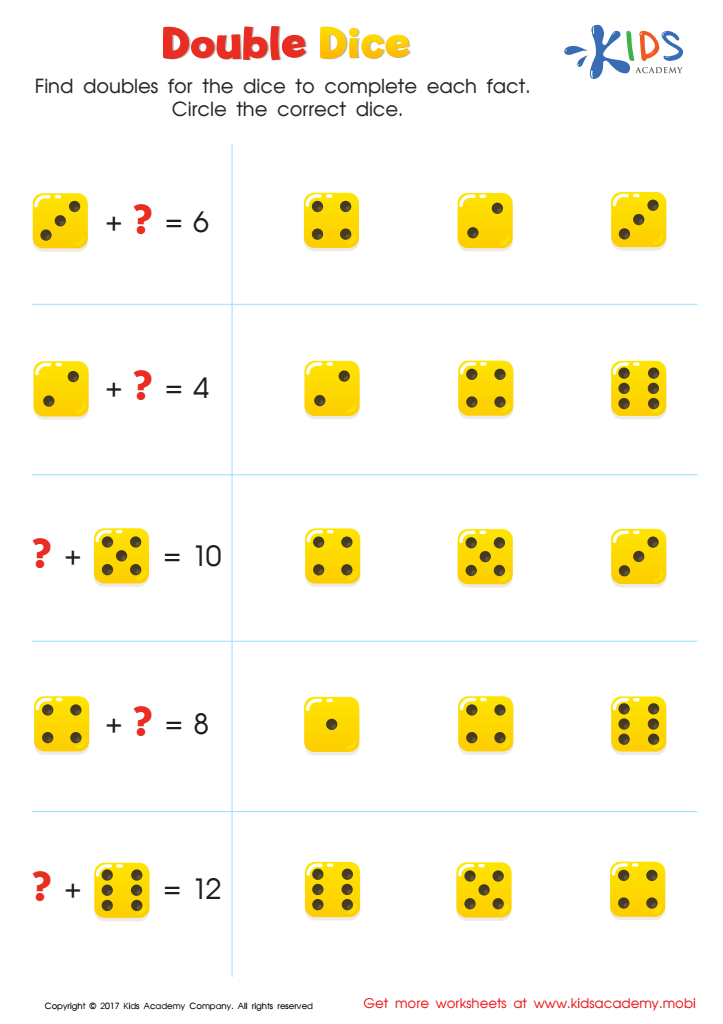
Addition Facts: Double Dice Worksheet
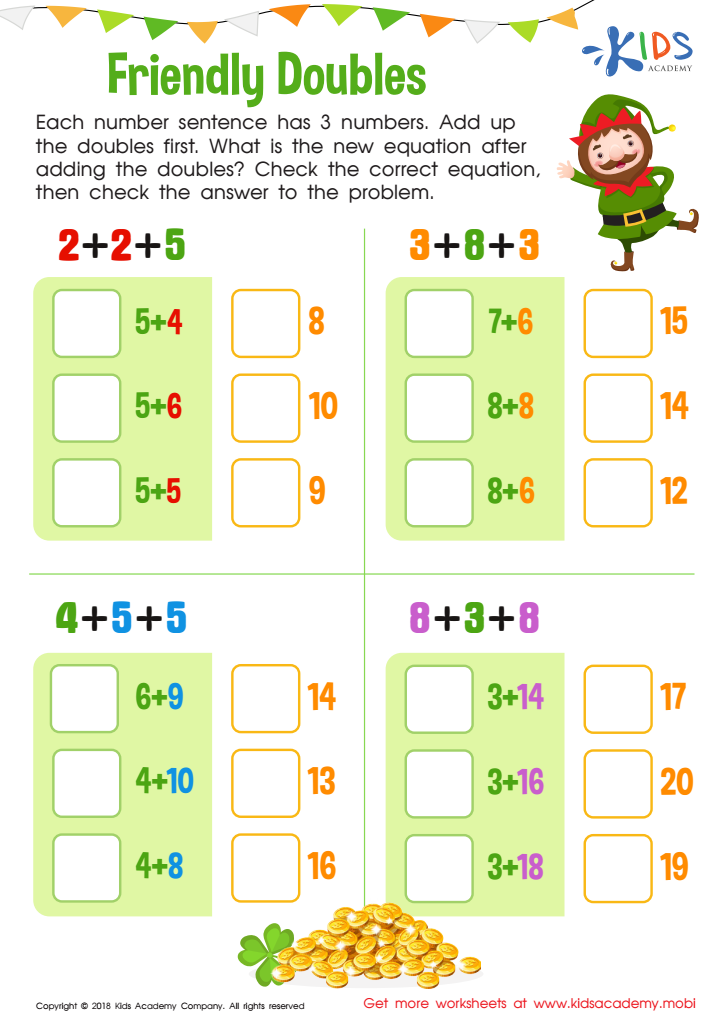
Friendly Doubles Worksheet
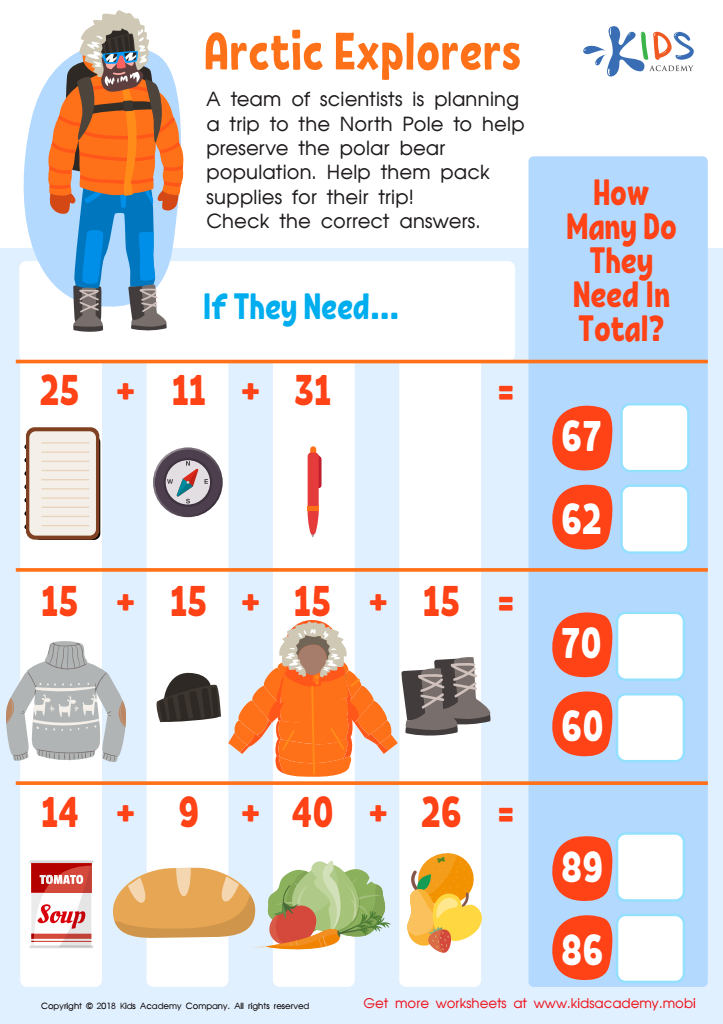
Arctic Explorers Worksheet
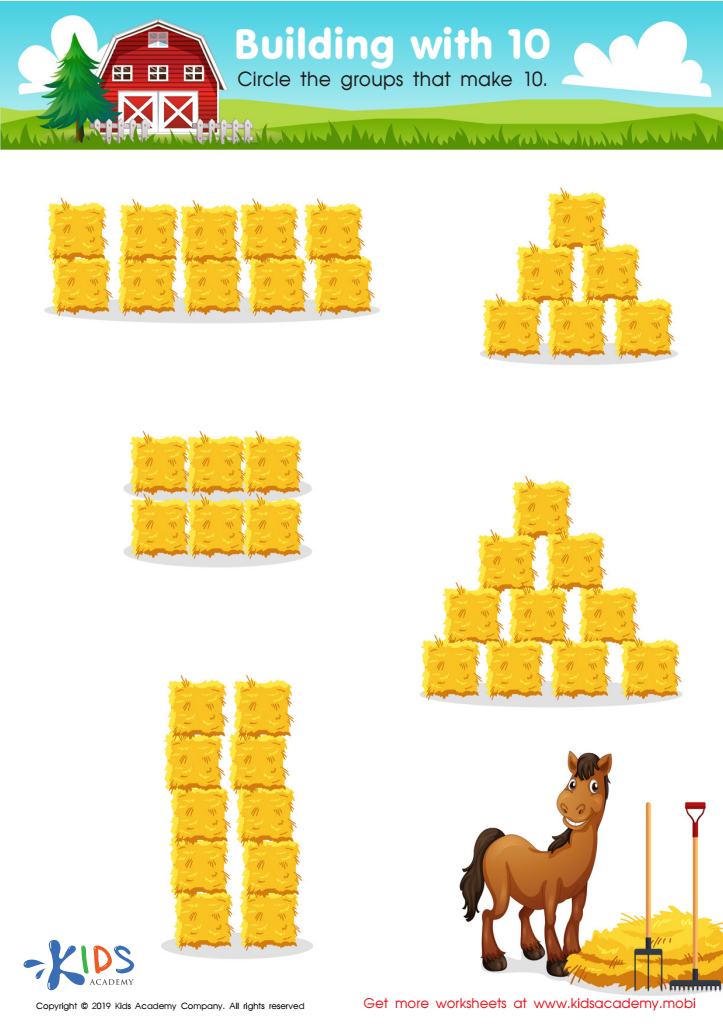
Building with 10 Worksheet
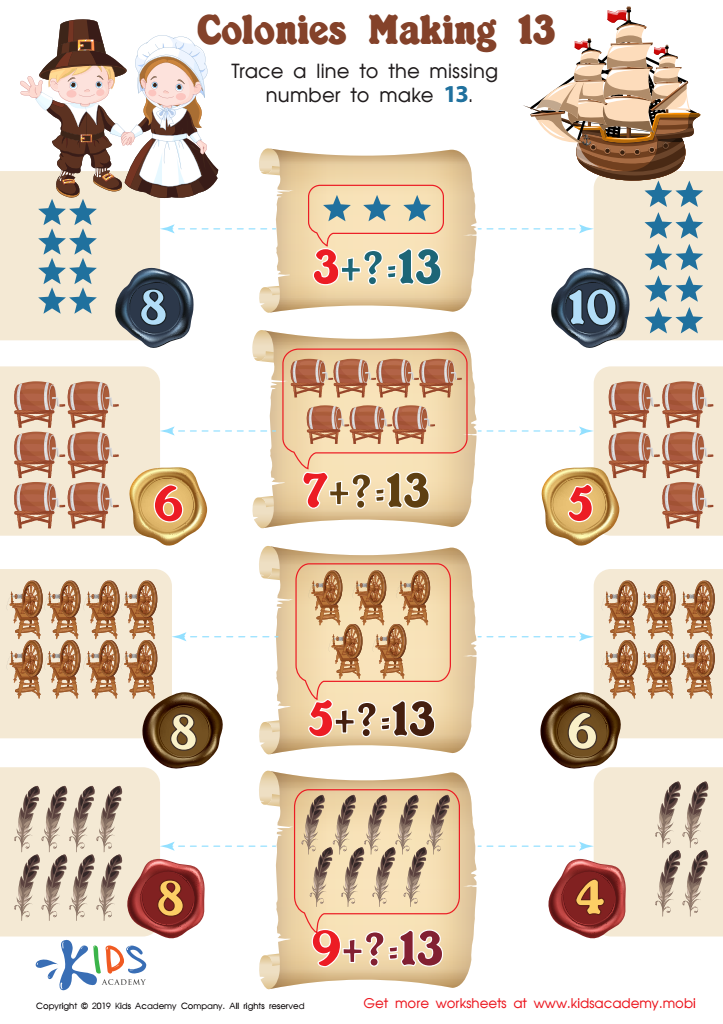
Colonies Making 13 Worksheet
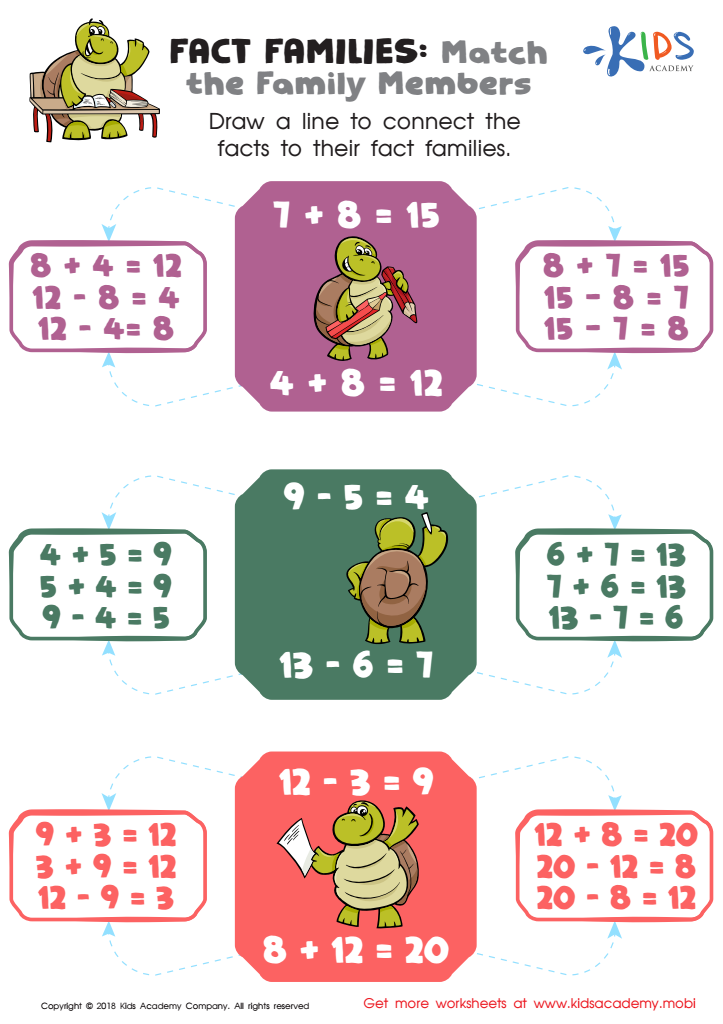
Fact Families: Match Family Members Worksheet
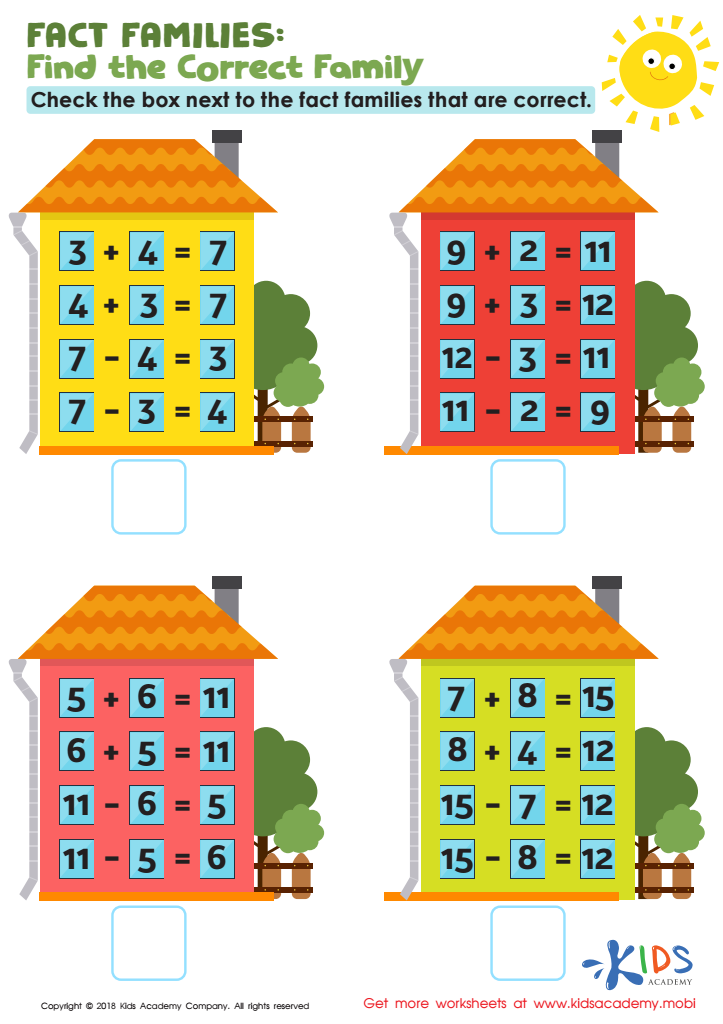
Fact Families: Find Correct Family Worksheet
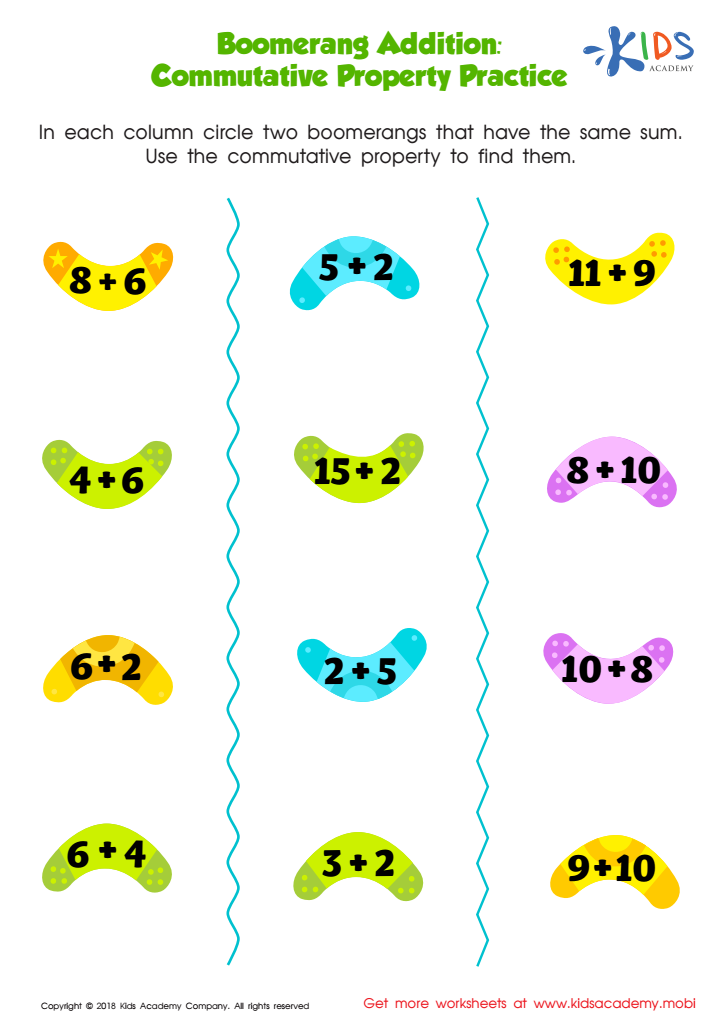
Boomerang Addition Worksheet
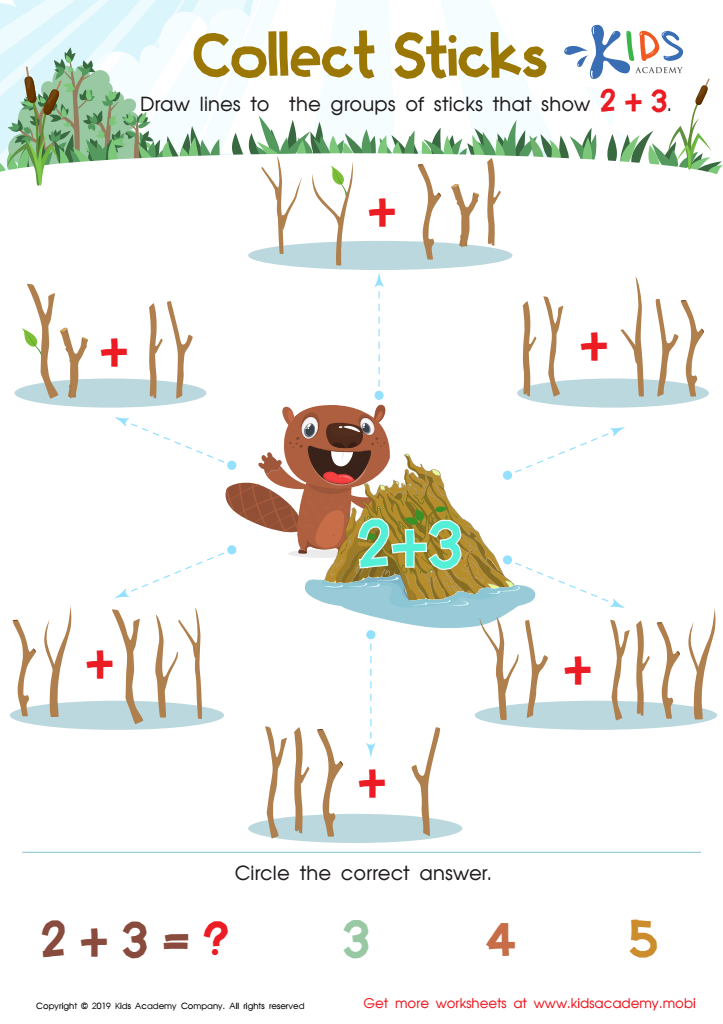
Collect Sticks Worksheet
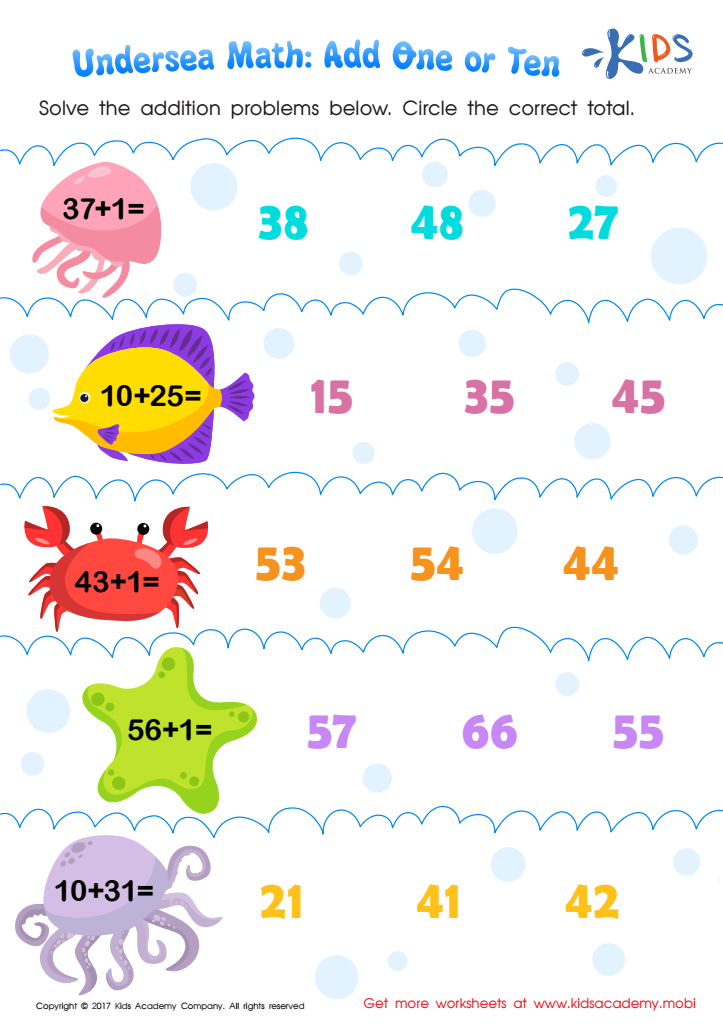
Undersea Math Worksheet
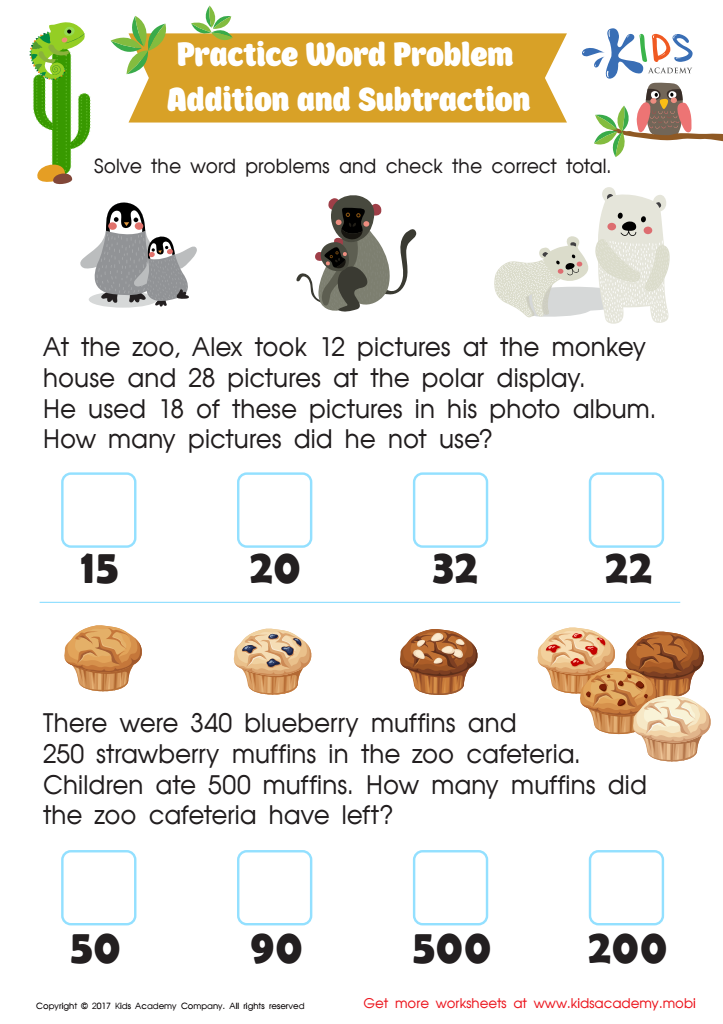
Addition and Subtraction: Word Problems Worksheet
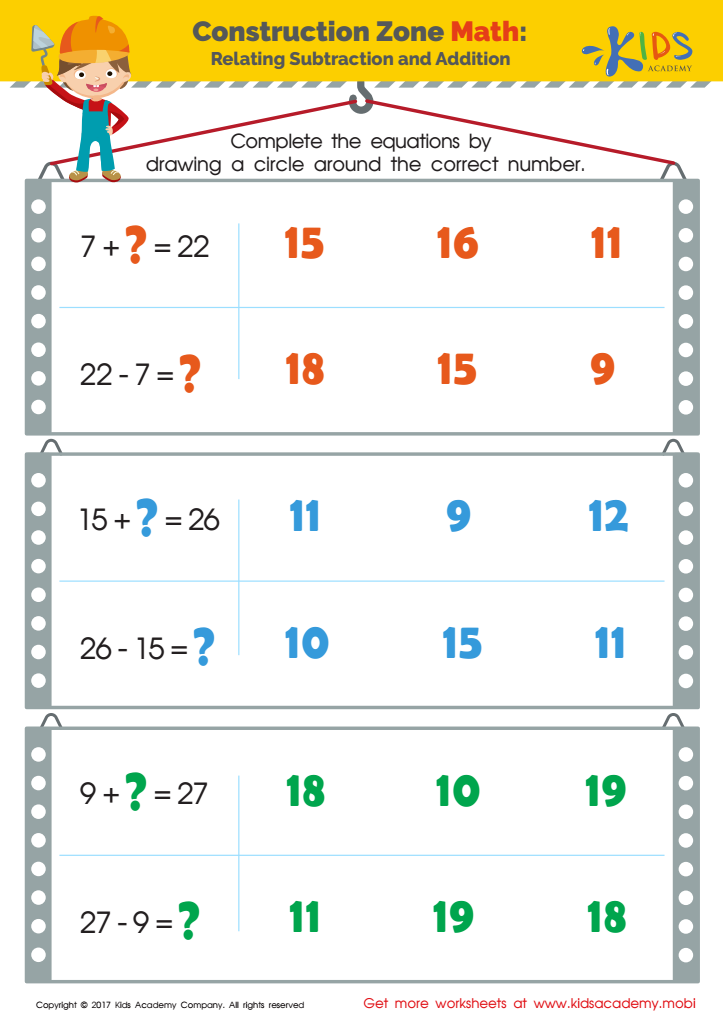
Related Addition and Subtraction Facts Worksheet
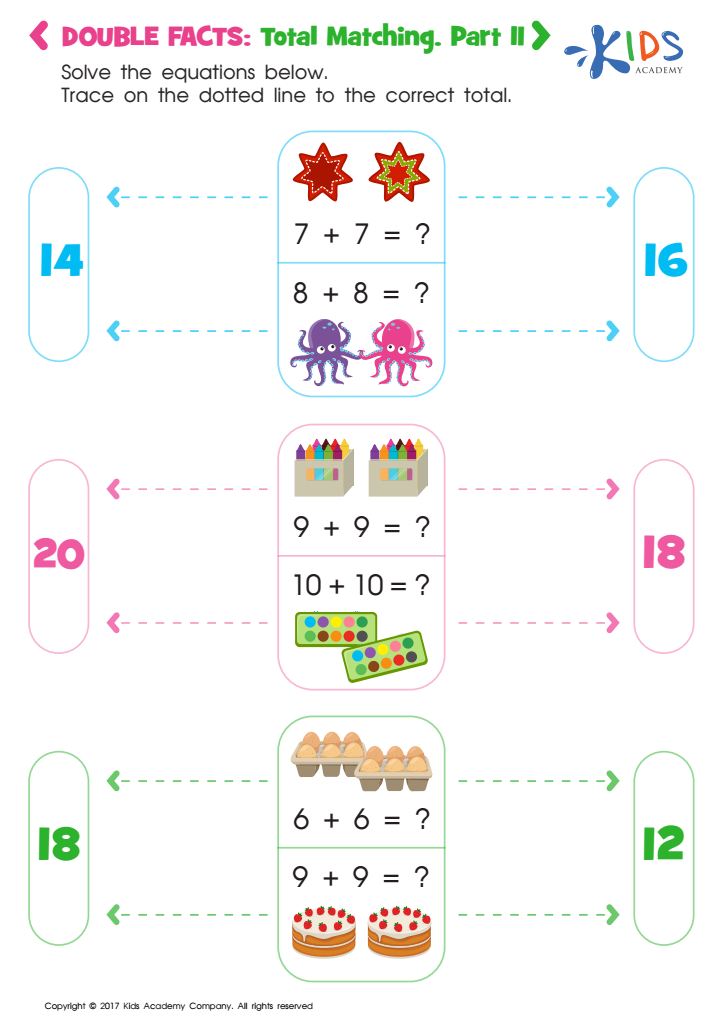
Double Facts: Total Matching 2 Worksheet
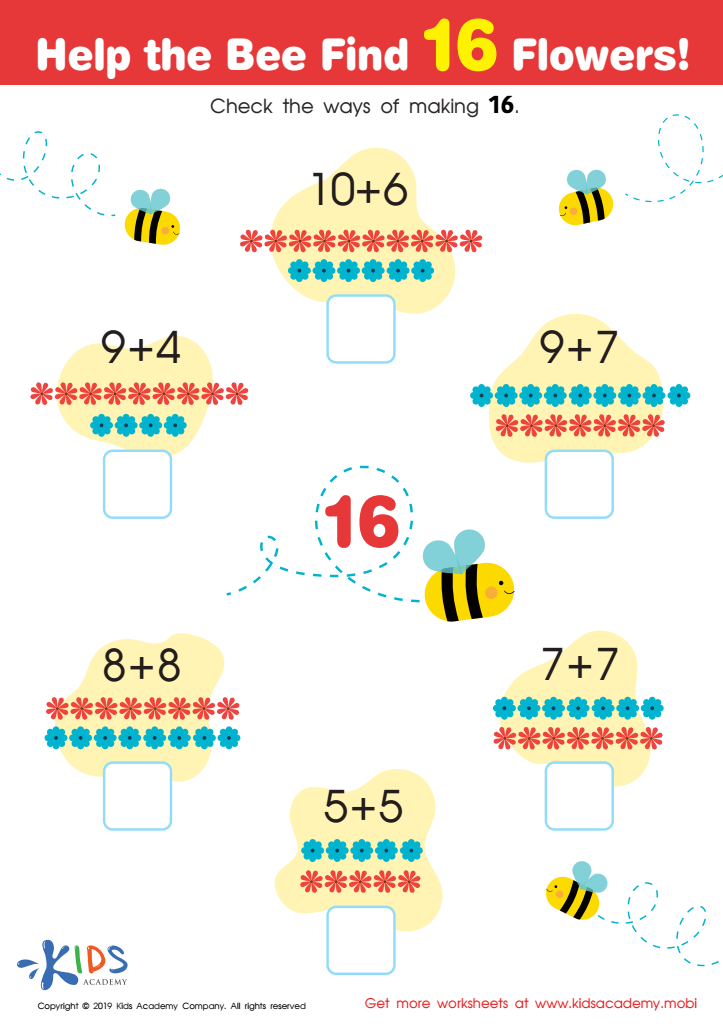
Help the Bee Find 16 Flowers Worksheet
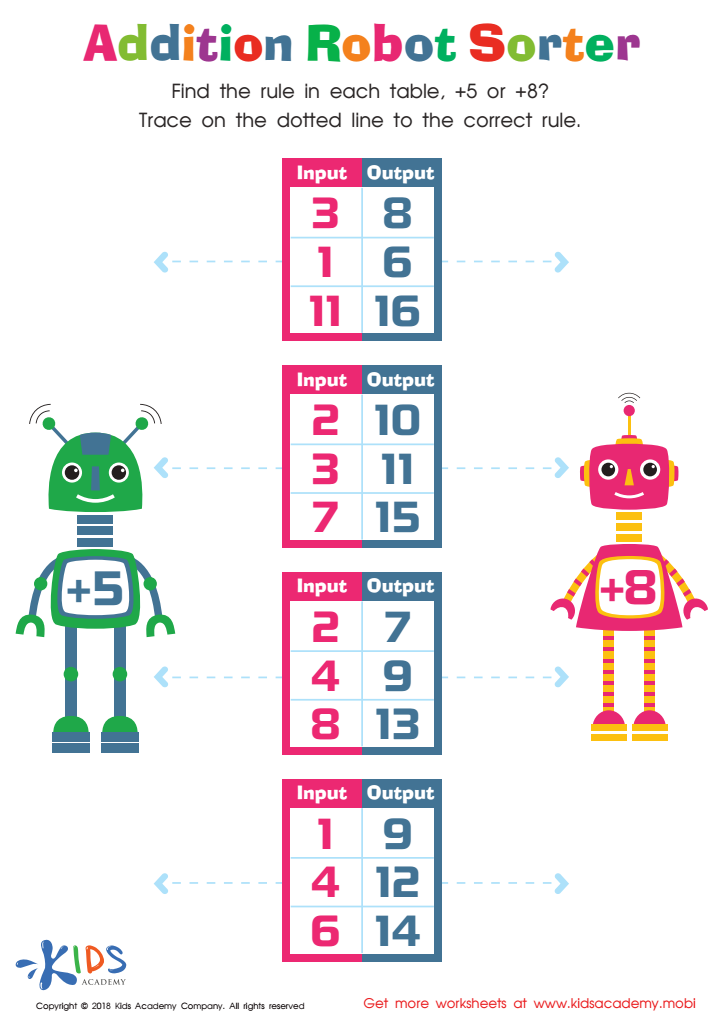
Addition Robot Sorter Worksheet
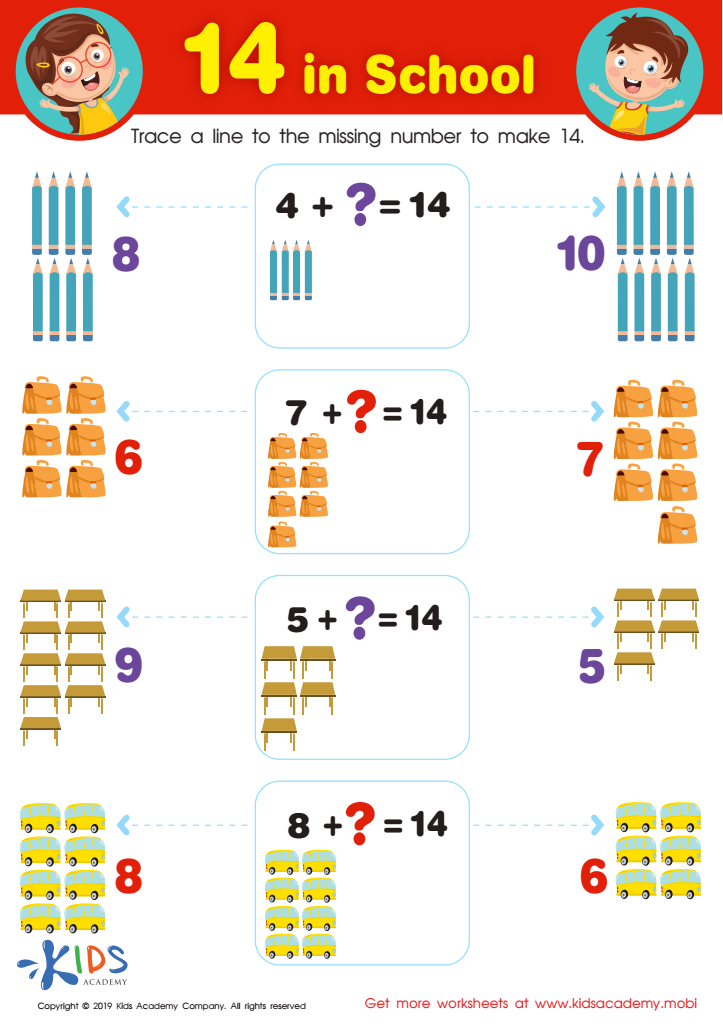
14 in School Worksheet
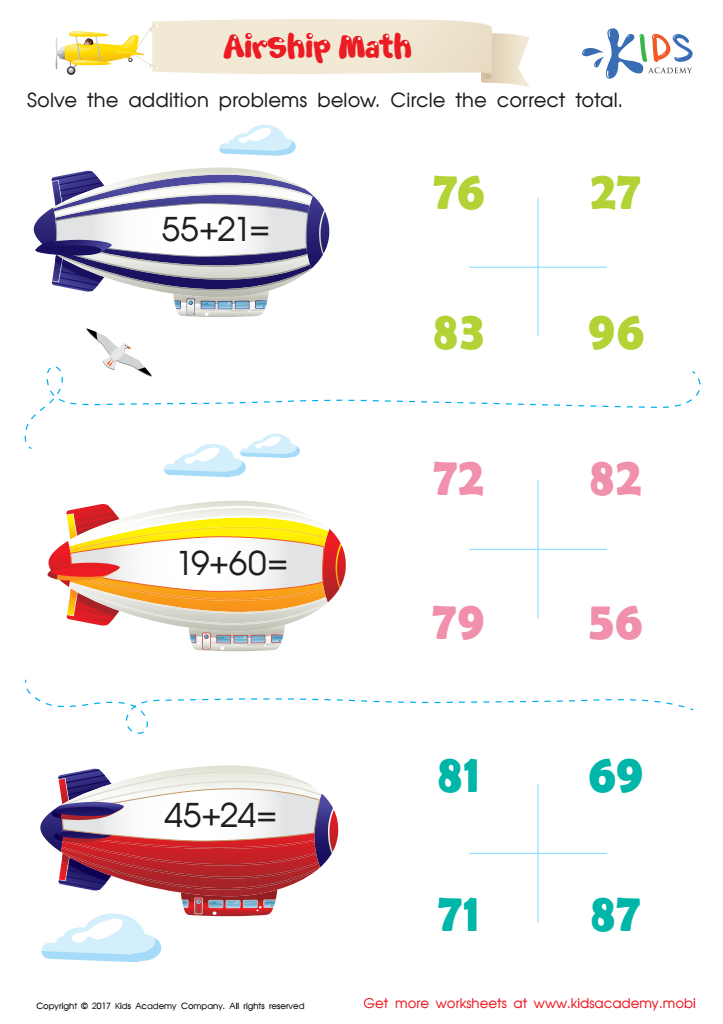
Airship Math Addition Printable
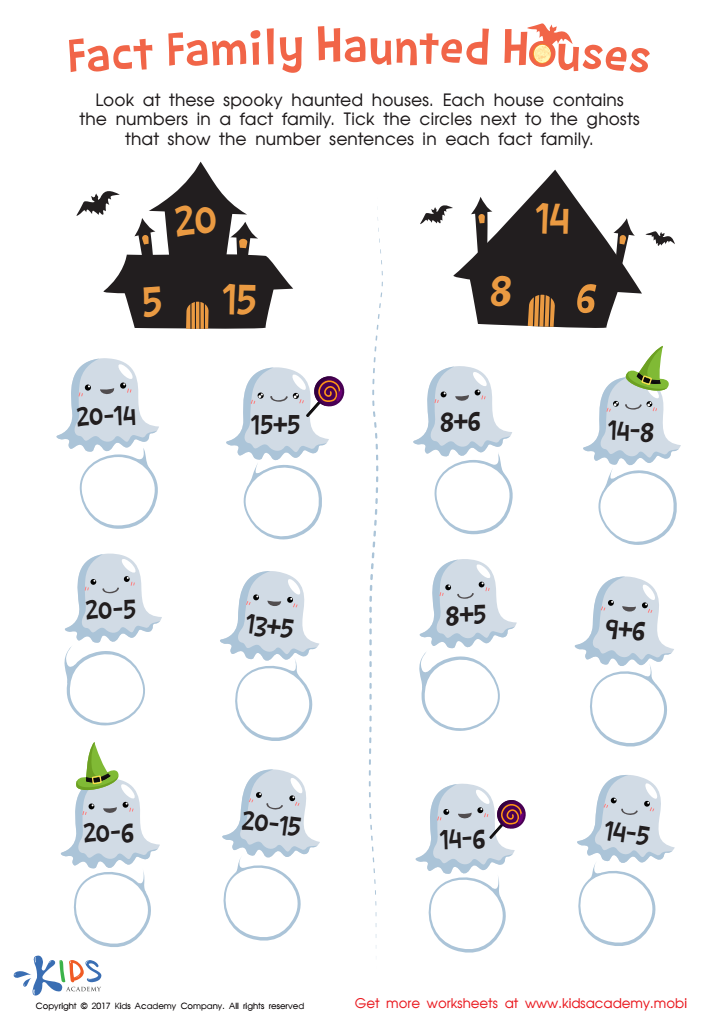
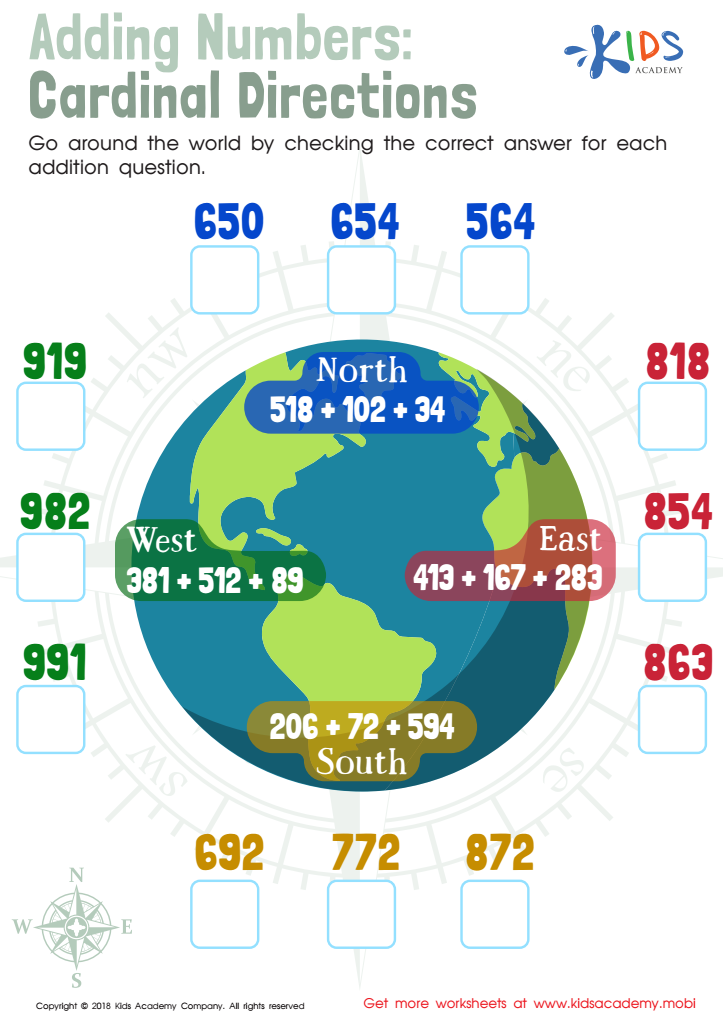
Adding Numbers: Cardinal Directions Worksheet
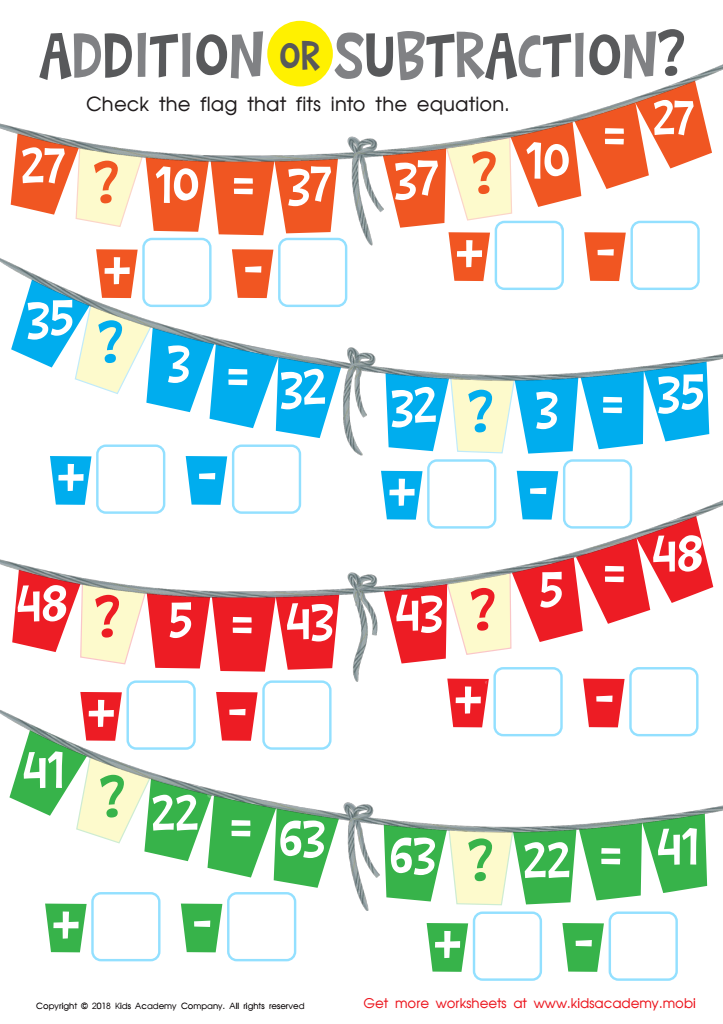
Addition or Subtraction? Worksheet








Normal addition, or the basic concept of combining two groups of objects to find a total, is a fundamental math skill crucial for children aged 4-7. At this developmental stage, children are forming their foundational understanding of mathematics, and the ability to add efficiently is key.
Parents and teachers should care about normal addition because it enhances critical thinking and problem-solving skills from an early age. Mastery of addition prompts children to engage with numbers and develop number sense, setting the stage for more complex mathematical operations in later grades. It empowers them with confidence in their mathematical abilities, translating to improved performance in school and daily activities.
Moreover, understanding addition helps children relate math to real-world situations, such as counting objects, handling money, or understanding time. Engaging children in fun and interactive addition activities stimulates their interest and makes learning enjoyable, strengthening parent-child or teacher-student relationships.
Additionally, a solid grasp of addition aids in preventing future learning gaps in mathematics. By prioritizing normal addition, parents and teachers help children build a strong educational foundation, ensuring they are well-prepared for future academic challenges and fostering a lifelong appreciation for learning.