Normal Vowels Worksheets for Ages 4-9 - Page 2
73 filtered results
-
From - To
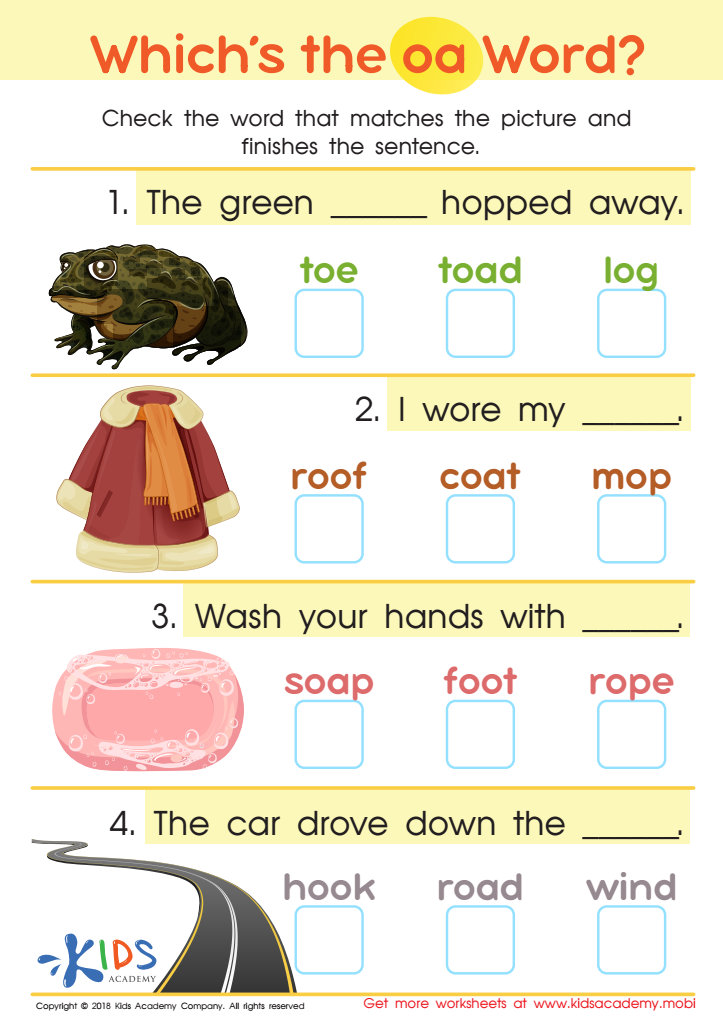
Which's the OA Word? Worksheet
 Assign to My Students
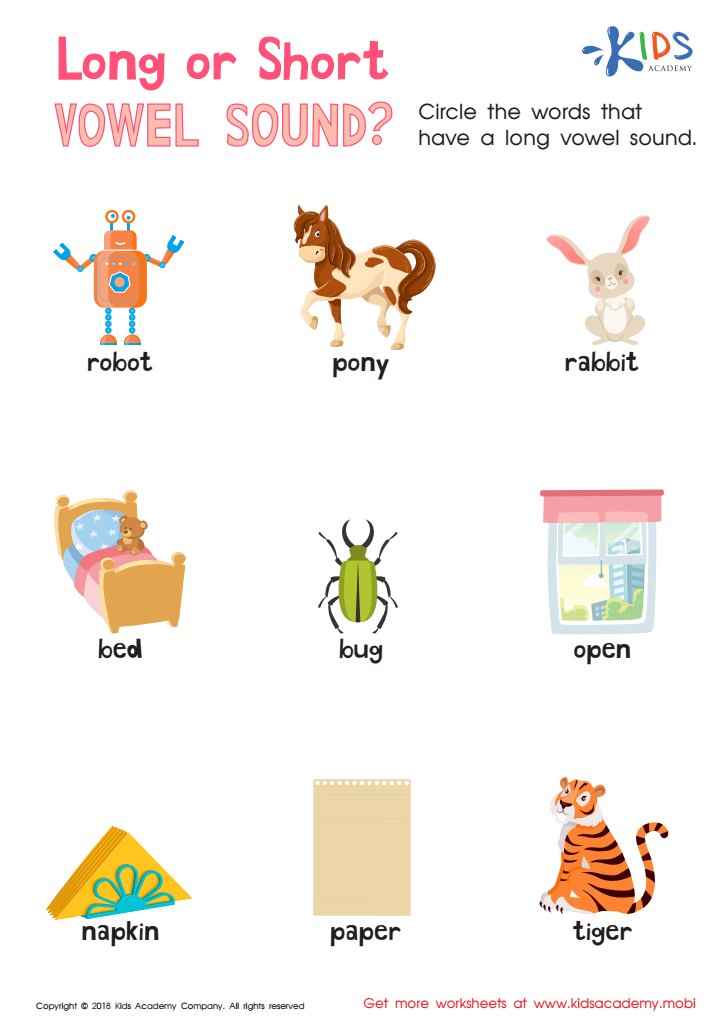
Long or Short Vowel Sound? Worksheet
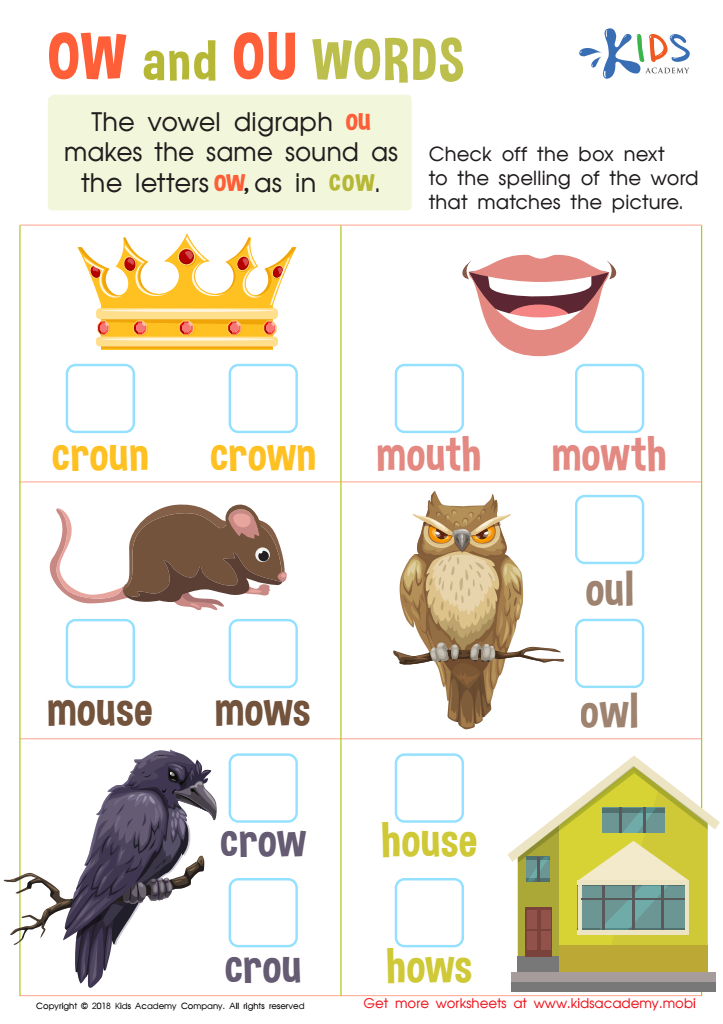
Reading: OW and OU Words Worksheet
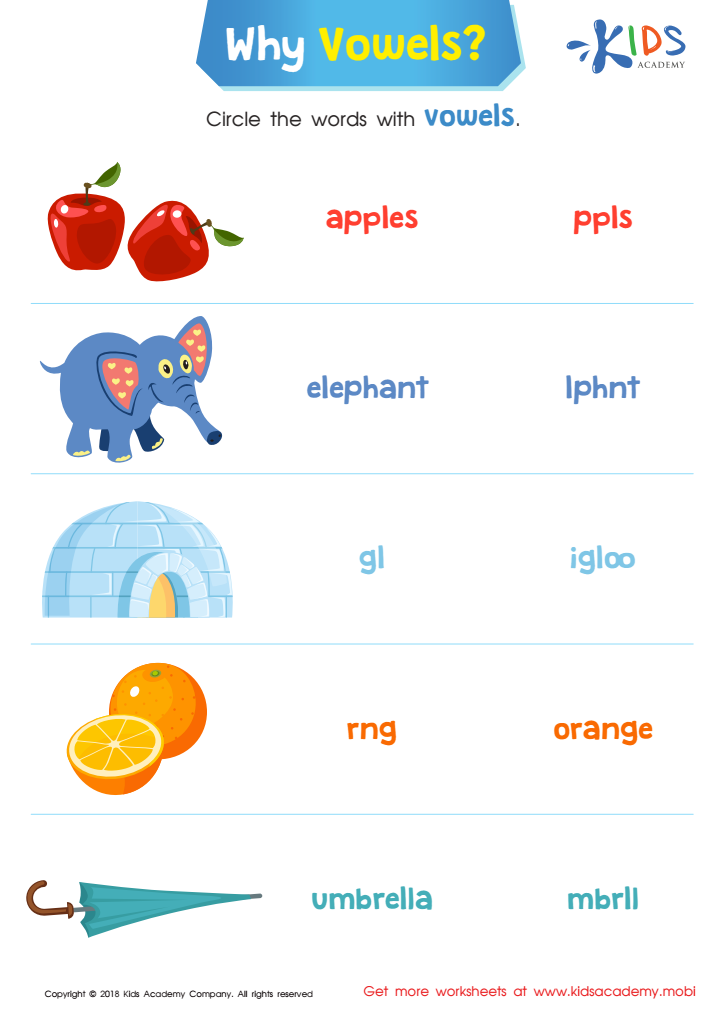
Why Vowels? Reading Worksheet
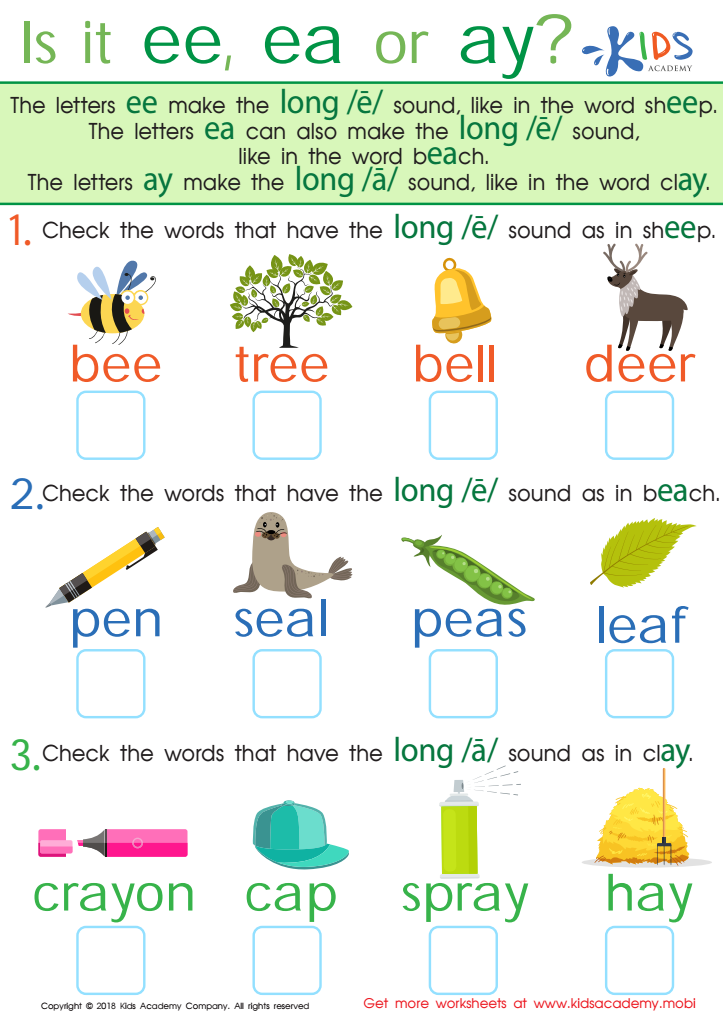
Is It EE, EA, or AY? Worksheet
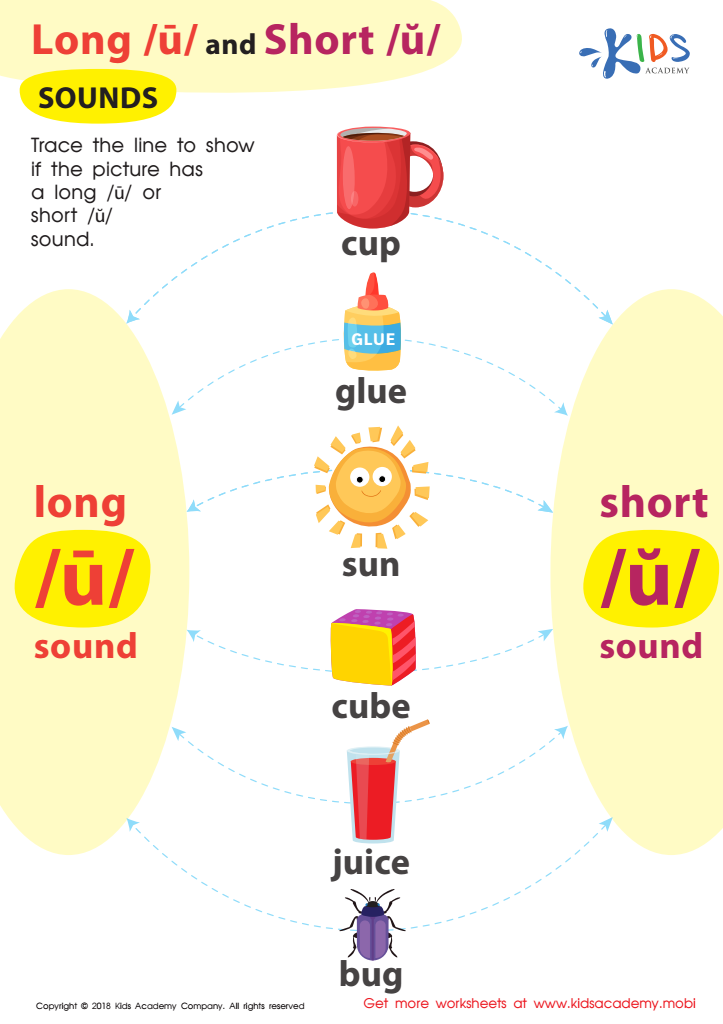
Reading: Long U and Short U Sounds Worksheet
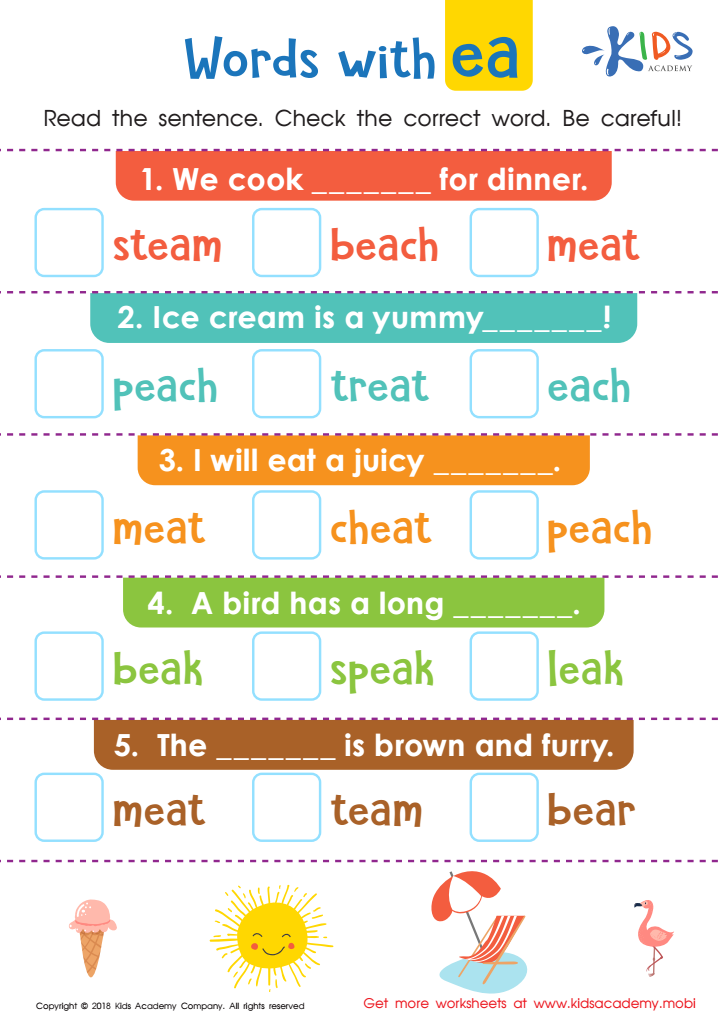
Words with ea Worksheet
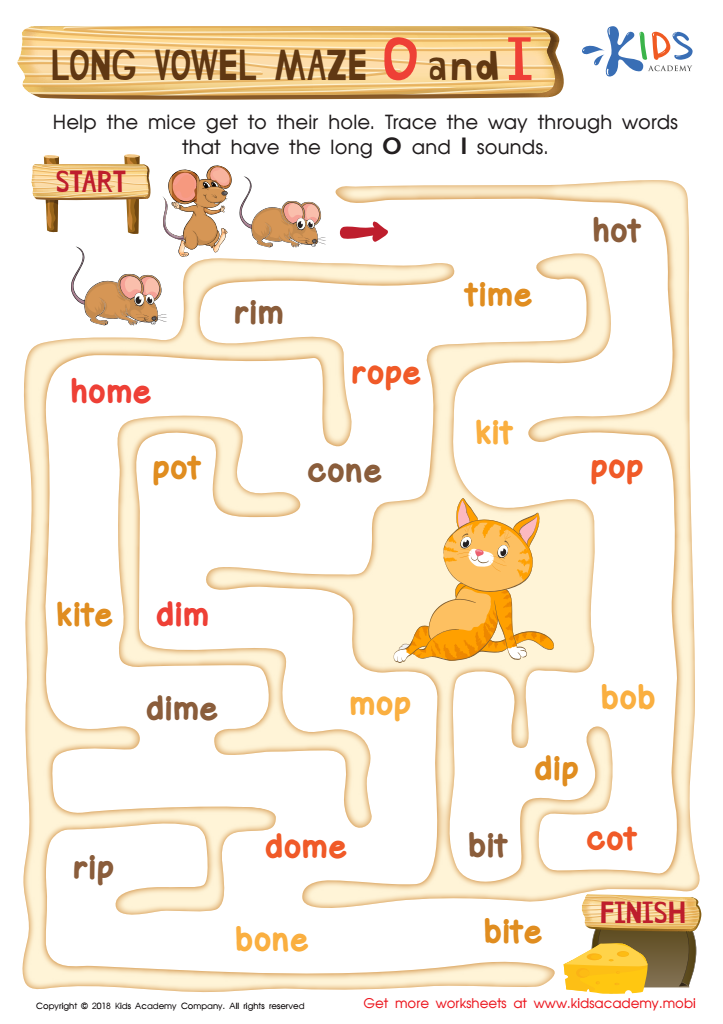
Long Vowel Maze /o/ and /i/ Worksheet
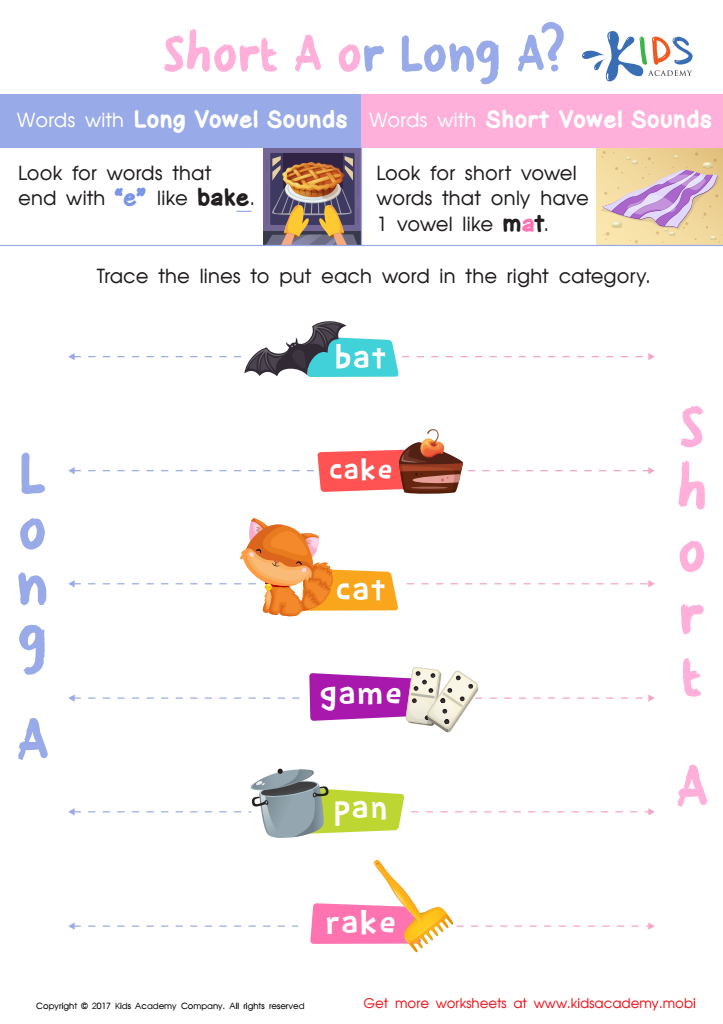
Short /a/ or Long /a/? Worksheet
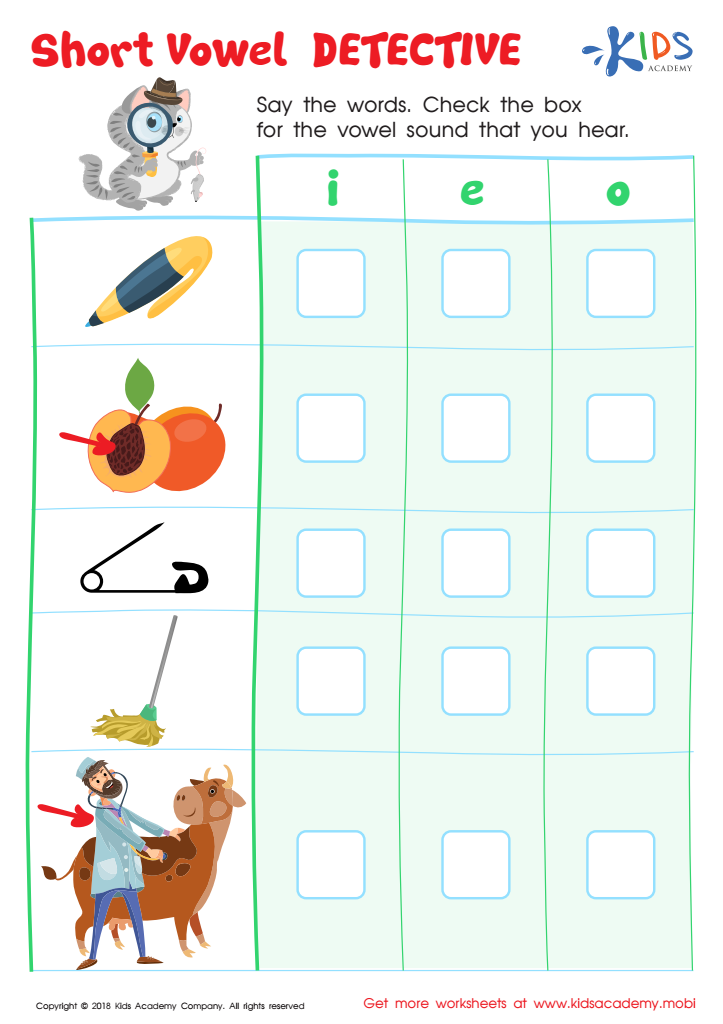
Short Vowel Detective Worksheet
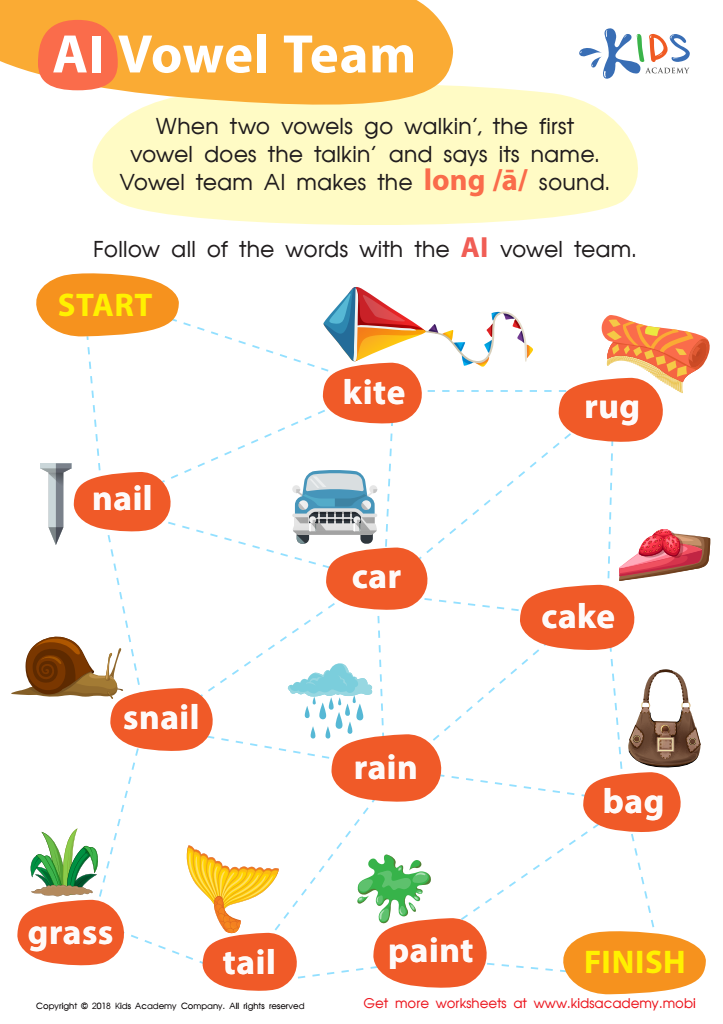
Reading: AI Vowel Team Worksheet
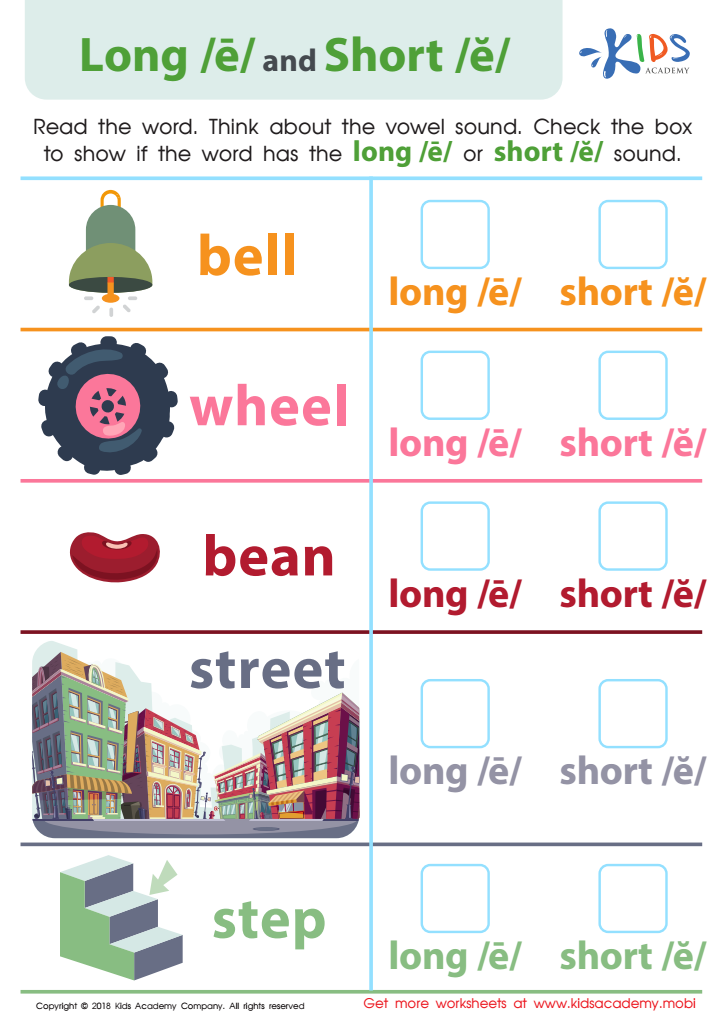
Reading: Long E and Short E Worksheet
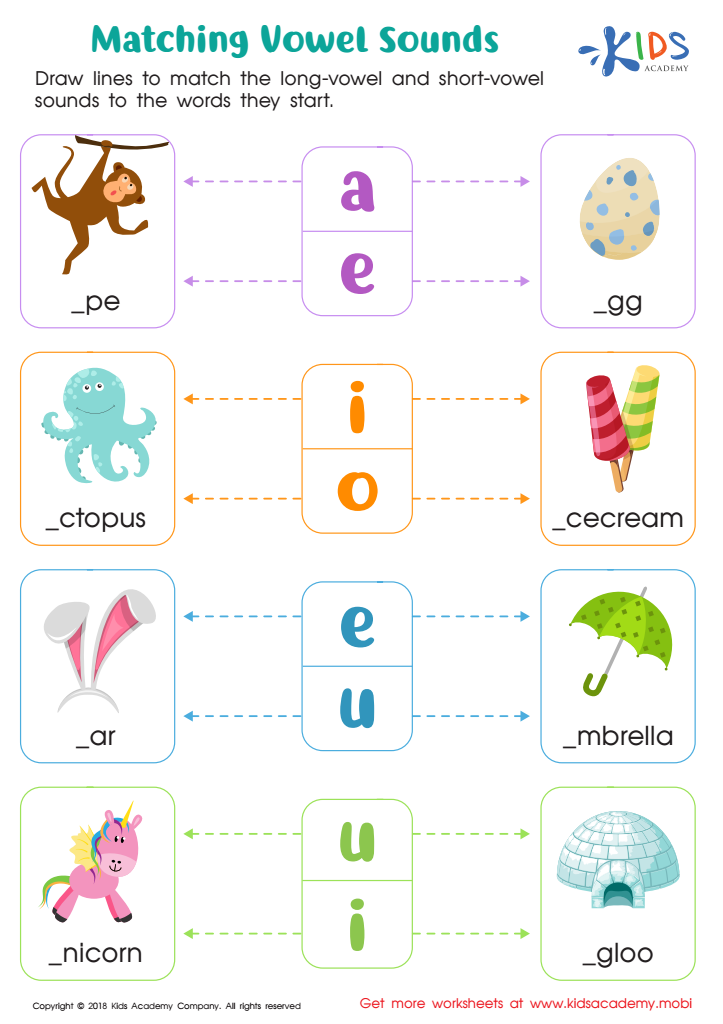
Matching Vowel Sounds Worksheet
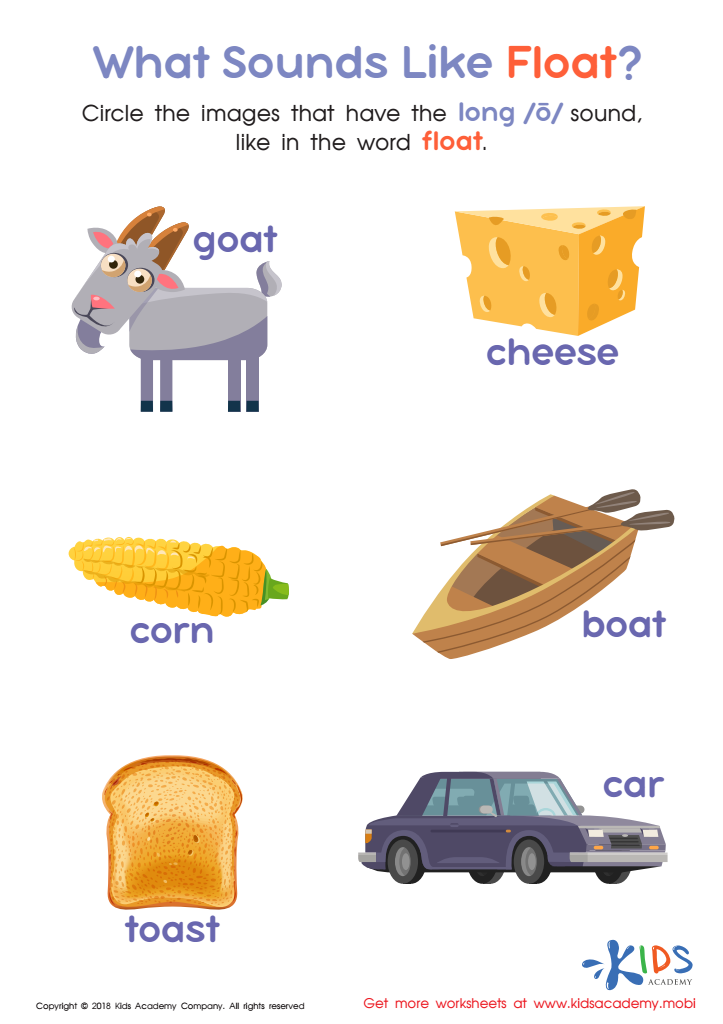
What Sounds Like Float? Worksheet
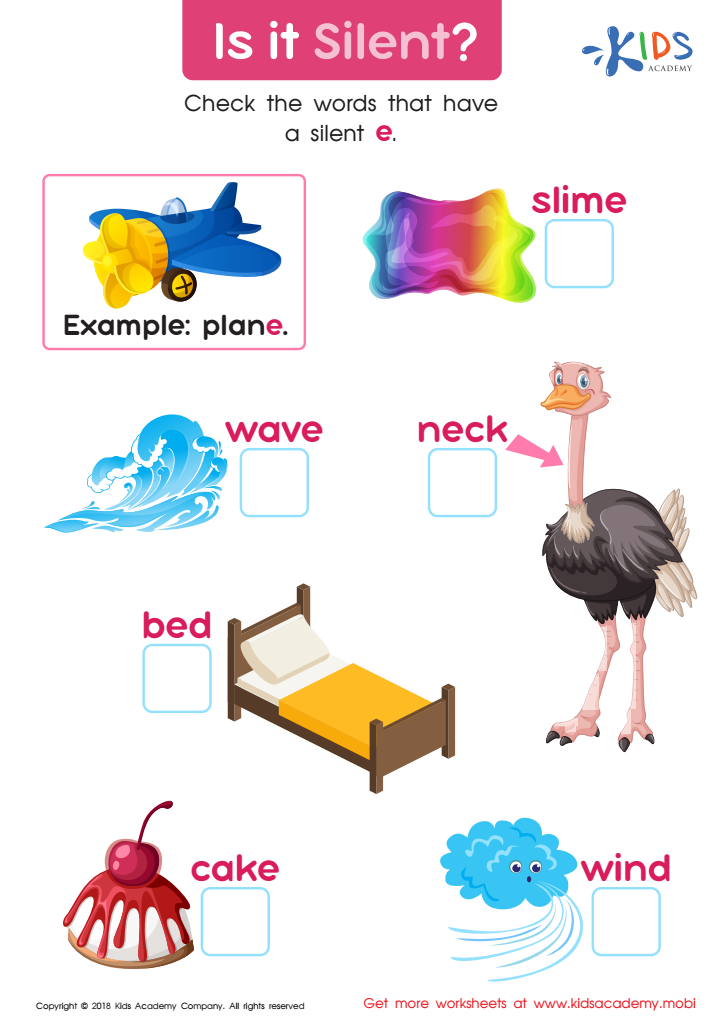
Is It Silent? Worksheet
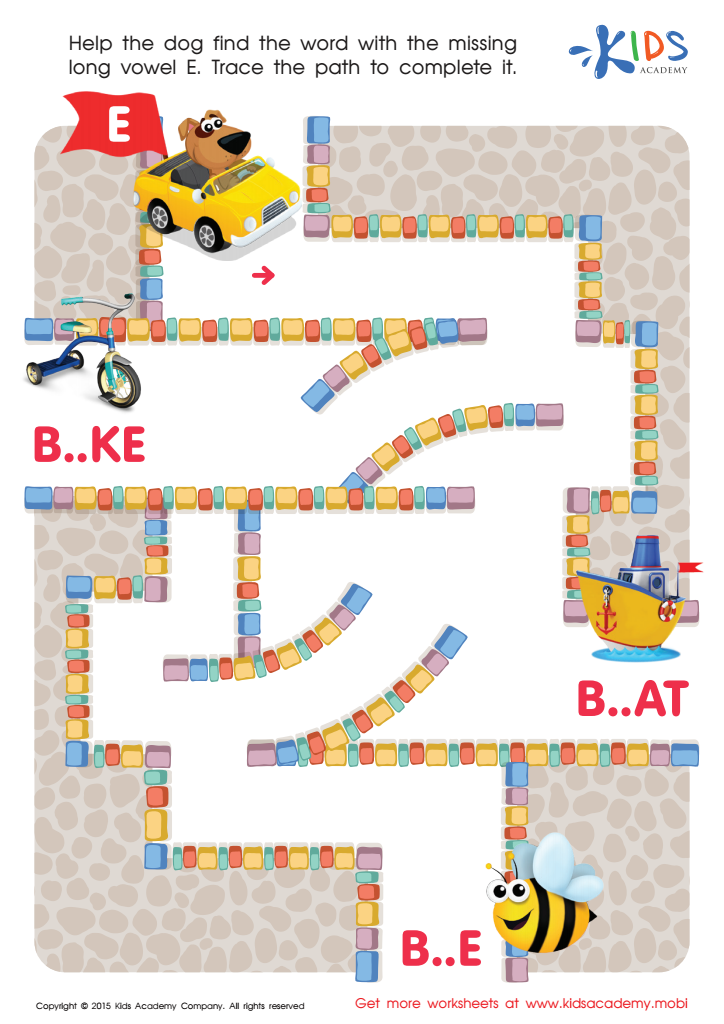
Long Vowel Sound E Worksheet
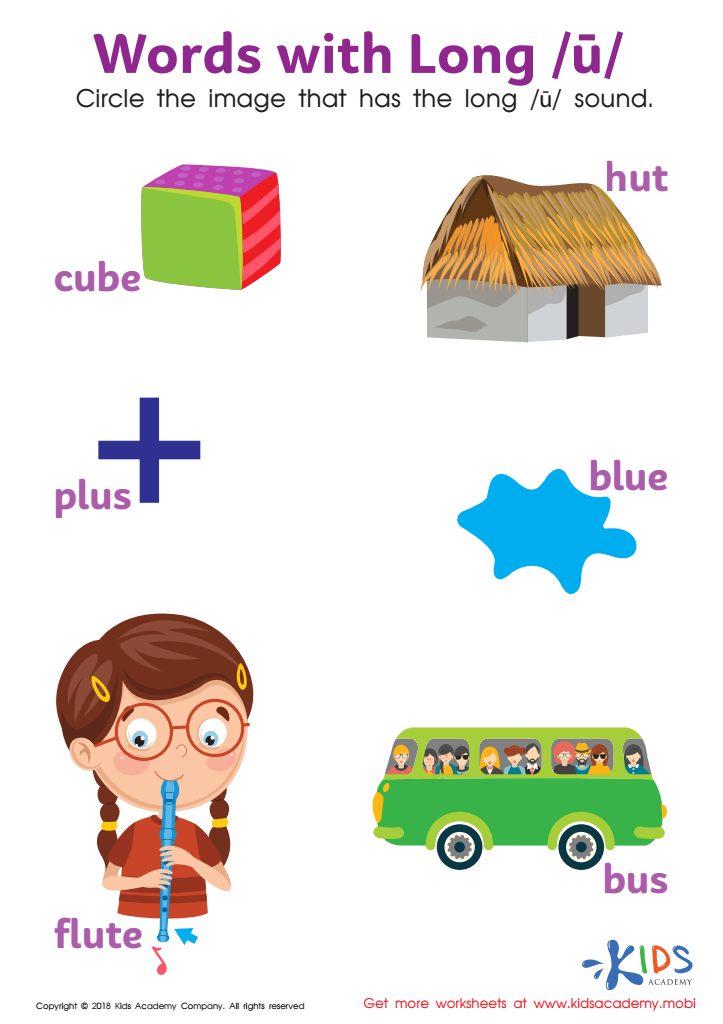
Words with Long U Reading Worksheet
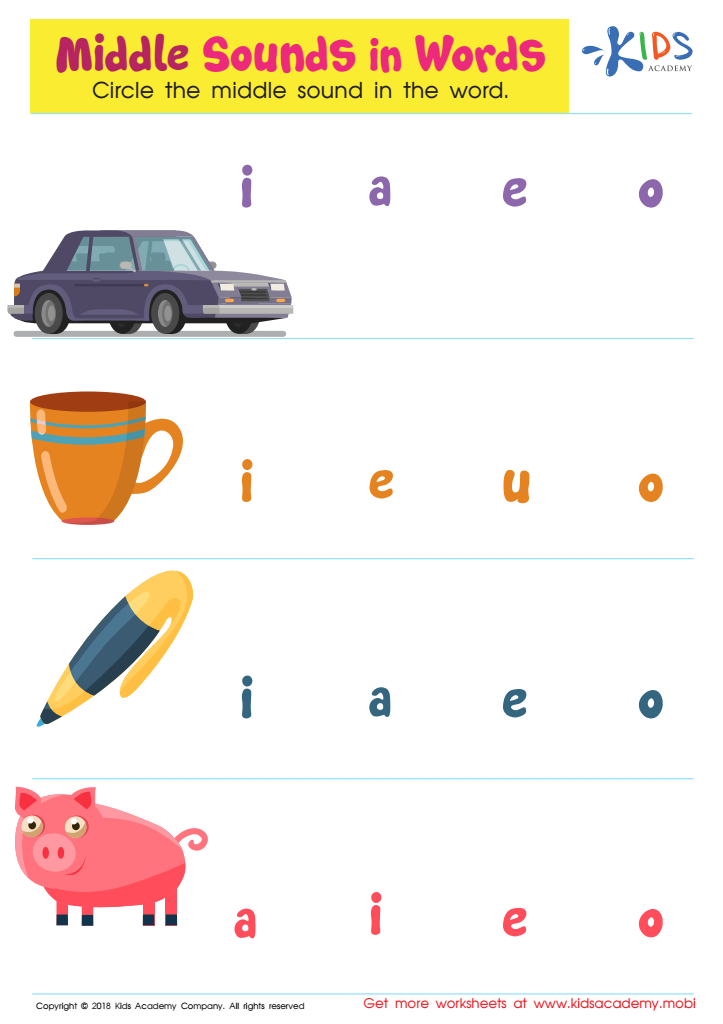
Middle Sounds in Words Worksheet
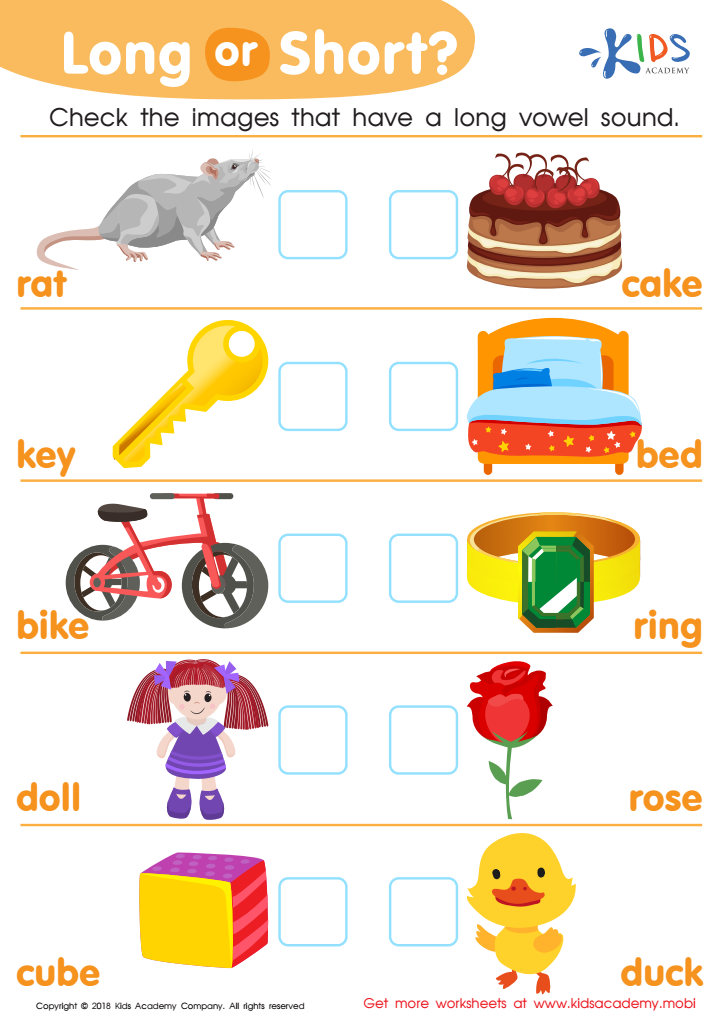
Long or Short Reading Worksheet
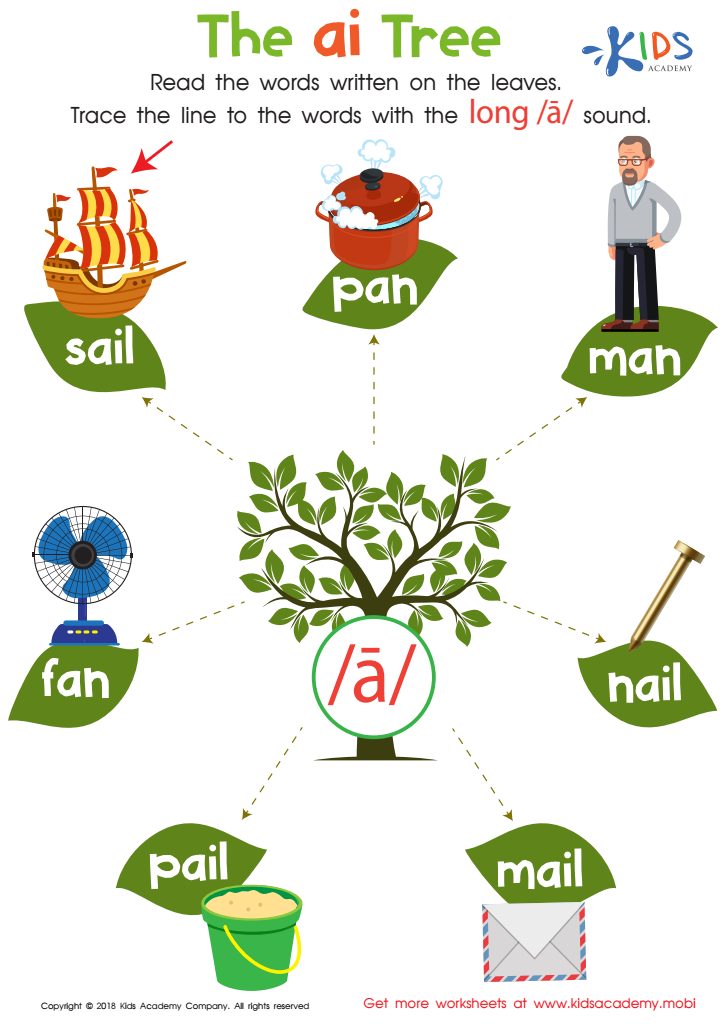
The AI Tree Worksheet
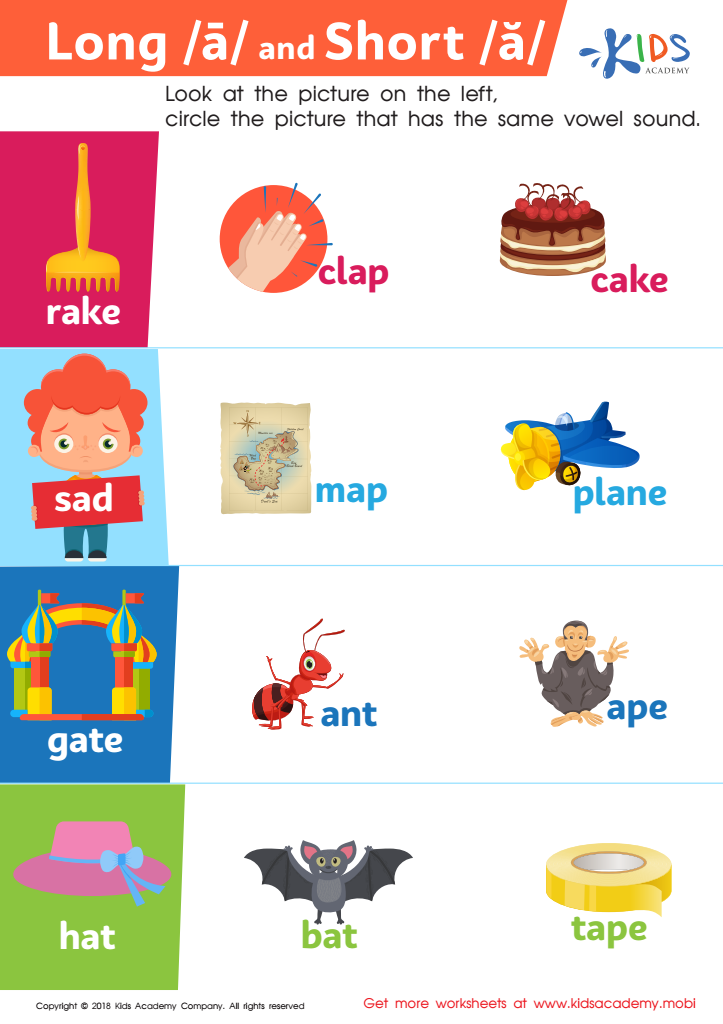
Reading: Long a and Short a Worksheet
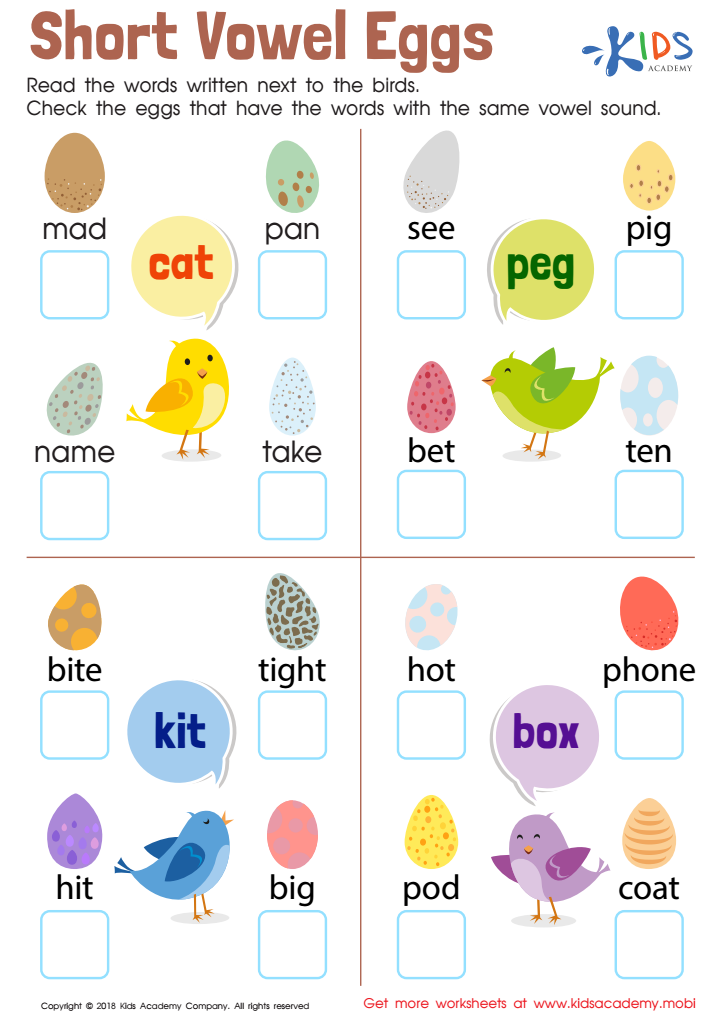
Short Vowel Eggs Worksheet
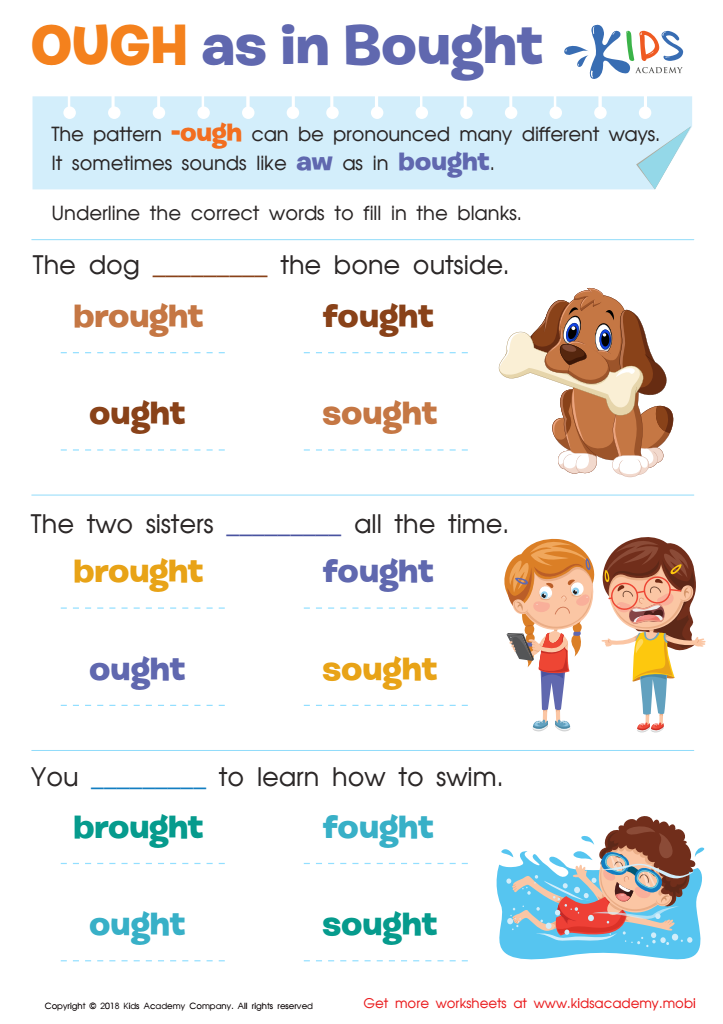
OUGH as in Bought Worksheet
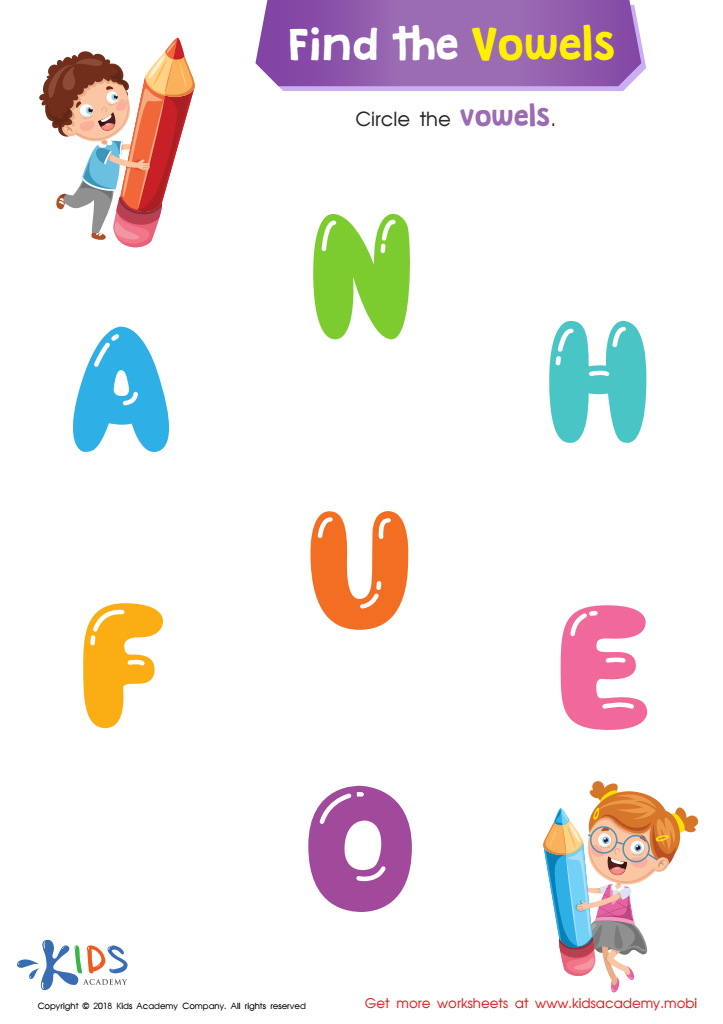
Find the Vowels Reading Worksheet





Understanding normal vowels is essential for children aged 4-9 as it lays the foundation for reading and language development. Vowels (A, E, I, O, U) are crucial to forming words and convey meaning in both spoken and written language. If parents and teachers prioritize teaching normal vowels, children can improve their phonemic awareness, which is vital for successful reading skills.
Recognizing and manipulating vowel sounds enables young learners to decode and blend words more effectively. This foundational skill assists in fostering confidence in their reading abilities and enhances their vocabulary. Furthermore, many of our language's most commonly used words rely on these vowels, so mastering them can expedite reading proficiency.
Moreover, comprehension is directly linked to vowel understanding; as children encounter new words, they can better infer meaning from context when they have a strong grasp of vowel usage. Finally, encouraging familiarity with normal vowels supports communication skills, helping children articulate thoughts clearly. For all these reasons, engaging children in vowel activities—through games, songs, and stories—can enrich their learning experience and ultimately foster a lifelong love for reading. Thus, it is essential for parents and teachers alike to invest time in these vital components of early literacy.