Phonological Awareness worksheets for Kindergarten - Page 2
31 filtered results
-
From - To
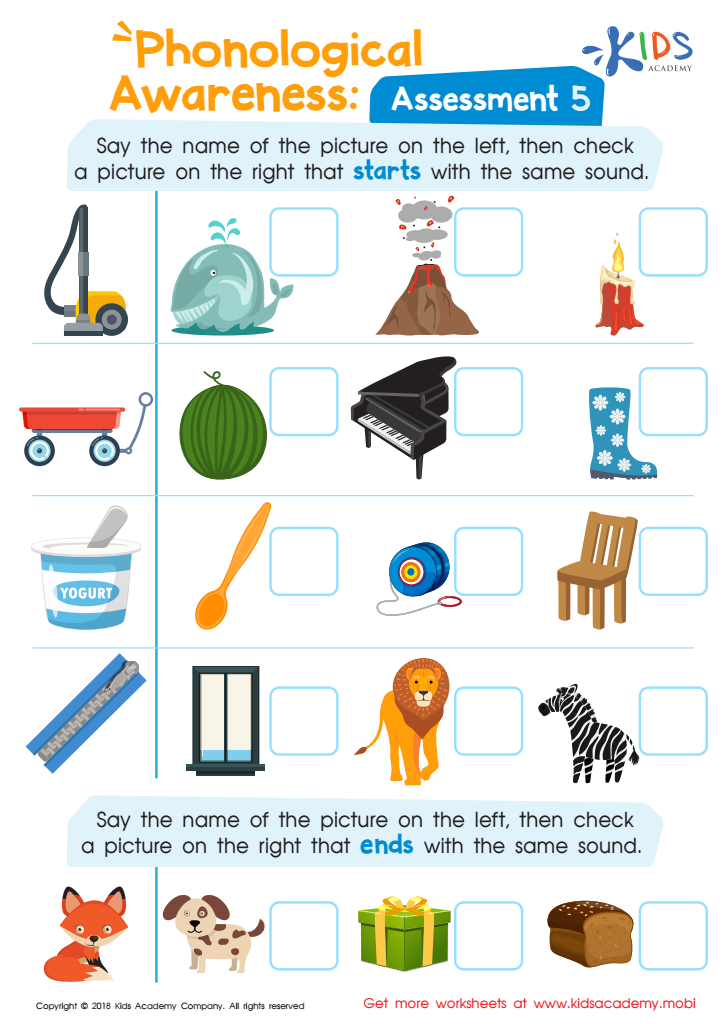
Phonological Awareness: Assessment 5 Worksheet
 Assign to My Students
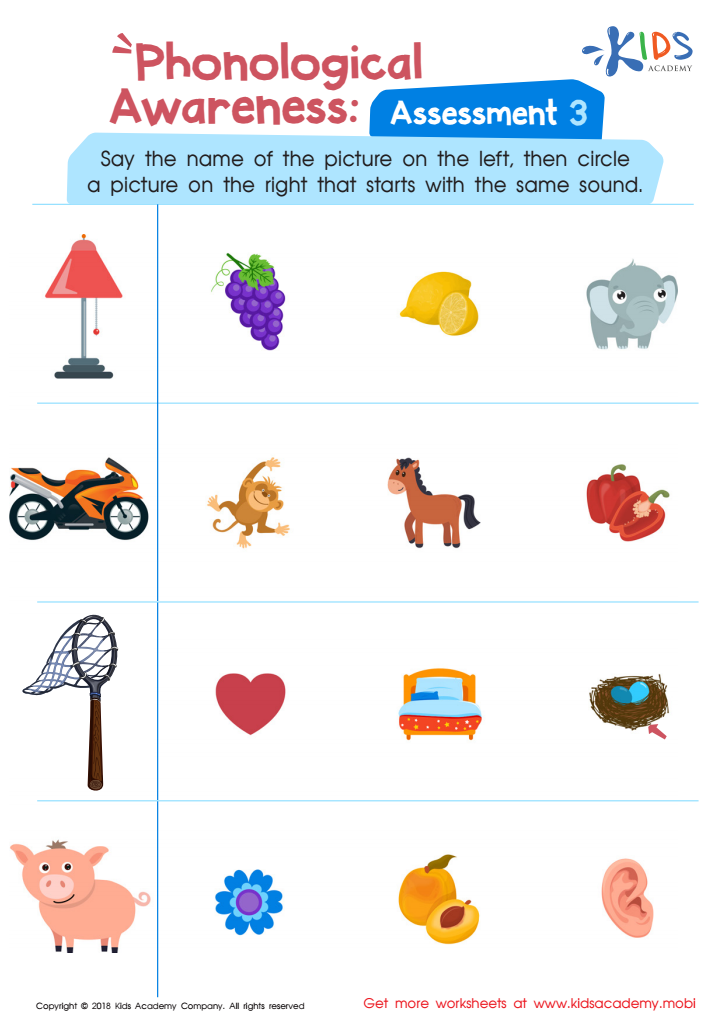
Phonological Awareness: Assessment 3 Worksheet
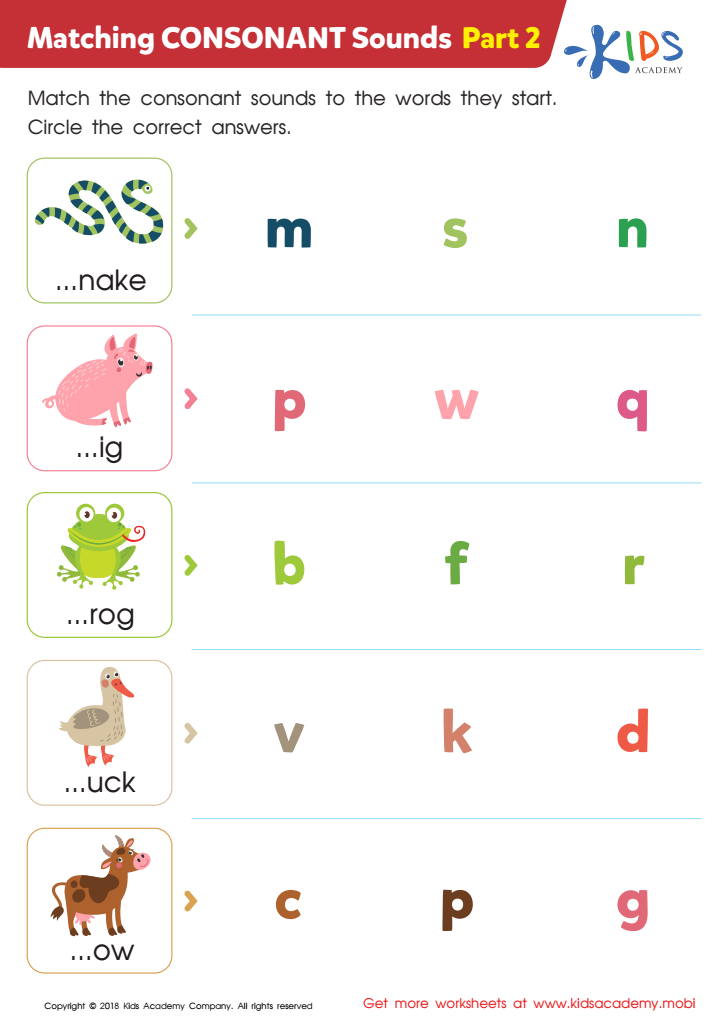
Matching Consonant Sounds: Part 2 Worksheet
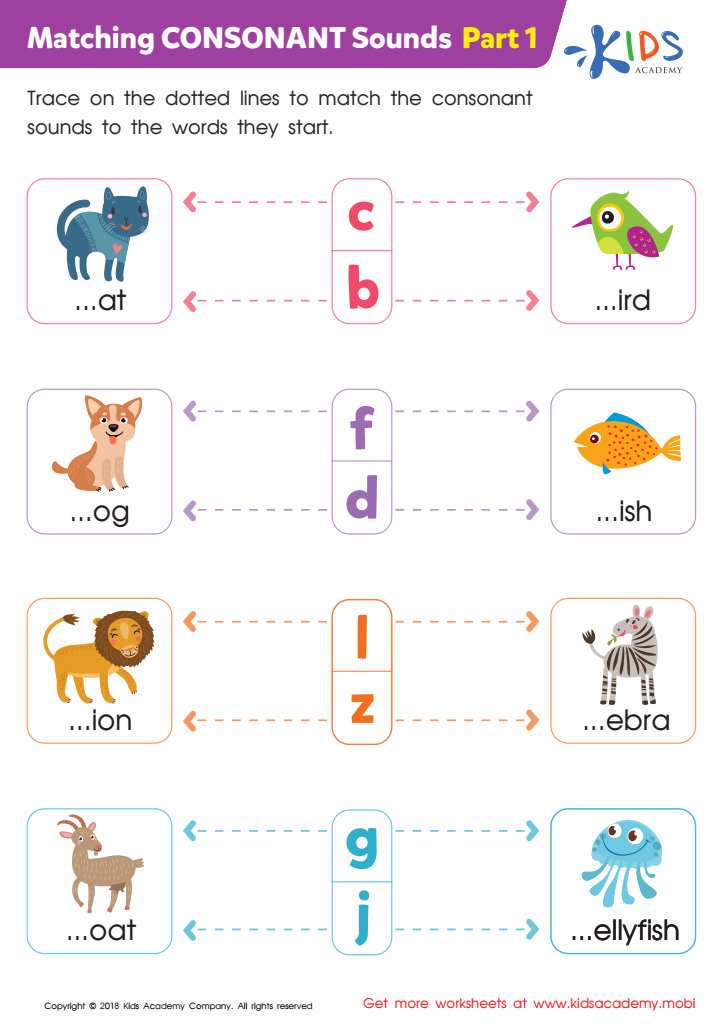
Matching Consonant Sounds: Part 1 Worksheet
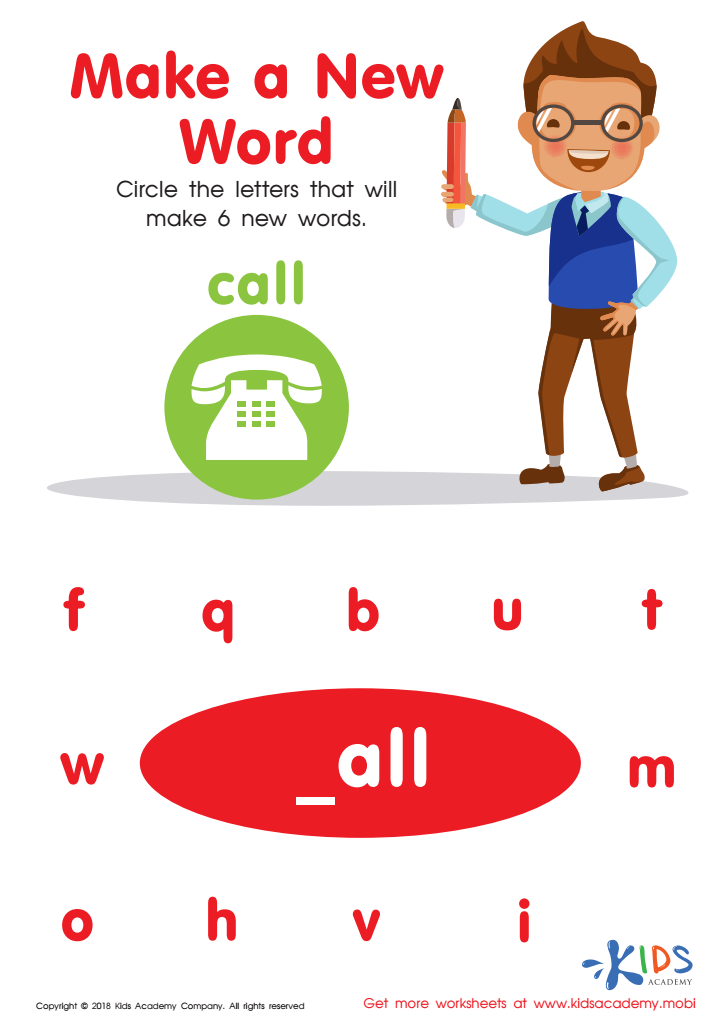
Make a New Word Worksheet
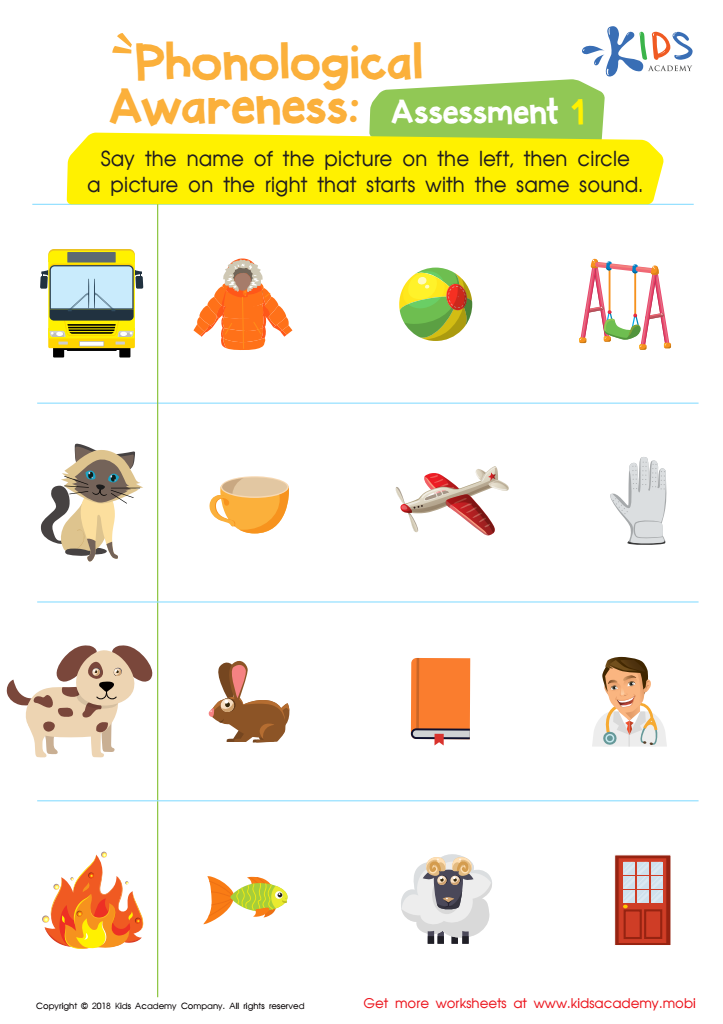
Phonological Awareness: Assessment 1 Worksheet
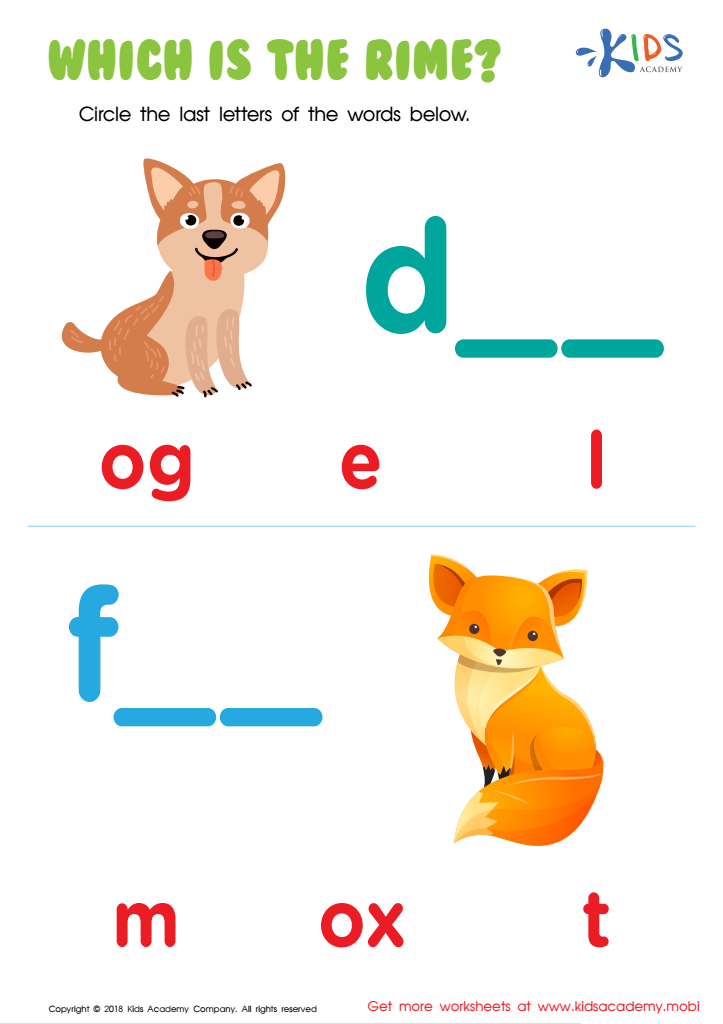
Which Is the Rime? Worksheet






.jpg)
%20(1).jpg)
Phonological awareness is a critical skill for young learners, particularly in kindergarten, as it serves as a foundation for successful reading and writing. This skill encompasses the ability to recognize and manipulate sounds in spoken language, including skills like rhyming, syllable counting, and sound segmentation.
When parents and teachers foster phonological awareness, they help children decode words, which is essential for reading proficiency. Children who have developed these skills are better prepared to tackle complex literacy tasks as they progress through school. Neglecting phonological awareness can lead to difficulties in literacy, impacting a child's self-esteem and academic trajectory.
Moreover, phonological awareness activities can be engaging and fun, often involving games, songs, and storytelling, igniting a love for language and learning. By making these activities part of daily routines, parents and educators can significantly enhance children's cognitive development.
Caring about phonological awareness translates into academic success, confidence in literacy, and the ability to communicate effectively. This makes it imperative for parents and teachers to prioritize these foundational skills early on, ensuring children are not just prepared for reading but also inspired to be lifelong learners.