Filters

184 filtered results

Clear all filters
Favorites
With answer key
Interactive

184 filtered results

Difficulty Level

Grade


Check out this FREE Trial Lesson on Science for age 3-6!

Bird and Insect Structures

Favorites
With answer key
Interactive
  • 3-6
  • Science
  • Normal
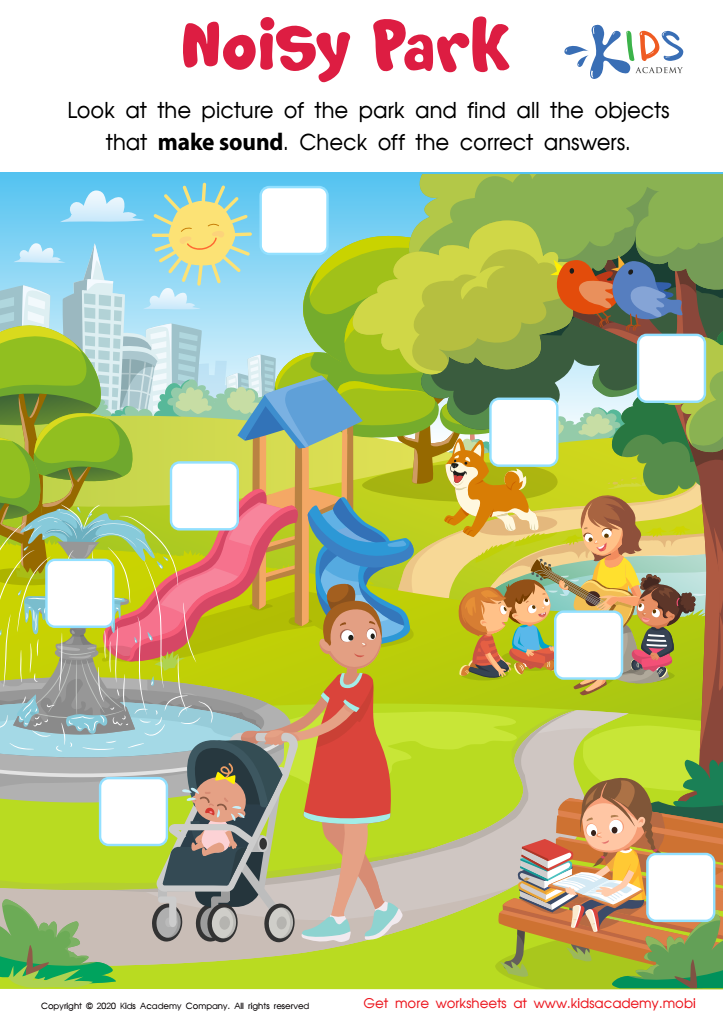
Noisy Park Worksheet

Noisy Park Worksheet

Get your students ready for the exercise by asking them to name things they see and do at the park. Then, have them identify the things in the picture, look for objects that make sounds, and verify the answers.
Noisy Park Worksheet
Worksheet
How We Hear Sounds Worksheet

How We Hear Sounds Worksheet

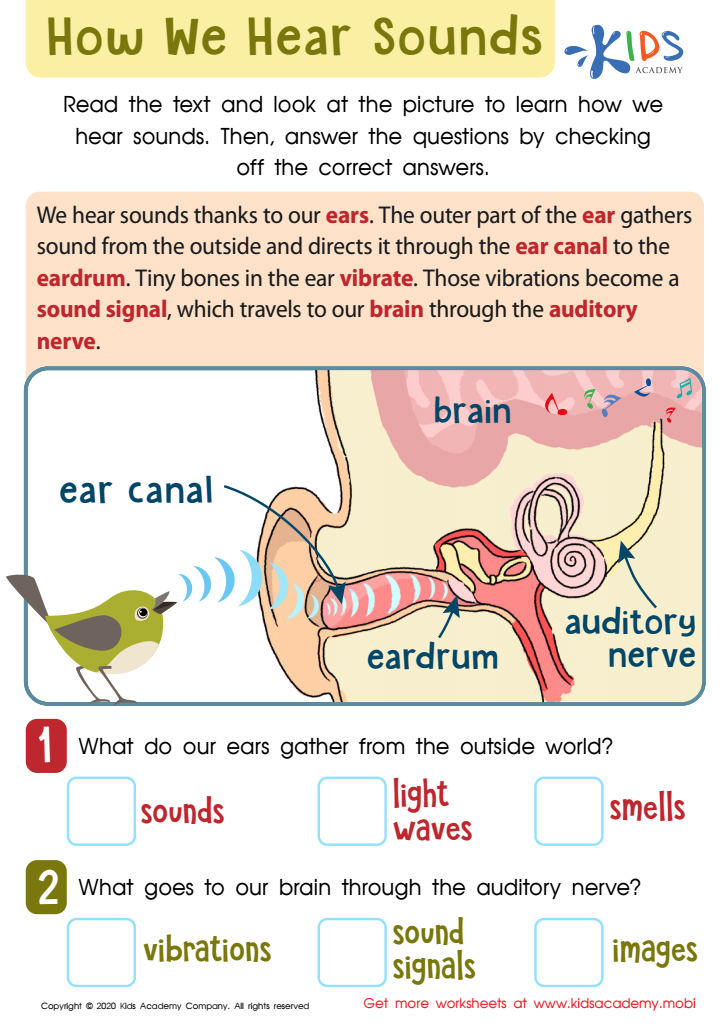
Before beginning this worksheet, make sure your students are aware of the five senses: sight, taste, touch, smell, and hearing. This worksheet will help them explore how we hear sounds with our ears. Read or listen to the text, study the images, and answer the questions. Check off the correct answers.
How We Hear Sounds Worksheet
Worksheet
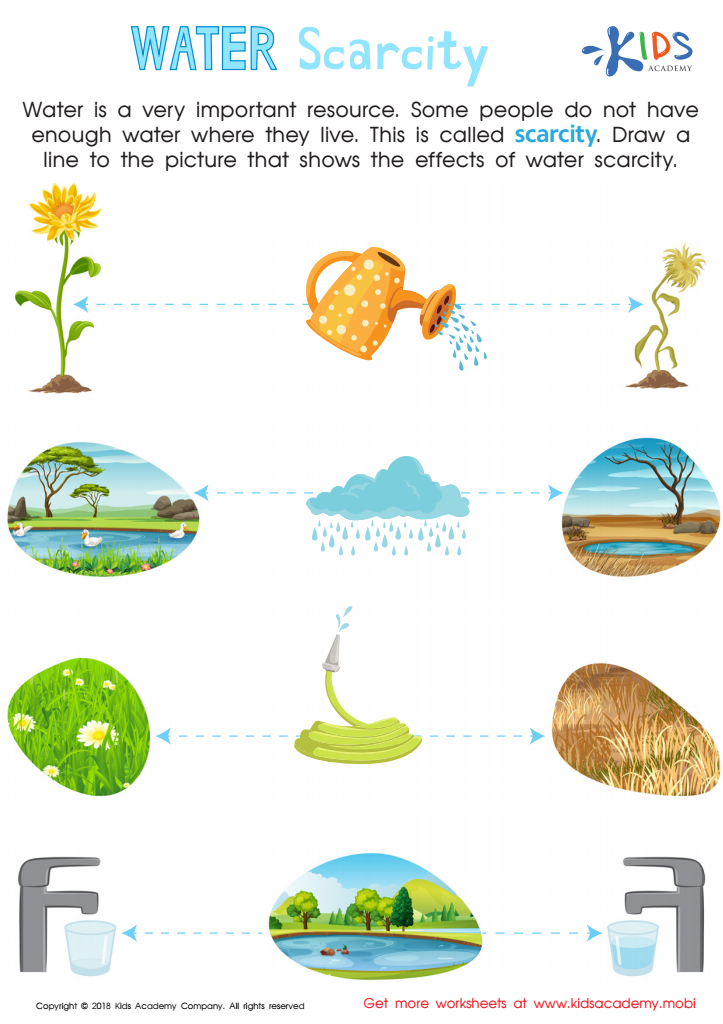
Water Scarcity Worksheet

Water Scarcity Worksheet

Water is an essential part of our lives. Ask your students to list five everyday activities which require water. Use this worksheet to explain why water is important and how privileged we are to have access to it. Many people are not as lucky and face water scarcity. Explain this concept with a fun pdf, showing the effects of water scarcity.
Water Scarcity Worksheet
Worksheet
Bird Beaks Worksheet

Bird Beaks Worksheet

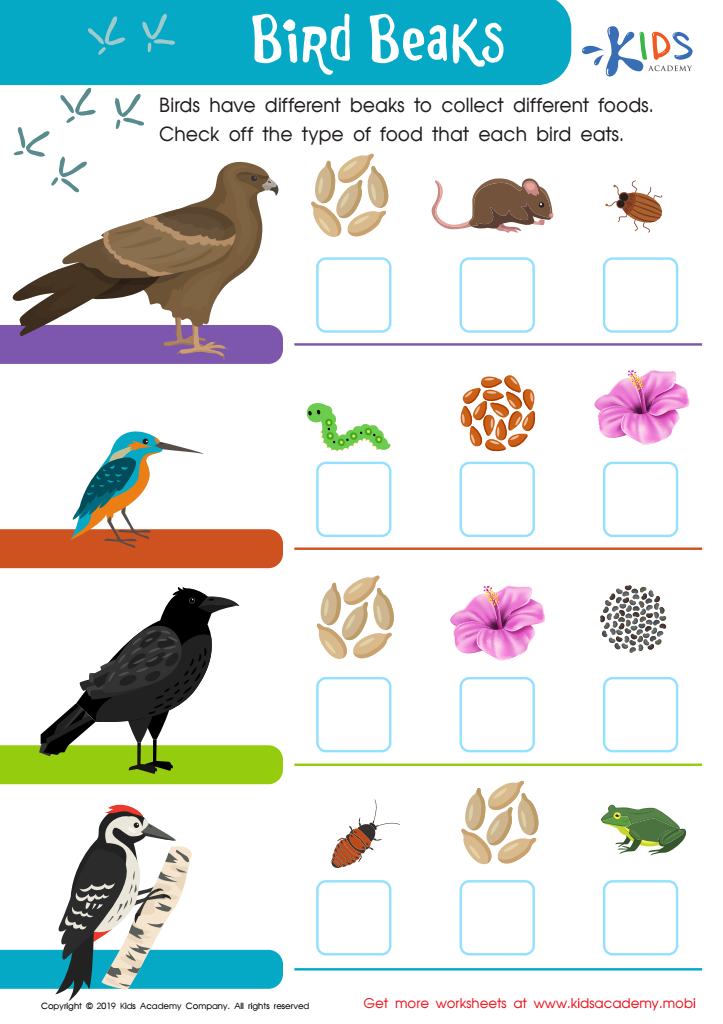
Birds have beaks to eat different types of food. Let your little nature lover explore why with this free worksheet! They'll learn about different beak shapes and match them to the food that's best for them. Be an adorable bird watcher together!
Bird Beaks Worksheet
Worksheet
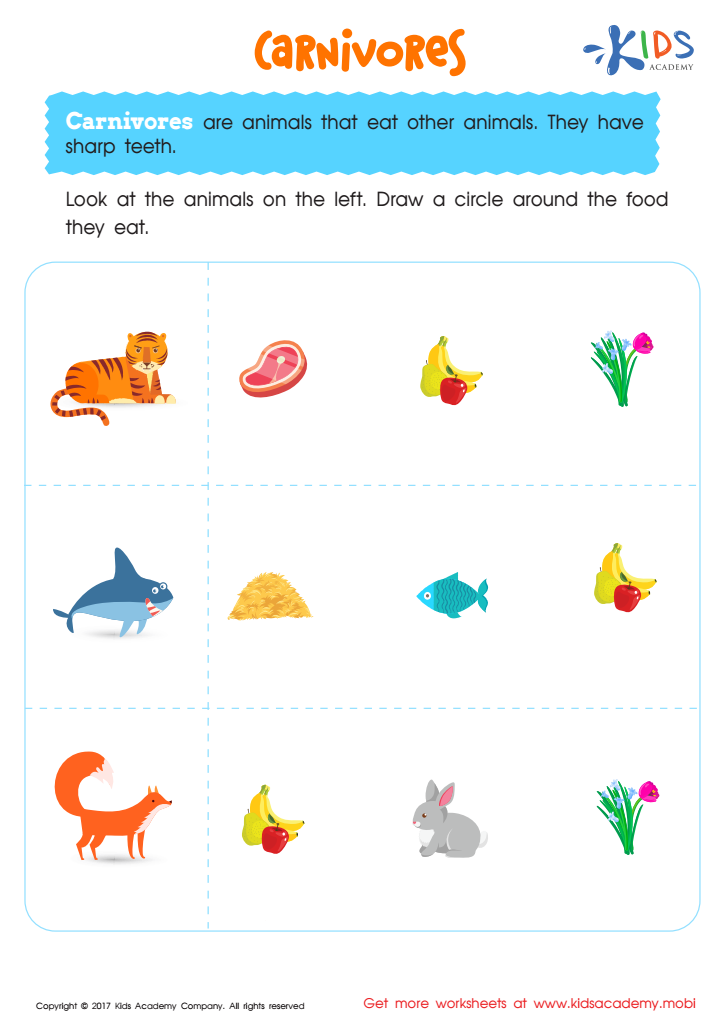
Herbivores Worksheet

Herbivores Worksheet

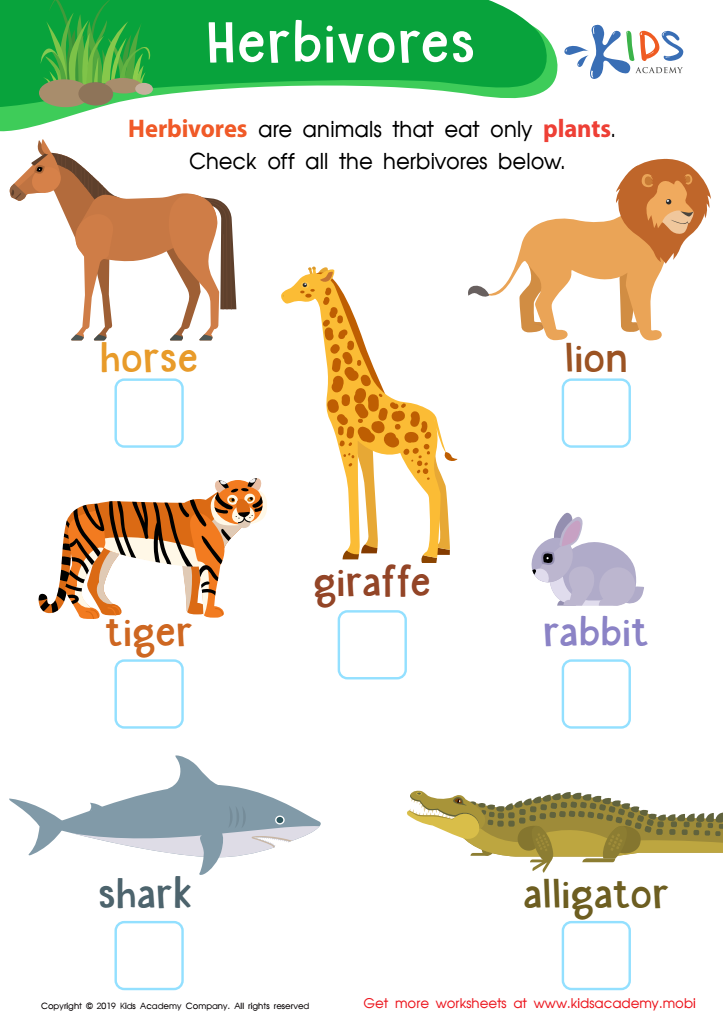
Explain to your kids what herbivores are: animals that survive on plants and grass. Examples include cows, rabbits, and deer. Ask them to identify the herbivores in the pictures and check them off.
Herbivores Worksheet
Worksheet
Ramps Worksheet
Ramps Worksheet

Ramps Worksheet

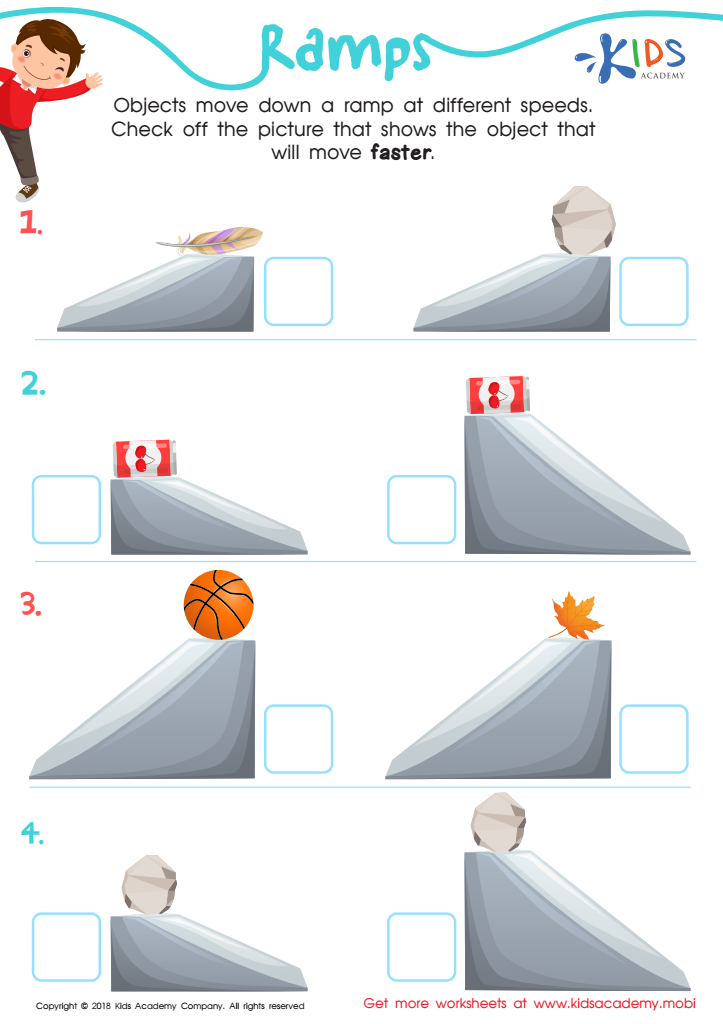
If your child has seen a ramp, they'll find this worksheet easy. A ramp is sloped for objects to move quickly downwards. The printout has images of objects on different ramps. Ask your child to identify which object will move faster.
Ramps Worksheet
Worksheet
Can You Hear Me Worksheet

Can You Hear Me Worksheet

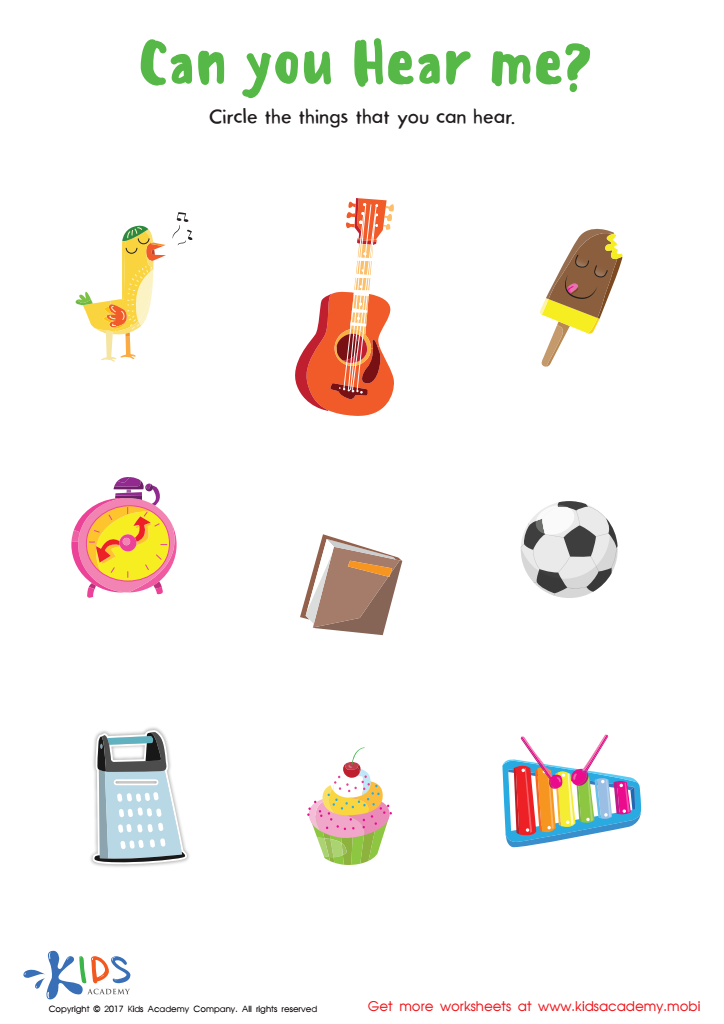
Challenge your child's thinking and help them learn by using this cute "Can You Hear Me?" worksheet. It encourages use of prior knowledge to identify objects that make sounds, developing critical thinking skills. As they imagine balls and cupcakes making sounds, your child will have plenty of laughs. Extend learning by talking about the sounds and why certain objects make them.
Can You Hear Me Worksheet
Worksheet
Learn About the Weather Worksheet

About the Weather Printable
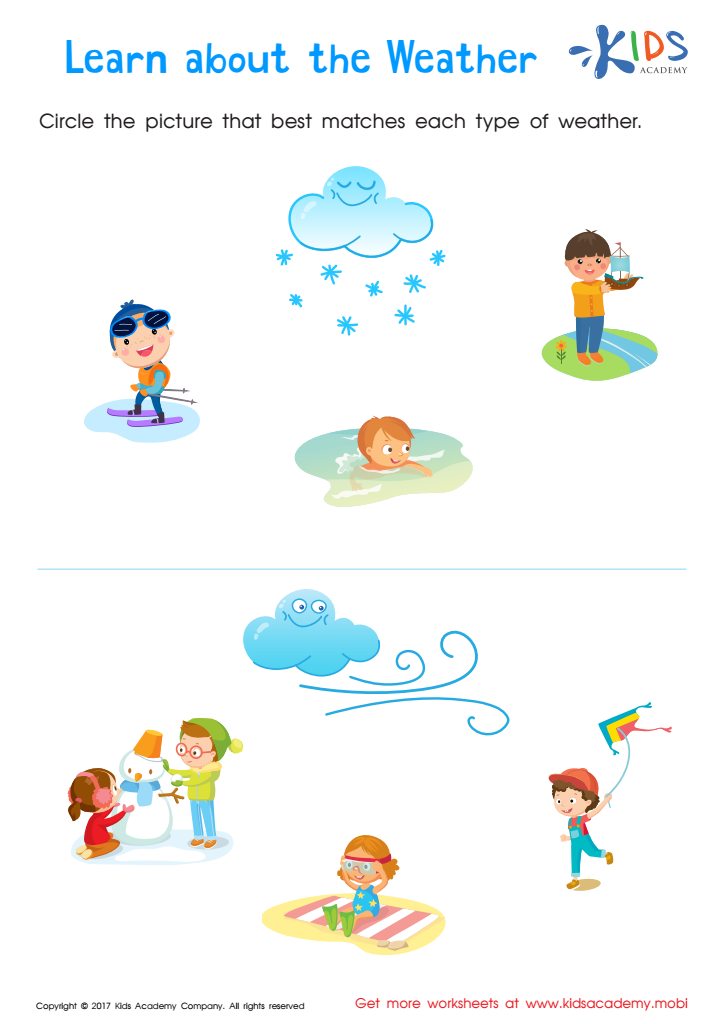
This worksheet is perfect for reinforcing knowledge about changing weather and activities that suit each season. Help your child use their life experiences to observe the weather and complete the worksheet. Fun and colorful, it's a great way to learn about weather and seasons. Let's get started!
About the Weather Printable
Worksheet
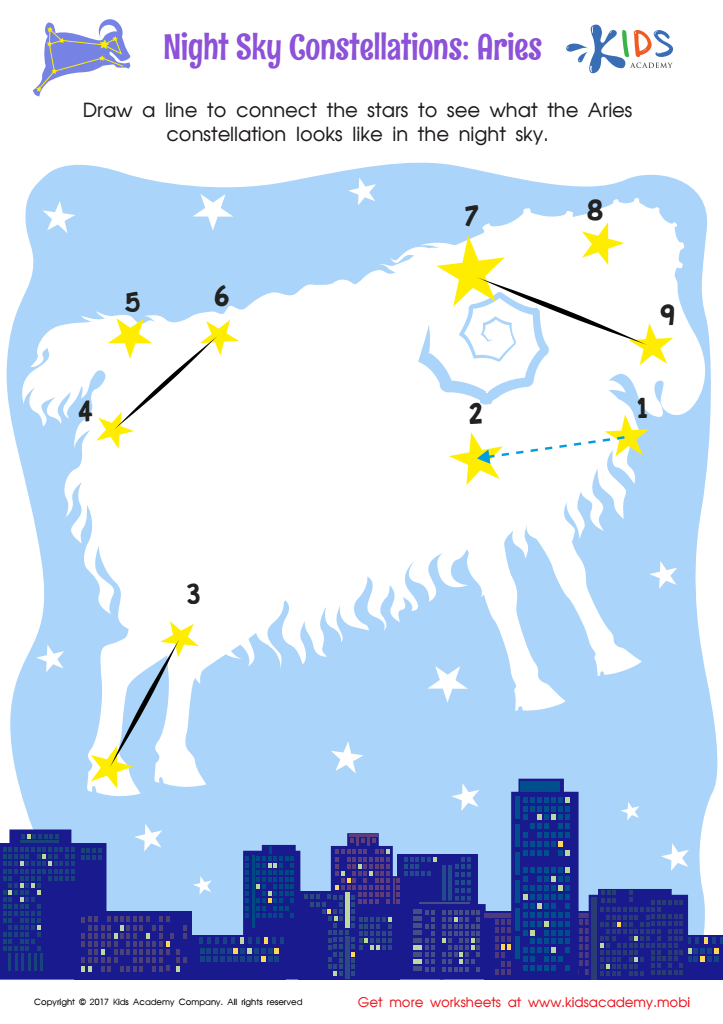
Printable constellation worksheet: Aries

Night Sky Constellations: Aries Worksheet
Let your child explore the night sky with this fun, easy-to-complete constellation worksheet: Aries! Have them connect the stars to uncover the popular constellation. Talk about constellations and their locations to enrich their learning!
Night Sky Constellations: Aries Worksheet
Worksheet
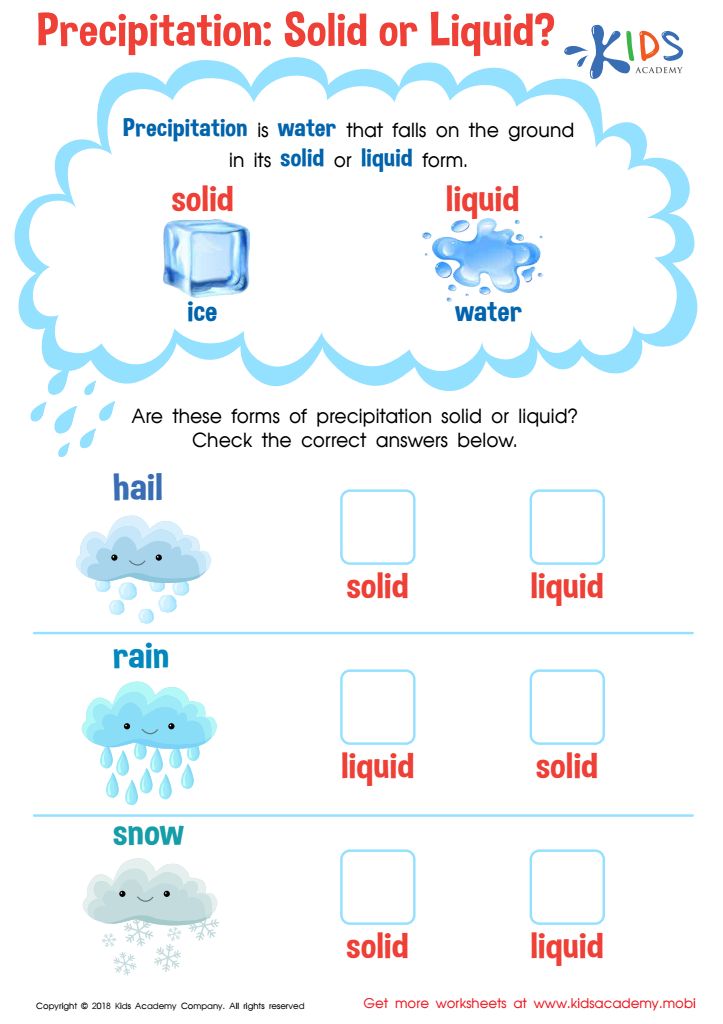
Precipitation: Solid or Liquid? Worksheet

Precipitation: Solid or Liquid? Worksheet

Teach students that precipitation is water from the clouds/sky in either solid or liquid form, e.g. rain is liquid and snow is frozen. Use the worksheet with them to check if the forms of precipitation pictured are solid or liquid.
Precipitation: Solid or Liquid? Worksheet
Worksheet
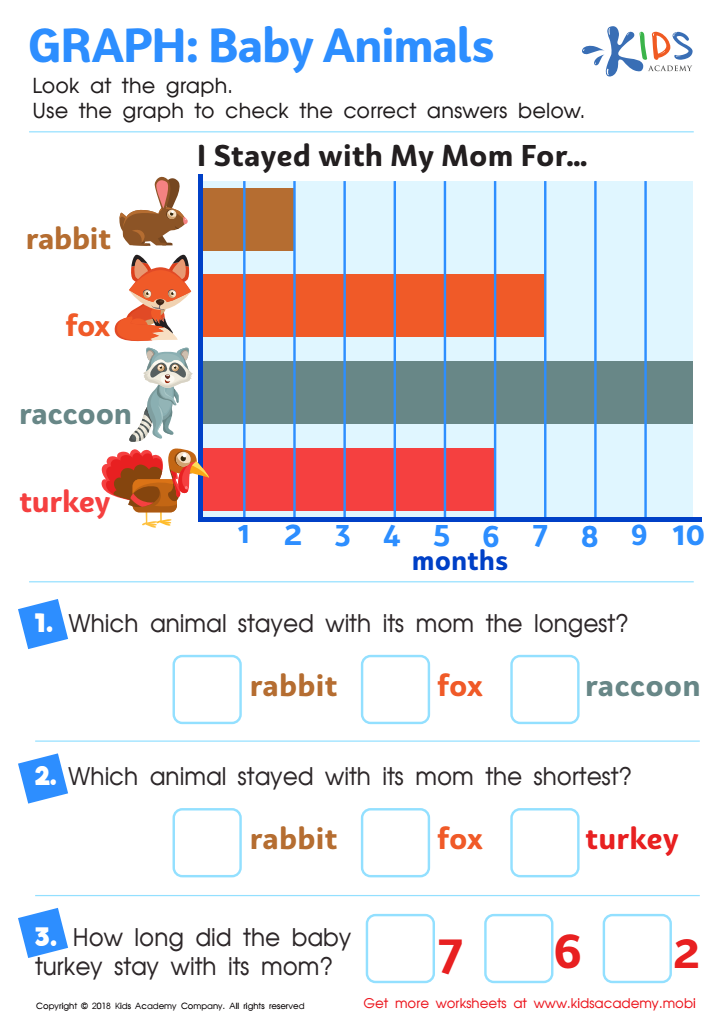
Graph: Baby Animals Worksheet

Graph: Baby Animals Worksheet

Graphs are essential for learning in math, science and ELA. This worksheet featuring baby animals is a fun way to practice reading graphs. Look at the graph and answer the questions below it. Check the boxes for the right answers based on the data.
Graph: Baby Animals Worksheet
Worksheet
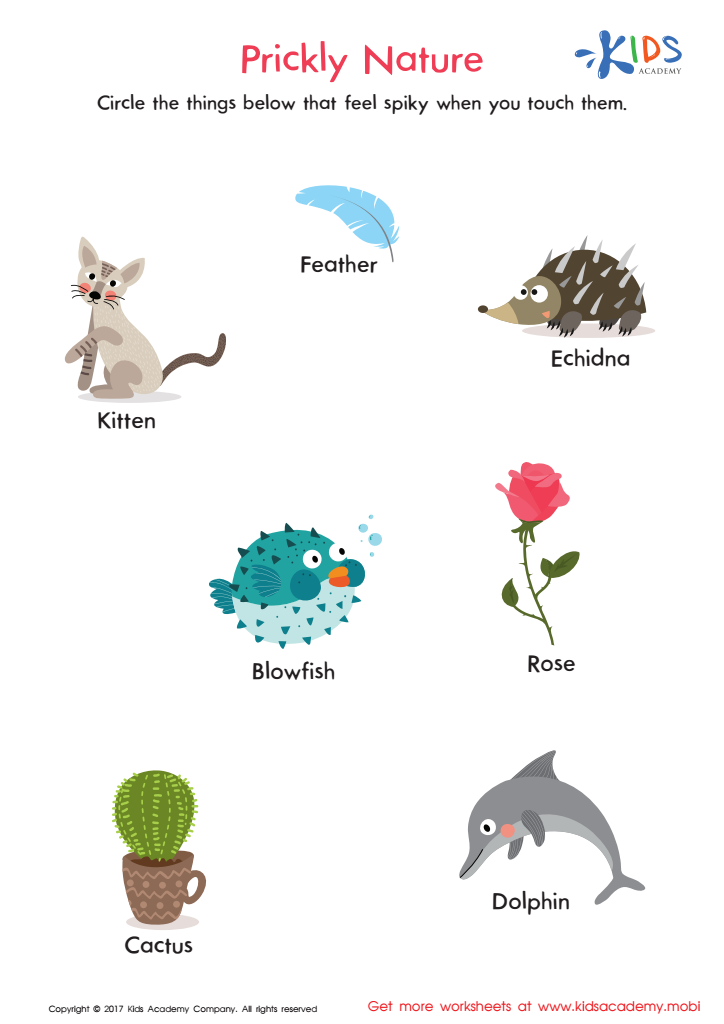
Prickly Nature Printable Worksheet

Prickly Nature Worksheet

Help your child stay safe and enhance critical thinking skills with this prickly nature worksheet. It can help them recognize spiky objects in their environment by teaching them to differentiate between prickly and soft textures. Plus, your kid will learn how to admire and avoid them. Get started today!
Prickly Nature Worksheet
Worksheet
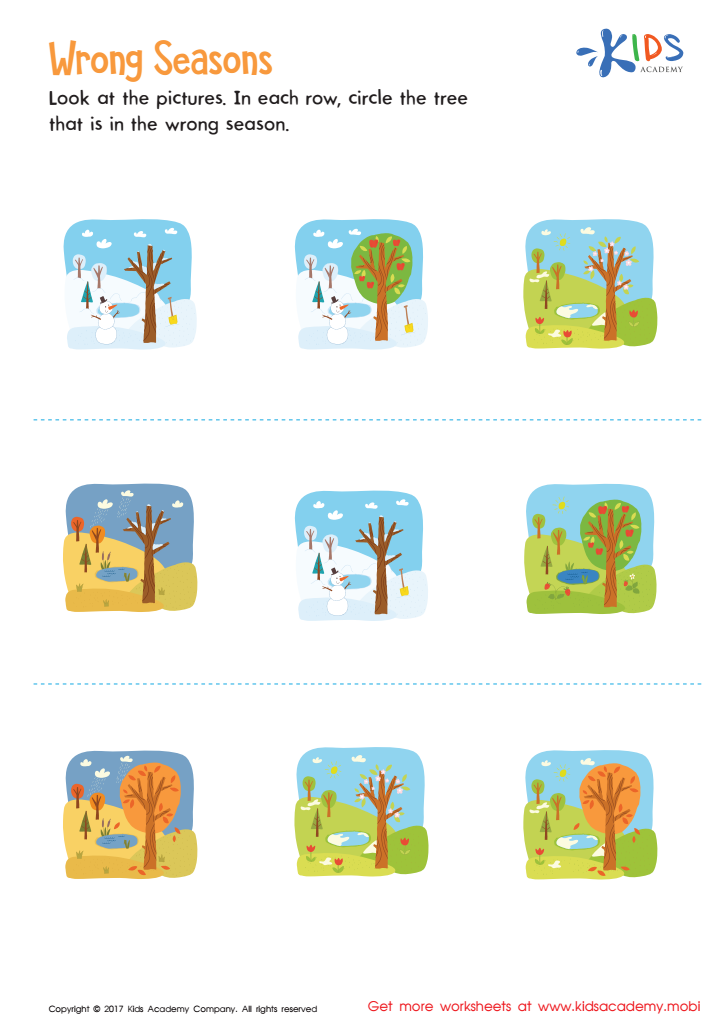
Wrong Seasons Worksheet

Wrong Seasons Worksheet

Uh oh! Trees are out of place in these vibrant pictures! Use this wrong seasons worksheet to help your child develop observation, analytical, and critical thinking skills. They'll learn about how the seasons change the surroundings, like trees. Print it out today to sharpen your child's eye for spotting the seasons!
Wrong Seasons Worksheet
Worksheet
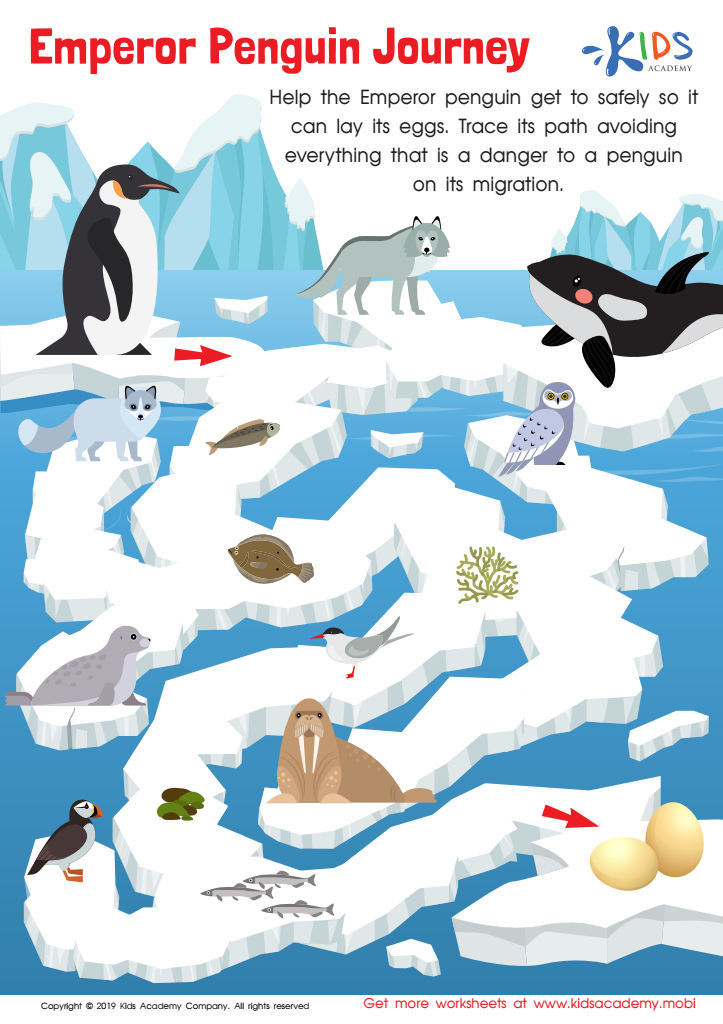
Emperor Penguin Journey Worksheet

Emperor Penguin Journey Worksheet

Kids love learning about animal habitats! This bright worksheet on Emperor Penguins is a fun way for your child to explore the risks of migration. Download the free PDF and help the penguin make its way through the maze and to its eggs - all while stimulating fine motor skills. Kids will have a blast helping the Emperor Penguin waddle to safety!
Emperor Penguin Journey Worksheet
Worksheet
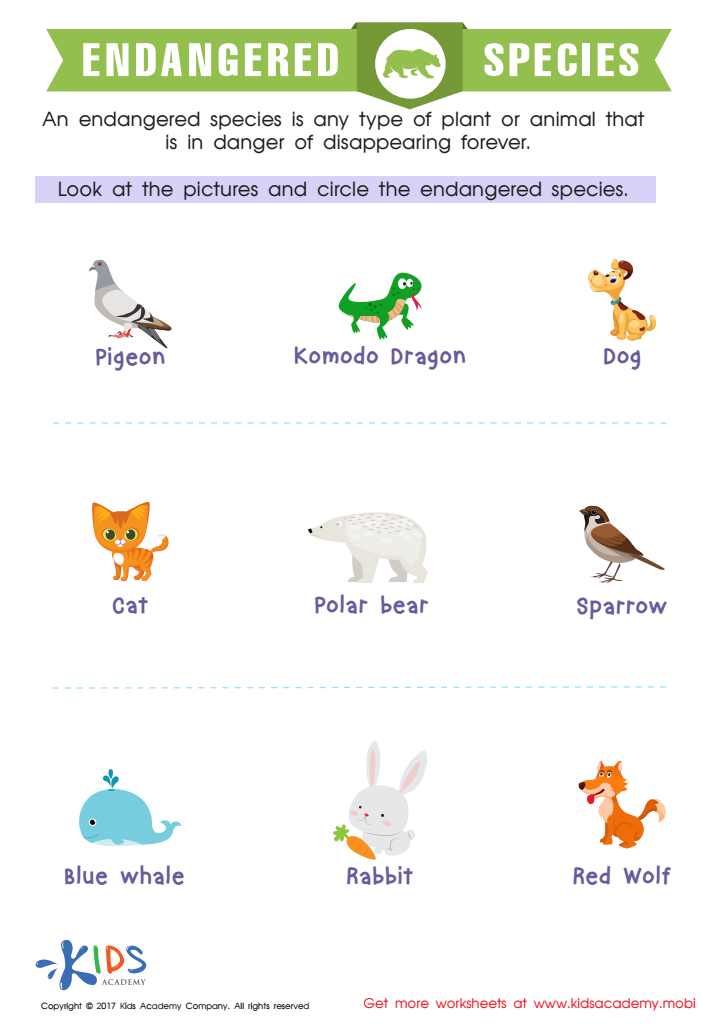
Endangered species worksheet

Endangerd Species Printable

Use this worksheet to teach your child the important concept of conservation. Ask them to recall their last visit to the zoo and name some of the animals listed. It's a great way to get kids thinking about the need to protect these species.
Endangerd Species Printable
Worksheet
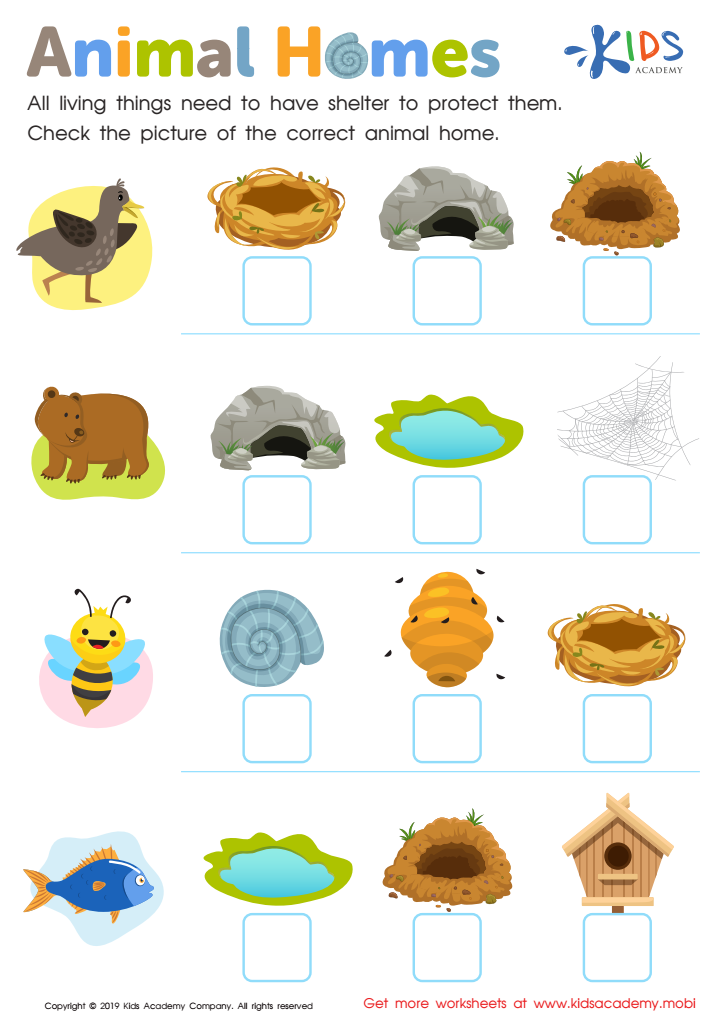
Animal Homes Worksheet

Animal Homes Worksheet

Students have homes where they can do things they love, sleep and stay safe from bad weather. Check the worksheet for animals and their shelters. Ask your kids to identify each and match the animal home to the picture. (80 words)
Animal Homes Worksheet
Worksheet
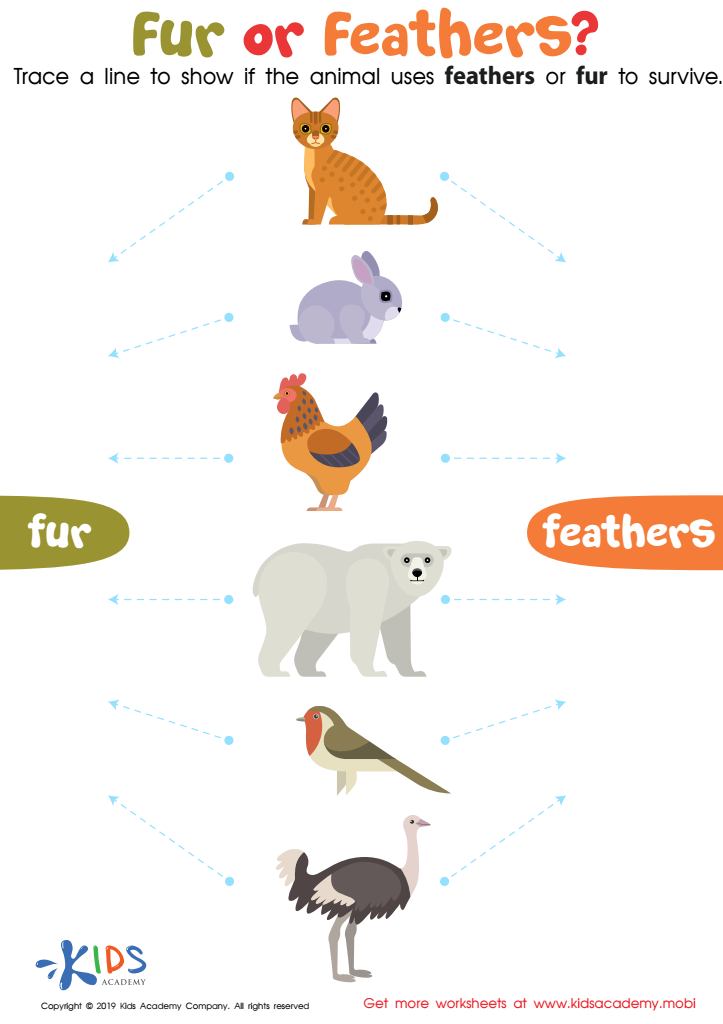
Fur or Feathers? Worksheet

Fur or Feathers? Worksheet

Examine animals you see daily. How do they differ from humans? With a pet in your home, ask your child to touch it and identify what covers the animal's body - fur or feathers? Birds have feathers, while mammals have fur. Guide your kids to identify animals in this worksheet and determine if fur or feathers keep them alive.
Fur or Feathers? Worksheet
Worksheet
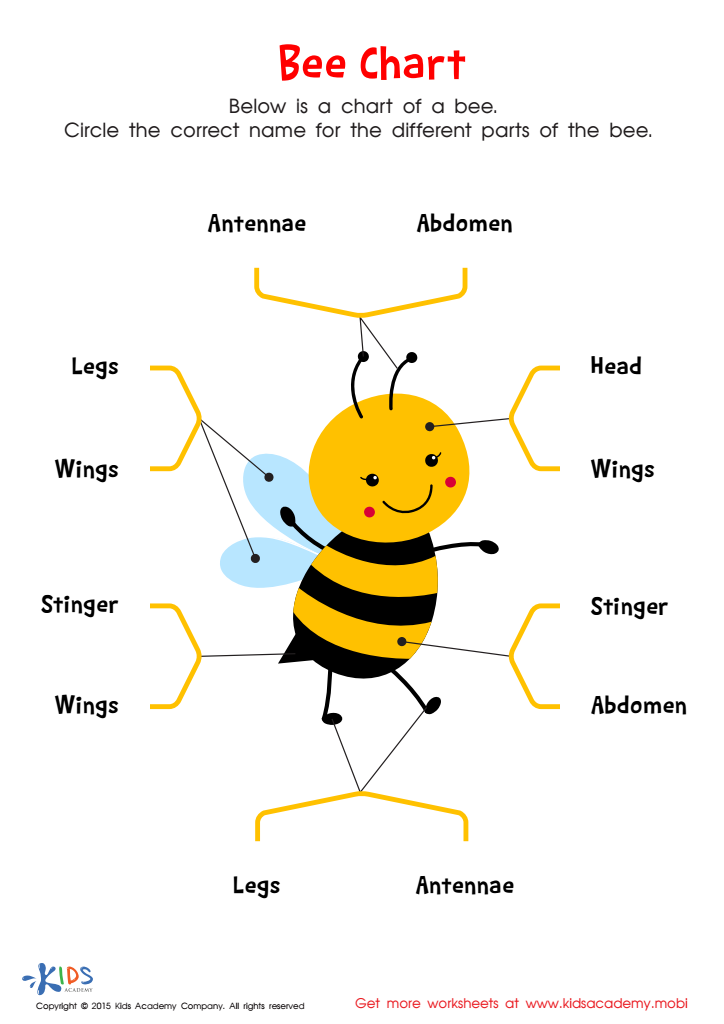
Delightful Bee Anatomy Worksheet

Bee Chart Worksheet

Bee Chart Worksheet
Worksheet
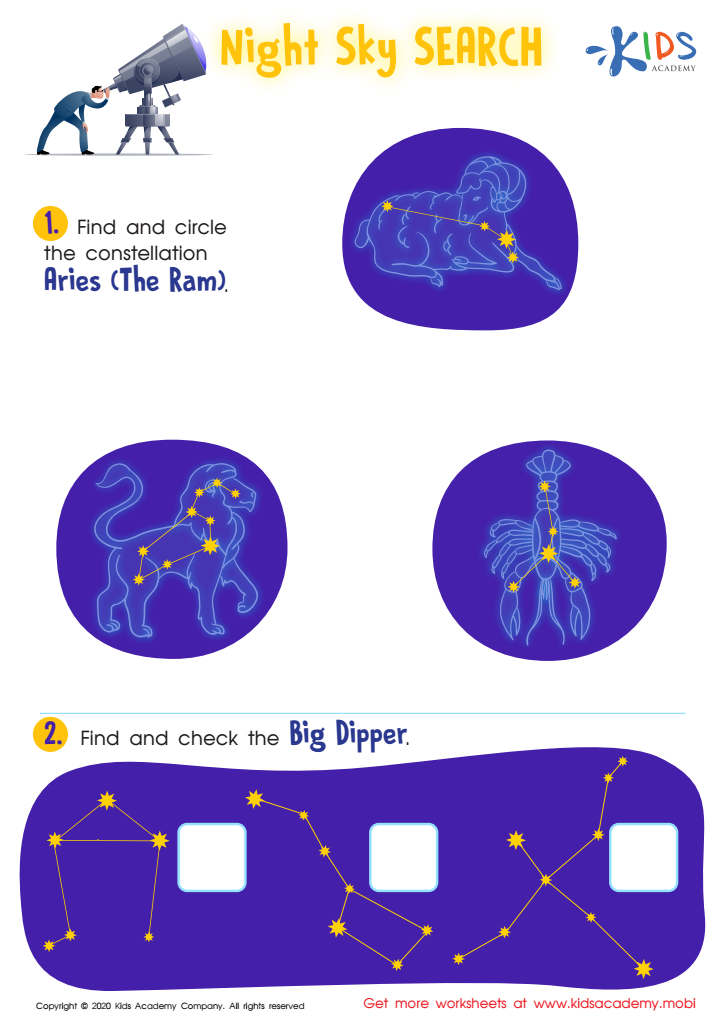
Night Sky Search Worksheet

Night Sky Search Worksheet

Gaze up into the night sky and spot the stars! Your little astronomer can learn about Aries and Big Dipper constellations with this science worksheet. Simply find the ram for Aries and check the box for Big Dipper. Then, when the weather is right, go outside and look for them in the night sky!
Night Sky Search Worksheet
Worksheet
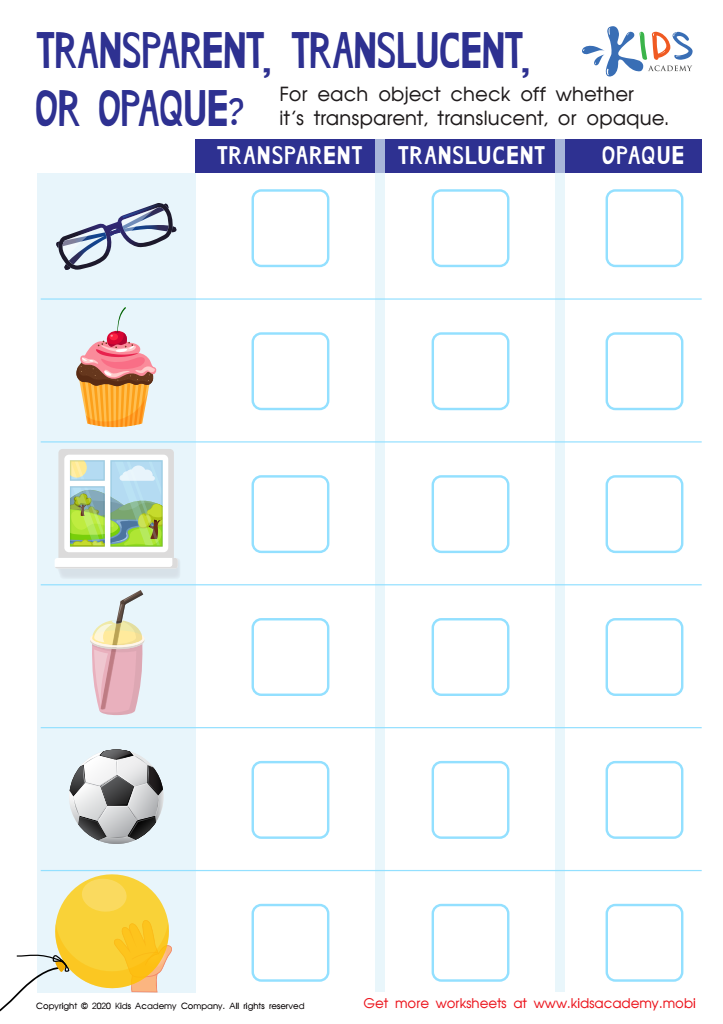
Transparent, Translucent, or Opaque Worksheet

Transparent, Translucent, or Opaque Worksheet

Remind students that transparent objects allow us to see through them, translucent objects let some light pass through, and opaque objects block all light. Have them look at pictures and decide if each object is transparent, translucent, or opaque.
Transparent, Translucent, or Opaque Worksheet
Worksheet
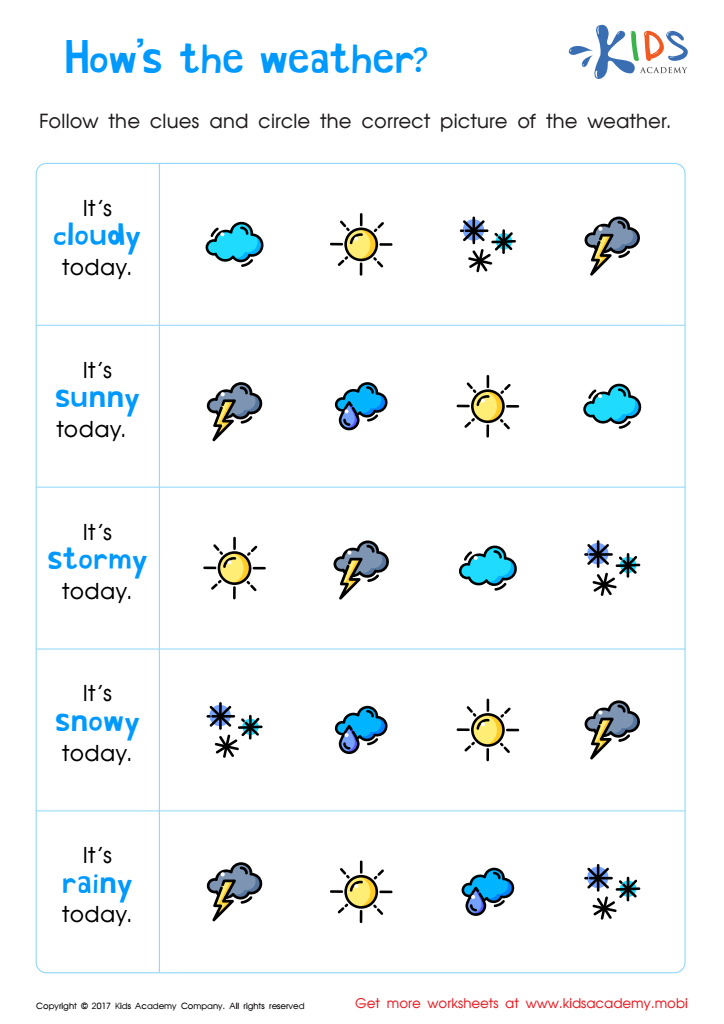
How’s the Weather Printable Worksheet

Hows the Weather Worksheet
Teaching kids about weather is a fun way to start science learning. This worksheet helps recognize symbols, literacy skills and make real world connections. Your child will love it!
Hows the Weather Worksheet
Worksheet
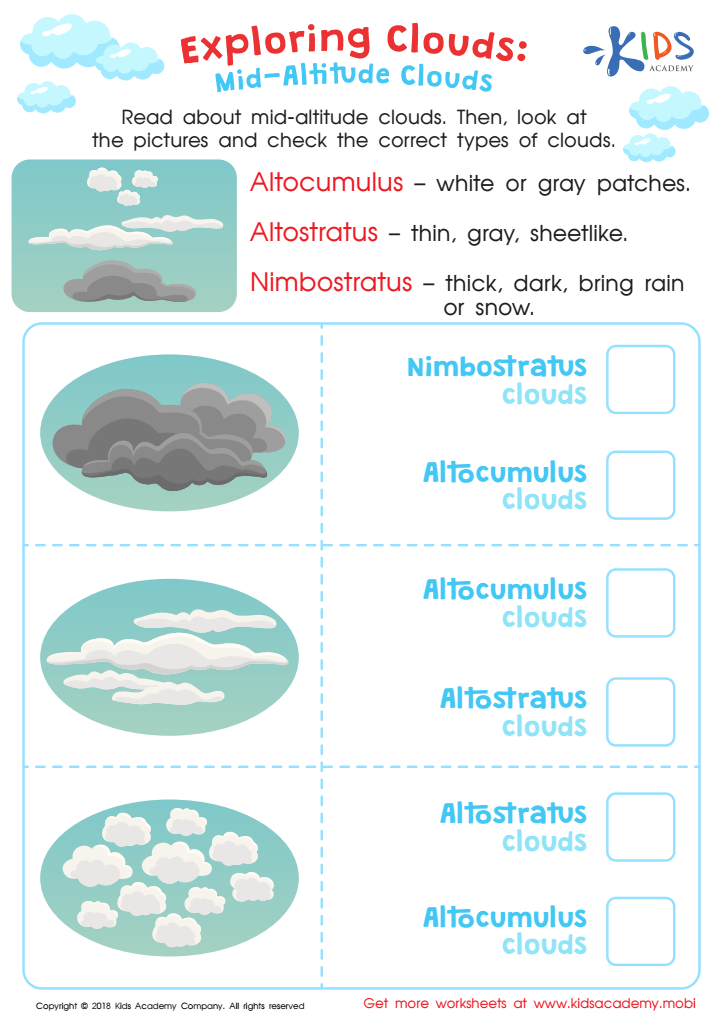
Exploring Clouds: Mid-altitude Clouds Worksheet


Exploring Clouds: Mid-altitude Clouds Worksheet

Kaitlin keeps a weather journal. Encourage your kid to do the same after completing this worksheet. Go through Kaitlin's journal with your kid, and discuss the weather for each day. Read the questions about her journal and check the correct answers.
Exploring Clouds: Mid-altitude Clouds Worksheet

Worksheet
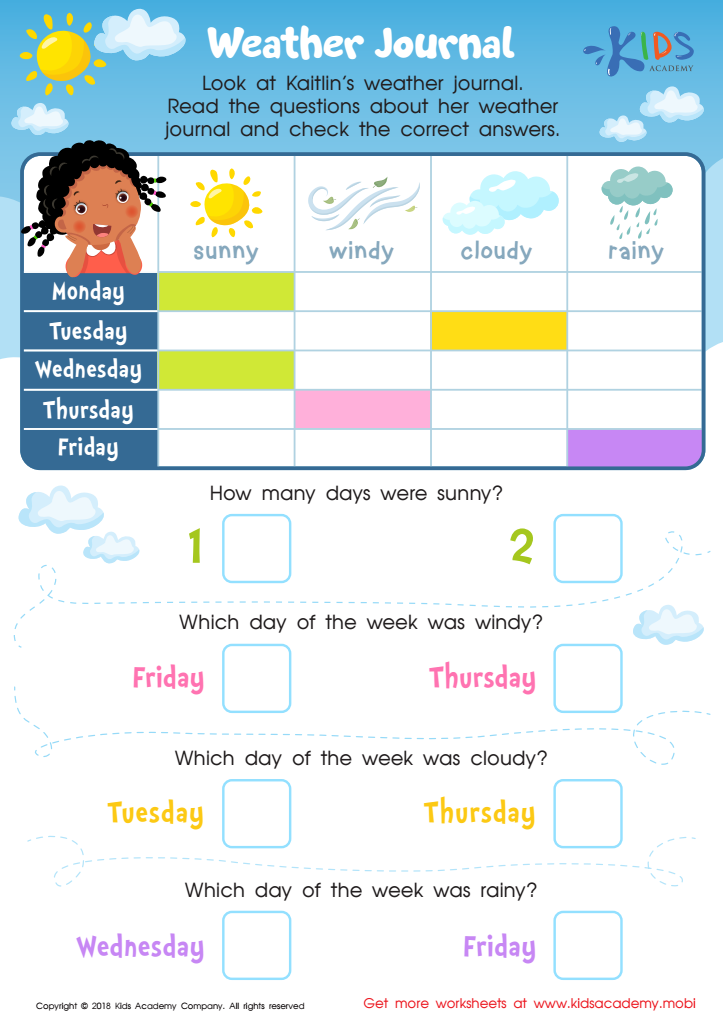
Weather Journal Worksheet

Weather Journal Worksheet

Kaitlin keeps a weather journal. Encourage your child to do the same! Look at Kaitlin's journal with them, and have them note the weather for each day. Read aloud the questions and check the correct answers.
Weather Journal Worksheet
Worksheet
What's the Weather Like? Worksheet

What's the Weather Like? Worksheet

Help budding meteorologists practice matching weather to seasons with this PDF worksheet. Picture clues help identify seasons and fine motor skills are practiced circling the correct weather patterns. Bright and engaging characters make learning fun and reinforce weather knowledge.
What's the Weather Like? Worksheet
Worksheet


Parents and teachers should care about Normal Science for Ages 3-6 because early education lays the foundation for a child's cognitive and social development. Normal Science focuses on day-to-day experiences and observations in natural settings, fostering curiosity and exploration in young learners. At this age, children are naturally inquisitive, making it the perfect time to introduce fundamental scientific concepts through play and hands-on activities.

Engaging in Normal Science helps children develop critical thinking and problem-solving skills. For instance, simple experiments can teach them about cause and effect, classification, and basic observation techniques. This experiential learning nurtures their ability to ask questions, seek answers, and participate in discussions, which are essential skills for academic success later on.

Additionally, incorporating Normal Science encourages collaboration and communication among peers, as children share their findings and learn from one another. It promotes an understanding of the world around them, instilling a sense of appreciation for nature and the sciences. By fostering these early interests in science, parents and teachers can inspire a lifelong love of learning, building a solid foundation for future discovery, exploration, and academic achievement. Investing in Normal Science today cultivates tomorrow's innovators and problem solvers.