Filters

28 filtered results

Clear all filters
Favorites
With answer key
Interactive

28 filtered results

Difficulty Level

Grade


Check out this FREE Alphabet Trial Lesson for age 3-9!

Short and Long Vowel Sort

Favorites
With answer key
Interactive
  • Alphabet
  • 3-9
  • Interactive
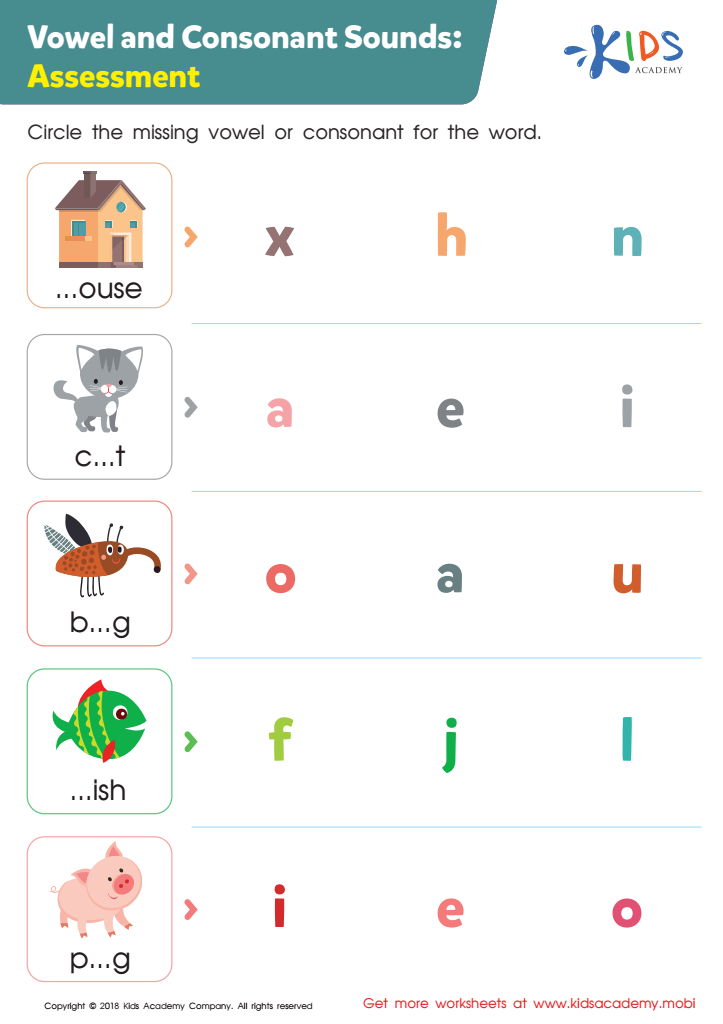
Vowel and Consonant Sounds: Assessment Worksheet

Vowel and Consonant Sounds: Assessment Worksheet

Test young elementary students on vowel and consonant sounds with this friendly phonics assessment worksheet. Get kids to name each image and look at the word underneath. Ask them to sound out the word, then circle the missing letter to complete. This will help assess their knowledge and skills!
Vowel and Consonant Sounds: Assessment Worksheet
Worksheet
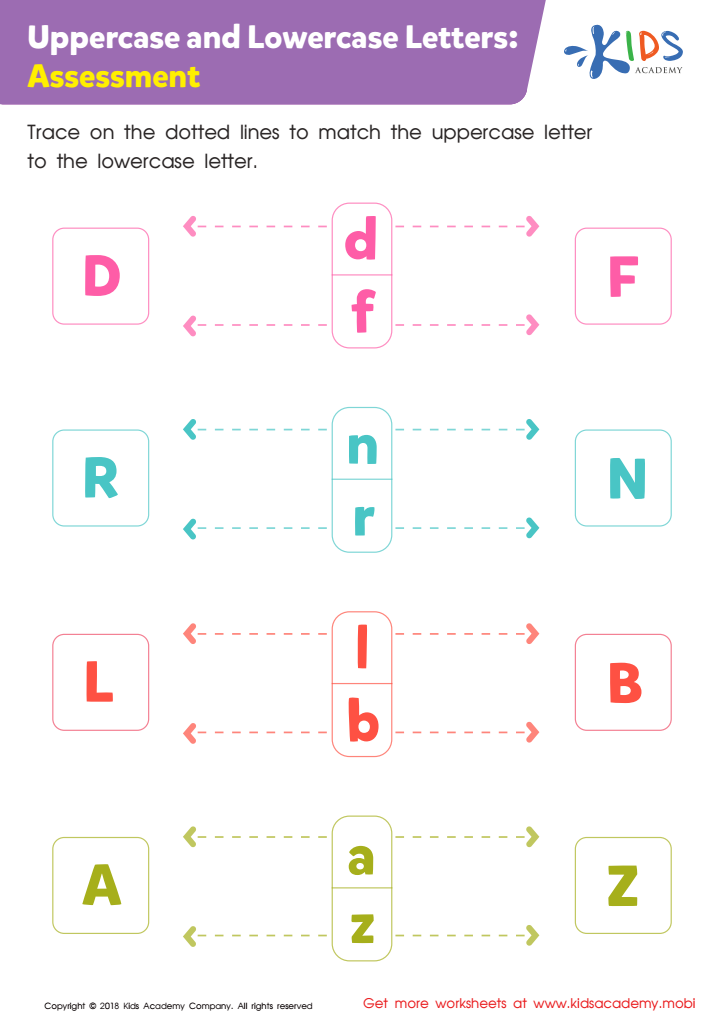
Uppercase and Lowercase Letters: Assessment Worksheet

Uppercase and Lowercase Letters: Assessment Worksheet

Assess your child's knowledge of upper- and lowercase letters with this worksheet. Have them trace the dotted lines to match the lowercase letters with their uppercase counterparts. This is a great way to gauge their progress and identify any areas of difficulty. Get a better understanding of your child's capabilities and encourage their development!
Uppercase and Lowercase Letters: Assessment Worksheet
Worksheet
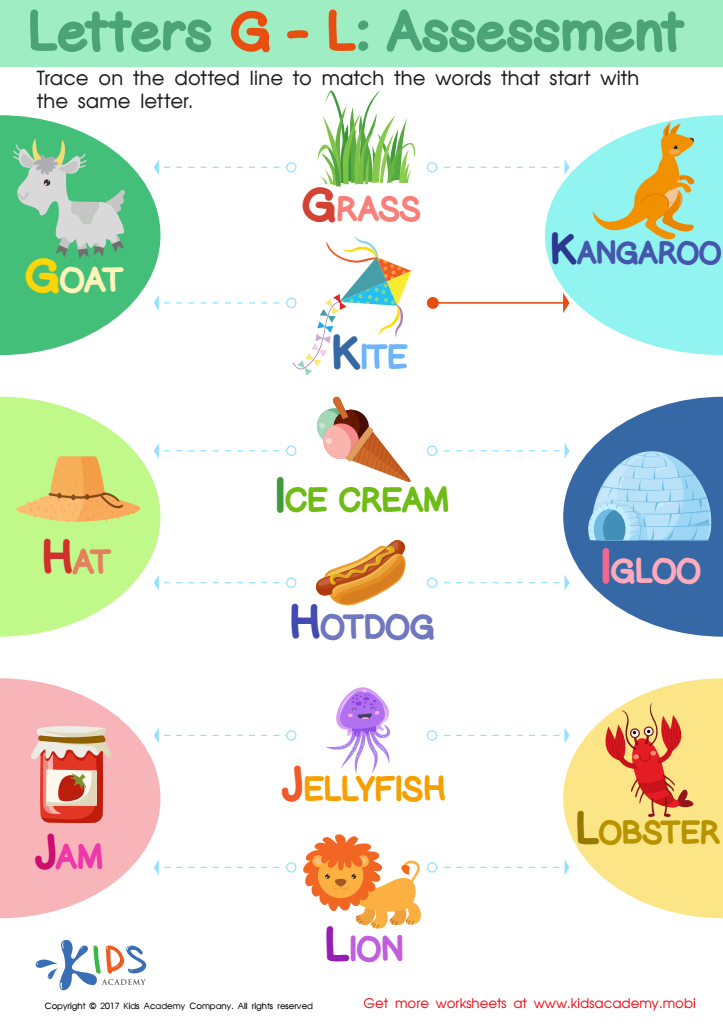
Letters G-L Worksheet Preview

Letters G-L Worksheet

This fun worksheet helps preschoolers develop reading and phonics skills. It gets kids to match G-L words that start with the same letter, making it engaging and educational.
Letters G-L Worksheet
Worksheet
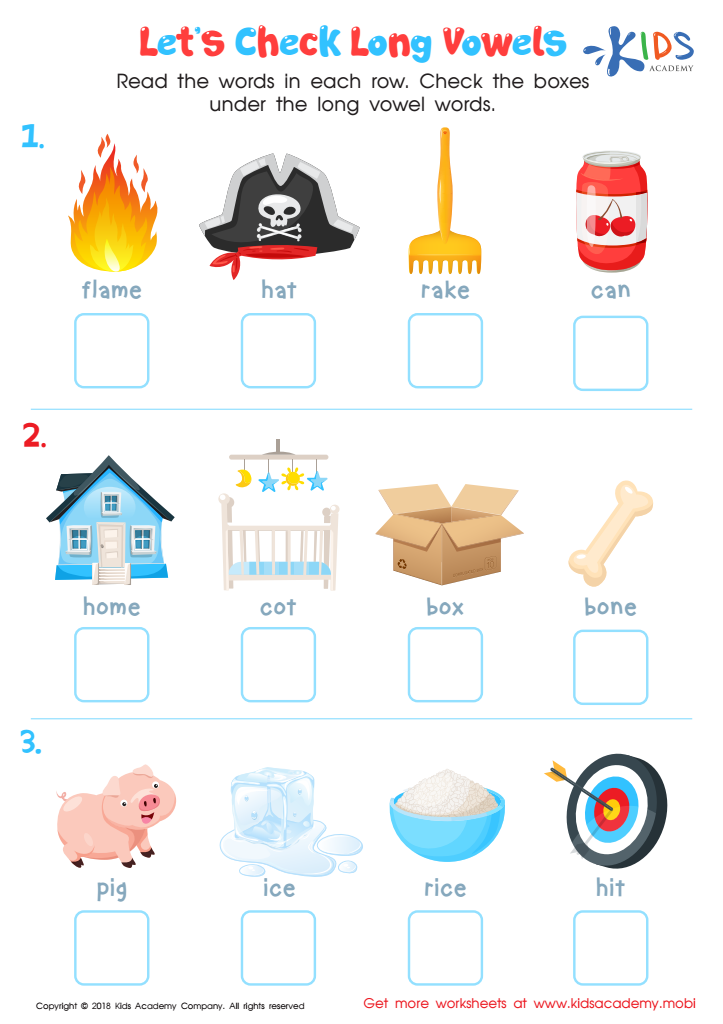
Let's Check Long Vowels: Assessment Worksheet


Let's Check Long Vowels: Assessment Worksheet

This worksheet helps your child identify objects and learn long vowel sounds. Ask them to say the names of the four objects in each row. Then, help them check the boxes to confirm they know the long vowel sounds. This will help them develop their reading skills.
Let's Check Long Vowels: Assessment Worksheet

Worksheet


Parents and teachers should prioritize alphabet activities for children aged 3-9 as these foundational skills play a crucial role in literacy development and overall educational success. Engaging in alphabet activities helps children recognize letters, understand their sounds, and develop essential phonemic awareness. At this early age, children are not only learning to identify letters but also beginning to connect them to words and meanings, fostering their ability to read and write effectively.

Furthermore, these activities promote cognitive development by enhancing memory, attention, and critical thinking skills. Incorporating hands-on activities such as letter games, songs, and imaginative play makes learning enjoyable, increasing children's motivation and enthusiasm. This early literacy exposure can significantly boost children's confidence, setting the stage for a positive learning experience in later academic pursuits.

Additionally, involving families in alphabet activities nurtures a supportive and conducive learning environment at home, reinforcing what is taught in educational settings. By actively participating in their children’s learning journey, parents and teachers can build stronger connections and celebrate milestones together. Ultimately, prioritizing alphabet activities not only equips children with vital language skills but also helps foster a lifelong love of learning.