
Comparison Worksheets for Ages 3-4
19 filtered results
Difficulty Level
Grade
Age
-
From - To
Subject
Activity
Standards
Introducing our vibrant collection of Comparison Worksheets, meticulously designed for the curious minds of children Ages 3-4. Embark on a captivating educational journey, where your little ones will master the art of comparison through engaging, age-appropriate activities. Each worksheet is crafted to foster an understanding of basic comparison concepts, encouraging young learners to differentiate sizes, lengths, quantities, and more. These fun-filled exercises not only enhance cognitive development but also boost critical thinking and observational skills early on. Perfect for preschool learning, our Comparison Worksheets for Ages 3-4 are your child's stepping stone to a world of discovery and learning.
Favorites
With answer key
Interactive
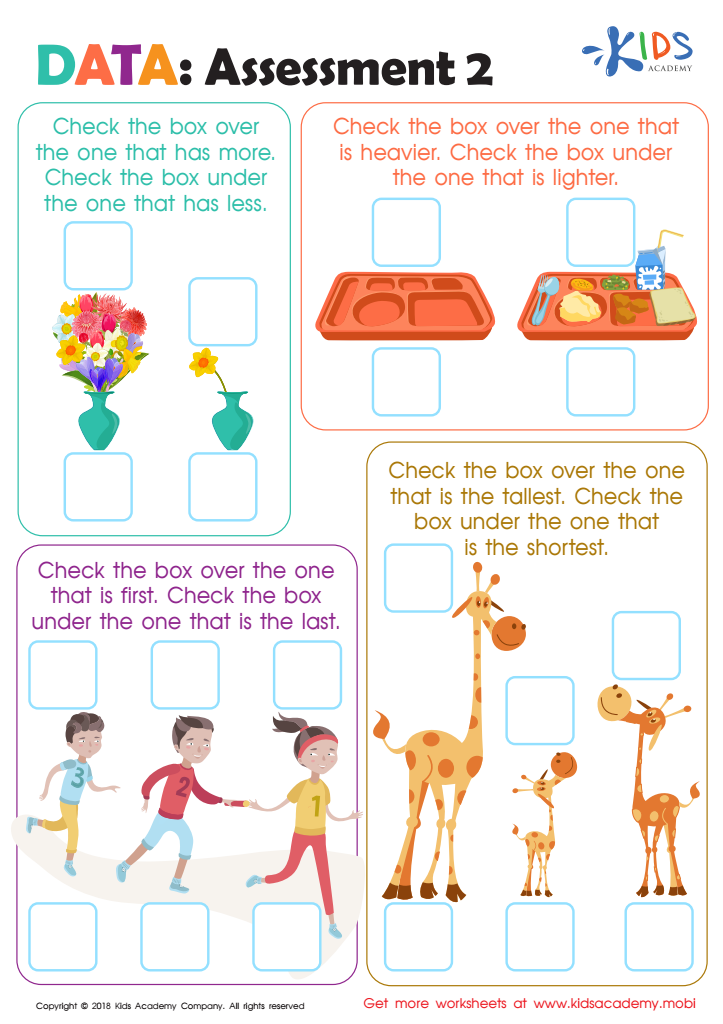
Data: Assessment 2 Worksheet
This printable worksheet tests students' understanding of words related to quantity and measurement, such as "more", "less", "heavy", "light", "first", "last", "tall", and "short". It helps children compare and contrast when solving measurement problems. Ideal for math classes, it encourages students to gain the essential skills needed in subjects like math, science, and reading.
 Assign to My Students
Data: Assessment 2 Worksheet
Worksheet
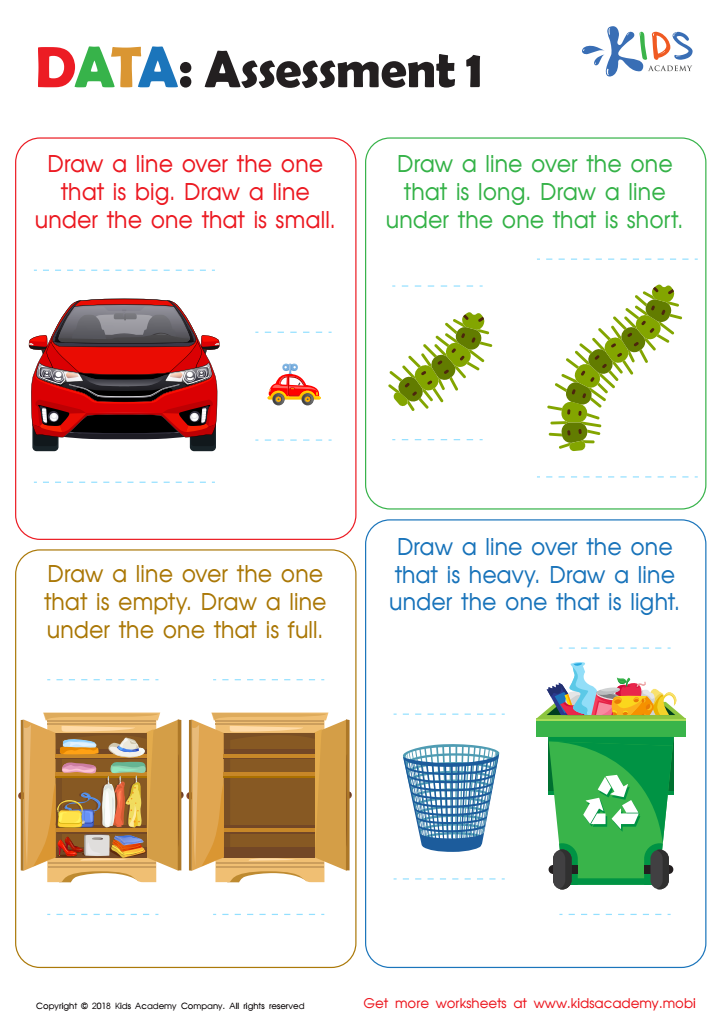
Data: Assessment 1 Worksheet
Assess your students' knowledge of measurement words with this worksheet. Have them compare and describe objects/quantities using words like "big", "small", "long", "short", "empty", "full", "heavy" and "light". Encourage further learning by asking students to provide examples of each word meaning.
Data: Assessment 1 Worksheet
Worksheet
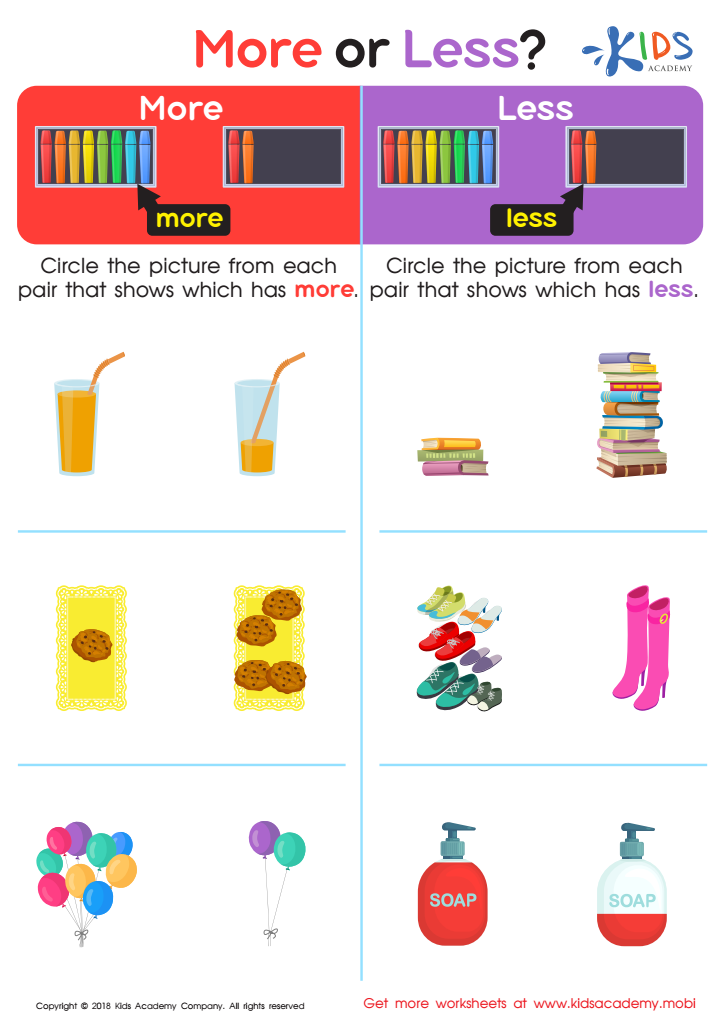
More or Less? Worksheet
Understanding "more or less" can be hard for kids. This PDF uses colorful images to help them learn. By matching the right picture pairs, children can gain a better understanding and strengthen their comparison skills for more complex tasks.
More or Less? Worksheet
Worksheet
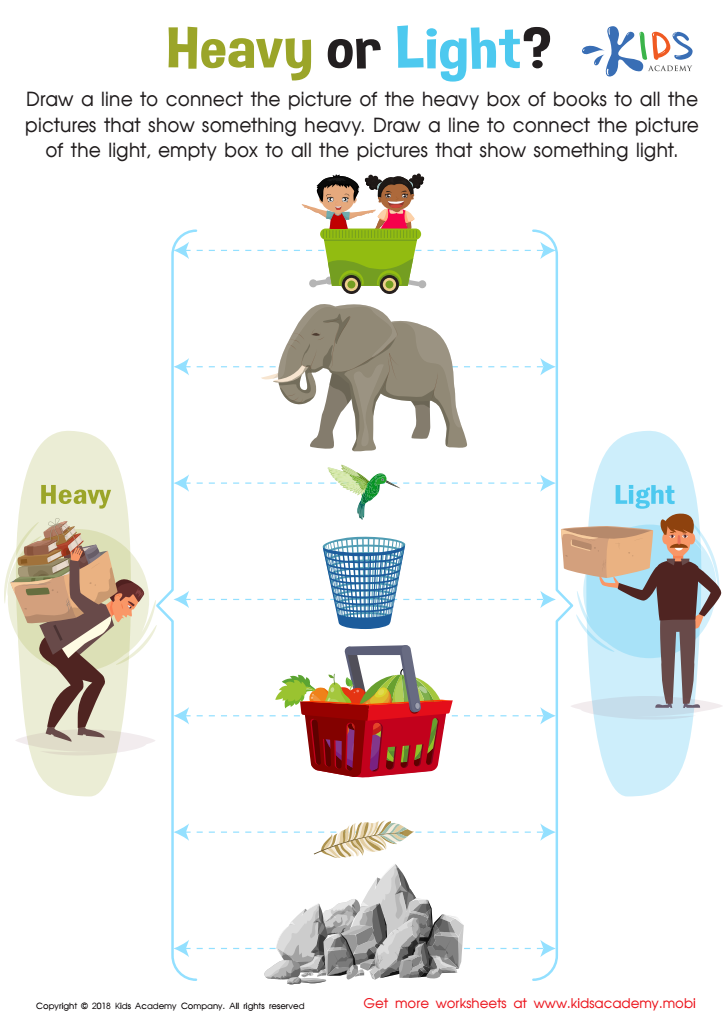
Heavy or Light? Worksheet
Kids can struggle to understand weight comparison, as size and mass matter. This free PDF helps develop fine-motor and hand-eye skills as kids trace lines to match pictures. The familiar pictures create concrete representations, ideal for learning more complex concepts.
Heavy or Light? Worksheet
Worksheet
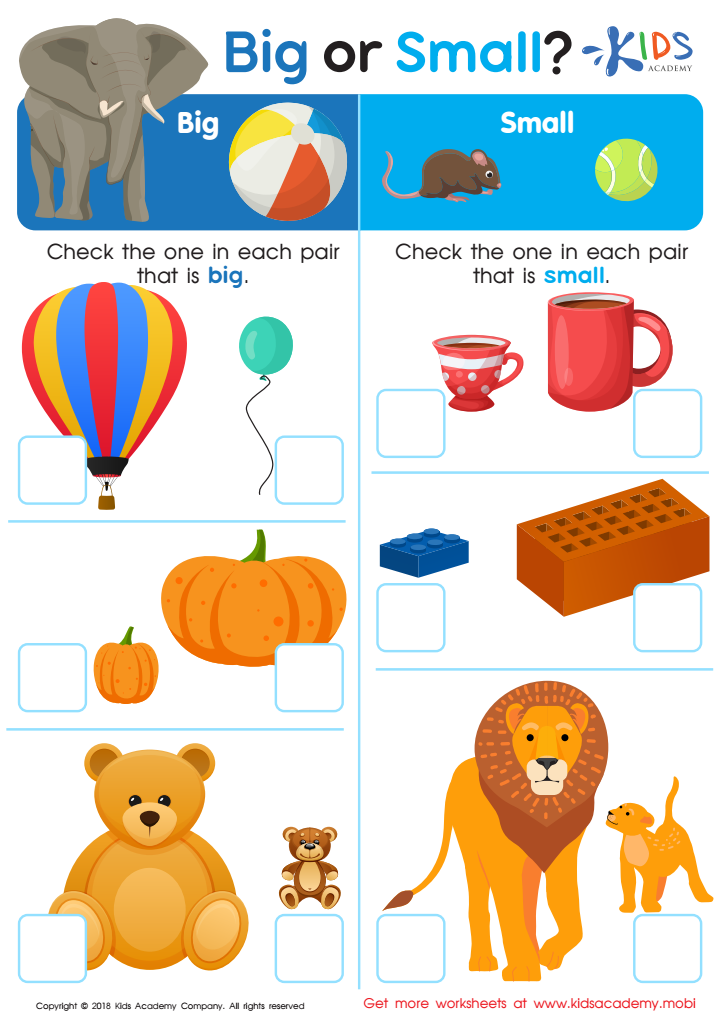
Big or Small? Worksheet
Kids need visuals to understand bigger and smaller concepts. This free PDF worksheet offers fun pictures that let them compare and gain a stronger understanding of sizes. Kids will enjoy it and won't realize they're learning since the pictures are so engaging. It's great preparation for future measurements.
Big or Small? Worksheet
Worksheet
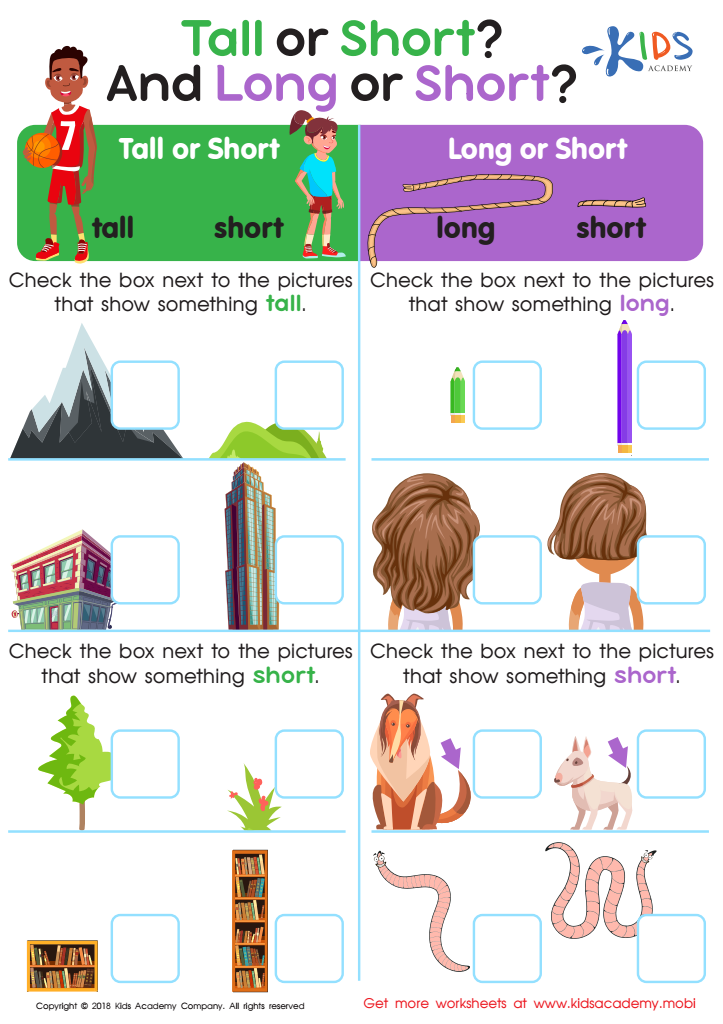
Tall or Short and Long or Short? Worksheet
This worksheet is fun and helpful for kids to understand the difference between height and length. With pictures of familiar objects, they can compare and choose the box with the right answer. This helps them gain skills and a better foundation for future measuring.
Tall or Short and Long or Short? Worksheet
Worksheet
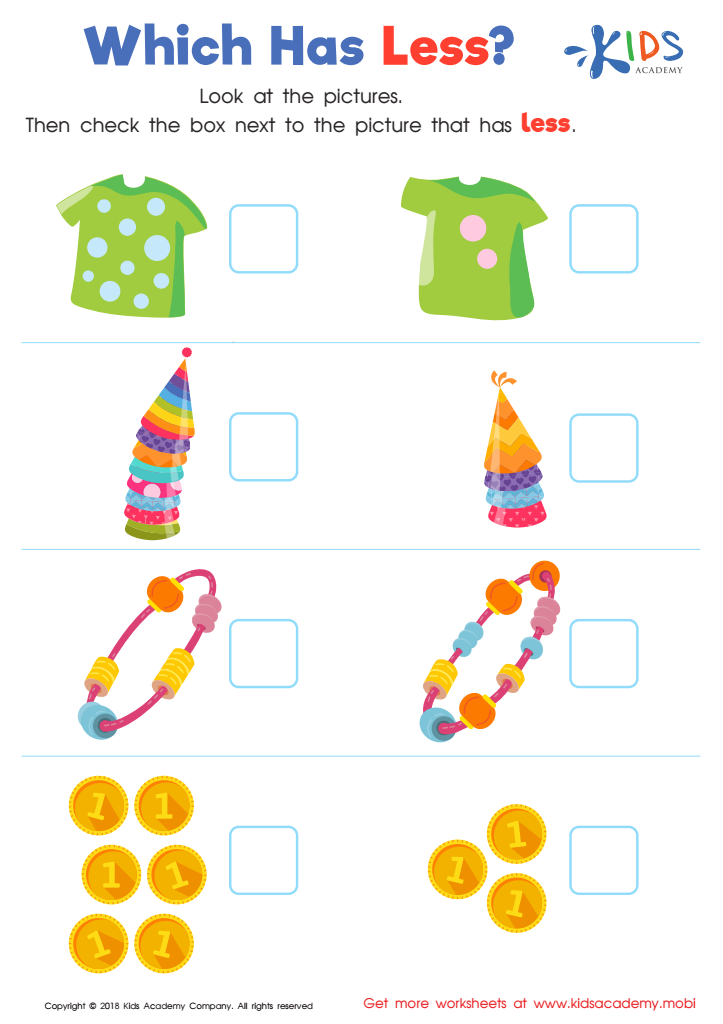
Which Has Less? Worksheet
Kids can develop their number sense by comparing and contrasting objects to identify which has less. This worksheet helps them practice: it's bright and colorful, featuring familiar objects and pictures to count, strengthening basic counting skills. It's the perfect warm-up for comparing and contrasting larger numbers.
Which Has Less? Worksheet
Worksheet
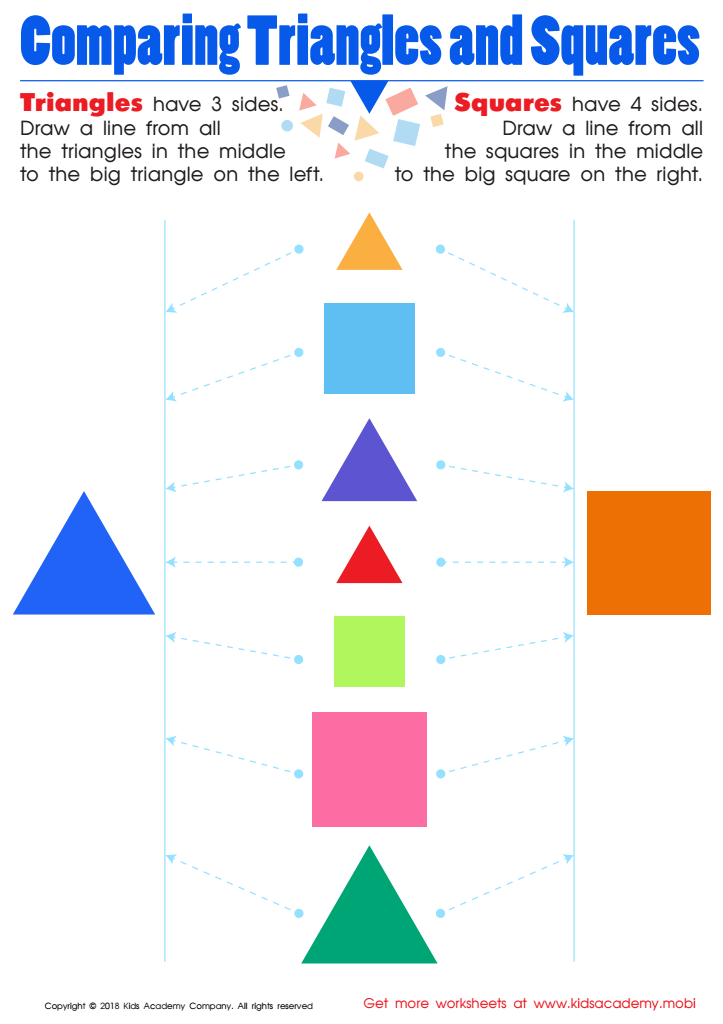
Comparing Triangles Squares Worksheet
Squares and triangles are different in the number of sides they have. Challenge kids to compare them with this fun worksheet! Read the descriptions at the top, then use the left and right shapes to match up the middle ones. Go down the page, joining the middle shapes to the side using the dotted lines!
Comparing Triangles Squares Worksheet
Worksheet
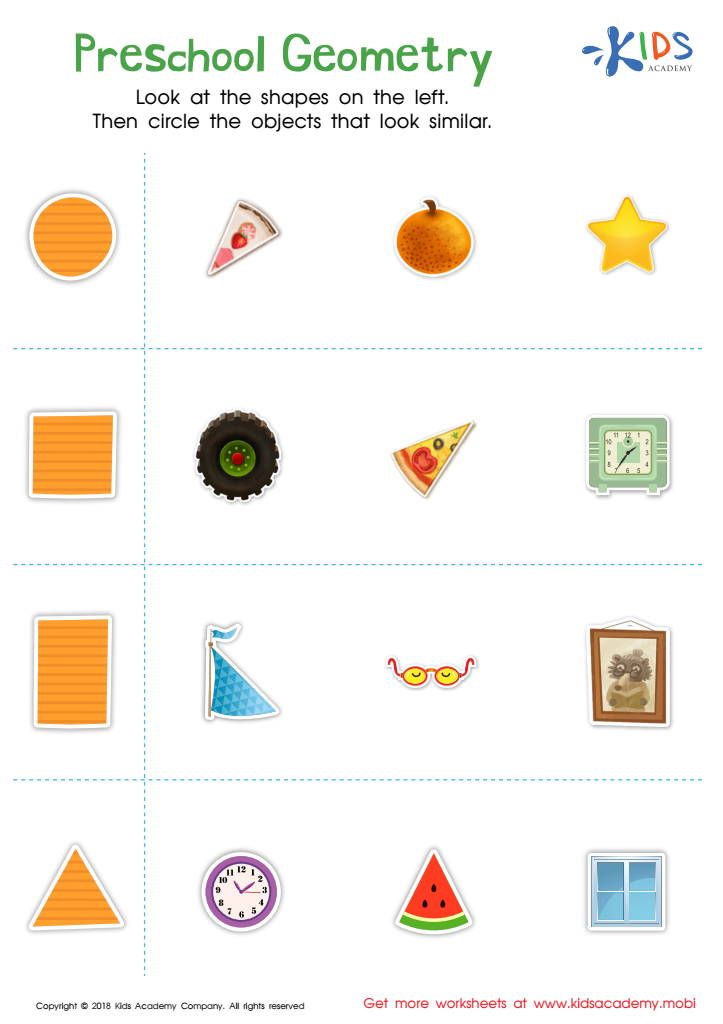
Preschool Geometry Worksheet
This worksheet gives 3rd graders the basics of geometry. Kids match everyday objects to shapes they know, e.g. an orange to a circle, a square to a slice of watermelon and a rectangle to a picture frame. It's a fun way to give them confidence to tackle more complex geometry in the future.
Preschool Geometry Worksheet
Worksheet
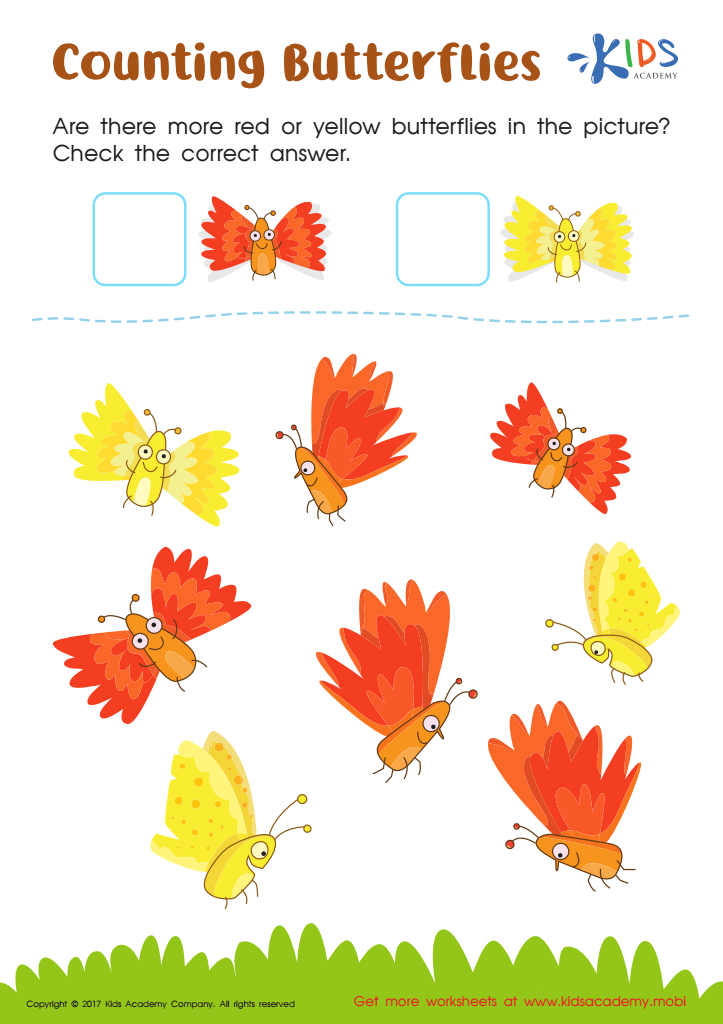
Counting Butterflies Worksheet
Count and compare the butterflies in the picture with your child. How many are red, and how many are yellow? Stimulate thinking and counting skills while having fun. Check the answers when you're done.
Counting Butterflies Worksheet
Worksheet
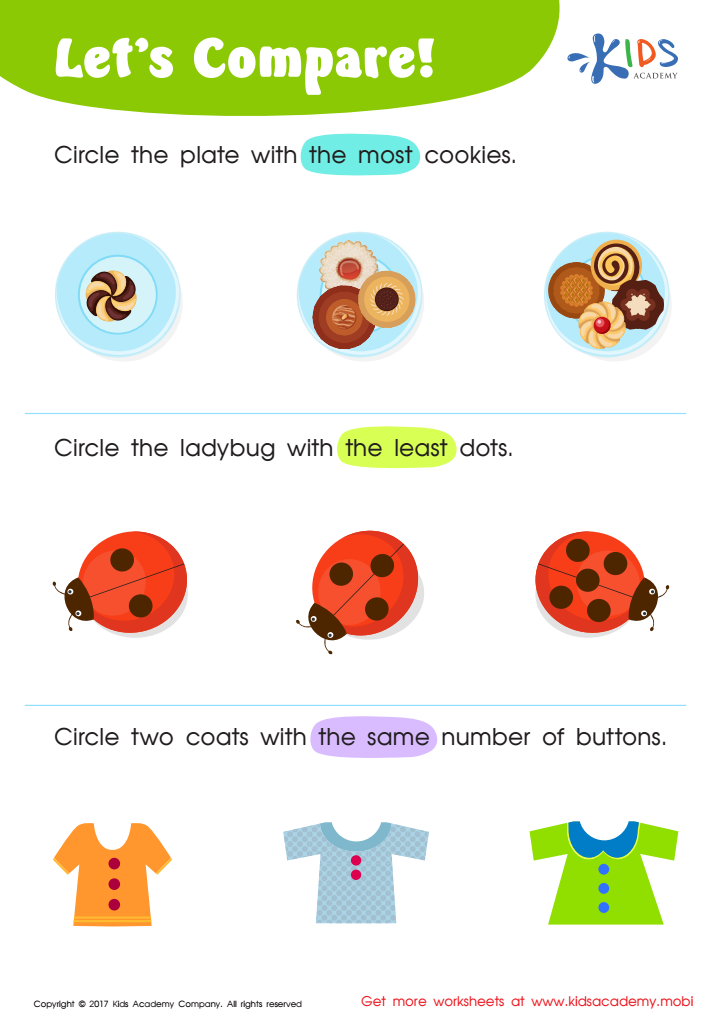
Matching: Classifying Toys by Size Worksheet
.
Have your young one's observation and counting skills ready for this worksheet; carefully look through the images and count the objects, then circle the plates with the least, most or equal number of patterns. Pay attention and have good counting abilities to make this task easy.
Matching: Classifying Toys by Size Worksheet
Worksheet
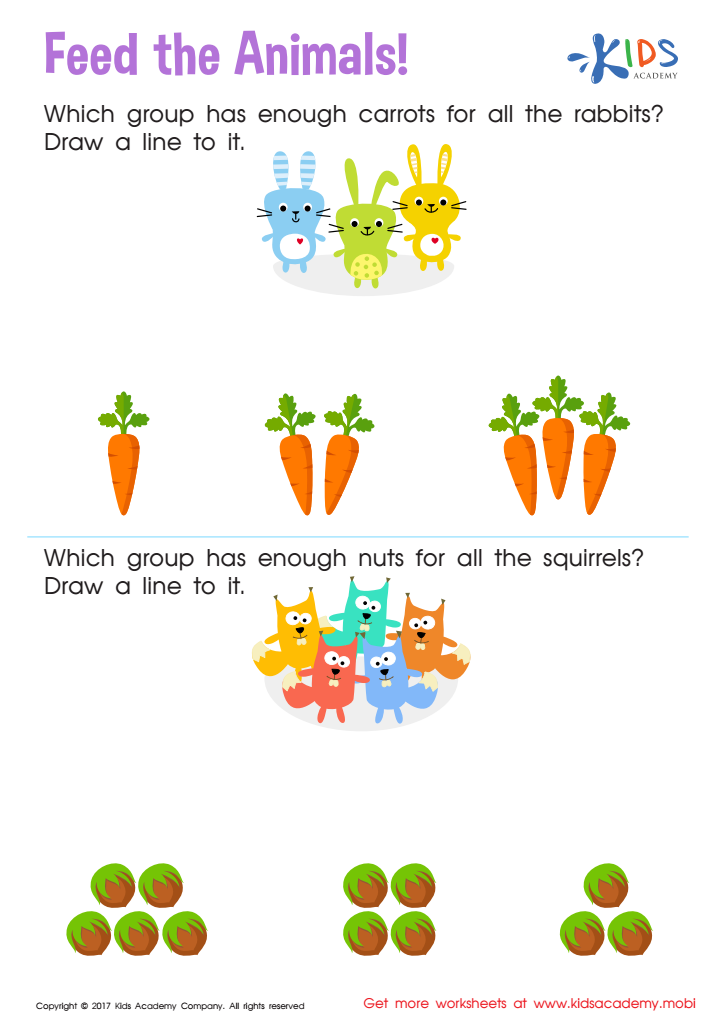
Count and Match: Feed the Animals Worksheet
Learning and growing involves more than just numbers, phonics and comparison. This Feed the Animals worksheet helps kids to exercise their reasoning skills. They must work out how many rabbits and carrots there are, and then repeat the process for the squirrels. This encourages problem solving and counting skills.
Count and Match: Feed the Animals Worksheet
Worksheet
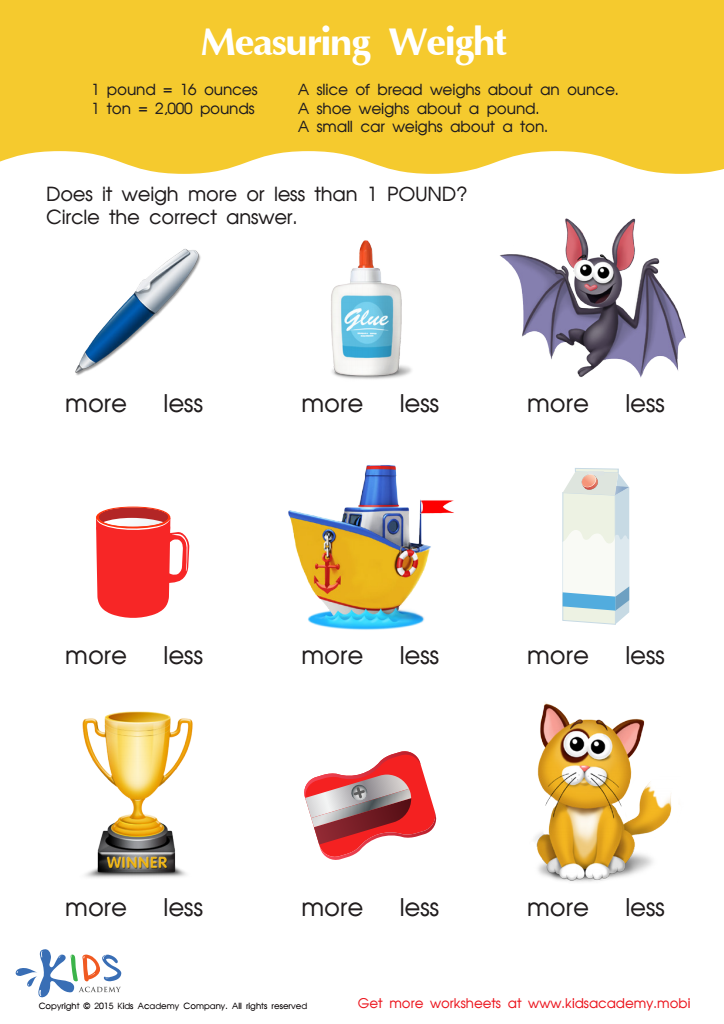
Measuring weight in pounds Worksheet
Help your kids comprehend pounds with our free worksheet. Everyday objects are compared to one pound, helping them understand this weight unit. Find the whole collection of free math worksheets by Kids Academy on our website. Make studying fun for your kids with our free printable worksheets!
Measuring weight in pounds Worksheet
Worksheet
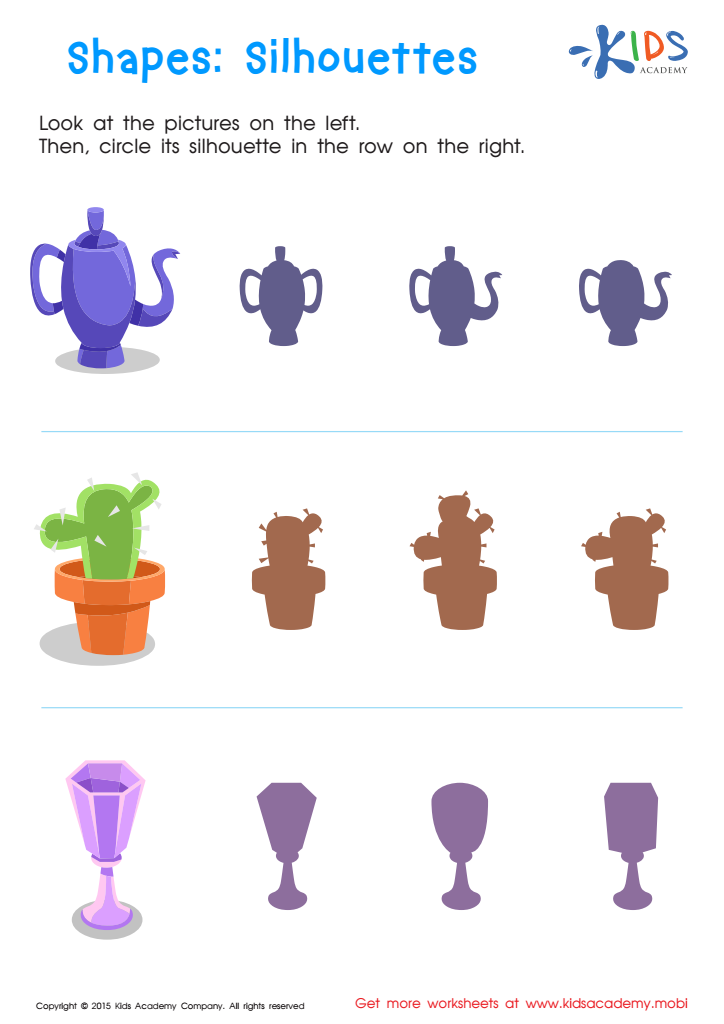
Silhouettes – Shapes Worksheet
Kids can have fun while learning to compare sizes with this silhouettes shapes worksheet! Matching pictures to silhouettes helps them build early math skills, while enjoying the activity!
Silhouettes – Shapes Worksheet
Worksheet
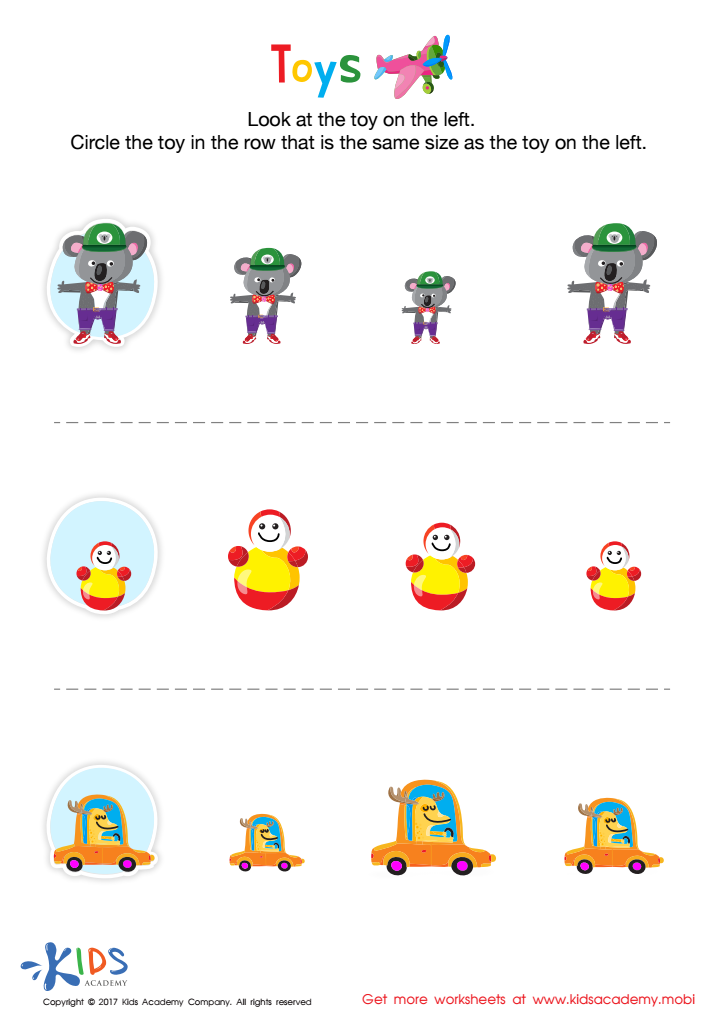
Matching: Classifying Toys by Size Worksheet
Sorting worksheets are an effective way to help your preschooler learn life and educational skills. Spatial awareness, direction recognition, and reading directions all help build a strong foundation for future educational success.
Matching: Classifying Toys by Size Worksheet
Worksheet
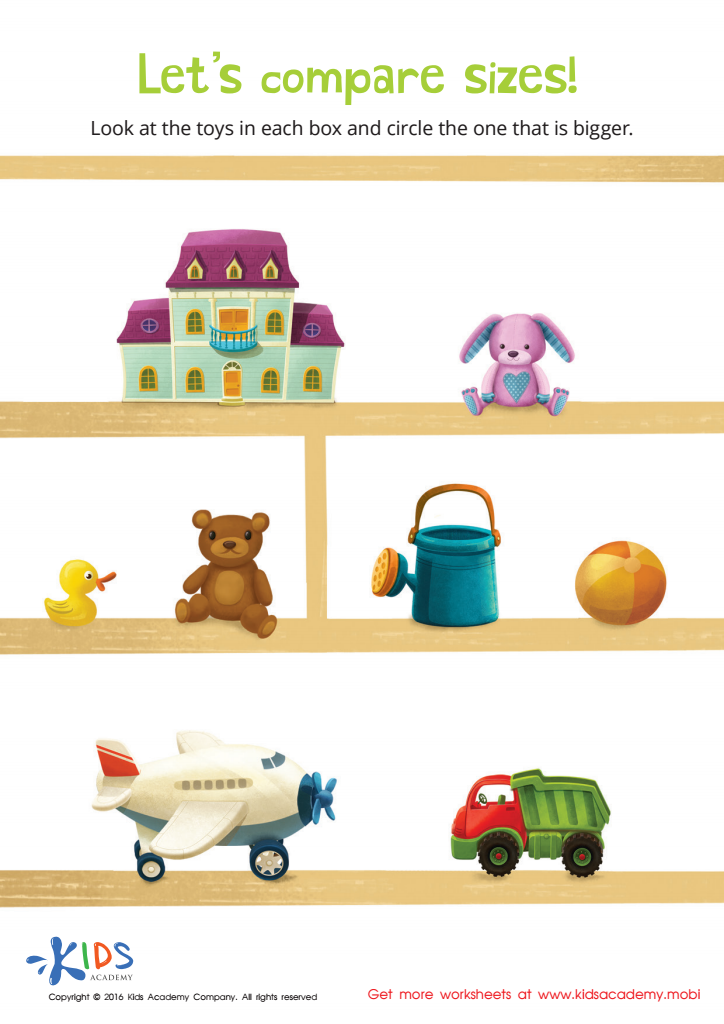
Classifying by Size Sorting Worksheet
Help your preschooler recognize differences in size using this fun worksheet! Your child will engage in important spatial recognition and problem-solving skills while talking with you about objects that can be small or large. Enjoy the vibrant pictures together!
Classifying by Size Sorting Worksheet
Worksheet
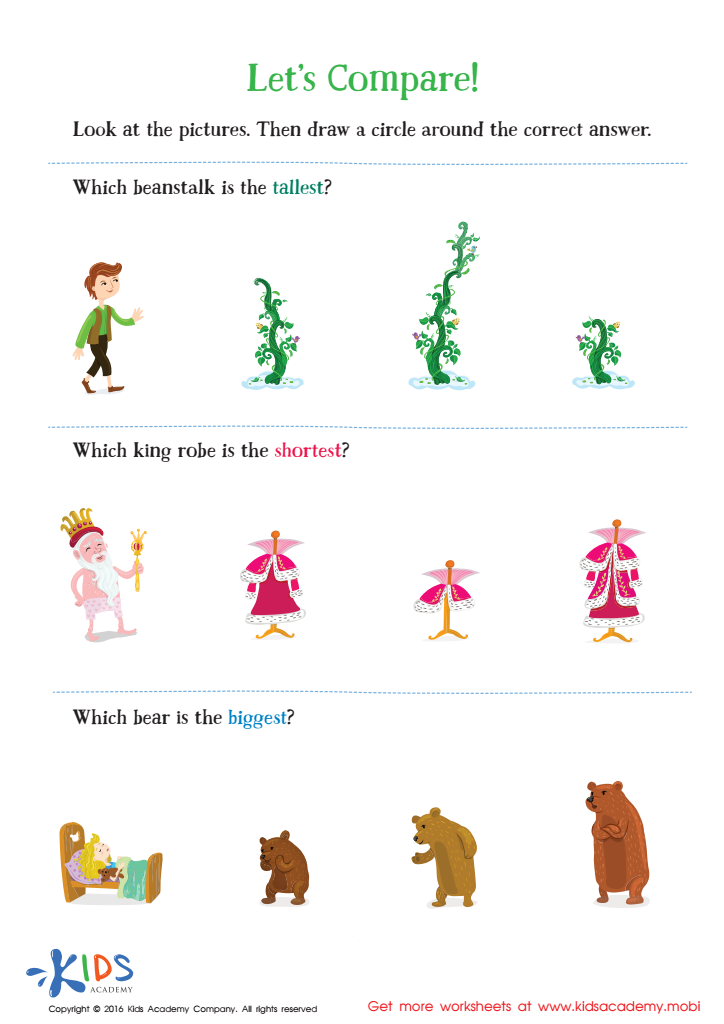
Fairy Tale Worksheet: Let's Compare
Preschoolers need to recognize different sizes of objects. This worksheet combines fun fairy tales with size practice, helping them read, problem solve, and sort through pictures. Your child will love the images and be eager to complete it. Enhance their learning by talking about the tales to build comprehension.
Fairy Tale Worksheet: Let's Compare
Worksheet
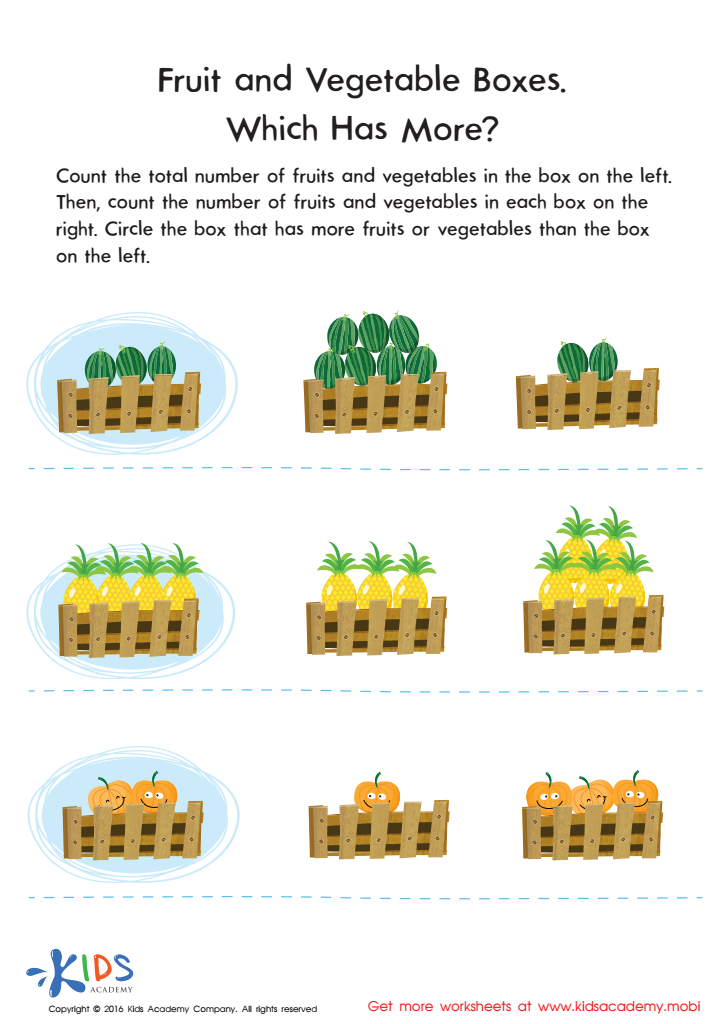
Which Has More? Size Worksheet
This worksheet is perfect for your child to practice critical thinking and logical reasoning. Your child will count and compare the fruits and veggies in the crates to decide which one has more. They will use complex cognitive skills and practice following precise rules. Guide them through the directions and help keep their focus, while enjoying the images.
Which Has More? Size Worksheet
Worksheet
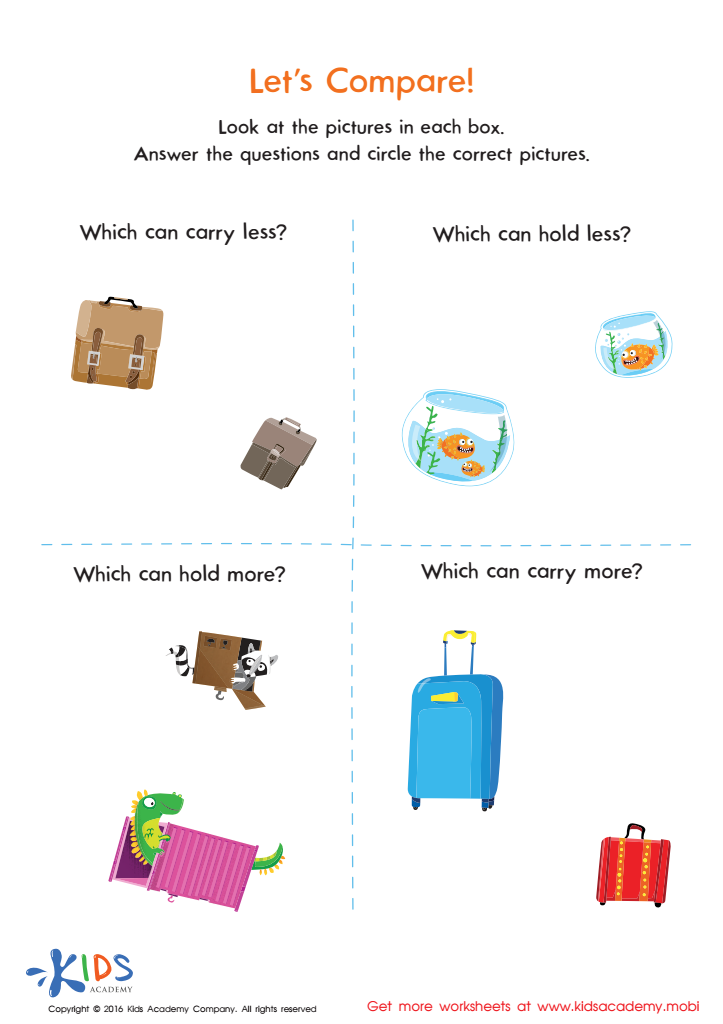
Let's Compare Worksheet: Big or Small
This worksheet will help your child gain an awareness of simple geometry and strengthen cognitive skills. Visualizing objects in 3D and comparing sizes helps to practice solving problems mentally and build analytical skills. Let's Compare worksheet will challenge your child to think hard.
Let's Compare Worksheet: Big or Small
Worksheet
Join Kids Academy for Free
Who is primarily going to use this learning content?


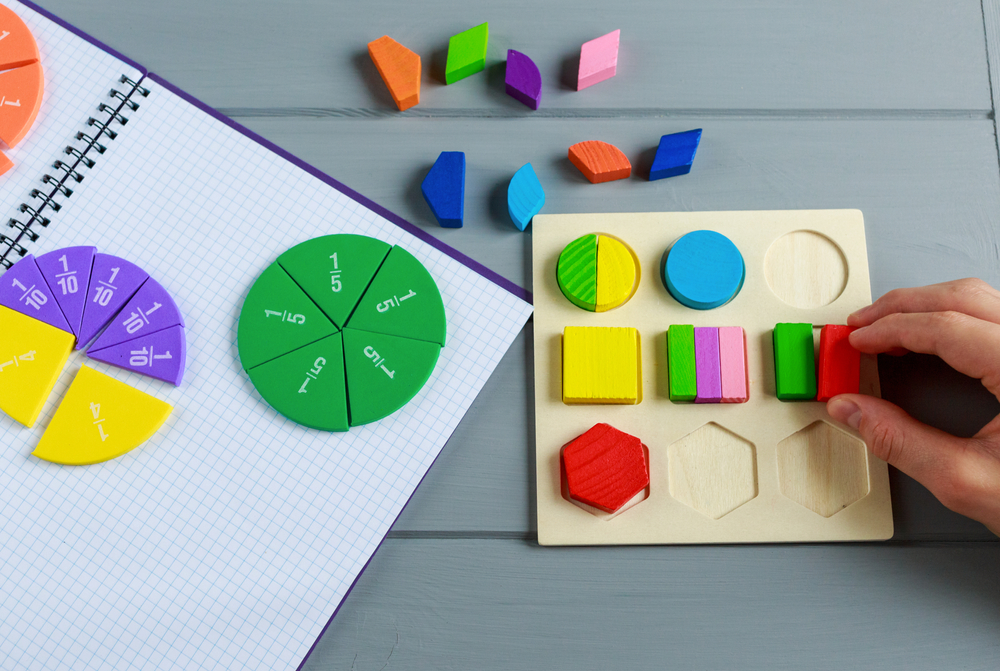





Comparison worksheets designed for children ages 3-4 serve as an essential foundation in early childhood education, offering a unique blend of benefits that cater specifically to the developmental needs of young learners. At this critical stage, children are just beginning to explore the world around them, making it the perfect time to introduce concepts of comparison in a fun and engaging way.
Firstly, comparison worksheets help to develop critical thinking skills in young minds. By engaging with materials that ask them to identify differences and similarities between objects, children learn to observe and evaluate, which are foundational skills for problem-solving and decision-making. These worksheets make comparison for ages 3-4 not only educational but also enjoyable, thereby fostering a love for learning early on.
Furthermore, these worksheets enhance language development. As children discuss their observations, they learn new words and how to express their thoughts more effectively. This bolsters their vocabulary and communication skills, setting a strong linguistic foundation.
In terms of cognitive development, comparison worksheets encourage children to categorize and classify, which are important for mathematical reasoning and scientific thinking. Through playful comparison, children ages 3-4 learn to recognize patterns and sequences, which are critical for understanding more complex concepts later in their educational journey.
Moreover, comparison worksheets promote visual and spatial awareness. Children learn to pay attention to detail, an essential skill for reading and writing. By distinguishing between different shapes, sizes, and colors, they develop a keen eye for detail, which is beneficial across various learning areas.
In conclusion, comparison worksheets for ages 3-4 are not just about learning to tell apart and match objects; they are a fundamental tool in nurturing well-rounded individuals equipped with the early skills necessary for a lifetime of learning and discovery. Through these engaging activities, young learners are set on a path toward academic success and personal growth.








