Counting Worksheets for Ages 3-7 - Page 2
38 filtered results
-
From - To
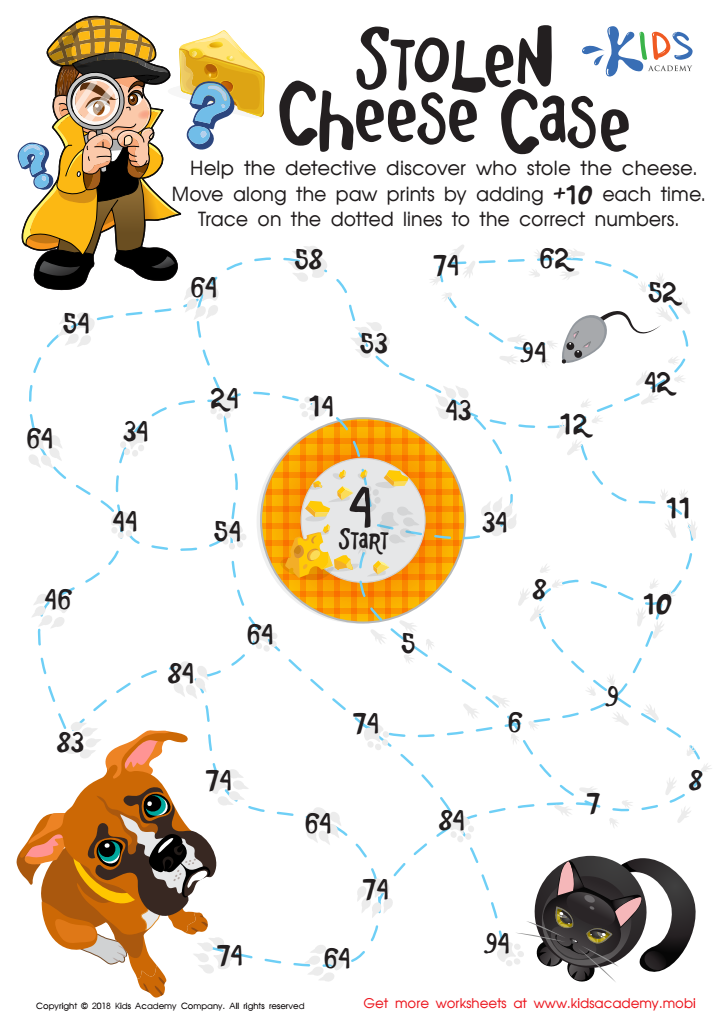
Stolen Cheese Case Maze Worksheet
 Assign to My Students


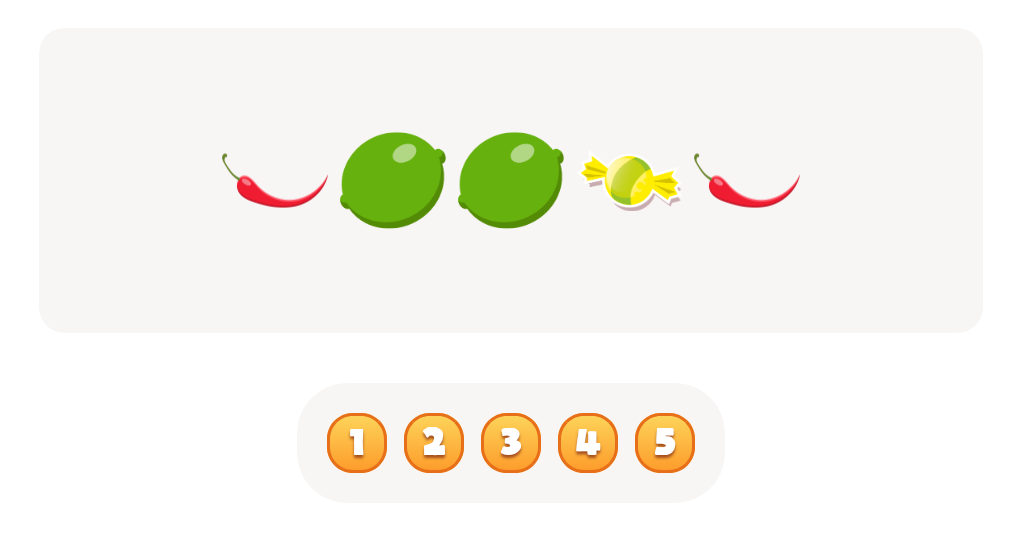
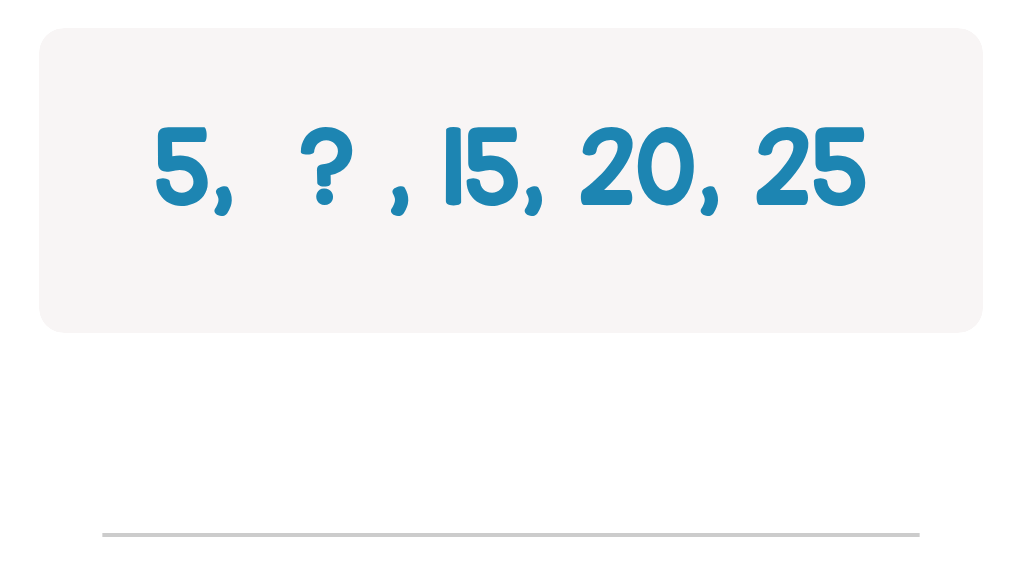
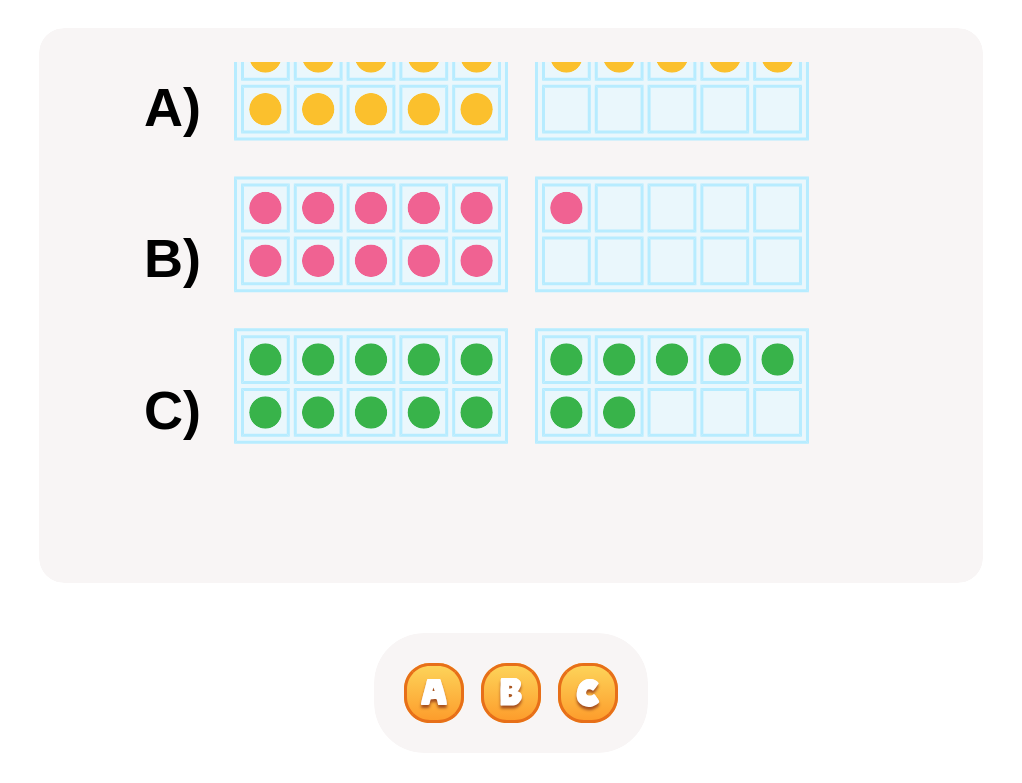
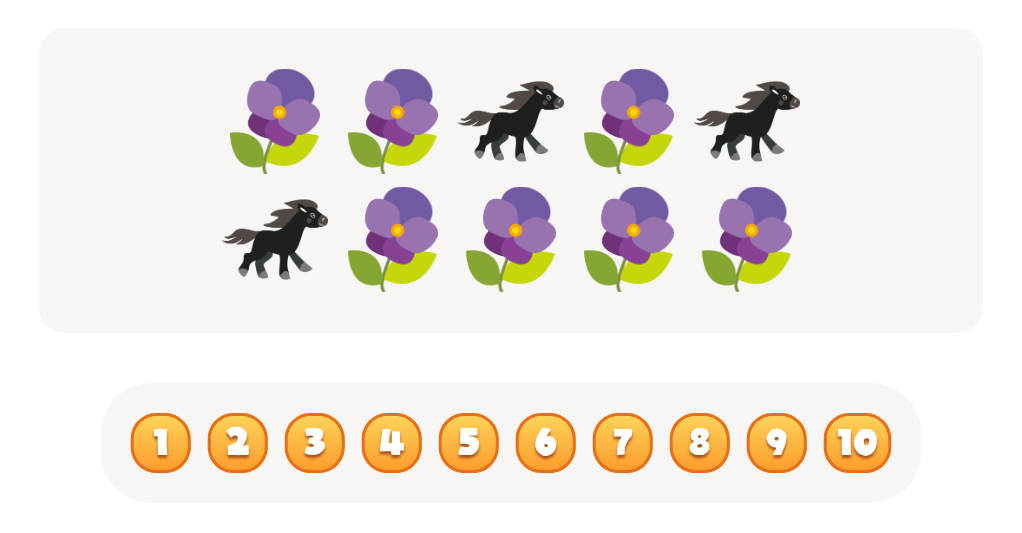
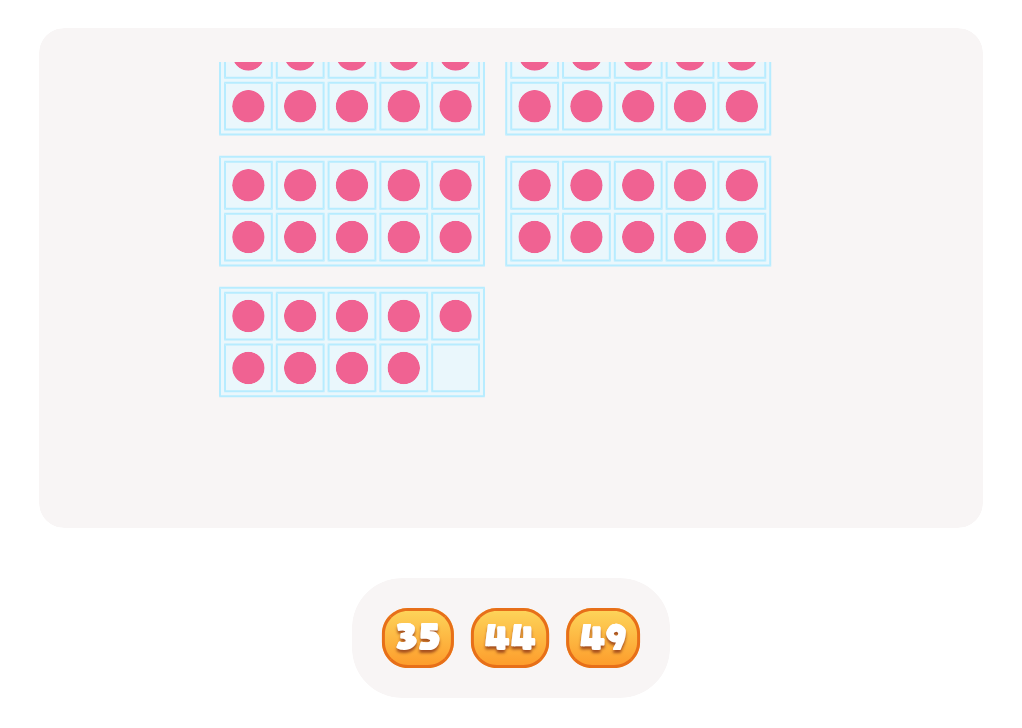
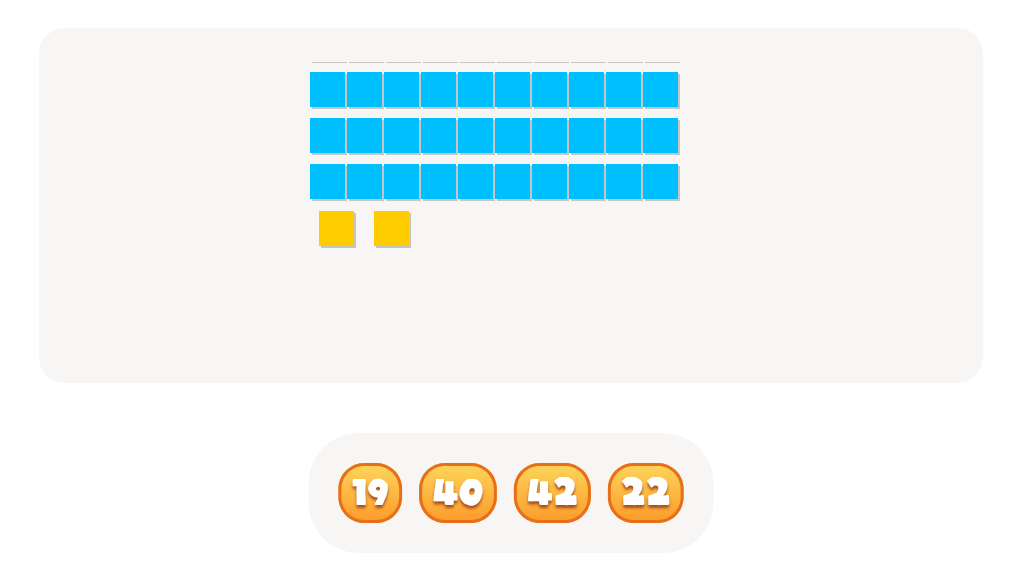
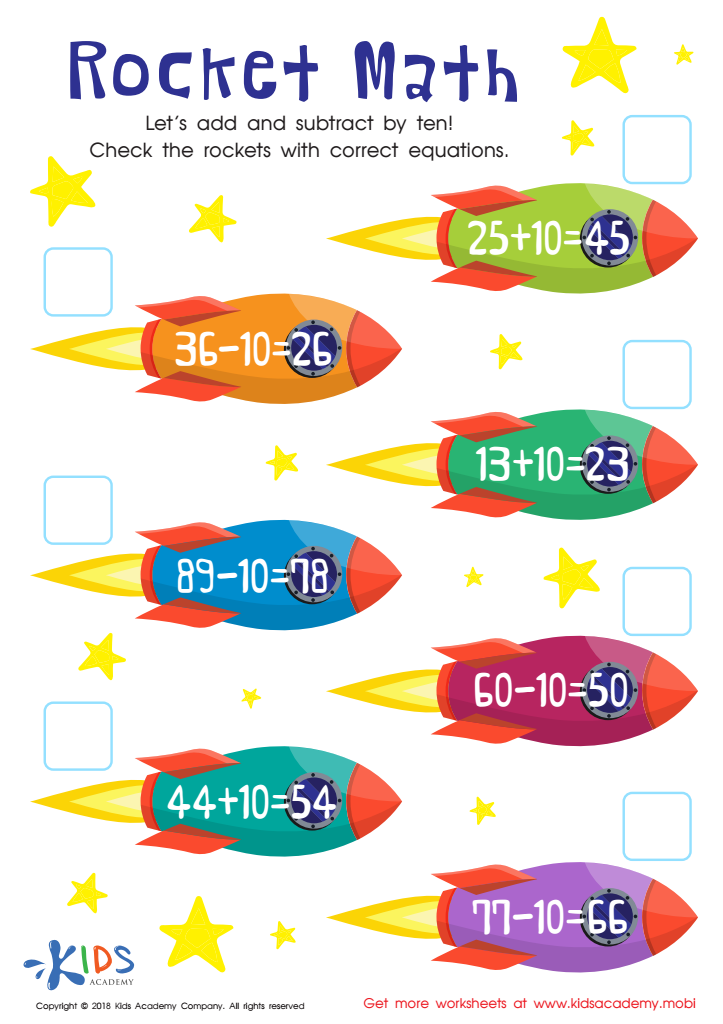
Rocket Math Worksheet
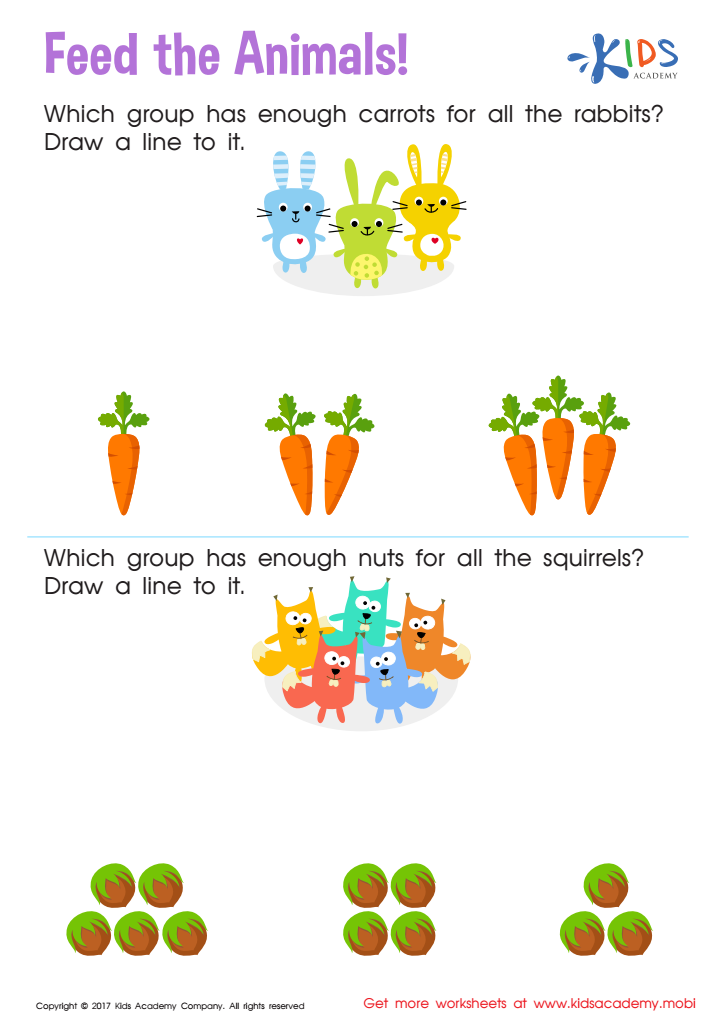
Count and Match: Feed the Animals Worksheet
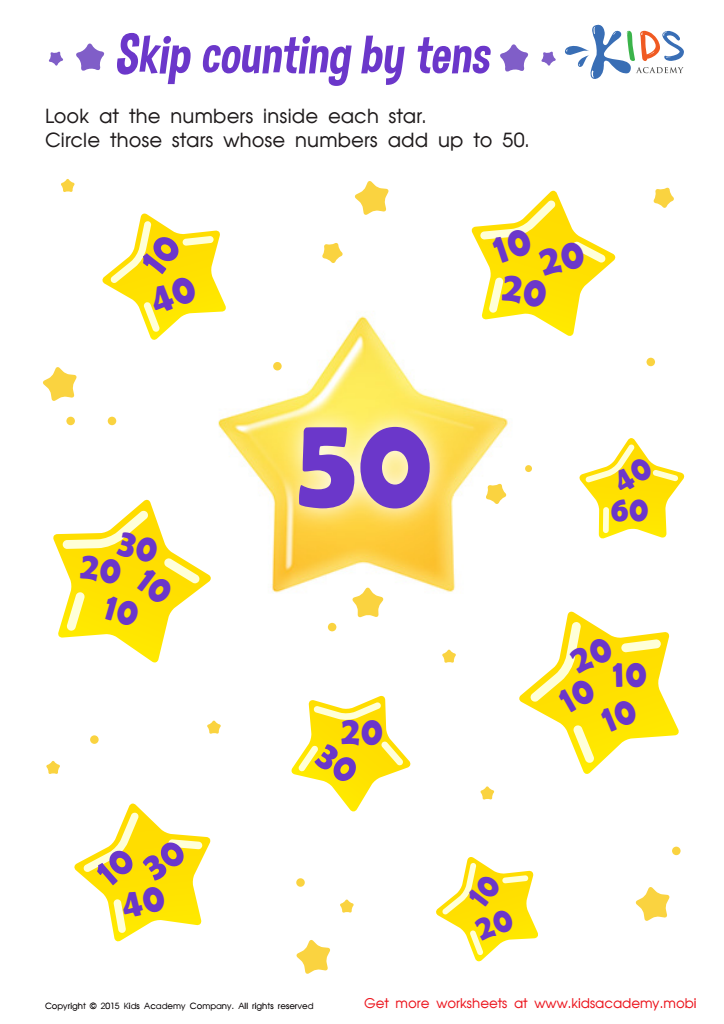
Learn Dozens: Skip Counting by Tens Printable
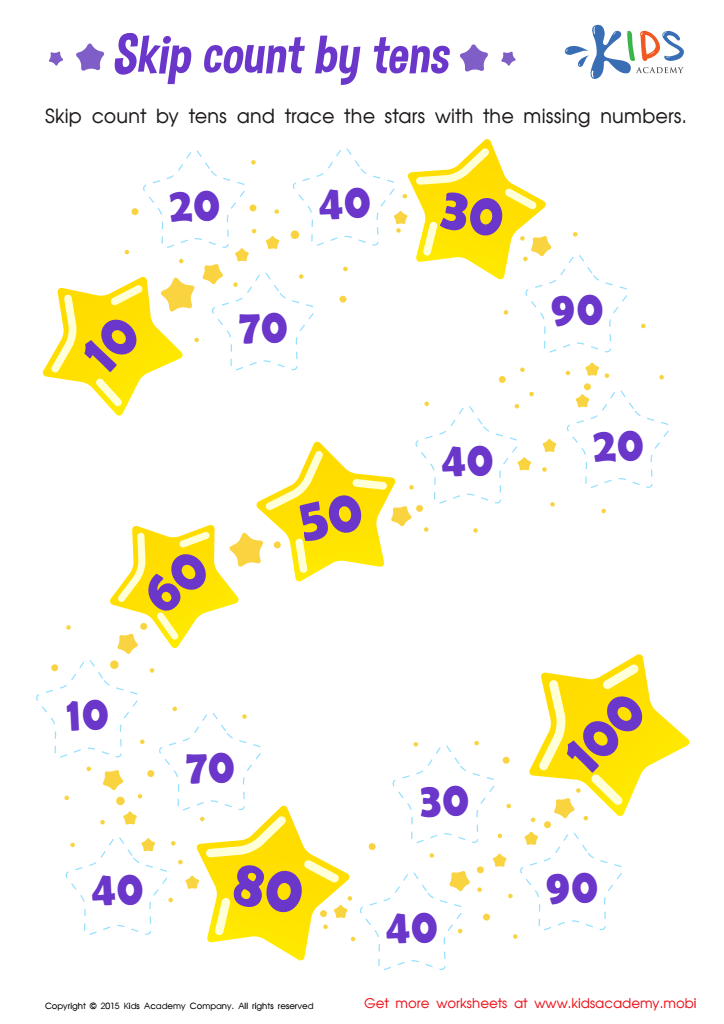
Learn dozens: Skip Count by Tens Printable
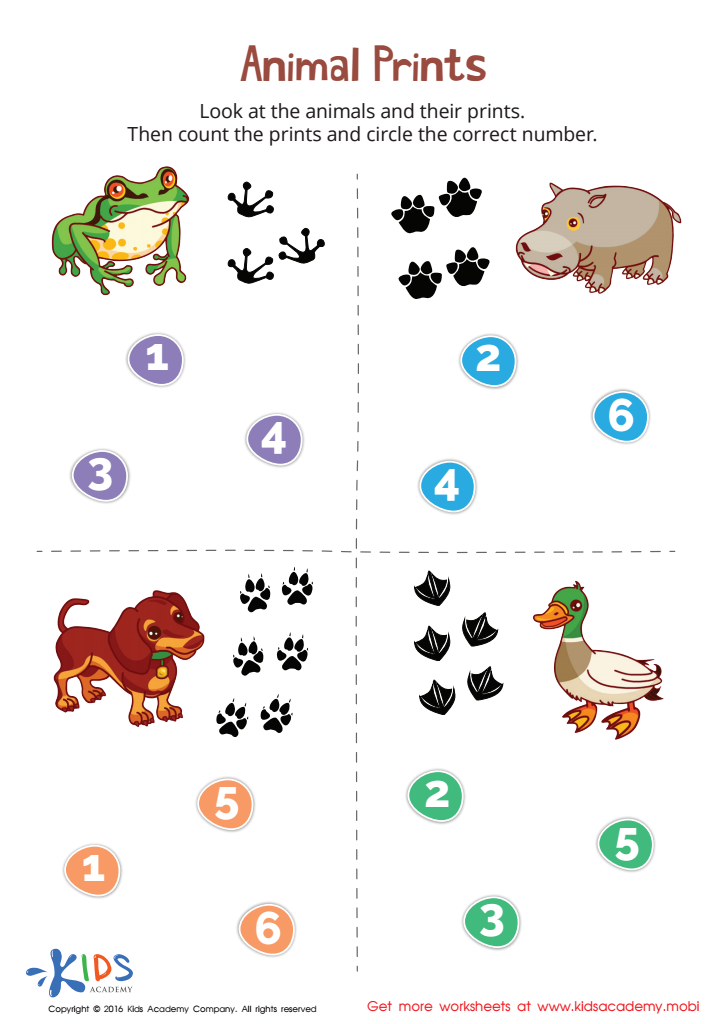
Animal Prints Match-Up Worksheet
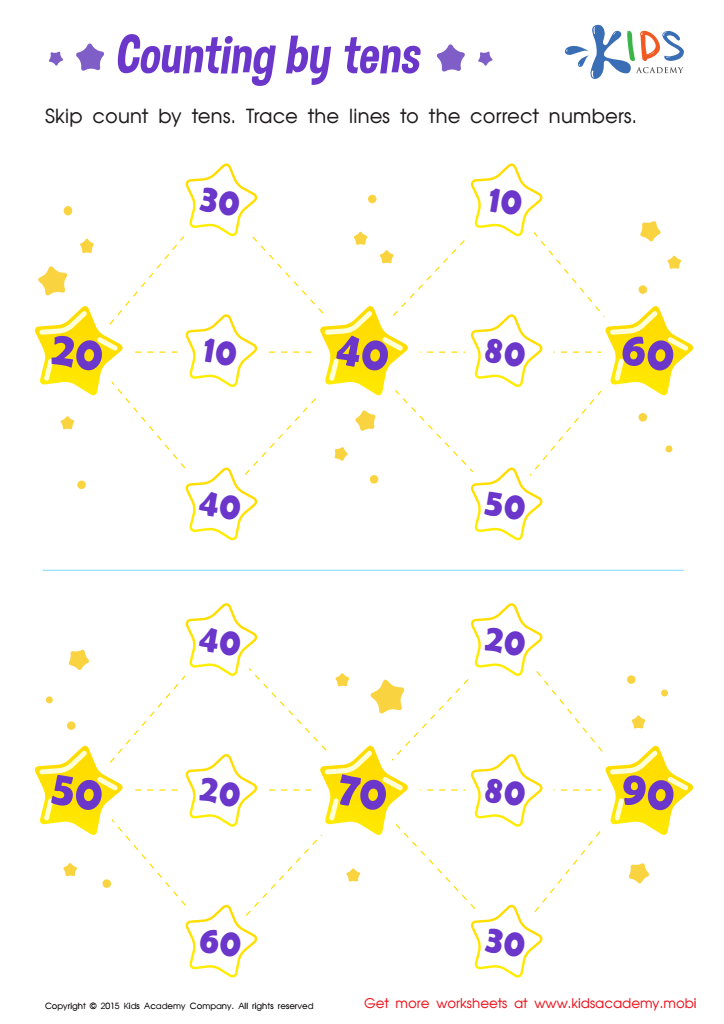
Learn Dozens: Counting by Tens Printable
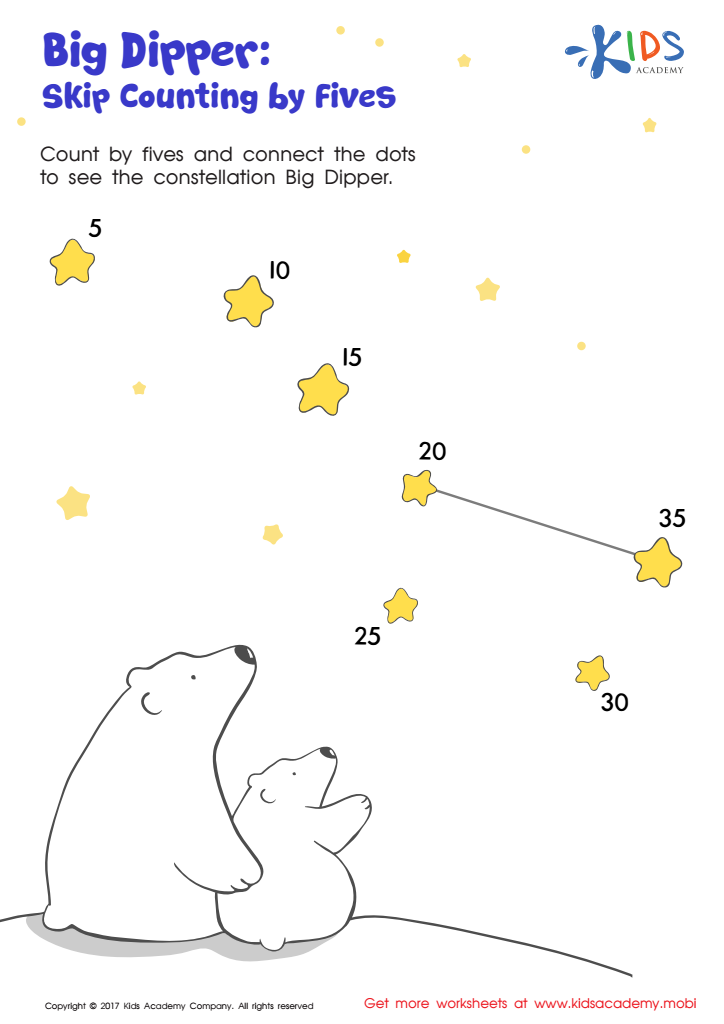
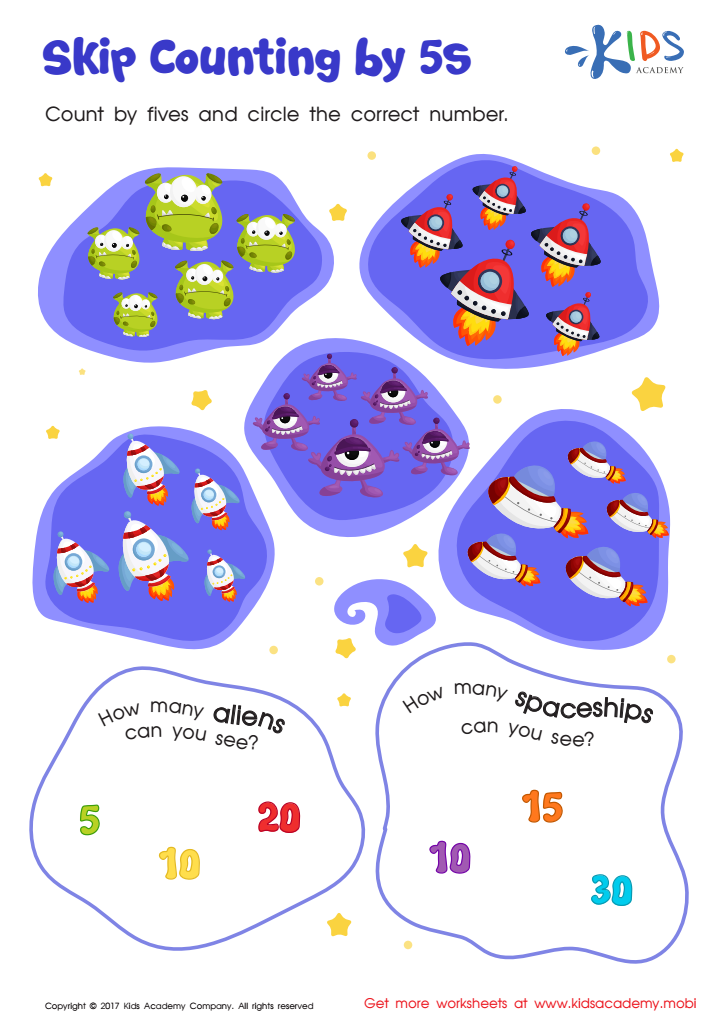
Skip Counting by 5s: Aliens and Spaceships Printable
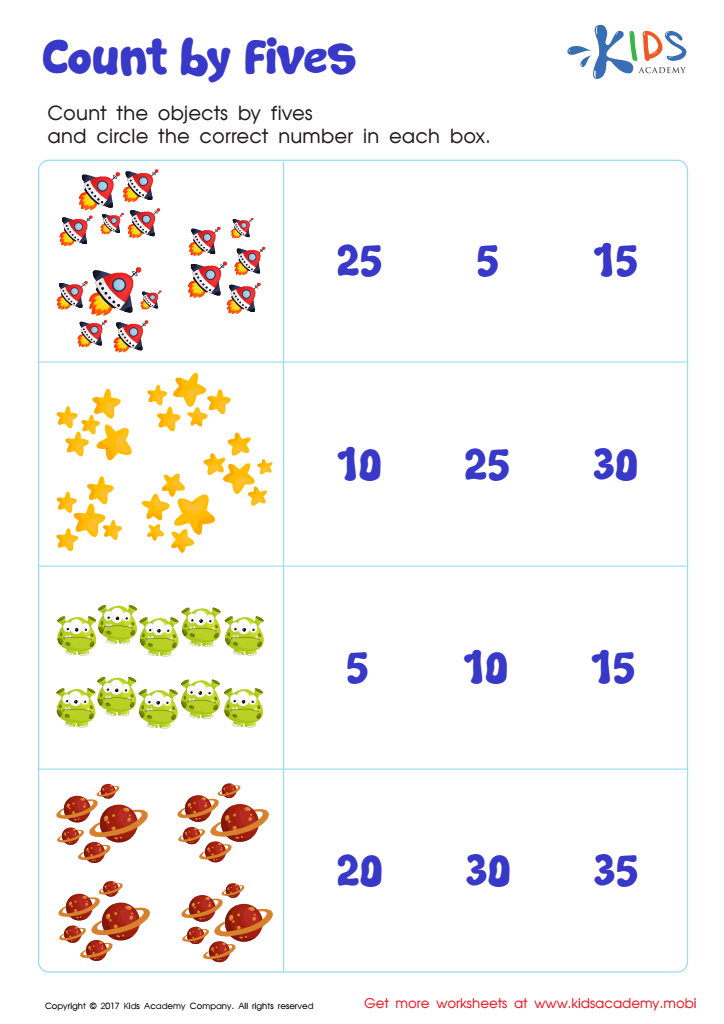
Skip Counting by 5s: Space Math Printable
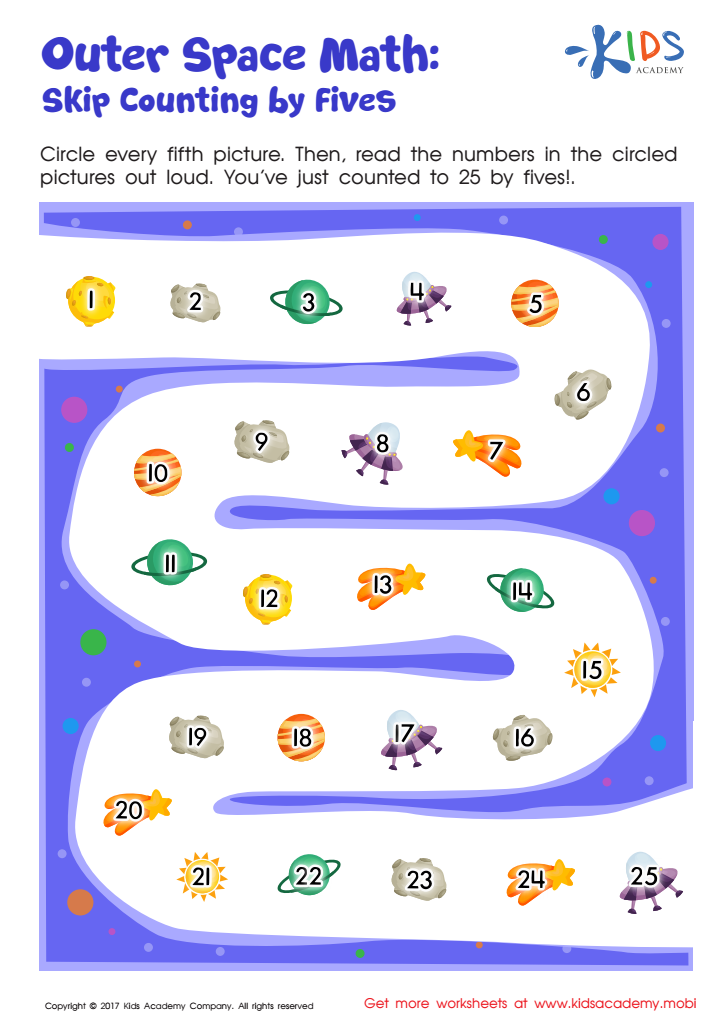
Skip Counting by 5s: Outer Space Math Printable
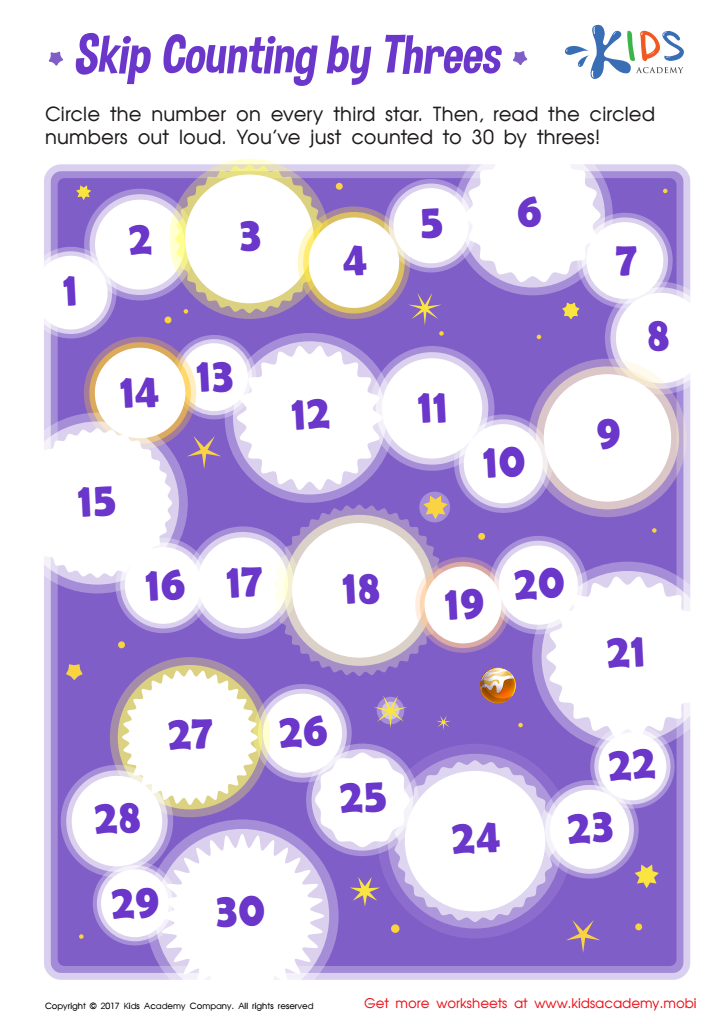
Skip Counting By Three Printable
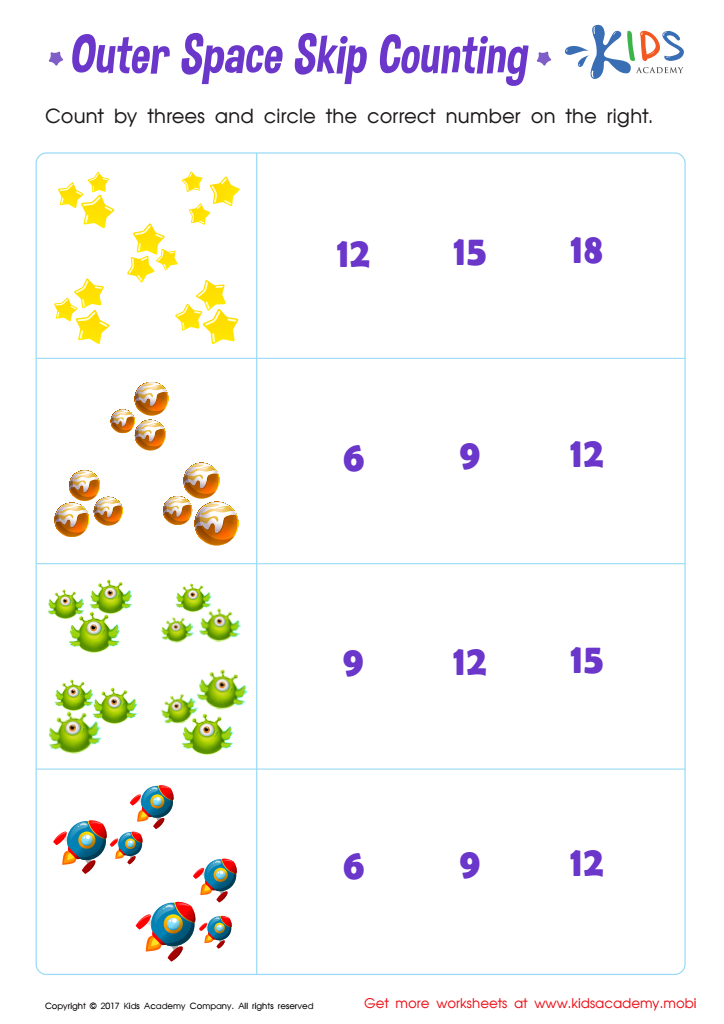
Skip Counting by 3s: Outer Space Skip Counting Printable








Counting for children aged 3-7 is foundational for their mathematics understanding and overall cognitive development. At this developmental stage, children's brains are highly receptive to learning new concepts, and number recognition and counting build the scaffolding for future mathematical learning.
When children engage in counting activities, they are not just learning to recite numbers; they are also developing number sense. This includes recognizing quantities, understanding the relationship between numbers, and grasping basic concepts like more or less, which are critical for more complex arithmetical operations later on.
Counting also enhances other vital skills. It supports the development of fine motor skills when combined with physical activities such as counting beads or blocks. Furthermore, it bolsters memory and attention span, as children need to keep track of what they have counted already. Socially, engaging in counting games or activities with peers helps improve communication skills and teamwork.
For parents and teachers, fostering a love for counting in early childhood sets a strong academic foundation, boosts confidence in mathematical abilities, and encourages a positive attitude towards learning. Early proficiency in counting predicts future academic success, making it crucial to integrate counting in daily activities like play, meals, and reading time. By doing so, adults are nurturing not just mathematicians but well-rounded, curious learners.








