Vocabulary enhancement Worksheets for Ages 6-7 - Page 7
230 filtered results
Difficulty Level
Grade
Age
-
From - To
Subject
Activity
Standards
Favorites
With answer key
Interactive
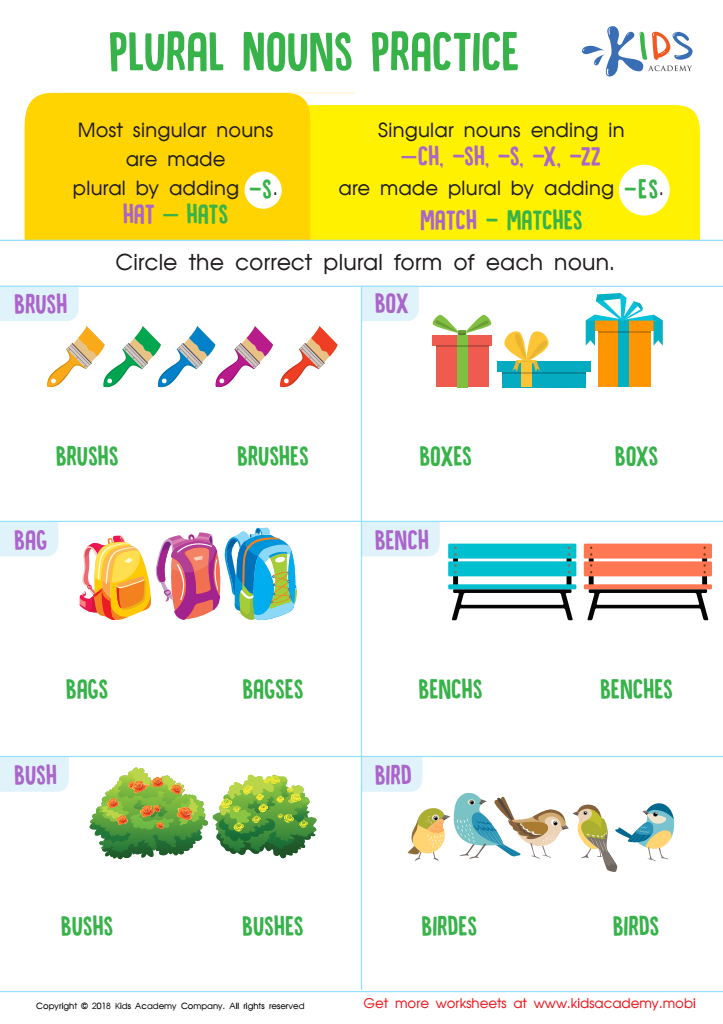
Plural Nouns Practice Worksheet
Explain to your child that most singular nouns become plural by adding "-s". E.g. "cat"->"cats". For words ending in "-ch", "-sh", "-s", "-x", or "-zz", add "-es". E.g. "buzz"->"buzzes". Then, get them to circle the right plural form of each noun on the worksheet.
 Assign to My Students
Plural Nouns Practice Worksheet
Worksheet
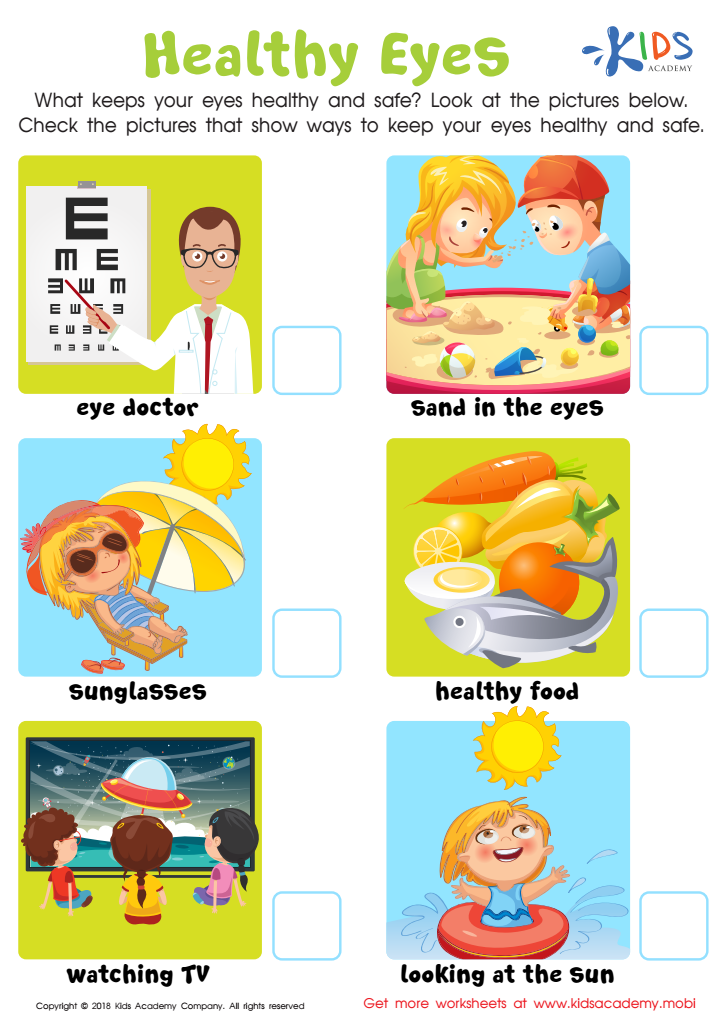
Healthy Eyes Worksheet
Does your child know how to care for their eyes? Help them understand with this worksheet. Look through the pictures together and discuss the different ways to keep the eyes healthy and safe. These include visits to the doctor, wearing sunglasses, and eating healthy food.
Healthy Eyes Worksheet
Worksheet
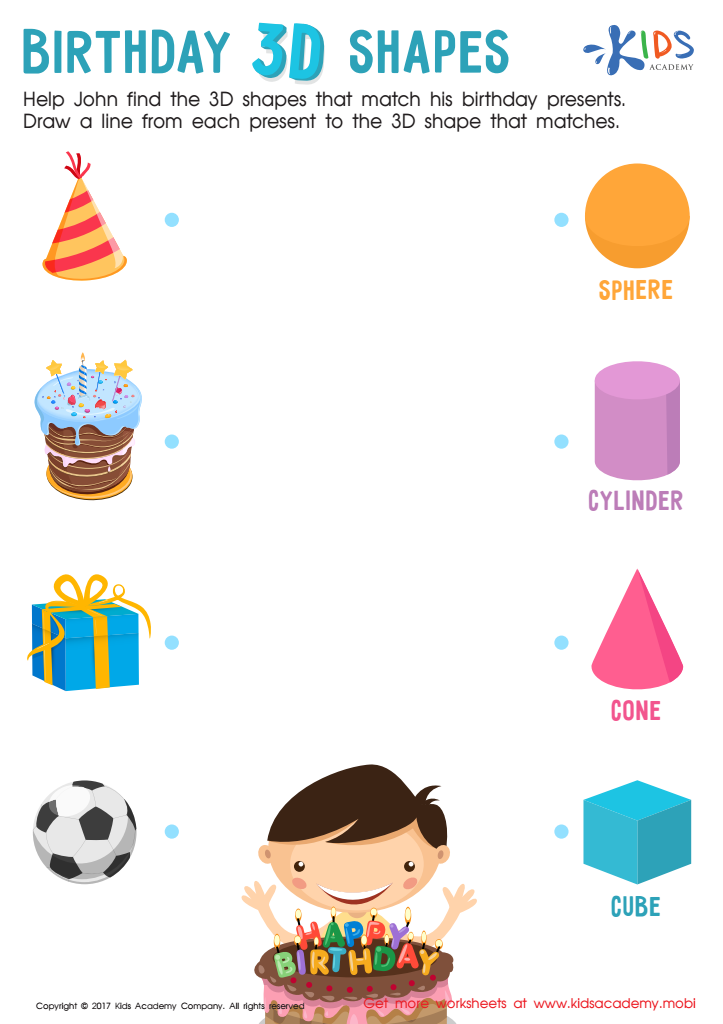
Birthday 3D Shapes Worksheet
It's John's birthday and he needs your help. Ask your kids to draw a line from each present to the matching 3D shape. First, check they understand the difference between 2D and 3D shapes. Then, they can help John figure out which 3D shape matches each present.
Birthday 3D Shapes Worksheet
Worksheet
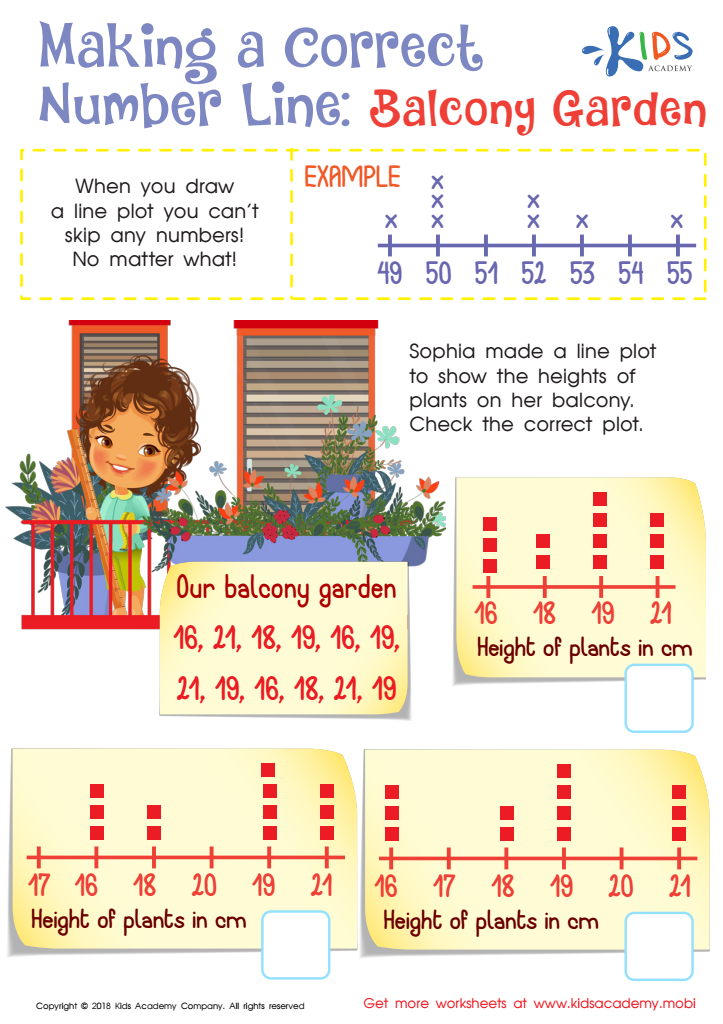
Making a Correct Number Line: Balcony Garden Worksheet
Teach your child to draw and identify a line plot with this worksheet. Have them help Sophia check her plot for the heights of plants in her balcony, ensuring no numbers are skipped. Line plots are a great way to quickly organize information and an essential skill your child needs.
Making a Correct Number Line: Balcony Garden Worksheet
Worksheet
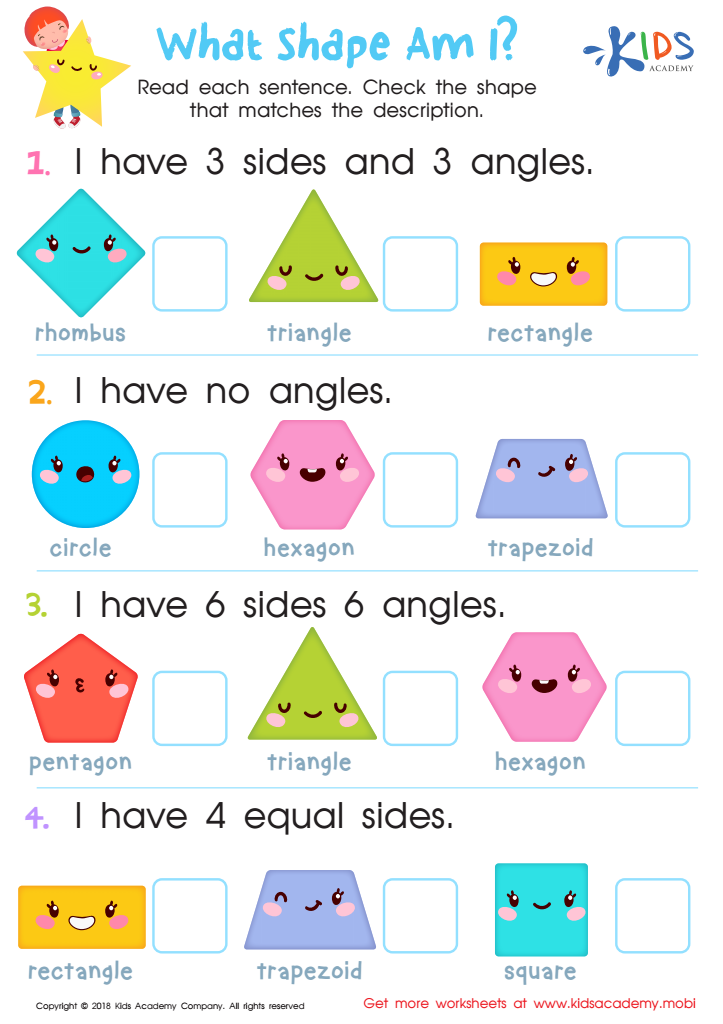
What Shape Am I? Worksheet
Help your child read each sentence in this colorful worksheet. Have them identify the shapes described and check the boxes. To prepare, ask simple questions like "How many sides does a triangle have?" and "Which shape has 4 equal sides?" Your child will become more skilled at shapes by the end of this activity.
What Shape Am I? Worksheet
Worksheet
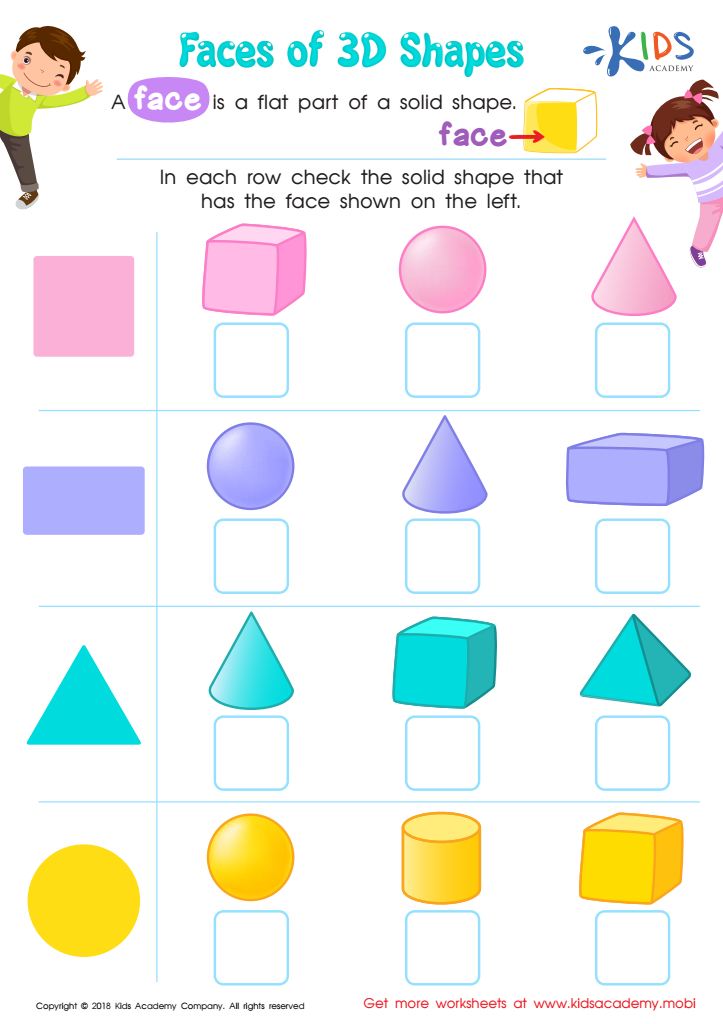
Faces of 3D Shapes Worksheet
Point at random body parts and ask your child to name them. Point to their face and ask them to identify it. Use this worksheet to show how "face" doesn't just refer to body parts - it can also mean the flat surface of a solid shape. Check the picture to find the matching solid shape for each face shown.
Faces of 3D Shapes Worksheet
Worksheet
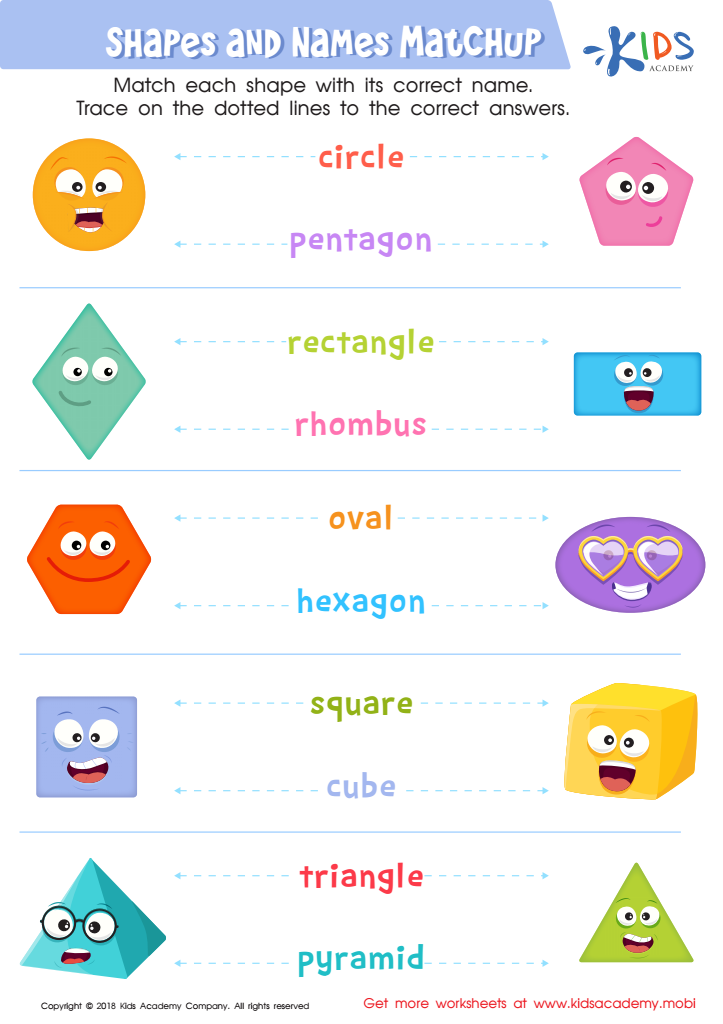
Shapes and Names Matchup Worksheet
Introduce your students to shapes if they aren't familiar. Look at the sheet with them and ask them to identify shapes. Help them match each shape to its name, then trace the dotted lines to the answers. Even if they haven't seen shapes before, this exercise will be easy - with your help!
Shapes and Names Matchup Worksheet
Worksheet
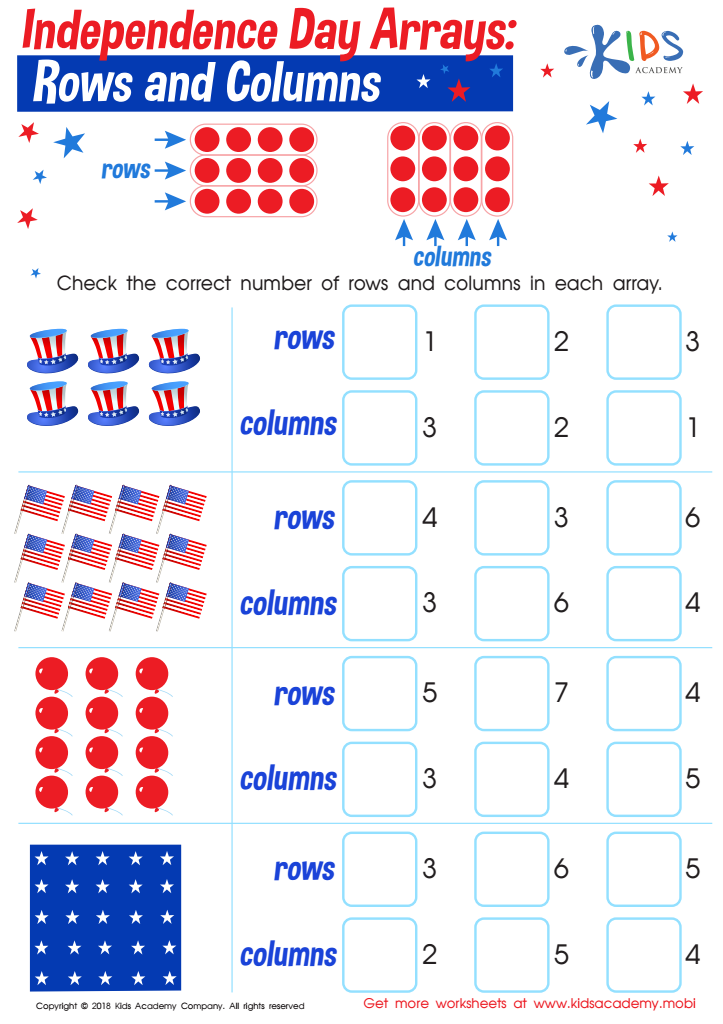
Independence Day Arrays: Rows and Columns Worksheet
Does your child know when Independence Day is? They might love the family picnics and fireworks, or they may not understand the significance of the holiday. After this worksheet, they'll comprehend it better. Help them look at the images and count the number of rows and columns in each array.
Independence Day Arrays: Rows and Columns Worksheet
Worksheet
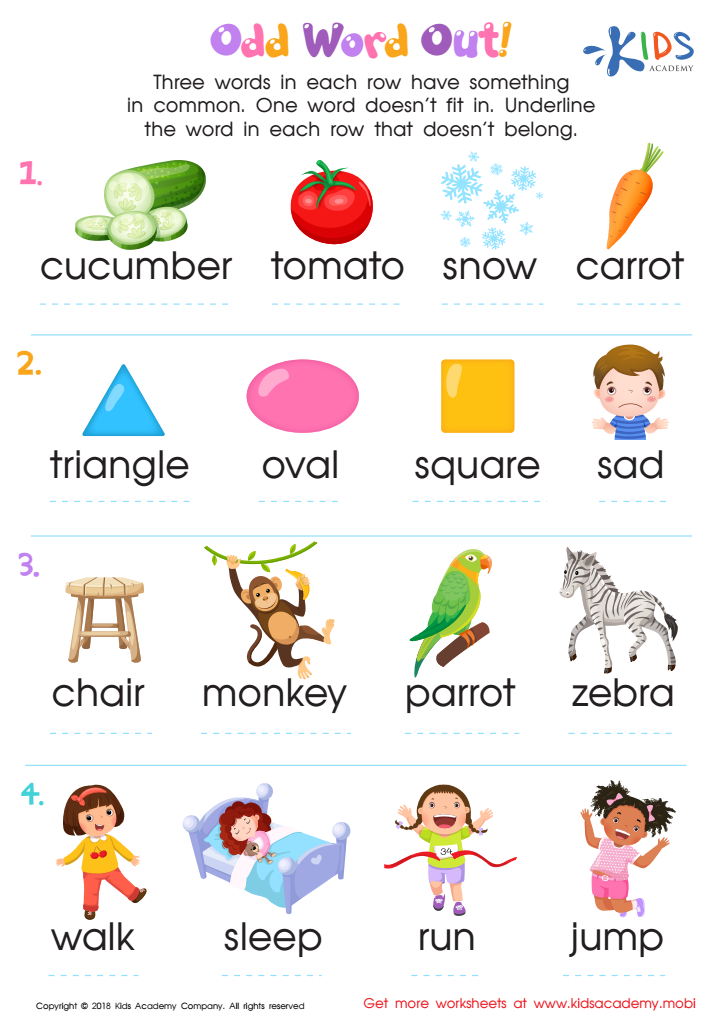
Odd Word Out Worksheet
Ask your child to name all pictures in each row and see if there's something they share. Then, have them identify the odd one out and underline it. Repeat for all words in the rows to help them understand how to identify words.
Odd Word Out Worksheet
Worksheet
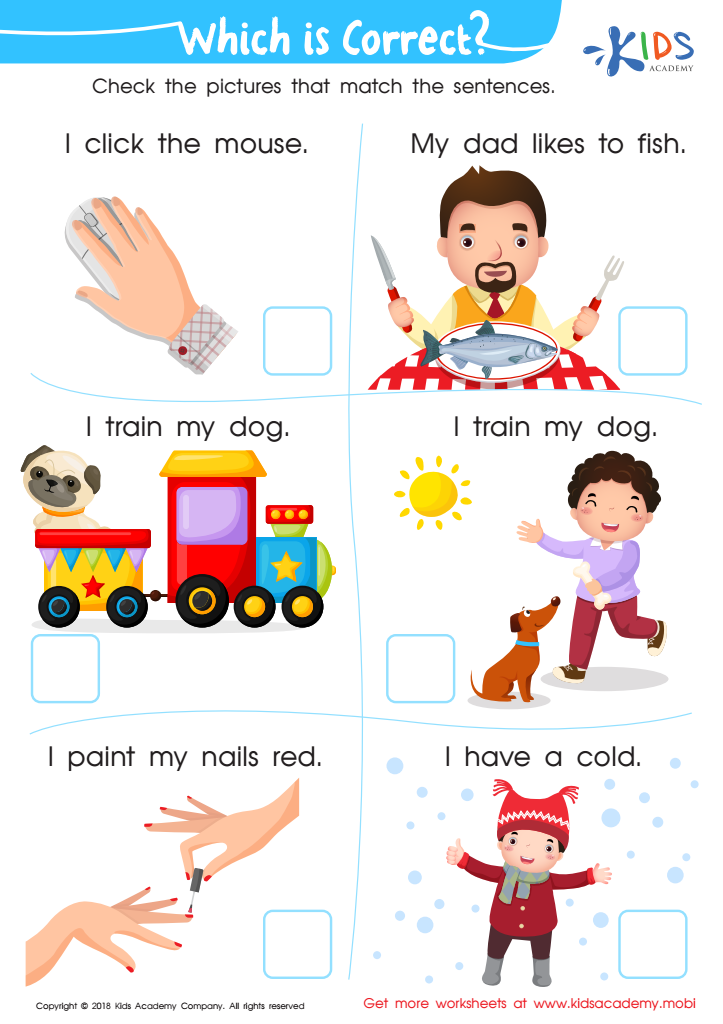
Which Is Correct? Worksheet
Go over the exercise with your students. Ask them to read the sentences and explain what they mean. Check the pictures that correspond to the sentences. For example, what does "My dad likes to fish" mean? Test their understanding with the worksheet.
Which Is Correct? Worksheet
Worksheet
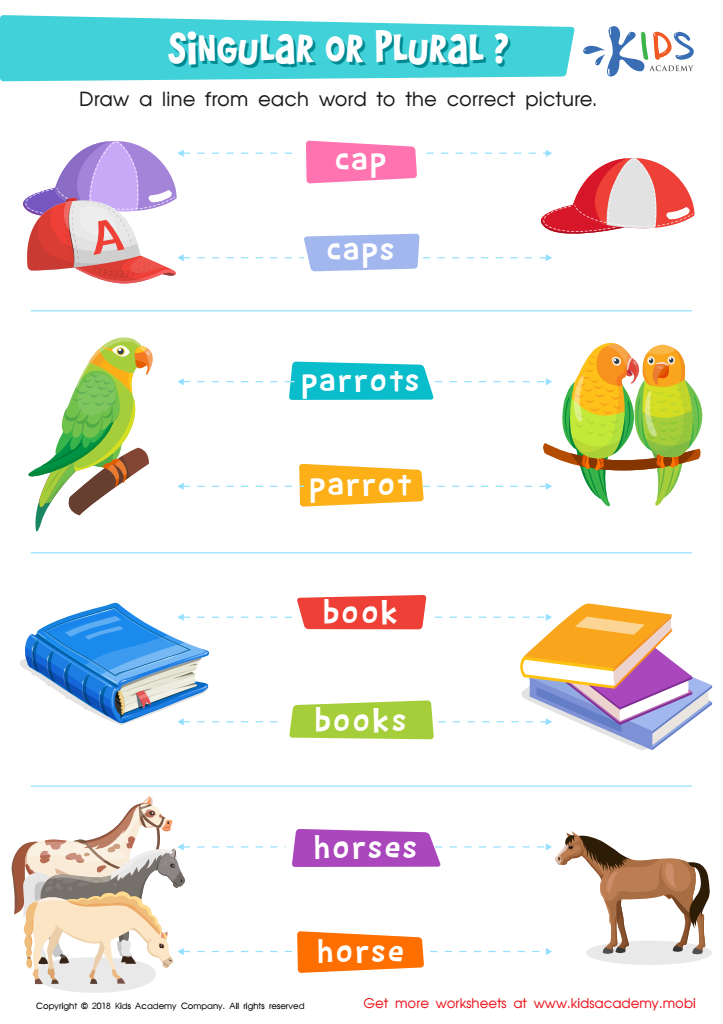
Singular or Plural? Worksheet
Help your child practice recognizing the plural forms of words with this fun tracing worksheet! They'll need to connect each word and its plural form to the correct picture. For example, they'll write "cap" for one cap and "caps" for two. Enjoy this learning activity together! 80 words.
Singular or Plural? Worksheet
Worksheet
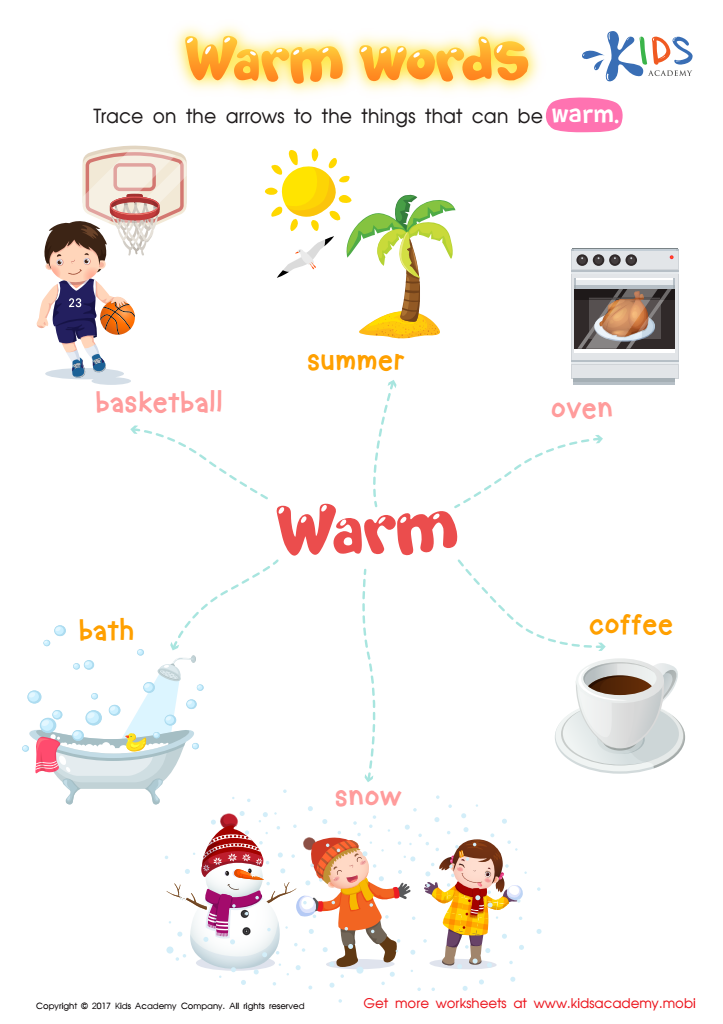
Warm Words Worksheet
Learning with tracing sheets is fun! Ask your child to list some things associated with warm temperatures. Then, trace the arrows on the worksheet with them and explore the items that can be warm. Have fun!
Warm Words Worksheet
Worksheet
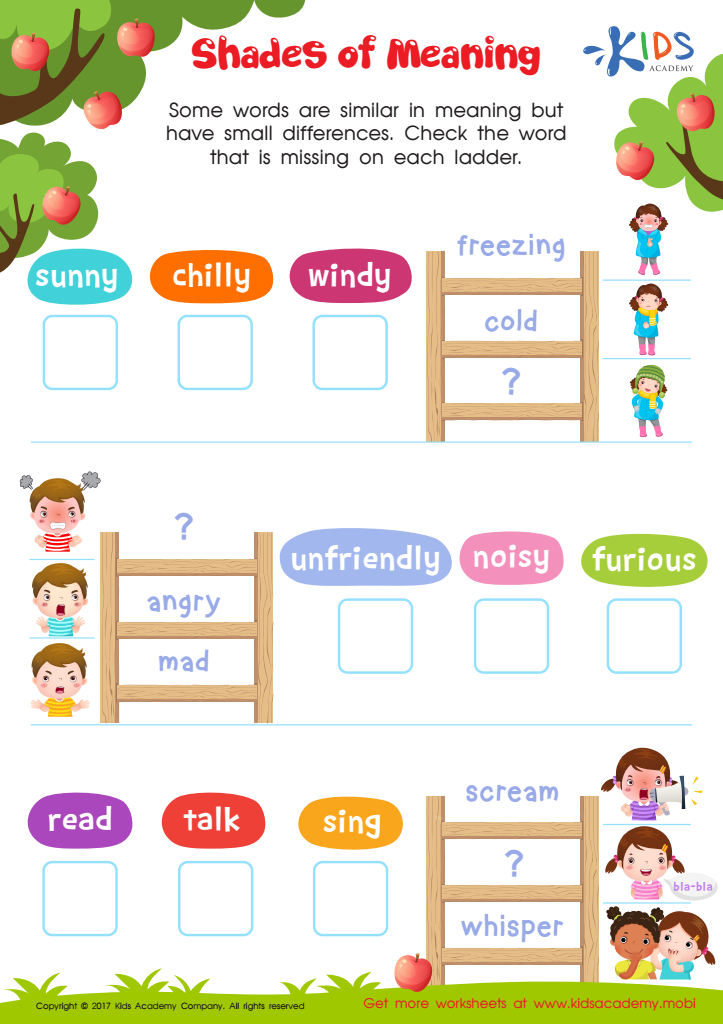
Shades of Meaning Worksheet
Your child can practice understanding similar words with this worksheet. They'll need to pick the word from the options that best fits the gap on each ladder, and learn to differentiate between words with similar meanings. For example, there are various terms for 'cold' that your child can learn. Try it out!
Shades of Meaning Worksheet
Worksheet
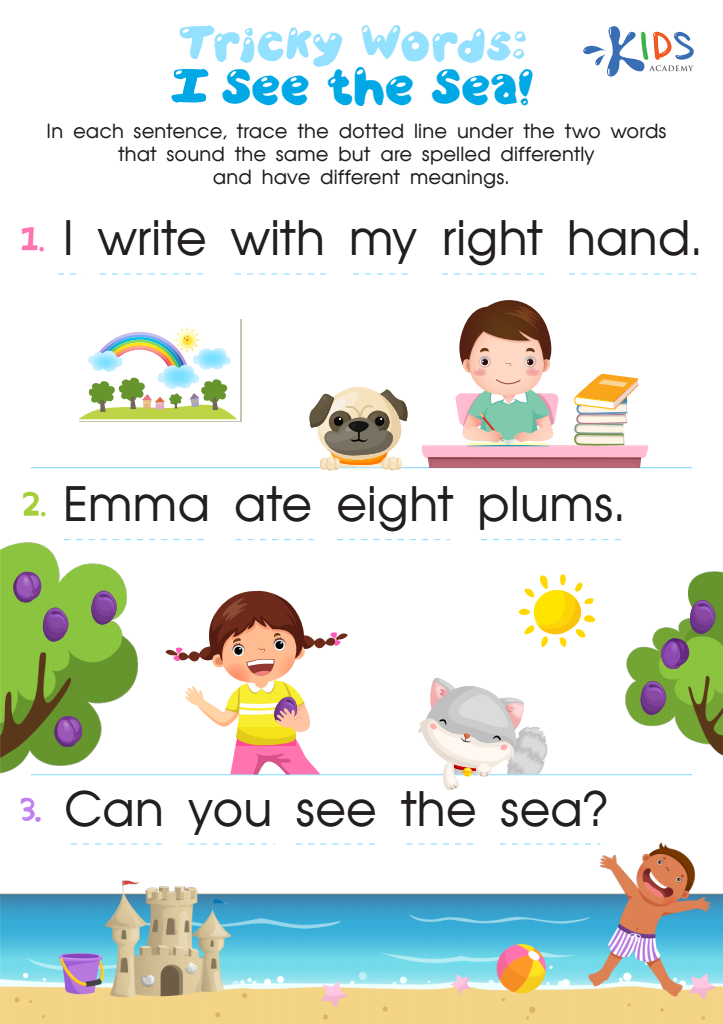
Tricky Words Worksheet
Young authors can find homonyms tricky - this brightly coloured worksheet will help them gain practice. Tracing lines to identify homonyms in easy-to-read sentences will also help improve their fine motor skills, essential for effective writing.
Tricky Words Worksheet
Worksheet
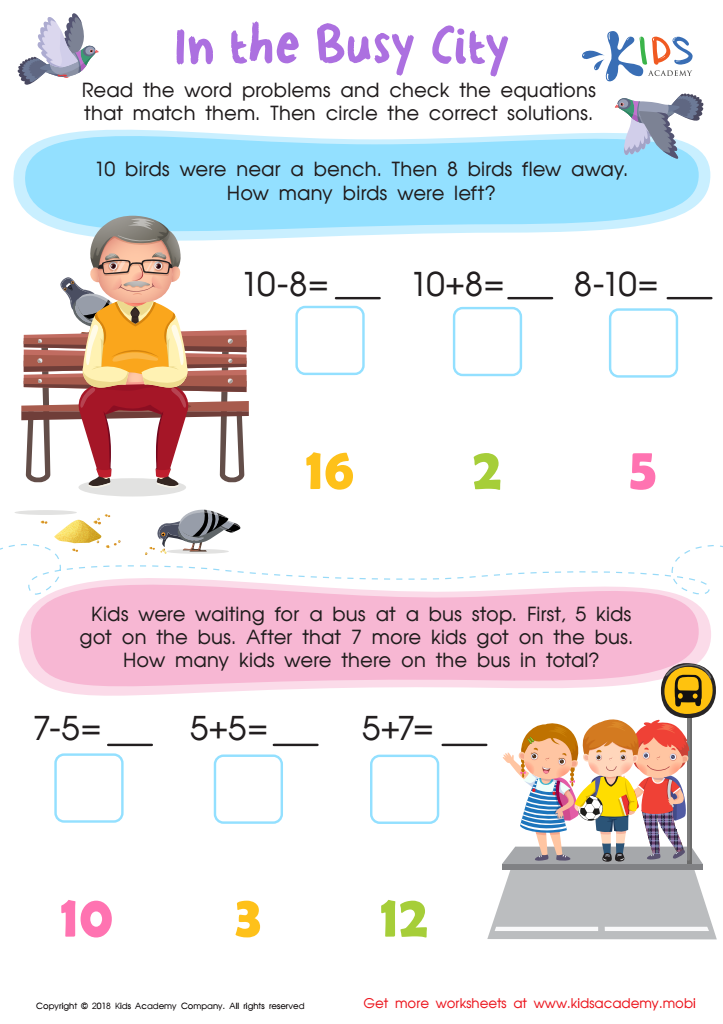
In the Busy City Word Problems Worksheet
Take a stroll and help your child solve math word problems with this fun printable from Kids Academy! Colorful images make the scenarios more enjoyable. Have them read the problem carefully and solve the matching equation. Check the box next to the answer to mark it as correct!
In the Busy City Word Problems Worksheet
Worksheet
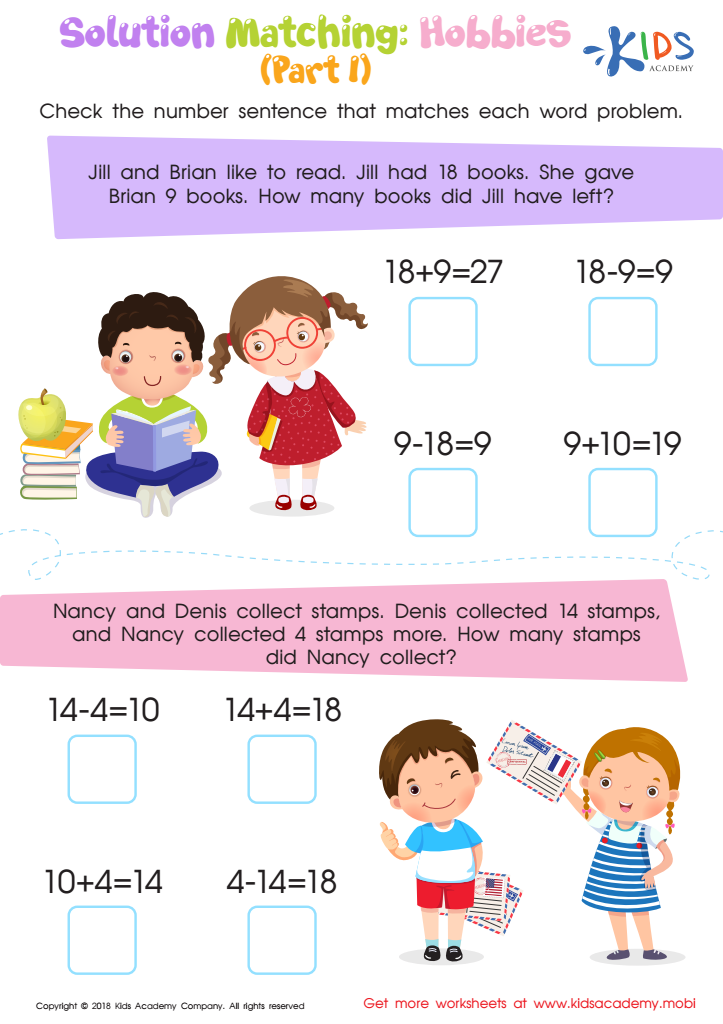
Solution Matching: Hobbies. Part 1 Worksheet
Math problems can be made more fun and easier to solve by relating them to real-life activities. Kids Academy's free printable worksheet helps your child to do this. Read each problem, paying attention to the numbers and terms, then choose the correct equation from the options given. This will help your child to understand the problem and get the right result!
Solution Matching: Hobbies. Part 1 Worksheet
Worksheet
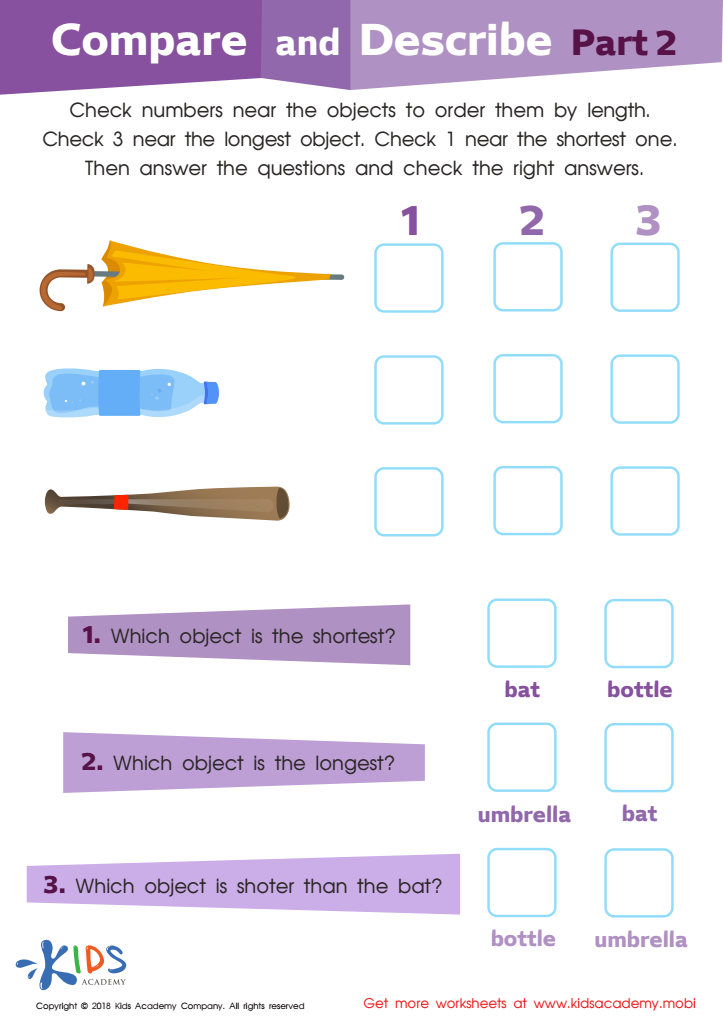
Compare and Describe: Part 2 Worksheet
Help kids hone their comparison skills with this fun measurement worksheet! Kids will sort objects by length and check off the boxes as they go. At the bottom, they'll read the questions and take a final look at the images to complete the exercise. An exciting way to learn measurement!
Compare and Describe: Part 2 Worksheet
Worksheet
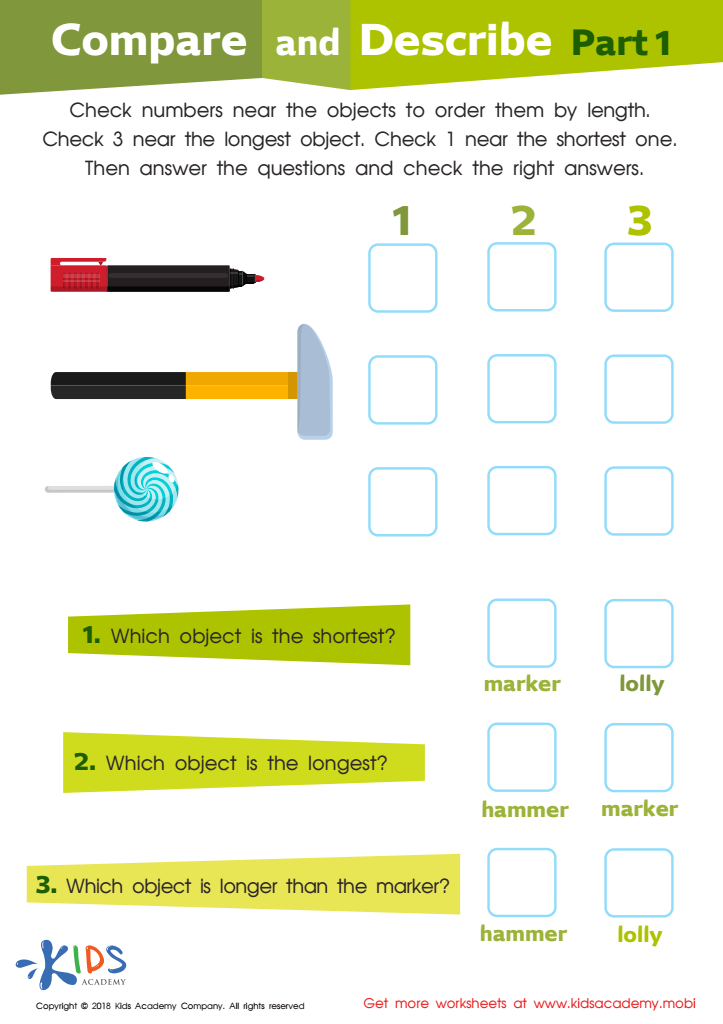
Compare and Describe: Part 1 Worksheet
In this worksheet from Kids Academy, kids can start learning measurement in stages. Observe the images, then compare their length - which one is shortest? Which one is longest? Answer the questions at the bottom to complete the sheet. It's an easy way to help kids understand measurement basics.
Compare and Describe: Part 1 Worksheet
Worksheet
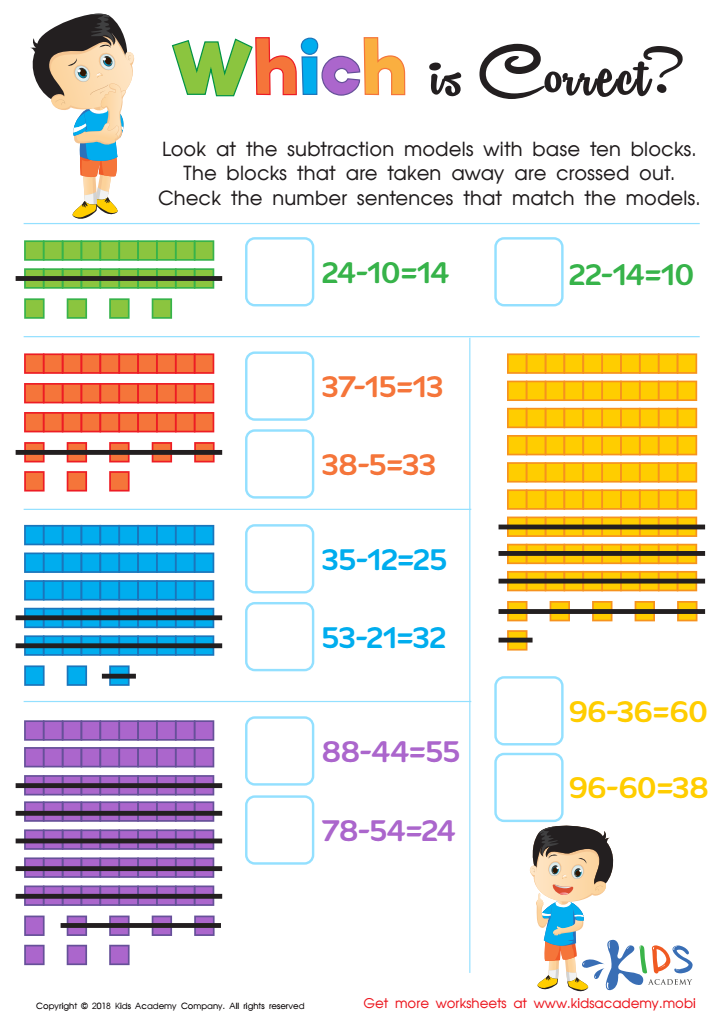
Which Is Correct? Math Worksheet
Young mathematicians will gain confidence solving subtraction problems with this bright, colorful worksheet. They'll use base ten blocks representations, then pick the right number sentence to match. It's great practice for developing number sense, helping them excel in higher-level math.
Which Is Correct? Math Worksheet
Worksheet
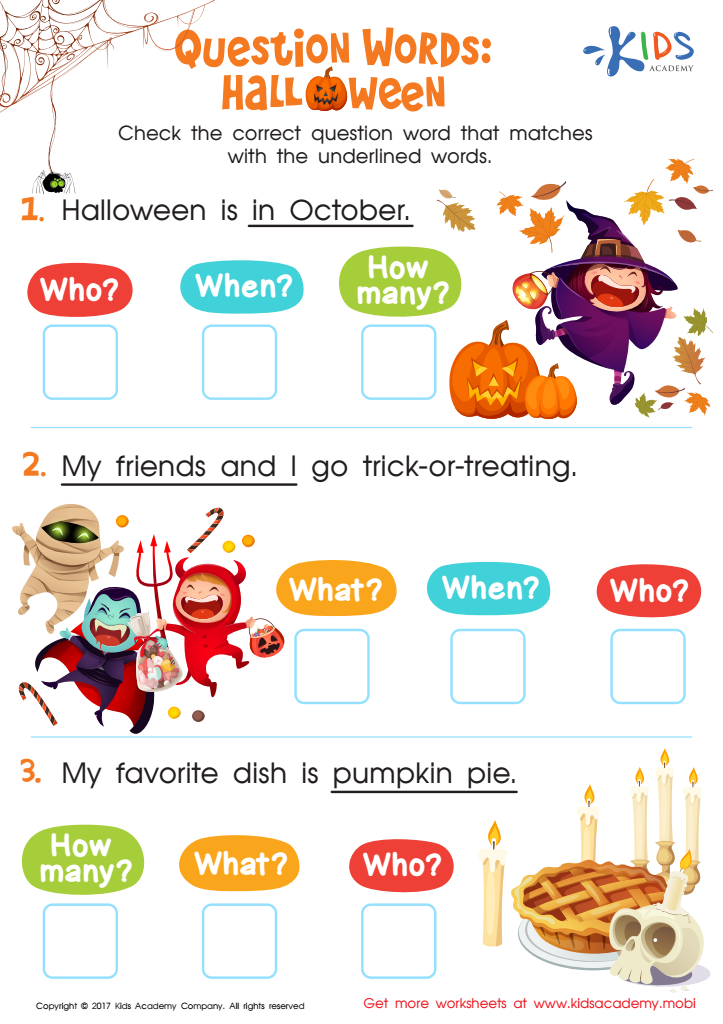
Question Words: Halloween Worksheet
Questions lead to answers, so it's important to use the right words. This Halloween-themed worksheet helps kids learn to use precise language when writing or asking a question. Just read each sentence, noting the underlined phrases, and pick the question word that fits. Have spooky fun!
Question Words: Halloween Worksheet
Worksheet
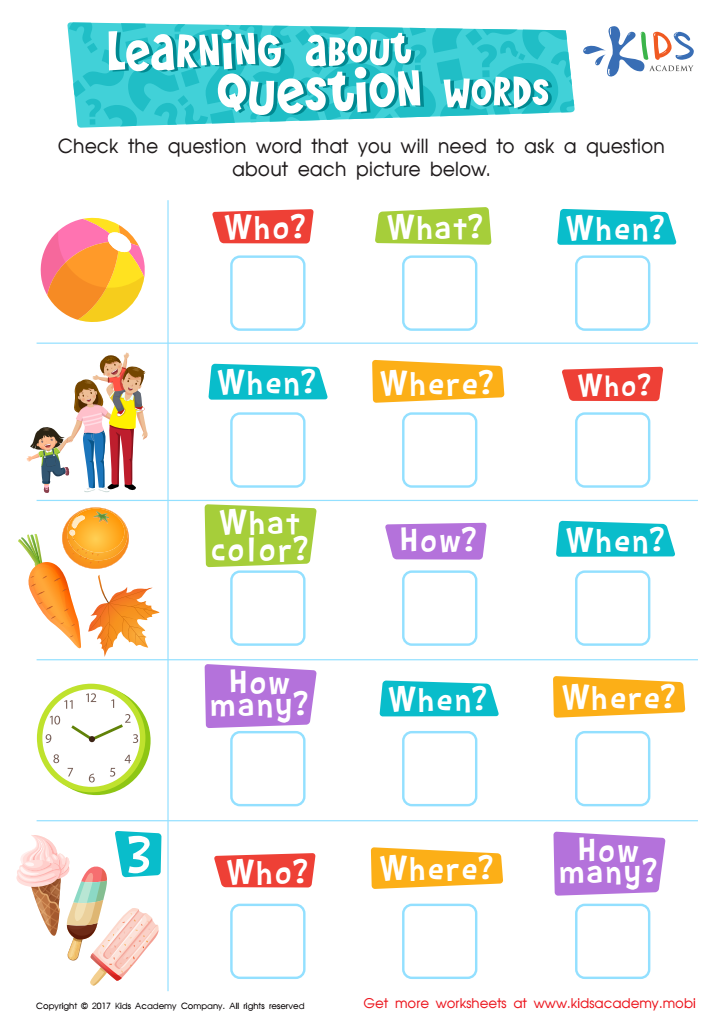
Learning about Question Words Worksheet
Learning language can be difficult, but this free printable worksheet will help! Have your child look at the picture and name it. Then help them choose the right question word to ask something about it. For example, when looking at a beach ball, you can't ask "Who?" Instead, look through the list to select the right word. It's a great way to learn language basics!
Learning about Question Words Worksheet
Worksheet
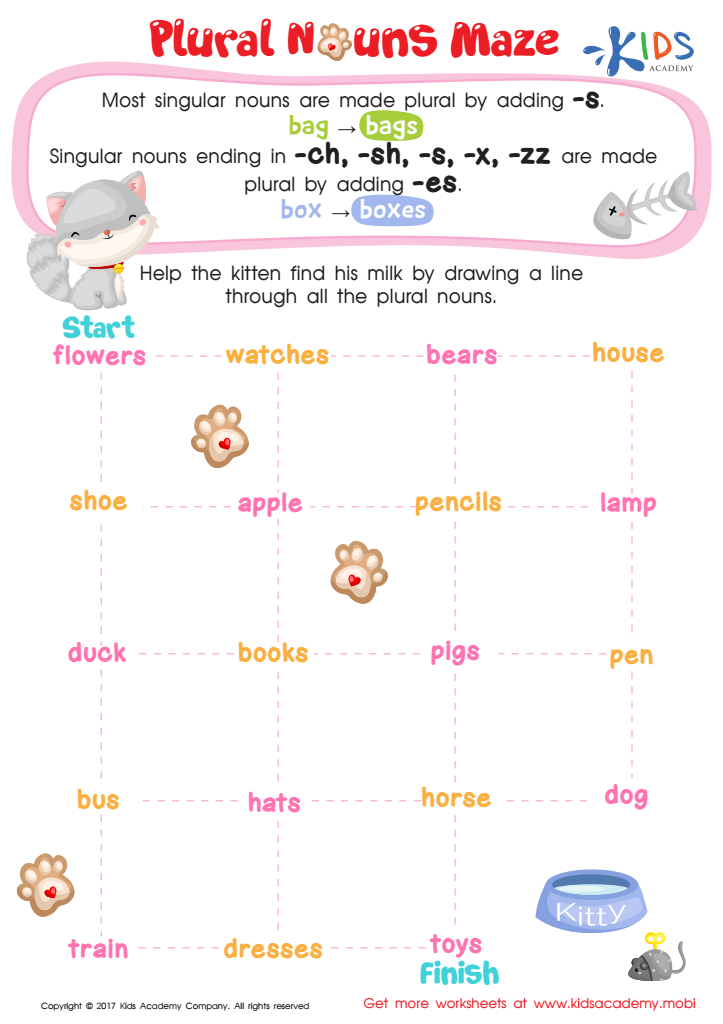
Plural Nouns Maze Worksheet
Oh no, the kitty needs her milk! Help your learner navigate the maze by drawing a line through the plural words. Review the grammar rules on -s and -es endings, then get to work to guide the kitten to her bowl! Download this PDF worksheet to start.
Plural Nouns Maze Worksheet
Worksheet
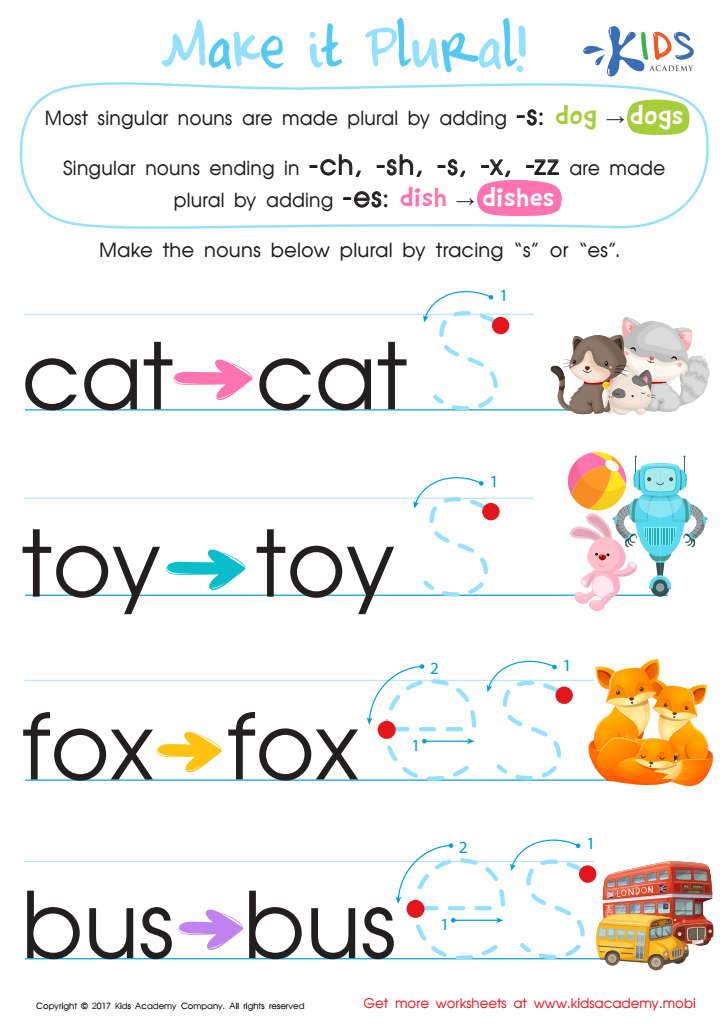
Make it Plural Worksheet
Changing words from singular to plural can be tricky as there are many word endings with special rules. Most words just need an -s, while endings like -ch, -sh, -s, -x or -zz need -es. This worksheet helps kids read words and trace the correct ending for each, making it easier to master these rules!
Make it Plural Worksheet
Worksheet
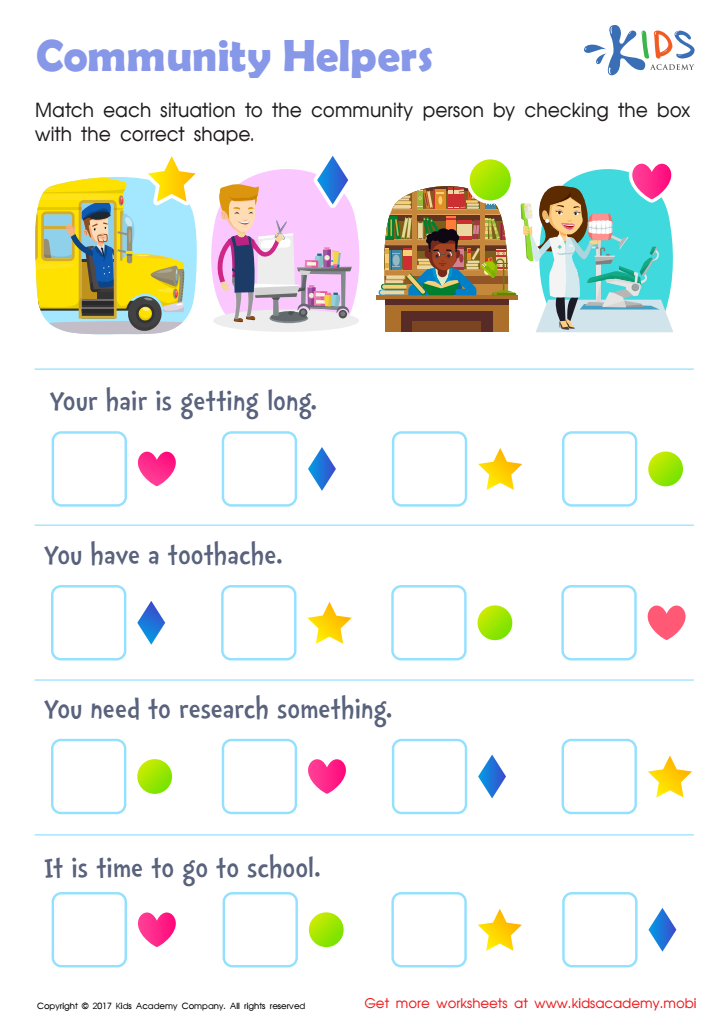
Join Kids Academy for Free
Who is primarily going to use this learning content?