
Geometry Worksheets for Ages 6-8
176 filtered results
Difficulty Level
Grade
Age
-
From - To
Subject
Activity
Standards
Welcome to our Geometry Worksheets for Ages 6-8! Designed for early learners, these printable worksheets make exploring shapes and spatial relationships exciting and engaging. With activities that include identifying geometric shapes, measuring angles, and understanding symmetry, children will develop foundational skills in geometry. Our worksheets are colorful, interactive, and aimed at bolstering both understanding and confidence in young math learners. Ideal for classroom or home use, these resources cater to various learning styles and can be customized to fit any lesson plan. Explore the world of geometry and watch your child’s mathematical curiosity flourish! Perfect for inspiring a love of learning!
Favorites
With answer key
Interactive
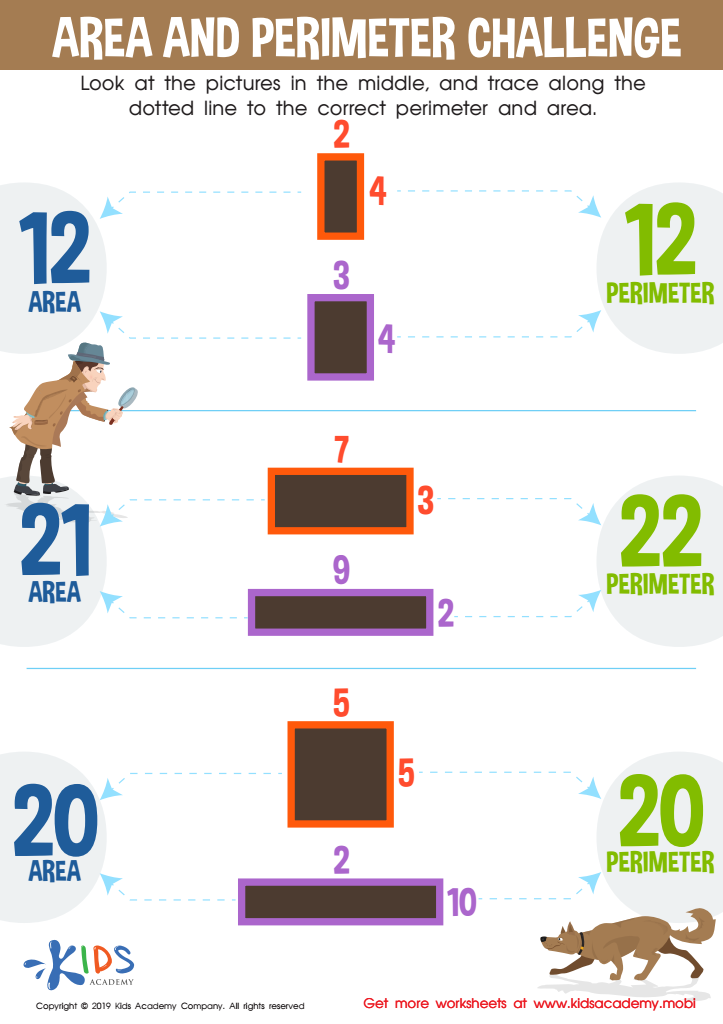
Area and Perimeter Challenge Worksheet
Calculating objects can seem tricky, but with your guidance your students will soon be pros. To help them, give them exercises to practice. Eg. Trace the dotted line on the worksheet to calculate perimeter and area. With practice, they'll soon be geometry experts.
 Assign to My Students
Area and Perimeter Challenge Worksheet
Worksheet











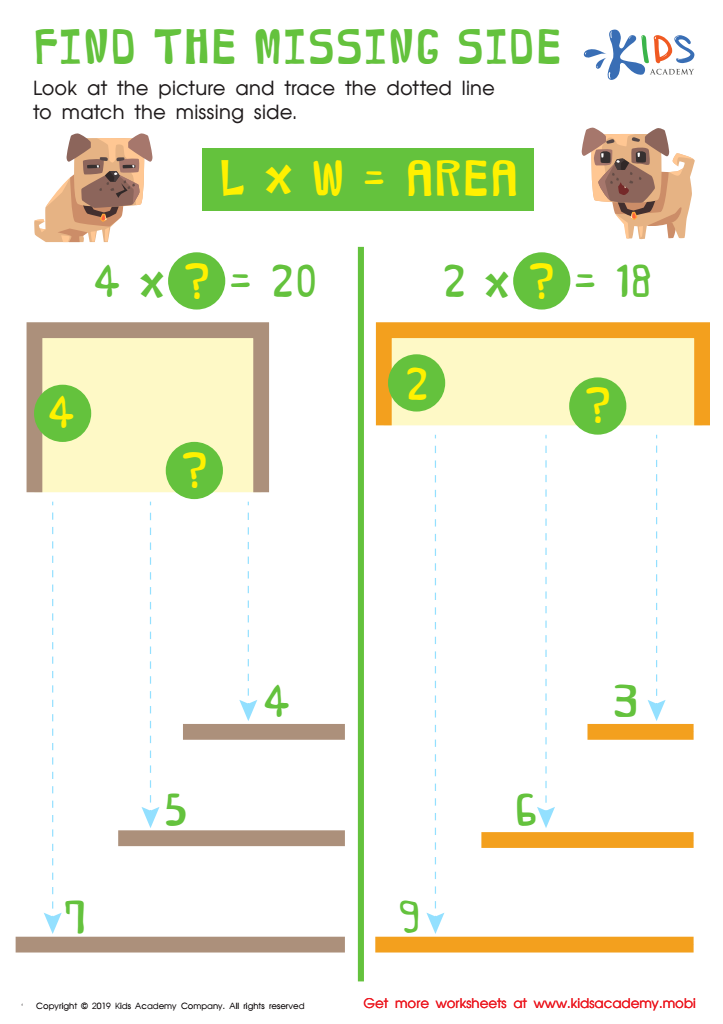
Find the Missing Side Worksheet
Supporting your children with math can significantly help their problem-solving skills. At school, they should already have the basics down, but if they struggle with certain topics, use this worksheet to give them extra practice. Together, look at the illustration and draw the missing side following the dashed line.
Find the Missing Side Worksheet
Worksheet
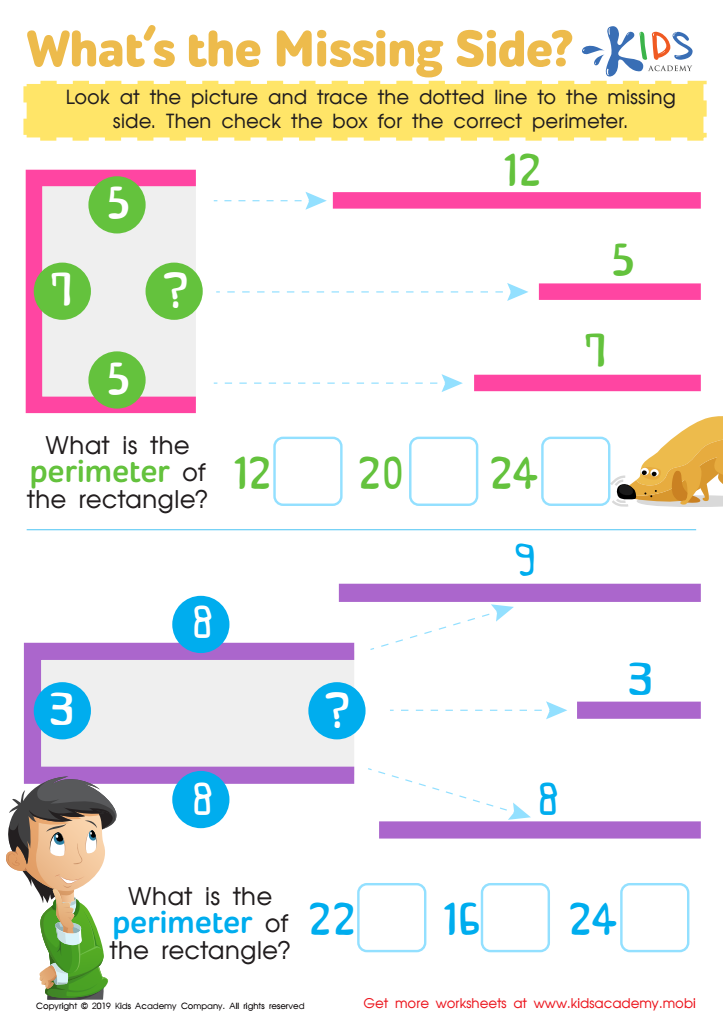
What's the Missing Side Worksheet
Assist your pupils in improving math skills with fun exercises like the tracing sheet. Show them the picture and guide them to trace the missing side. Ask them to check the box of the right perimeter afterwards. Doing this regularly can help them to enjoy and appreciate the subject more.
What's the Missing Side Worksheet
Worksheet
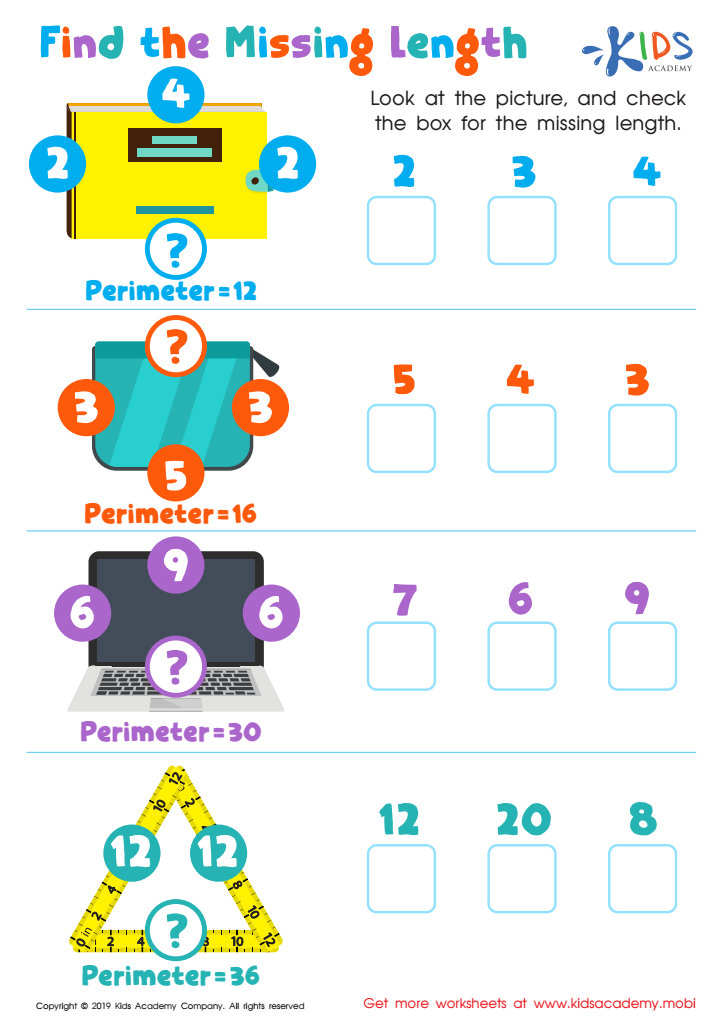
Find the Missing Length Worksheet
Help your kids learn more about geometry, addition and subtraction with this simple worksheet. Look at the four equations and solve the problems with your little ones. Have them check the box for the missing length. This will help your kids become more comfortable with math calculations.
Find the Missing Length Worksheet
Worksheet
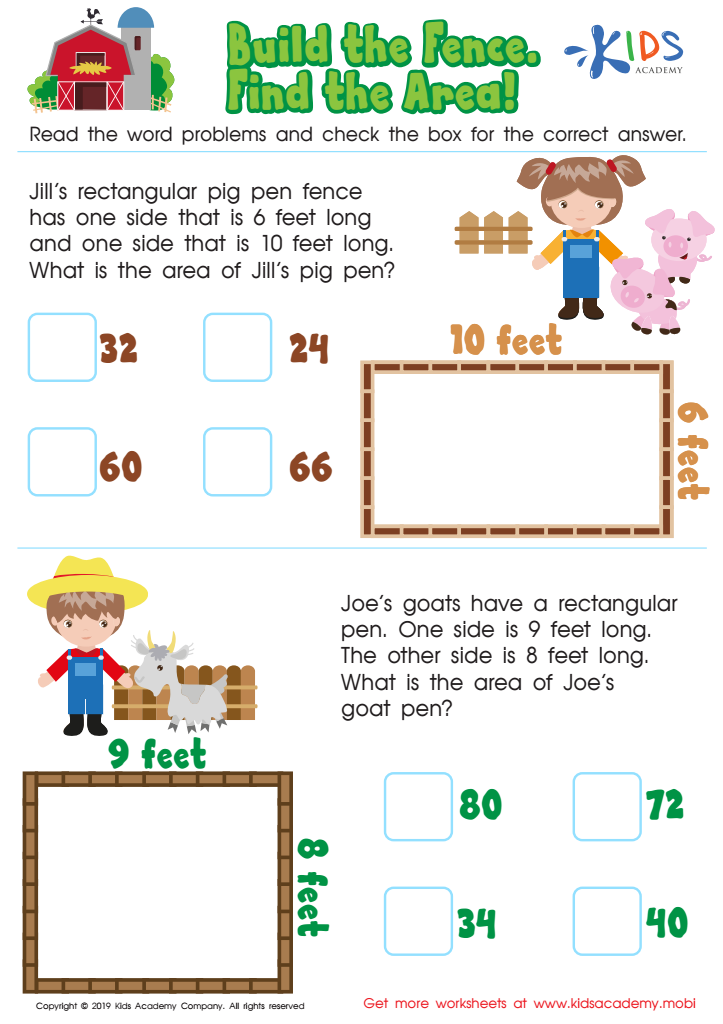
Build the Fence, Find the Area Worksheet
Help your kids gain skills in mathematics with this simple worksheet. Kids can refresh their addition and subtraction to solve geometry problems. Read the word problems and then help them check the box for the correct answer if they need extra help. This worksheet is great for improving kids' familiarity with basic equations.
Build the Fence, Find the Area Worksheet
Worksheet
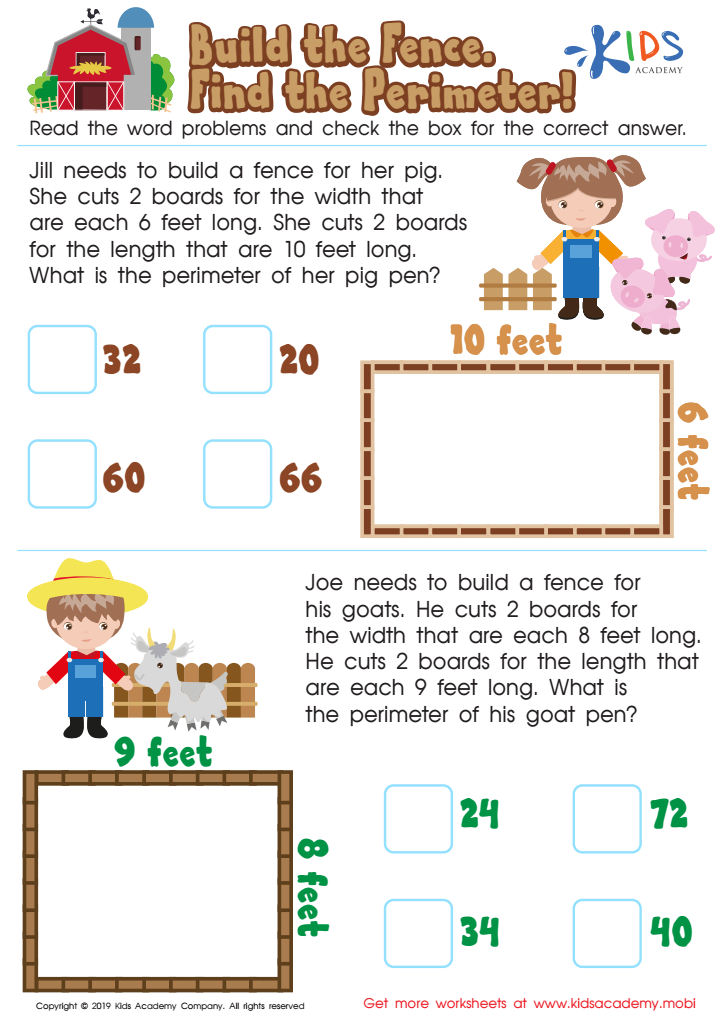
Build the Fence, Find the Perimeter Worksheet
This worksheet is great for kids needing extra help with geometry and maths. Read the problems to your kids and assist them in answering them correctly by ticking the box. This way, they'll be combining their addition and subtraction skills with literacy to help them learn.
Build the Fence, Find the Perimeter Worksheet
Worksheet
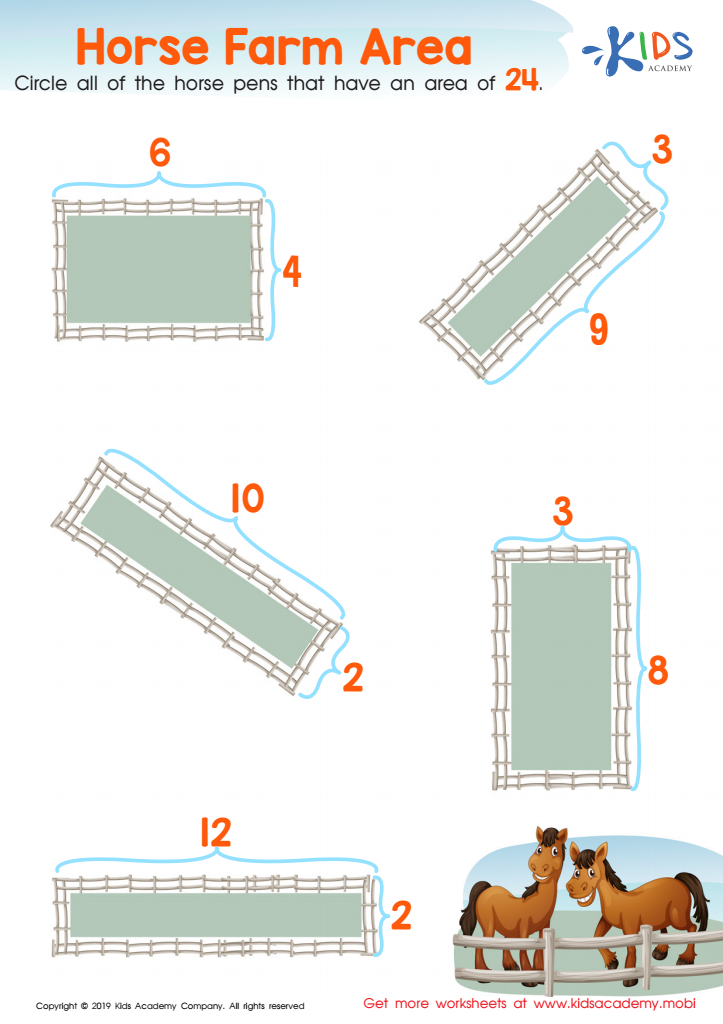
Horse Farm Area Worksheet
Take your kids to a horse farm! They'll love it – there's lots to explore, plus they can ride horses. Then challenge them with a geometry worksheet: help them calculate the area of all the horse pens, then circle the ones with an area of 24.
Horse Farm Area Worksheet
Worksheet
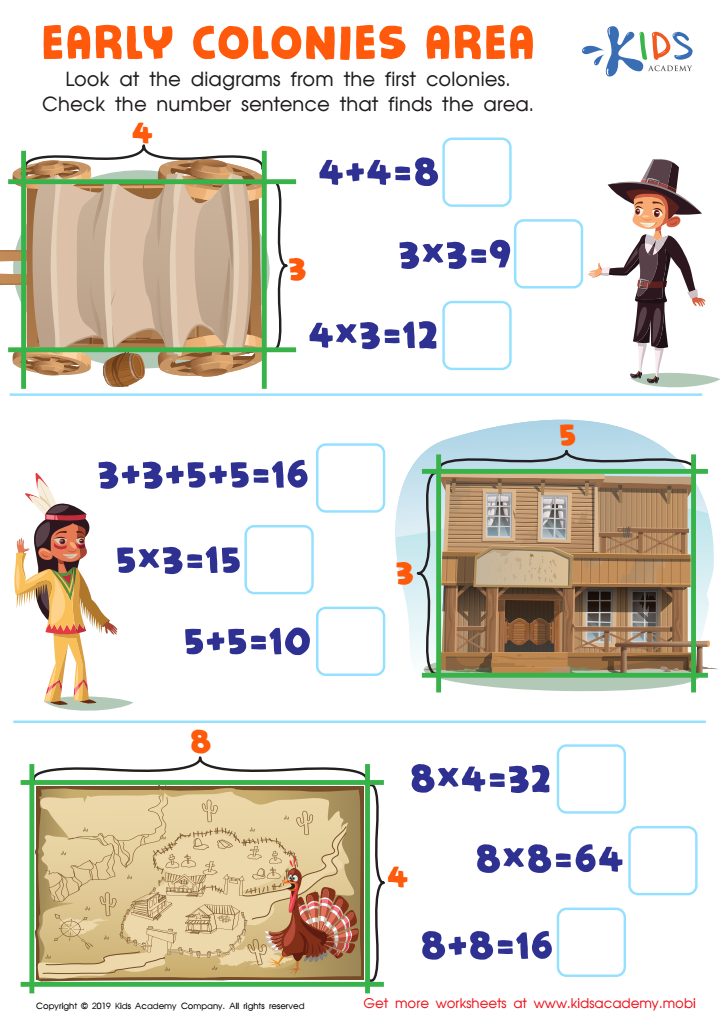
Early Colonies Area Worksheet
Before starting this worksheet, check if your kids know who the early colonizers were. Exercise their addition and subtraction skills by having them solve the equations, then look at the diagrams from the colonies. Guide them to check the number sentence to find the area.
Early Colonies Area Worksheet
Worksheet
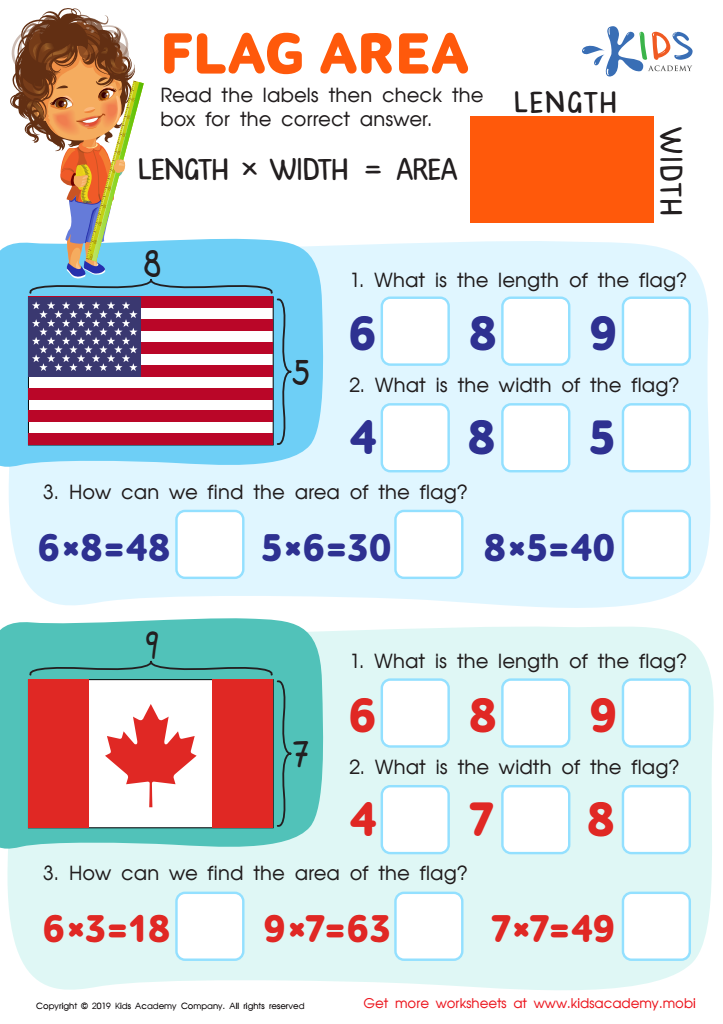
Flag Area Worksheet
Test your child's knowledge of flags by asking which ones they can identify in the image. Then, study the worksheet together. There are 6 questions with labels. Have them read each label and check the box for the correct answer.
Flag Area Worksheet
Worksheet
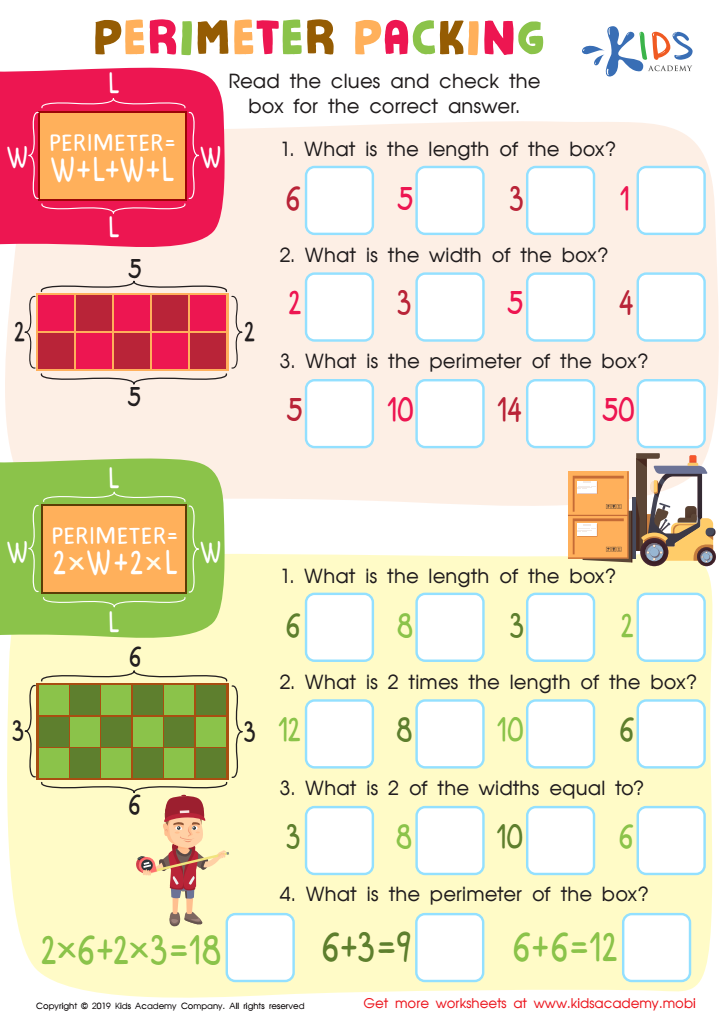
Perimeter Parking Worksheet
Geometry can be daunting for kids, but you can make it easy with simple exercises and familiar objects. Check out this worksheet with two sections of questions. Guide your kids to read clues and check the correct answer box. Help them become better at solving geometry problems.
Perimeter Parking Worksheet
Worksheet
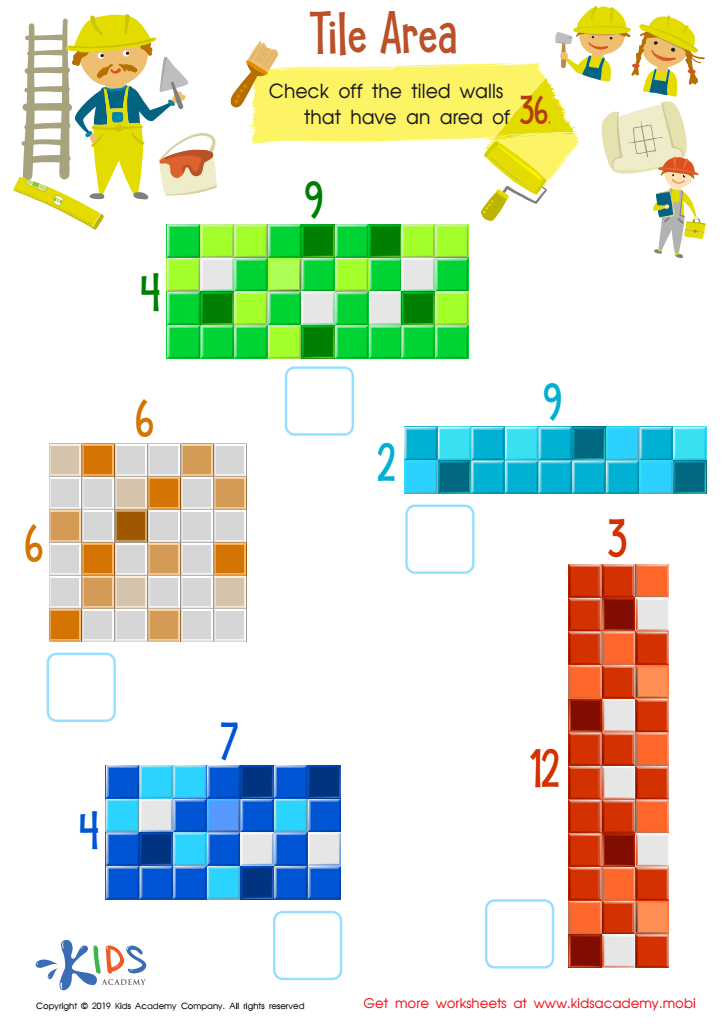
Tile Area Worksheet
Help kindergartners become experts in solving simple math problems. Teach them about measuring, the parts to measure, and how to measure the area of tiled walls. Use the worksheet to check off the walls with an area of 36. This can help them understand the concepts and make measuring objects less intimidating.
Tile Area Worksheet
Worksheet
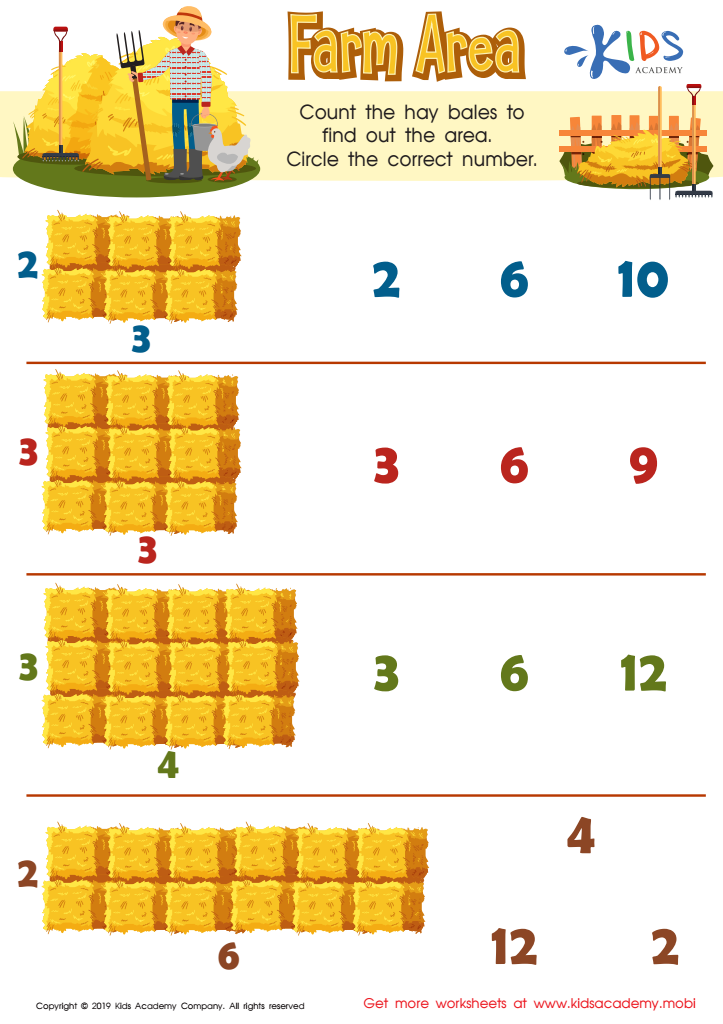
Farm Area Worksheet
Take your kids to a farm and ask them what their favorite part was! Show them this picture with hay bales and have them count them. Find the area then circle the correct number. It's a fun way to learn math and experience a farm!
Farm Area Worksheet
Worksheet
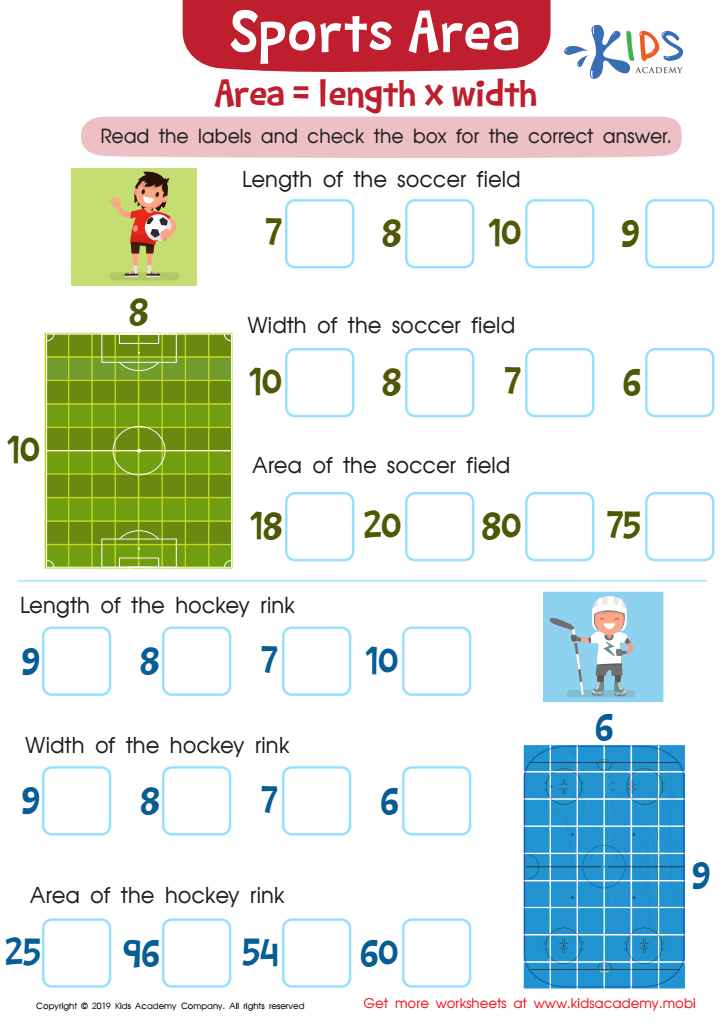
Sports Area Worksheet
Help your preschoolers understand area by showing them it's just length x width. Point to the picture in the worksheet, get them to read the labels and select the right answer. Encourage them that calculating areas of shapes, objects and places isn't too hard!
Sports Area Worksheet
Worksheet
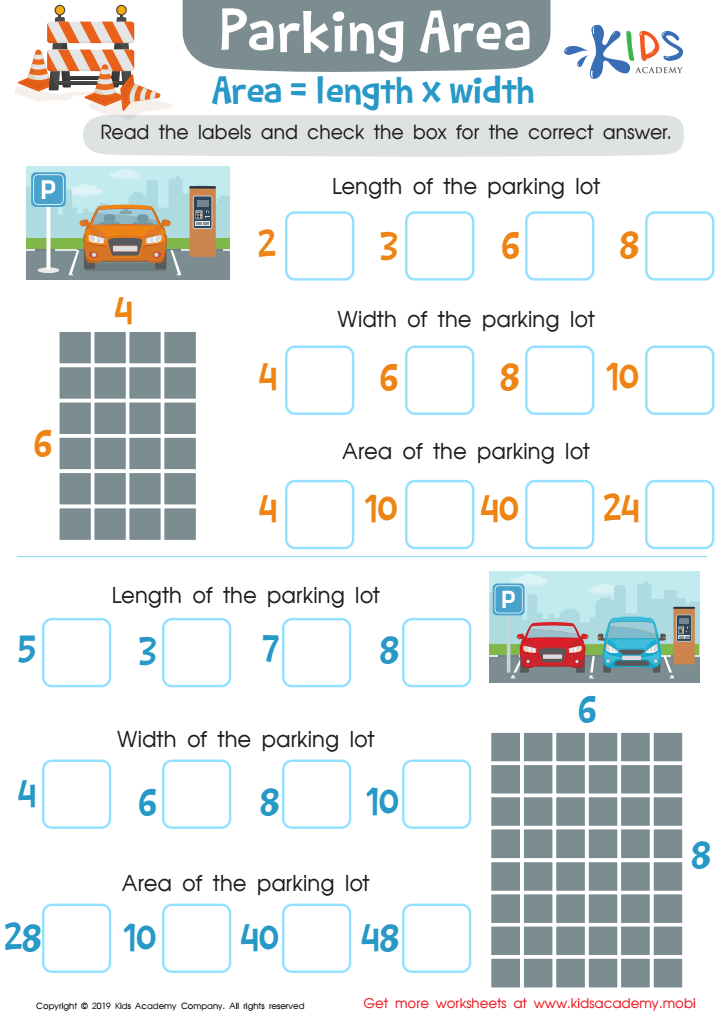
Parking Area Worksheet
Math may not be your child's favorite, but that doesn't mean they can't excel. Math can seem intimidating, but with practice, they can learn it's not so hard. In this worksheet, your kids will calculate the area of a parking lot, by adding length and width. Help them read the labels and select the correct answer.
Parking Area Worksheet
Worksheet
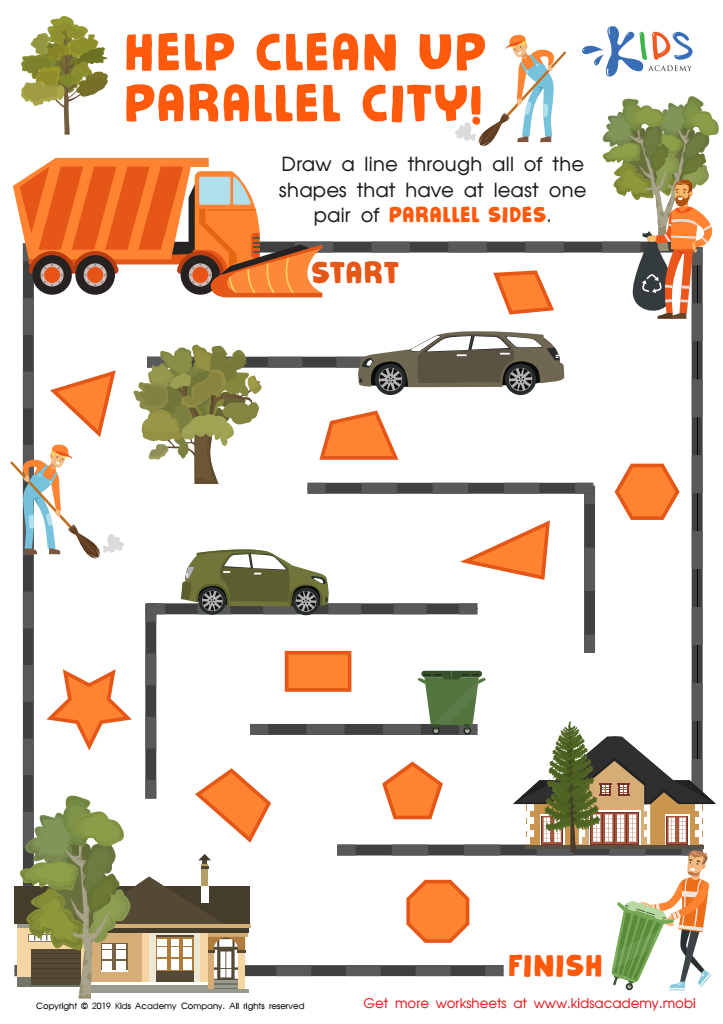
Help Clean Up Parallel City Worksheet
Explain to your kids what parallel sides are and have them identify the shapes with parallel sides in the picture. Then let them draw a line through all the shapes with at least one pair of parallel sides. This colorful worksheet will help them understand and practice this concept.
Help Clean Up Parallel City Worksheet
Worksheet
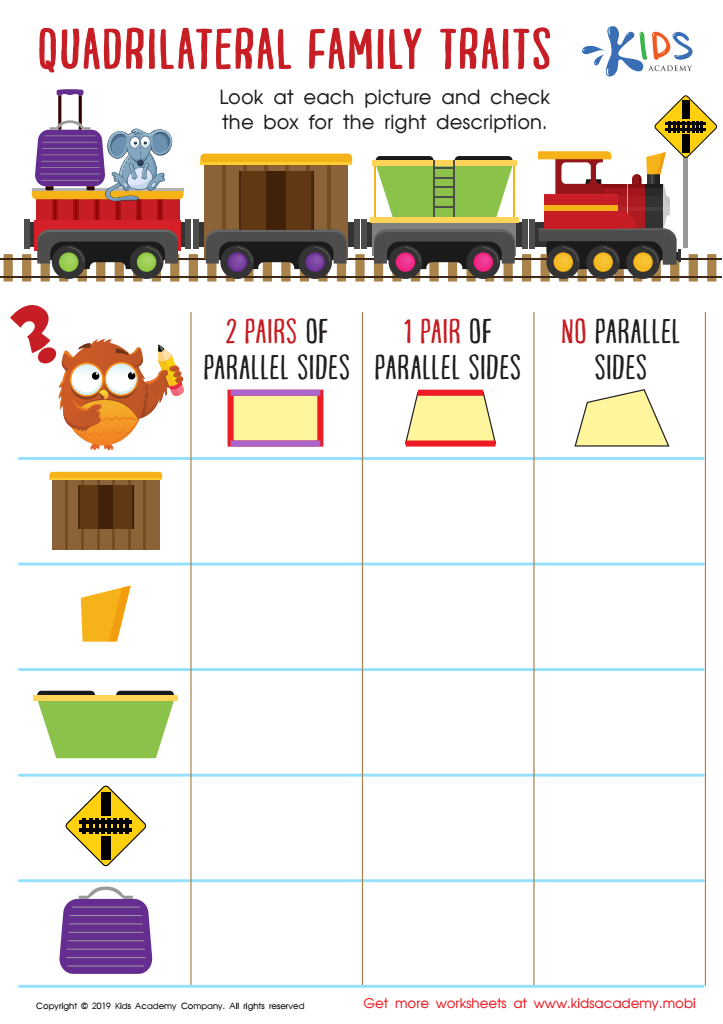
Quadrilateral Family Traits Worksheet
Review with your students what a quadrilateral is: four sides and angles. Now, go through the worksheet with them. Look at the pictures and help them check the boxes to identify the shapes.
Quadrilateral Family Traits Worksheet
Worksheet
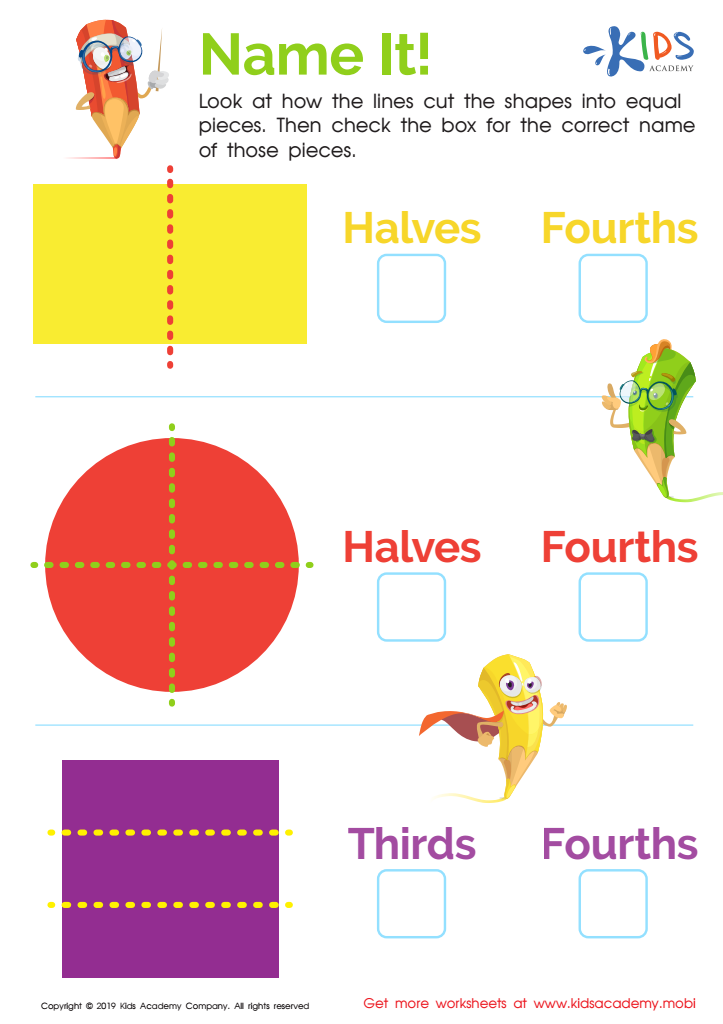
Name It! Worksheet
When teaching fractions, help children understand that they are groups divided into equal pieces. Introduce denominators and numerators with pictures to illustrate. Use this free fraction worksheet with colourful shapes divided into halves, thirds, and fourths to help them identify the fractions.
Name It! Worksheet
Worksheet
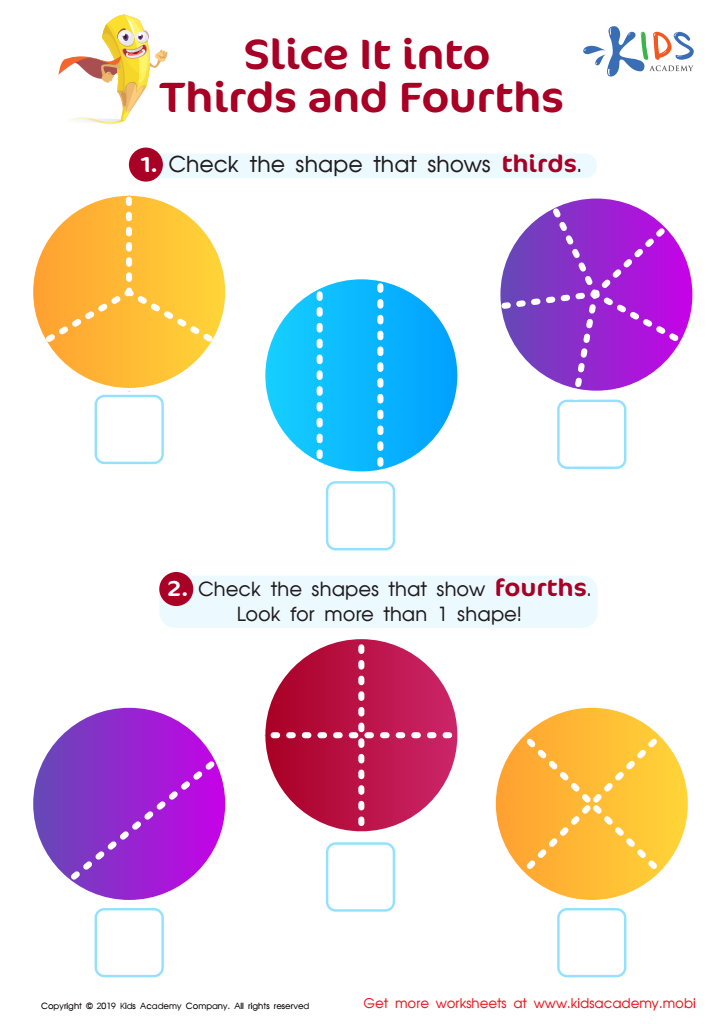
Slice in Thirds Fourths Worksheet
This worksheet helps kids learn fractions visually by dividing circles into thirds and fourths. They will learn that fractions must be equal parts, not just sets, by choosing the right colorful circles. It's an easy way to master fractions and have fun doing it!
Slice in Thirds Fourths Worksheet
Worksheet
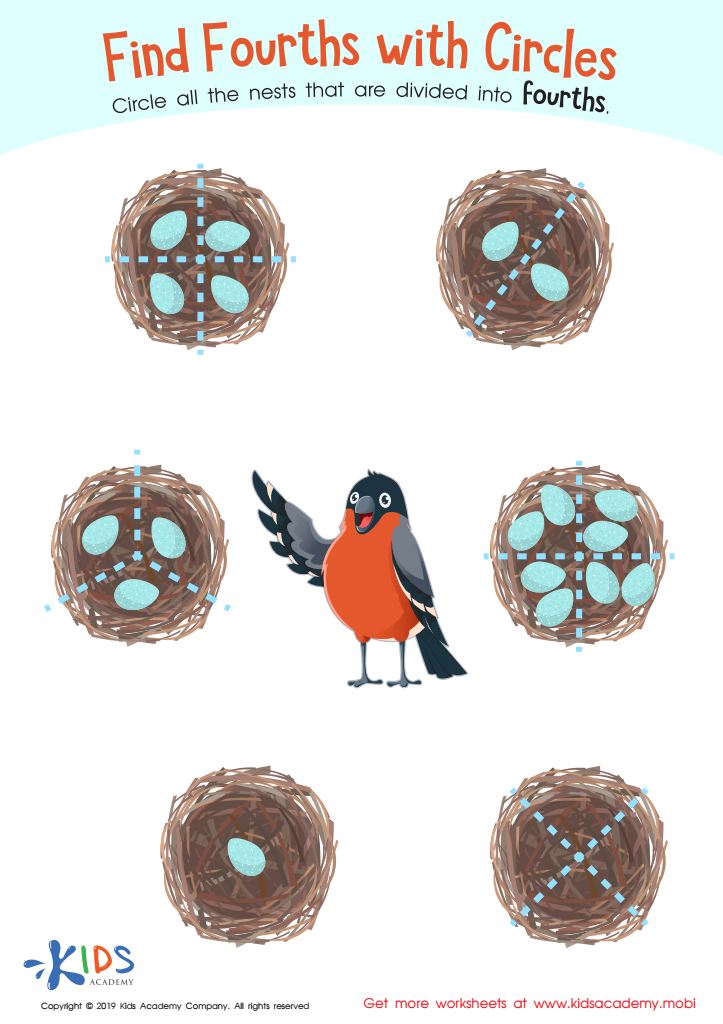
Find Fourths Circles Worksheet
Finding fractions with this Find Fourths with Circles worksheet can be fun! Your child will see a picture of circles divided into different fractions and circle the nests divided into fourths. With the help of their cheery bird friend, they can look for nests with four equal parts and be successful in finding the correct nest.
Find Fourths Circles Worksheet
Worksheet
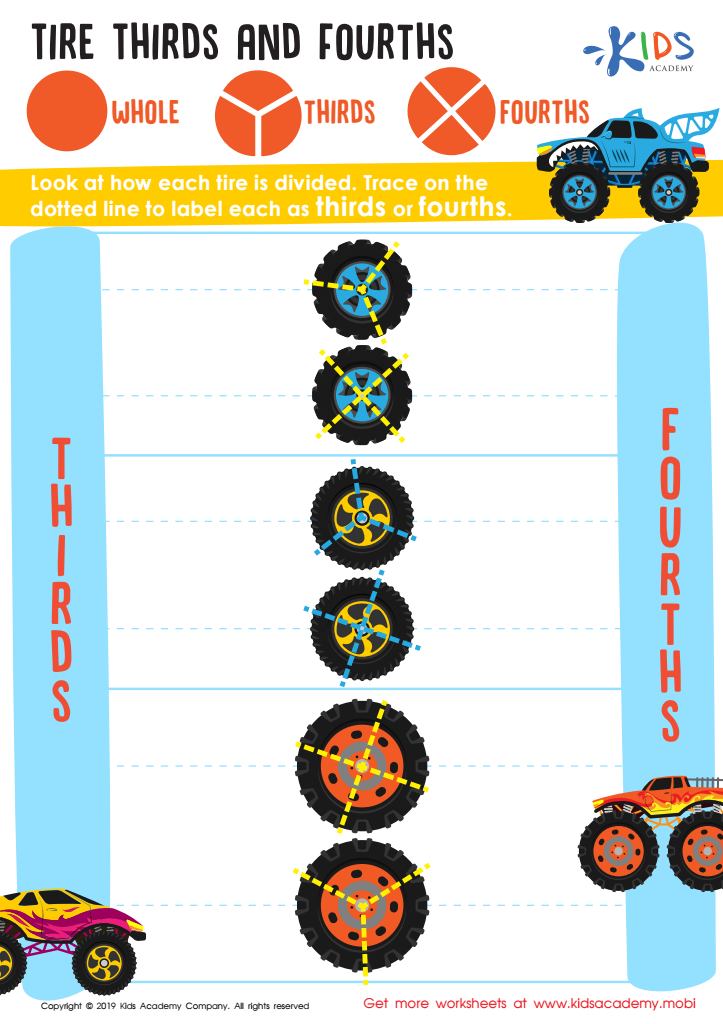
Tire Thirds and Fourths Worksheet
Learning geometry is key in your child's education. Have them identify and name shapes cut into 2, 3 and 4 parts. Test their knowledge with this worksheet - trace the dotted line to label each as third or fourth. Encourage them to keep learning!
Tire Thirds and Fourths Worksheet
Worksheet
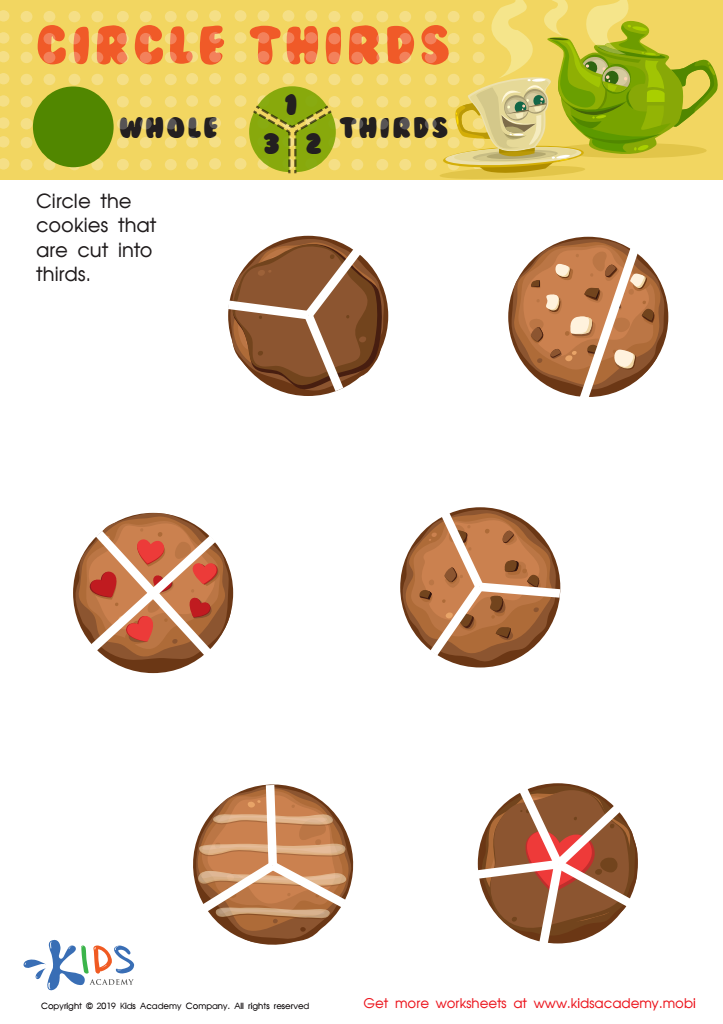
Circle Thirds Worksheet
Remind your kids of the different ways shapes can be divided: wholes, halves, thirds, and fourths. Now, look at the shapes in the worksheet and have them circle the cookies cut into thirds.
Circle Thirds Worksheet
Worksheet
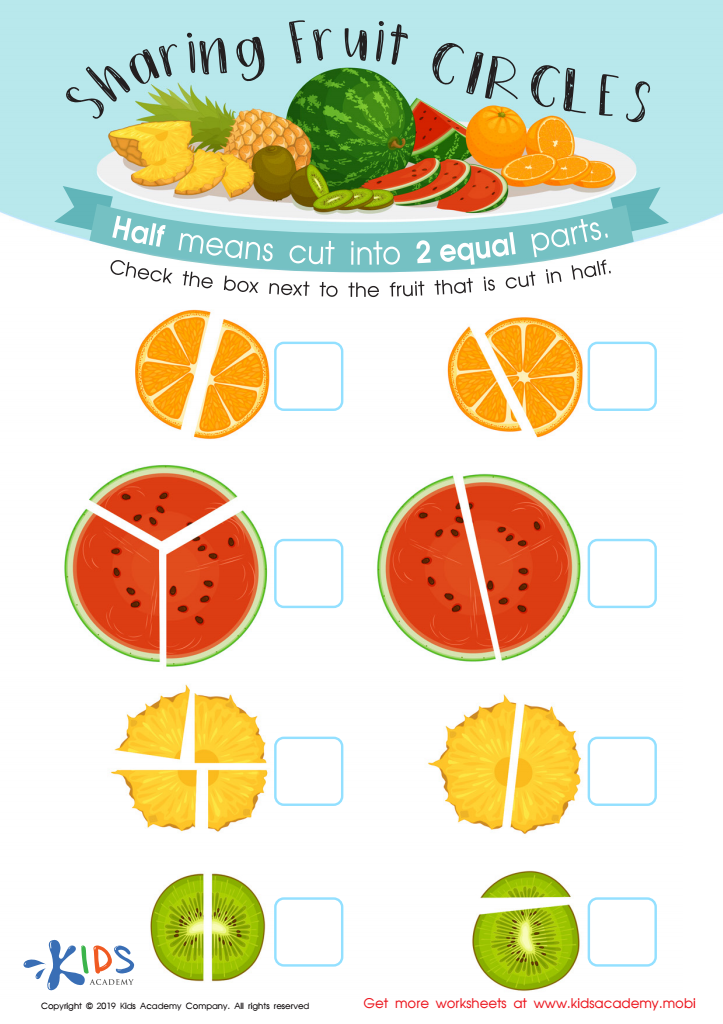
Sharing Fruit Circles Worksheet
Fruits are tasty and bright! Can your kids name some of their favorites? With this worksheet, you can use fruit to teach your kids geometry. Talk about how shapes can be cut into halves. Ask them to tick the box for the fruit halves in the printout.
Sharing Fruit Circles Worksheet
Worksheet
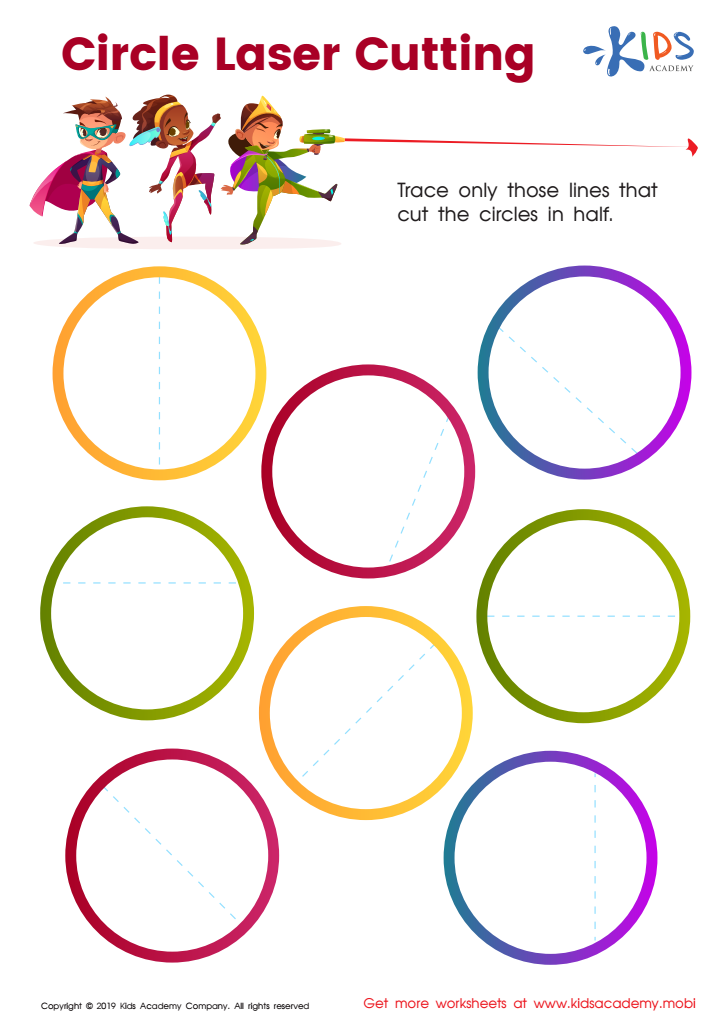
Circle Laser Cutting Worksheet
Encourage your kids to learn geometry! Remind them that when shapes are cut into two equal parts, they are called halves. Have them look at the circles in the worksheet, and trace the lines that cut the circles in half. Geometry is an essential part of education, and although it may not be exciting, it's a valuable skill to have.
Circle Laser Cutting Worksheet
Worksheet
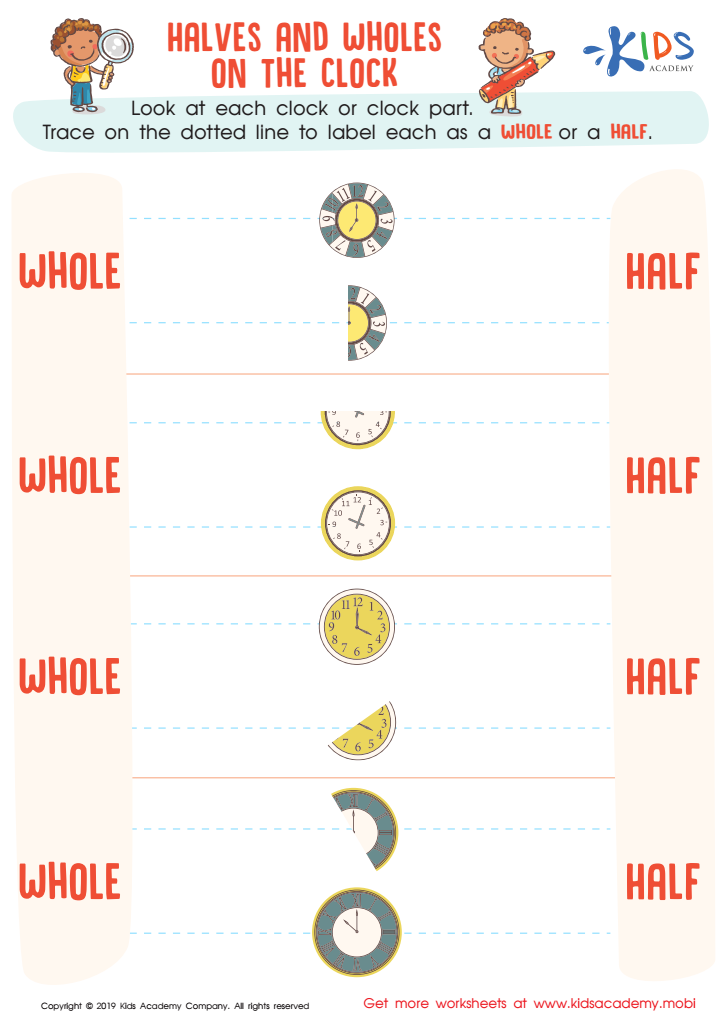
Halves and Wholes on the Clock Worksheet
Ask your kids if they know the difference between a whole and a half. If not, explain it's when a whole is divided into two equal parts. Show them the worksheet with clocks and clock parts, and help them label each shape as a whole or a half by tracing on the dotted line.
Halves and Wholes on the Clock Worksheet
Worksheet
Join Kids Academy for Free
Who is primarily going to use this learning content?








Geometry is essential for children ages 6-8 as it lays the foundation for critical thinking and problem-solving skills. At this stage, children encounter basic geometric concepts such as shapes, sizes, and spatial understanding. Engaging with geometry helps them develop visual perception and enhances their ability to interpret and navigate their surroundings.
Understanding geometry can also support early math skills. By identifying and classifying shapes, children learn to make connections between different kinds of mathematical concepts, fostering a deeper comprehension of numbers and measurements. This translates into better performance in more complex math tasks encountered later in their education.
Furthermore, geometry encourages creativity and exploration. Activities like building with blocks, drawing shapes, or engaging in crafts stimulate curiosity and allow children to experiment with spatial relationships and properties of shapes, leading to enhanced cognitive development.
Lastly, geometry is laden with real-world applications, from understanding architecture to crafting. By cultivating an interest in geometry early on, parents and teachers can inspire children to explore science, technology, engineering, and math (STEM)-based careers in the future. Thus, nurturing geometric understanding is crucial for a child’s holistic development, problem-solving ability, and lifelong learning.








