Tracing Shapes Worksheets for Ages 6-9
17 filtered results
-
From - To
Unlock your child's potential with our Tracing Shapes Worksheets designed for ages 6-9. Tailored to enhance fine motor skills and geometric understanding, these worksheets provide engaging tracing activities for young learners. Featuring a variety of shapes, from basic circles to complex polygons, our printables are an excellent resource for at-home practice or classroom enrichment. Each worksheet is crafted to foster hand-eye coordination, concentration, and foundational math skills. Spark creativity and build confidence as your child explores the exciting world of shapes. Ideal for parents and educators, our resources make learning fun and effective. Download your worksheets now!
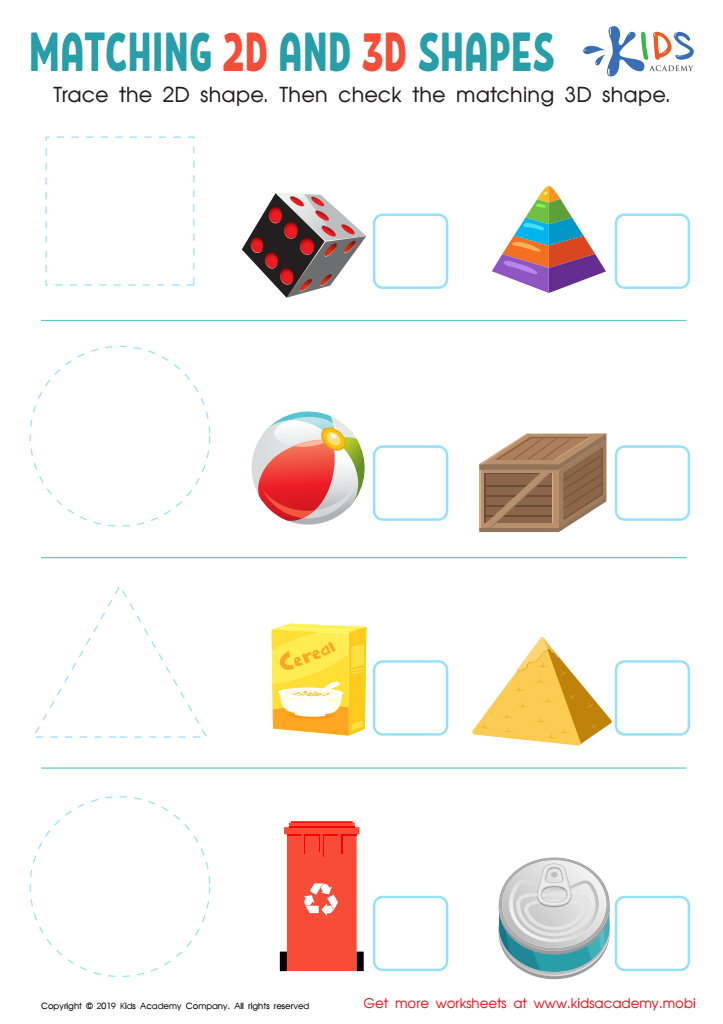
Matching 2D and 3D Shapes Worksheet
 Assign to My Students
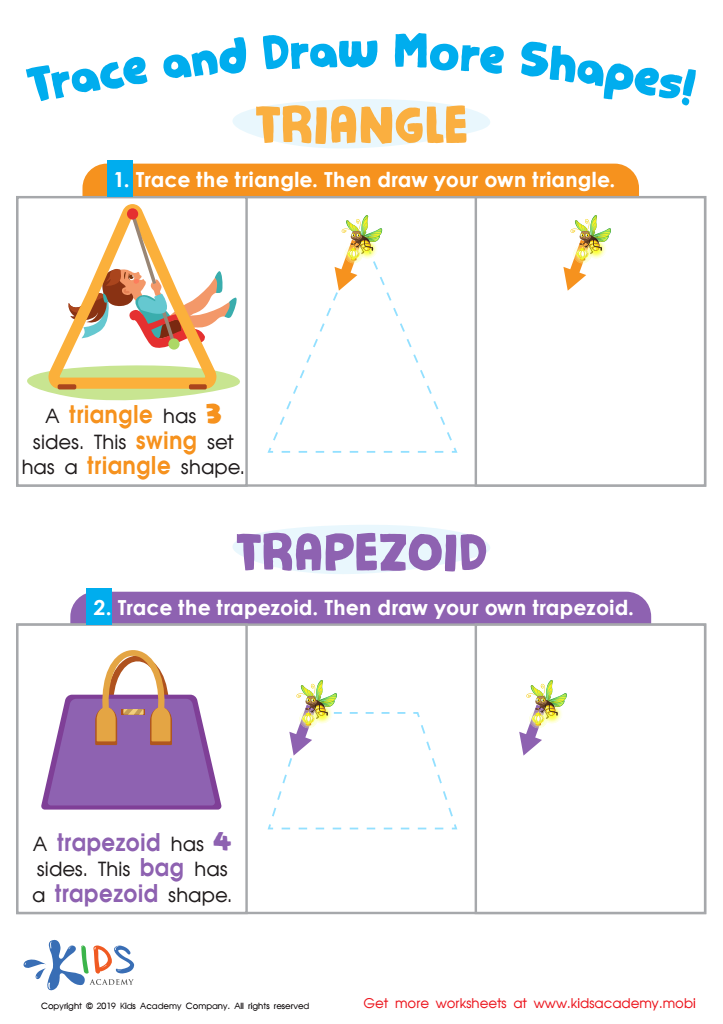
Trace and Draw More Shapes Worksheet
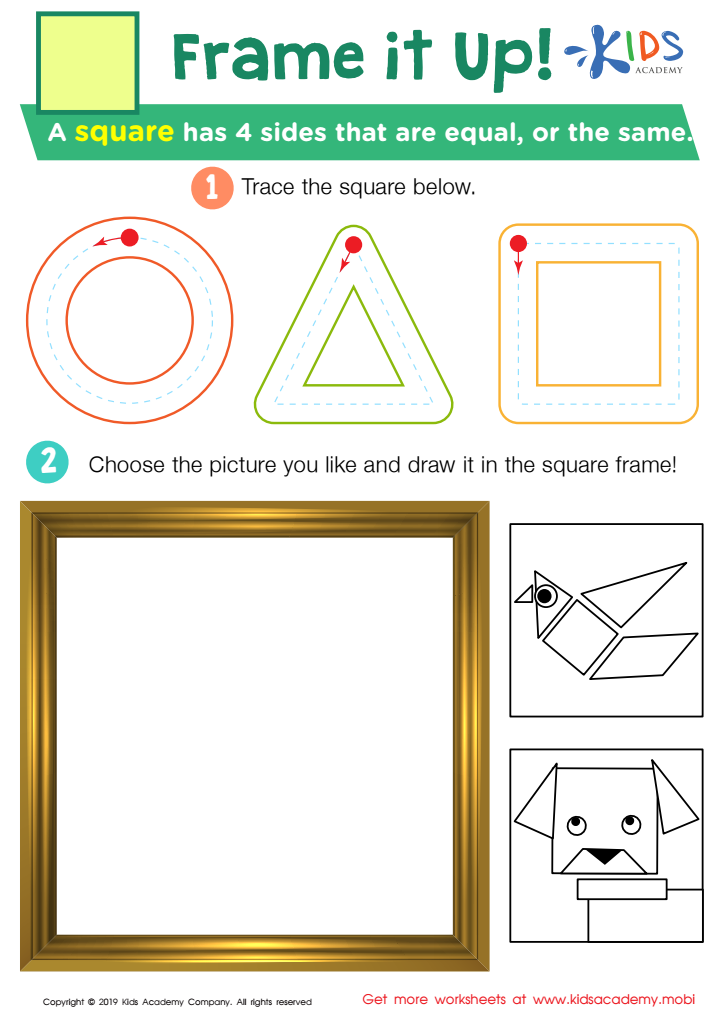
Frame it Up Worksheet
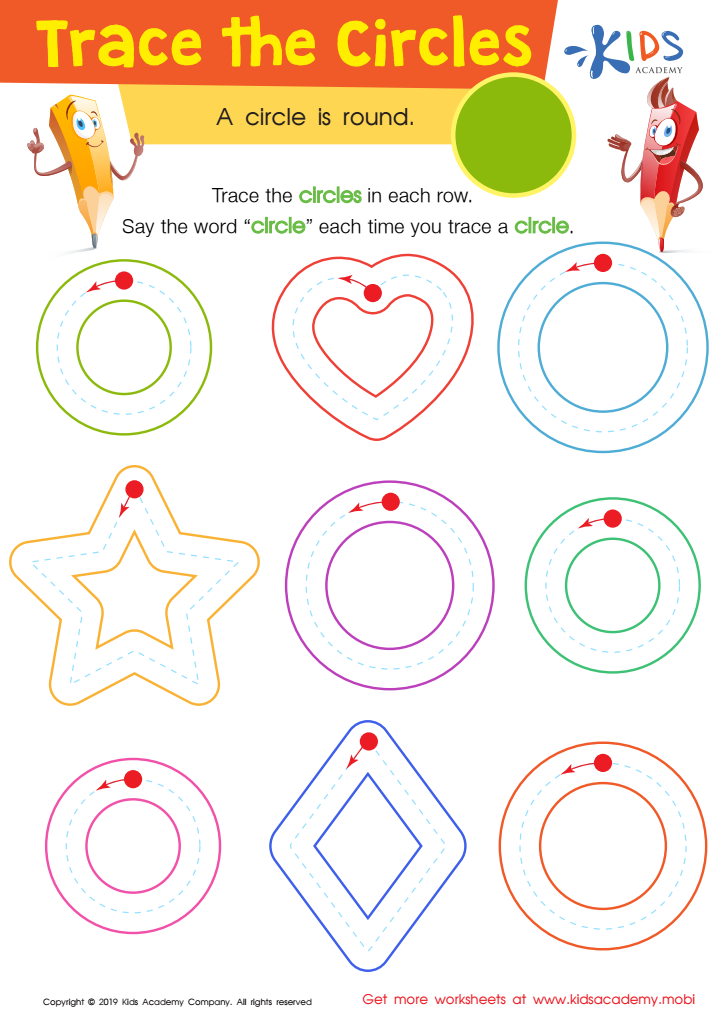
Trace The Circles Worksheet
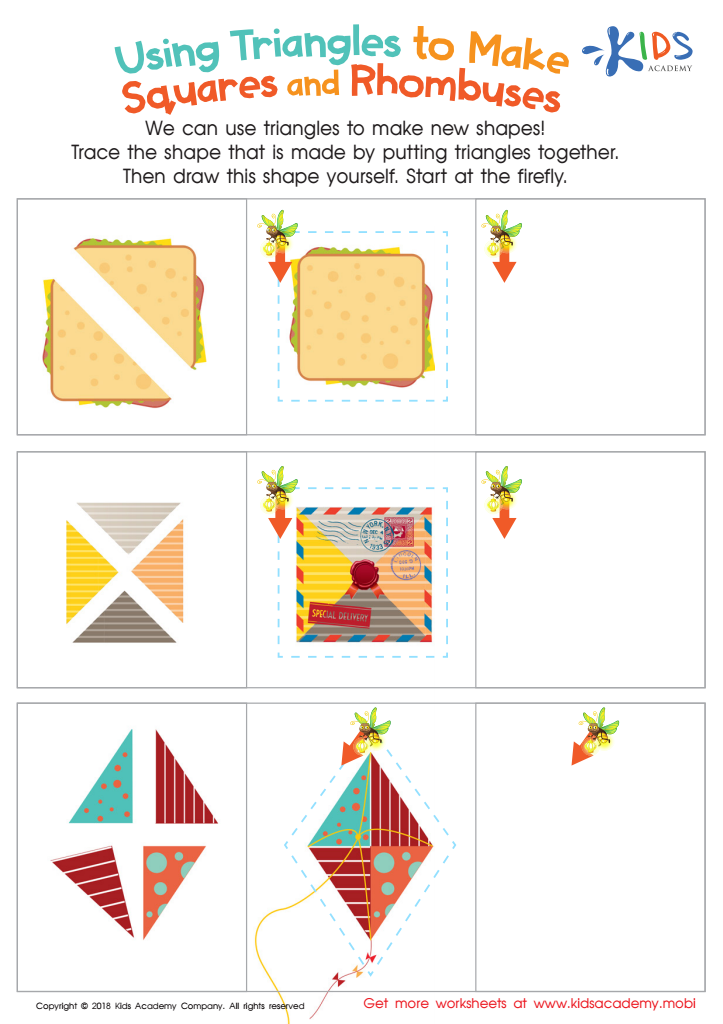
Using Triangles to Make Squares and Rhombuses Worksheet
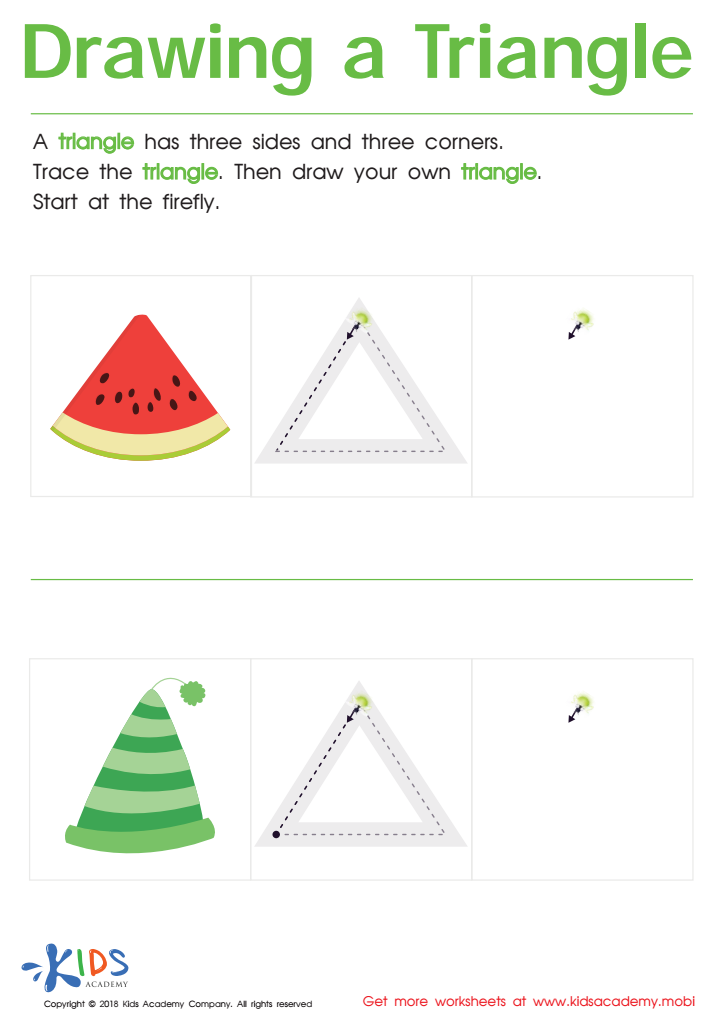
Drawing a Triangle Worksheet
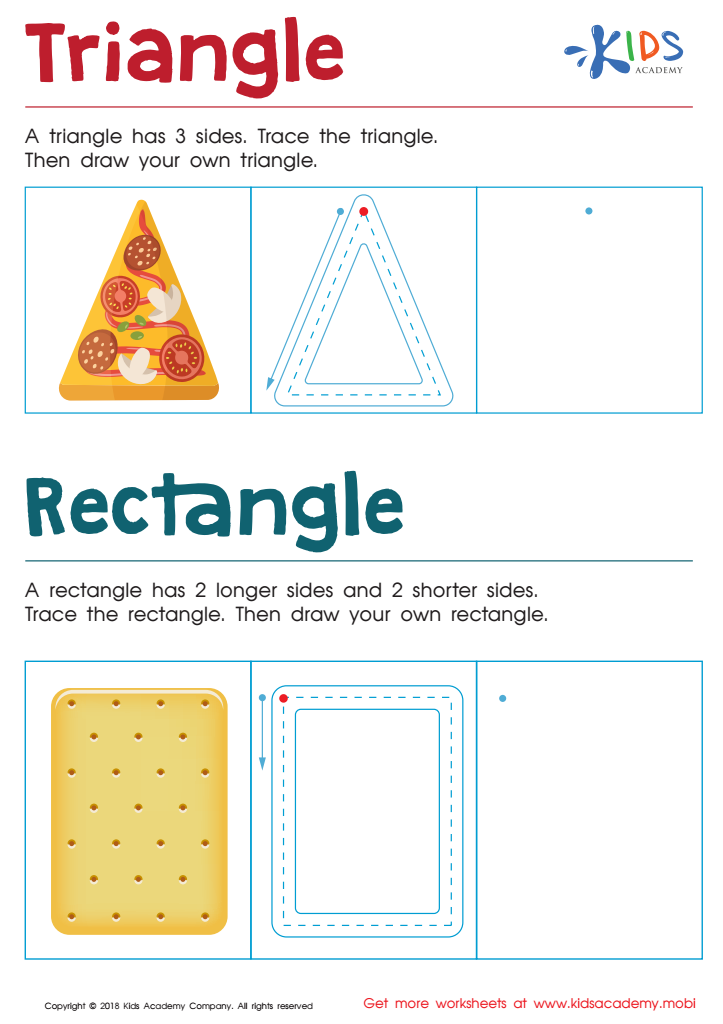
Triangle Rectangle Worksheet
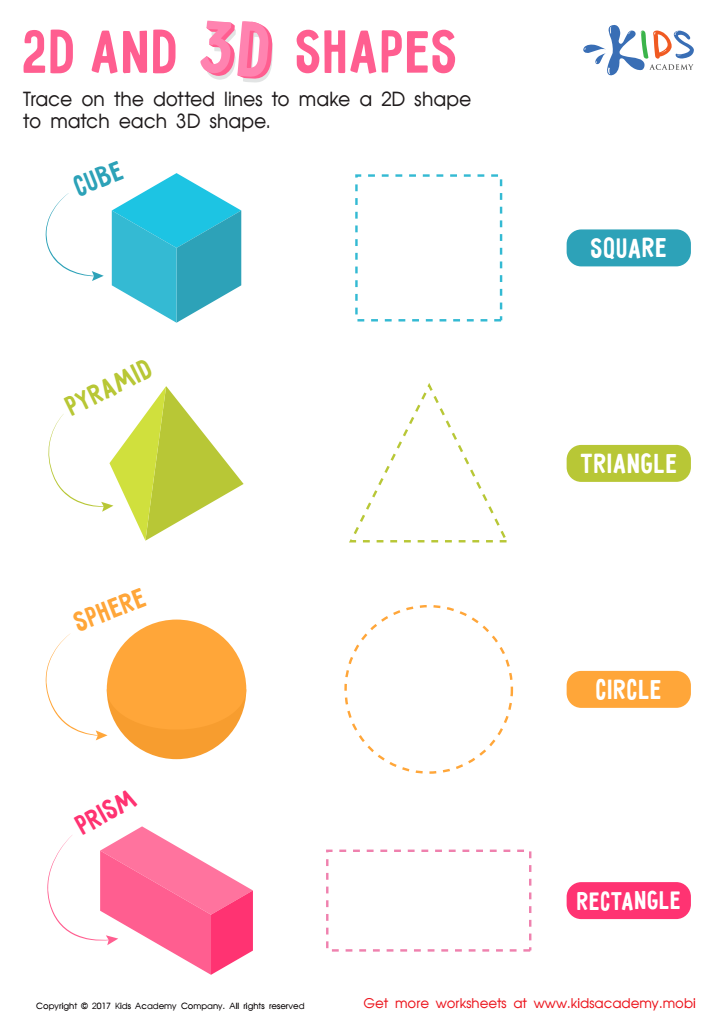
2D and 3D Shapes Worksheet
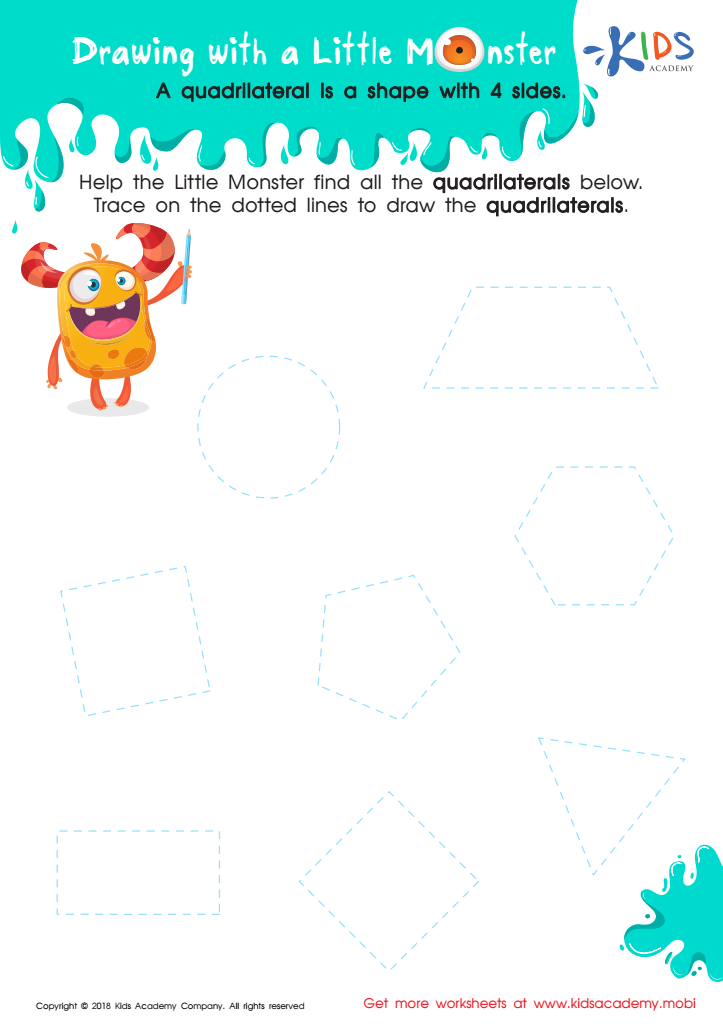
Drawing with a Little Monster Worksheet
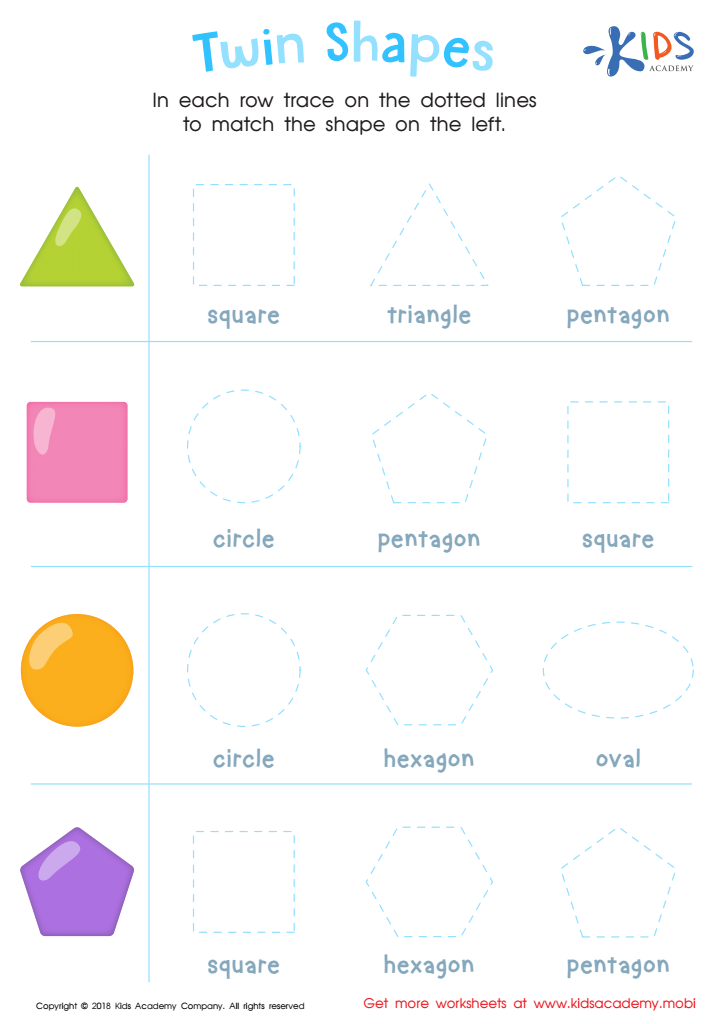
Twin Shapes Dot-to-Dot Worksheet
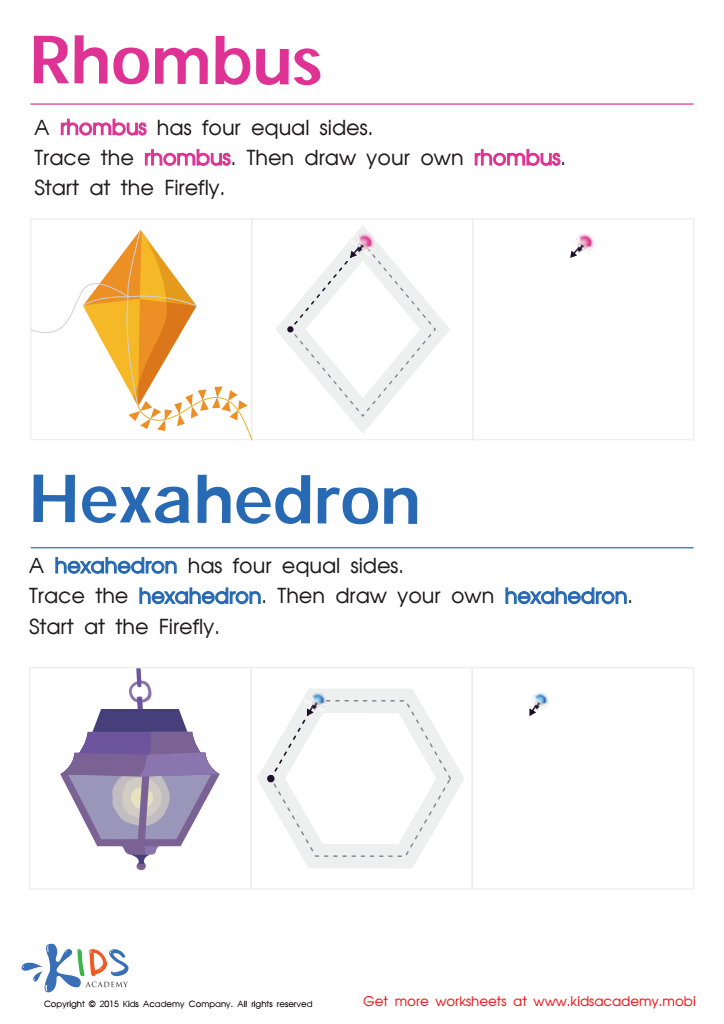
Draw a Rhombus And a Hexahedron Printable
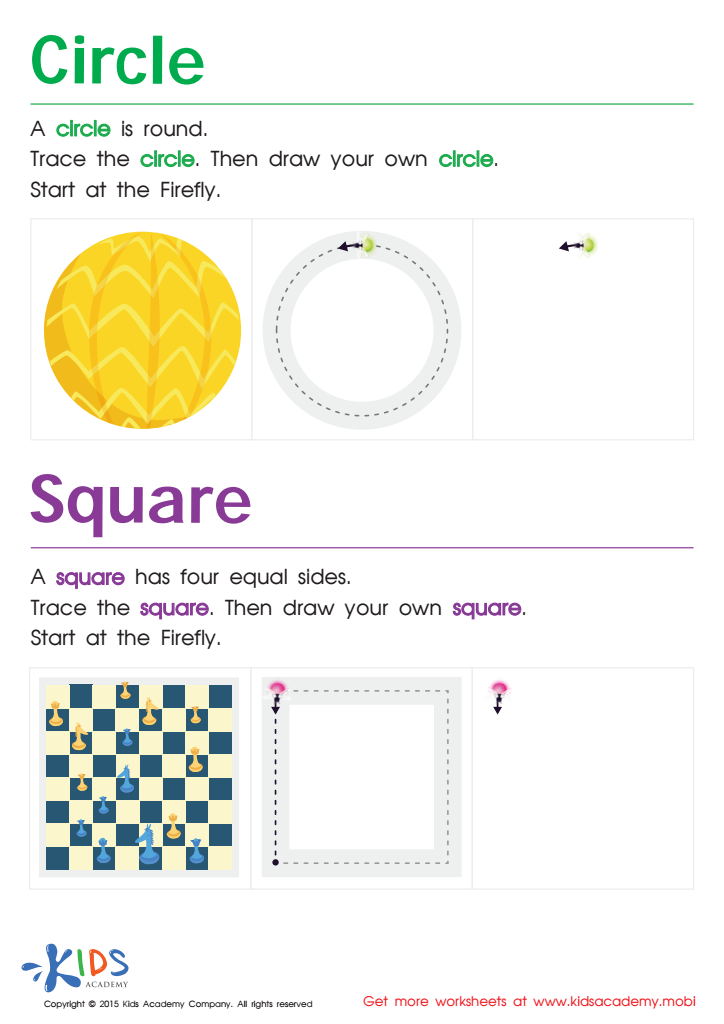
Trace And Draw a Circle And a Square Worksheet
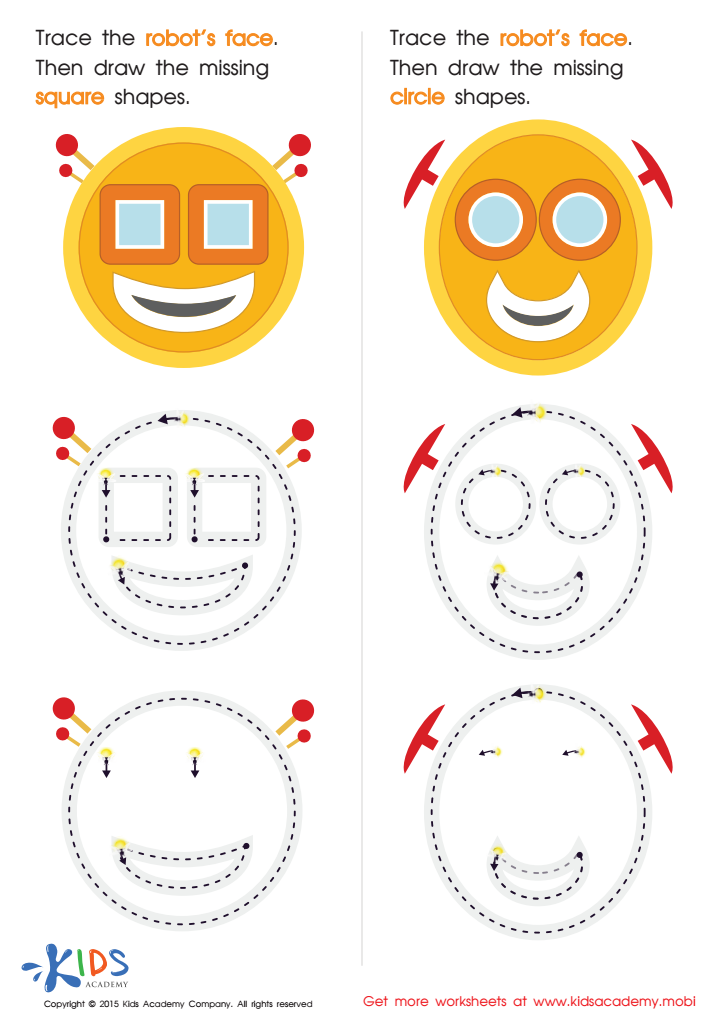
Practicing to Draw Circles And Squares Printable
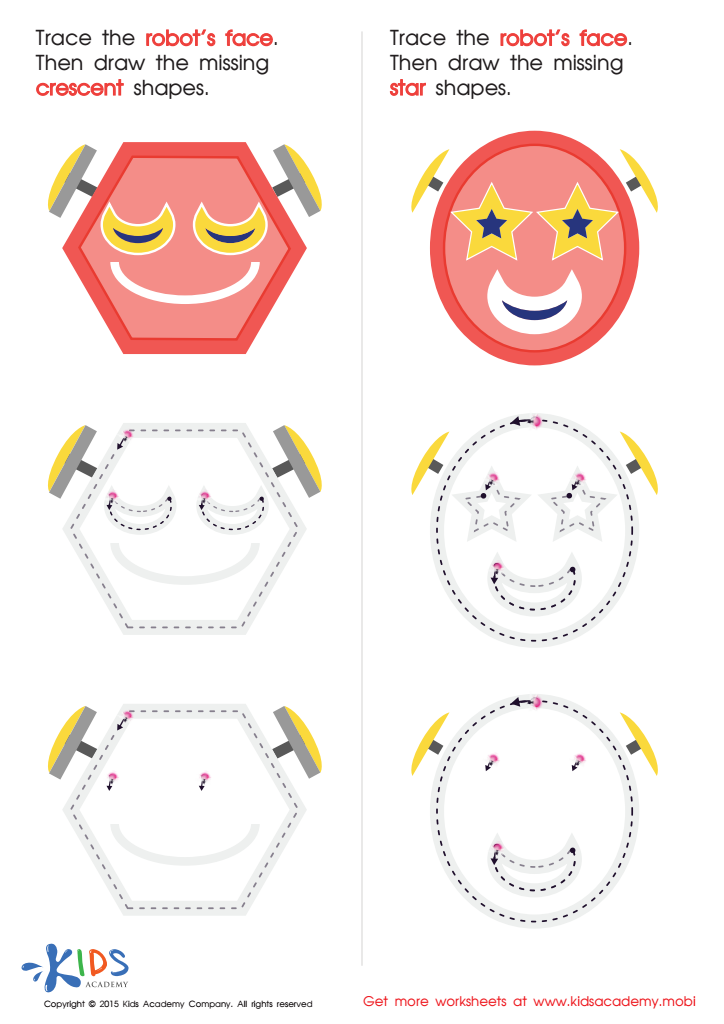
Composing a Robot's Face of Crescents And Stars Worksheet
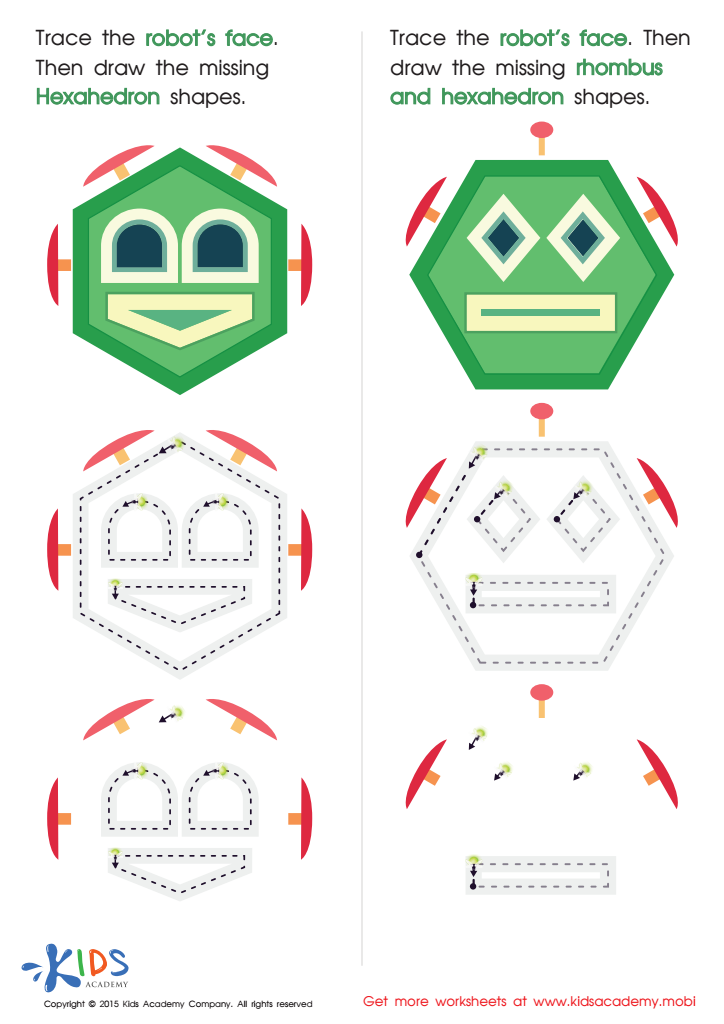
Practice Drawing Hexahedrons And a Rhombus Worksheet
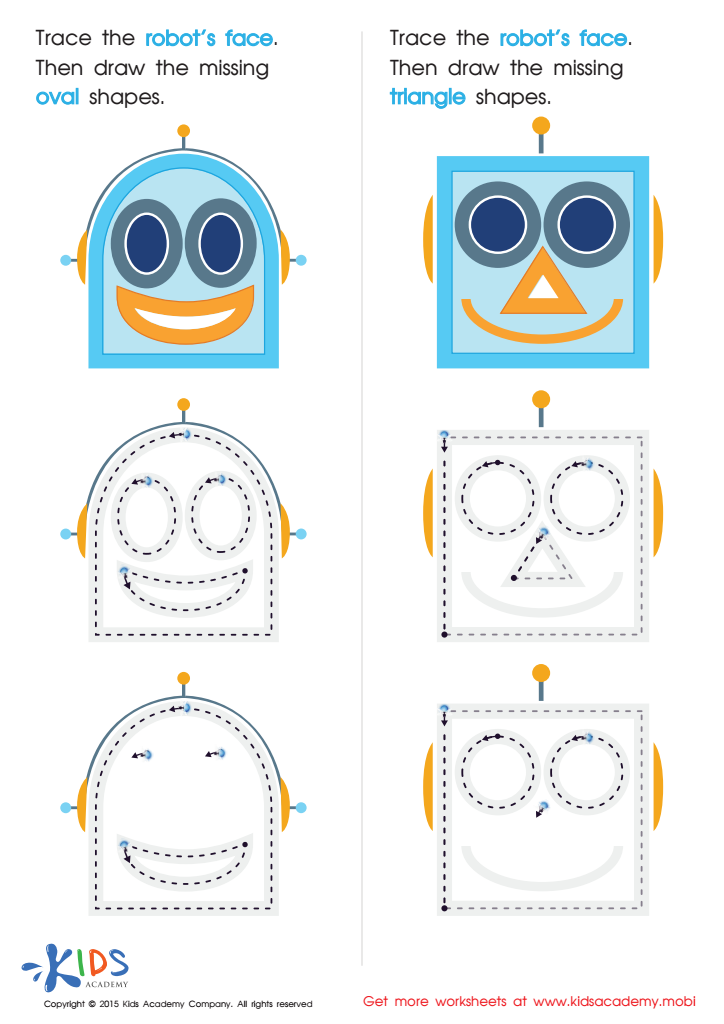
Drawing Ovals And Triangles with Fun Printable
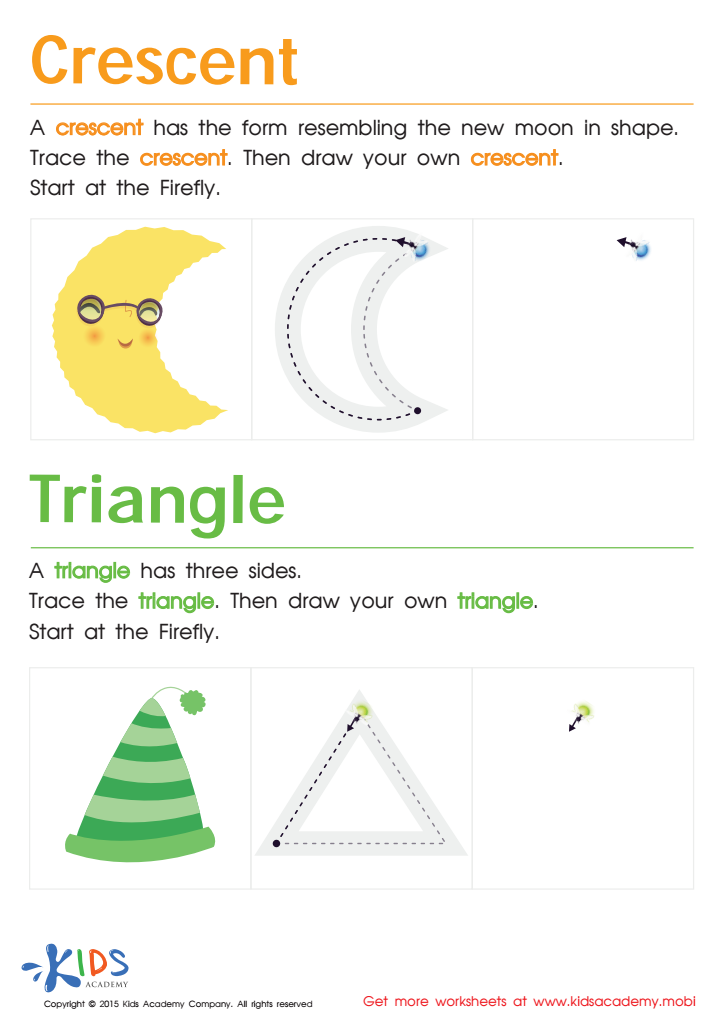
Learning to Draw Crescents And Triangles Worksheet








Tracing shapes is fundamental for children aged 6-9 because it serves as a crucial stepping-stone in their cognitive and motor skill development. At this age, children are refining their fine motor skills and hand-eye coordination—skills that are essential not only for writing but also for other daily tasks. Tracing shapes aids in strengthening these abilities, allowing children to control a pencil or crayon more effectively and produce precisely formed letters as they begin to write.
Furthermore, shape tracing enhances spatial awareness and geometry understanding. Early interaction with shapes helps children familiarize themselves with geometric concepts, such as points, lines, angles, and symmetry. These basic geometric principles lay the groundwork for more advanced math skills that they will encounter later on in their academic journey.
In addition, tracing shapes supports cognitive development, especially in pattern recognition and problem-solving. As children trace and recreate shapes, they learn to recognize patterns, predict outcomes, and develop an analytical mindset. This analytical skill is beneficial across various subjects, including science and technology, making future learning experiences more enriching.
Overall, tracing shapes is not just about geometric forms; it is an interdisciplinary educational activity that supports fundamental learning skills necessary for a child's holistic academic and developmental progress. For parents and teachers, incorporating these activities can facilitate a well-rounded educational foundation.