Filters

1937 filtered results

Clear all filters
Favorites
With answer key
Interactive

1937 filtered results

Difficulty Level

Grade


Check out this FREE Trial Lesson for age 7-9!

Initial Positions on the Board

Favorites
With answer key
Interactive
  • 7-9
  • Interactive
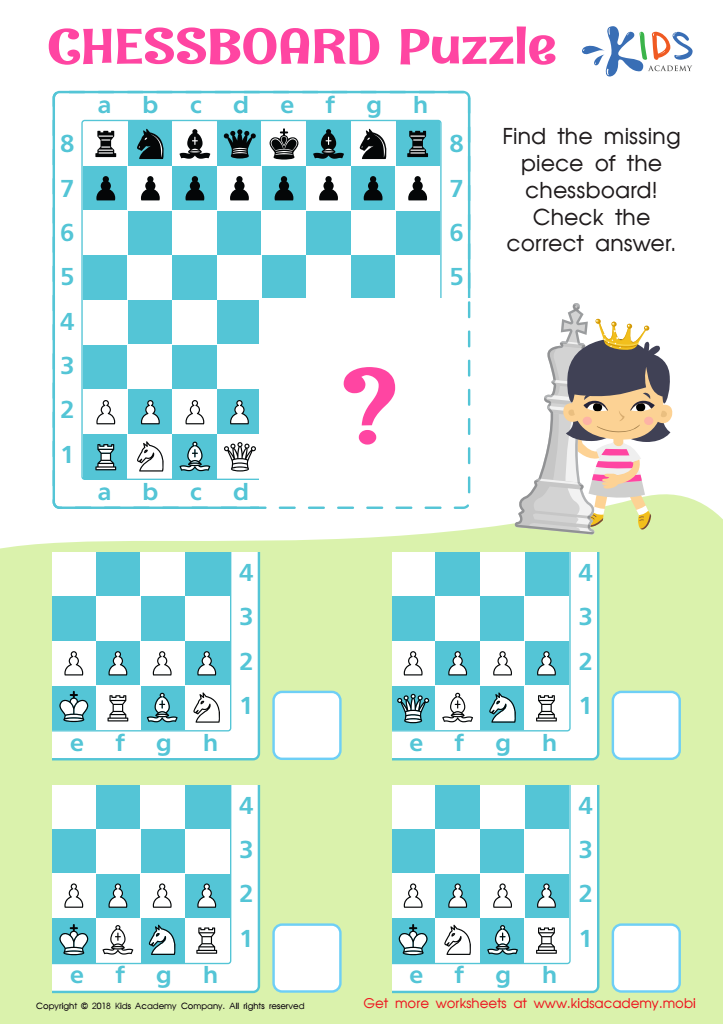
Chessboard Puzzle Worksheet
Chessboard Puzzle Worksheet

Test your child's chess prowess with this simple worksheet. They must find the missing pieces to complete the white side of an empty chessboard. The black pieces are already arranged properly on the board. Correct answers are provided so you can see how they did!
Chessboard Puzzle Worksheet
Worksheet
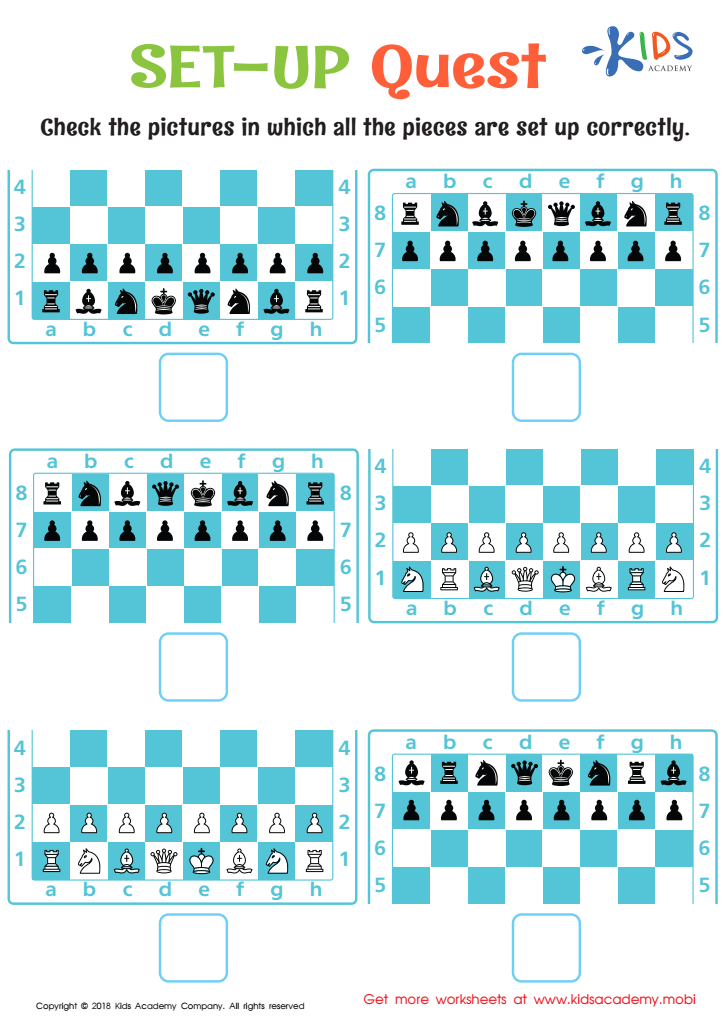
Setting up the Chessboard: Part 2 Worksheet

Setting up the Chessboard: Part 2 Worksheet

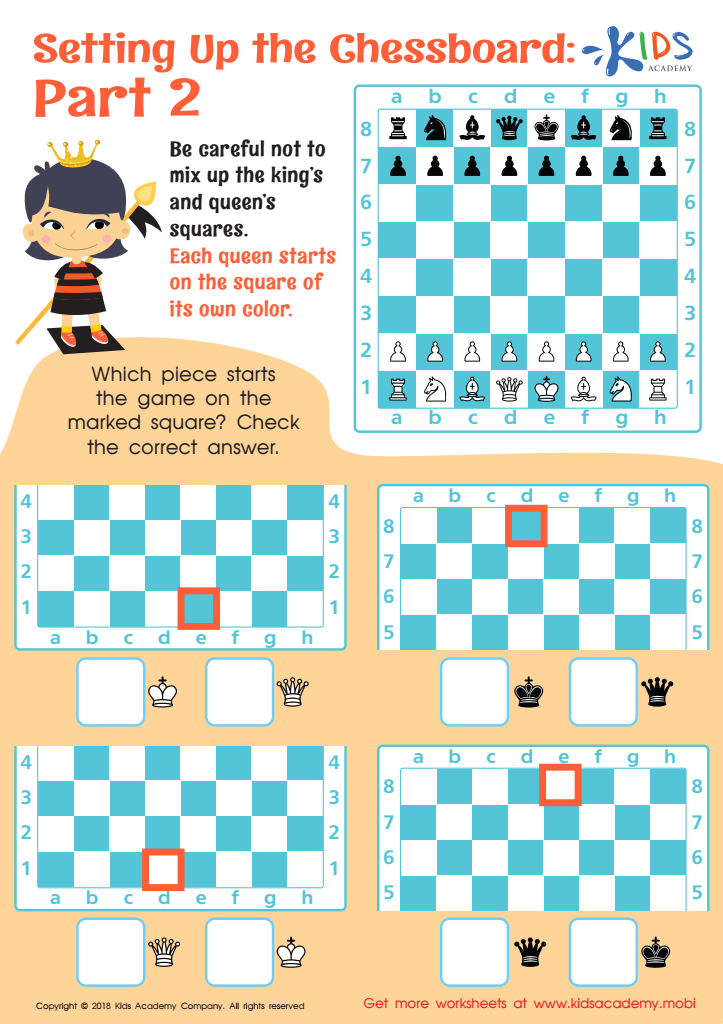
Before starting the game, make sure your child knows how to correctly set up the chessboard. Point to each square and ask them to name the piece that should be there. If they don't know, the printout can help. Remind them the queens should be on their own colour's square, then have them check the correct answers for the other pieces.
Setting up the Chessboard: Part 2 Worksheet
Worksheet
Setting up the Chessboard: Part 1 Worksheet

Setting up the Chessboard: Part 1 Worksheet

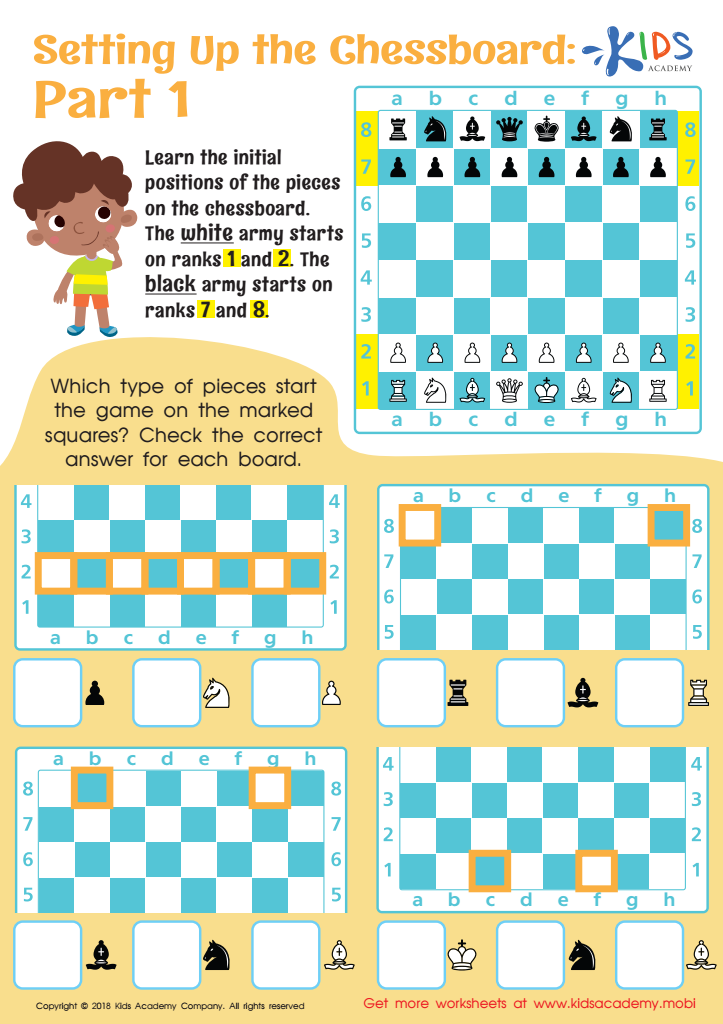
Teach your child the starting positions of the black and white armies on the chessboard. Black pieces are placed on ranks 7 and 8, and white pieces on ranks 1 and 2. Have them check the highlighted boxes on the chessboard to make sure they know the correct pieces to start with.
Setting up the Chessboard: Part 1 Worksheet
Worksheet
Find Diagonals Worksheet

Find Diagonals Worksheet

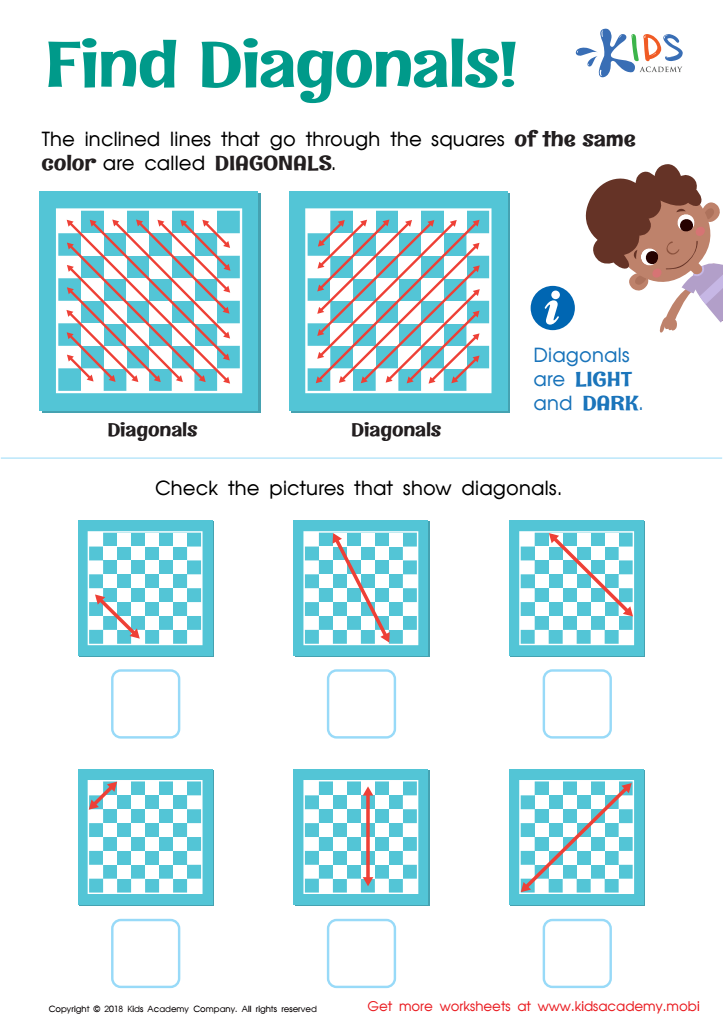
Help your child learn the name of the lines that go through squares with this fun worksheet. Diagonals slant in left or right directions and create the same shape. Ask your child to identify the pictures with correctly drawn diagonals.
Find Diagonals Worksheet
Worksheet
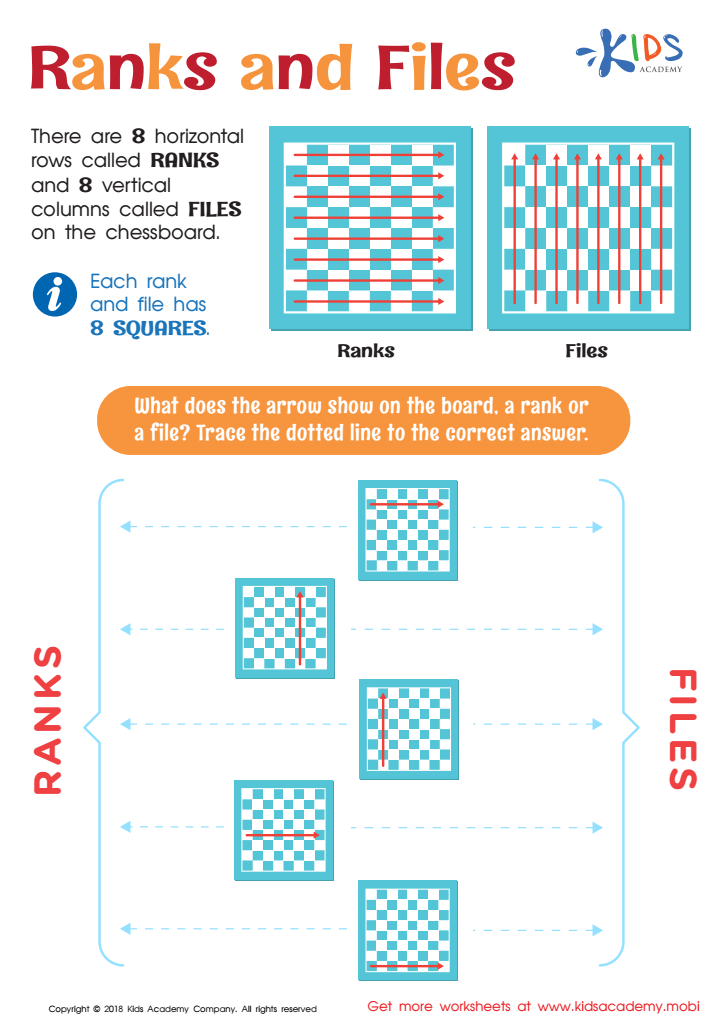
Ranks and Files Worksheet

Ranks and Files Worksheet

A chessboard has 8 horizontal ranks and 8 vertical files, each with 8 squares. Test your child's understanding of these directions with this fun worksheet!
Ranks and Files Worksheet
Worksheet
Position of the Chessboard: White on the Right Worksheet

Position of the Chessboard: White on the Right Worksheet

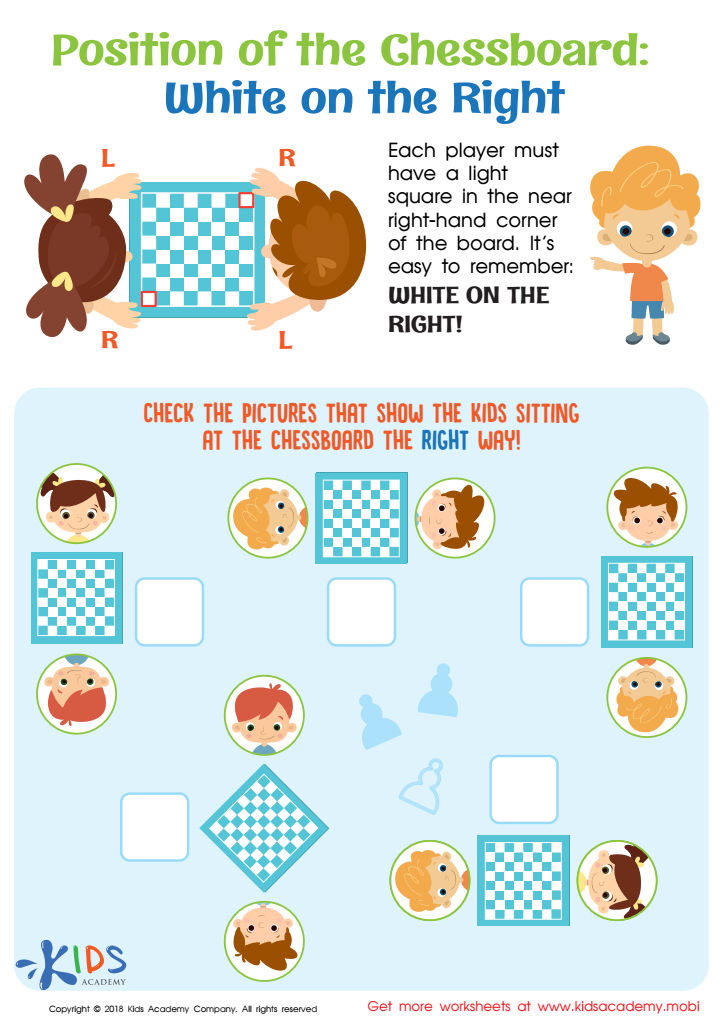
Proper positioning of the chessboard and players is key. Before the game, make sure the white square is in the right-hand corner. A simple rhyme can help: "White on the right". Check pictures of kids at the chessboard to ensure correct positioning.
Position of the Chessboard: White on the Right Worksheet
Worksheet
How Pawns Move: Part I Worksheet

How Pawns Move: Part I Worksheet

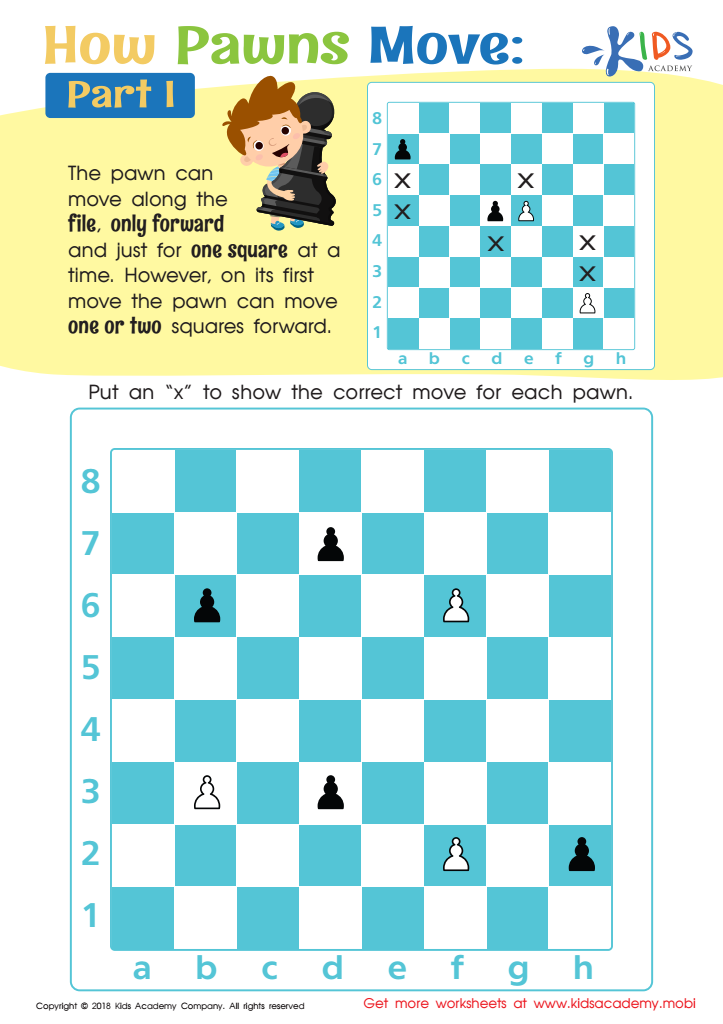
Pawns can only move forward along the file one square at a time. For its first move, a pawn can move one or two squares. Show your child how to move pawns by asking them to put an X for the correct move on this worksheet. This exercise will help them gain confidence in using pawns.
How Pawns Move: Part I Worksheet
Worksheet
How Pawns Capture Worksheet

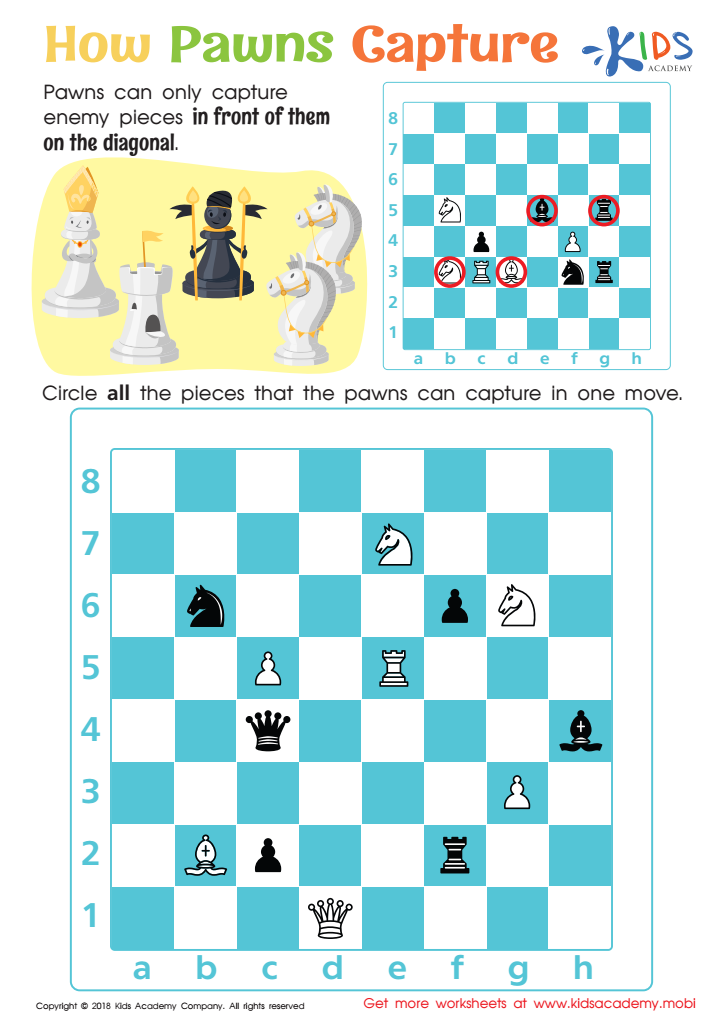
How Pawns Capture Worksheet

Ask your child to circle all the places a pawn can capture in one move on the diagonal. Pawns are limited in the moves they can make, but can still capture enemy pieces. This worksheet will help brush up on their knowledge of the rules of chess.
How Pawns Capture Worksheet
Worksheet
Pawns Bingo Worksheet

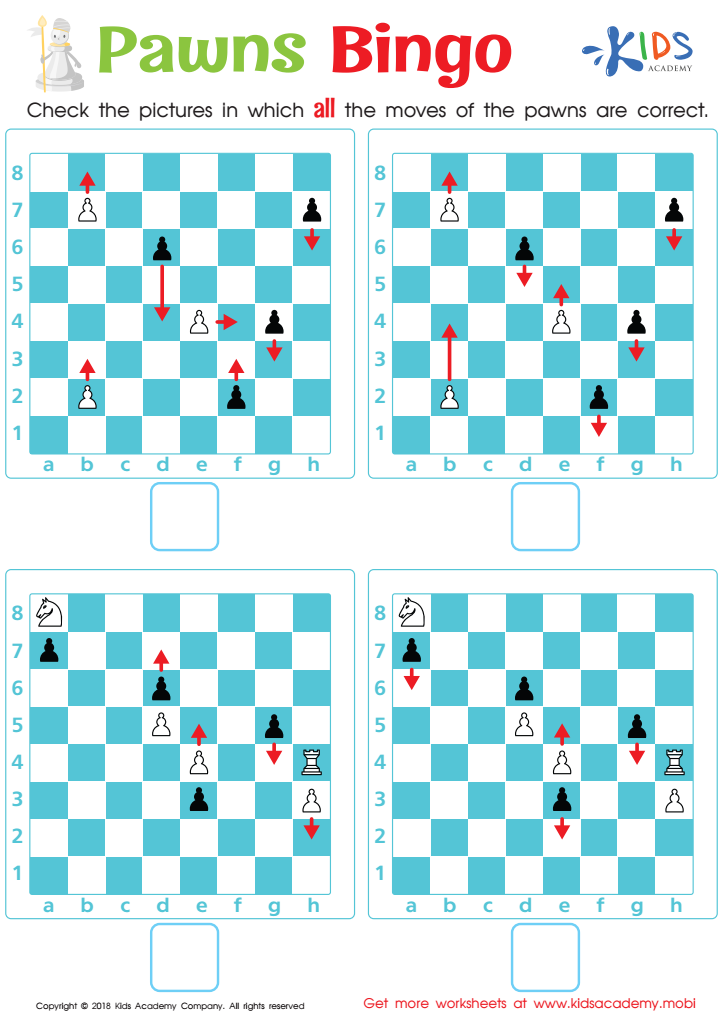
Pawns Bingo Worksheet

Test your students' knowledge of chess pawns. Present them with a worksheet featuring a picture, and ask them to identify the correct pawn moves. Afterward, they'll be better equipped to maneuver strategically on the chessboard.
Pawns Bingo Worksheet
Worksheet
How Pawns Move: Part II Worksheet

How Pawns Move: Part II Worksheet

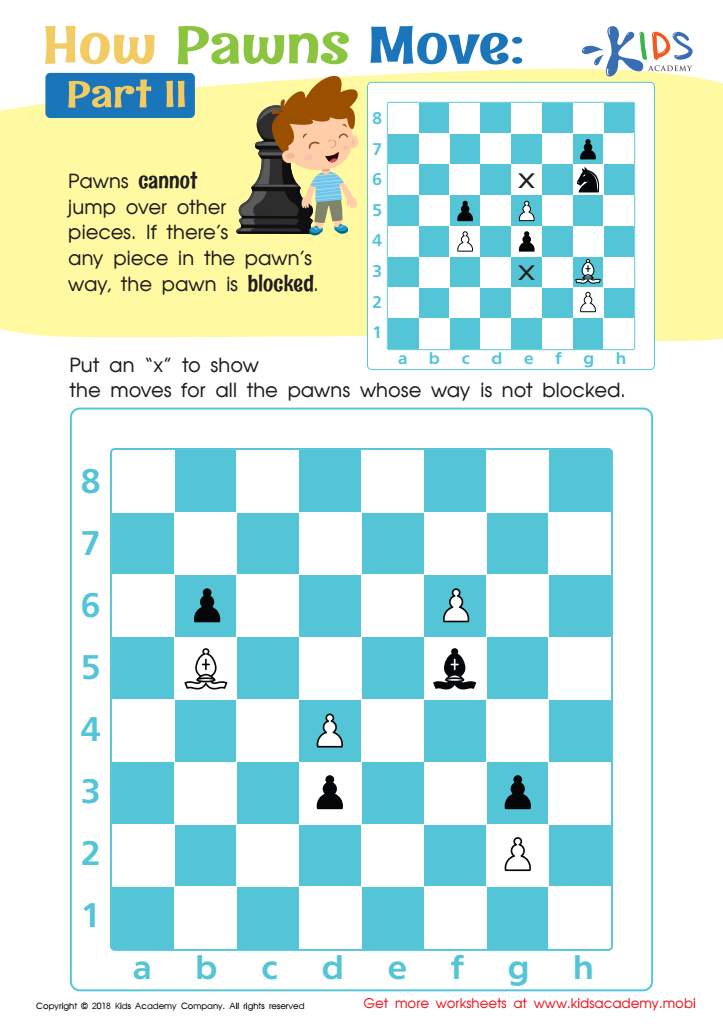
Pawns are the first to attack in chess and each player has the most pieces. They can't jump over other pieces, so if there's an obstacle, the pawn can't move. Ask your child to put an X to show all possible moves for the pawns not blocked by other pieces. (80)
How Pawns Move: Part II Worksheet
Worksheet
How King Moves Worksheet

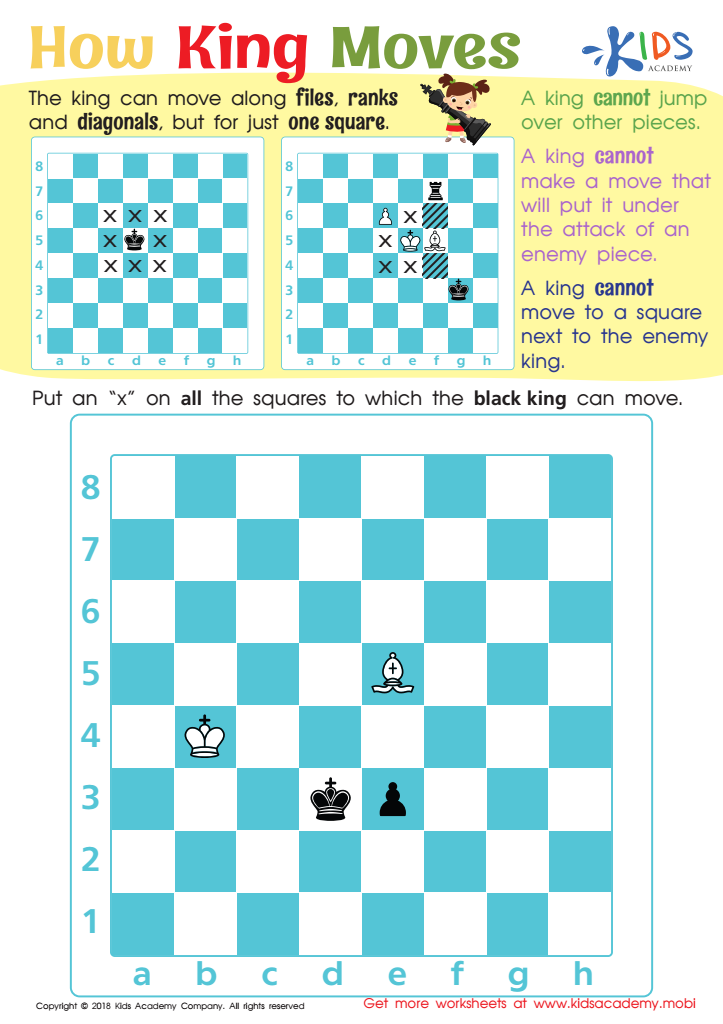
How King Moves Worksheet

Teach your kids the fundamentals of chess with this worksheet! The goal is to checkmate the opponent's king, so it must be protected at all times. The king moves along files, ranks, and diagonals (except one square at a time), and cannot move to a square next to the enemy king. Your kids will soon master the art of checkmate!
How King Moves Worksheet
Worksheet
Knight Quest Worksheet

Knight Quest Worksheet

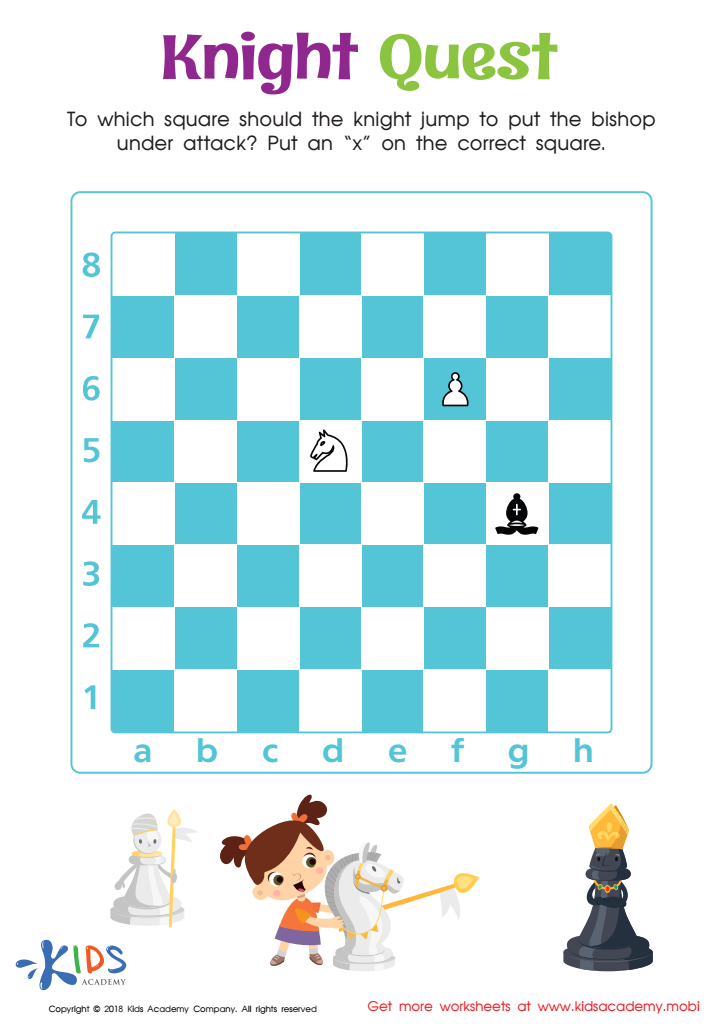
Testing your child's strategic planning and chess skills? Give them this worksheet: Ask them to mark an 'x' on the square where the knight should jump to attack the enemy bishop. See how well they plan for a win! (80 words)
Knight Quest Worksheet
Worksheet
Knights Bingo Worksheet

Knights Bingo Worksheet

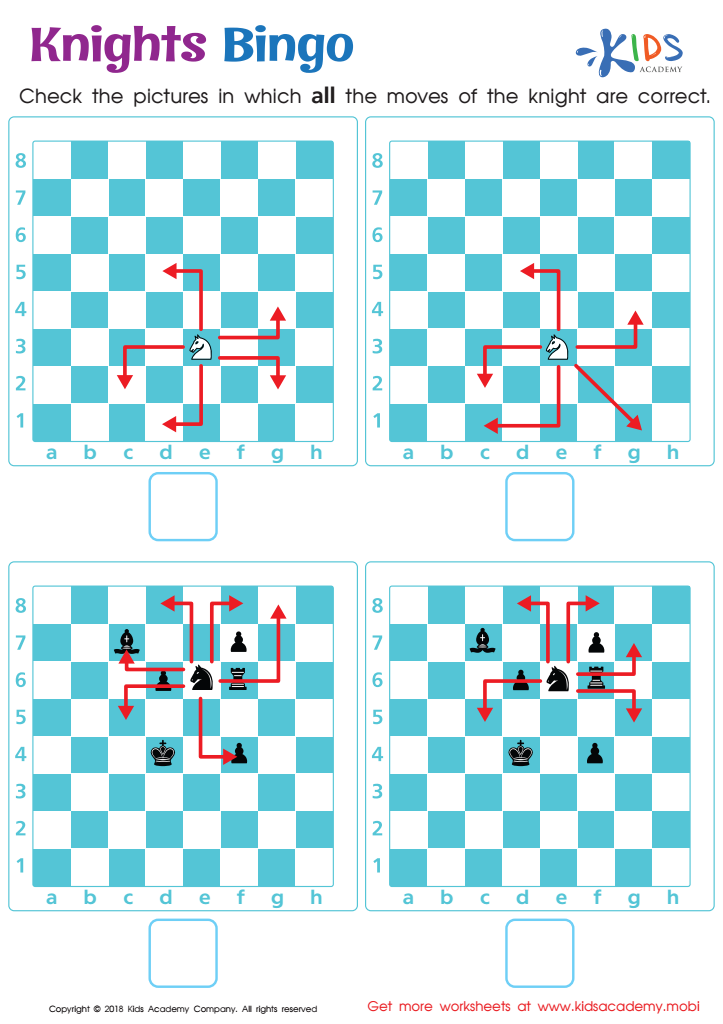
Help your child identify legal knight moves in this easy worksheet. Review each picture with them, questioning if the knight moves are correct. Then have them verify pictures with correct moves.
Knights Bingo Worksheet
Worksheet
How Knights Move Worksheet

How Knights Move Worksheet

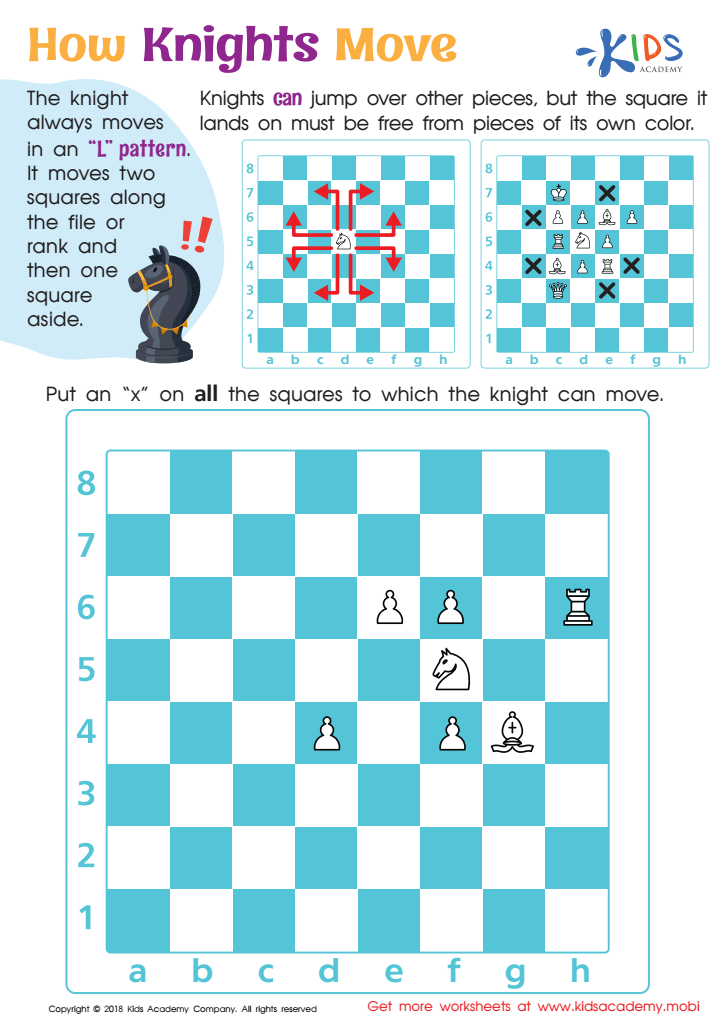
Get your kids to tell you how a knight moves in chess. If they need help, explain that a knight moves in an «L» pattern - two squares on the file/rank, one square aside. It may also jump over other pieces, as long as the landing square is unoccupied. Have them mark the squares where the knight can move in the exercise.
How Knights Move Worksheet
Worksheet
How Knight Captures Worksheet

How Knight Captures Worksheet

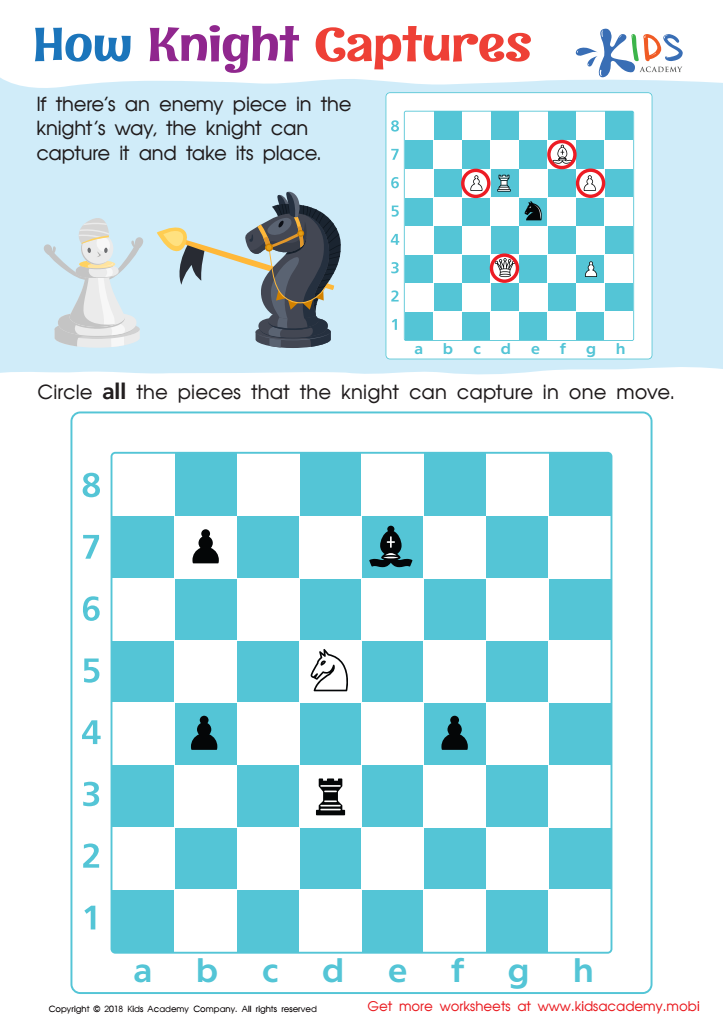
Test your child's knowledge of chess pieces by asking them to identify the knight. It is shaped like a horse and its goal is to capture the enemy king in order to win the game. The knight has the advantage of being able to jump over other pieces, taking them out and taking their place. See how many pieces the knight can capture in one move with this worksheet.
How Knight Captures Worksheet
Worksheet
Bishop Quest Worksheet

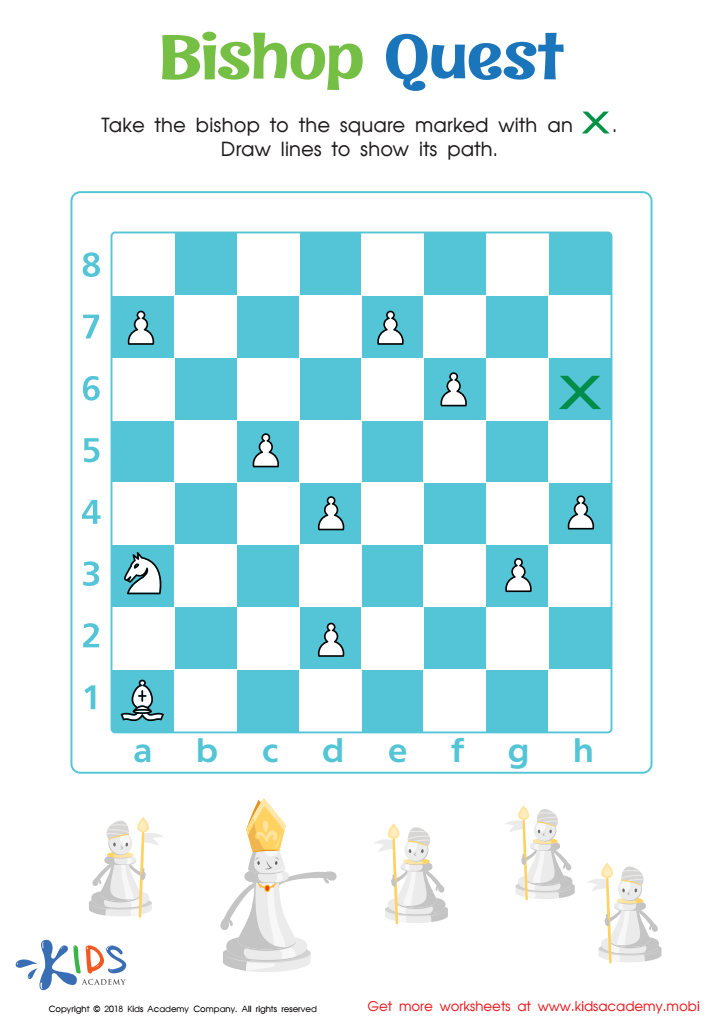
Bishop Quest Worksheet

Show kids the board and ask them to identify the bishop. Then ask them to move it to the square marked 'x', drawing lines to show its path. This worksheet helps teach kids how to move the bishop on a chessboard.
Bishop Quest Worksheet
Worksheet
How Bishops Move Worksheet

How Bishops Move Worksheet

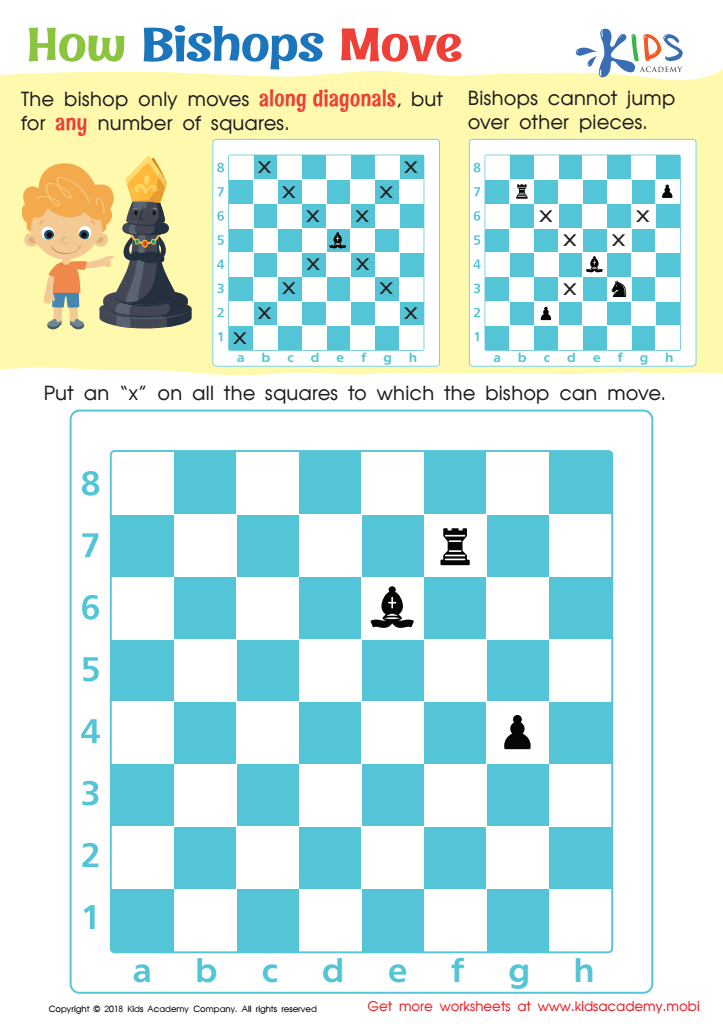
There is no such thing as too much sharpening of skills. Encourage your child to learn more about chess technicalities with this simple worksheet. It shows them how a bishop moves: along diagonals any number of squares, but it can't jump over other pieces.
How Bishops Move Worksheet
Worksheet
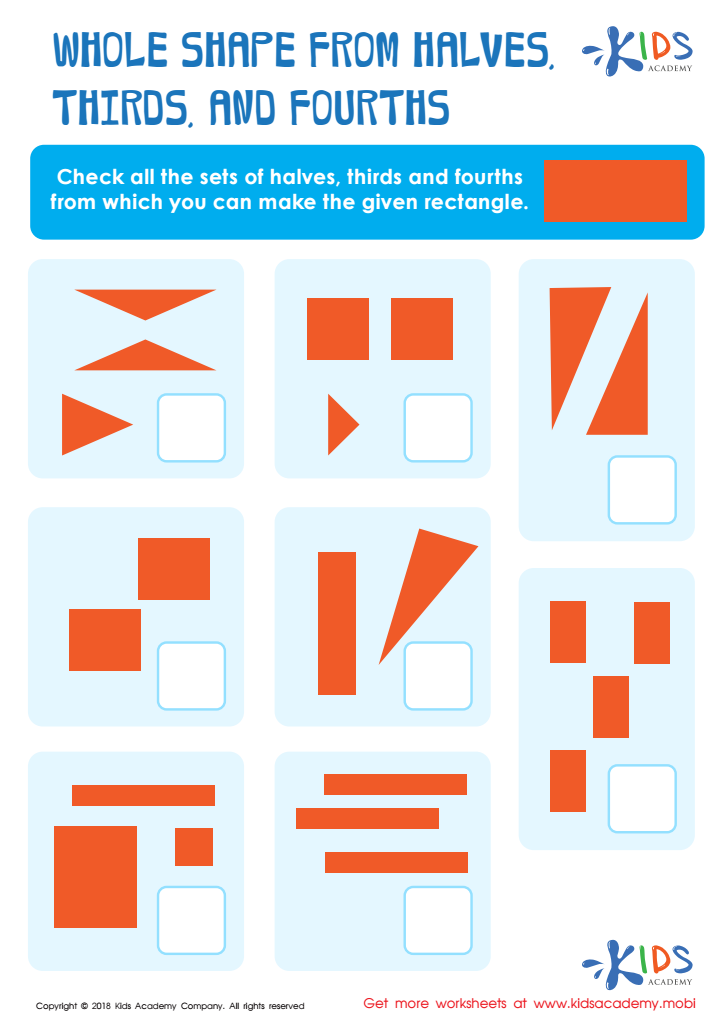
Whole Shape from Halves, Thirds and Fourths Worksheet

Whole Shape from Halves, Thirds and Fourths Worksheet

Explain to your students that they can make a new shape by combining halves, thirds, and fourths of a shape. Show them the worksheet with the rectangle at the top and ask them to find which sets of halves, thirds, and fourths make it. Have them check all the correct sets.
Whole Shape from Halves, Thirds and Fourths Worksheet
Worksheet
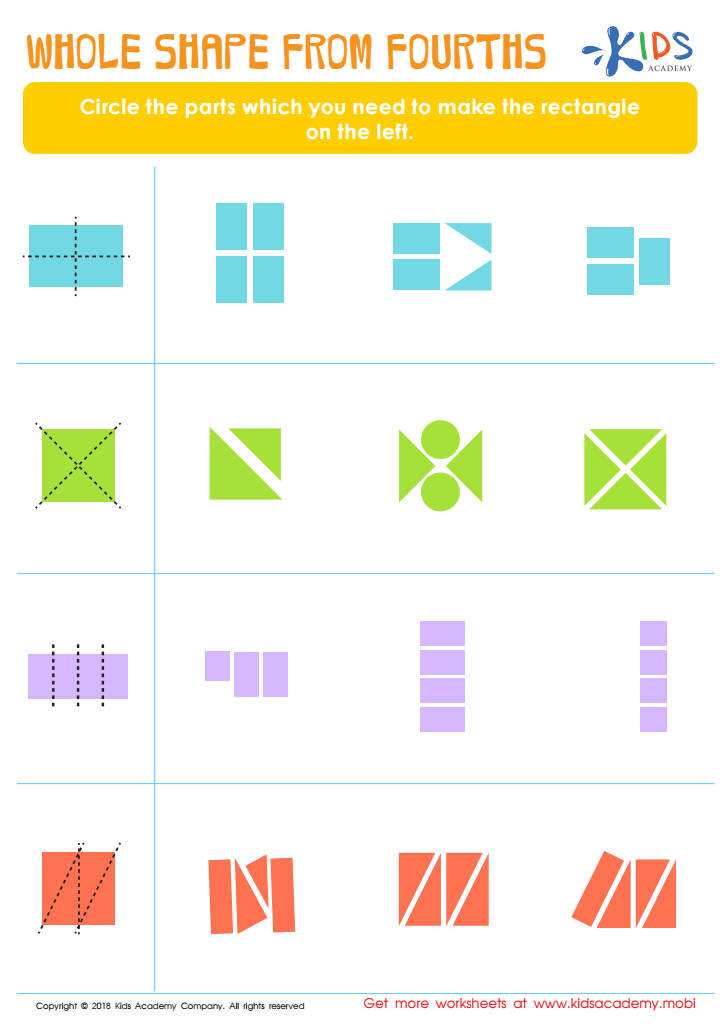
Whole Shape from Fourths Worksheet

Whole Shape from Fourths Worksheet

Have your kids circle the shapes that'll form the rectangle on the left. It'll test their knowledge of shapes and ability to put them together to make a new one. Ask them to look at the parts on the right and circle the ones that'll form the rectangle.
Whole Shape from Fourths Worksheet
Worksheet
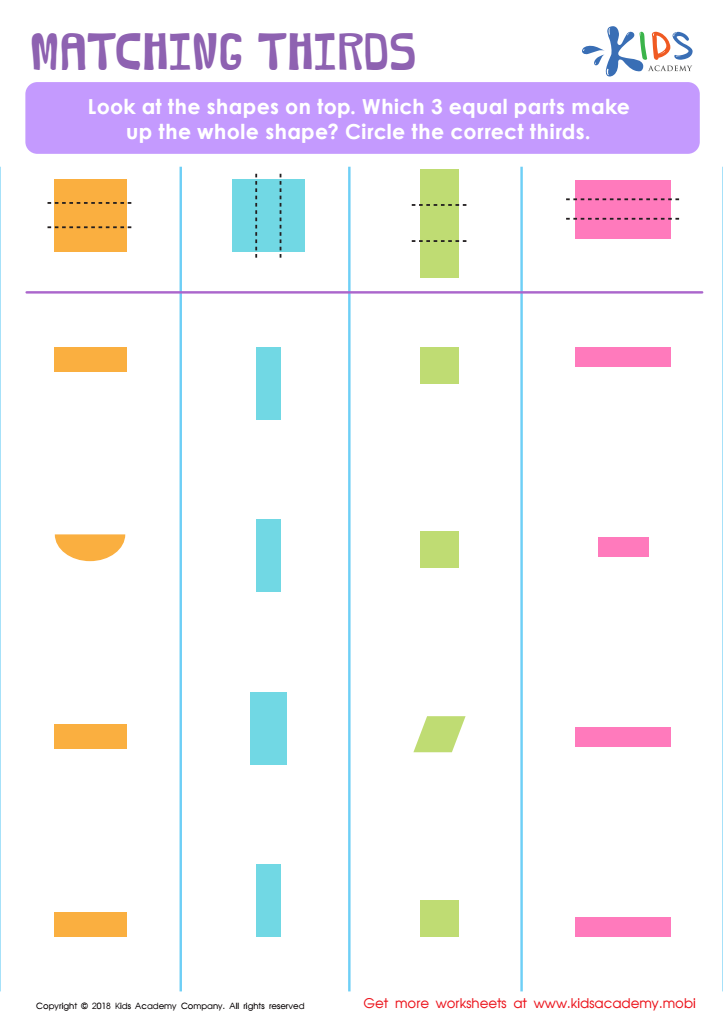
Matching Thirds Worksheet

Matching Thirds Worksheet

Have your child examine the shapes on the worksheet. Ask them to identify them and then look at the fractions underneath. Ask them to circle the 3 parts that make up the whole shape. Understanding shapes and fractions is key!
Matching Thirds Worksheet
Worksheet
Matching Halves Worksheet

Matching Halves Worksheet

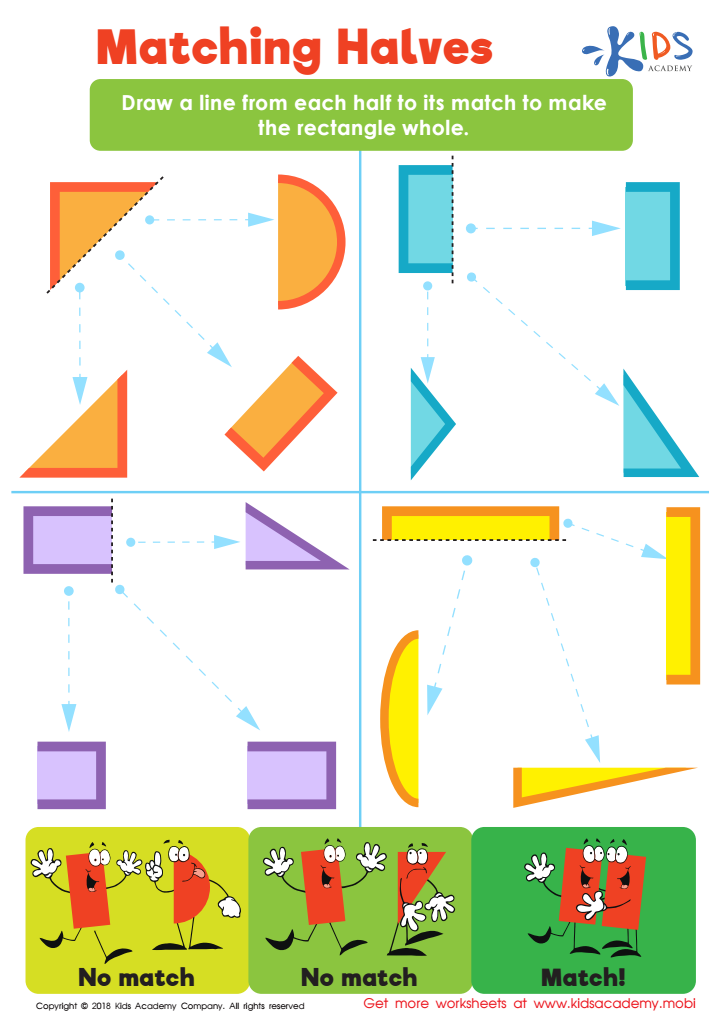
See how your child fares in matching two halves to form a complete rectangle. Provide them with four options, and ask them to draw a line connecting the two correct halves. Put their shape knowledge to the test with this simple worksheet!
Matching Halves Worksheet
Worksheet
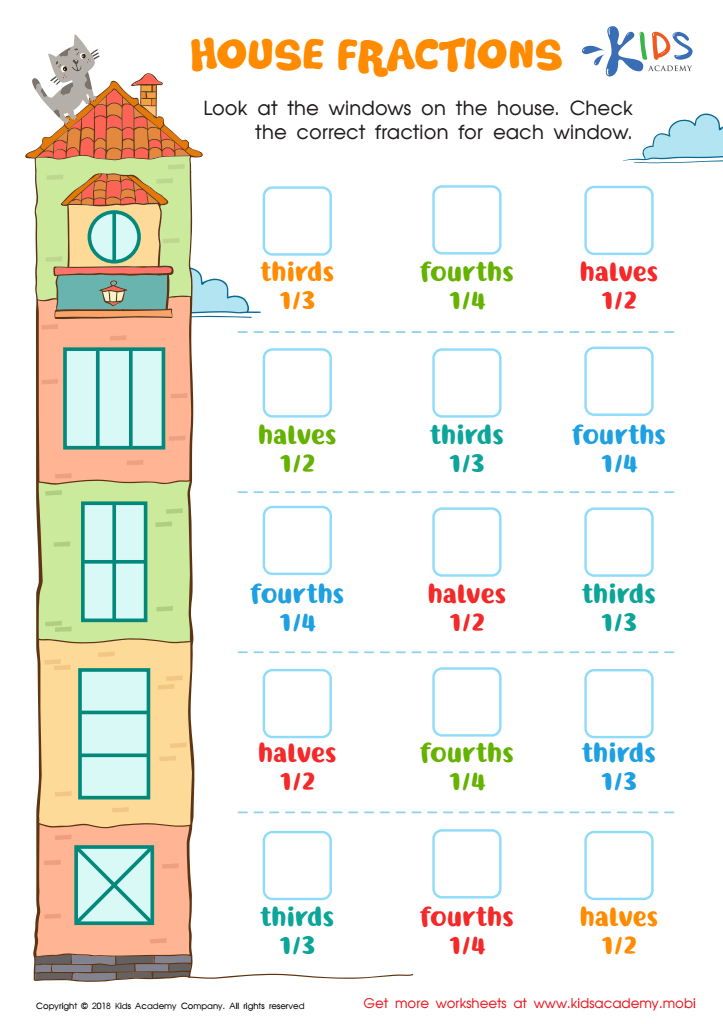
House Fractions Worksheet

House Fractions Worksheet
Test your child's knowledge of fractions with this worksheet! Have them examine the windows of a house and select the correct fraction from the options given. This is a great way to see how much they understand about wholes, fractions, halves, one thirds, and one fourths.
House Fractions Worksheet
Worksheet
Find Fourths Together with Tommy Worksheet

Find Fourths Together with Tommy Worksheet

Teach your kids fractions with this easy and fun worksheet! They should already know that two equal parts is a half, and three is a third. Now, help them understand one fourth (¼) by asking them to circle shapes that are divided into four parts. Make fractions learning stress-free for you and your children!
Find Fourths Together with Tommy Worksheet
Worksheet
Identify Thirds: Chocolate Fractions Worksheet

Identify Thirds: Chocolate Fractions Worksheet

Divide shapes into equal parts and explain fractions to your child. Show them a worksheet with pictures of chocolate bars cut into thirds (1/3) and ask them to circle them.
Identify Thirds: Chocolate Fractions Worksheet
Worksheet


Parents and teachers should care deeply about the developmental stages of children aged 7-9 for several reasons. This period marks significant cognitive, emotional, and social growth, which lays the foundation for future learning and well-being.

Cognitively, children in this age group transition from concrete to more flexible thinking. They begin to understand complex concepts, reason logically, and solve problems independently. This sets the stage for academic success in later years. Supportive and engaging learning environments tailored to their cognitive abilities are essential for nurturing this growth.

Emotionally and socially, children aged 7-9 start developing a stronger sense of self and interpersonal skills. They become more aware of their emotions, learn to empathize with others, and build essential friendships. Positive reinforcement and guidance from parents and teachers foster self-esteem and resilience, promoting healthy emotional development.

Moreover, habits formed during these years, such as reading regularly, exercising, and maintaining routines, have long-lasting impacts on a child's physical health and academic success. Encouraging curiosity, providing diverse learning experiences, and establishing a nurturing, supportive environment help children develop a love for learning and a positive attitude towards challenges.

In sum, focusing on the holistic development of children aged 7-9 equips them with the skills, confidence, and mindset crucial for future success and happiness.