English Language Arts online worksheets for Grade 3 - Page 2
133 filtered results
Difficulty Level
Grade
Age
-
From - To
Subject
Activity
Standards
Favorites
With answer key
Interactive
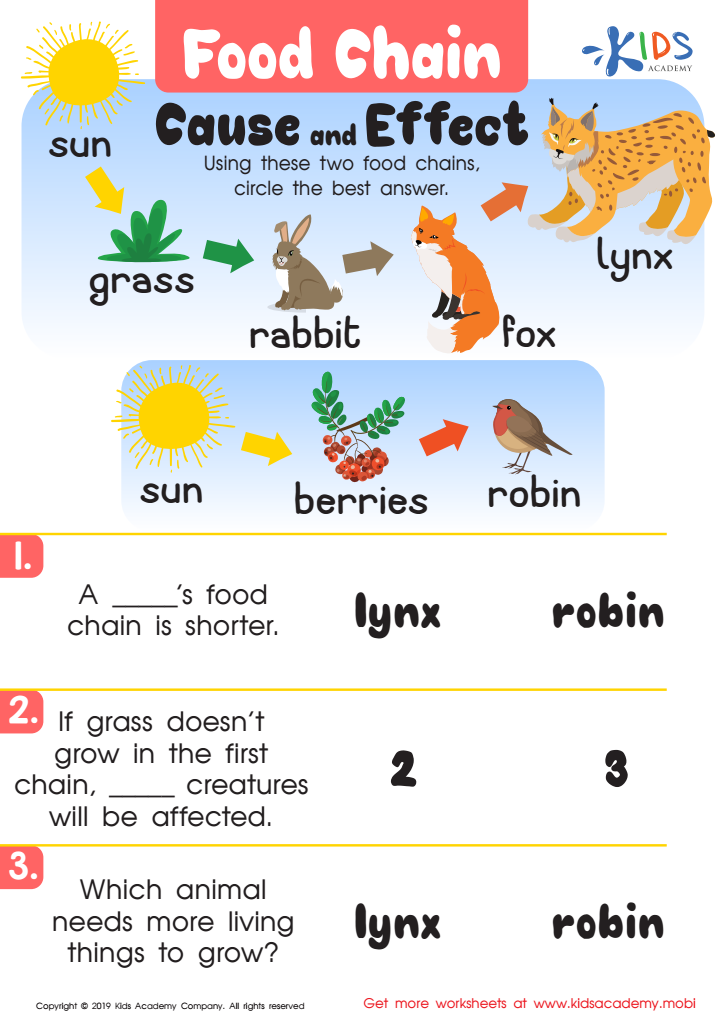
Food Chain Cause Worksheet
Help your little learner analyze ecosystems and compare food chains with this Kids Academy worksheet! Kids will compare a carnivore's and herbivore's food chain; which is longer and why? Questions at the bottom of the page will help them compare and circle the best answers. A great way to understand animal food chains!
 Assign to My Students
Food Chain Cause Worksheet
Worksheet
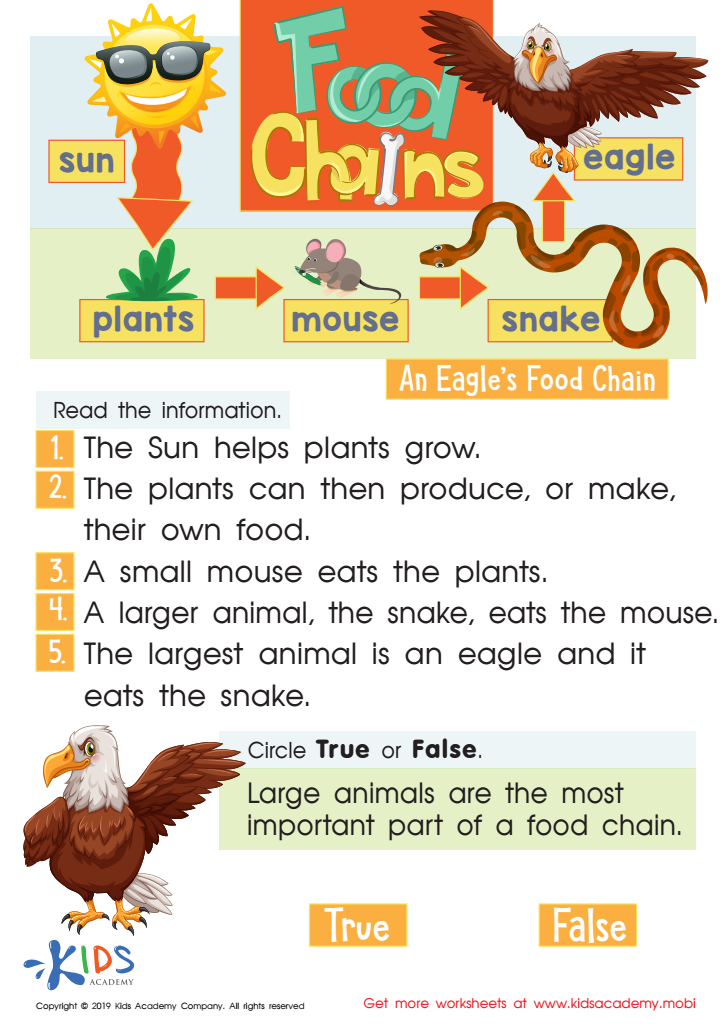
Food Chains Worksheet
This worksheet gets your child thinking about the sun's key role in the food chain. Read the info on the page, then discuss the true/false question. Are large animals the most important? Explain that without the sun, the other organisms would not exist. Have them circle the correct answer to finish.
Food Chains Worksheet
Worksheet
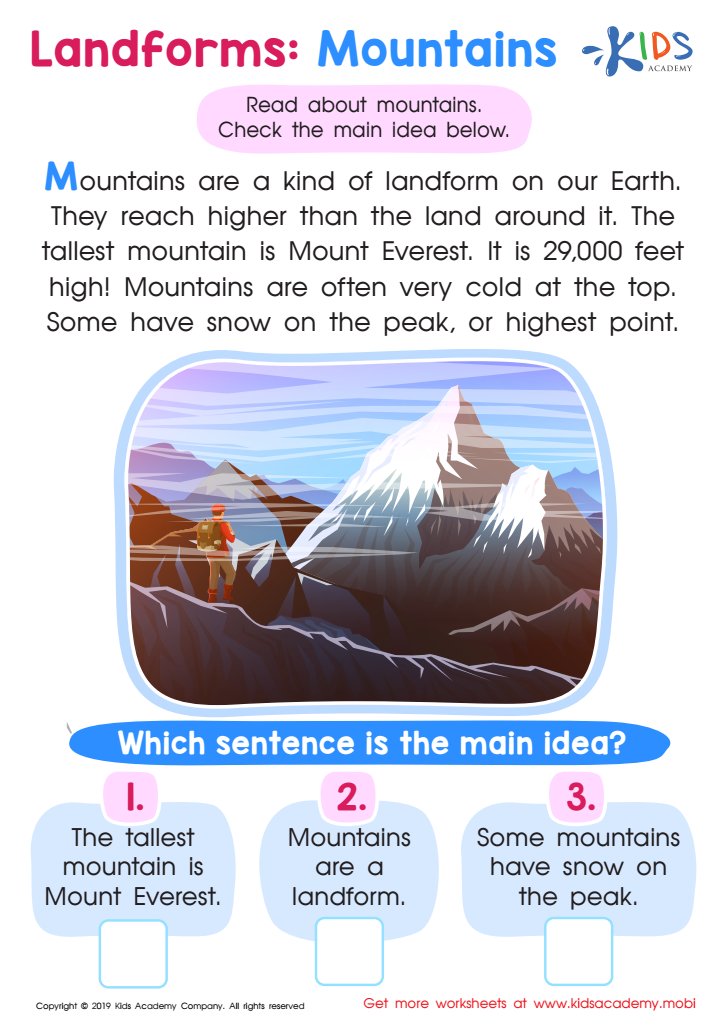
Landforms: Mountains Worksheet
Help your kid master informational texts about mountains by finding the main idea. Go through the text together, discuss what's been learned, and work together to identify the main idea. To mark the correct answer, check the answer at the bottom.
Landforms: Mountains Worksheet
Worksheet
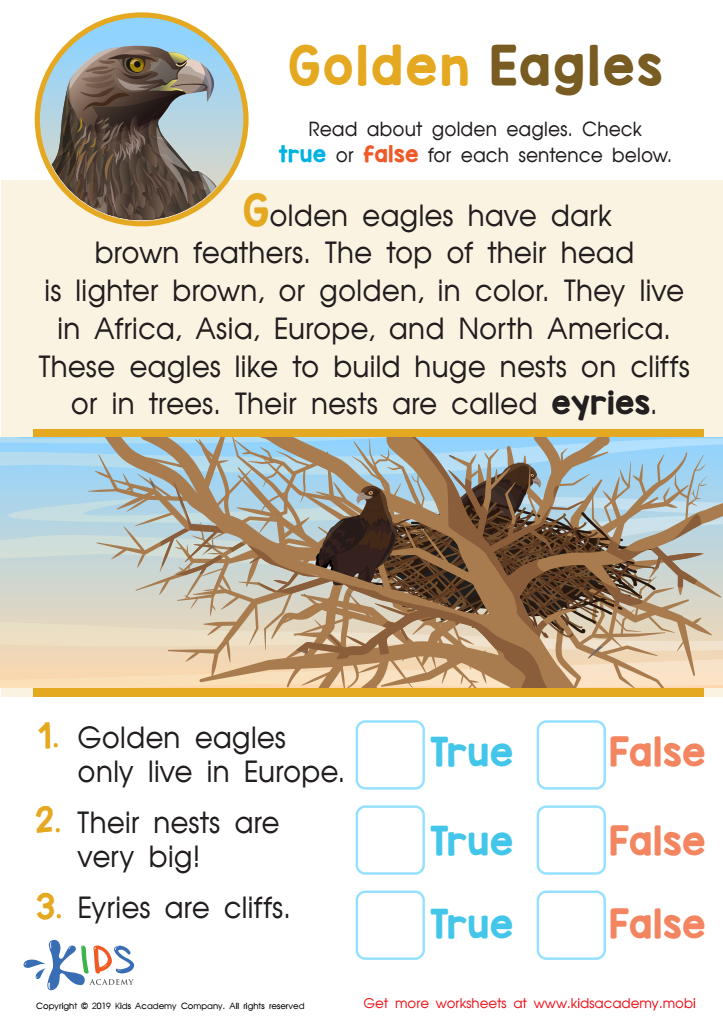
Golden Eagles Worksheet
Check your child's reading comprehension with this fascinating worksheet! Read the passage at the top of the page and discuss what was learned about golden eagles. Then, read the statements at the bottom and ask if they are true or false. Guide your child to circle the correct answer then read the text to back up the answer.
Golden Eagles Worksheet
Worksheet
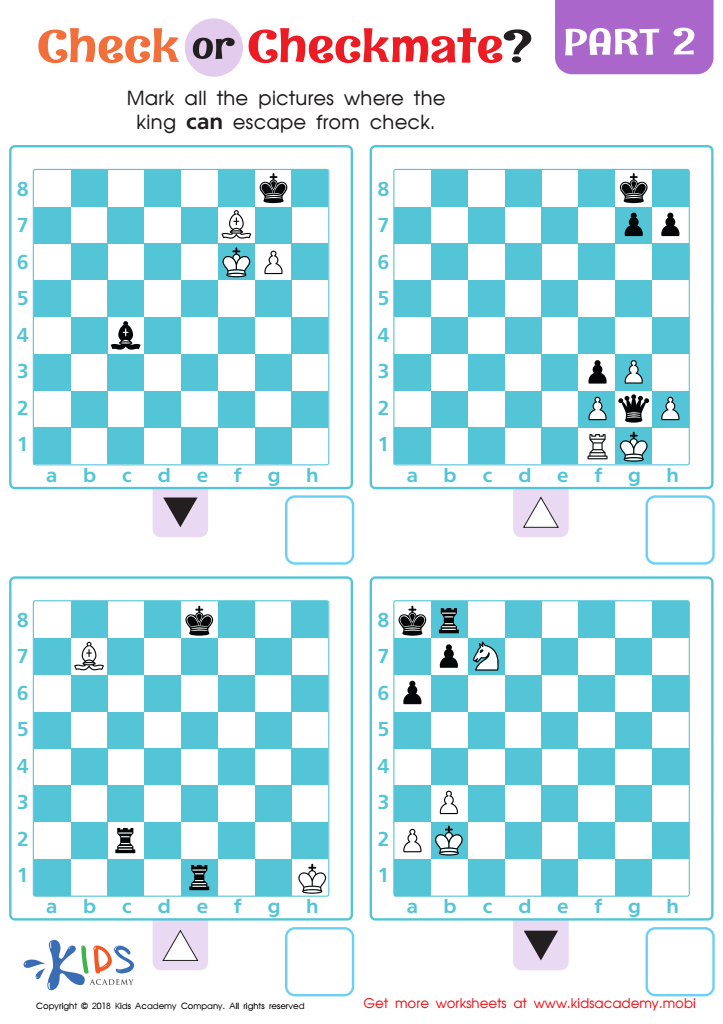
Check or Checkmate: Part 2 Worksheet
Chess is a fun and competitive way for your child to practice strategic thinking, problem-solving and critical reasoning. This free PDF will help them sharpen their skills, by analyzing boards and marking ones where the king can escape check. An invaluable skill when playing on real boards.
Check or Checkmate: Part 2 Worksheet
Worksheet
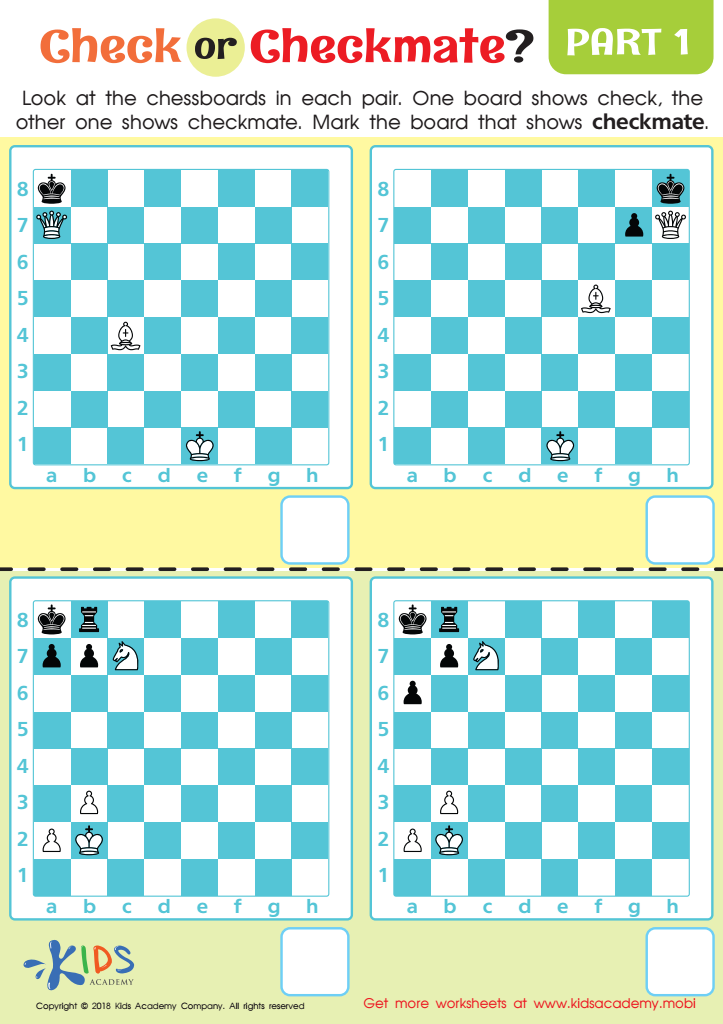
Check or Checkmate: Part 1 Worksheet
Kids can learn and strengthen problem-solving and strategic thinking skills with this free chess worksheet. They'll have fun as they look at the pair of chessboards and decide which is check and which is checkmate. It's the perfect way to get them playing the game and making checkmates without even realising they're exercising their brains!
Check or Checkmate: Part 1 Worksheet
Worksheet
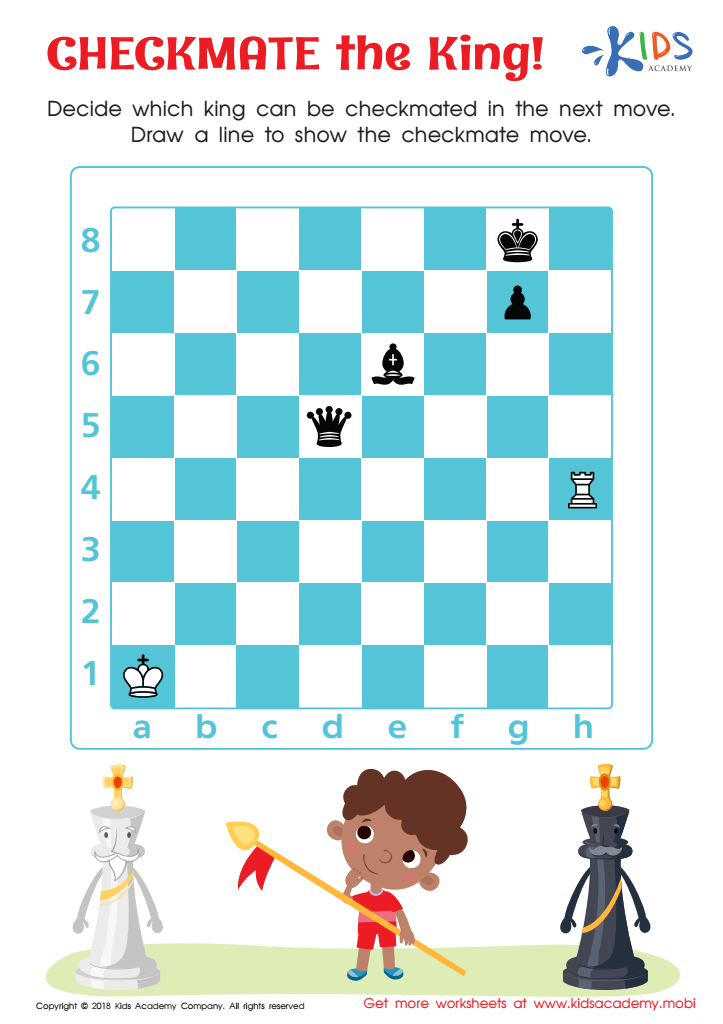
Checkmate the King Worksheet
Chess is great for growing problem-solving and critical thinking skills in children, and it's even better if they have fun winning! This worksheet will help kids practice checkmating their opponent's king. They can use the sample board to draw the line of their winning move. Who doesn't love being a winner?!
Checkmate the King Worksheet
Worksheet
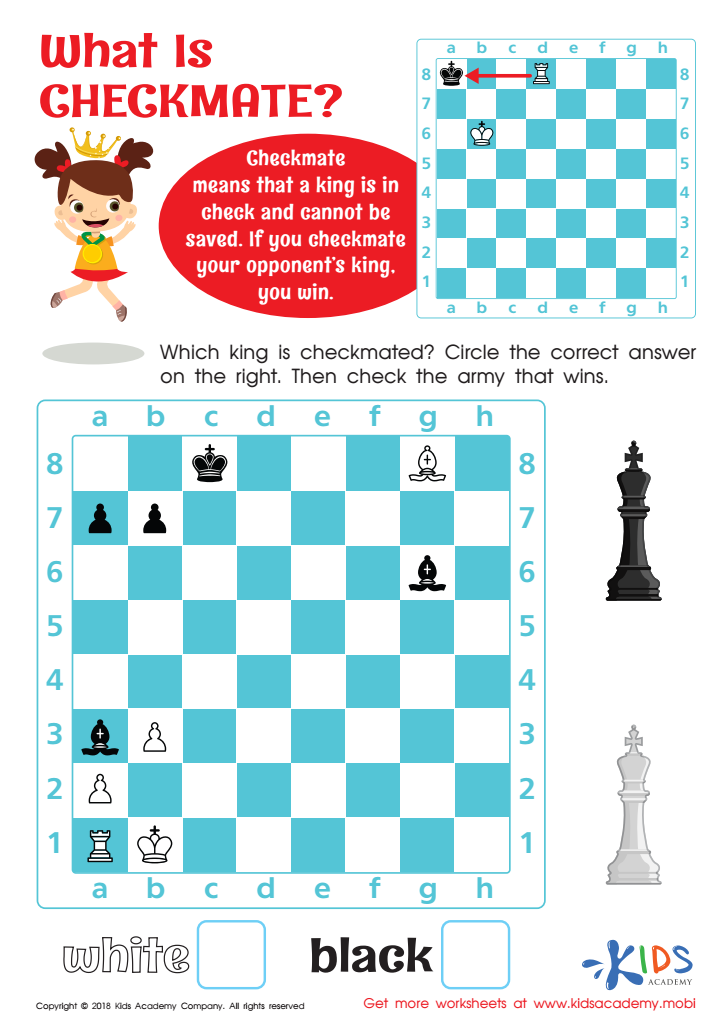
What is Checkmate? Worksheet
This downloadable PDF worksheet lets your child practice identifying when a king is checkmated and how it looks on a chessboard. Checkmate is the best move and with this colorful worksheet, they'll learn that it means their opponent's king is in check and cannot be saved, so they can win!
What is Checkmate? Worksheet
Worksheet
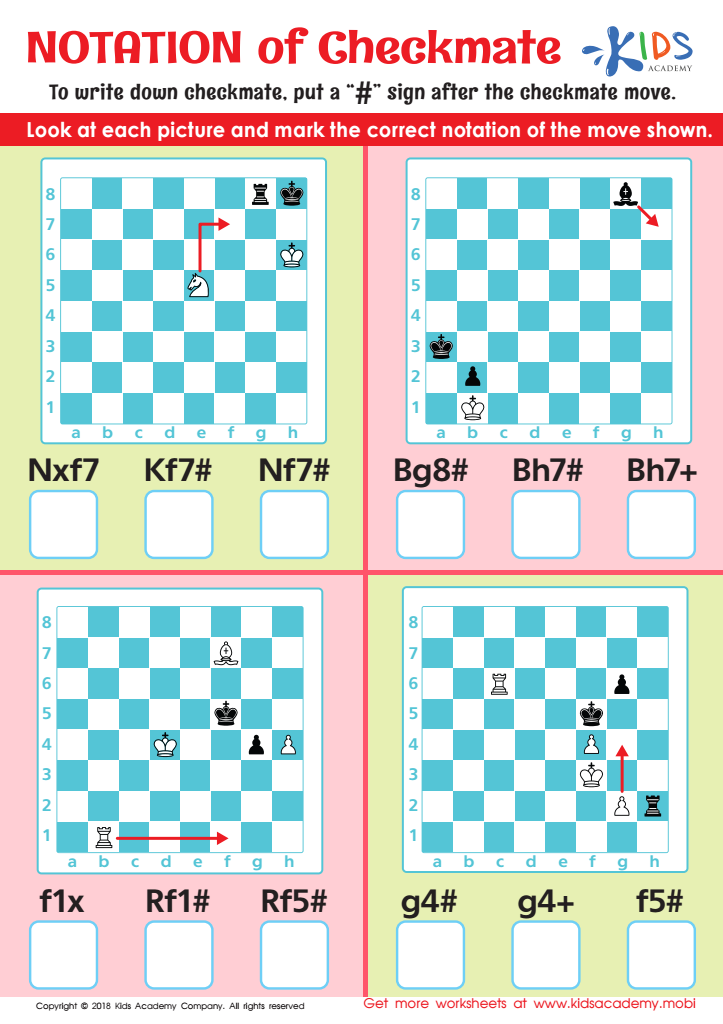
Notation of Checkmate Worksheet
Checkmate is the thrilling, ultimate move in chess! Teach your child to make it and notate it properly with this free worksheet. They'll love being able to capture the king and it's great for brain-building too! Have them look at the sample boards and place a # sign after the checkmate move for notation.
Notation of Checkmate Worksheet
Worksheet
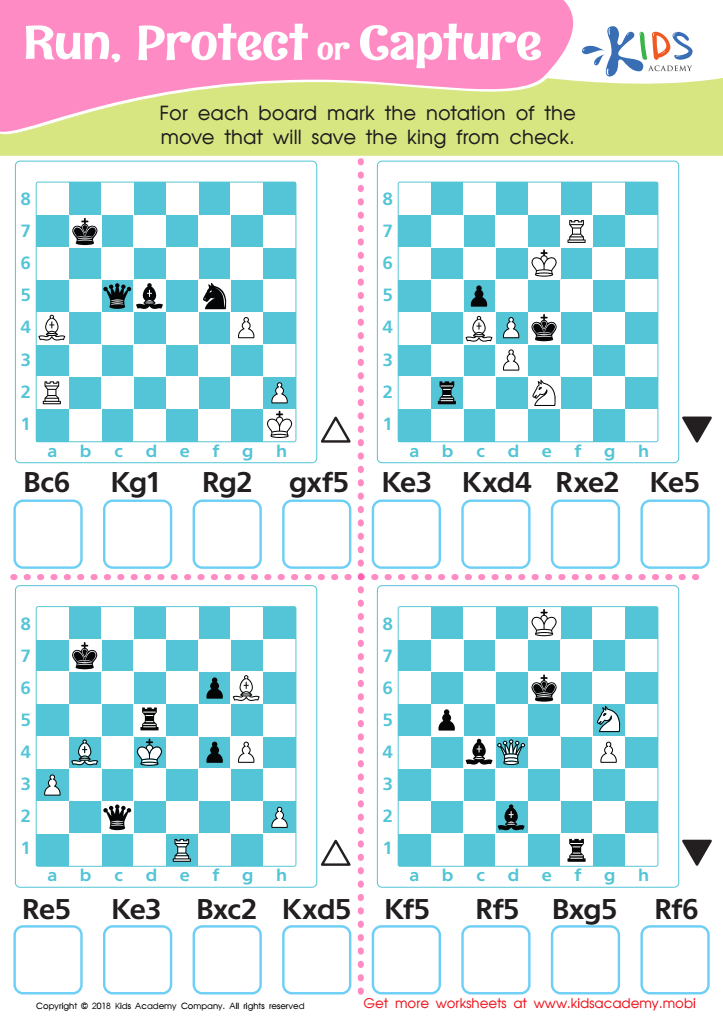
Run, Protect or Capture Worksheet
When kids play chess, they're not only striving to win - they're sharpening their critical thinking and problem-solving prowess. With this free PDF worksheet, they learn how to protect their king from check, whether it's running away, shielding it or capturing the checking piece. Sample boards offer them the chance to practice.
Run, Protect or Capture Worksheet
Worksheet
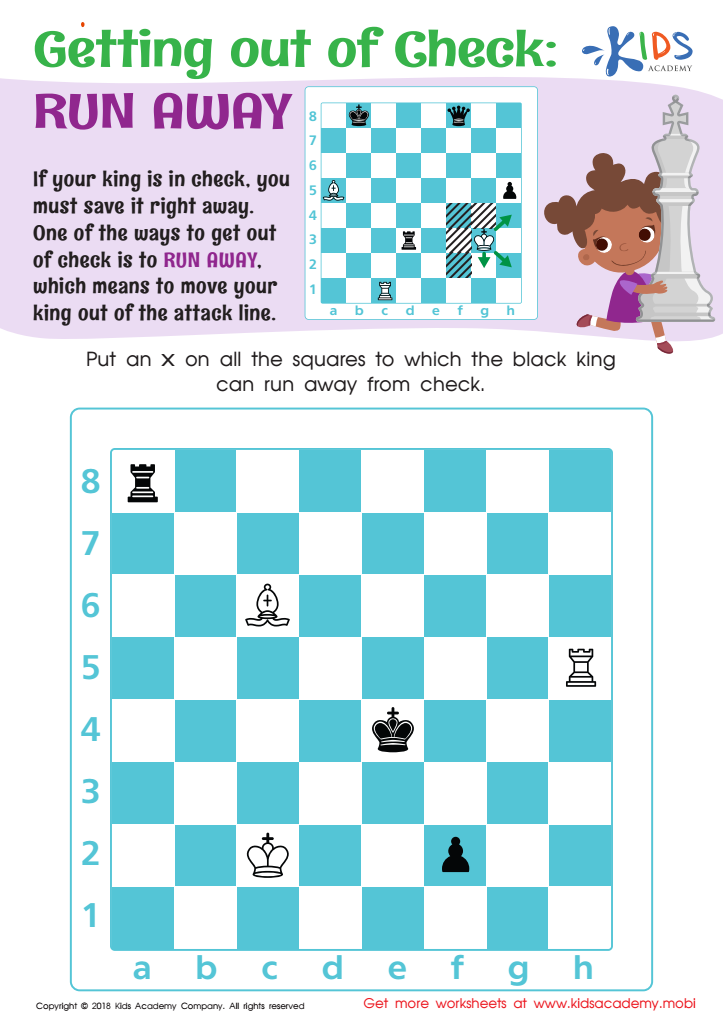
Getting out of Check: Run Away Worksheet
Playing chess boosts your children's brainpower and this worksheet helps them out of sticky situations. It teaches them how to flee with their king to avoid checkmate, as well as how to initiate their own strategic moves on the board. Get your kids on the road to success with this helpful PDF.
Getting out of Check: Run Away Worksheet
Worksheet
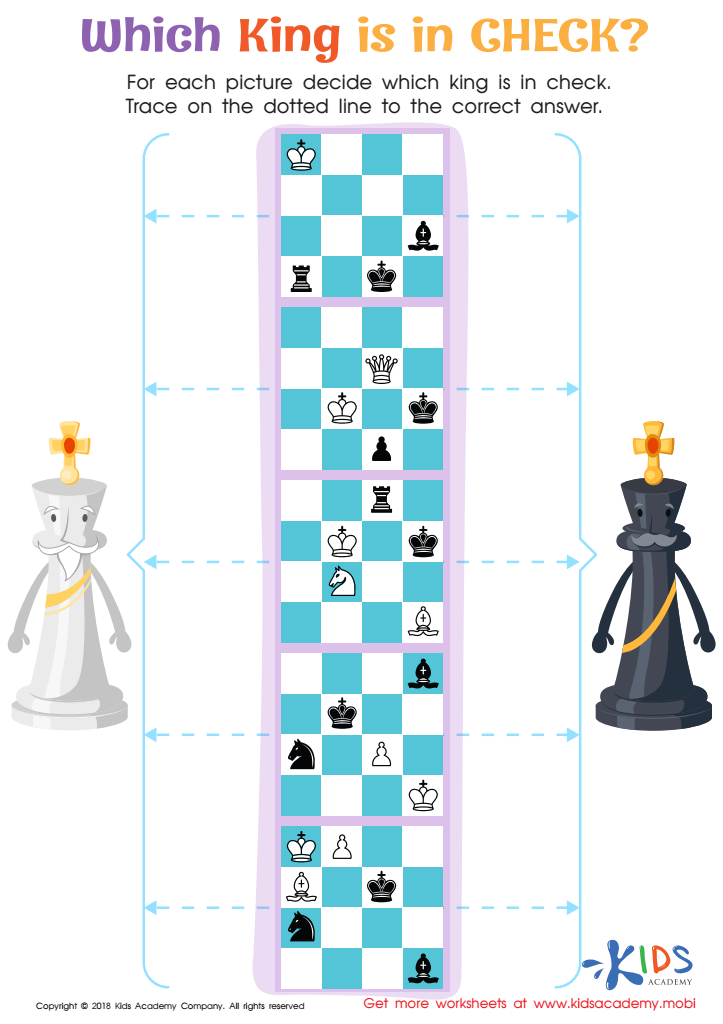
Which King is in Check? Worksheet
Teaching your children chess helps them solve problems, think critically, and develop logical patterns. With this free PDF, they'll analyze five boards to decide if the black or white king is in check. Tracing the lines, they'll improve their skills while having fun.
Which King is in Check? Worksheet
Worksheet
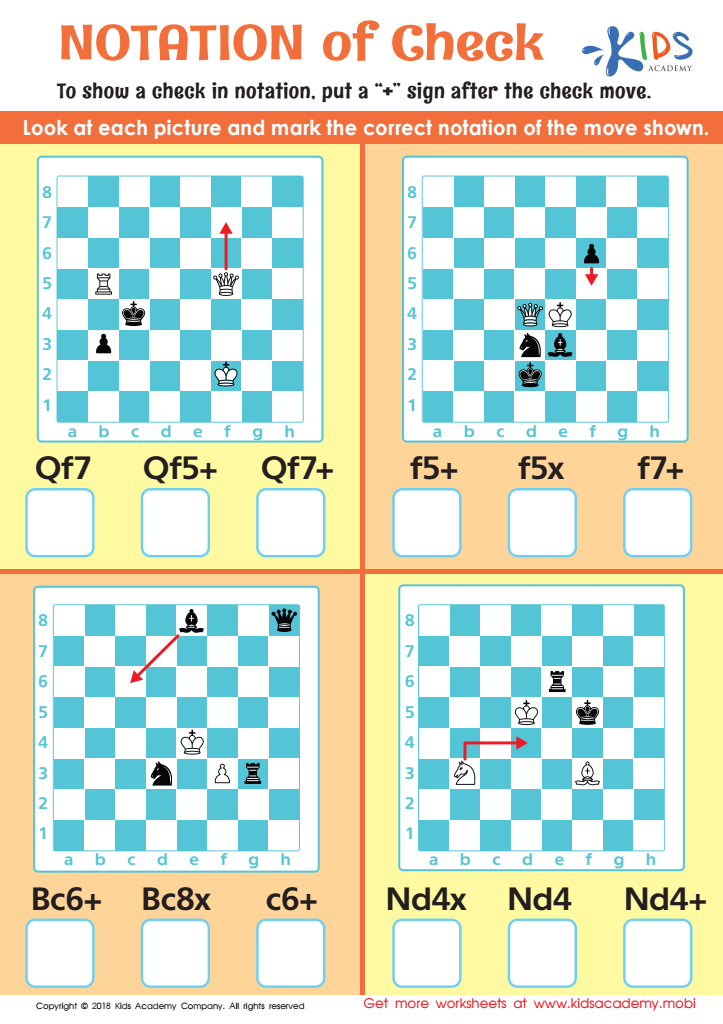
Notation of Check Worksheet
Chess is an addictive game! Once you know the basics of check and checkmate, you'll be hooked! Teach your little one to make check notation with this free PDF worksheet. They can use downloadable practice to look at each picture and mark the correct notation, strengthening their problem-solving skills while they learn to play - and win - this fun game!
Notation of Check Worksheet
Worksheet
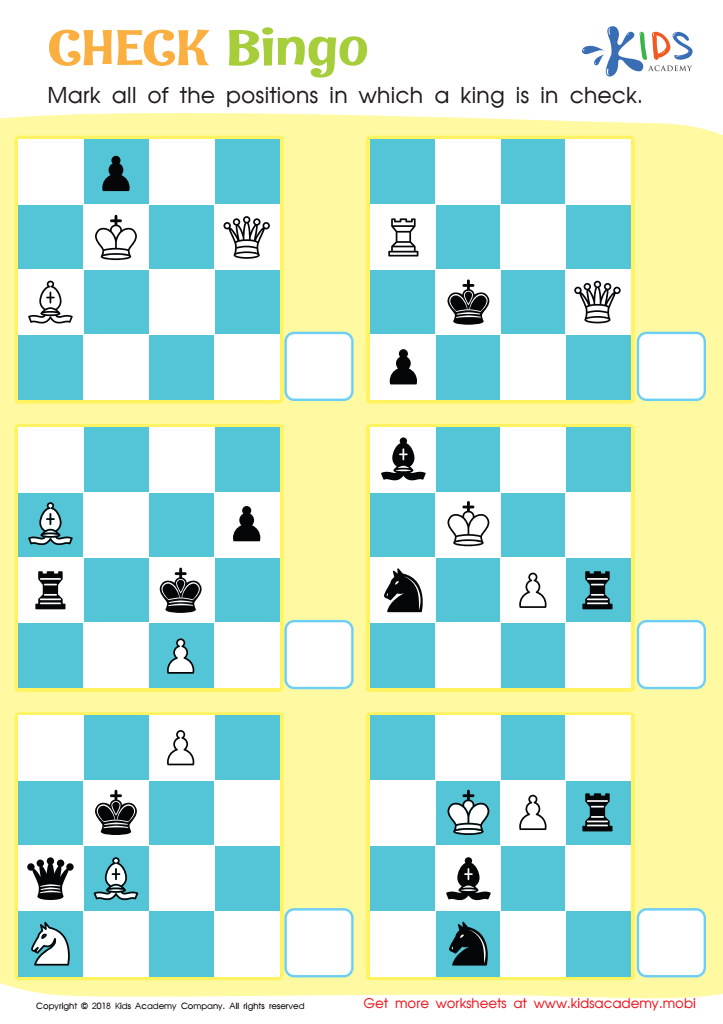
Check Bingo Worksheet
Chess helps young minds build critical thinking, problem-solving and logical reasoning skills. This free PDF worksheet is a fun way to teach these skills. It explains the concept of check and includes gameboards with kings in various positions. Students mark off the boards where a king isn't in check, and they're ready to move onto checkmate!
Check Bingo Worksheet
Worksheet
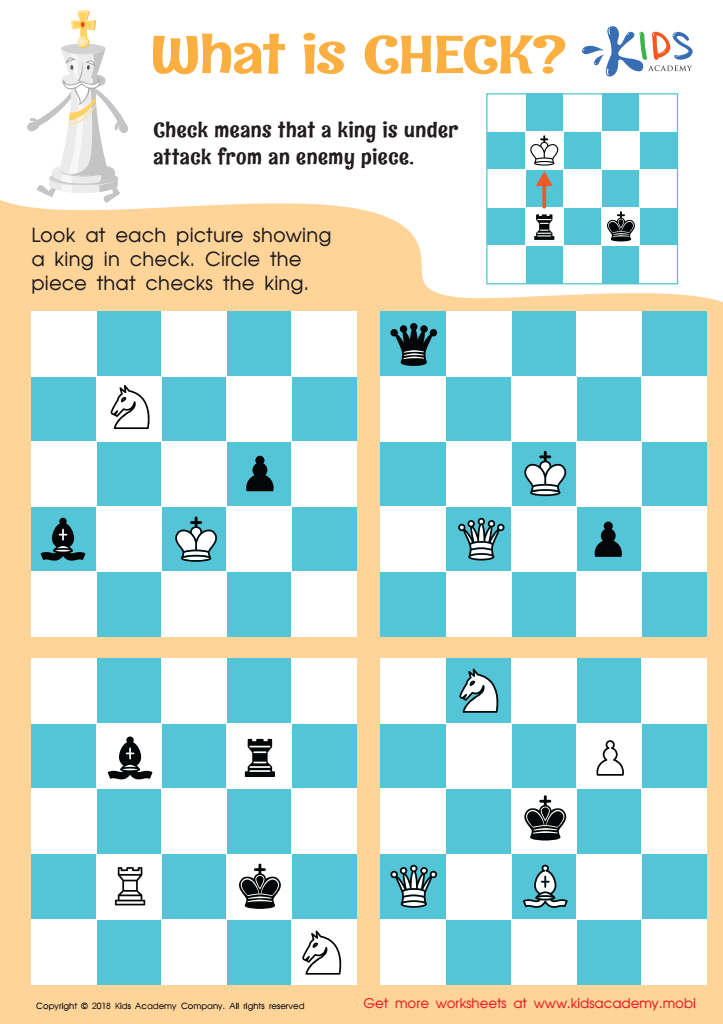
What is Check? Worksheet
Check is an important move in chess where the opposing king is under attack. With this free PDF worksheet, kids can learn to make and identify check, and exercise their critical thinking and problem-solving skills. They'll look at each picture and identify which piece can check the king. Playing with check helps kids learn to play to win.
What is Check? Worksheet
Worksheet
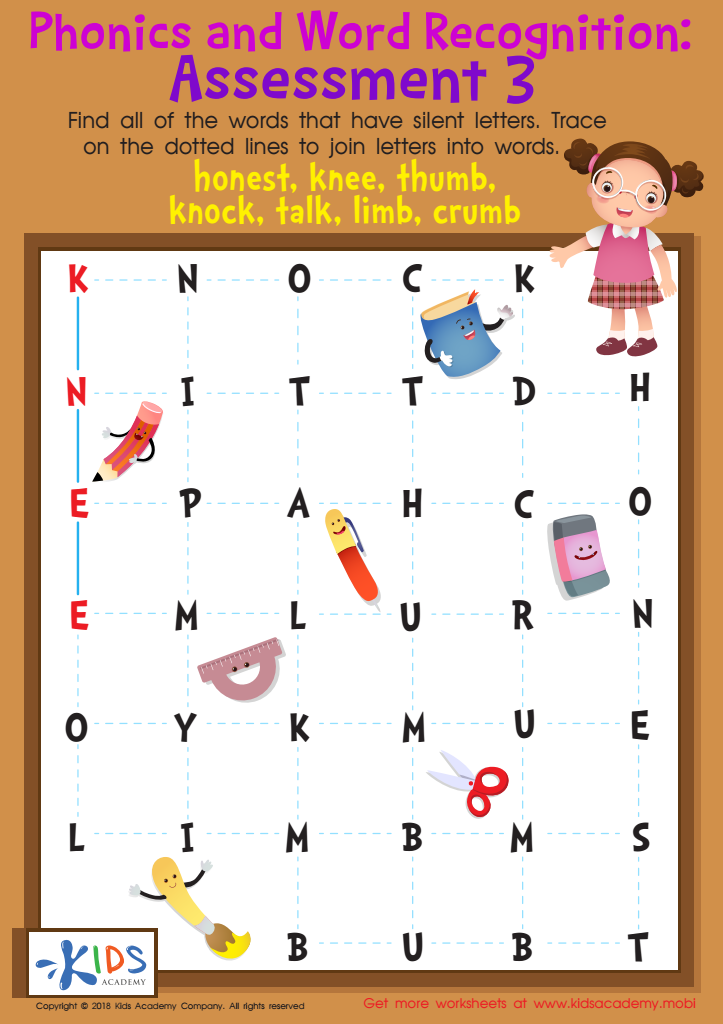
Phonics and Word Recognition: Assessment 3 Worksheet
Silent letters can be tricky for kids learning to read and write. Show them how they work with words like 'knee' and 'dumb'. Then, challenge them to come up with their own. Give them a worksheet with silent letters and trace the lines to join the letters into words.
Phonics and Word Recognition: Assessment 3 Worksheet
Worksheet
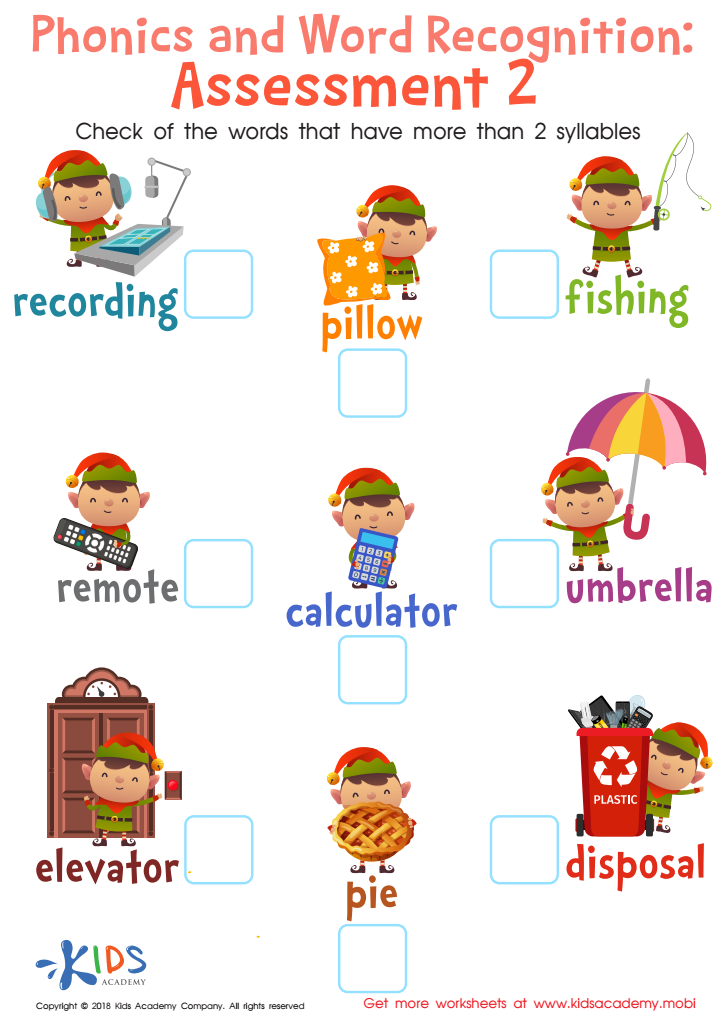
Phonics and Word Recognition: Assessment 2 Worksheet
Help your kids learn proper pronunciation by counting syllables. Most words they'll encounter have 1-3 syllables, making them simple to say. Have them repeat the words in your worksheet after you. Focus on longer words with more than two syllables.
Phonics and Word Recognition: Assessment 2 Worksheet
Worksheet
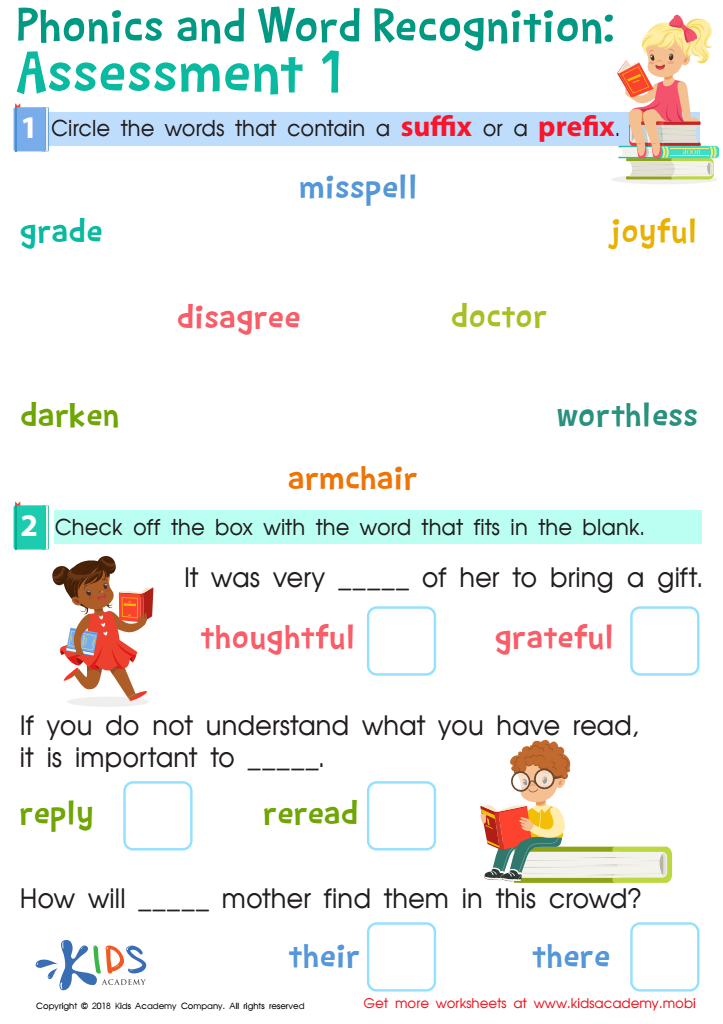
Phonics and Word Recognition: Assessment 1 Worksheet
Explain prefixes (words added to start of another word to give it a new meaning) and suffixes (added to end of word to change its meaning) to your kids with examples like 'unhappy' (prefix) and 'forgetful' (suffix). Now, help your child complete this worksheet, including circling words and checking boxes.
Phonics and Word Recognition: Assessment 1 Worksheet
Worksheet
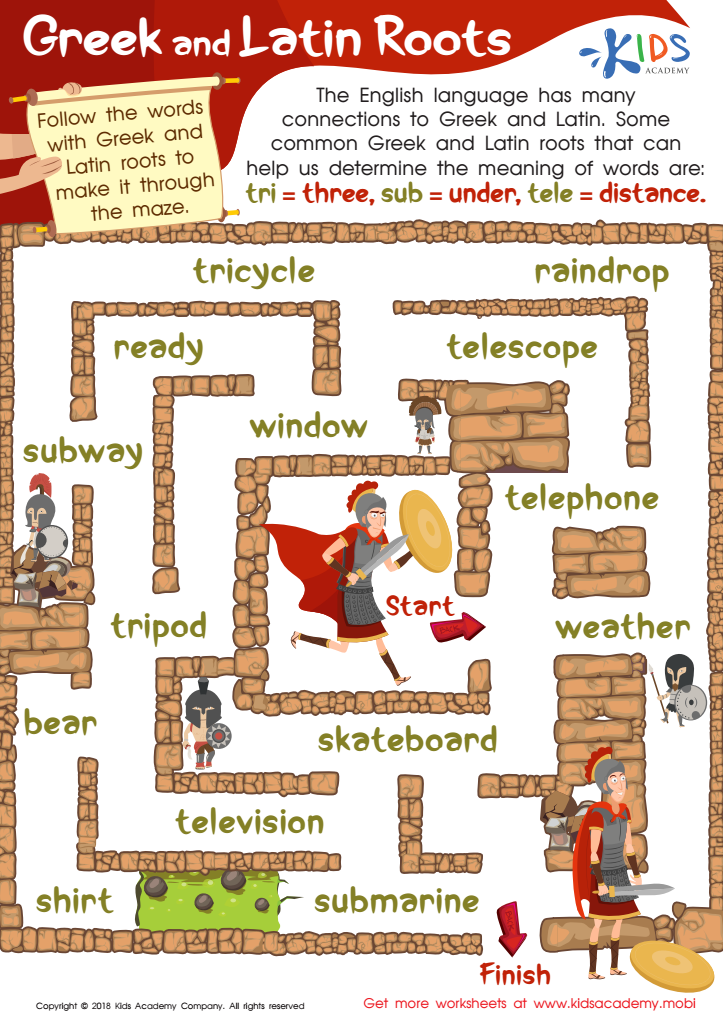
Greek and Latin Roots Worksheet
English borrows lots of words from other languages, and it has many ties to Greek and Latin. For example, 'tri', 'sub' and 'tele' (all from Greek and Latin) mean 'three', 'under' and 'distance' respectively. Help your child understand the meanings of words by having them work through a maze with words from these languages.
Greek and Latin Roots Worksheet
Worksheet
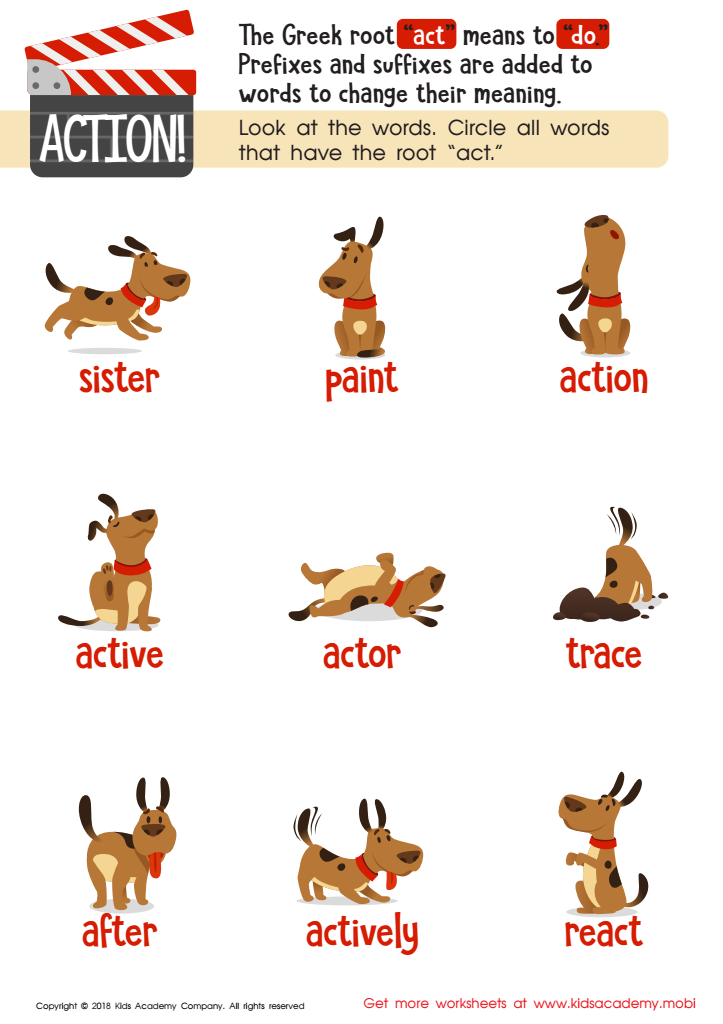
Action! Worksheet
Most English words are borrowed, and prefixes and suffixes are added to change the meaning. A popular prefix is 'act', from the Greek root meaning 'to do'. With your kids, look at the words in this worksheet and circle those with the root 'act'.
Action! Worksheet
Worksheet
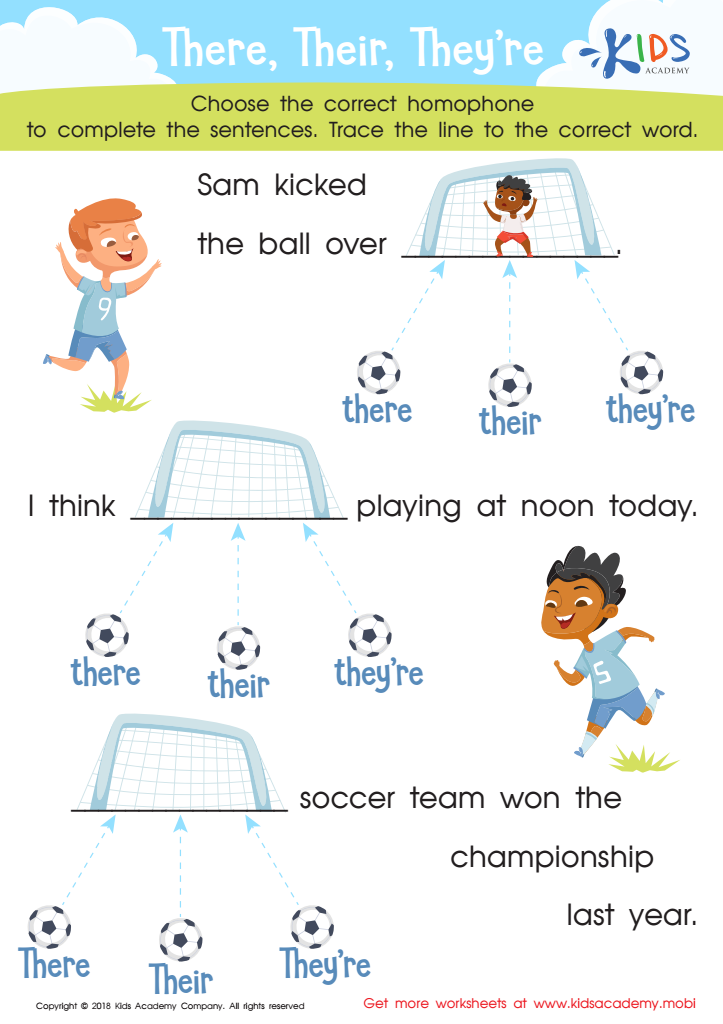
There, Their, They're Worksheet
Explain to your kids the difference between 'there', 'their' and 'they're'. These three words are homophones - spelt similarly but with different meanings. Help them choose the correct homophones when completing sentences, and trace the line to the right word.
There, Their, They're Worksheet
Worksheet
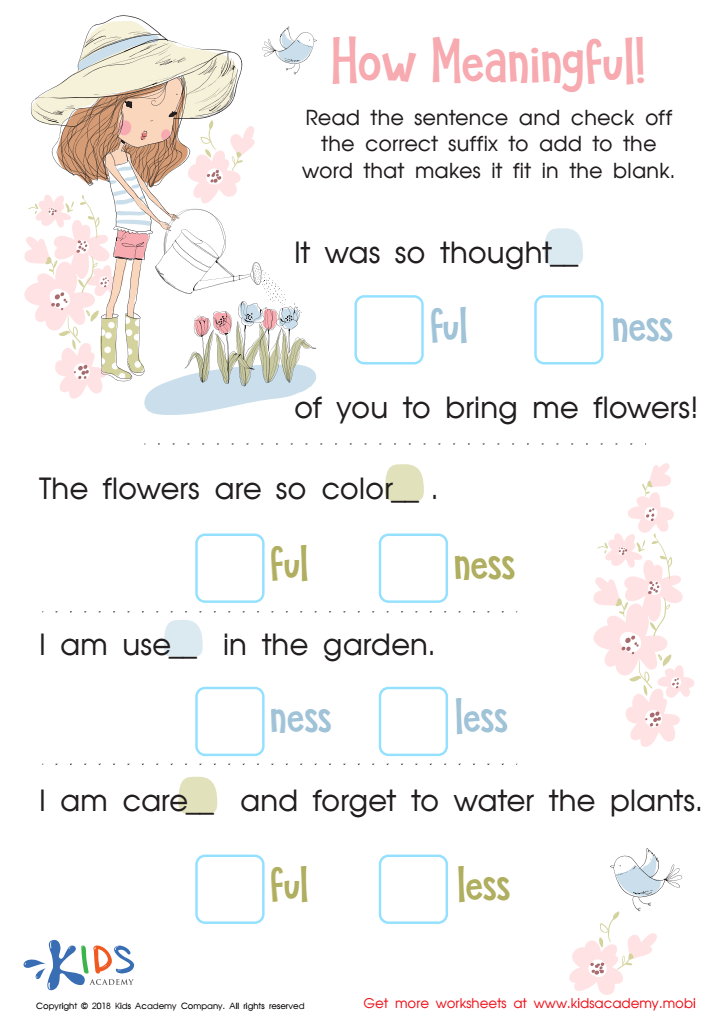
How Meaningful! Worksheet
'Meaningful' is used to describe something that carries importance to someone else. For example, calling friends on their birthdays. The suffix -ful can also be added to other words to create new meanings; try this with your kids and help them check the correct suffix to complete the sentence.
How Meaningful! Worksheet
Worksheet
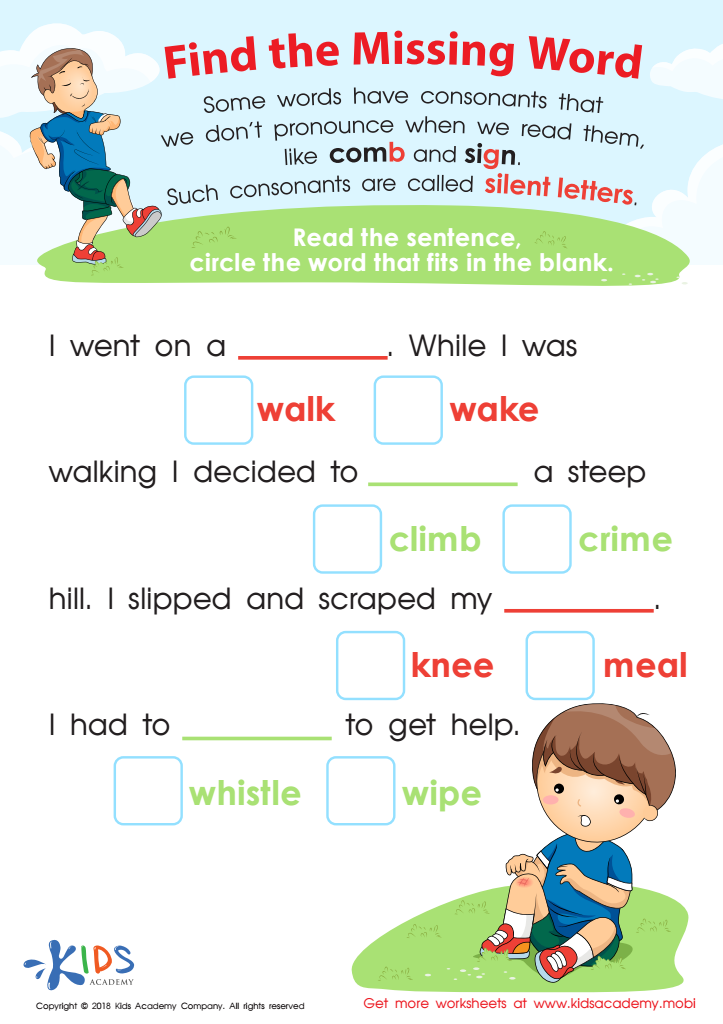
Find The Missing Word Worksheet
Master silent letters like "b" and "k" with this illustrated worksheet! Read the sentences and fill in the blanks with the correct word, checking the box. Read all the way to the bottom and review words containing silent letters. A great way to help your little learner tackle a tough topic!
Find The Missing Word Worksheet
Worksheet
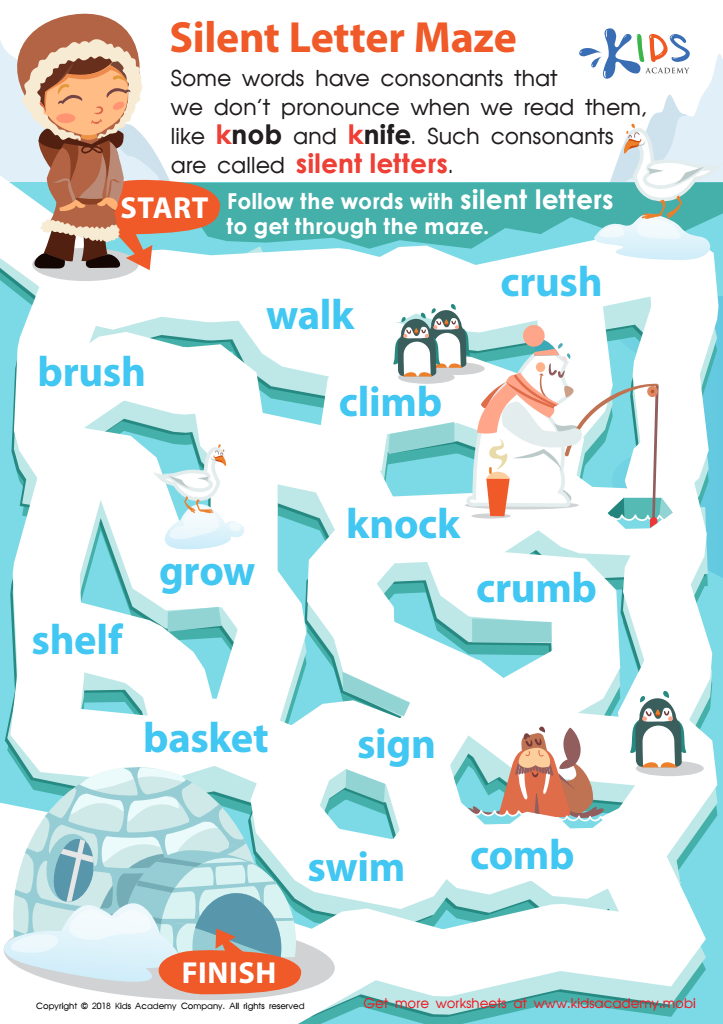
Silent Letter Maze Worksheet
Learning to read can be tricky, especially with words with irregular pronunciations. Explain to your child that some words have consonants we do not pronounce when reading. Ask them for examples like 'knife' and 'knob'. These consonants are called silent letters. Download this pdf to practice words with silent letters and complete the maze.
Silent Letter Maze Worksheet
Worksheet
Join Kids Academy for Free
Who is primarily going to use this learning content?