Normal Missing Letters Worksheets for Ages 3-9
5 filtered results
-
From - To
Unlock your child's learning potential with our Normal Missing Letters Worksheets designed for children aged 3-9! These engaging and interactive printables help young learners enhance their alphabet recognition and spelling skills by filling in the missing letters. Each worksheet is carefully crafted to cater to various skill levels, ensuring that every child can participate and improve at their own pace. Our visually appealing designs make learning fun, while reinforcing essential literacy concepts. Perfect for classroom use or at home, these worksheets will have your child excited about letters and language. Download and watch their confidence soar as they master the alphabet!
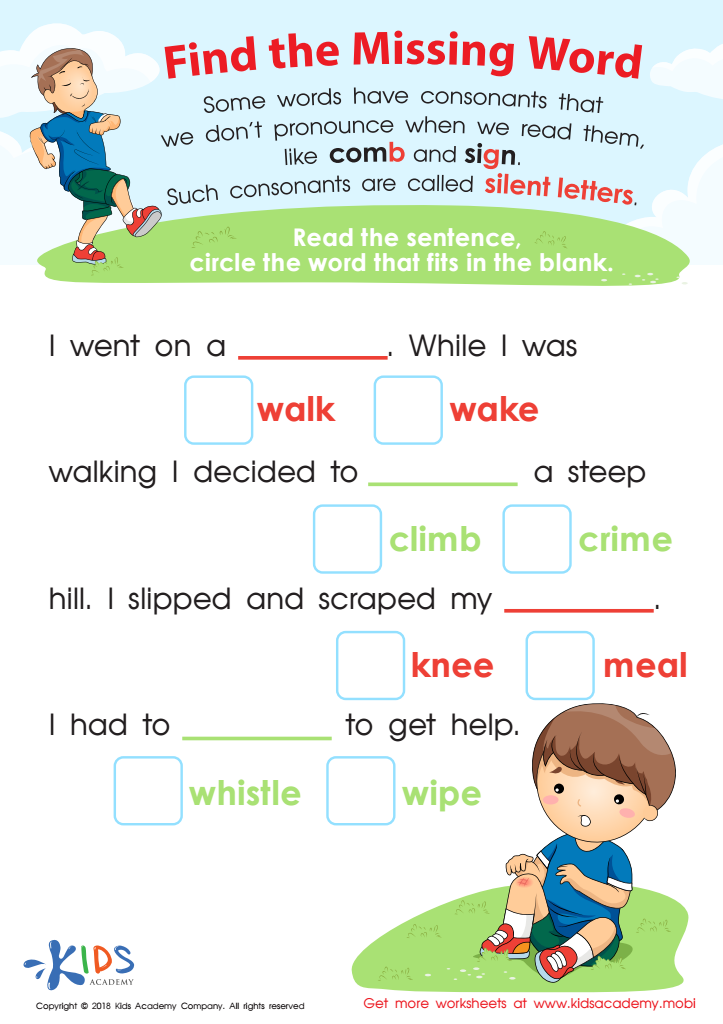
Find The Missing Word Worksheet
 Assign to My Students
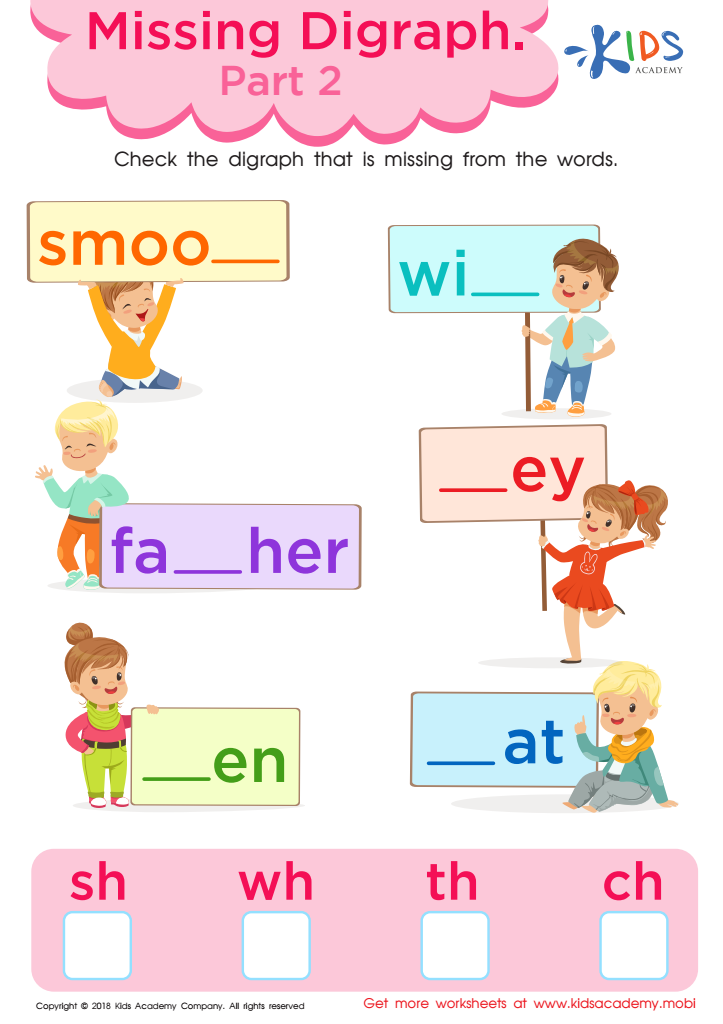
Missing Digraph: Part 2 Worksheet
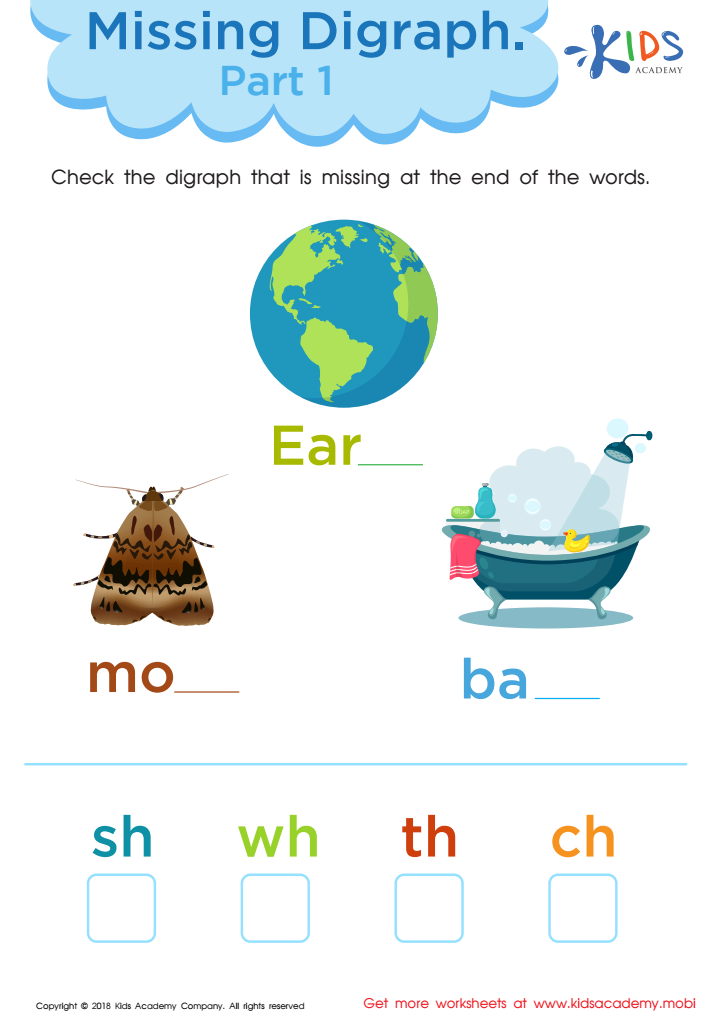
Missing Digraph: Part 1 Worksheet
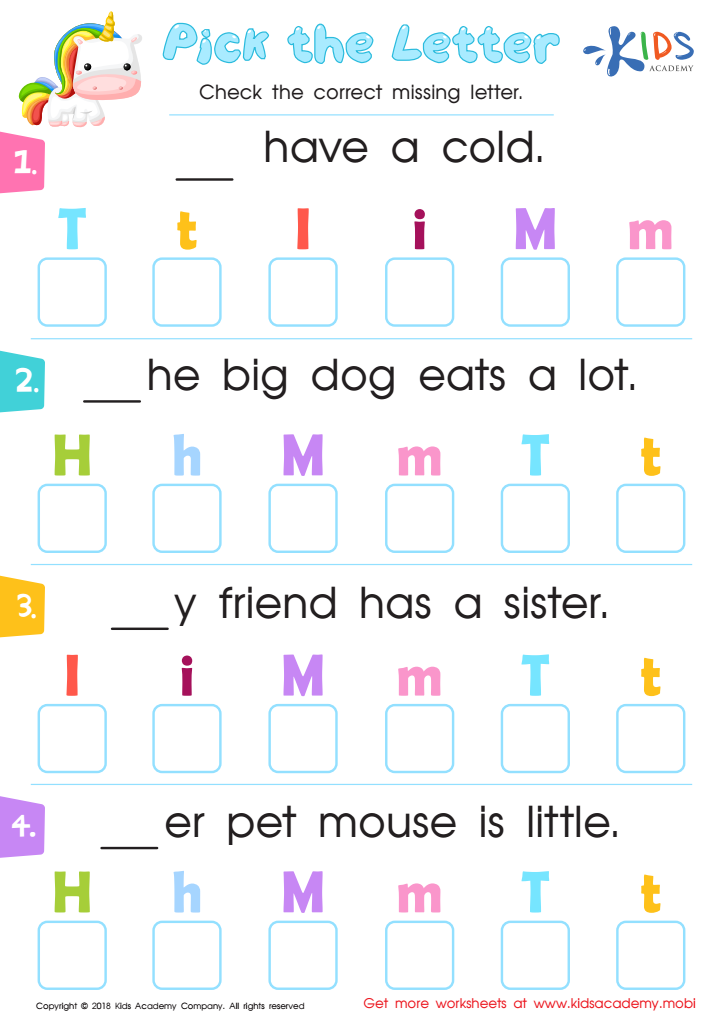
Pick the Letter Worksheet
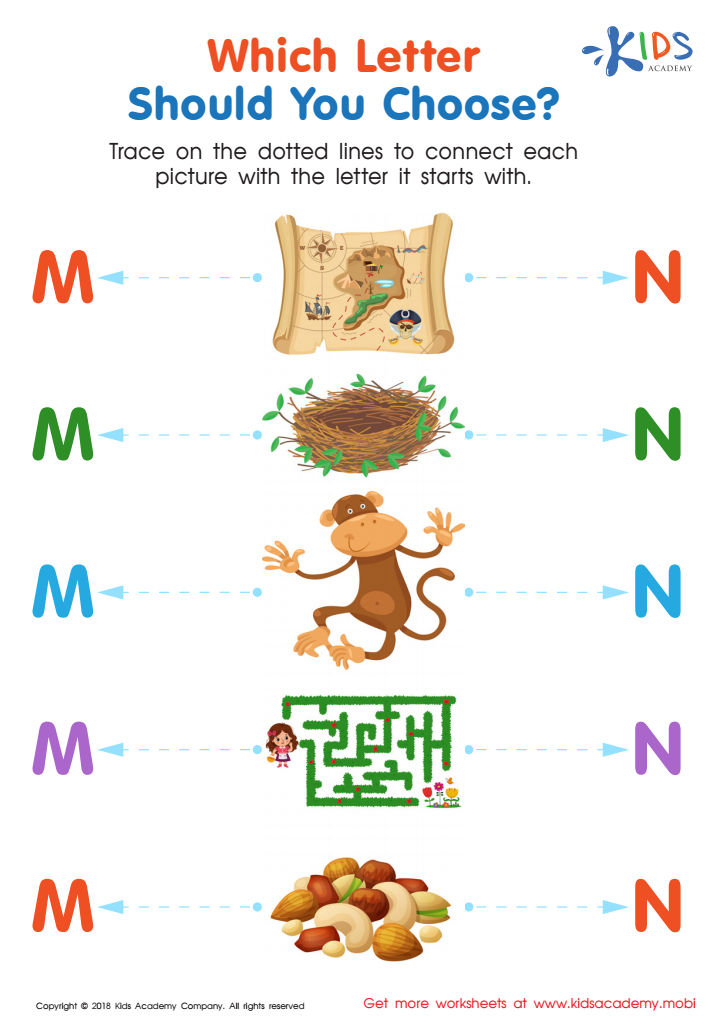
Which Letter Should you Choose? Worksheet



Normal Missing Letters is a crucial literacy concept for children aged 3-9. At this developmental stage, children are rapidly acquiring language skills and building their reading and writing foundation. Understanding and addressing missing letters in words enriches their phonemic awareness, a skill necessary for decoding words. When children encounter missing letters, they learn to identify phonemes, or sounds, associated with specific letters, enhancing their ability to blend sounds into recognizable words.
Moreover, engaging in activities that involve filling in missing letters promotes critical thinking and problem-solving. It encourages children to focus on spelling patterns and reinforces their understanding of how letters work together to form words, nurturing their independence in reading and writing.
For parents and teachers, emphasizing Normal Missing Letters creates opportunities for meaningful interaction around language. It fosters a love for reading and can make learning fun through games and puzzles. These activities can strengthen the bond between parents and children, making learning enjoyable. Ultimately, focusing on normal missing letters equips children with essential skills, boosting their confidence in literacy and laying the groundwork for academic success throughout their school journey. Ensuring early intervention with these skills can lead to lifelong benefits in communication and education.







