
Normal Initial and Final Consonant Blends Worksheets for Ages 4-9
5 filtered results
Difficulty Level
Grade
Age
-
From - To
Subject
Activity
Standards
Discover our engaging "Normal Initial and Final Consonant Blends Worksheets" designed for children ages 4-9! These worksheets provide a fun way to enhance phonics skills by focusing on initial and final consonant blends. Through exciting activities that include matching, filling in the blanks, and identification, young learners will develop essential reading and writing skills. Whether used at home or in the classroom, these worksheets offer a bright and interactive approach to mastering consonant blends, promoting literacy development in a playful manner. Perfect for preschoolers and early elementary students, these resources make learning fun and effective! Start blending today!
Favorites
With answer key
Interactive
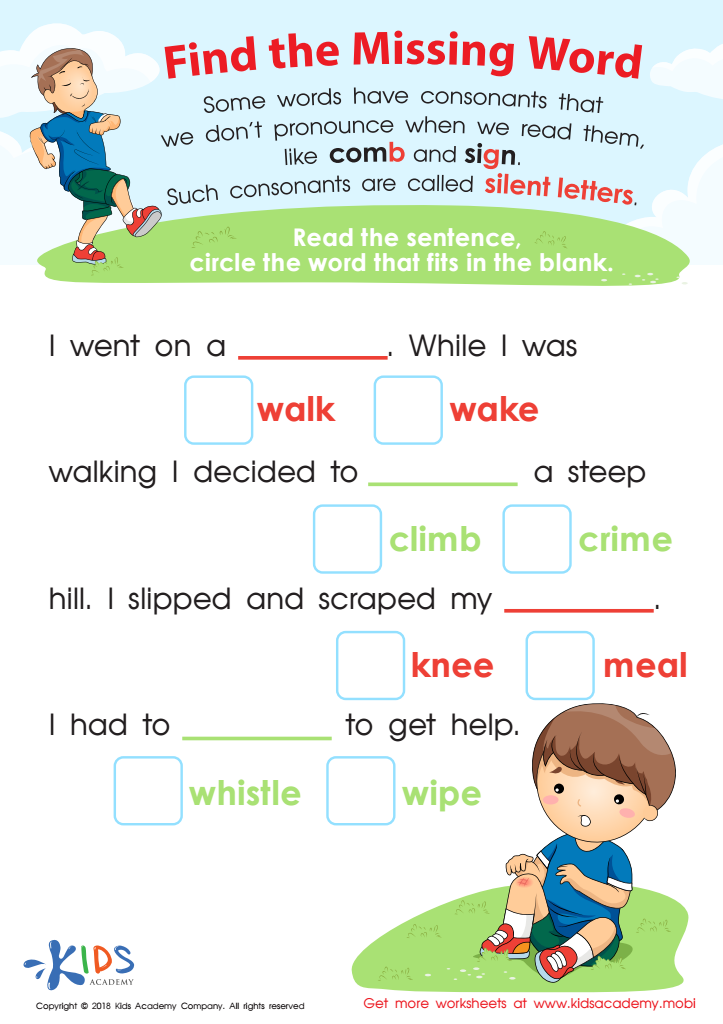
Find The Missing Word Worksheet
Master silent letters like "b" and "k" with this illustrated worksheet! Read the sentences and fill in the blanks with the correct word, checking the box. Read all the way to the bottom and review words containing silent letters. A great way to help your little learner tackle a tough topic!
 Assign to My Students
Find The Missing Word Worksheet
Worksheet
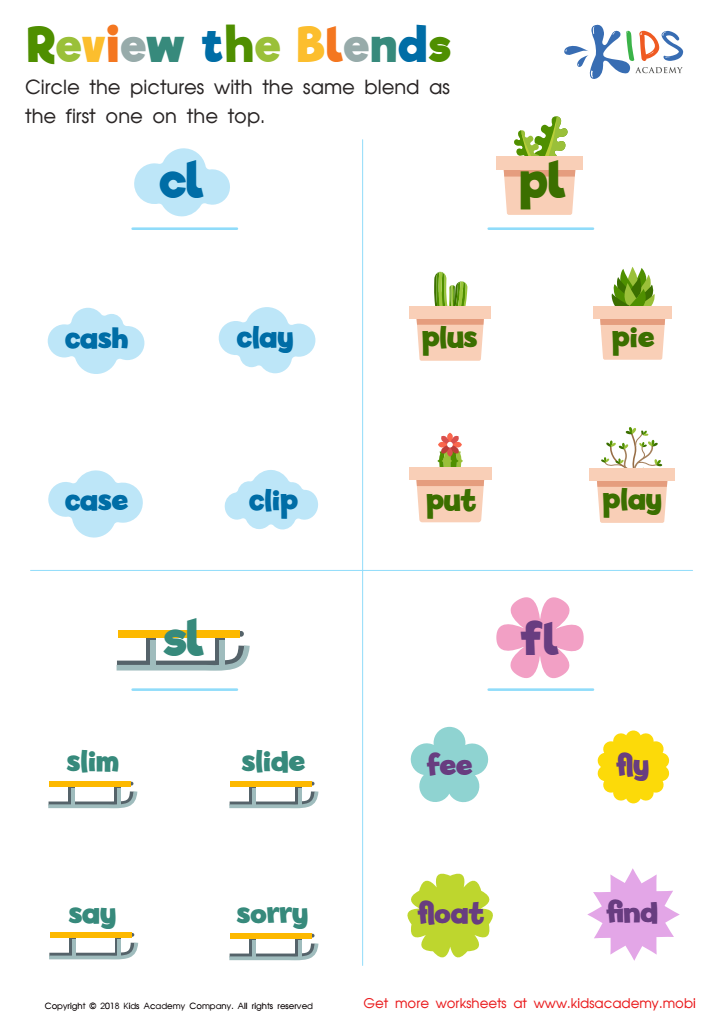
Review the Blends Worksheet
Consonant blends are two or three consonants that make a sound when pronounced together. L-blends like cl, bl, sl, fl and 3-letter blends like str, slp are common. This phonics worksheet helps early readers identify words containing two letter L-blends. Students must circle the words then read them aloud.
Review the Blends Worksheet
Worksheet
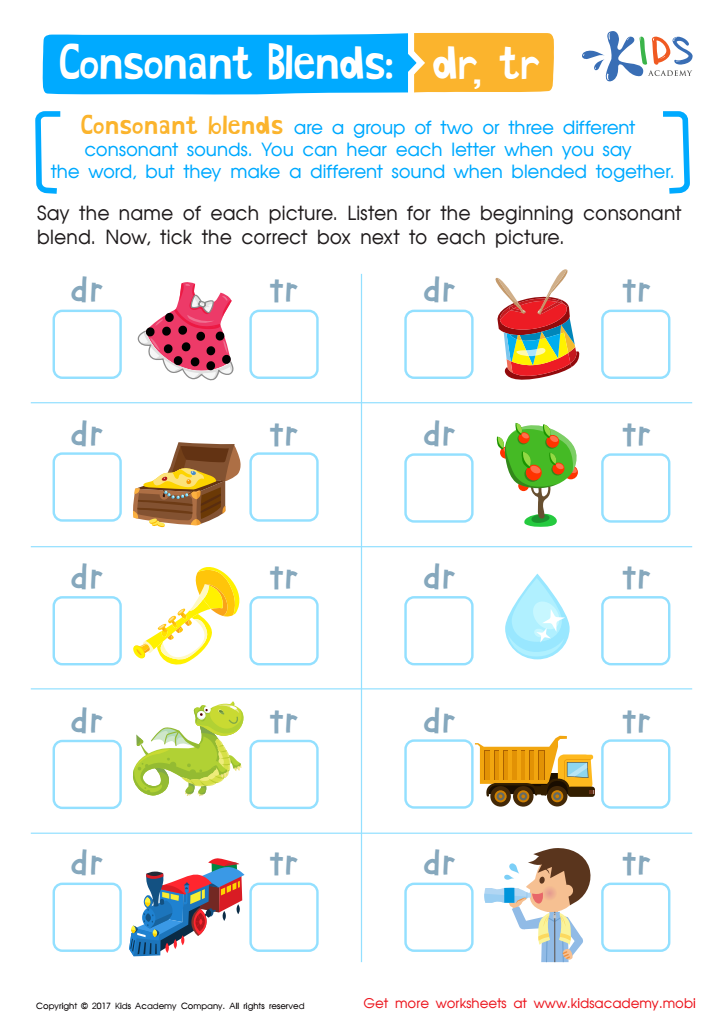
Consonant Blends: "Dr" and "Tr" Printable
Pictures of the words provide a visual cue, and sound-outs help with auditory cues.
Consonant Blends: "Dr" and "Tr" Printable
Worksheet
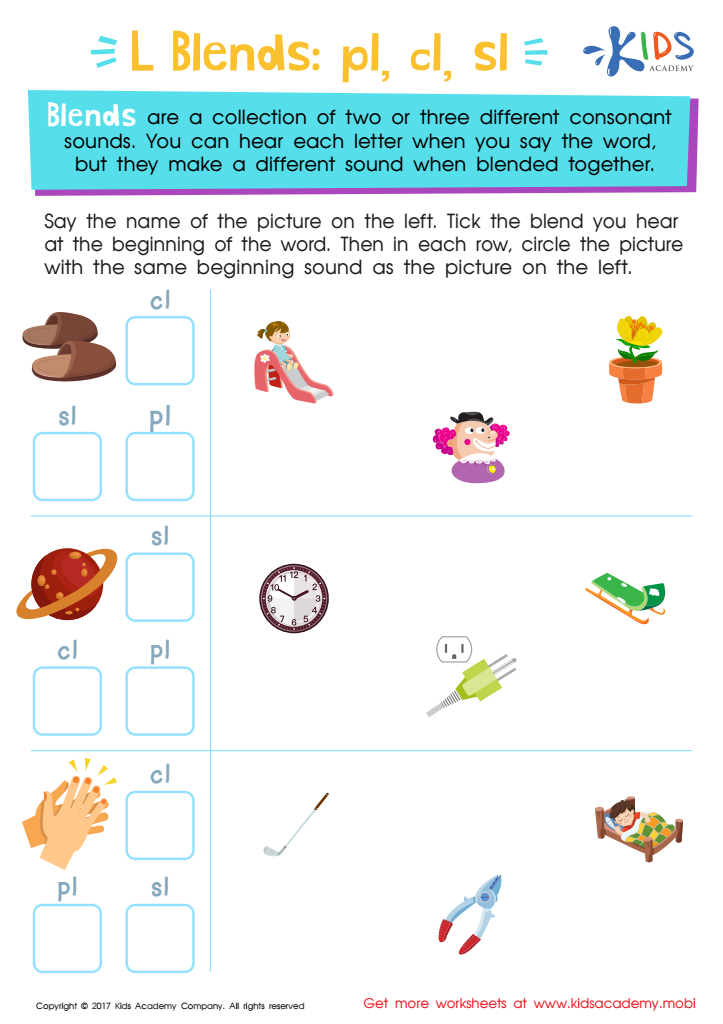
L Blends: "Pl", "Cl" and "Sl" Printable
This printable worksheet will help your child recognize and identify the Pl, Cl, and Sl consonant blends, sound them out, and identify them in print. Improve your child's reading and writing skills with fun and colorful phonics practice!
L Blends: "Pl", "Cl" and "Sl" Printable
Worksheet
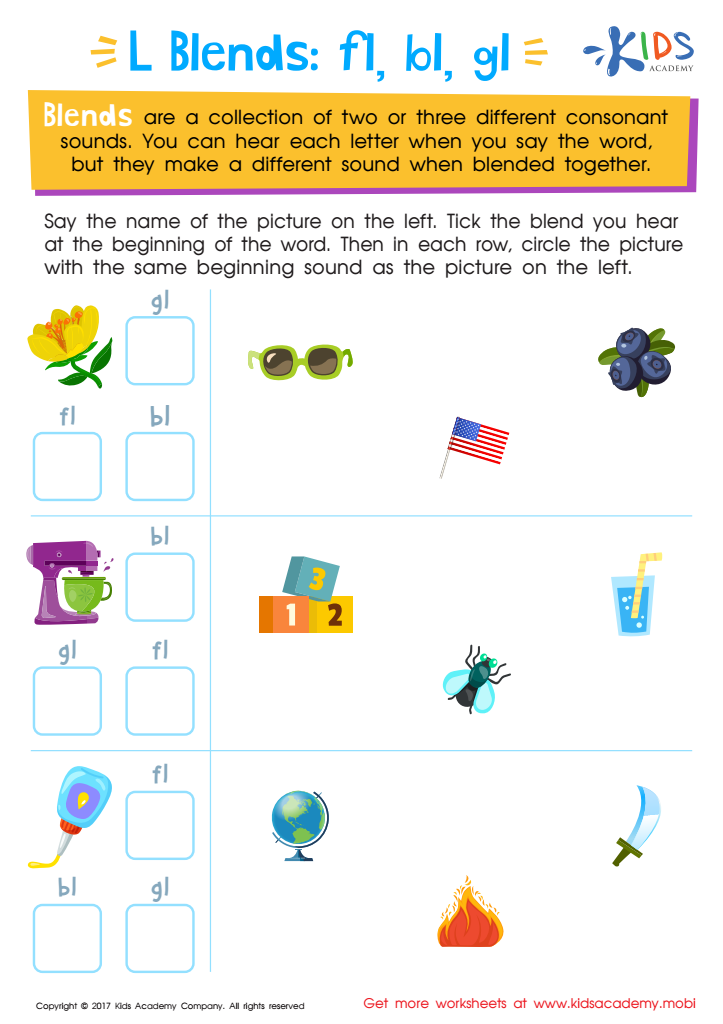
Blending Consonants: "Fl", "Bl" and "Gl" Printable
Help your child master consonant blends Fl, Bl, and Gl with this printable worksheet. Find words associated with the pictures and learn to better understand the difference between consonant blends. Vibrant images motivate and aid in learning. Download now for improved phonics success!
Blending Consonants: "Fl", "Bl" and "Gl" Printable
Worksheet
Join Kids Academy for Free
Who is primarily going to use this learning content?


Parents and teachers should recognize the importance of normal initial and final consonant blends in the literacy development of children ages 4-9. Consonant blends are combinations of two or more consonants that produce distinct sounds when spoken, such as "br," "st," and "ld." Mastering these blends is crucial for improving reading fluency, enhancing phonemic awareness, and building a strong foundation for future reading skills.
Understanding initial blends, like "sl" in "slip," helps children pronounce new words and increases their confidence in tackling complex texts. Final blends, such as "nd" in "sand," assist in blending sounds, supporting spelling and writing proficiency. By familiarizing children with these blends, educators and caregivers provide them with essential tools for decoding unfamiliar words, which is especially important as children progress to advanced reading materials.
Moreover, recognizing the significance of blended sounds positively impacts vocabulary acquisition. As children become adept at identifying these blends, they expand their language abilities, enabling richer communication skills. Ultimately, nurturing proficiency in consonant blends equips young learners with the confidence and skills necessary to navigate the literacy landscape, paving the way for lifelong reading enjoyment and academic success.








