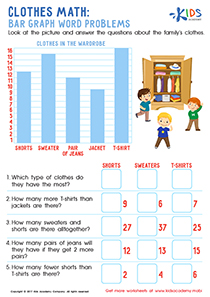
Normal Two-step Word Problems Worksheets for Ages 4-9
13 filtered results
-
From - To
Discover engaging "Normal Two-step Word Problems Worksheets" designed for children ages 4 to 9! These worksheets aim to enhance critical thinking and problem-solving skills through fun, relatable scenarios. Tailored to meet developmental needs, our resources encourage kids to process and analyze information while boosting their confidence in math. Each worksheet presents a variety of problems that challenge young learners to navigate real-world situations, making math both enjoyable and practical. Ideal for teachers and parents, these printable materials are perfect for in-class activities or at-home learning. Help your child build a strong foundation in mathematics with our hands-on approach today!
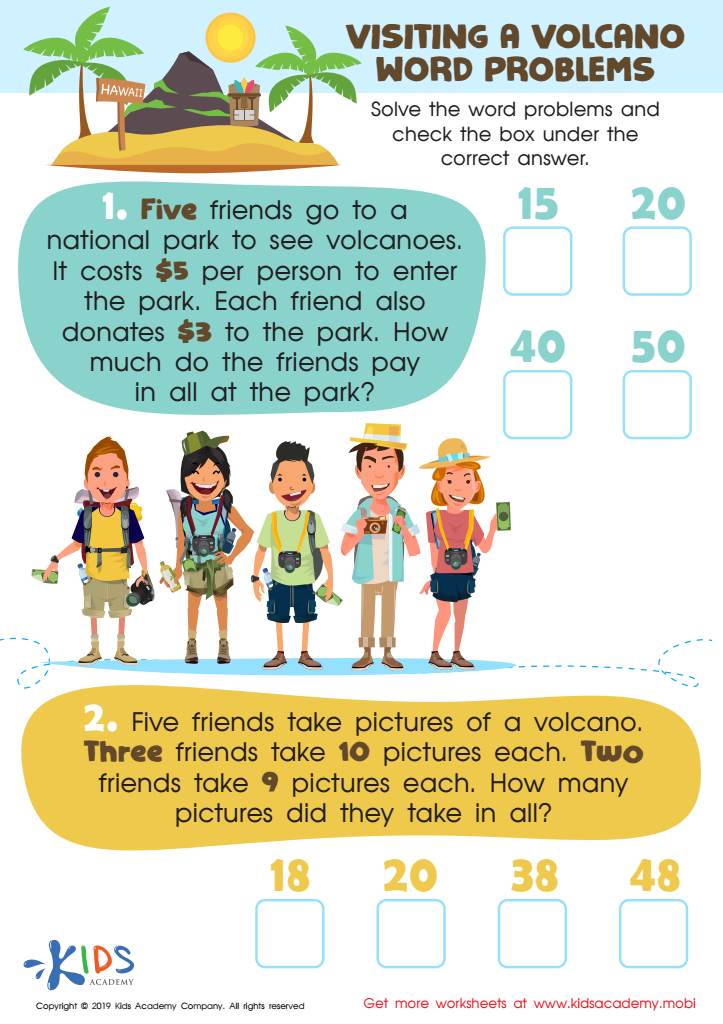
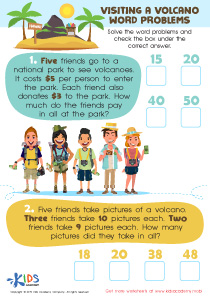
Visiting a Volcano Word Problems Worksheet
 Assign to My Students
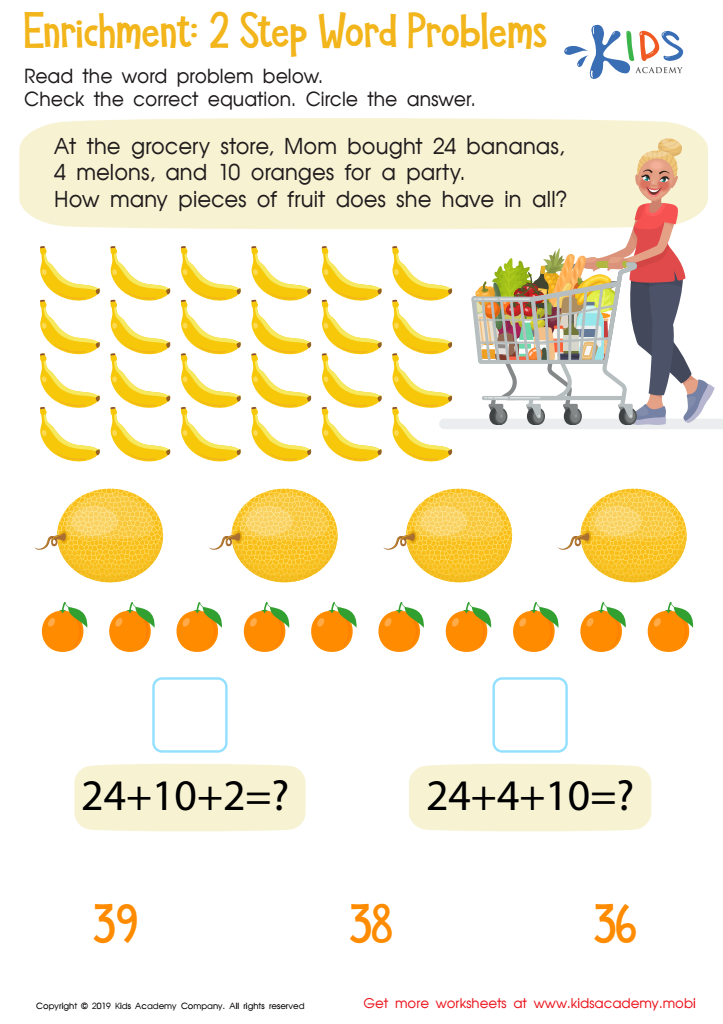
Enrichment -2 Step Word Problems Worksheet
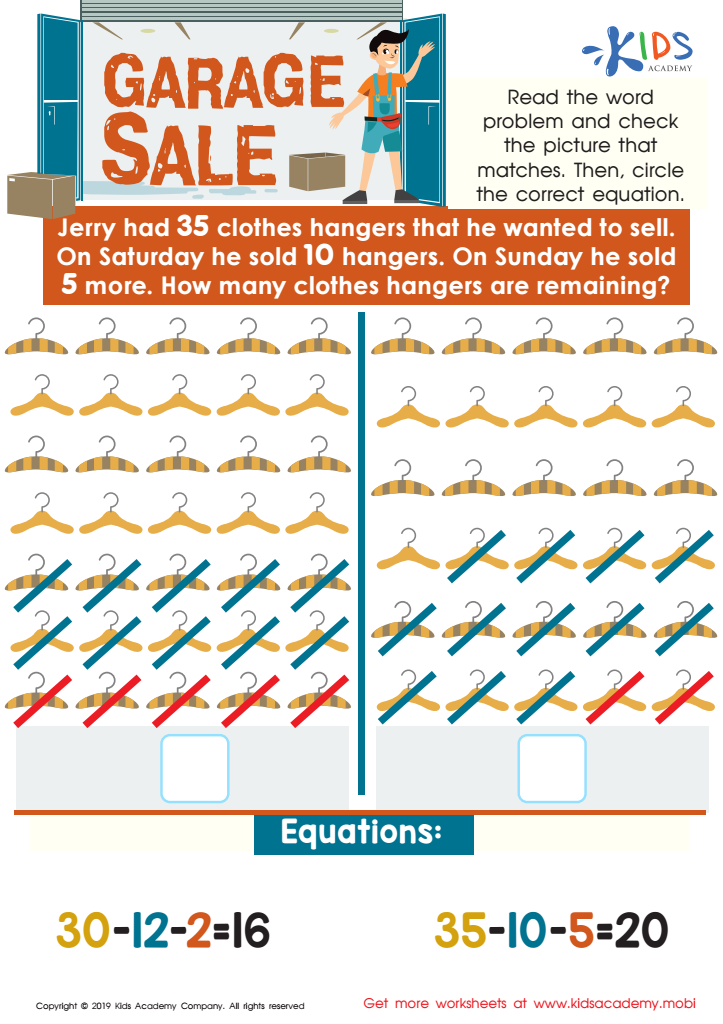
Garage Sale Worksheet
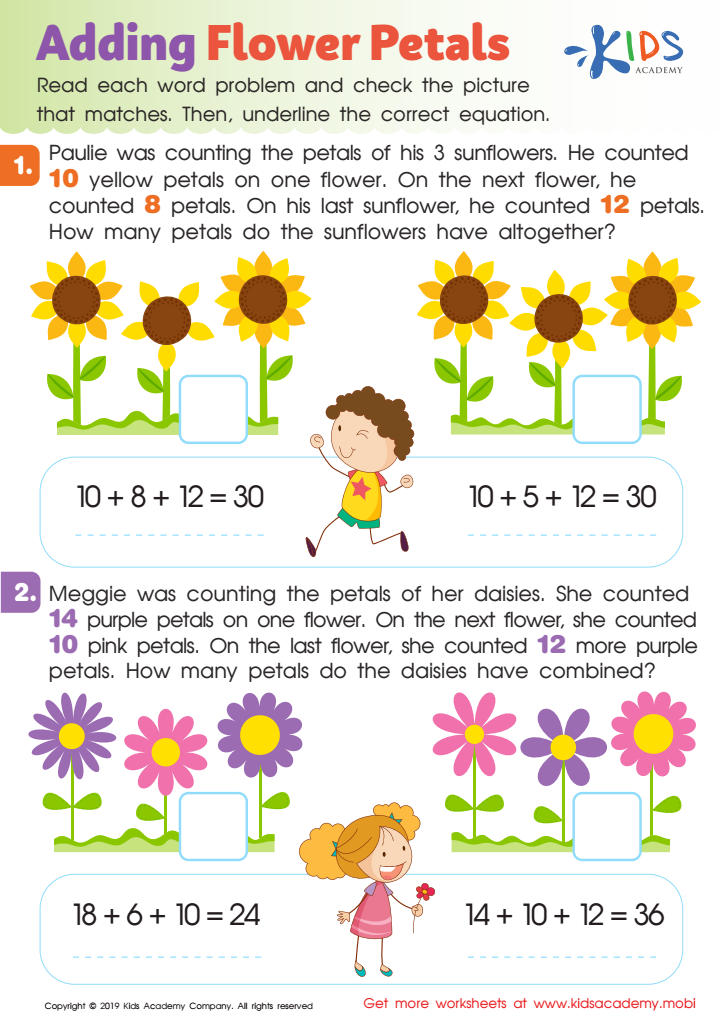
Adding Flower Petals Worksheet
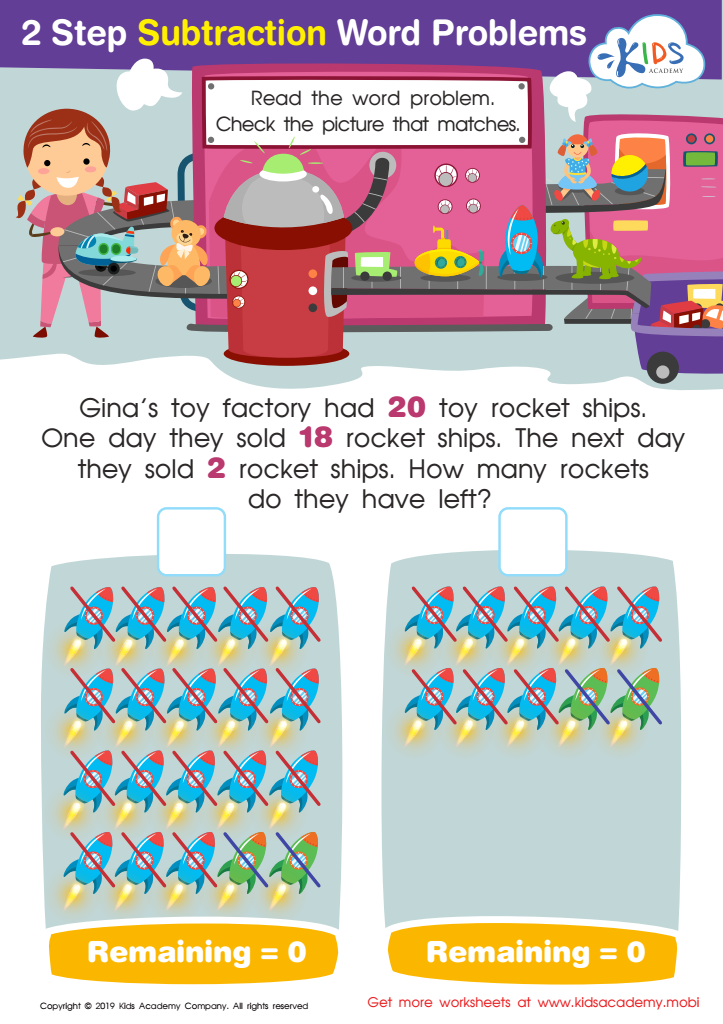
Step Subtraction Word Problems Worksheet
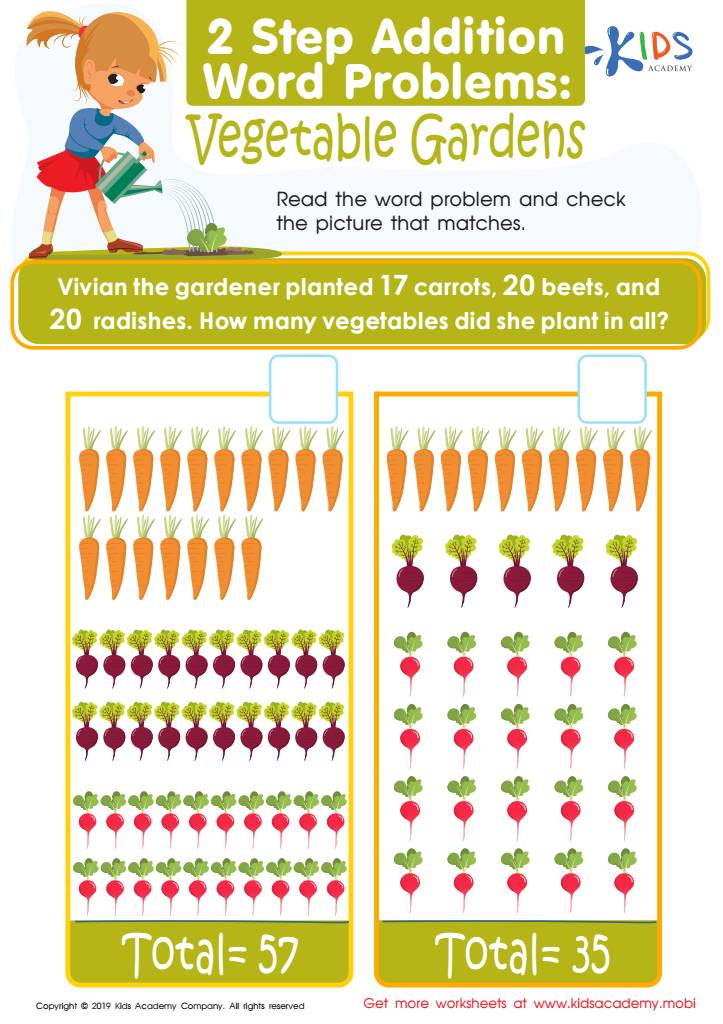
Vegetable Gardens Worksheet
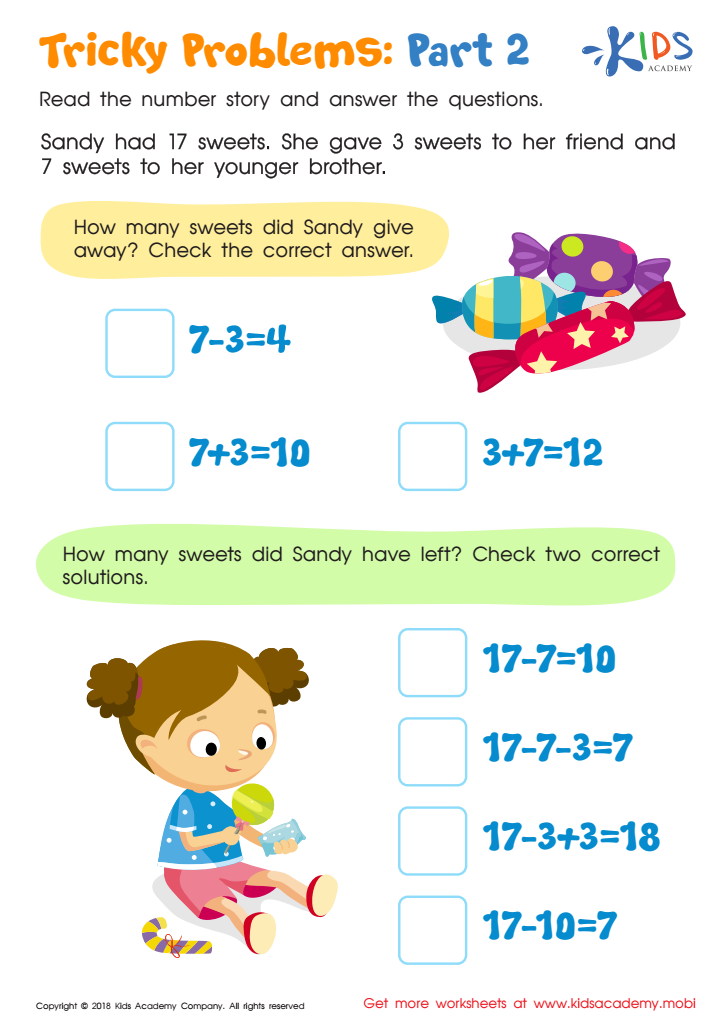
Tricky Problems Worksheet: Part 2
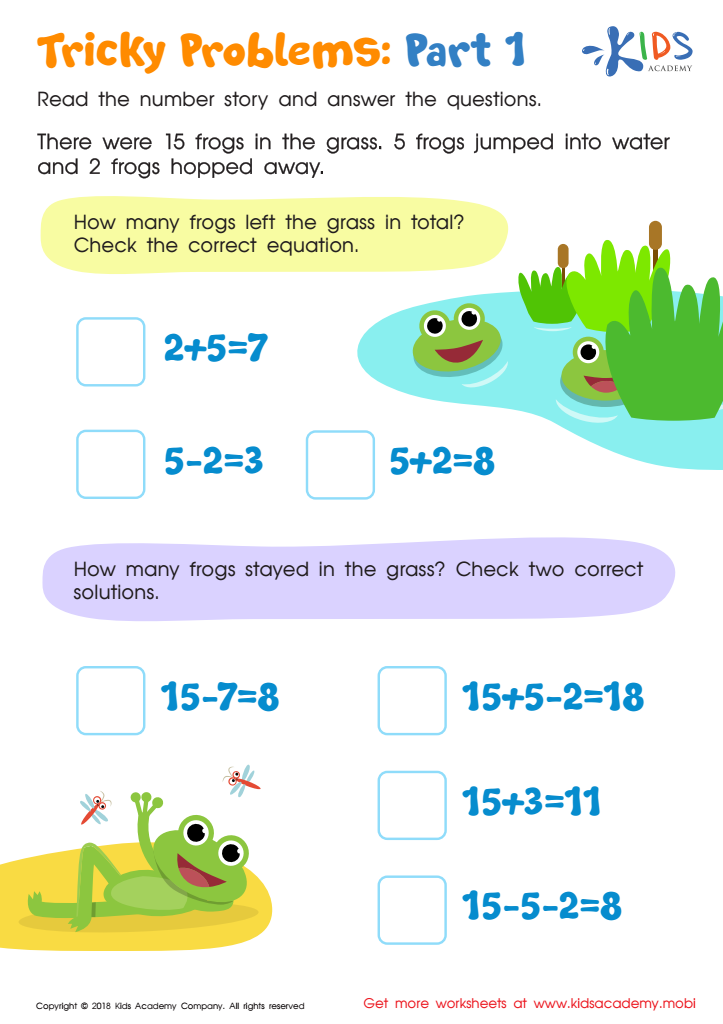
Tricky Problems Worksheet: Part 1
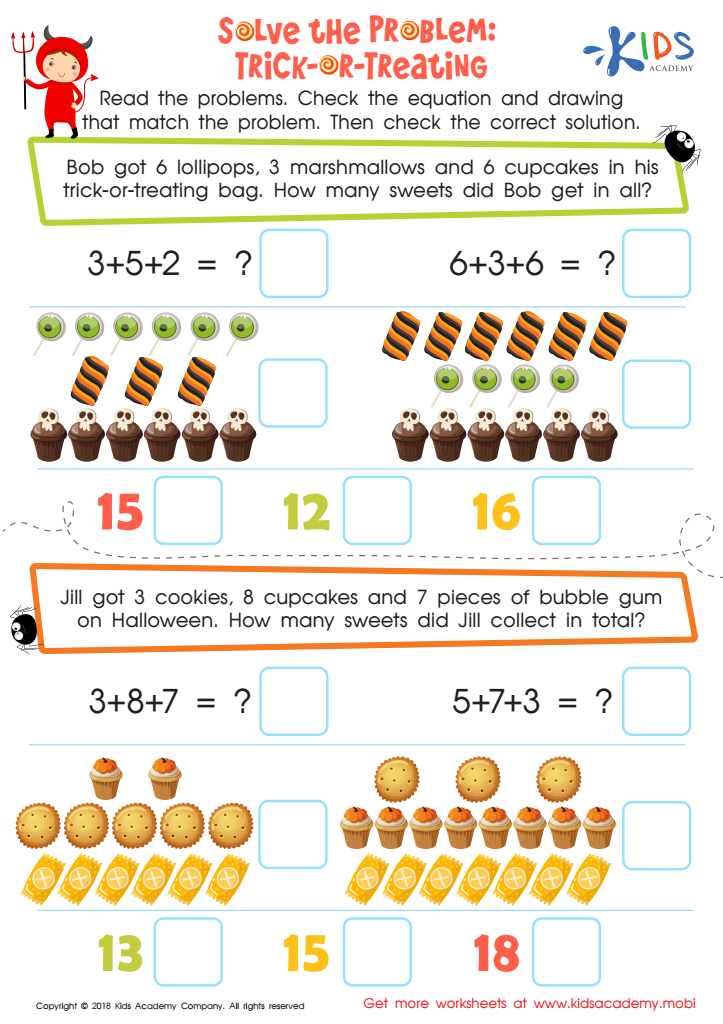
Solve the Problem: Trick–or–treating Worksheet
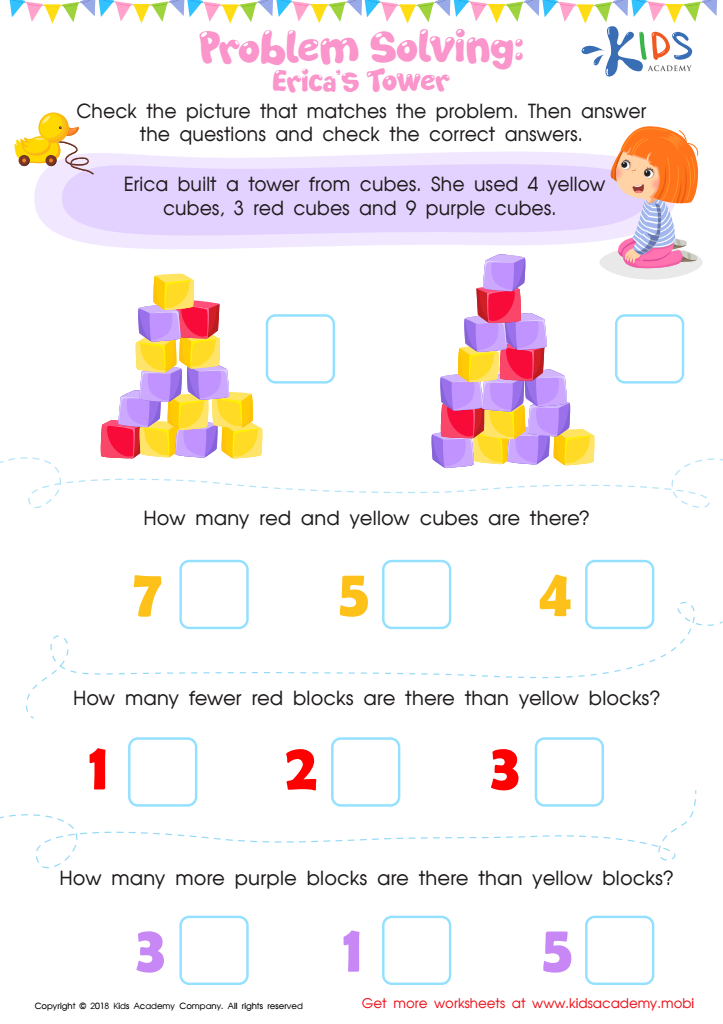
Problem Solving: Erica's Tower Worksheet
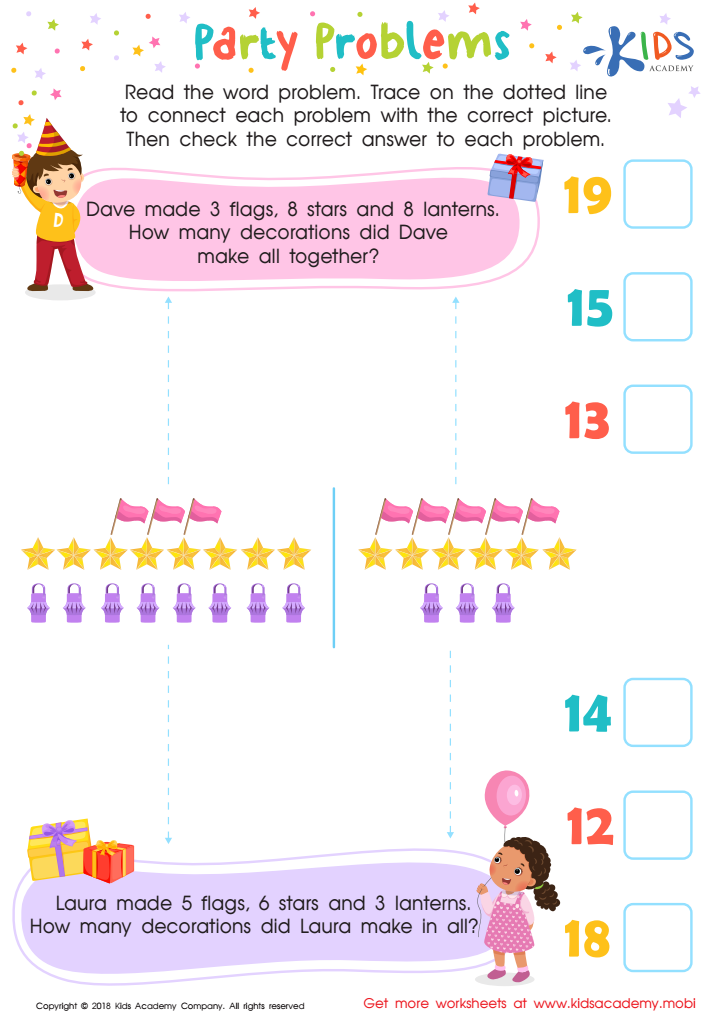
Party Problems Worksheet
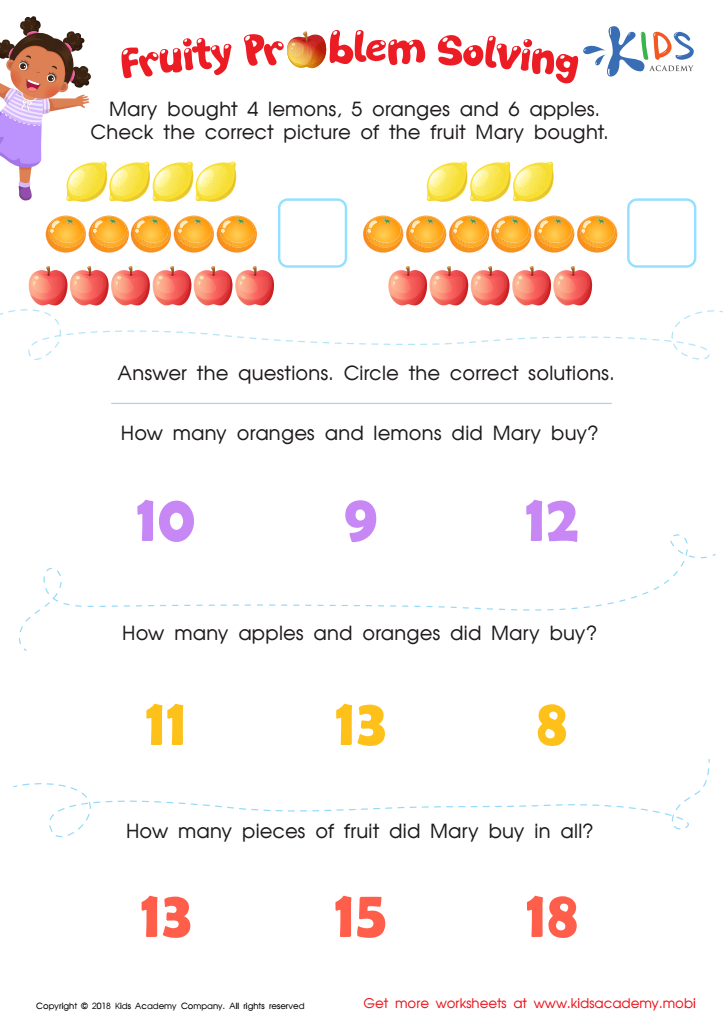
Fruity Problem Solving Worksheet
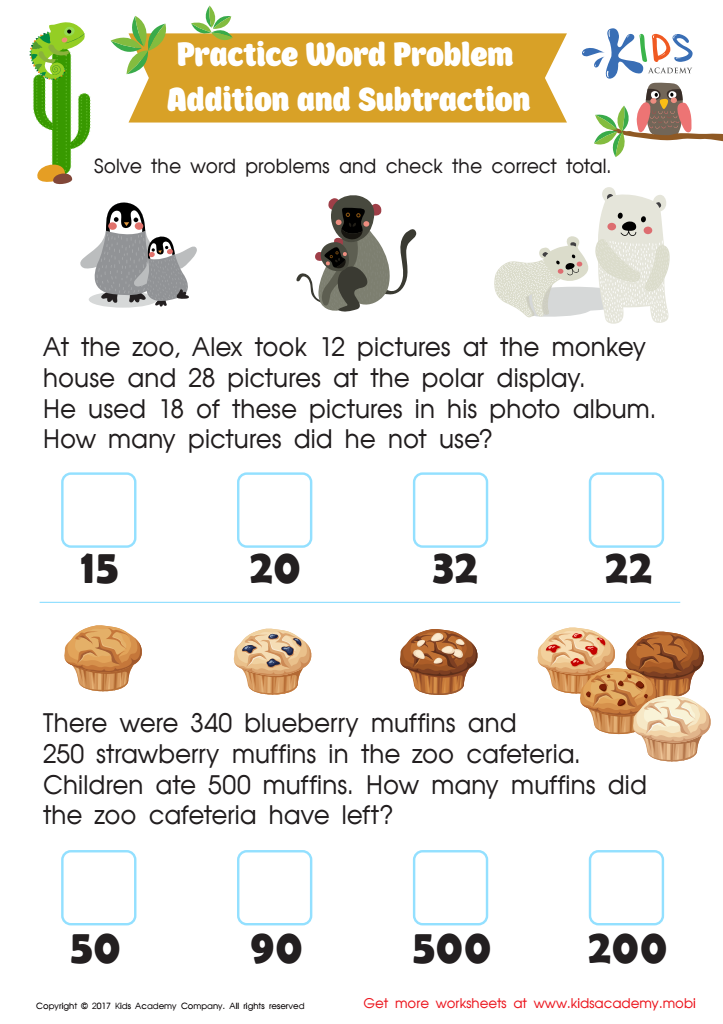
Addition and Subtraction: Word Problems Worksheet



Normal two-step word problems are essential for children aged 4-9 as they develop critical mathematical thinking and problem-solving skills. At this age, children begin to internalize fundamental mathematical concepts, paving the way for more complex operations later in their education. These problems encourage students to engage with the material actively, promoting logical reasoning and sequential thinking as they must decipher the problem, determine the necessary operations, and execute them step-by-step.
Moreover, such problems foster language skills, enhancing children’s ability to comprehend and articulate mathematical concepts. As they translate real-life scenarios into mathematical equations, kids learn to communicate their reasoning clearly. This dual focus on math and literacy supports well-rounded cognitive development.
For parents and teachers, nurturing skills through two-step word problems instills confidence in young learners. It helps them understand that math is not merely a subject confined to numbers but a tool to interpret and solve everyday issues. Furthermore, helping children to tackle these problems forges a positive attitude toward mathematics, setting a strong foundation for their future educational journeys. Understanding and assisting with these problems develops both competence and confidence, making math an enjoyable aspect of a child’s learning experience.