Normal Chess Worksheets for Ages 5-6 - Page 2
47 filtered results
-
From - To
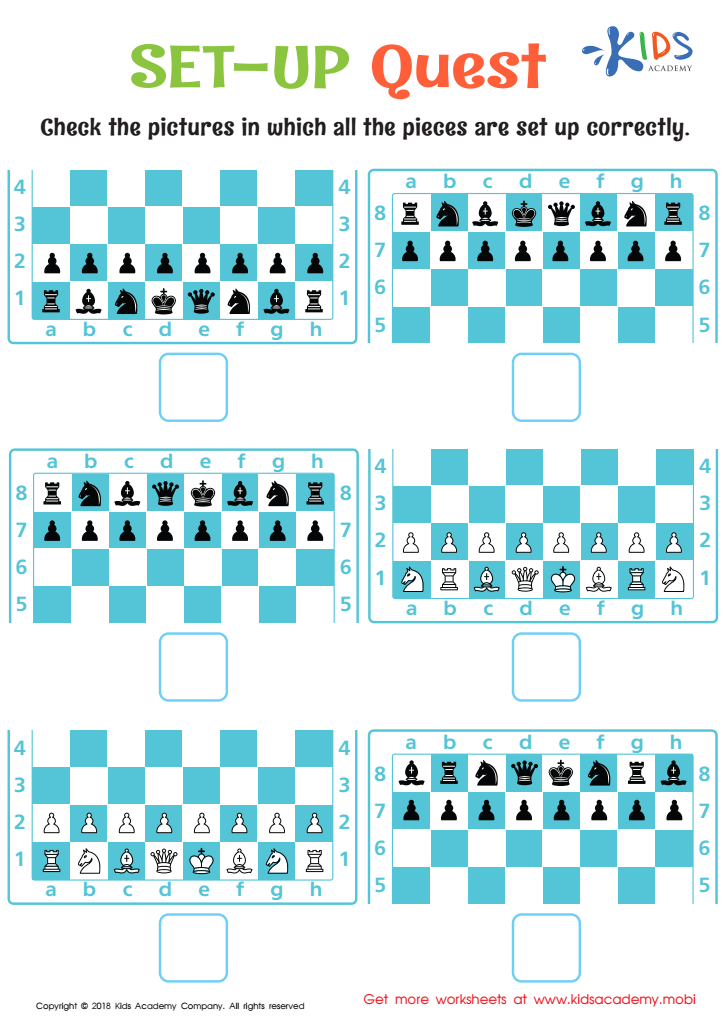
Set-up Quest Worksheet
 Assign to My Students
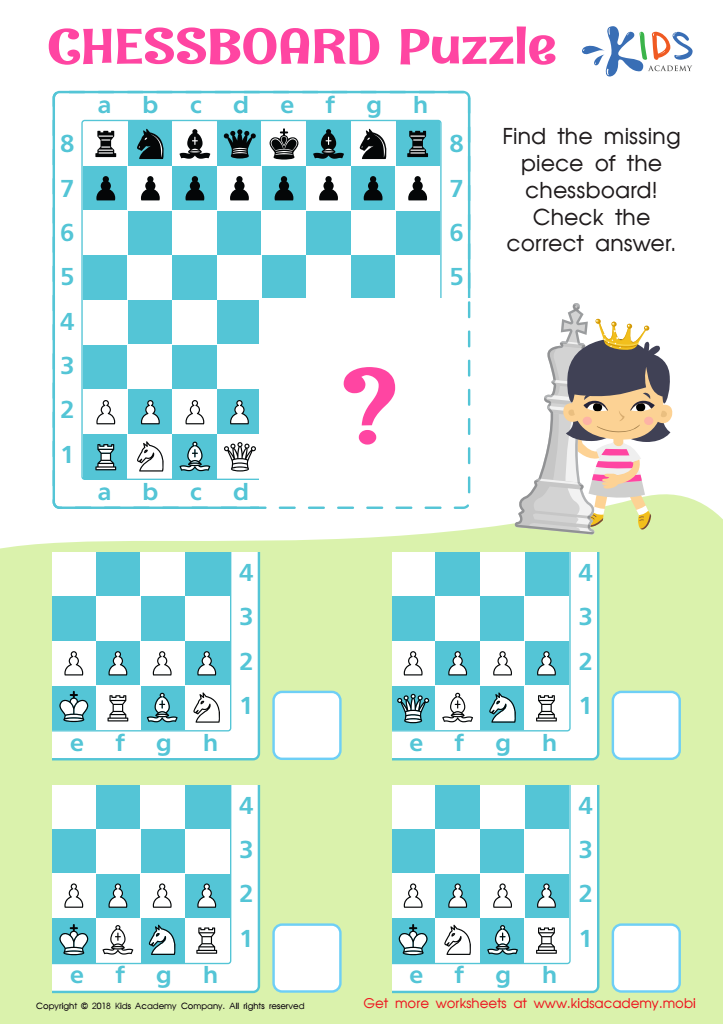
Chessboard Puzzle Worksheet
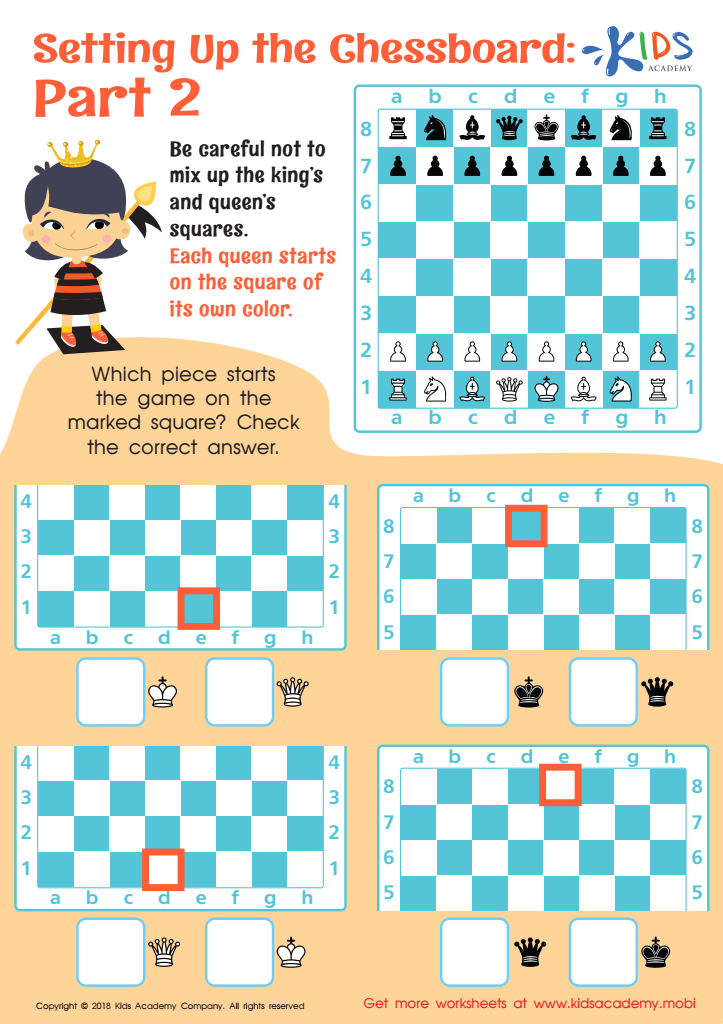
Setting up the Chessboard: Part 2 Worksheet
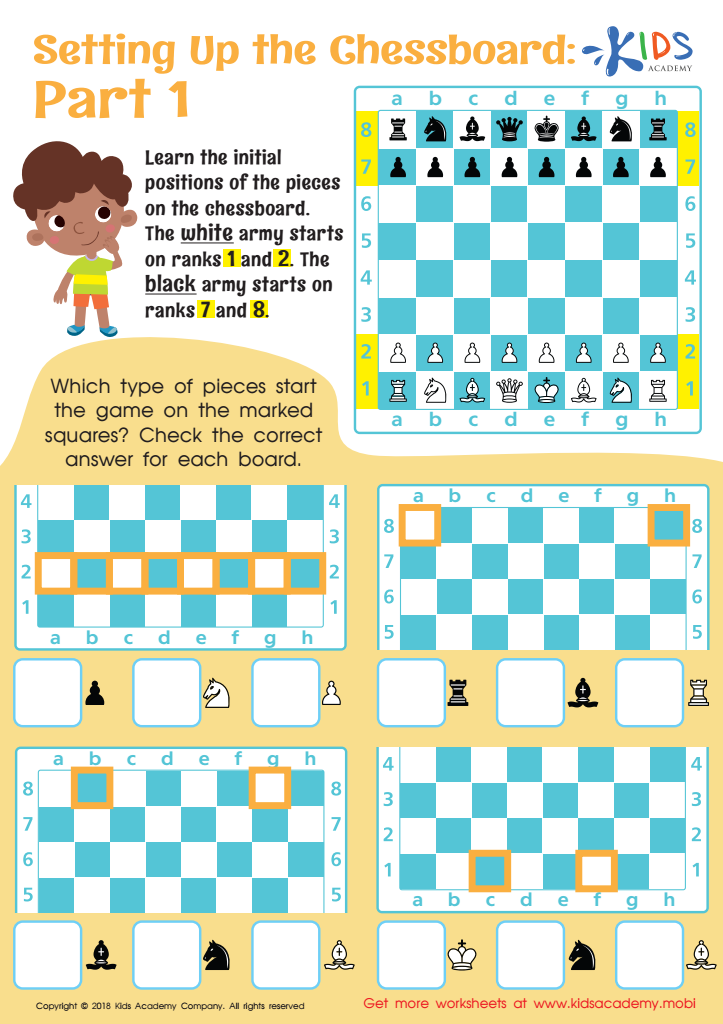
Setting up the Chessboard: Part 1 Worksheet
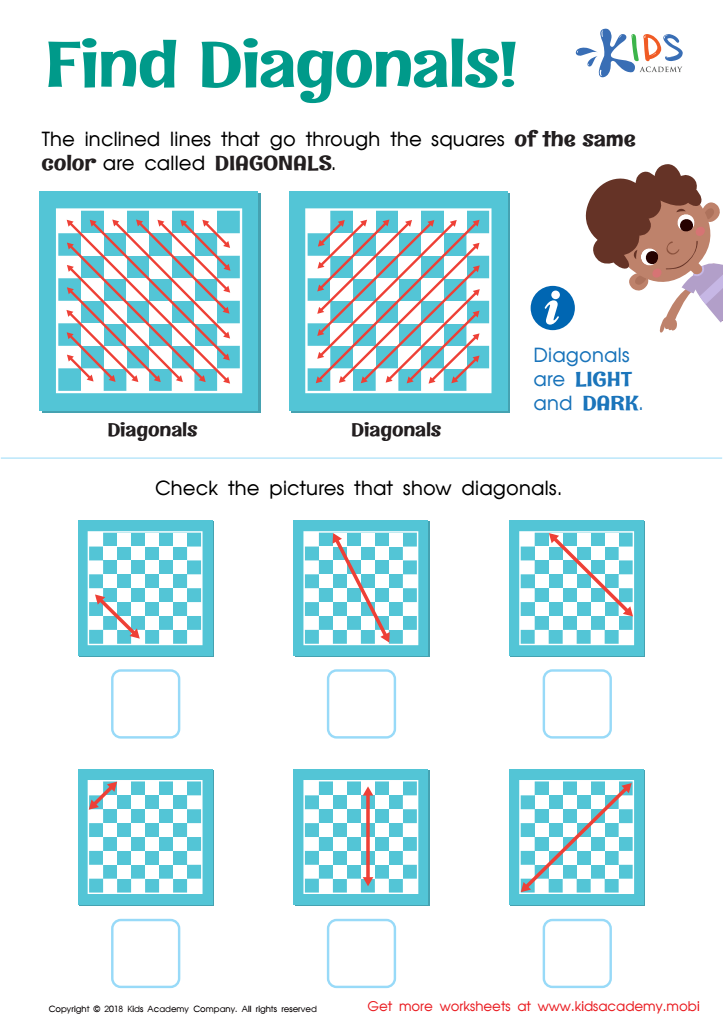
Find Diagonals Worksheet
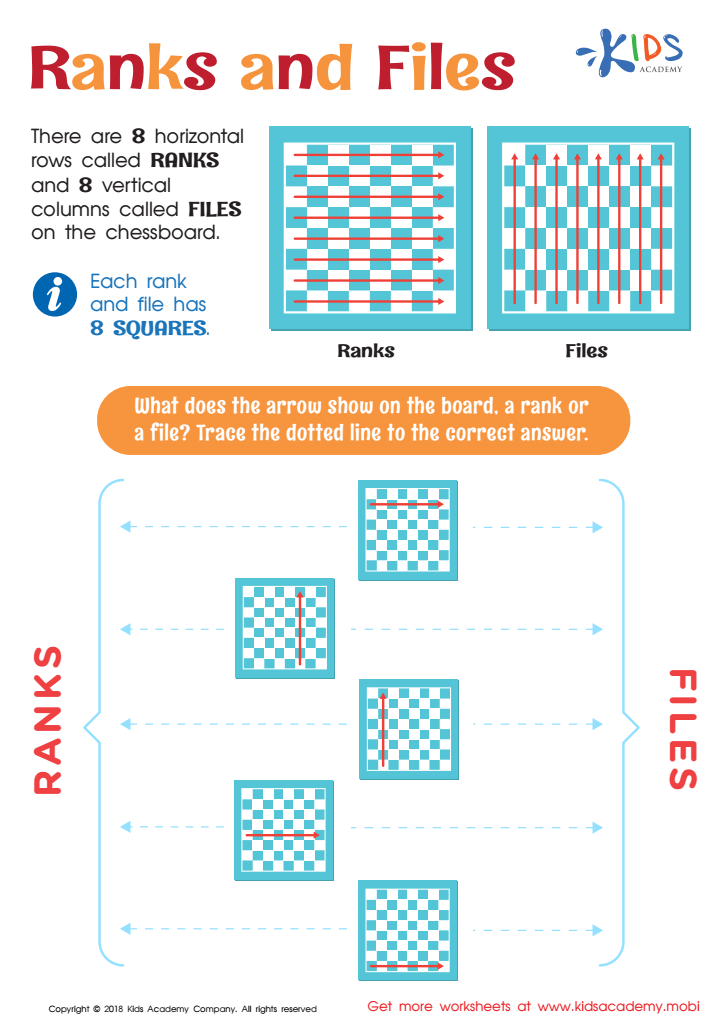
Ranks and Files Worksheet
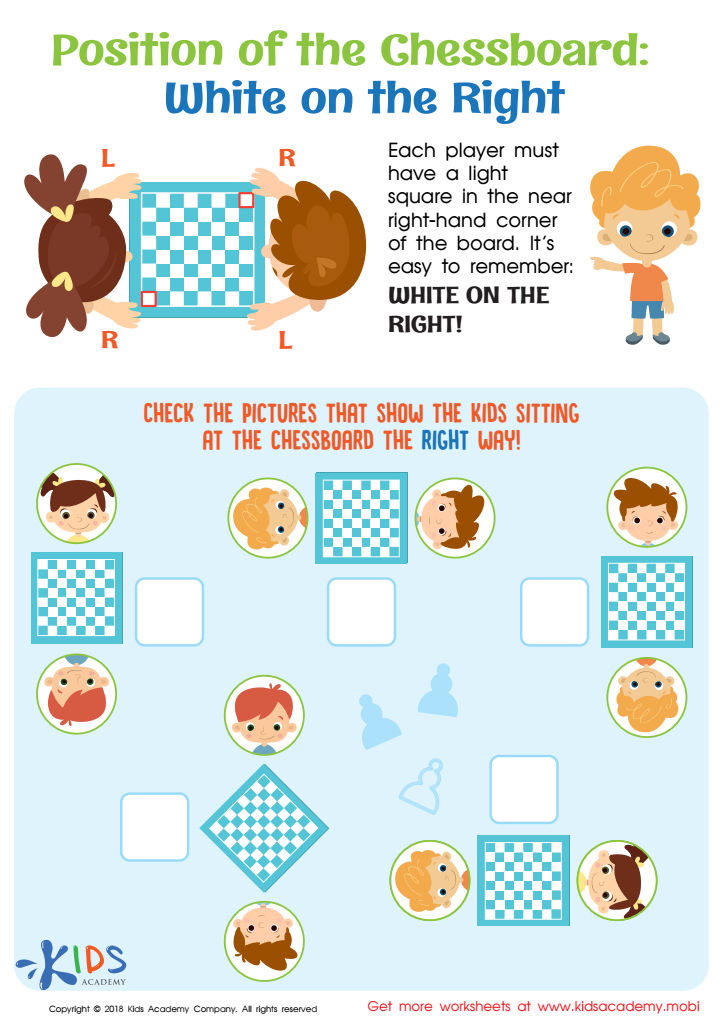
Position of the Chessboard: White on the Right Worksheet
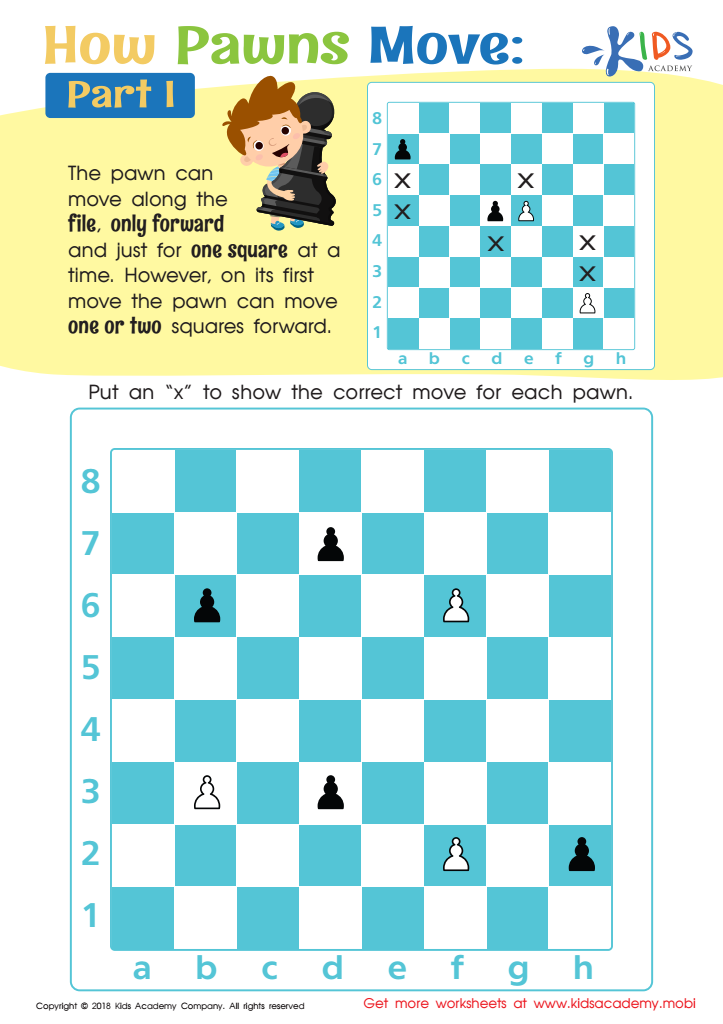
How Pawns Move: Part I Worksheet
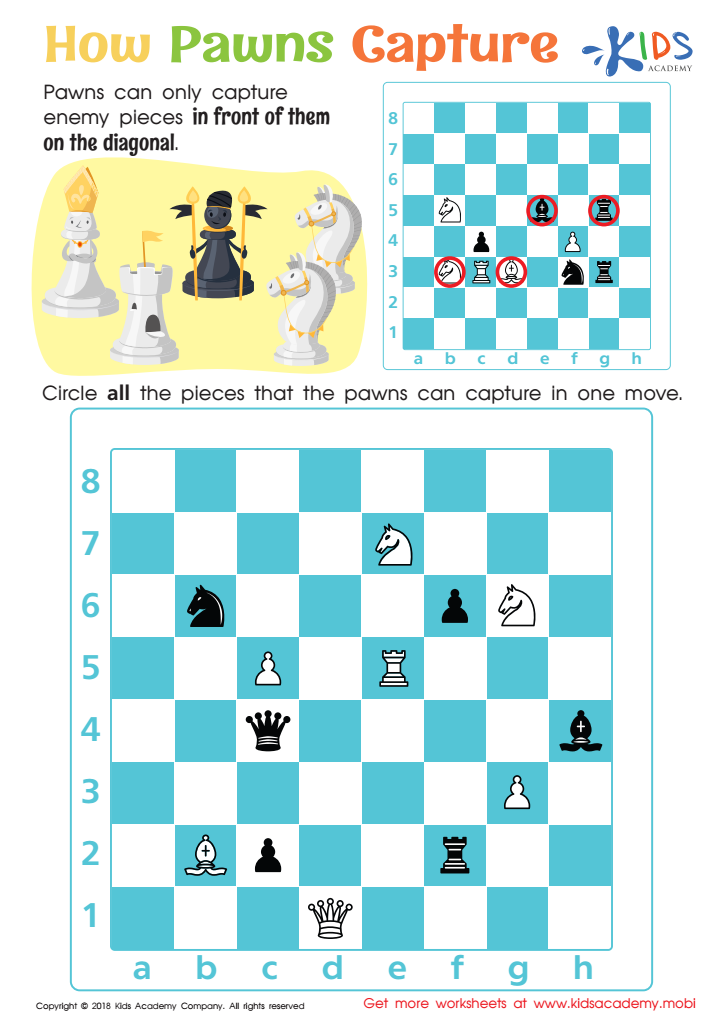
How Pawns Capture Worksheet
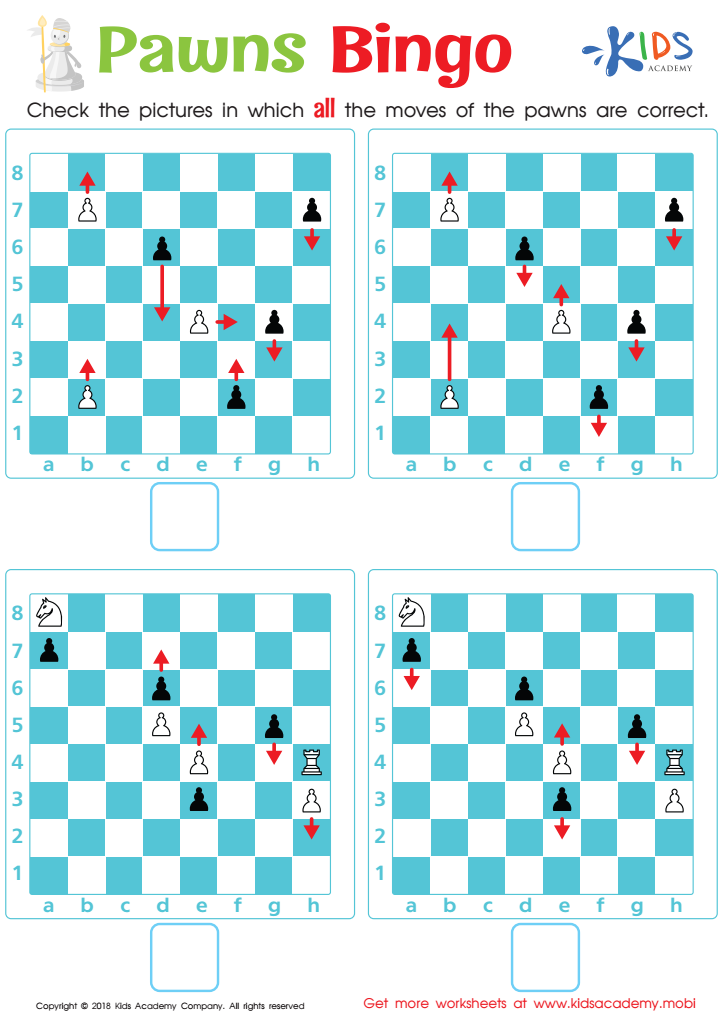
Pawns Bingo Worksheet
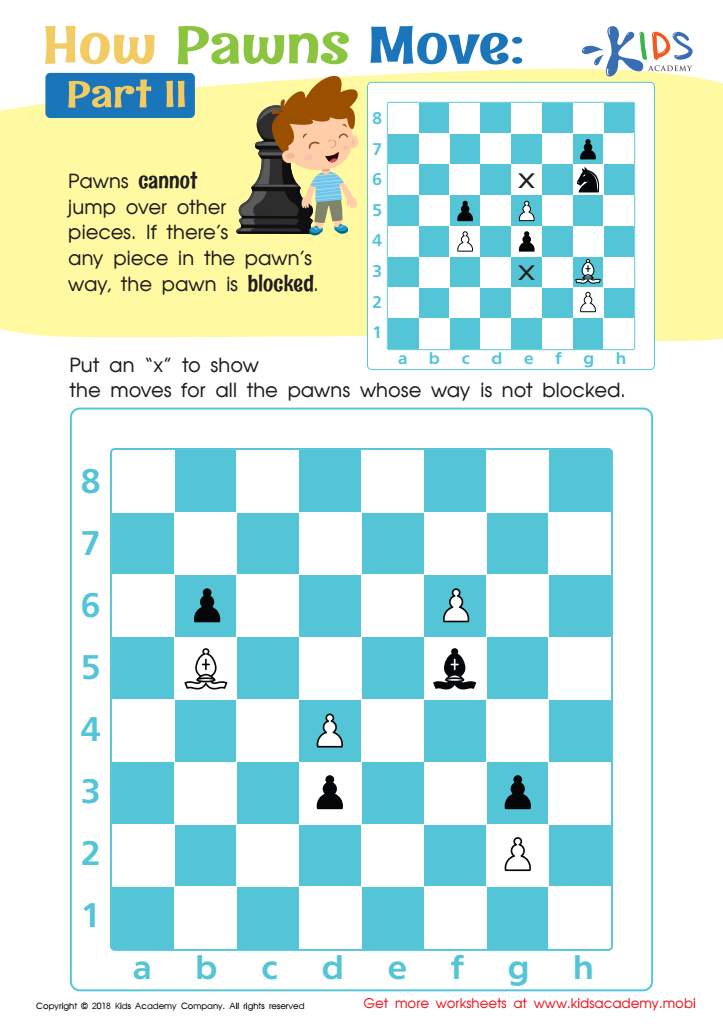
How Pawns Move: Part II Worksheet
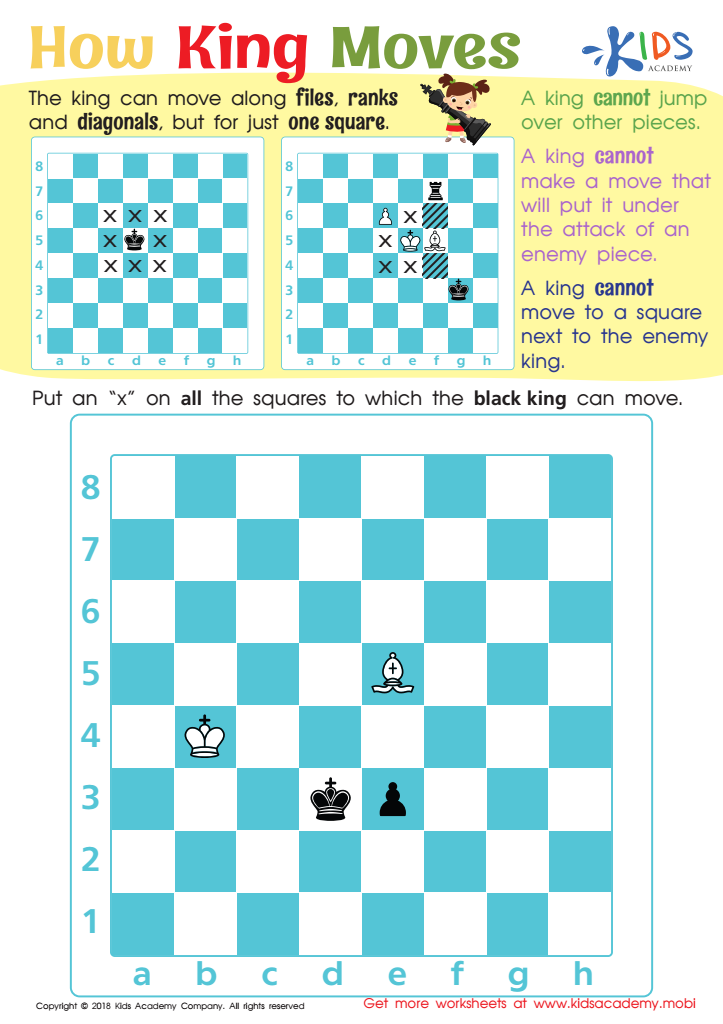
How King Moves Worksheet
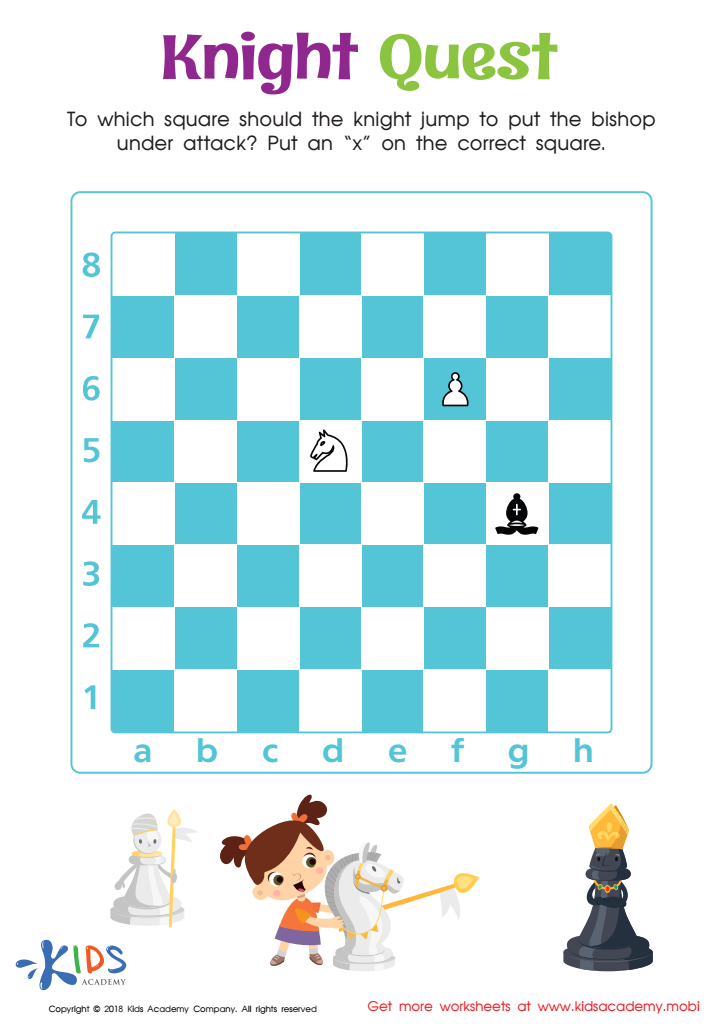
Knight Quest Worksheet
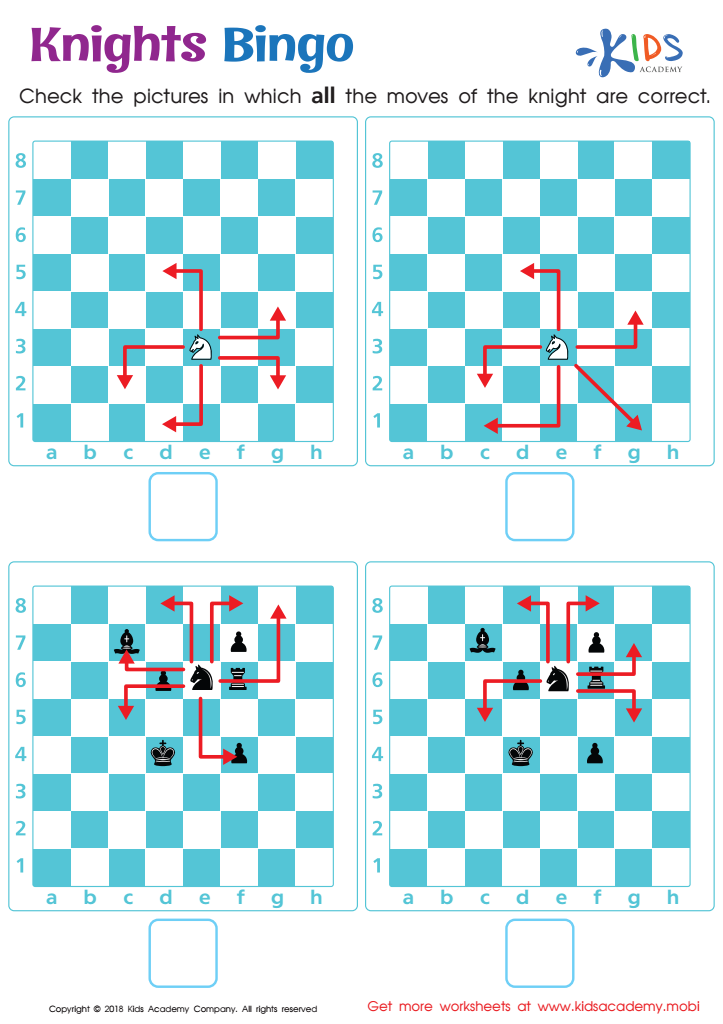
Knights Bingo Worksheet
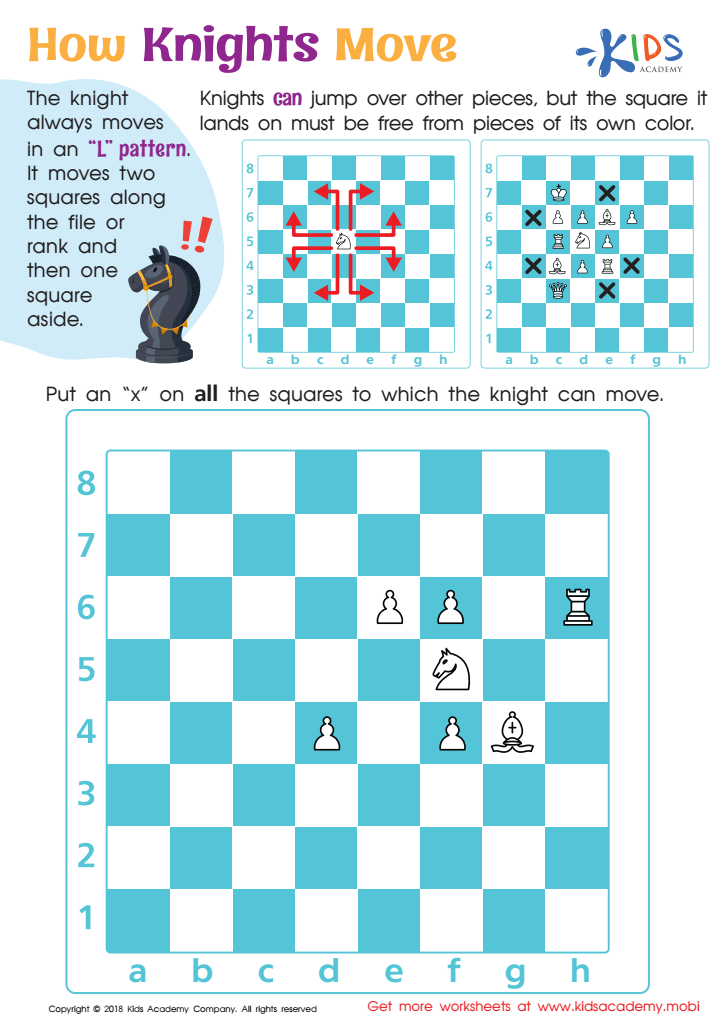
How Knights Move Worksheet
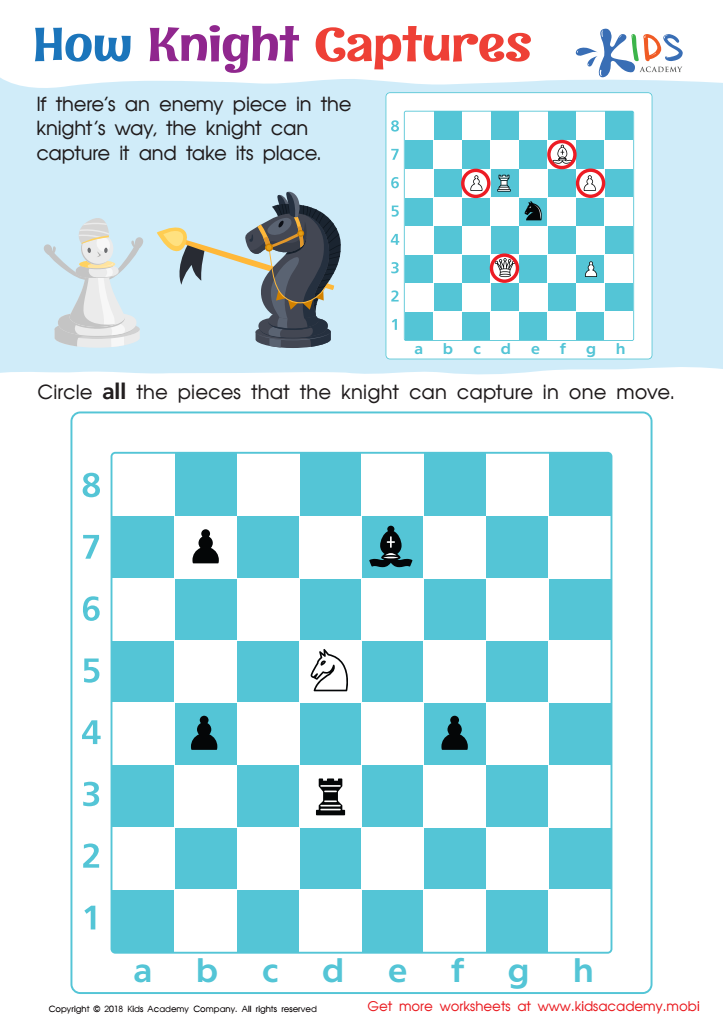
How Knight Captures Worksheet
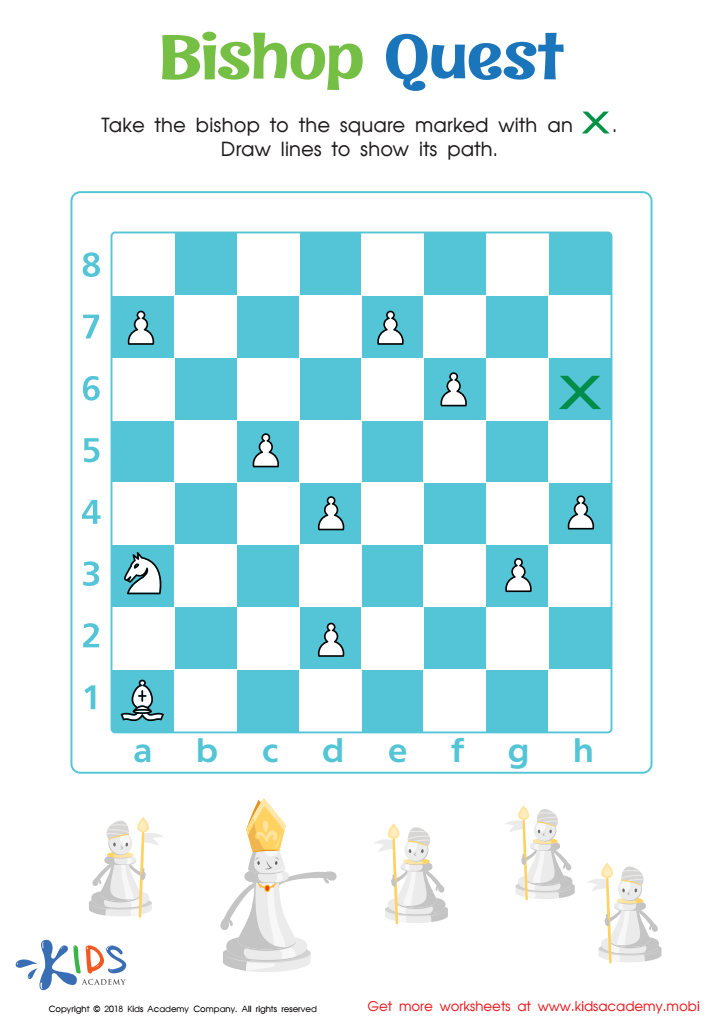
Bishop Quest Worksheet
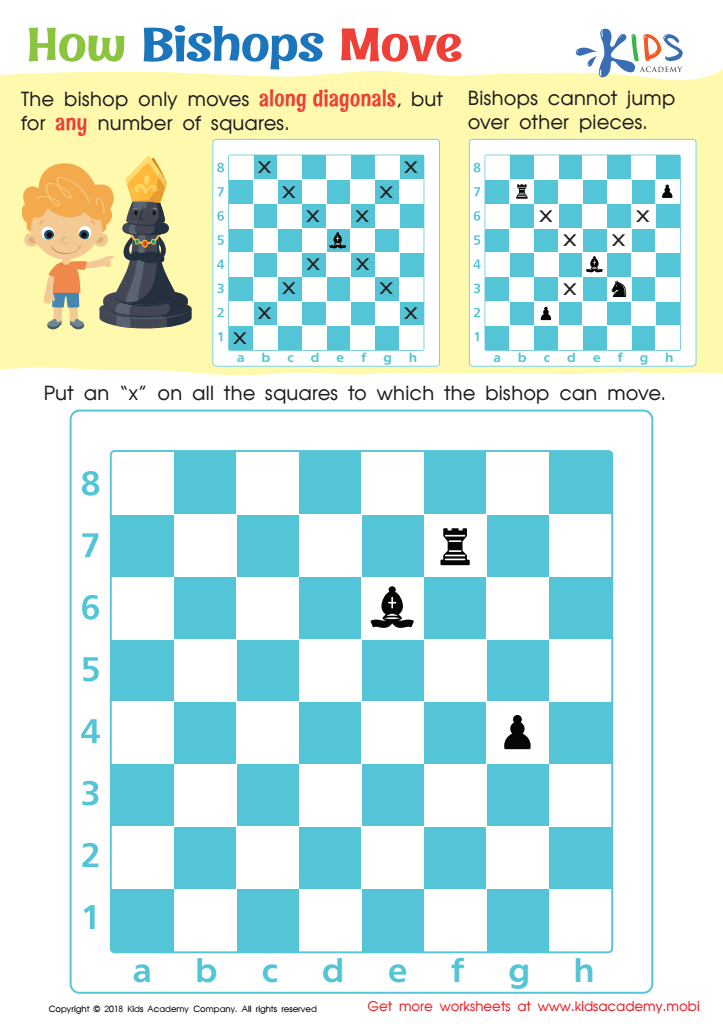
How Bishops Move Worksheet
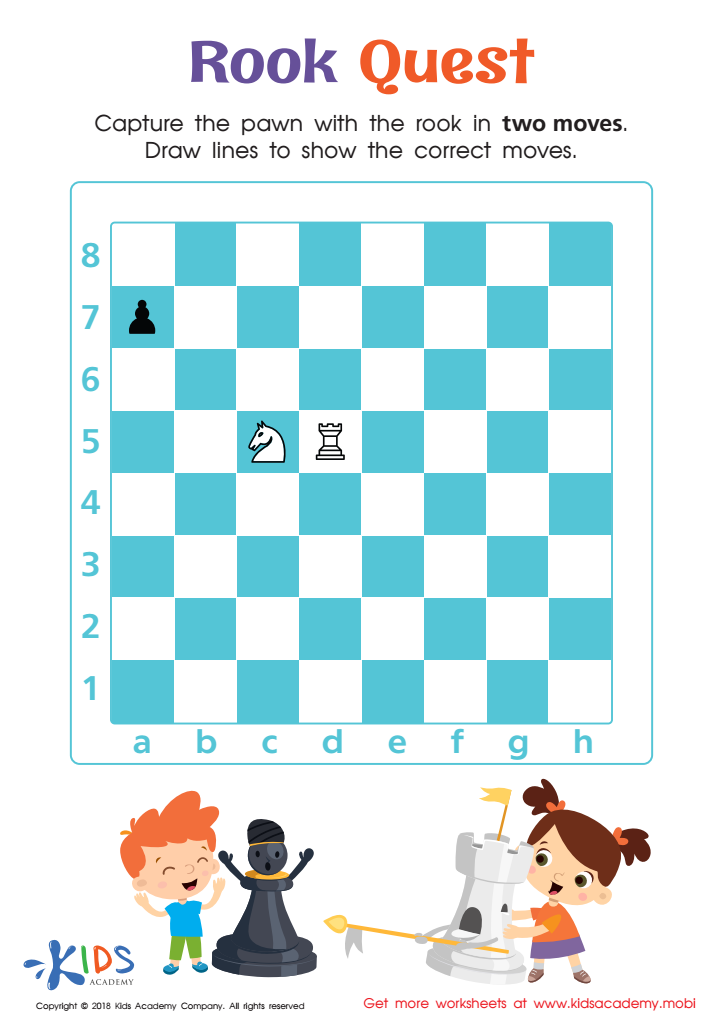
Rook Quest Worksheet
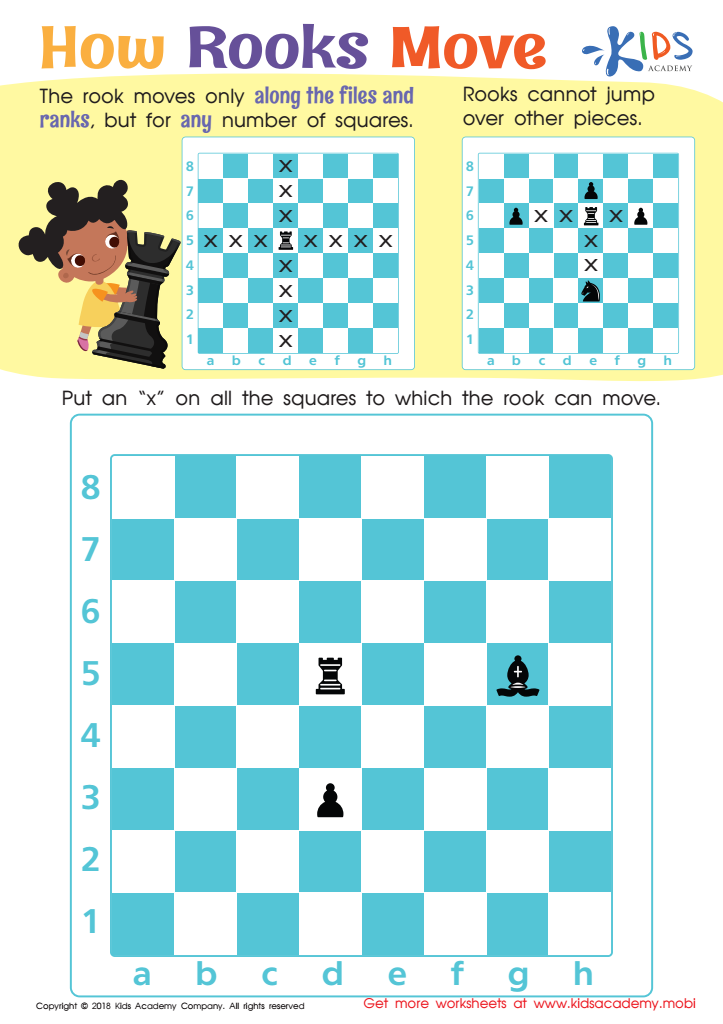
How Rooks Move Worksheet
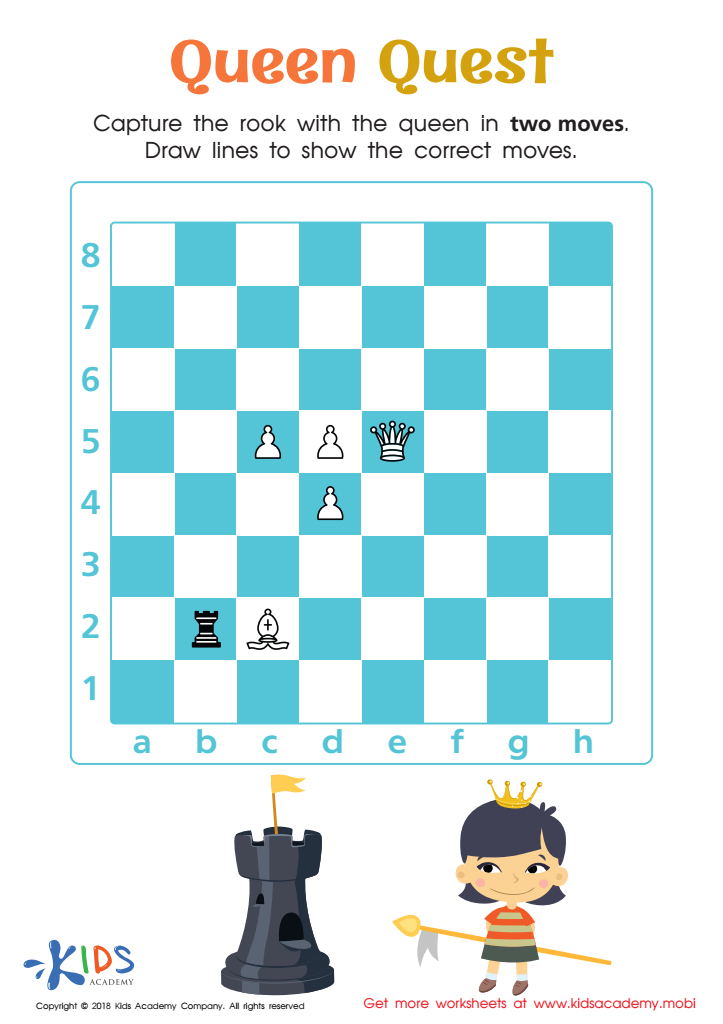
Queen Quest Worksheet
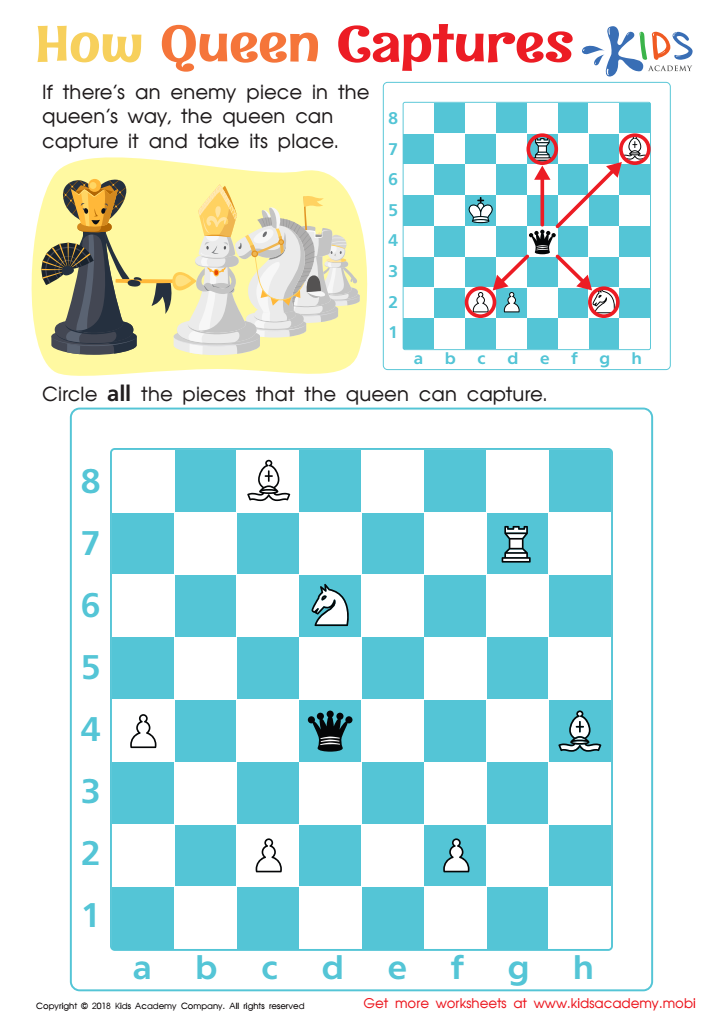
How Queen Captures Worksheet
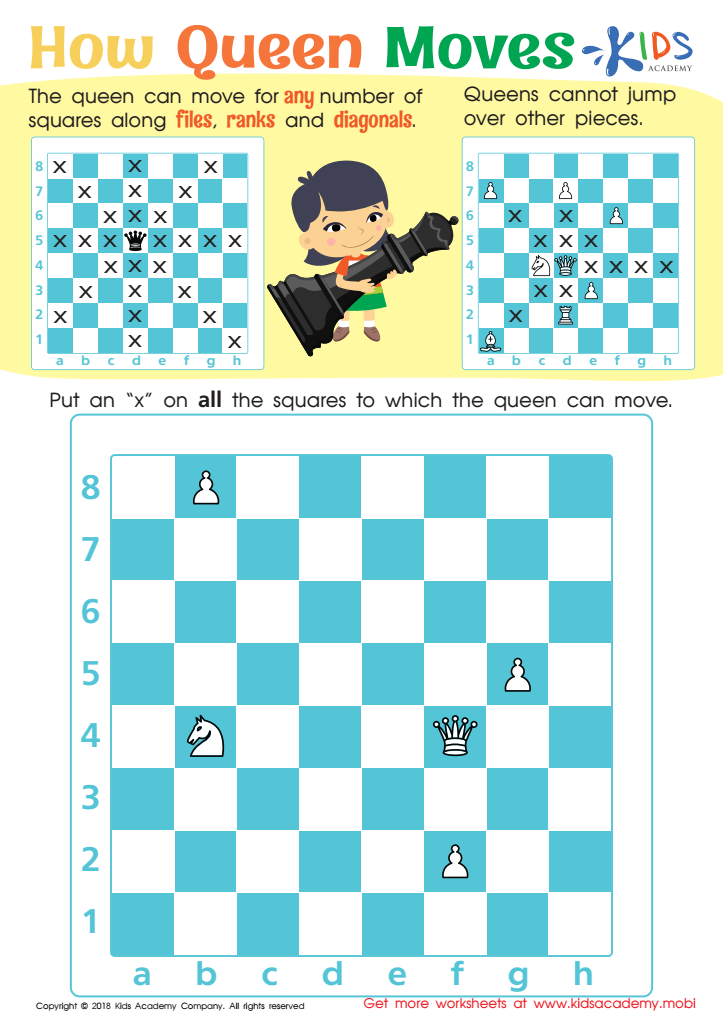
How Queen Moves Worksheet



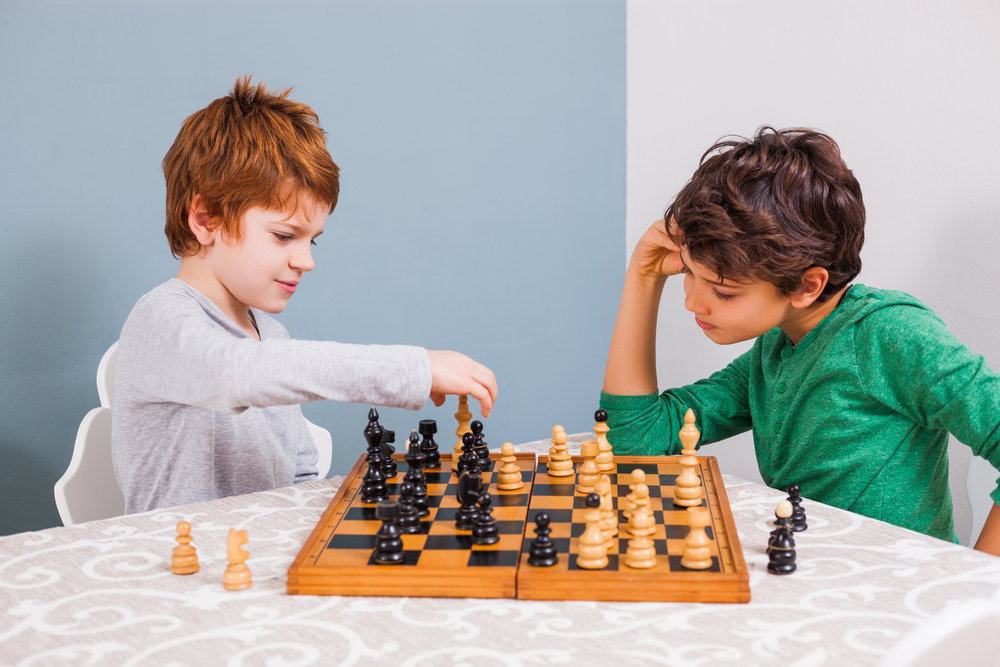


Parents and teachers should care about introducing Normal Chess to children aged 5-6 for several compelling reasons. First and foremost, chess is a cognitive game that encourages critical thinking, problem-solving, and strategic planning. At this early age, children's brains are highly receptive, making it an ideal time to nurture these essential skills that will benefit them academically and socially.
Moreover, chess helps improve concentration and patience. Young children often struggle with focus, but the game requires players to think ahead and patiently consider their moves, fostering these skills over time. It also teaches the importance of recognizing consequences; children learn that each decision has an outcome, enhancing their decision-making abilities.
Additionally, playing chess promotes social interaction. It creates a platform for children to engage with peers or family members, teaching them how to compete gracefully and respect others. This can build confidence and improve communication skills.
Lastly, introducing chess at a young age can ignite a lifelong passion for the game, encouraging creativity and lifelong learning. By valuing chess education, parents and teachers contribute significantly to the holistic development of children, equipping them with valuable skills for the future.