
Normal Comparison Worksheets for Ages 5-8
8 filtered results
Difficulty Level
Grade
Age
-
From - To
Subject
Activity
Standards
Enhance your child's learning journey with our engaging Normal Comparison Worksheets, tailored for children ages 5-8. These worksheets are a fantastic resource for young learners to develop essential math skills by comparing numbers, sizes, and quantities in a fun and interactive way. Each worksheet features colorful visuals and intuitive tasks to keep kids motivated and excited about learning. As students practice comparison concepts, they will build a solid foundation in critical thinking and problem-solving. Perfect for classrooms or home practice, our Normal Comparison Worksheets offer the ideal blend of education and enjoyment. Start exploring and watch your child's confidence soar!
Favorites
With answer key
Interactive
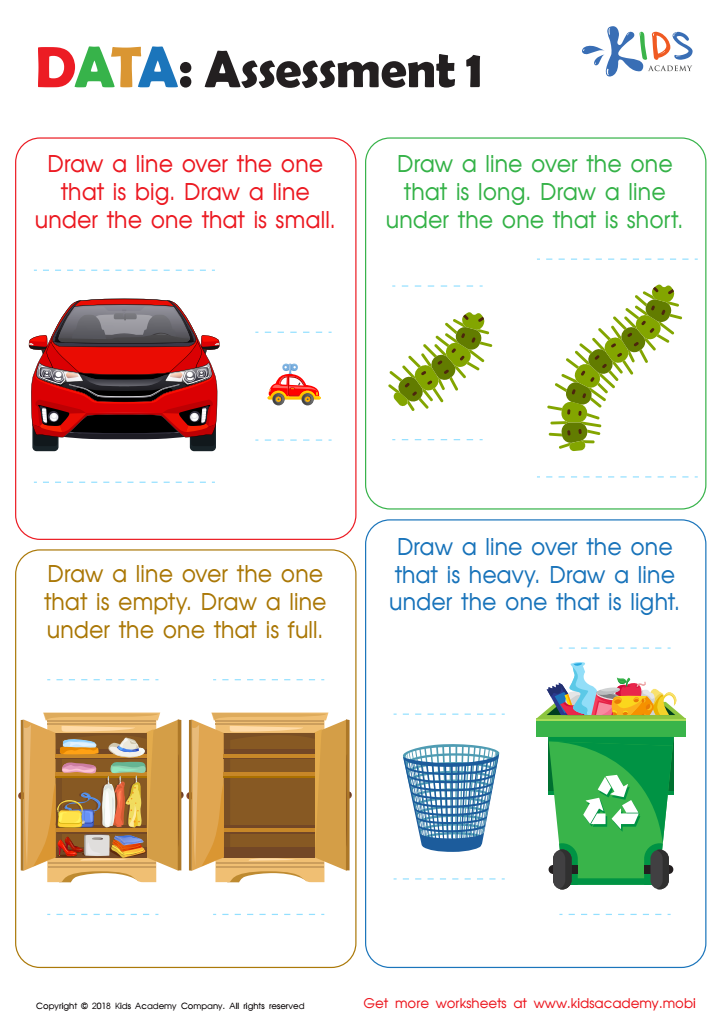
Data: Assessment 1 Worksheet
Assess your students' knowledge of measurement words with this worksheet. Have them compare and describe objects/quantities using words like "big", "small", "long", "short", "empty", "full", "heavy" and "light". Encourage further learning by asking students to provide examples of each word meaning.
 Assign to My Students
Data: Assessment 1 Worksheet
Worksheet
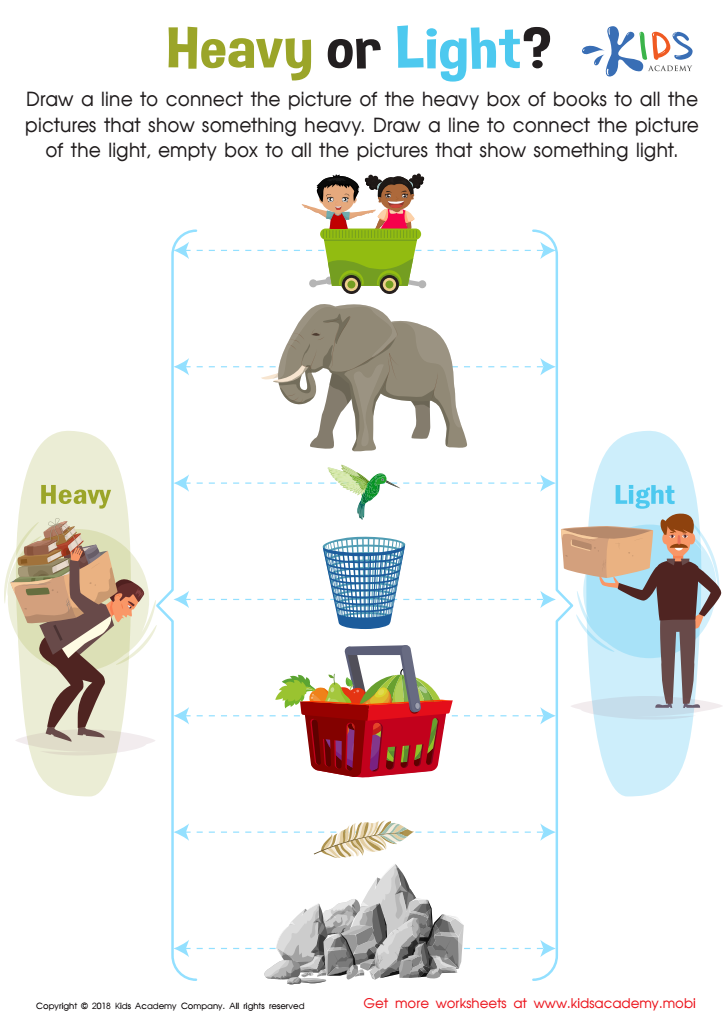
Heavy or Light? Worksheet
Kids can struggle to understand weight comparison, as size and mass matter. This free PDF helps develop fine-motor and hand-eye skills as kids trace lines to match pictures. The familiar pictures create concrete representations, ideal for learning more complex concepts.
Heavy or Light? Worksheet
Worksheet
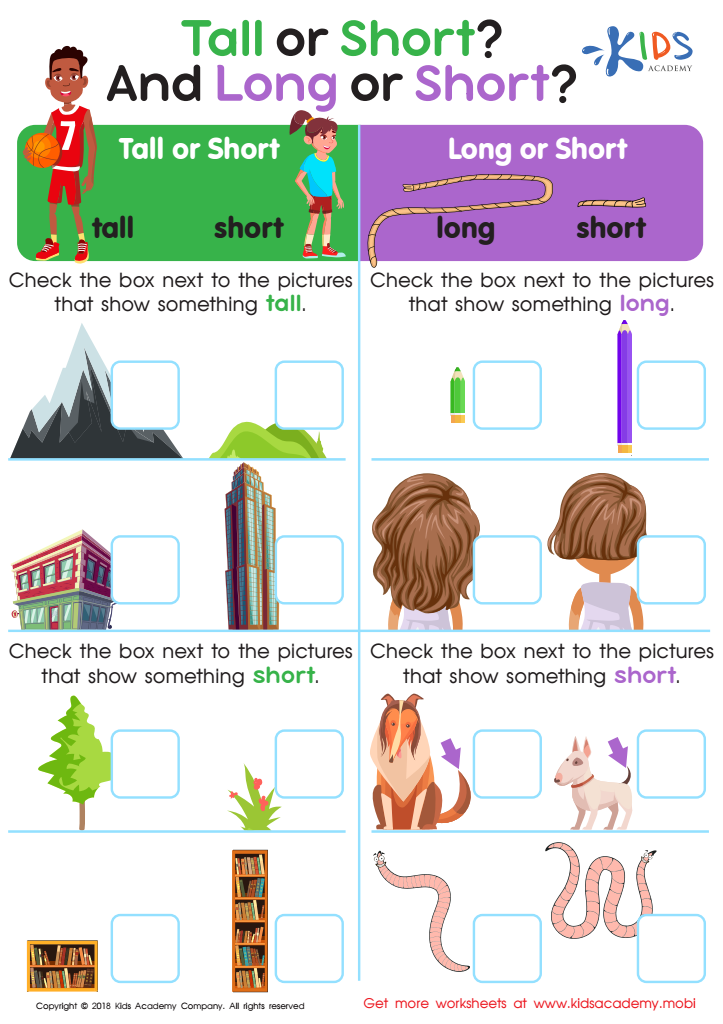
Tall or Short and Long or Short? Worksheet
This worksheet is fun and helpful for kids to understand the difference between height and length. With pictures of familiar objects, they can compare and choose the box with the right answer. This helps them gain skills and a better foundation for future measuring.
Tall or Short and Long or Short? Worksheet
Worksheet
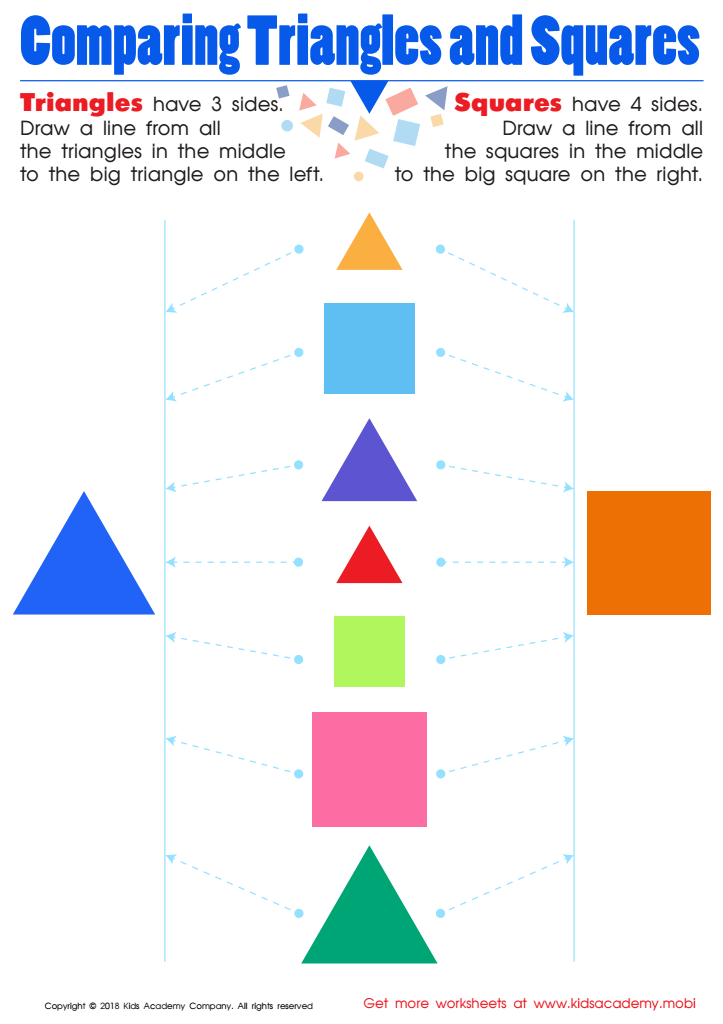
Comparing Triangles Squares Worksheet
Squares and triangles are different in the number of sides they have. Challenge kids to compare them with this fun worksheet! Read the descriptions at the top, then use the left and right shapes to match up the middle ones. Go down the page, joining the middle shapes to the side using the dotted lines!
Comparing Triangles Squares Worksheet
Worksheet
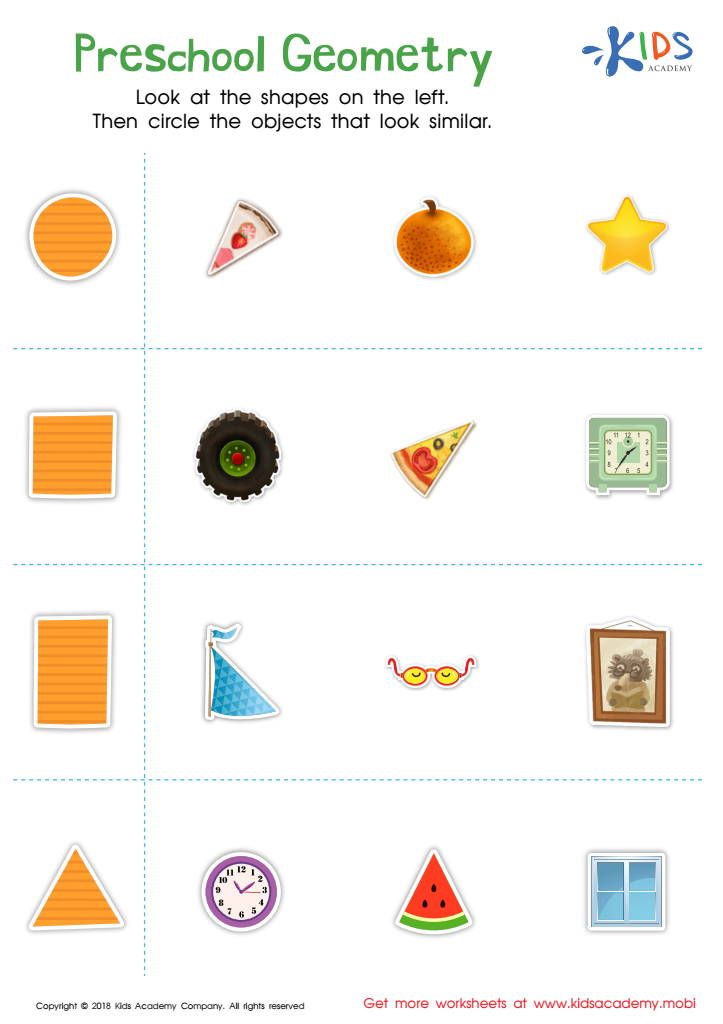
Preschool Geometry Worksheet
This worksheet gives 3rd graders the basics of geometry. Kids match everyday objects to shapes they know, e.g. an orange to a circle, a square to a slice of watermelon and a rectangle to a picture frame. It's a fun way to give them confidence to tackle more complex geometry in the future.
Preschool Geometry Worksheet
Worksheet
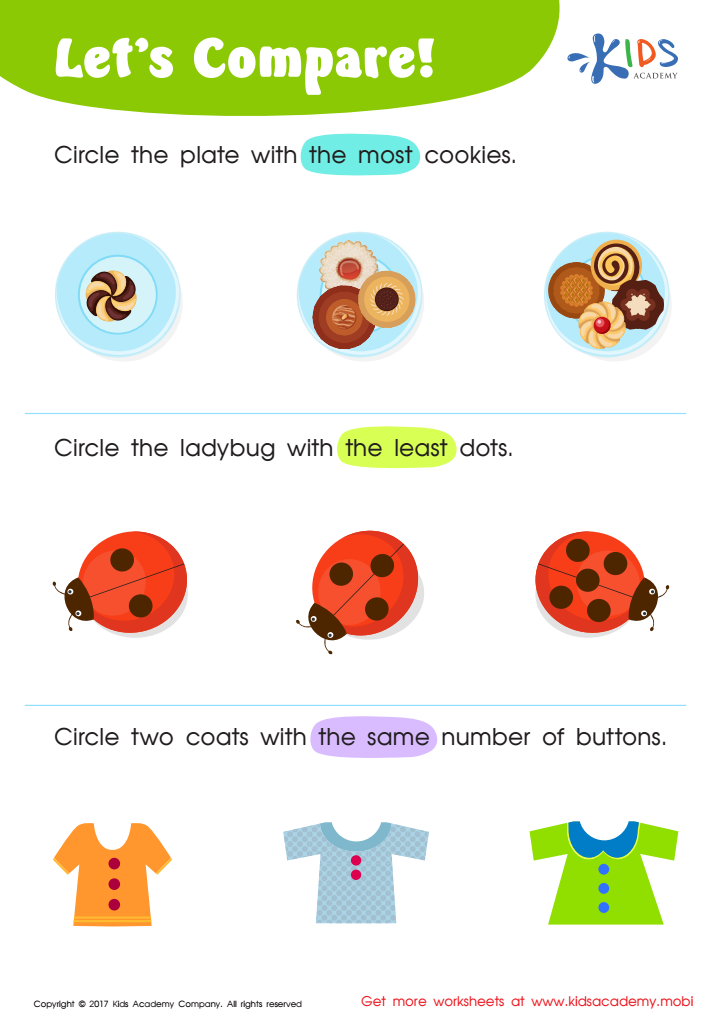
Matching: Classifying Toys by Size Worksheet
.
Have your young one's observation and counting skills ready for this worksheet; carefully look through the images and count the objects, then circle the plates with the least, most or equal number of patterns. Pay attention and have good counting abilities to make this task easy.
Matching: Classifying Toys by Size Worksheet
Worksheet
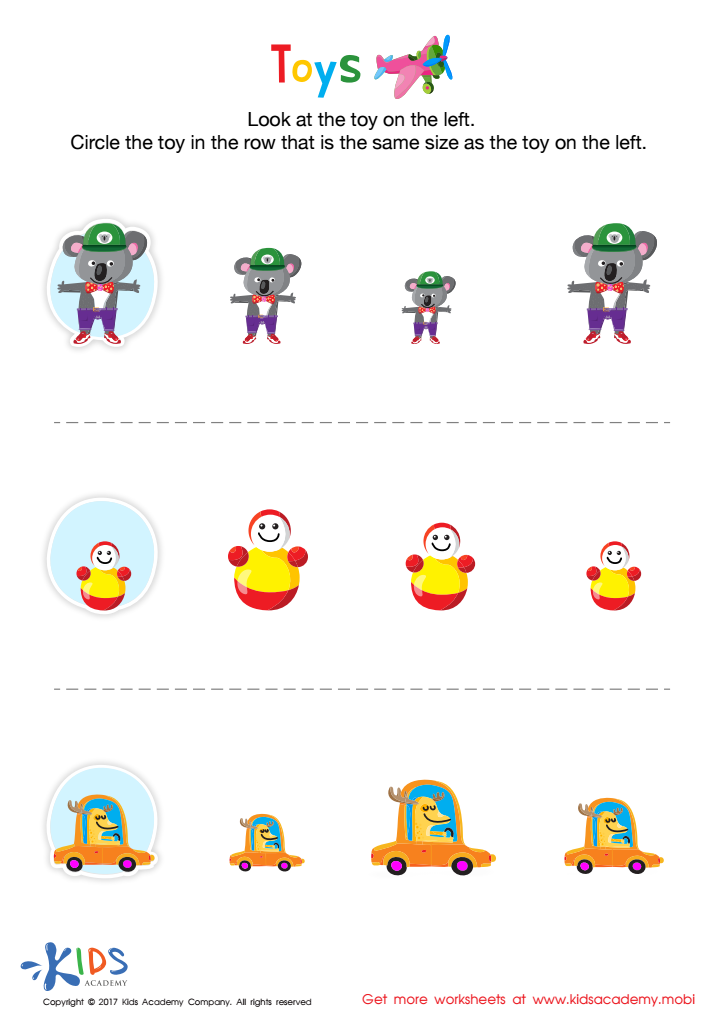
Matching: Classifying Toys by Size Worksheet
Sorting worksheets are an effective way to help your preschooler learn life and educational skills. Spatial awareness, direction recognition, and reading directions all help build a strong foundation for future educational success.
Matching: Classifying Toys by Size Worksheet
Worksheet
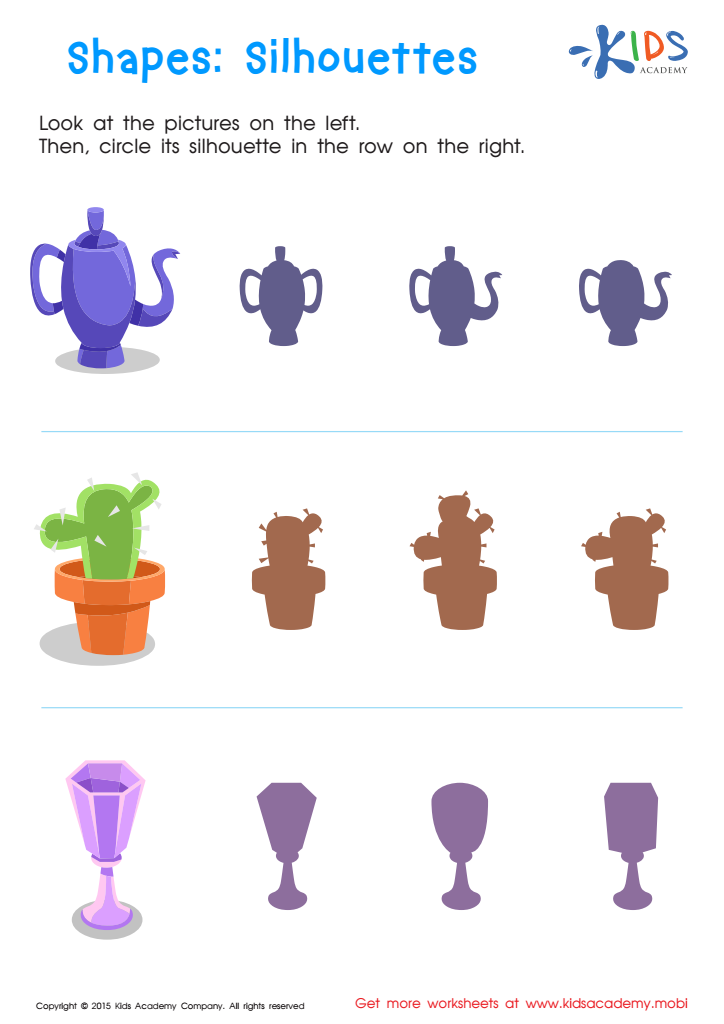
Silhouettes – Shapes Worksheet
Kids can have fun while learning to compare sizes with this silhouettes shapes worksheet! Matching pictures to silhouettes helps them build early math skills, while enjoying the activity!
Silhouettes – Shapes Worksheet
Worksheet
Join Kids Academy for Free
Who is primarily going to use this learning content?






Normal comparison for children ages 5-8 is crucial for both parents and teachers because it offers meaningful insight into a child's developmental and academic progress. During these formative years, children undergo significant cognitive, emotional, and physical changes. Understanding typical developmental milestones helps parents and educators identify whether a child is on track, need support, or is excelling in certain areas.
When teachers are informed about normal comparisons, they can tailor their instruction to better meet the needs of each student, ensuring that lessons are both age-appropriate and challenging. This awareness fosters inclusivity and promotes a classroom environment where every child can thrive at their own pace.
For parents, being knowledgeable about normal comparisons reassures them about their child's growth and development, helping to identify strengths and areas that might require additional help. It also supports healthier communication between parents and teachers, creating opportunities for collaboration on educational strategies.
Ultimately, engaging with normal comparisons allows for early intervention when needed, thereby enhancing a child's confidence, motivation, and overall love for learning, which can have lasting effects throughout their educational journey and beyond. Hence, understanding these comparisons is integral for fostering a supportive and effective learning environment.








