Filters

1235 filtered results

Clear all filters
Favorites
With answer key
Interactive

1235 filtered results

Difficulty Level

Grade


Subject

    Check out this FREE Trial Lesson on Addition for age 5-7!

    Short and Long Vowel Sort

    Favorites
    With answer key
    Interactive
    • 5-7
    • Addition
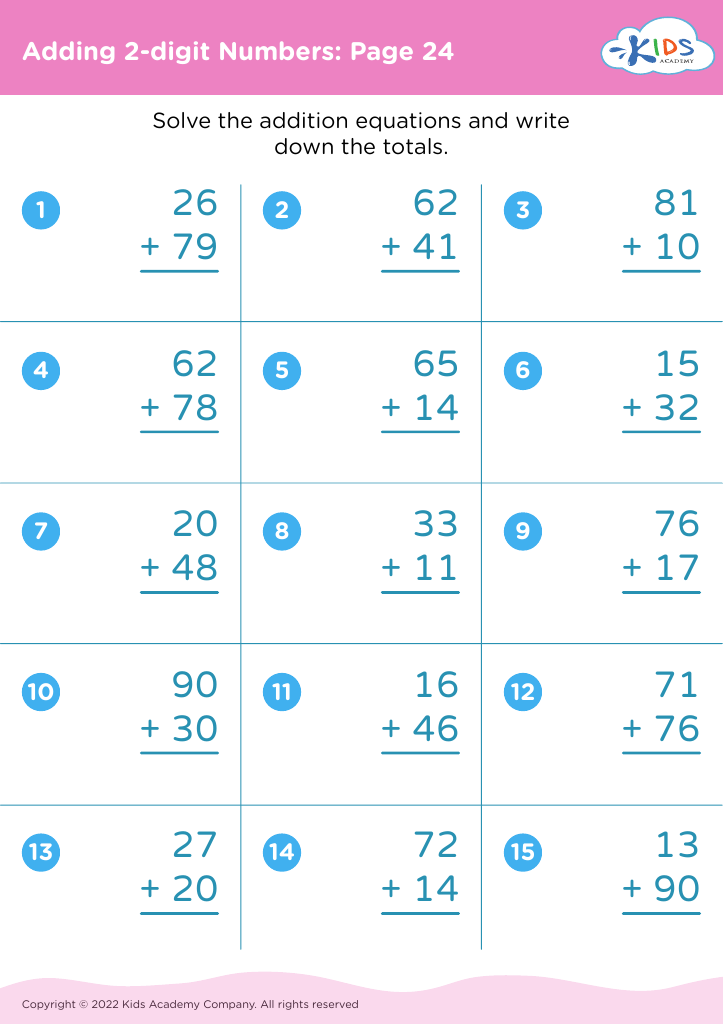
    Adding 2-digit Numbers: Page 24
    Adding 2-digit Numbers: Page 24

    Adding 2-digit Numbers: Page 24

    Adding 2-digit Numbers: Page 24
    Worksheet
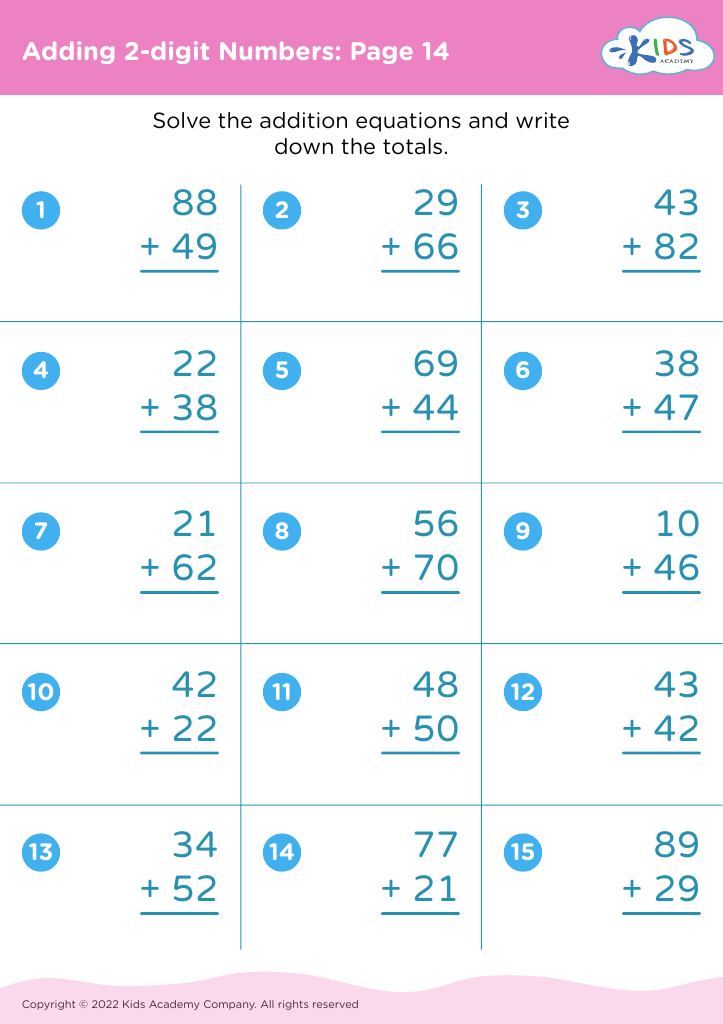
    Adding 2-digit Numbers: Page 14
    Adding 2-digit Numbers: Page 14

    Adding 2-digit Numbers: Page 14

    Adding 2-digit Numbers: Page 14
    Worksheet
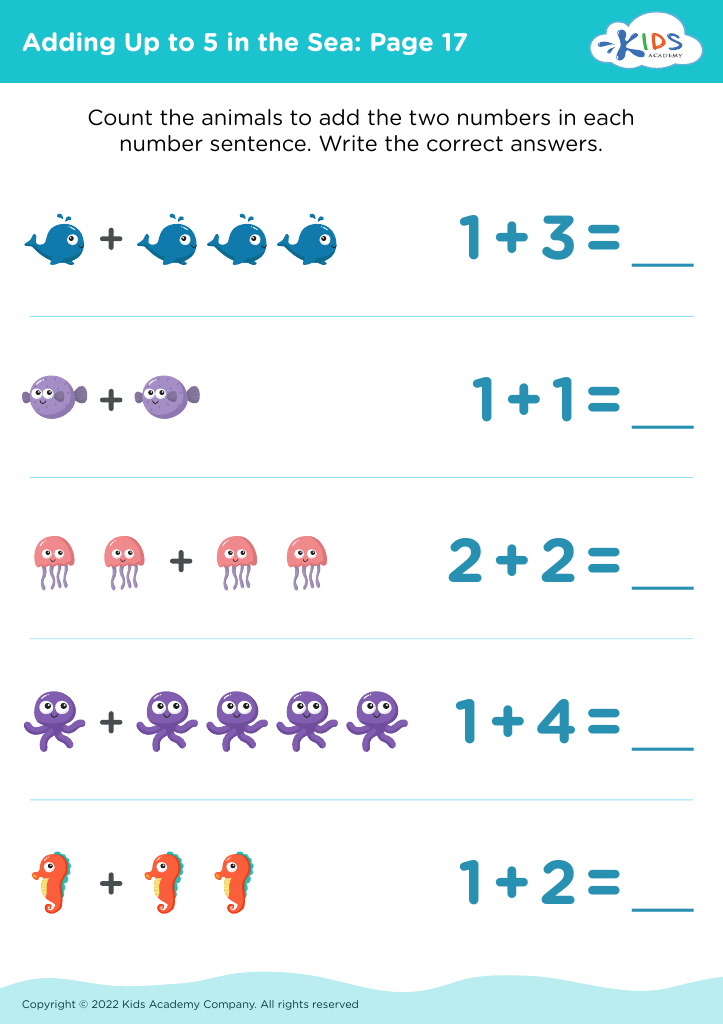
    Adding Up to 5 in the Sea: Page 17
    Adding Up to 5 in the Sea: Page 17
    Adding Up to 5 in the Sea: Page 17
    Worksheet
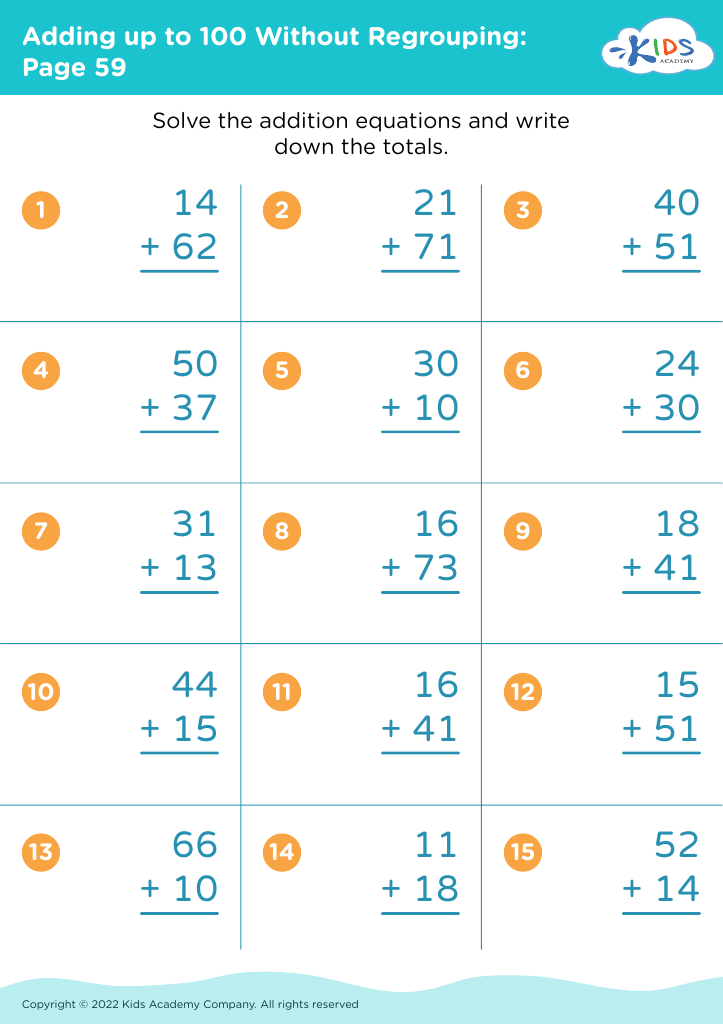
    Adding up to 100 Without Regrouping: Page 59
    Adding up to 100 Without Regrouping: Page 59
    Adding up to 100 Without Regrouping: Page 59
    Worksheet
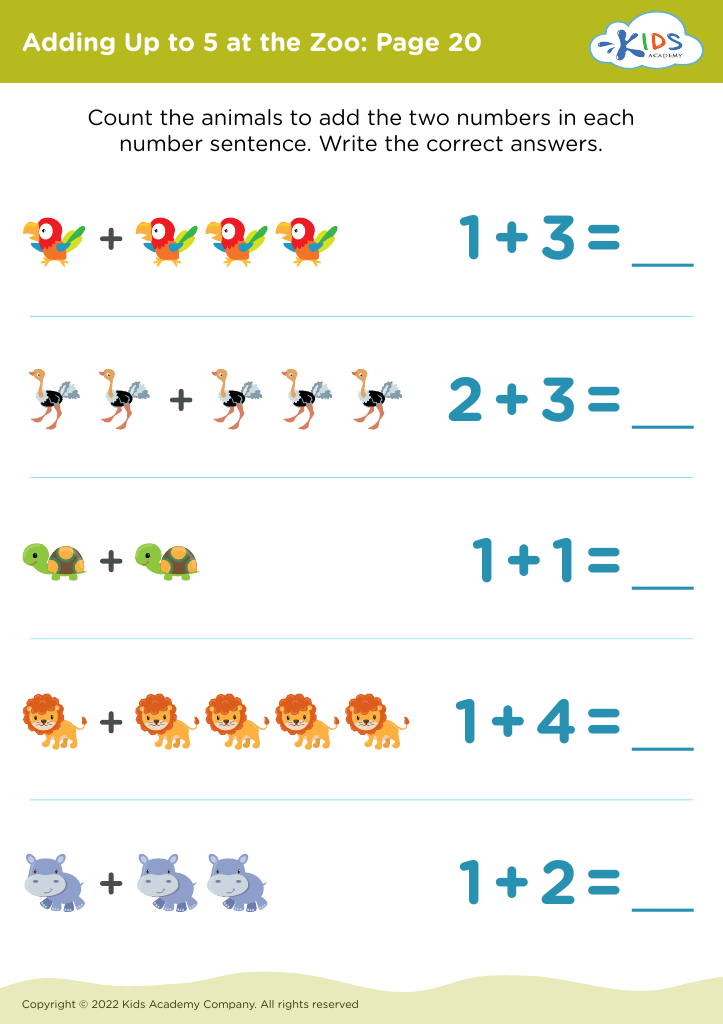
    Adding Up to 5 at the Zoo: Page 20
    Adding Up to 5 at the Zoo: Page 20
    Adding Up to 5 at the Zoo: Page 20
    Worksheet
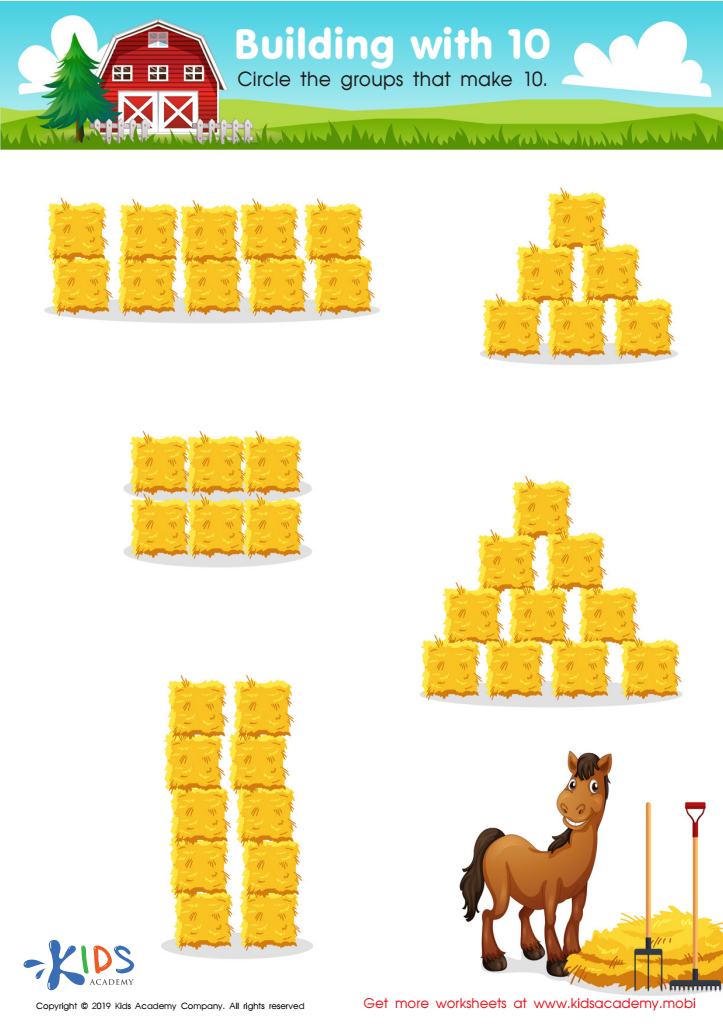
    Building with 10 Worksheet
    Building with 10 Worksheet

    Building with 10 Worksheet

    Counting numbers can be simple with this worksheet: Ask your kids to count the stacks of objects, ensure accuracy with your help, then circle the ones of ten. With practice and guidance, your children will soon become counting pros!
    Building with 10 Worksheet
    Worksheet
    Addition up to 20 worksheet
    Addition up to 20 worksheet

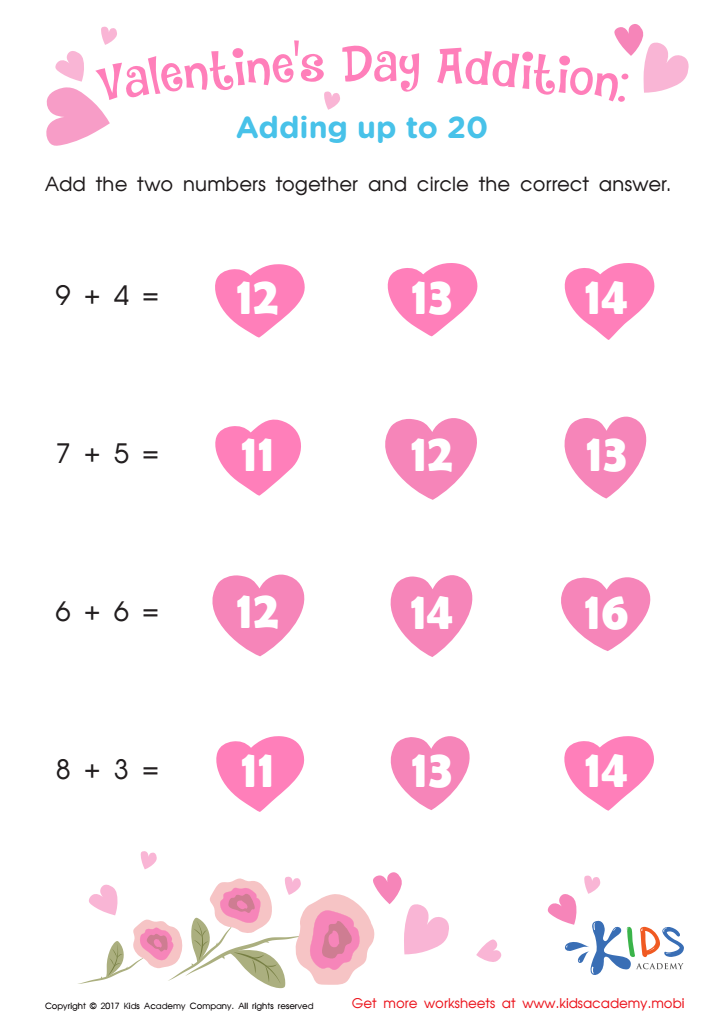
    Valentine's Day Addition Worksheet
    This Valentine's Day themed worksheet is a fun way for your child to practice adding single digits up to 20! Hearts feature to help your child increase their math skills and have fun at the same time.
    Valentine's Day Addition Worksheet
    Worksheet
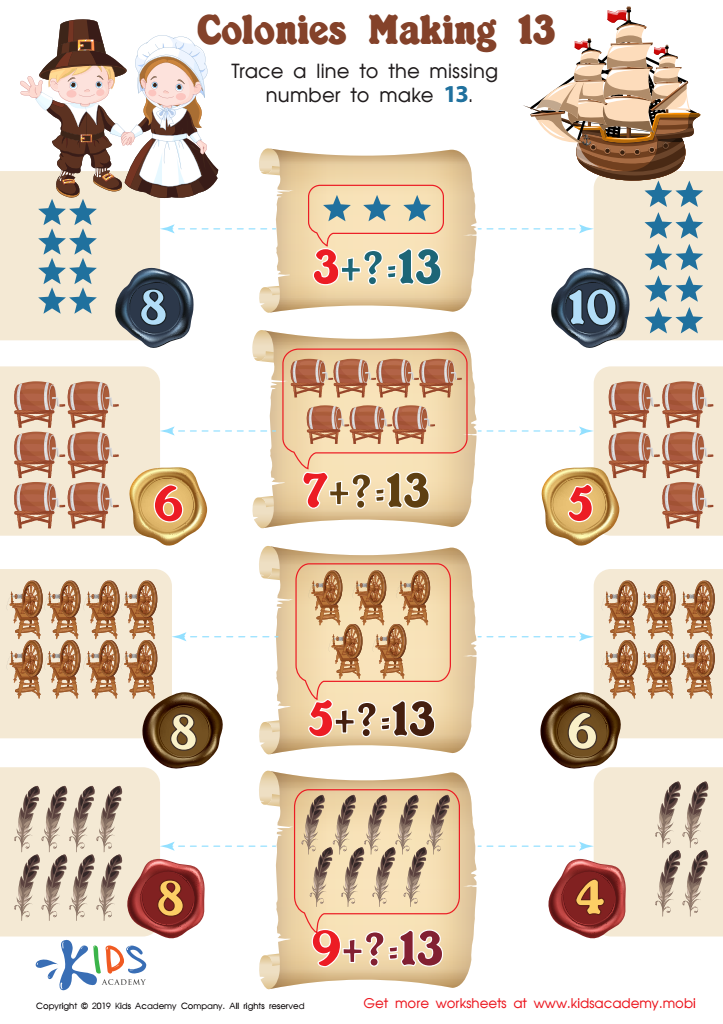
    Colonies Making 13 Worksheet
    Colonies Making 13 Worksheet

    Colonies Making 13 Worksheet

    Help your students trace the lines to complete the puzzle! They must identify the objects in the pictures and find the missing numbers that add up to 13. Colonizers arrived in America on a ship, forming an agreement with the Native Americans. Can your students fill in the gaps?
    Colonies Making 13 Worksheet
    Worksheet
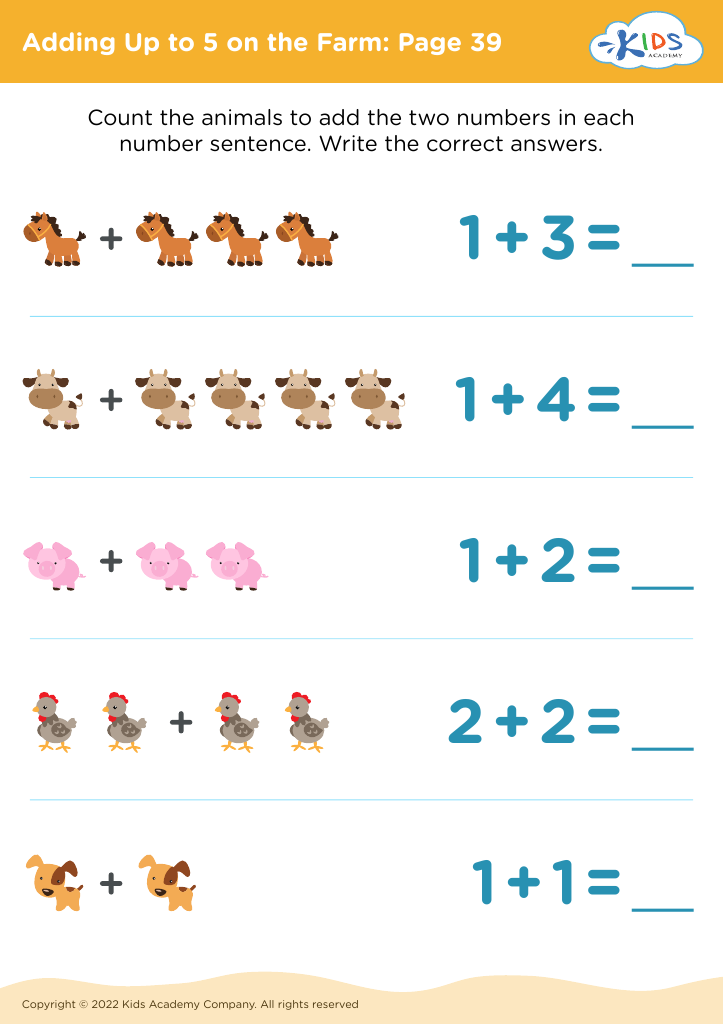
    Adding Up to 5 on the Farm: Page 39
    Adding Up to 5 on the Farm: Page 39
    Adding Up to 5 on the Farm: Page 39
    Worksheet
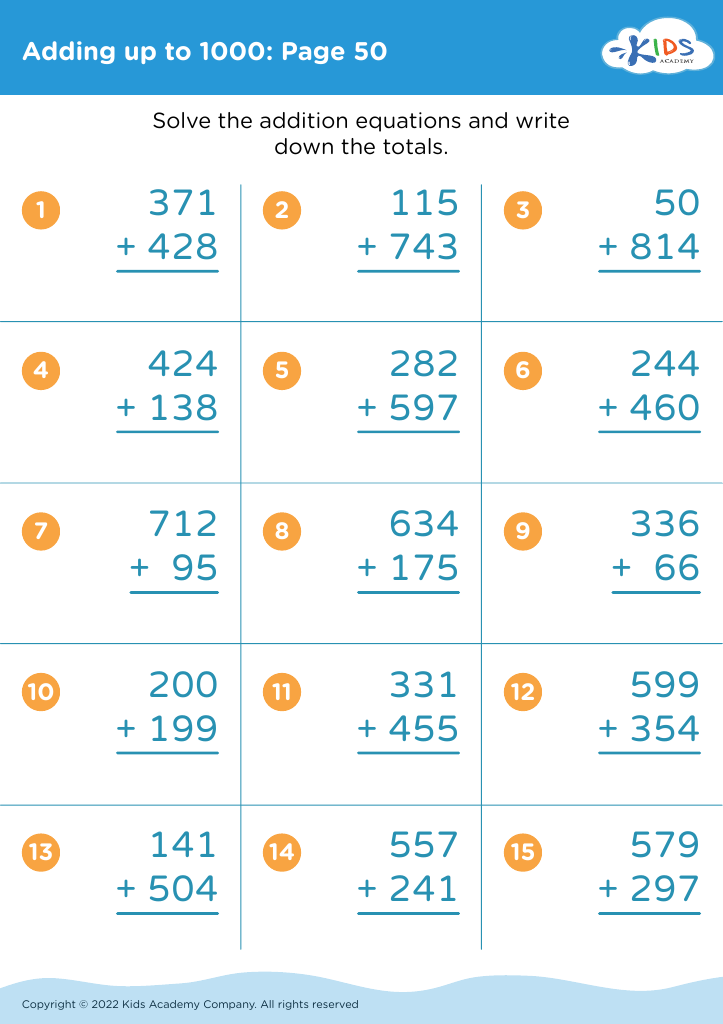
    Adding up to 1000: Page 50
    Adding up to 1000: Page 50

    Adding up to 1000: Page 50

    Adding up to 1000: Page 50
    Worksheet
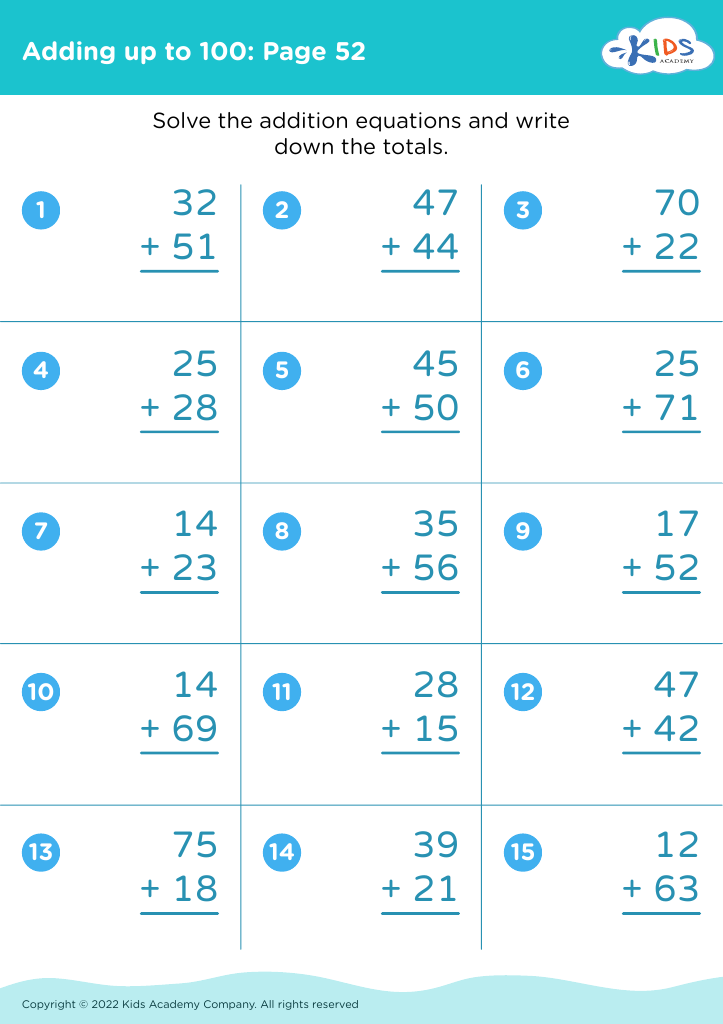
    Adding up to 100: Page 52
    Adding up to 100: Page 52

    Adding up to 100: Page 52

    Adding up to 100: Page 52
    Worksheet
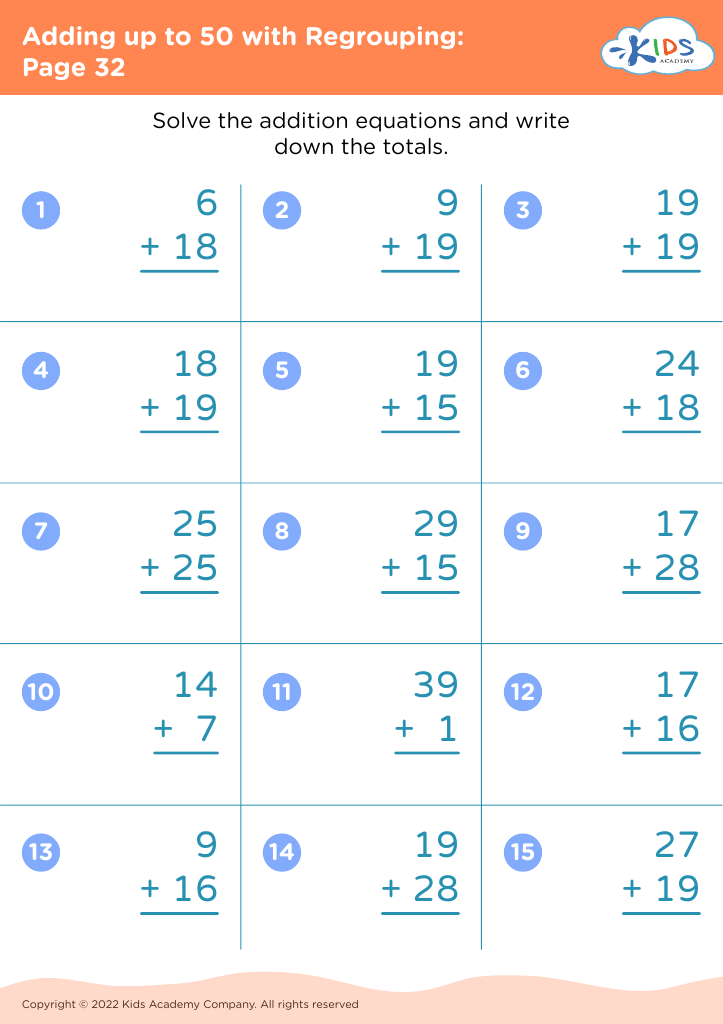
    Adding up to 50 with Regrouping: Page 32
    Adding up to 50 with Regrouping: Page 32
    Adding up to 50 with Regrouping: Page 32
    Worksheet
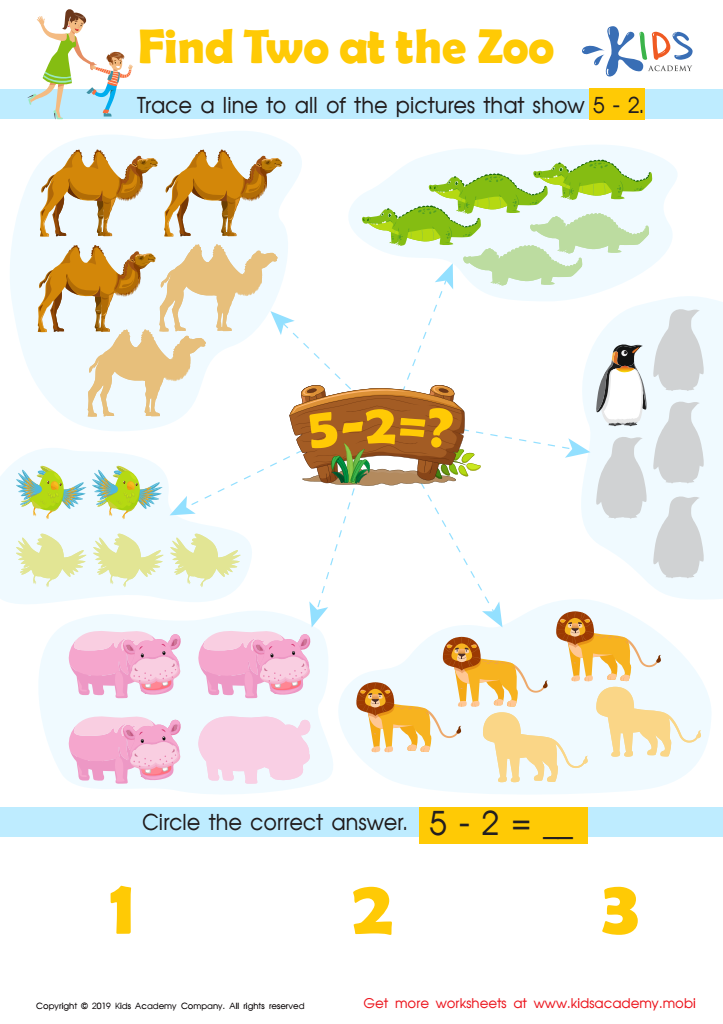
    Find Two at the Zoo Worksheet
    Find Two at the Zoo Worksheet
    Find Two at the Zoo Worksheet
    Help your kids overcome math fears and practice subtracting numbers with this traceable PDF. Ask them to identify the 6 groups of animals in the picture and count the animals in each group. Then, help them trace a line to all of the pictures that illustrate the equation 5-2.
    Find Two at the Zoo Worksheet
    Worksheet
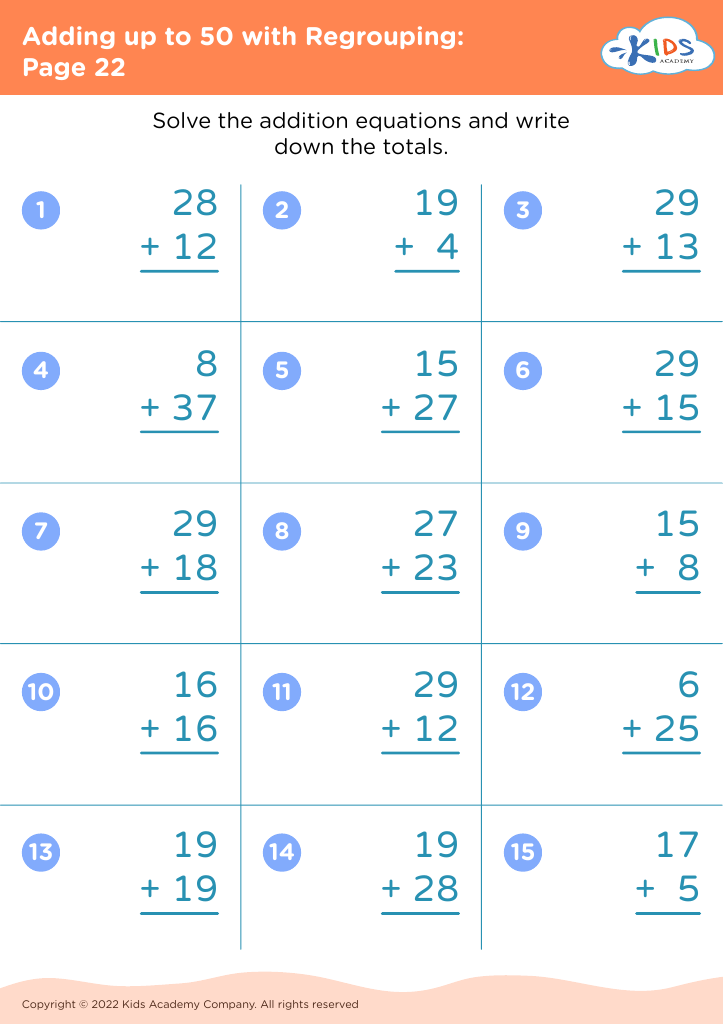
    Adding up to 50 with Regrouping: Page 22
    Adding up to 50 with Regrouping: Page 22
    Adding up to 50 with Regrouping: Page 22
    Worksheet
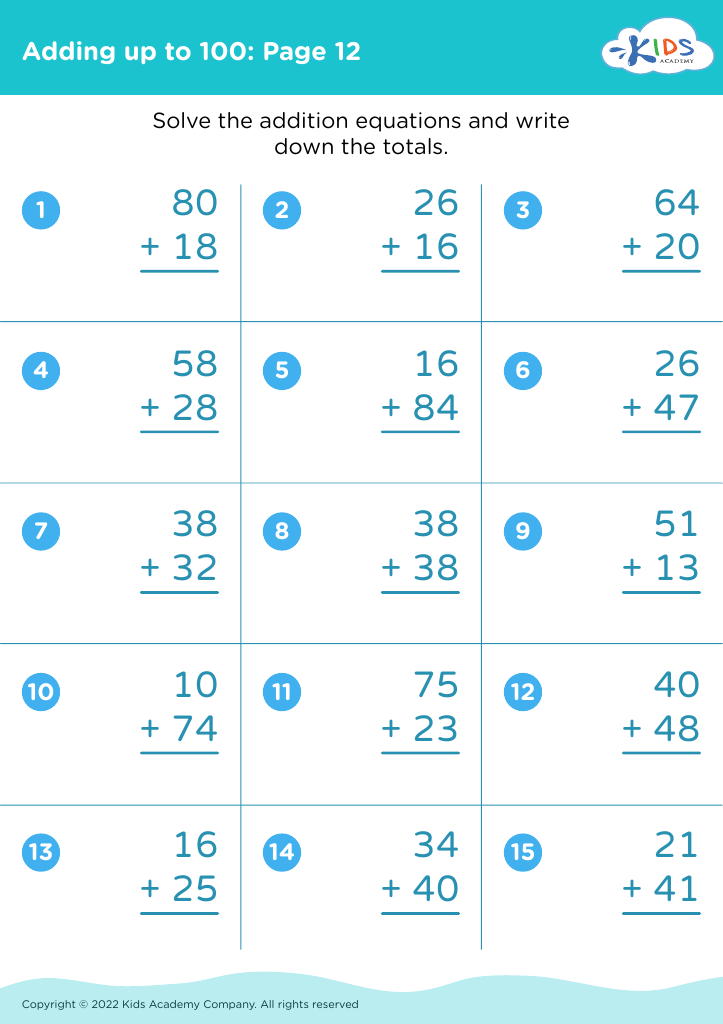
    Adding up to 100: Page 12
    Adding up to 100: Page 12

    Adding up to 100: Page 12

    Adding up to 100: Page 12
    Worksheet
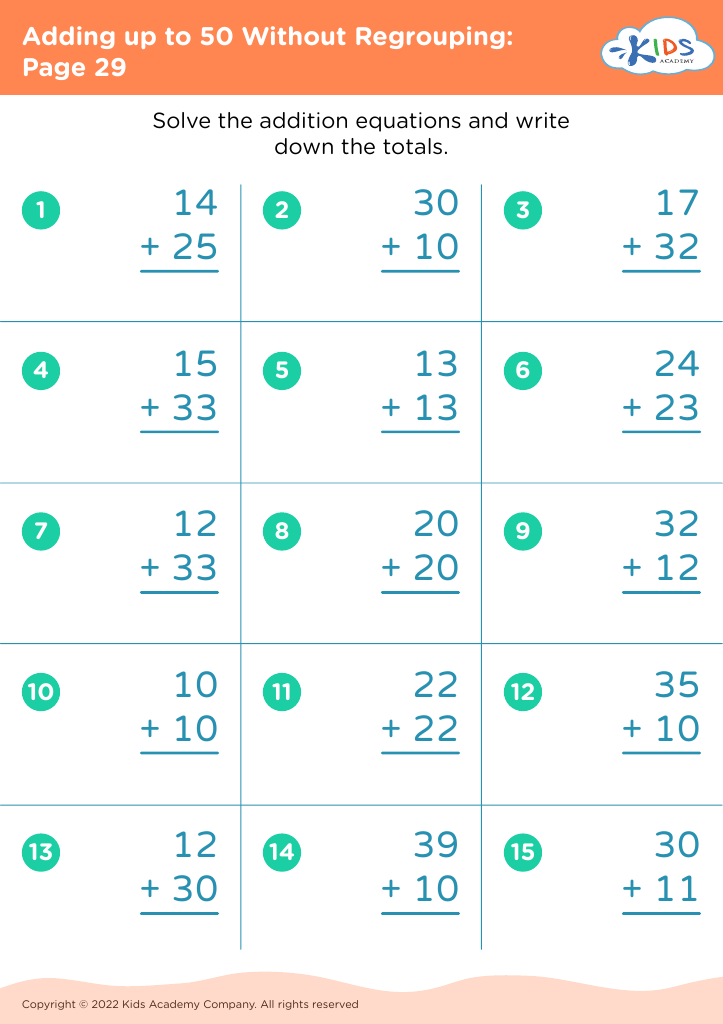
    Adding up to 50 Without Regrouping: Page 29
    Adding up to 50 Without Regrouping: Page 29
    Adding up to 50 Without Regrouping: Page 29
    Worksheet
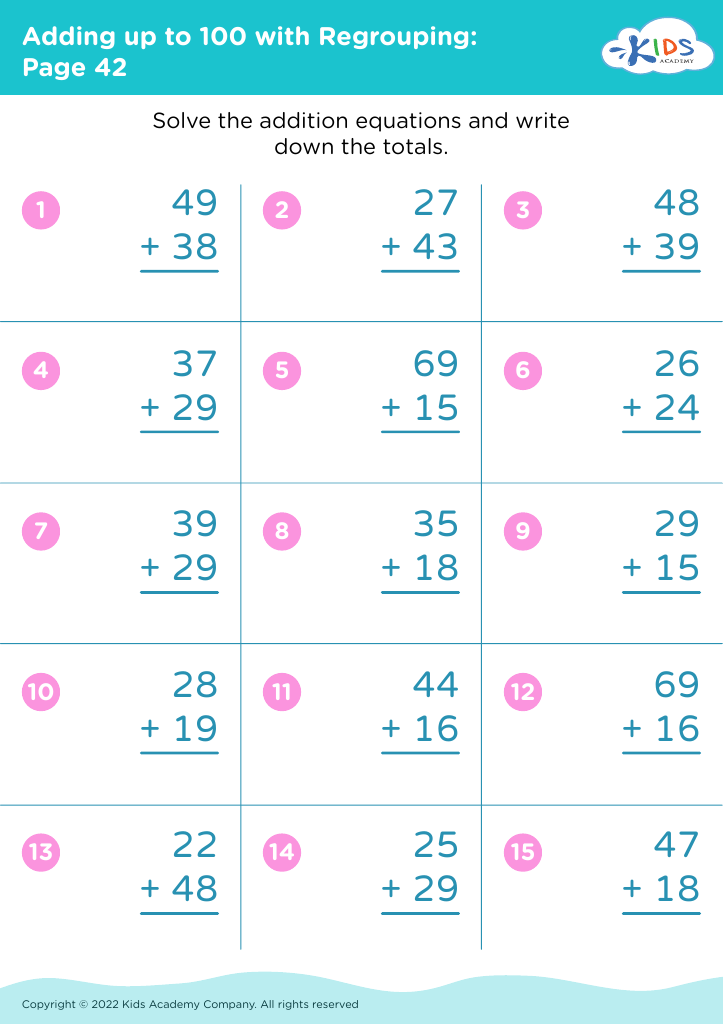
    Adding up to 100 with Regrouping: Page 42
    Adding up to 100 with Regrouping: Page 42
    Adding up to 100 with Regrouping: Page 42
    Worksheet
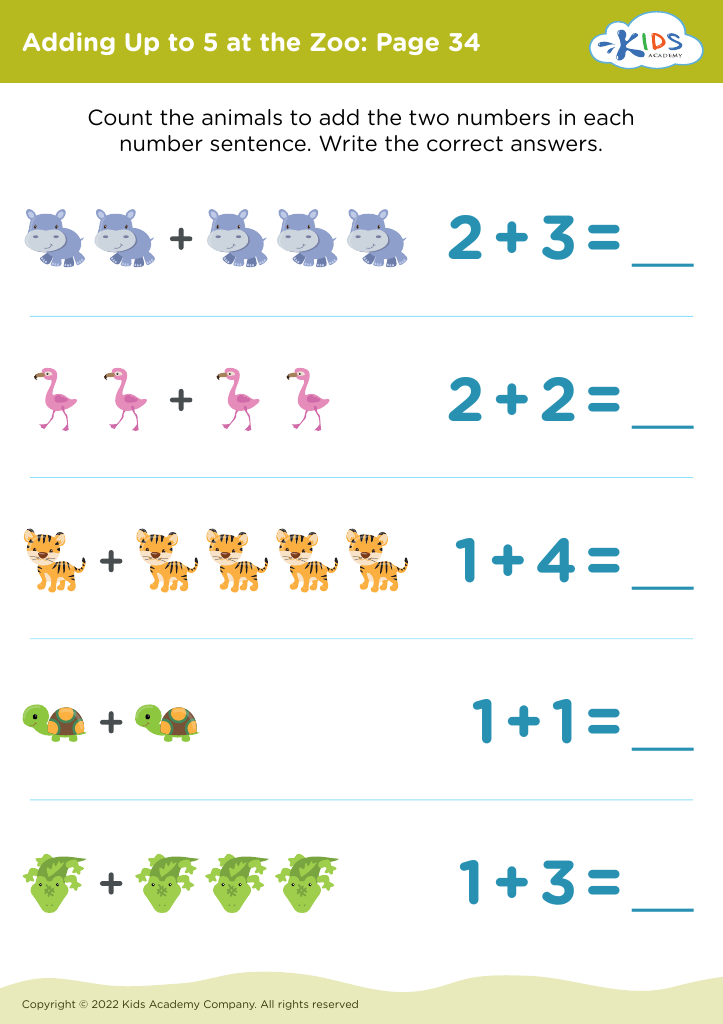
    Adding Up to 5 at the Zoo: Page 34
    Adding Up to 5 at the Zoo: Page 34
    Adding Up to 5 at the Zoo: Page 34
    Worksheet
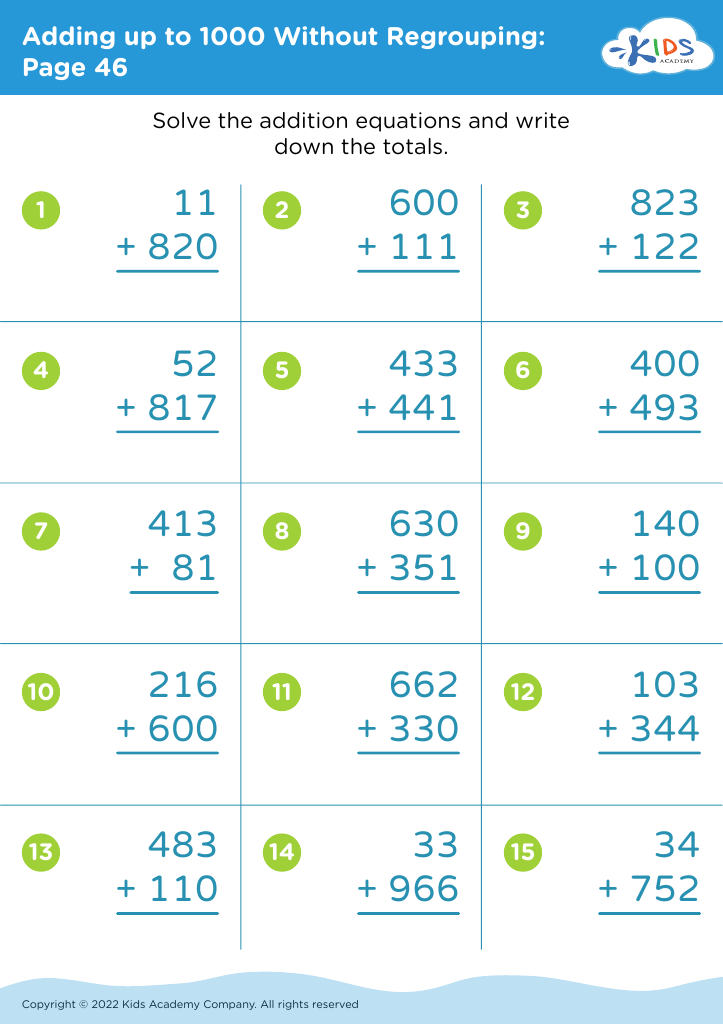
    Adding up to 1000 Without Regrouping: Page 46
    Adding up to 1000 Without Regrouping: Page 46
    Adding up to 1000 Without Regrouping: Page 46
    Worksheet
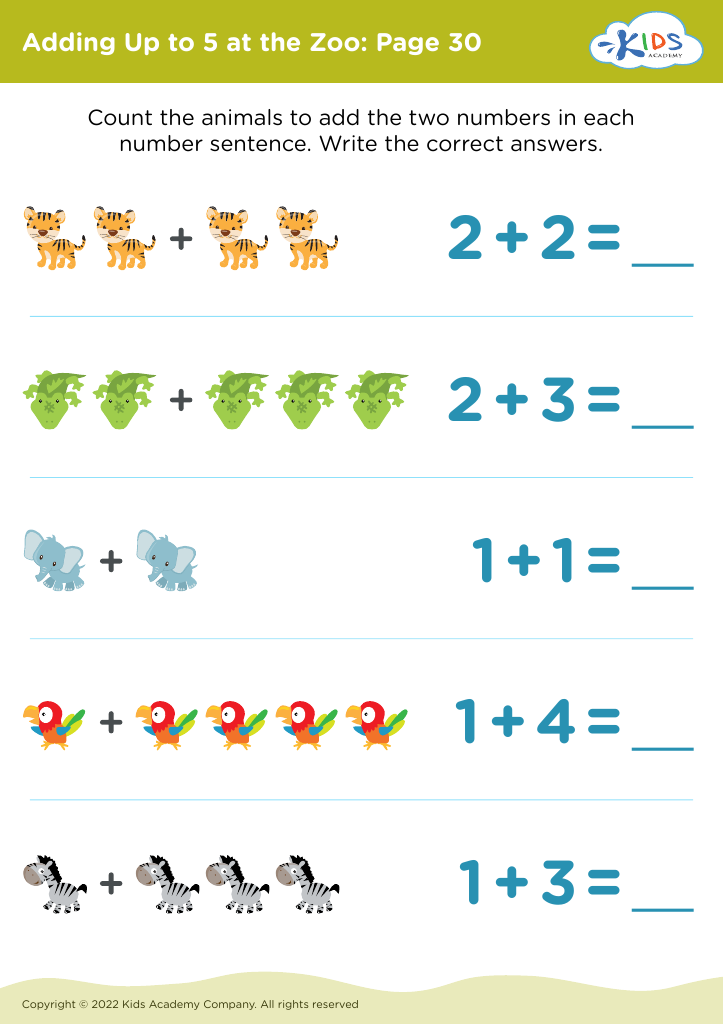
    Adding Up to 5 at the Zoo: Page 30
    Adding Up to 5 at the Zoo: Page 30
    Adding Up to 5 at the Zoo: Page 30
    Worksheet
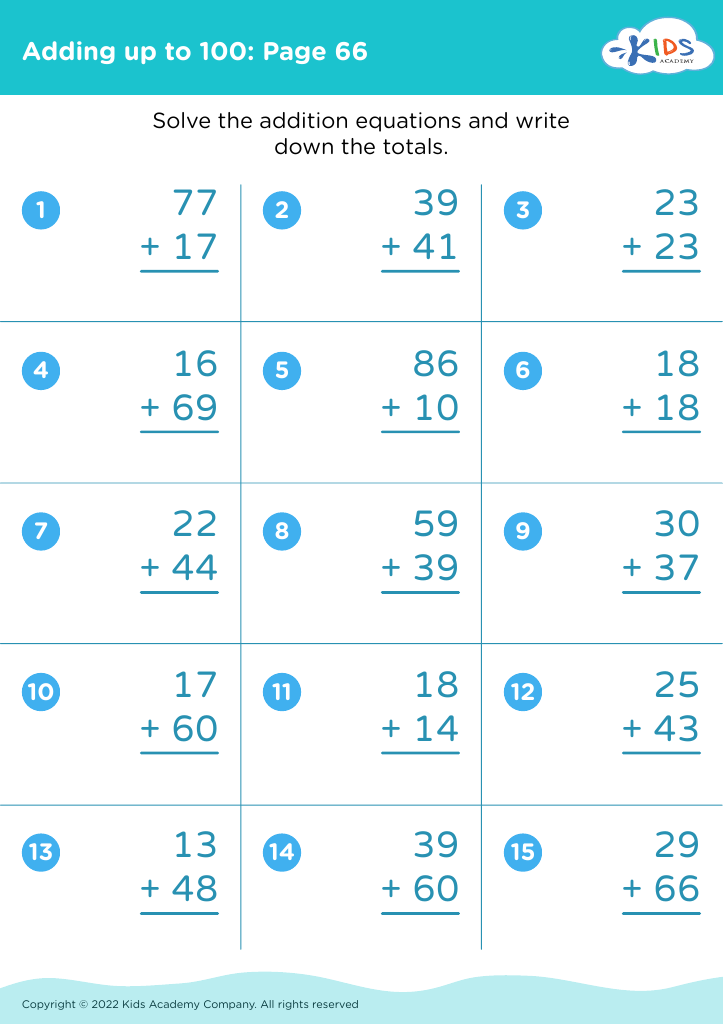
    Adding up to 100: Page 66
    Adding up to 100: Page 66

    Adding up to 100: Page 66

    Adding up to 100: Page 66
    Worksheet
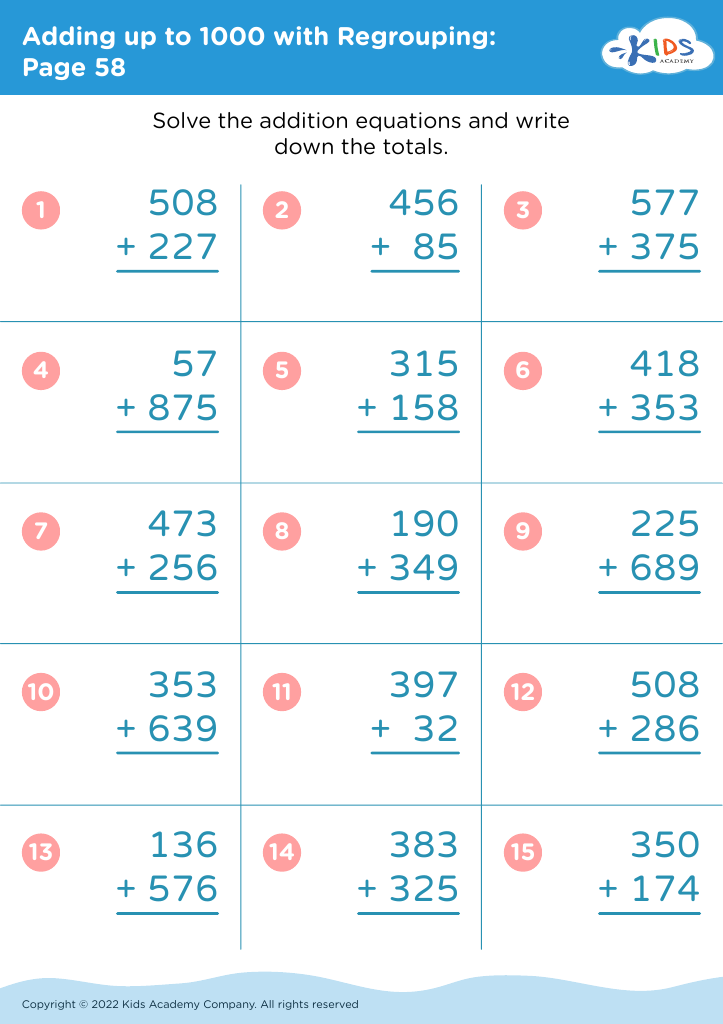
    Adding up to 1000 with Regrouping: Page 58
    Adding up to 1000 with Regrouping: Page 58
    Adding up to 1000 with Regrouping: Page 58
    Worksheet
    Adding Up to 5 in the Sea: Page 32
    Adding Up to 5 in the Sea: Page 32
    Adding Up to 5 in the Sea: Page 32
    Worksheet
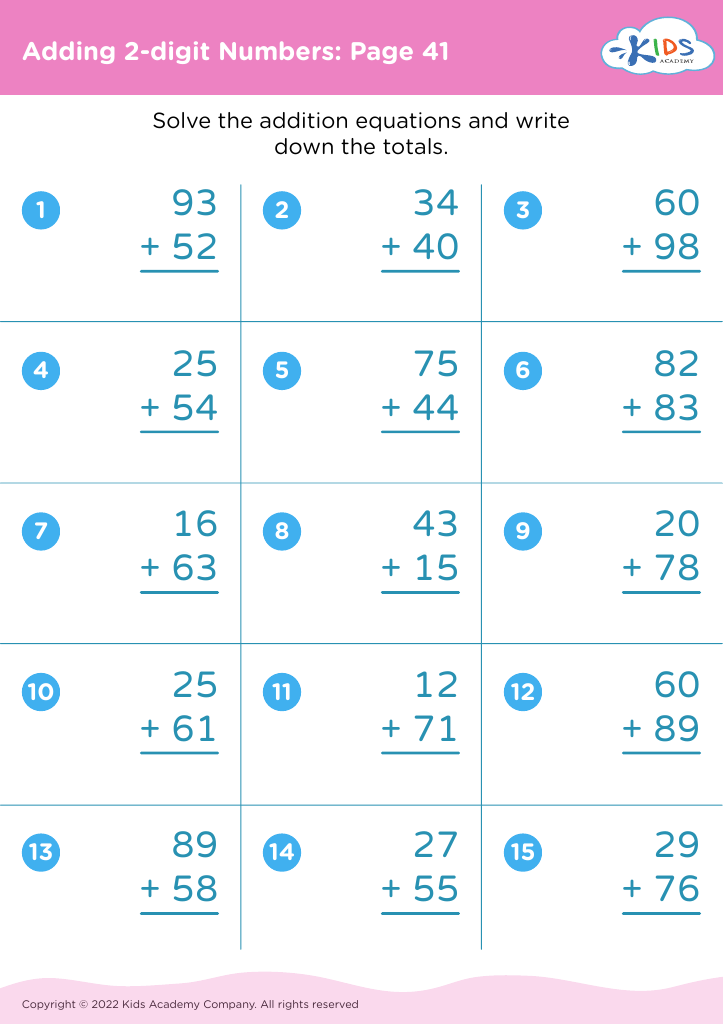
    Adding 2-digit Numbers: Page 41
    Adding 2-digit Numbers: Page 41

    Adding 2-digit Numbers: Page 41

    Adding 2-digit Numbers: Page 41
    Worksheet


    Addition for ages 5-7 is a fundamental skill that lays the groundwork for a child's long-term academic success and confidence in mathematics. At this age, children are not only building their numerical abilities but also learning critical thinking and problem-solving skills. Mastering addition helps children develop number sense, which is vital for understanding larger mathematical concepts.

    Parents and teachers play a crucial role in supporting this learning process. Children who develop a solid understanding of addition are better prepared for more complex operations like subtraction, multiplication, and division later on. Moreover, early proficiency in addition can enhance a child's logical reasoning and decision-making skills, which are valuable both inside and outside of the classroom.

    Additionally, engaging children in fun and interactive addition activities can foster a positive attitude towards math, reducing anxiety that often accompanies the subject as they progress in their education. By encouraging hands-on practice with addition through games, stories, and real-life applications, parents and teachers can create a rich learning environment that not only makes math enjoyable but also reinforces essential life skills. Ultimately, fostering a strong grasp of addition helps set children on a path for future academic achievement and lifelong learning.