Filters

2519 filtered results

Clear all filters
Favorites
With answer key
Interactive

2519 filtered results

Difficulty Level

Grade


Subject

    Check out this FREE Trial Lesson on Math for age 5-8!

    Comparing Fractions (same numerator)

    Favorites
    With answer key
    Interactive
    • 5-8
    • Math
    2D and 3D Shapes Worksheet
    2D and 3D Shapes Worksheet

    2D and 3D Shapes Worksheet

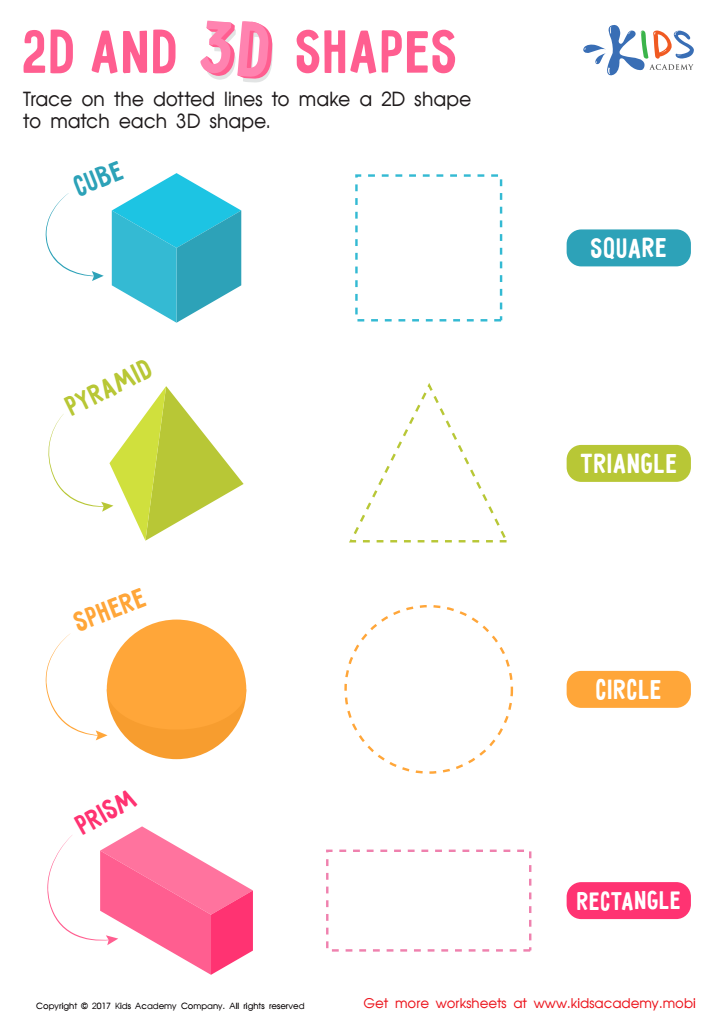
    Introduce your child to 3D and 2D with this traceable worksheet. With dotted lines, help them trace and make a 2D shape for each 3D shape: square, triangle, rectangle, and circle. Show them there's more than one way to draw! You may have taken them to a 3D movie, or they've seen some fantastic 3D art. Now they can wonder no more.
    2D and 3D Shapes Worksheet
    Worksheet
    Under the Sea Addition Worksheet
    Under the Sea Addition Worksheet

    Under the Sea Addition Worksheet

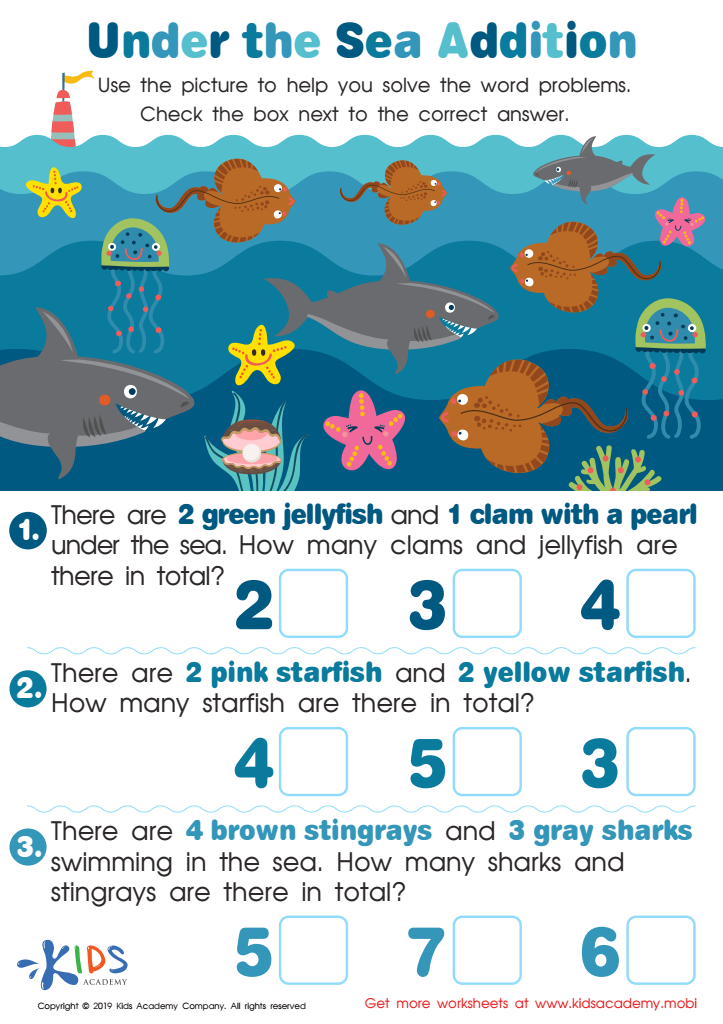
    Ask your kids to identify undersea animals in a picture, then solve the word problems at the bottom with it! If they're into the nature channel or marine life, they'll love this worksheet. Check the box next to the correct answer for each one. 80 words
    Under the Sea Addition Worksheet
    Worksheet
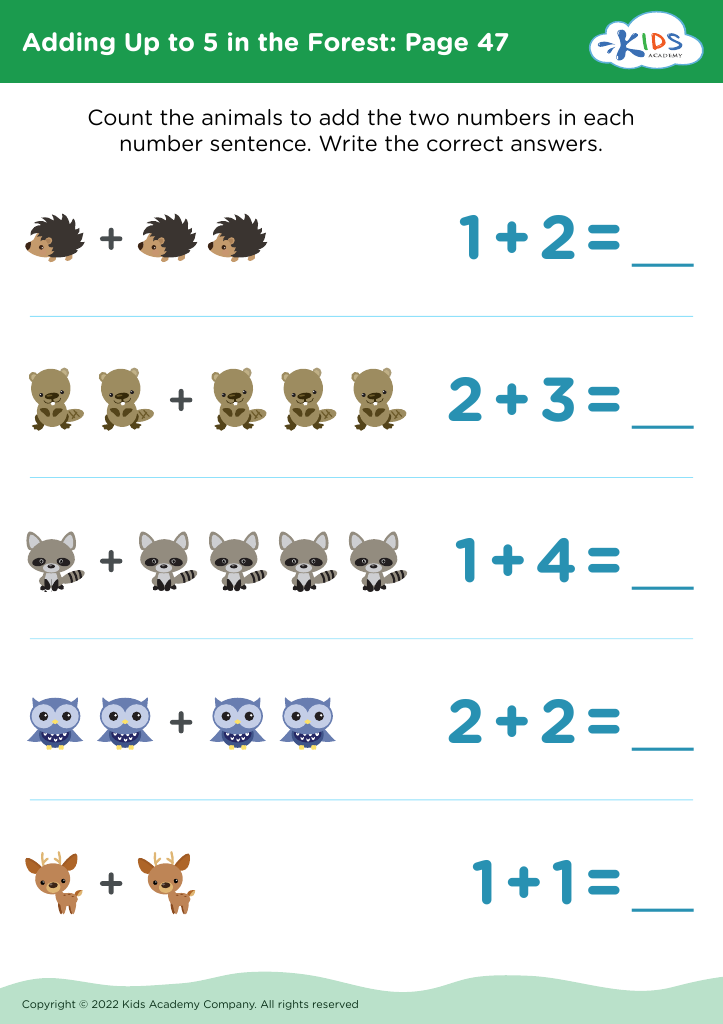
    Adding Up to 5 in the Forest: Page 47
    Adding Up to 5 in the Forest: Page 47
    Adding Up to 5 in the Forest: Page 47
    Worksheet
    Adding Up to 5 on the Farm: Page 19
    Adding Up to 5 on the Farm: Page 19
    Adding Up to 5 on the Farm: Page 19
    Worksheet
    Comparing Numerators Part 2 Worksheet
    Comparing Numerators Part 2 Worksheet
    Comparing Numerators Part 2 Worksheet

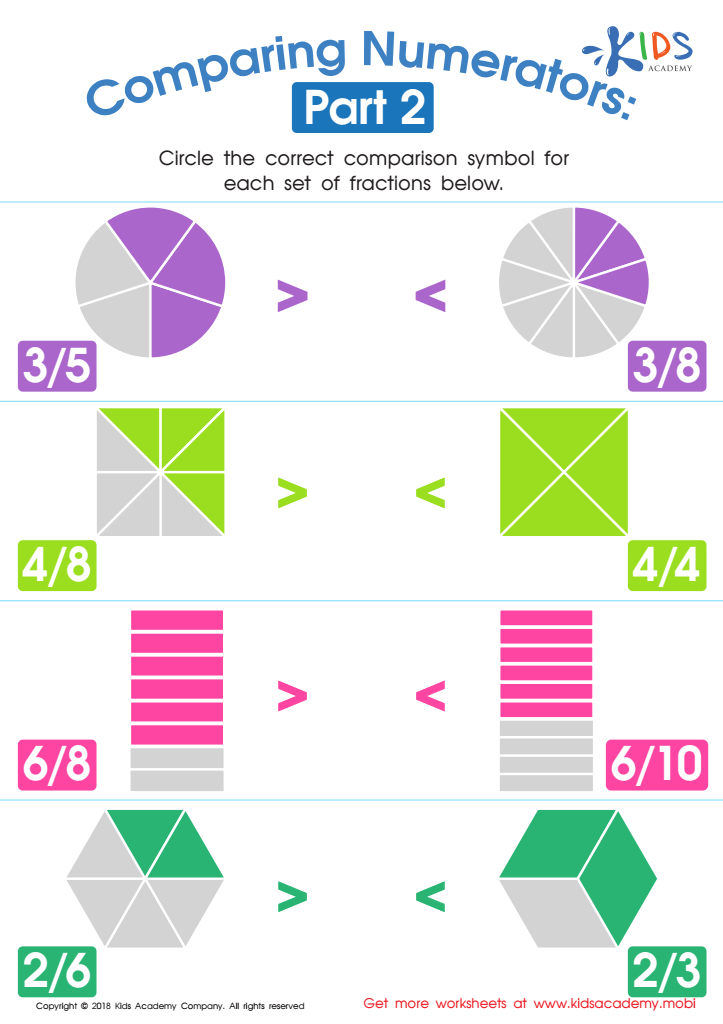
    Before beginning this exercise, your child should have knowledge of fractions, including counting and identifying them in shaded areas of shapes. In the pdf, they must compare two fractions in each set and circle the symbol for the larger fraction. Help them as needed.
    Comparing Numerators Part 2 Worksheet
    Worksheet
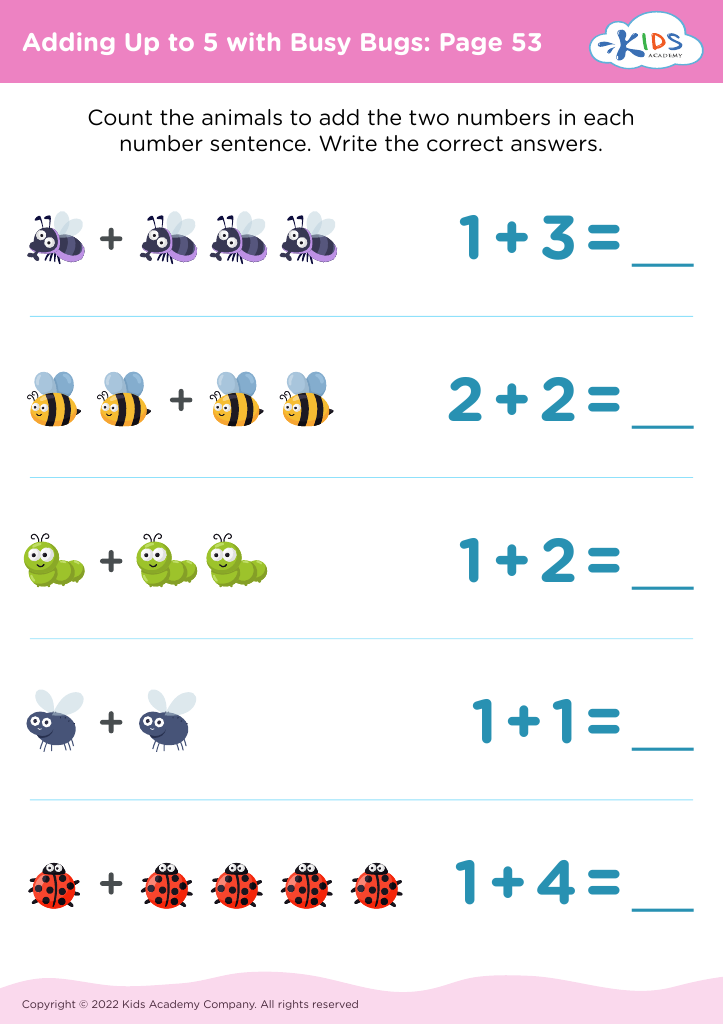
    Adding Up to 5 with Busy Bugs: Page 53
    Adding Up to 5 with Busy Bugs: Page 53
    Adding Up to 5 with Busy Bugs: Page 53
    Worksheet
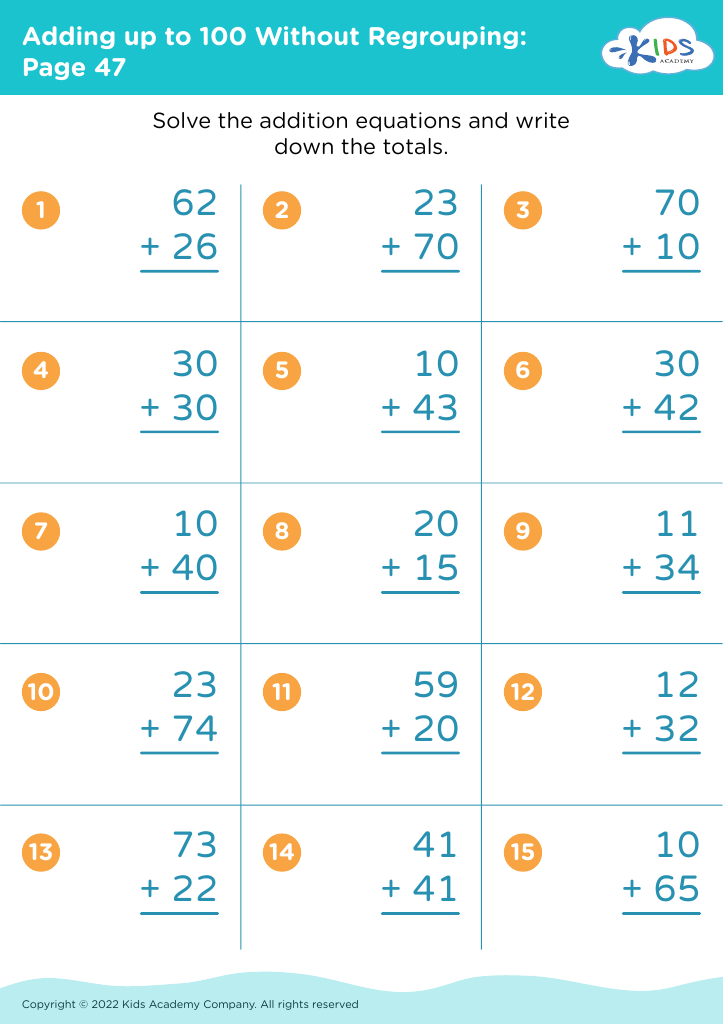
    Adding up to 100 Without Regrouping: Page 47
    Adding up to 100 Without Regrouping: Page 47
    Adding up to 100 Without Regrouping: Page 47
    Worksheet
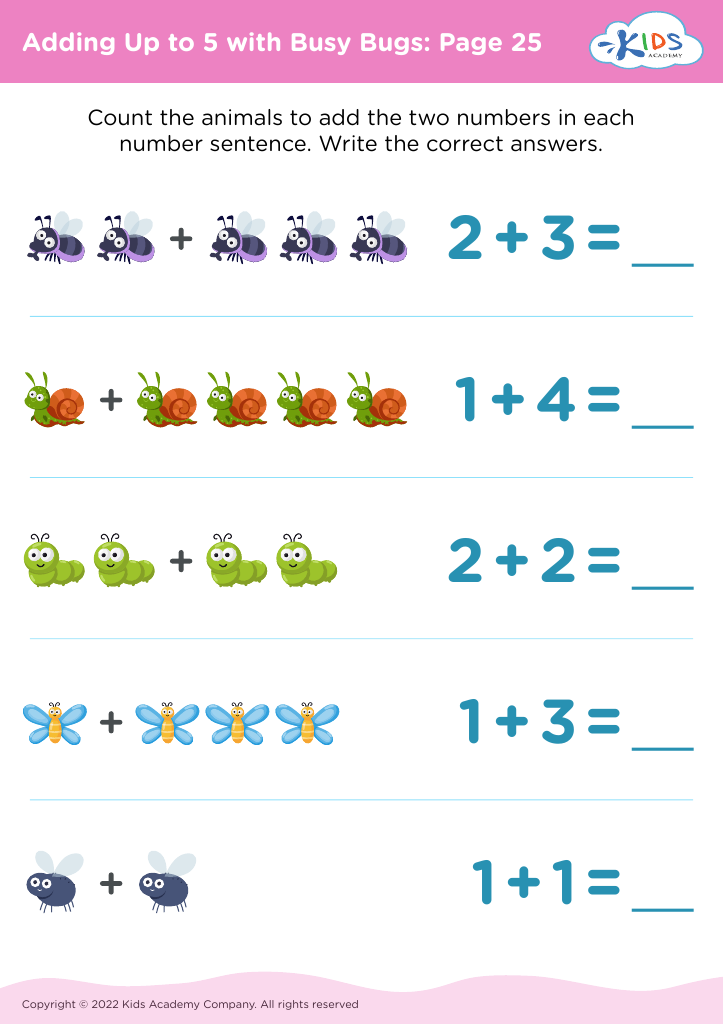
    Adding Up to 5 with Busy Bugs: Page 25
    Adding Up to 5 with Busy Bugs: Page 25
    Adding Up to 5 with Busy Bugs: Page 25
    Worksheet
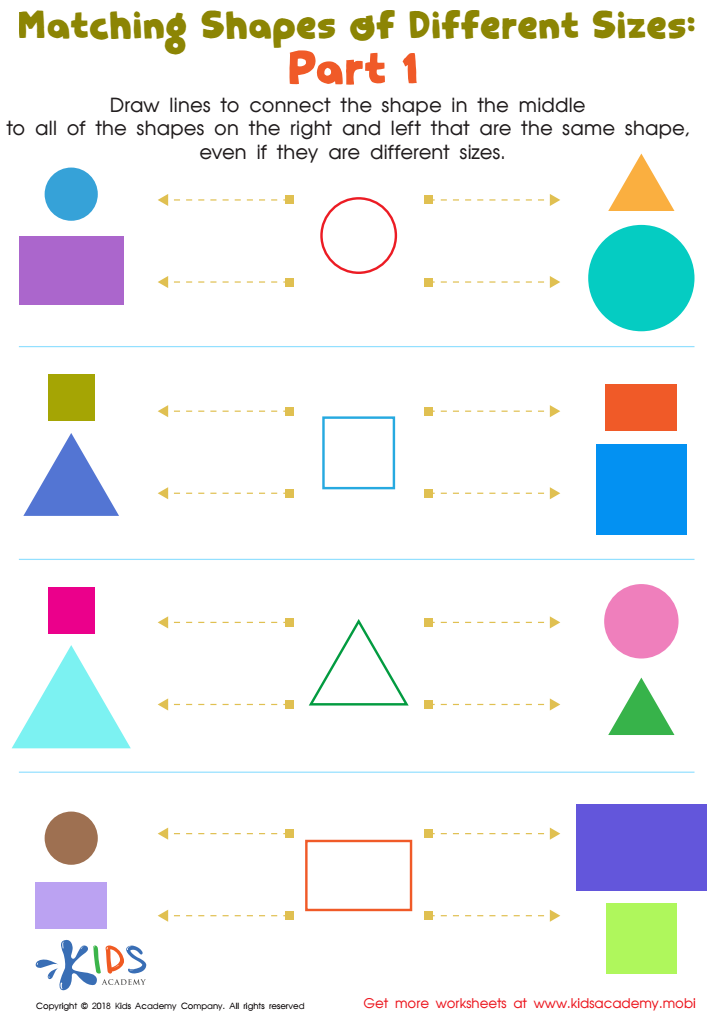
    Geometry: part 1 Worksheet
    Geometry: part 1 Worksheet
    Geometry: part 1 Worksheet

    Test your student's shape knowledge with this beginner-level geometry worksheet. This fun, challenging printable PDF will sharpen spacial recognition skills as they match shapes of different sizes. Get started now!
    Geometry: part 1 Worksheet
    Worksheet
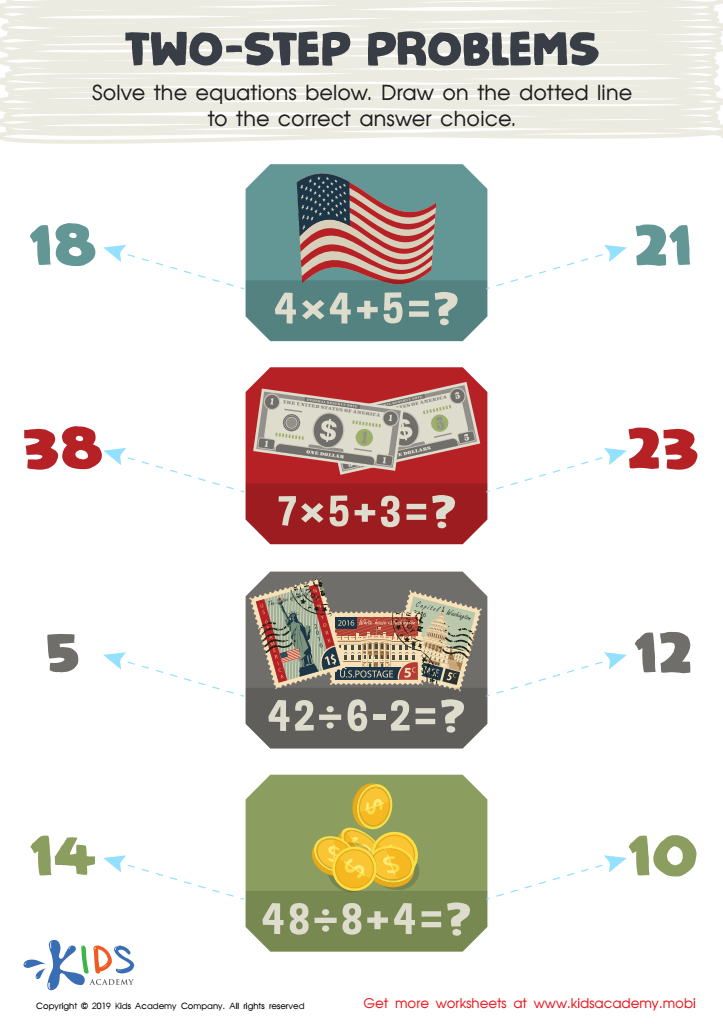
    Two-Step Problems Worksheet
    Two-Step Problems Worksheet

    Two-Step Problems Worksheet

    Help your child practice their math problem-solving skills with this worksheet. It covers the basics of subtractions, additions, multiplications, and divisions. With four simple equations, your kids can solve them and draw the correct answer on the dotted line. Reduce their strain and give them the help they need.
    Two-Step Problems Worksheet
    Worksheet
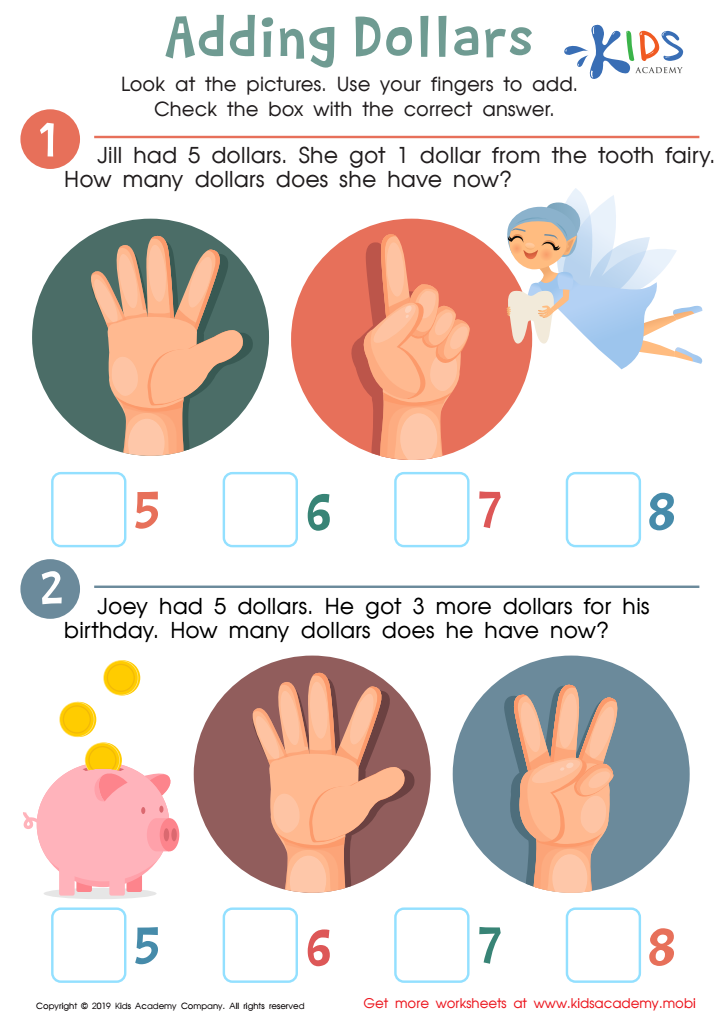
    Tooth Fairy Addition Worksheet
    Tooth Fairy Addition Worksheet
    Tooth Fairy Addition Worksheet
    Kids know of the tooth fairy and may have experienced visits. Kids love counting the money left in exchange for their teeth under the pillow. In this worksheet, help Jill and Joey count the tooth fairy's dollars. Ask your kids to use their fingers to add the numbers and check the box with the correct answer.
    Tooth Fairy Addition Worksheet
    Worksheet
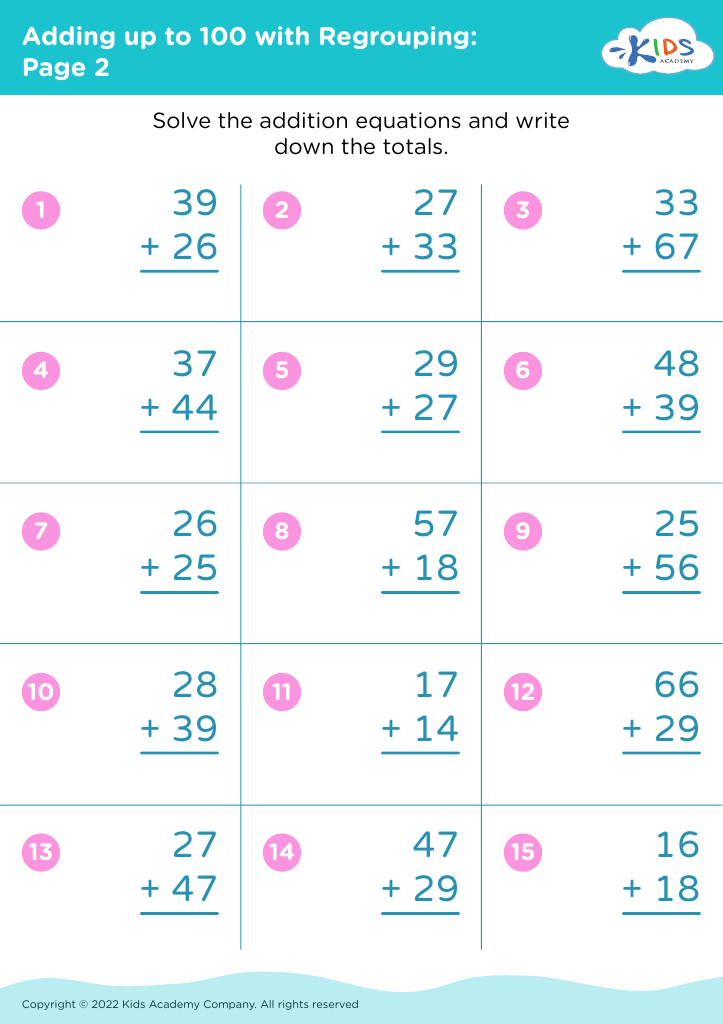
    Adding up to 100 with Regrouping: Page 2
    Adding up to 100 with Regrouping: Page 2
    Adding up to 100 with Regrouping: Page 2
    Worksheet
    Adding Numbers: Classifying Animals Worksheet
    Adding Numbers: Classifying Animals Worksheet

    Adding Numbers: Classifying Animals Worksheet

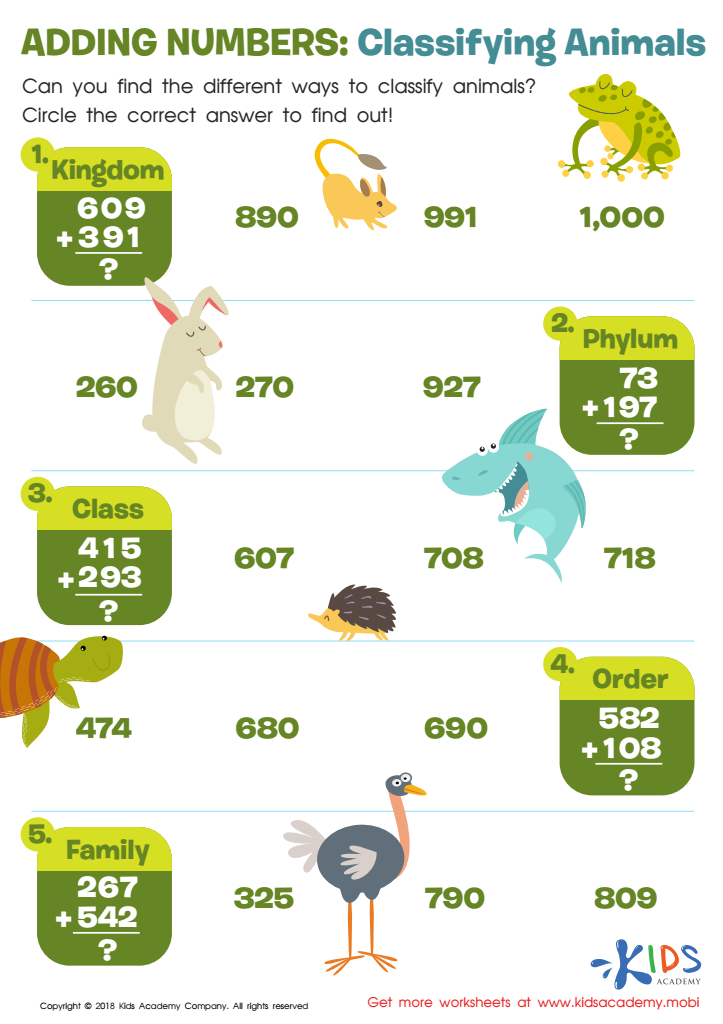
    Your kids can learn to classify animals in Biology. This worksheet helps them do this by solving 5 equations. Circle the right answer to complete the task.
    Adding Numbers: Classifying Animals Worksheet
    Worksheet
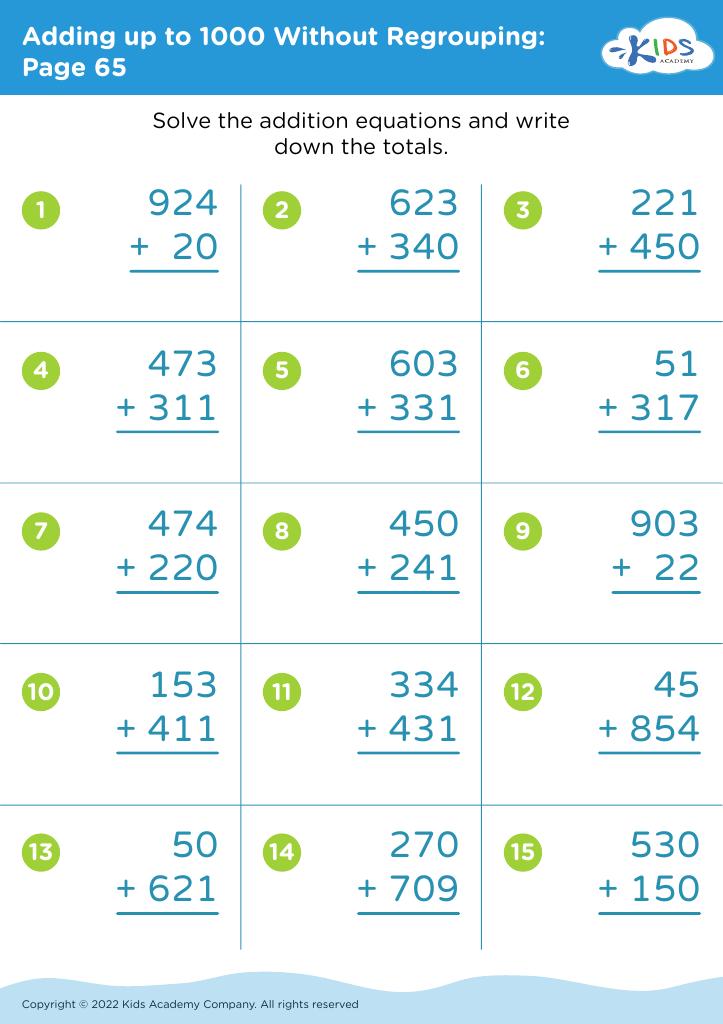
    Adding up to 1000 Without Regrouping: Page 65
    Adding up to 1000 Without Regrouping: Page 65
    Adding up to 1000 Without Regrouping: Page 65
    Worksheet
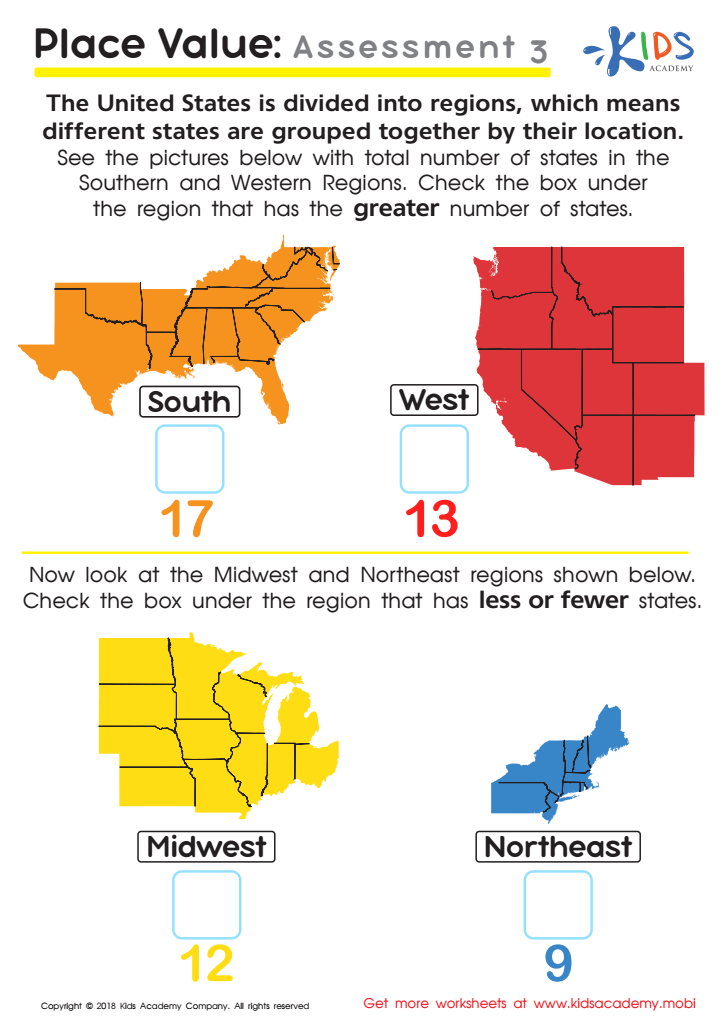
    Place Value: Assessment 3 Worksheet
    Place Value: Assessment 3 Worksheet

    Place Value: Assessment 3 Worksheet

    Test your child's math skills without them realizing it! This fun worksheet looks at the states and regions of the U.S. and your child can compare numbers greater or lesser than the other. It's the perfect way to assess your child's number sense without them knowing.
    Place Value: Assessment 3 Worksheet
    Worksheet
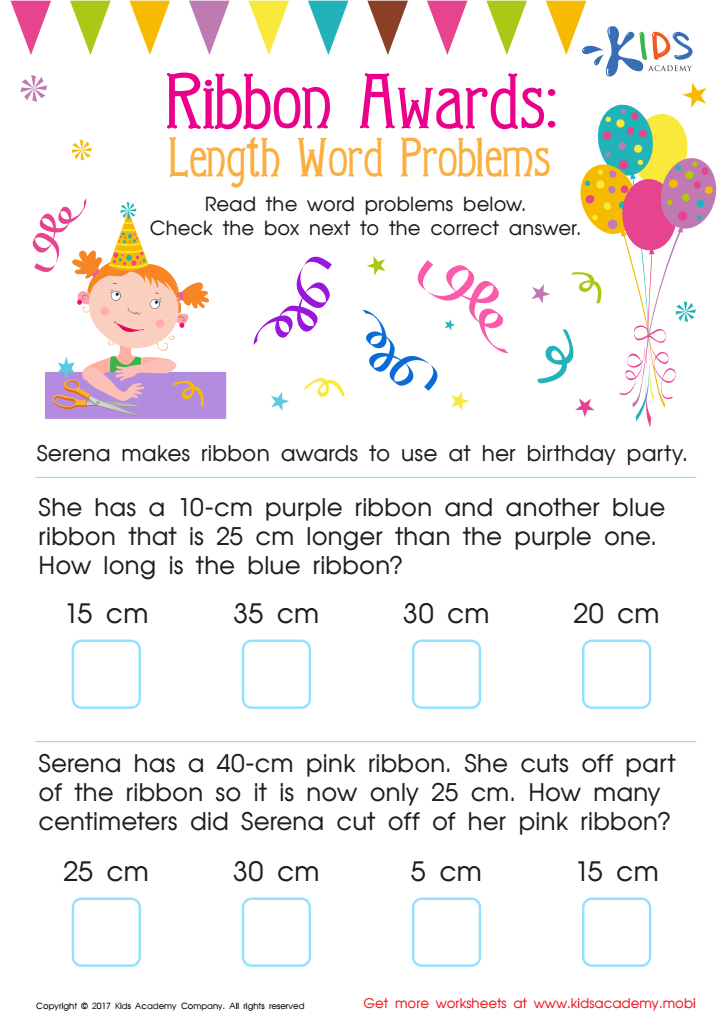
    Length word problems for Grade 2
    Length word problems for Grade 2

    Length Word Problems Worksheet

    Word problems help grade 2 students practice measurement using everyday scenarios. This worksheet provides practice in working with centimeters and inches, like measuring ribbon. It's a great way to learn and apply math skills.
    Length Word Problems Worksheet
    Worksheet
    Adding up to 1000 Without Regrouping: Page 56
    Adding up to 1000 Without Regrouping: Page 56
    Adding up to 1000 Without Regrouping: Page 56
    Worksheet
    Food Fractions Worksheet
    Food Fractions Worksheet

    Food Fractions Worksheet

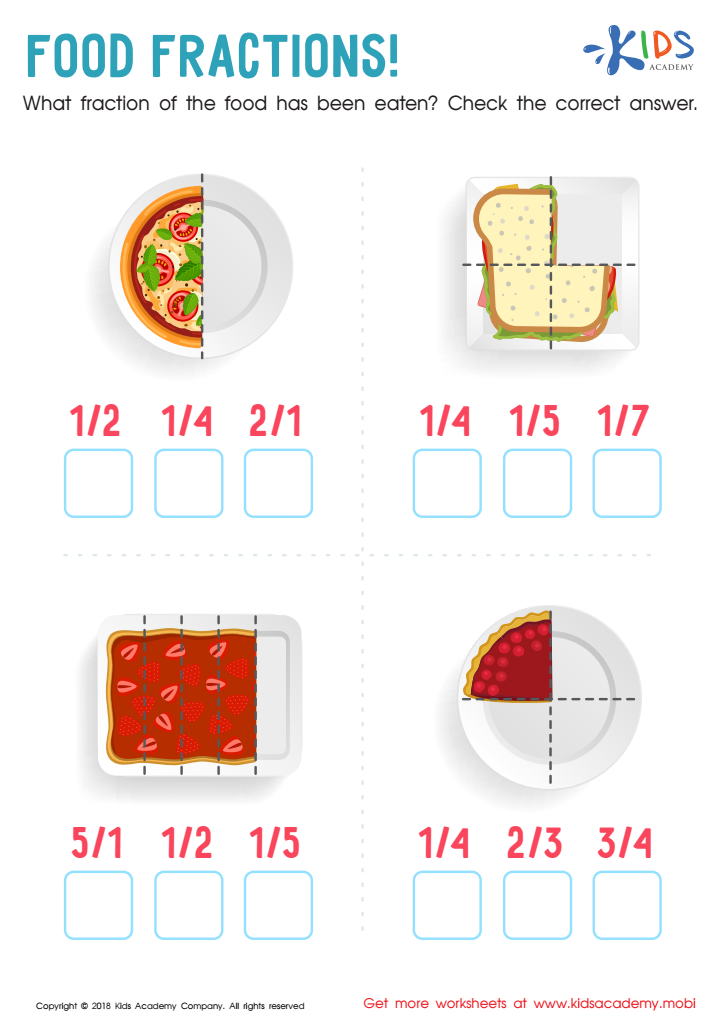
    Test your child's understanding of fractions with this Food Fractions worksheet. Ask them to identify what fraction of the food in the four pictures has been eaten and select the correct answer from the options provided. See how well they understand your lessons!
    Food Fractions Worksheet
    Worksheet
    Add up the Pennies Worksheet
    Add up the Pennies Worksheet
    Add up the Pennies Worksheet
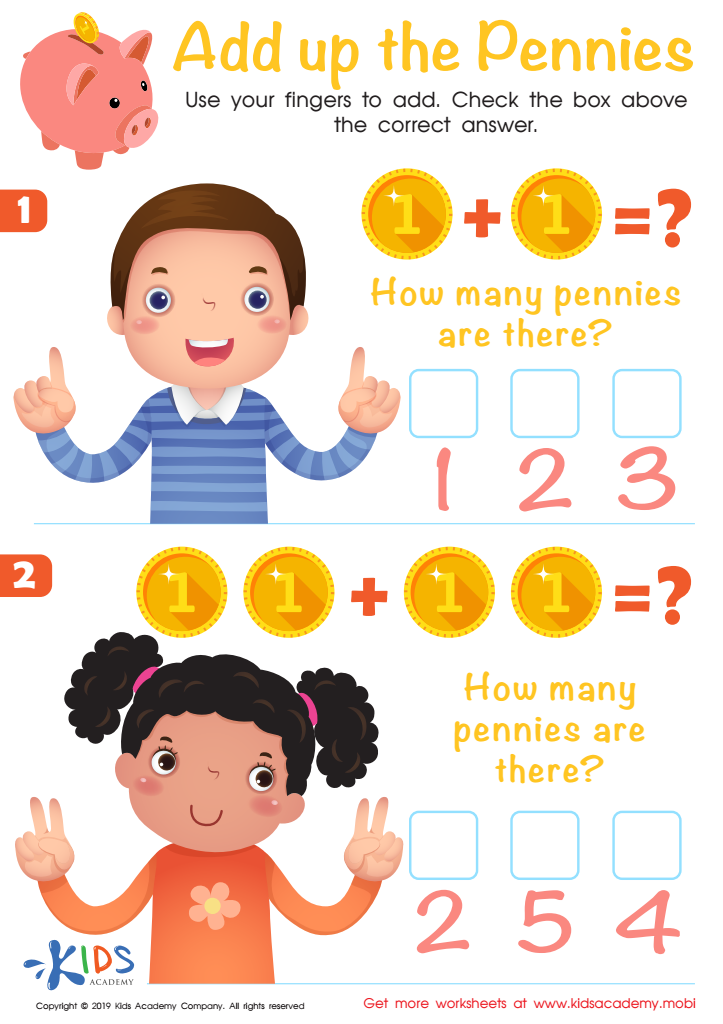
    Help your kids ace their math skills with this simple worksheet! You can guide them to use their fingers to add numbers and then check the box above the correct answer. With practice and your support, they can become faster and better at adding numbers. No sweating required!
    Add up the Pennies Worksheet
    Worksheet
    What Makes 17 Worksheet
    What Makes 17 Worksheet

    What Makes 17 Worksheet

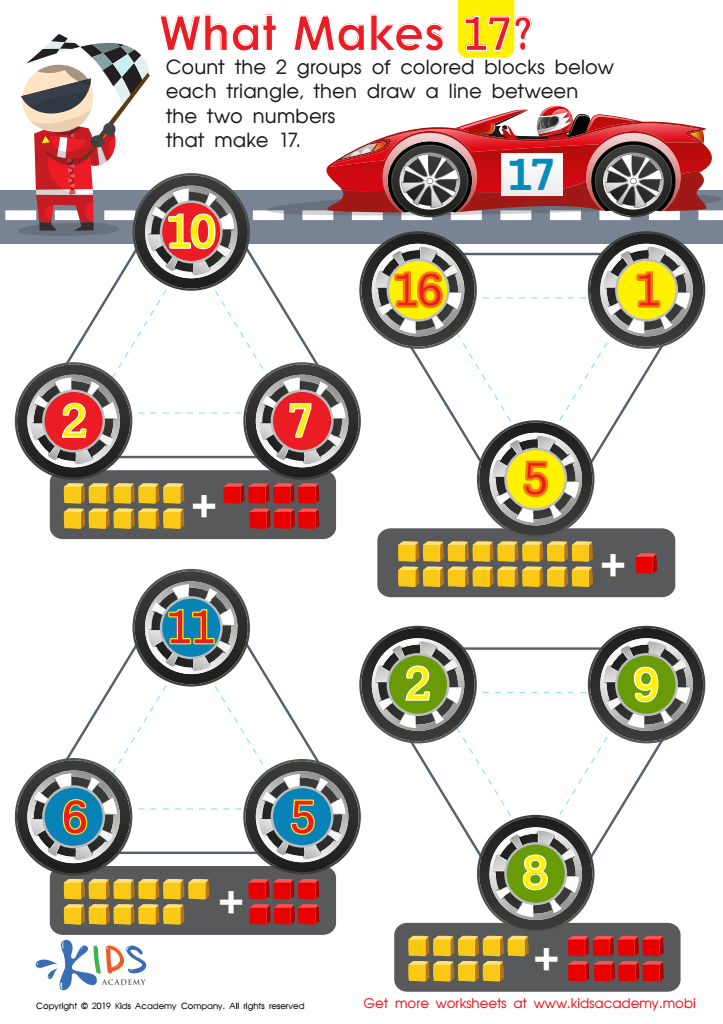
    Practice makes perfect! Let your kindergartners explore addition using this worksheet. Count the blocks in each triangle to reach the same total of 17, and draw a line between the two numbers. Once they get the hang of it, nothing will be too difficult!
    What Makes 17 Worksheet
    Worksheet
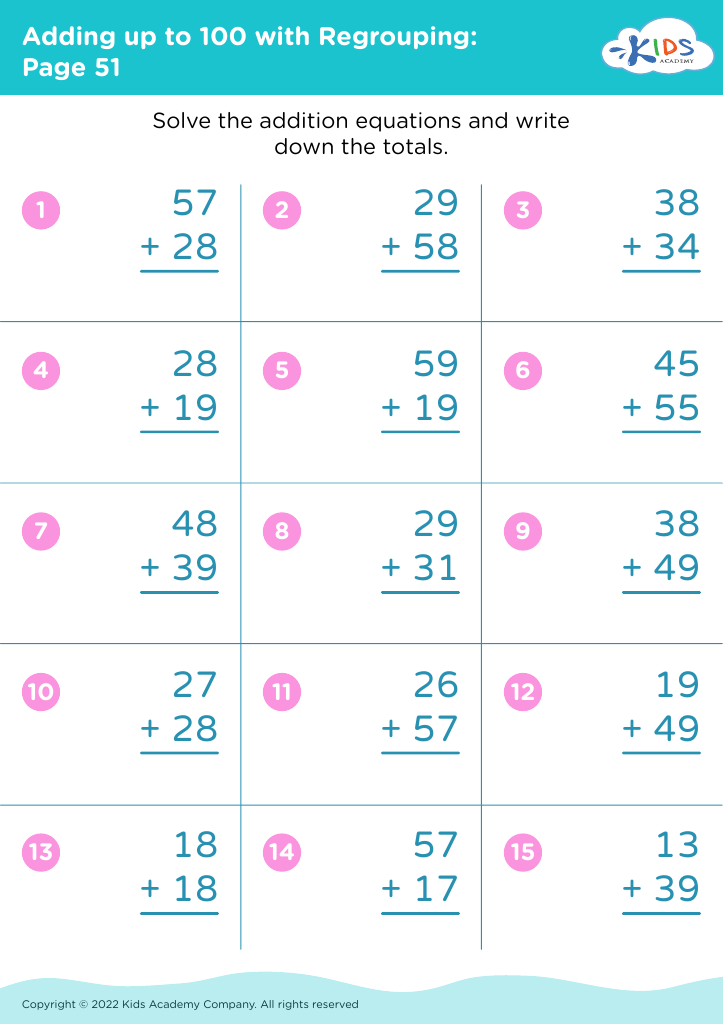
    Adding up to 100 with Regrouping: Page 51
    Adding up to 100 with Regrouping: Page 51
    Adding up to 100 with Regrouping: Page 51
    Worksheet
    Sweet Counting - Part 1 Worksheet
    Sweet Counting - Part 1 Worksheet

    Sweet Counting - Part 1 Worksheet

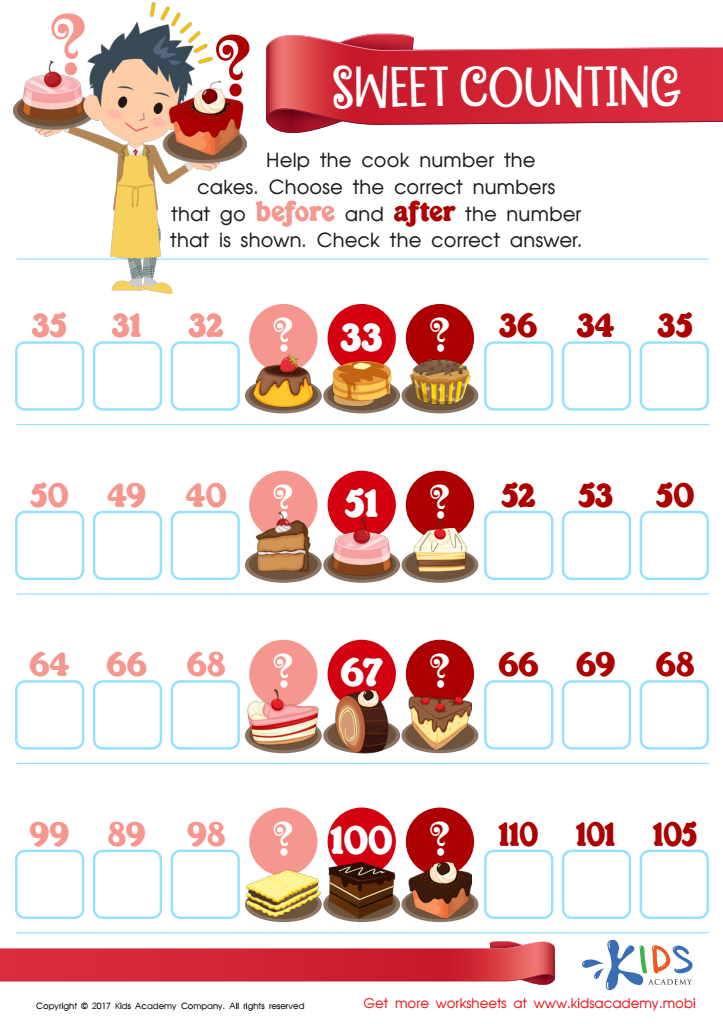
    Help your child learn numbers by counting cakes! Download this fun worksheet and have them fill in the numbers missing in the line of cakes. They'll have fun helping the cook and be learning at the same time!
    Sweet Counting - Part 1 Worksheet

    Worksheet
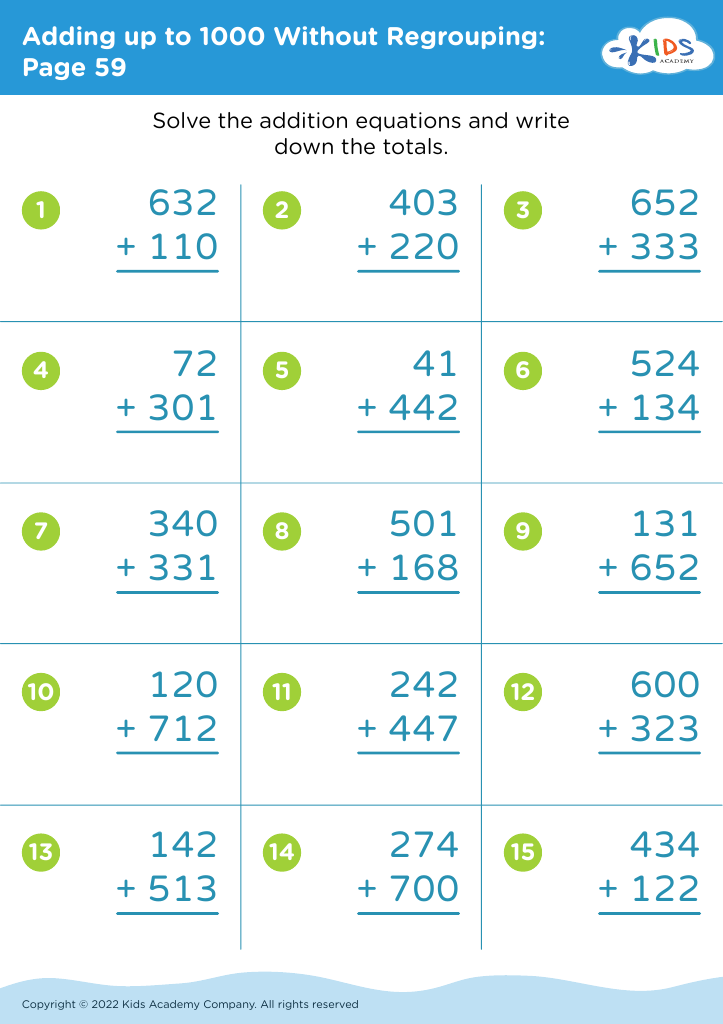
    Adding up to 1000 Without Regrouping: Page 59
    Adding up to 1000 Without Regrouping: Page 59
    Adding up to 1000 Without Regrouping: Page 59
    Worksheet
    Adding up to 50 with Regrouping: Page 25
    Adding up to 50 with Regrouping: Page 25
    Adding up to 50 with Regrouping: Page 25
    Worksheet


    Math for ages 5 to 8 is fundamental for building a strong educational foundation and nurturing a child's ability to reason and think logically. At this stage, children are developing critical cognitive skills that will serve as the building blocks for more complex math concepts in their later education. Parents and teachers should place a high importance on this early math exposure because it fosters problem-solving abilities and enhances critical thinking, skills that are essential not just in academia, but in everyday life.

    Introducing math in a fun, engaging manner at this age can also help children build a positive attitude toward the subject. This is crucial because early negative experiences with math can lead to anxiety and avoidance in later years. Math at this age includes basic concepts such as counting, sorting, and recognizing patterns, which help children understand and organize the world around them. These basic skills are prerequisites for learning more complex operations like addition, subtraction, multiplication, and division.

    Moreover, early math skills have been shown to be a strong predictor of future academic success, not only in mathematics but also in other subjects. By providing a strong mathematical foundation early on, parents and teachers prepare kids for a brighter academic future, fostering lifelong learning and curiosity.