Filters

6 filtered results

Clear all filters
Favorites
With answer key
Interactive

6 filtered results

Difficulty Level

Grade


Subject

    Boost your child's alphabet skills with our engaging Missing Letters Worksheets designed for ages 6-9! These fun and educational printables help kids practice and reinforce their letter recognition and sequencing abilities. Perfect for both classroom and home use, our worksheets feature colorful illustrations and friendly themes to keep young learners motivated and excited to learn. Ideal for sharpening reading and spelling skills, these activities are a valuable resource for teachers and parents alike. Get your hands on these interactive worksheets today and watch your child’s confidence and alphabet mastery soar!

    Check out this FREE Trial Lesson on Missing Letters for age 6-9!

    Use Capital Letters at the Beginning of a Sentence

    Favorites
    With answer key
    Interactive
    • 6-9
    • Missing Letters
    Missing Digraph: Part 1 Worksheet
    Missing Digraph: Part 1 Worksheet

    Missing Digraph: Part 1 Worksheet

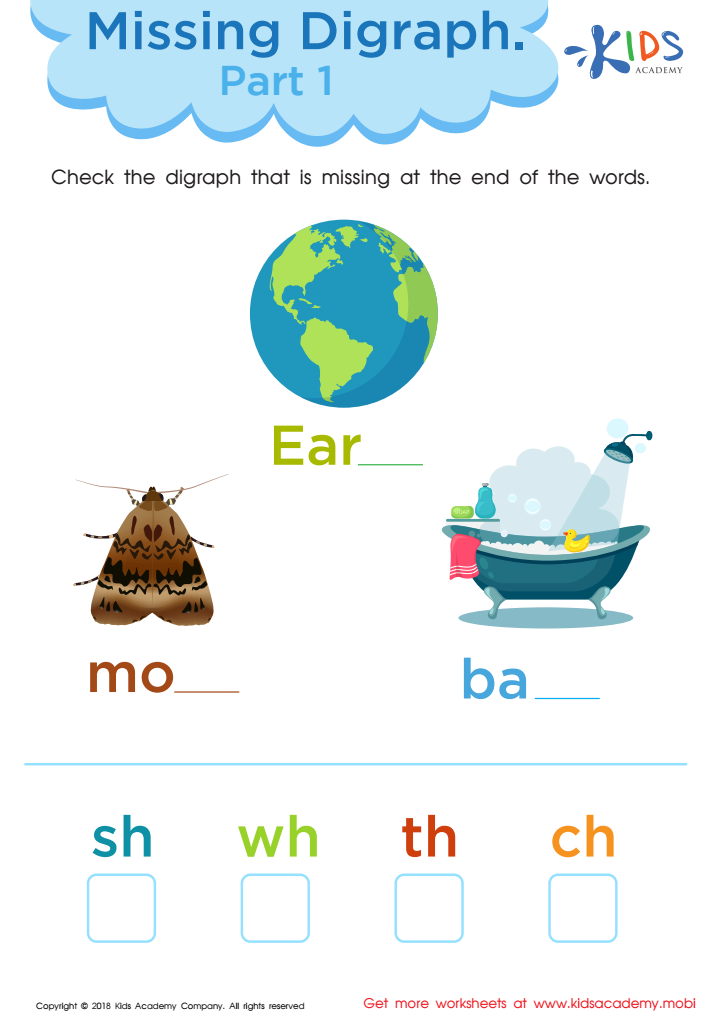
    Practice the 'th' digraph with this worksheet! Ask kids to say the words shown and sound out the letters below each image. Check the box with the correct digraph to complete. Examples include 'earth', 'bath' and 'moth', all ending with the same two letters. Phonics teaches that digraphs are two letters that make one sound.
    Missing Digraph: Part 1 Worksheet
    Worksheet
    Find The Missing Word Worksheet
    Find The Missing Word Worksheet

    Find The Missing Word Worksheet

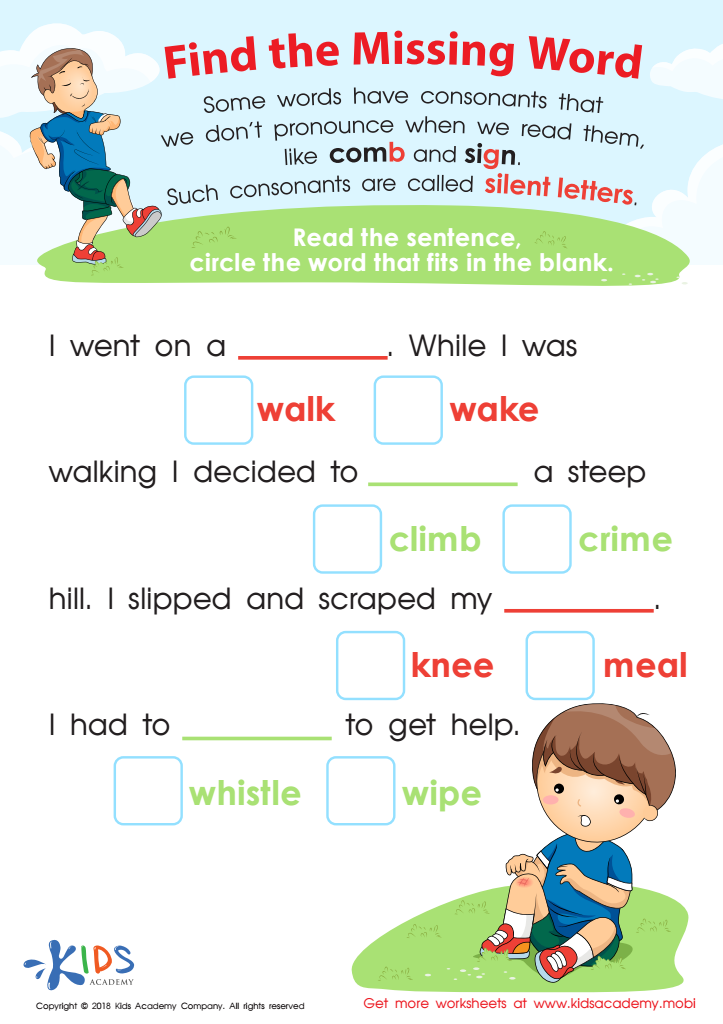
    Master silent letters like "b" and "k" with this illustrated worksheet! Read the sentences and fill in the blanks with the correct word, checking the box. Read all the way to the bottom and review words containing silent letters. A great way to help your little learner tackle a tough topic!
    Find The Missing Word Worksheet
    Worksheet
    Which Letter Should you Choose? Worksheet
    Which Letter Should you Choose? Worksheet

    Which Letter Should you Choose? Worksheet

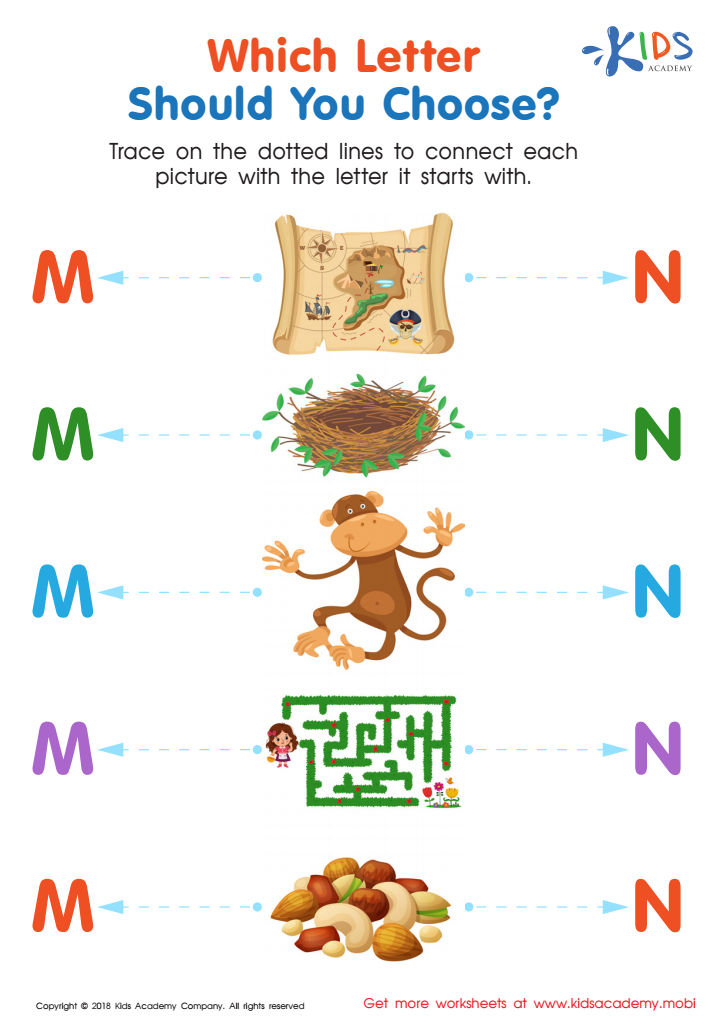
    Trace the dotted lines to connect images with their first letter: "n" or "m." Challenge your child to name each picture, then identify the first letter and trace to the right letter! Five images in total.
    Which Letter Should you Choose? Worksheet
    Worksheet
    Pick the Letter Worksheet
    Pick the Letter Worksheet

    Pick the Letter Worksheet

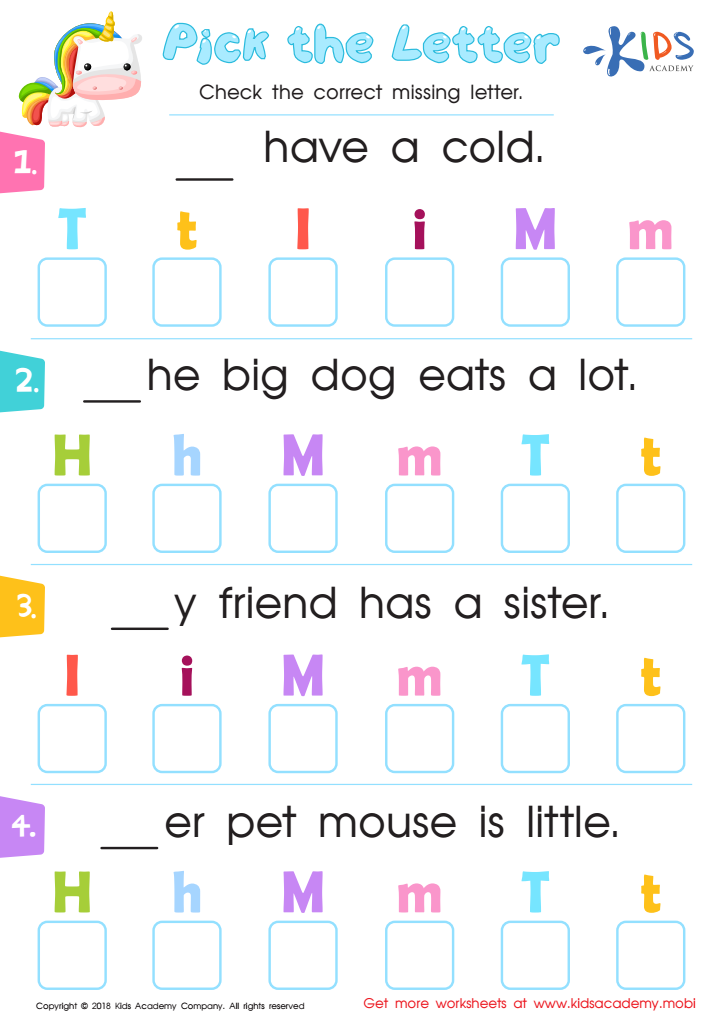
    Put your child's capitalization and reading skills to the test with this missing letter worksheet! Have them look at each sentence, note the blank and review the letters below. Find the uppercase letter that should start each sentence and check the boxes to complete. Fun and colorful, this worksheet is sure to keep your child engaged!
    Pick the Letter Worksheet
    Worksheet
    Missing Digraph: Part 2 Worksheet
    Missing Digraph: Part 2 Worksheet

    Missing Digraph: Part 2 Worksheet

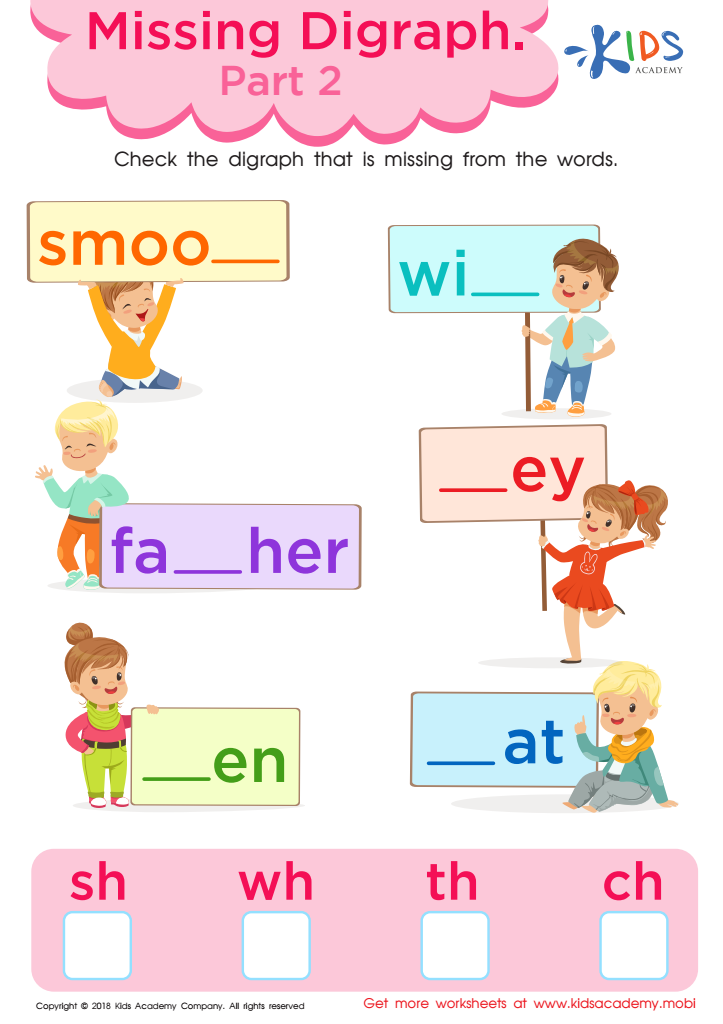
    Practice the "th" digraph with this fun worksheet from Kids Academy! See how it appears at the beginning, middle, or end of words and help learners fill in the blanks. Check if they got it right by finding the th digraph at the bottom!
    Missing Digraph: Part 2 Worksheet
    Worksheet
    Missing Letter Worksheet
    Missing Letter Worksheet

    Missing Letter Worksheet

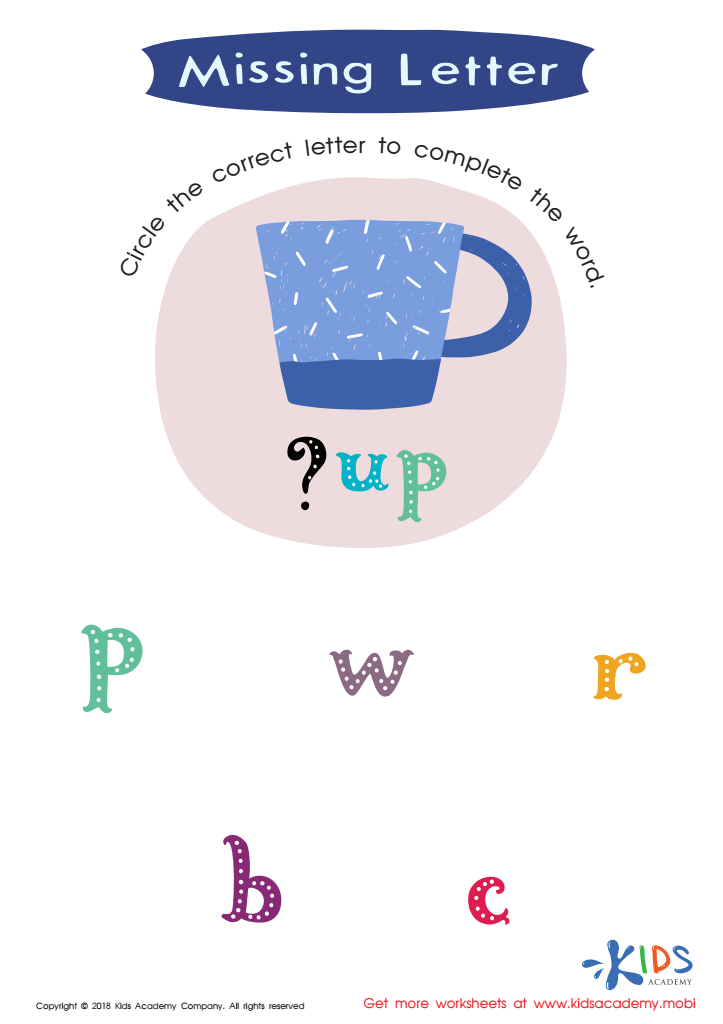
    Congrats! If your kids can spell some small words, pat yourself on the back. Struggling with the alphabet? Help them learn with this simple worksheet. They'll have to find the missing letter to complete the word. Print this worksheet and help your little one find and circle the right letter.
    Missing Letter Worksheet
    Worksheet


    Missing Letters activities for children aged 6-9 are essential for several developmental reasons, garnering the attention of both parents and teachers. At this critical learning phase, children transition from recognizing and identifying letters to building foundational language skills that support reading and writing fluency.

    Engaging in Missing Letters exercises helps young learners enhance their letter recognition and improve their understanding of alphabetical order and word structure. As they fill in missing letters, children also develop their phonemic awareness, which is crucial for decoding unfamiliar words during reading. This improved proficiency in recognizing and constructing words boosts their overall literacy skills.

    Furthermore, these activities aid in cognitive development. Missing Letters exercises stimulate memory, attention to detail, and problem-solving skills, all of which are vital for academic success across subjects. They also encourage children to apply logical reasoning as they deduce the correct letters to complete words.

    In addition to cognitive benefits, completing these exercises fosters confidence and promotes a positive attitude toward learning. Children experience accomplishment upon successfully completing tasks, which builds self-esteem and motivates continued practice.

    Overall, Missing Letters tasks provide a fun and interactive way to support early literacy and cognitive skills, laying a crucial foundation for future learning and academic achievement. Parents and teachers are encouraged to incorporate these activities to ensure a well-rounded educational experience.