Filters

29 filtered results

Clear all filters
Favorites
With answer key
Interactive

29 filtered results

Difficulty Level

Grade


Check out this FREE Reading Trial Lesson for age 3-9!

Answer Questions about Key Details in an Informational Text

Favorites
With answer key
Interactive
  • Reading
  • 3-9
  • Interactive
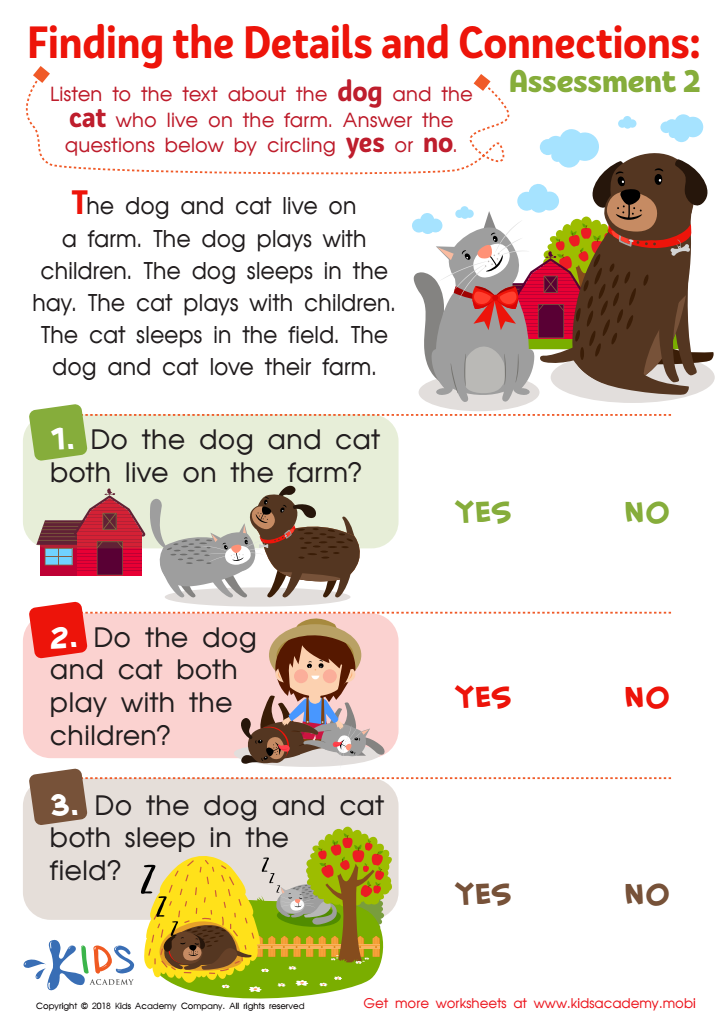
Finding the Details and Connections: Assessment 2 Worksheet

Finding the Details and Connections: Assessment 2 Worksheet

Does your child love animals? If you have pets, they'll relate to the text in this worksheet. Read it aloud to them and help them answer the simple questions by circling yes or no. The story is about a dog and cat living on a farm. Let your child read it aloud to you if they can.
Finding the Details and Connections: Assessment 2 Worksheet
Worksheet
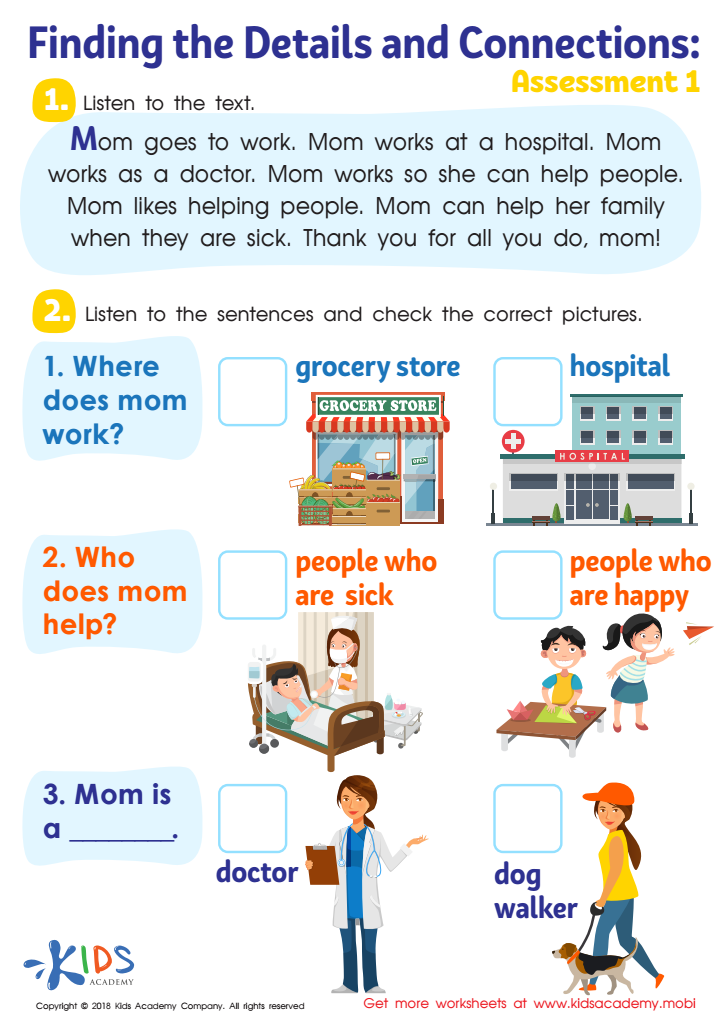
Finding the Details and Connections: Assessment 1 Worksheet

Finding the Details and Connections: Assessment 1 Worksheet

Ask your students what their parents do for a job. Do they know what profession their mom is in and where she works? Professionals have places they go to do their job. In this task, Mom goes to a hospital and is a doctor. Read the text and help them check the right pictures.
Finding the Details and Connections: Assessment 1 Worksheet
Worksheet
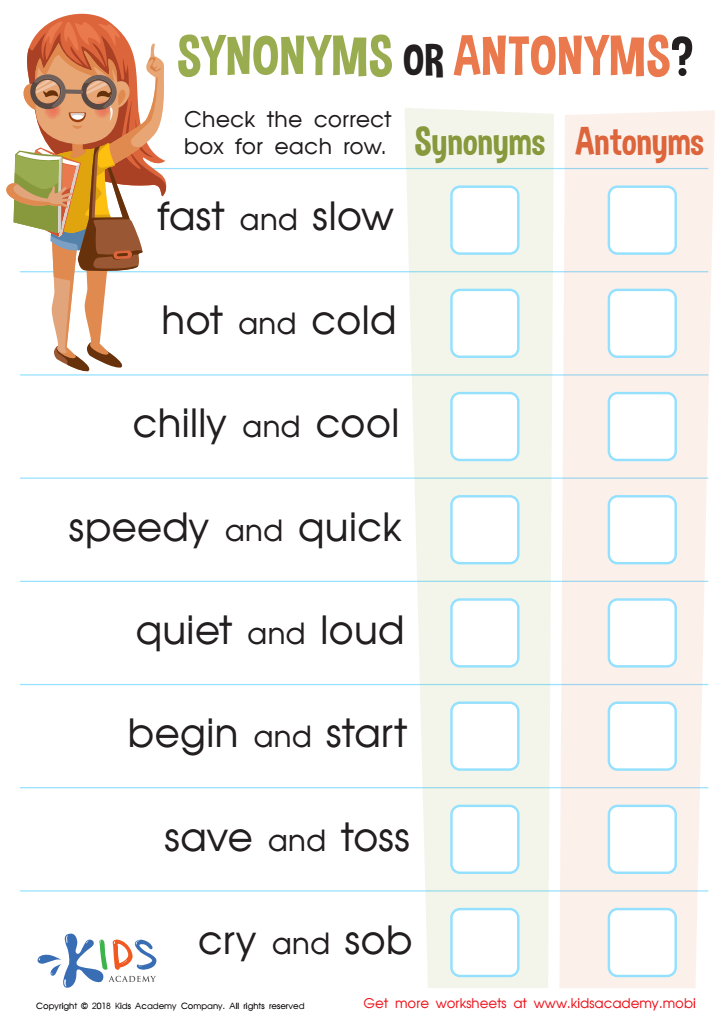
Synonyms or Antonyms: Assessment Worksheet

Synonyms or Antonyms: Assessment Worksheet

Test your child's knowledge with this fun worksheet! Ask them to read the words and select if they are synonyms or antonyms - e.g. 'happy' is a synonym and 'bad' is an antonym. For an extra challenge, ask them to provide two synonyms and two antonyms for each word.
Synonyms or Antonyms: Assessment Worksheet
Worksheet
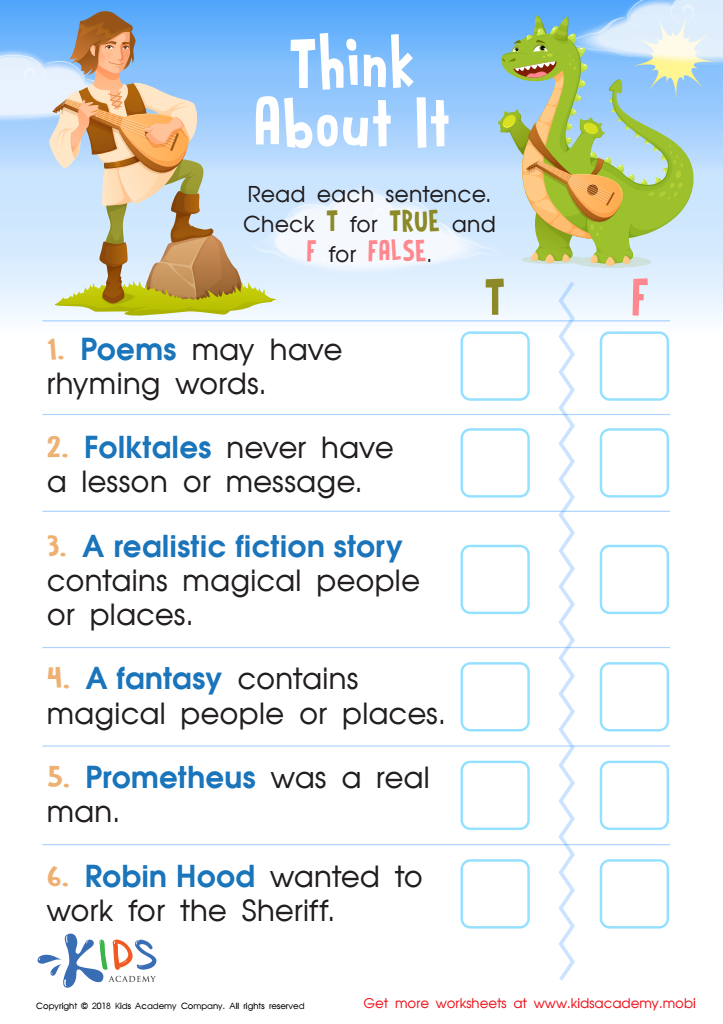
Think About It: Assessment Worksheet

Think About It: Assessment Worksheet

Reading is a fun and important way to learn. Help your students become better readers with this simple yet colorful worksheet. Read each sentence aloud, then have them read it by themselves. Ask them to check T for True and F for False. It's a great way to practice their reading skills!
Think About It: Assessment Worksheet
Worksheet
Sounding it Out: Assessment Worksheet


Sounding it Out: Assessment Worksheet
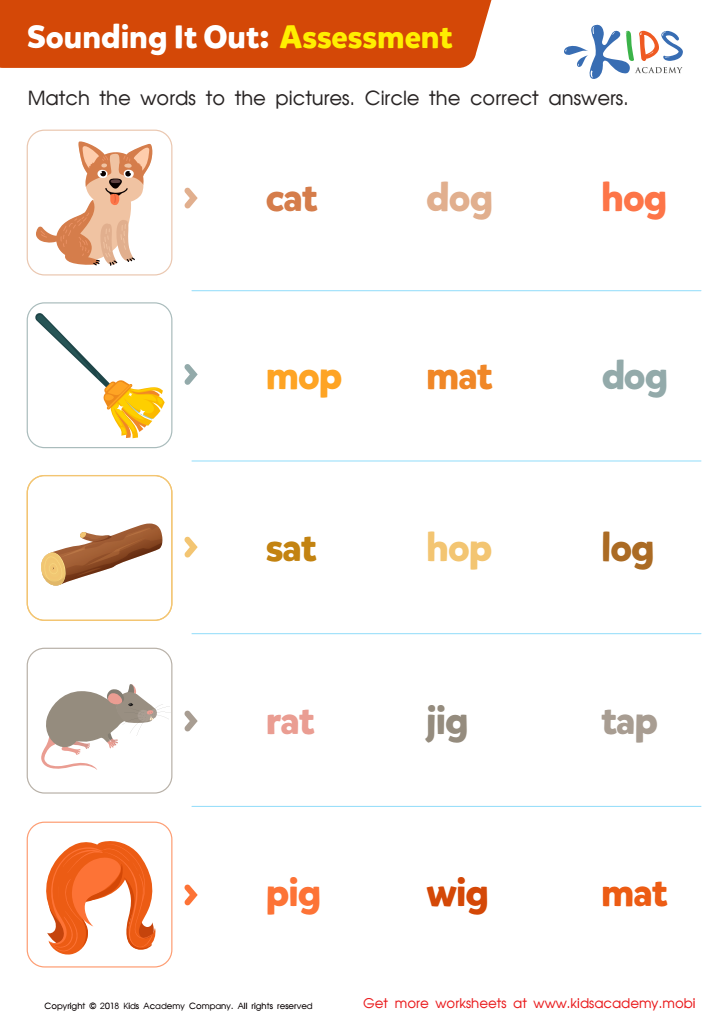
Give your little learner a fun challenge with this downloadable worksheet! With pictures to guide them, have them name the images and then sound out the words in the same row. Be careful though, as they all contain the same amount of similarly sounding letters. Once the correct word has been found, have them circle it!
Sounding it Out: Assessment Worksheet
Worksheet


Reading activities for ages 3-9 are essential for fostering early literacy skills and cognitive development. During these formative years, children are highly receptive to new information, making it the perfect time to instill a love of reading. Engaging in reading activities not only enhances vocabulary and comprehension but also cultivates critical thinking as children learn to connect ideas and make inferences.

Parents and teachers should care because these activities significantly impact a child’s overall academic success. Research shows that early exposure to reading correlates with improved performance in school subjects, promotes better listening skills, and encourages empathy through diverse stories. Additionally, reading activities offer opportunities for bonding and interaction, whether through storytelling, shared reading time, or playful literacy games, strengthening parent-child or teacher-student relationships.

Moreover, developing a reading habit early helps combat future literacy challenges and gaps. As children learn to navigate texts, they become more confident, independent learners, preparing them for the demands of the educational journey ahead. In summary, prioritizing reading activities for this age group is vital to nurturing lifelong learners equipped for success, both academically and in their understanding of the world around them.