
Normal Phonics worksheets activities for Ages 7-8
5 filtered results
Difficulty Level
Grade
Age
-
From - To
Subject
Activity
Standards
Welcome to our engaging "Normal Phonics Worksheets Activities for Ages 7-8"! Designed to boost reading skills, these worksheets provide fun and interactive phonics exercises tailored for early learners. Featuring a variety of activities, including sound recognition, word decoding, and writing practice, these resources aim to enhance children's phonemic awareness and vocabulary. Each worksheet aligns with curriculum standards, ensuring a comprehensive approach to literacy development. Perfect for at-home learning or classroom use, these activities foster excitement around reading and phonics. Unlock your child’s potential and support their learning journey with our thoughtfully crafted worksheets today!
Favorites
With answer key
Interactive
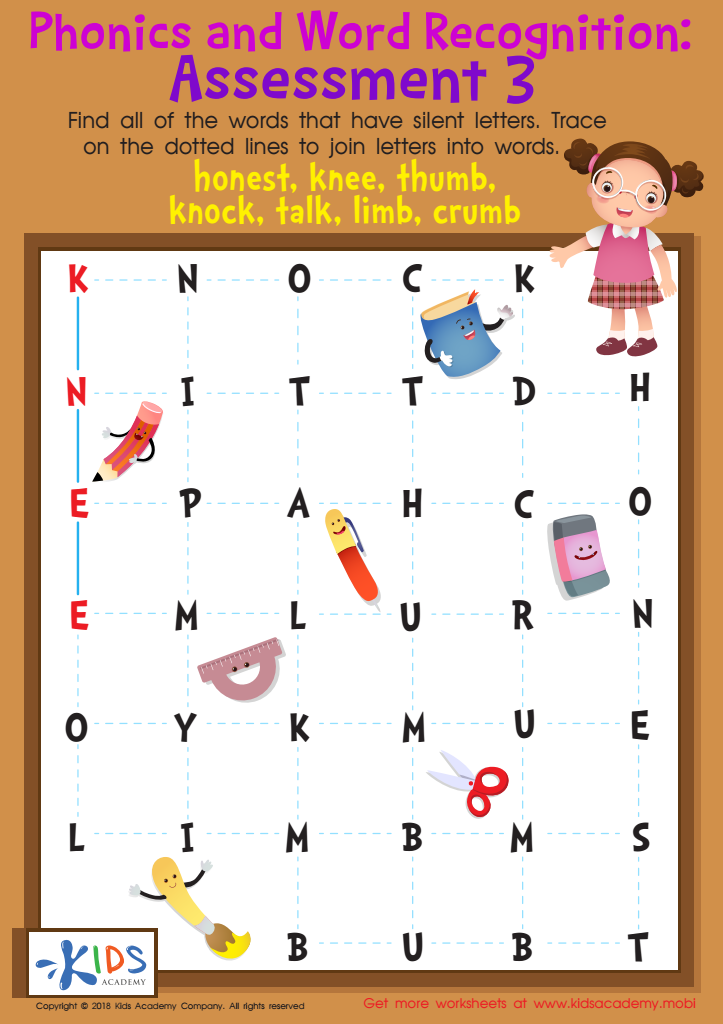
Phonics and Word Recognition: Assessment 3 Worksheet
Silent letters can be tricky for kids learning to read and write. Show them how they work with words like 'knee' and 'dumb'. Then, challenge them to come up with their own. Give them a worksheet with silent letters and trace the lines to join the letters into words.
 Assign to My Students
Phonics and Word Recognition: Assessment 3 Worksheet
Worksheet
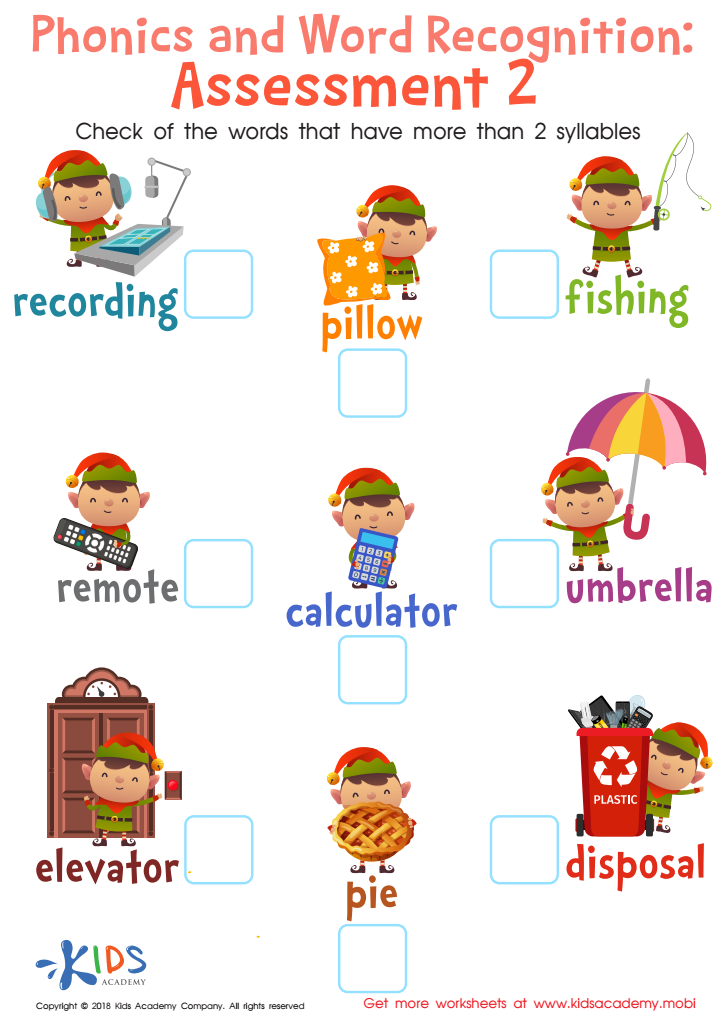
Phonics and Word Recognition: Assessment 2 Worksheet
Help your kids learn proper pronunciation by counting syllables. Most words they'll encounter have 1-3 syllables, making them simple to say. Have them repeat the words in your worksheet after you. Focus on longer words with more than two syllables.
Phonics and Word Recognition: Assessment 2 Worksheet
Worksheet
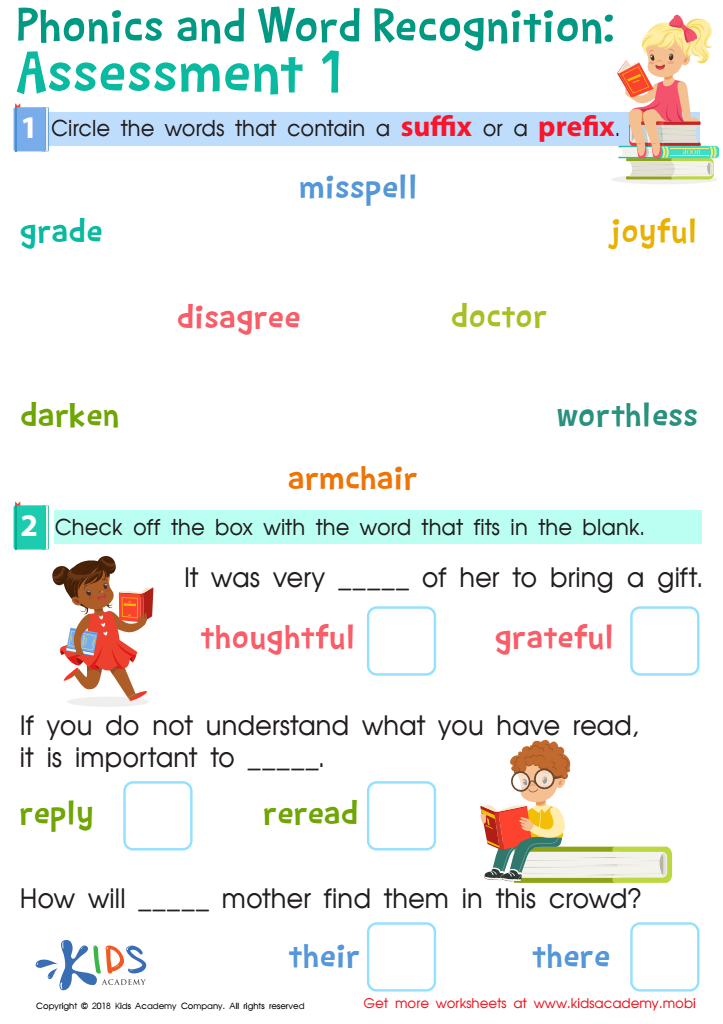
Phonics and Word Recognition: Assessment 1 Worksheet
Explain prefixes (words added to start of another word to give it a new meaning) and suffixes (added to end of word to change its meaning) to your kids with examples like 'unhappy' (prefix) and 'forgetful' (suffix). Now, help your child complete this worksheet, including circling words and checking boxes.
Phonics and Word Recognition: Assessment 1 Worksheet
Worksheet
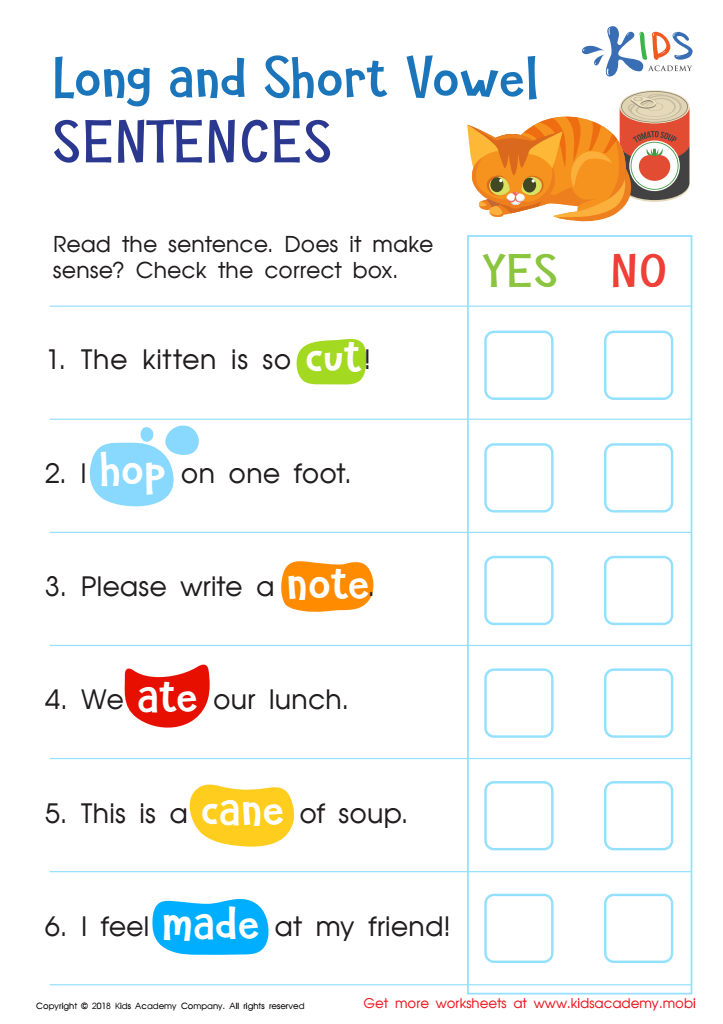
Long and Short Vowel Sentences: Assessment Worksheet
This printable worksheet helps kids practice differentiating between short and long vowel sounds. They'll use context clues to figure out which words make sense in simple sentences. A great way to build reading and writing skills!
Long and Short Vowel Sentences: Assessment Worksheet
Worksheet
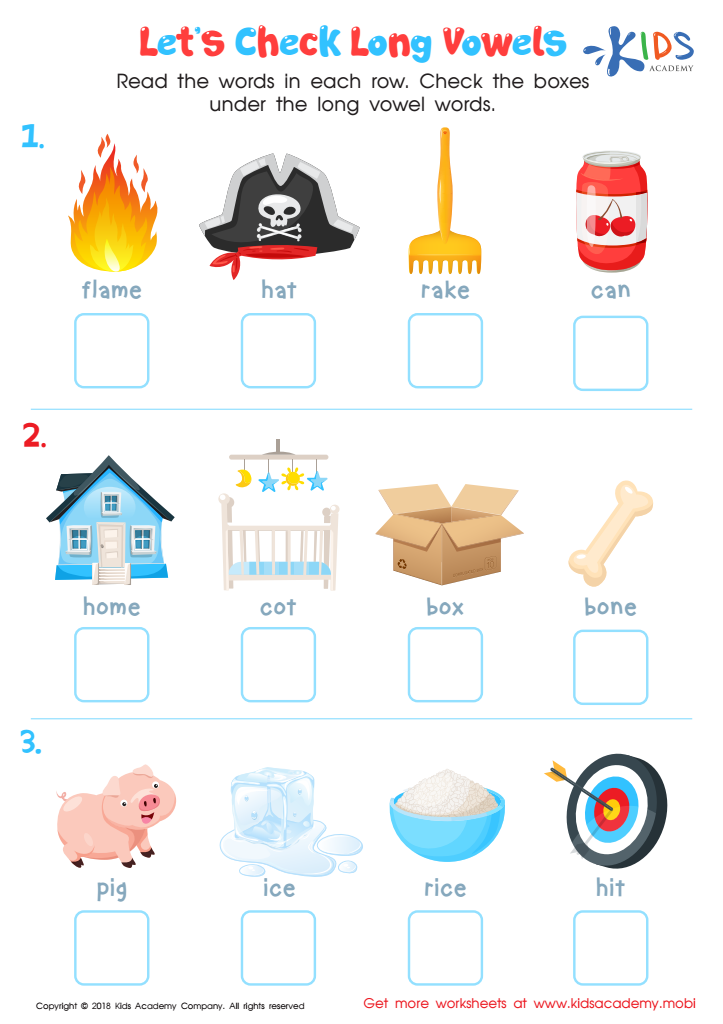
Let's Check Long Vowels: Assessment Worksheet
This worksheet helps your child identify objects and learn long vowel sounds. Ask them to say the names of the four objects in each row. Then, help them check the boxes to confirm they know the long vowel sounds. This will help them develop their reading skills.
Let's Check Long Vowels: Assessment Worksheet
Worksheet
Join Kids Academy for Free
Who is primarily going to use this learning content?







Parents and teachers should prioritize Normal Phonics activities for children aged 7-8 because this foundational stage is critical for developing strong reading and spelling skills. At this age, children are transitioning from learning to read to reading to learn, making it essential to enhance their phonemic awareness, decoding, and word recognition abilities. Normal Phonics activities provide structured and engaging methods to practice these skills, which can lead to improved reading fluency and comprehension.
Moreover, phonics instruction supports language development and boosts vocabulary acquisition, equipping children with the necessary tools for effective communication. Strong phonics skills also foster confidence in their reading abilities, encouraging a love for books and learning that can last a lifetime.
Additionally, Normal Phonics activities can help identify and address specific areas where individual children may struggle, allowing for targeted support. This approach can be particularly beneficial for those with learning difficulties, ensuring that all children progress at their own pace. Overall, investing time in Normal Phonics activities not only enhances critical literacy skills but also lays a solid foundation for academic success across various subjects, ultimately enriching the child's educational experience.








