Filters

2847 filtered results

Clear all filters
Favorites
With answer key
Interactive

2847 filtered results

Difficulty Level

Grade


Check out this FREE Trial Lesson for age 3-9!

Multiplication Facts 2

Favorites
With answer key
Interactive
  • 3-9
  • Interactive
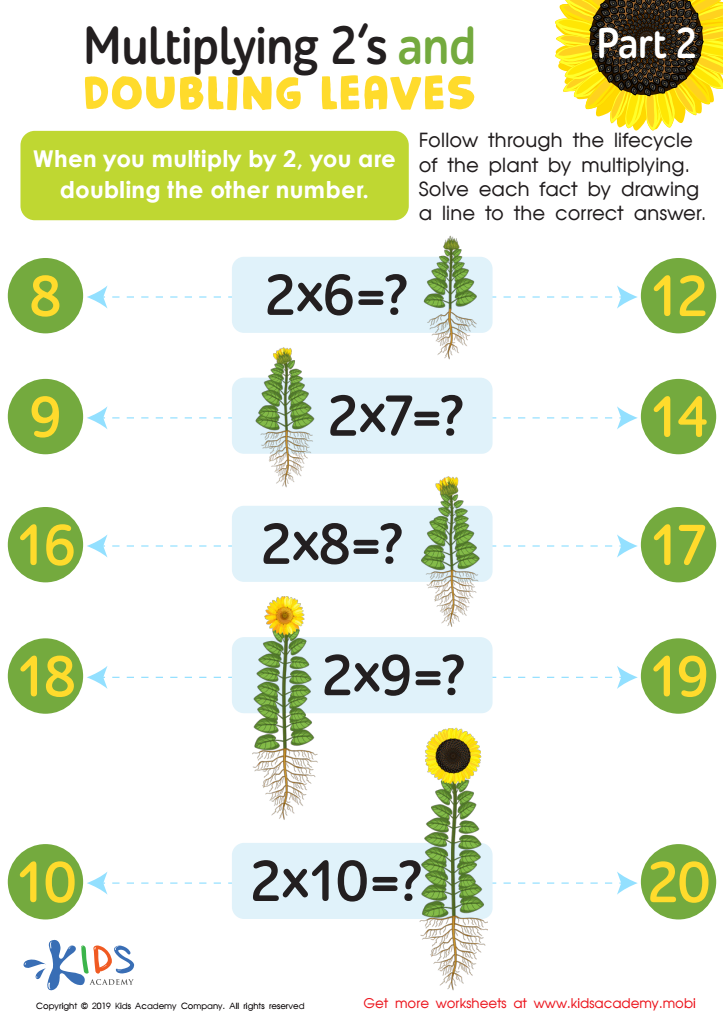
Multiplying 2’s and Doubling Leaves Part 2 Worksheet

Multiplying 2’s and Doubling Leaves Part 2 Worksheet

Help your students master multiplication with these simple tips. Double the number for multiplying by 2 and use this interactive tracing sheet for solving each fact. Plus, it's colorful making it fun for your students to learn.
Multiplying 2’s and Doubling Leaves Part 2 Worksheet
Worksheet
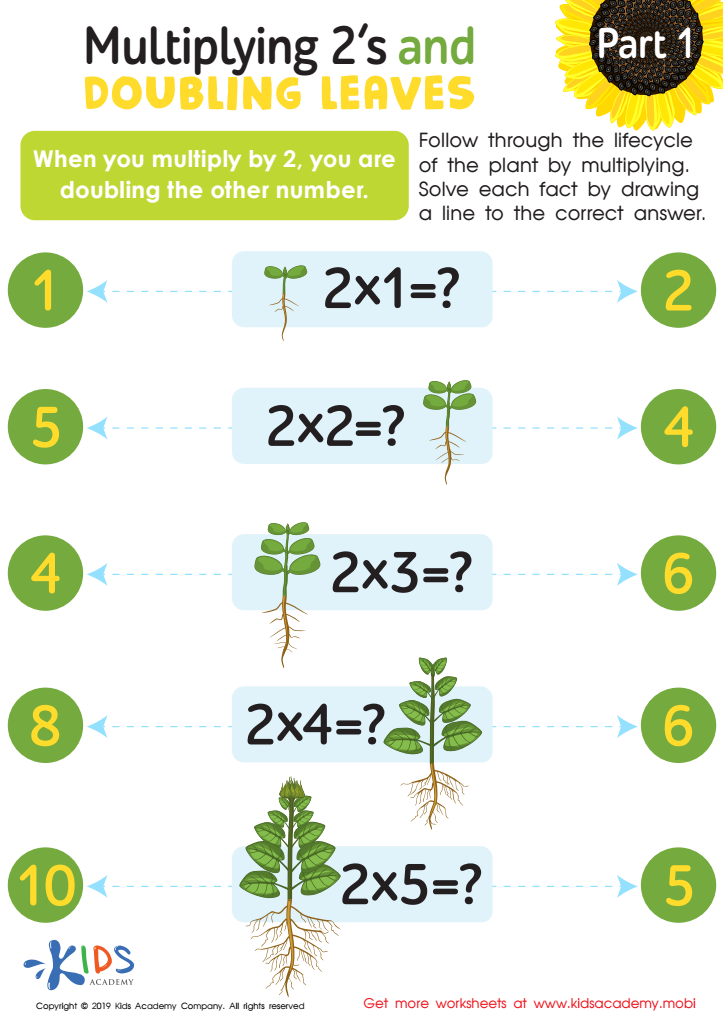
Multiplying 2’s and Doubling Leaves Part 1 Worksheet

Multiplying 2’s and Doubling Leaves Part 1 Worksheet

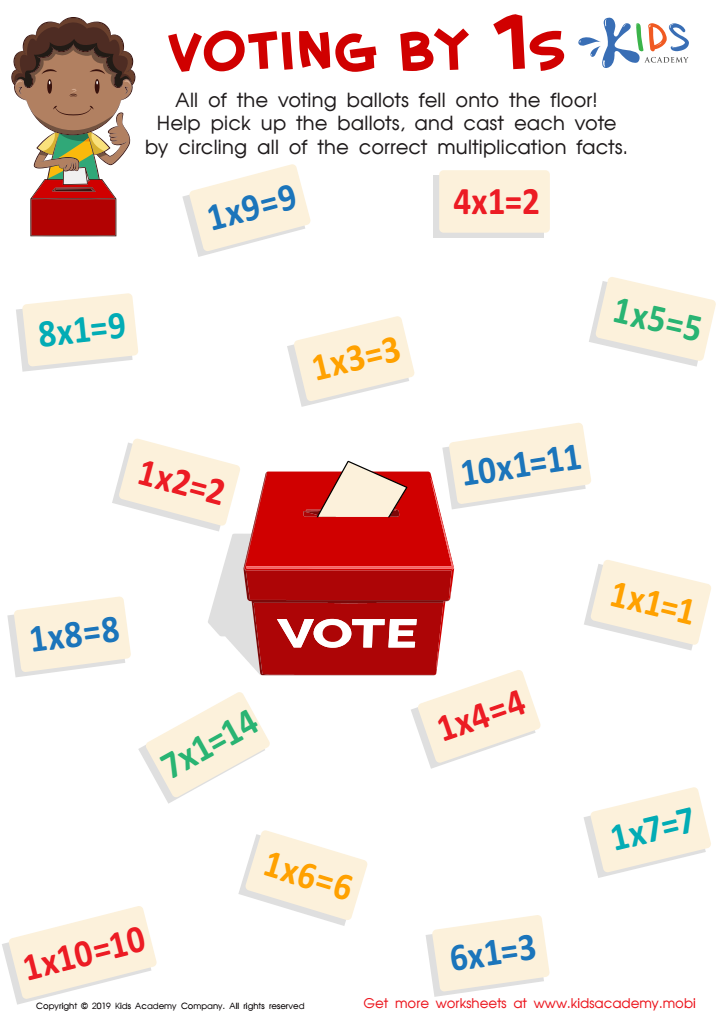
If your students still struggle with multiplication, use this worksheet to help them master it. For multiplying by 2, double the original number. Give them this tracing sheet; they'll solve each fact by drawing a line to the right answer. This worksheet will help them learn multiplication tricks and tips.
Multiplying 2’s and Doubling Leaves Part 1 Worksheet
Worksheet
Voting by 1s Worksheet

Voting by 1s Worksheet

Ask your child if they can list duties of a good citizen. These include voting, to elect right leaders. With this worksheet, the voting ballots have fallen to the floor! Help your kids pick them up and cast each vote by circling the correct multiplication facts.
Voting by 1s Worksheet
Worksheet
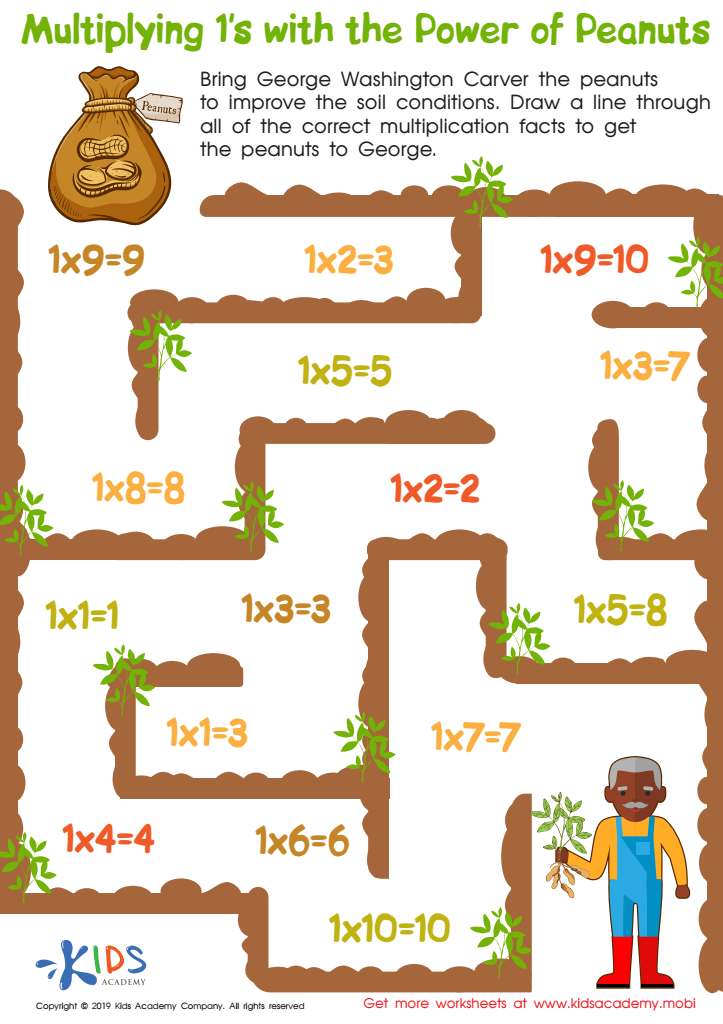
Multiplying 1’s With the Power of Peanuts Worksheet

Multiplying 1’s With the Power of Peanuts Worksheet

Help your kids learn about George Washington Carver with this fun worksheet! Assist them in bringing peanuts to Carver by drawing a line through the correct multiplication facts. Introduce them to Carver's genius creations and show them how he used peanuts to improve the soil condition.
Multiplying 1’s With the Power of Peanuts Worksheet
Worksheet
Electric Multiplication Facts Worksheet

Electric Multiplication Facts Worksheet

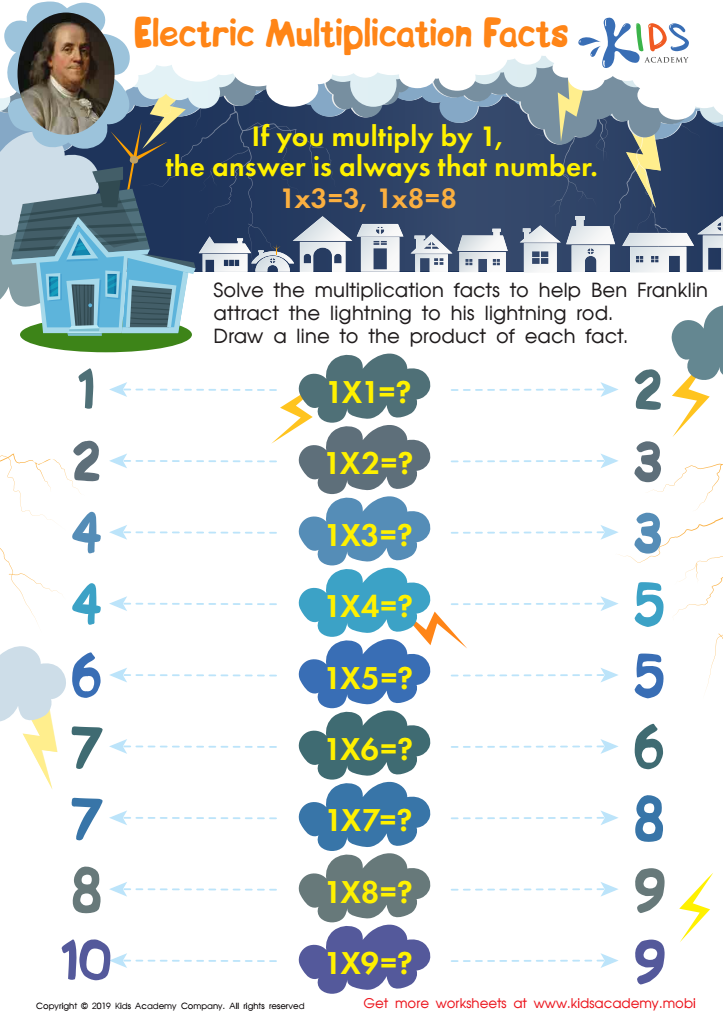
Assisting your kids with math homework has no limits. After mastering addition and subtraction, the next step is multiplication. Initially, it can be intimidating. However, with the right tips and worksheets like this one, they'll see it's not so tricky. Show them how multiplying by 1 keeps the number the same. Use the tracing sheet to help them work through multiplication facts.
Electric Multiplication Facts Worksheet
Worksheet
Arrays of George Washington Carver’s Creations Worksheet

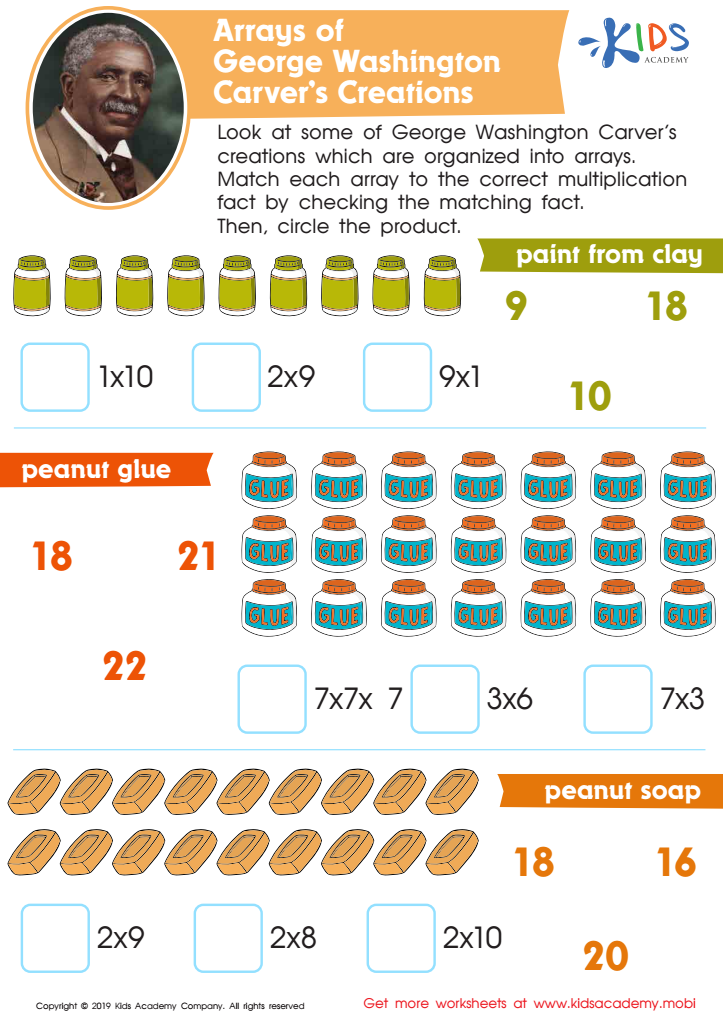
Arrays of George Washington Carver’s Creations Worksheet

Remind your child of what George Washington Carver created. Can they tell you? This worksheet has arrays with his creations. Match the array to the multiplication fact and help your child to circle the product.
Arrays of George Washington Carver’s Creations Worksheet
Worksheet
Ben Franklin’s Invention Arrays Worksheet

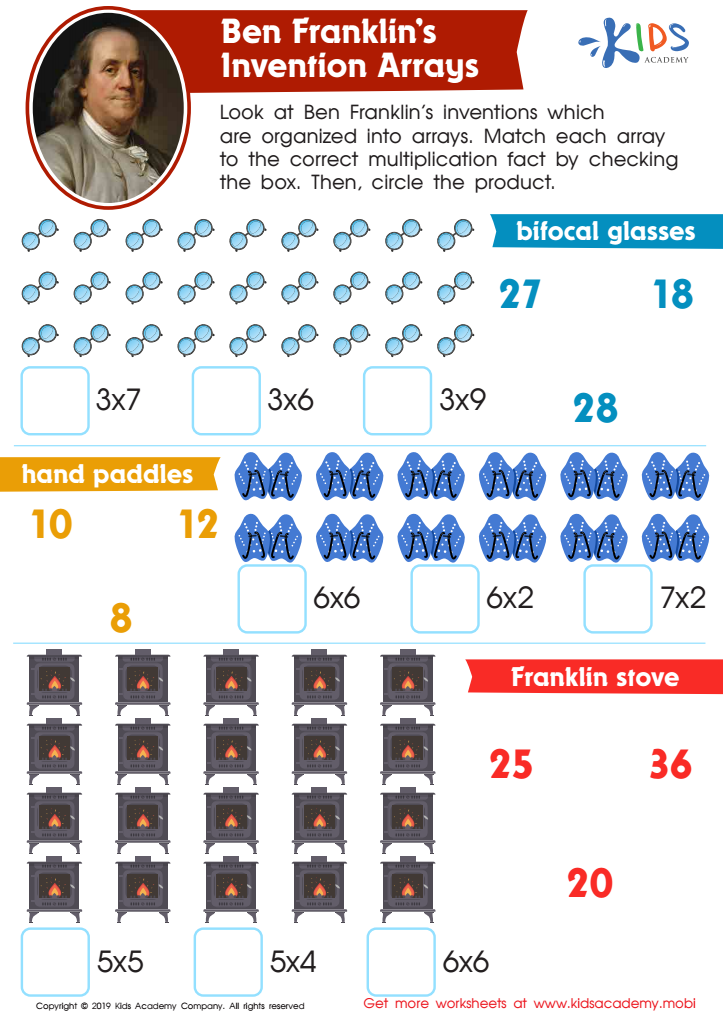
Ben Franklin’s Invention Arrays Worksheet

Have your child guess some of the inventors of the popular items we use today. For instance, the light bulb was invented by Thomas Edison. Look at Ben Franklin's inventions and help your kids match the arrays to the correct multiplication fact. Check the box and circle the product.
Ben Franklin’s Invention Arrays Worksheet
Worksheet
Thomas Edison’s Invention Arrays Worksheet

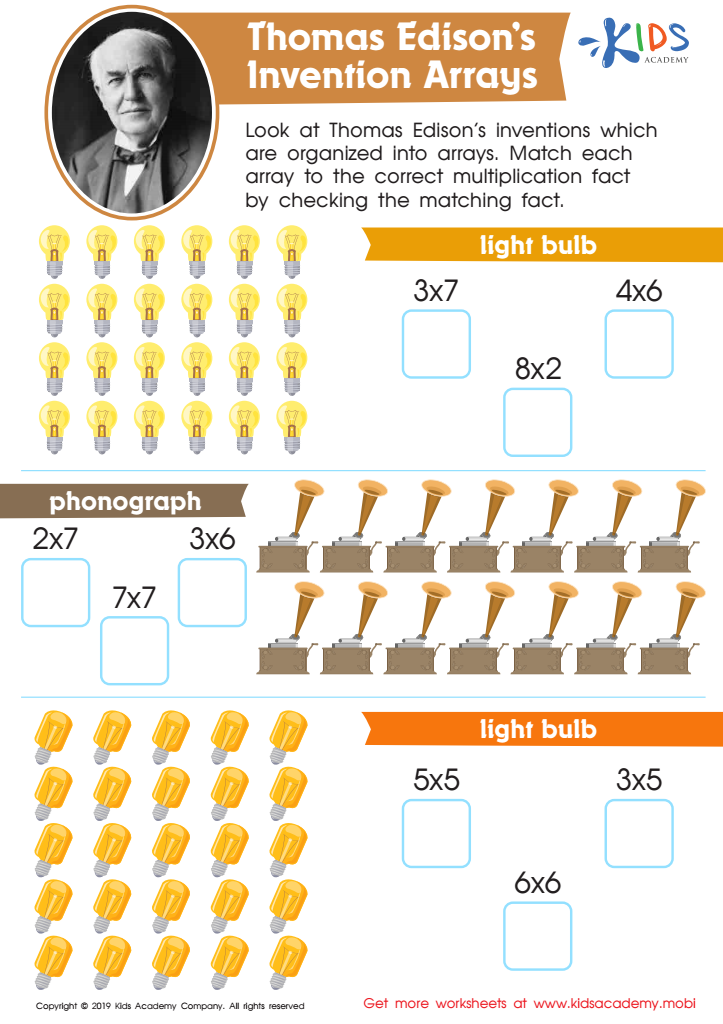
Thomas Edison’s Invention Arrays Worksheet

Test your students' knowledge on history by asking them what Thomas Edison invented. If they get the right answer, provide more information on other inventors. Check out this printout of Edison's light bulb inventions laid out in arrays. Get them to match each array to the correct multiplication fact.
Thomas Edison’s Invention Arrays Worksheet
Worksheet
Repeated Addition = Multiplication Worksheet

Repeated Addition = Multiplication Worksheet

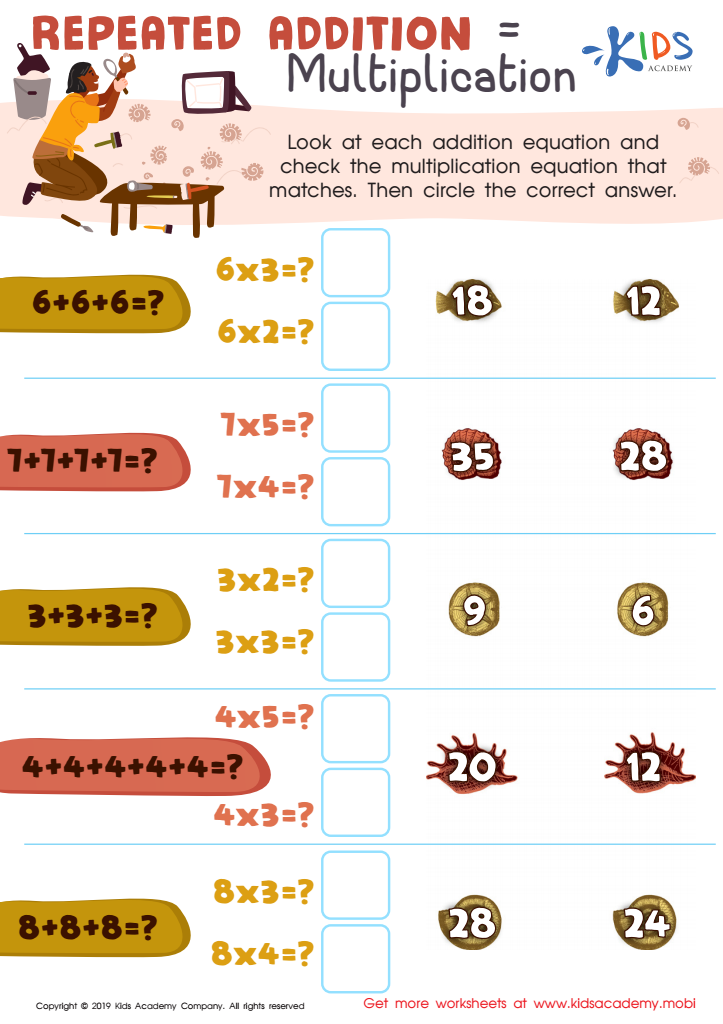
If your child is having trouble with math, worksheets like this can help them get more practice. Addition, subtraction, and multiplication go together. Look over each addition equation and pick the matching multiplication equation, then circle the correct answer. This can give your child the necessary practice to understand mathematics better.
Repeated Addition = Multiplication Worksheet
Worksheet
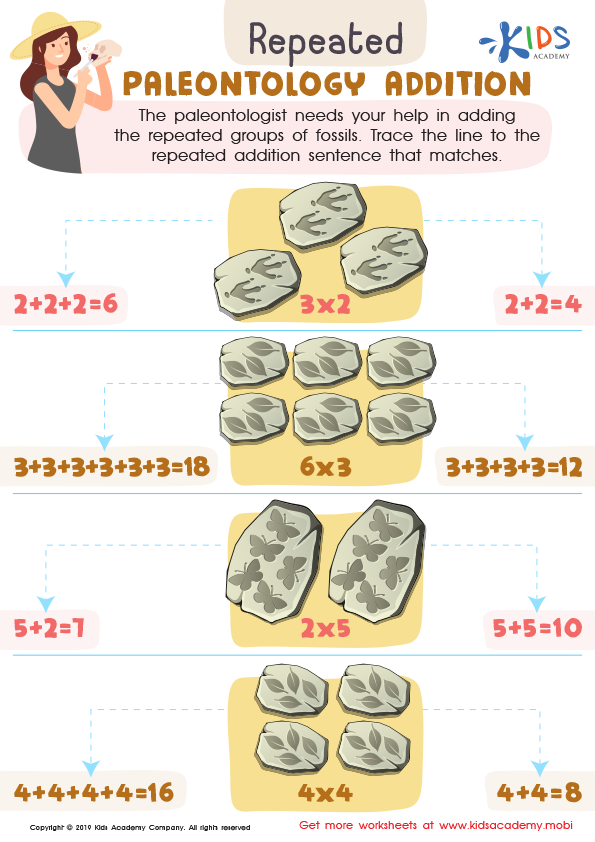
Repeated Archaeology Addition Worksheet

Repeated Archaeology Addition Worksheet

Does your child have dreams for the future? Help them explore the different professions available to them and what each entails. This traceable sheet, featuring an archaeologist completing their work, will show your kid how to find the repeated addition sentence that matches the line. Hold their hand as they complete the activity, inspiring them to pursue their big dreams!
Repeated Archaeology Addition Worksheet
Worksheet
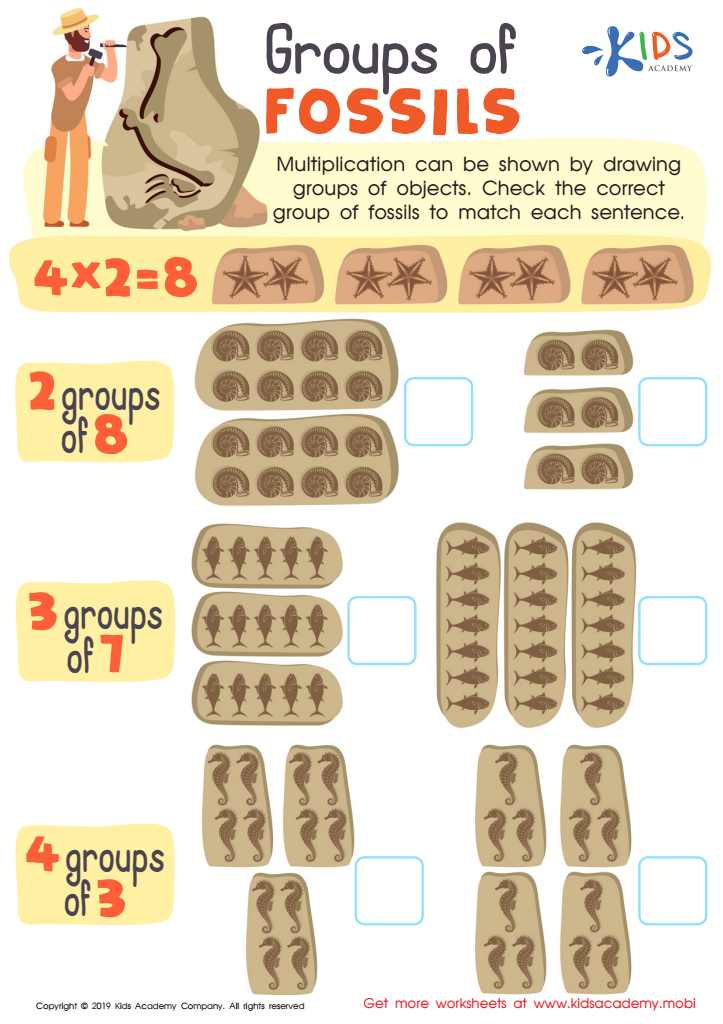
Groups of Fossils Worksheet

Groups of Fossils Worksheet

Kids need to learn multiplication after mastering addition and subtraction. To make it fun, use worksheets like this one. Have kids draw objects to match each sentence - this helps them understand multiplication better. With this approach, they'll be sure to learn the concepts.
Groups of Fossils Worksheet
Worksheet
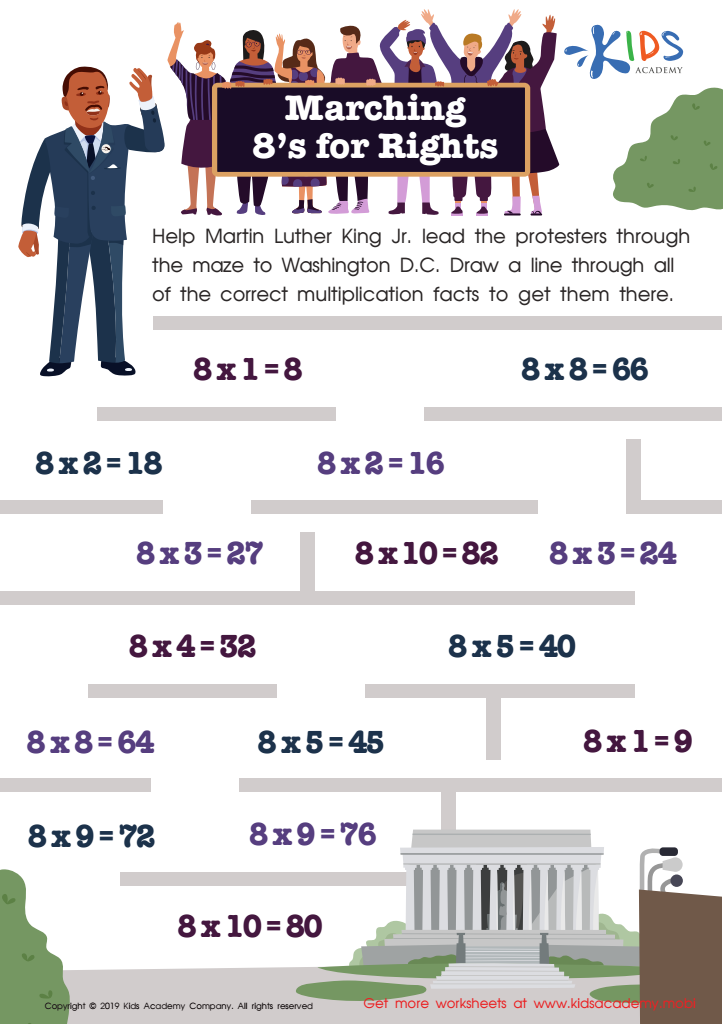
Marching 8’s for Rights Worksheet

Marching 8’s for Rights Worksheet

Encourage your students to explore MLK's history! This worksheet provides the perfect opportunity. Help them understand his contributions by having them "march" MLK from the starting point to Washington D.C. Have them draw a line through the correct multiplication facts to get there. It's an enjoyable way for kindergartners to learn about a key part of history.
Marching 8’s for Rights Worksheet
Worksheet
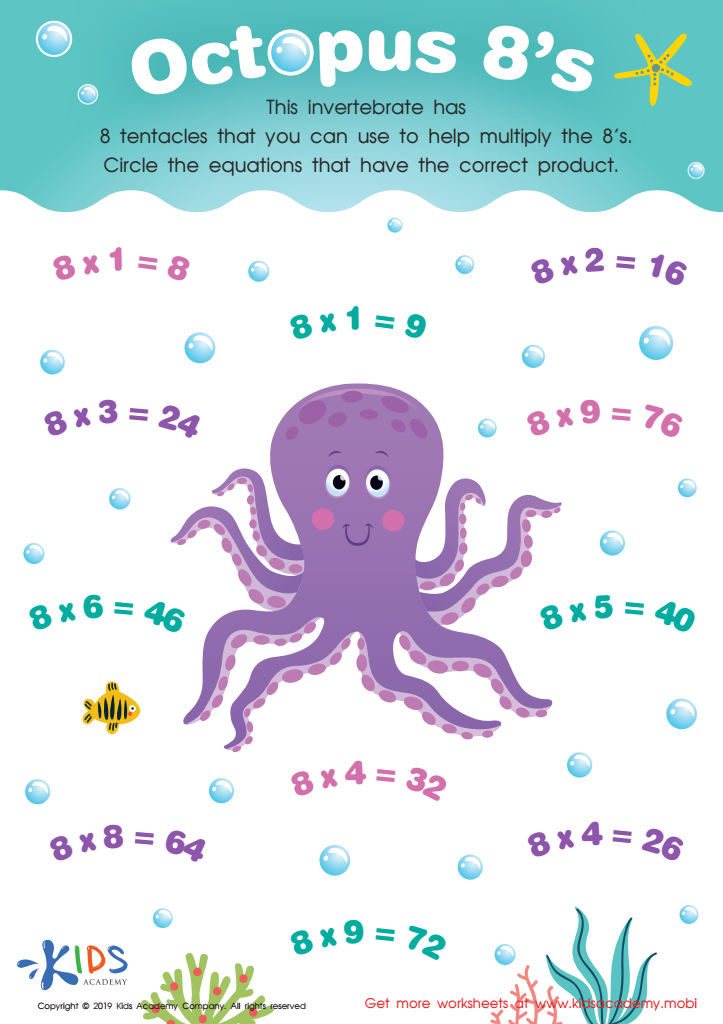
Octopus 8’s Worksheet

Octopus 8’s Worksheet

Can your child identify the octopus in the worksheet? It's an invertebrate with 8 tentacles. Have your child circle the equations with the correct products, and see if they can tell you some other features of the octopus too.
Octopus 8’s Worksheet
Worksheet
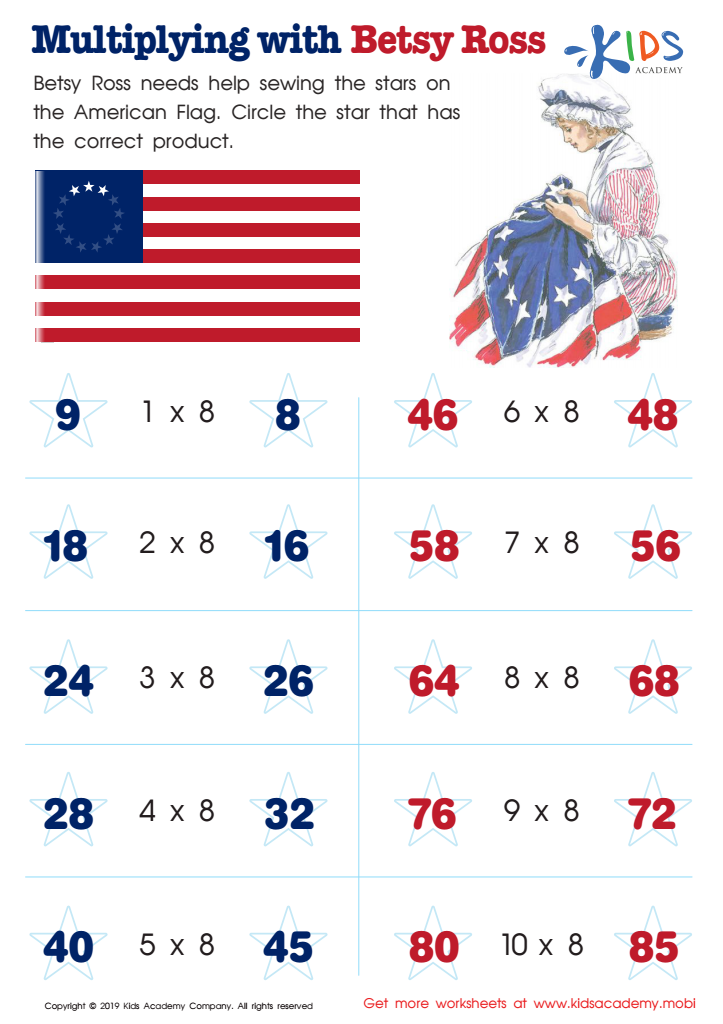
Multiplying with Betsy Ross Worksheet

Multiplying with Betsy Ross Worksheet

Before getting into the worksheet, have your students take a quick history lesson on Betsy Ross. Ask them if they know her role in American history. On the printout, ask your kids to identify what Betsy Ross is doing - sewing the stars on the American Flag. Have them circle the star that has the correct pattern.
Multiplying with Betsy Ross Worksheet
Worksheet
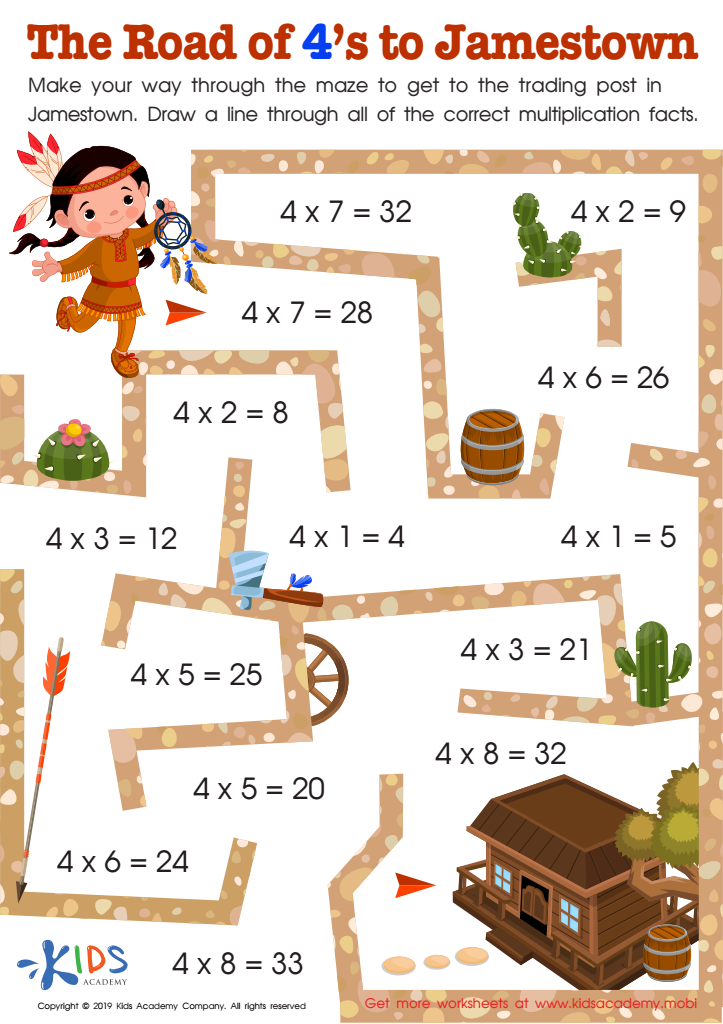
The Road of 4’s to Jamestown Worksheet

The Road of 4’s to Jamestown Worksheet

Does your child enjoy trips? Help them remember the best ones with this fun worksheet maze! Get your kid to look at the picture and draw a line through all the right multiplication facts to get to Jamestown's trading post. This worksheet is a great way to stimulate their problem-solving skills.
The Road of 4’s to Jamestown Worksheet
Worksheet
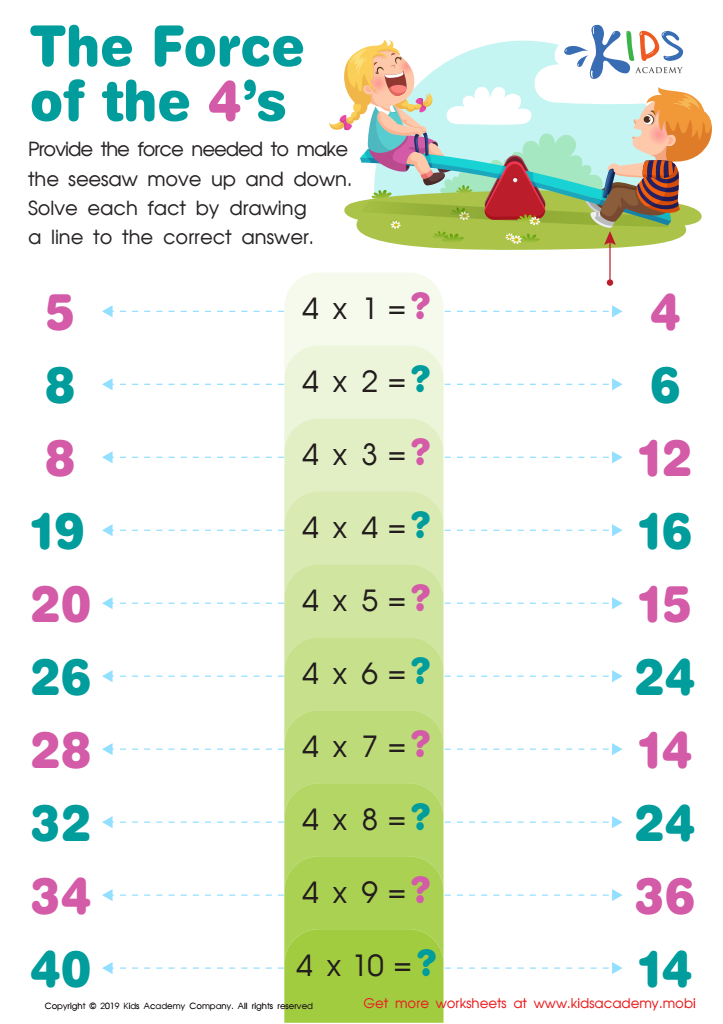
The Force of the 4's Worksheet

The Force of the 4's Worksheet

Ride a seesaw with your child and explore the physics behind it! Explain how it needs two people and how force makes it go up and down. Use the memories of the pleasurable experience to teach your kid a lesson in force. Show them how to solve the worksheet by drawing a line to the correct answer. This way, they'll learn the force needed for the seesaw to move.
The Force of the 4's Worksheet
Worksheet
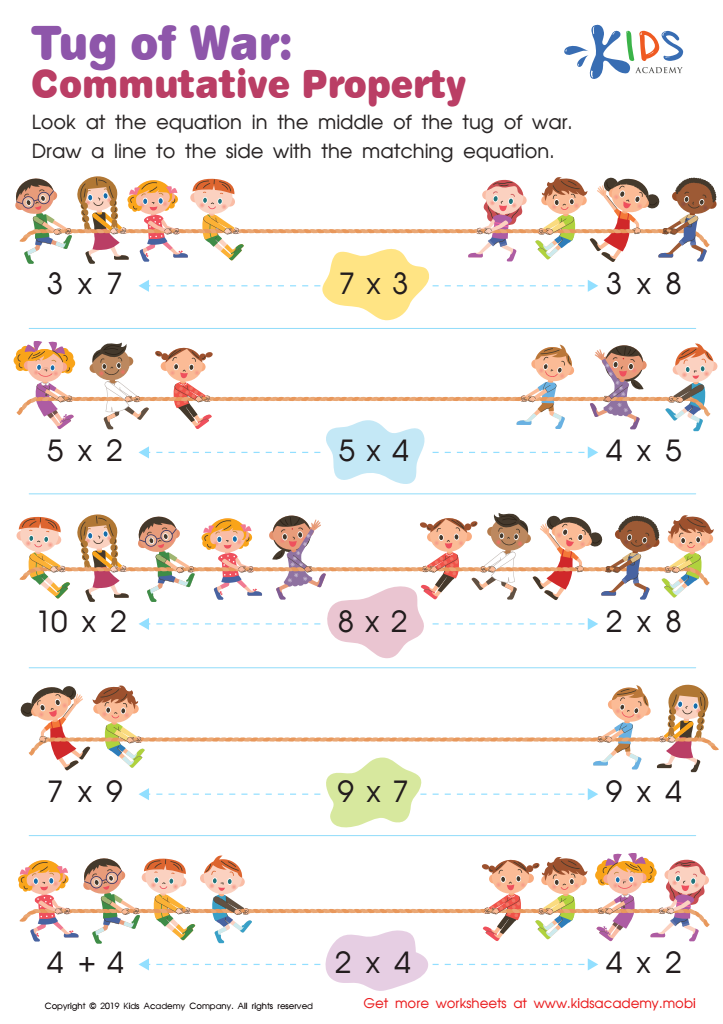
Tug of War: Commutative Property Worksheet

Tug of War: Commutative Property Worksheet

Tug of war is a great game to teach your child simple math. Explain the commutative property--it states that the product remains the same regardless of the order of factors. Use the equations in the middle of the worksheet and have your child draw a line to the corresponding equation. It's a fun and easy way to learn math.
Tug of War: Commutative Property Worksheet
Worksheet
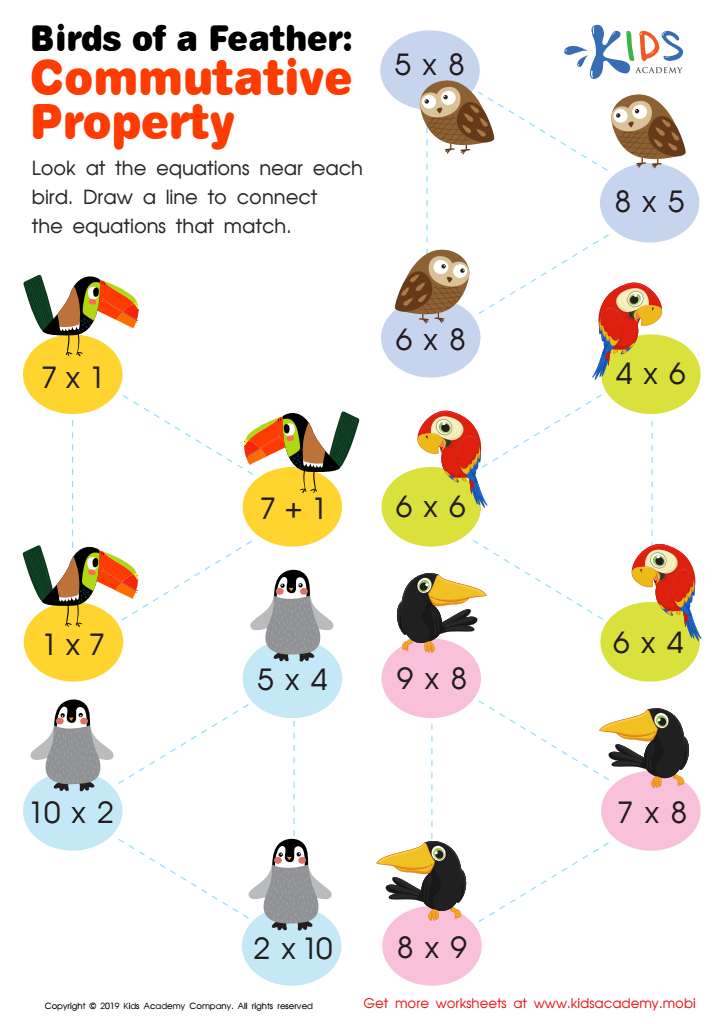
Birds of a Feather: Commutative Property Worksheet

Birds of a Feather: Commutative Property Worksheet

The commutative property states that order of factors doesn't affect the product. Use it to help your kids solve simple problems. If they love birds, they'll love the colorful worksheet to identify exotic ones. Practicing is the best way to understand difficult topics. Look at the equations in this tracing sheet; help them draw a line to connect equations that match.
Birds of a Feather: Commutative Property Worksheet
Worksheet
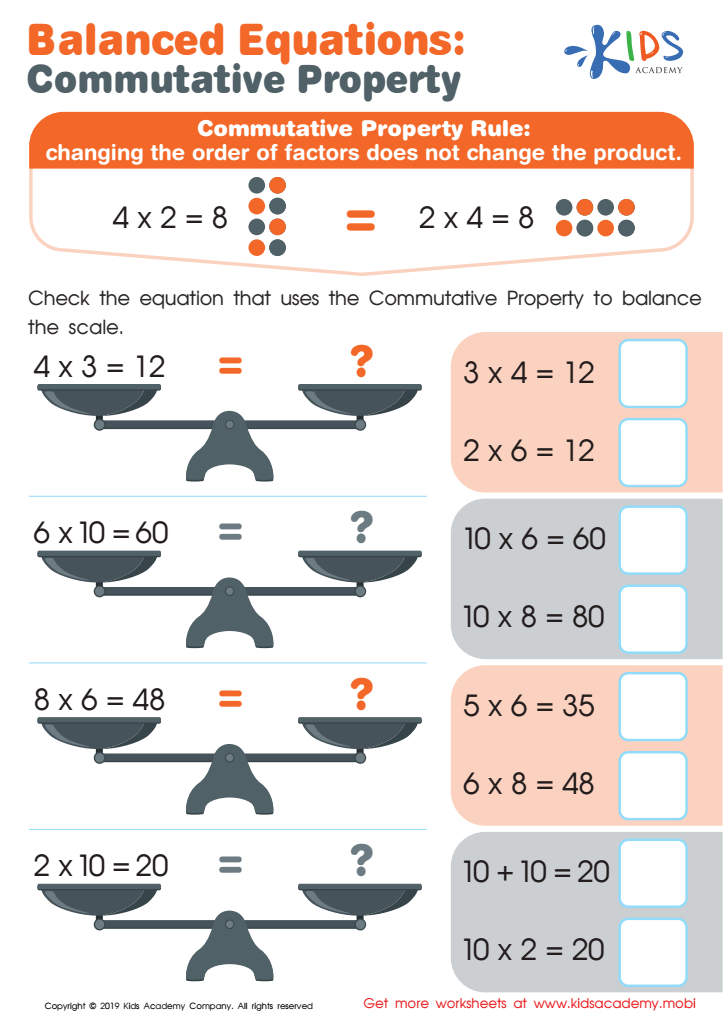
Balanced Equations: Commutative Property Worksheet

Balanced Equations: Commutative Property Worksheet

Math can be tough, causing a lot of stress. Remind kids that even adults struggle with it - learning never ends. Help kids with math stress or difficulty understanding equations with this worksheet. Explain the commutative property: changing order of factors doesn't change the product. Use the problems on the worksheet to guide them.
Balanced Equations: Commutative Property Worksheet
Worksheet
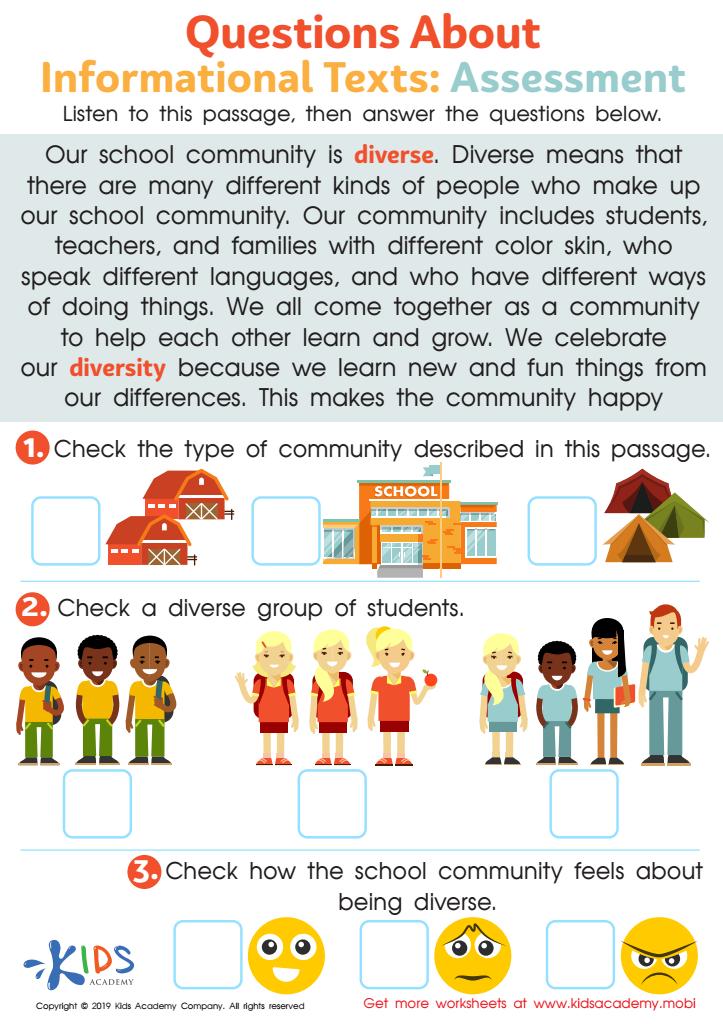
Questions About Informational Texts: Assessment 1 Worksheet

Questions About Informational Texts: Assessment 1 Worksheet

Ask your students: What comes to mind when we talk about a community? What different habits do people practice? What do fellow students do that seems strange? Read this passage aloud to your kindergartners and make sure they understand it. Then, answer the questions at the bottom of the page. (80 words)
Questions About Informational Texts: Assessment 1 Worksheet
Worksheet
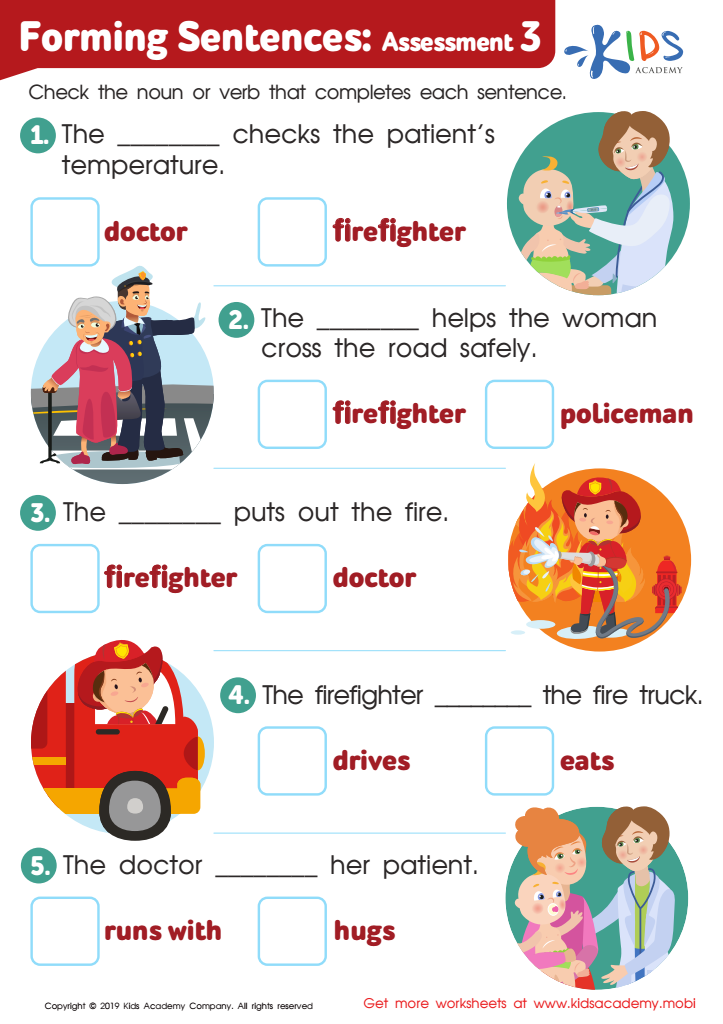
Forming Sentences: Assessment 3 Worksheet

Forming Sentences: Assessment 3 Worksheet

Students must master sentence formation to be successful English learners. After grasping the ABCs and basic words, the next step is to construct sentences using those words. Worksheets like this one can help teach kids how to make sentences; they need to look at the pictures and select the correct noun or verb to complete each sentence.
Forming Sentences: Assessment 3 Worksheet
Worksheet
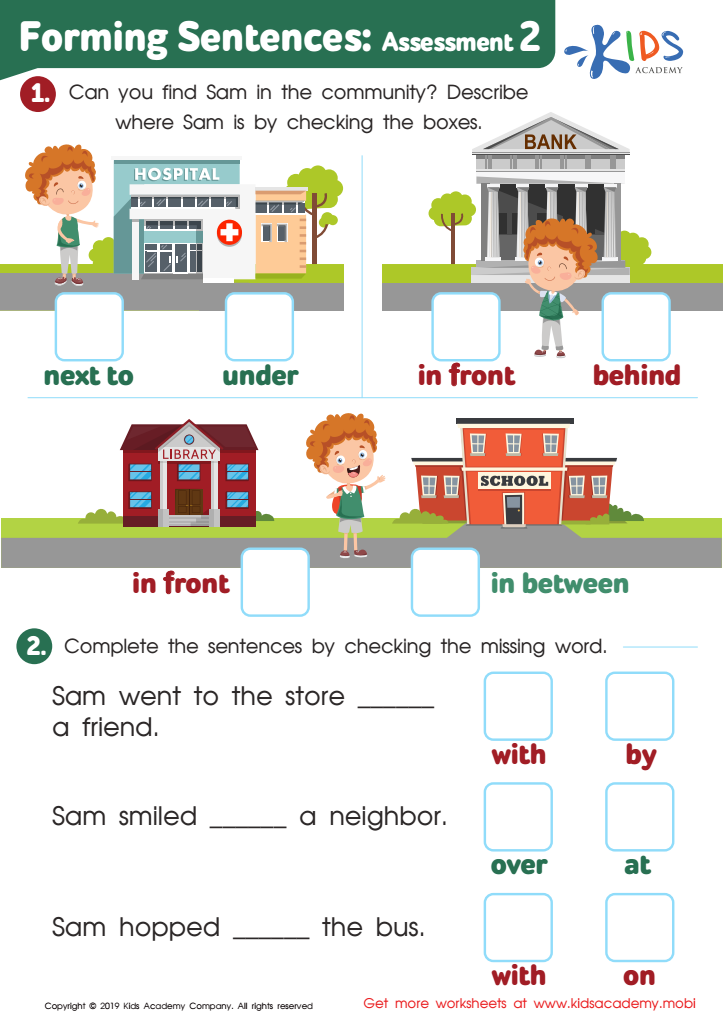
Forming Sentences: Assessment 2 Worksheet

Forming Sentences: Assessment 2 Worksheet

A community is an area with different people, buildings and professionals. Ask students to list buildings in their area, then help find Sam. Describe where he is and check the boxes in the worksheet. At the bottom, help complete the sentences by checking the missing word.
Forming Sentences: Assessment 2 Worksheet
Worksheet
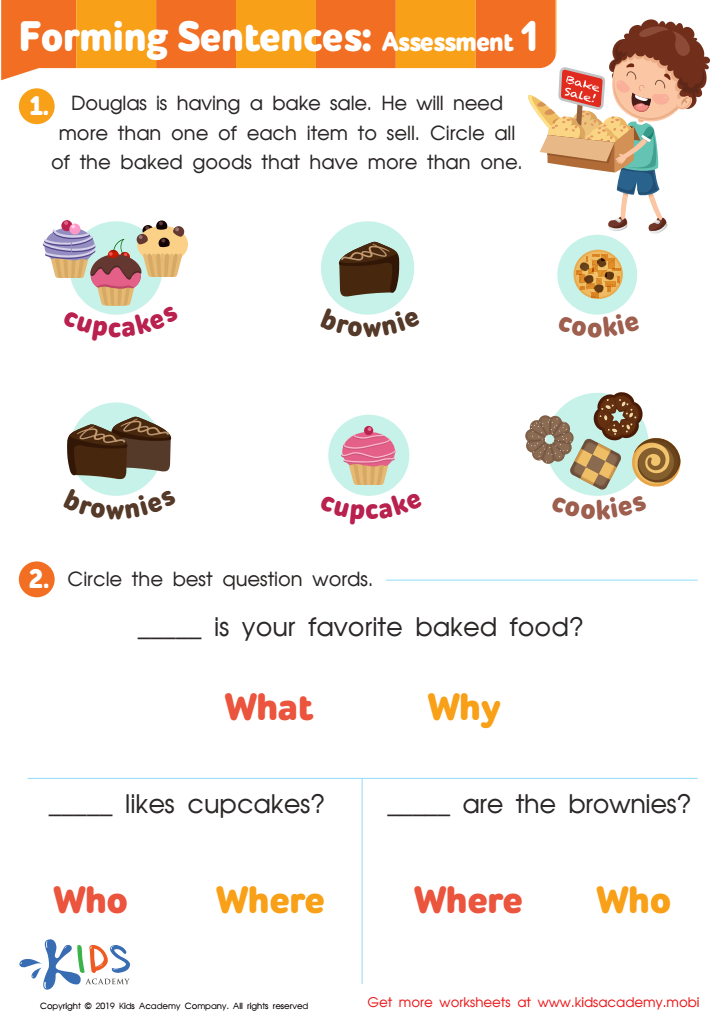
Forming Sentences: Assessment 1 Worksheet

Forming Sentences: Assessment 1 Worksheet

Bake sales are great fun, offering a variety of goodies and treats! Kids also have a chance to make a bit of money. Help your students circle all the yummy baked goods with more than one in this worksheet - Douglas is hosting a bake sale and needs items in bulk!
Forming Sentences: Assessment 1 Worksheet
Worksheet
Let's Go Shopping for Plural Nouns! Worksheet


Let's Go Shopping for Plural Nouns! Worksheet

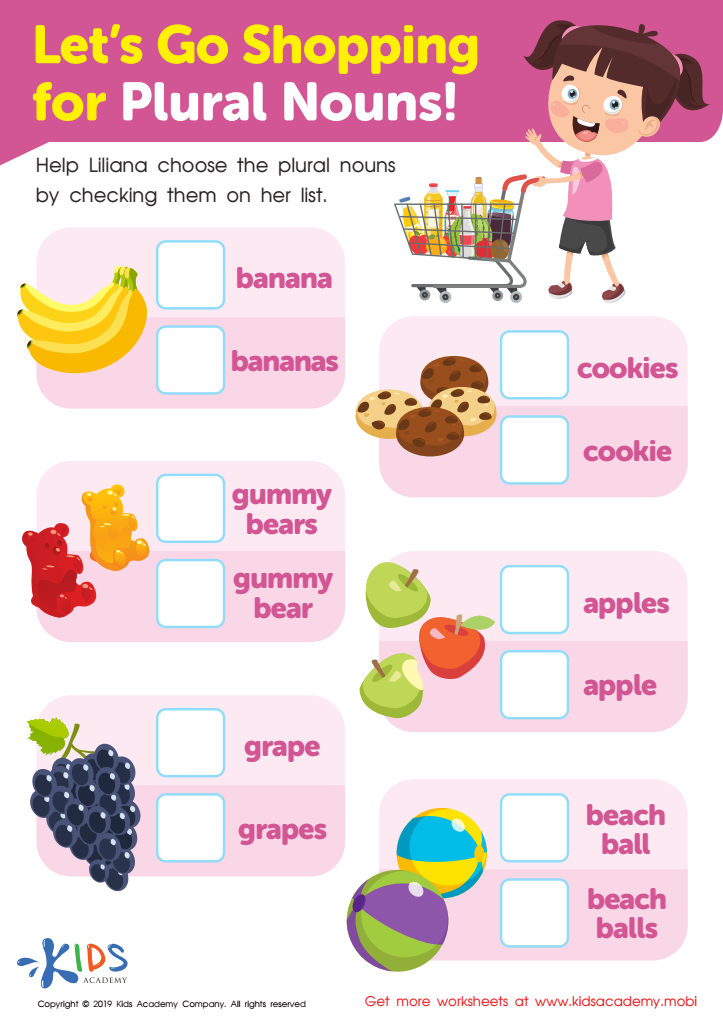
Help your students figure out the plural nouns in Lilliana's checklist. Look at the six objects in this PDF and add 's' to the nouns to make them plural. Show students how words can be tricky and explain how adding an 's' often changes the noun to its plural form.
Let's Go Shopping for Plural Nouns! Worksheet

Worksheet


Parents and teachers should pay close attention to the developmental needs and experiences of children ages 3-9 because these formative years lay the foundation for lifelong learning and personal development. During this critical period, children's brains are exceptionally receptive to new experiences, making them primed for acquiring essential skills in language, social interaction, emotional regulation, and problem-solving.

Providing a supportive and stimulating environment helps foster curiosity and creativity, essential elements for cultivating a love for learning. Positive experiences in early childhood, such as engaging in interactive reading, cooperative play, and hands-on activities, significantly contribute to cognitive development and academic readiness.

Furthermore, the social and emotional growth that occurs during these years is critical. Children learn to navigate relationships, express emotions appropriately, and develop self-esteem. Supportive adults who model and reinforce respectful behavior, empathy, and resilience help children build the social skills required for successful interactions throughout life.

Early investment in a child's education and well-being creates a robust groundwork for their future academic success and personal growth. As a result, ensuring a nurturing and enriched environment during ages 3-9 is pivotal, setting children on a trajectory toward becoming well-rounded, capable, and confident individuals.