Extra Challenge 2D Shapes Worksheets for Ages 4-8
14 filtered results
-
From - To
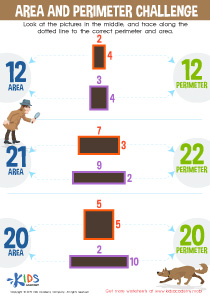
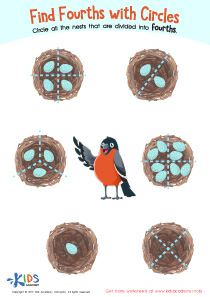
Explore our "Extra Challenge 2D Shapes Worksheets for Ages 4-8," designed to engage young learners in mastering shape recognition and mathematical concepts. These fun, interactive worksheets provide a variety of challenges that enhance critical thinking and problem-solving skills. From identifying and sorting shapes to more complex activities involving patterns and comparisons, each worksheet encourages creativity and empowers kids to learn at their own pace. Ideal for both classroom settings and home practice, these worksheets promote a solid foundation in geometry while ensuring learning remains enjoyable. Download now and give your child the confidence to ace their understanding of 2D shapes!
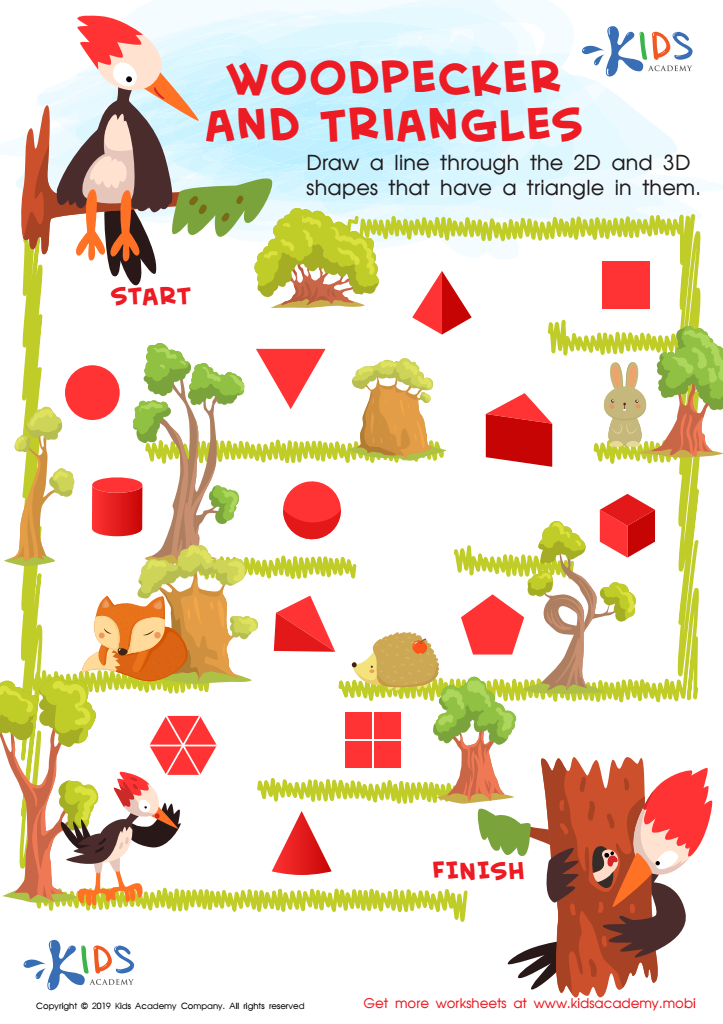
Woodpecker and Triangles Worksheet
 Assign to My Students











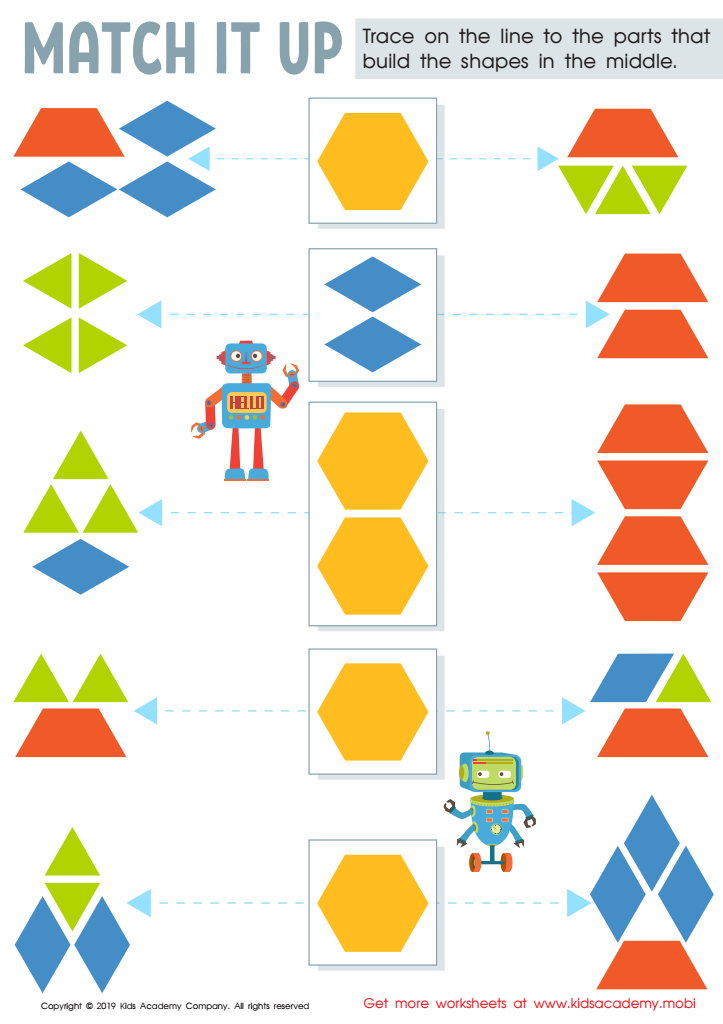
Match It up Worksheet
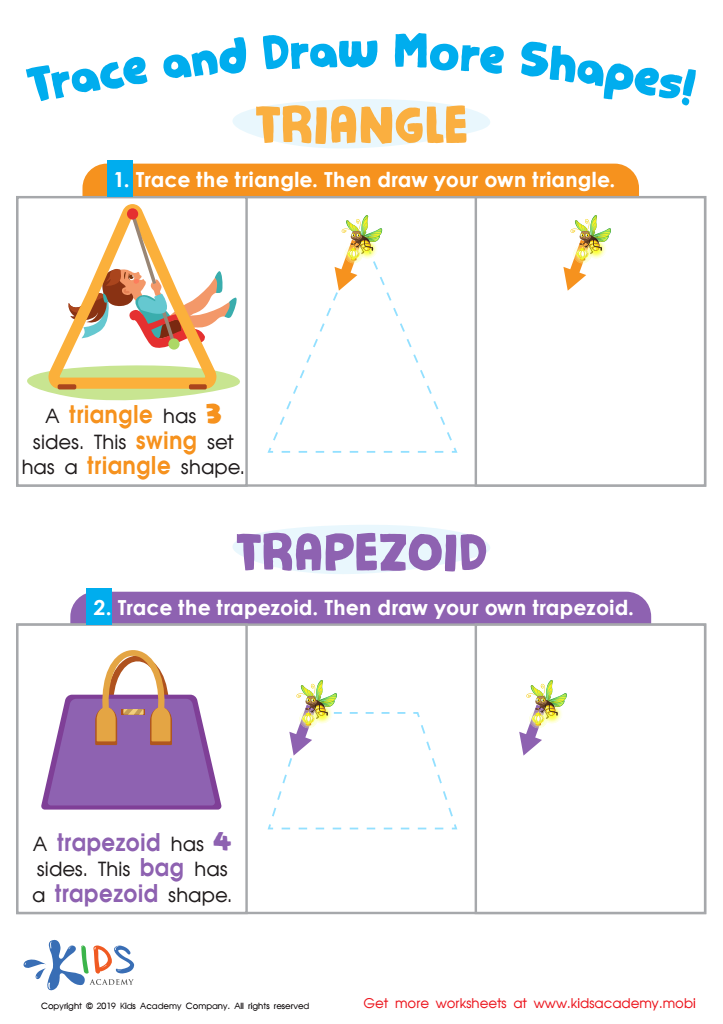
Trace and Draw More Shapes Worksheet
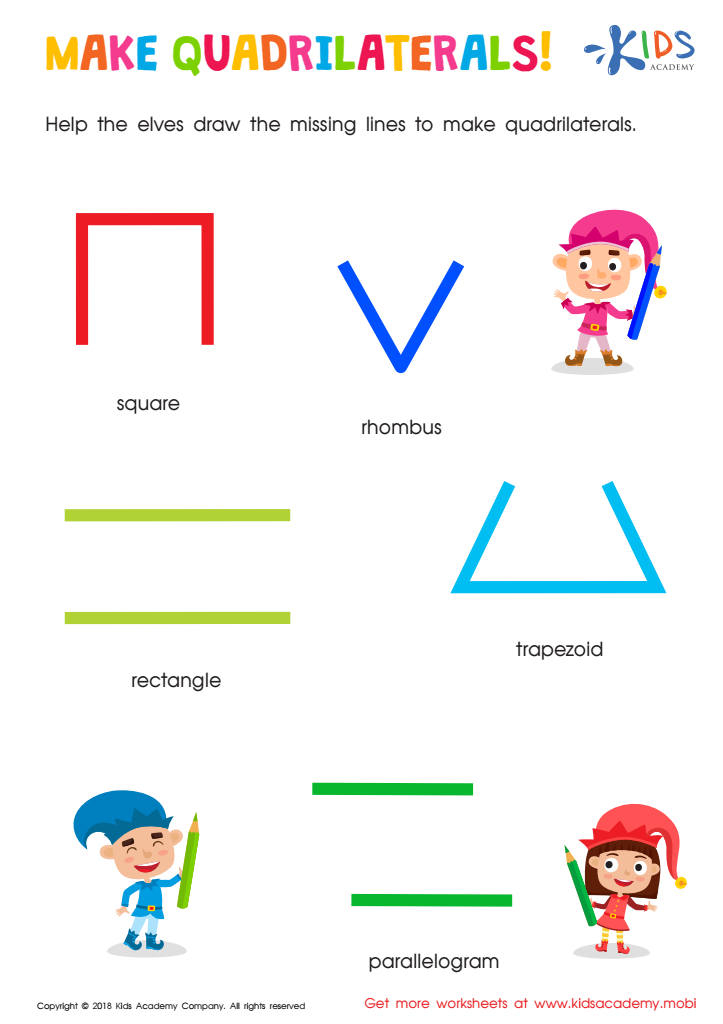
Make Quadrilaterals Worksheet
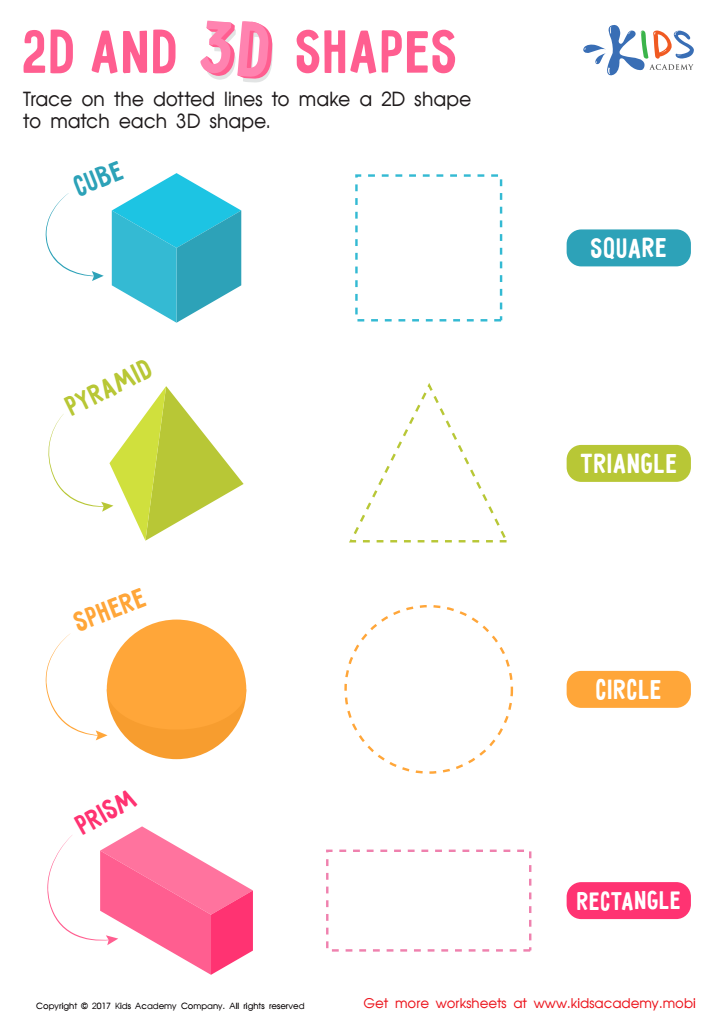
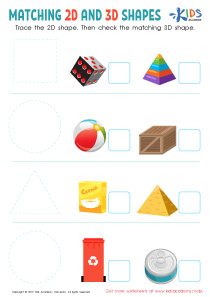
2D and 3D Shapes Worksheet
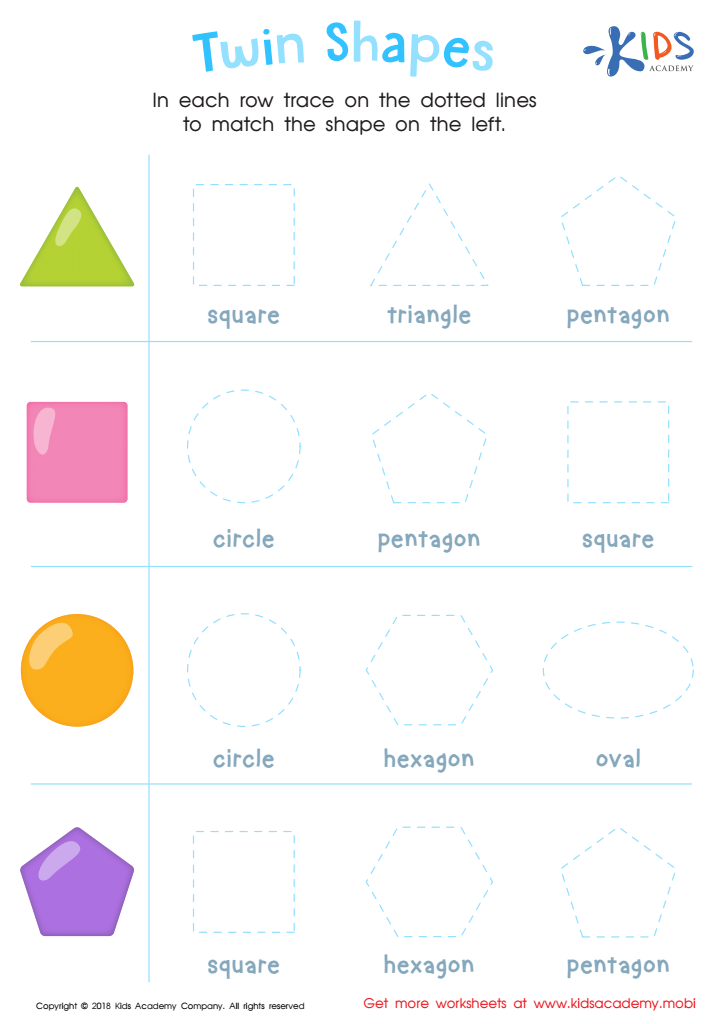
Twin Shapes Dot-to-Dot Worksheet
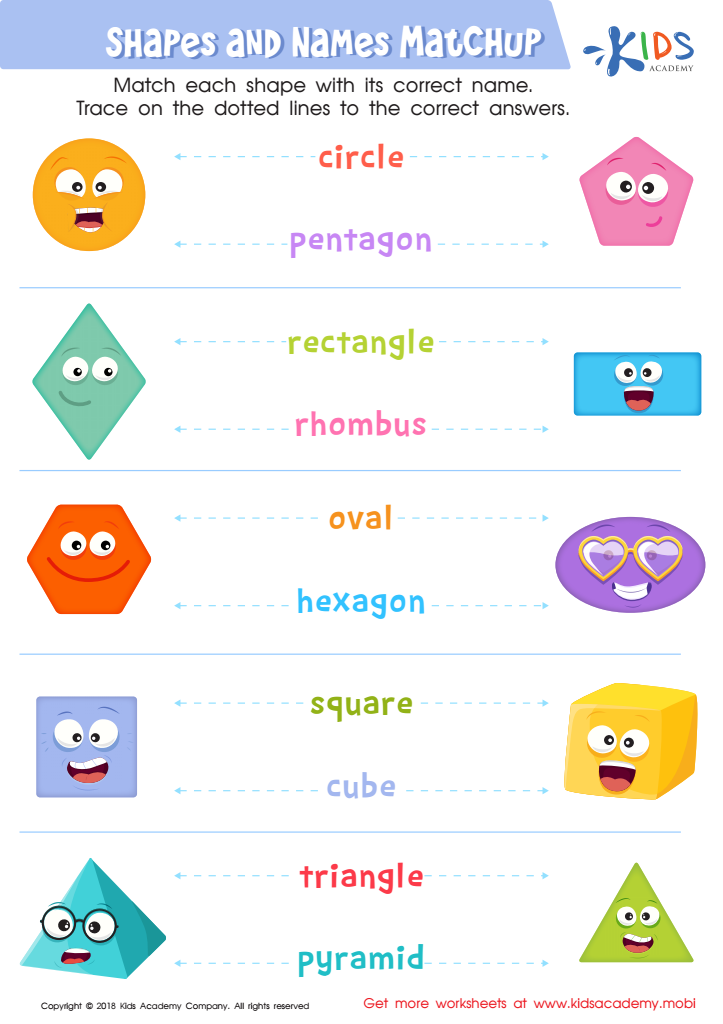
Shapes and Names Matchup Worksheet
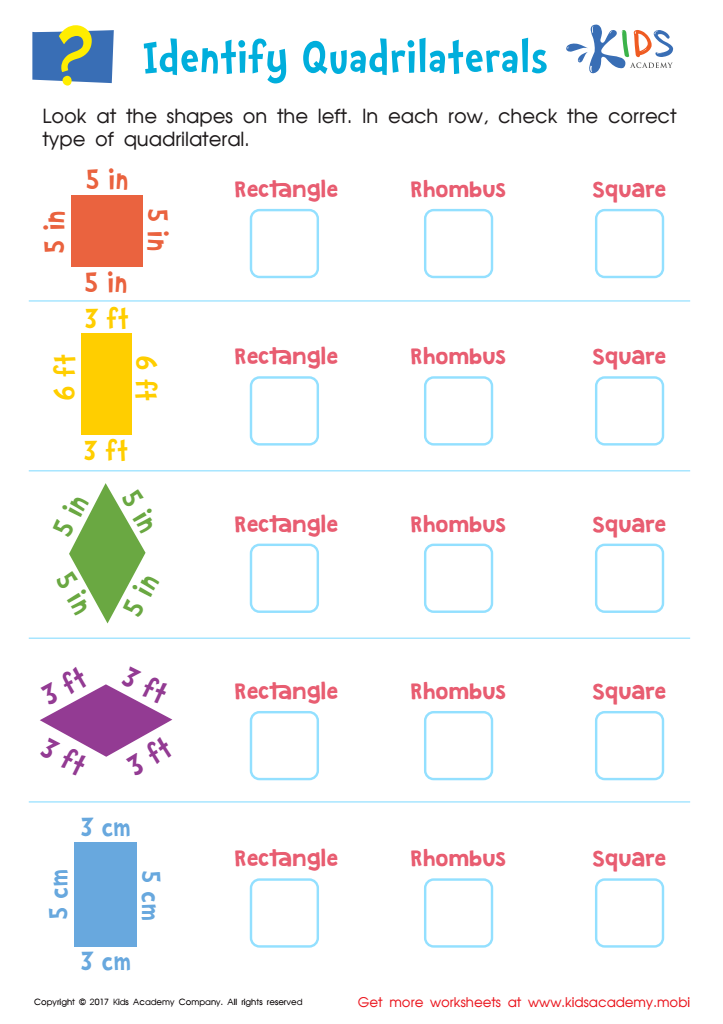
Identify Quadrilaterals Worksheet
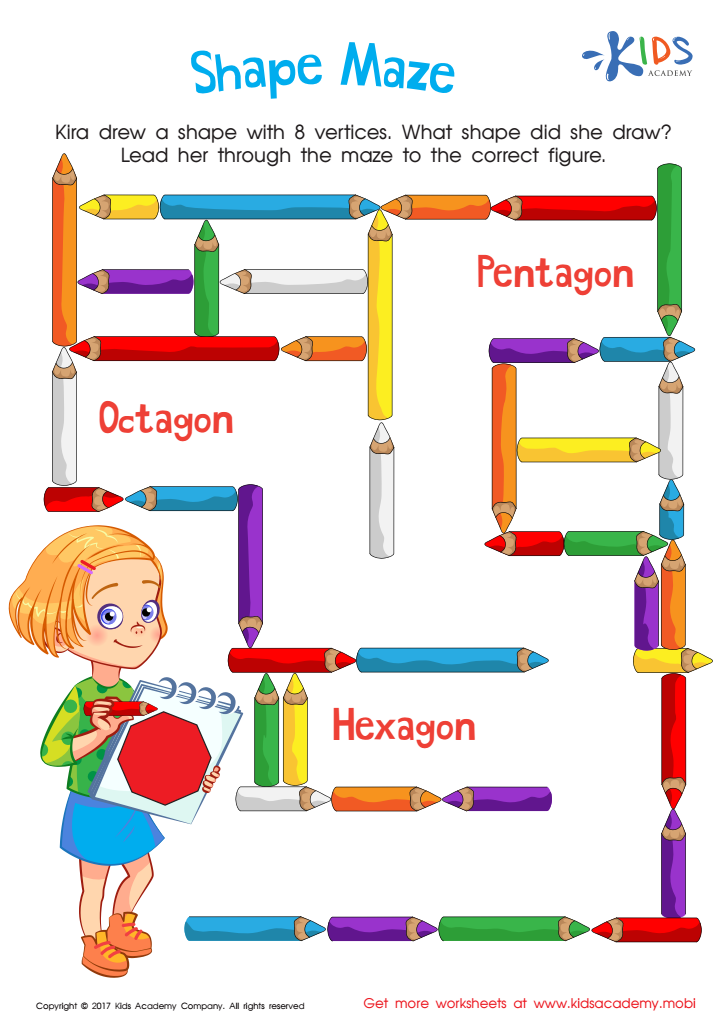
Shape Maze Worksheet
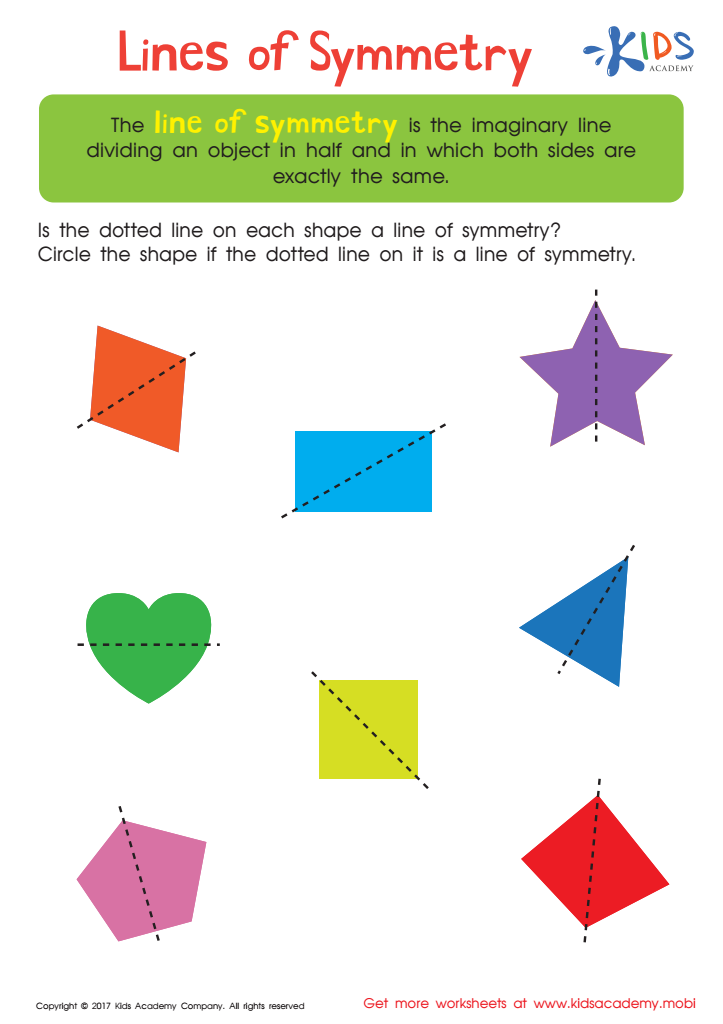
Lines of Symmetry Printable
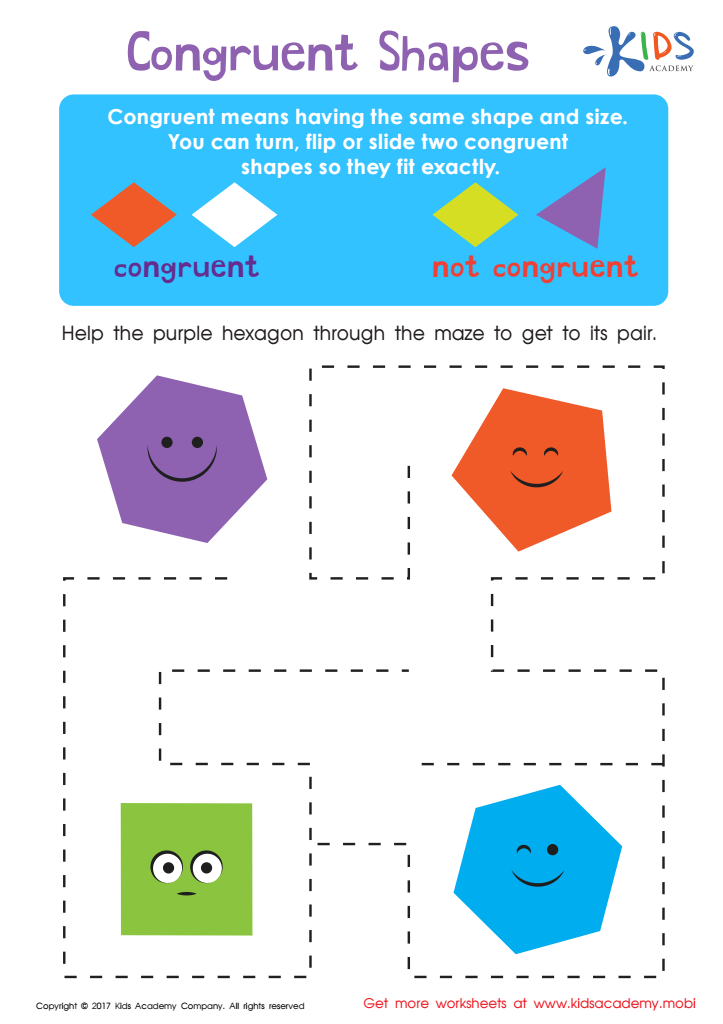
Congruent Shapes Worksheet
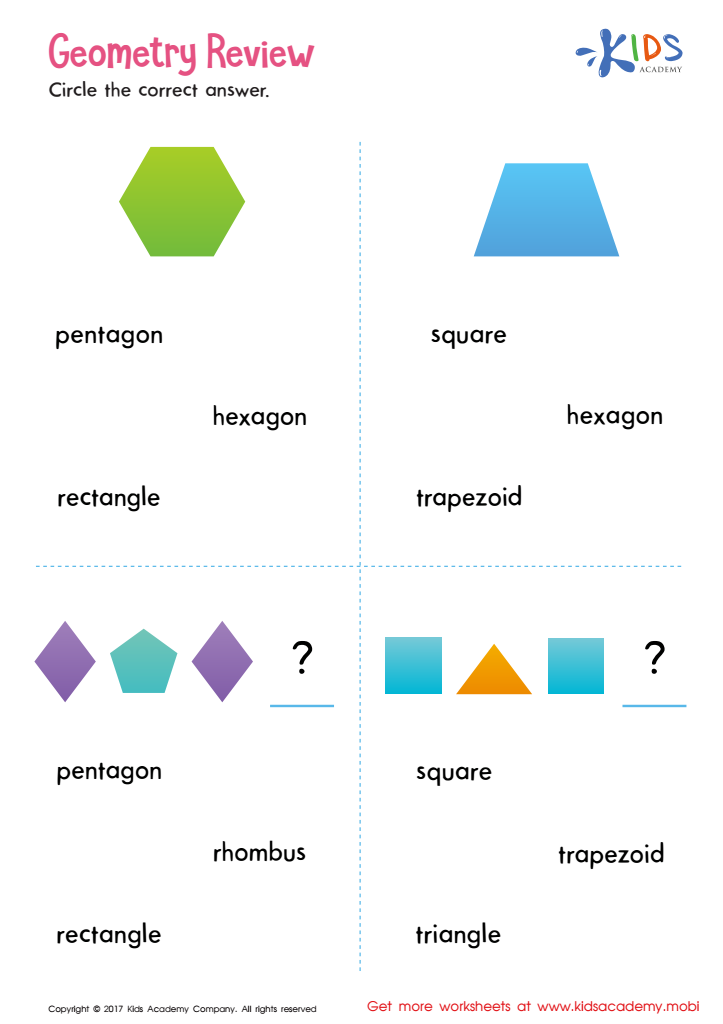
Geometry Review Printable
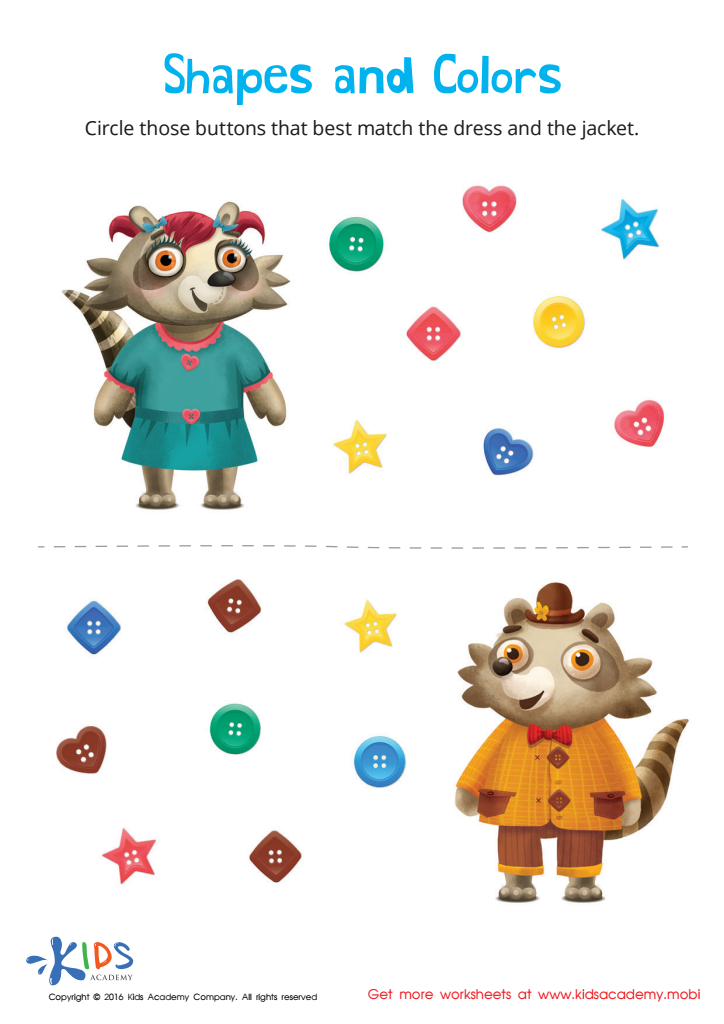
Matching: Shapes and Colors Worksheet
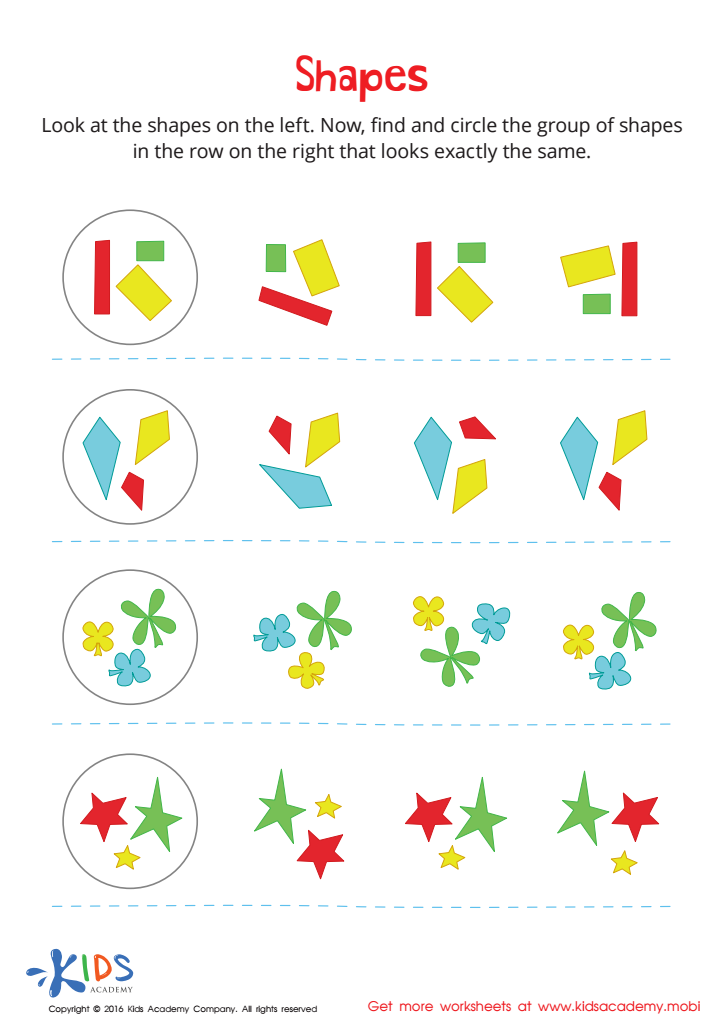
Shapes Worksheet








Parents and teachers should prioritize Extra Challenge 2D Shapes for children aged 4-8 due to its critical role in early mathematical development and spatial reasoning. During these formative years, children are naturally curious and keen to explore their environment. Engaging with 2D shapes fosters their creativity and imagination while building foundational skills in geometry, which are essential for future math learning.
Understanding 2D shapes enables children to identify relationships between figures, leading to enhanced problem-solving abilities. Such interaction promotes critical thinking, as kids learn to recognize patterns and classify shapes based on properties like size, color, and symmetry. Moreover, hands-on activities and challenges can transform potentially abstract concepts into tangible experiences, making learning enjoyable.
Additionally, mastering these concepts supports early literacy skills as children encounter shape-related vocabulary, strengthening their communication abilities. By focusing on Extra Challenge 2D Shapes, educators can facilitate collaborative learning experiences that encourage cooperation, sharing, and respectful discussion among peers.
Ultimately, prioritizing 2D shapes in early education ensures that children are well-equipped for more complex mathematical concepts in the future, setting a solid foundation for lifelong learning and resilience in academia. Parents and teachers play a crucial role in nurturing this development effectively.