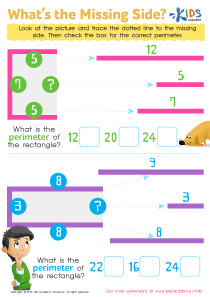
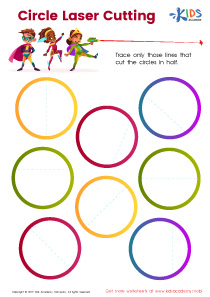
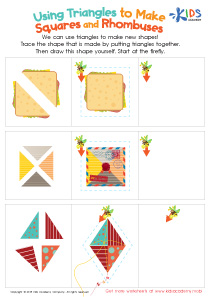
Normal 2D Shapes Worksheets for Ages 6-8 - Page 2
26 filtered results
-
From - To
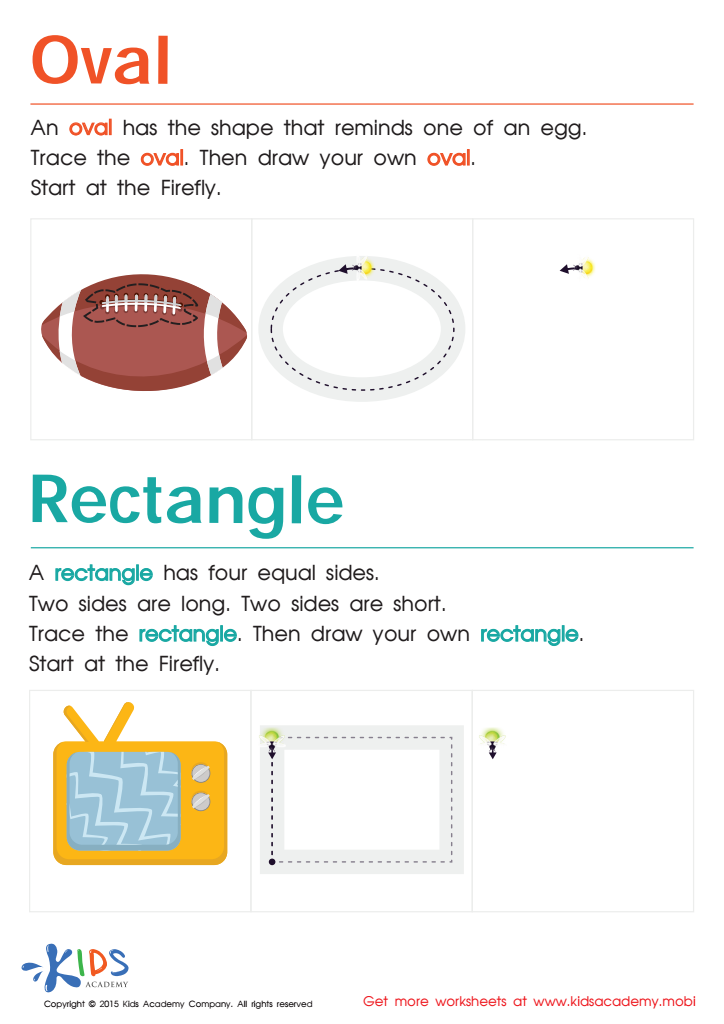
Easy Drawing of Ovals And Rectangles Worksheet
 Assign to My Students

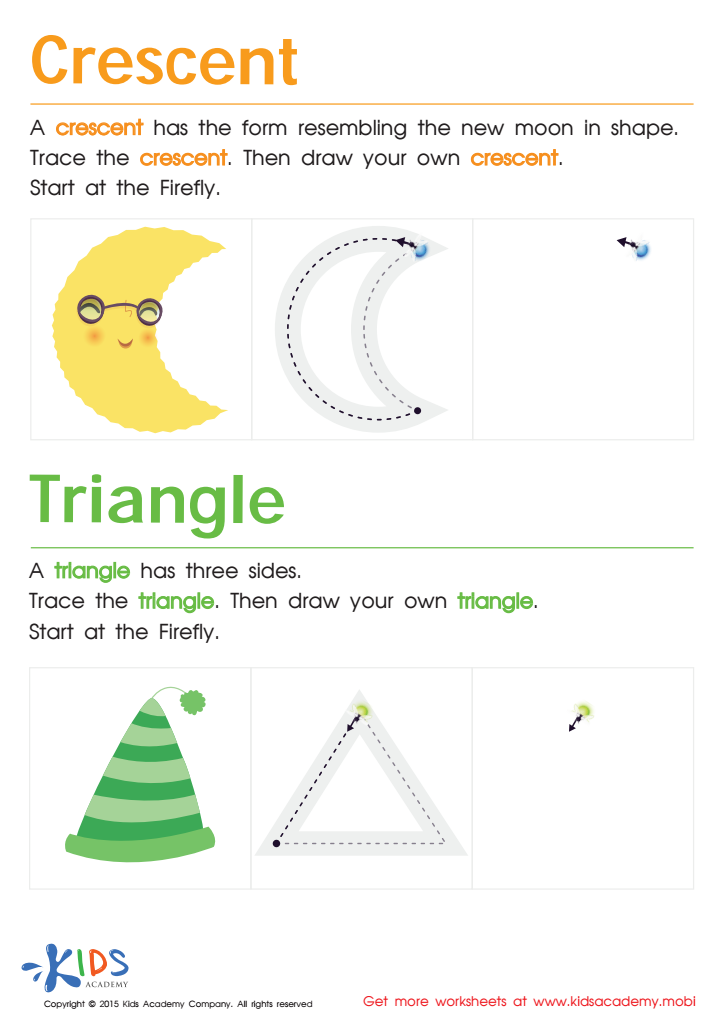
Learning to Draw Crescents And Triangles Worksheet








Parents and teachers should care about normal 2D shapes for ages 6-8 because these foundational geometric concepts serve as crucial building blocks in a child's cognitive and mathematical development. Understanding 2D shapes such as circles, squares, triangles, and rectangles helps children develop spatial awareness and visual processing skills. These skills are important for more advanced mathematical concepts like geometry, patterns, and later, algebra.
Learning and recognizing 2D shapes also supports literacy development through improved vocabulary (e.g., "side," "corner," "angle") and descriptive abilities. Engaging with shapes through drawing, cutting, and arranging enhances fine motor skills, which are essential for writing and other daily tasks.
Moreover, knowledge of shapes forms the basis for problem-solving and reasoning skills. It encourages children to observe the world around them more attentively, noticing shapes in their environment such as in architecture, nature, and art. This fosters observational skills and creativity.
Finally, shapes are a part of standardized early education curricula, so mastery of these concepts ensures that children can keep up with their peers academically. Investing time in teaching 2D shapes helps build a well-rounded intellectual foundation, contributing to a child's overall educational success and confidence in their abilities.