Online Plants and Animals Worksheets for Kids - Page 4
141 filtered results
Difficulty Level
Grade
Age
-
From - To
Subject
Activity
Standards
Favorites
With answer key
Interactive
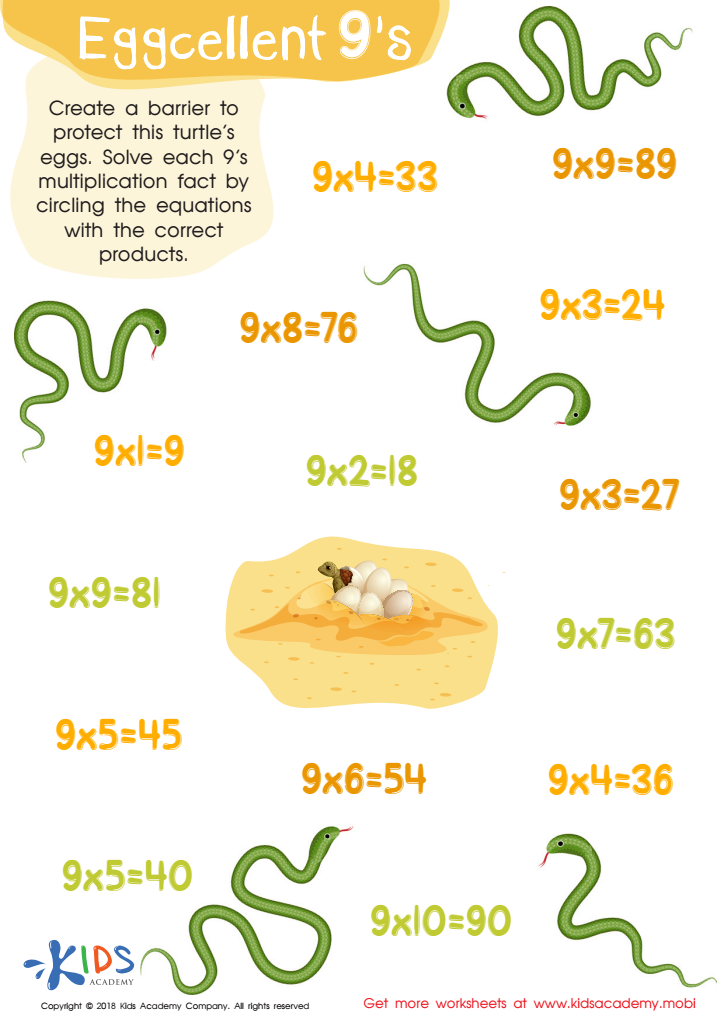
Eggcellent 9’s Worksheet
Help your kids save turtle eggs in this worksheet! Have them create a barrier by solving 9's multiplication facts, then circling the equations with the correct product. Finish up this exercise and show them how they can help protect turtle eggs from predators.
 Assign to My Students
Eggcellent 9’s Worksheet
Worksheet











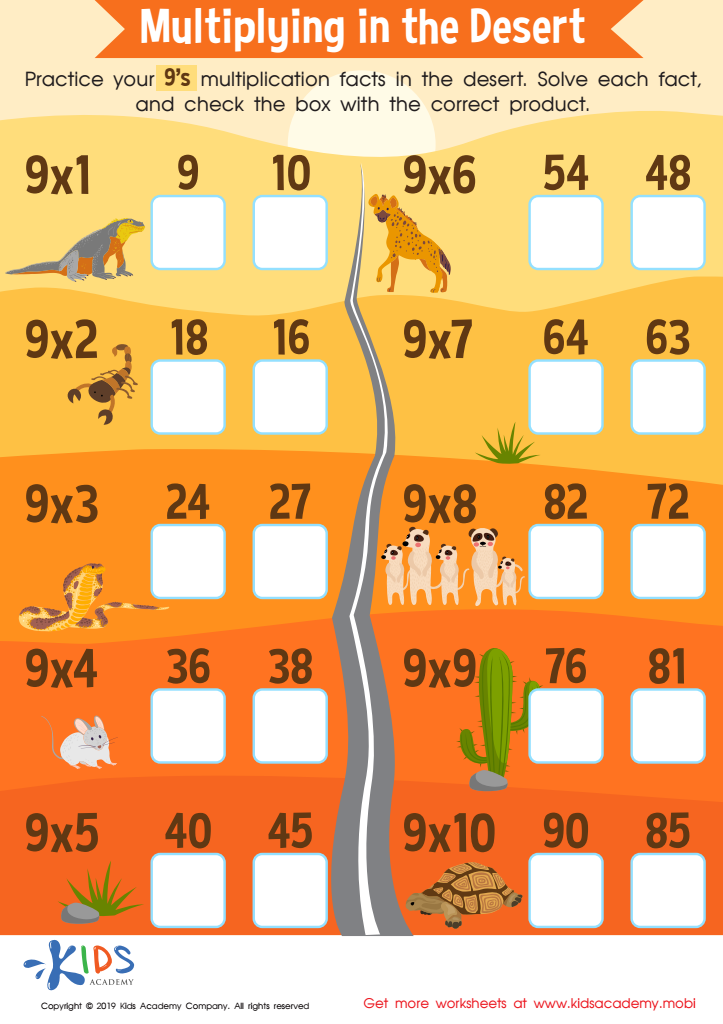
Multiplying in the Desert Worksheet
Help your kids learn the multiplication table faster by introducing them to this fun worksheet! It allows them to learn at a more engaging pace, with the added challenge of naming desert animals. Solve each fact and check the correct product, for an enjoyable and effective way to practice their 9’s multiplication facts.
Multiplying in the Desert Worksheet
Worksheet
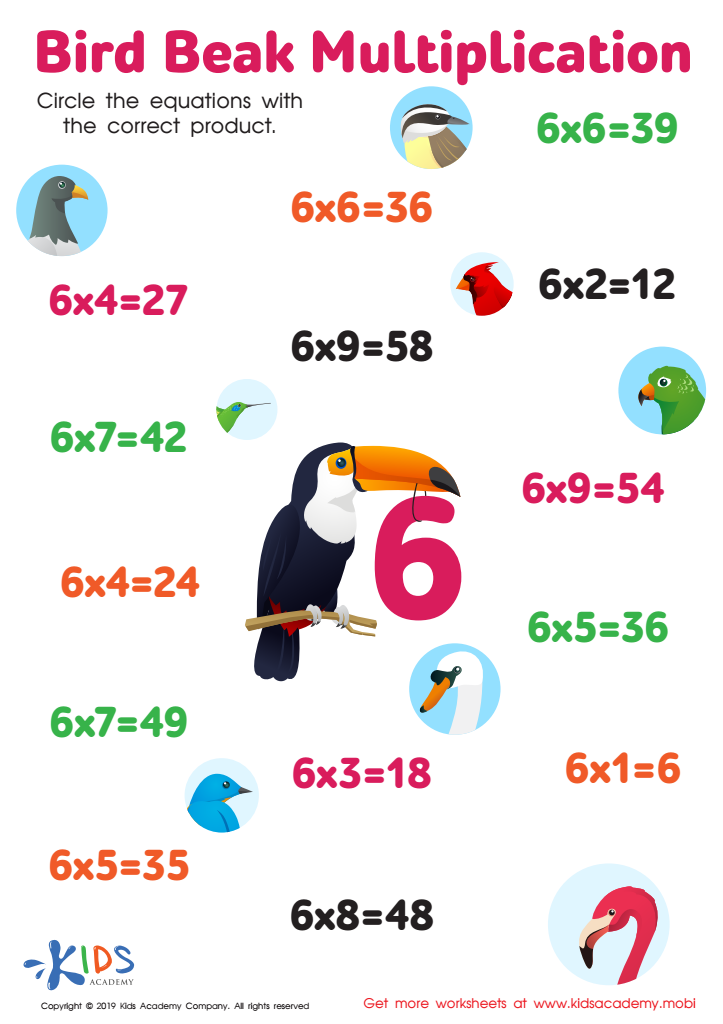
Bird Beak Multiplication Worksheet
Ask your kids to identify the birds in the pic and help them solve the equations. Then, have them circle the correct product. Encourage your kids to explore the wonders of nature with this bird-themed worksheet that'll take their interest to a whole new level, especially if they already have a pet bird or love birds!
Bird Beak Multiplication Worksheet
Worksheet
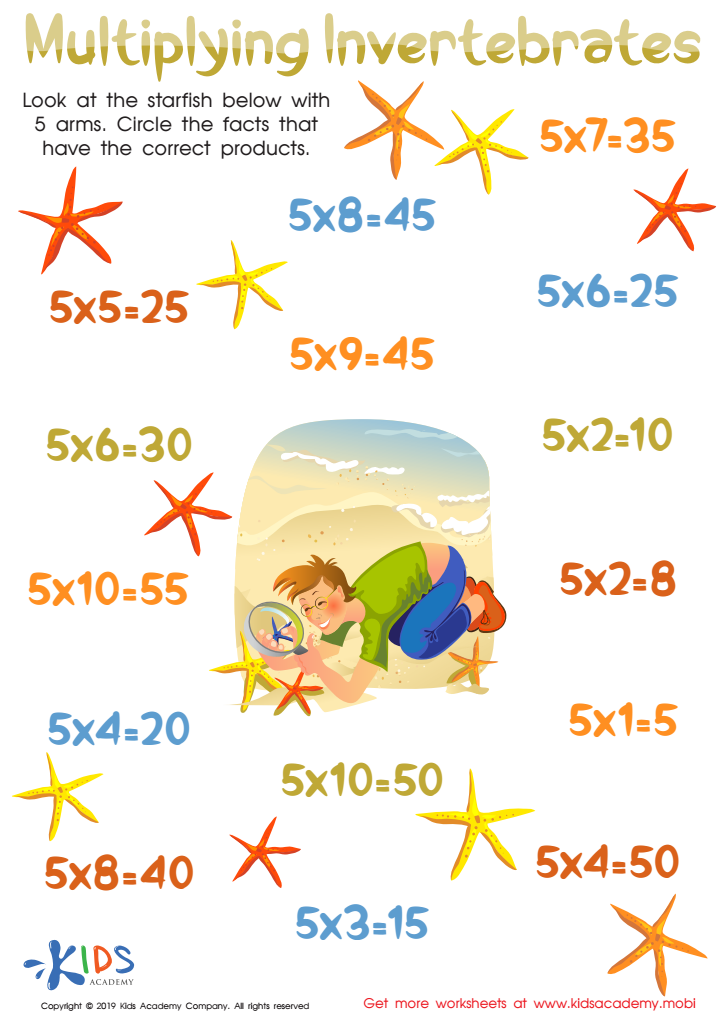
Multiplying Invertebrates Worksheet
Explain to your kids an invertebrate is an animal without a backbone. Examples: squid, jellyfish, octopus. Now, look at the starfish in the picture and help your kids circle the correct facts.
Multiplying Invertebrates Worksheet
Worksheet
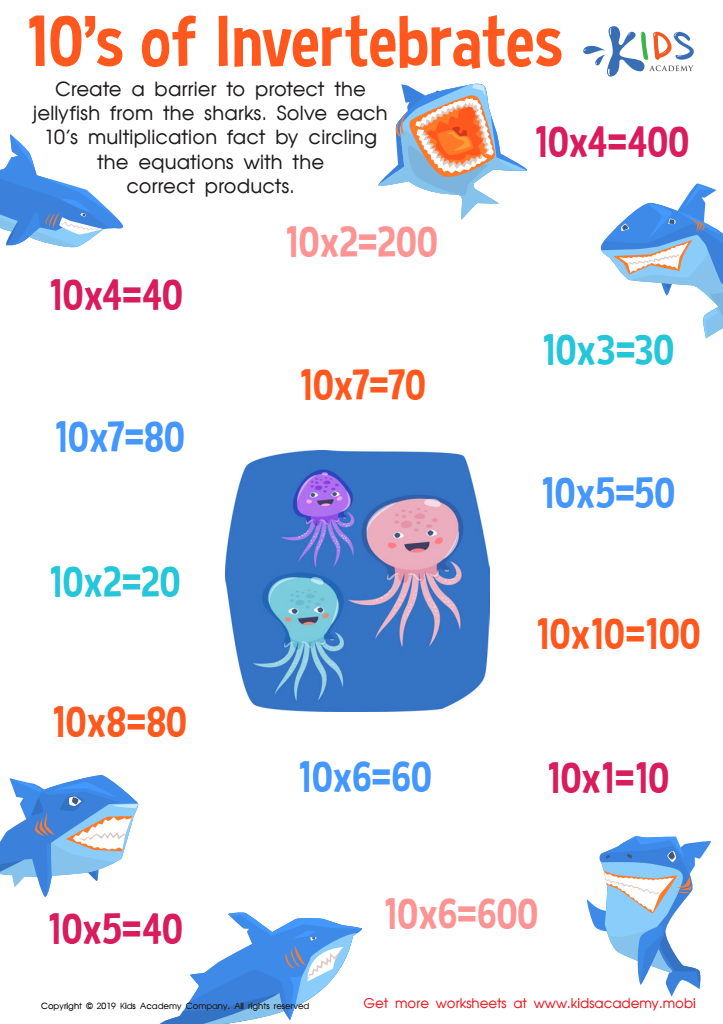
1s Invertebrates Worksheet
Invertebrates are animals without backbones, like squids, octopi, and jellyfish. Point to the jellyfish in the pic and have your kids create a barrier to protect it from the sharks. Ask them to solve 10's multiplication facts by circling the equations with the correct products.
1s Invertebrates Worksheet
Worksheet
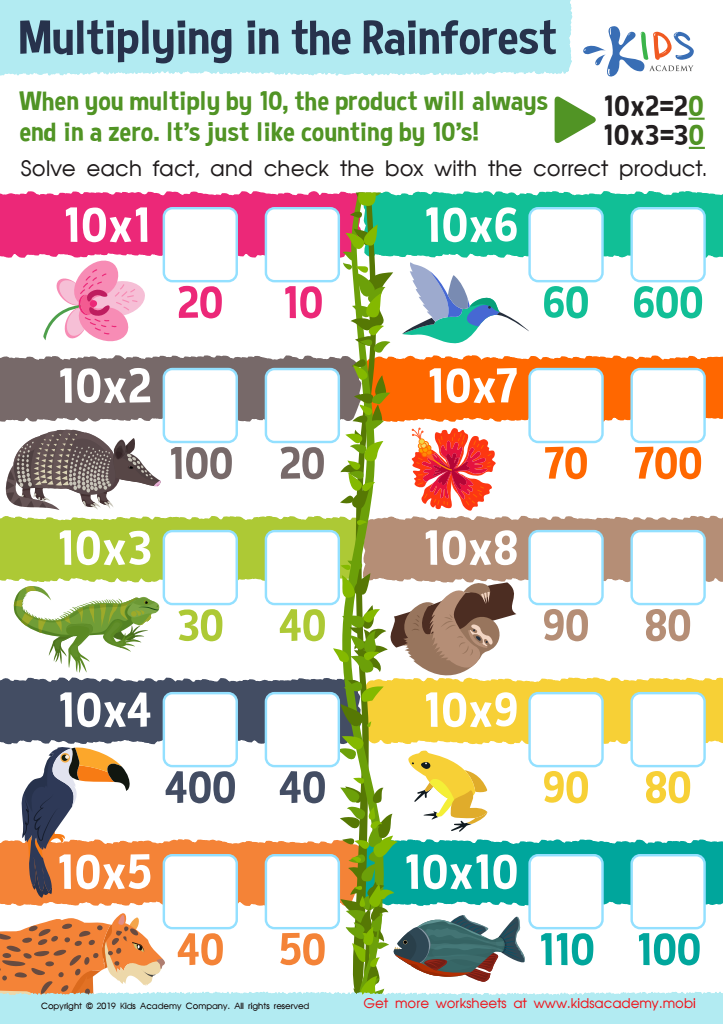
Multiplying in the Rainforest Worksheet
Teaching your child multiplication can be tricky. Help them out with some easy tips! Teach them that when multiplying by 10, the answer always ends in 0. Just like counting by 10's. Show them examples and encourage them to solve the facts, checking their answer with the correct product.
Multiplying in the Rainforest Worksheet
Worksheet
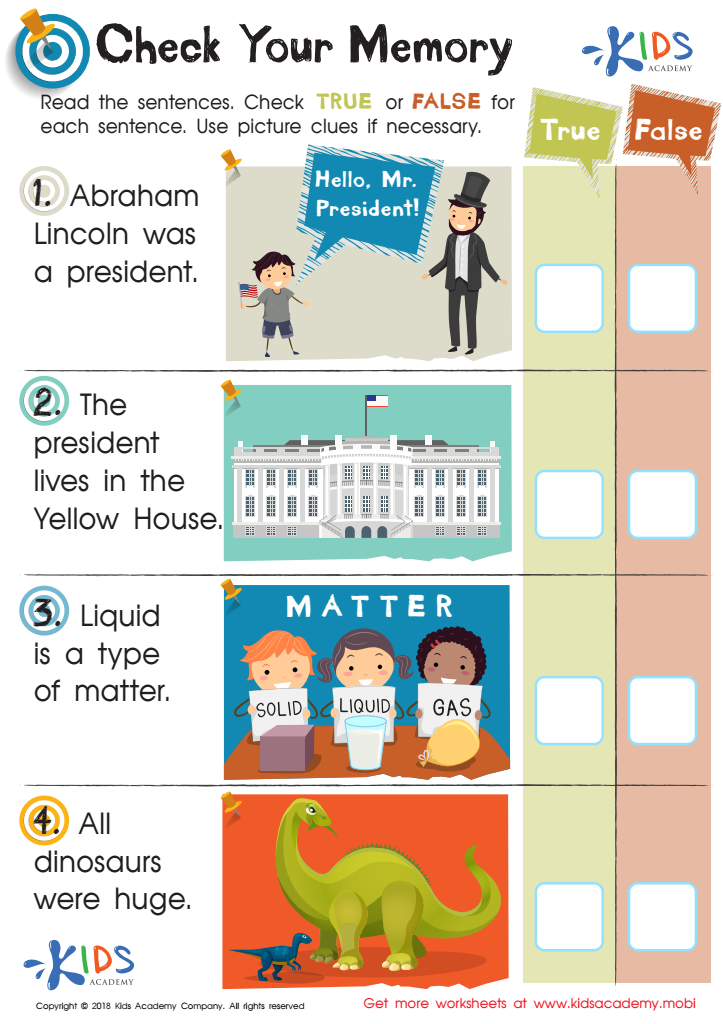
Check Memory Worksheet
Assisting your kids with their homework and using worksheets is a great way for them to learn. The vibrant visuals in this printout can help stimulate the mind and motivate your child. Have them read the sentences and then point to the associated images. Afterwards, ask them to state True or False for each sentence. If they are still uncertain, offer them the picture clues to assist further.
Check Memory Worksheet
Worksheet
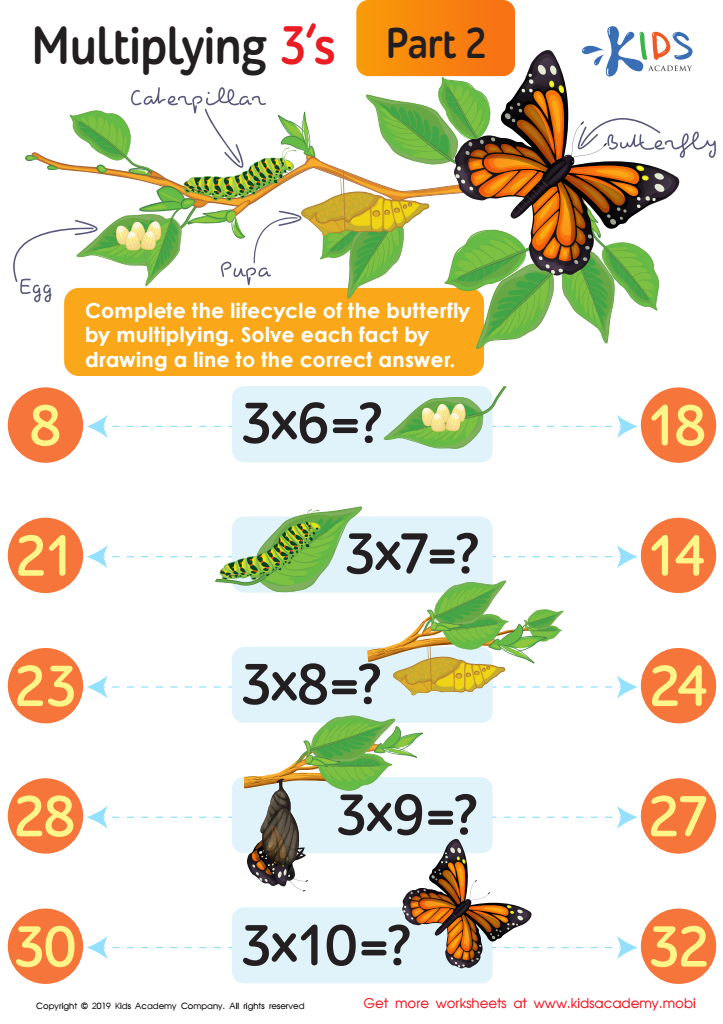
Multiplying 3s Part 2 Worksheet
Once a tiny egg, a butterfly goes through its life cycle. From egg to caterpillar to cocoon to beautiful winged creature! Ask your kids to complete the lifecycle by solving the facts on the worksheet. Help them draw a line to the right answer and let them marvel at the butterfly's amazing transformation!
Multiplying 3s Part 2 Worksheet
Worksheet
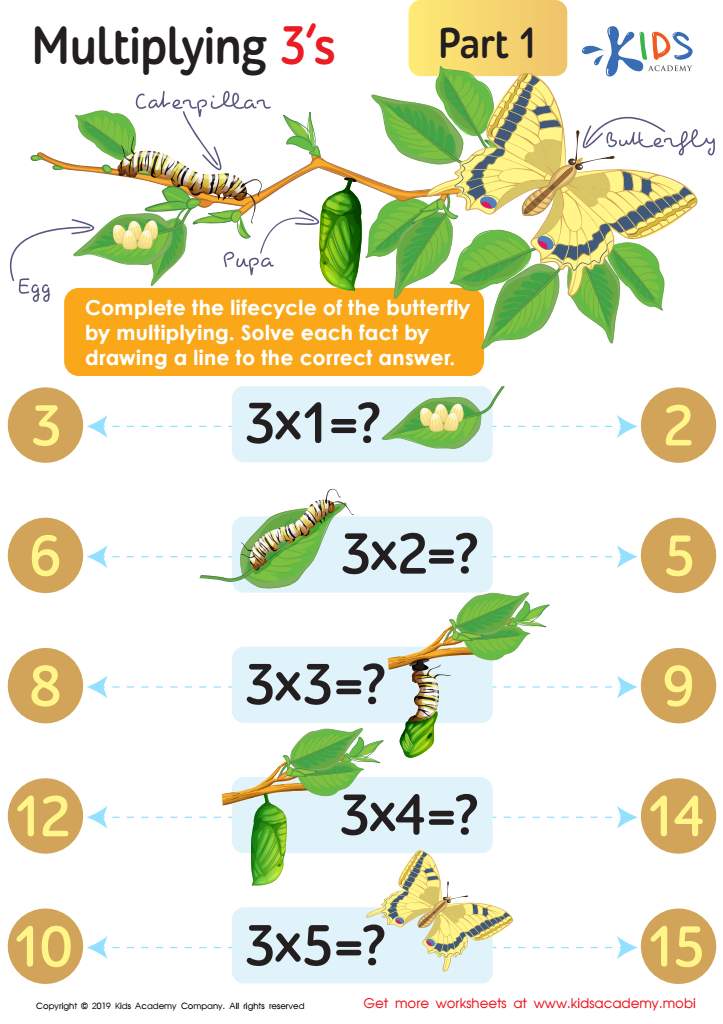
Multiplying 3’s Part 1 Worksheet
Once an egg, then a caterpillar, then a cocoon, then a beautiful butterfly: the lifecycle of the butterfly! Complete the worksheet with your kids and help them draw the lines to get the correct answers for each fact. Let them explore the fascinating transformation of this creature!
Multiplying 3’s Part 1 Worksheet
Worksheet
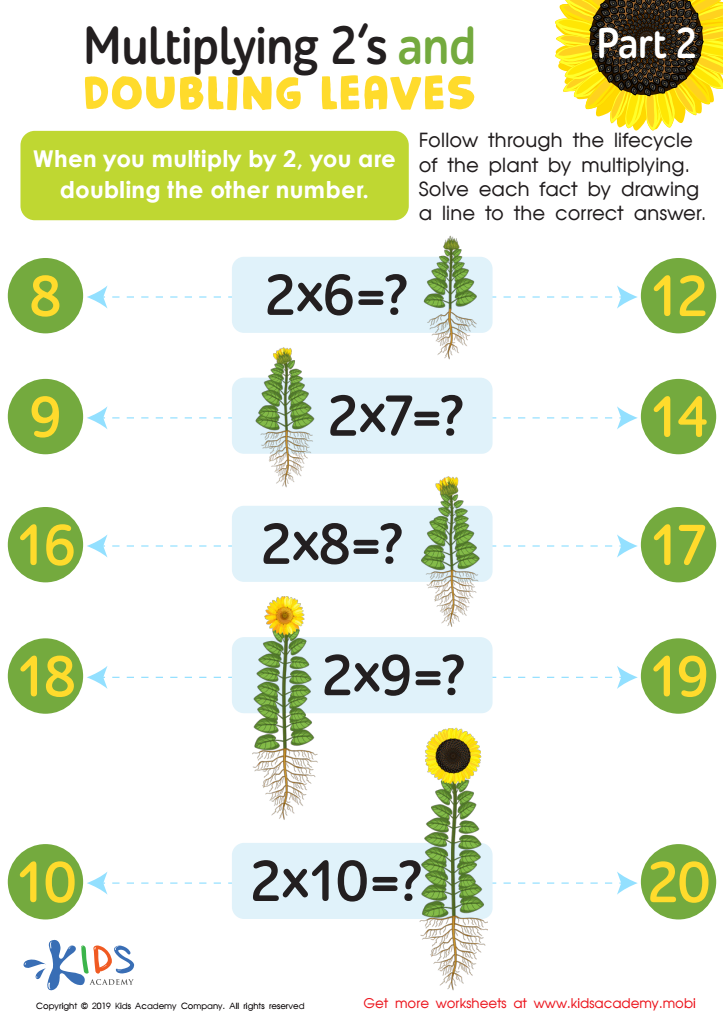
Multiplying 2’s and Doubling Leaves Part 2 Worksheet
Help your students master multiplication with these simple tips. Double the number for multiplying by 2 and use this interactive tracing sheet for solving each fact. Plus, it's colorful making it fun for your students to learn.
Multiplying 2’s and Doubling Leaves Part 2 Worksheet
Worksheet
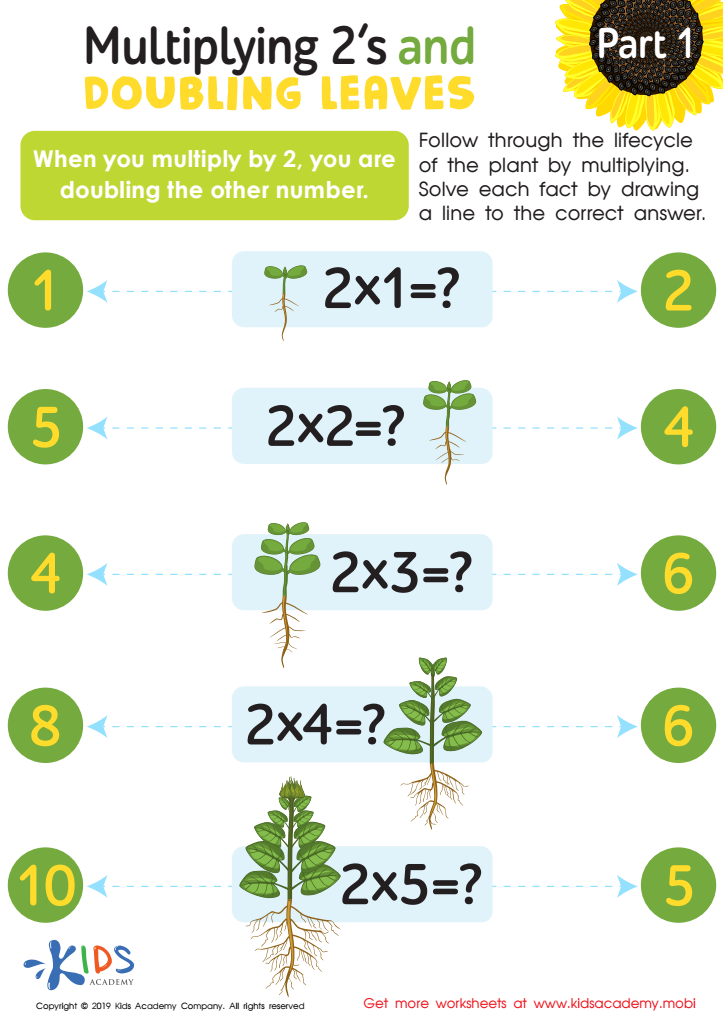
Multiplying 2’s and Doubling Leaves Part 1 Worksheet
If your students still struggle with multiplication, use this worksheet to help them master it. For multiplying by 2, double the original number. Give them this tracing sheet; they'll solve each fact by drawing a line to the right answer. This worksheet will help them learn multiplication tricks and tips.
Multiplying 2’s and Doubling Leaves Part 1 Worksheet
Worksheet
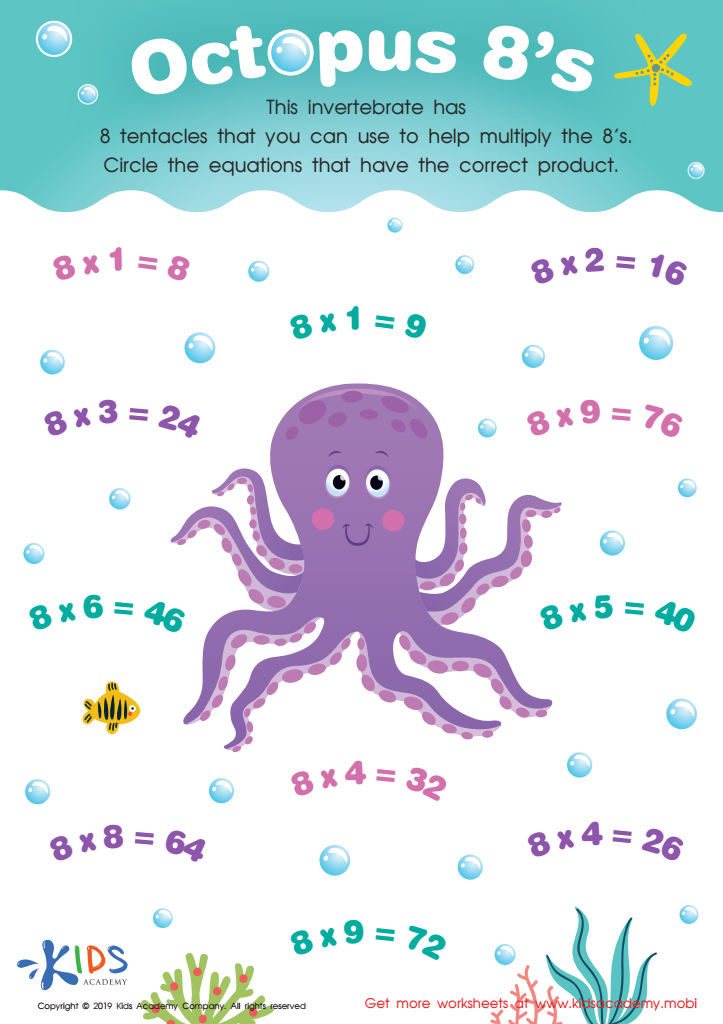
Octopus 8’s Worksheet
Can your child identify the octopus in the worksheet? It's an invertebrate with 8 tentacles. Have your child circle the equations with the correct products, and see if they can tell you some other features of the octopus too.
Octopus 8’s Worksheet
Worksheet
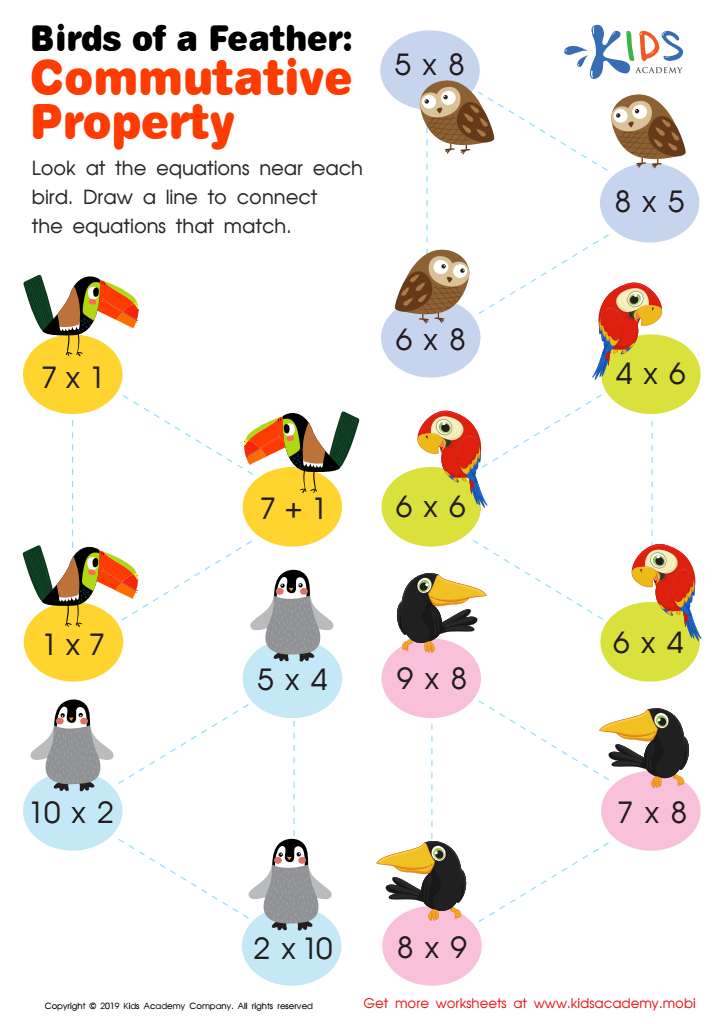
Birds of a Feather: Commutative Property Worksheet
The commutative property states that order of factors doesn't affect the product. Use it to help your kids solve simple problems. If they love birds, they'll love the colorful worksheet to identify exotic ones. Practicing is the best way to understand difficult topics. Look at the equations in this tracing sheet; help them draw a line to connect equations that match.
Birds of a Feather: Commutative Property Worksheet
Worksheet
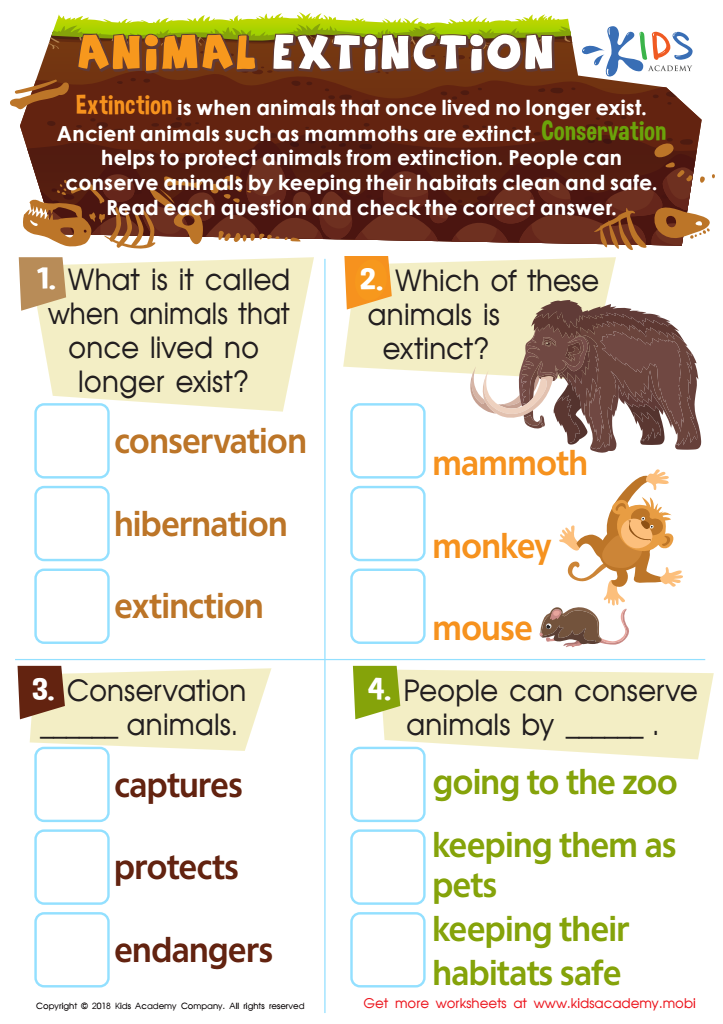
Animal Extinction Worksheet
Children can learn how their actions can help endangered animals with this free PDF worksheet. It explains extinction, looks at the mammoth as an example, and poses questions about conservation. Keeping habitats clean and safe is key to protecting animals and keeping them abundant. Learning about this now can make a huge difference for future generations.
Animal Extinction Worksheet
Worksheet
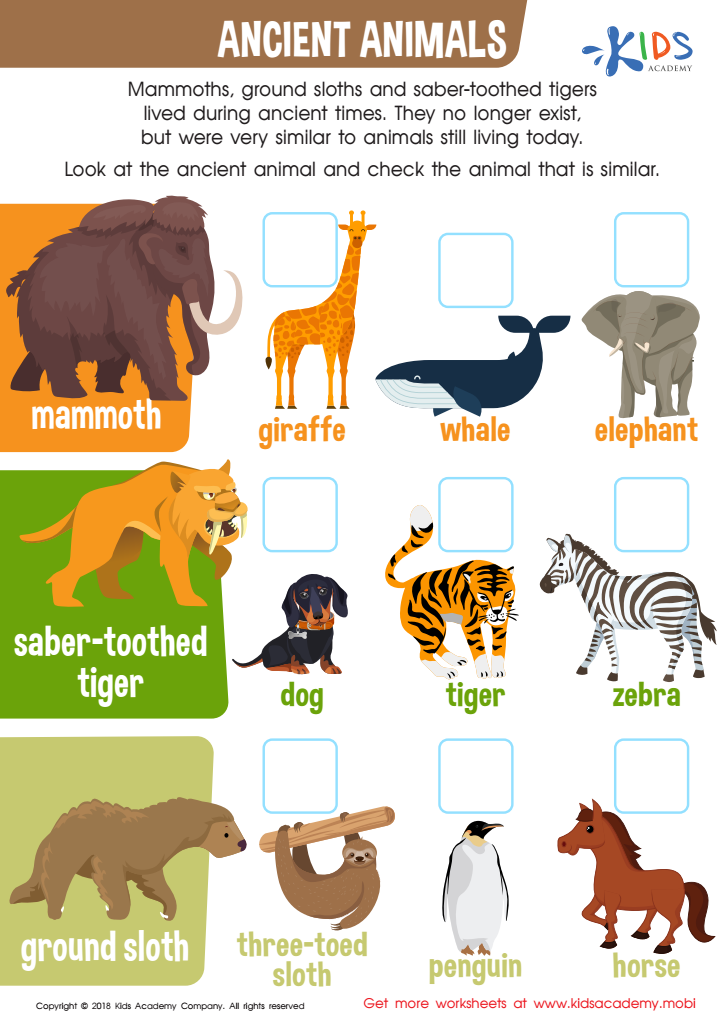
Ancient Animals Worksheet
Kids can explore prehistoric days with a fun, downloadable worksheet. They'll look at pictures of ancient animals like mammoths, ground sloths and saber-toothed tigers and then choose the animal of today that most closely resembles their ancestor. Through this sheet, they can make connections between today's animals and the past.
Ancient Animals Worksheet
Worksheet
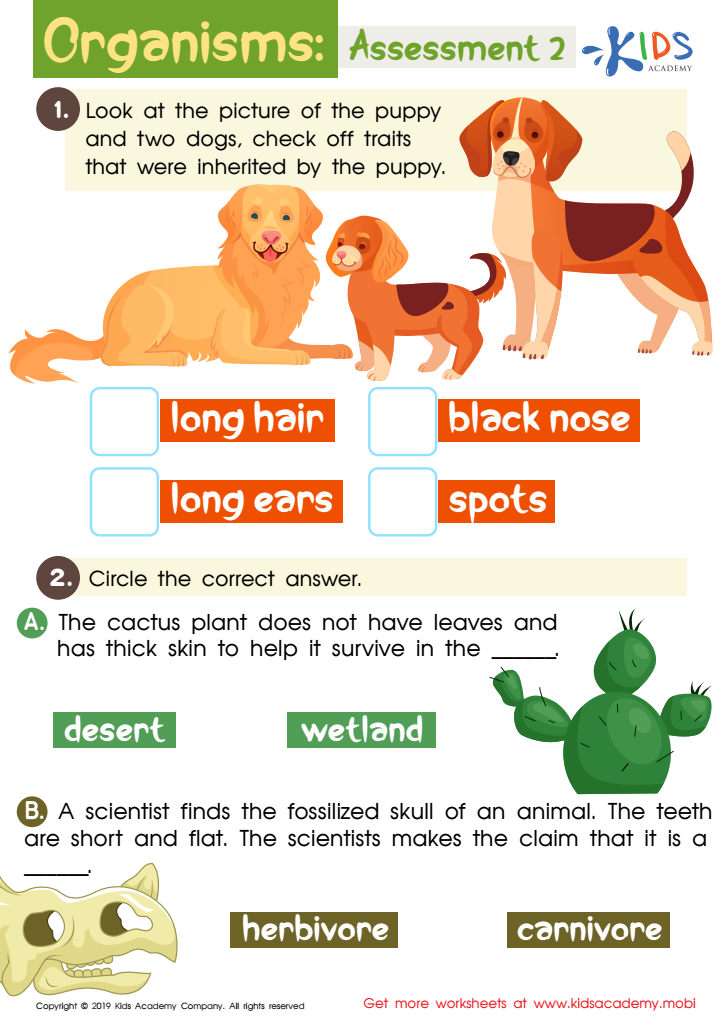
Organisms: Assessment 2 Worksheet
This free assessment helps you measure your child's science knowledge. They can check off traits a puppy inherited, identify a cactus's habitat, and review a dinosaur's diet. It's an efficient way to assess their skills.
Organisms: Assessment 2 Worksheet
Worksheet
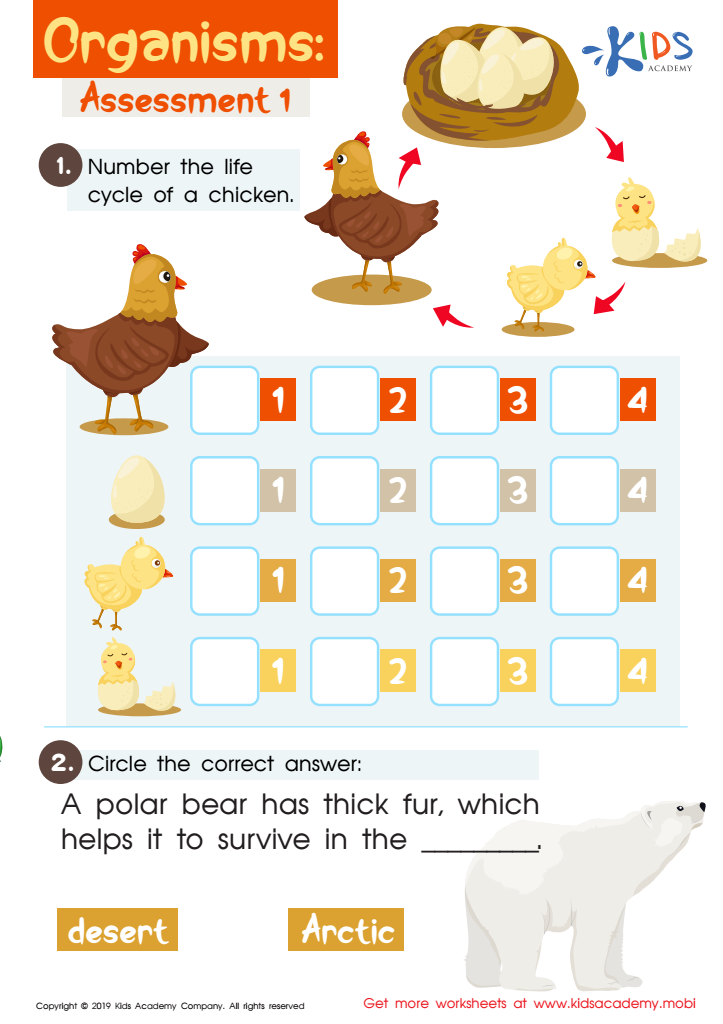
Organisms: Assessment 1 Worksheet
Learning the life cycles of humans is fascinating. Try this fun assessment worksheet with your child and they'll gain insight into a chicken's life cycle. They'll have to put the different phases in the right order using numbered check-off boxes. Plus, they'll answer a review question about arctic animals without realizing it's a comprehension check!
Organisms: Assessment 1 Worksheet
Worksheet
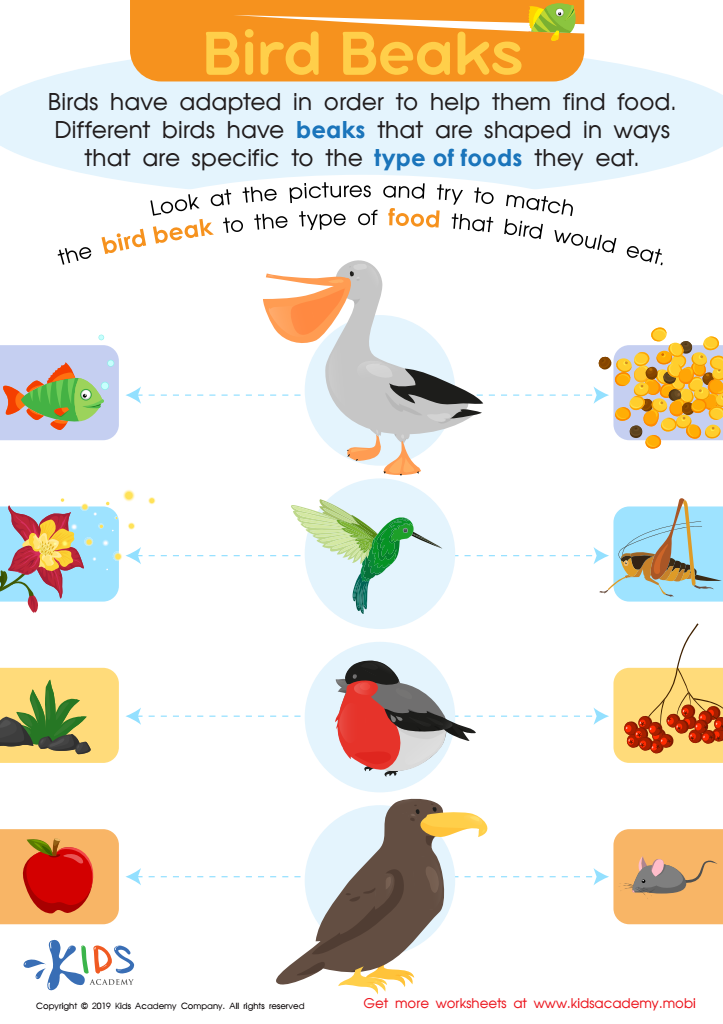
Bird Beaks Worksheet
Birds' beak shapes and sizes are adapted to help them find food. This worksheet teaches kids how to identify different beak types by matching each to the type of food they eat. They'll use traceable lines to practice connecting the beaks to the food they would eat, understanding how each beak shape is perfectly suited to its purpose.
Bird Beaks Worksheet
Worksheet
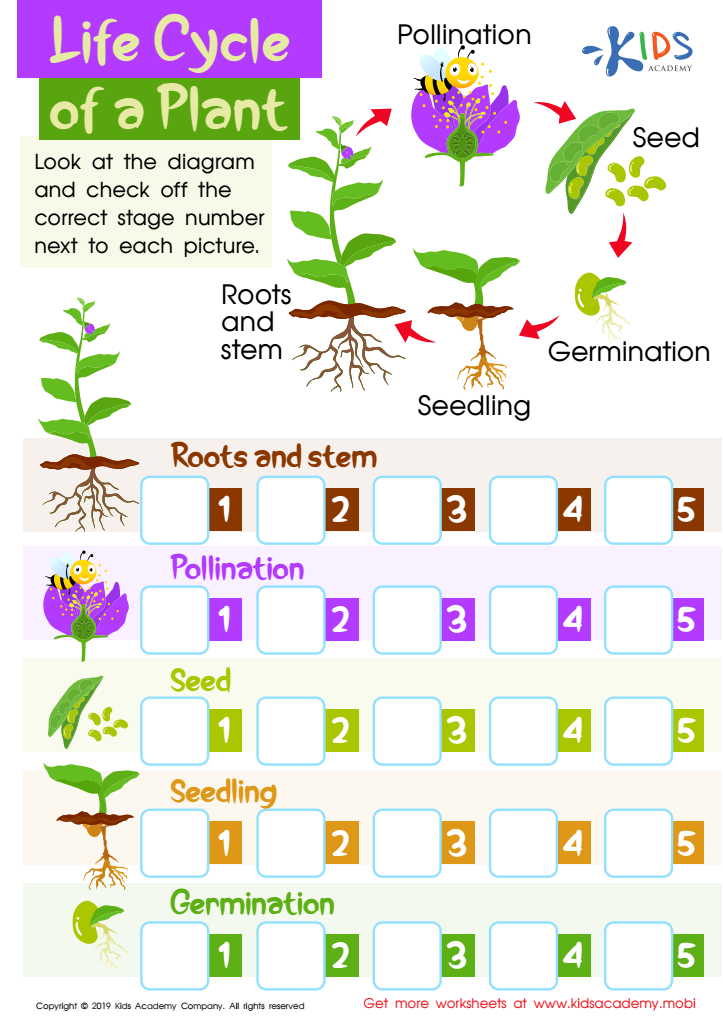
Life Cycle of a Plant Worksheet
This fun PDF worksheet lets young scientists explore the life cycle of plants. It features pictures to describe each stage: pollination, seed, germination, seedling, rooting and stems. They can check off each stage in the diagram, giving them a concrete understanding.
Life Cycle of a Plant Worksheet
Worksheet
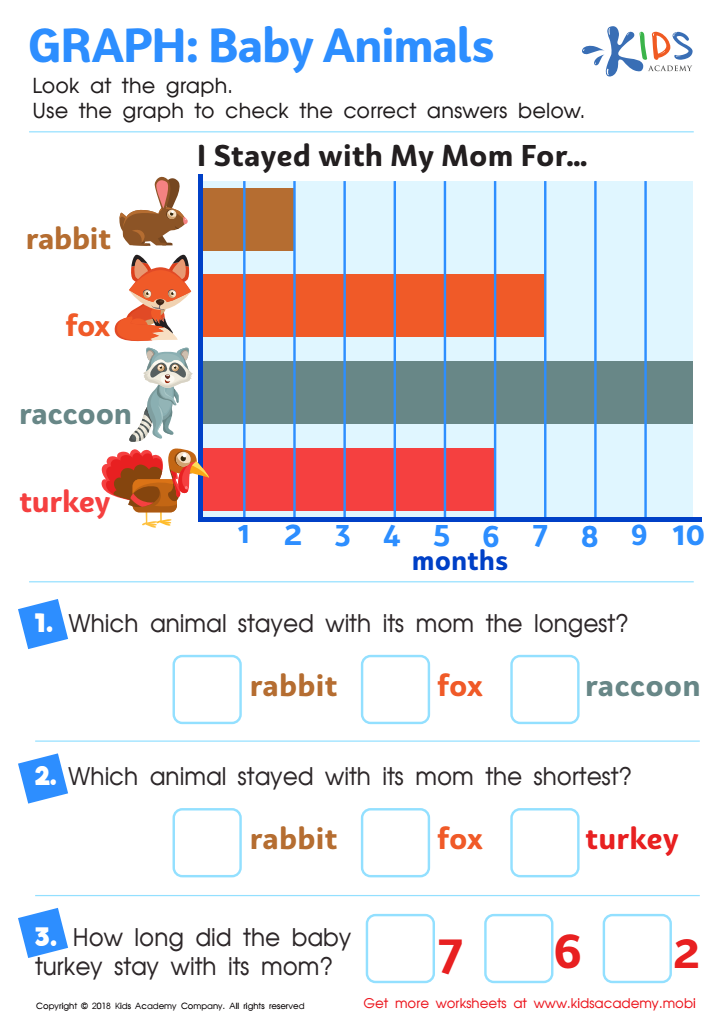
Graph: Baby Animals Worksheet
Graphs are essential for learning in math, science and ELA. This worksheet featuring baby animals is a fun way to practice reading graphs. Look at the graph and answer the questions below it. Check the boxes for the right answers based on the data.
Graph: Baby Animals Worksheet
Worksheet
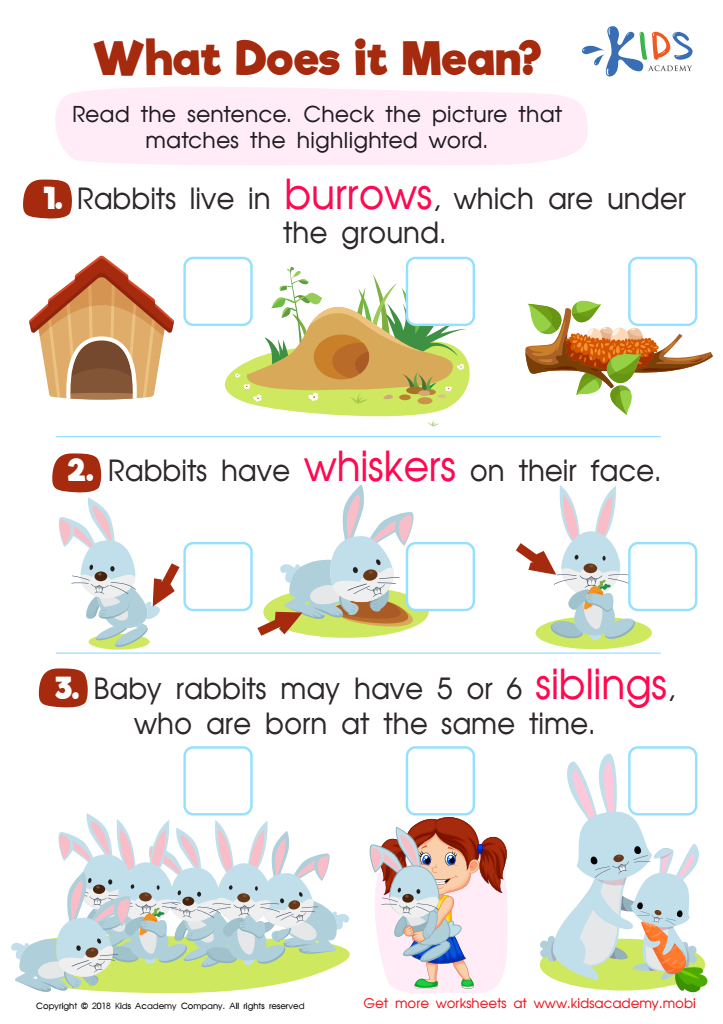
What Does It Mean? Worksheet
Teach your child to use context clues with this engaging Kids Academy worksheet. Read the sentences and find the pink-highlighted word. Use the other words in the sentence to figure out the meaning, then check the box next to the picture that represents it.
What Does It Mean? Worksheet
Worksheet
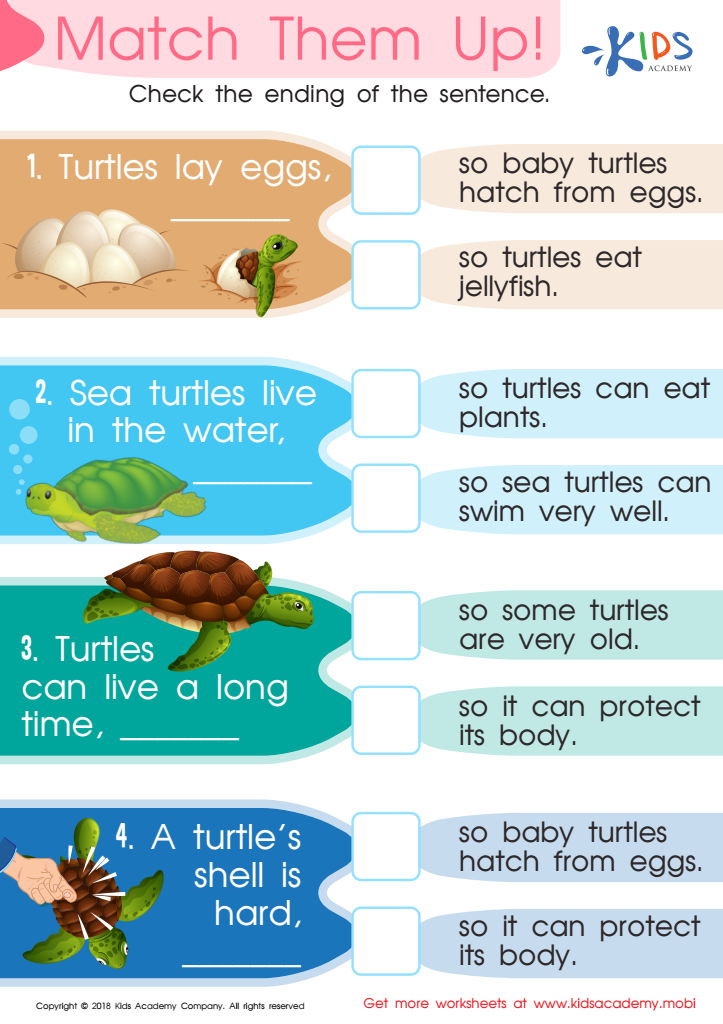
Match Them Up Worksheet
Reading offers a wealth of knowledge, but young readers may struggle to remember info from informational texts. Help your child practice comprehension with this fun turtle-related worksheet. Just read the sentence starters and select the correct ending from the options given. Check the box to indicate the right statement!
Match Them Up Worksheet
Worksheet
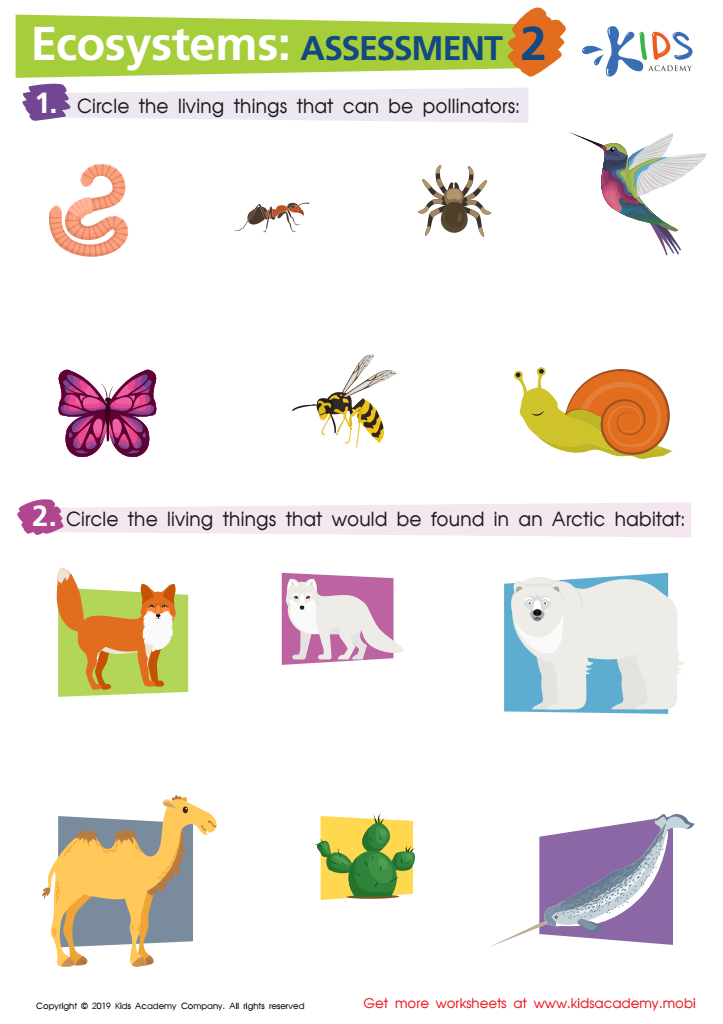
Ecosystems: Assessment 2 Worksheet
Pollinators are living or non-living things that help pollen spread. Test your child's knowledge of the ecosystem with this worksheet. Point out animals in the picture, then ask the simple questions. Help your child circle the right answers.
Ecosystems: Assessment 2 Worksheet
Worksheet
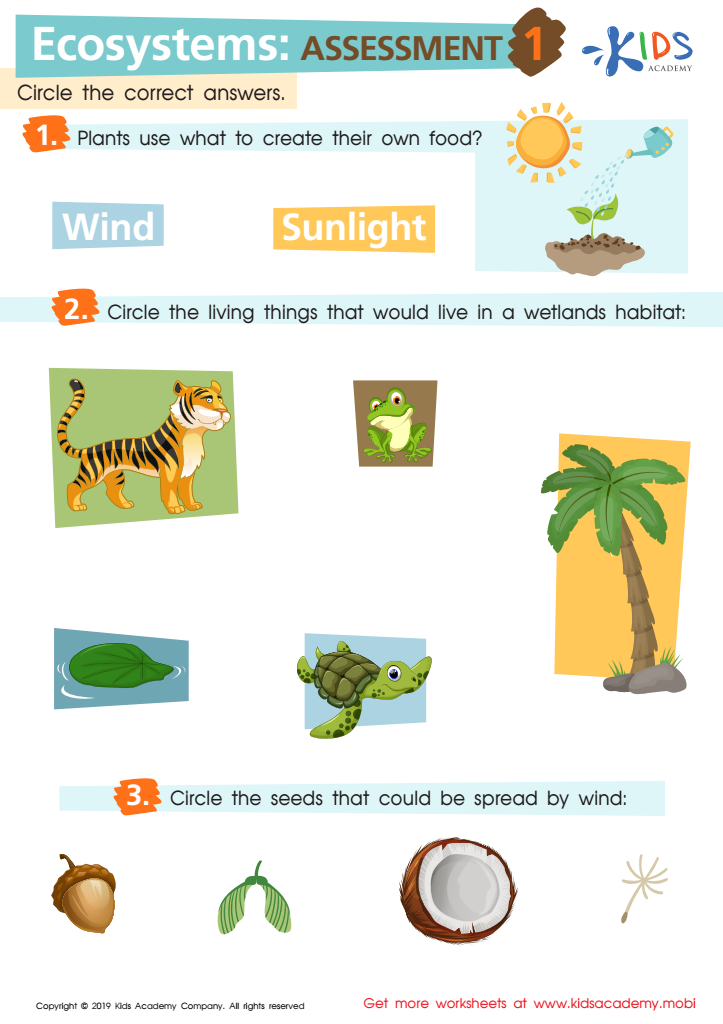
Ecosystems: Assessment 1 Worksheet
Before starting the worksheet, remind your child of the basics of the ecosystem, e.g. plants need light and winds carry small seeds. Encourage them to identify the images in the colorful printout. Ask them the questions and help them circle the correct answers.
Ecosystems: Assessment 1 Worksheet
Worksheet
Join Kids Academy for Free
Who is primarily going to use this learning content?