
Shape Recognition Math Worksheets for Ages 3-5
45 filtered results
Difficulty Level
Grade
Age
-
From - To
Subject
Activity
Standards
Introduce young learners to the world of geometry with our engaging Shape Recognition Math Worksheets for ages 3-5! These fun and colorful printables help kids identify and name various shapes such as circles, squares, triangles, and more. Perfect for preschoolers and kindergarteners, our worksheets are designed to enhance their fine motor skills while making learning exciting. Kids will love tracing, coloring, and matching shapes, which boosts their cognitive development and prepares them for more advanced math concepts. Foster a solid mathematical foundation and inspire a love for learning with Kids Academy's expertly crafted worksheets.
Favorites
With answer key
Interactive
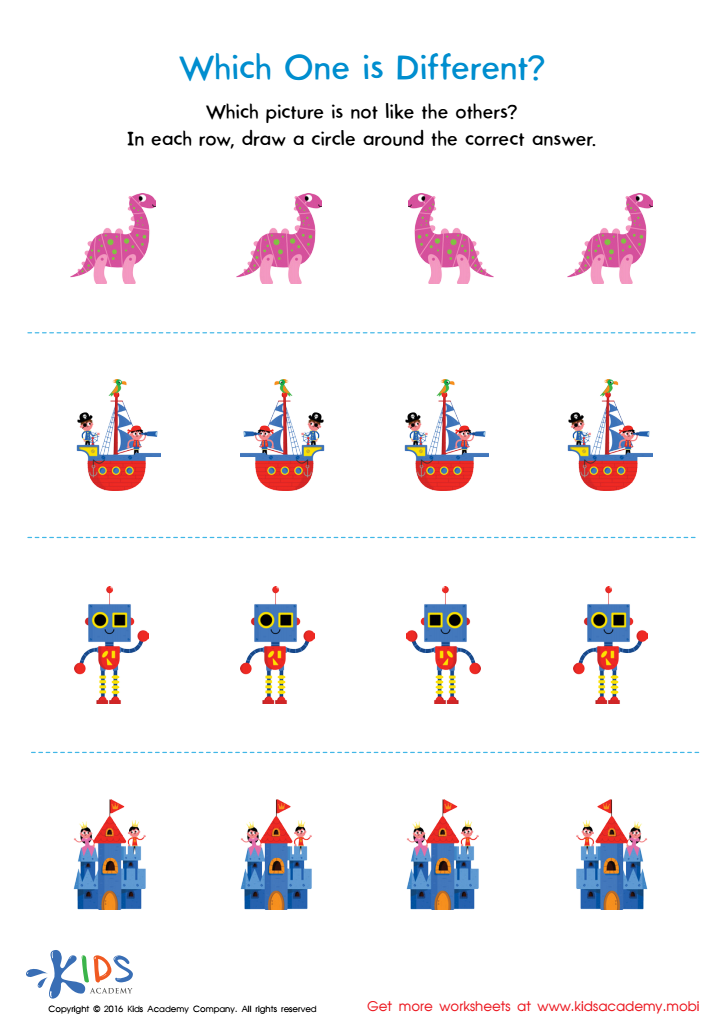
Which One Is Different Worksheet
Preschoolers can hone logical reasoning and critical analysis skills with this "Which one is Different?" worksheet. Kids must look closely and pick out unique attributes of objects and images. It's a skill that can serve them throughout their lifetime.
 Assign to My Students
Which One Is Different Worksheet
Worksheet
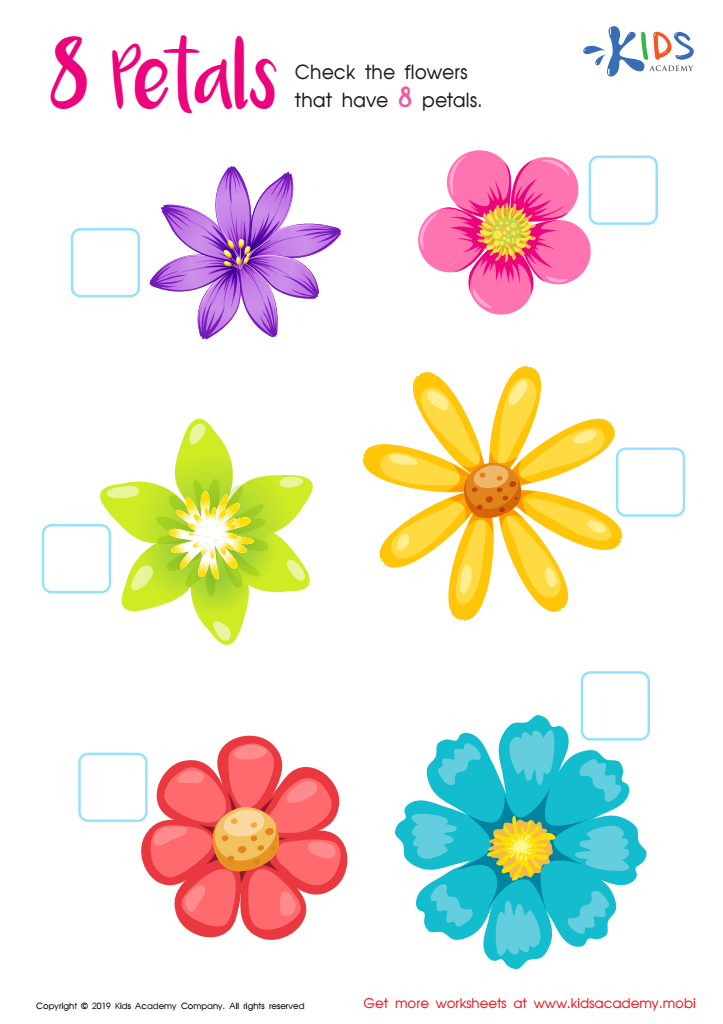
8 Petals Worksheet
Help your children master counting with this fun worksheet. It's filled with colorful flowers and they must count the petals and check the flowers with 8 petals. It's a great way to practice their counting skills and have some fun too!
8 Petals Worksheet
Worksheet
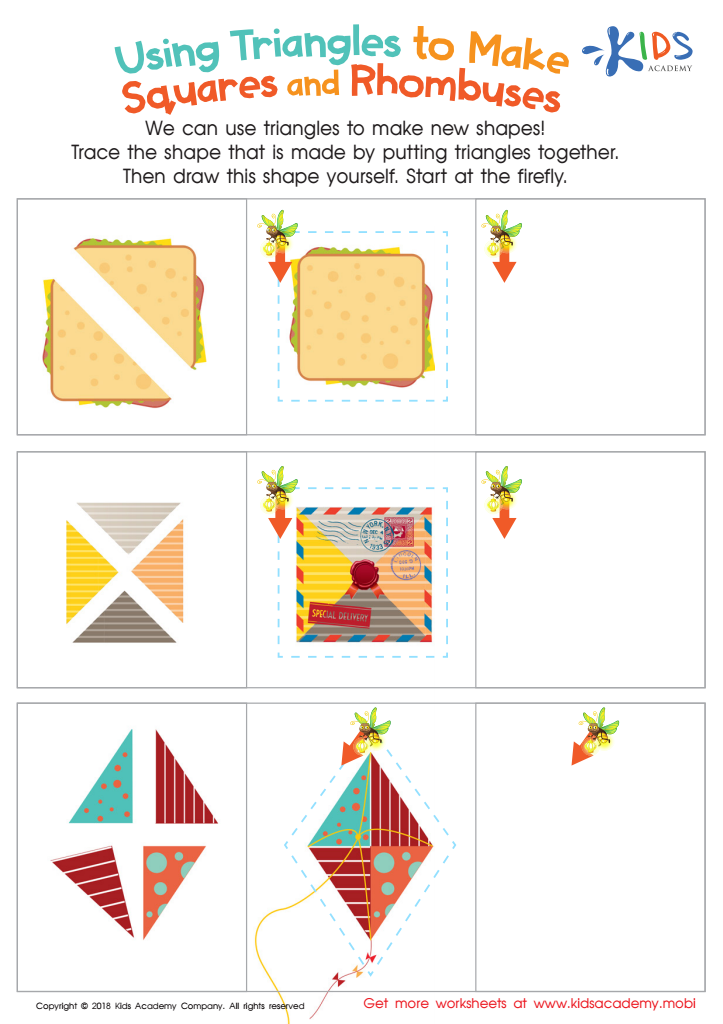
Using Triangles to Make Squares and Rhombuses Worksheet
Learning shapes is a fun way to boost spatial skills and critical thinking. This worksheet shows children how to use triangles to construct squares and rhombuses. Clear illustrations and a printout help children draw the new shape. A great activity for the math classroom! 80 words.
Using Triangles to Make Squares and Rhombuses Worksheet
Worksheet
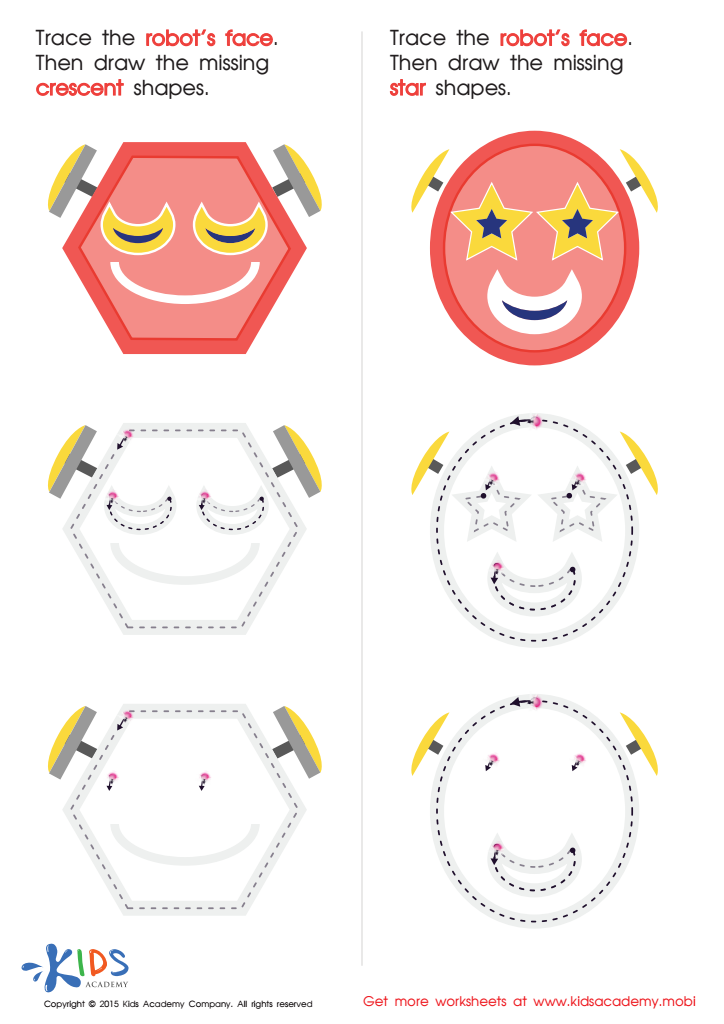
Composing a Robot's Face of Crescents And Stars Worksheet
Get free math geometry worksheets at Kids Academy! Help your child learn by practicing together - trace the robot's face and draw the missing crescent and star shapes. Be sure to remember their names! Have fun and learn with shapes for kids.
Composing a Robot's Face of Crescents And Stars Worksheet
Worksheet
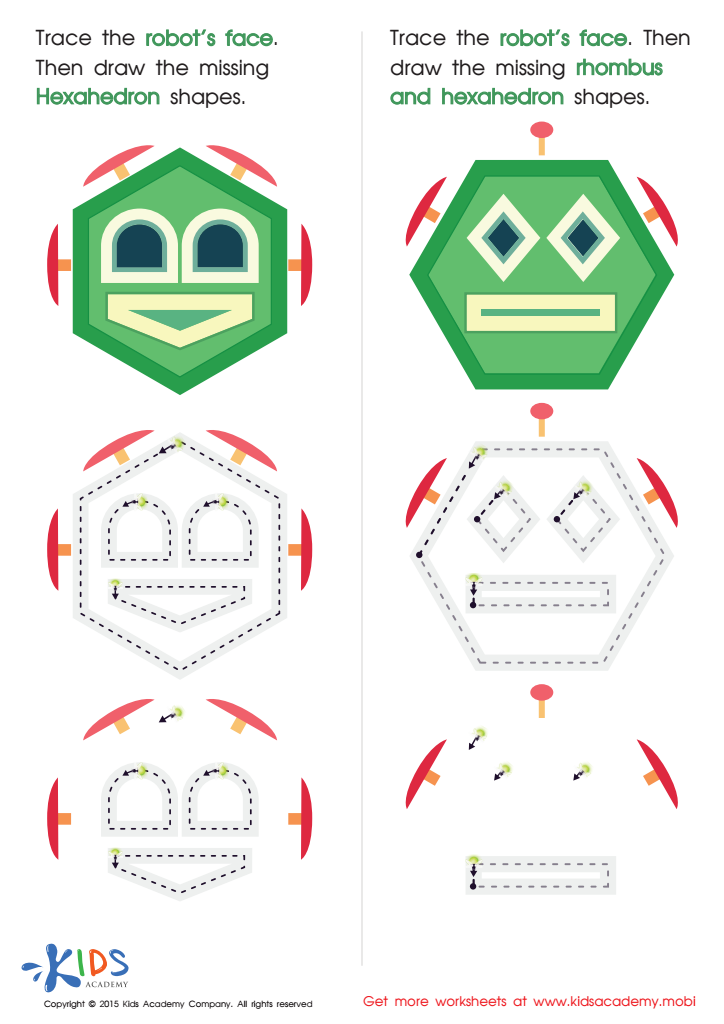
Practice Drawing Hexahedrons And a Rhombus Worksheet
Trace the Robot's face, draw hexahedron and rhombus shapes, then trace again. Our tracing shapes worksheets make it easy for kids to learn geometry. Get more materials from Kids Academy to practice all the shapes.
Practice Drawing Hexahedrons And a Rhombus Worksheet
Worksheet
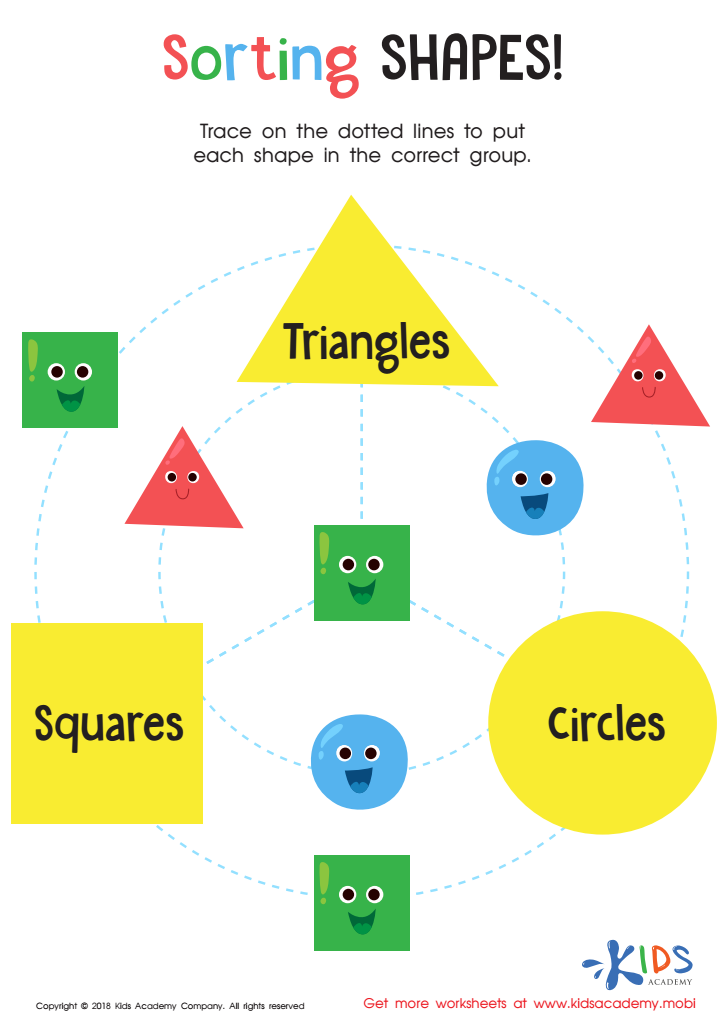
Sorting Shapes - Part 3 Worksheet
Download this fun PDF to help your kiddos recognize basic shapes like circles, squares, and triangles. It'll sharpen their fine motor skills as they trace and sort shapes by color, size, and sides. Your kids won't even realize they're learning with these cheery shapes!
Sorting Shapes - Part 3 Worksheet
Worksheet
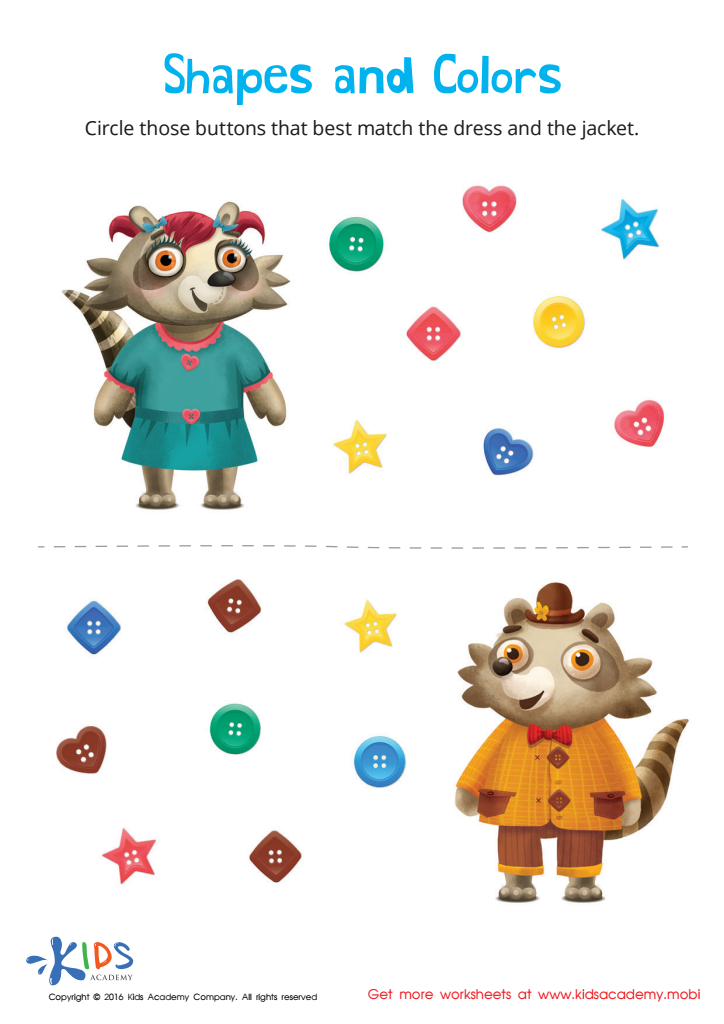
Matching: Shapes and Colors Worksheet
Help Mr. and Mrs. Raccoon find the right buttons to match their shirts! Kids will identify shapes and colors and learn to match them correctly.
Matching: Shapes and Colors Worksheet
Worksheet
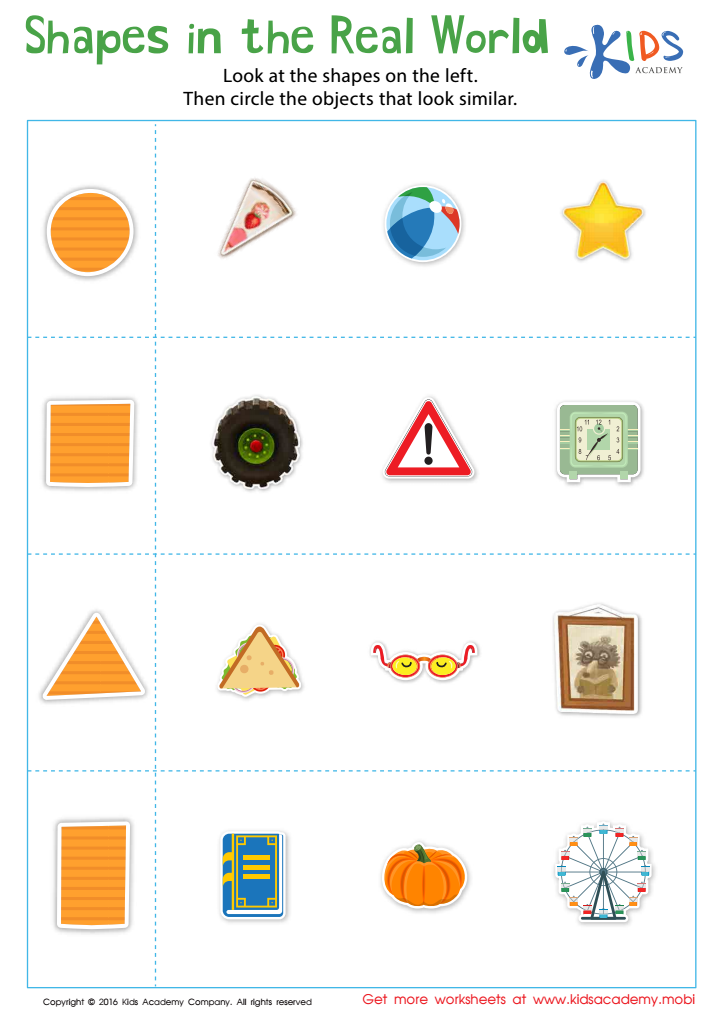
Shapes in the Real World Worksheet
Teach kids math in real-world context with this fun and inviting PDF. Let them explore geometric shapes and match them with everyday objects, giving them practice with fine motor skills and reinforcing basic shapes. Help them understand that math is everywhere in their lives!
Shapes in the Real World Worksheet
Worksheet
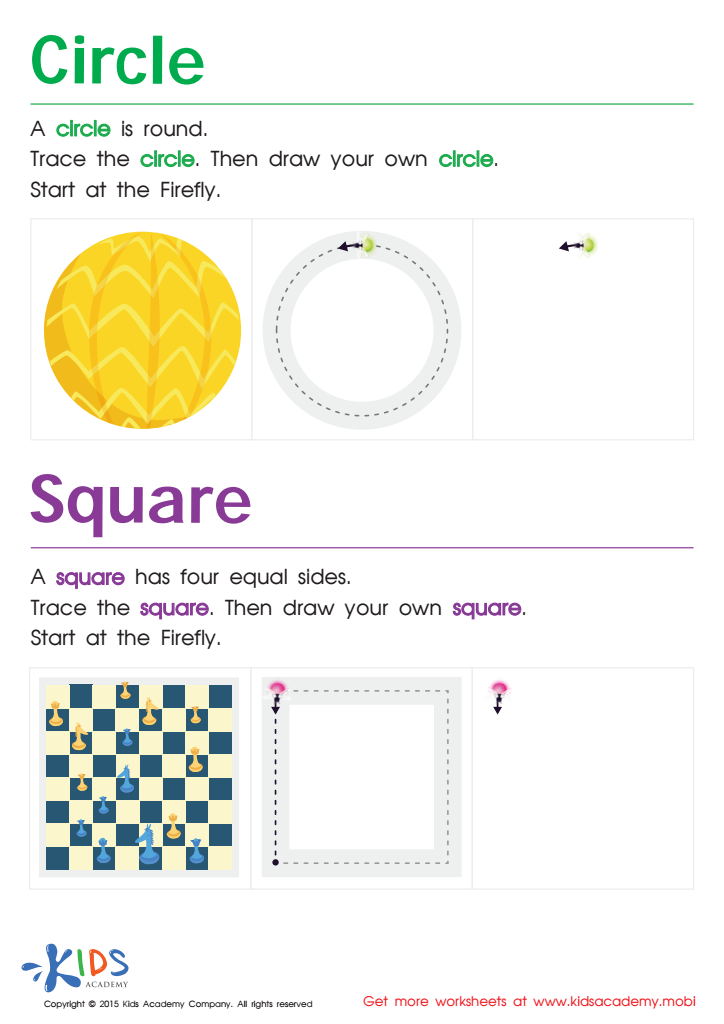
Trace And Draw a Circle And a Square Worksheet
Our new collection will help your preschoolers learn shapes faster: tracing circles and squares and recognizing their properties with the aid of colorful pictures. Get them now at Kids' Academy!
Trace And Draw a Circle And a Square Worksheet
Worksheet
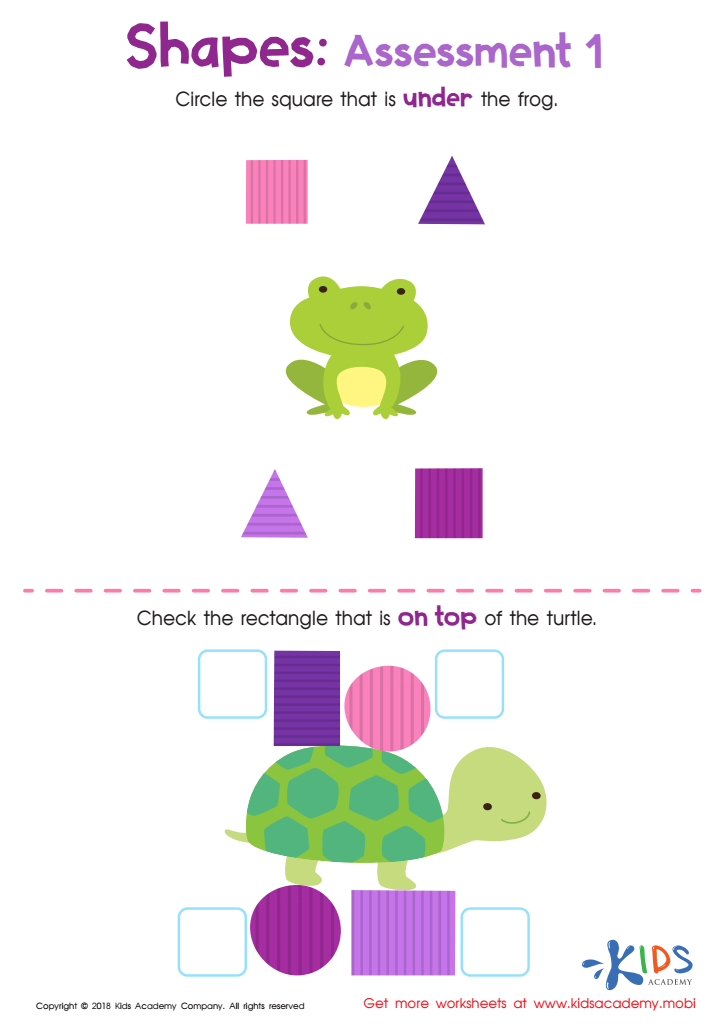
Geometry – Assessment 1 Worksheet
This activity helps preschoolers find shapes "on top of" and "under" animals. They must identify the correct shapes assigned to them. It's a great way to learn geometry and placements of objects.
Geometry – Assessment 1 Worksheet
Worksheet
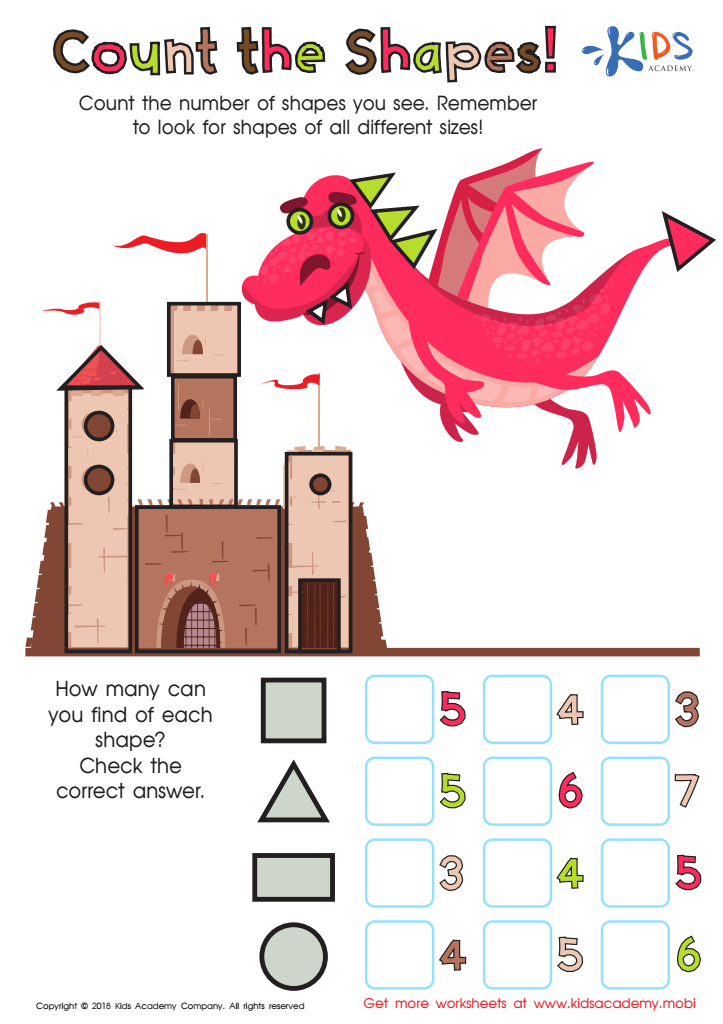
Count the Shapes Worksheet
This fun and learning worksheet is perfect for sharpening visual discrimination skills. Kids search a castle picture featuring a dragon and identify shapes, counting circles, squares, triangles and rectangles. Checking the correct box beside the number, they practice shape identification and counting. Download now and get started!
Count the Shapes Worksheet
Worksheet
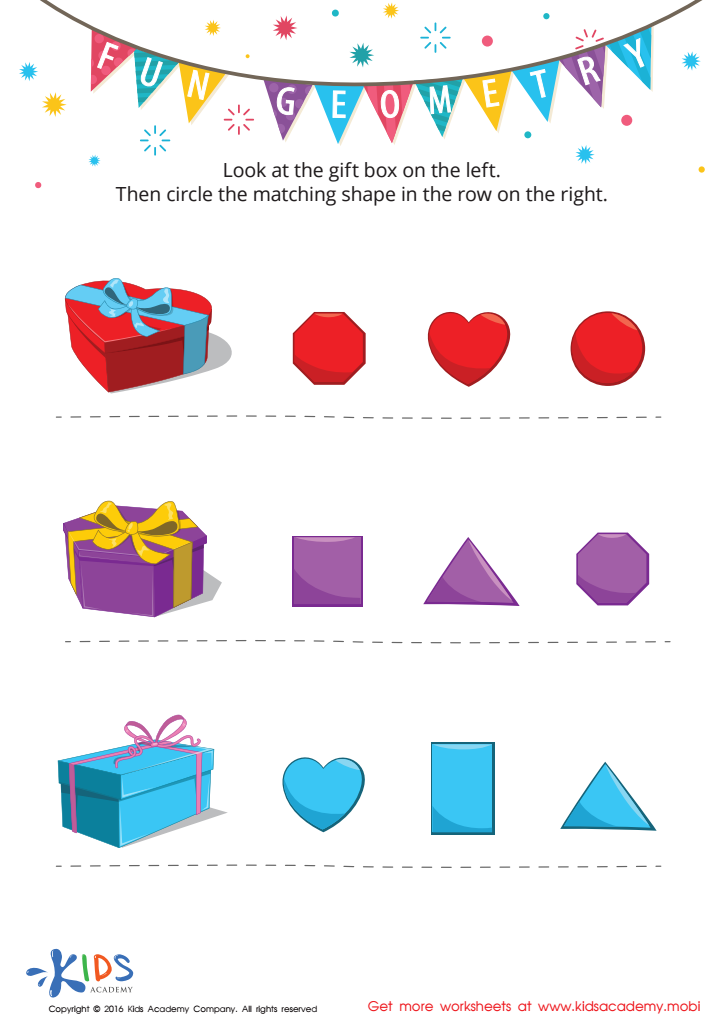
Fun Geometry Worksheet
Give your child the gift of learning with this fun and educational geometry matching worksheet! It'll help them develop essential matching and problem-solving skills while having fun. Vibrant pictures will excite them to complete it and get a better grasp of the world around them.
Fun Geometry Worksheet
Worksheet
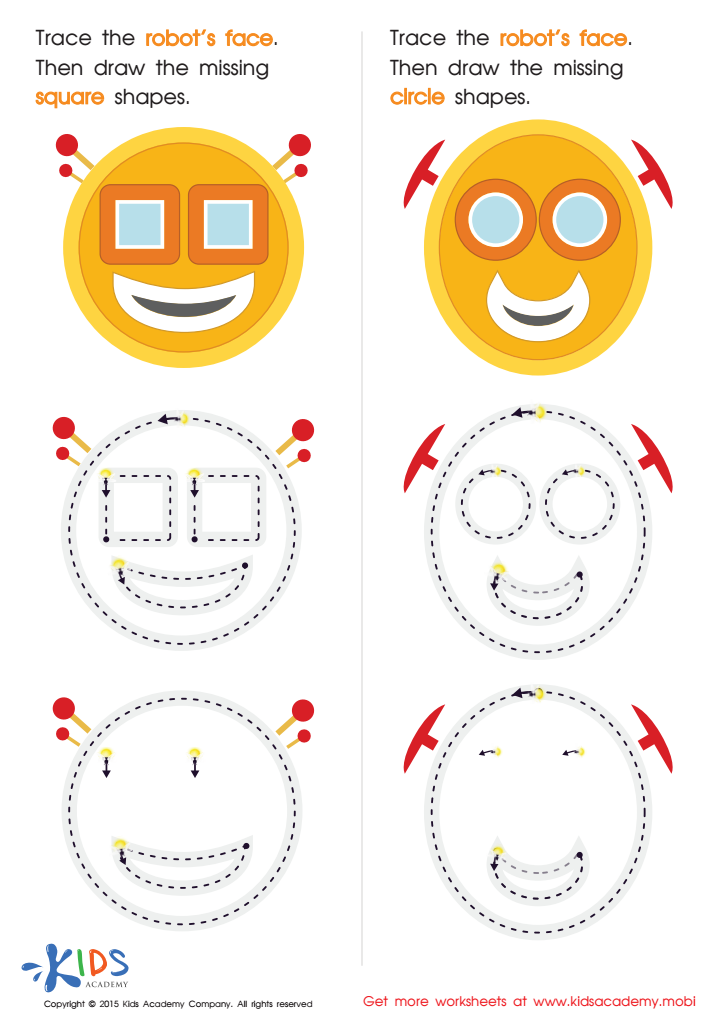
Practicing to Draw Circles And Squares Printable
Download our free printable geometry worksheets to learn shapes with your preschoolers. Trace Robot's face, draw the square parts and round shapes, remember the names for each one. Get more materials for kids at Kids Academy and make learning fun with our free printable geometry worksheets.
Practicing to Draw Circles And Squares Printable
Worksheet
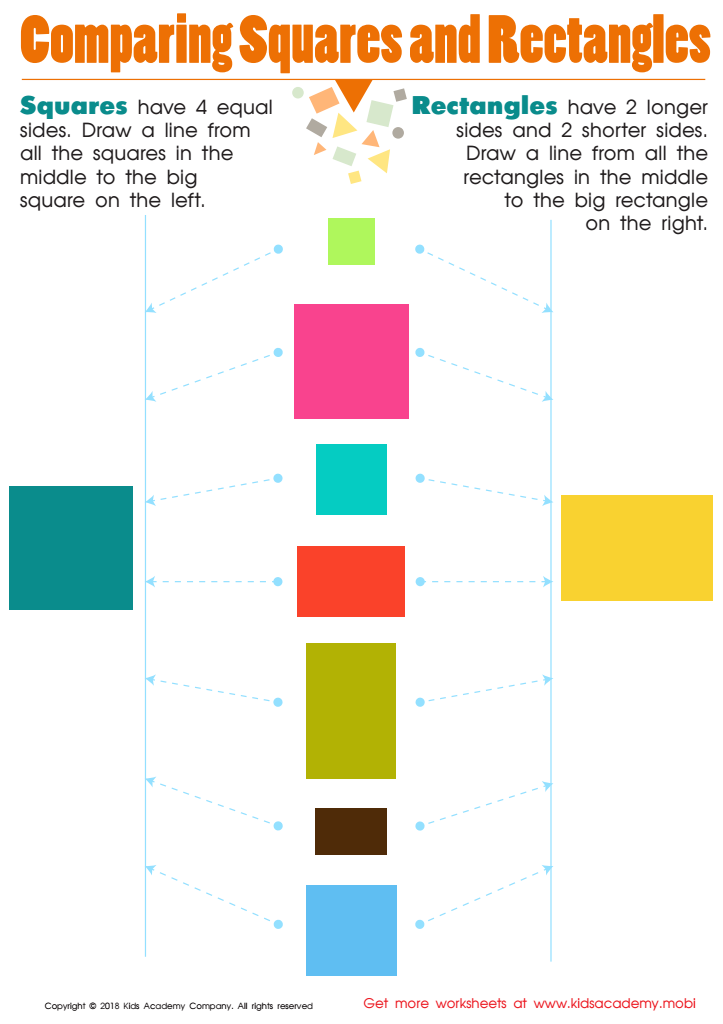
Comparing Squares Rectangles Worksheet
Help your little learner distinguish rectangles from squares with this fun geometry worksheet from Kids Academy! Read the definitions at the top, use the shapes on either side as a guide, then trace over the dotted line to match the rectangles and squares!
Comparing Squares Rectangles Worksheet
Worksheet
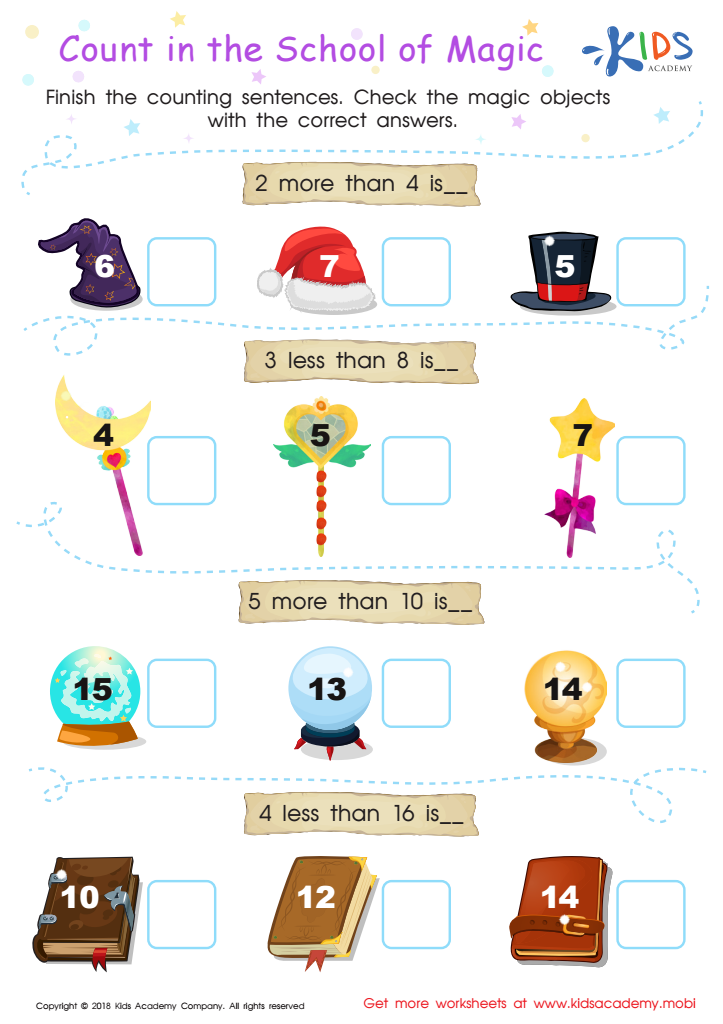
Count in the School of Magic Worksheet
Your math learners can explore the School of Magic with this worksheet. They'll read equations with addition and subtraction numbers under 20, count back and forth to find the answer, then complete the counting sentences. Fun pictures and easy accuracy make it an enjoyable and successful learning experience.
Count in the School of Magic Worksheet
Worksheet
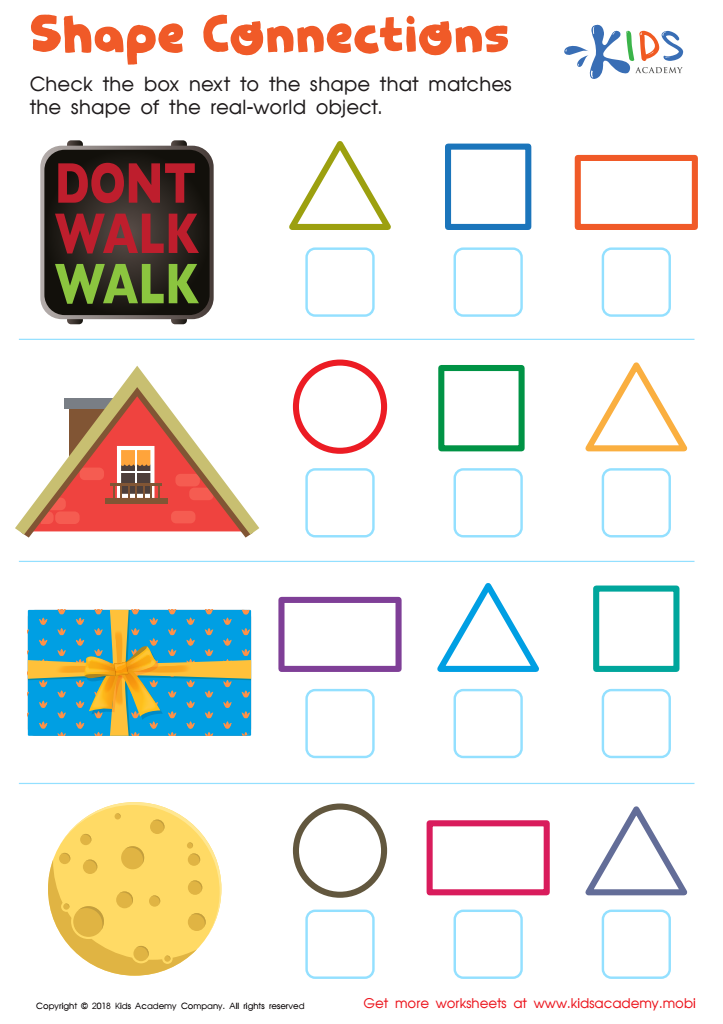
Shape Connections Worksheet
Geometric shapes are all around us and this fun worksheet brings it to life. Kids will match real-world pictures with the corresponding basic shapes, connecting how math is used in various aspects of daily life. A great way to reinforce these concepts!
Shape Connections Worksheet
Worksheet
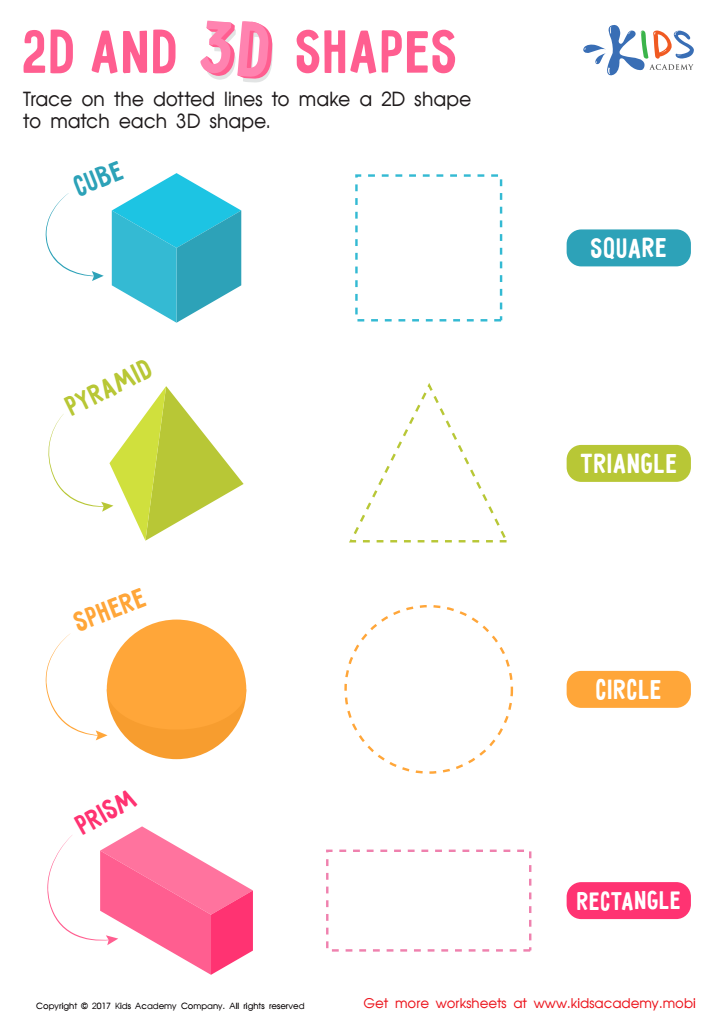
2D and 3D Shapes Worksheet
Introduce your child to 3D and 2D with this traceable worksheet. With dotted lines, help them trace and make a 2D shape for each 3D shape: square, triangle, rectangle, and circle. Show them there's more than one way to draw! You may have taken them to a 3D movie, or they've seen some fantastic 3D art. Now they can wonder no more.
2D and 3D Shapes Worksheet
Worksheet
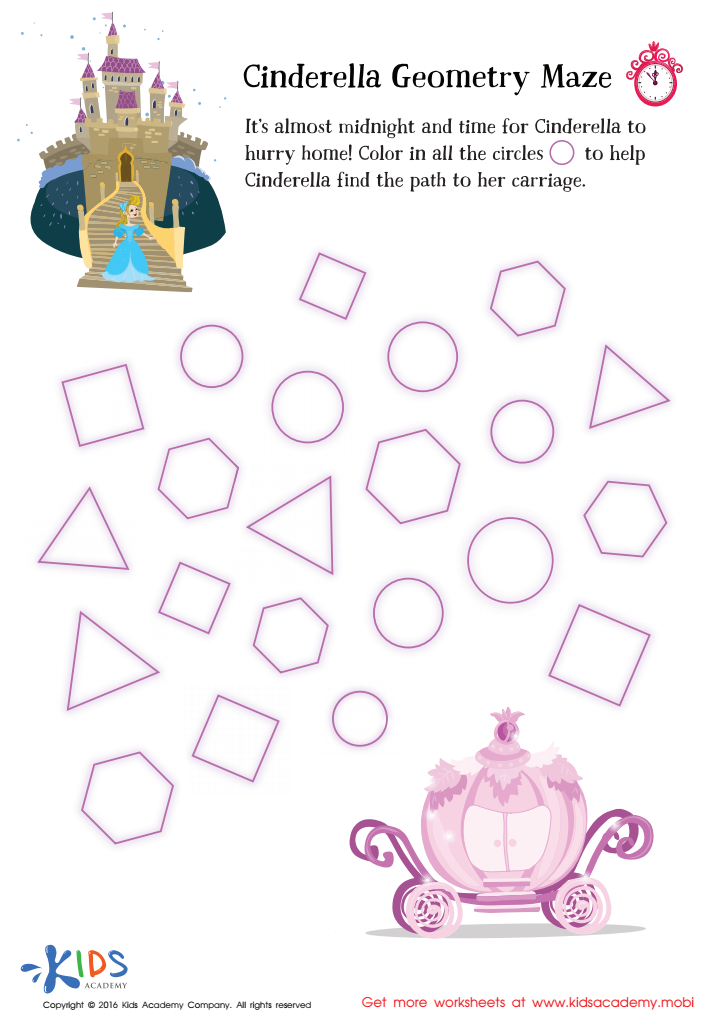
Cinderella Geometry Maze Worksheet
Help Cinderella hurry home! Your preschooler will have fun problem-solving and sorting shapes in this geometric maze. As they shade in the circles, they'll be helping their favorite princess reach her carriage on time. Not only that, but they'll strengthen their logic skills in the process. Get this and other fairy tale mazes to keep them entertained while learning.
Cinderella Geometry Maze Worksheet
Worksheet
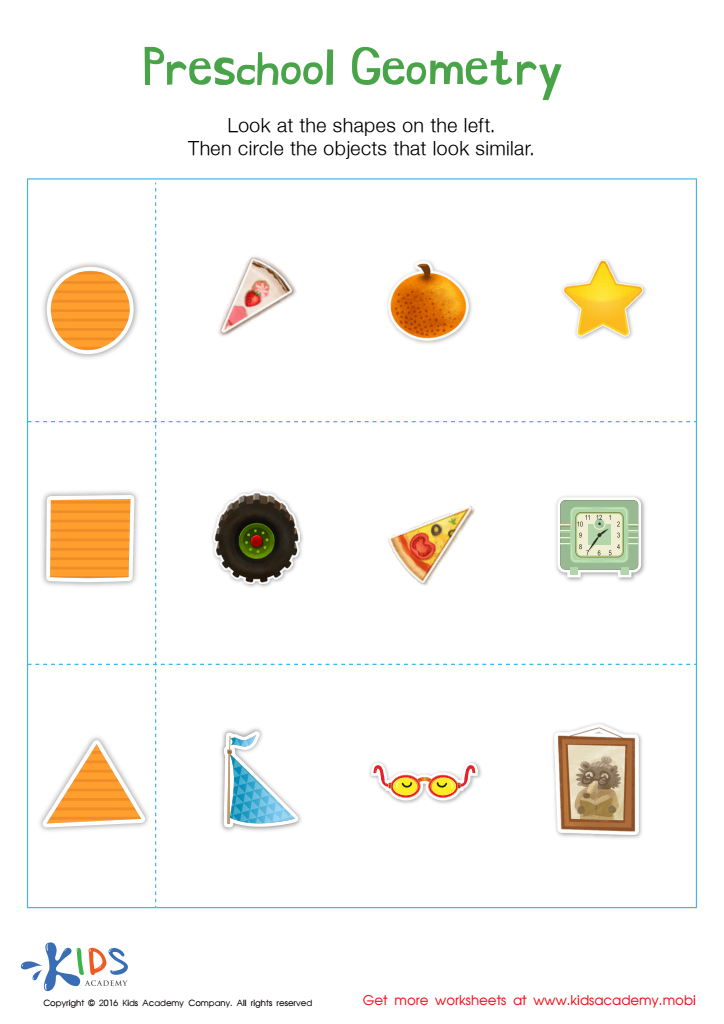
Preschool Geometry Match Up Worksheet
Teach your preschooler geometry using everyday objects. This printable worksheet helps them recognize, match, and follow directions like left and right. Start a conversation to extend their learning and they'll see how shapes appear in the world around them.
Preschool Geometry Match Up Worksheet
Worksheet
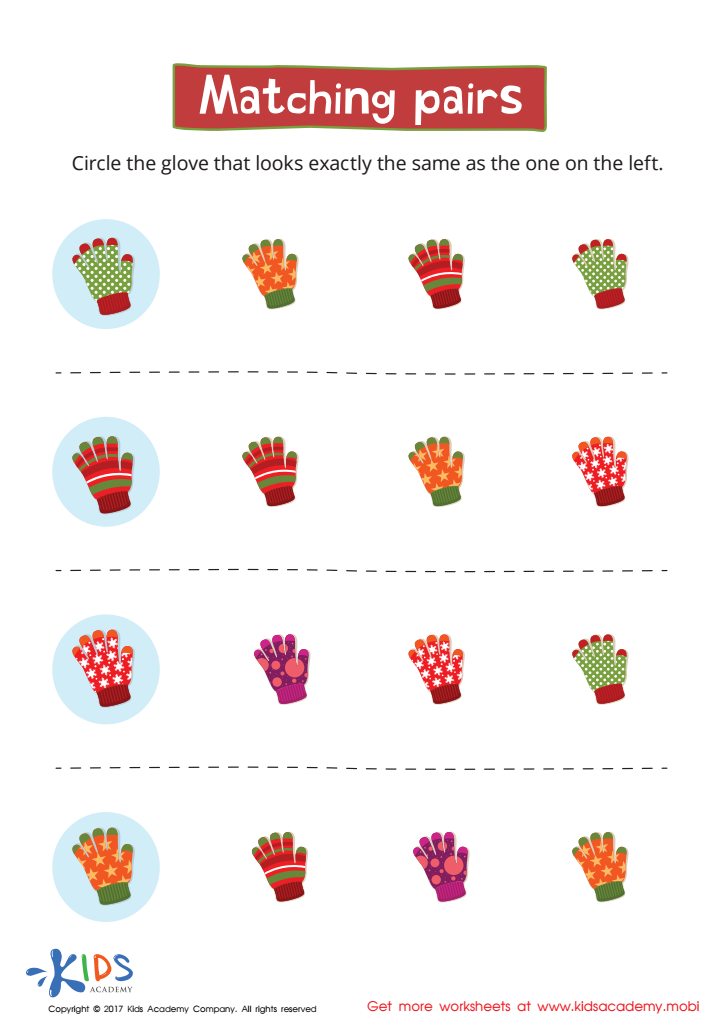
Matching: Matching Pairs Worksheet
Winter's here! Get your child ready with a fun matching worksheet. Challenge them to sort mitten designs, recognize directions, and match mittens in other rows. This helps preschoolers hone problem-solving skills and recognize shapes. Print out more seasonal activities for a diverse summer experience!
Matching: Matching Pairs Worksheet
Worksheet
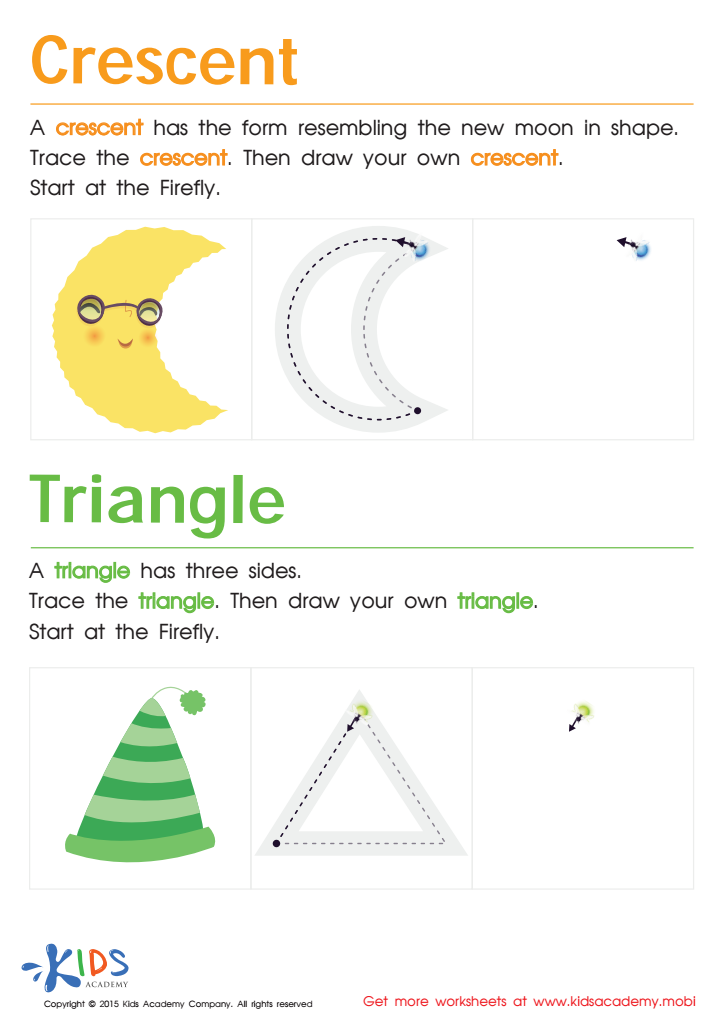
Learning to Draw Crescents And Triangles Worksheet
Help your kids draw a crescent and triangle with this free printable worksheet! Start by tracing a crescent in the form of the new moon, and then teach them that a triangle has three sides and looks like a hat. Find more geometry practice worksheets at Kids Academy!
Learning to Draw Crescents And Triangles Worksheet
Worksheet
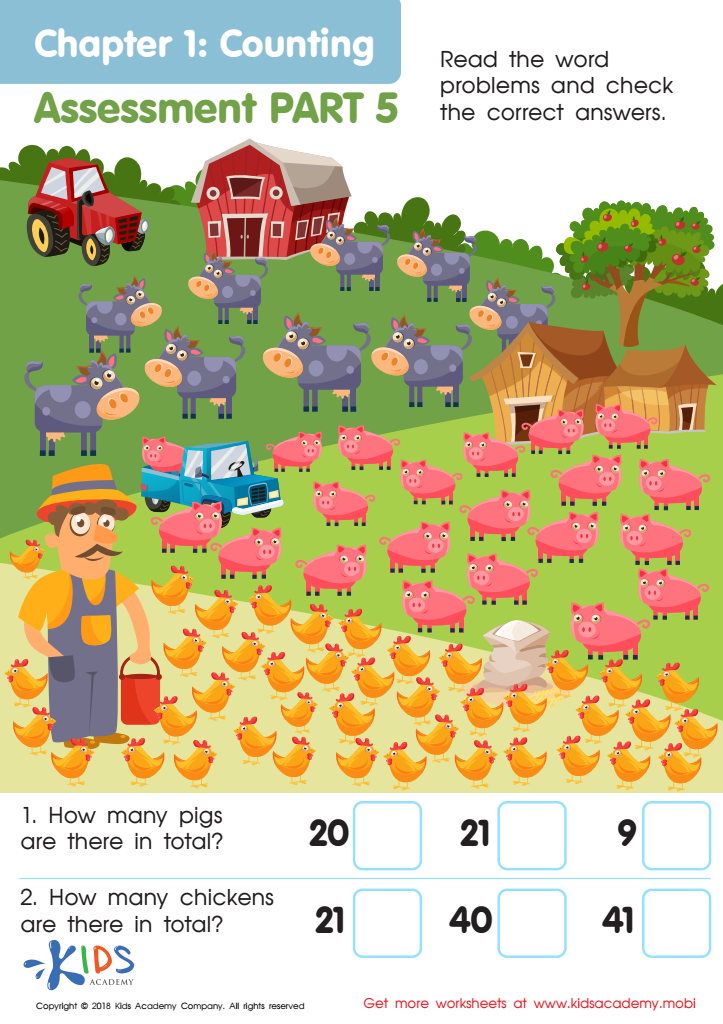
Counting: Assessment 5 Worksheet
Let your kids have fun counting farm animals on this worksheet! Help the farmer count the animals and have your child check the answers to assess their counting skills. Read the word problem at the bottom of the page and count the animals together. It's an entertaining way to practice counting and have a great time!
Counting: Assessment 5 Worksheet
Worksheet
Join Kids Academy for Free
Who is primarily going to use this learning content?








Shape recognition is a foundational skill in early childhood education, setting the stage for future mathematical learning and problem-solving abilities. When parents and teachers focus on shape recognition for children ages 3-5, they are cultivating a vital cognitive skill that enhances visual-spatial awareness. Recognizing and distinguishing between different shapes helps children categorize objects and understand their environment, which is crucial for cognitive development.
Shape recognition also supports language development. As children learn the names and attributes of different shapes, they expand their vocabulary and enhance their descriptive language skills. For example, describing a triangle's three sides and angles introduces numerical concepts and comparative language.
Additionally, understanding shapes contributes to early math skills, such as geometry. Children start to notice patterns, symmetry, and spatial relations, all of which are important for higher-level math problems they'll encounter in later years.
Further, hands-on activities involving shapes can improve fine motor skills. Building with blocks or cutting shapes out of paper requires precise hand-eye coordination and dexterity.
Investing in shape recognition during early childhood also fosters a positive attitude towards learning. Fun and engaging activities with shapes can spark curiosity and motivation in young learners, making them more eager to explore and understand more complex mathematical concepts as they grow.








