
Number Sequencing Numbers Worksheets for Ages 4-9
21 filtered results
Difficulty Level
Grade
Age
-
From - To
Subject
Activity
Standards
Enhance your child's numerical skills with our engaging Number Sequencing Worksheets designed for ages 4-9! These interactive resources help young learners grasp the concept of ordering numbers, an essential math skill that lays the foundation for advanced arithmetic. Our worksheets range from simple sequences to more challenging patterns, making them perfect for varying developmental stages. The colorful designs and fun exercises keep children motivated and excited about learning. Foster their confidence in math while aiding their cognitive development. Explore our collection today to provide your child with a playful approach to mastering number sequences and enjoying early math learning!
Favorites
With answer key
Interactive
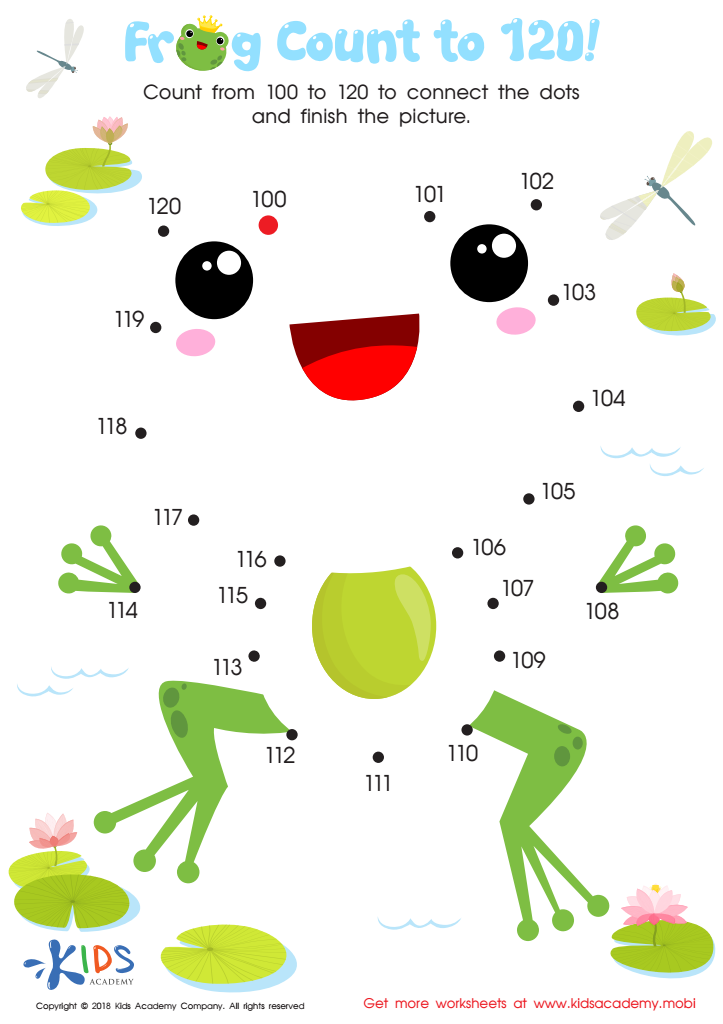
Frog Count to 120 Worksheet
Count from 100 to 120 with your child to help them finish the worksheet! Pet owners will be especially excited to help the cute frog complete its picture. With proper counting, your child will be able to easily connect the dots and finish the picture of the green frog.
 Assign to My Students
Frog Count to 120 Worksheet
Worksheet
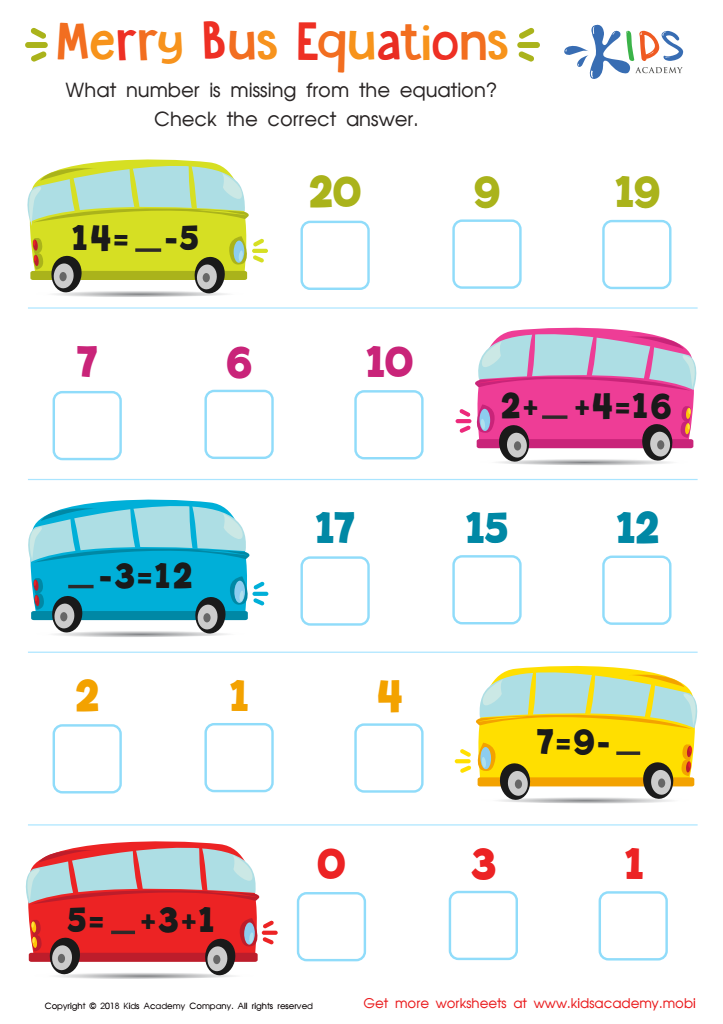
Merry Bus Equations Worksheet
Help your child master elementary math with this fun worksheet! Featuring colorful buses and a variety of addition and subtraction equations, some with 3-digit numbers, it encourages kids to find the missing number and choose the correct answer. Give them the practice they need for success!
Merry Bus Equations Worksheet
Worksheet
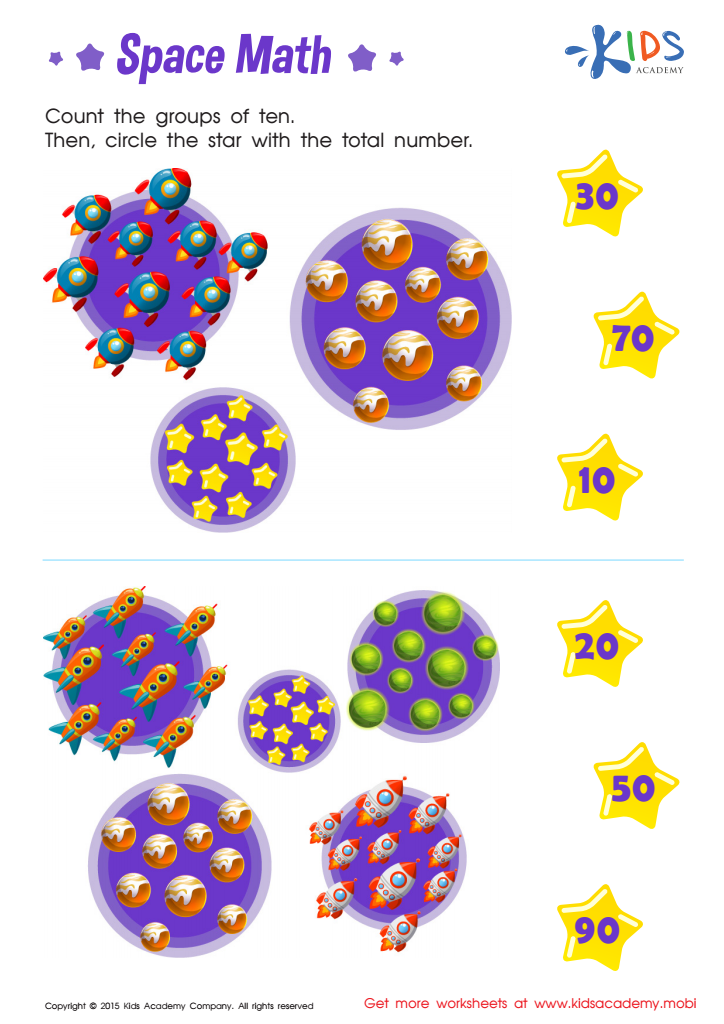
Learn dozens: Space math Worksheet
This worksheet uses Singapore Math's approach to help your child visually understand basic counting and math problems.
Learn dozens: Space math Worksheet
Worksheet
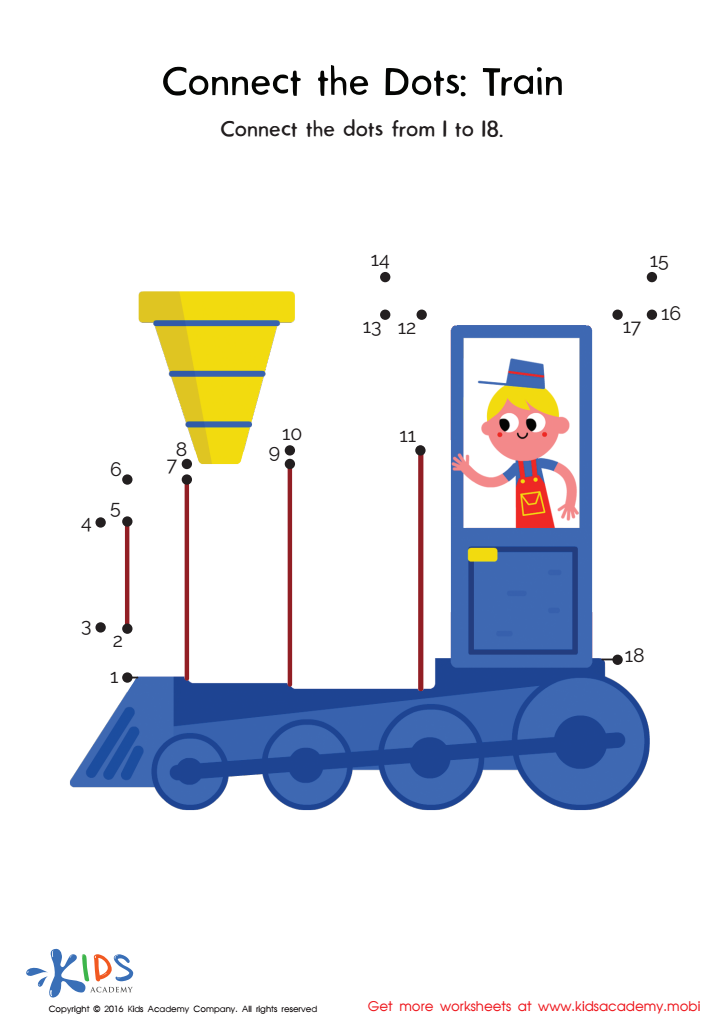
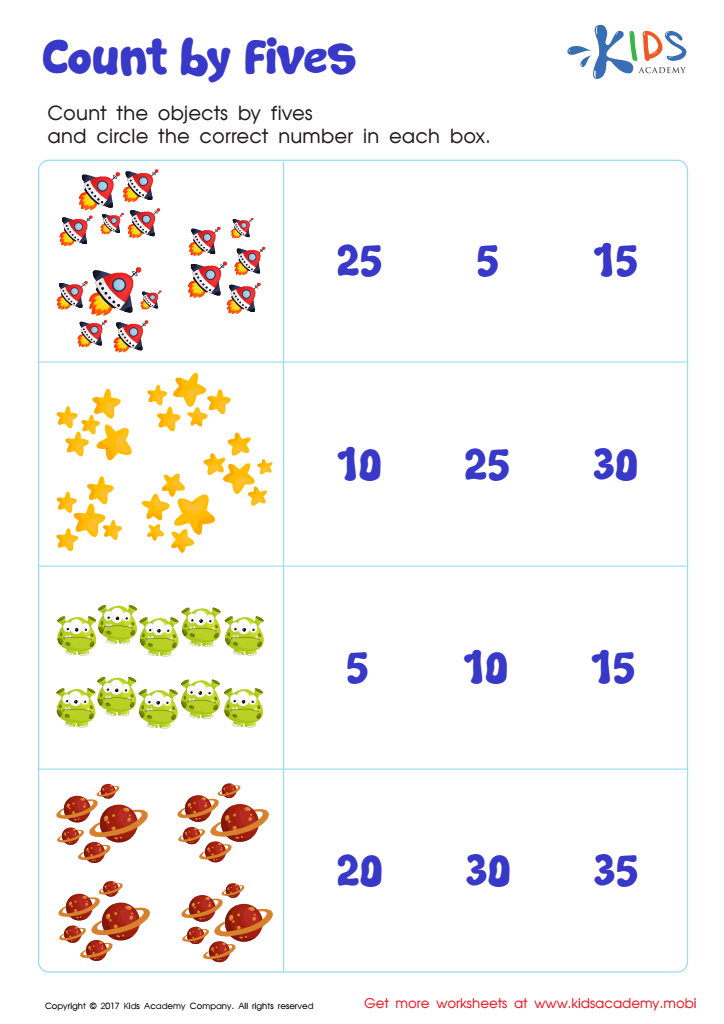
Skip Counting by 5s: Space Math Printable
This worksheet will provide your child with fun and practice counting by 5's. It'll help them visually count numbers, use problem solving skills and make connections between individual and groups of numbers. Counting money and various math concepts will become easier with this invaluable skill. Blast off with this fun and educational worksheet featuring space graphics.
Skip Counting by 5s: Space Math Printable
Worksheet
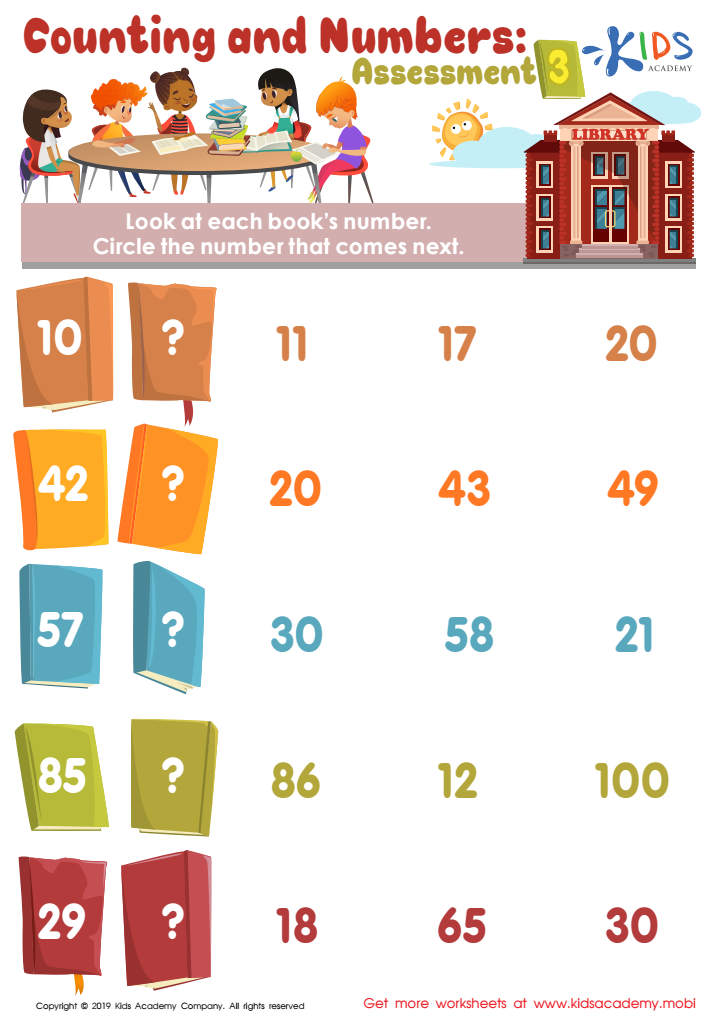
Counting and Numbers: Assessment Worksheet
Number line thinking is an essential math skill. Kids using this skill can compute math problems accurately and quickly. Our free assessment tests number line recognition; have your child pick the right number from the given options to follow the current number on the line. This assessment will give you an idea of their counting skills.
Counting and Numbers: Assessment Worksheet
Worksheet
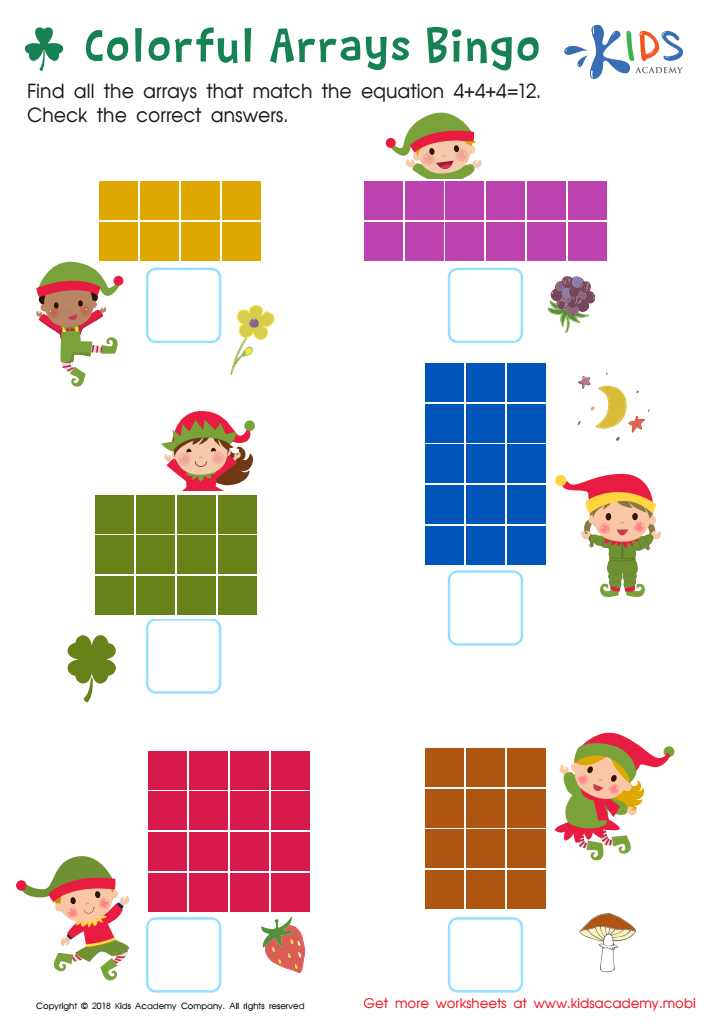
Colorful Arrays Bingo Worksheet
This worksheet stimulates thinking about arrays and how to represent them. Instruct students to count the 6 arrays and find which ones sum up to 12. Ask them to check the answers for accuracy.
Colorful Arrays Bingo Worksheet
Worksheet
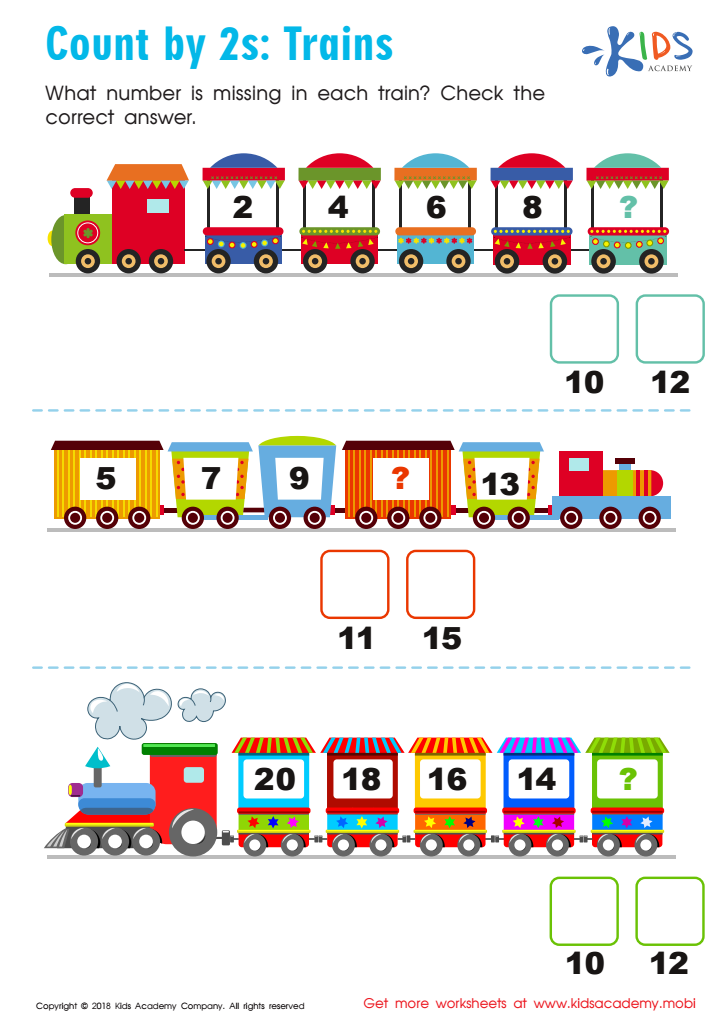
Count by 2's: Trains Worksheet
Teaching your kids quick computations? Get them skip-counting by 2s! They'll love filling in the colors of the train while counting, and it will help with 'counting up' or backward on paper or in their heads - essential for quick computations later.
Count by 2's: Trains Worksheet
Worksheet
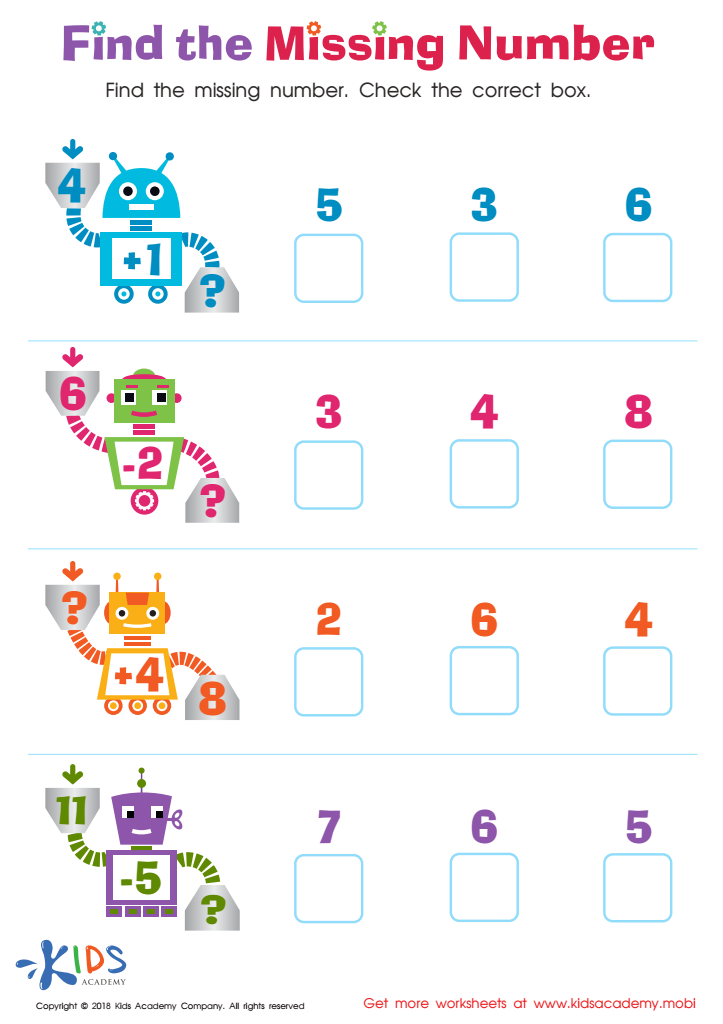
Find the Missing Number Worksheet
Repetition and practice are key to success in elementary math. Kids Academy's printable worksheet featuring delightful robots with addition and subtraction problems is a great way to reinforce this. Your child must find the missing number, check the box and complete the sheet. Here's a fun way to foster learning!
Find the Missing Number Worksheet
Worksheet
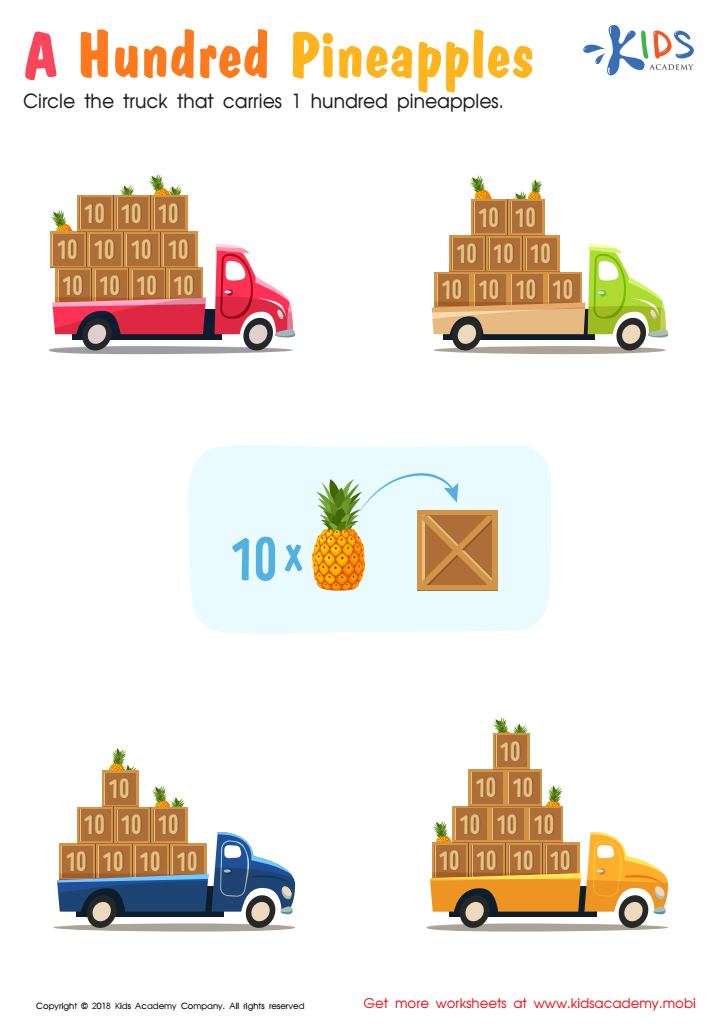
A Hundred Pineapples Worksheet
Can your child count in tens? Show them how to count 100 boxes in stacks of tens. A worksheet can help them understand the concept. Ask them to count boxes of pineapples in stacks of tens and circle the truck with 100 pineapples.
A Hundred Pineapples Worksheet
Worksheet
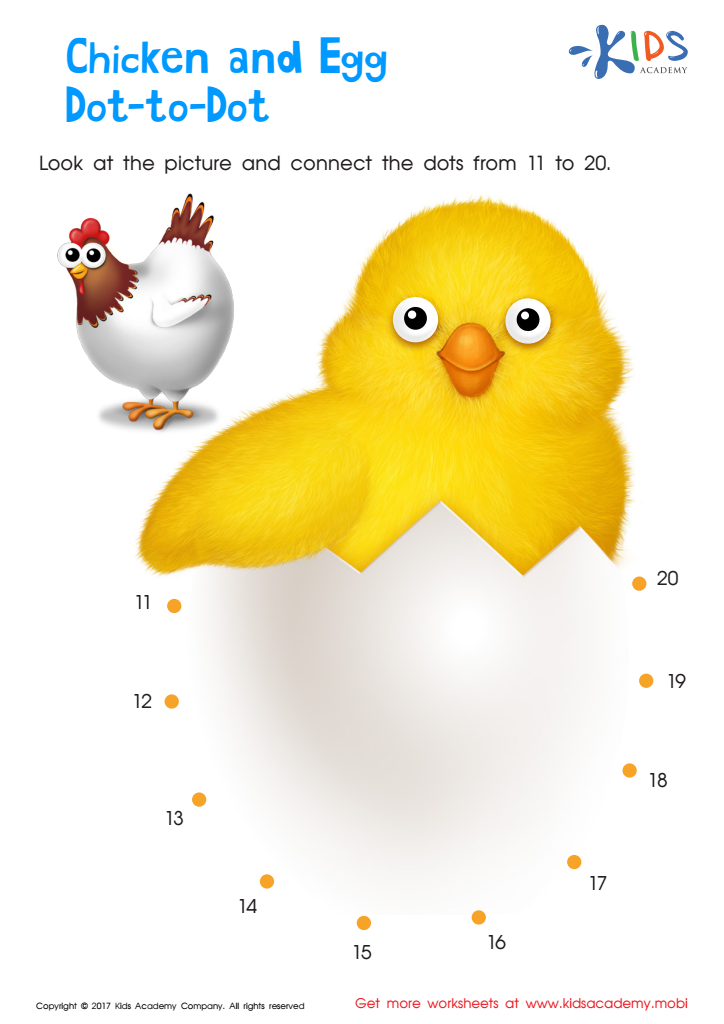
Ordering 11–20: Chicken & Egg Dot–to–dot Worksheet
Help your child hatch the chick and practice their counting skills with this dot to dot worksheet – the chicken came first! Connect the dots 11-20 to have fun and learn at the same time. Experience meaningful practice and gain confidence while drawing great pictures.
Ordering 11–20: Chicken & Egg Dot–to–dot Worksheet
Worksheet
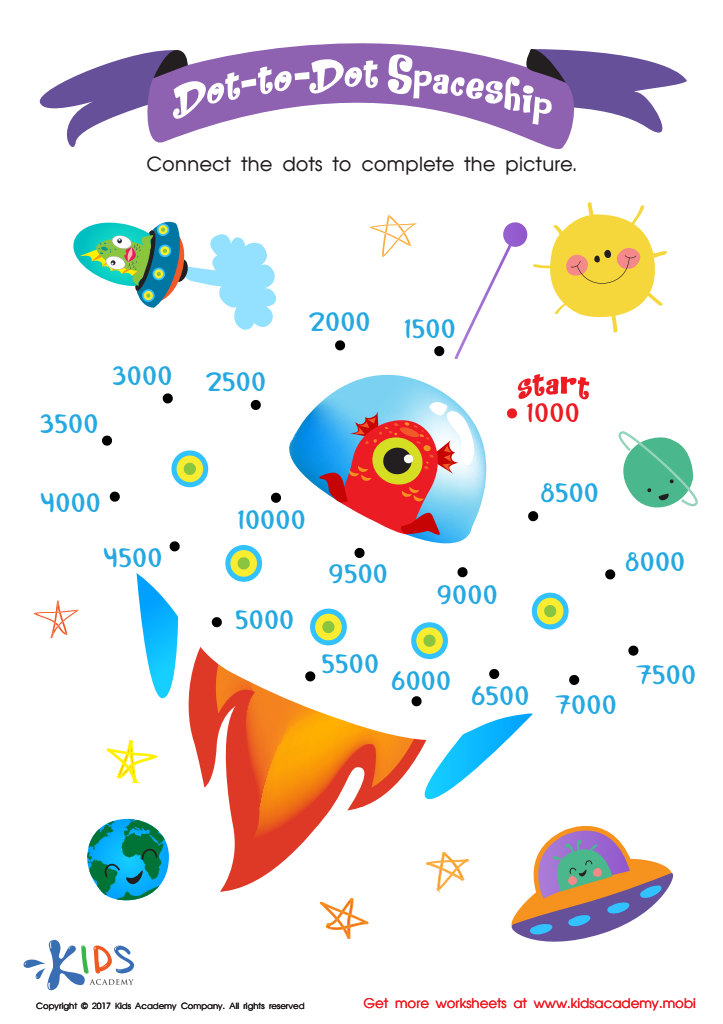
Dot to Dot Worksheet for 3rd Grade
Let your 3rd grader develop better number skills with this dot-to-dot worksheet! They can have fun outlining a spaceship as they skip count by 500 up to 10,000. It's a great way to boost their number sense and make learning more exciting.
Dot to Dot Worksheet for 3rd Grade
Worksheet
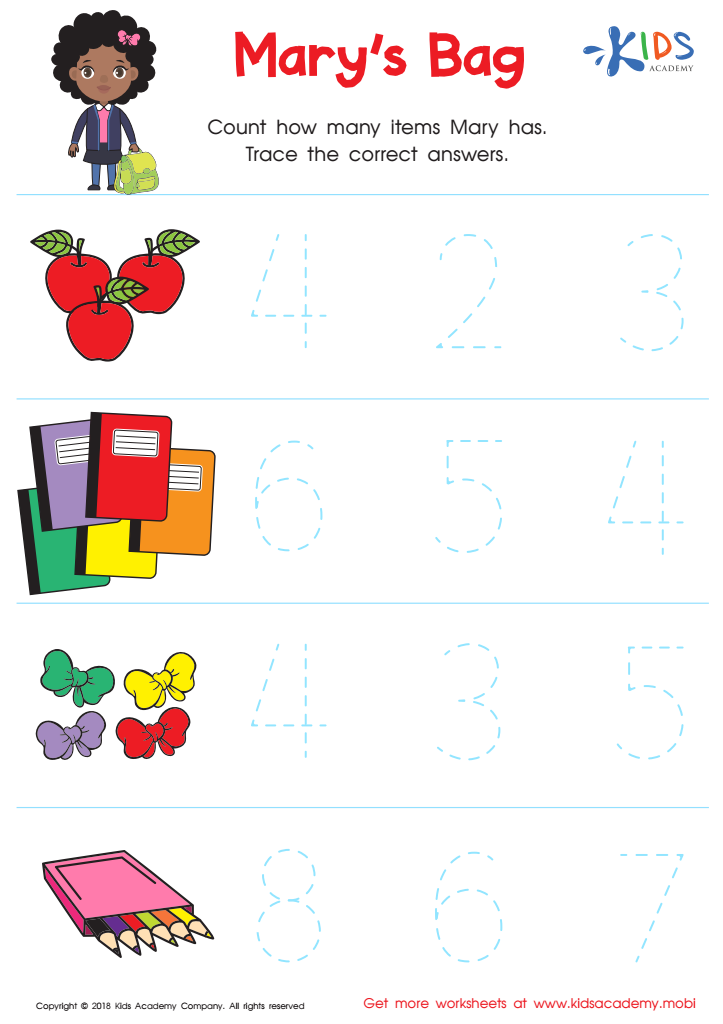
Kindergarten Number Tracing: Mary's Bag Worksheet
Counting and writing skills are honed with this kindergarten tracing worksheet. Guide Mary in counting the items in her bag then trace the correct number for each. Your child will get a great head start on essential kindergarten skills!
Kindergarten Number Tracing: Mary's Bag Worksheet
Worksheet
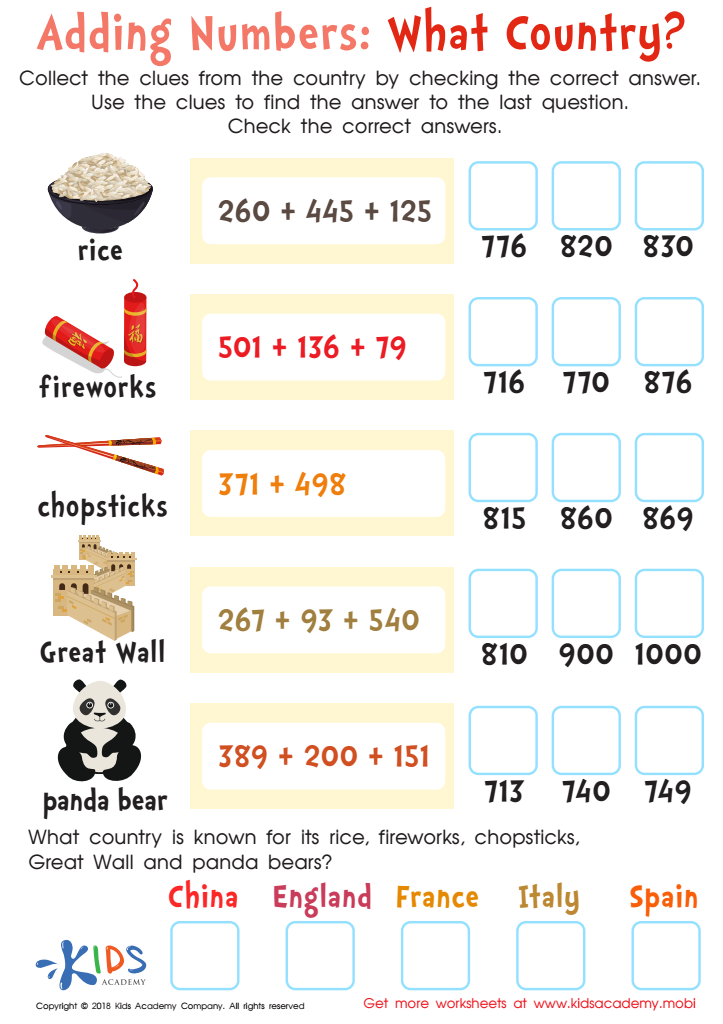
Adding Numbers: What Country Worksheet
Students can use this worksheet to learn more about different countries. Have them collect clues from the worksheet to answer the last question. Help them check the correct answer, and they'll gain knowledge about each country's food, animals, celebrations, and landmarks.
Adding Numbers: What Country Worksheet
Worksheet
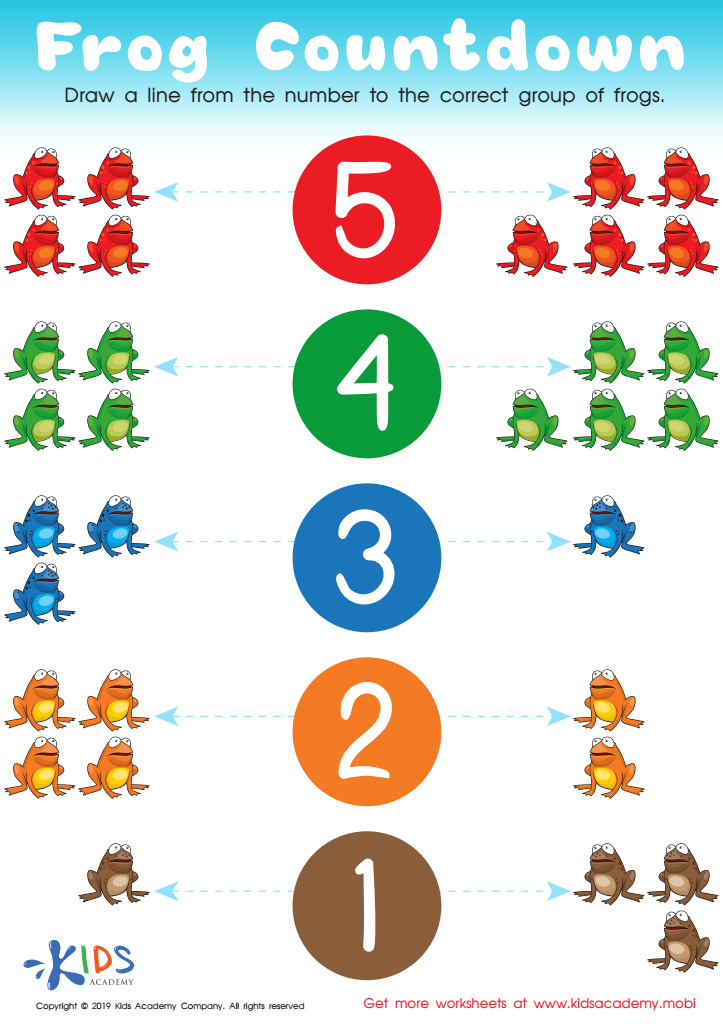
Frog Countdown Worksheet
Make learning fun for kids with traceable printouts! This exercise has kids counting frogs and drawing a line to match the number. Expand their knowledge with activities like this, beyond the basics they learn in school. Help them explore new ways of learning and make it enjoyable.
Frog Countdown Worksheet
Worksheet
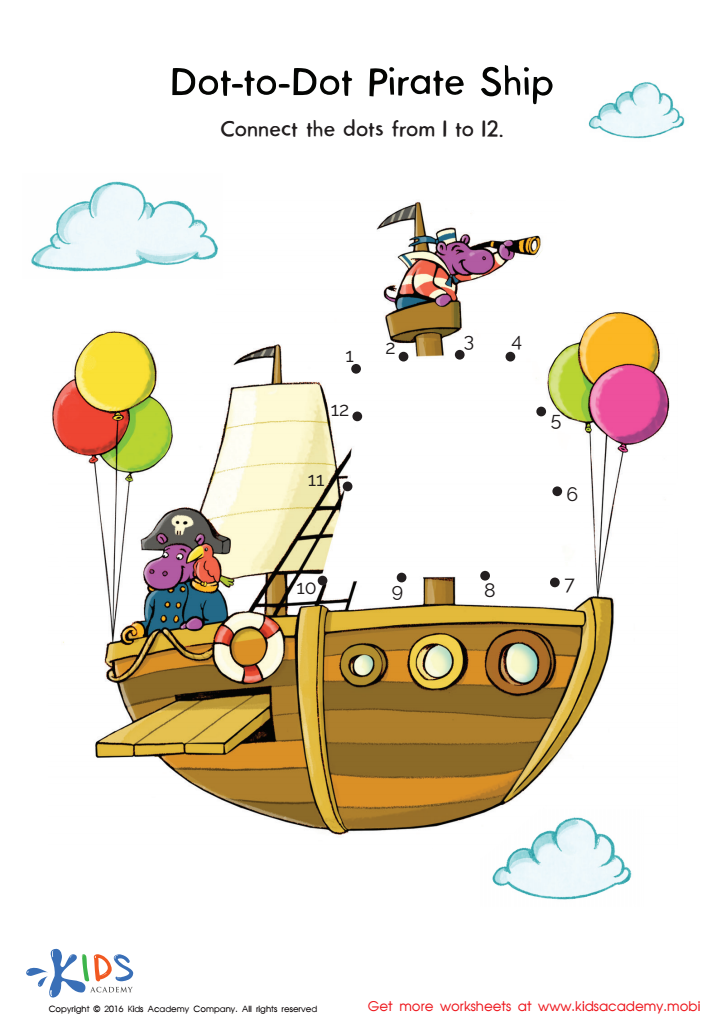
Pirate Ship Connect Dots Worksheet
Encourage your child's creativity with this pirate dot to dot! They'll connect the dots to craft a ship and then decorate the sail. This worksheet will help them practice numeracy, counting, and other reasoning skills. Once they understand how the dots come together to make a picture, they'll be motivated to move on to tougher challenges.
Pirate Ship Connect Dots Worksheet
Worksheet
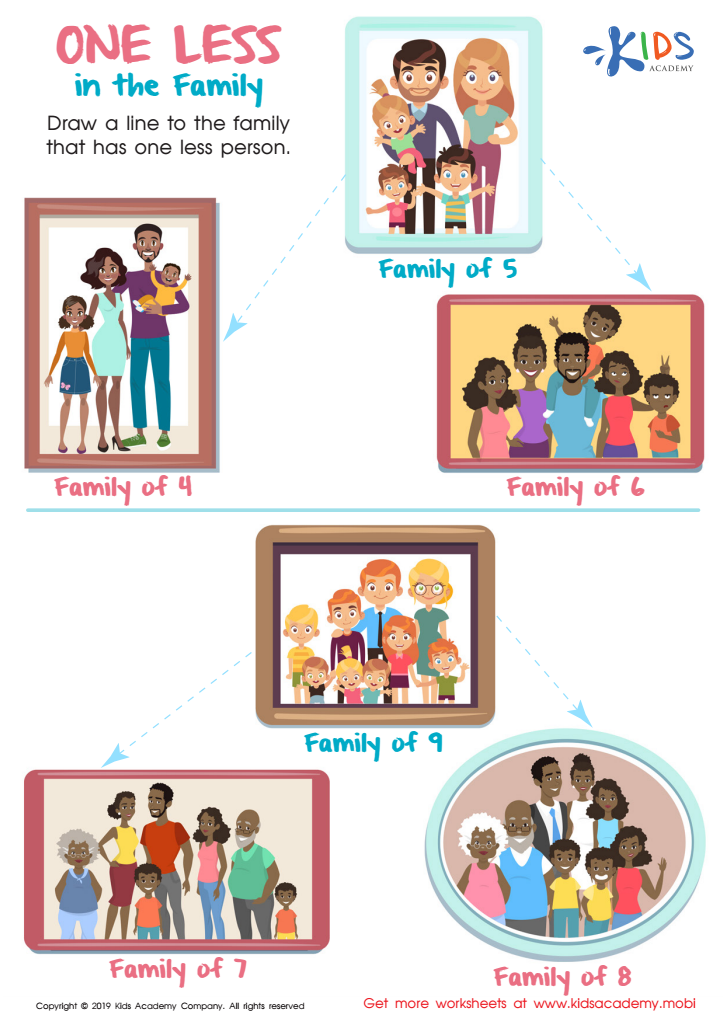
One Less in the Family Worksheet
How many people are in your family? Can your little ones count and tell you? A family usually consists of a mum, dad and kids, but may also include grandparents, uncles, aunties and cousins. This worksheet has pictures of different families; help your kids count the members and draw a line to the one with one less person.
One Less in the Family Worksheet
Worksheet
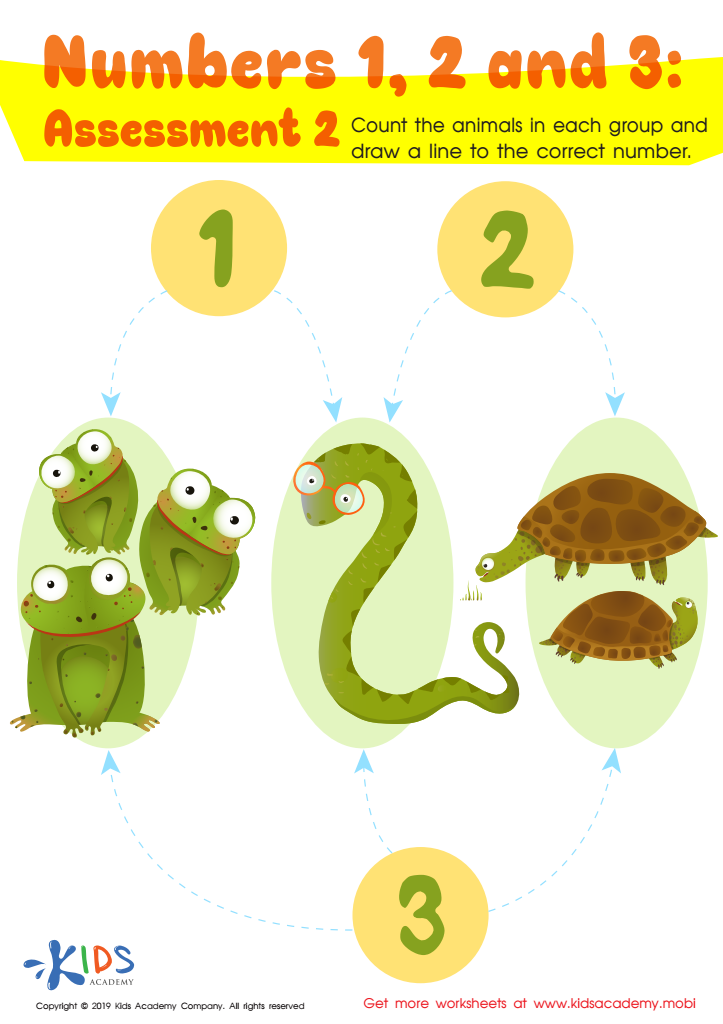
Numbers 1, 2 and 3: Assessment 2 Worksheet
Introduce your young student to some new friends! With traceable lines and adorable pictures, they'll practice matching numbers and pictures while strengthening number and counting skills. They'll also work on their fine-motor ability, but they'll just think they're having fun with loopy lines.
Numbers 1, 2 and 3: Assessment 2 Worksheet
Worksheet
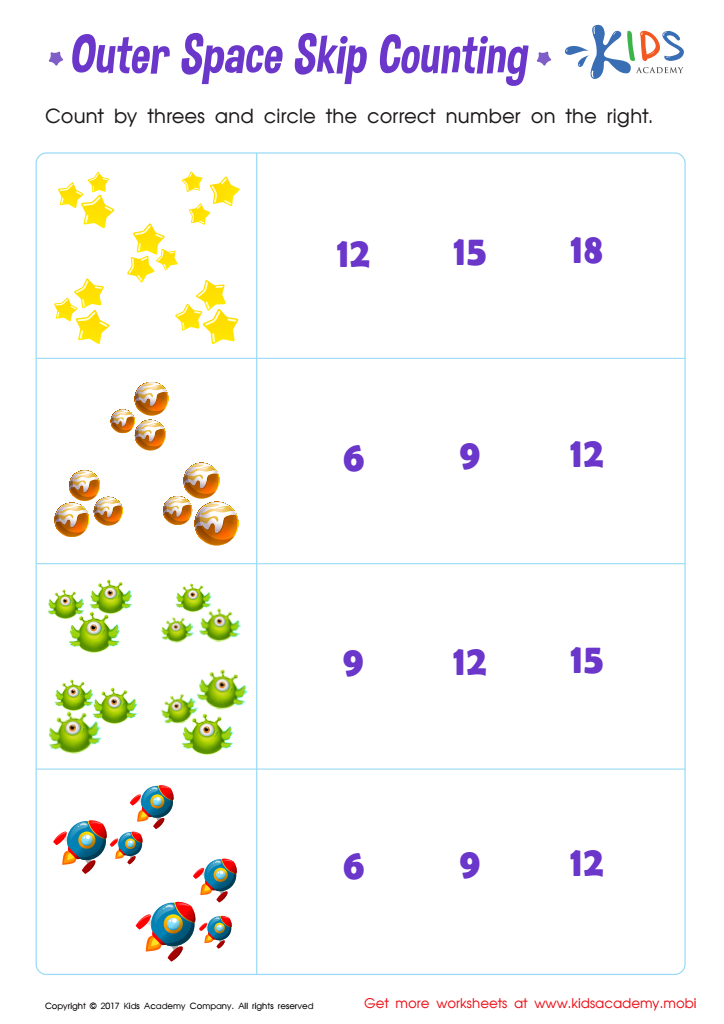
Skip Counting by 3s: Outer Space Skip Counting Printable
Want to set your child up for math success? Get them this printable worksheet that helps them practice counting in groups of 3’s, building a foundation for more advanced math skills. Skipping counting helps kids master logical reasoning and cognitive skills, making a connection between counting objects individually and in groups. The colorful images will keep them engaged and having fun - without realizing how hard they're working!
Skip Counting by 3s: Outer Space Skip Counting Printable
Worksheet
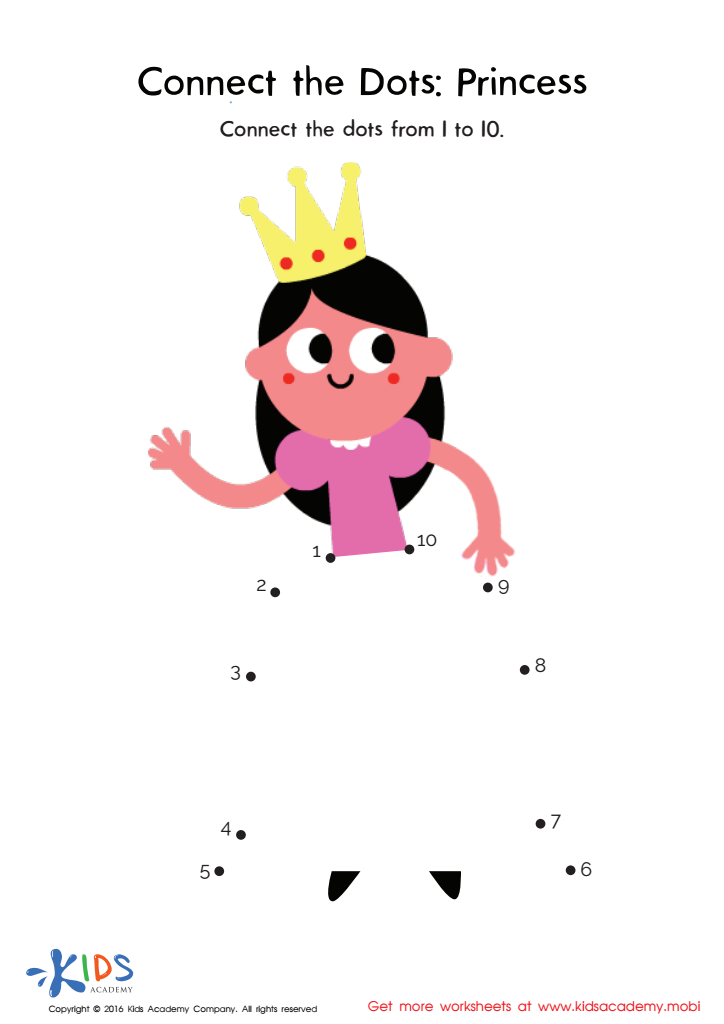
Princess Connect Dots Worksheet
Kids love fairy tales and their enchanting characters. With this princess connect the dots worksheet, your child will practice recognizing numbers, boost creativity, and find out that following the numbers leads to a beautiful picture. After connecting the dots, let your child decorate the princess’ dress for even more fun. It's a great way for kids to practice skills with plenty of fun and joy!
Princess Connect Dots Worksheet
Worksheet
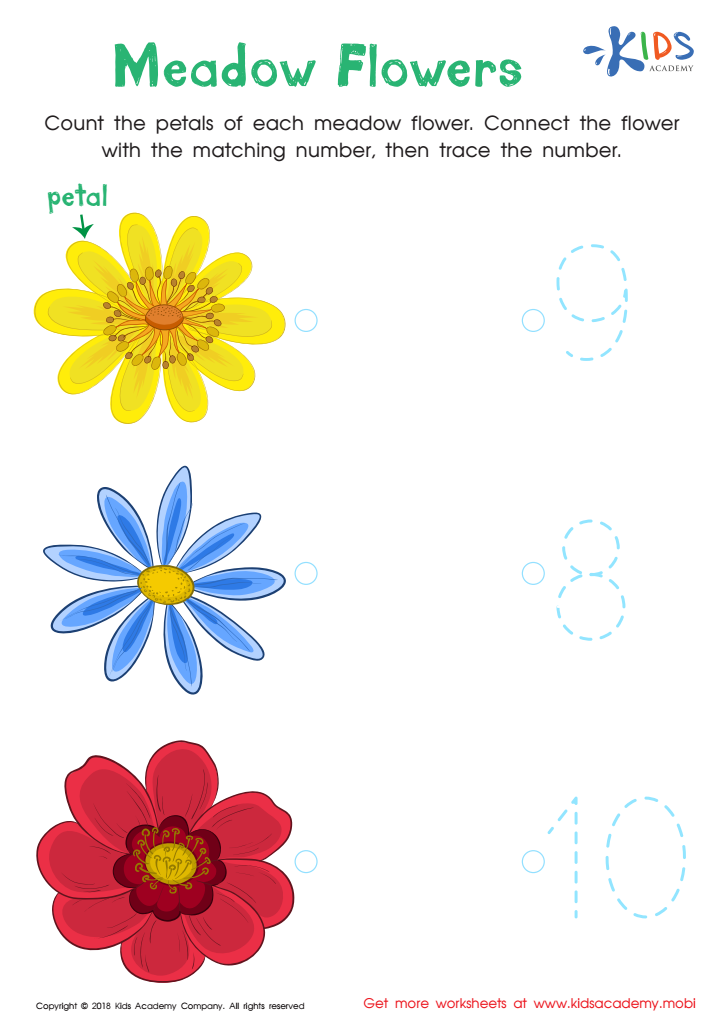
Kindergarten Number Tracing: Medow Flowers Worksheet
Take your child to the garden to count flower petals and trace numbers with this fun kindergarten PDF worksheet. They'll learn to count and write, all while enjoying the sweet scent of the flowers.
Kindergarten Number Tracing: Medow Flowers Worksheet
Worksheet
Join Kids Academy for Free
Who is primarily going to use this learning content?








Number sequencing is a fundamental skill for children aged 4-9, which lays the groundwork for their mathematical understanding. For parents and teachers, fostering proficiency in number sequencing is vital for several reasons.
Firstly, number sequencing enhances cognitive development, as it boosts a child's ability to recognize patterns, understand order, and make predictions—all essential skills for problem-solving. By encouraging children to think about numbers in sequences, we help them understand the relationships between numbers, not just their individual values.
Secondly, sequencing builds a strong mathematical foundation. Mastery of number order aids in learning arithmetic operations later on, such as addition and subtraction, where understanding the sequential nature of numbers is crucial.
Additionally, number sequencing can boost literacy skills too. Aligning numbers in a sequence requires children to focus and enhance their attention to detail, translating to better reading and comprehension skills.
Ultimately, number sequencing is more than just a math skill; it supports overall academic development and encourages logical thinking. For parents and teachers, prioritizing this practice fosters a love for math and equips children with essential skills that benefit their overall learning journey. Engaging them early in these activities can lead to lasting confidence and competence in mathematical concepts.








