Filters

1664 filtered results

Clear all filters
Favorites
With answer key
Interactive

1664 filtered results

Difficulty Level

Grade


Subject

    Check out this FREE Trial Lesson on Math for age 7-9!

    Measure and Compare 2 objects

    Favorites
    With answer key
    Interactive
    • 7-9
    • Math
    Adding up to 100 Without Regrouping: Page 6
    Adding up to 100 Without Regrouping: Page 6
    Adding up to 100 Without Regrouping: Page 6
    Worksheet
    Length Comparison Quest Worksheet
    Length Comparison Quest Worksheet

    Length Comparison Quest Worksheet

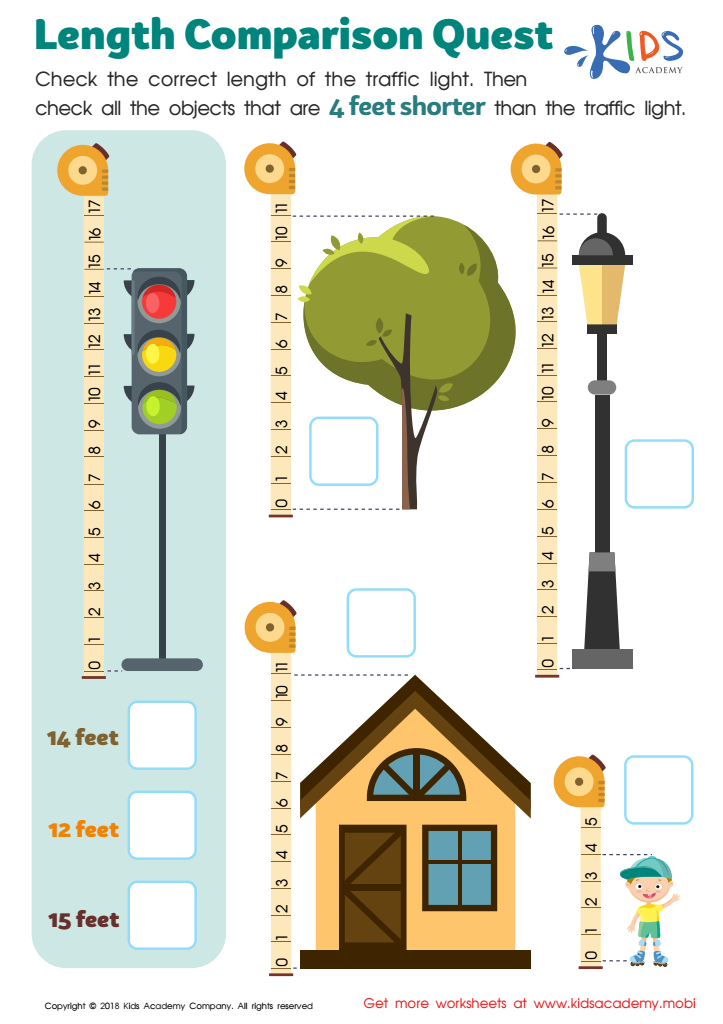
    Knowing measurement tools and how to use them is just the start. To be proficient, your kid must be able to accurately compare objects and their lengths. With the 'Length Comparison Quest' worksheet, they will check the correct length of the traffic light in the picture and then compare other objects to it, marking those that measure 4 feet shorter.
    Length Comparison Quest Worksheet
    Worksheet
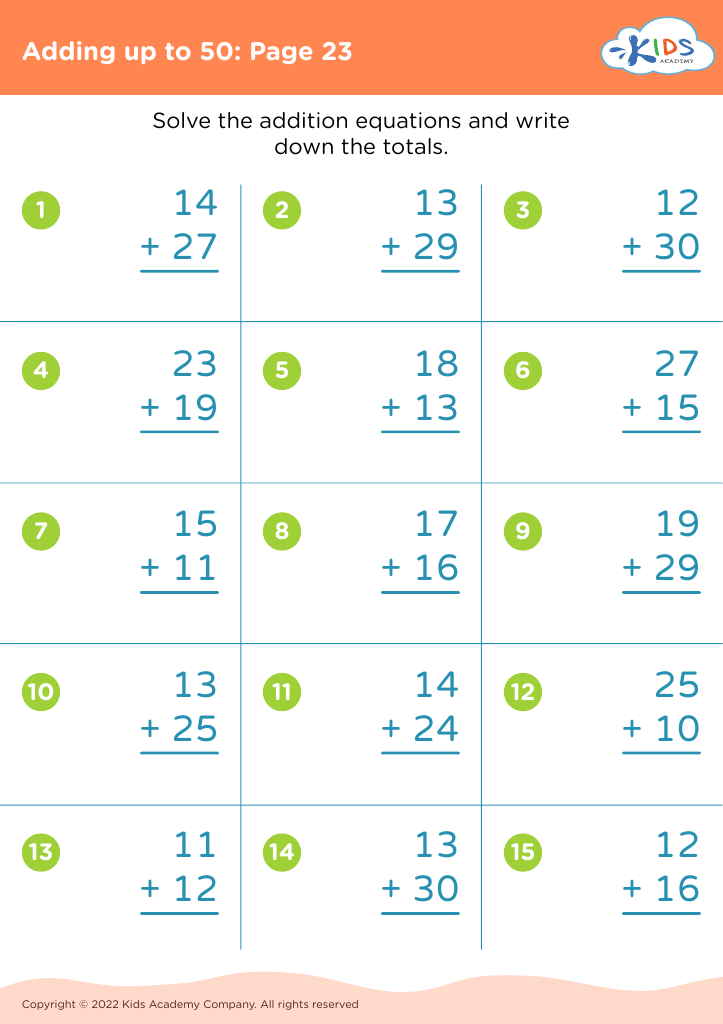
    Adding up to 50: Page 23
    Adding up to 50: Page 23

    Adding up to 50: Page 23

    Adding up to 50: Page 23
    Worksheet
    Adding up to 100 with Regrouping: Page 72
    Adding up to 100 with Regrouping: Page 72
    Adding up to 100 with Regrouping: Page 72
    Worksheet
    Printable Money Games and PDF Worksheets: One Cent or the Penny
    Printable Money Games and PDF Worksheets: One Cent or the Penny

    One Cent or the Penny Money Worksheet
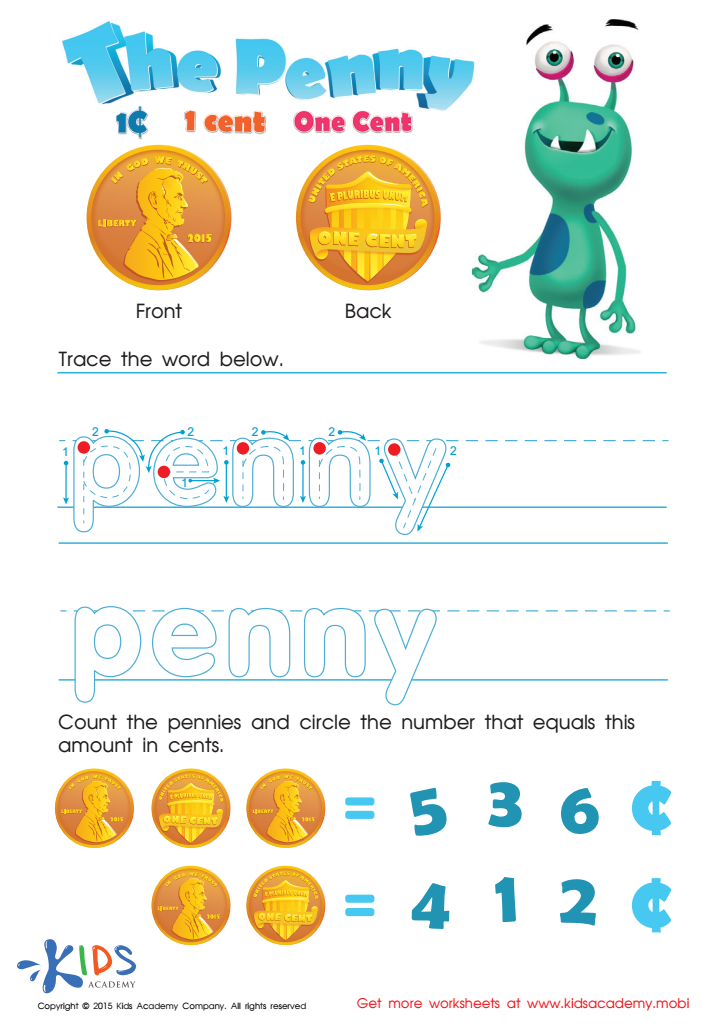
    Counting money made easy with Kids Academy's new collection of worksheets! Start with the one cent coin, or "Penny": trace it and count the pennies to work out the total. Visit our site for more free, printable money worksheets.
    One Cent or the Penny Money Worksheet
    Worksheet
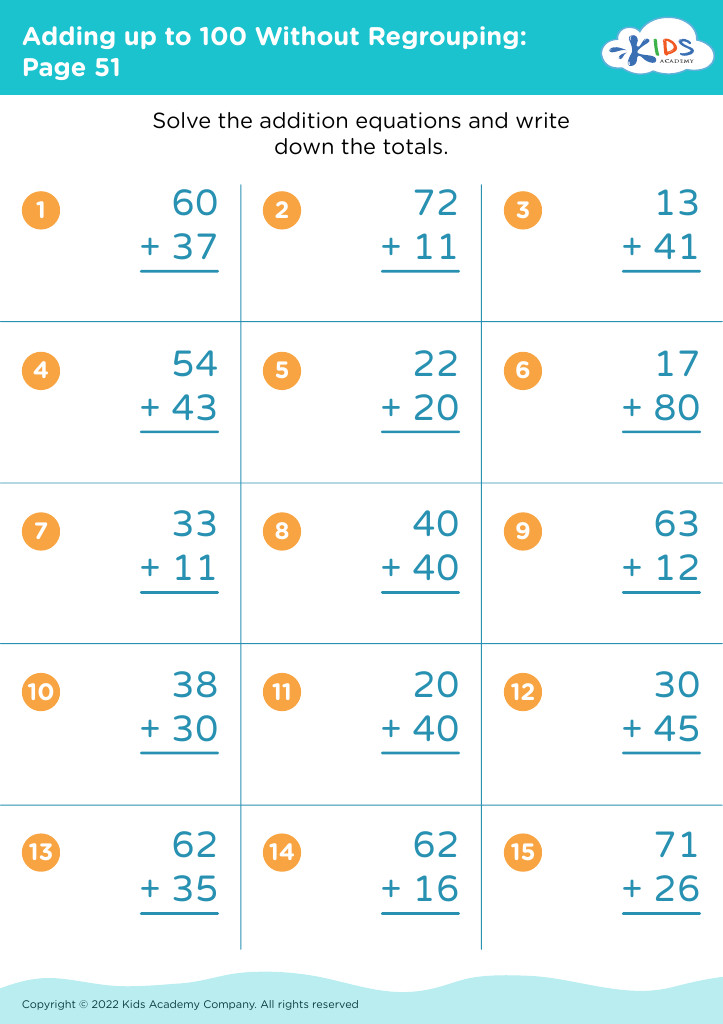
    Adding up to 100 Without Regrouping: Page 51
    Adding up to 100 Without Regrouping: Page 51
    Adding up to 100 Without Regrouping: Page 51
    Worksheet
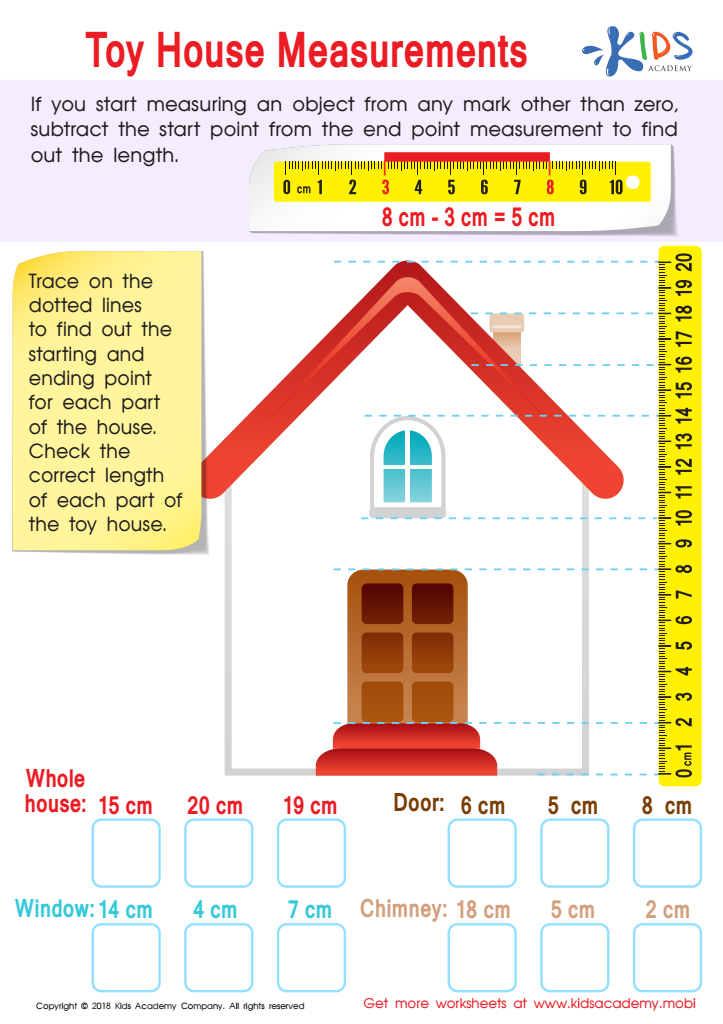
    Toy House Measurements Worksheet
    Toy House Measurements Worksheet

    Toy House Measurements Worksheet

    This worksheet requires math and measuring skills. When measuring an object from a non-zero starting point, subtract the start point from the end point to get the correct length. Kids must trace the dotted lines to get the right length for each part of the house.
    Toy House Measurements Worksheet
    Worksheet
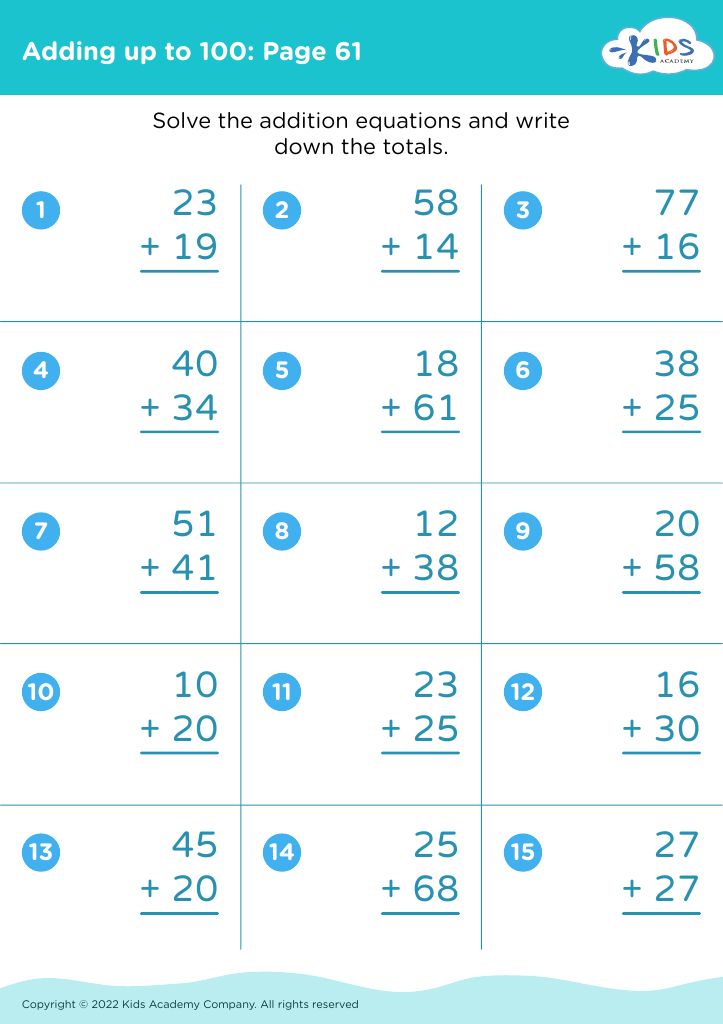
    Adding up to 100: Page 61
    Adding up to 100: Page 61

    Adding up to 100: Page 61

    Adding up to 100: Page 61
    Worksheet
    Duckling Subtraction Worksheet
    Duckling Subtraction Worksheet

    Duckling Subtraction Worksheet

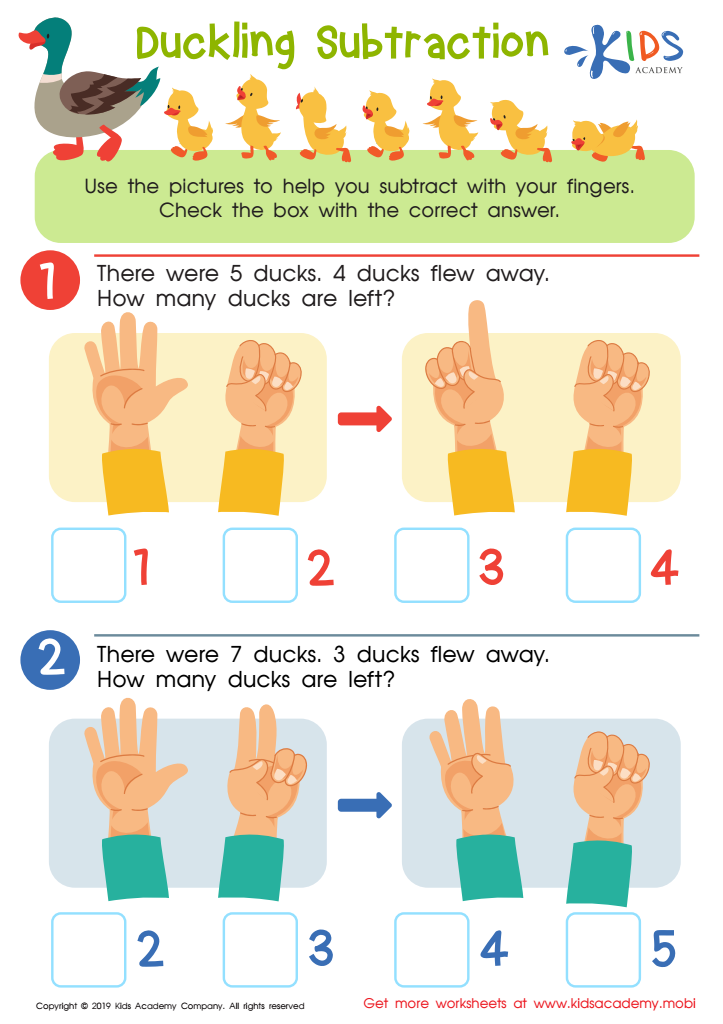
    Help your students learn equations and math with this fun worksheet. There are two questions to solve with the help of the pictures. Ask them to subtract with their fingers and check the box with the correct answer. This makes math easier and more enjoyable!
    Duckling Subtraction Worksheet
    Worksheet
    Rounding on the National Mall Worksheet
    Rounding on the National Mall Worksheet
    Rounding on the National Mall Worksheet
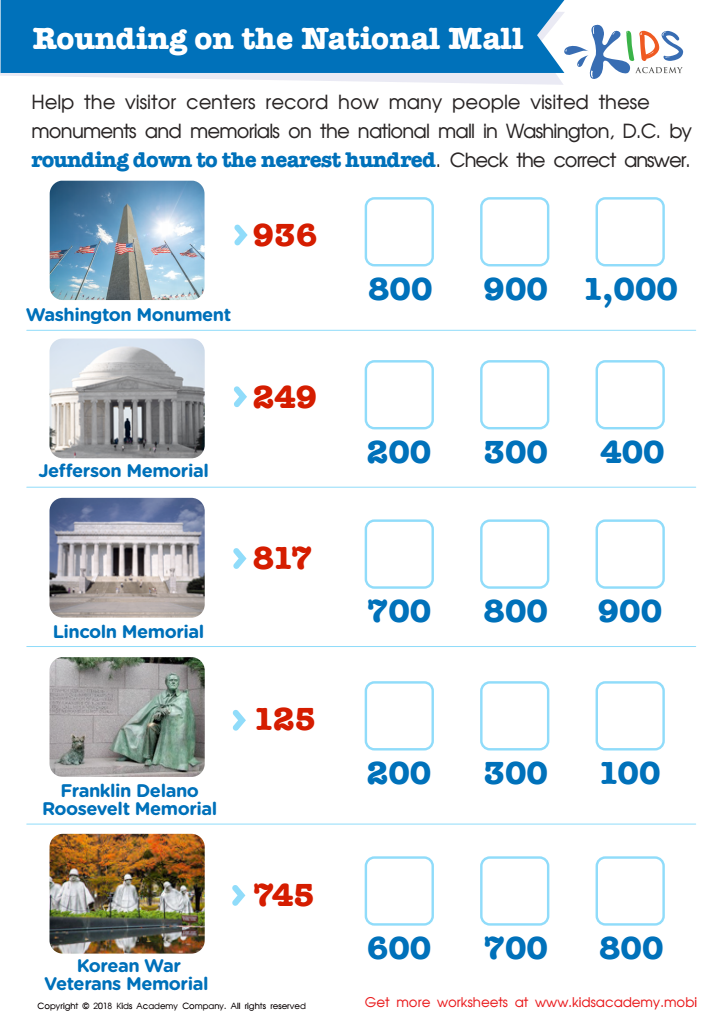
    Math and social studies come together in this worksheet. Learners must round numbers to record attendance at Washington D.C. monuments and memorials. Remind them to round down to the nearest hundred. Extend the lesson by talking about each monument - a great way to teach or refresh your child's knowledge of these national landmarks!
    Rounding on the National Mall Worksheet
    Worksheet
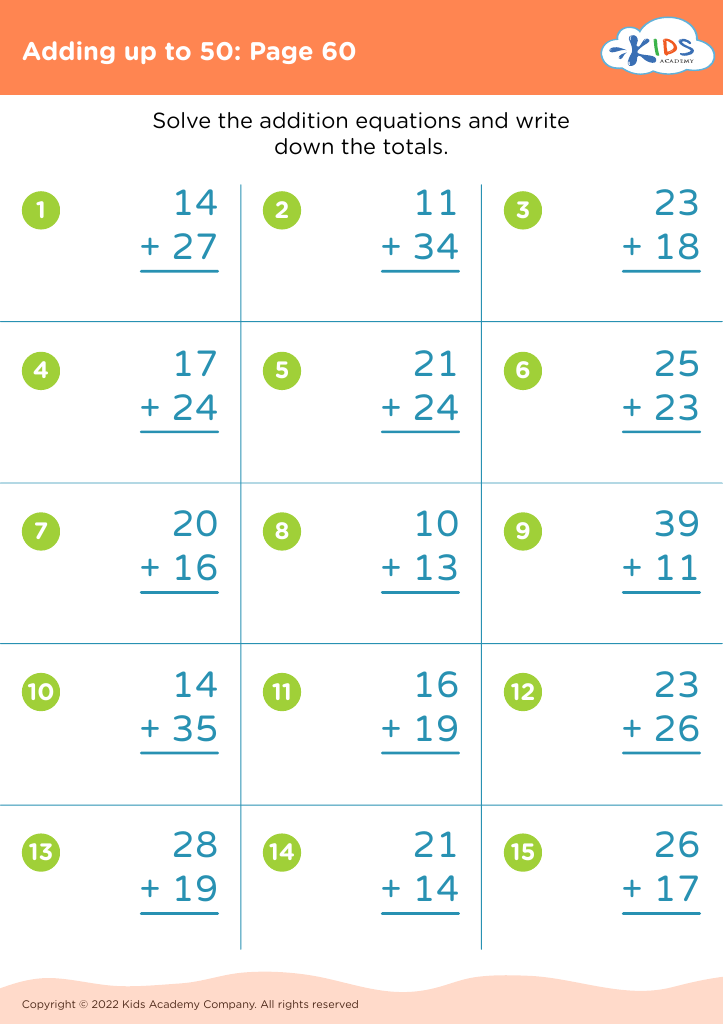
    Adding up to 50: Page 60
    Adding up to 50: Page 60

    Adding up to 50: Page 60

    Adding up to 50: Page 60
    Worksheet
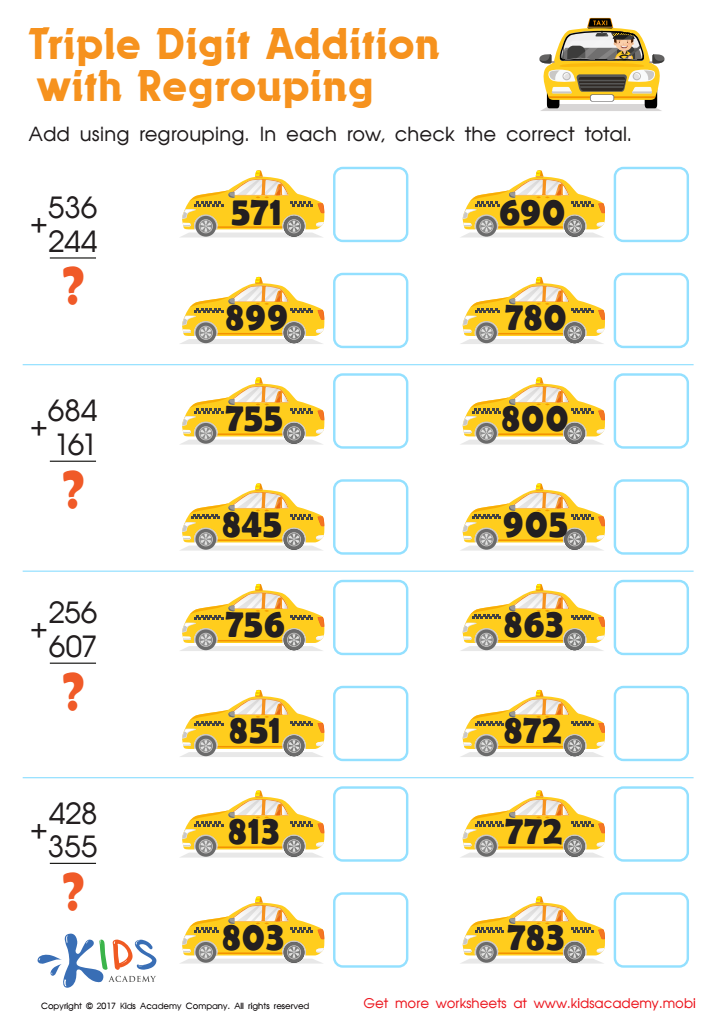
    3 Digit addition with regrouping worksheet
    3 Digit addition with regrouping worksheet

    Triple Digit Addition with Regrouping Worksheet

    Kids will love the bright visuals as they transport their child to the correct answer after completing each 3-digit addition problem.
    Triple Digit Addition with Regrouping Worksheet
    Worksheet
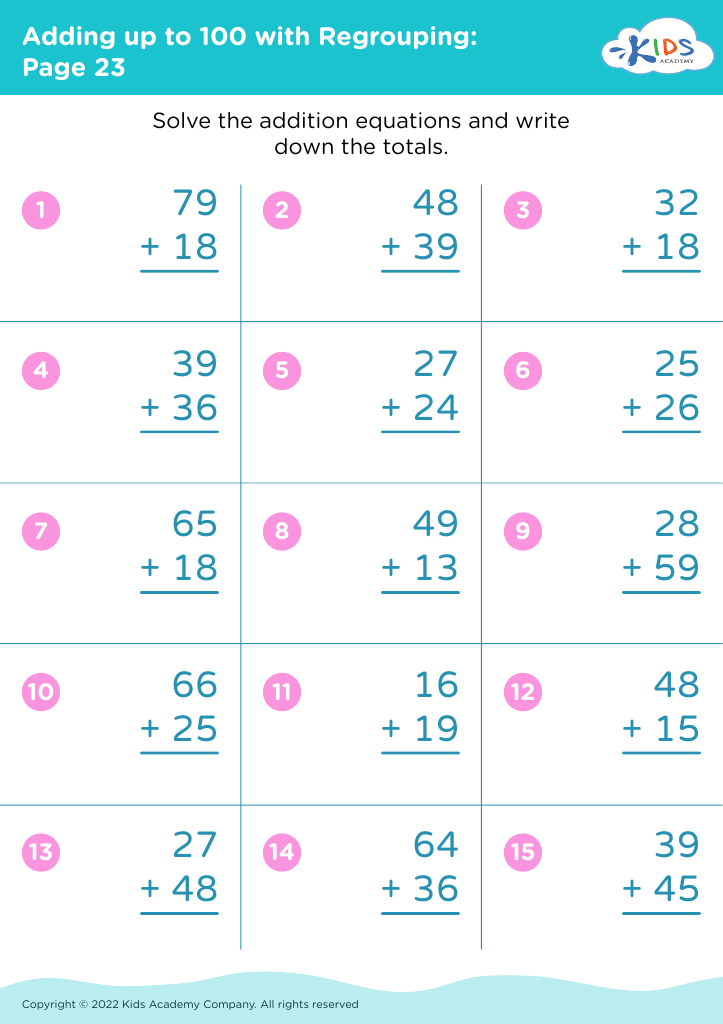
    Adding up to 100 with Regrouping: Page 23
    Adding up to 100 with Regrouping: Page 23
    Adding up to 100 with Regrouping: Page 23
    Worksheet
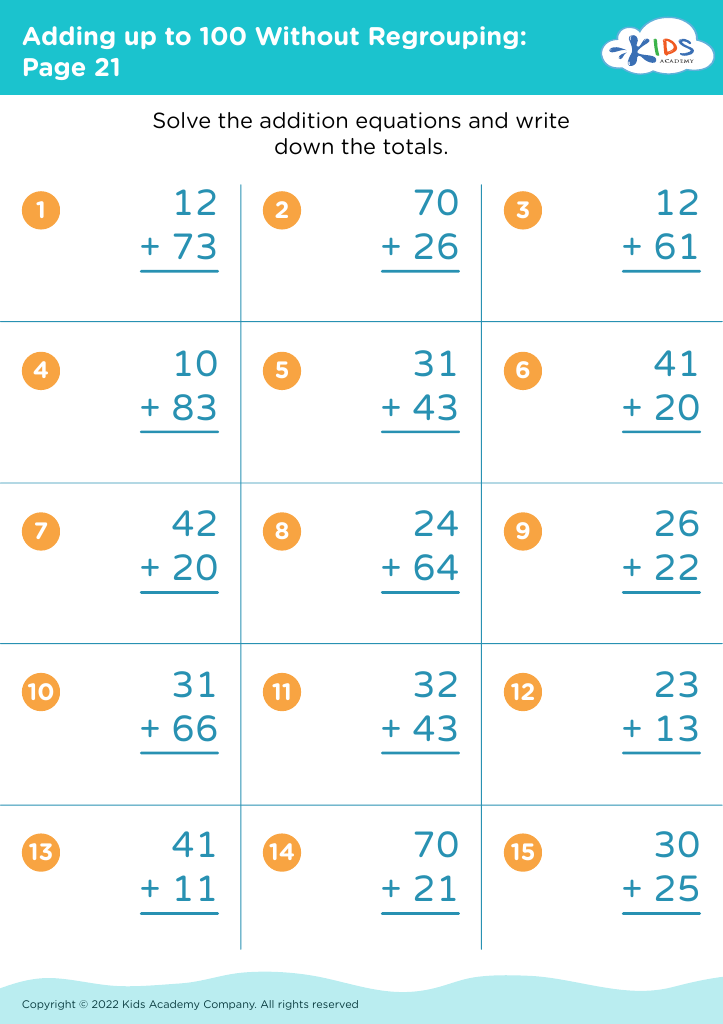
    Adding up to 100 Without Regrouping: Page 21
    Adding up to 100 Without Regrouping: Page 21
    Adding up to 100 Without Regrouping: Page 21
    Worksheet
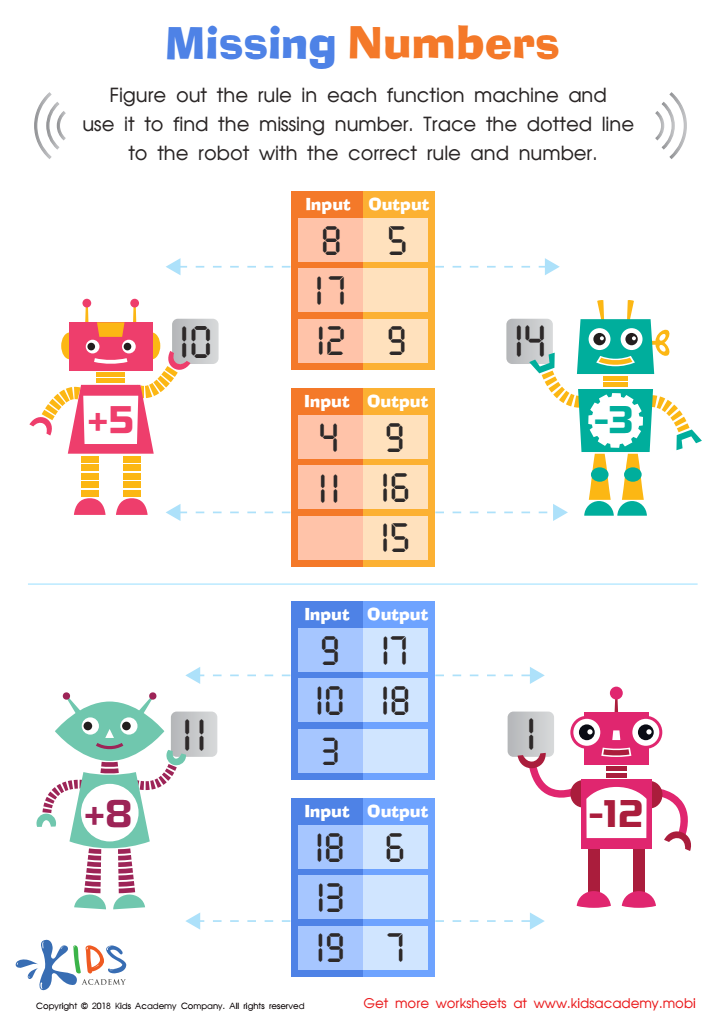
    Missing Numbers Worksheet
    Missing Numbers Worksheet

    Missing Numbers Worksheet

    Elementary students can learn the important pre-algebra skill of solving for missing numbers! Our robots guide them along with number-filled bellies and missing answers in their hands. Kids can examine the other numbers in each graph, use the rule to solve the missing number, and check their work with the missing number to ensure correctness.
    Missing Numbers Worksheet
    Worksheet
    What's an Array? Worksheet
    What's an Array? Worksheet

    What's an Array? Worksheet

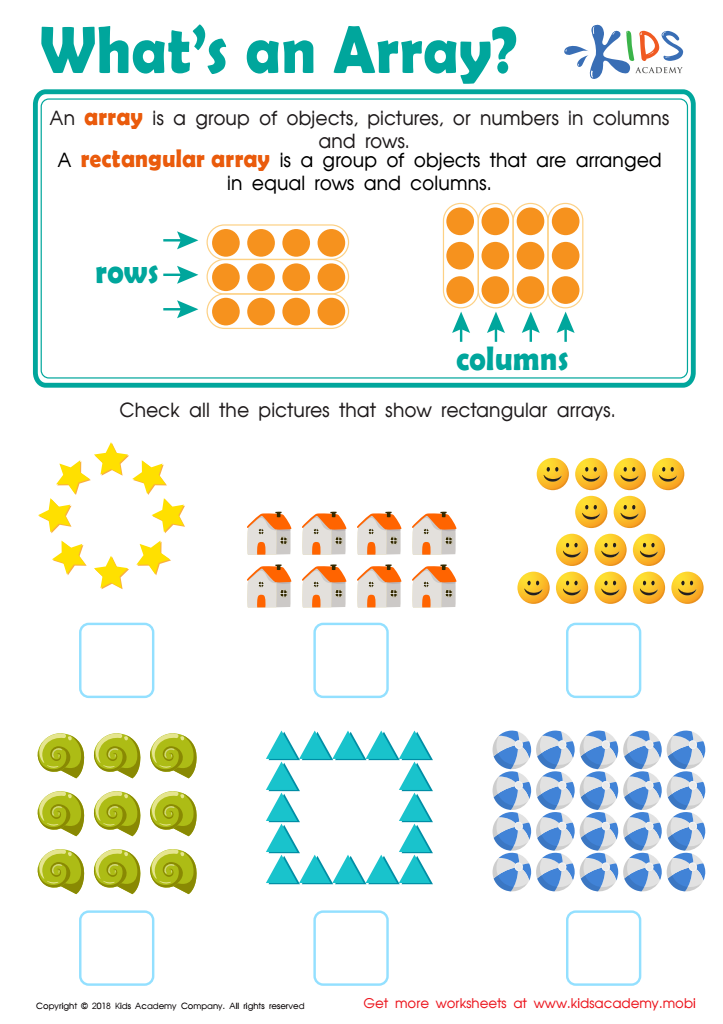
    Explain to your child that an array is a group of objects, pictures, or numbers in columns and rows. Show them a rectangular array is a group of objects in equal rows and columns. Guide them to check the pictures in the worksheet to spot any rectangular arrays. Help them remember this concept.
    What's an Array? Worksheet
    Worksheet
    Adding up to 1000 Without Regrouping: Page 60
    Adding up to 1000 Without Regrouping: Page 60
    Adding up to 1000 Without Regrouping: Page 60
    Worksheet
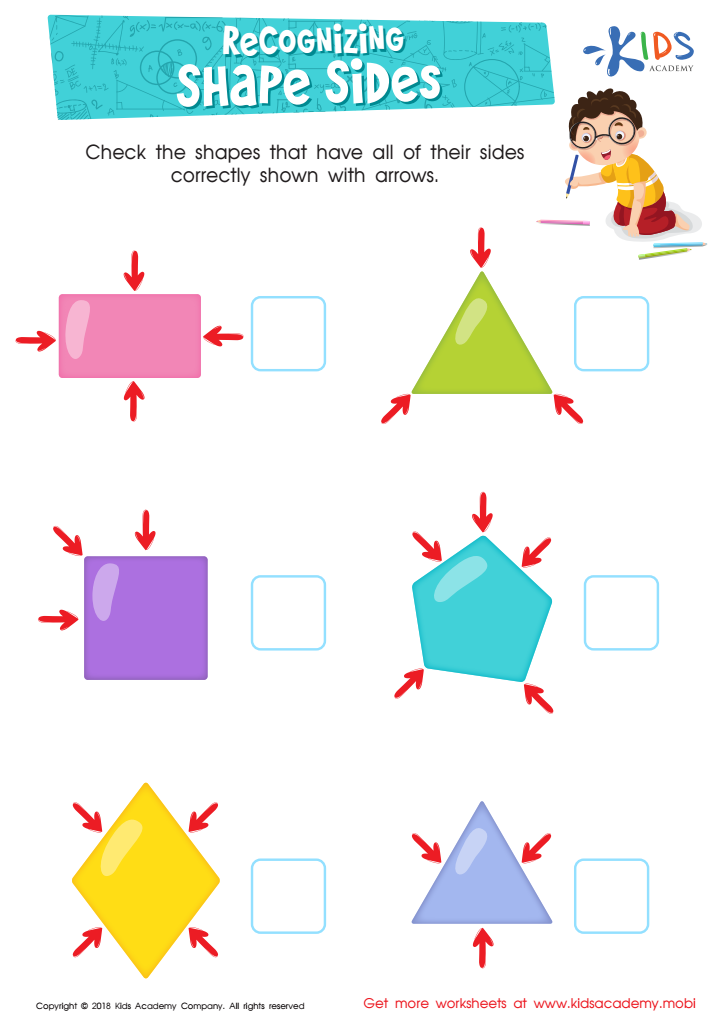
    Recognizing Shape Sides Worksheet
    Recognizing Shape Sides Worksheet

    Recognizing Shape Sides Worksheet

    This exercise will help your child recognize shape sides. Go over the difference between sides and angles first, then have them check the shapes with arrows to show the sides. They'll quickly get the hang of it and find it much easier after completing the colorful worksheet.
    Recognizing Shape Sides Worksheet
    Worksheet
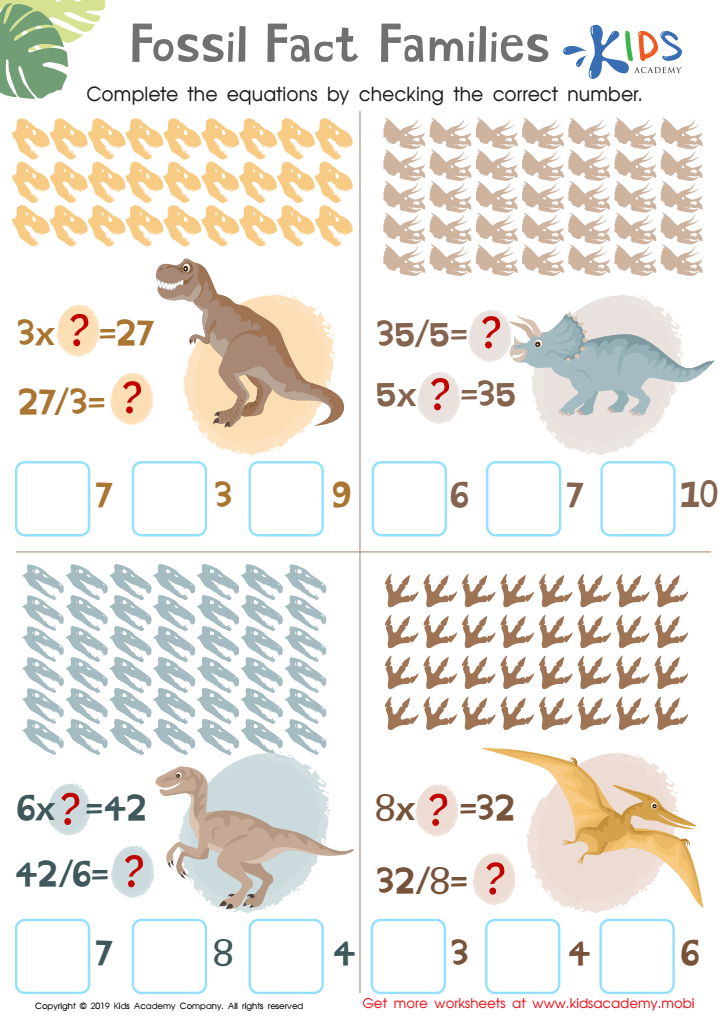
    Fossil Fact Families Worksheet
    Fossil Fact Families Worksheet
    Fossil Fact Families Worksheet
    Kids love dinosaurs, so why not learn about fact families with some fun prehistoric friends? This PDF worksheet uses picture arrays to help kids understand the relationships between multipliers and dividends. It helps them build automaticity with multiplication facts so they can quickly solve division problems and see the relationships between the two fact families.
    Fossil Fact Families Worksheet
    Worksheet
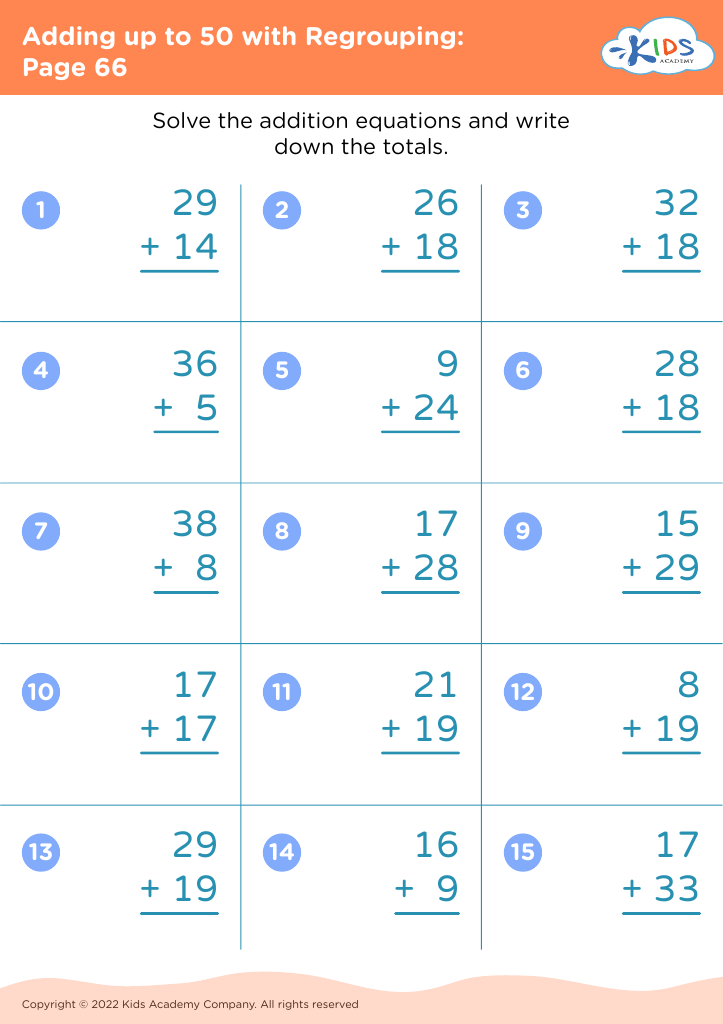
    Adding up to 50 with Regrouping: Page 66
    Adding up to 50 with Regrouping: Page 66
    Adding up to 50 with Regrouping: Page 66
    Worksheet
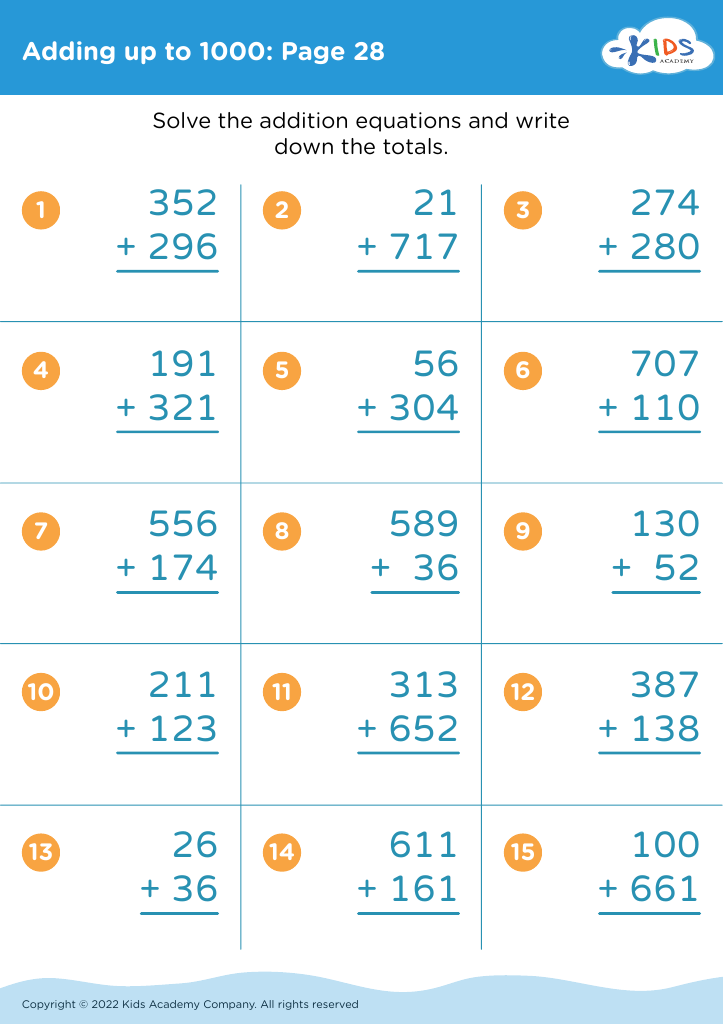
    Adding up to 1000: Page 28
    Adding up to 1000: Page 28

    Adding up to 1000: Page 28

    Adding up to 1000: Page 28
    Worksheet
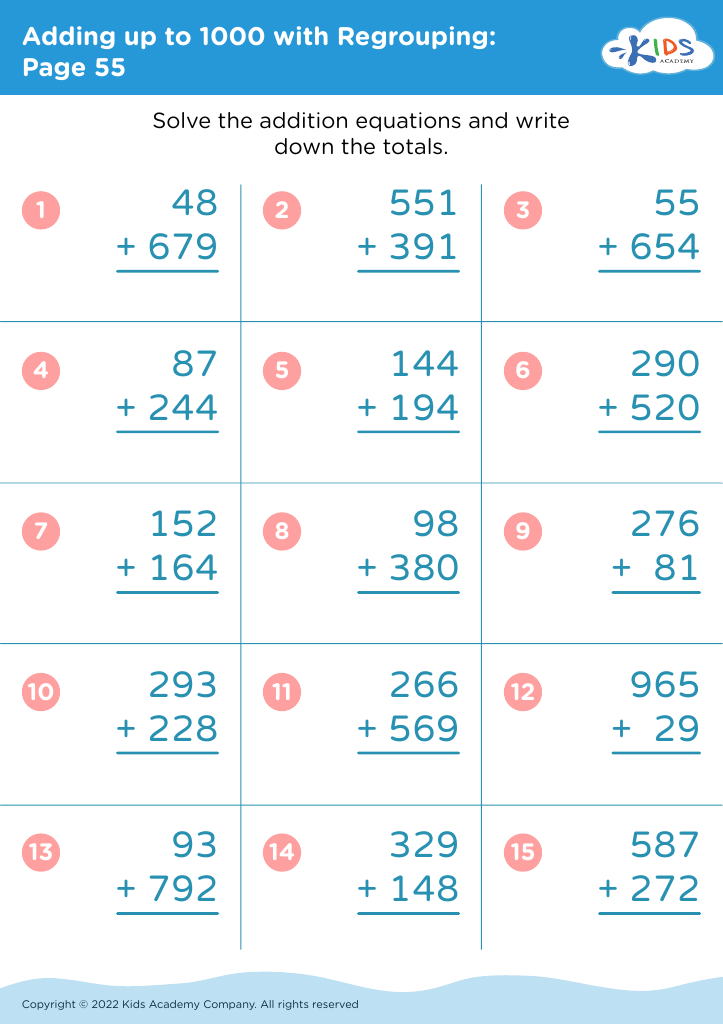
    Adding up to 1000 with Regrouping: Page 55
    Adding up to 1000 with Regrouping: Page 55
    Adding up to 1000 with Regrouping: Page 55
    Worksheet
    Pencil Case Line Plot Worksheet
    Pencil Case Line Plot Worksheet

    Pencil Case Line Plot Worksheet

    Explain to your child that a line plot is a way to organize information. For example, if they need to arrange objects, they should draw a line plot. Now, have them help Tom measure the objects in his pencil case in inches. Then, have them check the line plot that accurately shows the length.
    Pencil Case Line Plot Worksheet
    Worksheet
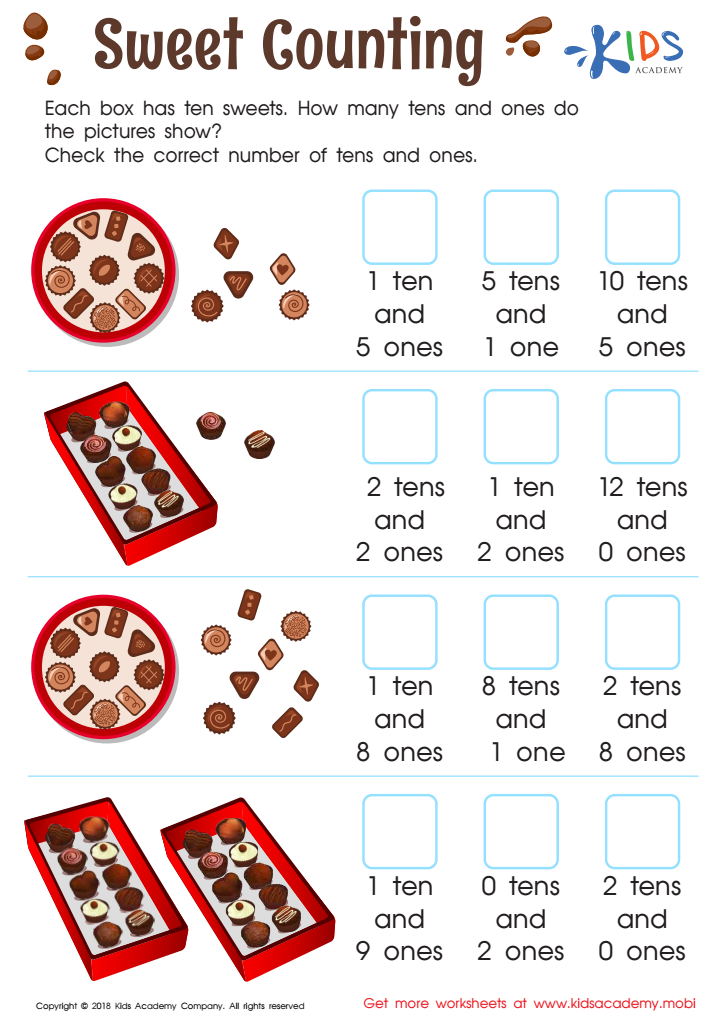
    Sweet Counting - Part 2 Worksheet
    Sweet Counting - Part 2 Worksheet

    Sweet Counting - Part 2 Worksheet

    Kids adore sweets! Make counting fun with this sweet-themed worksheet. Guide your child to count chocolates in boxes of 10, plus individual candies. Group them into tens and ones. Ask: "How many ones and tens are in each row?" Check the answer and complete the practice sheet.
    Sweet Counting - Part 2 Worksheet
    Worksheet


    Parents and teachers should prioritize math for ages 7-9 because this is a crucial development stage for foundational mathematical skills. During these years, children transition from simple concepts to more complex ones, such as addition, subtraction, multiplication, and division. Mastery of these basics builds confidence and sets the stage for future learning in mathematics and related fields.

    Moreover, math enhances critical thinking and problem-solving skills. Engaging with mathematical concepts encourages children to think logically, make connections, and approach challenges systematically. These skills are not only vital in academic settings but are also essential in everyday life, influencing decision-making and reasoning.

    Additionally, fostering an early interest in math can result in more positive attitudes towards the subject in later years, reducing math anxiety and building perseverance. This can lead to improved academic performance overall, as maths is a fundamental subject that supports learning in science, technology, and engineering fields—the very pillars of future job markets.

    By providing encouragement, resources, and engaging learning experiences, parents and teachers can play a significant role in nurturing a child's mathematical journey, ultimately empowering them for lifelong success. Investing in math education during these formative years yields benefits that extend far beyond the classroom.