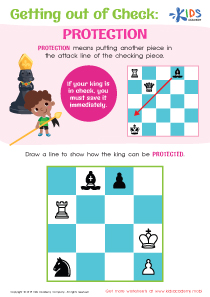
Extra Challenge Chess Worksheets for Ages 7-9
37 filtered results
-
From - To
Discover our engaging "Extra Challenge Chess Worksheets for Ages 7-9," designed to enhance young learners' critical thinking and problem-solving skills through the game of chess. Tailored for beginner and intermediate players, these worksheets offer fun puzzles and scenarios that promote strategic thinking while reinforcing the rules of the game. Each worksheet is packed with challenging exercises, including checkmate puzzles, piece recognition, and tactical scenarios, ensuring children stay motivated and eager to learn. Perfect for classroom activities or at-home practice, our worksheets provide a delightful way to support your child's cognitive development through the timeless game of chess. Get started today!
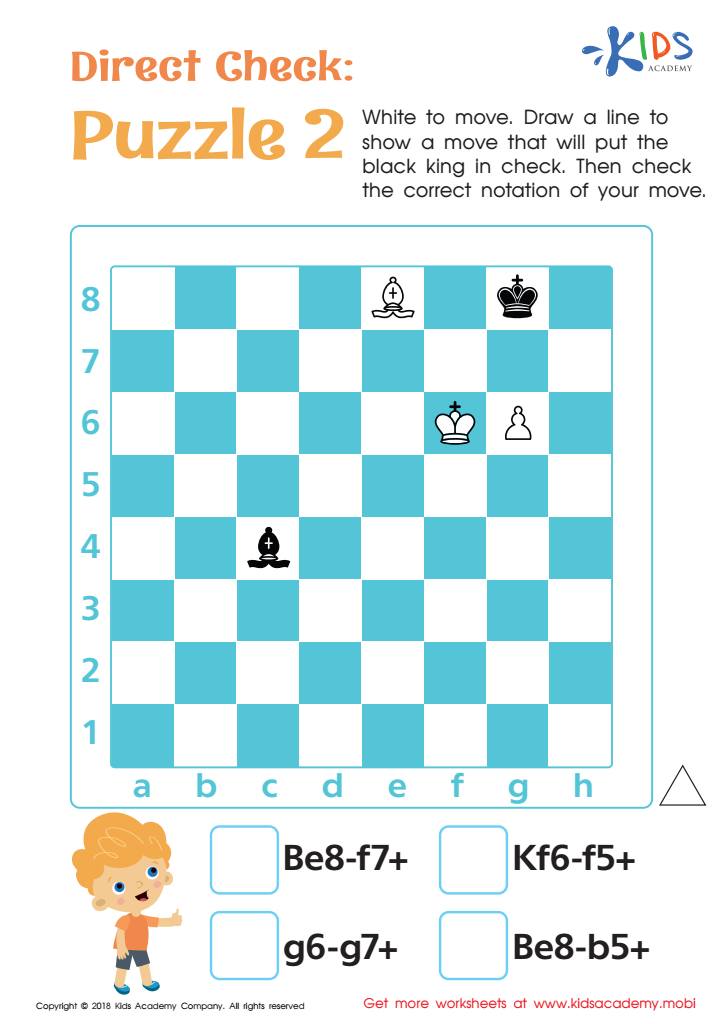
Direct Check: Puzzle 2 Worksheet
 Assign to My Students
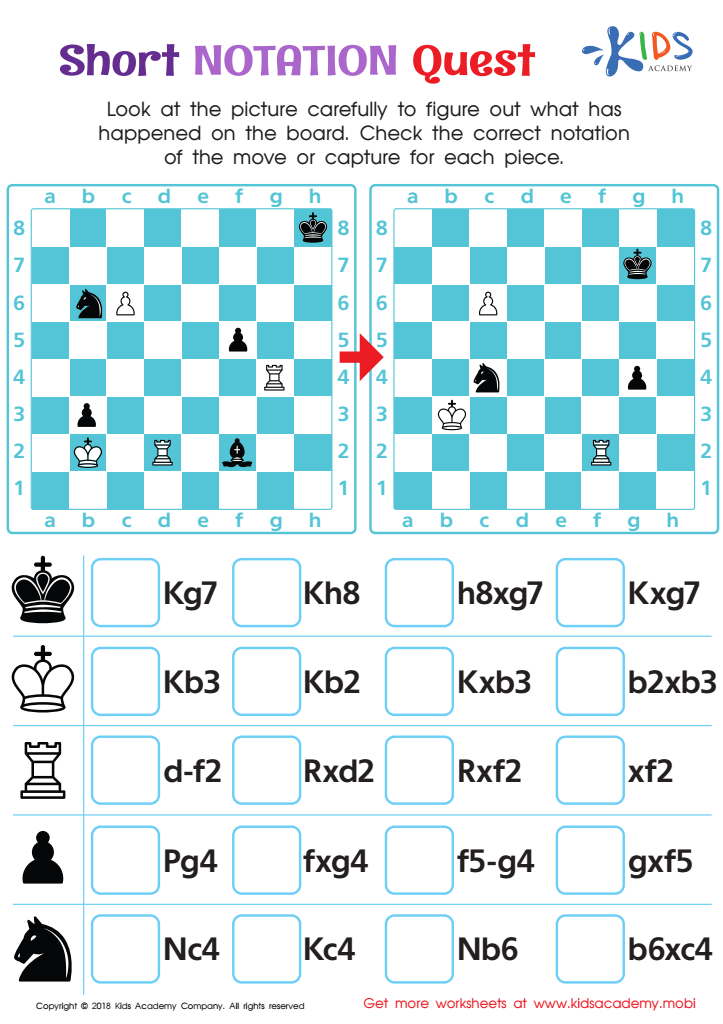
Short Notation Quest Worksheet
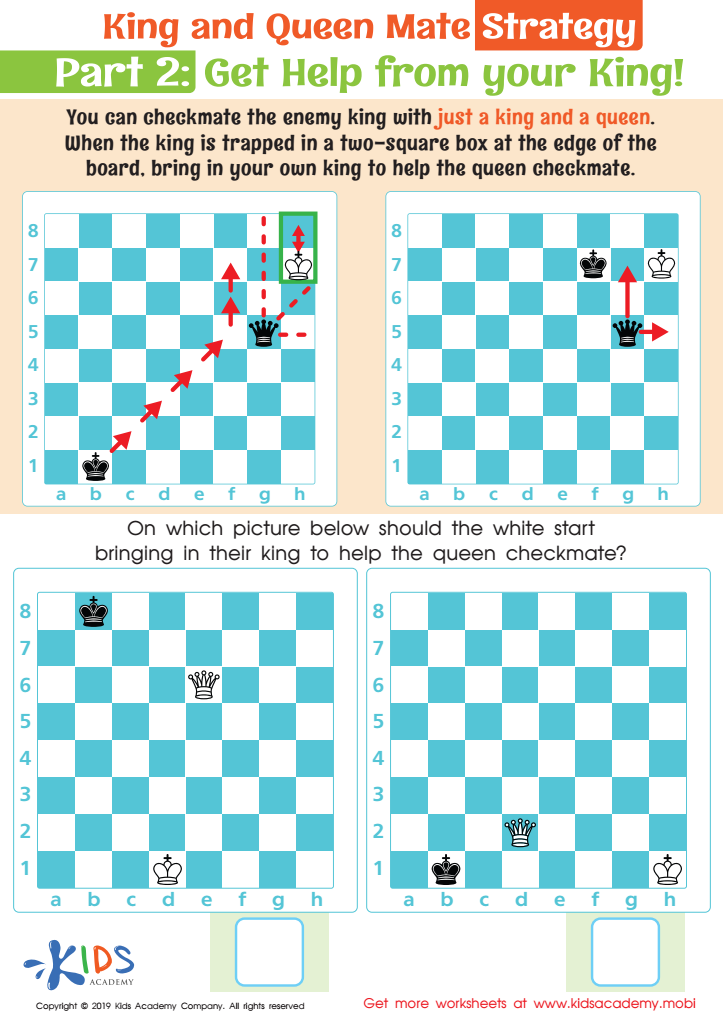
King and Queen Mate Strategy: Part 2 Worksheet
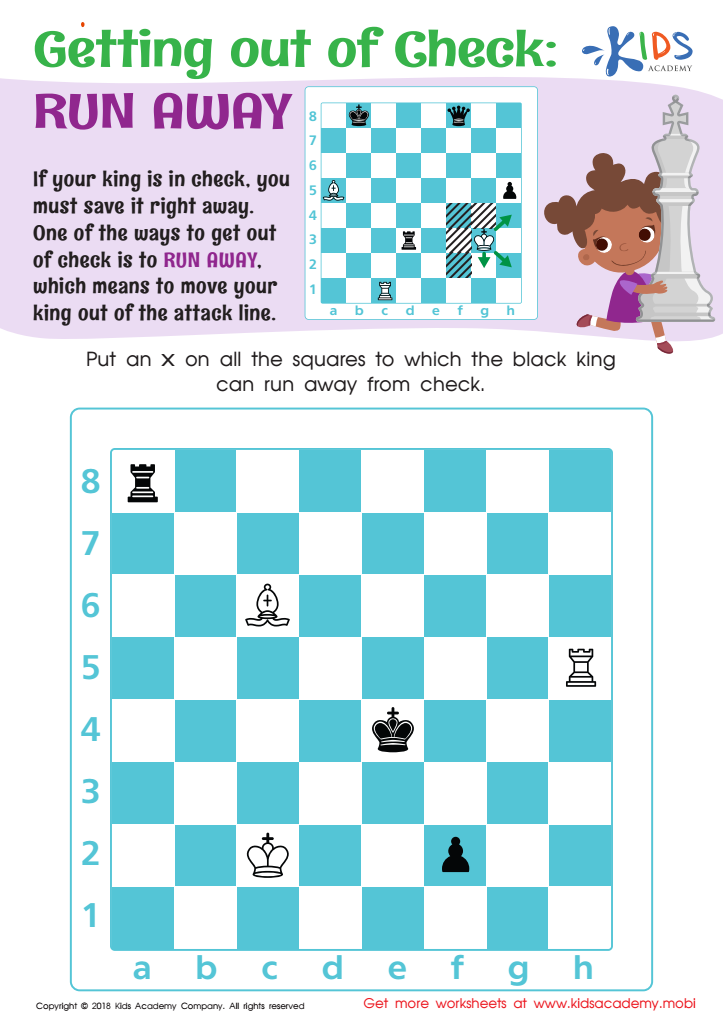
Getting out of Check: Run Away Worksheet
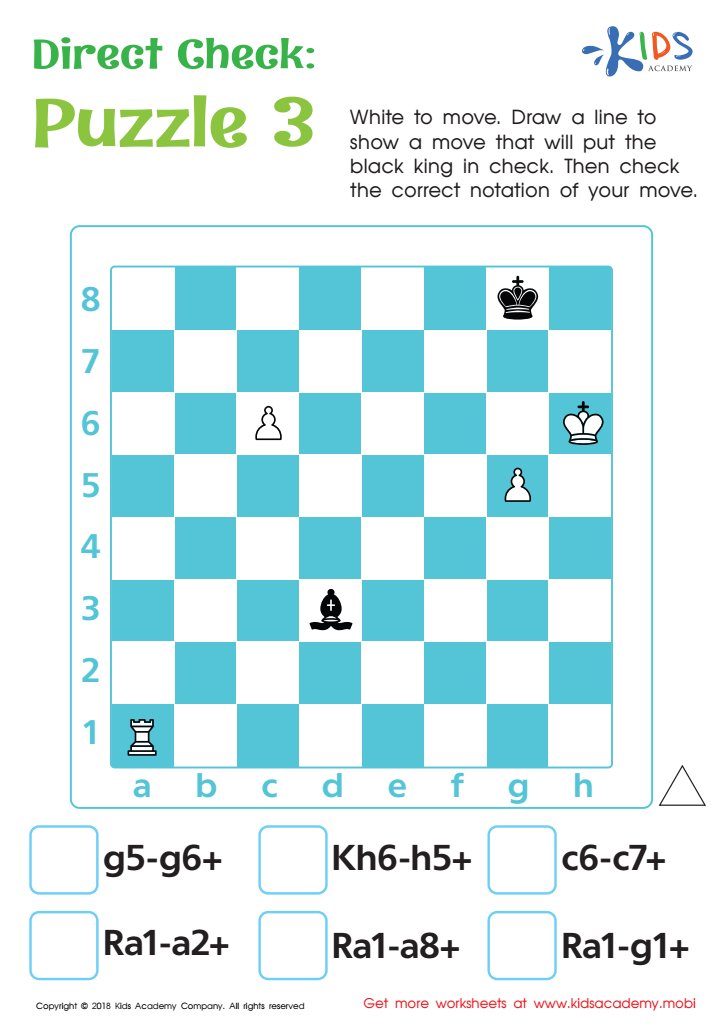
Direct Check: Puzzle 3 Worksheet
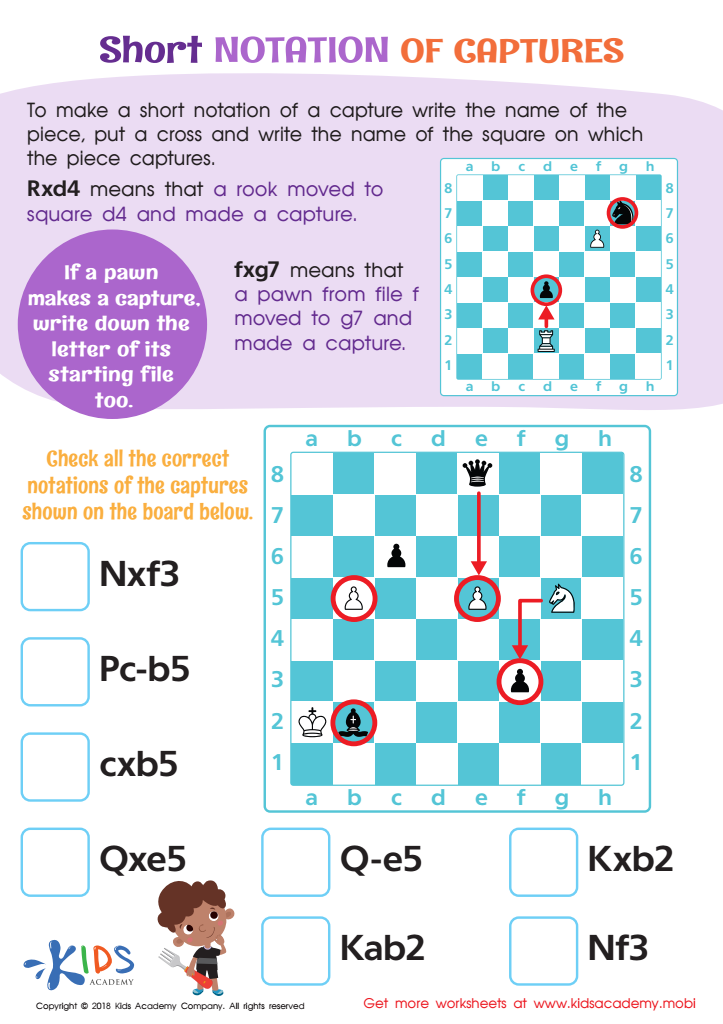
Short Notation of Captures Worksheet
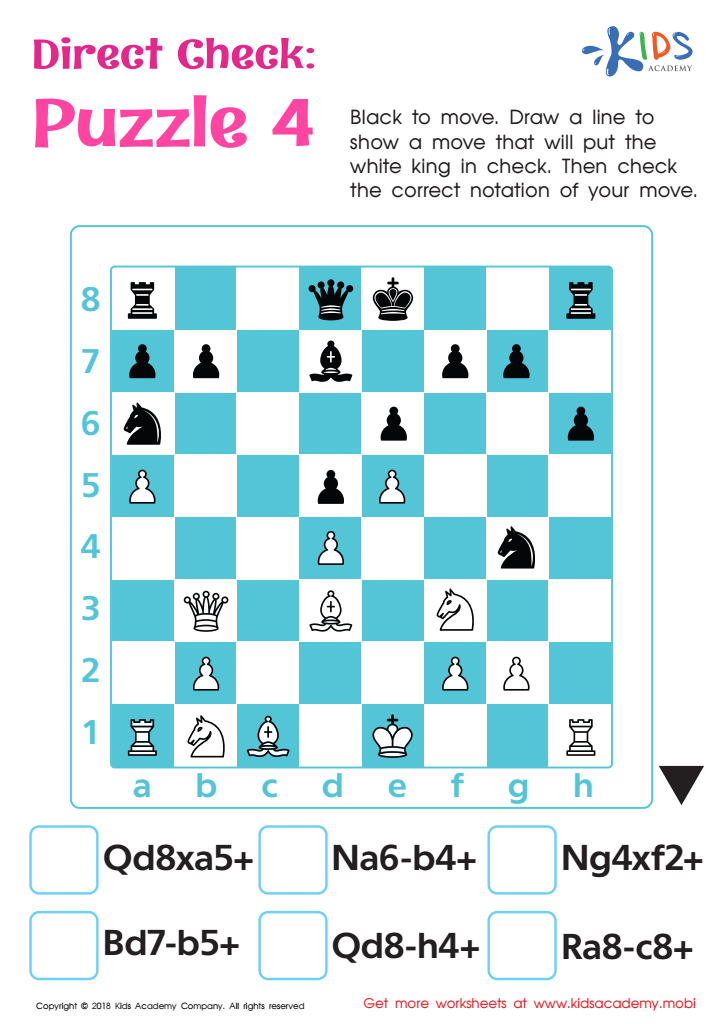
Direct Check: Puzzle 4 Worksheet
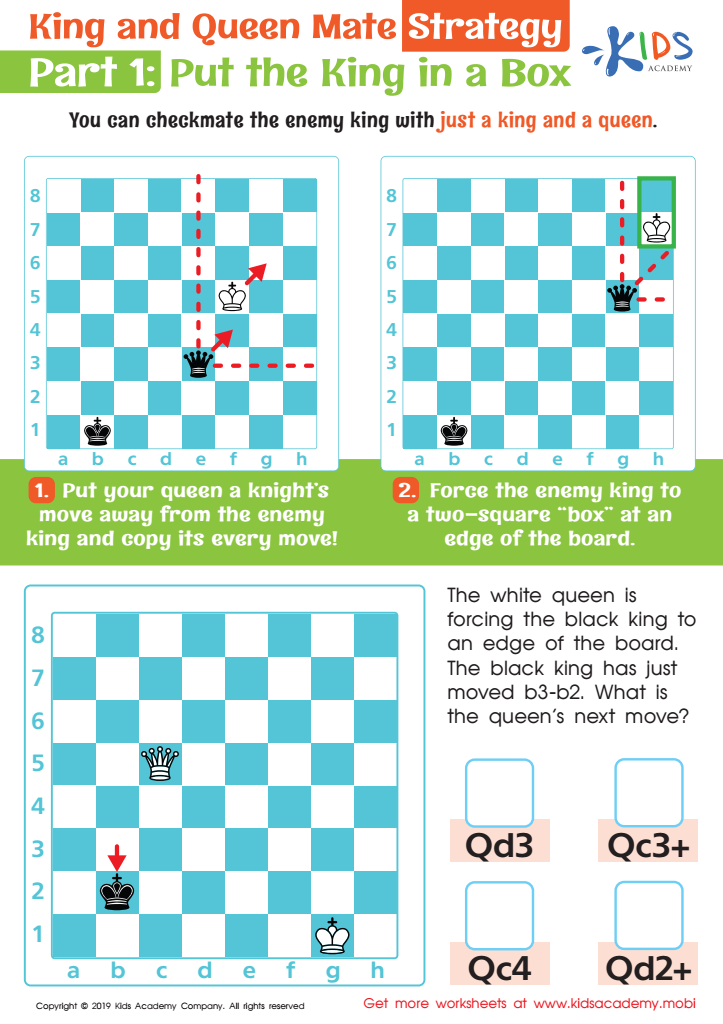
King and Queen Mate Strategy: Part 1 Worksheet
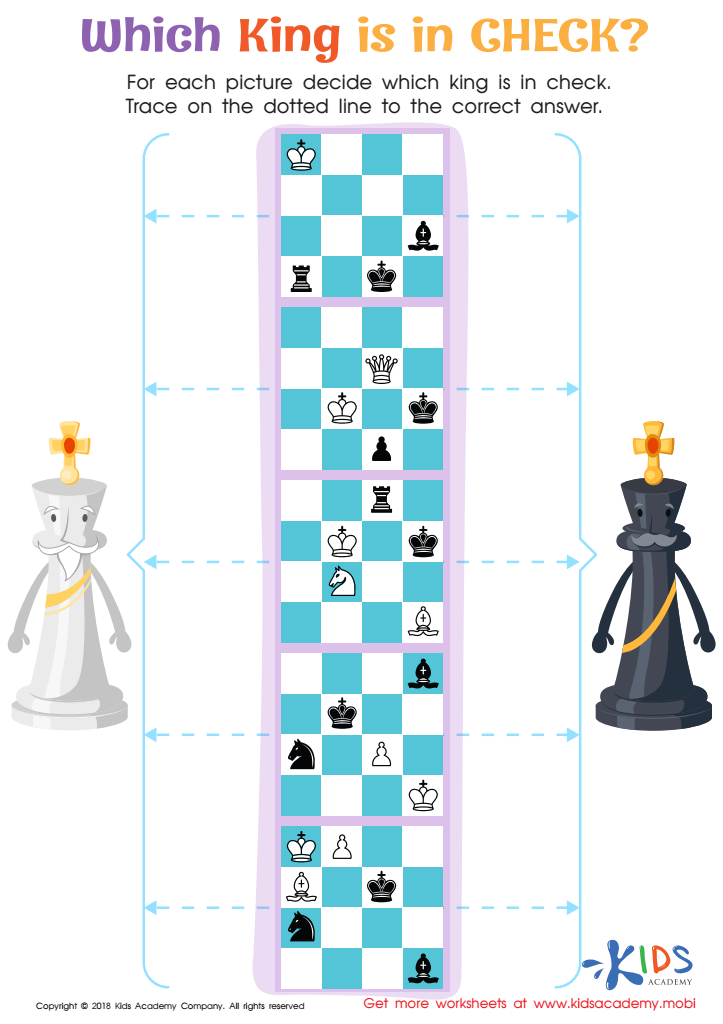
Which King is in Check? Worksheet
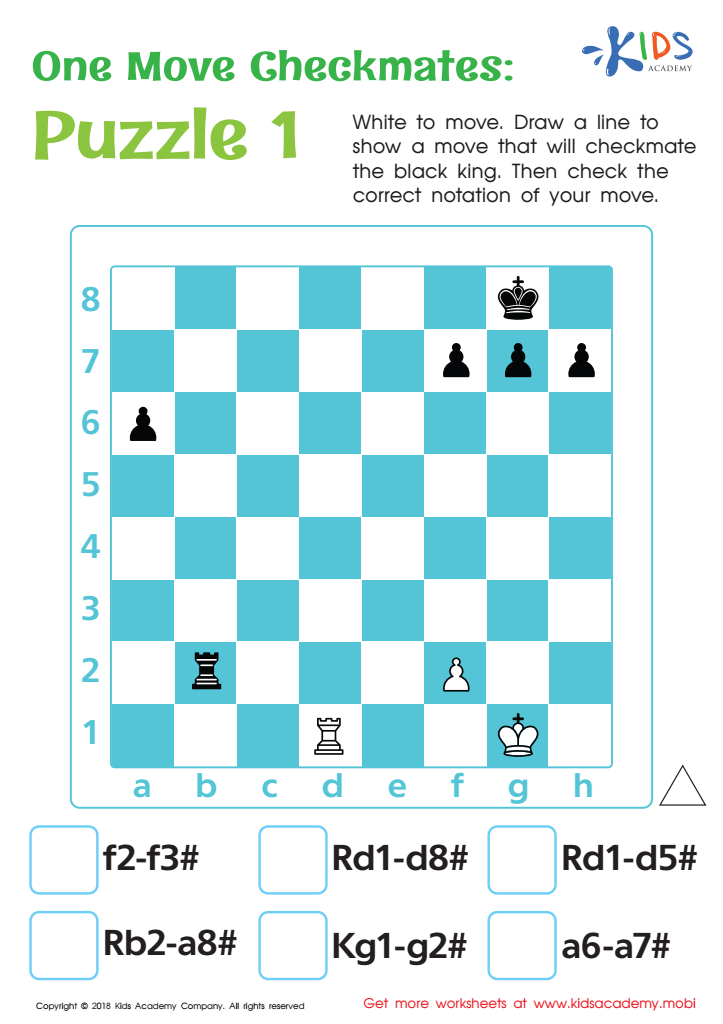
One Move Checkmates: Puzzle 1 Worksheet
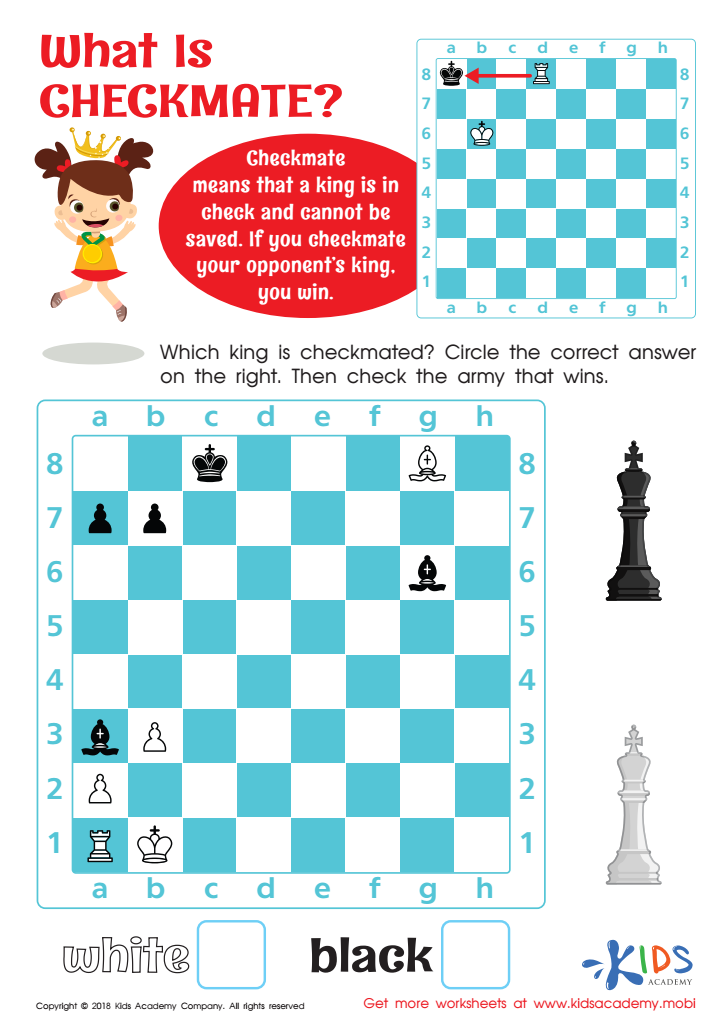
What is Checkmate? Worksheet
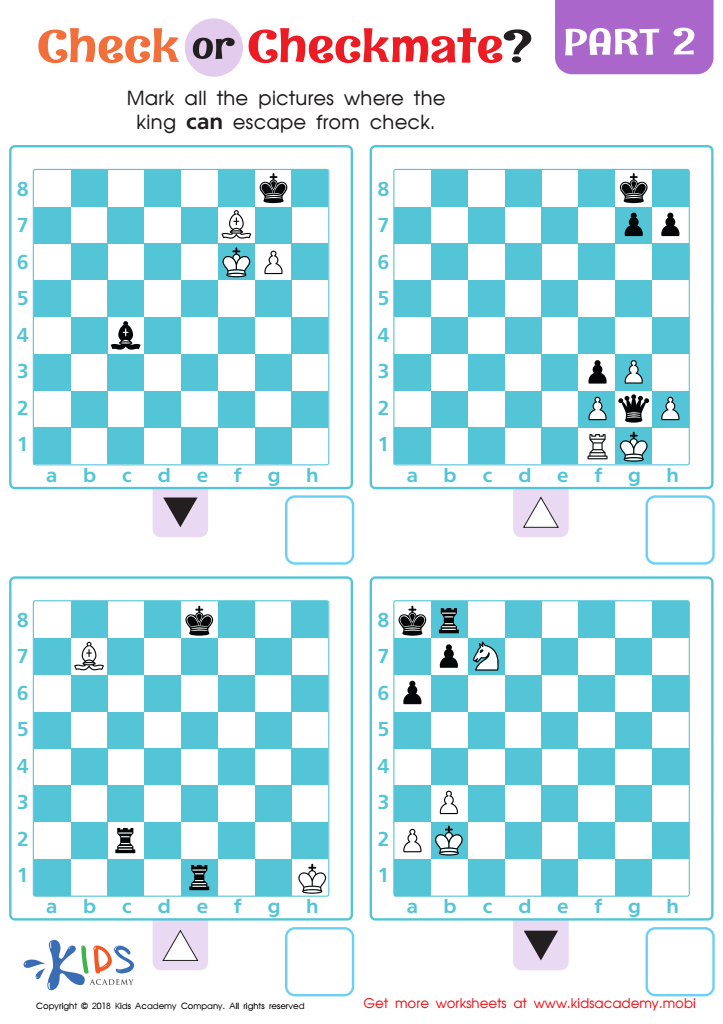
Check or Checkmate: Part 2 Worksheet
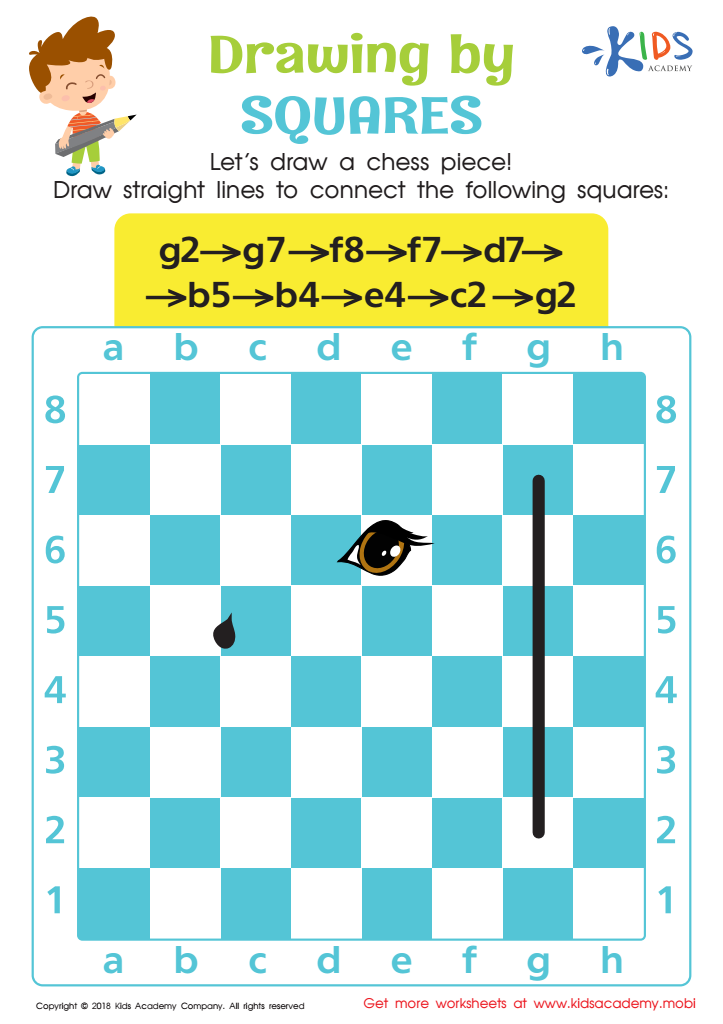
Drawing by Squares Worksheet
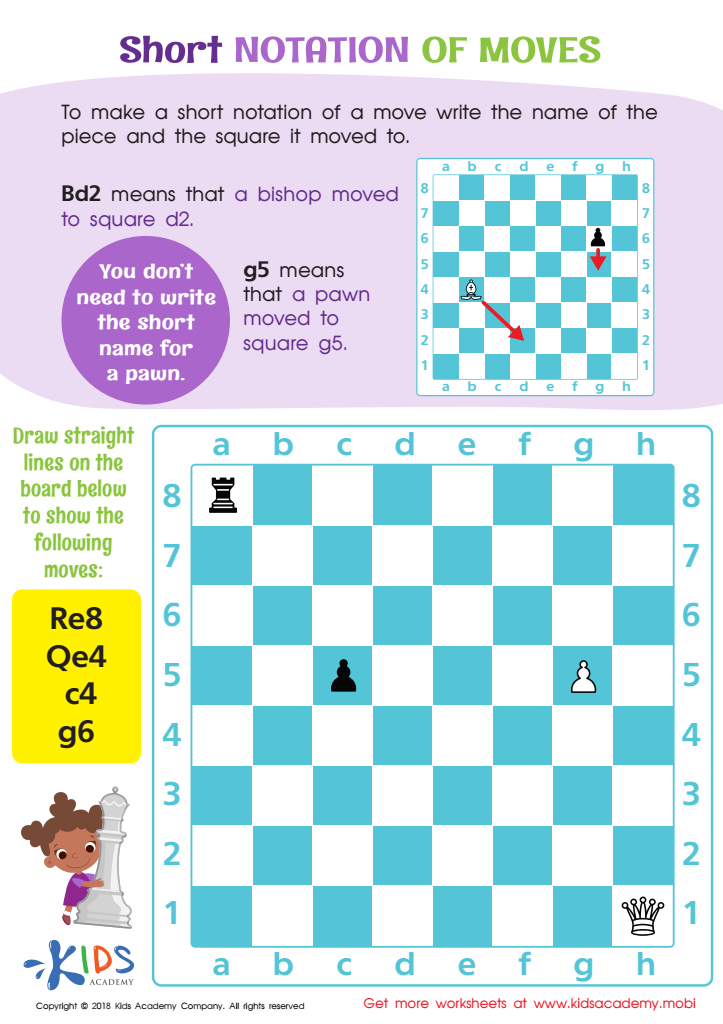
Short Notation of Moves Worksheet
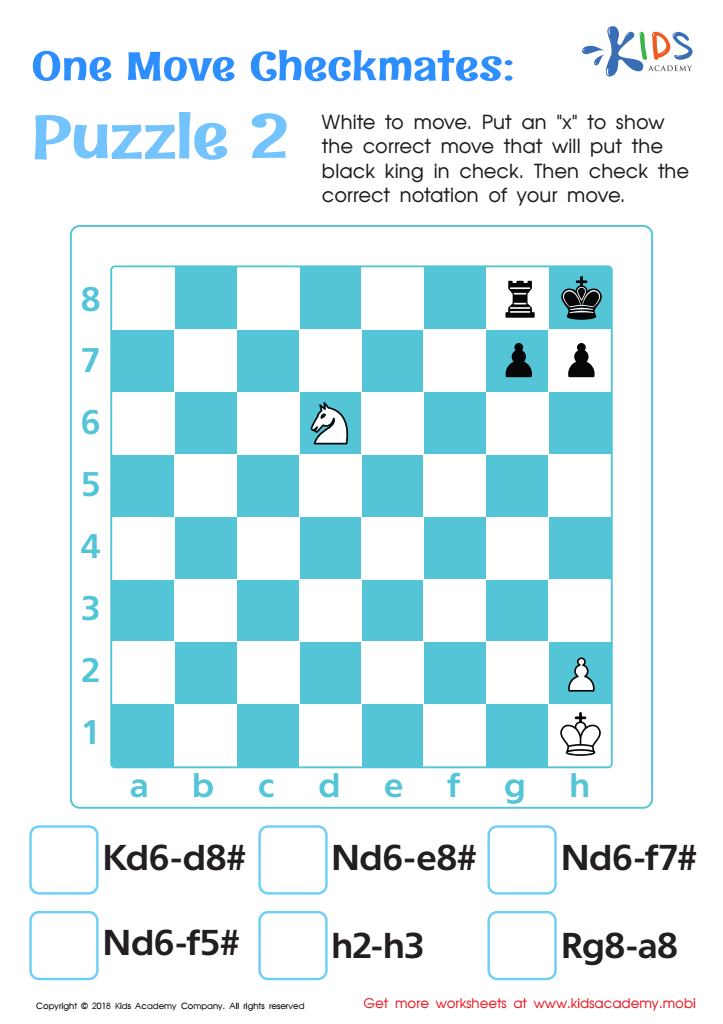
One Move Checkmates: Puzzle 2 Worksheet
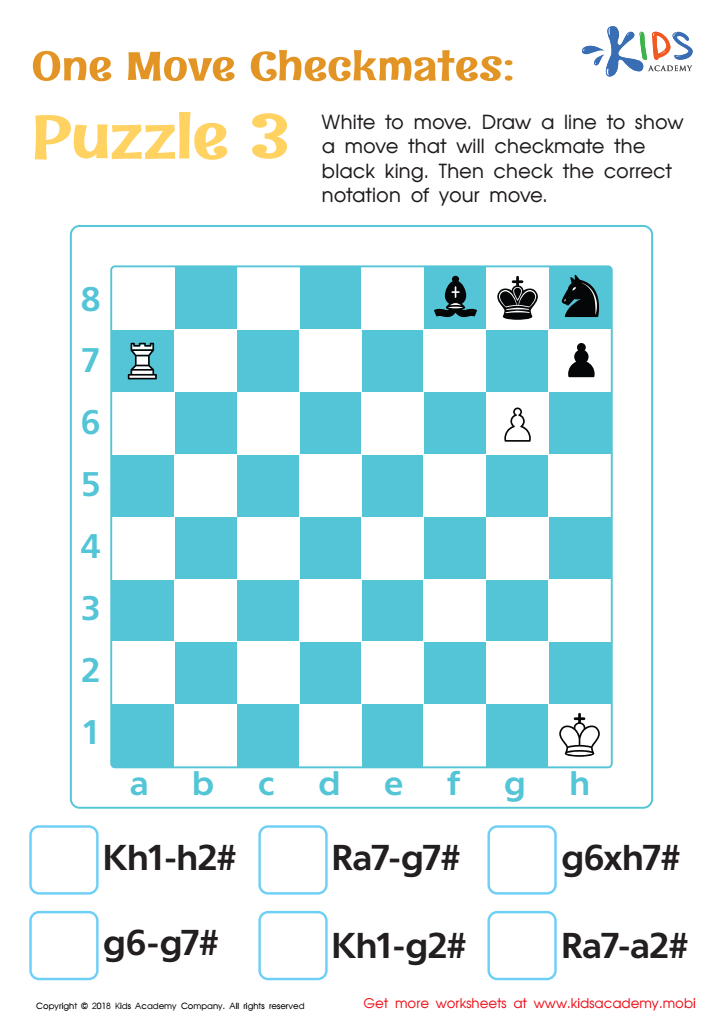
One Move Checkmates: Puzzle 3 Worksheet
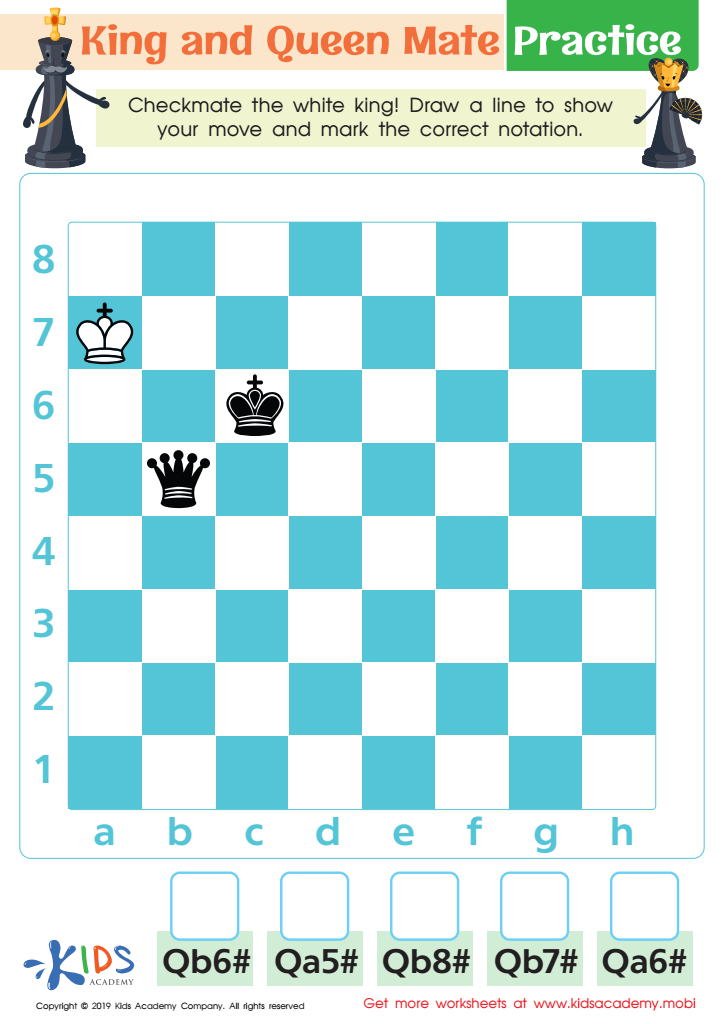
King and Queen Mate Practice Worksheet
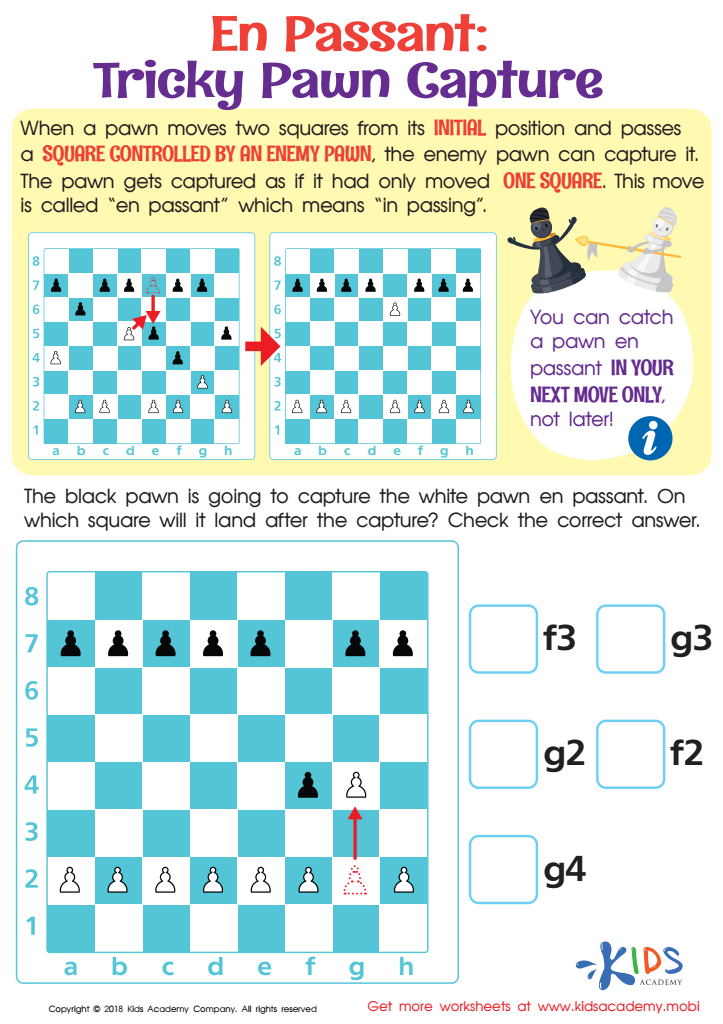
En Passant: Tricky Pawn Capture Worksheet
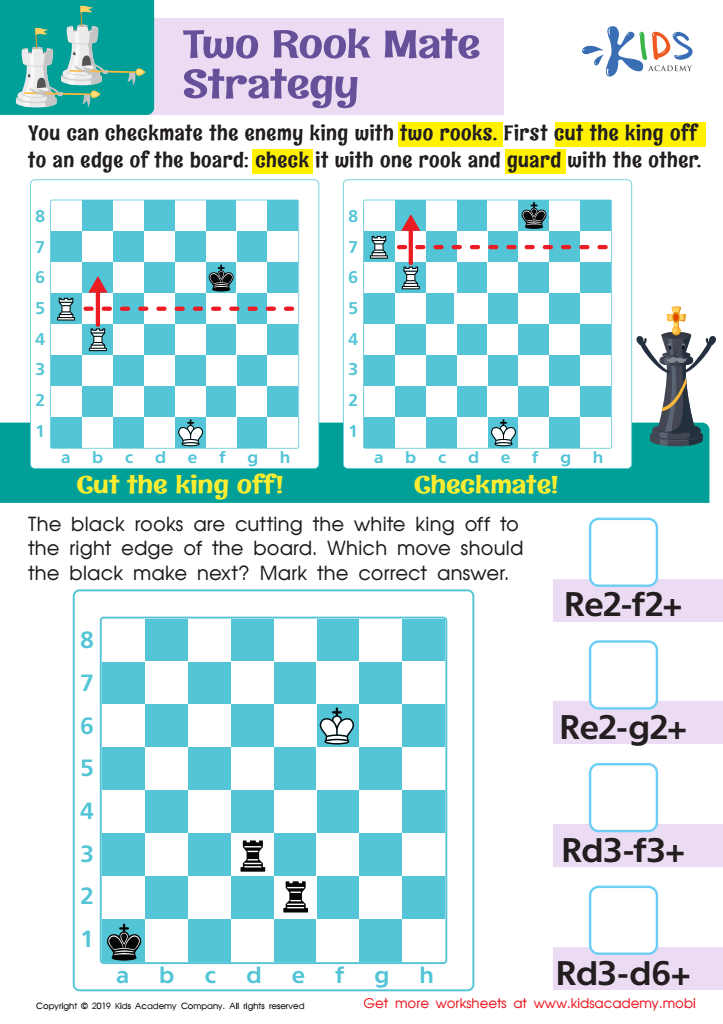
Two Rook Mate Strategy Worksheet
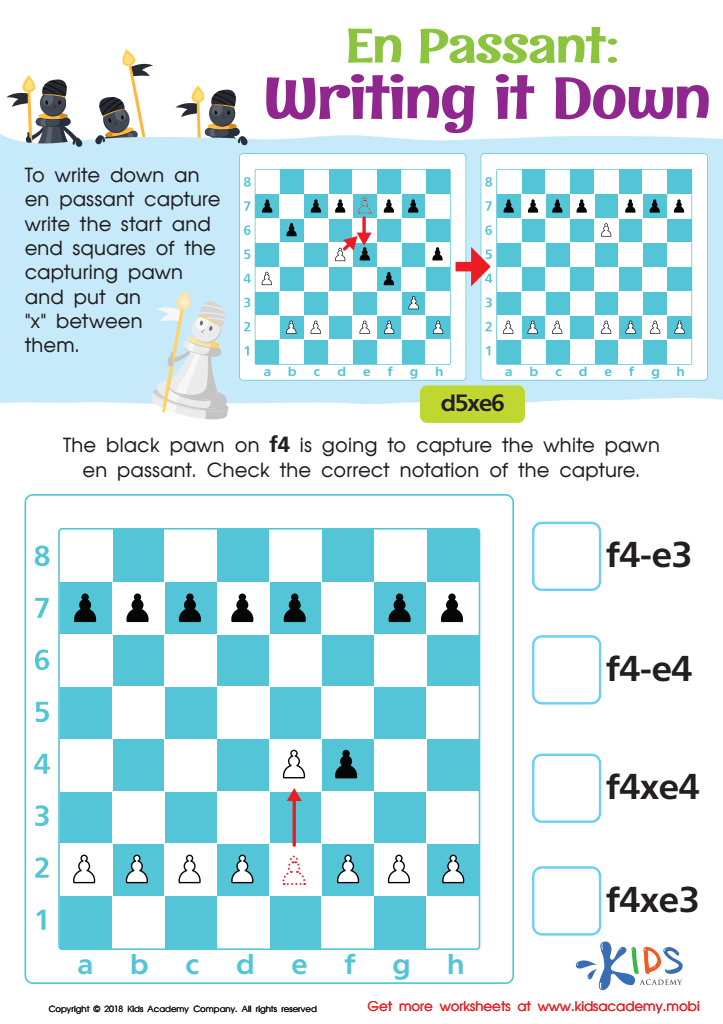
En Passant: Writing it Down Worksheet
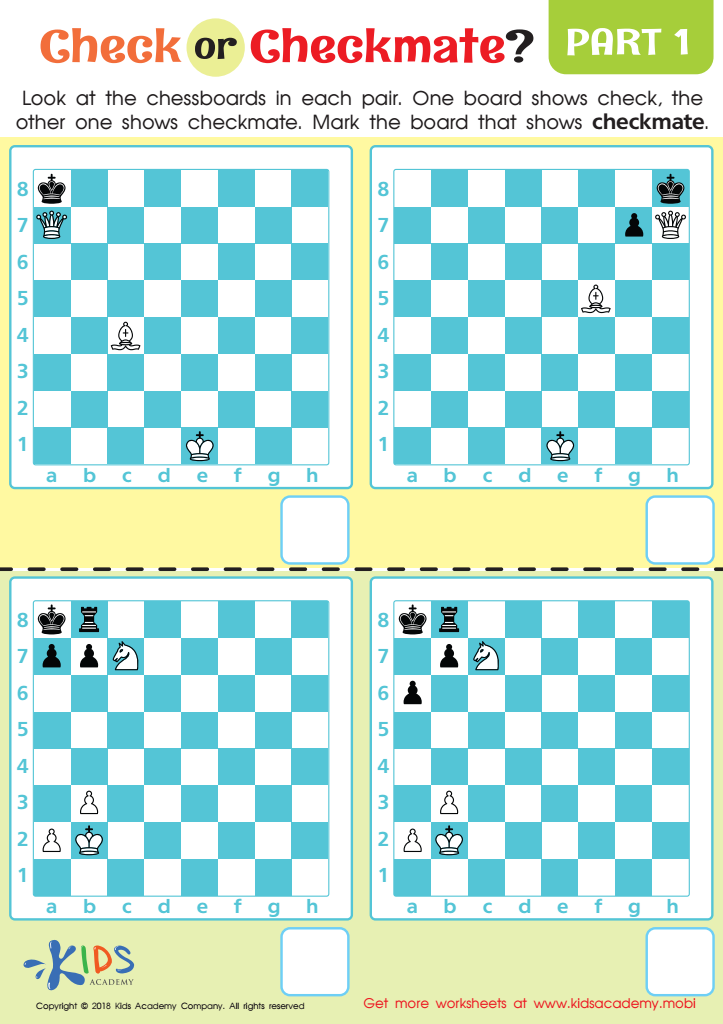
Check or Checkmate: Part 1 Worksheet
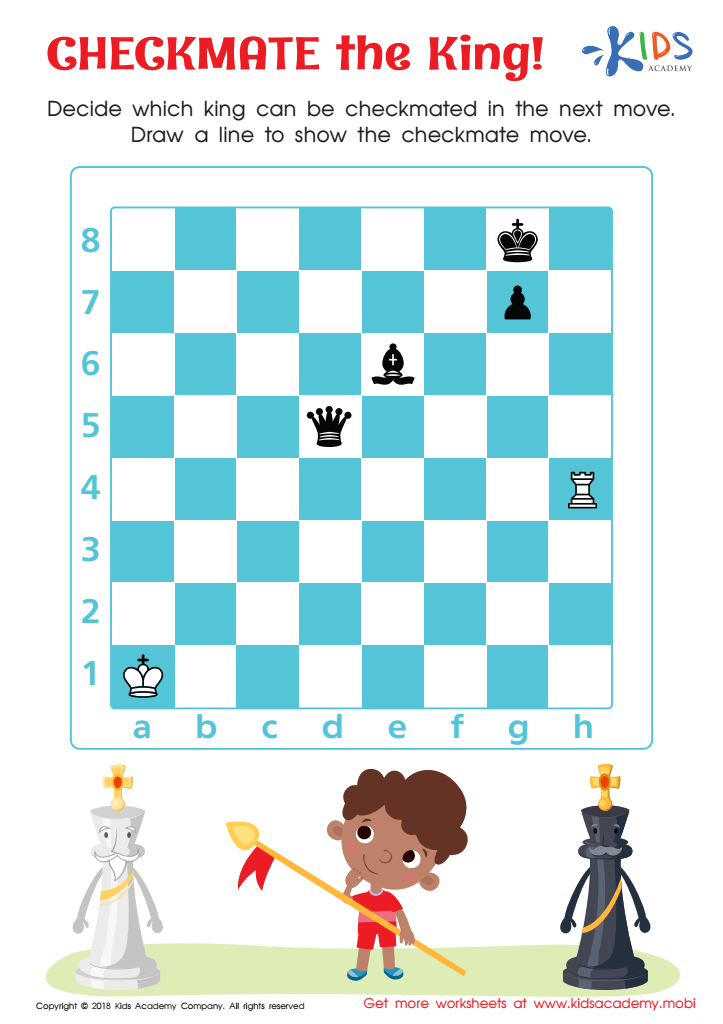
Checkmate the King Worksheet
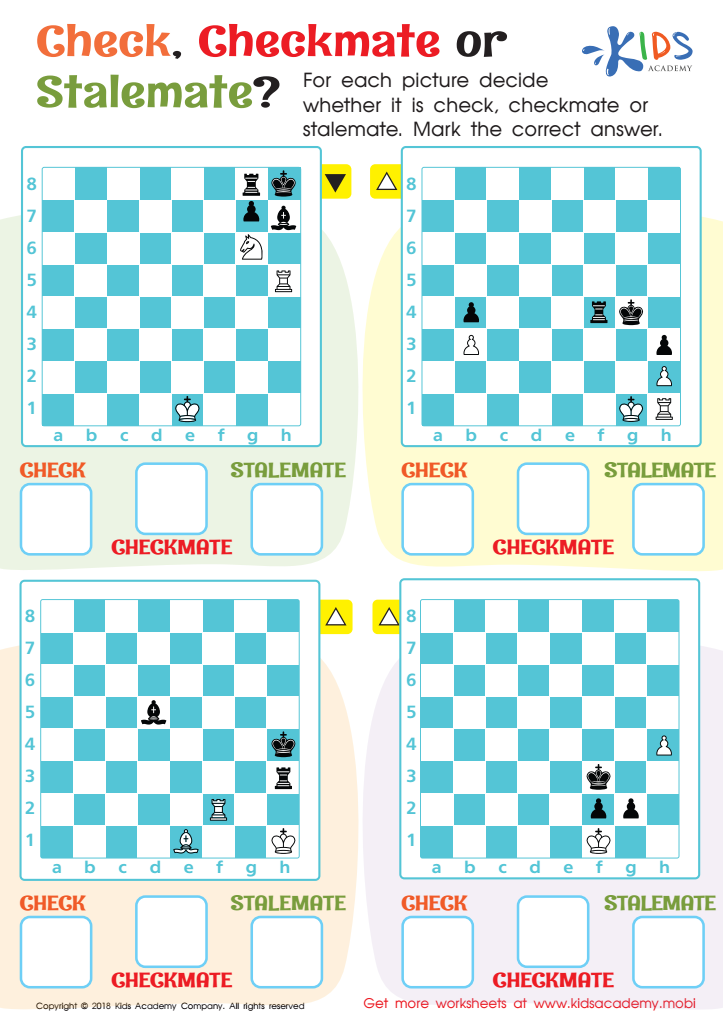
Check. Checkmate or Stalemate? Worksheet
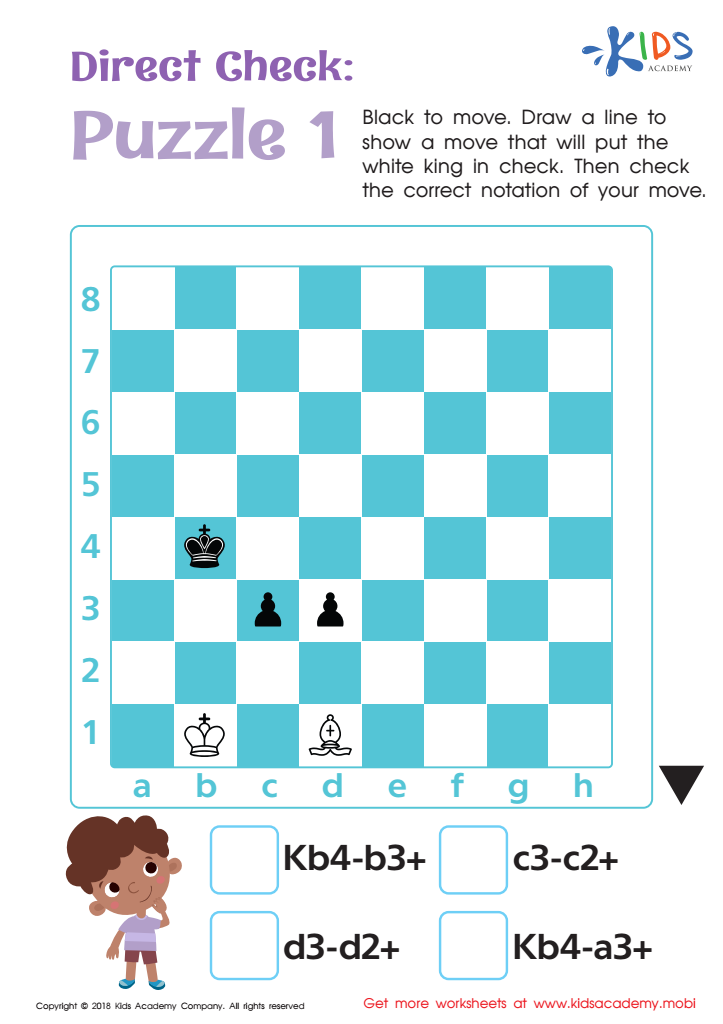
Direct Check: Puzzle 1 Worksheet






Extra Challenge Chess for Ages 7-9 offers a myriad of benefits that make it a valuable addition to educational and recreational activities for children. First and foremost, chess enhances cognitive skills such as problem-solving, critical thinking, and strategic planning. These vital skills carry over into academic subjects, improving a child's overall performance in school.
Moreover, engaging in chess helps develop concentration and patience, qualities that are essential for success in various aspects of life. The game encourages children to think ahead, anticipate opponents' moves, and adapt strategies, all of which foster a growth mindset.
Participating in Extra Challenge Chess also promotes social skills. Children learn to respect their opponents, take turns, and deal with winning and losing gracefully, thus strengthening their emotional intelligence. Furthermore, the structured environment nurtures discipline and self-control, offering a safe space for personal development.
For educators and parents, introducing chess can be an excellent way to motivate learners and stimulate their interest in STEM (science, technology, engineering, mathematics) foundations. Overall, incorporating Extra Challenge Chess not only bolsters intellectual skills but also cultivates character traits that will benefit children throughout their lives. Encouraging such activities can lead to well-rounded, resilient individuals ready to tackle future challenges.