Filters

952 filtered results

Clear all filters
Favorites
With answer key
Interactive

952 filtered results

Difficulty Level

Grade


Check out this FREE Grade 2 Math Trial Lesson!

Draw and Name Shapes up to 6 Sided Shapes & Cubes

Favorites
With answer key
Interactive
  • Math
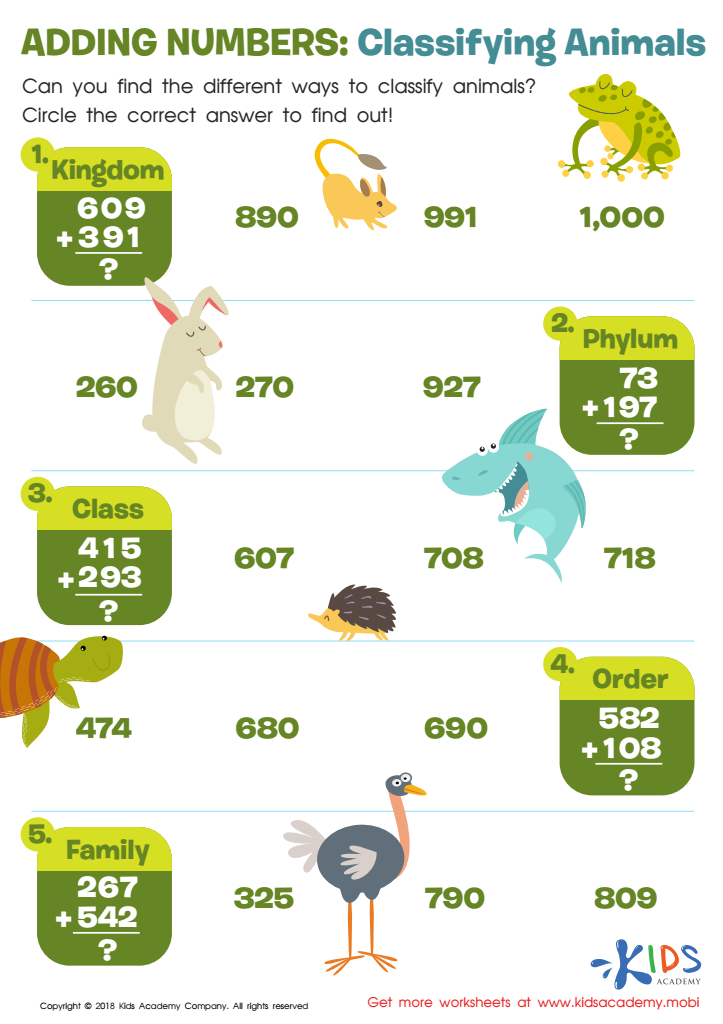
Adding Numbers: Classifying Animals Worksheet

Adding Numbers: Classifying Animals Worksheet

Your kids can learn to classify animals in Biology. This worksheet helps them do this by solving 5 equations. Circle the right answer to complete the task.
Adding Numbers: Classifying Animals Worksheet
Worksheet
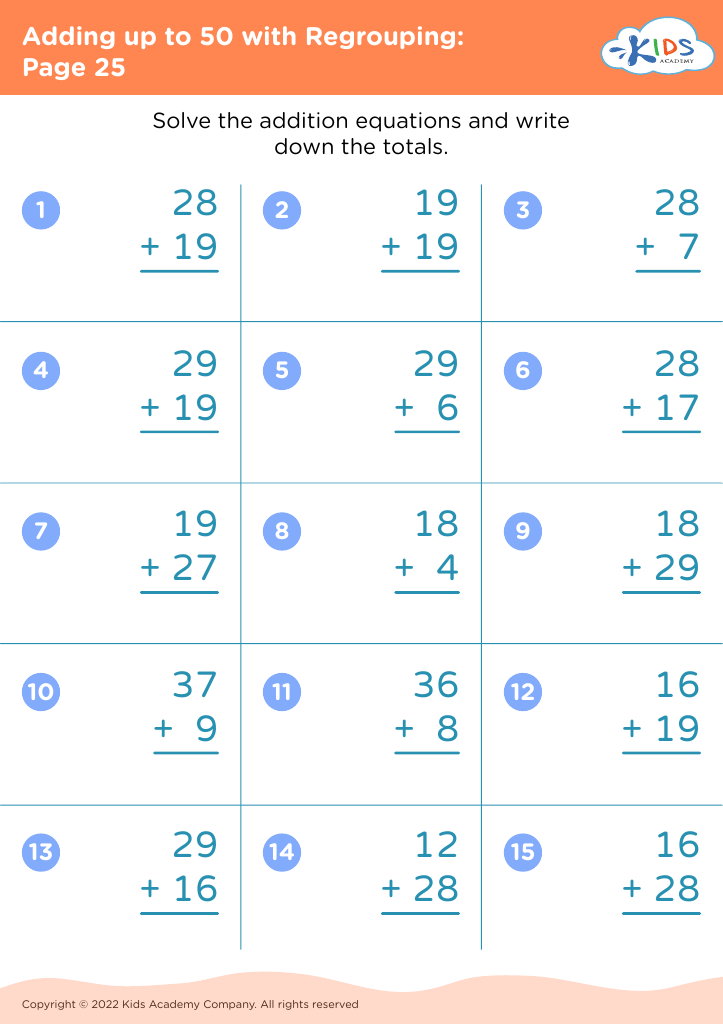
Adding up to 50 with Regrouping: Page 25
Worksheet
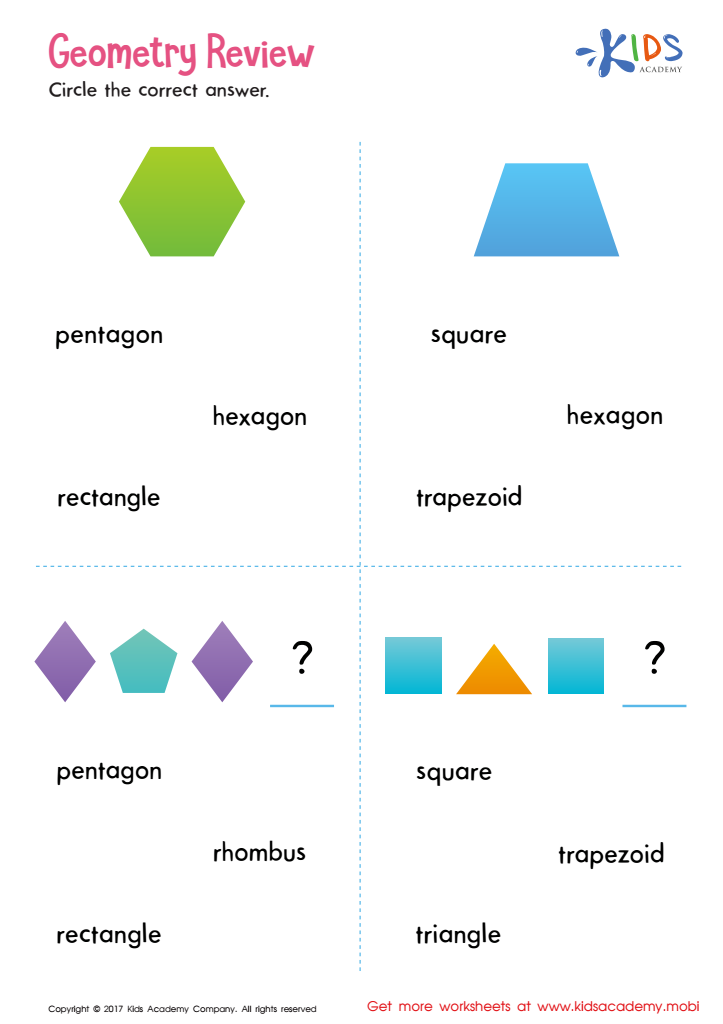
Geometry Review Printable Worksheet

Geometry Review Printable

Repetition is key to success; give your child the practice they need with this geometry worksheet.
Geometry Review Printable
Worksheet
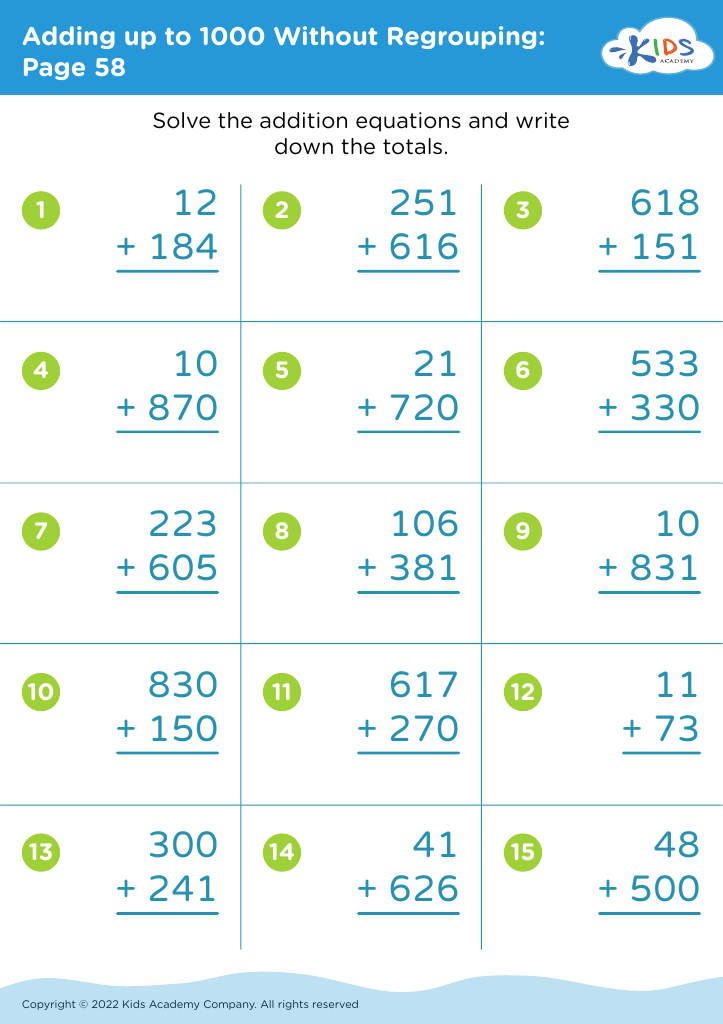
Adding up to 1000 Without Regrouping: Page 58
Worksheet
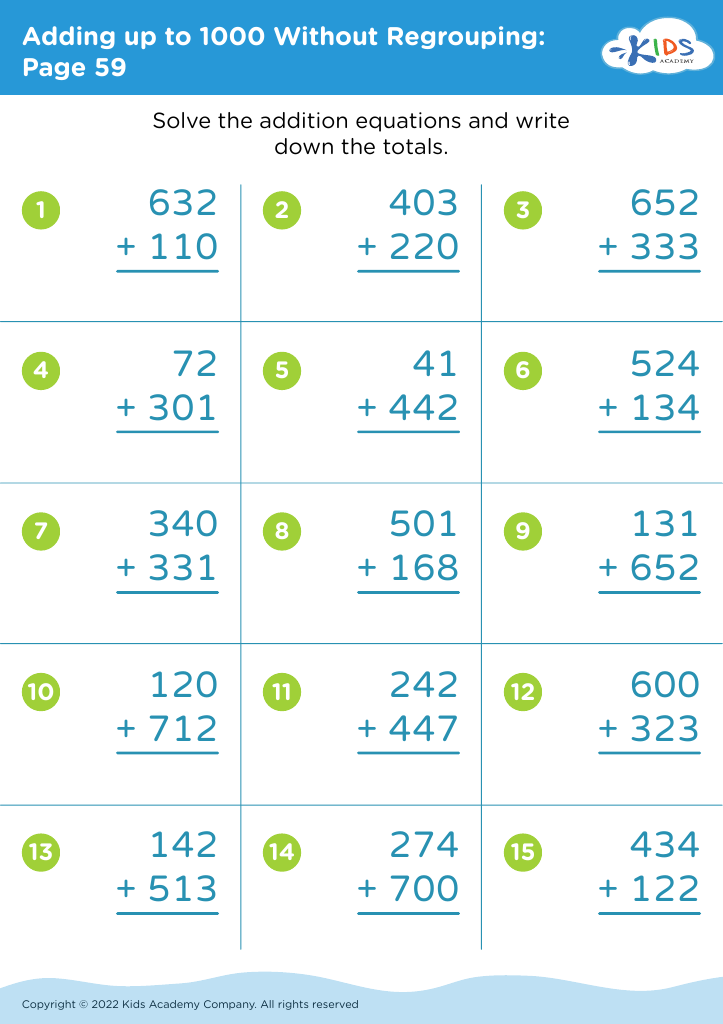
Adding up to 1000 Without Regrouping: Page 59
Worksheet
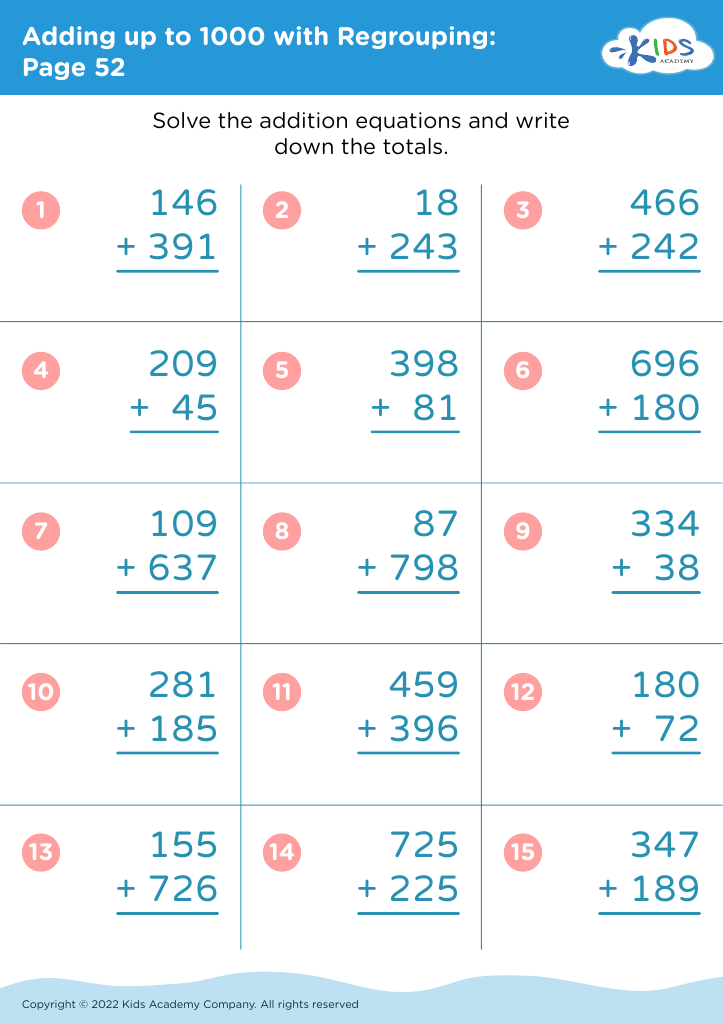
Adding up to 1000 with Regrouping: Page 52
Worksheet
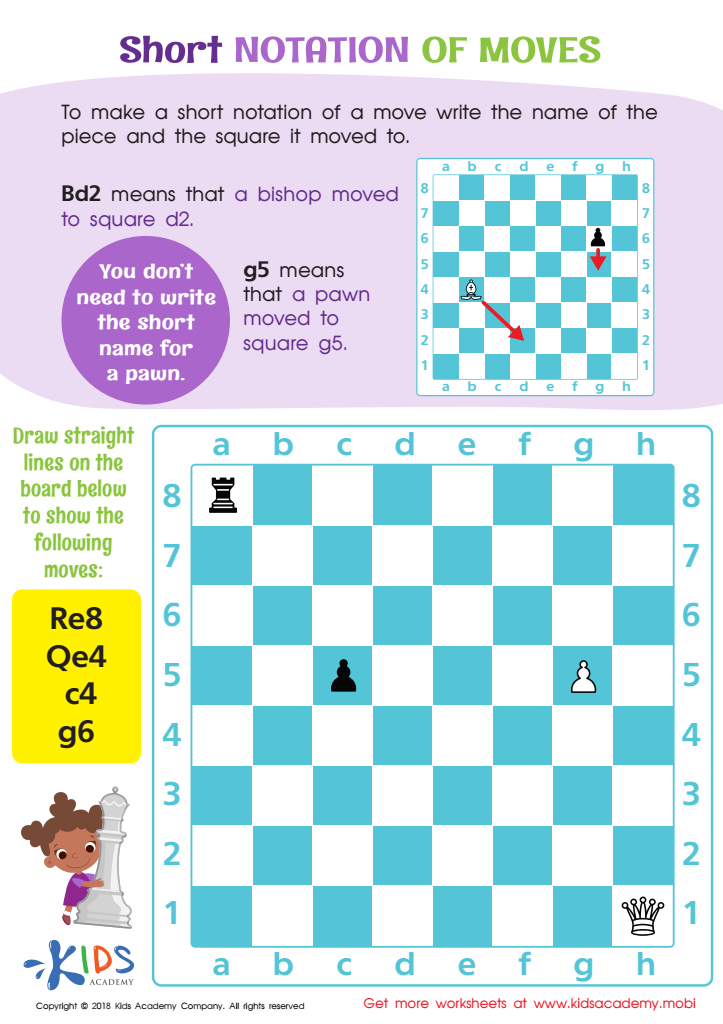
Short Notation of Moves Worksheet

Short Notation of Moves Worksheet

To master chess, you need more than just knowing the pieces and their moves - you need to be able to make notations of your moves. To make a short notation, write the piece name and square it moved to; for example, Bd2 for bishop on d2. Pawns don't need the piece name, just the square; e.g. g5. Show your kids how to draw lines to the board for the moves given.
Short Notation of Moves Worksheet
Worksheet
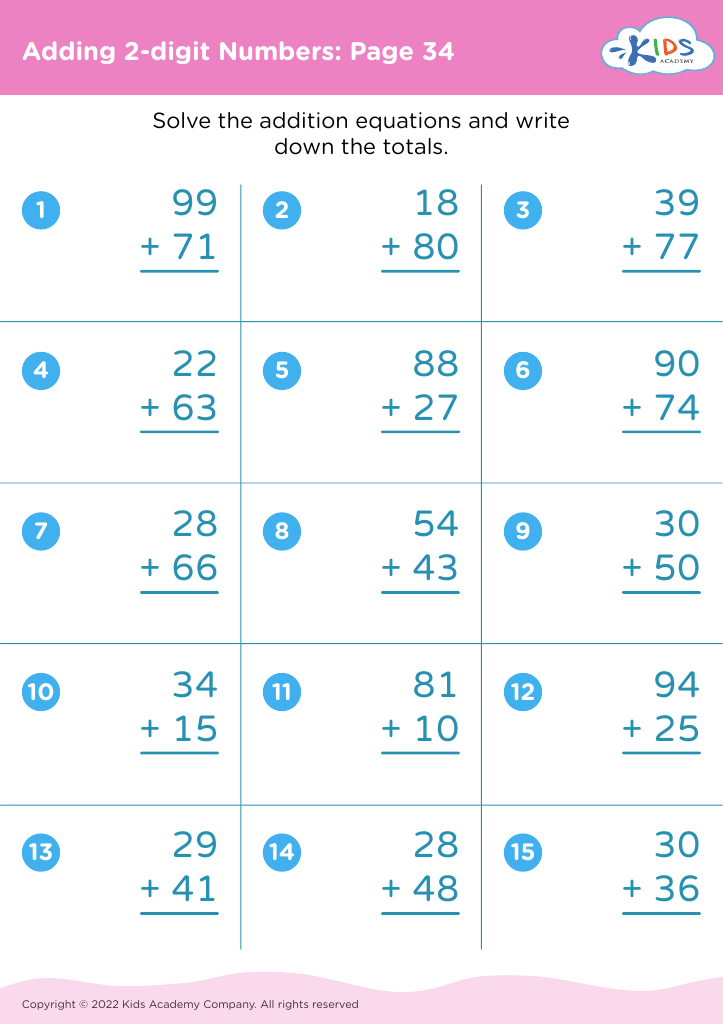
Adding 2-digit Numbers: Page 34

Adding 2-digit Numbers: Page 34

Adding 2-digit Numbers: Page 34
Worksheet
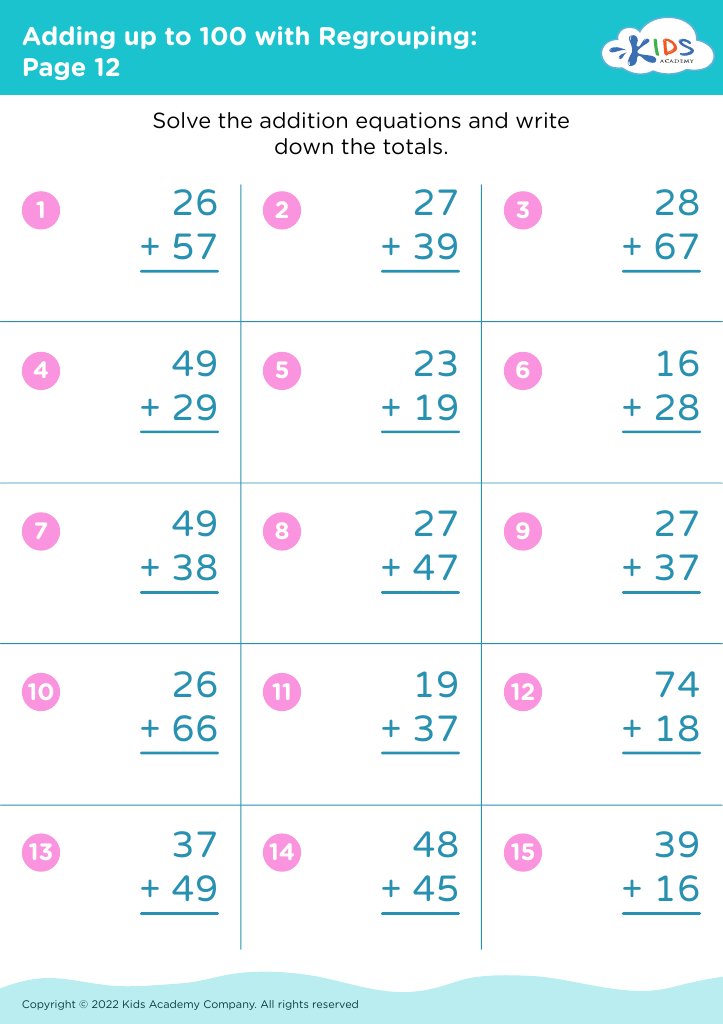
Adding up to 100 with Regrouping: Page 12
Worksheet
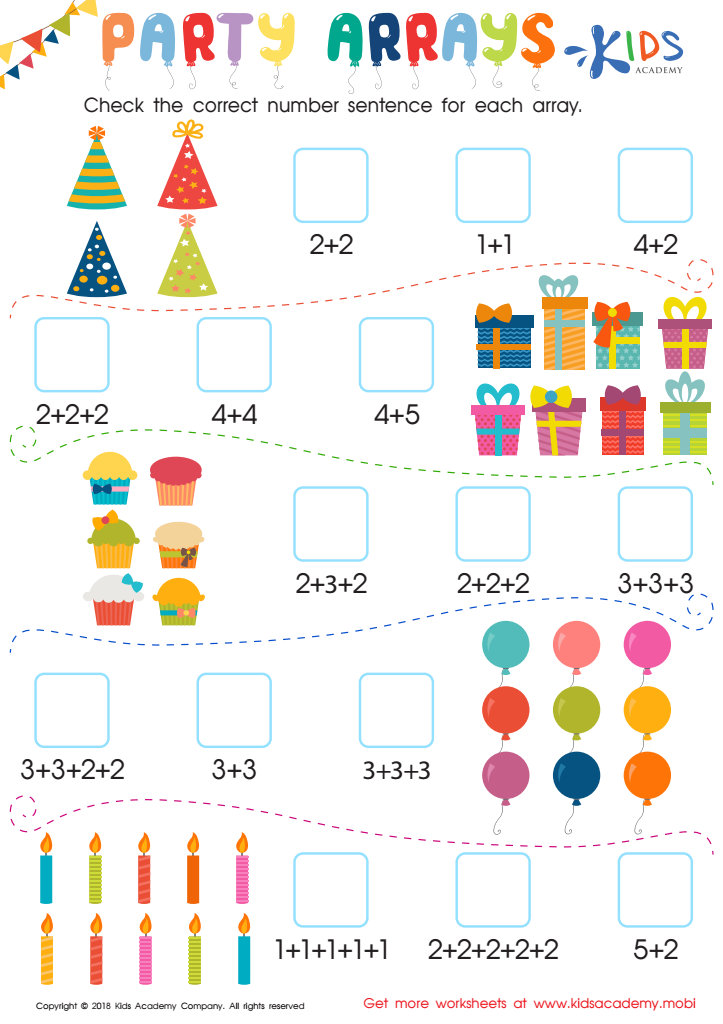
Party Arrays Worksheet

Party Arrays Worksheet

Help your child count the objects in each of the five arrays, then check the correct number sentence for each. This exercise will test their math skills and understanding of number sentences. Guide them to select the appropriate boxes.
Party Arrays Worksheet
Worksheet
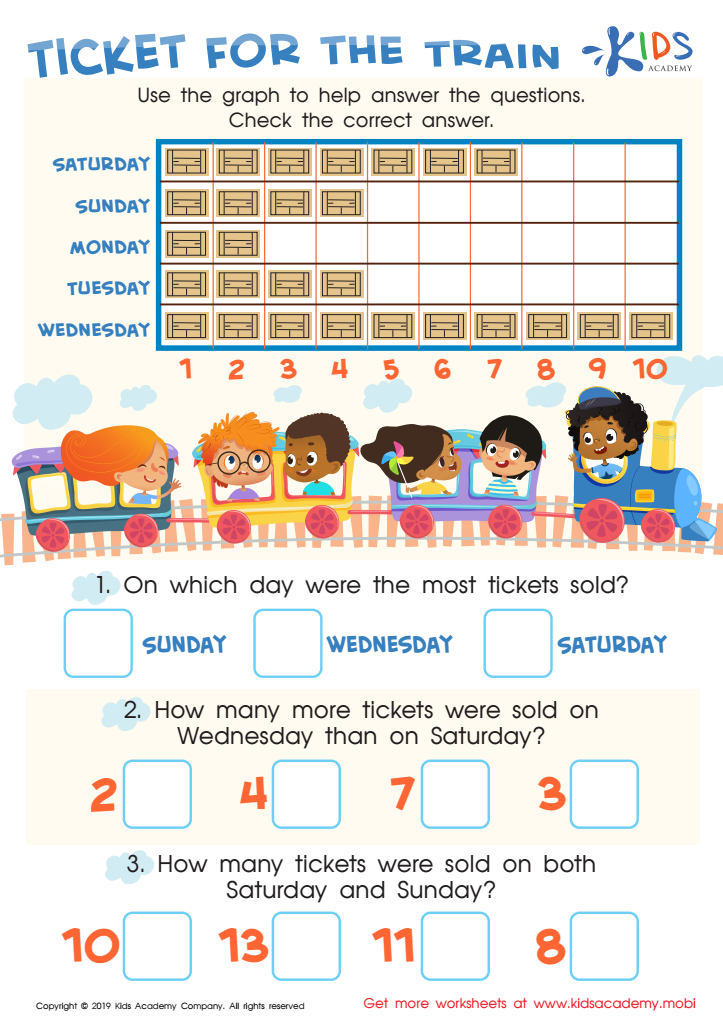
Ticket for the Train Worksheet
Ticket for the Train Worksheet
It's important to use fun scenarios with familiar objects when teaching kids. Try discussing train rides and the accompanying picture graph. Ask questions about it, then help kids check the correct answers. Let them enjoy the learning process!
Ticket for the Train Worksheet
Worksheet
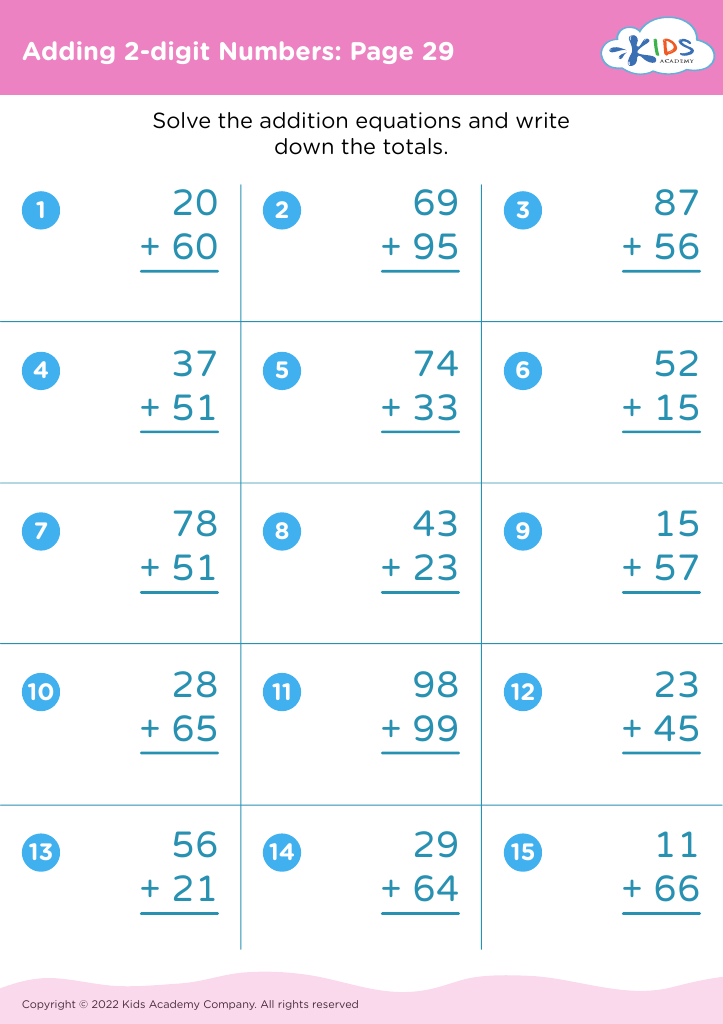
Adding 2-digit Numbers: Page 29

Adding 2-digit Numbers: Page 29

Adding 2-digit Numbers: Page 29
Worksheet
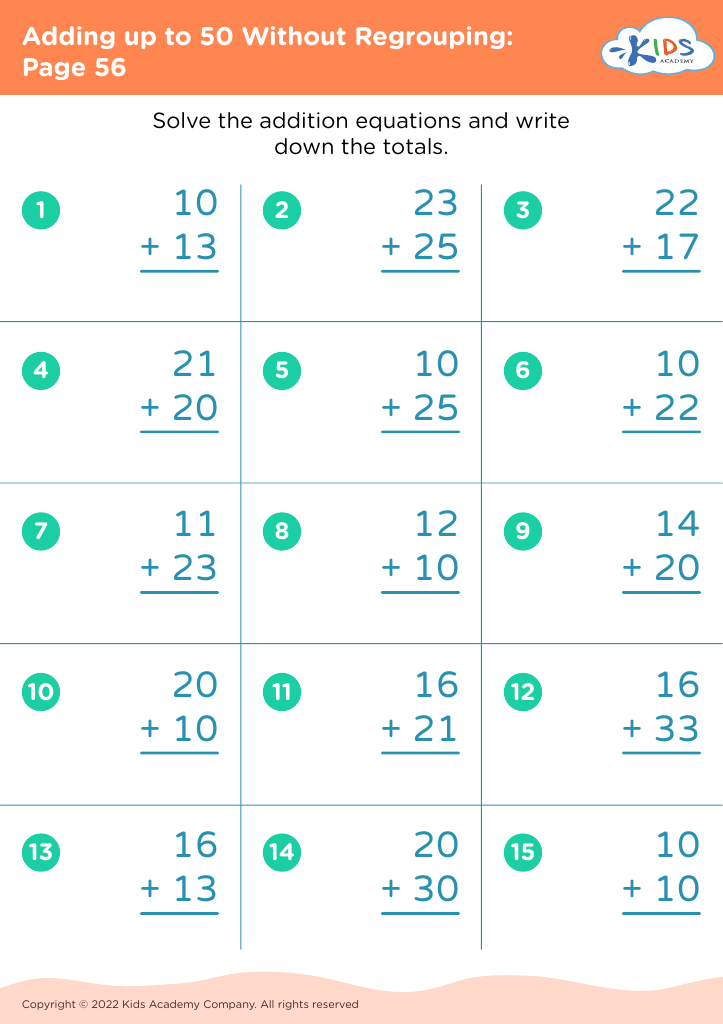
Adding up to 50 Without Regrouping: Page 56
Worksheet
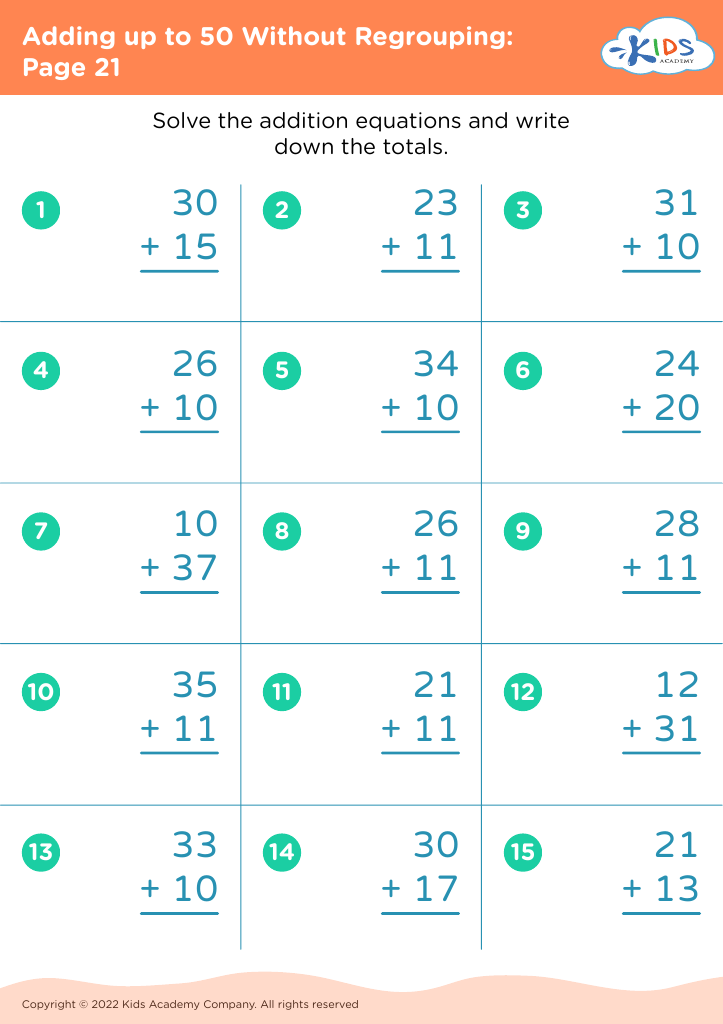
Adding up to 50 Without Regrouping: Page 21
Worksheet
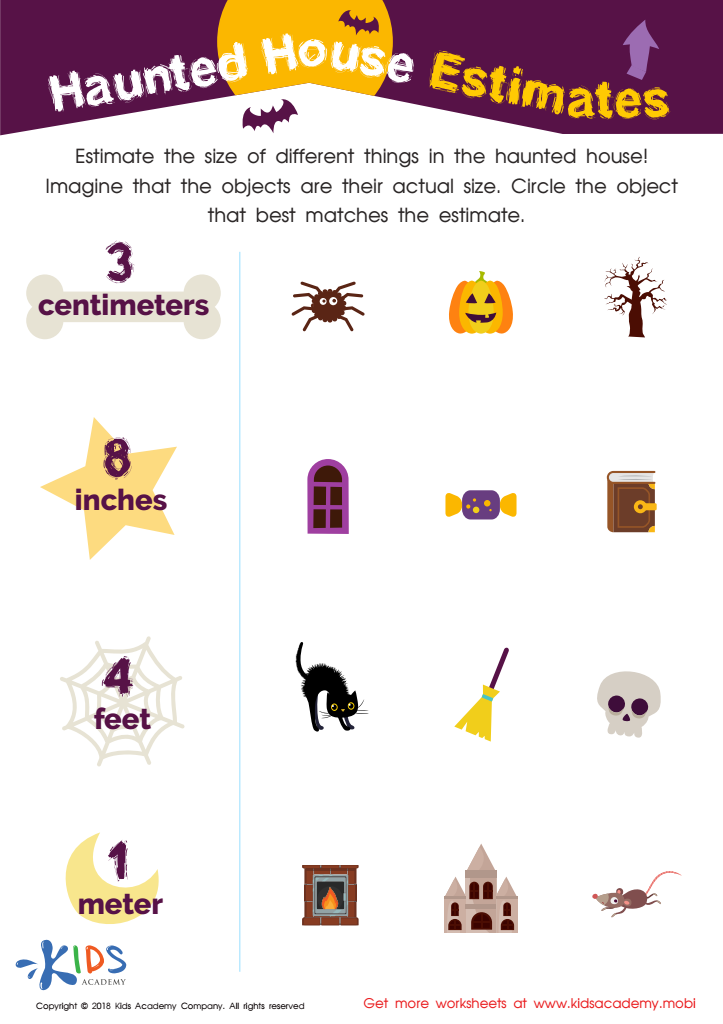
Haunted House Estimates Worksheet
Haunted House Estimates Worksheet
Enliven your kid's learning with this printable worksheet! Have them estimate the size of objects and creatures in a haunted house, then circle the ones that match their estimates. They'll need to understand different measuring units beforehand. It's an exciting way to learn!
Haunted House Estimates Worksheet
Worksheet
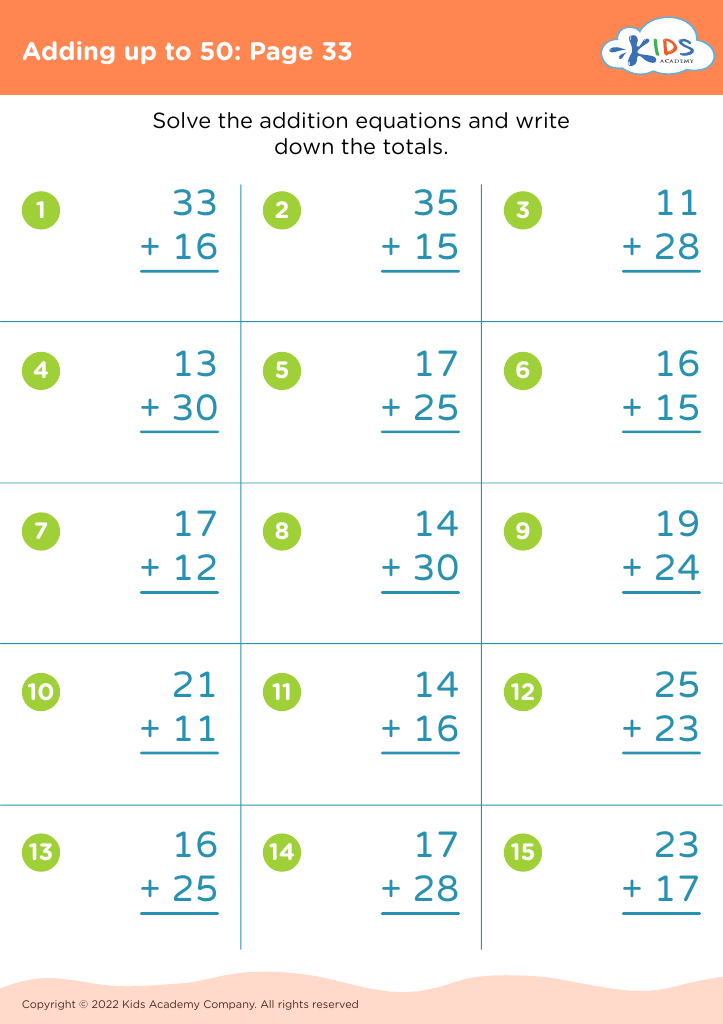
Adding up to 50: Page 33

Adding up to 50: Page 33

Adding up to 50: Page 33
Worksheet
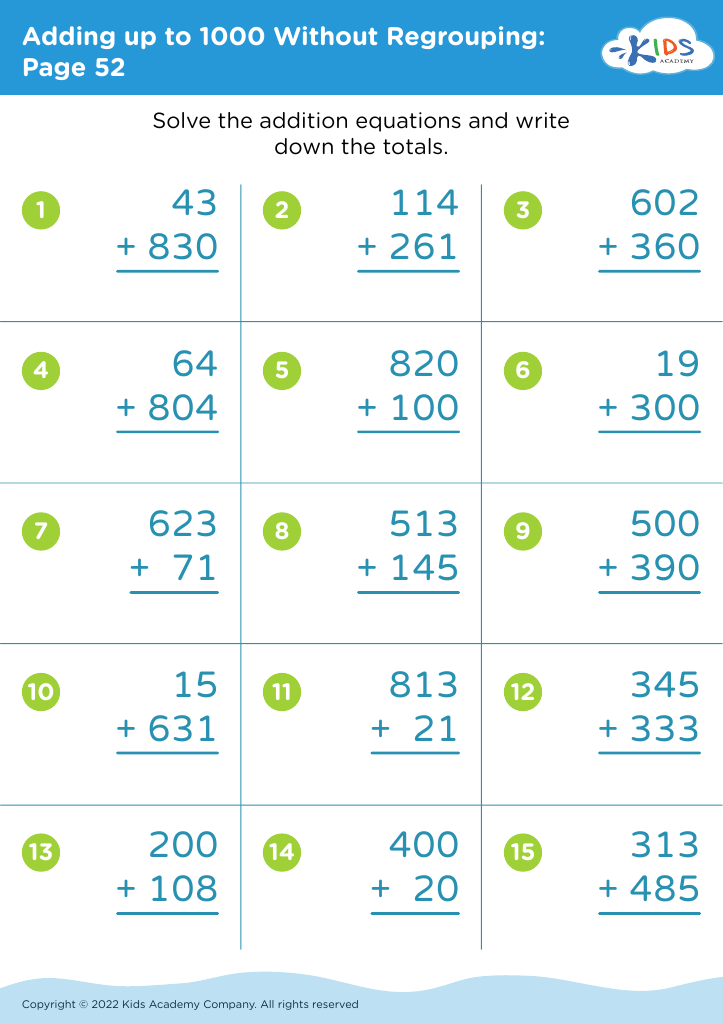
Adding up to 1000 Without Regrouping: Page 52
Worksheet
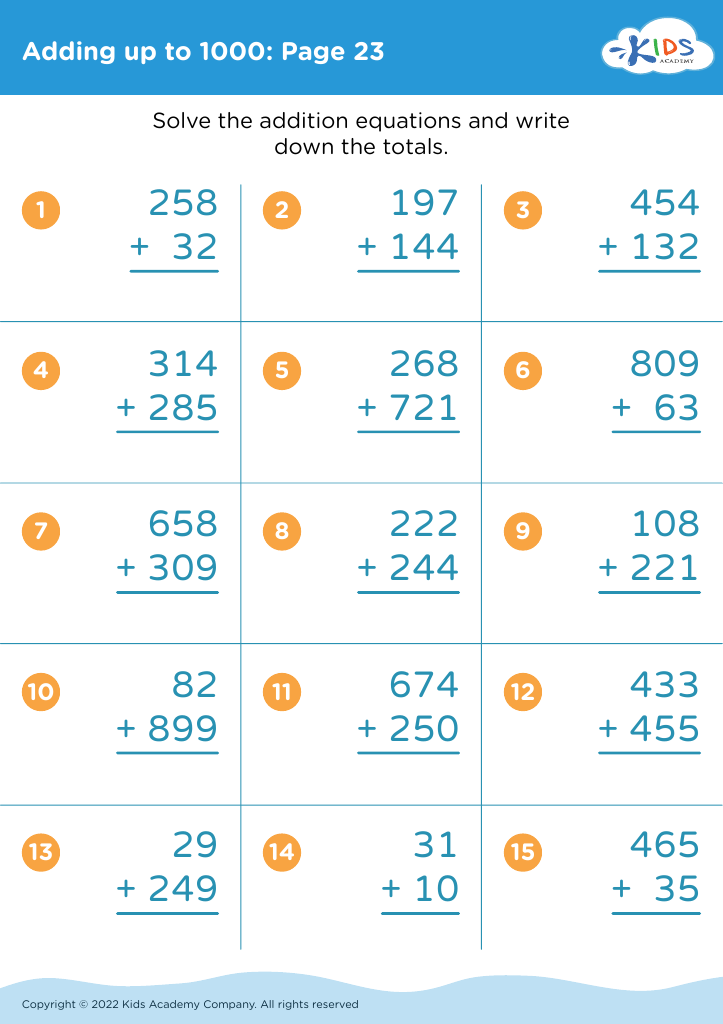
Adding up to 1000: Page 23

Adding up to 1000: Page 23

Adding up to 1000: Page 23
Worksheet
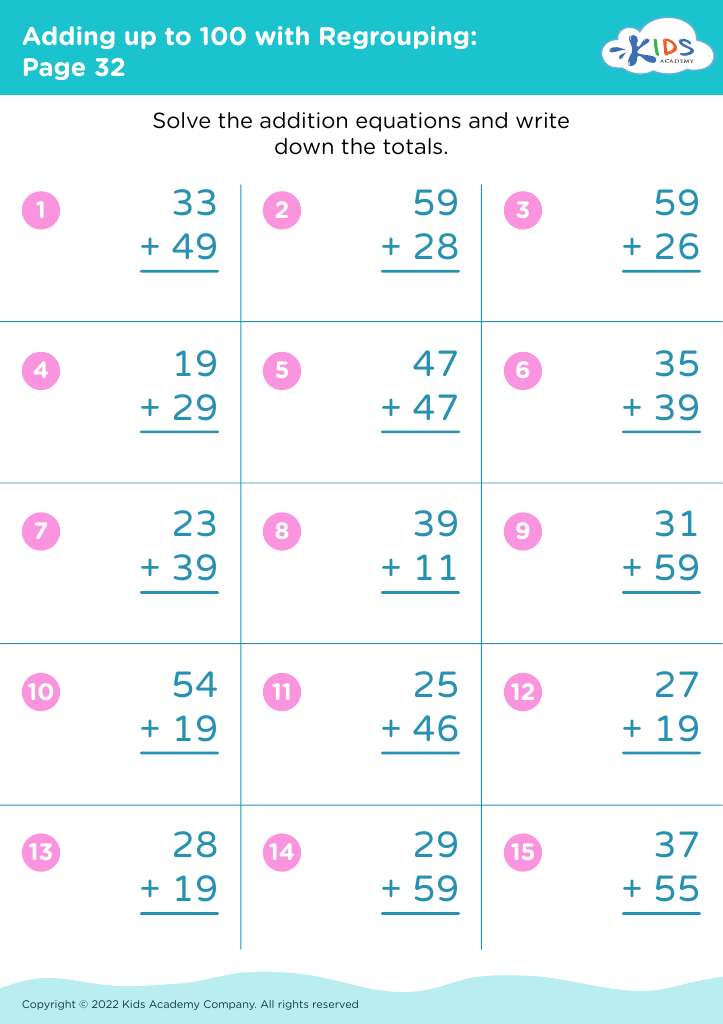
Adding up to 100 with Regrouping: Page 32
Worksheet
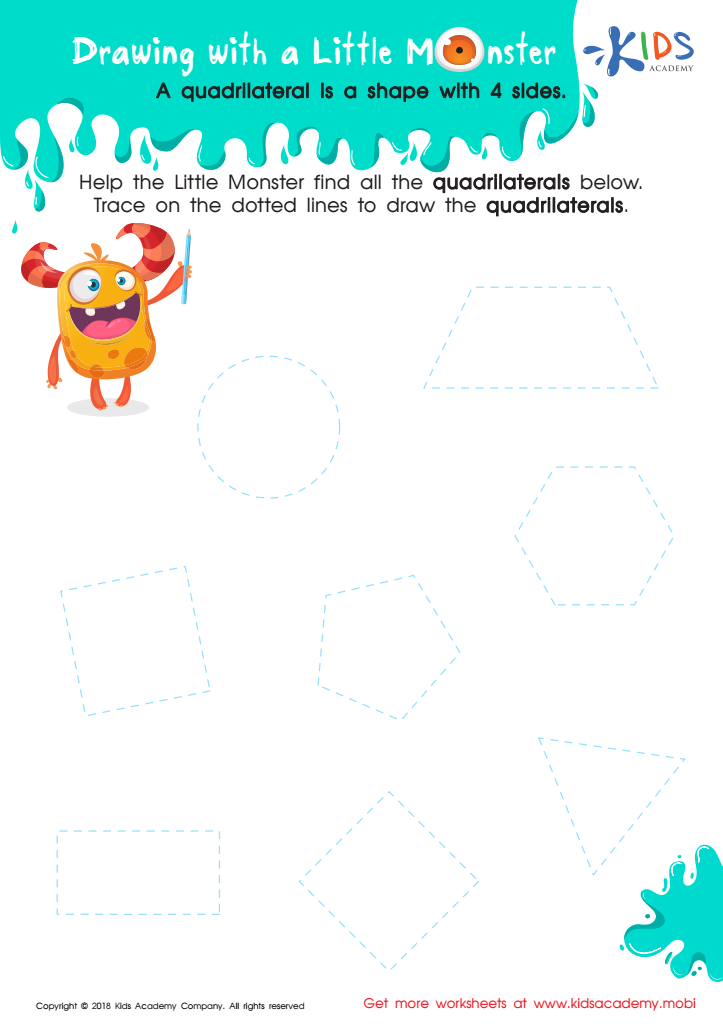
Drawing with a Little Monster Worksheet
Drawing with a Little Monster Worksheet
Assist your students in helping the Little Monster find the quadrilaterals in the exercise. Remind them that a quadrilateral is any shape with four sides, such as squares, rectangles, and kites. Guide your students with the dotted lines to draw the shapes correctly.
Drawing with a Little Monster Worksheet
Worksheet
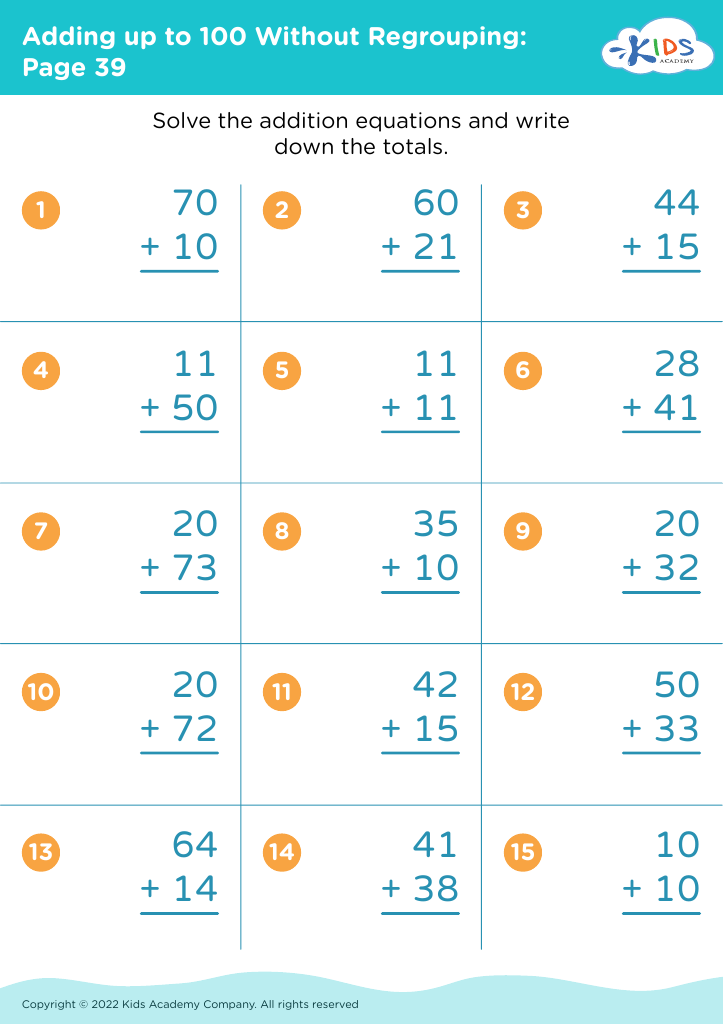
Adding up to 100 Without Regrouping: Page 39
Worksheet
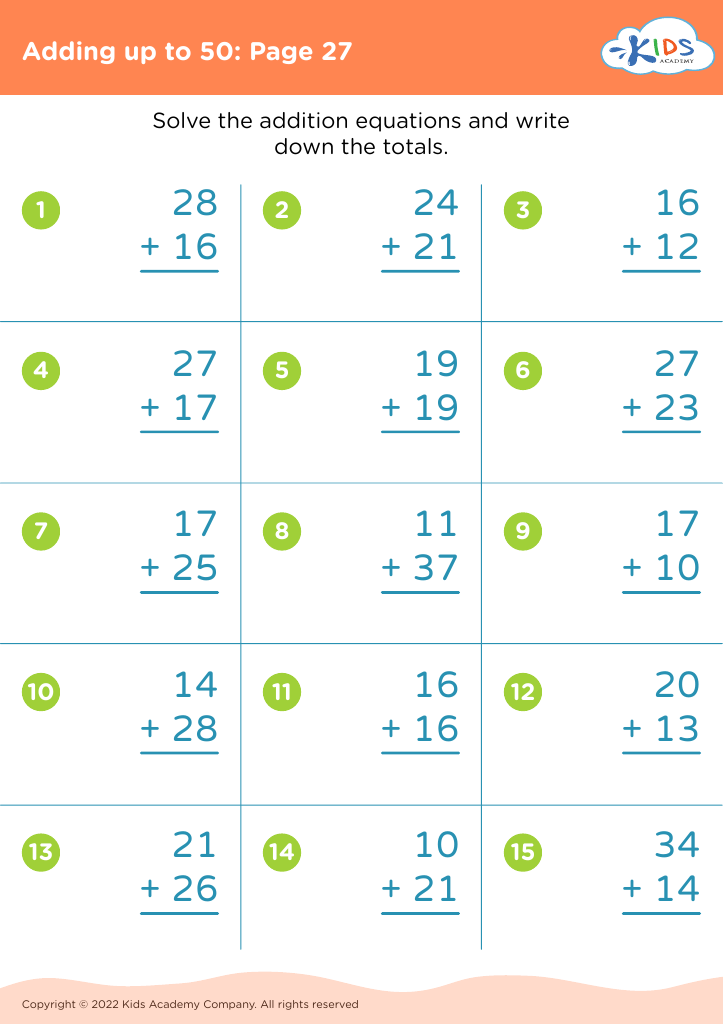
Adding up to 50: Page 27

Adding up to 50: Page 27

Adding up to 50: Page 27
Worksheet
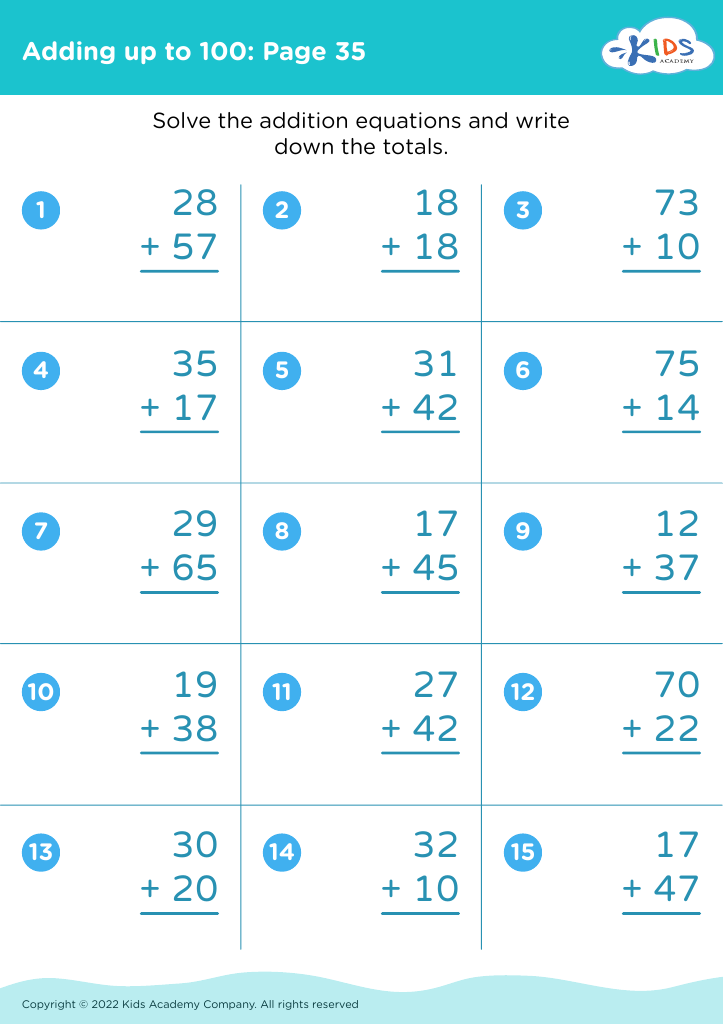
Adding up to 100: Page 35

Adding up to 100: Page 35

Adding up to 100: Page 35
Worksheet
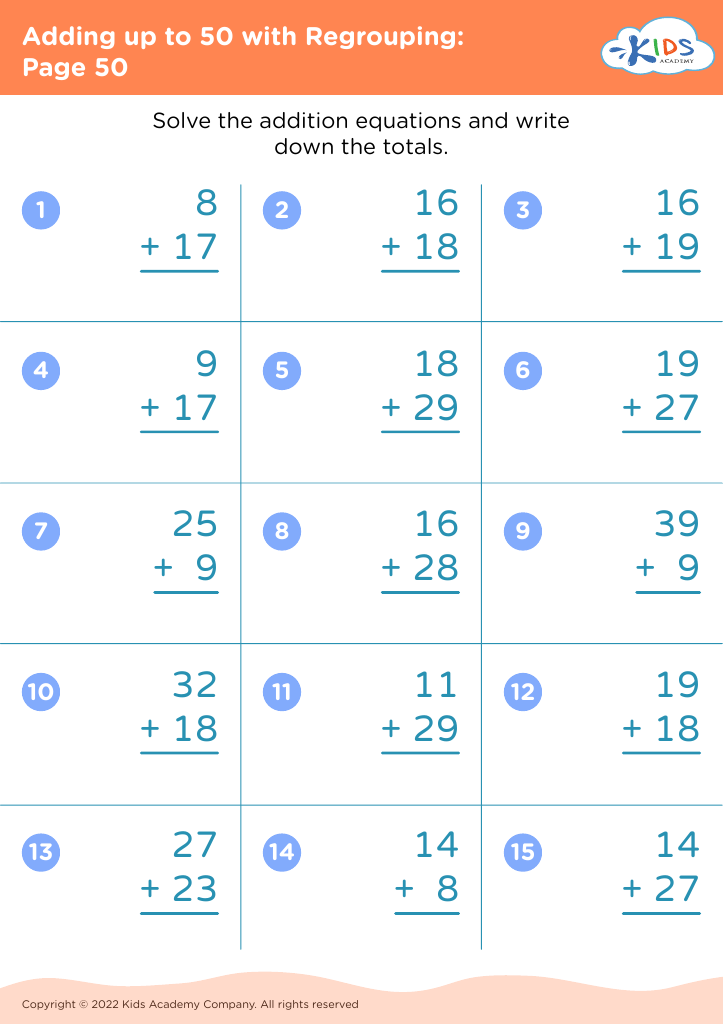
Adding up to 50 with Regrouping: Page 50
Worksheet


Math is a crucial subject for Grade 2 students as it lays the foundations for future learning and critical thinking skills. In this formative stage, children begin to develop their understanding of numbers, patterns, and problem-solving strategies, all of which are essential not only in mathematics but across various subjects and real-life situations.

By prioritizing math education, parents and teachers foster a mindset of curiosity and exploration. Engaging students with hands-on activities—like measuring ingredients for cooking or counting objects in their environment—makes learning relevant and enjoyable. This approach can boost a child's confidence, leading to a more positive attitude toward math as they progress through their education.

Additionally, strong math skills are linked to improved performance in other academic areas. Researchers have found that arithmetic skills are predictive of later academic achievement. Therefore, encouraging math literacy early helps to create a strong academic foundation.

Lastly, supporting math learning helps children develop essential life skills, such as logical reasoning, decision-making, and analytical thinking. In today’s data-driven world, these competencies are invaluable, making math education a priority for both parents and teachers in nurturing well-rounded individuals.