Filters

59 filtered results

Clear all filters
Favorites
With answer key
Interactive

59 filtered results

Difficulty Level

Grade


Subject

    Check out this FREE Trial Lesson on Geometry for age 6-8!

    Describing Objects in the Environment

    Favorites
    With answer key
    Interactive
    • 6-8
    • Geometry
    • Normal
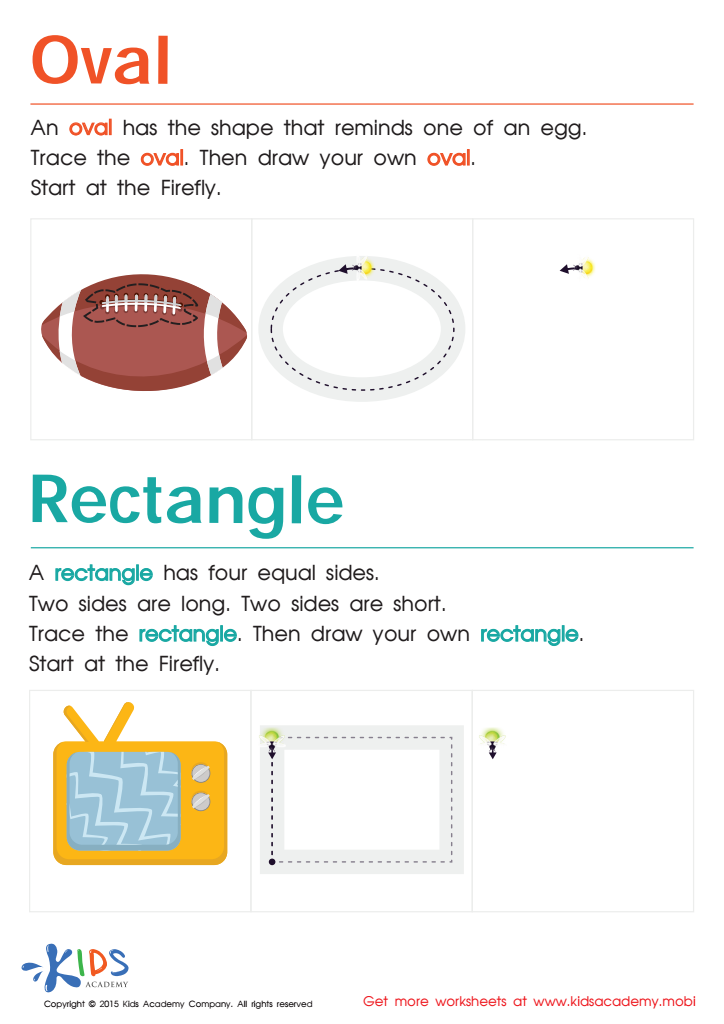
    Geometric Shapes for Kids: Easy Drawing of Ovals And Rectangles PDF
    Geometric Shapes for Kids: Easy Drawing of Ovals And Rectangles PDF

    Easy Drawing of Ovals And Rectangles Worksheet

    Kids Academy offers free geometry worksheets to make learning more fun and interesting. Trace an oval, rectangle, and many other shapes!
    Easy Drawing of Ovals And Rectangles Worksheet
    Worksheet
    3D Shapes Quest Worksheet
    3D Shapes Quest Worksheet

    3D Shapes Quest Worksheet

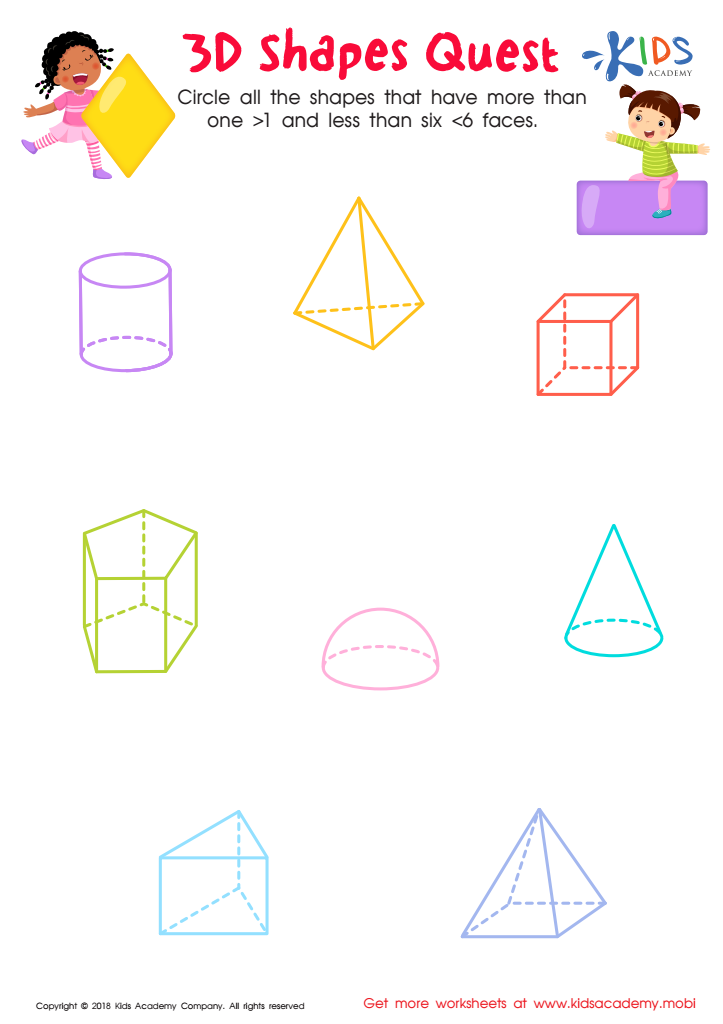
    Ask your child if they know what faces of shapes are. If not, explain that faces are flat surfaces on shapes. Ask what a square and rectangle have in common - both have four faces. Your child's task is to circle shapes with more than 1 and less than 6 faces in this exercise.
    3D Shapes Quest Worksheet
    Worksheet
    In Front or Behind: Part 2 Worksheet
    In Front or Behind: Part 2 Worksheet

    In Front or Behind: Part 2 Worksheet

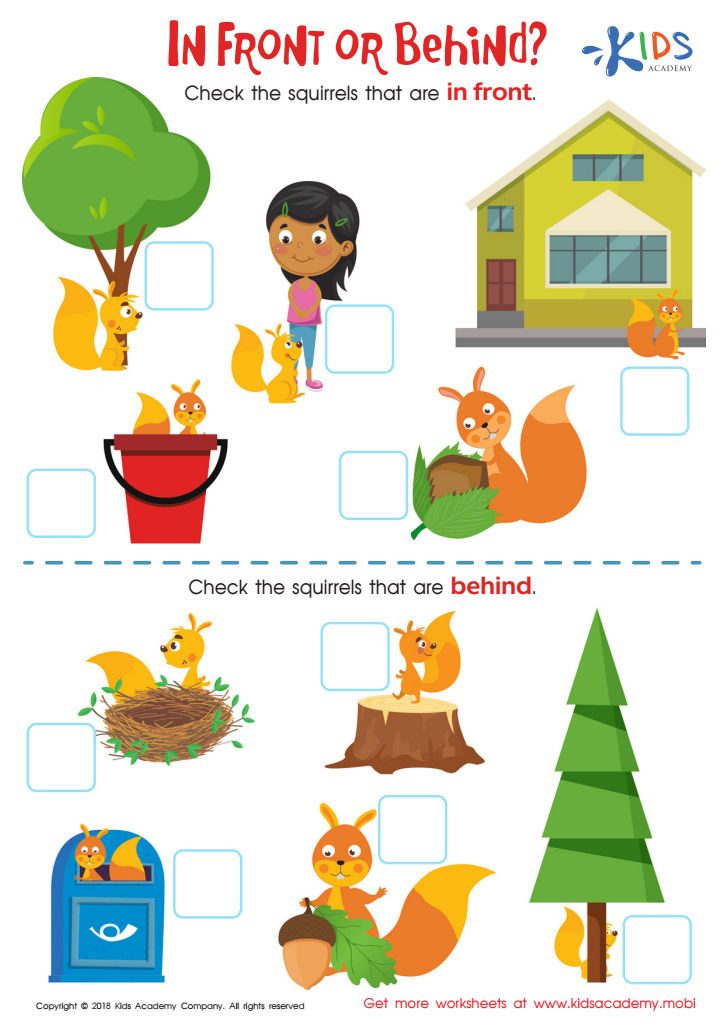
    Teach positional words "front" and "behind" with this fun worksheet! Students identify where the squirrel is in relation to the object - in front or behind. It's a great exercise to practice early geometry skills and understanding object movement.
    In Front or Behind: Part 2 Worksheet
    Worksheet
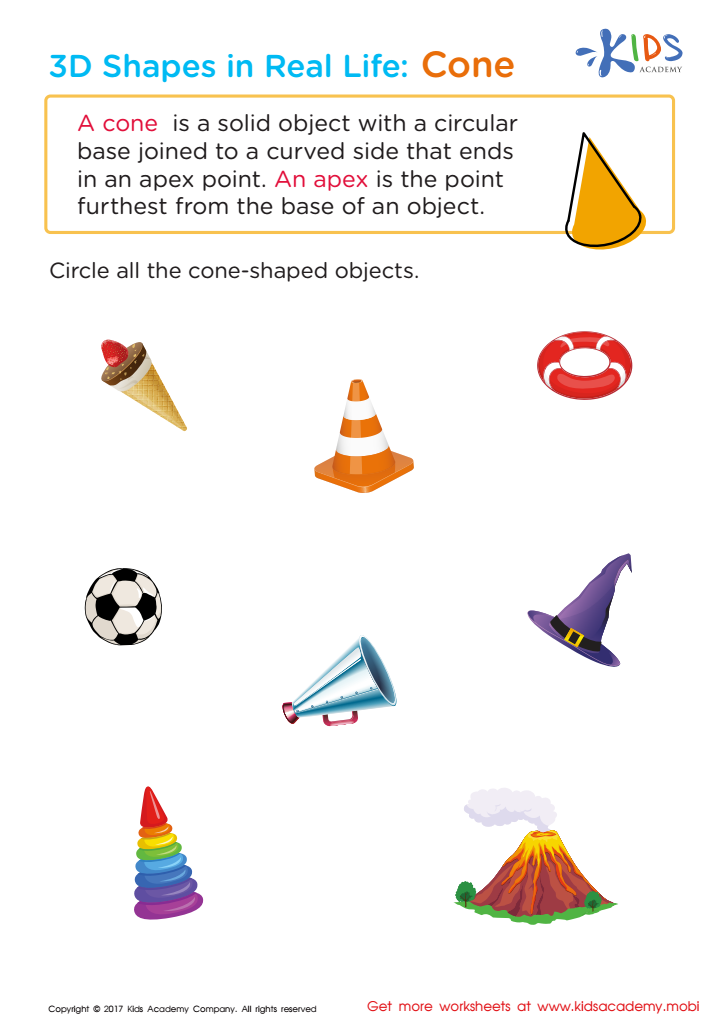
    3D Shapes in Real Life Cone Printable
    3D Shapes in Real Life Cone Printable

    Shapes in Real Life: Cone Worksheet

    Help your child get ahead in math by learning about geometry, including 3D objects, with this 3D shapes in real life cone worksheet.
    Shapes in Real Life: Cone Worksheet
    Worksheet
    Using Squares to Make Rectangles Worksheet
    Using Squares to Make Rectangles Worksheet

    Using Squares to Make Rectangles Worksheet

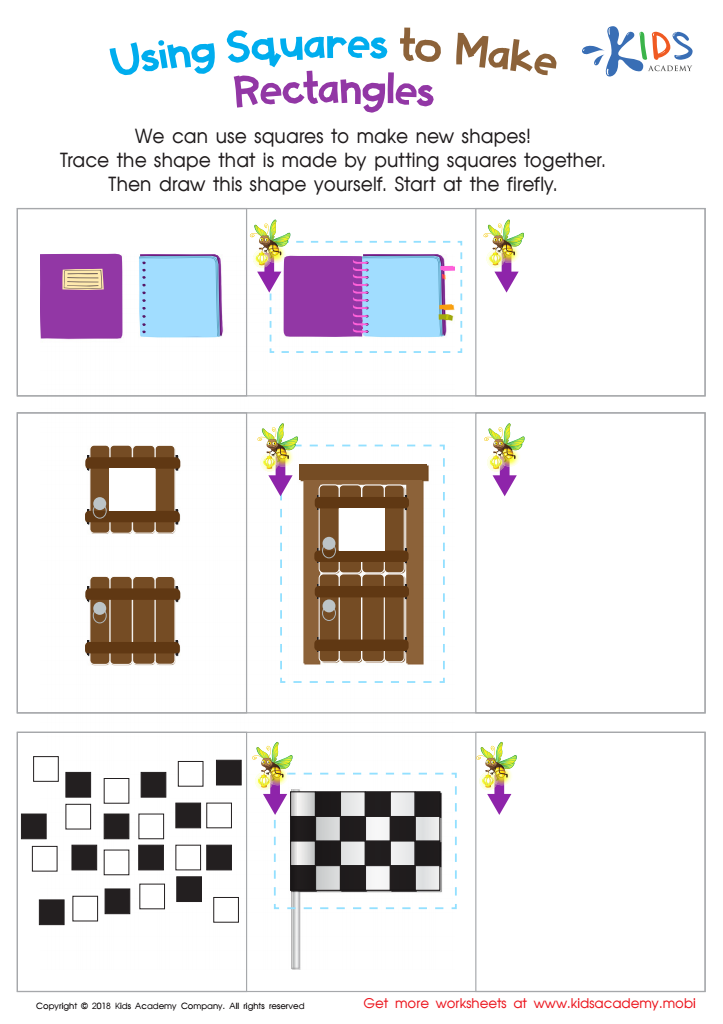
    Creating shapes from other shapes (composing shapes) develops spatial skills, an essential geometry standard for young students. This worksheet introduces familiar square objects, then demonstrates how they create rectangles. Students practice tracing and then drawing the shape independently. Download this free math resource for the classroom today! (80 words)
    Using Squares to Make Rectangles Worksheet
    Worksheet
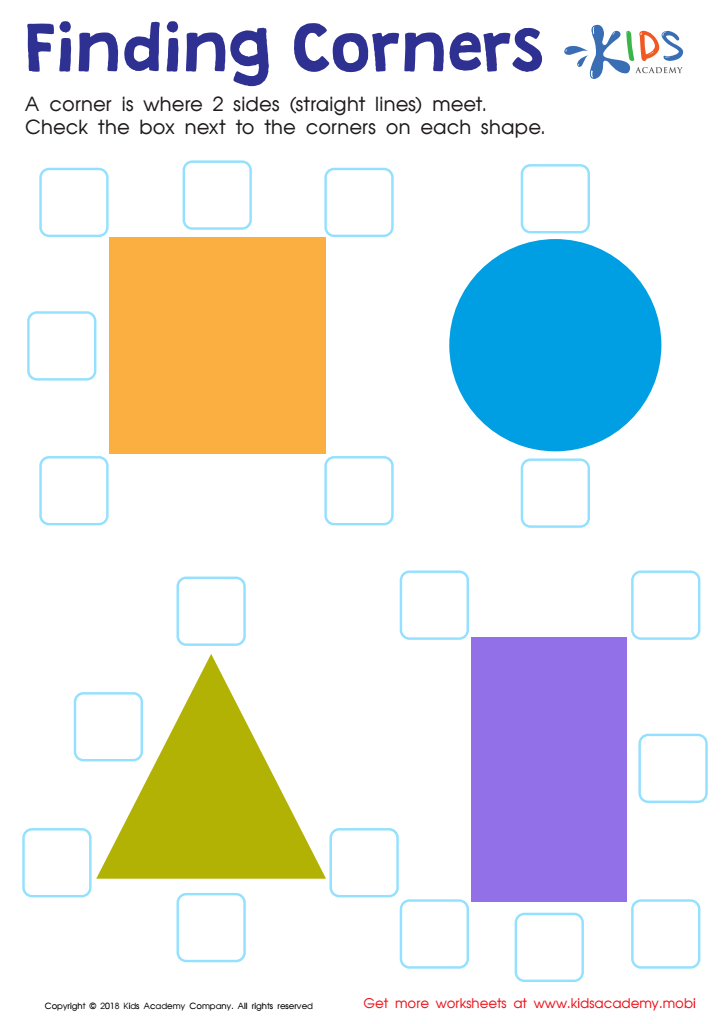
    Finding Corners Worksheet
    Finding Corners Worksheet

    Finding Corners Worksheet

    This vibrant worksheet introduces young learners to the fundamentals of geometric shapes. Through the downloadable PDF, they'll develop an understanding of corners - the intersection of two line segments - and how to identify them on different shapes. Fun colors and boxes let them label corners, helping them master this concept for future geometric reasoning.
    Finding Corners Worksheet
    Worksheet
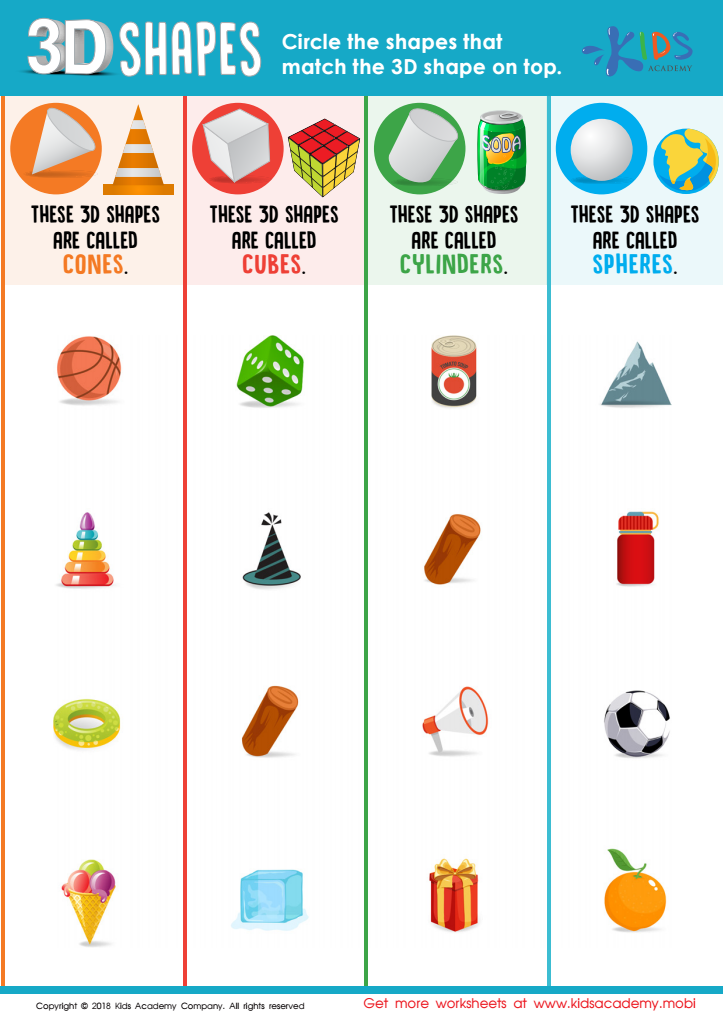
    3D shapes worksheet
    3D shapes worksheet

    3D Shapes Worksheet

    It's time to identify 3D shapes! This worksheet helps kids find and name shapes like cones, cylinders, cubes, and spheres using pictures of everyday objects. Let's explore 3D shapes in the real world!
    3D Shapes Worksheet
    Worksheet
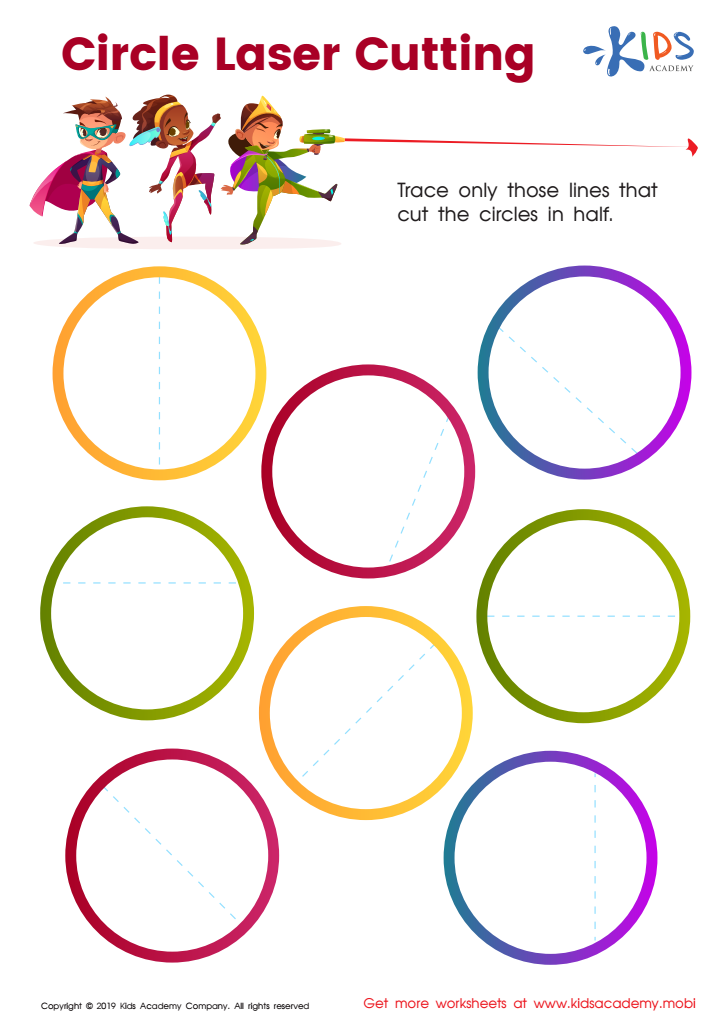
    Circle Laser Cutting Worksheet
    Circle Laser Cutting Worksheet

    Circle Laser Cutting Worksheet

    Encourage your kids to learn geometry! Remind them that when shapes are cut into two equal parts, they are called halves. Have them look at the circles in the worksheet, and trace the lines that cut the circles in half. Geometry is an essential part of education, and although it may not be exciting, it's a valuable skill to have.
    Circle Laser Cutting Worksheet
    Worksheet
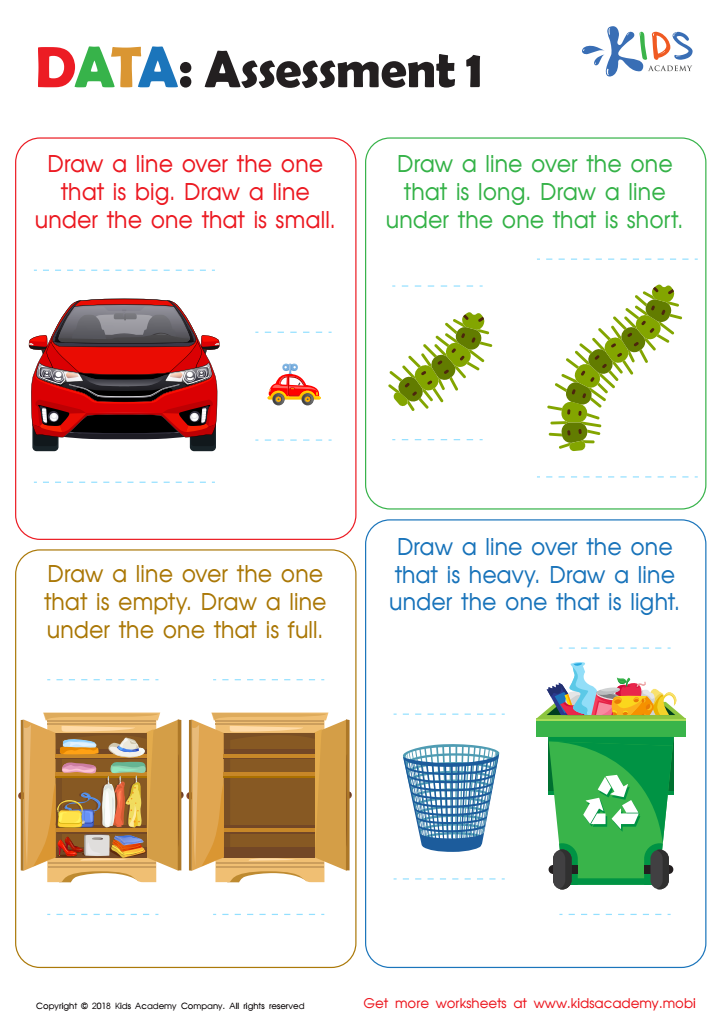
    Data: Assessment 1 Worksheet
    Data: Assessment 1 Worksheet

    Data: Assessment 1 Worksheet

    Assess your students' knowledge of measurement words with this worksheet. Have them compare and describe objects/quantities using words like "big", "small", "long", "short", "empty", "full", "heavy" and "light". Encourage further learning by asking students to provide examples of each word meaning.
    Data: Assessment 1 Worksheet
    Worksheet
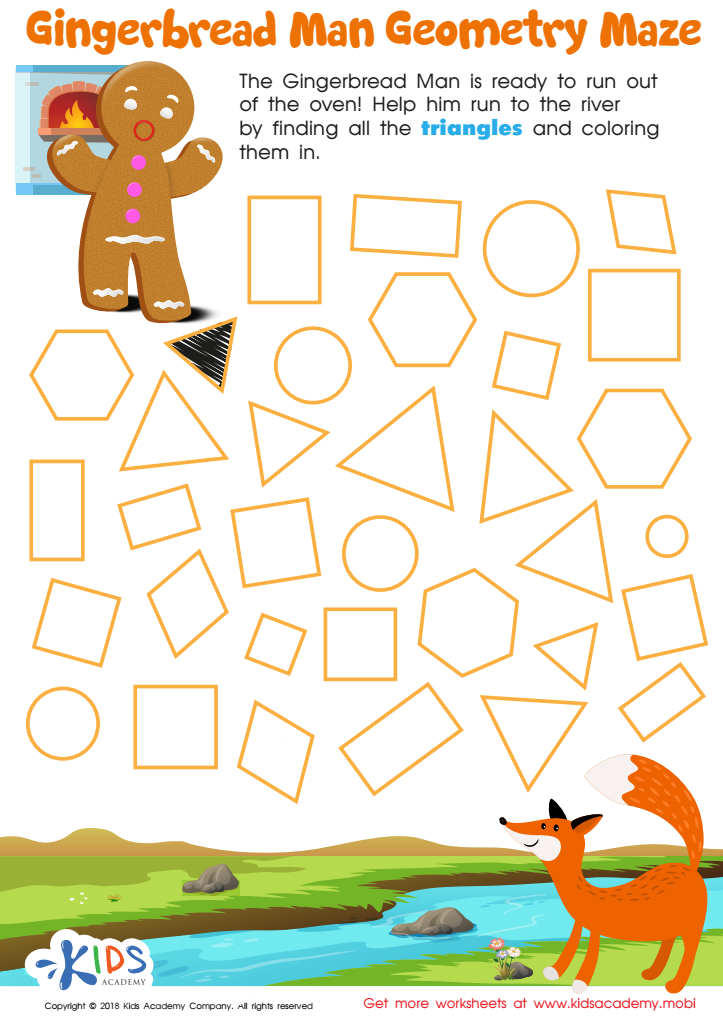
    Gingerbread Man Geometry Maze Worksheet
    Gingerbread Man Geometry Maze Worksheet

    Gingerbread Man Geometry Maze Worksheet

    Help a beloved character escape the oven! Kids race through a sea of geometrical shapes, searching for triangles of various sizes. With this free worksheet, they can have fun while learning about similarity of geometrical shapes concepts. Run, run, run as fast as they can!
    Gingerbread Man Geometry Maze Worksheet
    Worksheet
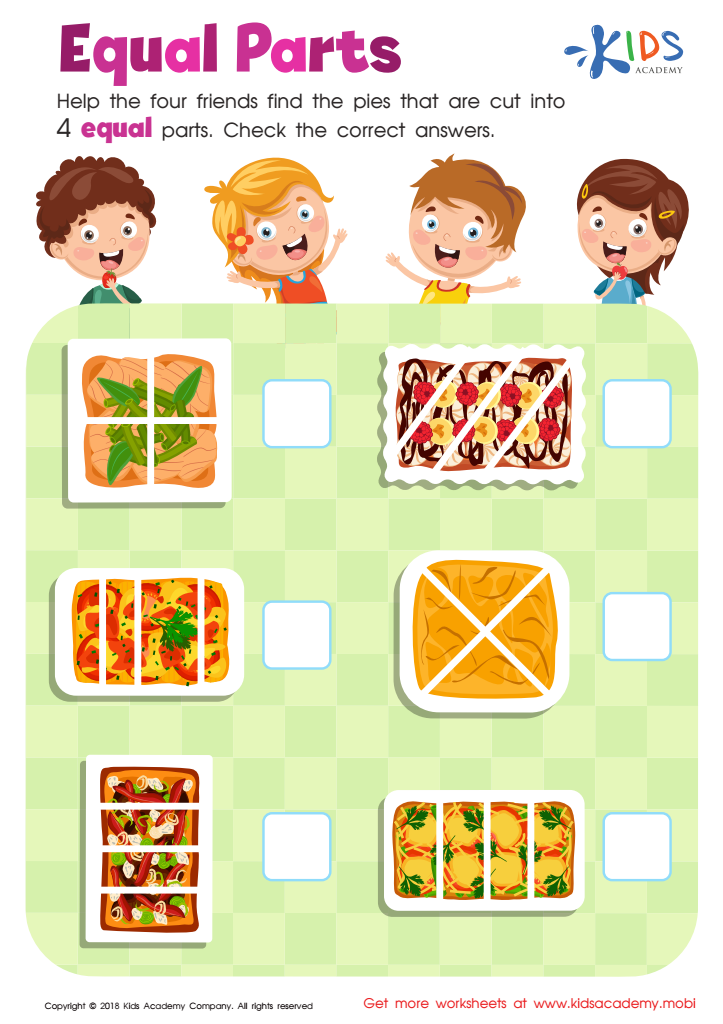
    Equal Parts: Food Worksheet

    Equal Parts: Food Worksheet

    Equal Parts: Food Worksheet

    Kids love pies! In this worksheet, they must help four friends share one equally. Six pictures of pies cut in different ways are provided. Your child must choose the one where the pie is divided into four equal parts. That way, each friend gets an equal share.
    Equal Parts: Food Worksheet
    Worksheet


    ... 2 3

    Normal Geometry for Ages 6-8 is vital for several reasons. First and foremost, it lays the foundational skills necessary for mathematical understanding. At this age, children naturally explore shapes and spatial relationships, helping them develop critical thinking and problem-solving skills. Geometry encourages spatial reasoning, which is essential in everyday tasks like navigation and even in fields such as science and engineering in later years.

    In addition, understanding basic geometric concepts fosters a sense of curiosity and encourages creativity. When children identify shapes in the world around them, they begin to make connections between mathematics and their environment, enhancing their observational skills. This intrinsic motivation can also lead to a greater appreciation of math as they grow.

    Moreover, engaging with geometry helps develop vocabulary and communication skills as children learn to describe and categorize shapes and their properties. Early exposure to geometric principles reinforces patterns and structures they'll encounter in more complex mathematics.

    Ultimately, investing time and effort in normal geometry education during ages 6-8 ensures a strong mathematical foundation, equipping children with both academic skills and the confidence to thrive in the future. Parents and teachers serve as pivotal guides in navigating this essential part of early learning.