Extra Challenge Chess Worksheets for Ages 3-7
37 filtered results
-
From - To
Discover our "Extra Challenge Chess Worksheets for Ages 3-7," designed to invigorate young minds with engaging chess activities! Tailored for early learners, these worksheets promote cognitive development, critical thinking, and problem-solving skills through fun chess-related challenges. From basic tactics to exciting puzzles, each worksheet encourages creativity and strategic thinking, fostering a love for the game. Easy to print and perfect for both home and classroom use, these worksheets are ideal for children ready to take their chess abilities to the next level. Dive into a world of intellectual excitement and watch your little ones develop essential skills while enjoying the game!
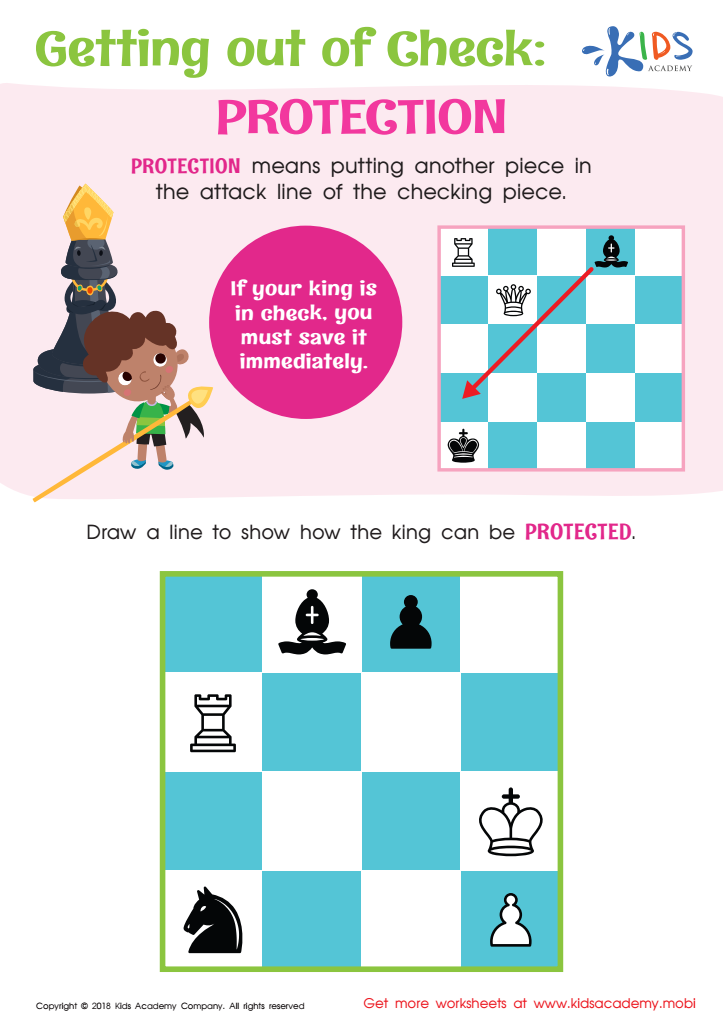
Getting out of Check: Protection
 Assign to My Students
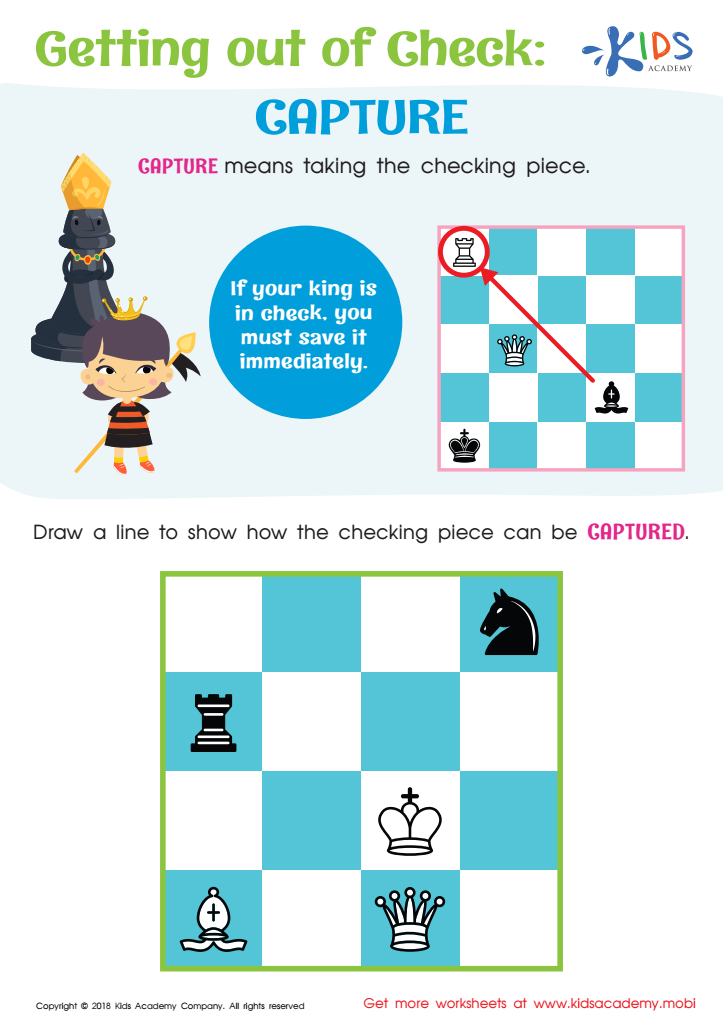
Getting out of Check: Capture
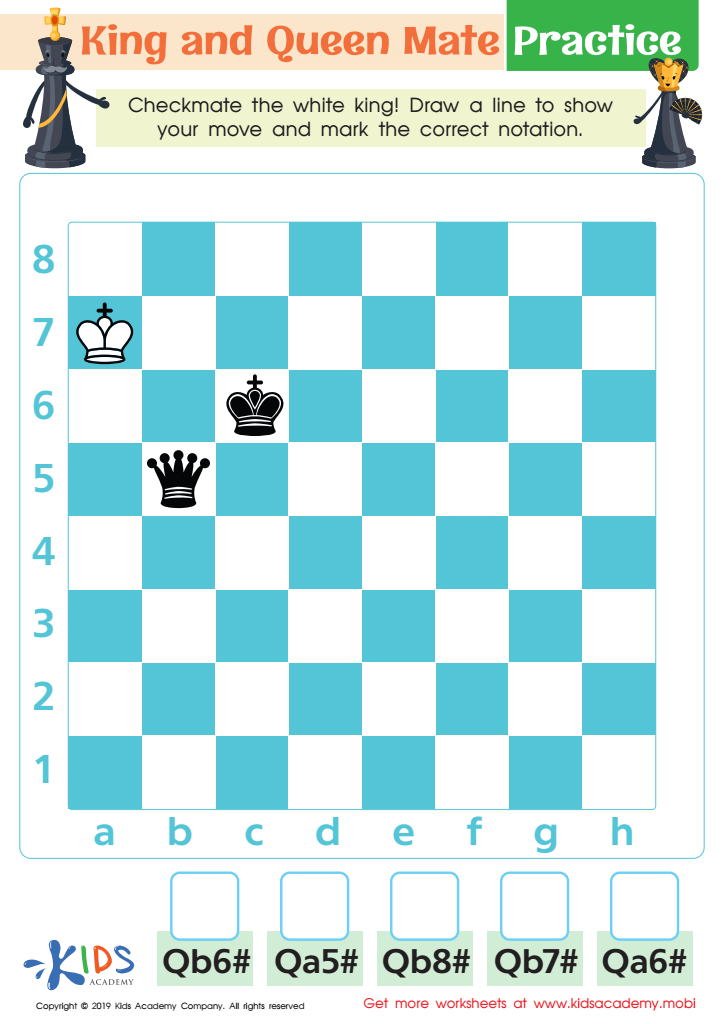
King and Queen Mate Practice Worksheet
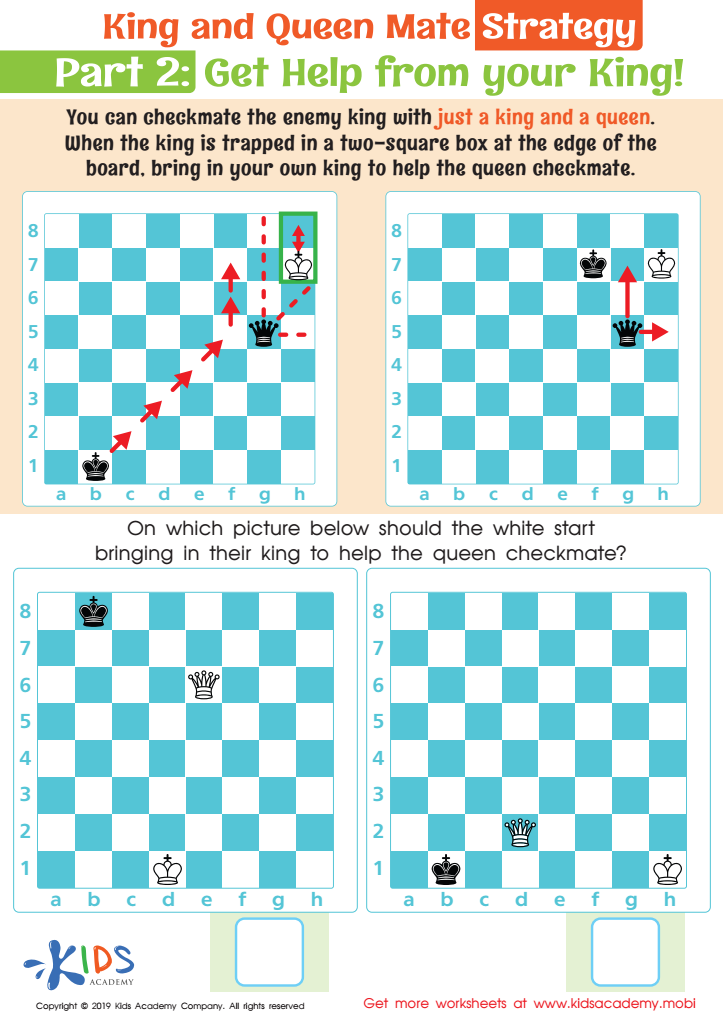
King and Queen Mate Strategy: Part 2 Worksheet
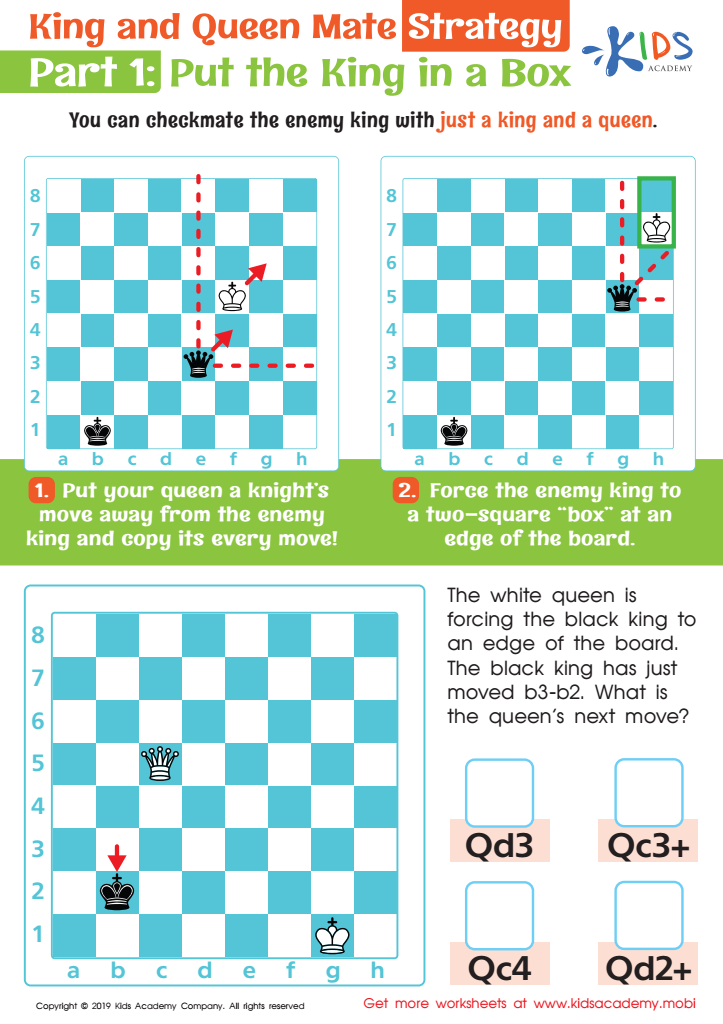
King and Queen Mate Strategy: Part 1 Worksheet
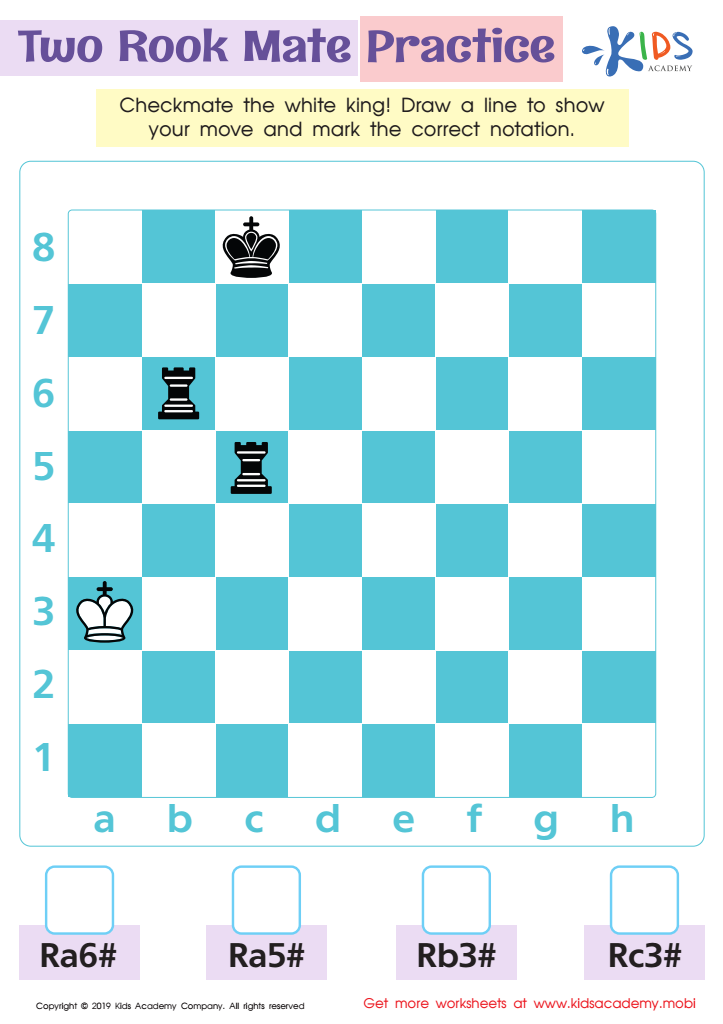
Two Rook Mate Practice Worksheet
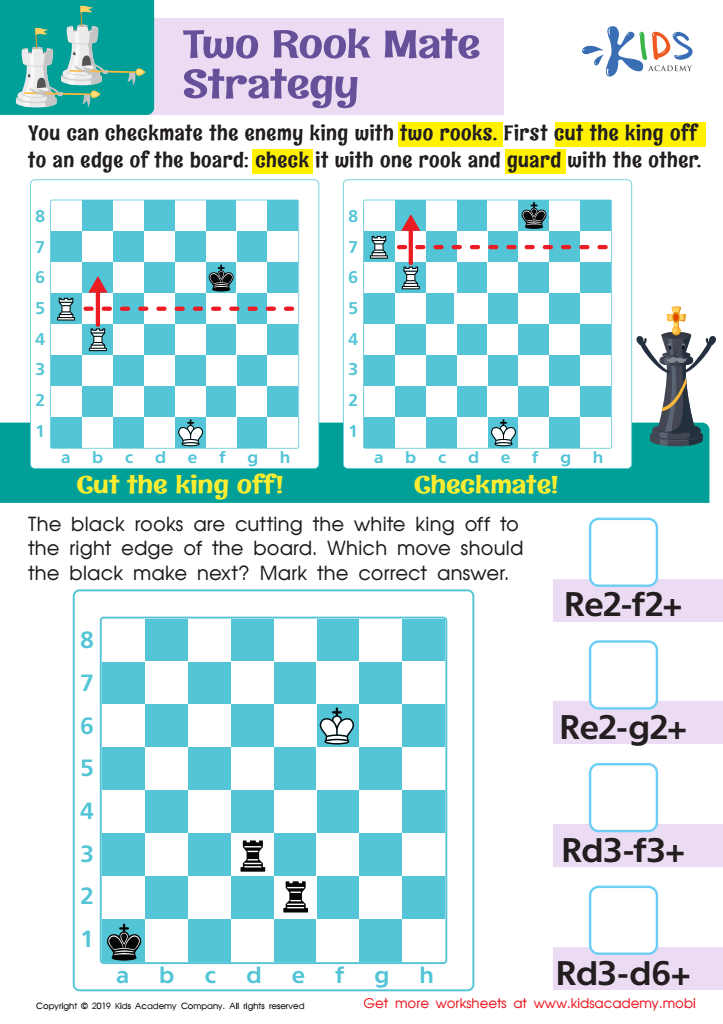
Two Rook Mate Strategy Worksheet
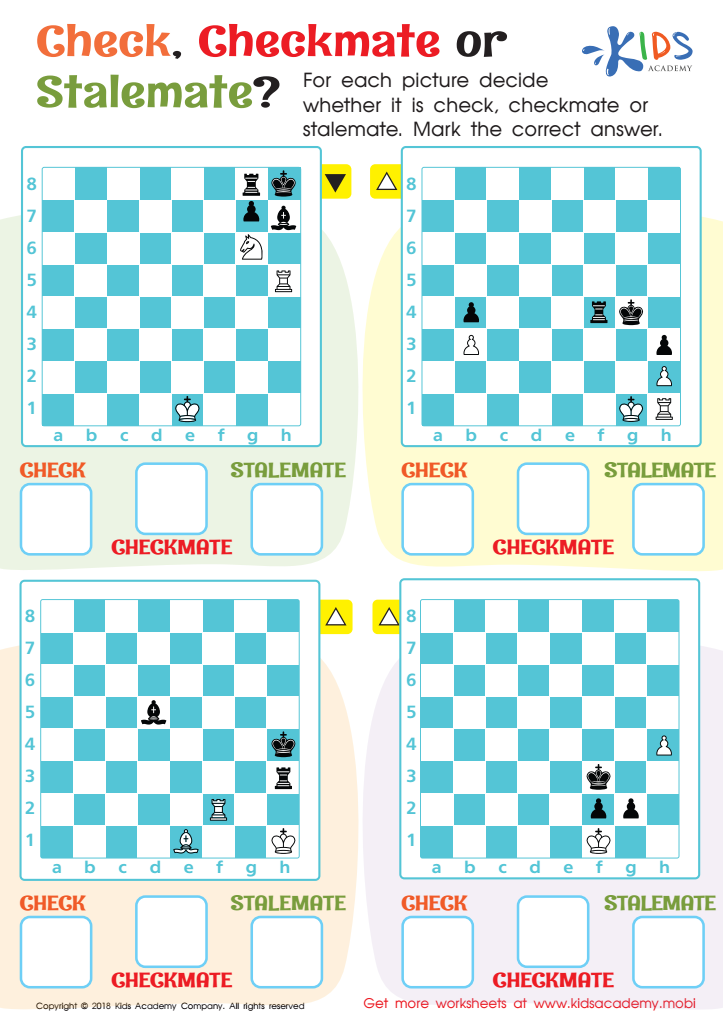
Check. Checkmate or Stalemate? Worksheet
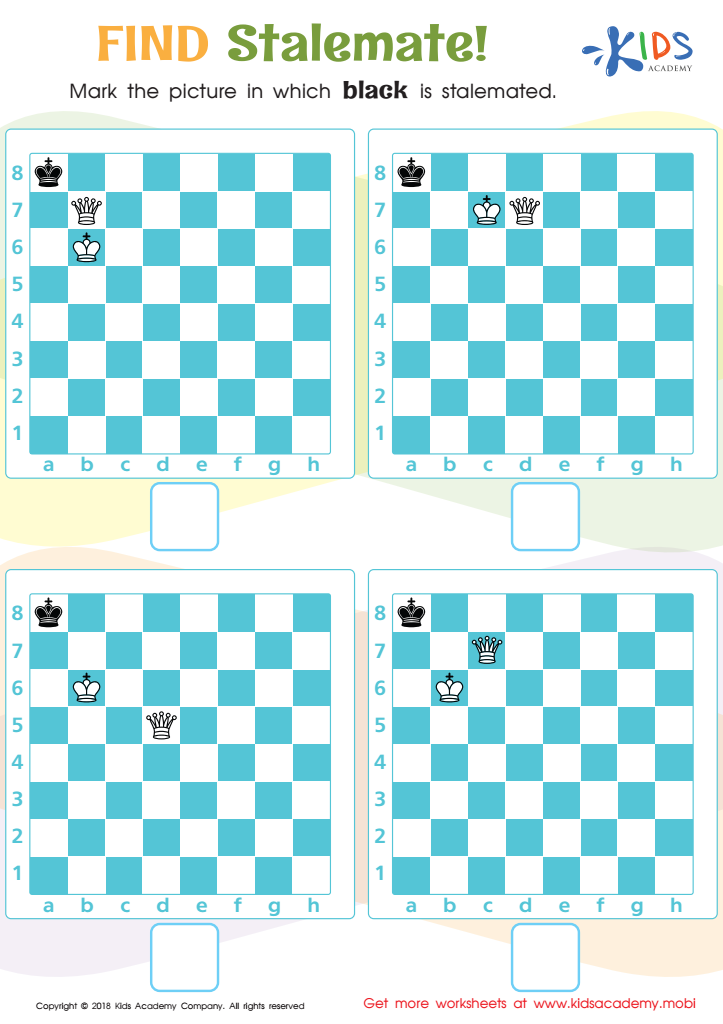
Find Stalemate! Worksheet
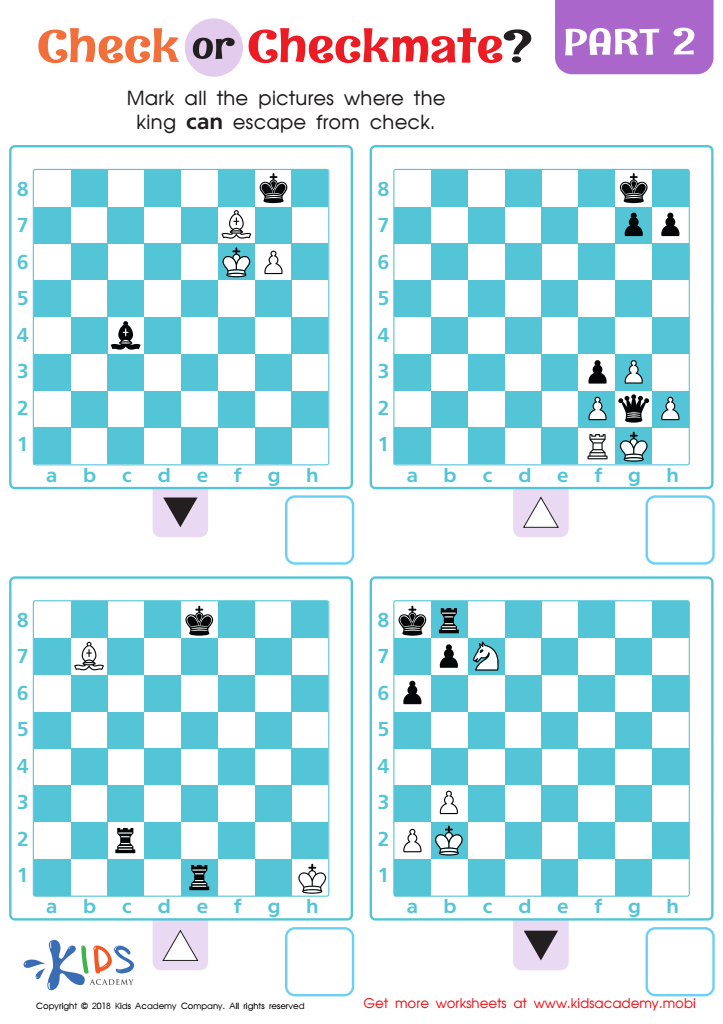
Check or Checkmate: Part 2 Worksheet
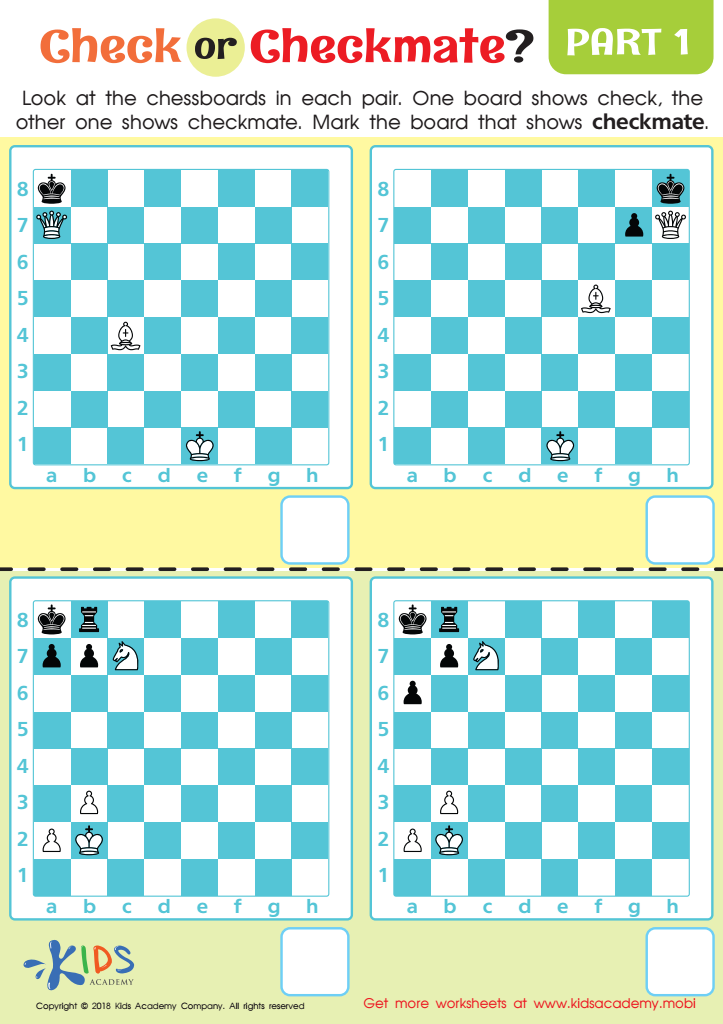
Check or Checkmate: Part 1 Worksheet
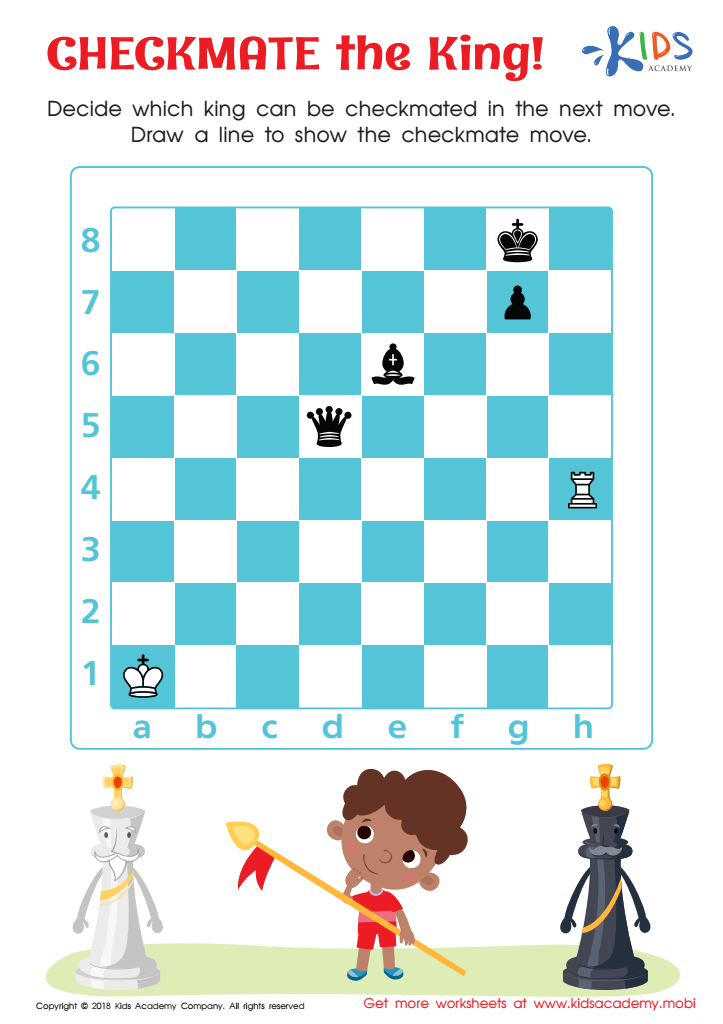
Checkmate the King Worksheet
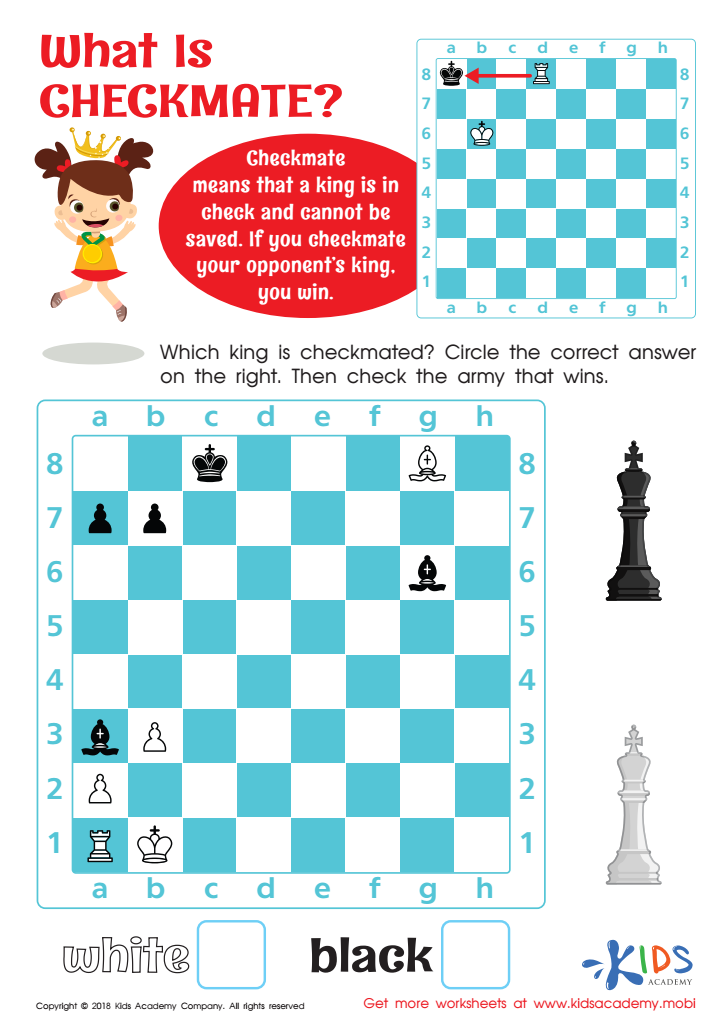
What is Checkmate? Worksheet
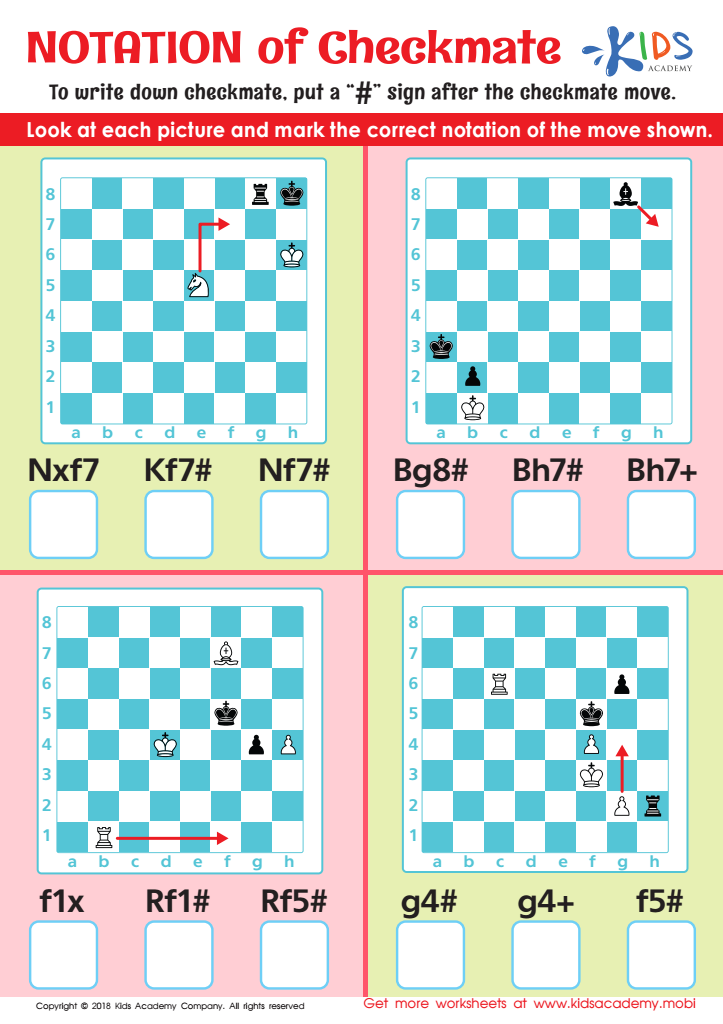
Notation of Checkmate Worksheet
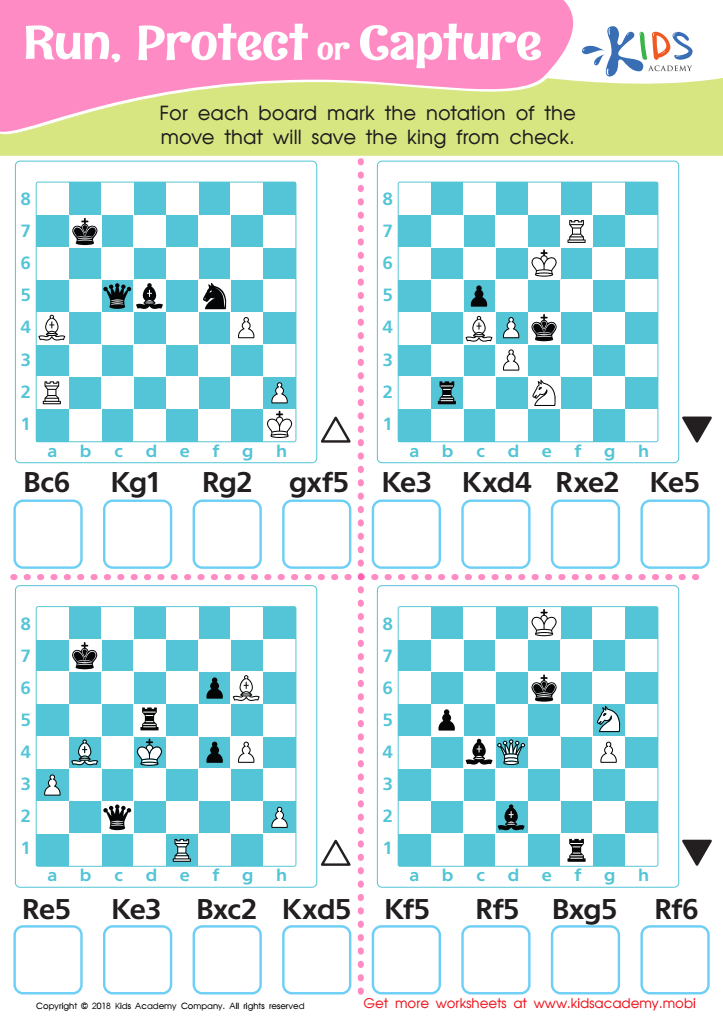
Run, Protect or Capture Worksheet
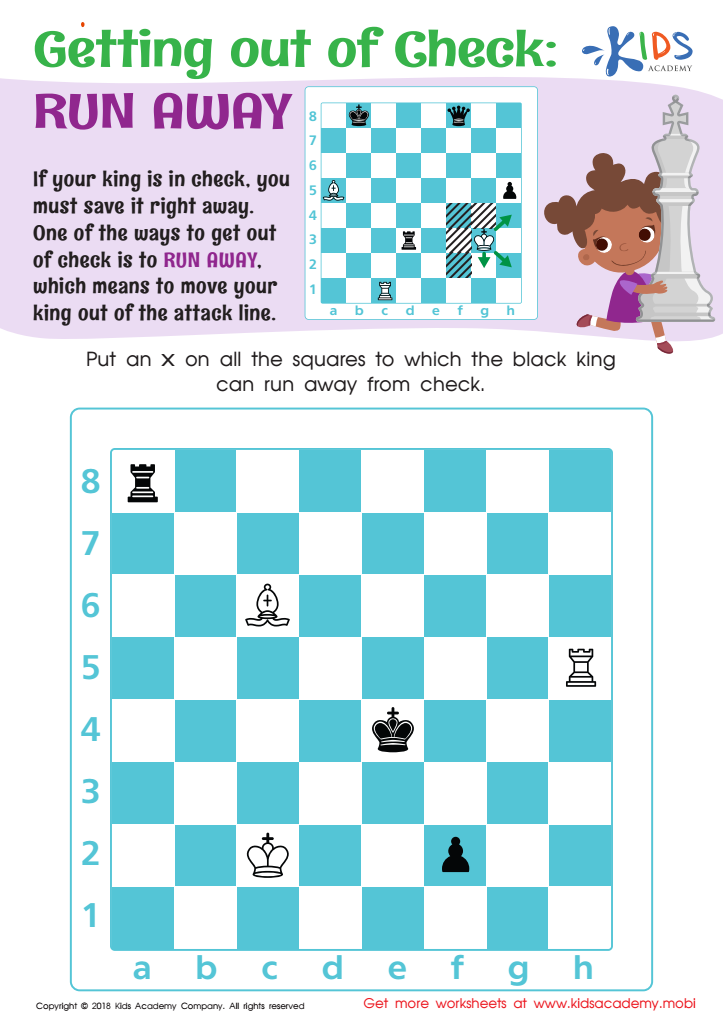
Getting out of Check: Run Away Worksheet
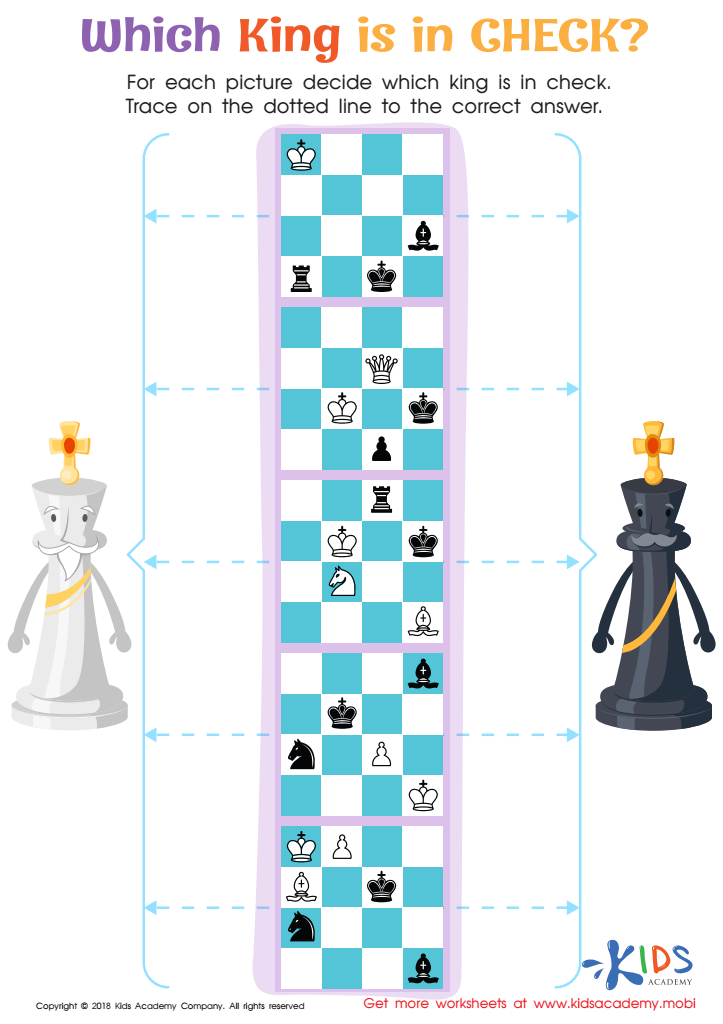
Which King is in Check? Worksheet
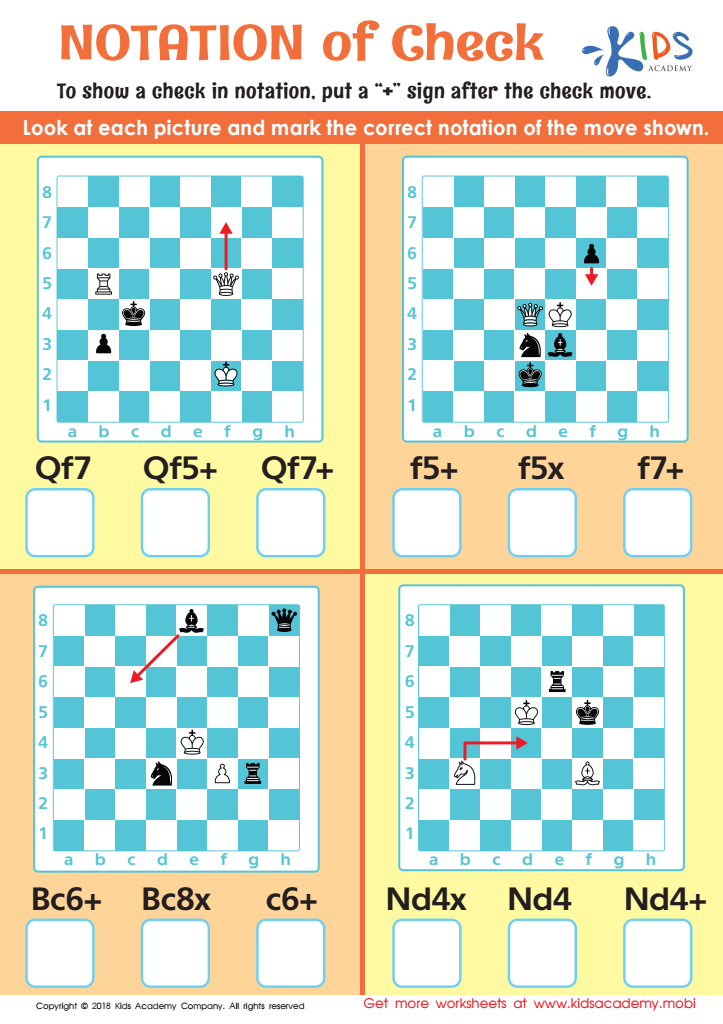
Notation of Check Worksheet
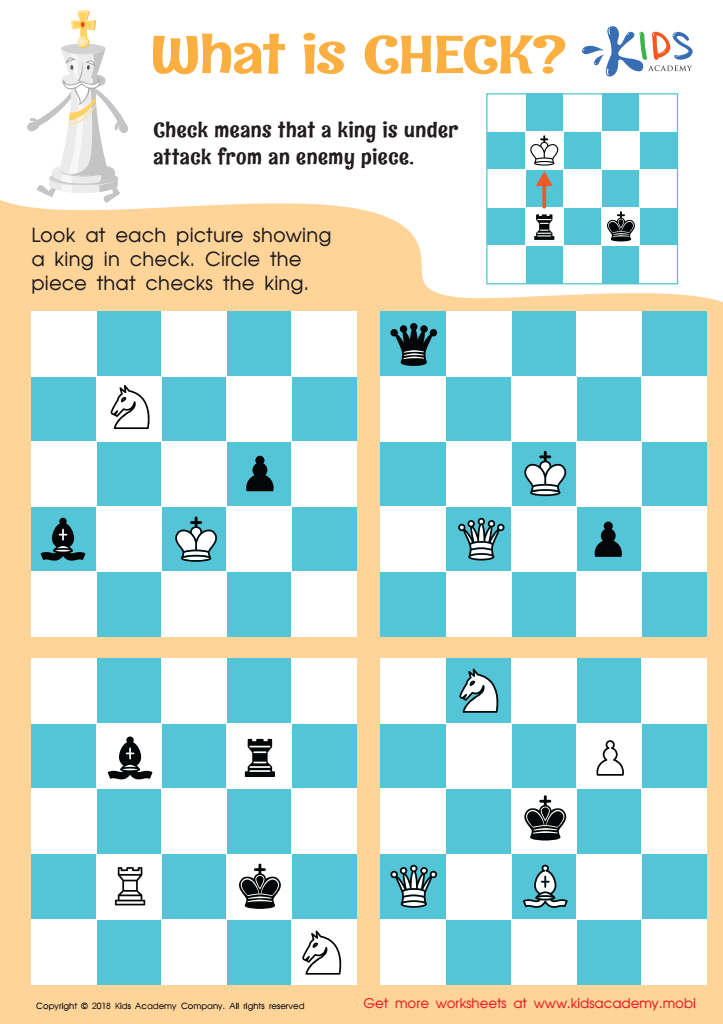
What is Check? Worksheet
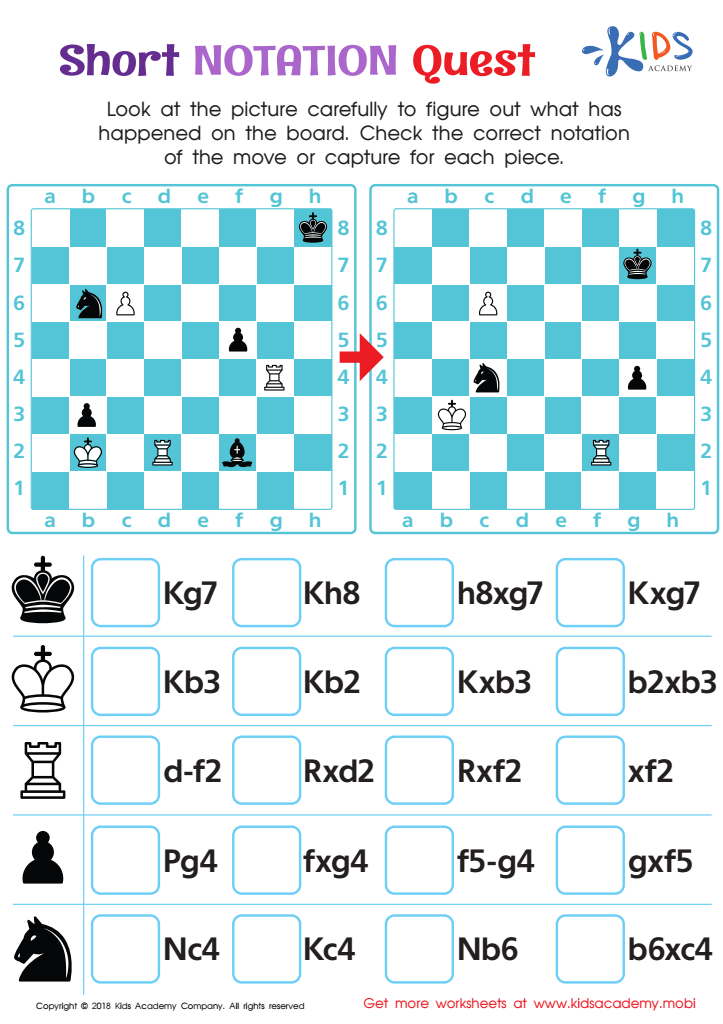
Short Notation Quest Worksheet
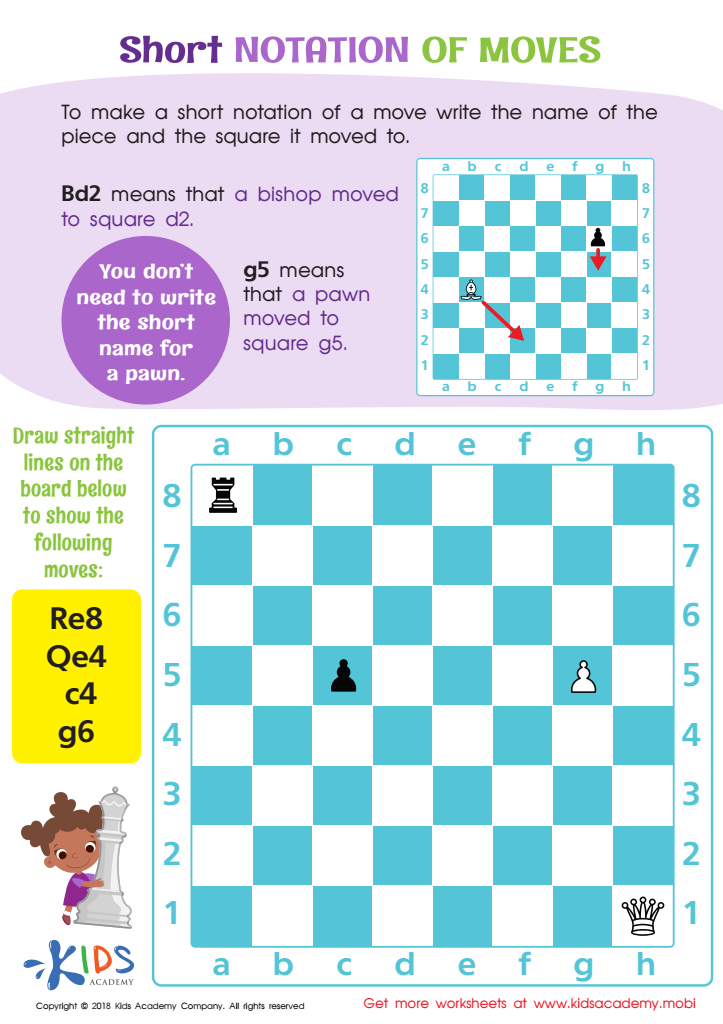
Short Notation of Moves Worksheet
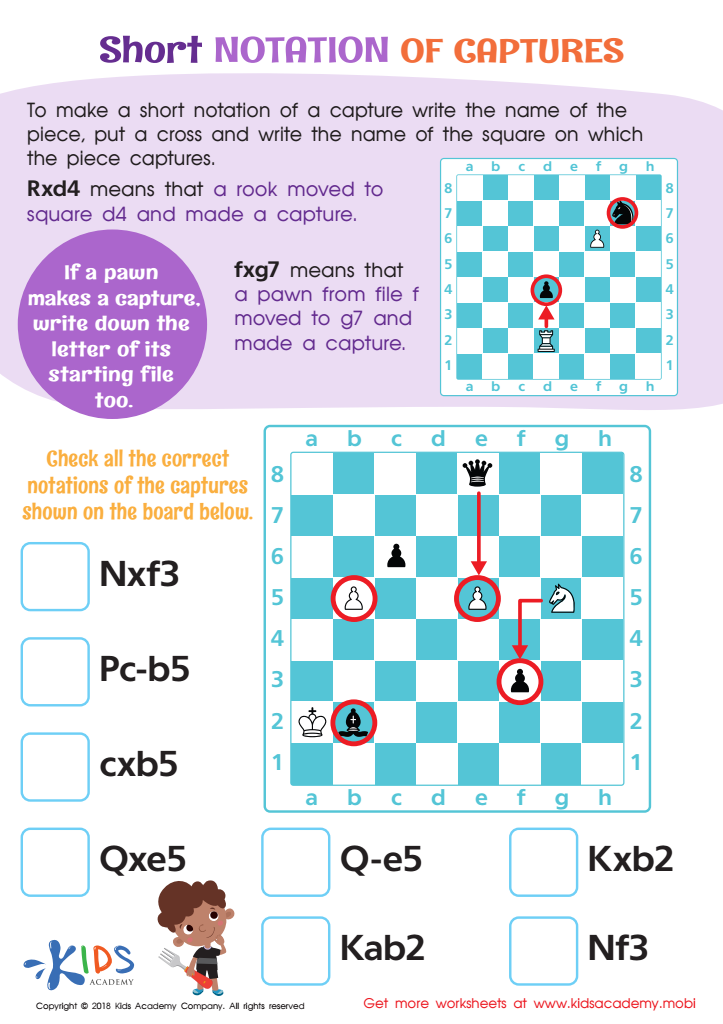
Short Notation of Captures Worksheet
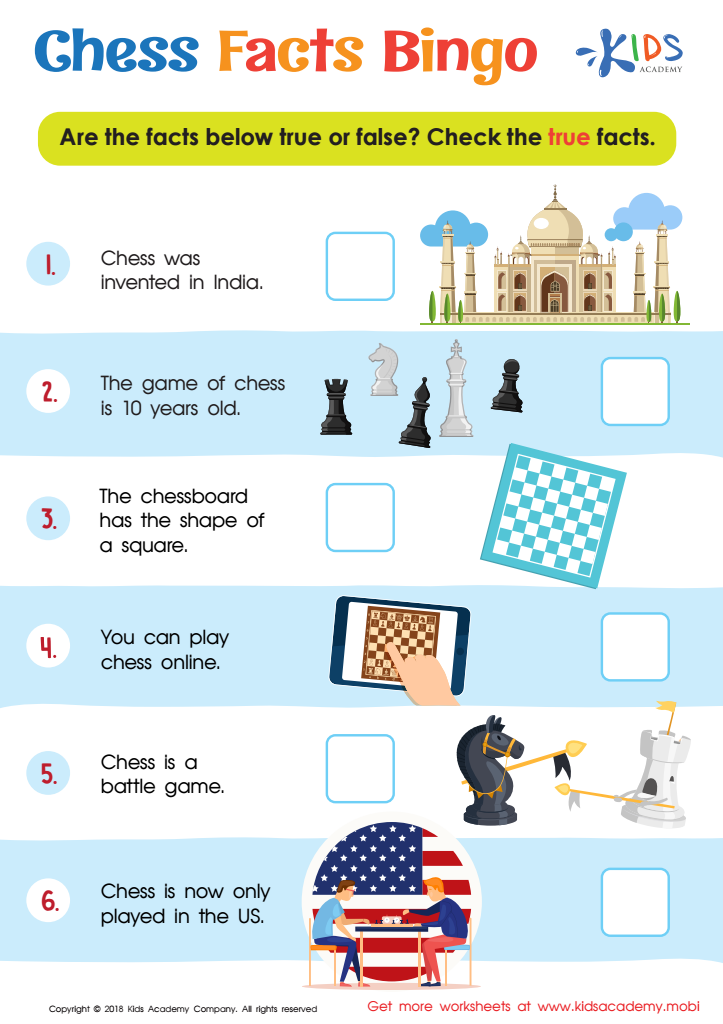
Chess Facts Bingo Worksheet
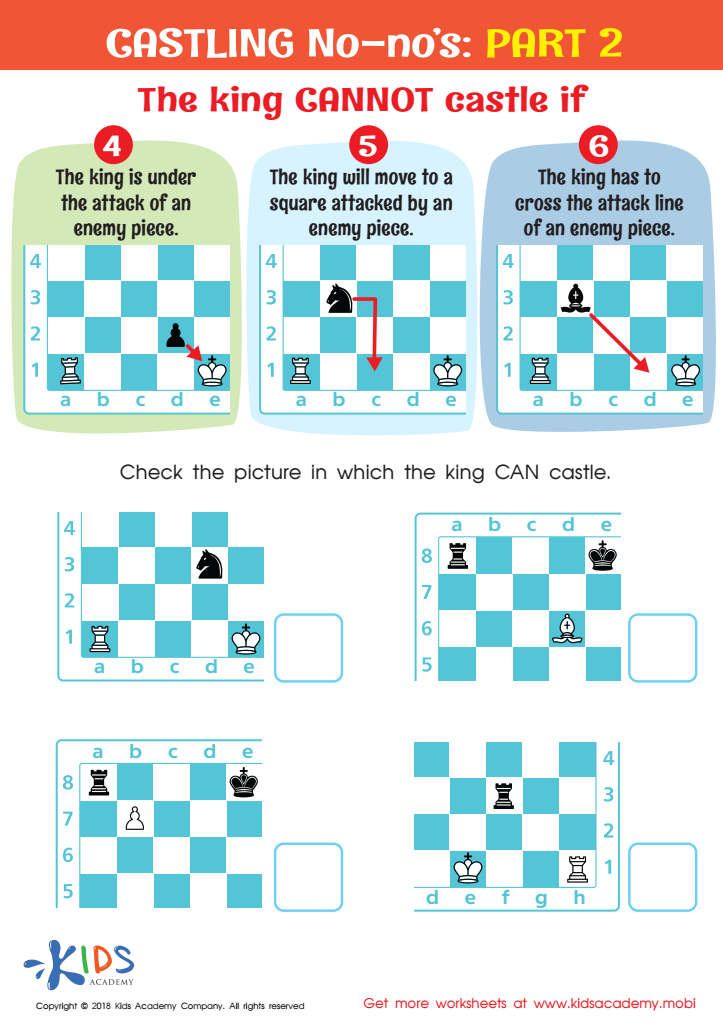
Castling No - no's: Part 2 Worksheet








Extra Challenge Chess for Ages 3-7 offers significant cognitive and social benefits for young children, making it an essential activity for parents and teachers to consider. Engaging in chess at an early age sharpens critical thinking skills, encouraging children to strategize and make decisions, which enhances problem-solving abilities. As they learn to anticipate opponents' moves, they develop foresight and planning skills that are applicable in various life scenarios.
Moreover, chess promotes patience, as young players must understand that success requires practice and persistence. This can help instill a growth mindset, teaching children that effort and dedication lead to improvement. Socially, chess is an excellent way to enhance communication skills, as children learn to articulate their thoughts and engage with peers respectfully during friendly competitions.
Additionally, introducing chess early fosters a sense of achievement; mastering concepts like checkmate and teamwork can build confidence. For teachers, incorporating chess into the curriculum can improve classroom dynamics and academic performance since it cultivates focus and self-discipline.
In conclusion, Extra Challenge Chess not only nurtures intellectual growth but also supports social development, making it a valuable investment for parents and educators seeking to better prepare children for future academic and life challenges.