Filters

178 filtered results

Clear all filters
Favorites
With answer key
Interactive

178 filtered results

Difficulty Level

Grade


Subject

    Unlock the magic of reading for your child with our Normal Phonics Worksheets for ages 4-8! Our engaging and expertly crafted worksheets are designed to help young learners grasp the fundamentals of phonics with ease. Featuring fun and interactive activities, these worksheets cover essential topics such as letter recognition, sound matching, and word formation. Ideal for both classroom use and home practice, our materials support children in building a strong foundation in literacy. Tailored to meet the unique needs of early learners, these worksheets make learning to read enjoyable and effective. Start your child's reading journey today!

    Check out this FREE Trial Lesson on Phonics for age 4-8!

    Sight Word Review

    Favorites
    With answer key
    Interactive
    • 4-8
    • Interactive
    • Phonics
    • Normal
    Tricky Words Worksheet
    Tricky Words Worksheet

    Tricky Words Worksheet

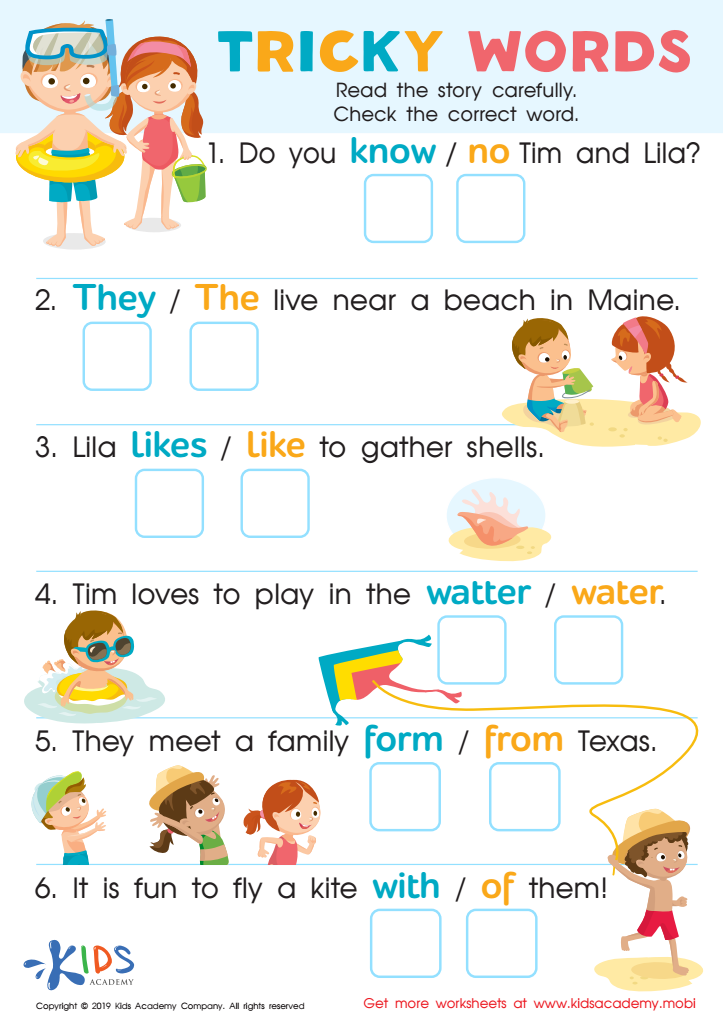
    Reading can be tricky to start with, but this worksheet helps kids learn the basics of editing and strengthens their attention to detail. They'll select the right word from tricky choices, improving their reading and grammar skills.
    Tricky Words Worksheet
    Worksheet
    Long Vowel Review Worksheet
    Long Vowel Review Worksheet

    Long Vowel Review Worksheet

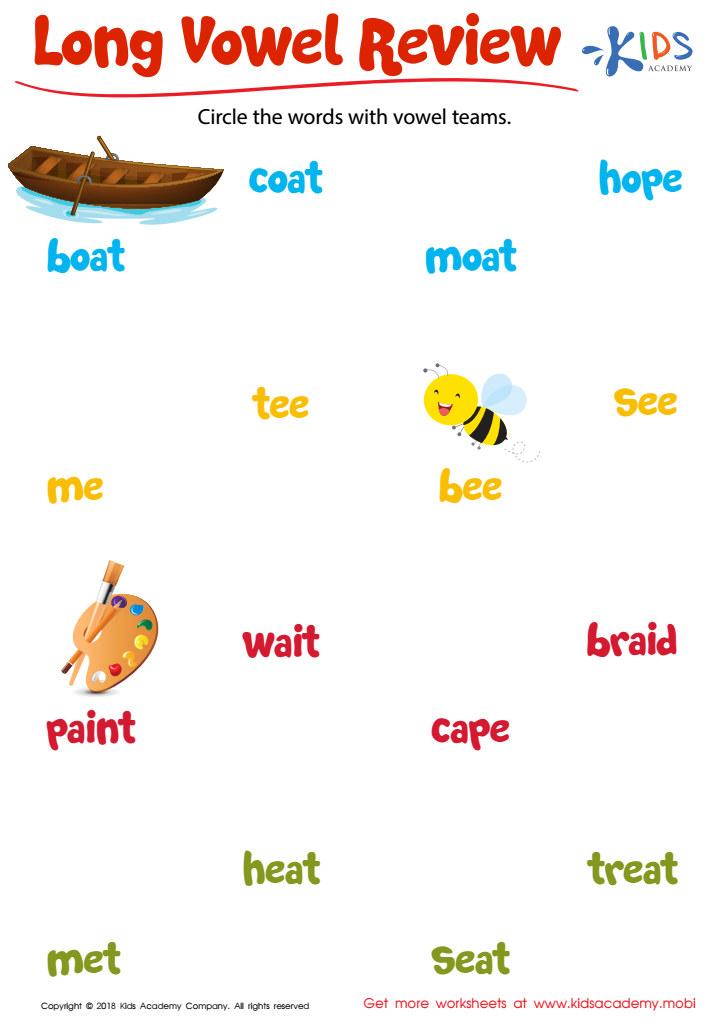
    Vowel teams like "ea" and "ai" help us make words, and understanding these patterns aids emerging readers in becoming more fluent. This review worksheet has students finding words with vowel teams that make the long vowel sound, and helps them recognize high-frequency words.
    Long Vowel Review Worksheet
    Worksheet
    Neighborhood Words Worksheet
    Neighborhood Words Worksheet

    Neighborhood Words Worksheet

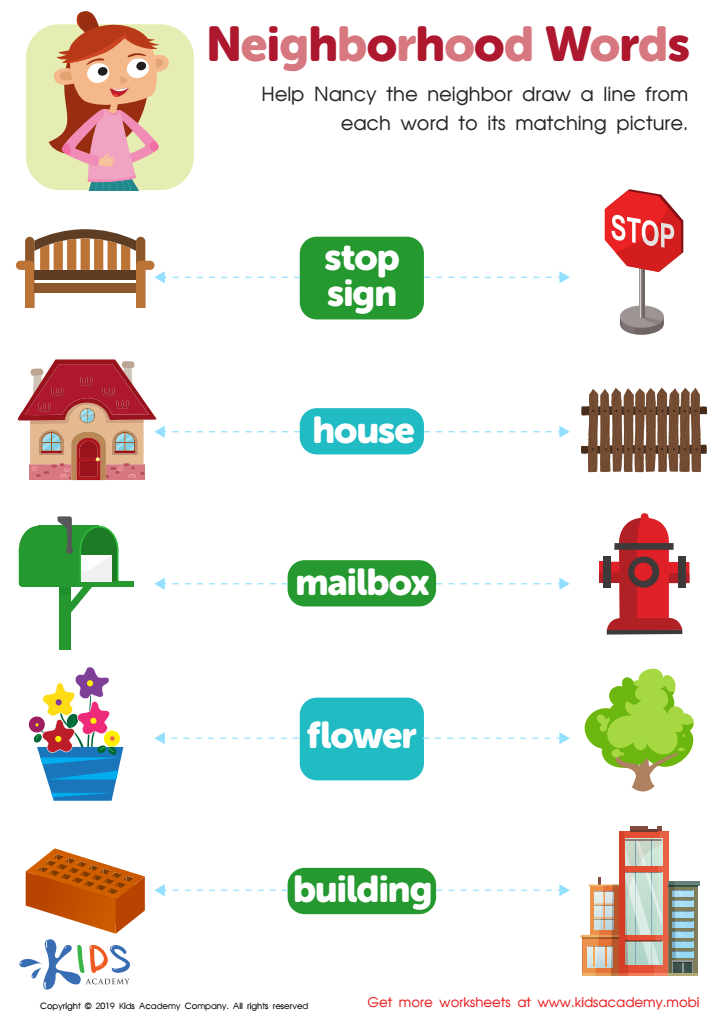
    Help preschoolers develop life skills and familiarize them with words and concepts with this worksheet! It'll also boost their fine motor skills as they trace lines to match pictures with the words. They'll learn new words and feel more confident in their reading.
    Neighborhood Words Worksheet
    Worksheet
    Name Those Clothes Worksheet
    Name Those Clothes Worksheet

    Name Those Clothes Worksheet

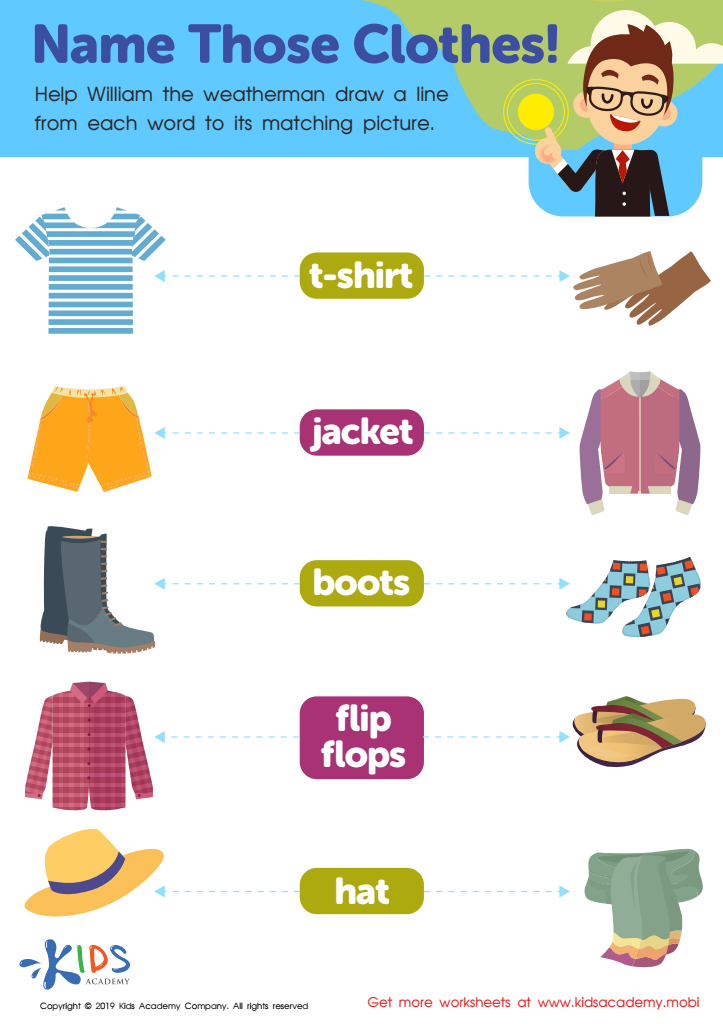
    This worksheet will help your preschooler build their vocabulary, develop life-skills and work on fine motor skills. They'll analyze which clothing goes with the weatherman and match it to the word. It's a fun and interactive way to recognize high-frequency words.
    Name Those Clothes Worksheet
    Worksheet
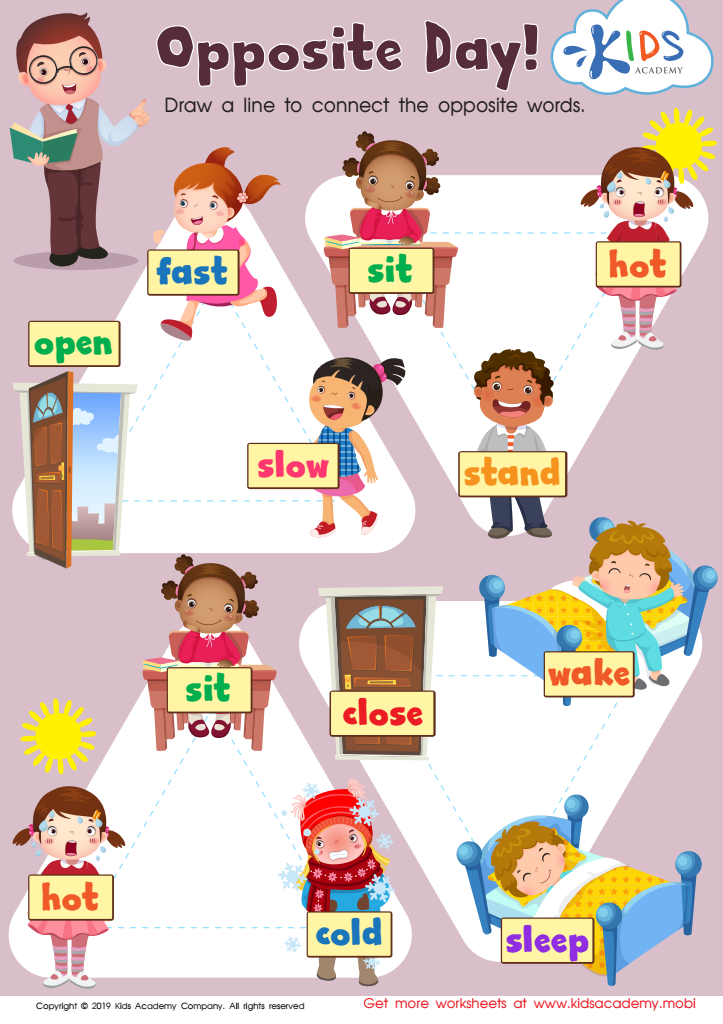
    Opposite Day Worksheet
    Opposite Day Worksheet

    Opposite Day Worksheet

    Early learners need to know about opposites to improve their higher-order thinking and critical thinking. This fun worksheet helps them understand the concept, practice opposite words, read high-frequency words and work on fine motor skills. Download the traceable PDF to get started.
    Opposite Day Worksheet
    Worksheet
    Phonics and Word Recognition: Assessment 1 ELA Worksheet
    Phonics and Word Recognition: Assessment 1 ELA Worksheet

    Phonics and Word Recognition: Assessment 1 ELA Worksheet

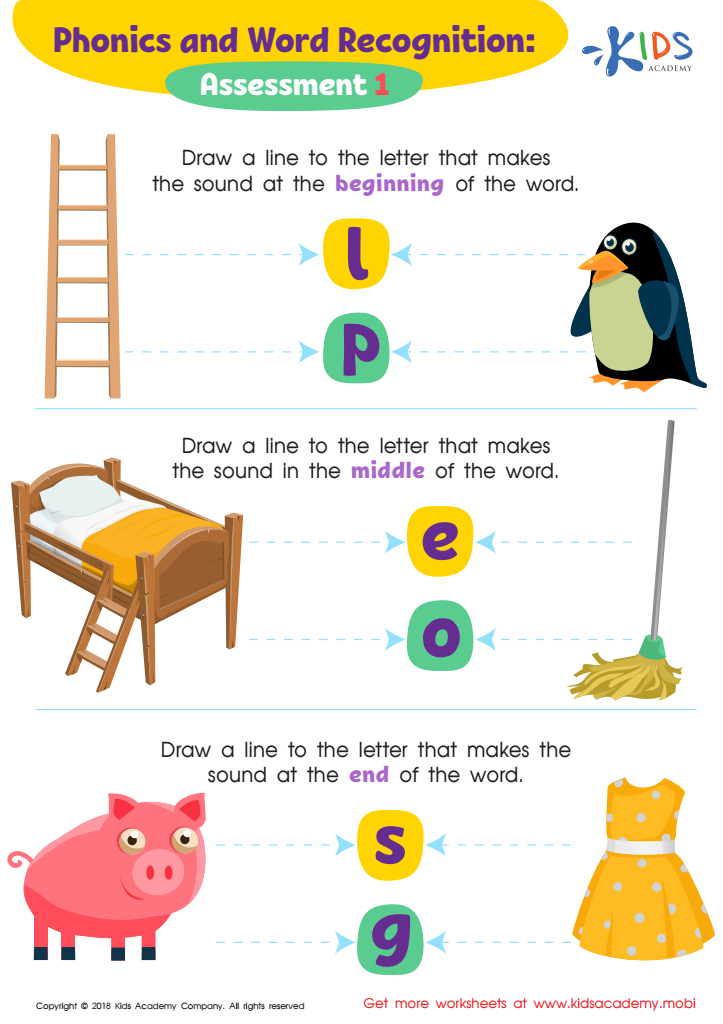
    This fun worksheet tests your child's sound recognition skills for each part of a word. Ask your child to name each image and trace the line to match it with the corresponding letter. Listen for beginning sounds on 1st, middle sounds on 2nd, and ending sounds on 3rd. Encourage learning with this colorful and interactive activity!
    Phonics and Word Recognition: Assessment 1 ELA Worksheet
    Worksheet
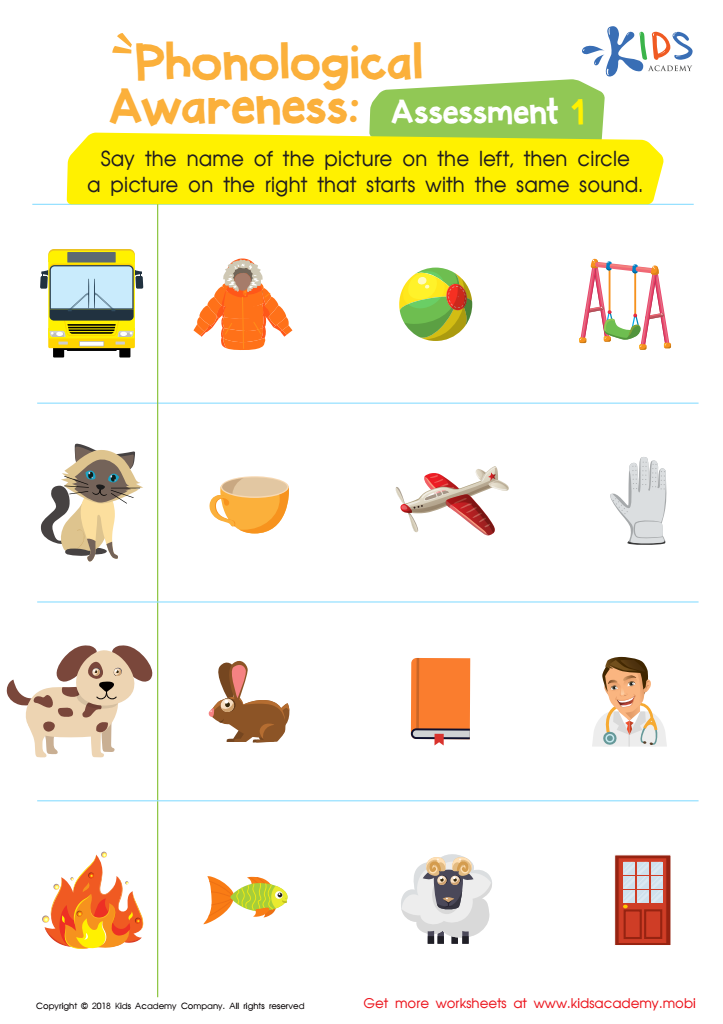
    Phonological Awareness: Assessment 1 Worksheet
    Phonological Awareness: Assessment 1 Worksheet

    Phonological Awareness: Assessment 1 Worksheet

    This worksheet helps kids build key phonics skills for pre-reading. They say each picture name aloud, focusing on the starting sound. Then, they match the sound with an image in the same row. Use as a checkpoint for kindergarten or grade 1 phonics readiness.
    Phonological Awareness: Assessment 1 Worksheet
    Worksheet
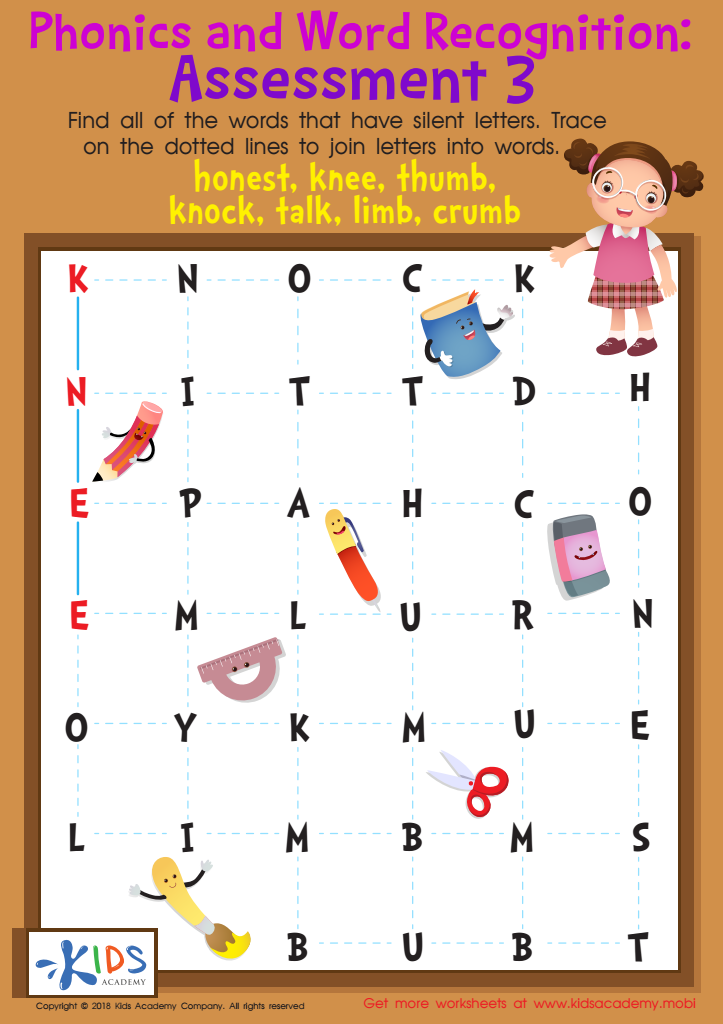
    Phonics and Word Recognition: Assessment 3 Worksheet
    Phonics and Word Recognition: Assessment 3 Worksheet

    Phonics and Word Recognition: Assessment 3 Worksheet

    Silent letters can be tricky for kids learning to read and write. Show them how they work with words like 'knee' and 'dumb'. Then, challenge them to come up with their own. Give them a worksheet with silent letters and trace the lines to join the letters into words.
    Phonics and Word Recognition: Assessment 3 Worksheet
    Worksheet
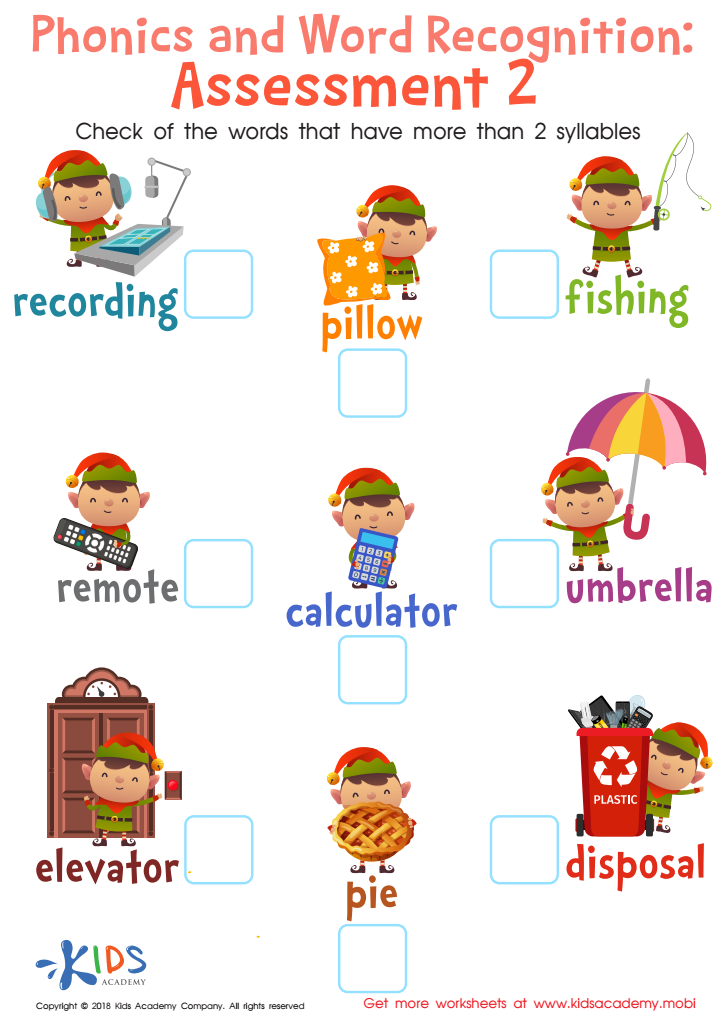
    Phonics and Word Recognition: Assessment 2 Worksheet
    Phonics and Word Recognition: Assessment 2 Worksheet

    Phonics and Word Recognition: Assessment 2 Worksheet

    Help your kids learn proper pronunciation by counting syllables. Most words they'll encounter have 1-3 syllables, making them simple to say. Have them repeat the words in your worksheet after you. Focus on longer words with more than two syllables.
    Phonics and Word Recognition: Assessment 2 Worksheet
    Worksheet
    Phonics and Word Recognition: Assessment 1 Worksheet
    Phonics and Word Recognition: Assessment 1 Worksheet

    Phonics and Word Recognition: Assessment 1 Worksheet

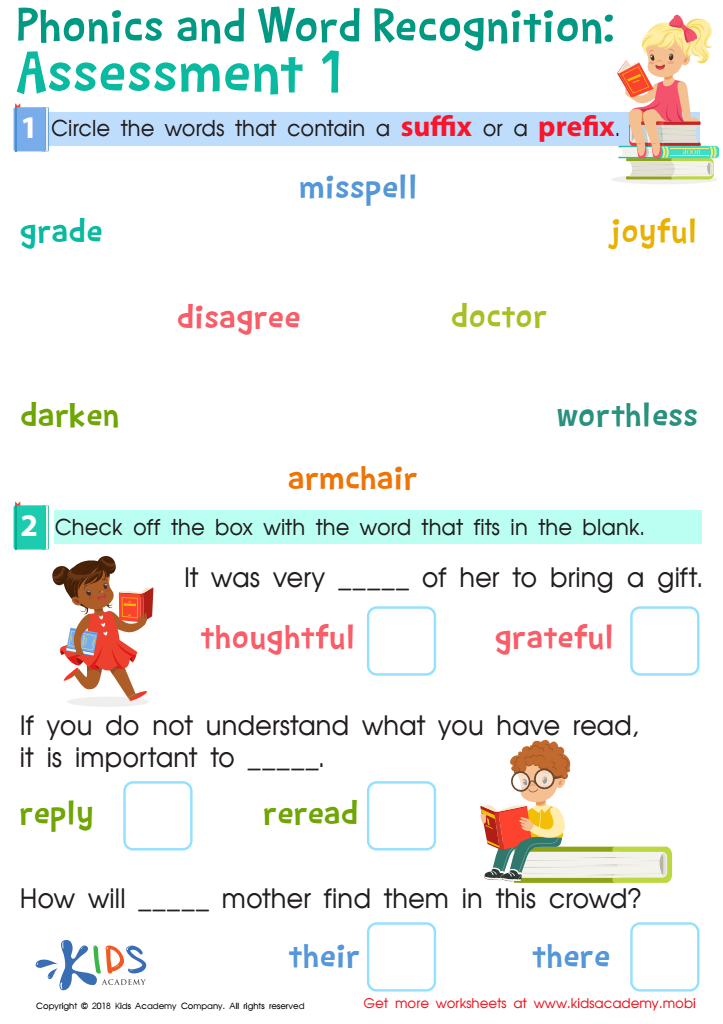
    Explain prefixes (words added to start of another word to give it a new meaning) and suffixes (added to end of word to change its meaning) to your kids with examples like 'unhappy' (prefix) and 'forgetful' (suffix). Now, help your child complete this worksheet, including circling words and checking boxes.
    Phonics and Word Recognition: Assessment 1 Worksheet
    Worksheet
    There, Their, They're Worksheet
    There, Their, They're Worksheet

    There, Their, They're Worksheet

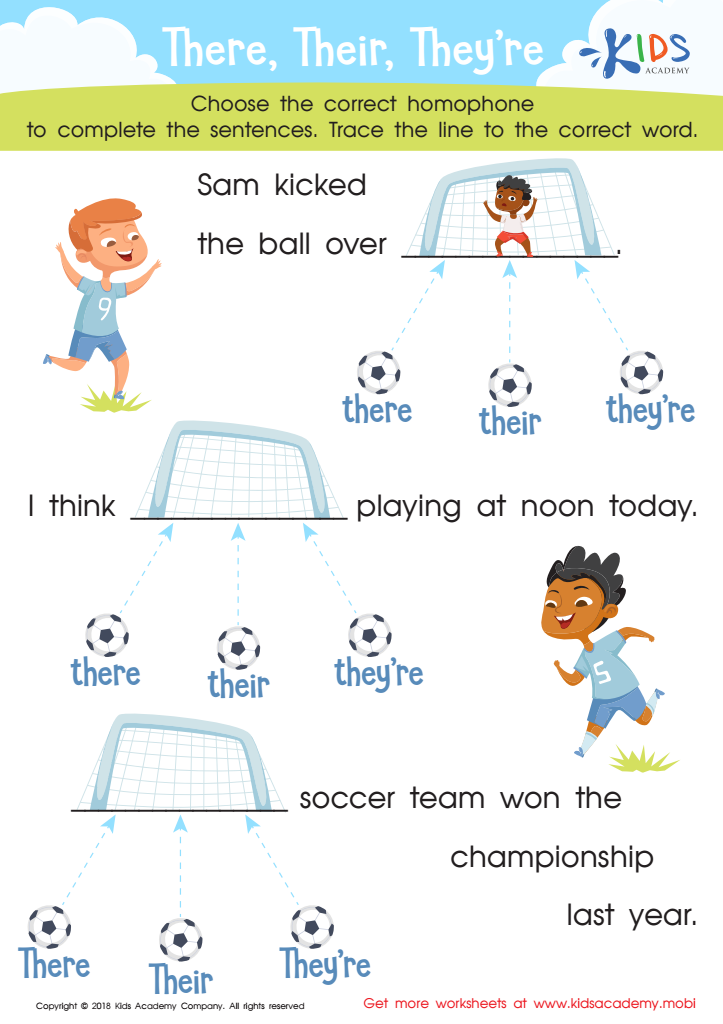
    Explain to your kids the difference between 'there', 'their' and 'they're'. These three words are homophones - spelt similarly but with different meanings. Help them choose the correct homophones when completing sentences, and trace the line to the right word.
    There, Their, They're Worksheet
    Worksheet
    Find The Missing Word Worksheet
    Find The Missing Word Worksheet

    Find The Missing Word Worksheet

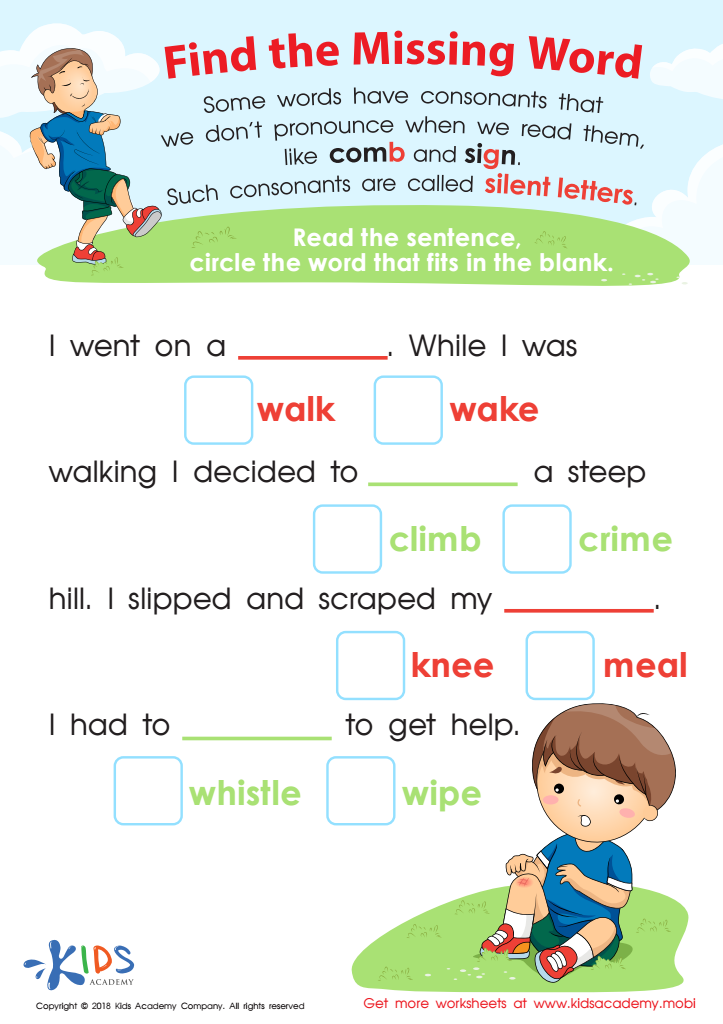
    Master silent letters like "b" and "k" with this illustrated worksheet! Read the sentences and fill in the blanks with the correct word, checking the box. Read all the way to the bottom and review words containing silent letters. A great way to help your little learner tackle a tough topic!
    Find The Missing Word Worksheet
    Worksheet
    Silent Letter Maze Worksheet
    Silent Letter Maze Worksheet

    Silent Letter Maze Worksheet

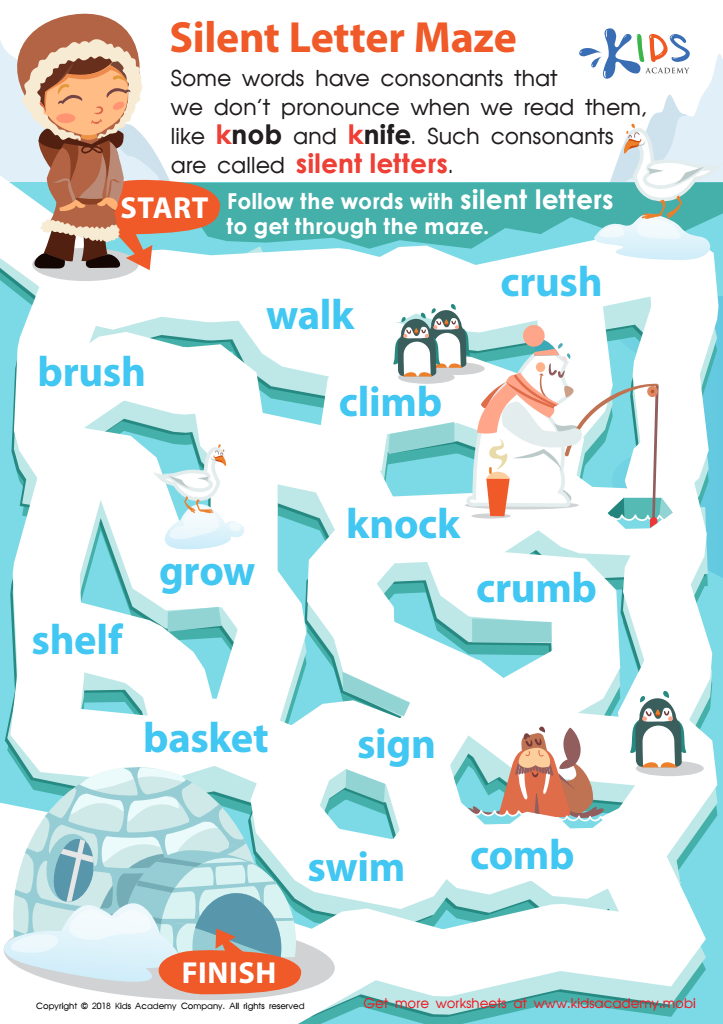
    Learning to read can be tricky, especially with words with irregular pronunciations. Explain to your child that some words have consonants we do not pronounce when reading. Ask them for examples like 'knife' and 'knob'. These consonants are called silent letters. Download this pdf to practice words with silent letters and complete the maze.
    Silent Letter Maze Worksheet
    Worksheet
    Sight Word Archery Worksheet
    Sight Word Archery Worksheet

    Sight Word Archery Worksheet

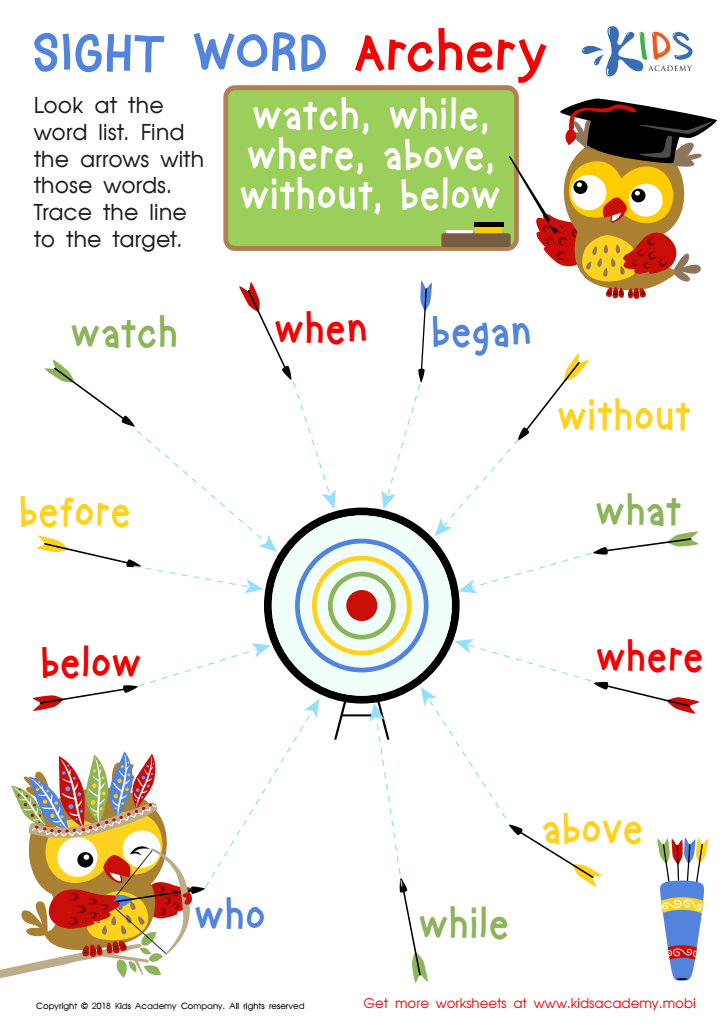
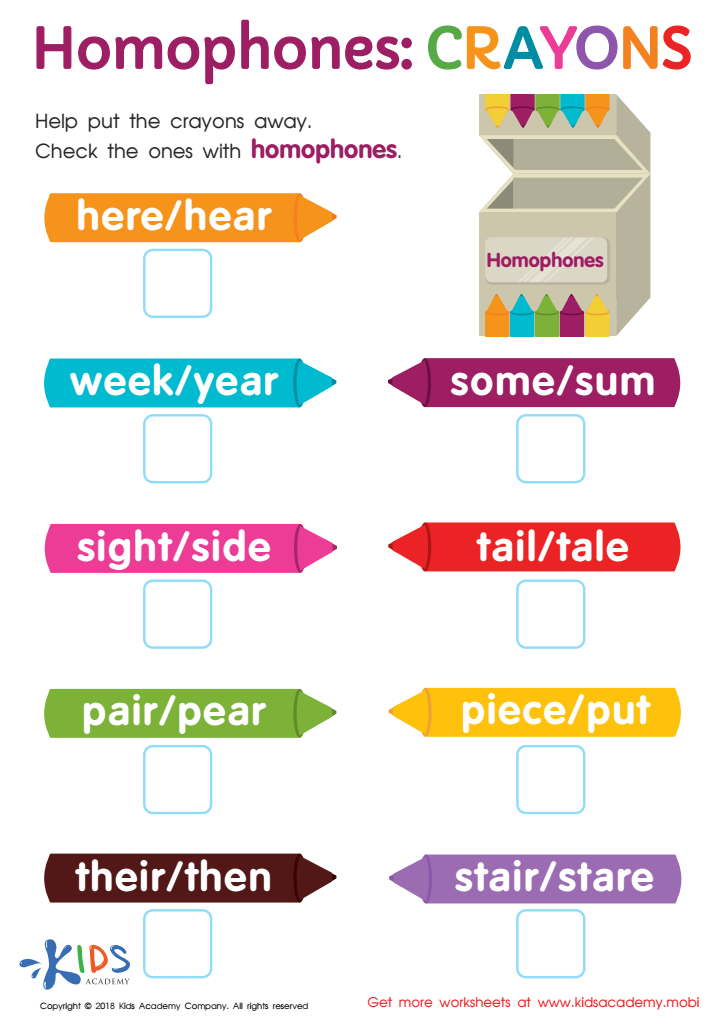
    Read the words list with your kids, pointing at each one. Ask them to do the same. Help them find the arrows with those words and trace the line to the target in the centre.
    Sight Word Archery Worksheet
    Worksheet
    Homophones: Crayons Worksheet
    Homophones: Crayons Worksheet

    Homophones: Crayons Worksheet

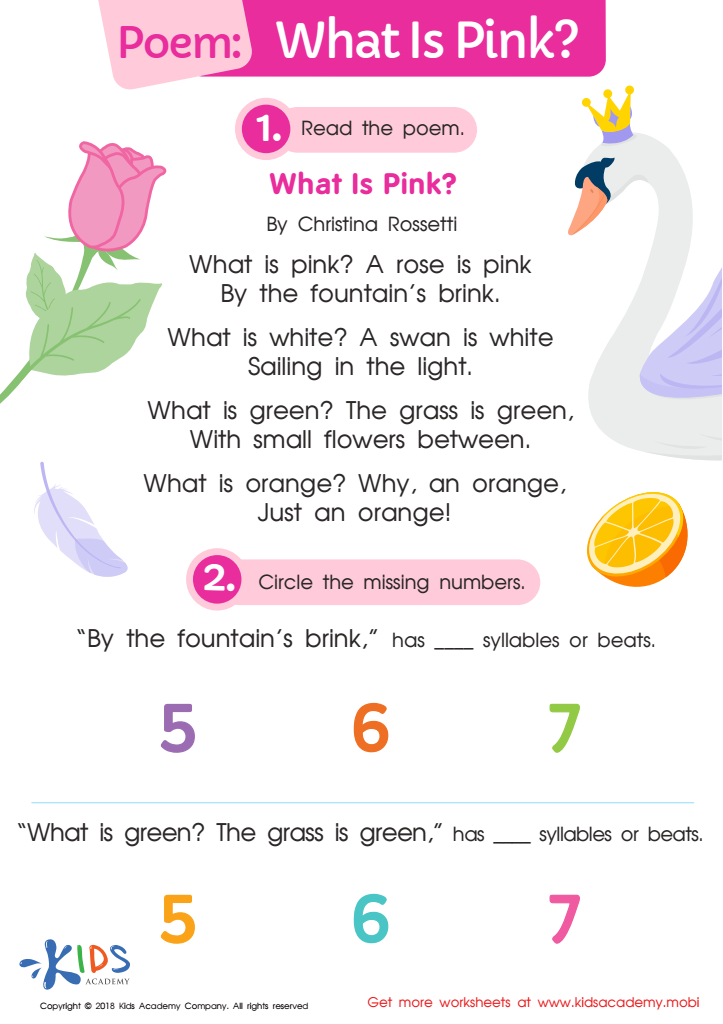
    Ask your kids: "What are homophones?" Explain that homophones are words that sound alike but have different meanings, like 'dare' and 'deer'. Ask them to identify homophones by putting the crayons in this printout away according to the words.
    Homophones: Crayons Worksheet
    Worksheet
    Poem: What Is Pink? Worksheet
    Poem: What Is Pink? Worksheet

    Poem: What Is Pink? Worksheet

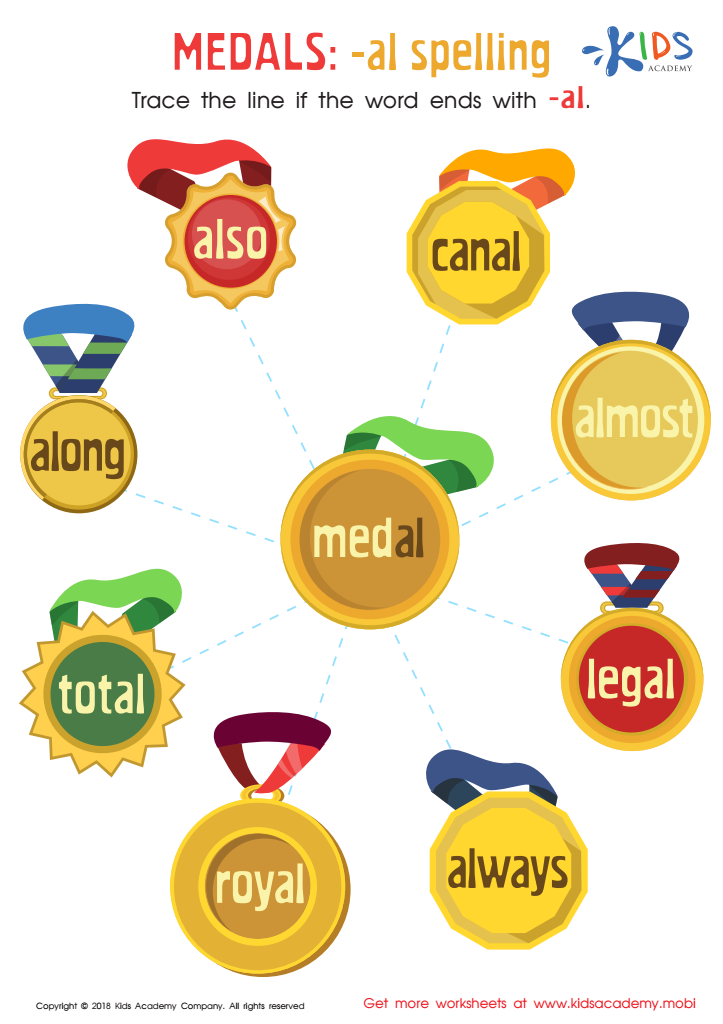
    Help your kids learn with short, fun, interesting poems! Read it aloud to them and point out the rhyme patterns. Have them circle the missing numbers to answer two questions. Show examples of objects with the colors in the poem. This will help them learn to read, and also understand colors better.
    Poem: What Is Pink? Worksheet
    Worksheet
    Medals: Al Spelling Worksheet
    Medals: Al Spelling Worksheet

    Medals: Al Spelling Worksheet

    Have your students list common words ending with -al. See how many they can give and spell. Give examples of your own, assisting with spelling. Now review the words in the worksheet. Guide students to trace the line for each word ending with -al. 80 words
    Medals: Al Spelling Worksheet
    Worksheet
    Hotel Mix-up Worksheet
    Hotel Mix-up Worksheet

    Hotel Mix-up Worksheet

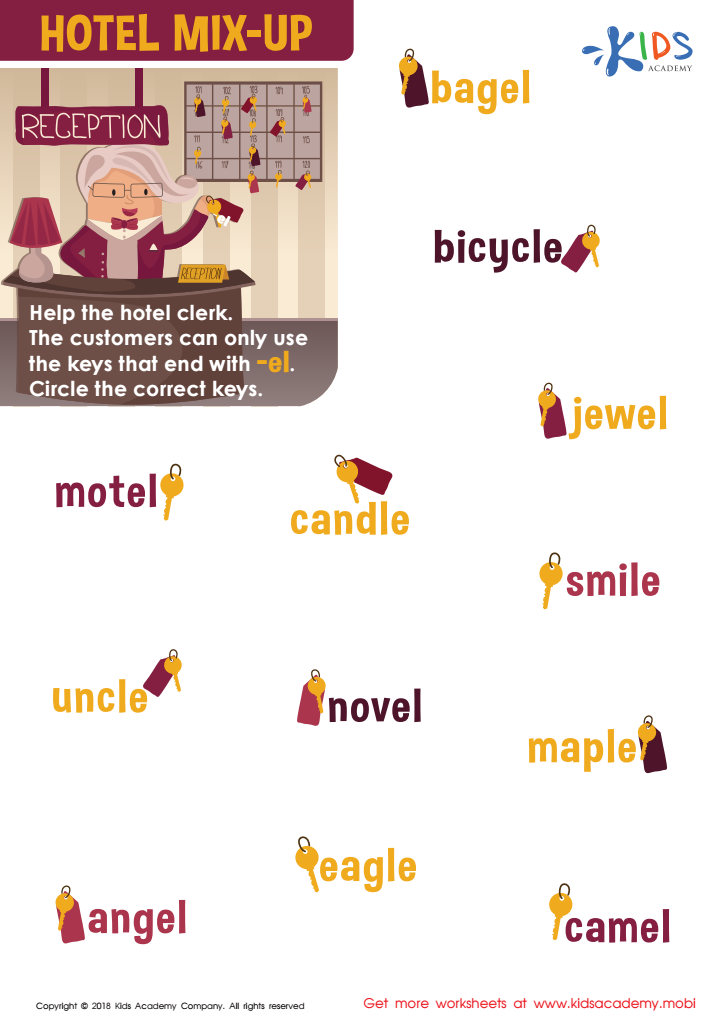
    Before doing this worksheet, explain to your kids what a hotel is. It's a building where guests can stay for a few days and pay for their stay. In this exercise, the hotel clerk needs help finding the correct keys. Have your kids circle words ending with -el to find the right ones.
    Hotel Mix-up Worksheet
    Worksheet
    Rhyming Words Worksheet
    Rhyming Words Worksheet

    Rhyming Words Worksheet

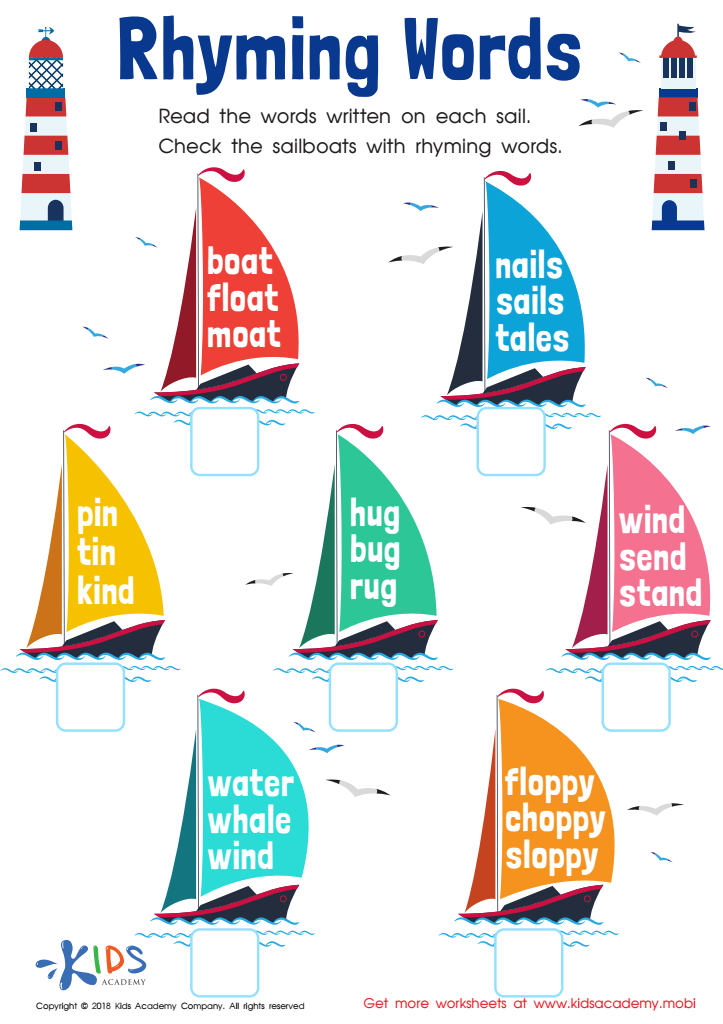
    Does your child know about rhyming words? Get them interested in poetry and explain that these words have similar sounds when pronounced. Read the words on each sailboat to your child and ask them to identify the rhyming pairs. Guide them to check the sailboats.
    Rhyming Words Worksheet
    Worksheet
    Poem: Cats and Dogs Worksheet
    Poem: Cats and Dogs Worksheet

    Poem: Cats and Dogs Worksheet

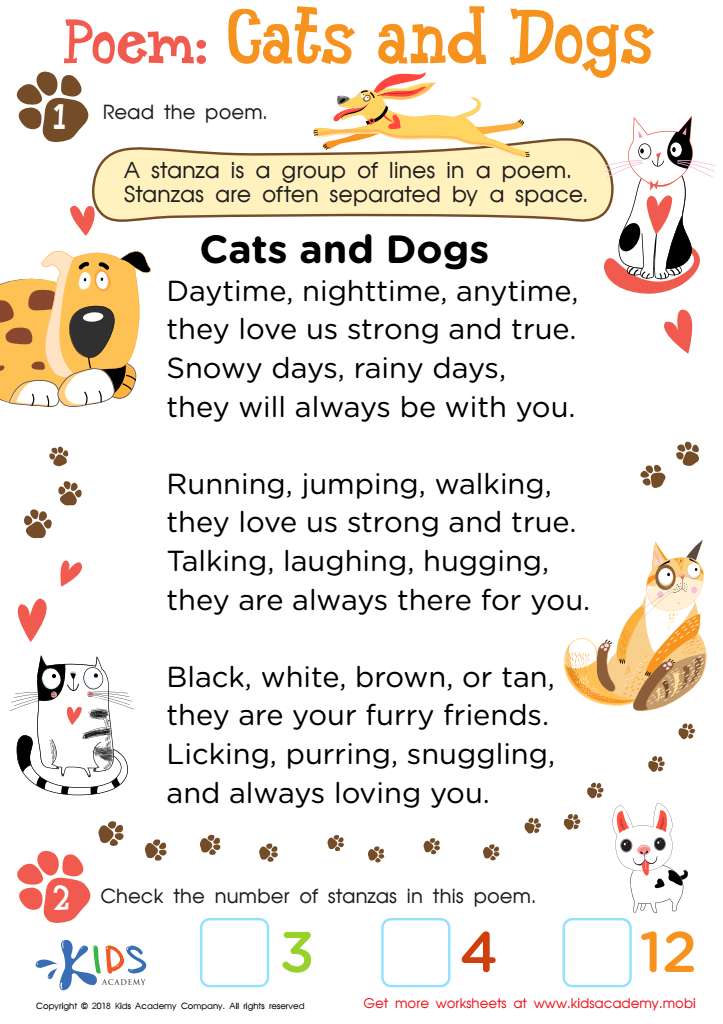
    Read the poem to your child and point out where each stanza ends. Ask if they know what a stanza is (if not, explain it's a group of lines in a poem). Help them answer the question at the bottom of the printout. This simple, sweet poem about cats is easy for your child to relate to.
    Poem: Cats and Dogs Worksheet
    Worksheet
    Open Syllables Worksheet
    Open Syllables Worksheet

    Open Syllables Worksheet

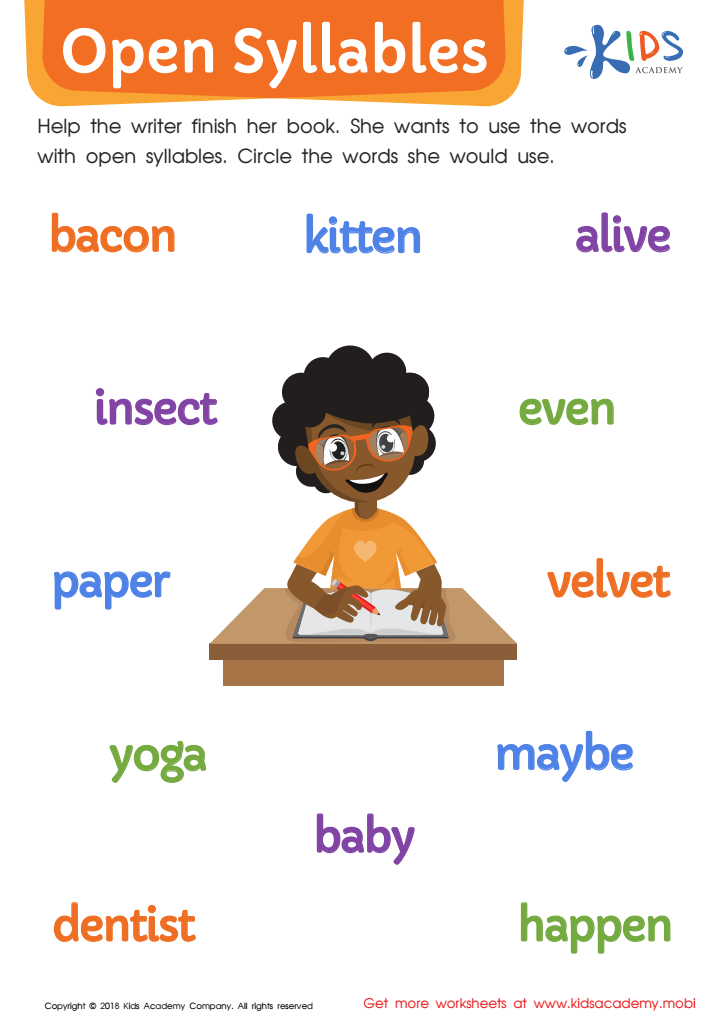
    Before beginning this worksheet, make sure your child knows what open syllables are. If not, take time to teach them with examples. Then, help the writer finish her book by circling words with open syllables. She needs your child's help!
    Open Syllables Worksheet
    Worksheet
    Tennis Ball Syllables Worksheet
    Tennis Ball Syllables Worksheet

    Tennis Ball Syllables Worksheet

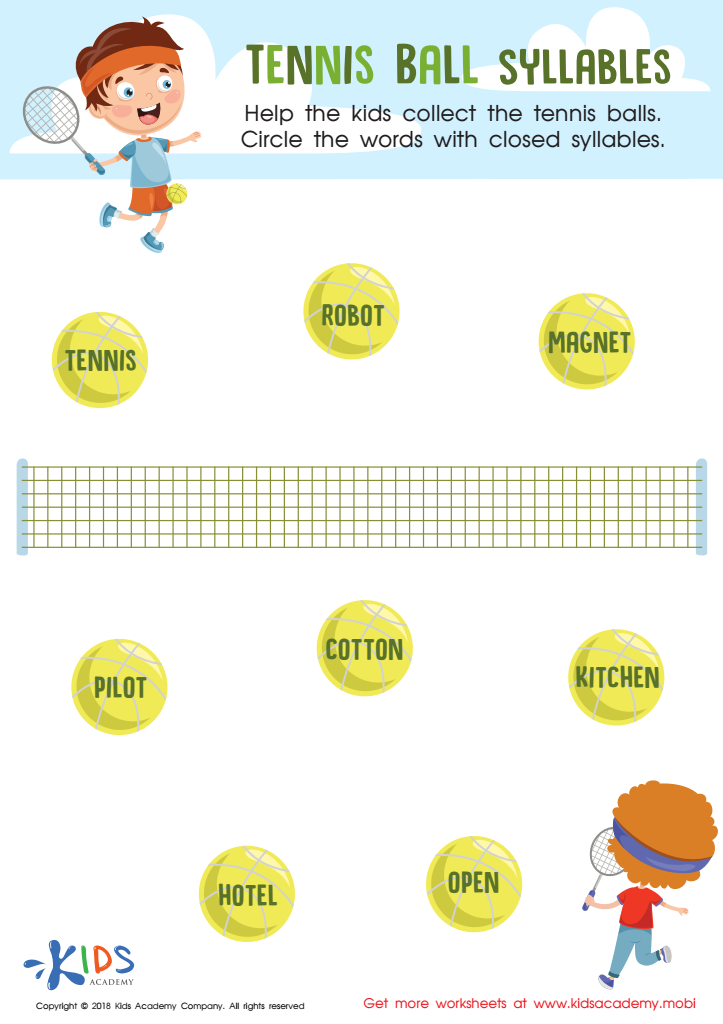
    To help your kids become fluent speakers, they need to learn syllables. A word can have one to seven syllables, with longer words having more. For this level, they will be working with one or two syllables. Assist them as they circle the words with closed syllables in this worksheet.
    Tennis Ball Syllables Worksheet
    Worksheet
    Puss in Boots: OO Sound Worksheet
    Puss in Boots: OO Sound Worksheet

    Puss in Boots: OO Sound Worksheet

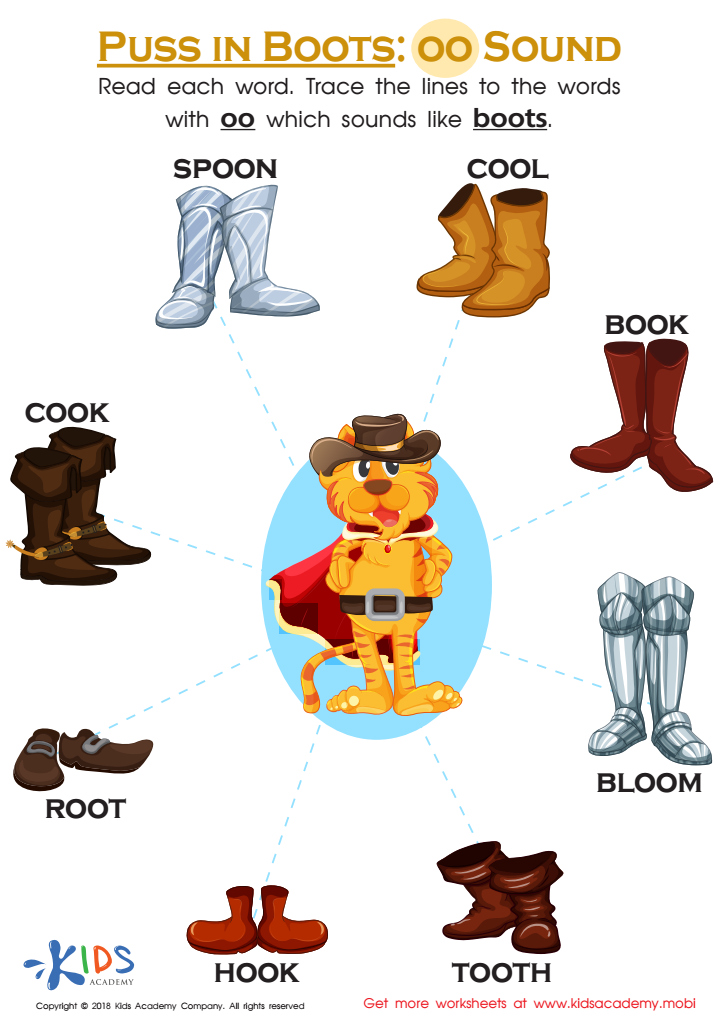
    Read out the words in this printout with the correct pronunciation. Have your child repeat each word after you. Then have them read the words and identify the ones with the "oo" sound. Guide their hands as they trace the lines to the right words.
    Puss in Boots: OO Sound Worksheet
    Worksheet
    Rhymes in Poems Worksheet

    Rhymes in Poems Worksheet

    Rhymes in Poems Worksheet

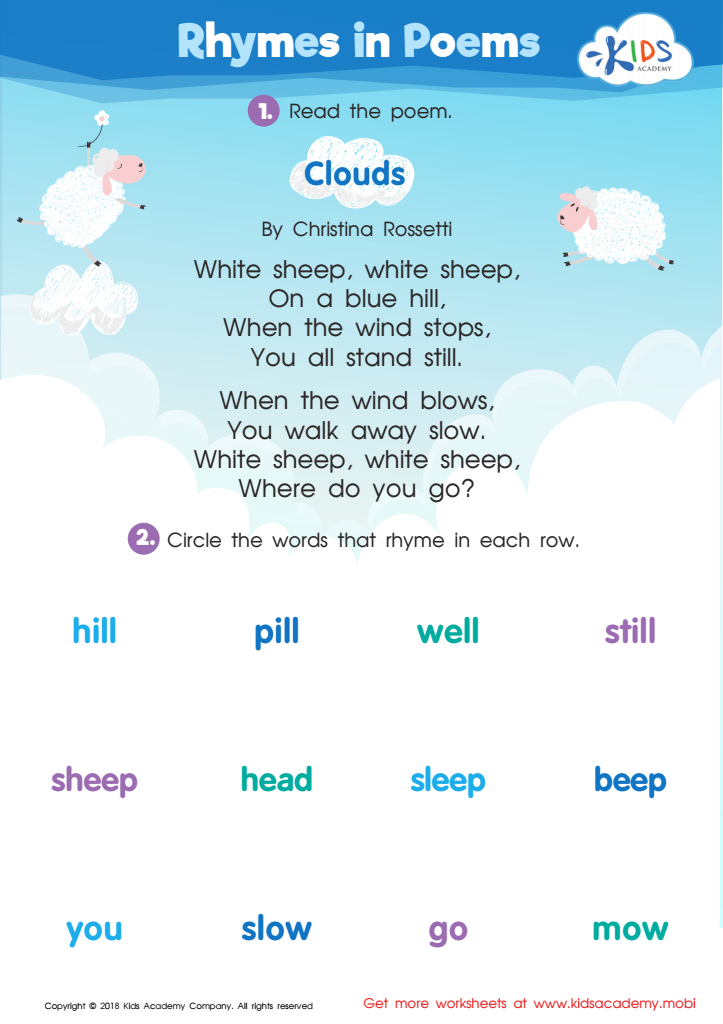
    Poems are lovely works of literature; some with rhymes, and some without. This poem for kids is full of rhymes and tells the tale of a sheep. Read it aloud to your kids, then help them circle the rhyming words.
    Rhymes in Poems Worksheet
    Worksheet


    Normal Phonics is essential for children ages 4-8 because it lays the foundation for reading and writing, which are critical skills for academic success and lifelong learning. At this developmental stage, children’s brains are highly receptive to language acquisition. Phonics teaching helps kids understand the relationship between letters and sounds, allowing them to decode new words, improve their spelling, and enhance comprehension.

    Teachers and parents should care about phonics because it empowers children to read independently and confidently. This independence in reading boosts children's self-esteem and motivates a love for learning. Without a strong phonics base, children may struggle with more complex literacy tasks, leading to frustration and disengagement from schoolwork.

    From a cognitive perspective, phonics instruction supports memory development and pattern recognition, which are beneficial across various subjects. Moreover, early proficiency in reading speeds up vocabulary expansion, crucial for language arts and other disciplines.

    Engaging children in fun and interactive phonics activities can make learning to read enjoyable and reduce literacy disparities. With strong phonics skills, children are better prepared for academic challenges, which can lead to greater educational and professional opportunities. Hence, investing time and effort in phonics during these formative years is crucial for fostering a child's overall educational journey.