Space Worksheets for Ages 6-9 - Page 2
41 filtered results
-
From - To
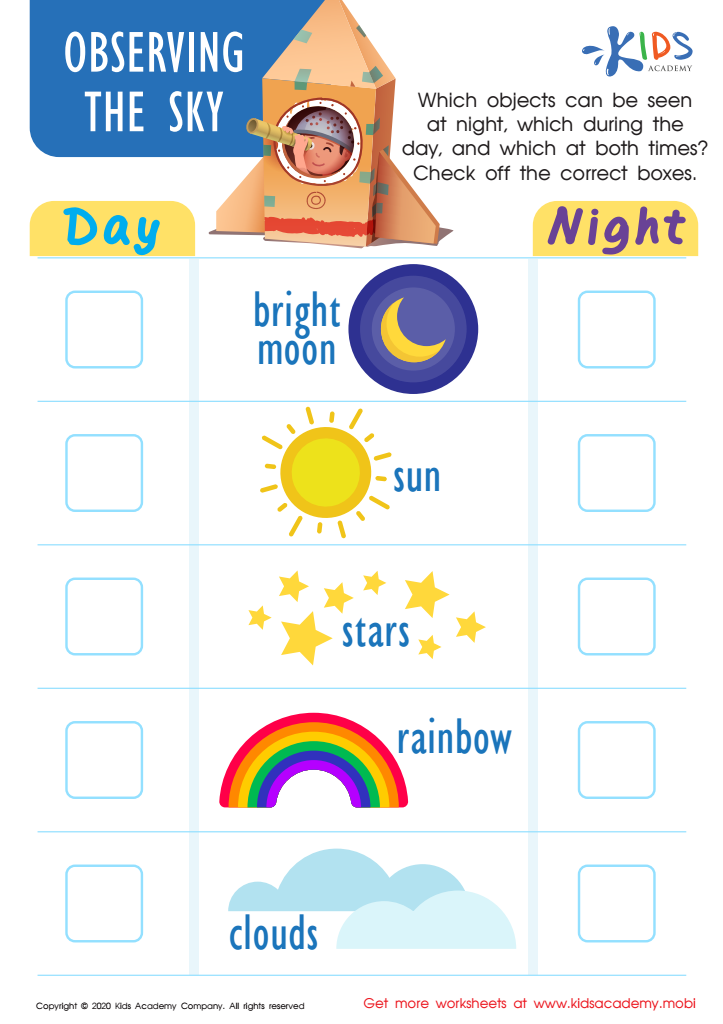
Observing the Sky Worksheet
 Assign to My Students
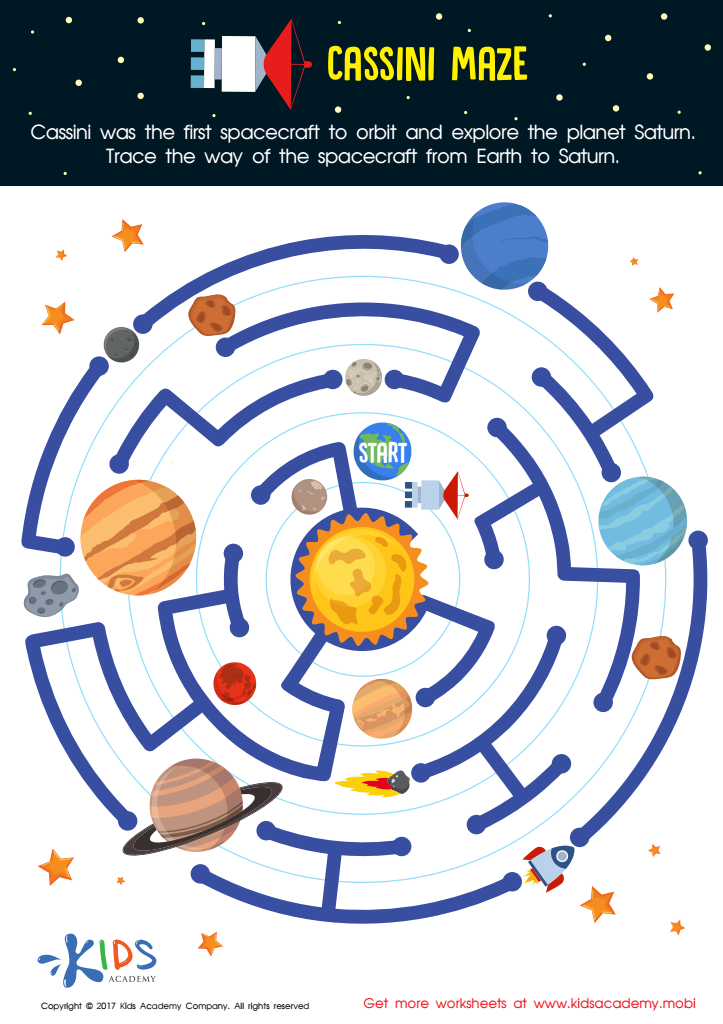
Cassini Printable Worksheet
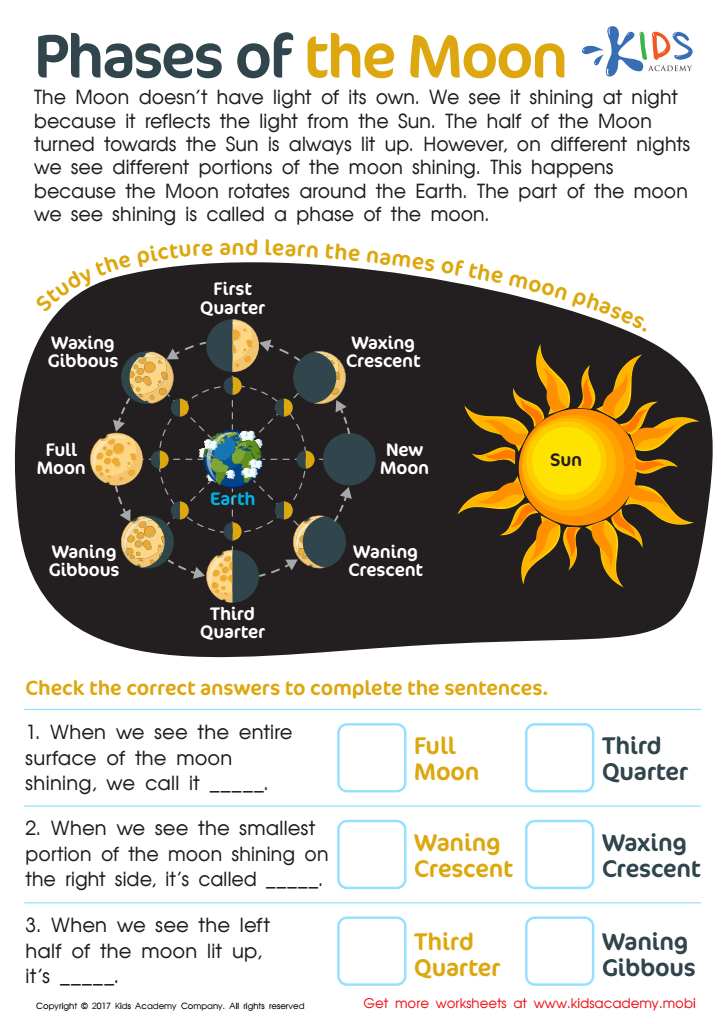
Phases of The Moon Worksheet
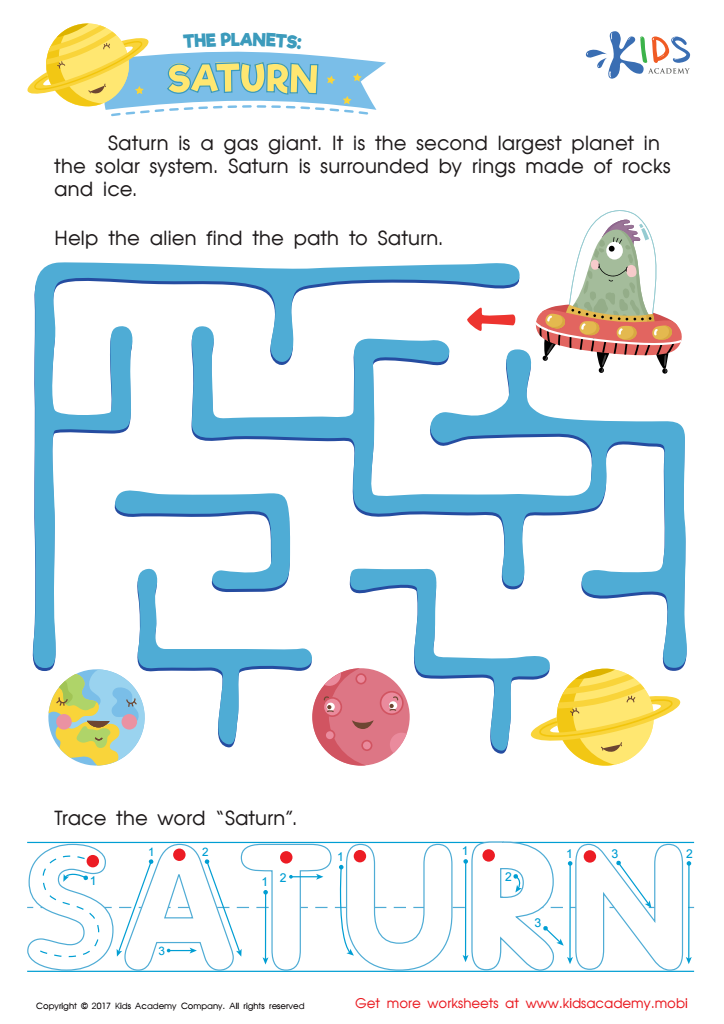
The Planets: Saturn Printable
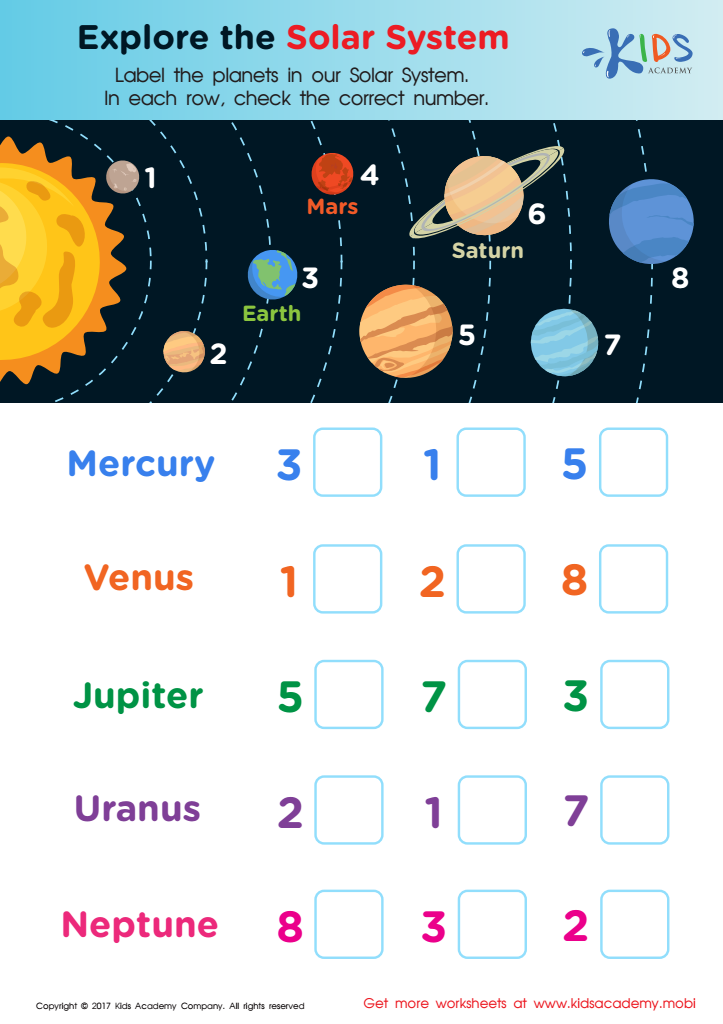
Solar System Planets Worksheet
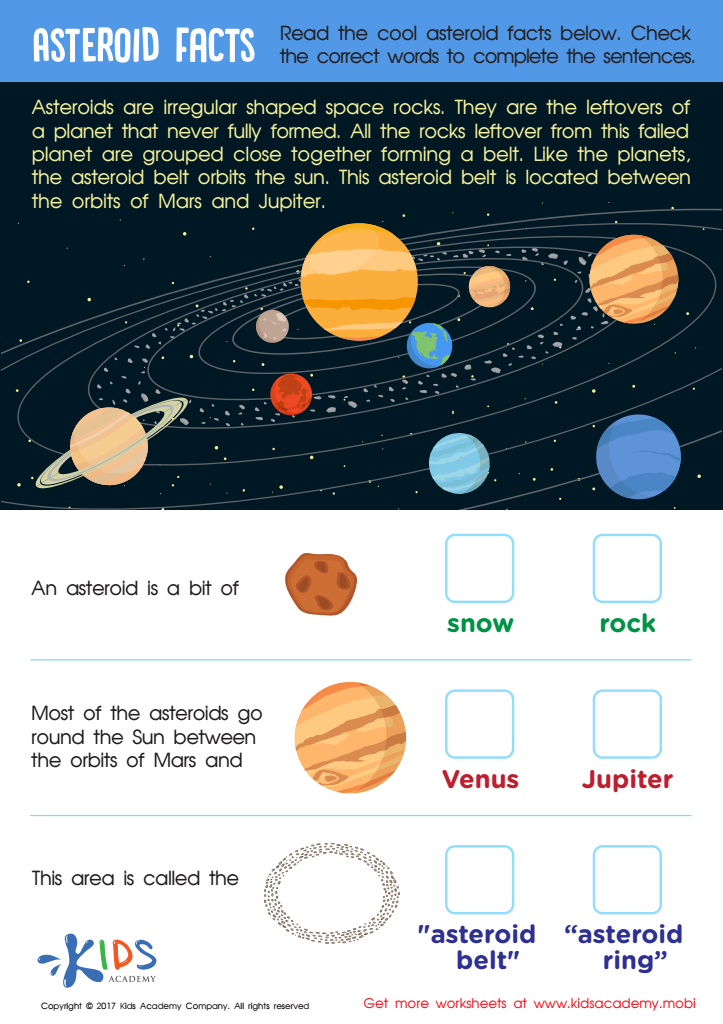
Asteroid Facts Worksheet
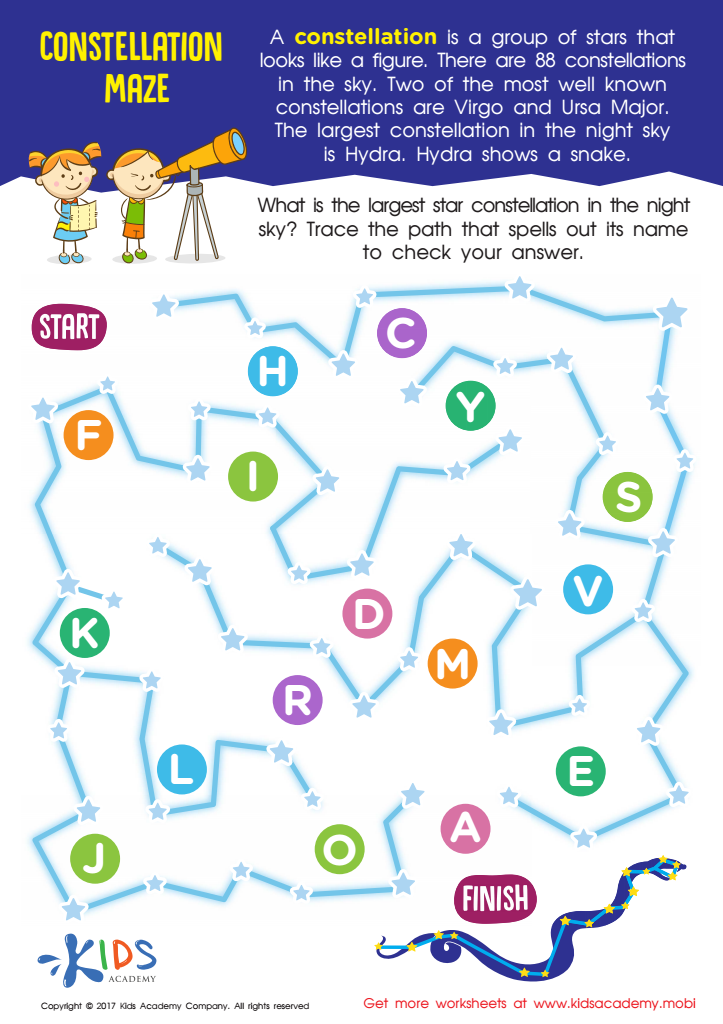
Constellations Worksheet
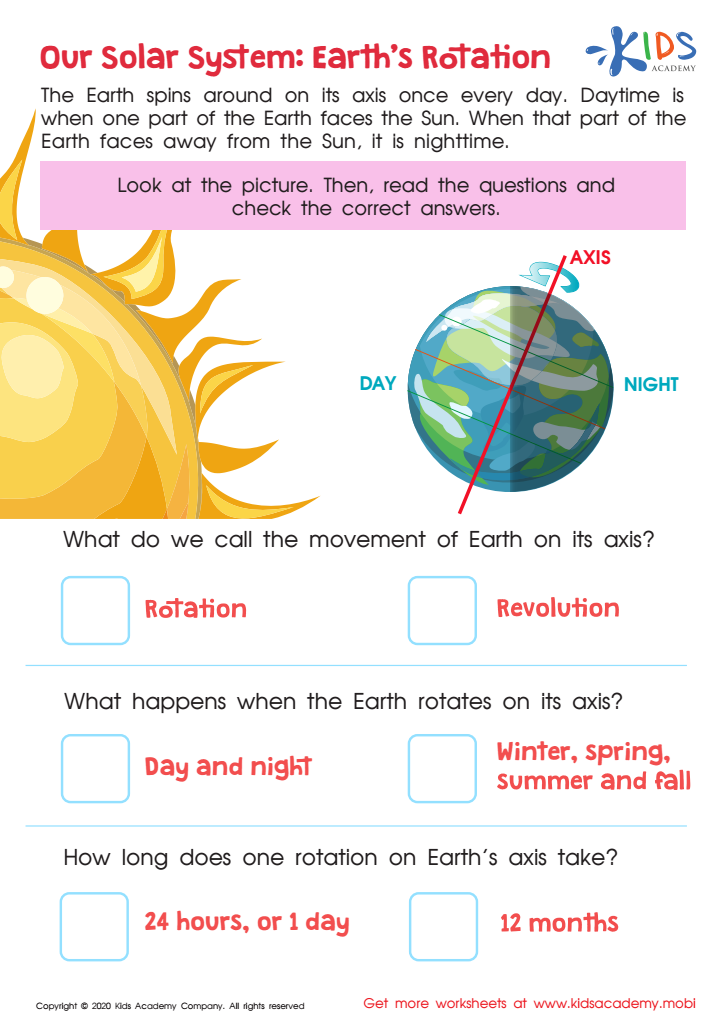
Our Solar System: Earth's Rotation Printable
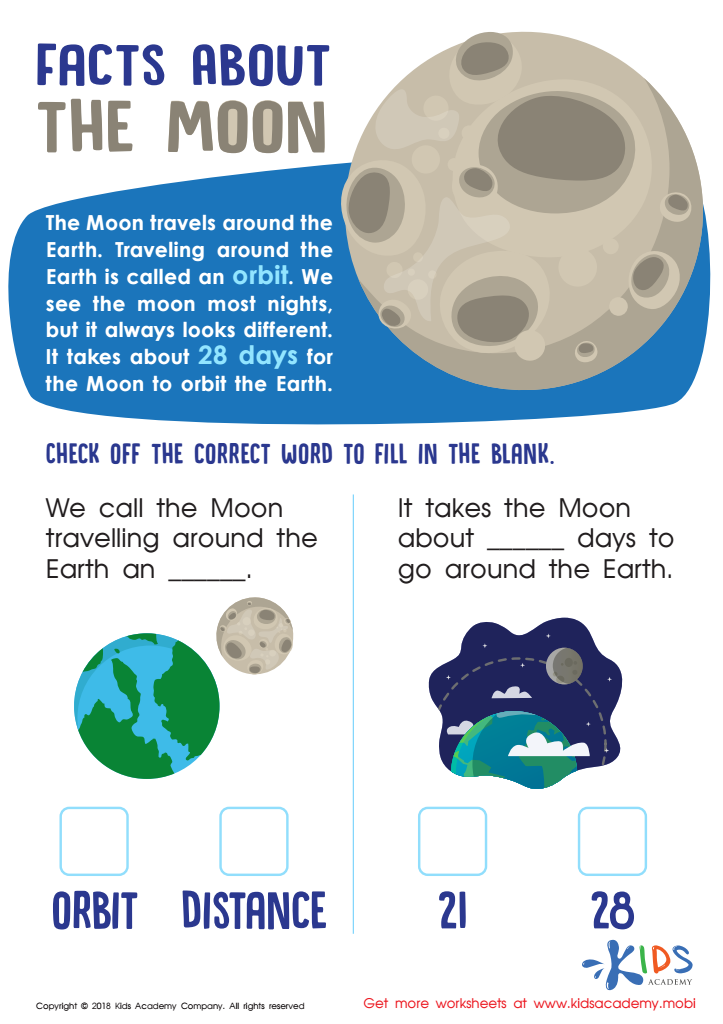
Facts About the Moon Worksheet
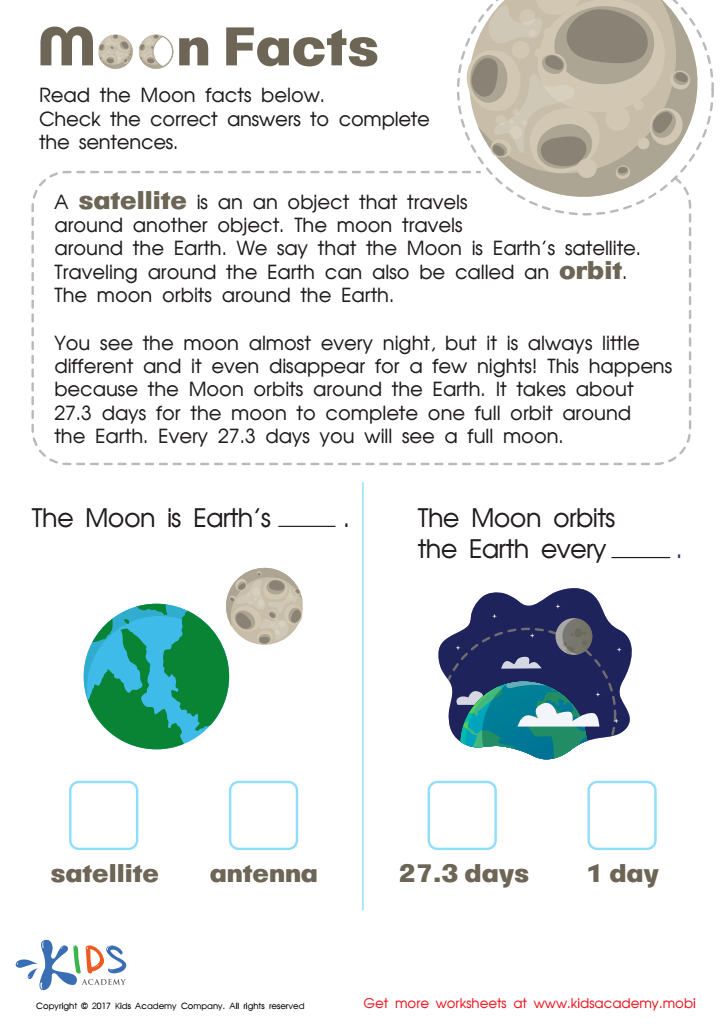
Moon Facts Worksheet
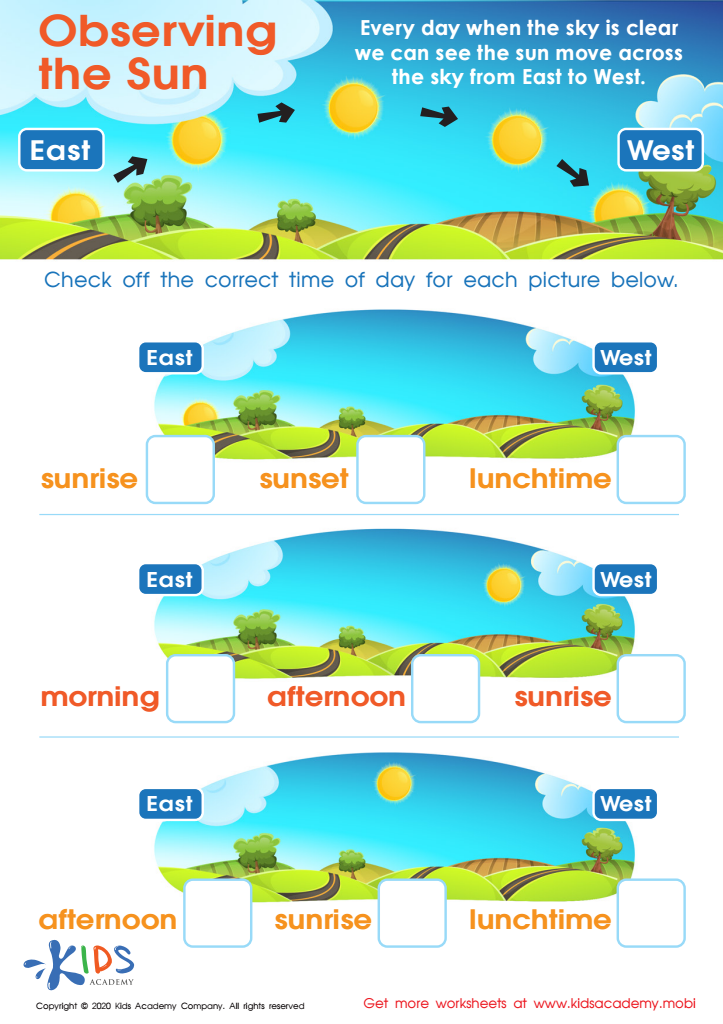
Observing the Sun Worksheet
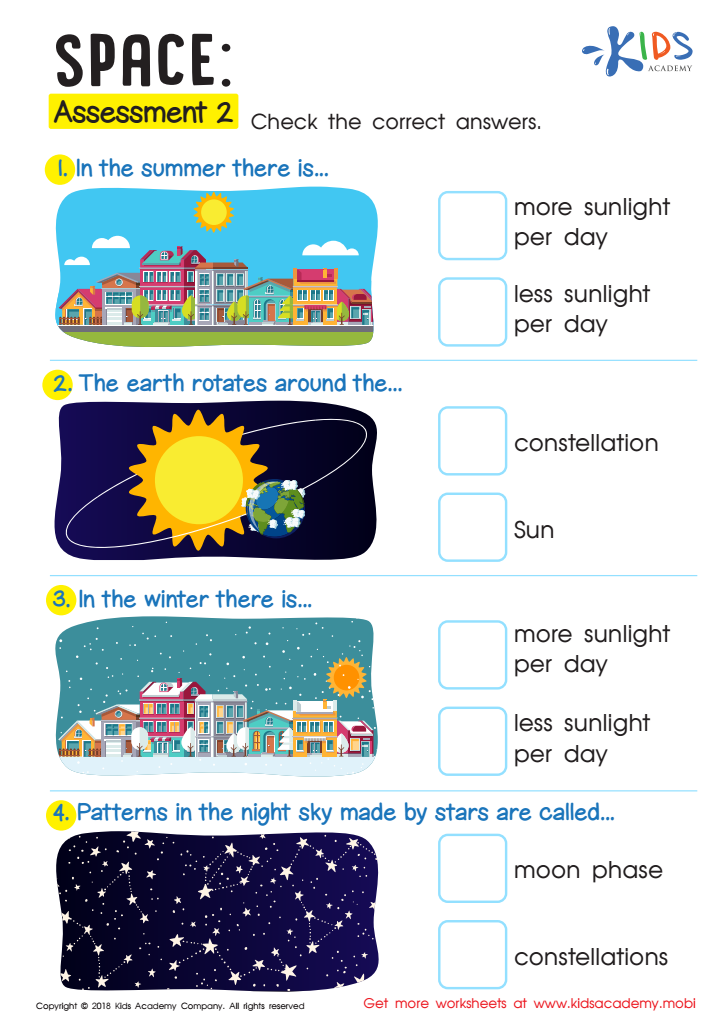
Space: Assessment 2 Worksheet
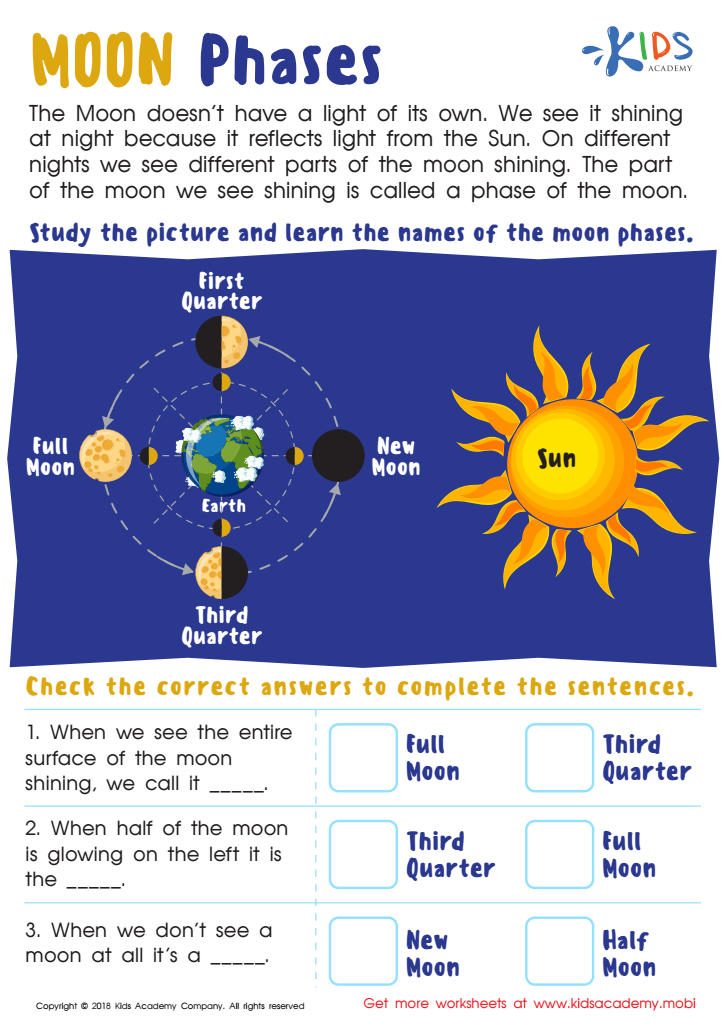
Moon Phases Worksheet
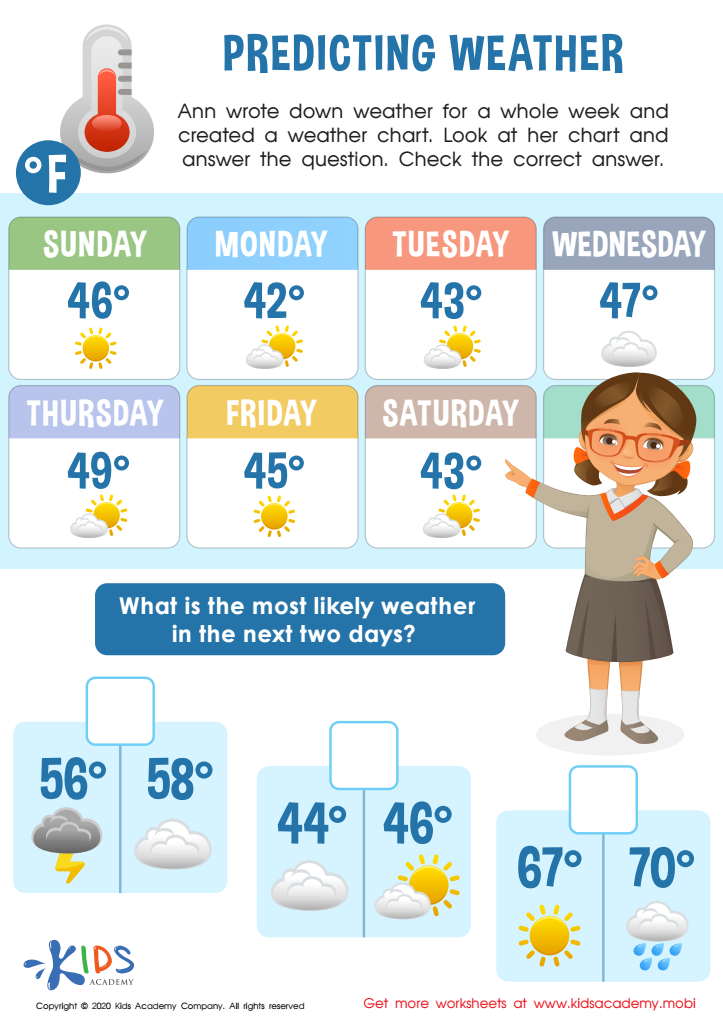
Predicting Weather Worksheet
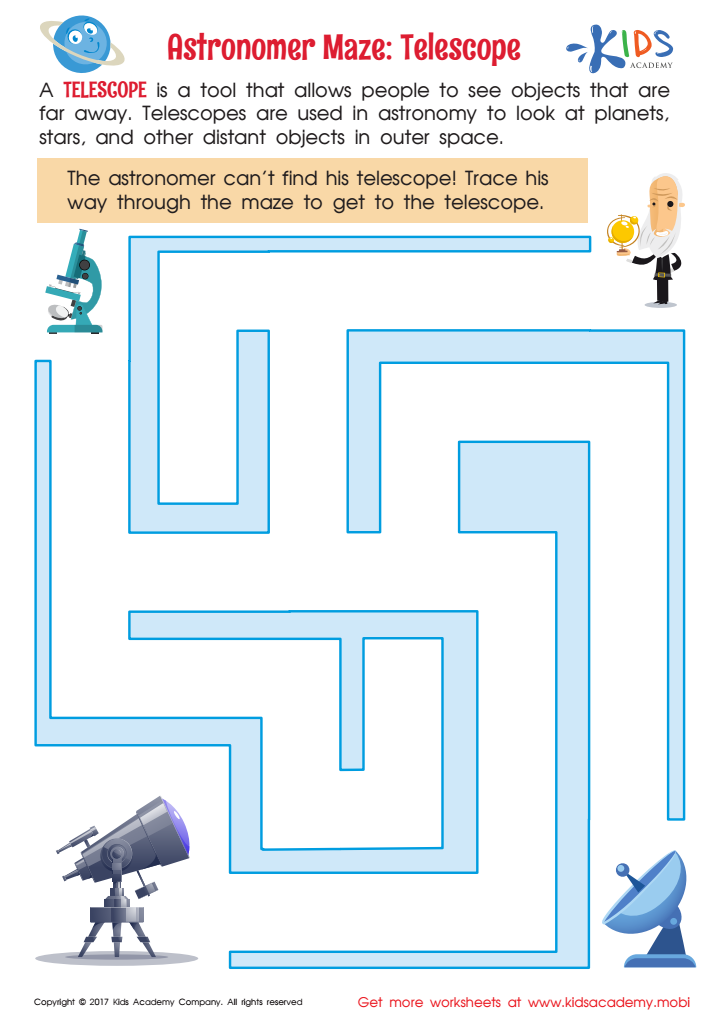
Astronomer Maze: Telescope Worksheet
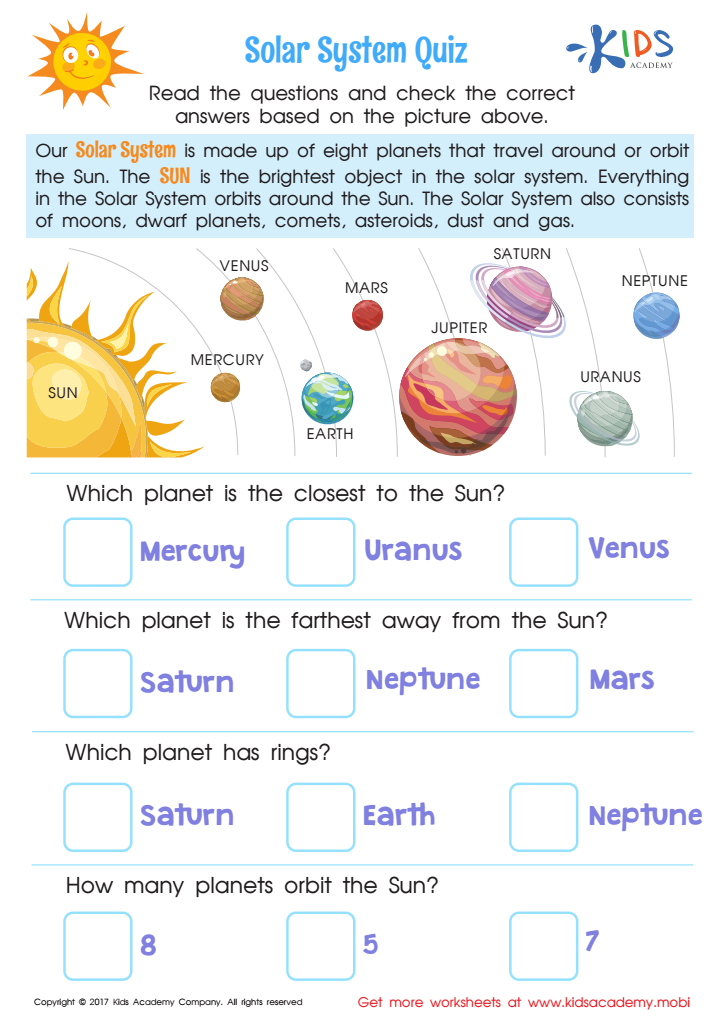
Solar System Quiz Printable
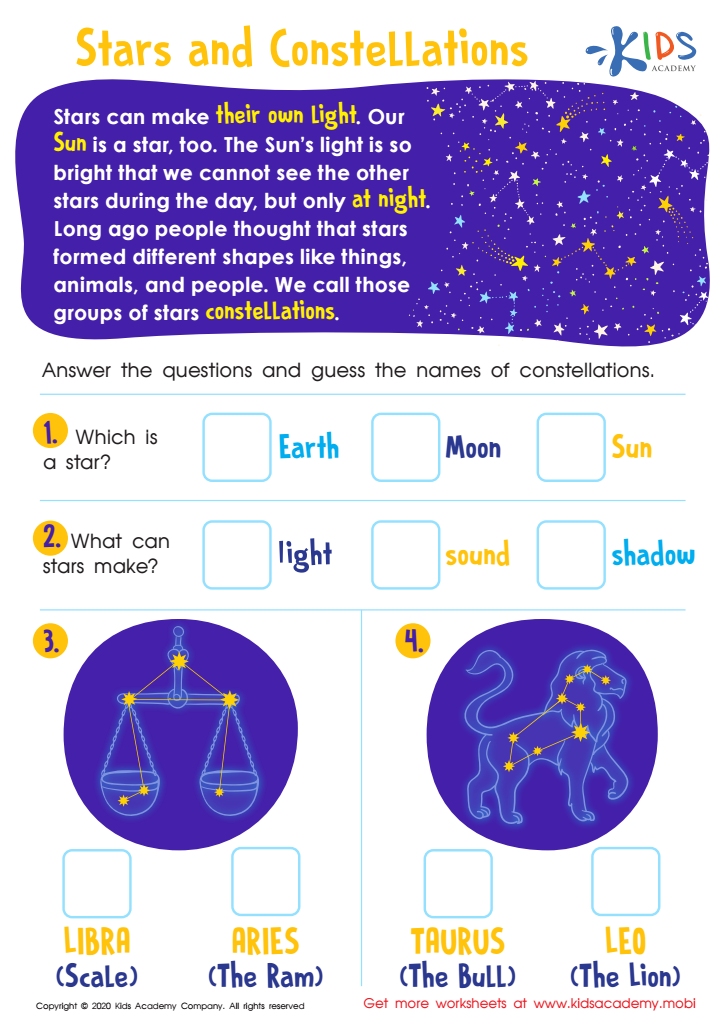
Stars and Constellations Worksheet








Parents and teachers should care about space for children aged 6-9 because it captivates young imaginations and encourages a sense of wonder. Exploring the universe can spark curiosity and foster a love for learning, motivating children to ask questions and seek answers about the stars, planets, and beyond. This age group is particularly open to discovering new concepts and ideas, making it the perfect time to introduce them to fundamental scientific principles through engaging space topics.
Understanding space also builds foundational skills in critical thinking and problem-solving. Discussions about gravity, the Solar System, and the possibility of life on other planets can inspire critical inquiry. Additionally, learning about space can promote skills in collaboration, as children often work together in group activities, experiments, or projects related to astronomy.
Furthermore, space education can instill a sense of global citizenship, where children learn about Earth’s place in the universe and the importance of taking care of our planet. Ultimately, immersing children in the wonders of space not only nurtures their scientific knowledge but also instills lifelong skills that benefit them academically and personally. Investing time in space education can elevate their experiences and inspire future generations of explorers, scientists, and thinkers.







