Normal Songs and Poems worksheets activities for Ages 4-9
11 filtered results
-
From - To
Discover an engaging collection of "Normal Songs and Poems" worksheets designed for children aged 4-9! These fun activities promote literacy and creativity, making learning enjoyable for your little ones. Our worksheets include charming songs and delightful poems that stimulate language development, enhance vocabulary, and foster a love for reading. With colorful illustrations and interactive tasks, children will practice reading comprehension, rhyming skills, and critical thinking in a playful way. Perfect for classrooms and home learning, our resources support early childhood educators and parents in their quest to inspire young minds. Explore our adaptable activities today and make learning an unforgettable adventure!
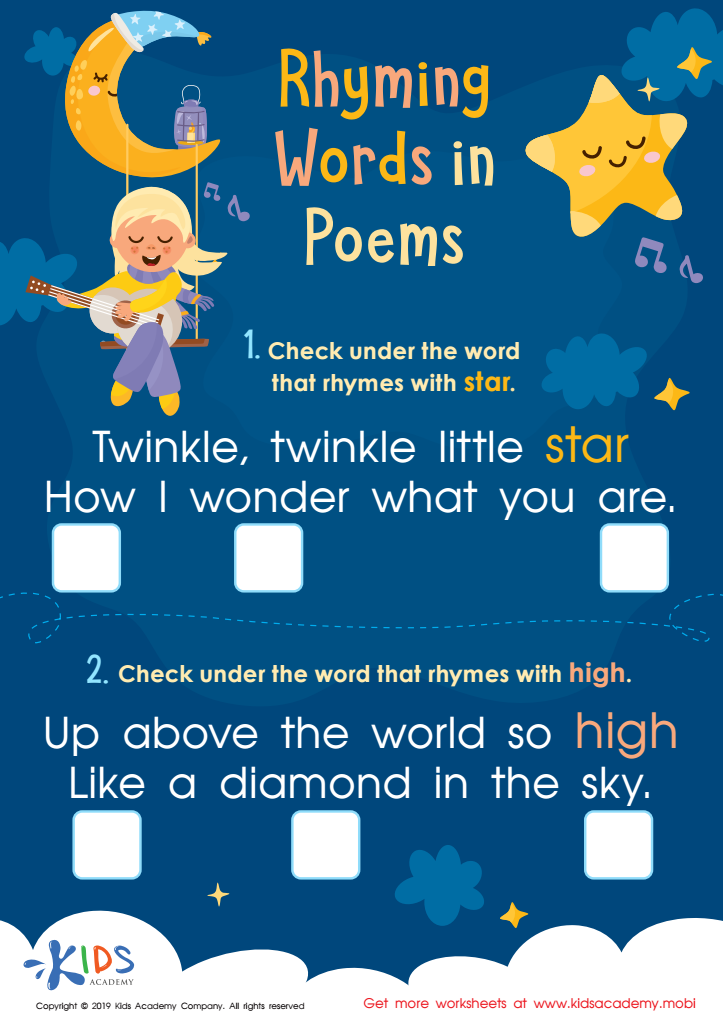
Rhyming Words in Poems Worksheet
 Assign to My Students
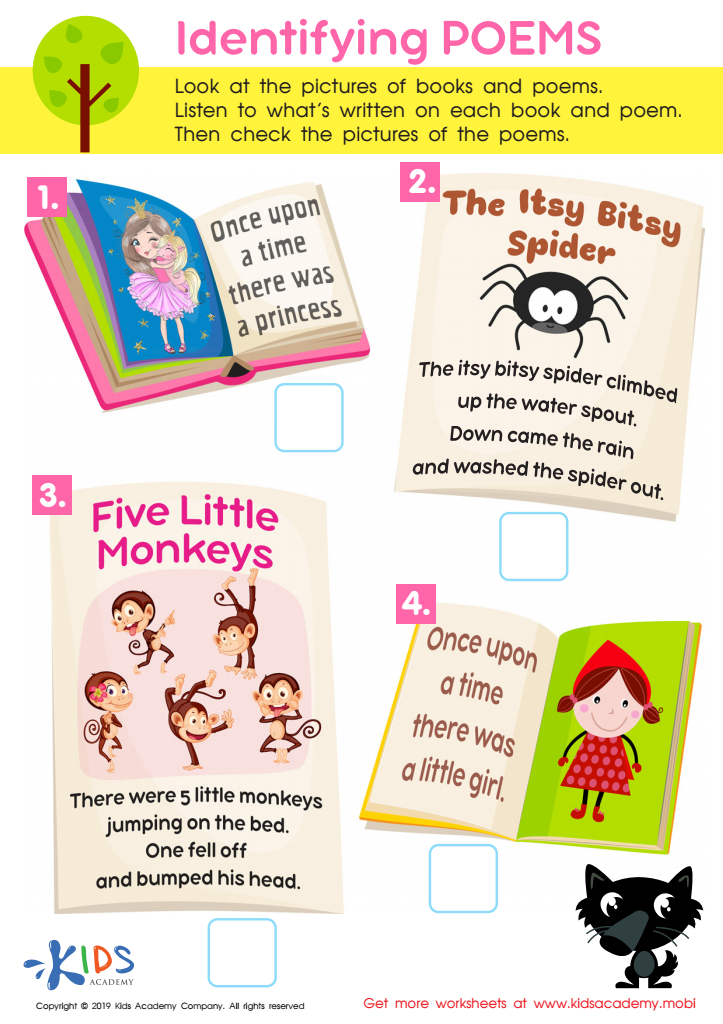
Identifying Poems Worksheet
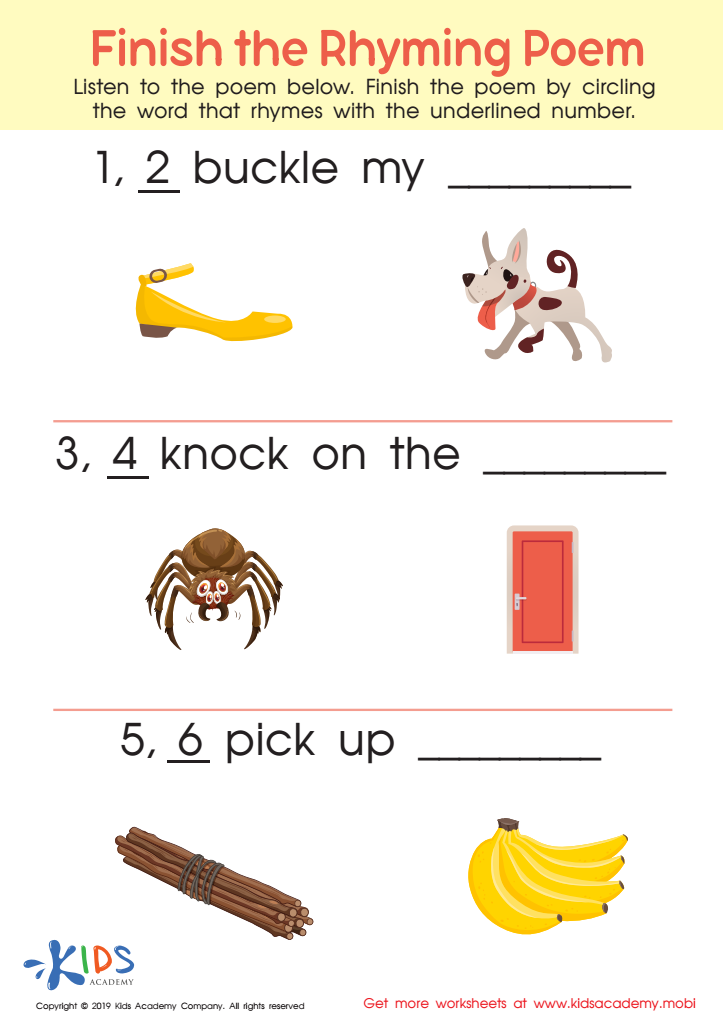
Finish Rhyming Poem Worksheet
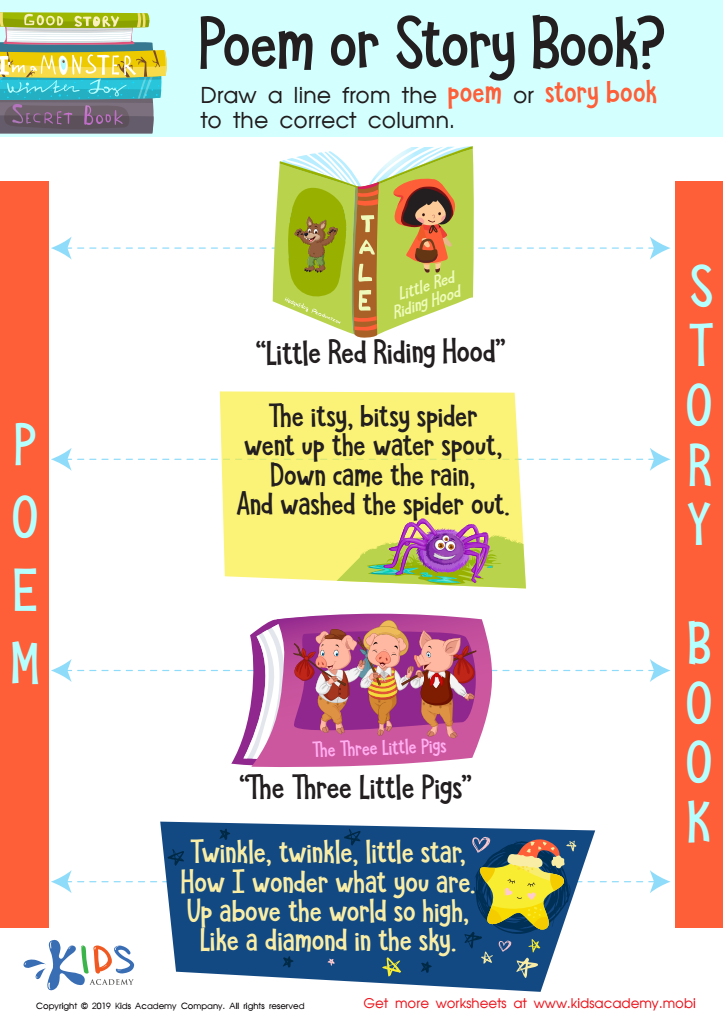
Poem or Story Book? Worksheet
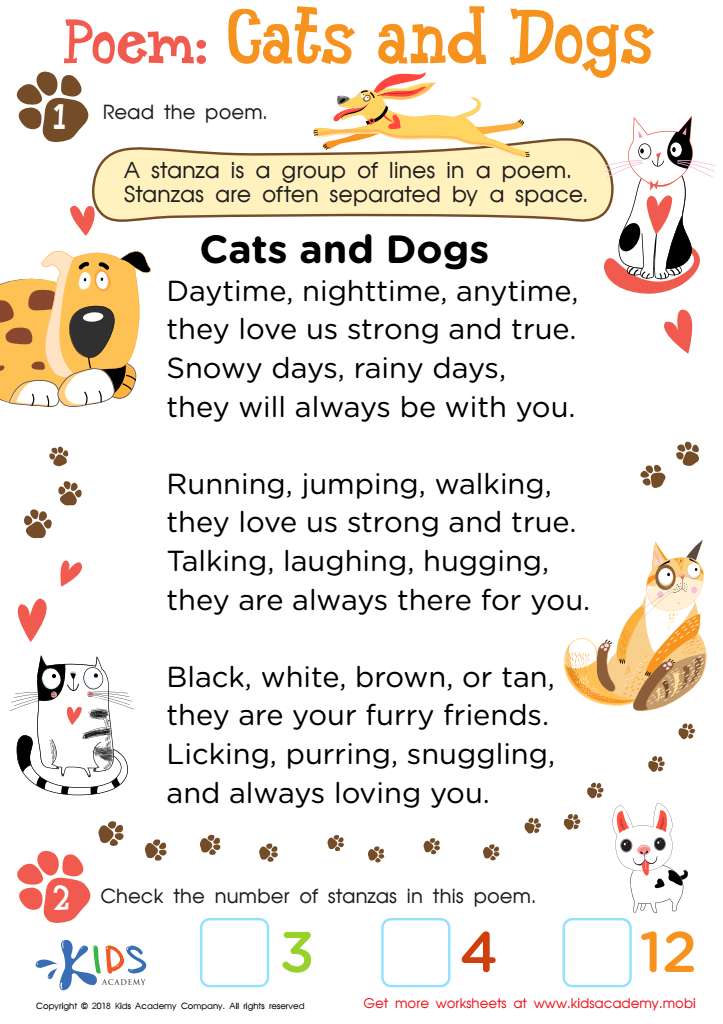
Poem: Cats and Dogs Worksheet
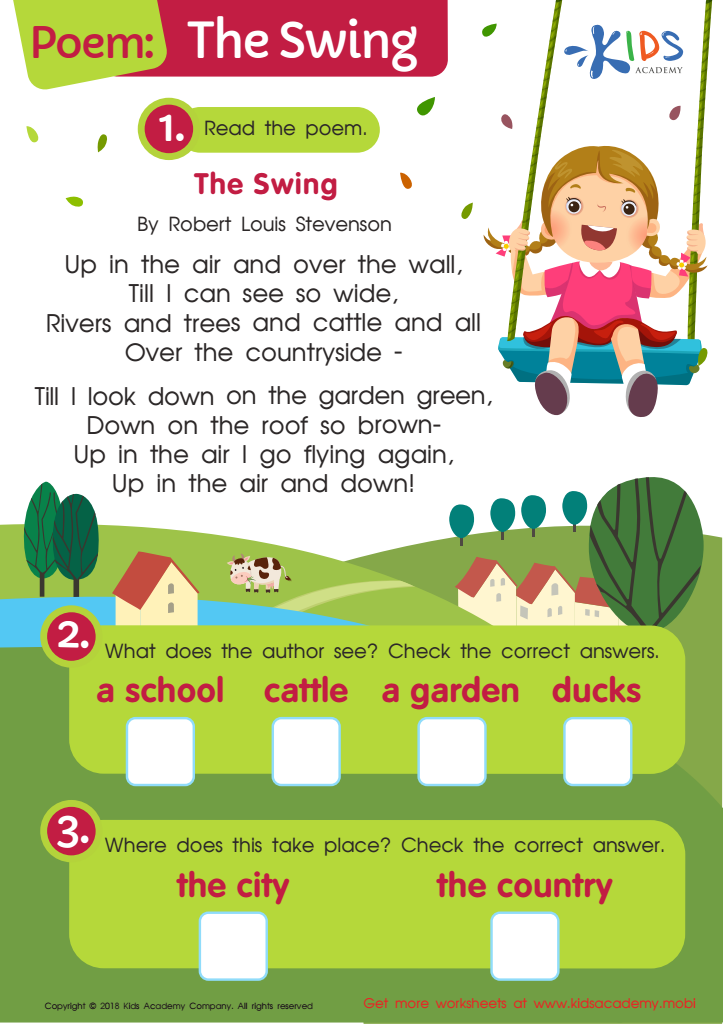
Poem: The Swing Worksheet
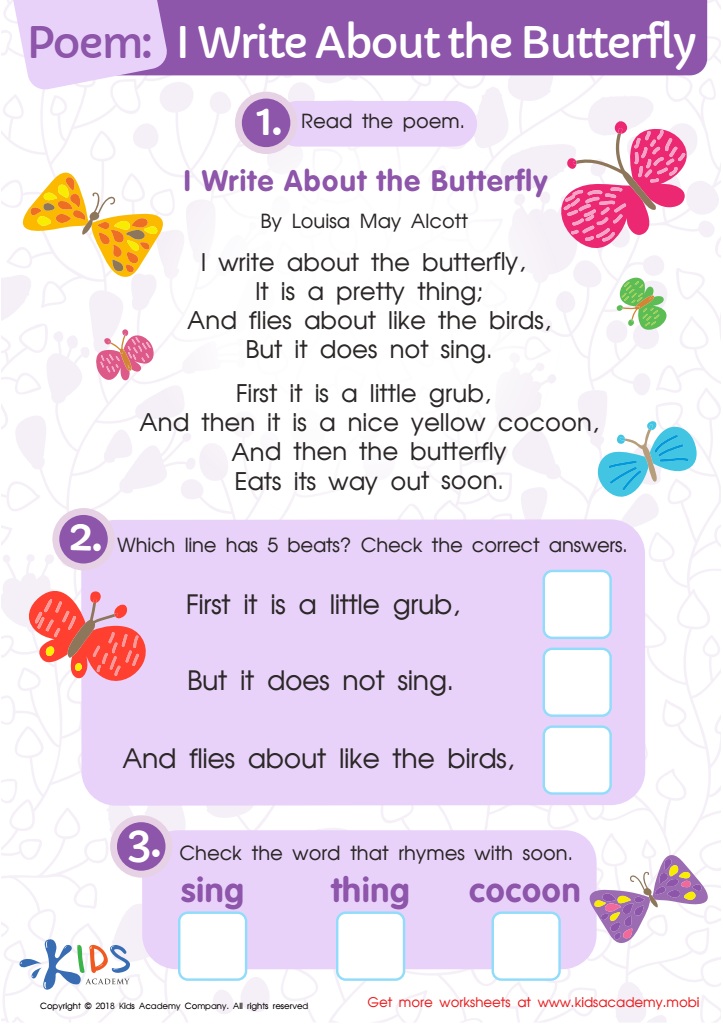
Poem: I Write About The Butterfly Worksheet
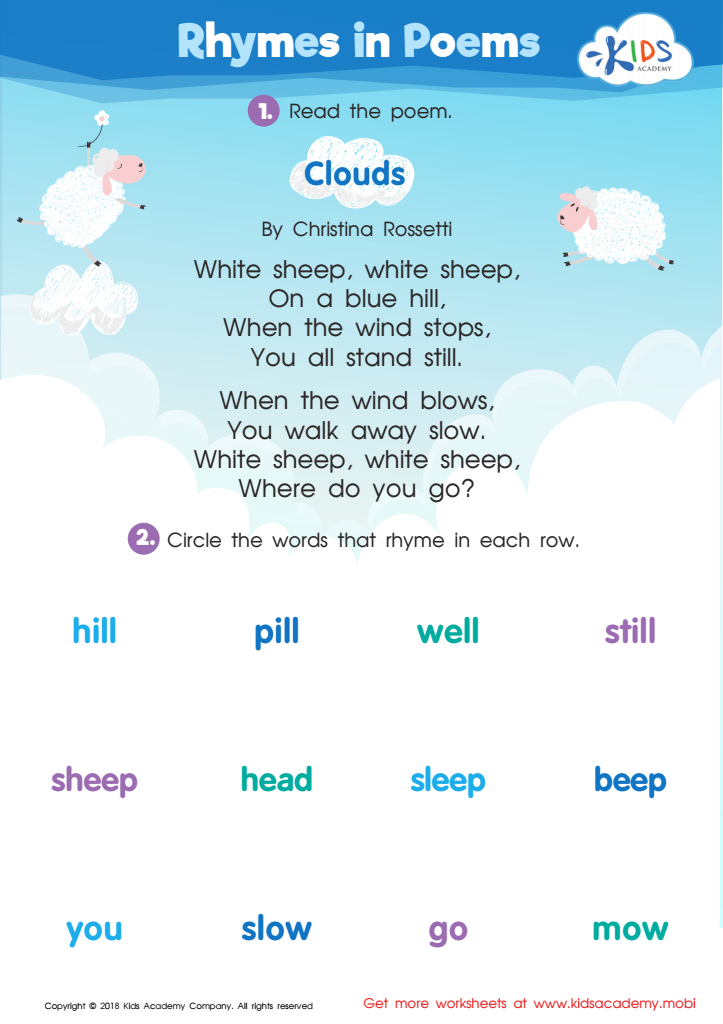
Rhymes in Poems Worksheet
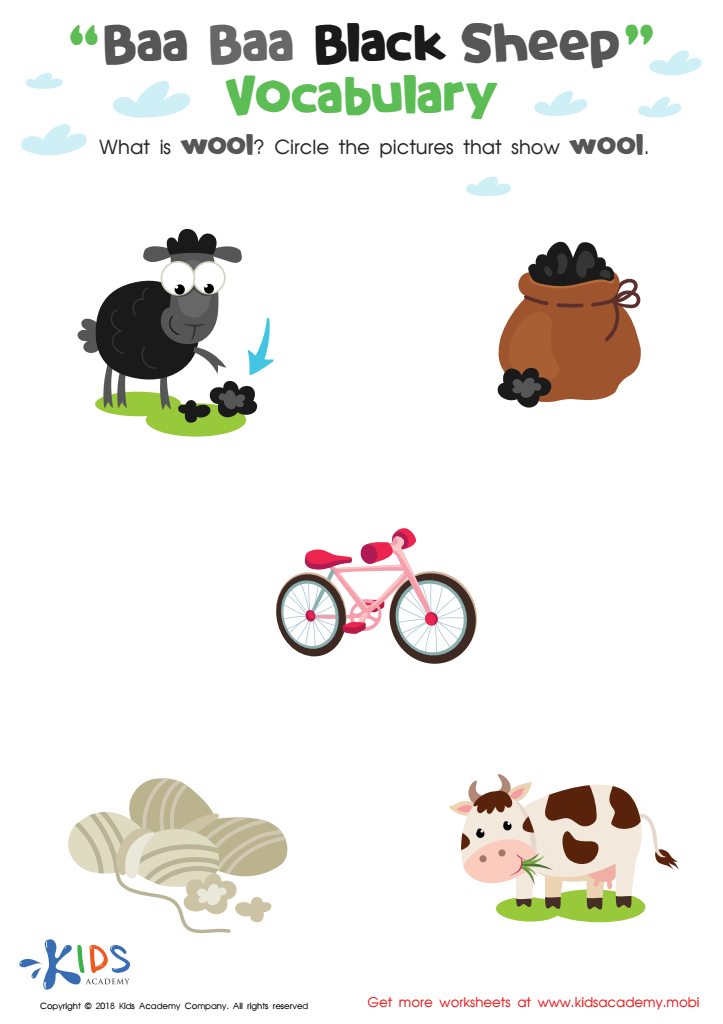
Baa Baa Black Sheep: Vocabulary Worksheet
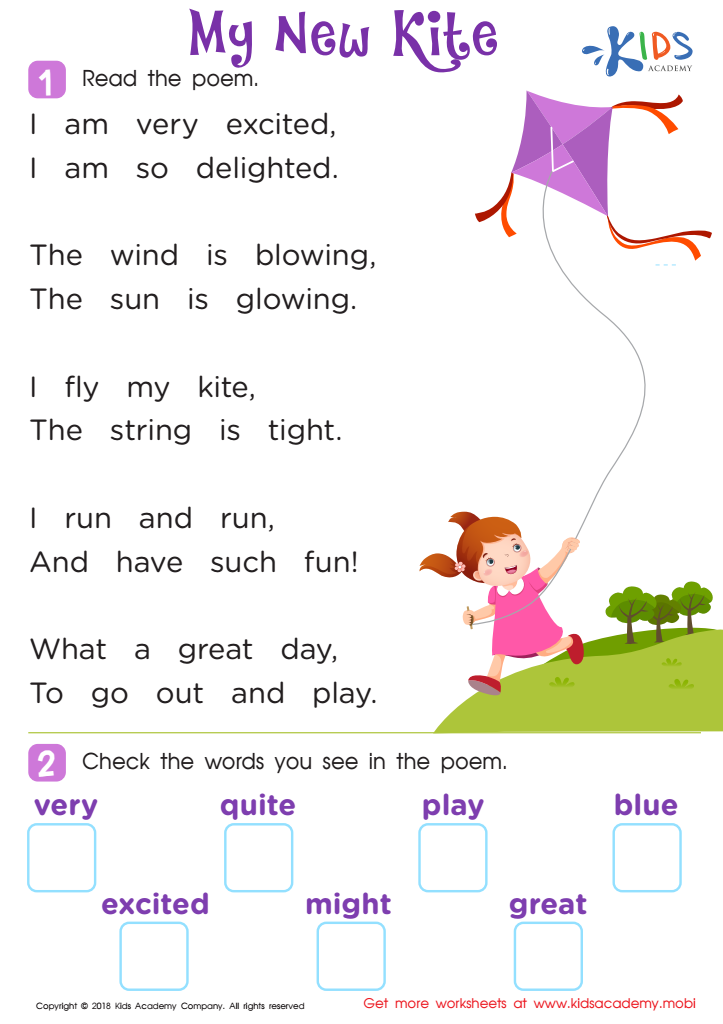
Poem: My New Kite Worksheet
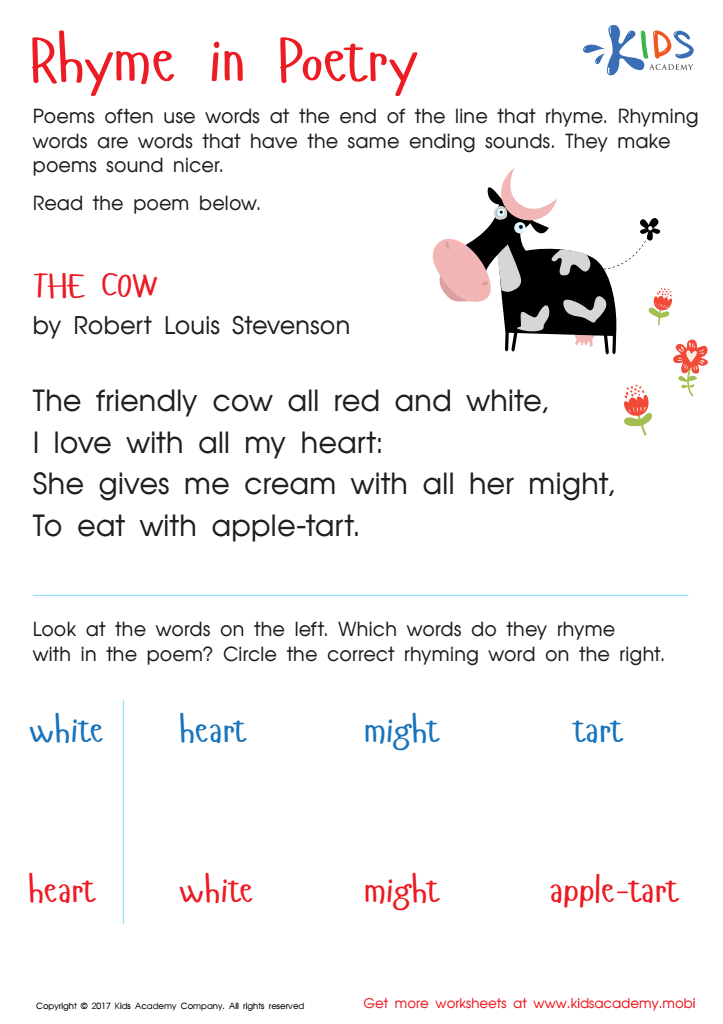
Rhyme In Poetry Worksheet






Parents and teachers should prioritize Normal Songs and Poems activities for children aged 4-9 due to their significant impact on early literacy development and cognitive growth. Engaging with songs and poems introduces children to the rhythm and patterns of language, enhancing their phonemic awareness, vocabulary, and listening skills. These activities not only make learning fun but also foster a love for language, encouraging children to express themselves creatively.
Moreover, songs and poems often contain repetitive structures, which help children memorize words and phrases, reinforcing language acquisition. The social aspect of singing and reciting together promotes cooperation, builds confidence, and nurtures emotional connections among peers and caregivers.
Additionally, incorporating cultural songs and poems can broaden children's understanding of diverse perspectives, enhancing their social awareness and empathy. This also aids in their cognitive development by encouraging imagination and critical thinking as they interpret and engage with various texts.
Ultimately, Normal Songs and Poems activities lay a foundational framework for literacy and social skills that are essential for lifelong learning, preparing children for future academic success and interpersonal relationships. By supporting these activities, parents and teachers contribute significantly to children’s holistic development in these formative years.








