Filters

141 filtered results

Clear all filters
Favorites
With answer key
Interactive

141 filtered results

Difficulty Level

Grade


Check out this FREE Trial Lesson on Plants and Animals for age 3-9!

Animal Habitats

Favorites
With answer key
Interactive
  • 3-9
  • Interactive
  • Plants and Animals
Compare Two Sources Worksheet

Compare Two Sources Worksheet

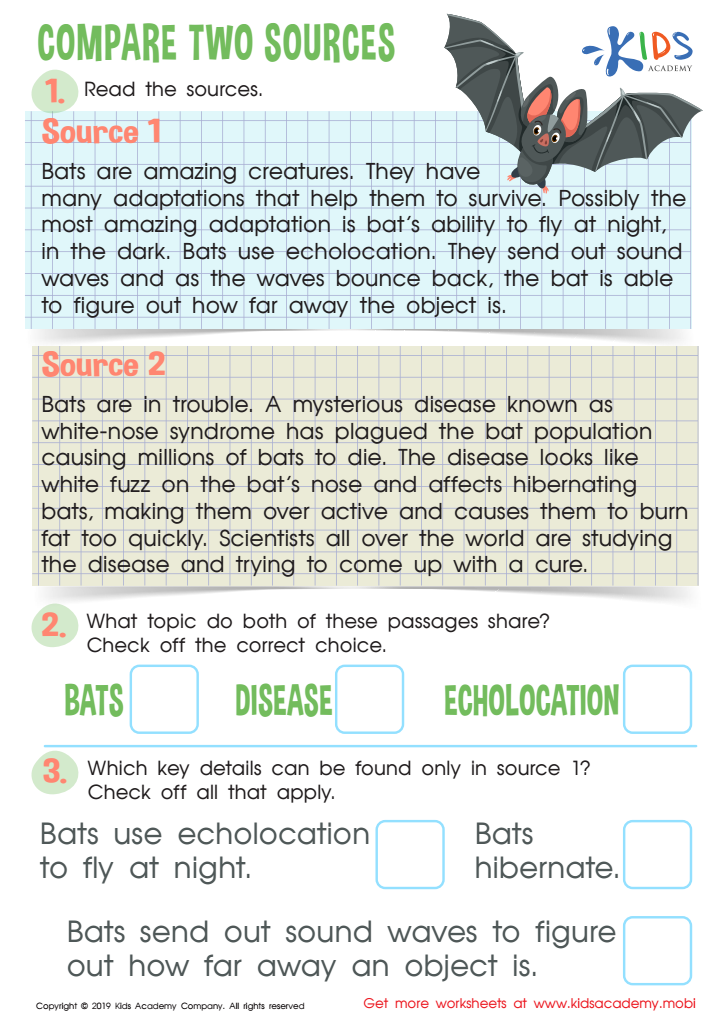
Reading exposes us to new words, spelling, and info about different topics. Kids can practice their reading skills, and learn about bats, with this worksheet. Read the two sources in the picture, then help your kids answer the questions at the bottom.
Compare Two Sources Worksheet
Worksheet
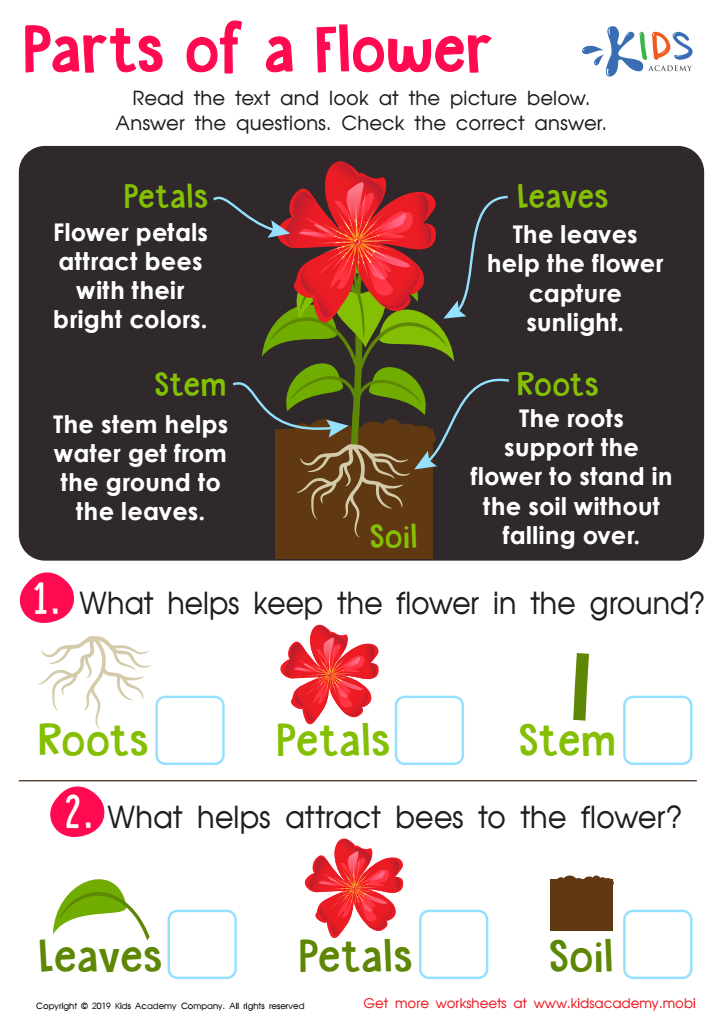
Parts of Flower Worksheet

Parts of Flower Worksheet

Learning how to dissect info from graphics is essential. This free worksheet on the parts of a flower is a great learning tool for kids. It offers info, picture clues and comprehension questions. Plus, it gives them a visual reference for building on their knowledge of plants.
Parts of Flower Worksheet
Worksheet
Herbivores Worksheet

Herbivores Worksheet

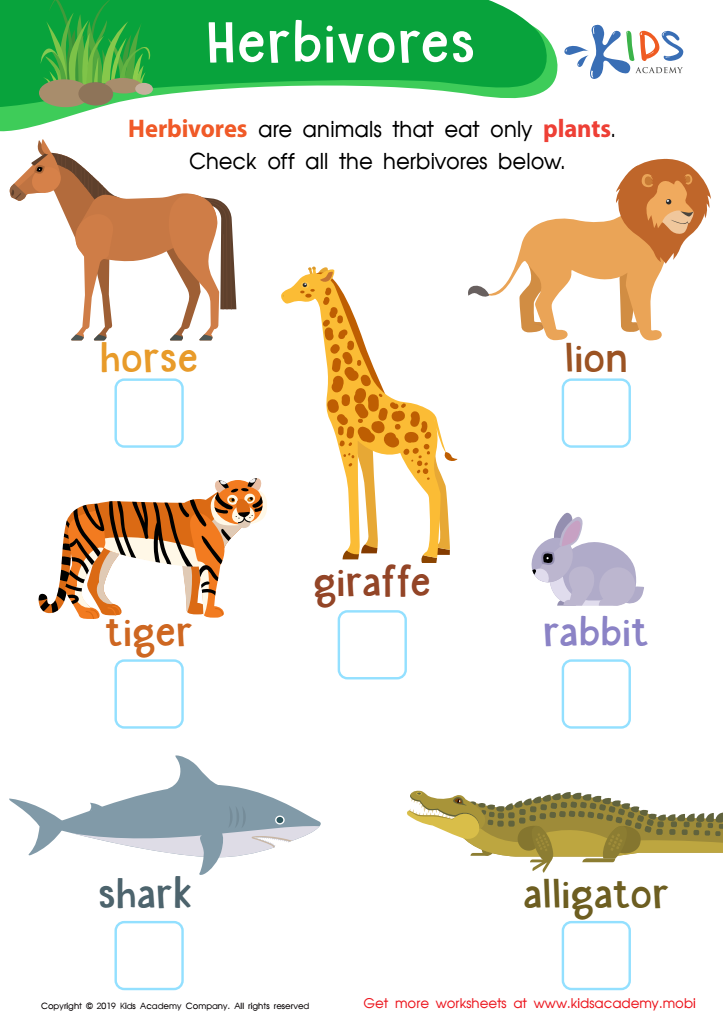
Explain to your kids what herbivores are: animals that survive on plants and grass. Examples include cows, rabbits, and deer. Ask them to identify the herbivores in the pictures and check them off.
Herbivores Worksheet
Worksheet
Animals and Non-Living Things Worksheet

Animals and Non-Living Things Worksheet

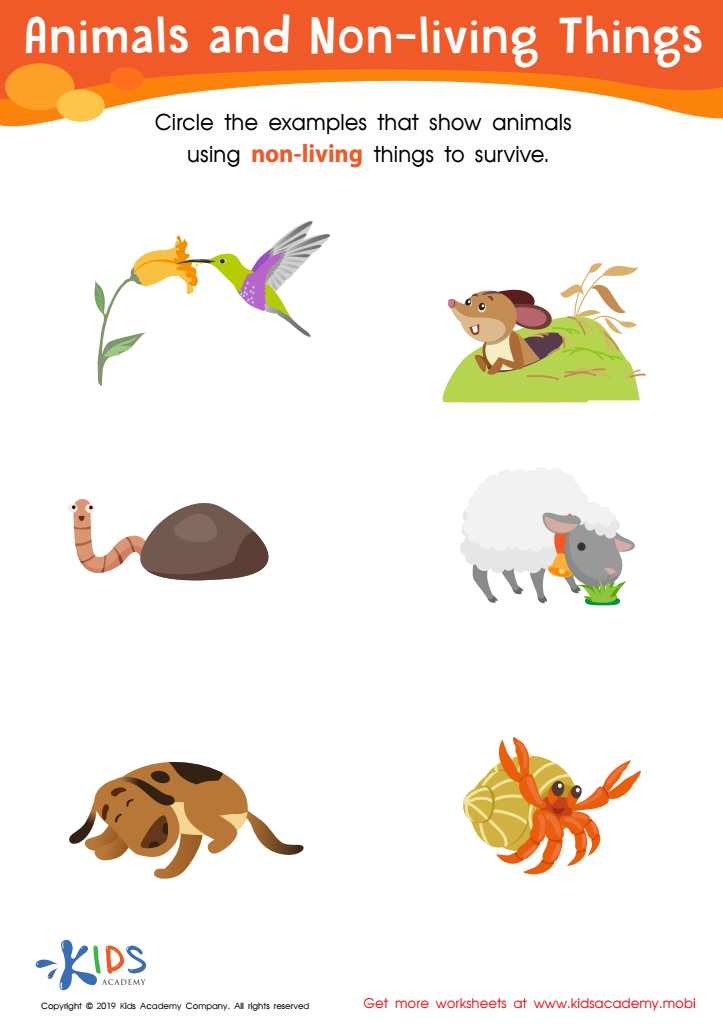
People and animals both require more than food to survive. We need shelter, clothing and water, while animals use non-living things like rocks and trees. Ask your kids what else is necessary to survive - then have them identify the objects in the worksheet and circle the examples of animals using non-living things.
Animals and Non-Living Things Worksheet
Worksheet
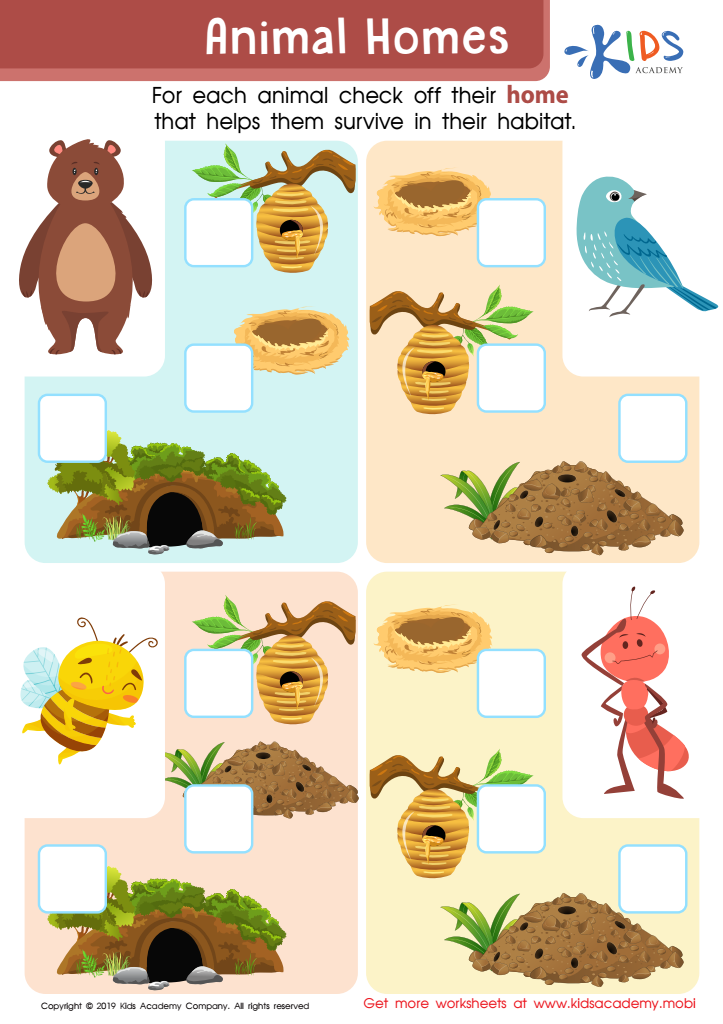
Animal Homes Worksheet

Animal Homes Worksheet

It's your duty as a teacher to protect, direct and guide your students while they're at school. Ask your kindergartners what a home means and why it's special. Use this worksheet to teach them that both people and animals have homes. Show them the pictures, and have them check off which is the home of each animal.
Animal Homes Worksheet
Worksheet
Thorns and Spikes Worksheet

Thorns and Spikes Worksheet

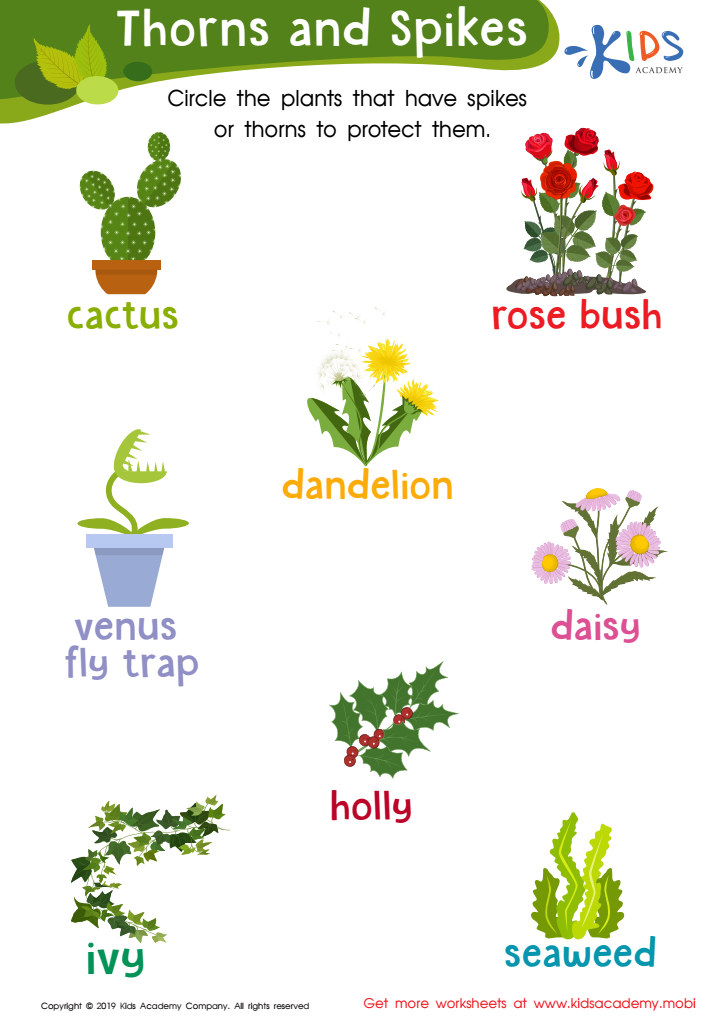
Can your students name and identify the plants and flowers in this worksheet? Ask them to read out the names and circle the ones with spikes or thorns. Help them appreciate nature's beauty and understand how plants protect themselves.
Thorns and Spikes Worksheet
Worksheet
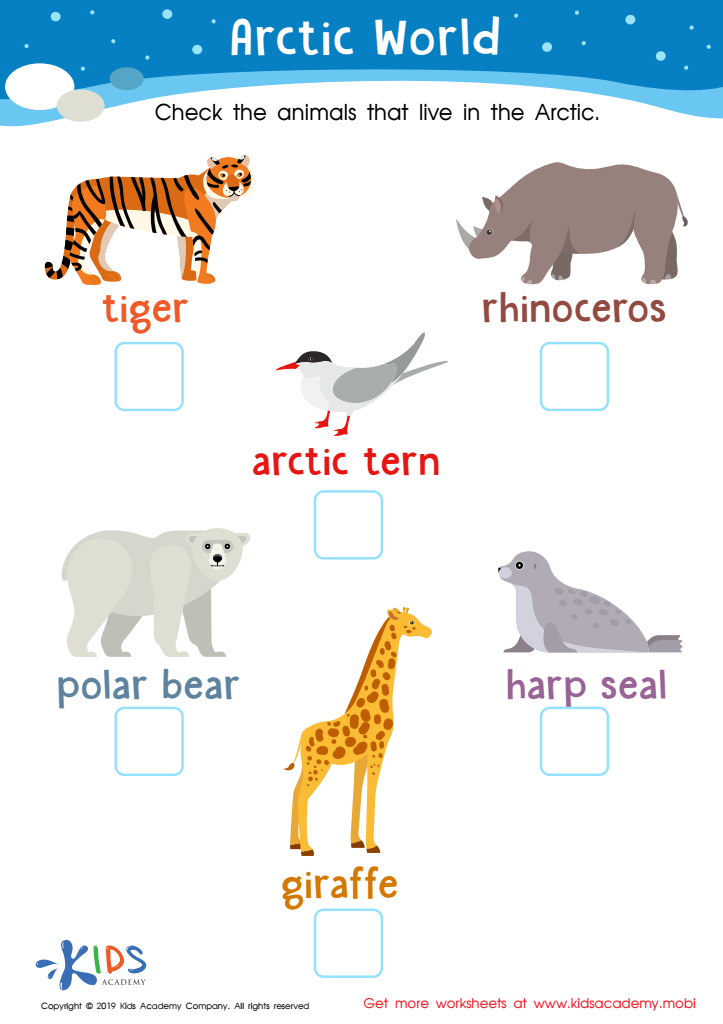
Arctic World Worksheet

Arctic World Worksheet

Ask your students if they know where the Arctic is located and what lives there. If not, use a world atlas to show them. The Arctic is very cold and snow-covered; native animals have adapted to survive the harsh conditions. Look at the animals in the worksheet and help your students decide which ones live in the Arctic.
Arctic World Worksheet
Worksheet
Fur or Feathers? Worksheet

Fur or Feathers? Worksheet

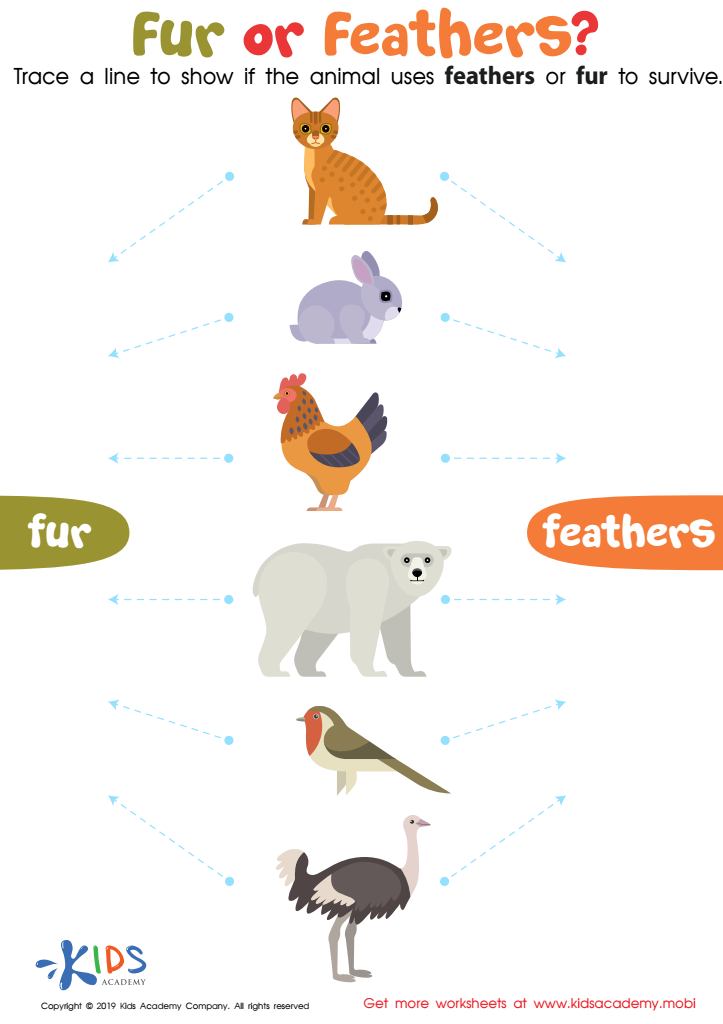
Examine animals you see daily. How do they differ from humans? With a pet in your home, ask your child to touch it and identify what covers the animal's body - fur or feathers? Birds have feathers, while mammals have fur. Guide your kids to identify animals in this worksheet and determine if fur or feathers keep them alive.
Fur or Feathers? Worksheet
Worksheet
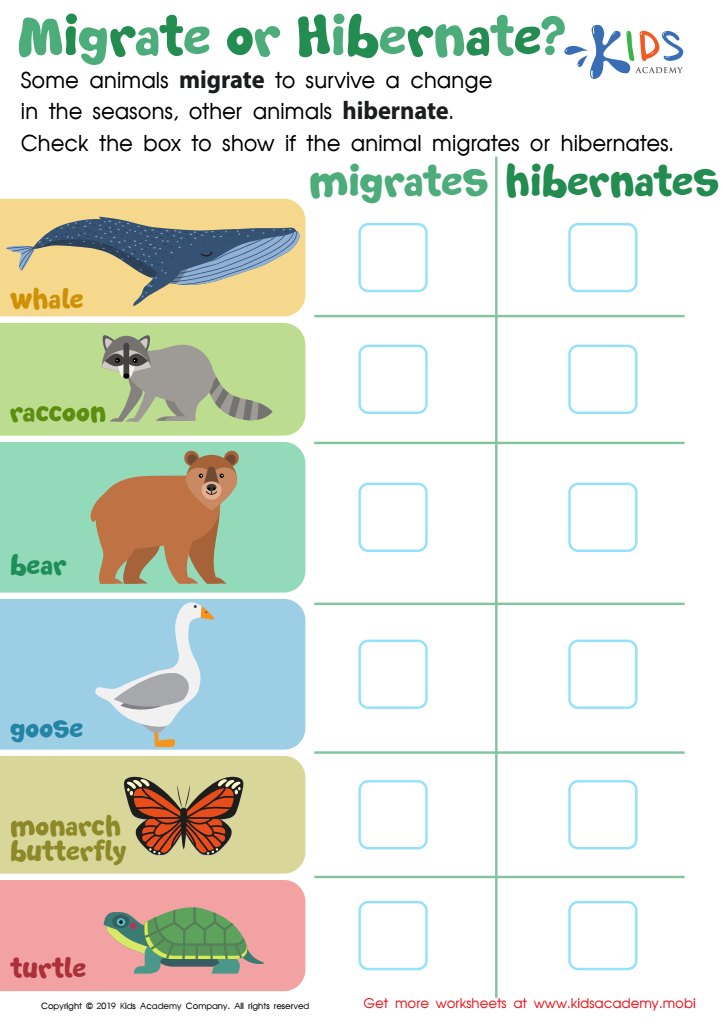
Migrate or Hibernate? Worksheet

Migrate or Hibernate? Worksheet

Many animals survive by either migrating or hibernating when the weather changes. Migration involves traveling in flocks or herds to a more temperate climate, while hibernation is when animals stay in their homes and eat and sleep for a long period of time. Show your kids this worksheet and help them decide which strategy animals use to cope with the changing weather.
Migrate or Hibernate? Worksheet
Worksheet
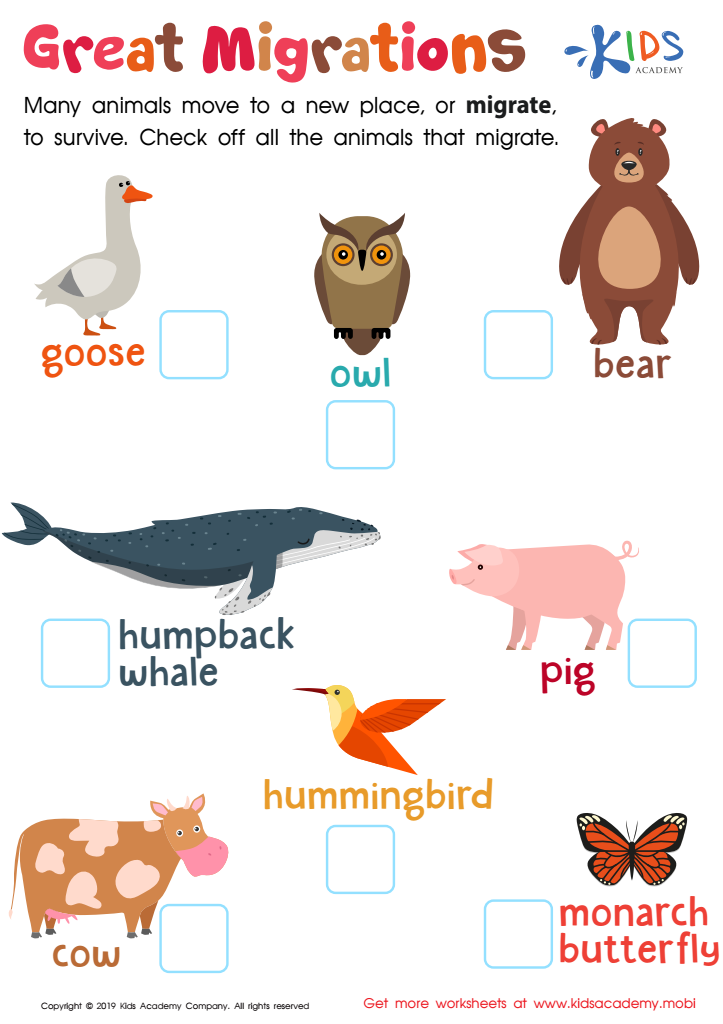
Great Migrations Worksheet

Great Migrations Worksheet

Identify animals in the worksheet with your kids. See which ones migrate: check the boxes! Migration is when birds and other animals only appear for certain seasons or long periods, then come back when the weather changes.
Great Migrations Worksheet
Worksheet
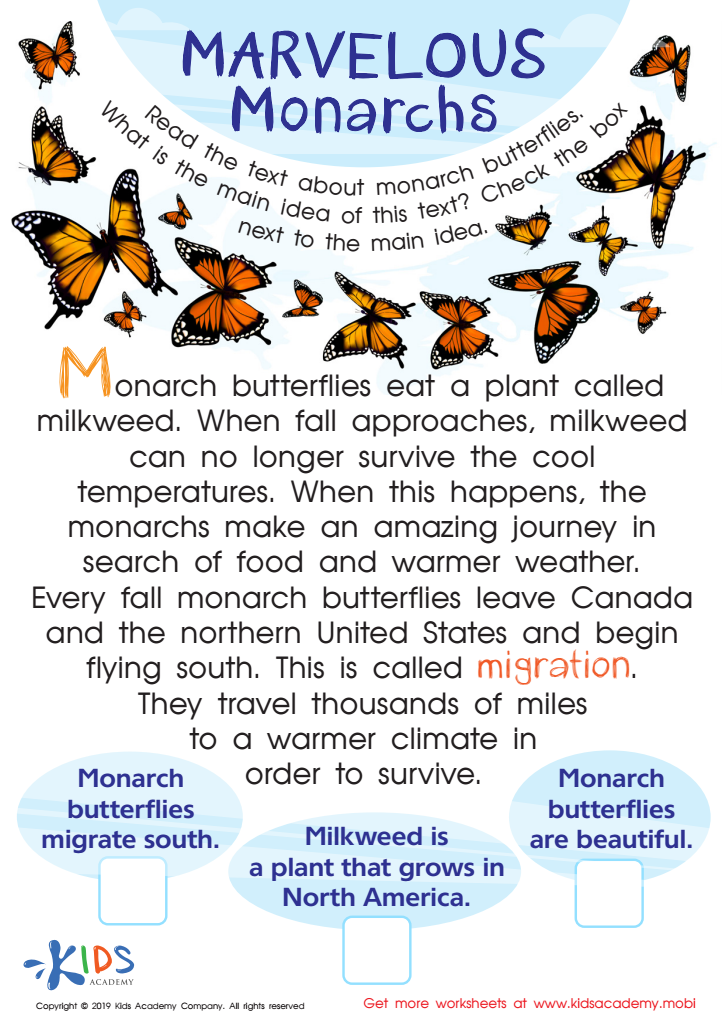
Marvelous Monarchs Worksheet

Marvelous Monarchs Worksheet

Help your kids have fun while reading - start with small words and short sentences. This worksheet can test your kids' reading and comprehension skills. Ask them to read the text about Monarch butterflies and help them locate the main idea.
Marvelous Monarchs Worksheet
Worksheet
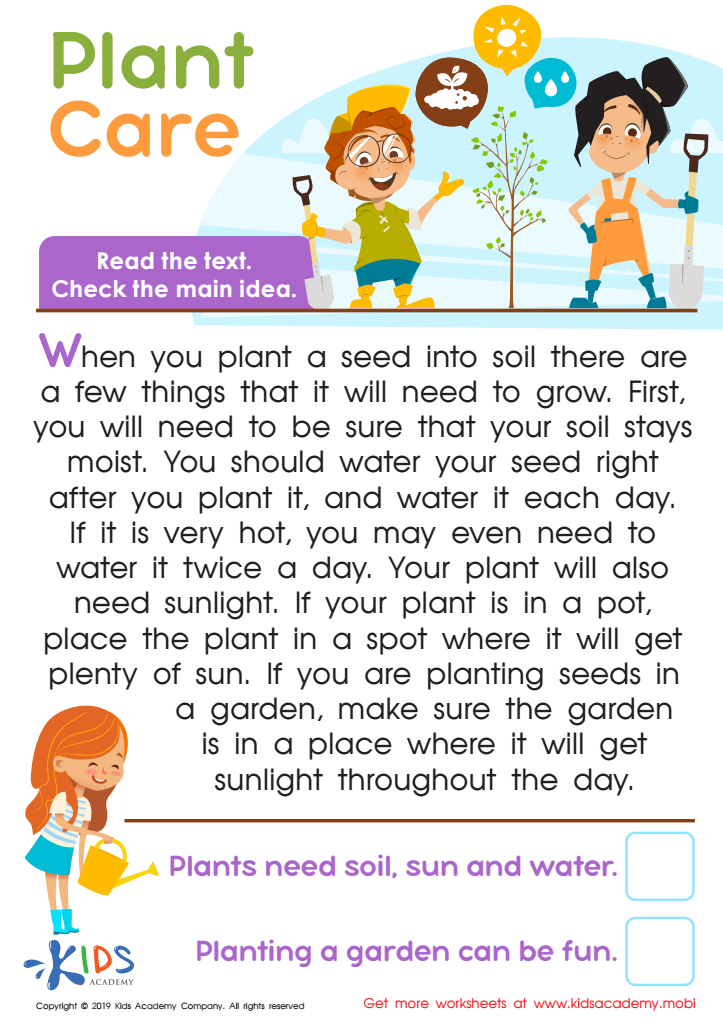
Plant Care Worksheet

Plant Care Worksheet

Encourage your children to read by helping them practice. Print out the worksheet and read the text with them. Help them understand the words and find the main idea. This will improve their reading skills and prepare them for school.
Plant Care Worksheet
Worksheet
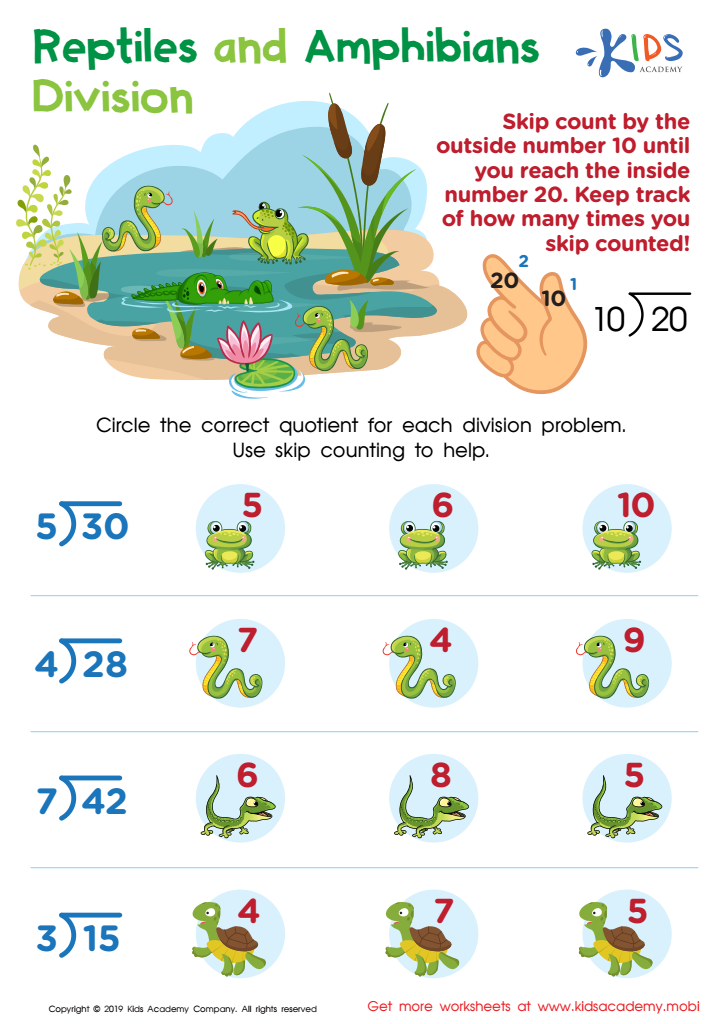
Reptile and Amphibians Division Worksheet

Reptile and Amphibians Division Worksheet

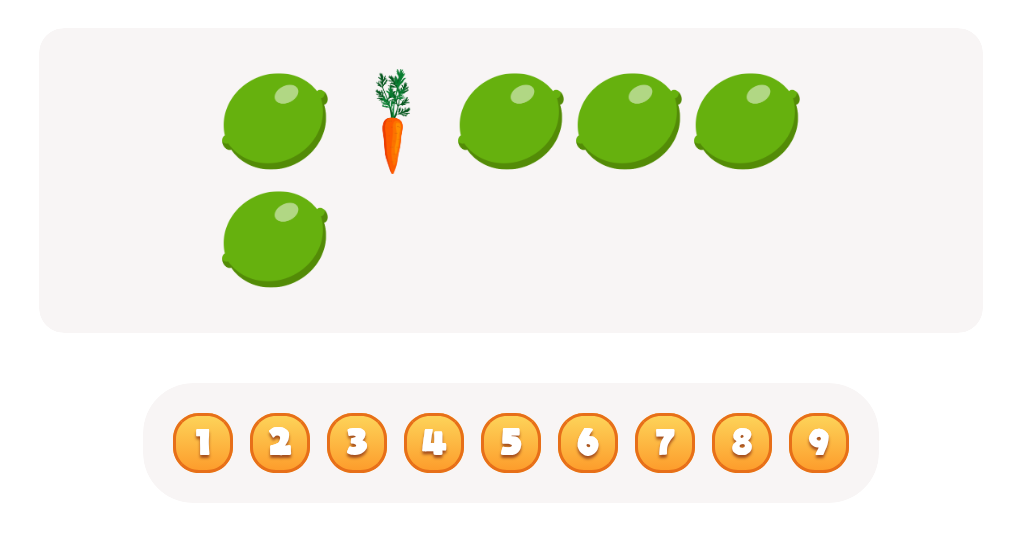
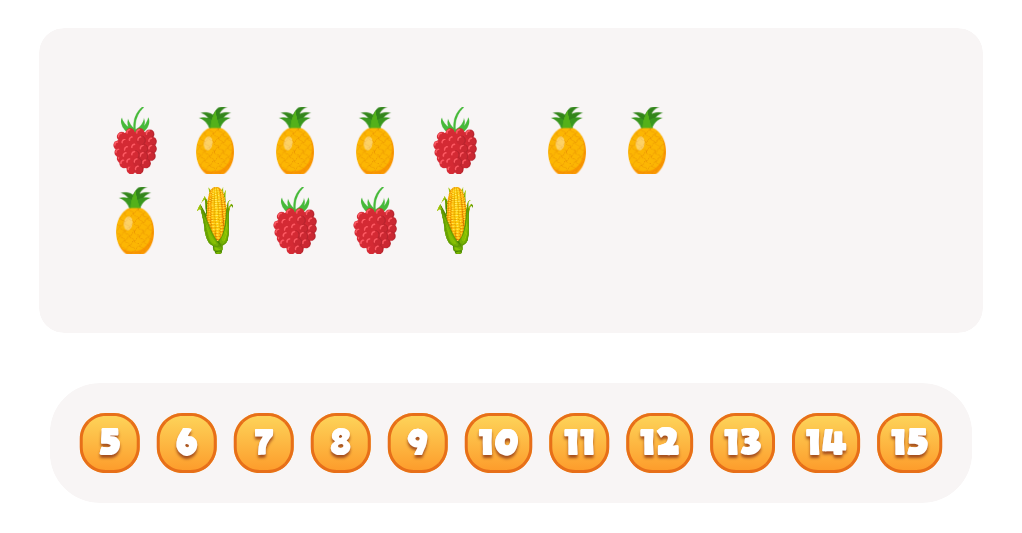
Skip counting is key in division. This PDF worksheet helps children practice this skill with fun reptile and amphibian friends. They must circle the right quotient among the choices given to reinforce their pattern recognition. Perfect for mastering division!
Reptile and Amphibians Division Worksheet
Worksheet
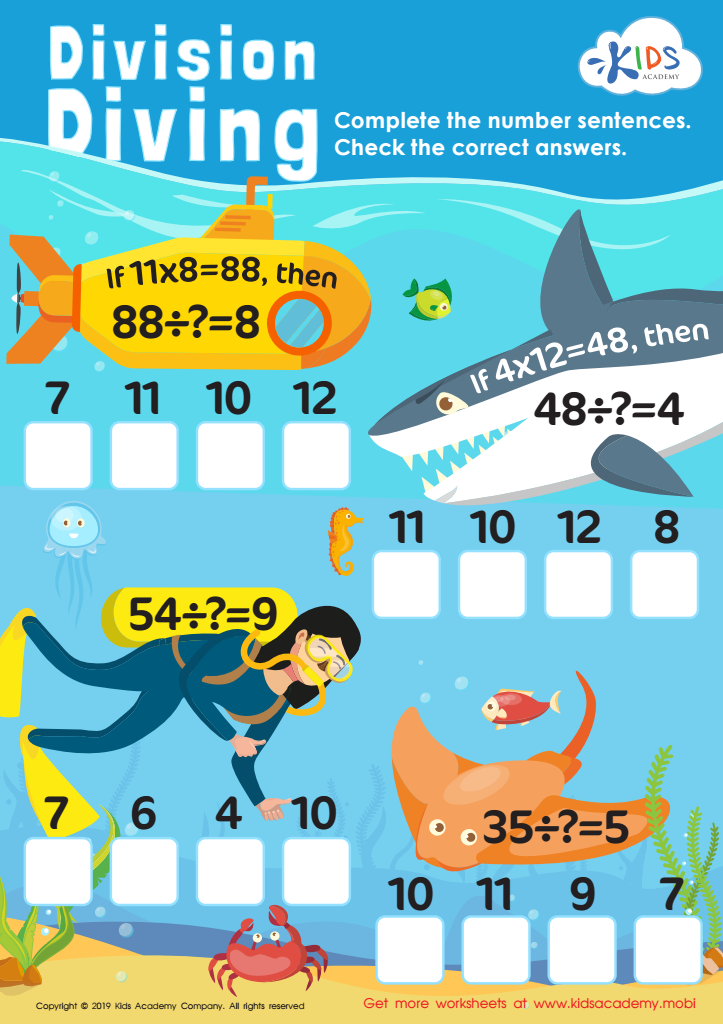
Division Diving Worksheet

Division Diving Worksheet

Kids love exploring water and this free PDF worksheet is a great way to bring the fun and math together! Kids can help the underwater friends with number sentences, and use their fact family knowledge to solve for the missing number, then choose the correct answer. This worksheet is an enjoyable way for them to practice division!
Division Diving Worksheet
Worksheet
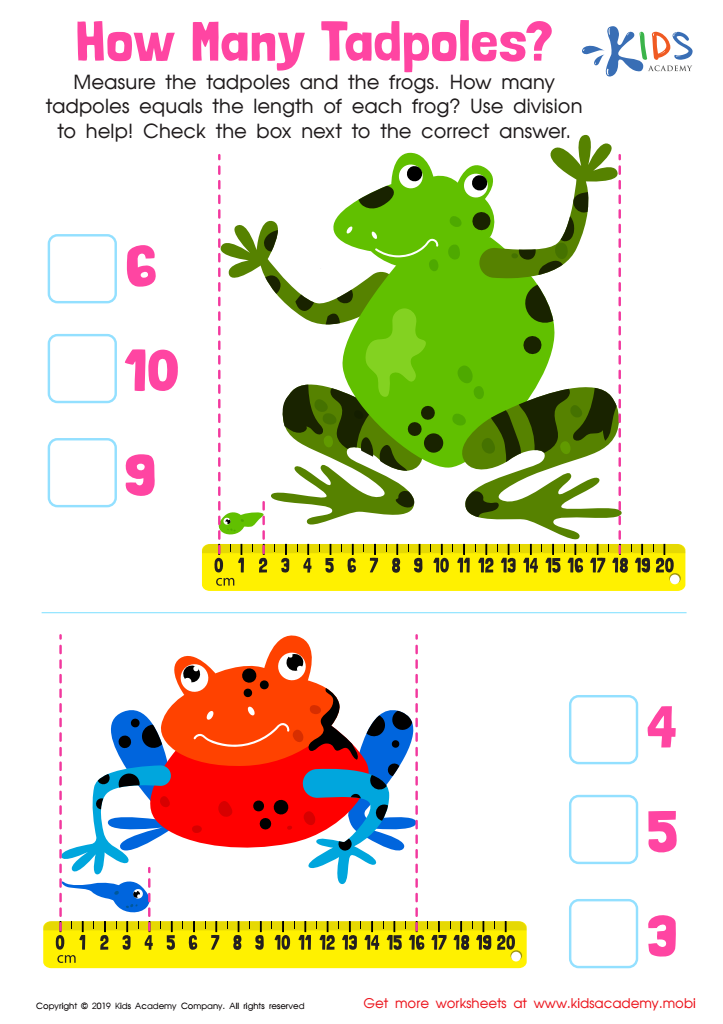
How Many Tadpoles Worksheet

How Many Tadpoles Worksheet

Kids love tadpoles! They'll have fun using them to work out the measurements of their frog friends. By dividing the length of the frogs by the length of the tadpoles, children can deduce how many tadpoles it takes to equal a frog. With the use of 'how many' and 'each' they'll solve math problems without realizing it!
How Many Tadpoles Worksheet
Worksheet
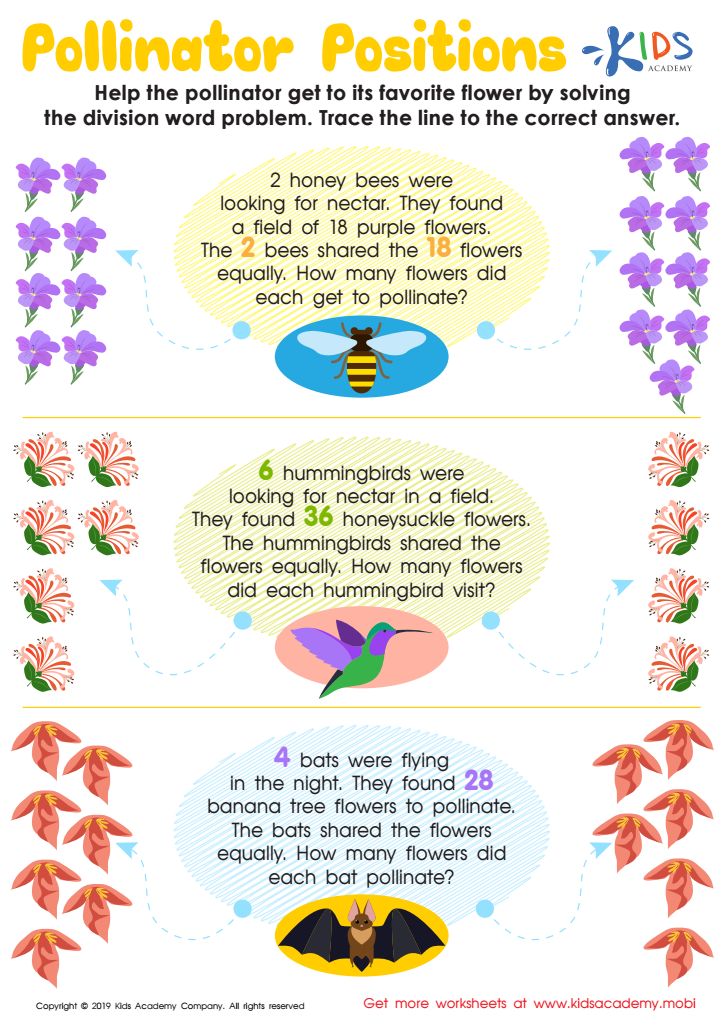
Pollinator Positions Worksheet

Pollinator Positions Worksheet

Kids will love learning about pollinators and how vital they are. Help their favorite friends get to the right flowers with this fun PDF. Children can solve the problems without even knowing they're doing division; just read the word problems and use the highlighted numbers. Finish by tracing the lines to the correct quotient!
Pollinator Positions Worksheet
Worksheet
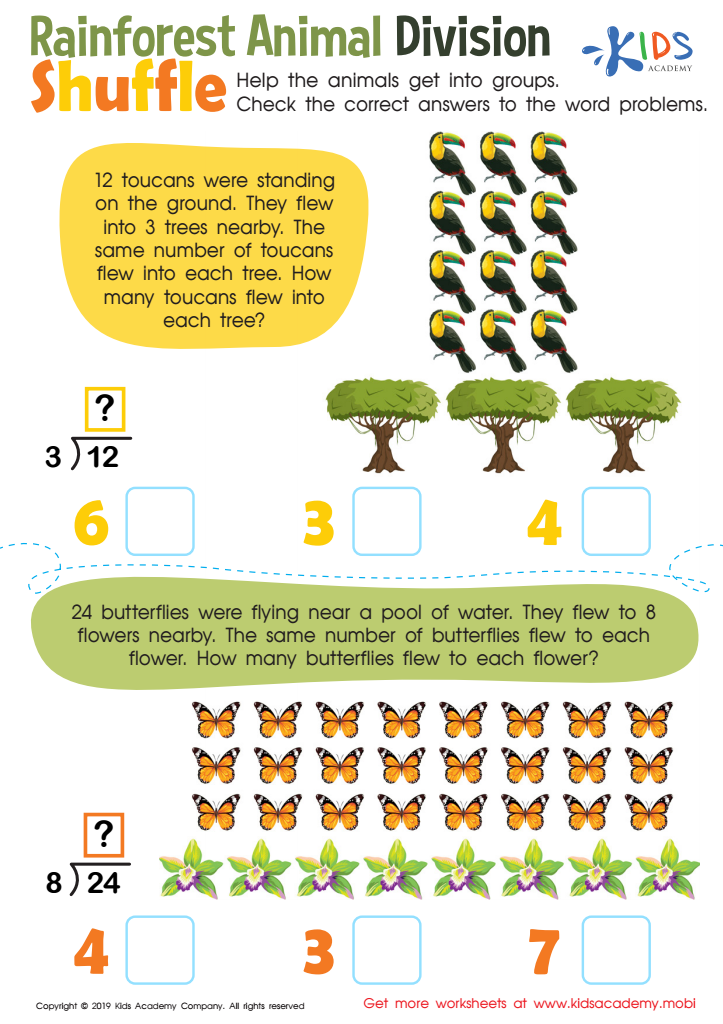
Rainforest Animal Division Worksheet

Rainforest Animal Division Worksheet

Children can save the rainforest and learn about division with this worksheet! It helps kids understand that division involves creating equal groups of specific numbers, and with its visual representation, they can grasp the concept more easily. They'll have fun learning about their place in the world and their role in protecting the environment.
Rainforest Animal Division Worksheet
Worksheet
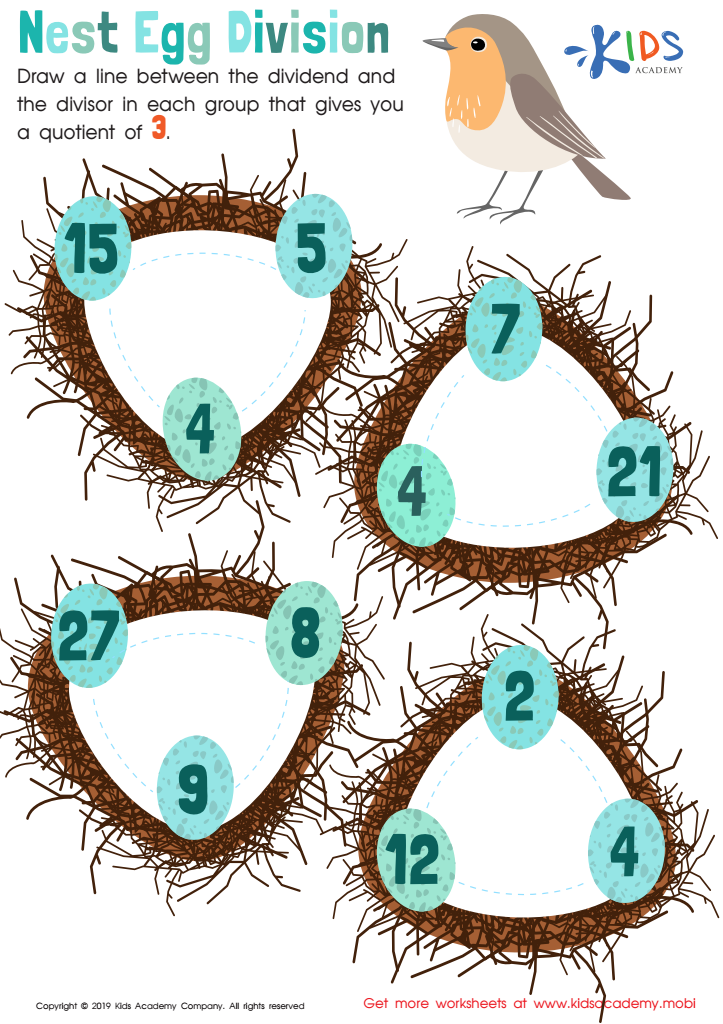
Nest Egg Division Worksheet

Nest Egg Division Worksheet

Kids become better at solving division problems when they can recognize patterns between numbers. This fun PDF worksheet gets them tracing lines to find dividends and divisors that give a quotient of 3. All the while, they'll think they're helping a bird friend out! Problem-solving and division skills are a byproduct of their 'good deed!'
Nest Egg Division Worksheet
Worksheet
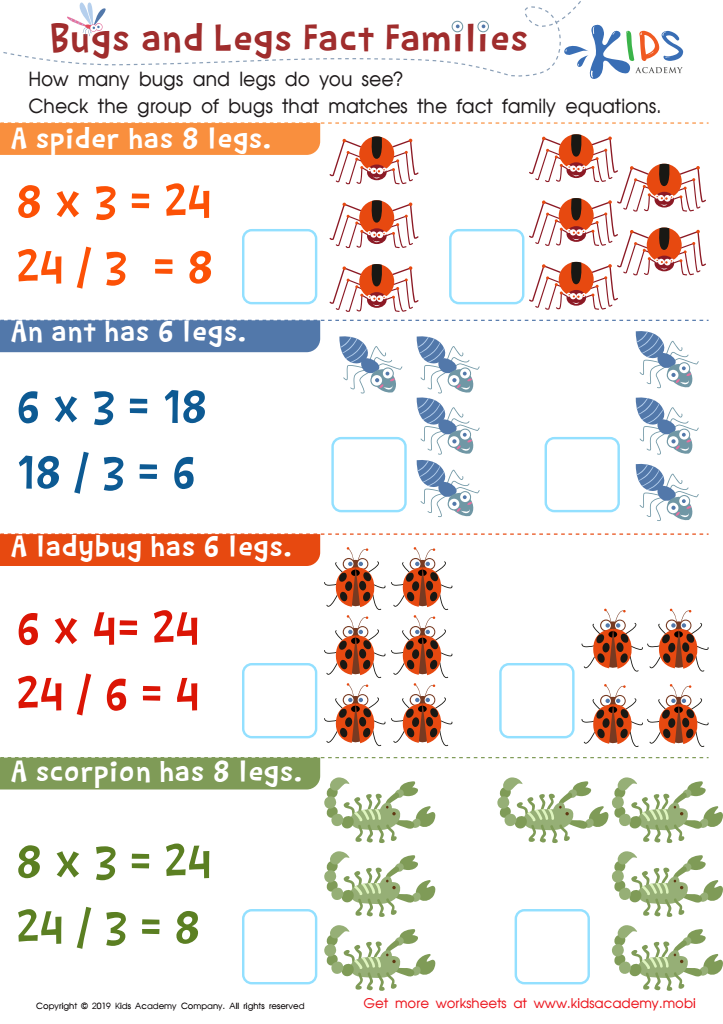
Bugs and Legs Fact Families Worksheet

Bugs and Legs Fact Families Worksheet

This free worksheet uses bugs and insects to help young math students learn about fact families and recognize patterns in multiplication and division. It's a fun and colorful way to gain automaticity and efficiency in computation skills, without even realizing it's math!
Bugs and Legs Fact Families Worksheet
Worksheet
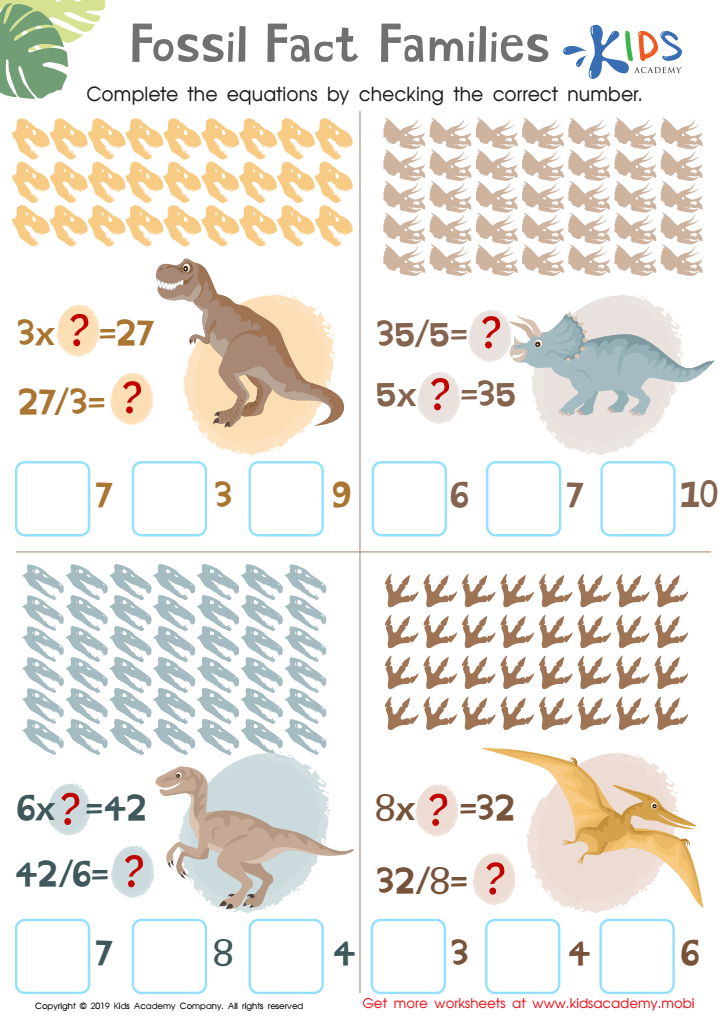
Fossil Fact Families Worksheet

Fossil Fact Families Worksheet

Kids love dinosaurs, so why not learn about fact families with some fun prehistoric friends? This PDF worksheet uses picture arrays to help kids understand the relationships between multipliers and dividends. It helps them build automaticity with multiplication facts so they can quickly solve division problems and see the relationships between the two fact families.
Fossil Fact Families Worksheet
Worksheet
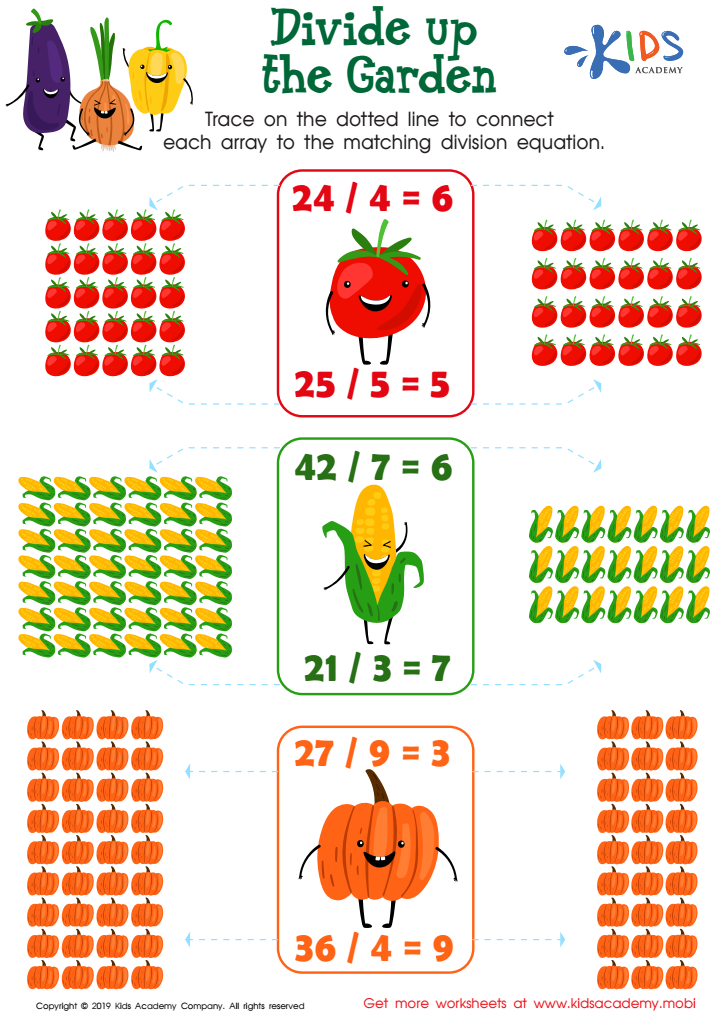
Divide up the Garden Worksheet

Divide up the Garden Worksheet

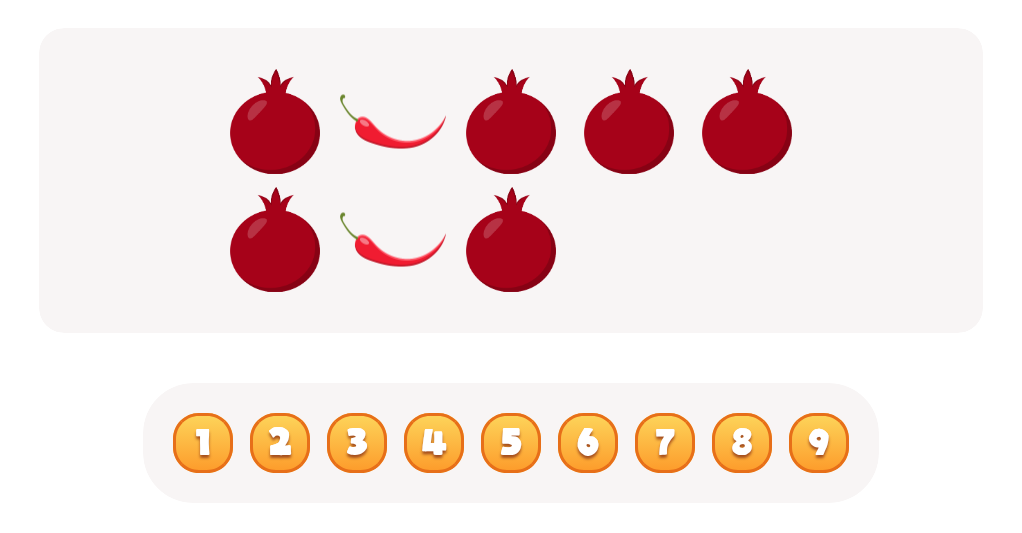
Dividing is simply grouping items into equal sets. This worksheet helps kids see division problems in array form. They'll match each equation with a picture group, using the lines provided. It's a great way for beginners to understand division more concretely.
Divide up the Garden Worksheet
Worksheet
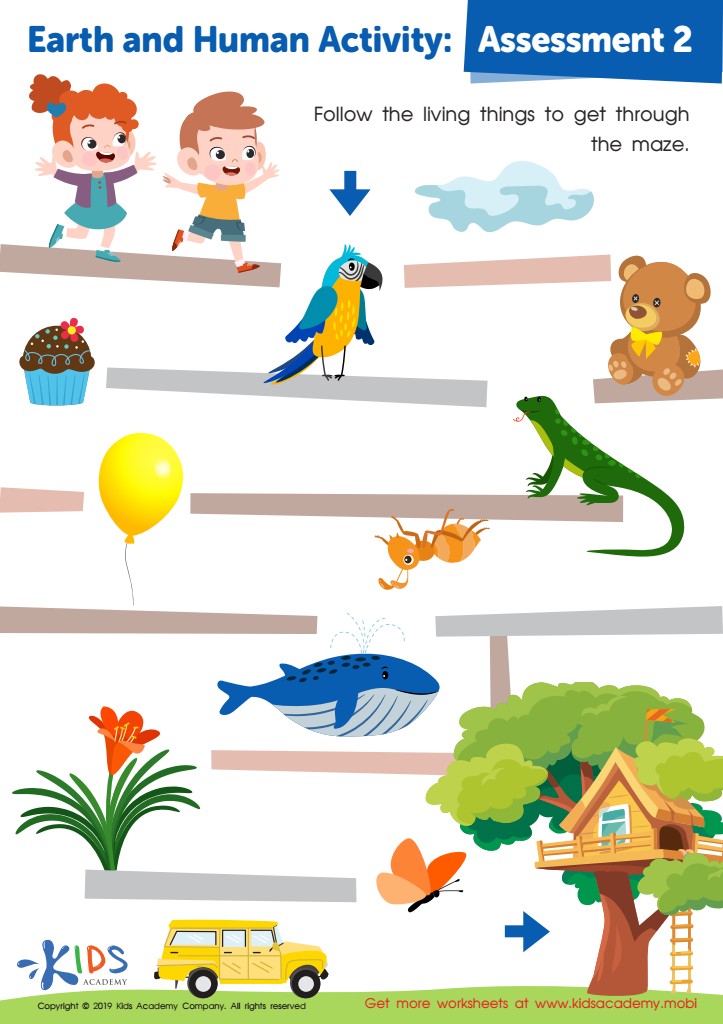
Earth and Human Activity: Assessment 2 Worksheet

Earth and Human Activity: Assessment 2 Worksheet

Earth is alive with birds, trees, insects, and animals. Explain to your kids that the environment on Earth supports life. Ask for examples, then use the worksheet pictures to help them identify living things and complete the maze.
Earth and Human Activity: Assessment 2 Worksheet
Worksheet
Earth and Human Activity: Assessment1 Worksheet

Earth and Human Activity: Assessment 1 Worksheet
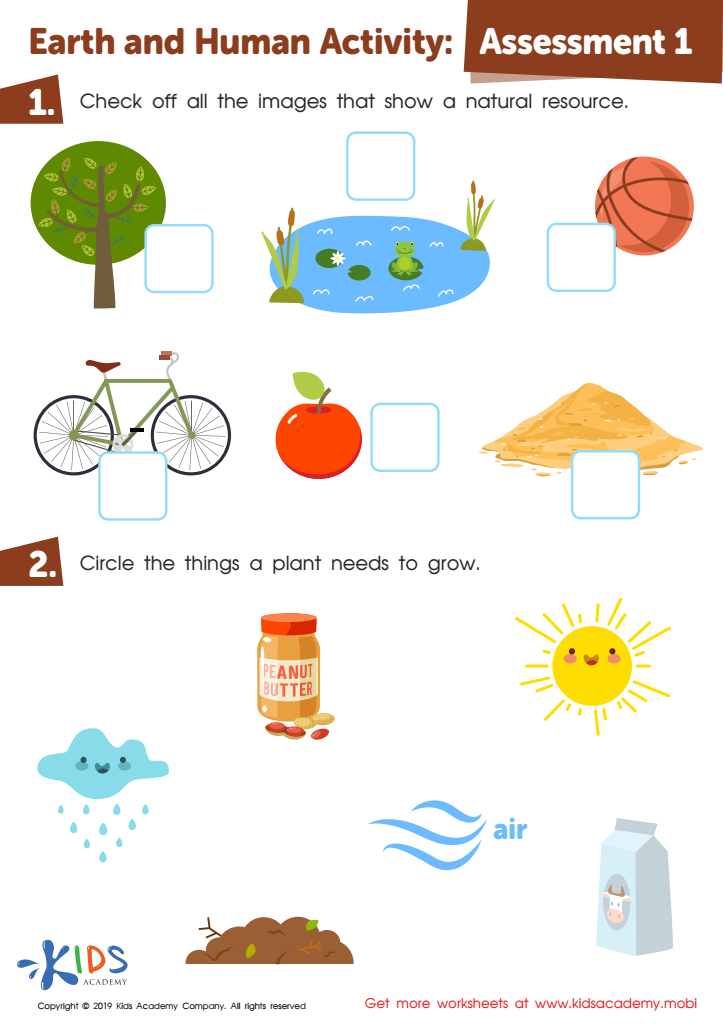
Natural resources are gifts from Mother Nature that exist without man-made intervention. We use them to make essential items we use daily. Ask your kids for examples and have them check off images of natural resources on this worksheet.
Earth and Human Activity: Assessment 1 Worksheet
Worksheet
Reduce, Reuse, Recycle, Rethink Worksheet


Reduce, Reuse, Recycle, Rethink Worksheet

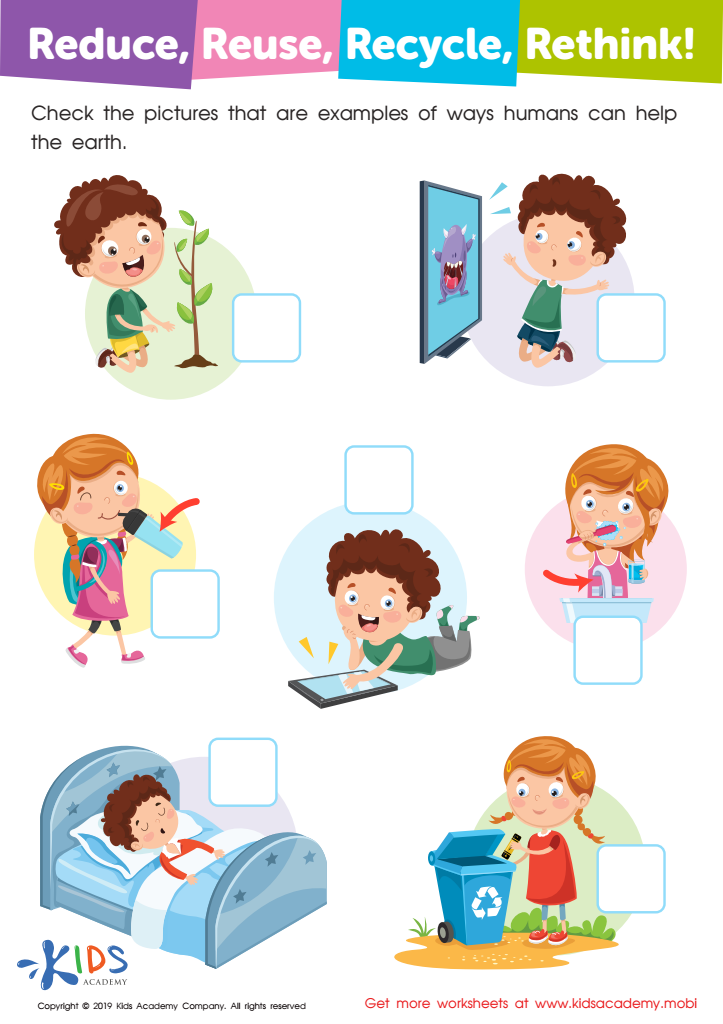
Recycling is a great way to reduce waste and help our planet — instead of throwing away a can of soda, recycle it! Look at the pictures in the worksheet — what are the kids doing? They're learning about ways to help the environment. Check the pictures for examples of how to help the earth.
Reduce, Reuse, Recycle, Rethink Worksheet

Worksheet


Understanding plants and animals is crucial for children ages 3-9 for several reasons. Firstly, it fosters curiosity and promotes a love for nature. Engaging with the natural world during these formative years enhances cognitive development, as children learn to classify, observe, and ask questions about living things. This exploration supports key educational skills like critical thinking and problem-solving.

Moreover, learning about plants and animals instills a sense of responsibility and empathy. Children begin to grasp the importance of caring for living things, which can translate to environmental stewardship as they grow. Parents and teachers play an essential role in nurturing these values, encouraging children to connect with local ecosystems, whether that’s through gardening, visiting parks, or observing wildlife.

Additionally, knowledge about plants and animals can be interwoven with subjects such as science, art, and even literacy, making it a versatile tool for holistic education. Engaging with nature also supports physical activity and well-being, vital for this age group. Ultimately, caring for plants and animals cultivates a foundation of knowledge, respect, and appreciation for the environment, which is essential for fostering informed and responsible future generations.