Filters

1537 filtered results

Clear all filters
Favorites
With answer key
Interactive

1537 filtered results

Difficulty Level

Grade


Check out this FREE Trial Lesson for age 6-8!

Light Sources

Favorites
With answer key
Interactive
  • 6-8
  • Interactive
  • Normal
Transparent, Translucent, or Opaque Worksheet

Transparent, Translucent, or Opaque Worksheet

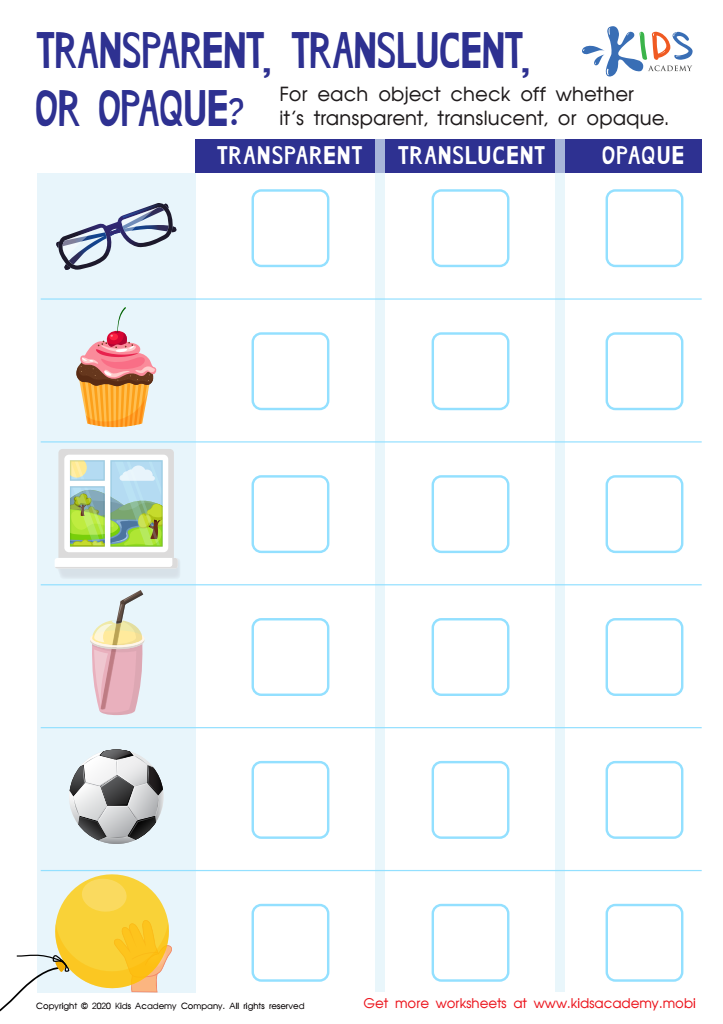
Remind students that transparent objects allow us to see through them, translucent objects let some light pass through, and opaque objects block all light. Have them look at pictures and decide if each object is transparent, translucent, or opaque.
Transparent, Translucent, or Opaque Worksheet
Worksheet
How Light Travels Worksheet

How Light Travels Worksheet

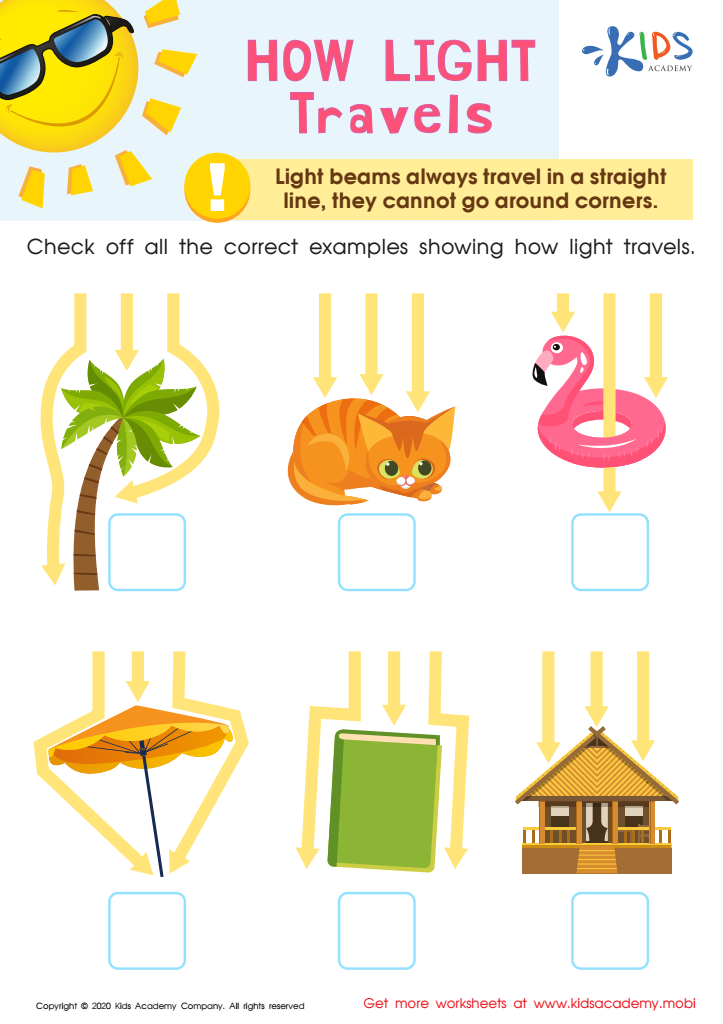
This colorful worksheet teaches students about light travel: beams move in a straight line and can't go around corners. Students view pictures and check off all the correct examples.
How Light Travels Worksheet
Worksheet
Light Reflections Worksheet

Light Reflections Worksheet

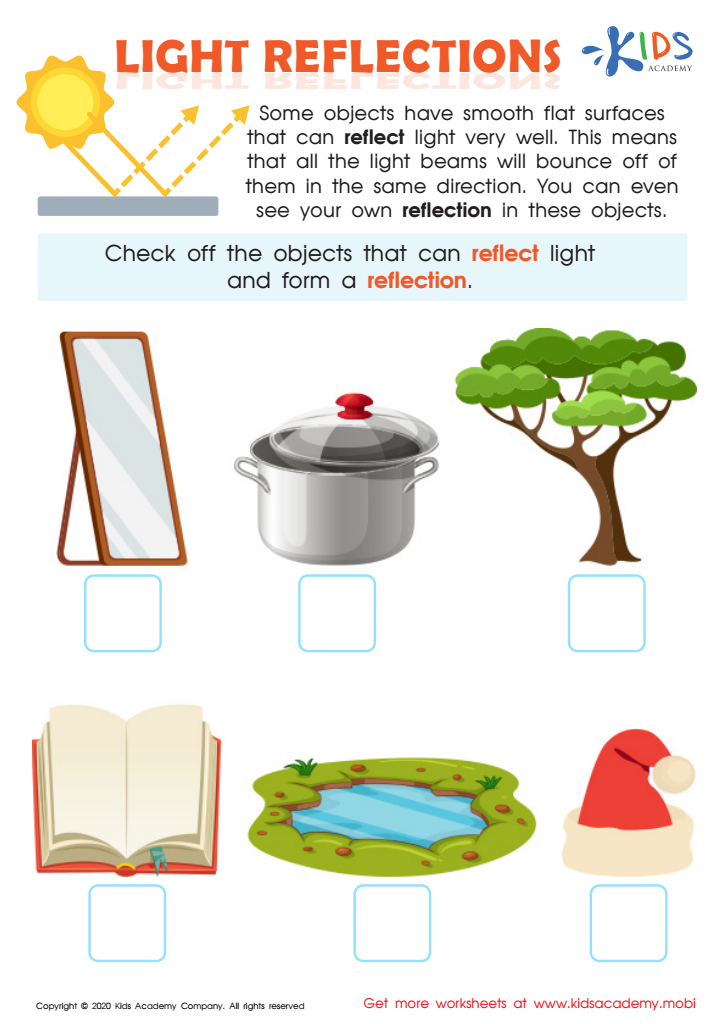
Teach your students that some objects reflect light and form a reflection. Ask them to name examples, then look at pictures and check off which objects can do this. Have them note how the light bounces off these surfaces, and observe their own reflections.
Light Reflections Worksheet
Worksheet
Which Is Brighter? Worksheet

Which Is Brighter? Worksheet

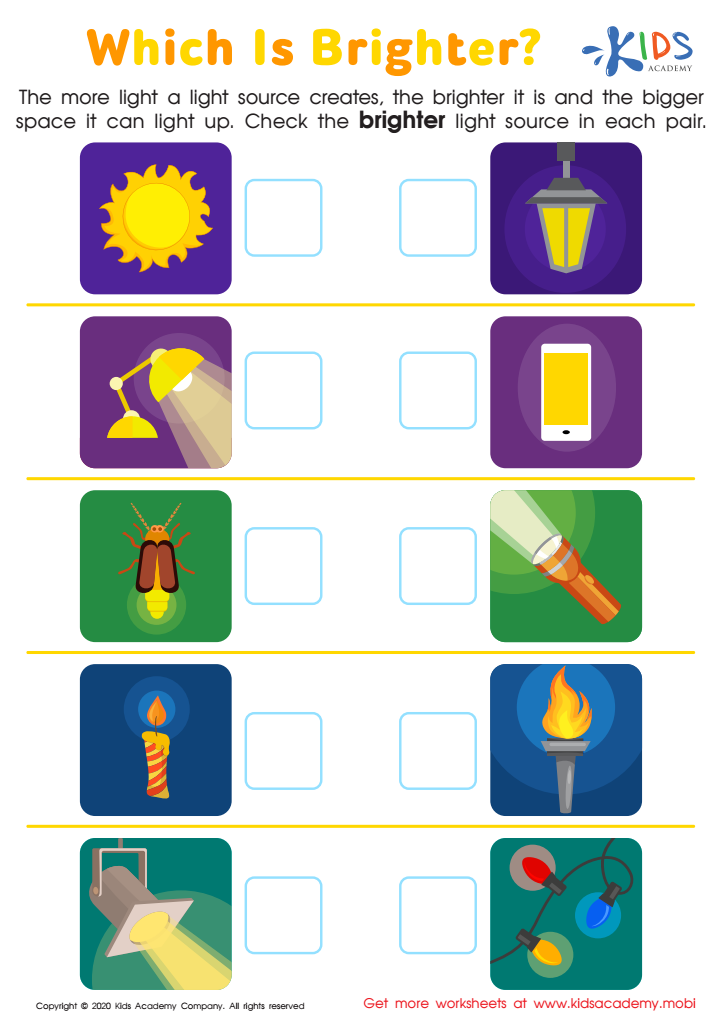
Before the exercise, ask students to recall sources of light. Use this worksheet to explain that the brighter the light source, the more space it can light up. Identify the different light sources in the pictures, then check the brighter light source in each pair. The biggest natural source of light is the sun.
Which Is Brighter? Worksheet
Worksheet
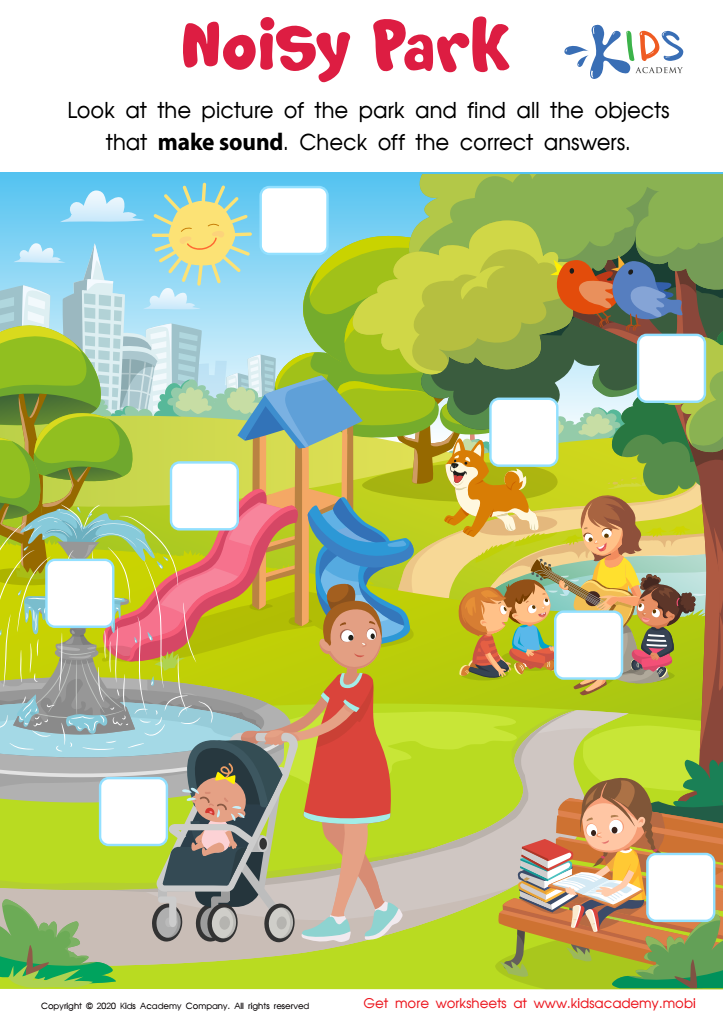
Noisy Park Worksheet

Noisy Park Worksheet

Get your students ready for the exercise by asking them to name things they see and do at the park. Then, have them identify the things in the picture, look for objects that make sounds, and verify the answers.
Noisy Park Worksheet
Worksheet
How We Hear Sounds Worksheet

How We Hear Sounds Worksheet

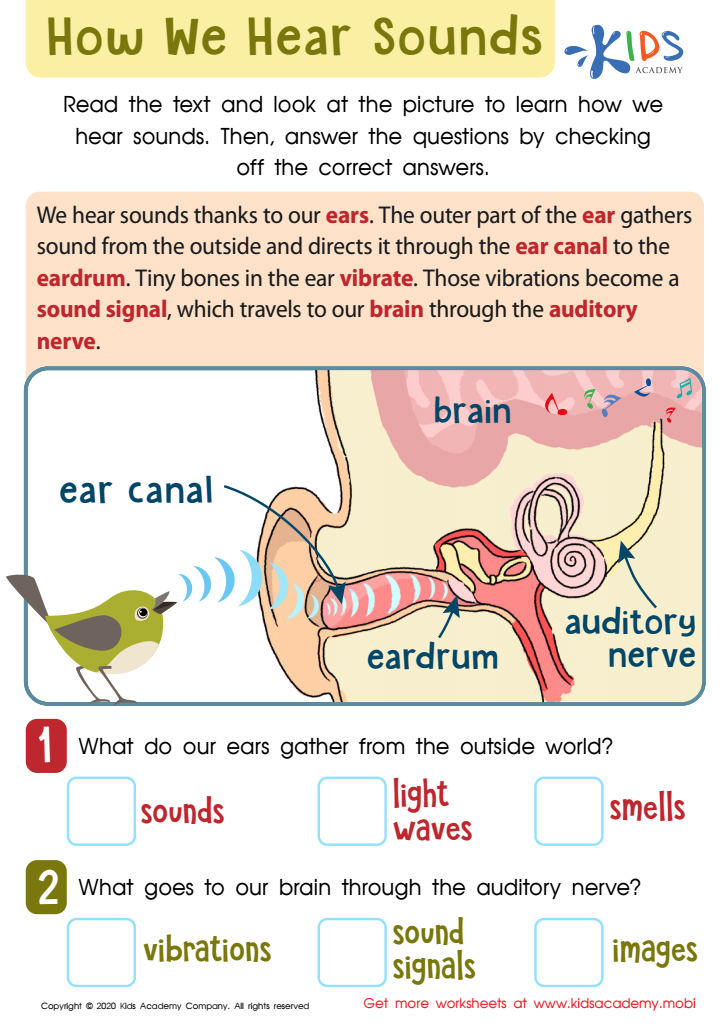
Before beginning this worksheet, make sure your students are aware of the five senses: sight, taste, touch, smell, and hearing. This worksheet will help them explore how we hear sounds with our ears. Read or listen to the text, study the images, and answer the questions. Check off the correct answers.
How We Hear Sounds Worksheet
Worksheet
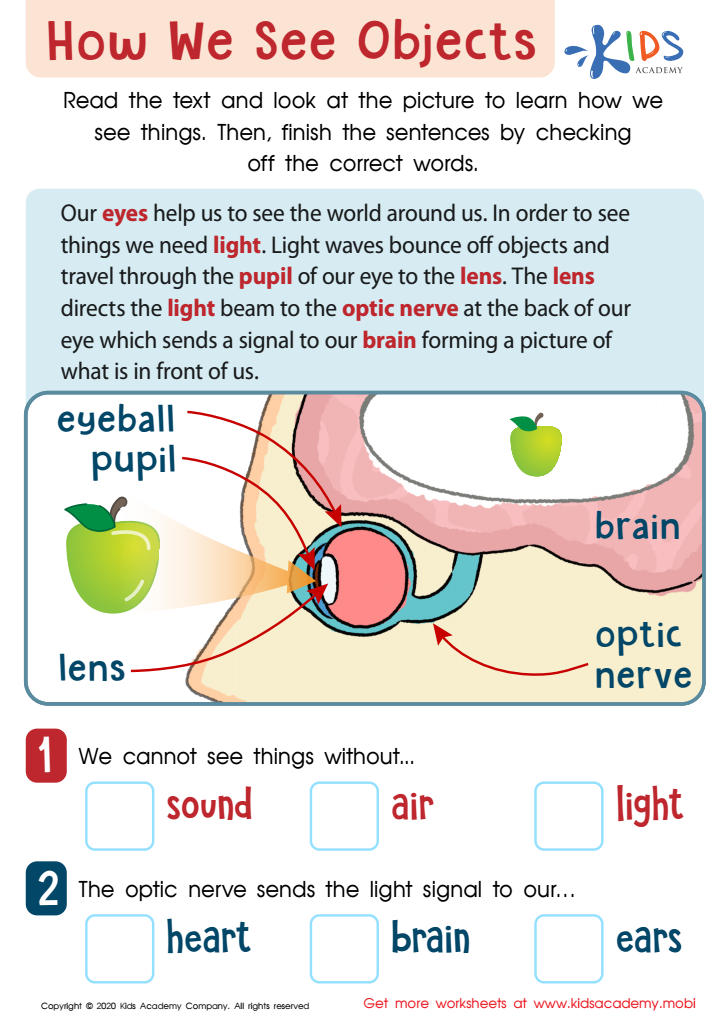
How We See Objects Worksheet

How We See Objects Worksheet

Remind your students of our five senses! This worksheet will teach them more about sight: read/listen to the text, look at pictures, then help them complete sentences. Check off the right words!
How We See Objects Worksheet
Worksheet
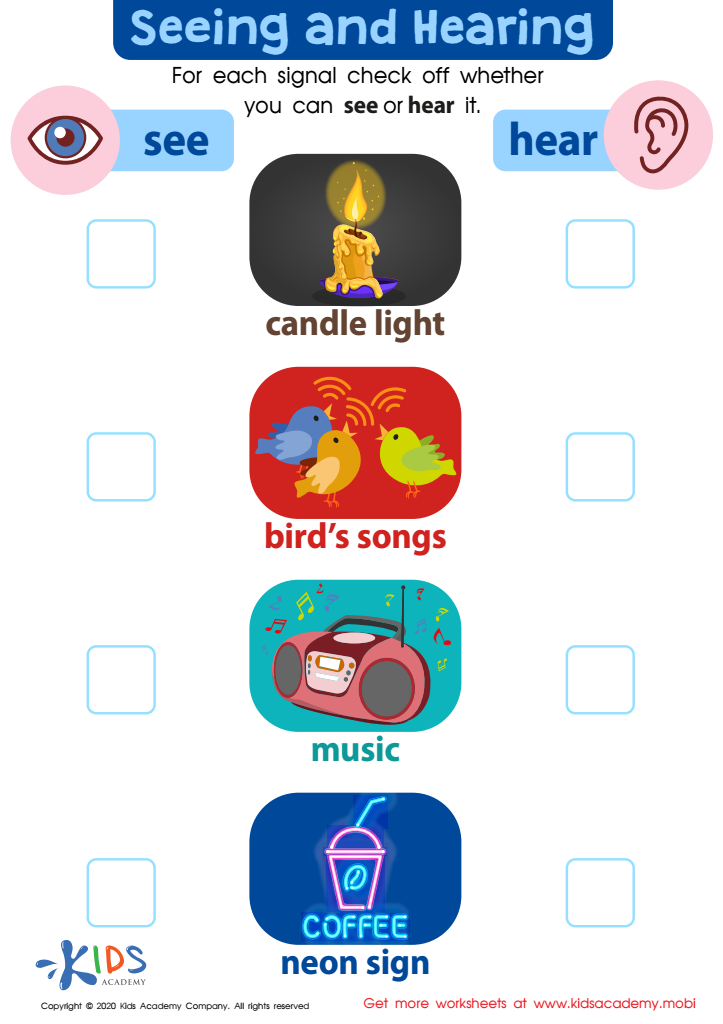
Seeing and Hearing Worksheet

Seeing and Hearing Worksheet

Before beginning this worksheet, ensure your students know that we have five senses: eyes (seeing), tongue (tasting), skin (feeling), nose (smelling), and ears (hearing). This worksheet will explore seeing and hearing - ask your students what they can see/hear in the picture and get them to check it off.
Seeing and Hearing Worksheet
Worksheet
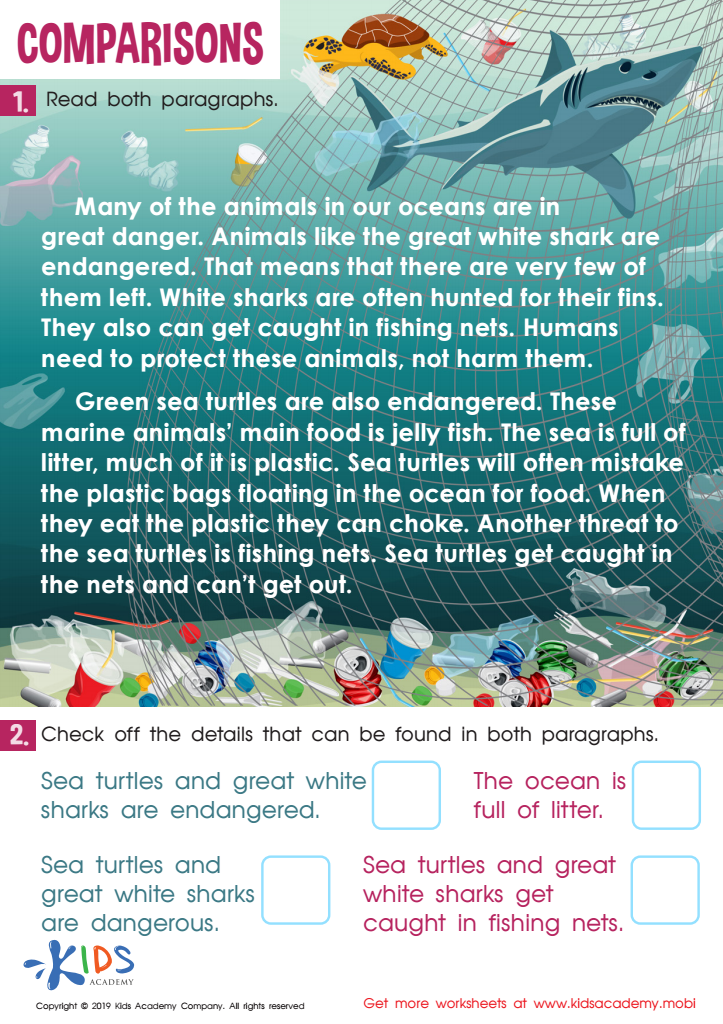
Comparisons Worksheet

Comparisons Worksheet

Compare two things easily: place them side by side and note the differences. Use this passage to help kids practice reading and comprehension, and teach them about the ocean and sea creatures. Read both paragraphs, then check off details found in both. (80 words)
Comparisons Worksheet
Worksheet
Compare Two Sources Worksheet

Compare Two Sources Worksheet

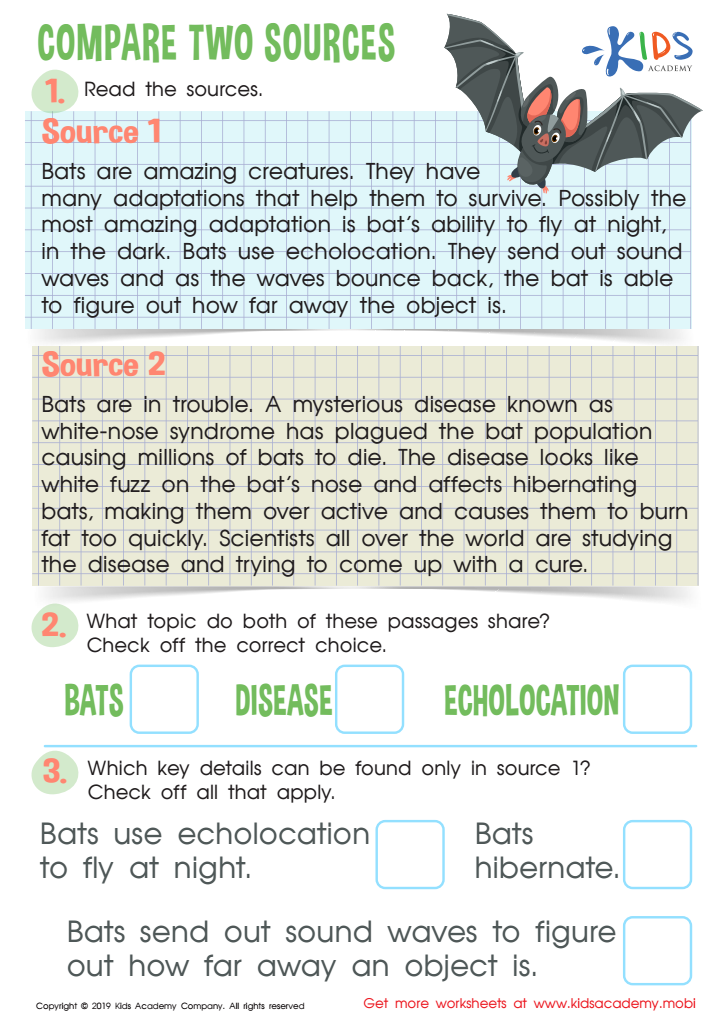
Reading exposes us to new words, spelling, and info about different topics. Kids can practice their reading skills, and learn about bats, with this worksheet. Read the two sources in the picture, then help your kids answer the questions at the bottom.
Compare Two Sources Worksheet
Worksheet
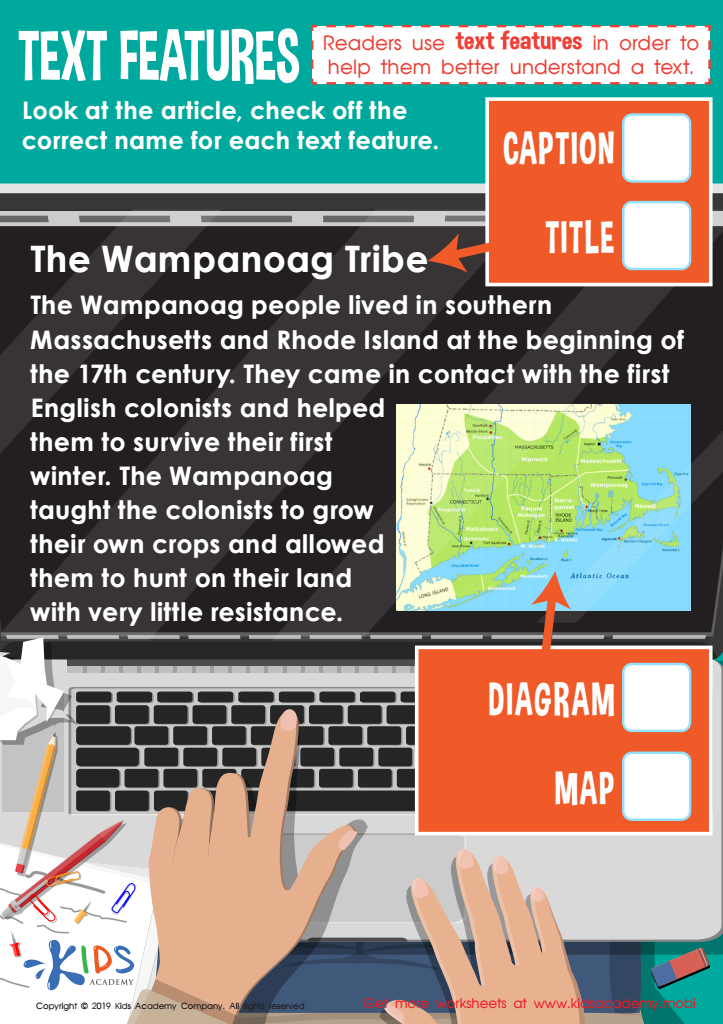
Text Features Worksheet

Text Features Worksheet

Encourage your child to read- it'll pay off! Reading teaches us new words, spelling, and information on various topics. Plus, readers use text features- such as tables, indexes, and diagrams- to help comprehend. Read the worksheet with your child and help them identify and understand the different features.
Text Features Worksheet
Worksheet
Captions and Images Worksheet

Captions and Images Worksheet

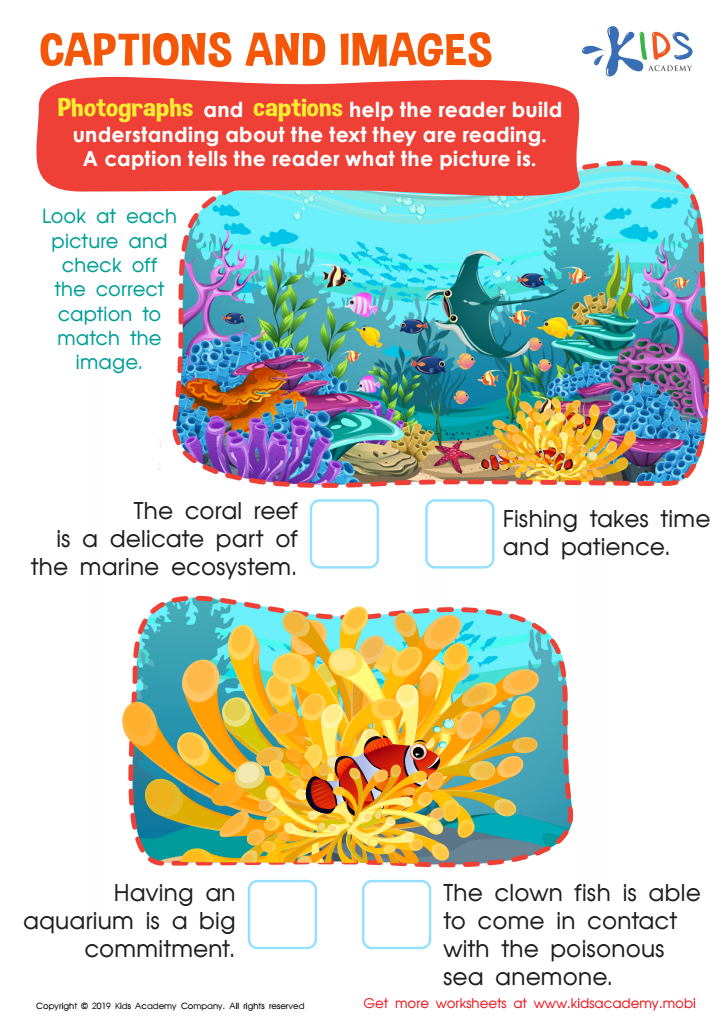
Pictures and captions can aid understanding. That's why many children's books have them. Have your kids look at the pictures in the worksheet, then help them match the right caption to each image. This will help them understand the story.
Captions and Images Worksheet
Worksheet
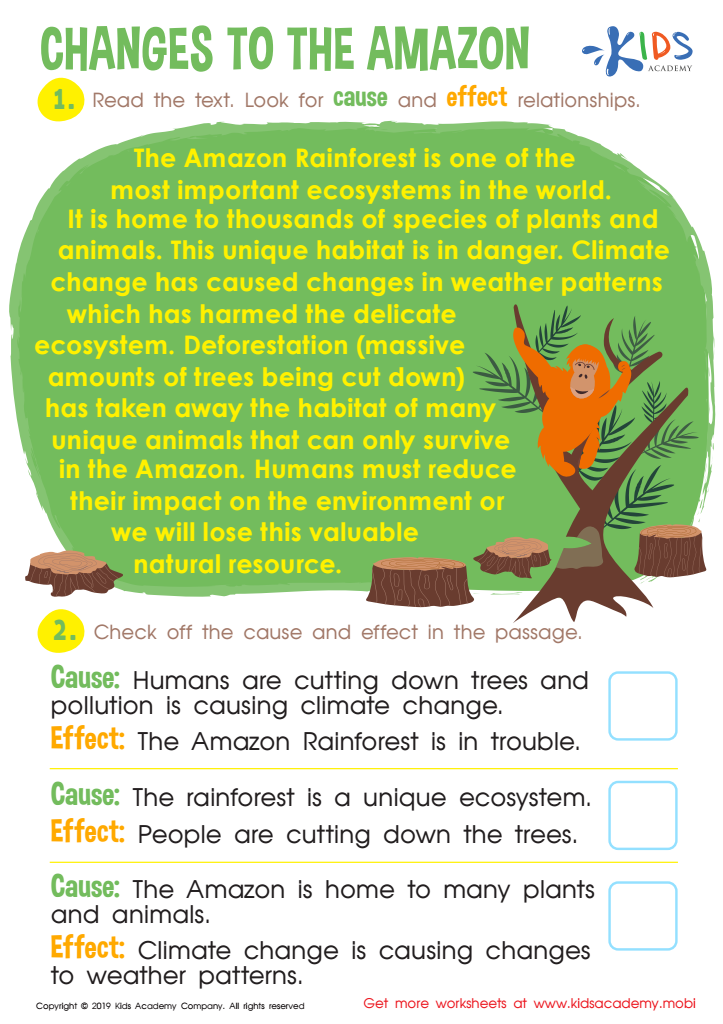
Changes to the Amazon Worksheet

Changes to the Amazon Worksheet

If your kids are interested in protecting the planet, they should know about the Amazon. Use this worksheet to teach them about it. Read it with them and help them find the cause and effect relationships, then check them off. It explains the situation in the Amazon, why it's happening and the results.
Changes to the Amazon Worksheet
Worksheet
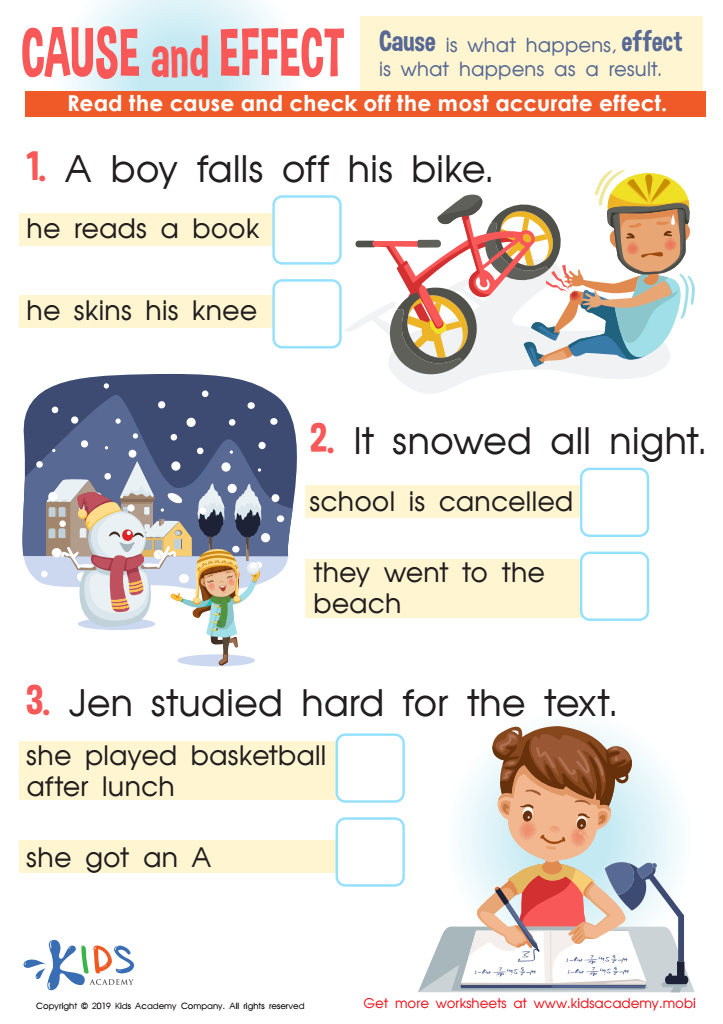
Cause And Effect Worksheet

Cause And Effect Worksheet

Help your kids understand cause and effect with this worksheet. Explain that cause is what happens, and effect is the result of an action or event. Ask if they understand, then direct them to read the cause in the pictures and choose the most accurate effect from the options.
Cause And Effect Worksheet
Worksheet
Sequencential Order Worksheet

Sequencential Order Worksheet

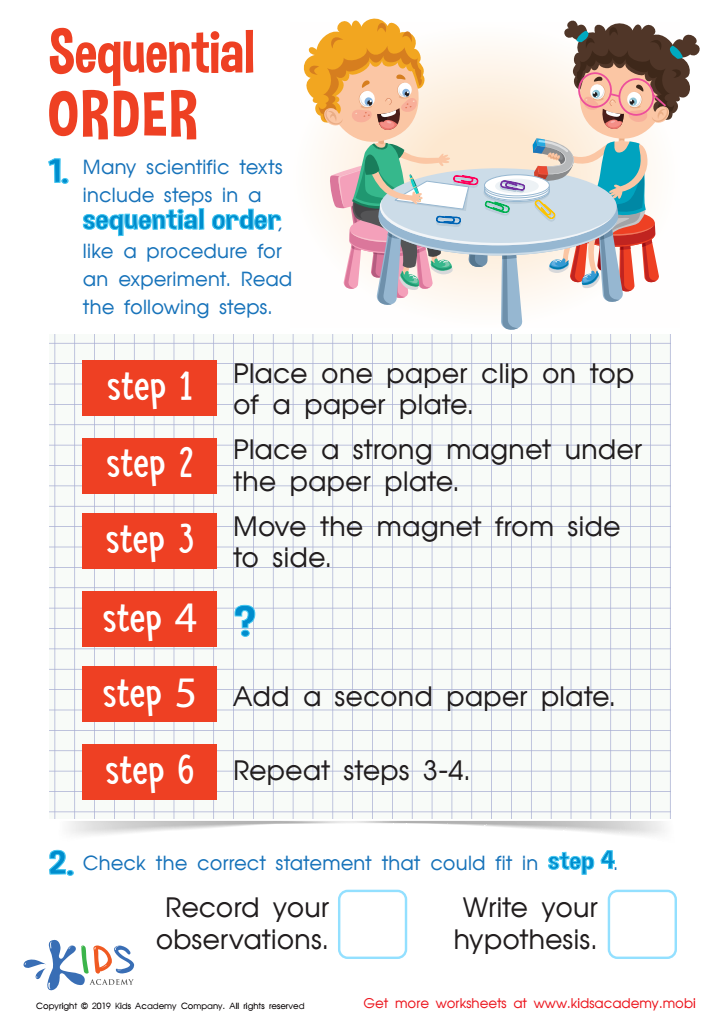
This worksheet is perfect for science-lovers: it'll test how good your child is at following instructions by asking them to complete the steps in the right order. Have them read the steps and then choose the statements that correctly fill in the blanks. It's more than just fun experiments and results - science also requires careful procedure.
Sequencential Order Worksheet
Worksheet
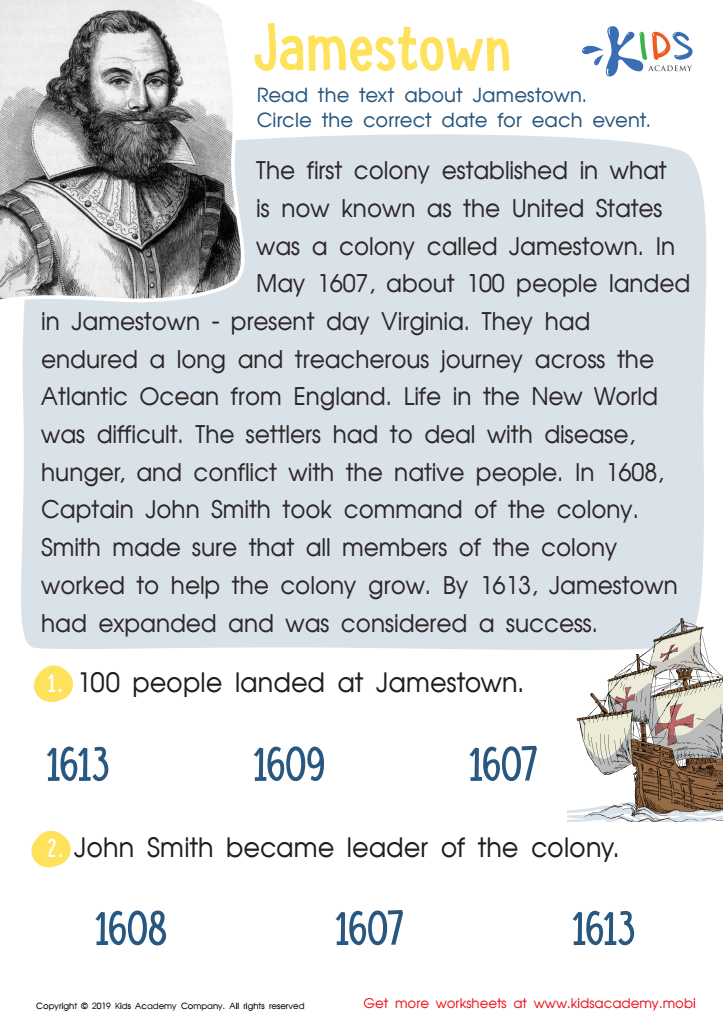
Jamestown Worksheet
Jamestown Worksheet

Jamestown Worksheet

Help your kids build vocabulary by reading simple texts and stories to them. This exercise helps them practice reading and grammar, and increases their knowledge of a topic. In this worksheet, kids learn about Jamestown: read text aloud and help them circle the correct date for each event.
Jamestown Worksheet
Worksheet
Goods and Services Worksheet

Goods and Services Worksheet

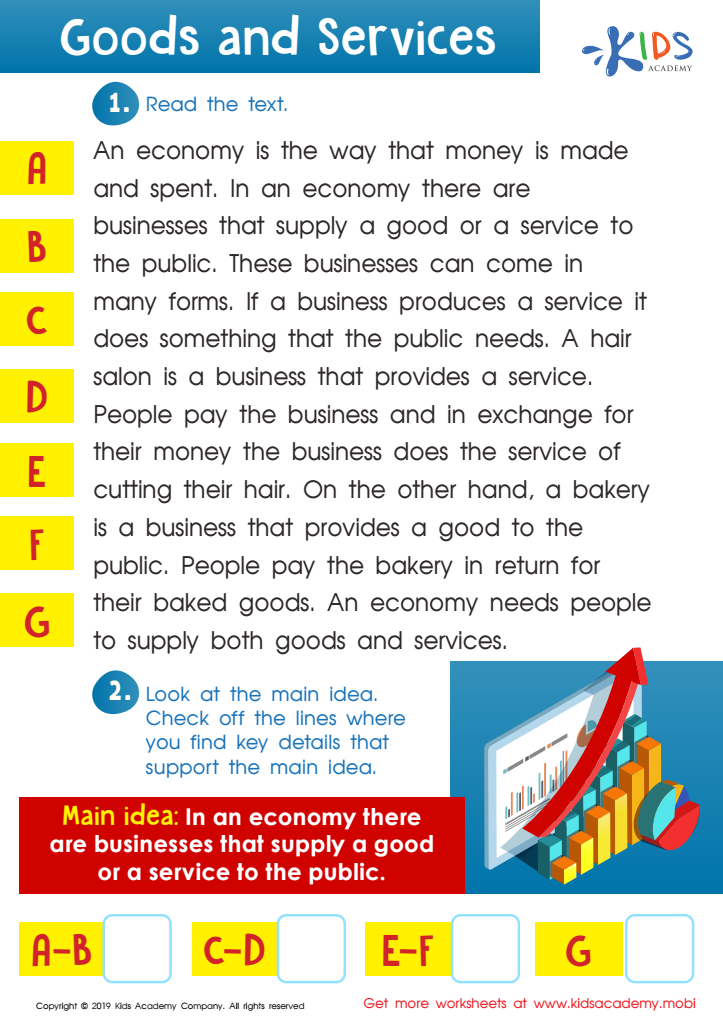
Teach your kids about the economy and businesses with this worksheet. Ask them if they know what goods and services are. After they complete the worksheet, they'll have a better understanding. Read the text to them and guide them step-by-step through the instructions. Help them learn!
Goods and Services Worksheet
Worksheet
Branches of the Government Worksheet

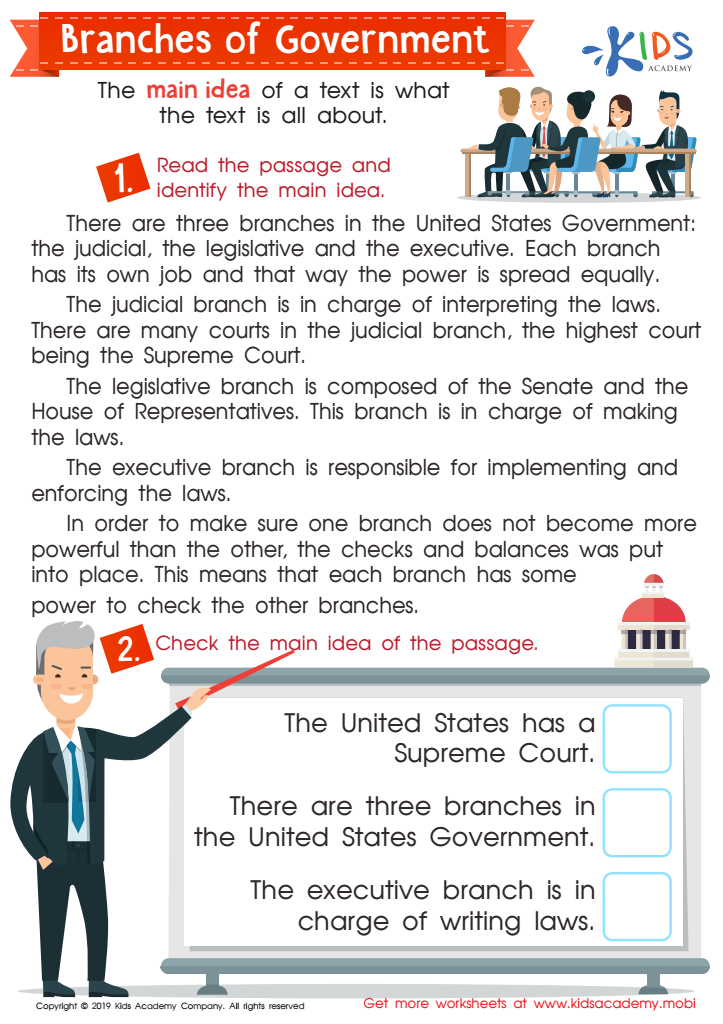
Branches of the Government Worksheet

The government is a group of people who lead countries or communities. It includes three branches: judicial, legislative, and executive. To help kids learn about these branches, read this passage to them and discuss the main idea.
Branches of the Government Worksheet
Worksheet
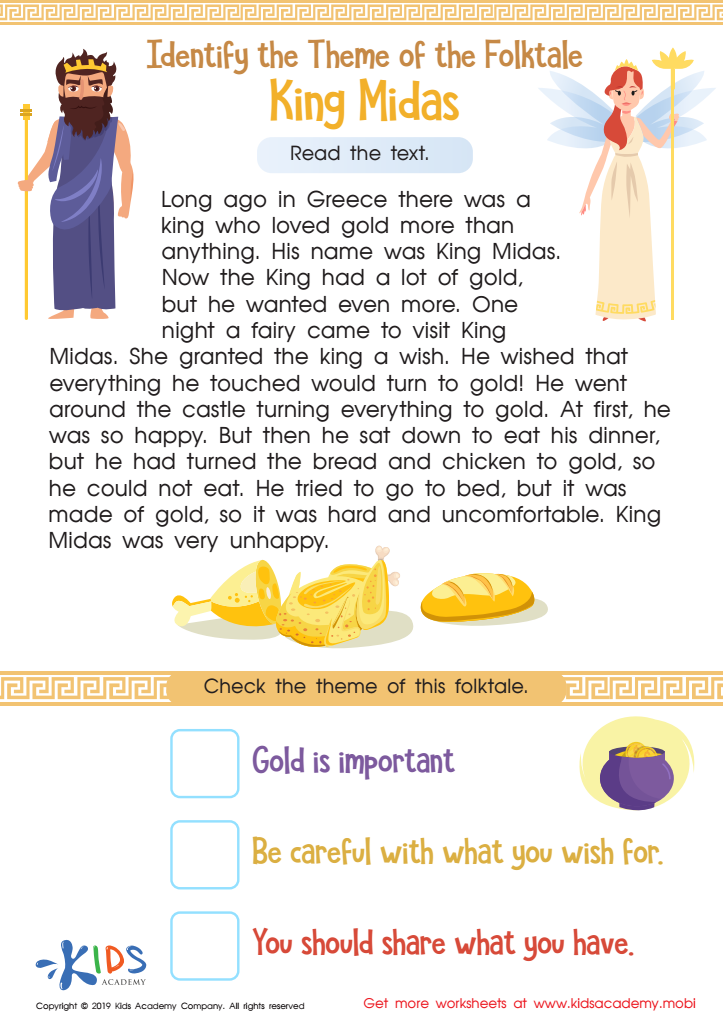
King Midas Worksheet

King Midas Worksheet

Read the ancient Greek history of King Midas to your kids. If they're into Greek gods and mythology, they'll be excited to complete the exercise. Read the text carefully, and if needed, twice. Help your kids locate the story's theme at the bottom of the page. 80 words.
King Midas Worksheet
Worksheet
The Boy Who Cried Wolf Part 2 Worksheet

The Boy Who Cried Wolf Part 2 Worksheet

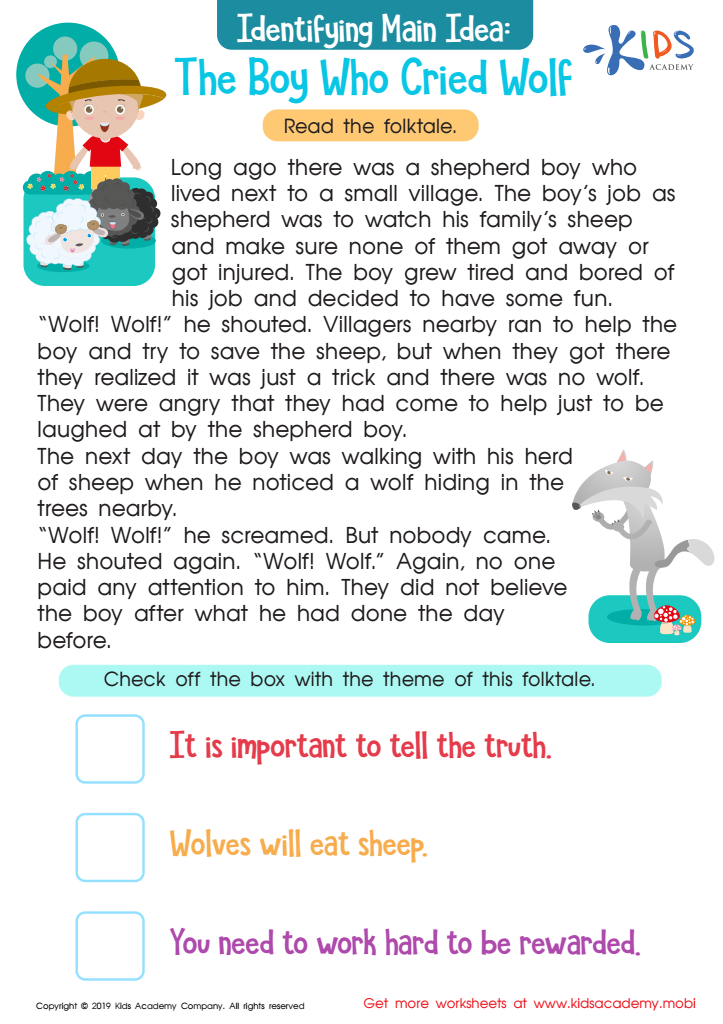
Kids love story time - no doubt they know their favorites! This worksheet tells a story with a theme or main idea. Read it carefully with your kids and ensure they understand every word. Then, help them answer the simple questions at the bottom of the page.
The Boy Who Cried Wolf Part 2 Worksheet
Worksheet
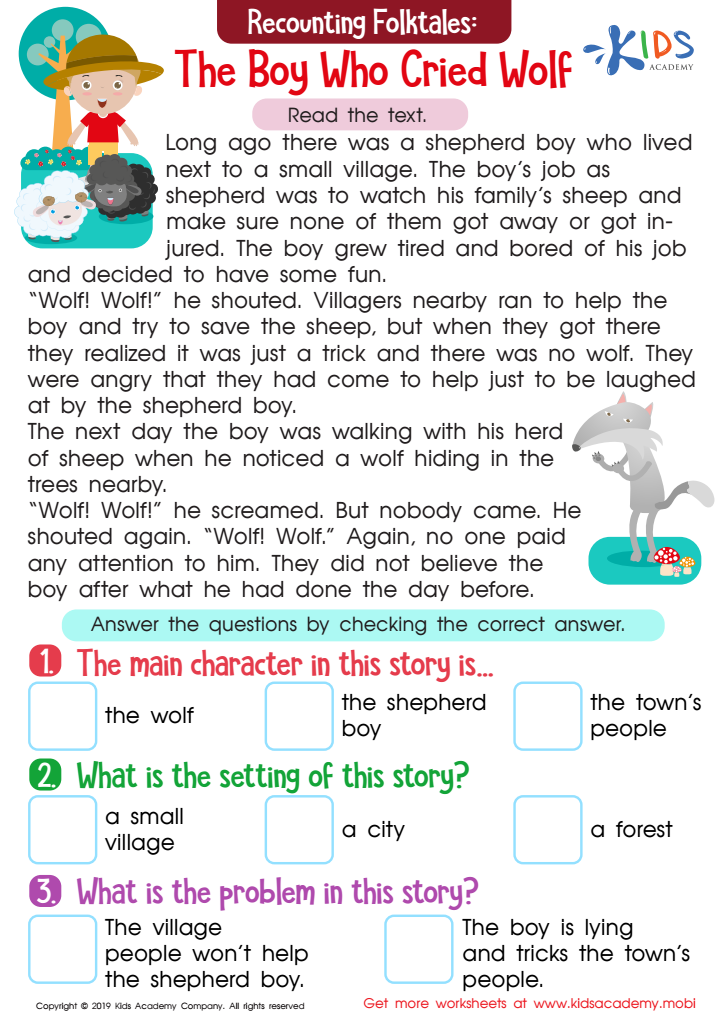
The Boy Who Cried Wolf Part 1 Worksheet

The Boy Who Cried Wolf Part 1 Worksheet

Storytime can be your kid's favorite part of the day. Ask them what their favorite stories are, then read the text in the printout. Read along with them, making sure they understand each word. At the end, go over the questions and have them check the correct answers.
The Boy Who Cried Wolf Part 1 Worksheet
Worksheet
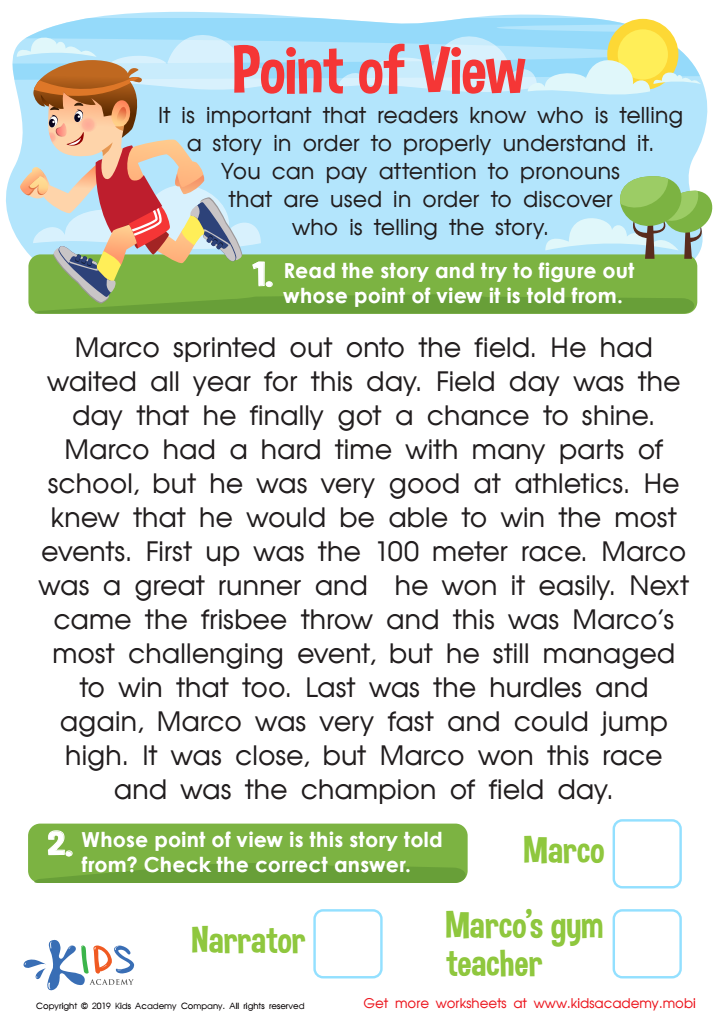
Point of View Worksheet

Point of View Worksheet

Readers need to identify the storyteller to properly understand and relate to the story. Help your kids identify the point of view by noticing the pronouns used. Read the story in this worksheet with them and guide them to determine the story's point of view.
Point of View Worksheet
Worksheet
First and Third Person Point of View Worksheet

First and Third Person Point of View Worksheet

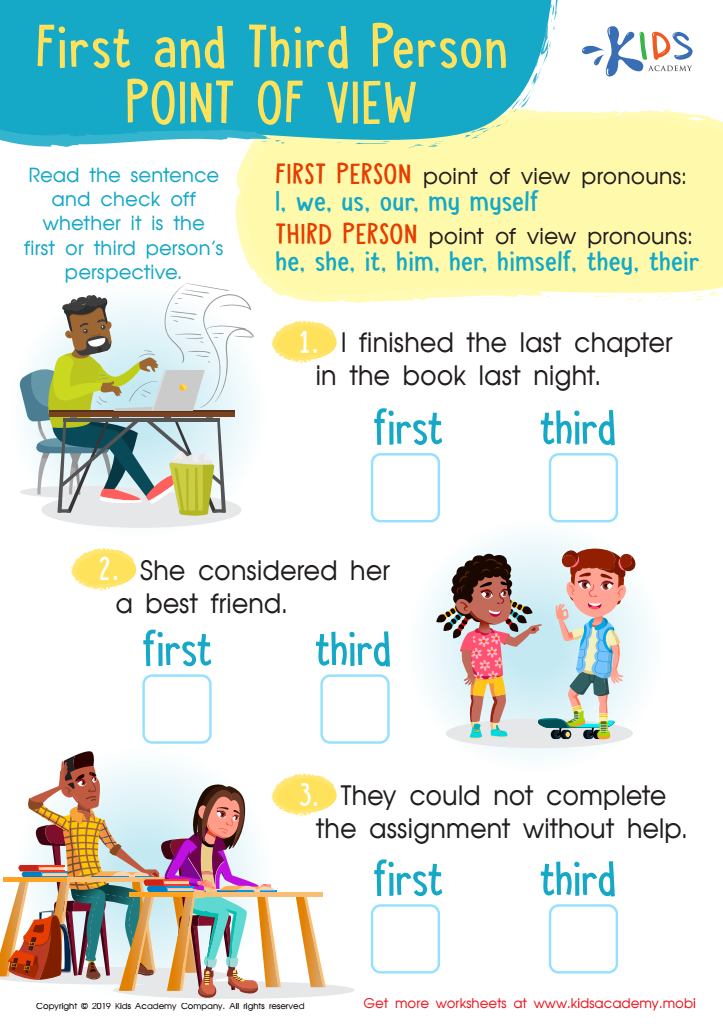
Remind kids what a point of view is in a story. First person is from the character's perspective; third person is from the narrator's. Ask students to check if sentences in the exercise are in first or third person point of view.
First and Third Person Point of View Worksheet
Worksheet
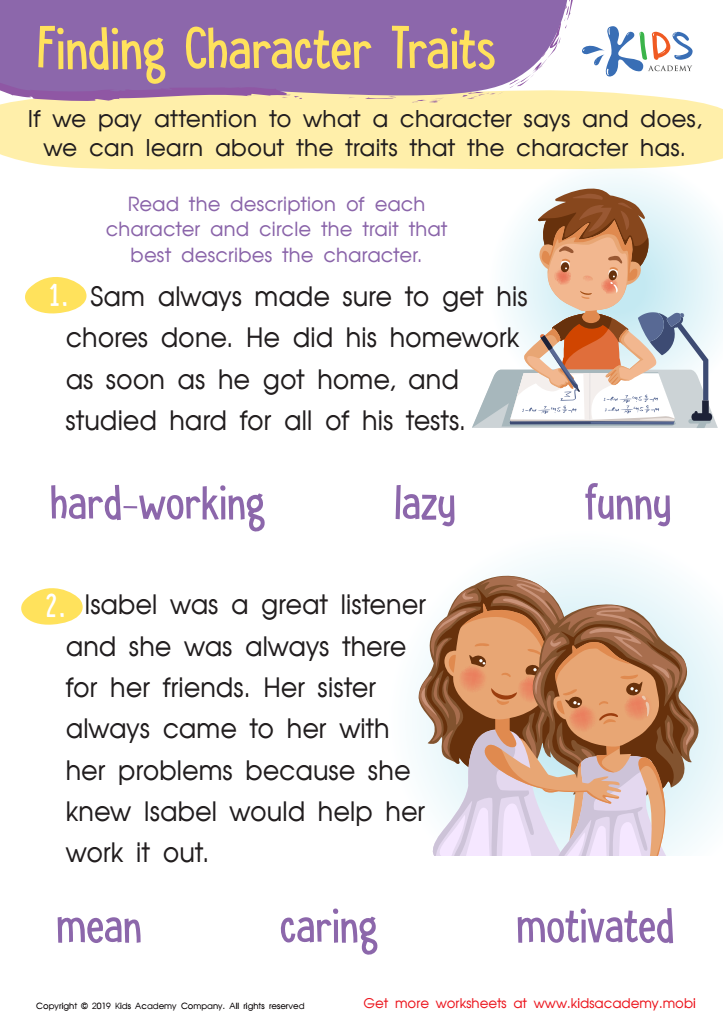
Finding Character Traits Worksheet


Finding Character Traits Worksheet

Before you start, make sure your kids know the difference between a character trait and a feeling. Traits are part of a character's entire personality and can be inferred from what they say and do in a story. Read the character descriptions on the worksheet and help your kids circle the best trait for each.
Finding Character Traits Worksheet

Worksheet


Parents and teachers should care about what is considered "normal" development for children ages 6-8, as this stage is crucial for emotional, cognitive, and social growth. During these formative years, children begin to develop a stronger sense of self and establish peer relationships, which influences their self-esteem and interpersonal skills. Understanding normal development helps caregivers identify milestones in areas such as language skills, motor coordination, and emotional regulation. This knowledge aids in recognizing when a child may need additional support or intervention, ensuring that they grow in a nurturing environment.

Moreover, this age is marked by increased curiosity and learning engagement, so it's essential to provide appropriate educational resources and encourage an inquiry-based approach to learning. Parents and teachers who are aware of normal behaviors and challenges can create supportive settings, promote positive behaviors, and foster resilience. Understanding normal development also bridges communication with fellow educators and therapists, enhancing the child's overall success. When adults are informed about typical growth patterns, they better equip children to thrive academically, emotionally, and socially, ultimately setting the foundation for a well-rounded adulthood. Investing in this understanding enriches not only the child's developmental trajectory but also strengthens the parent-teacher partnership.