Normal Chess Worksheets for Ages 7-8 - Page 2
47 filtered results
-
From - To
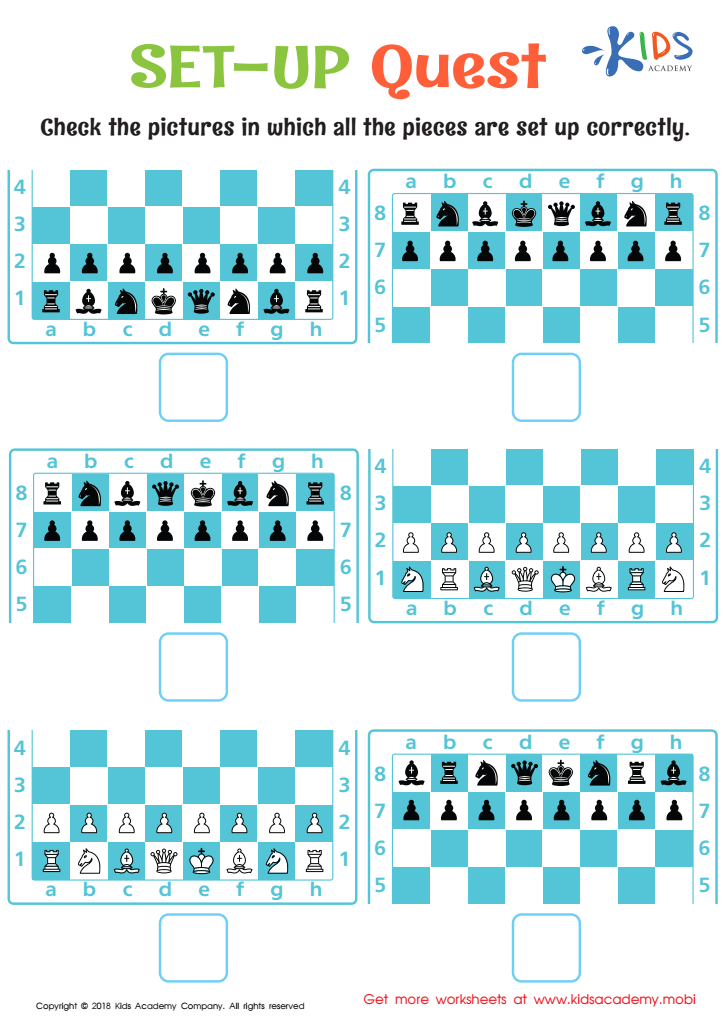
Set-up Quest Worksheet
 Assign to My Students
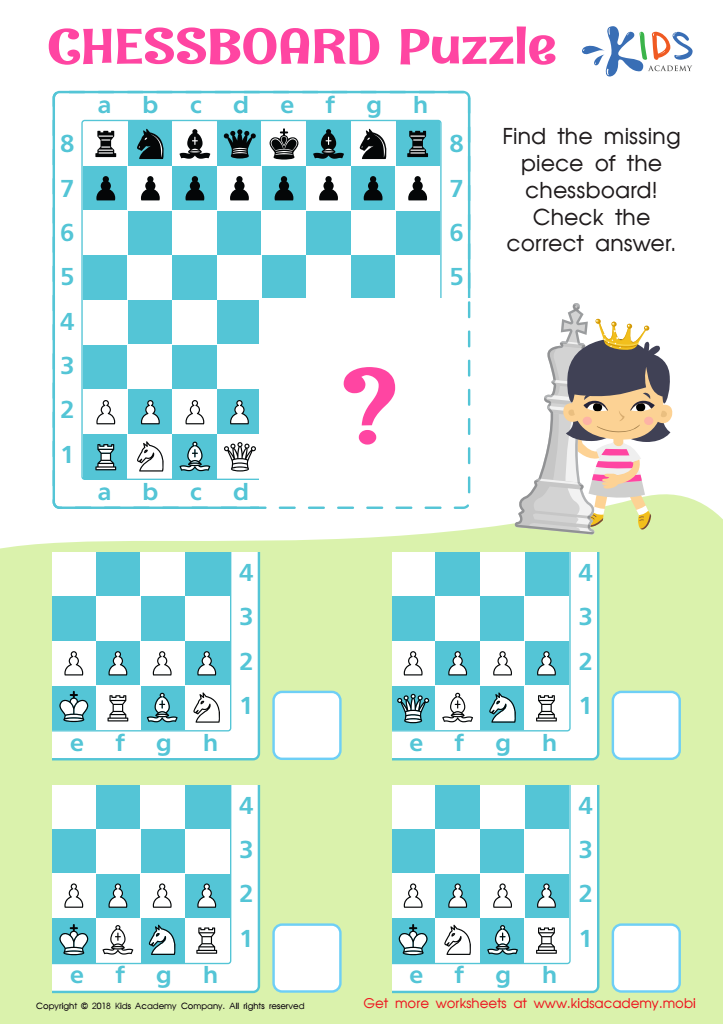
Chessboard Puzzle Worksheet
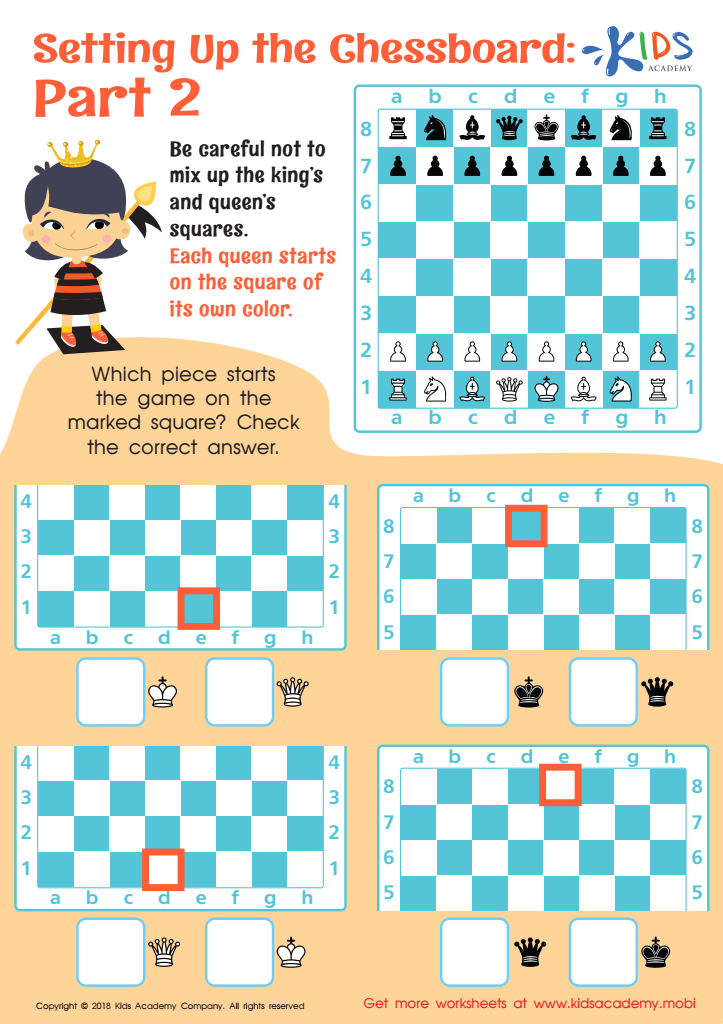
Setting up the Chessboard: Part 2 Worksheet
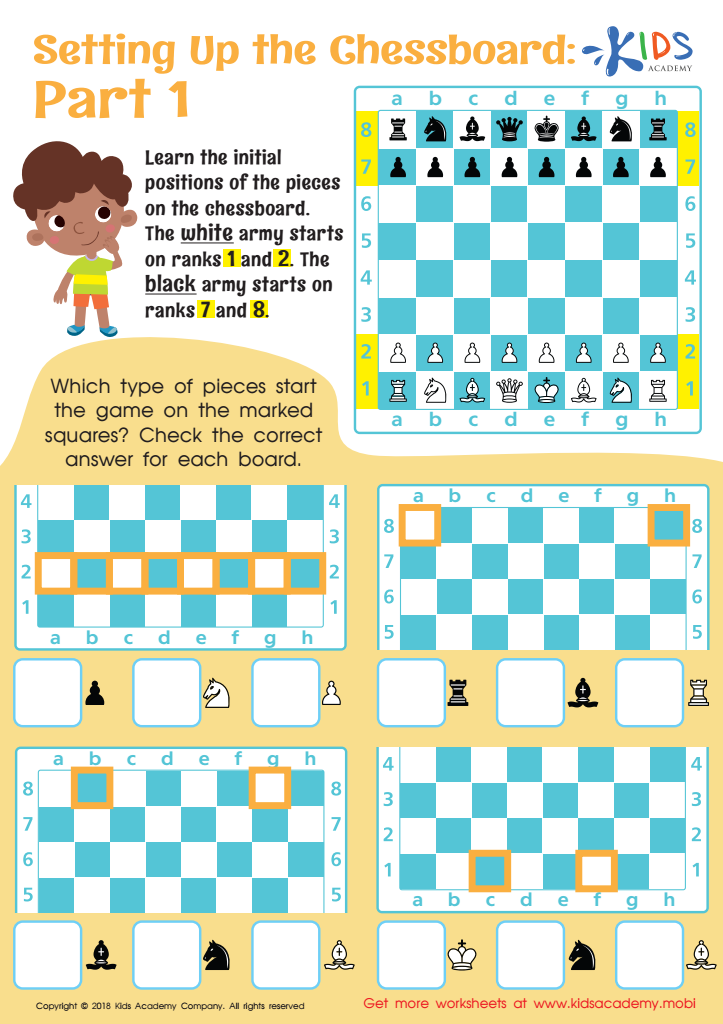
Setting up the Chessboard: Part 1 Worksheet
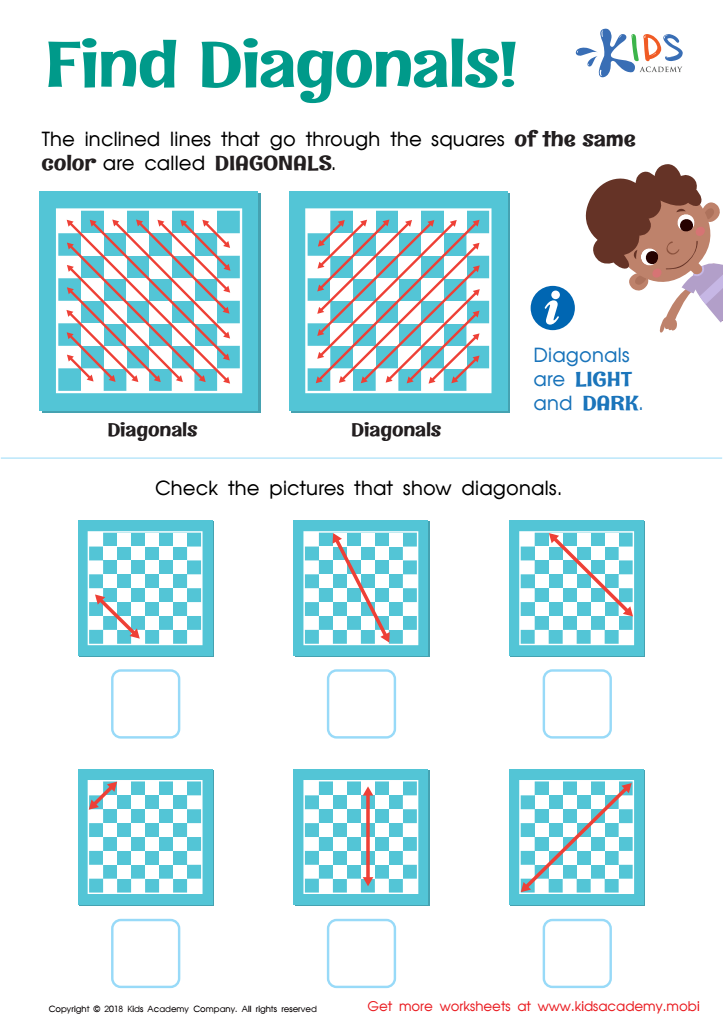
Find Diagonals Worksheet
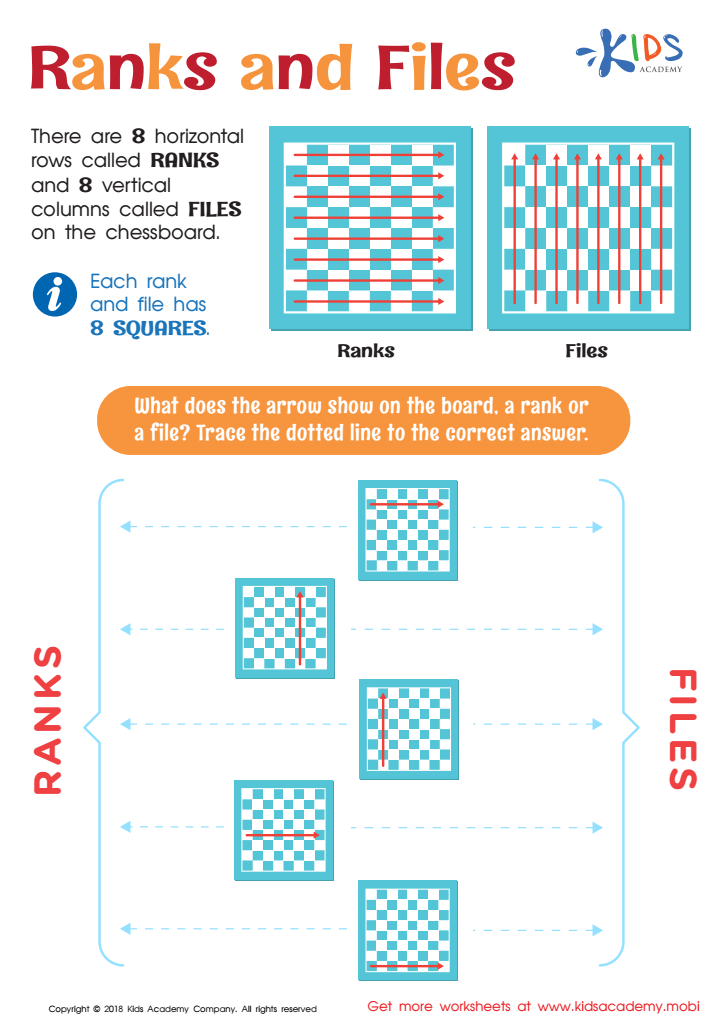
Ranks and Files Worksheet
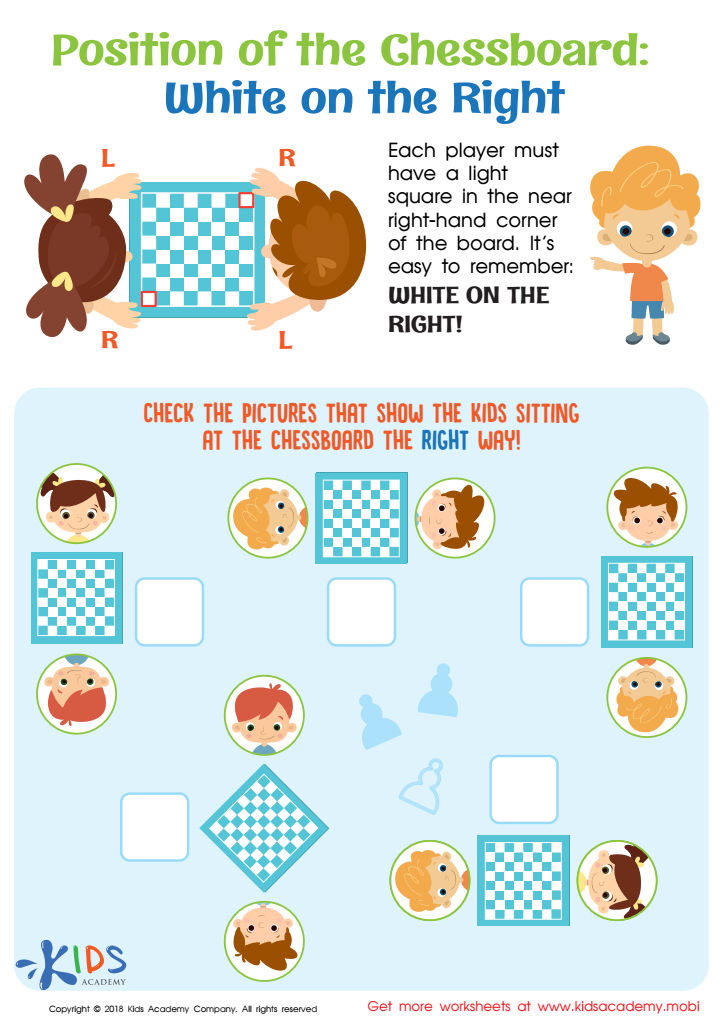
Position of the Chessboard: White on the Right Worksheet
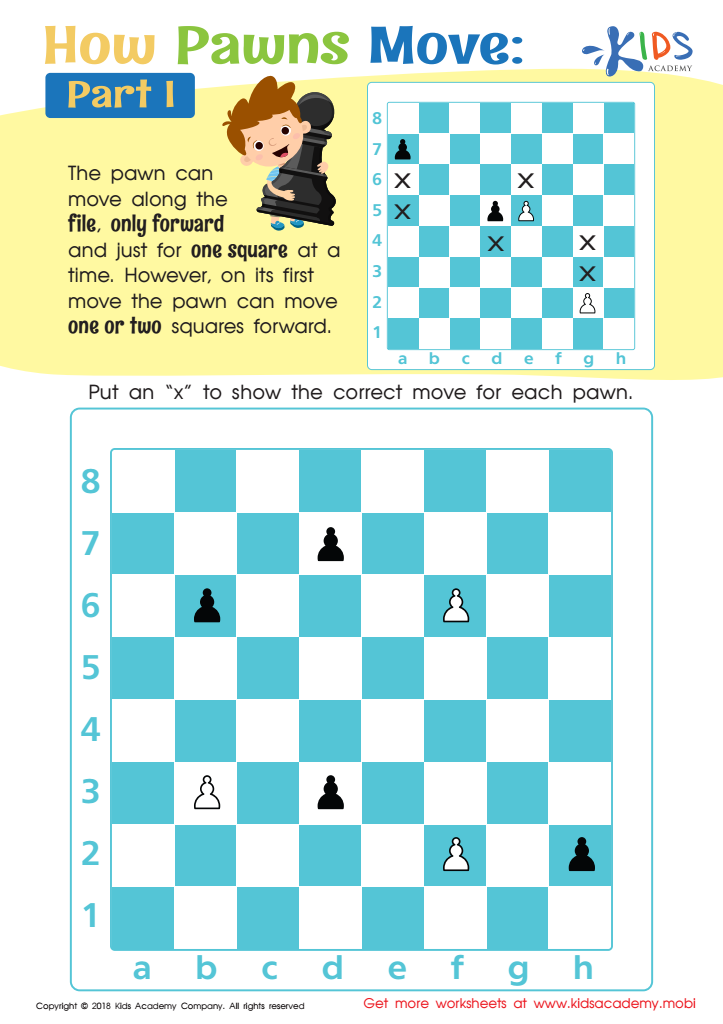
How Pawns Move: Part I Worksheet
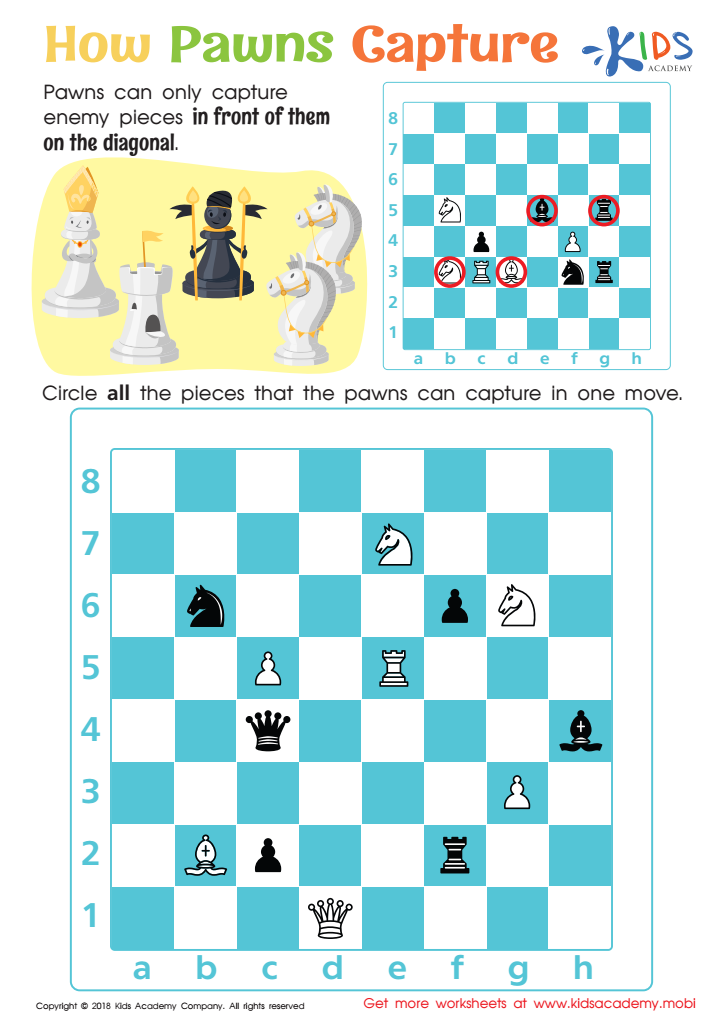
How Pawns Capture Worksheet
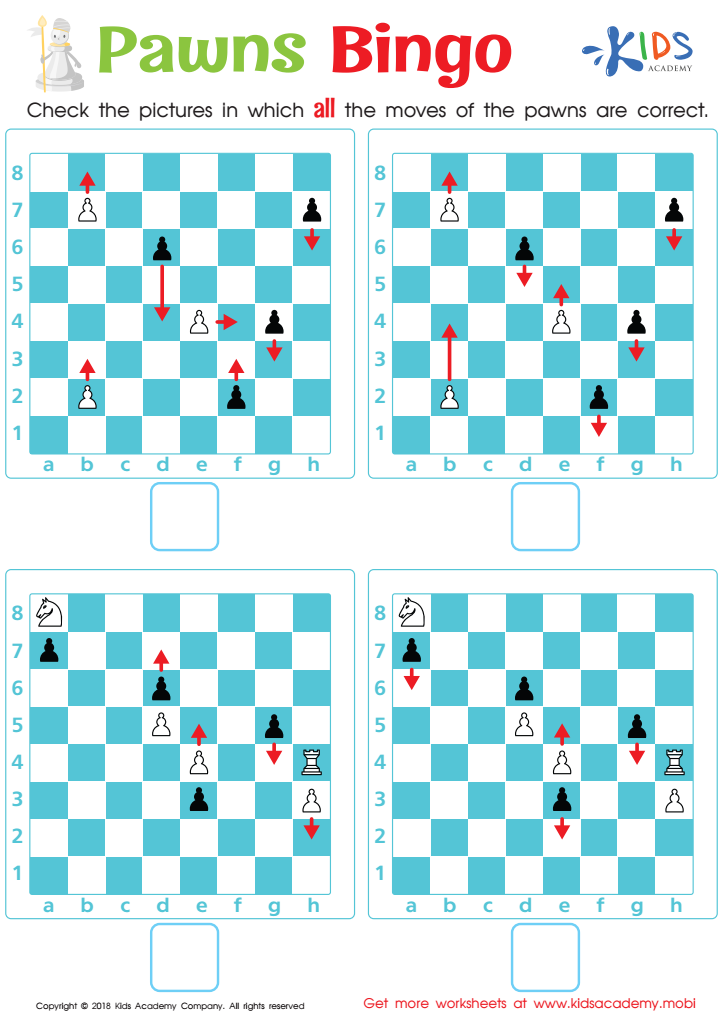
Pawns Bingo Worksheet
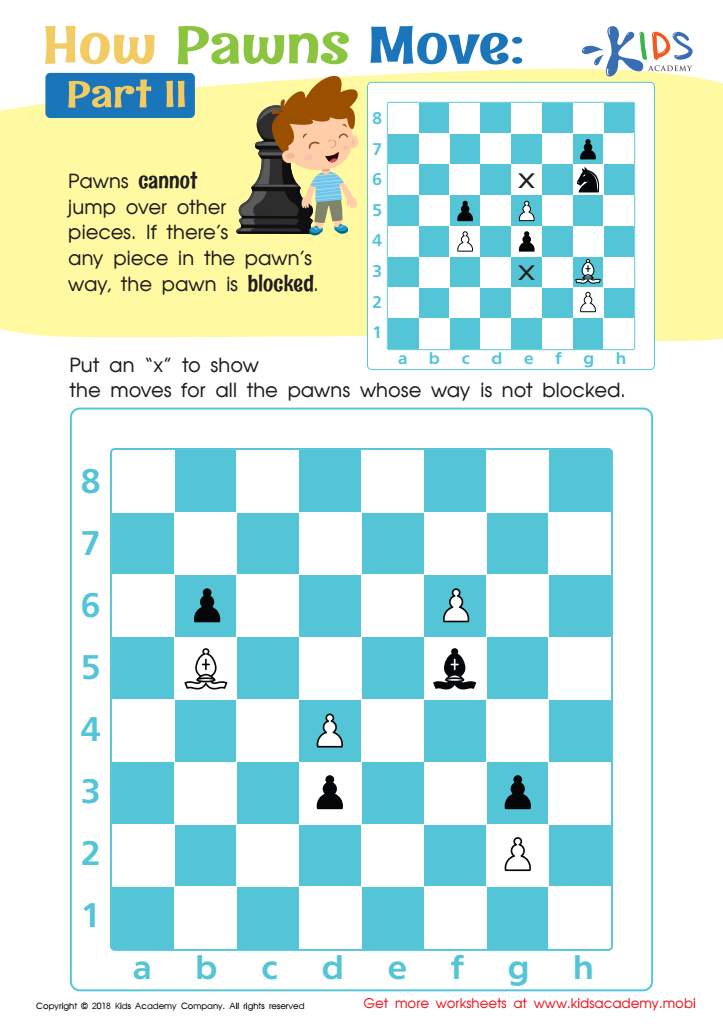
How Pawns Move: Part II Worksheet
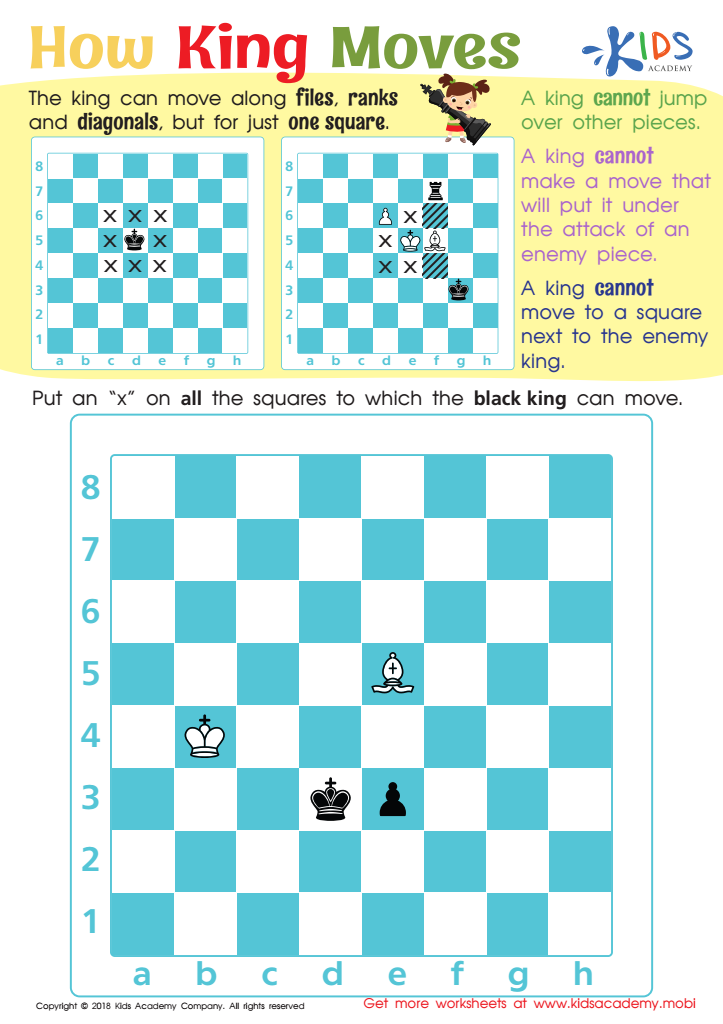
How King Moves Worksheet
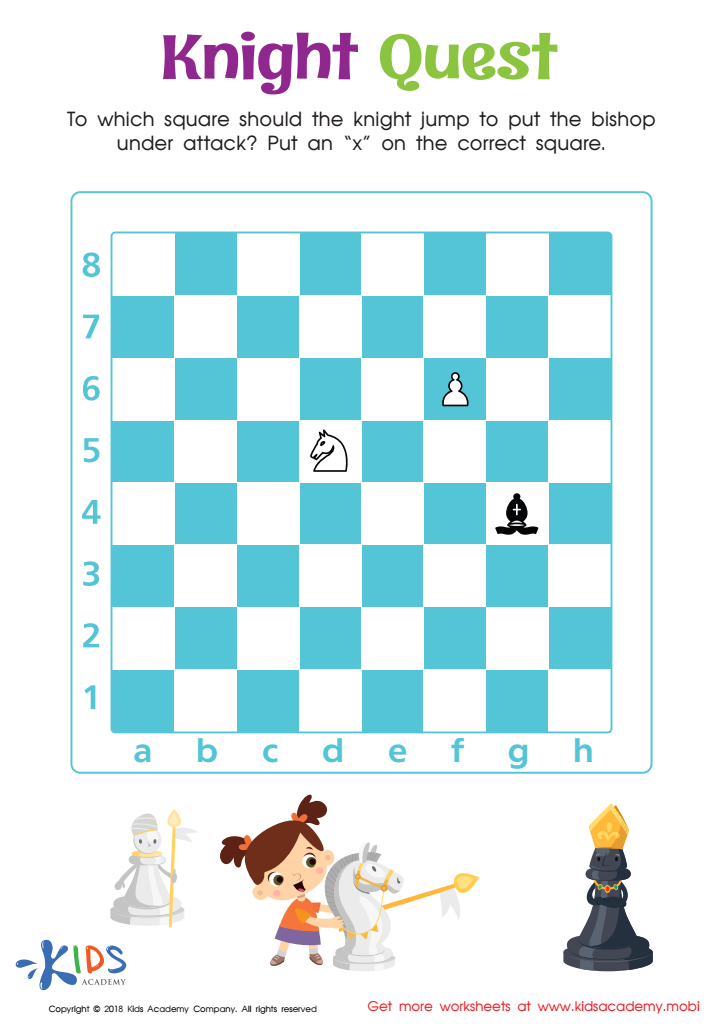
Knight Quest Worksheet
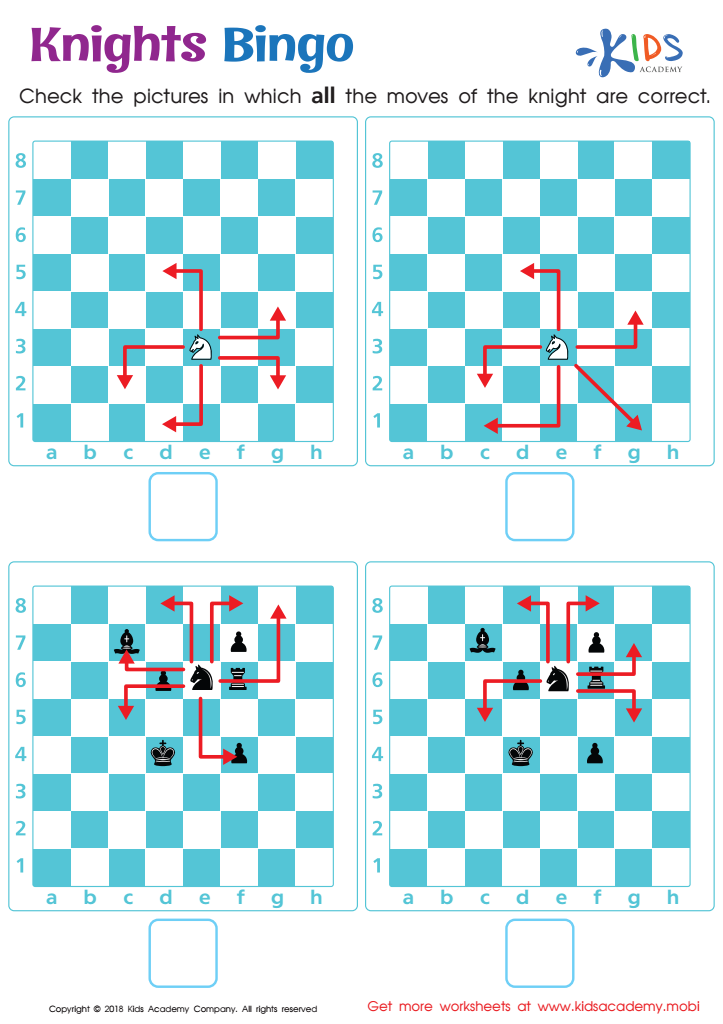
Knights Bingo Worksheet
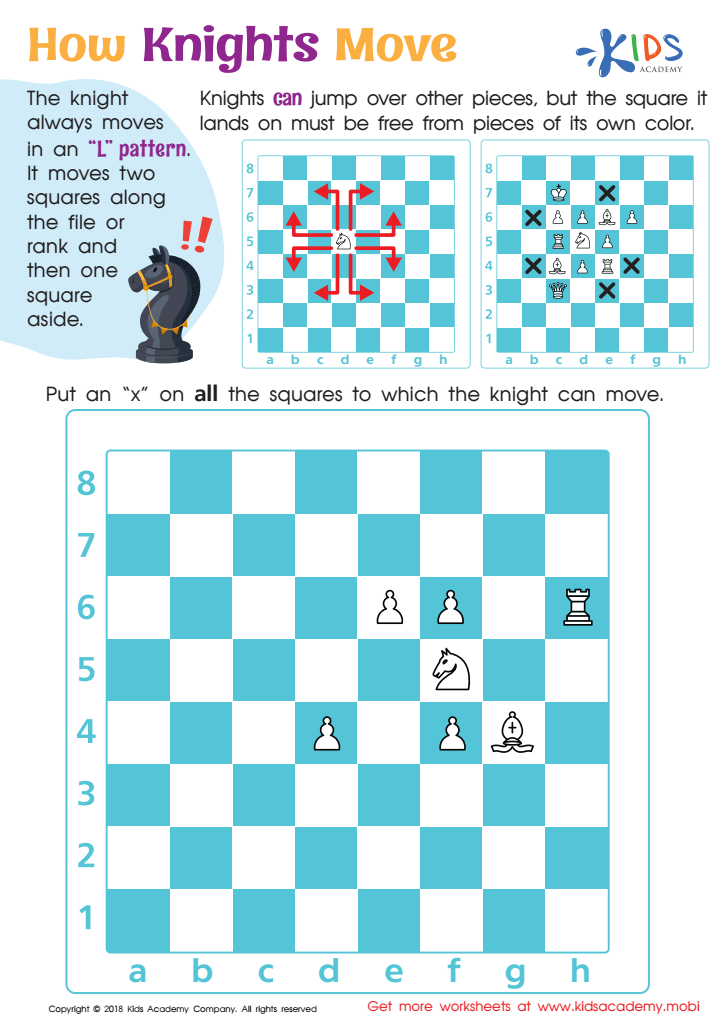
How Knights Move Worksheet
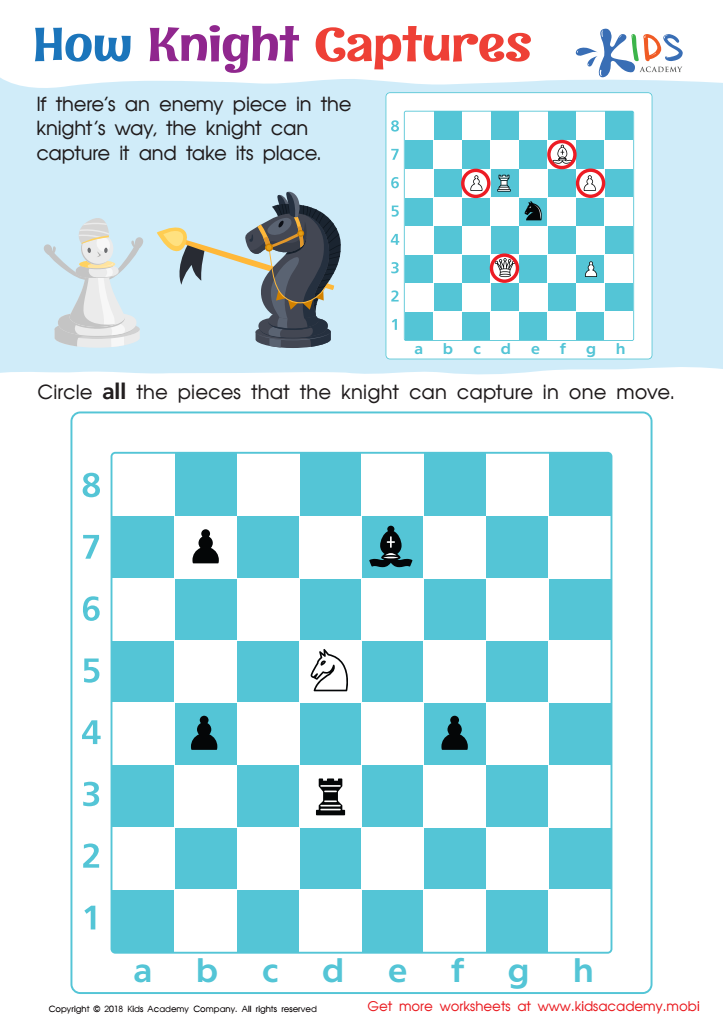
How Knight Captures Worksheet
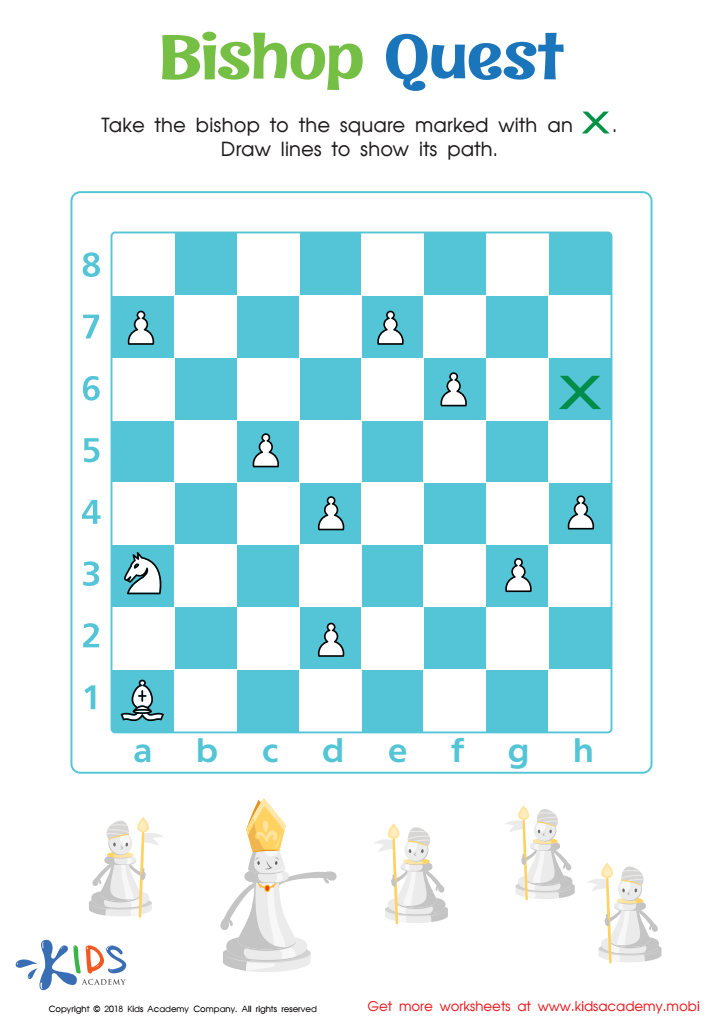
Bishop Quest Worksheet
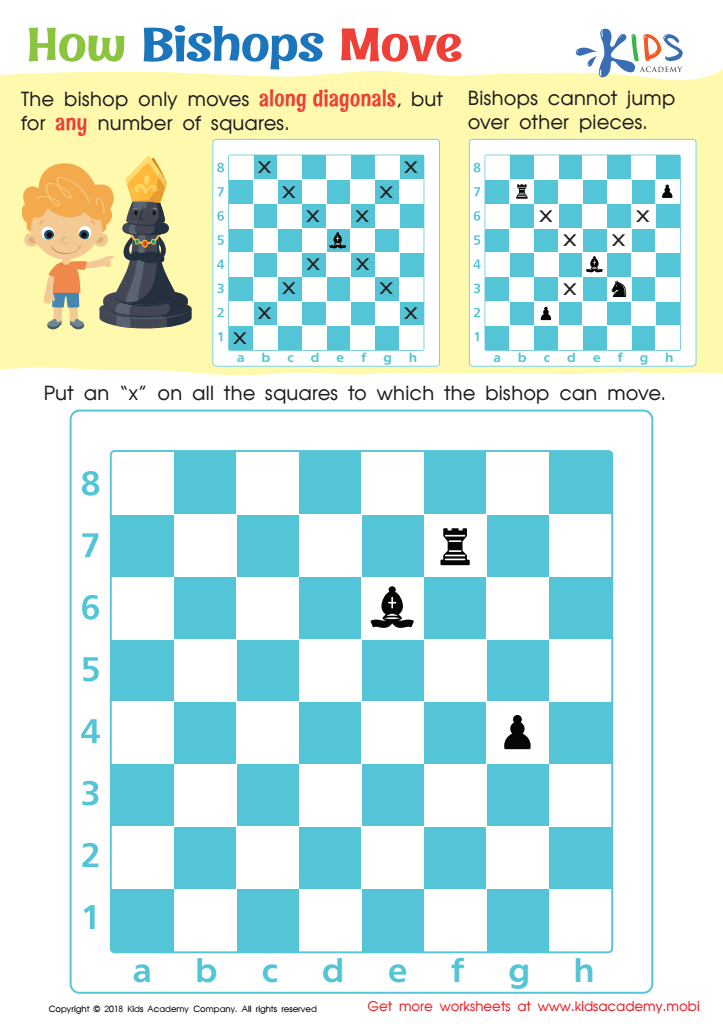
How Bishops Move Worksheet
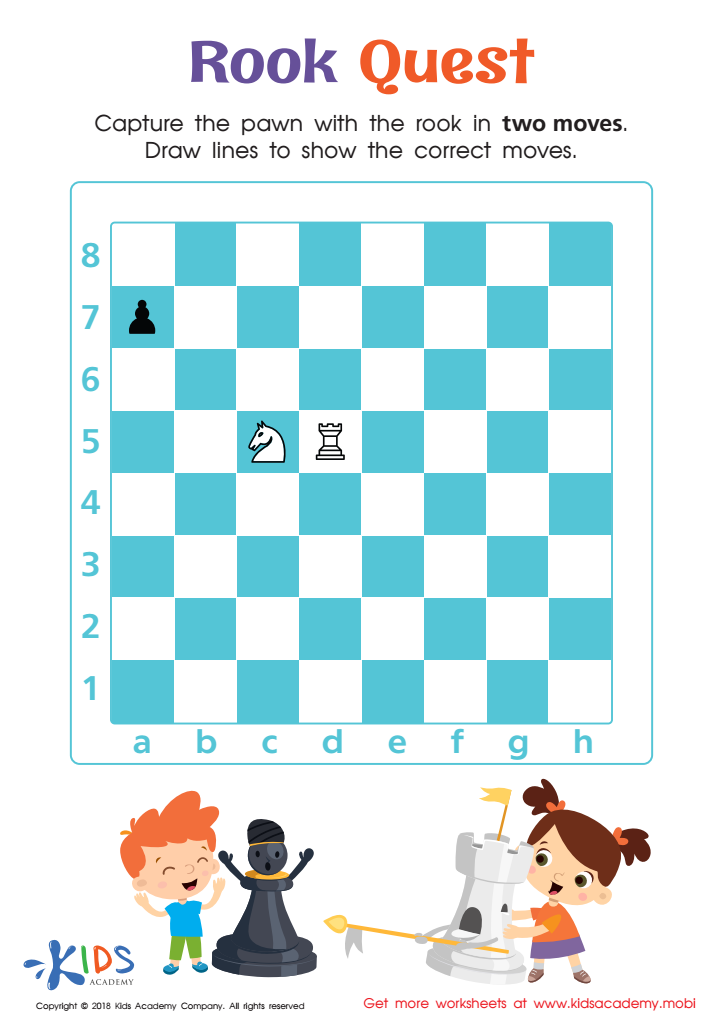
Rook Quest Worksheet
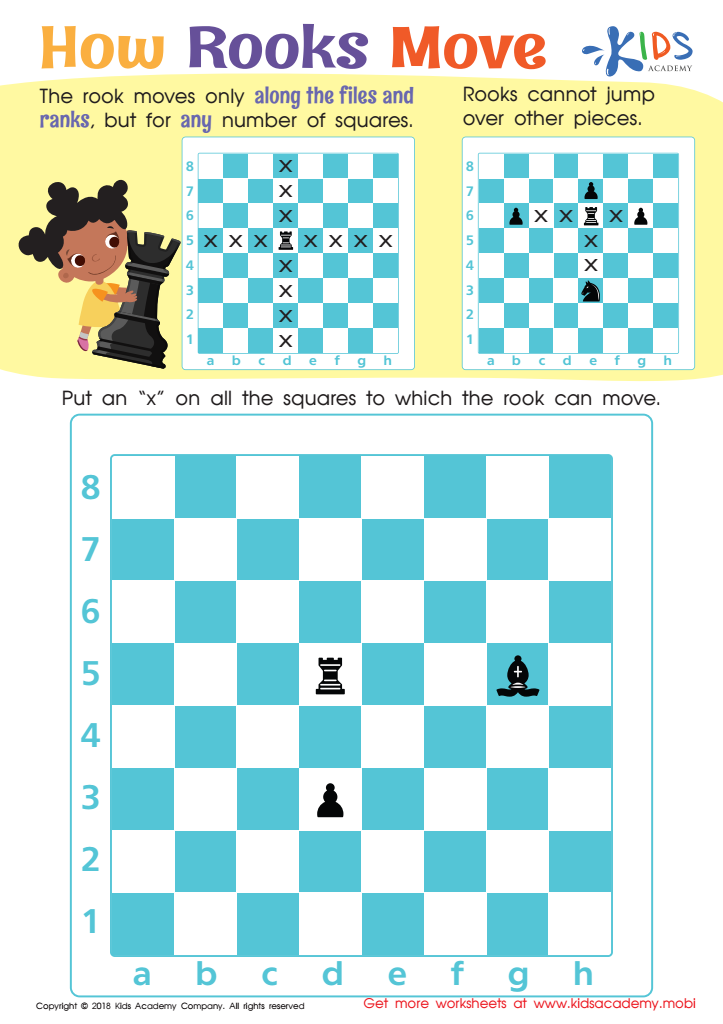
How Rooks Move Worksheet
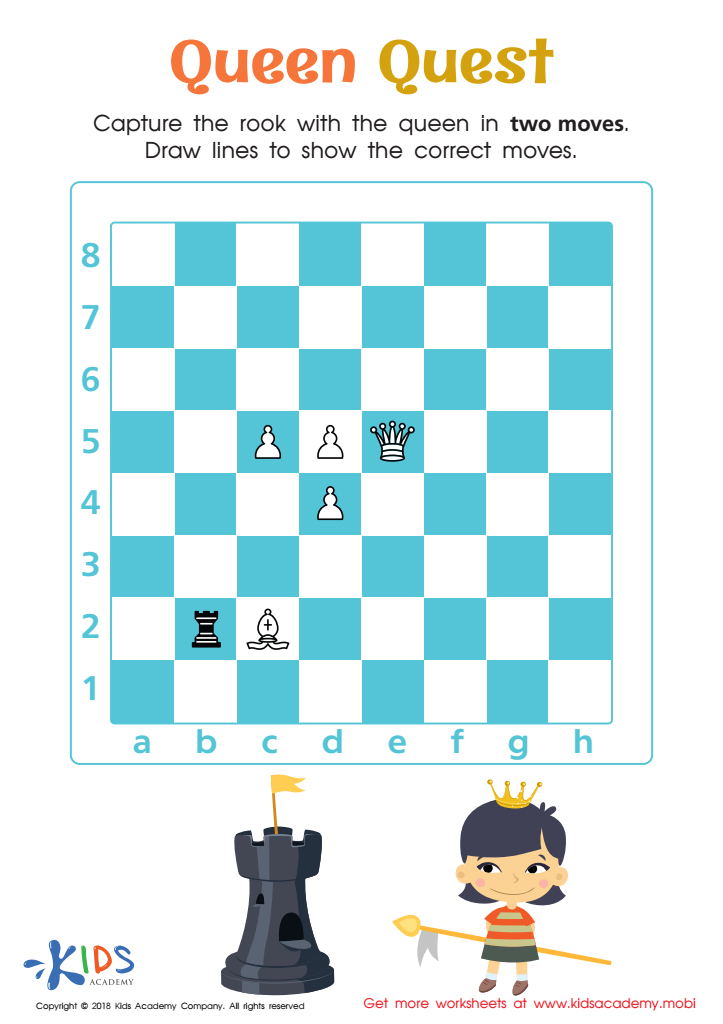
Queen Quest Worksheet
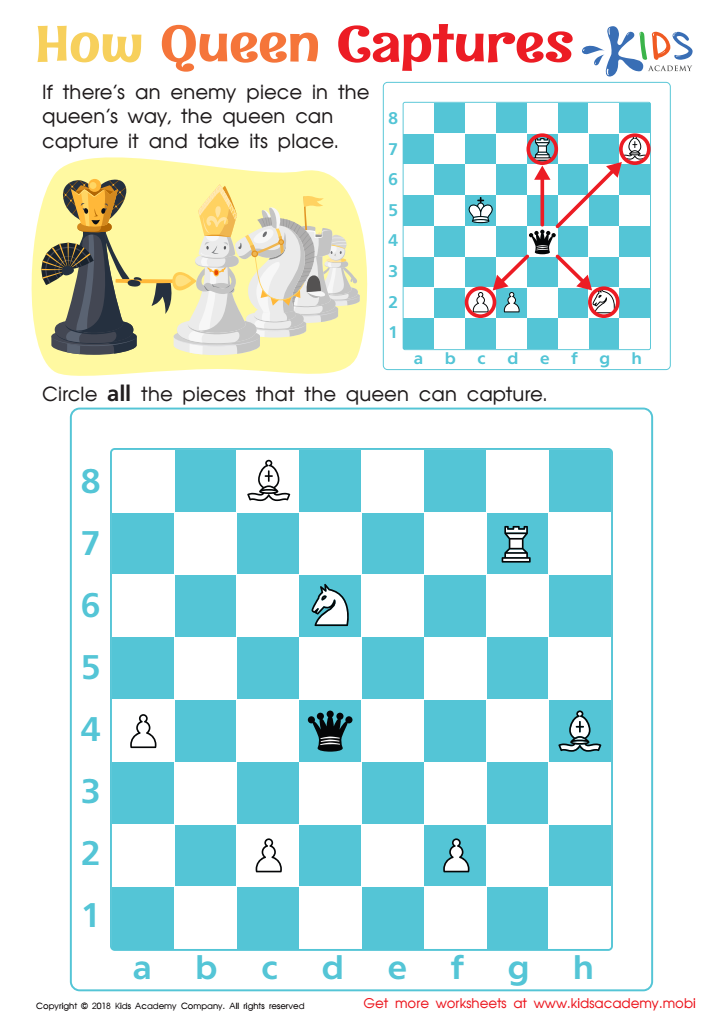
How Queen Captures Worksheet
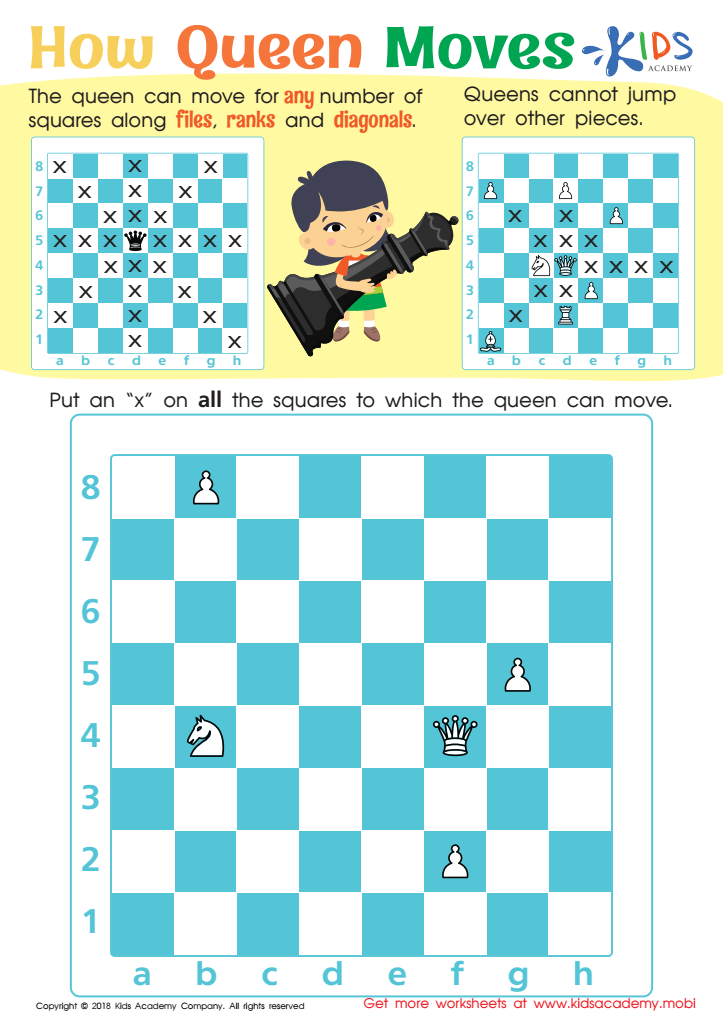
How Queen Moves Worksheet







Engaging children ages 7-8 in chess offers a host of developmental benefits that can enhance their cognitive and social skills. For one, chess promotes critical thinking and problem-solving abilities. As young players navigate through various moves and strategies, they learn to anticipate potential outcomes and plan several steps ahead, sharpening their analytical skills.
Furthermore, chess helps improve concentration and patience. The game requires sustained focus, teaching children to be attentive and to think deeply about each decision they make. This mindfulness can translate into better performance in academic tasks that require prolonged attention.
Chess also fosters creativity. While the rules provide a structured framework, the infinite possibilities available on the chessboard encourage imaginative thinking. Children experiment with different strategies and learn adaptability when their plans do not work out, promoting resilience.
Socially, chess can be a communal activity that builds a sense of camaraderie and sportsmanship. Children learn about fair play, taking turns, and handling both winning and losing gracefully. This interaction is key in teaching respect and building friendships.
Overall, chess offers a well-rounded mix of cognitive, emotional, and social benefits that can set a strong foundation for personal growth and lifelong learning. Thus, parents and teachers should encourage their young ones to embark on this intellectually stimulating journey.