Geometry Worksheets for Ages 5-8 - Page 2
201 filtered results
-
From - To
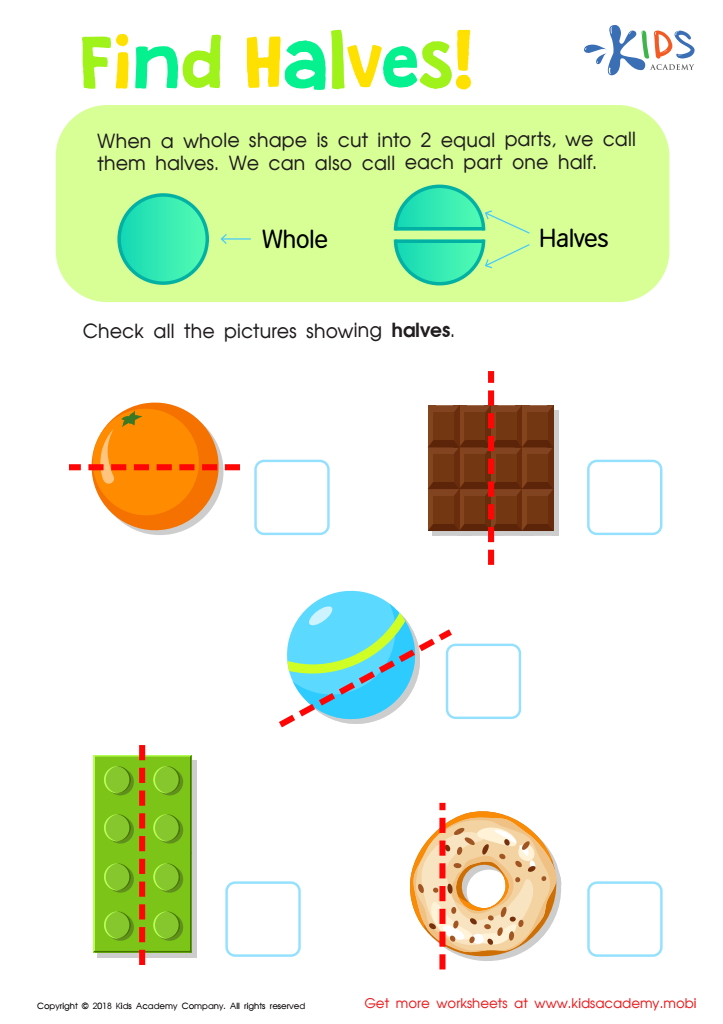
Find Halves Worksheet











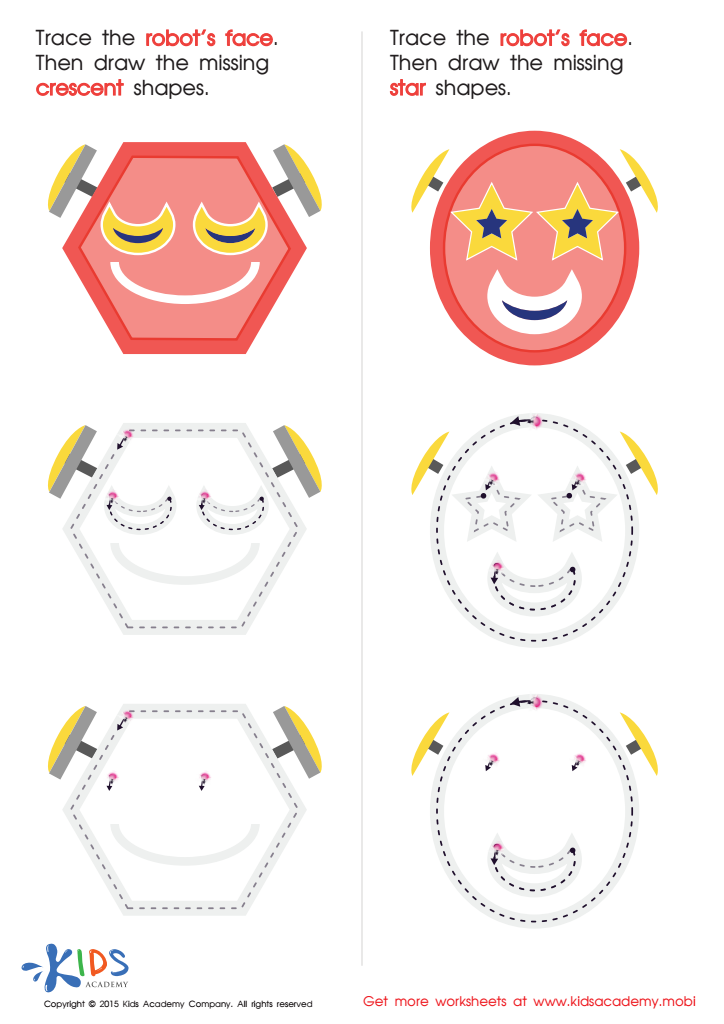
Composing a Robot's Face of Crescents And Stars Worksheet
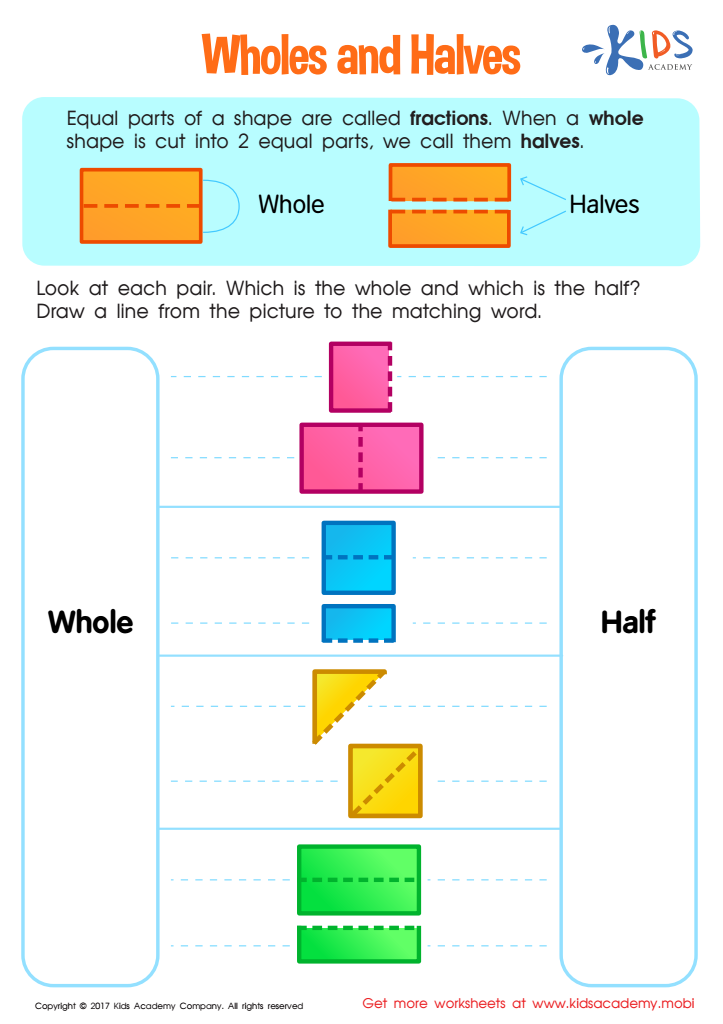
Wholes and Halves Worksheet
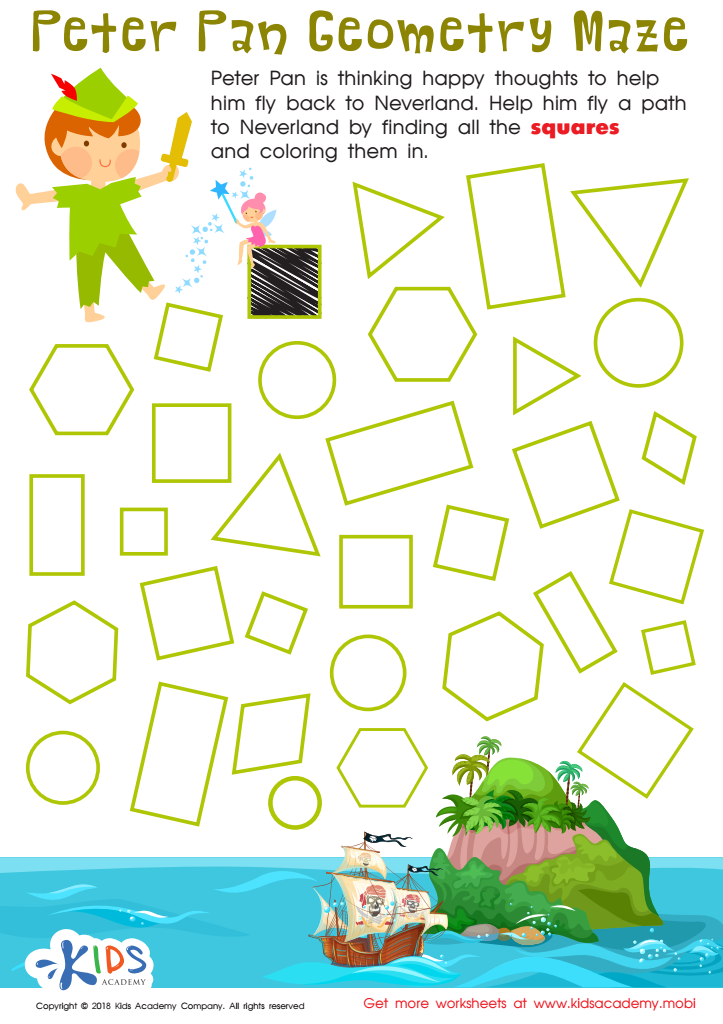
Peter Pan Worksheet
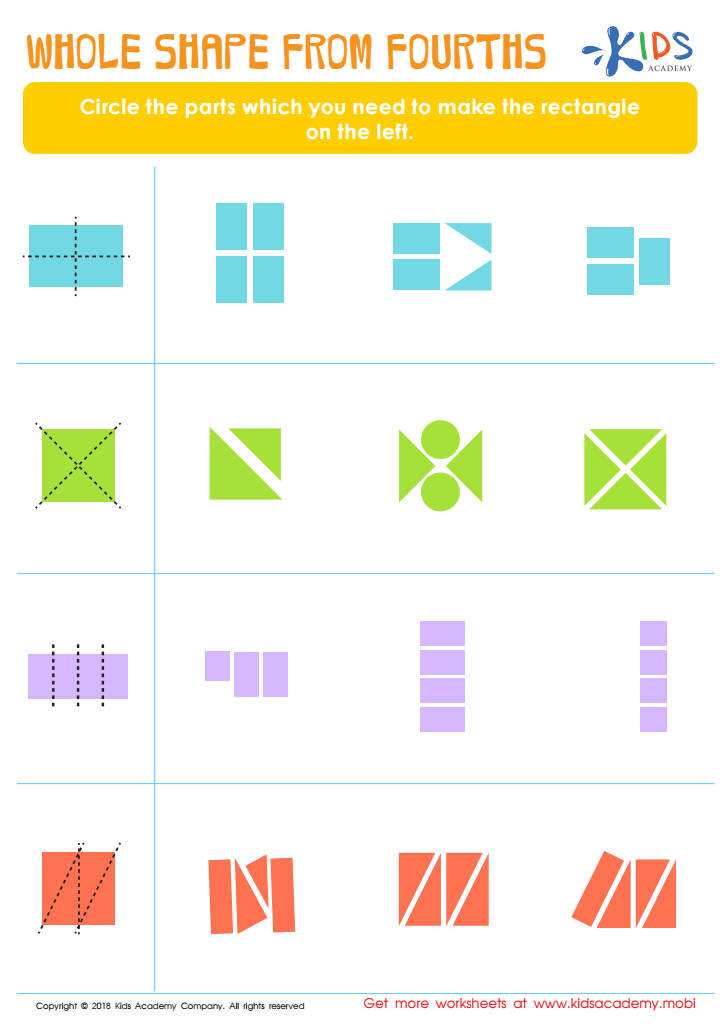
Whole Shape from Fourths Worksheet
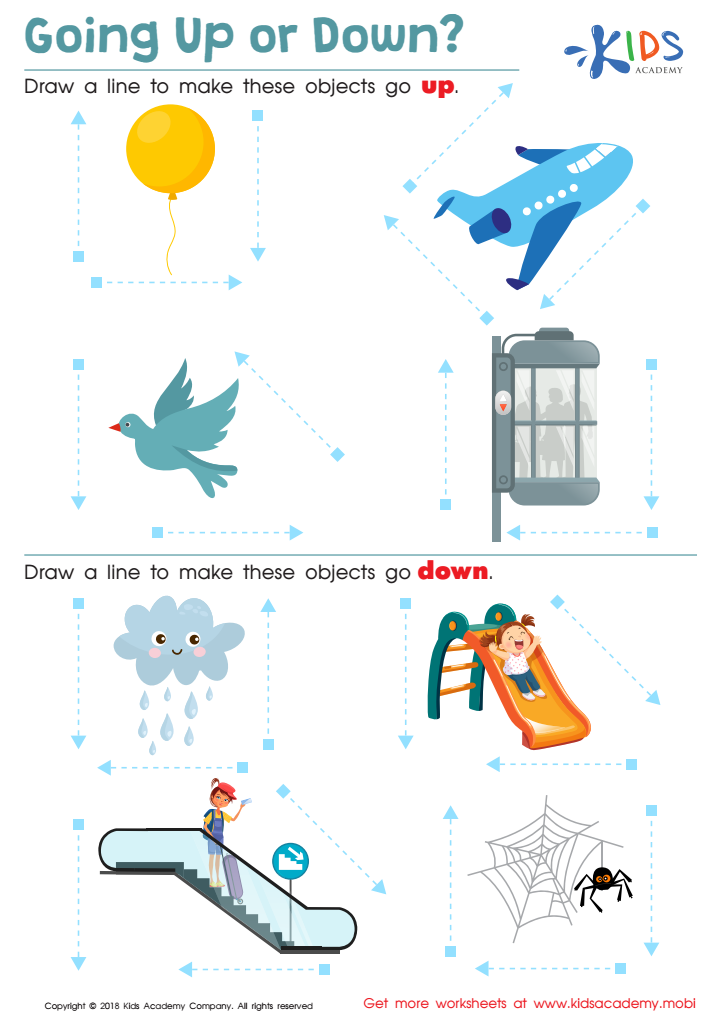
Going up or Down? Worksheet
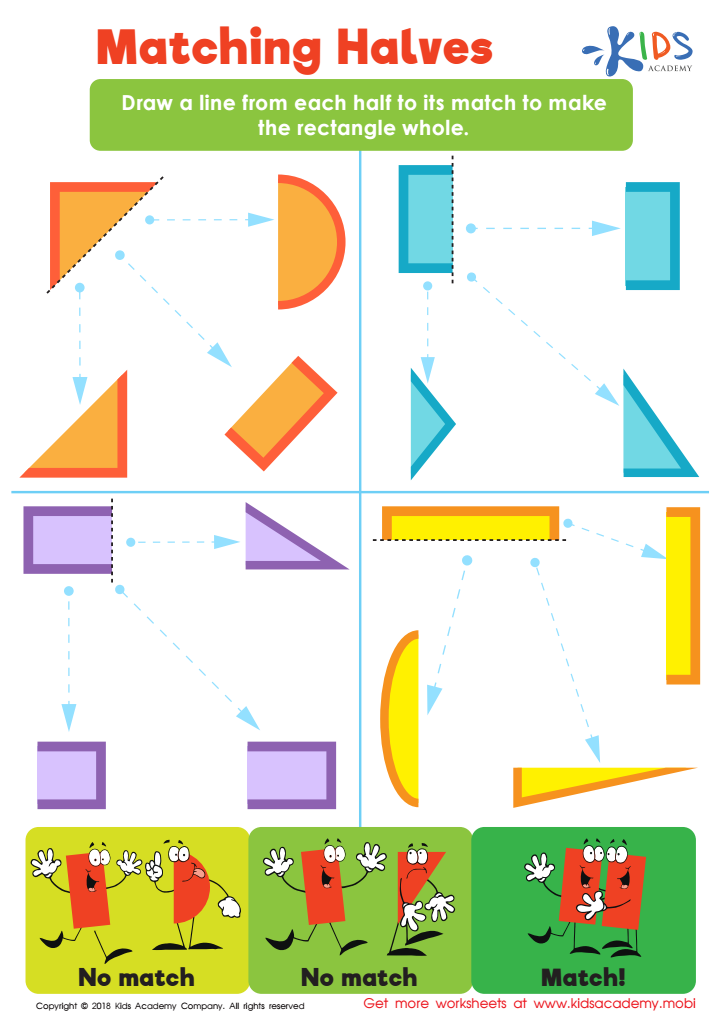
Matching Halves Worksheet
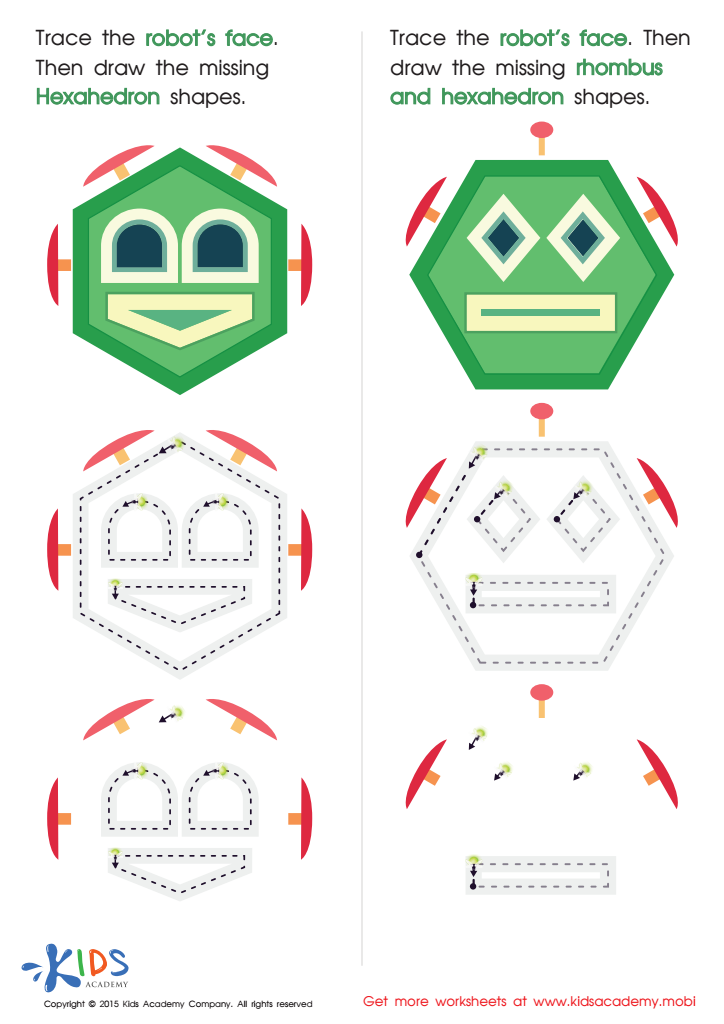
Practice Drawing Hexahedrons And a Rhombus Worksheet
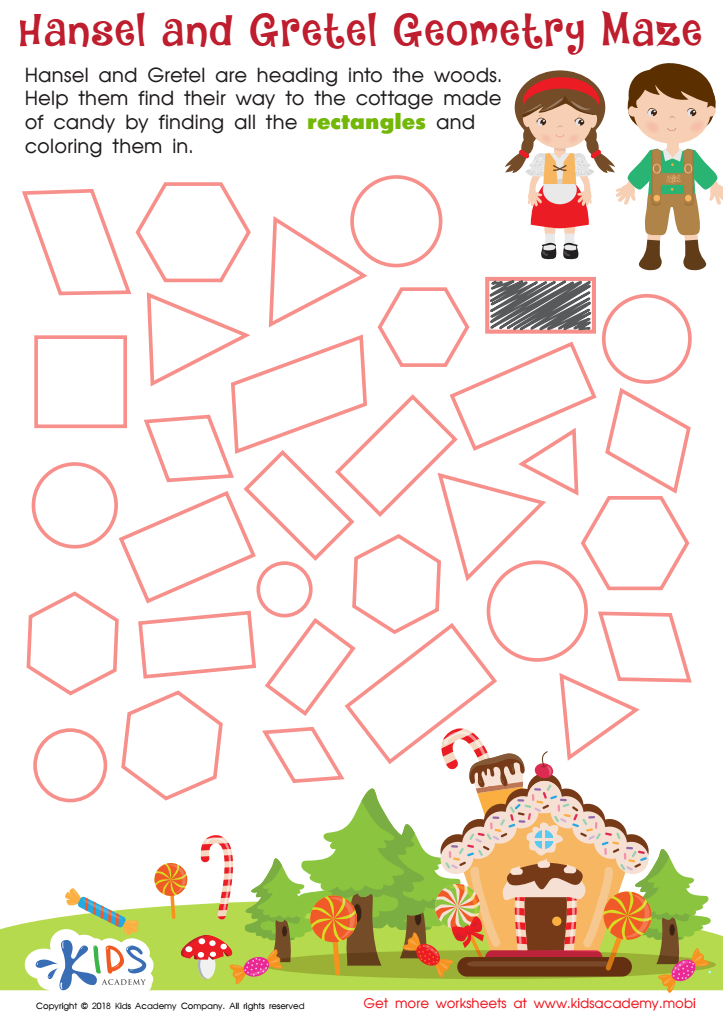
Hansel and Gretel Geometry Maze Worksheet
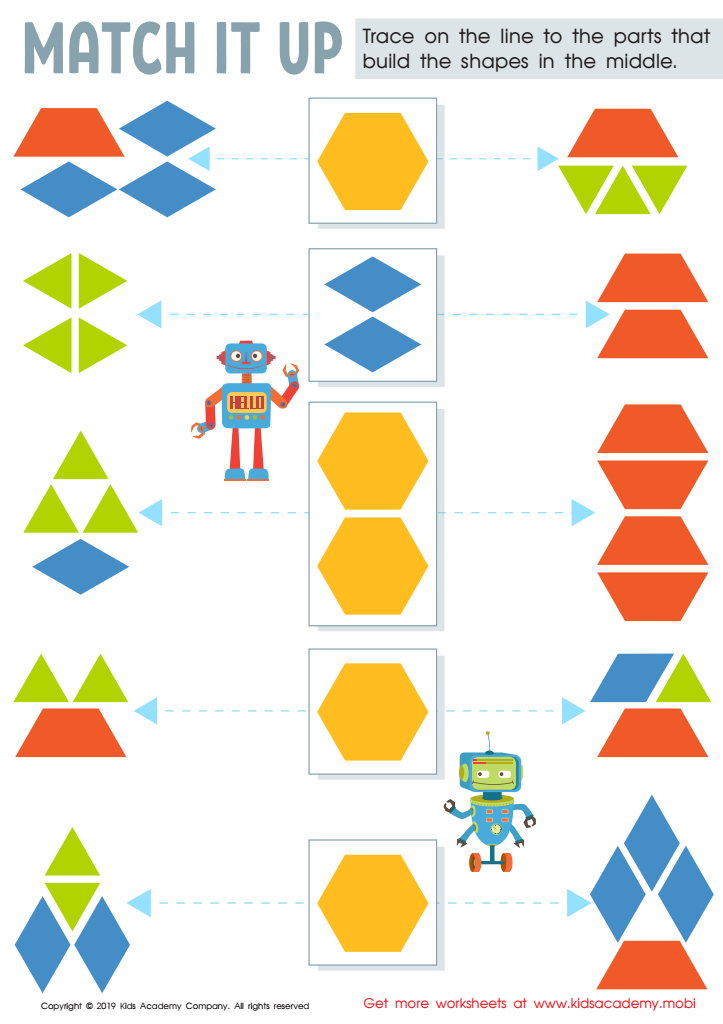
Match It up Worksheet
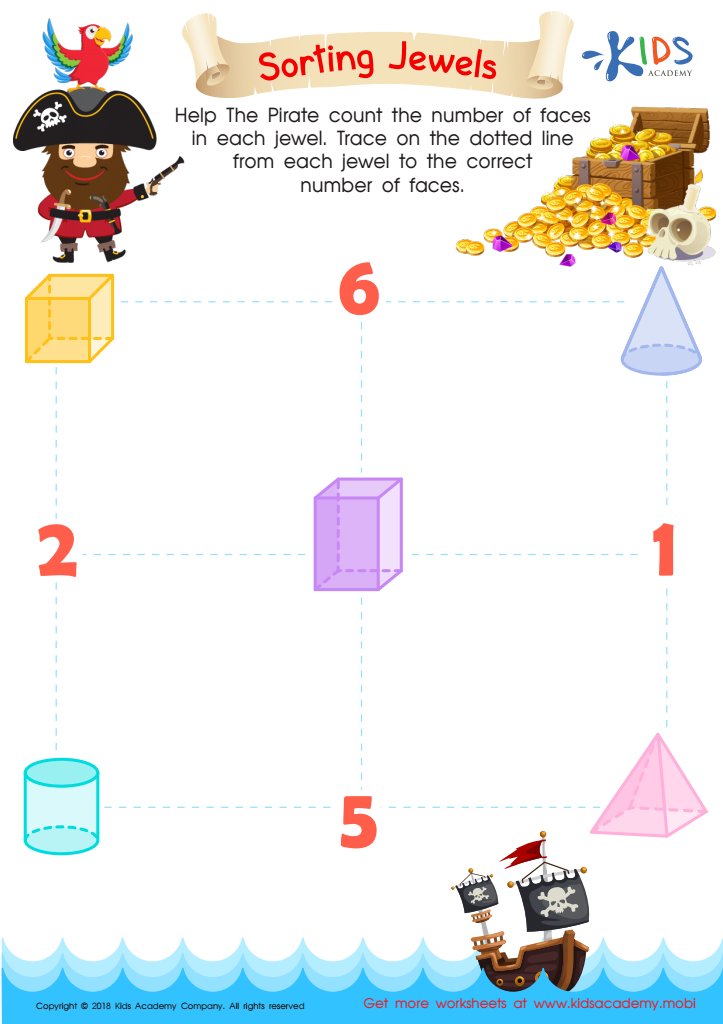
Sorting Jewels Worksheet
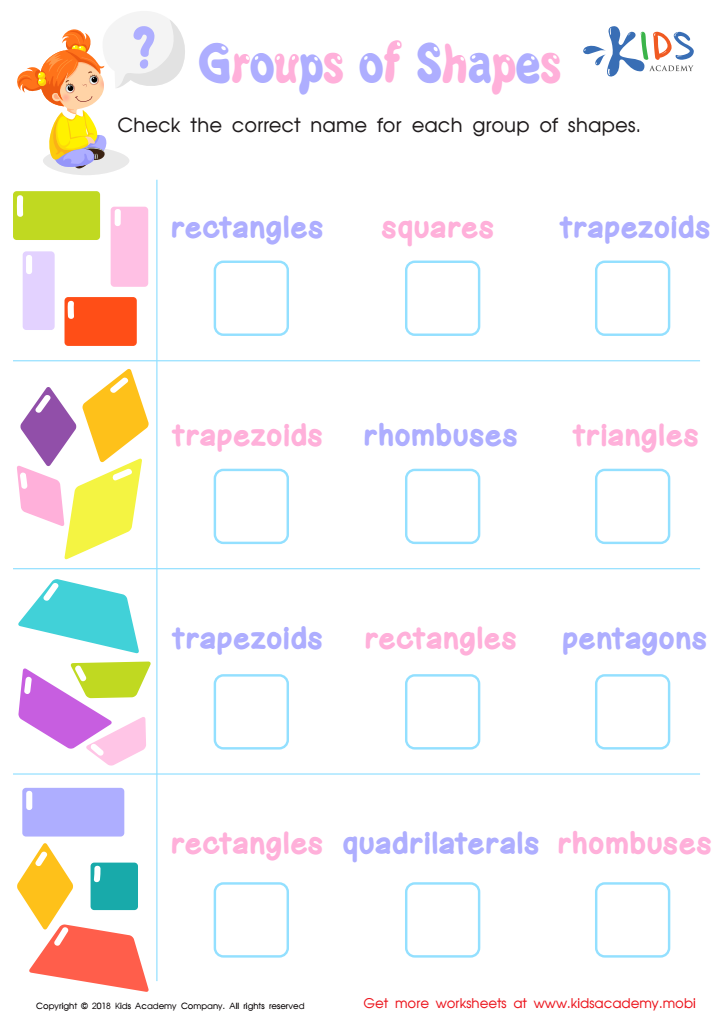
Groups of Shapes Worksheet
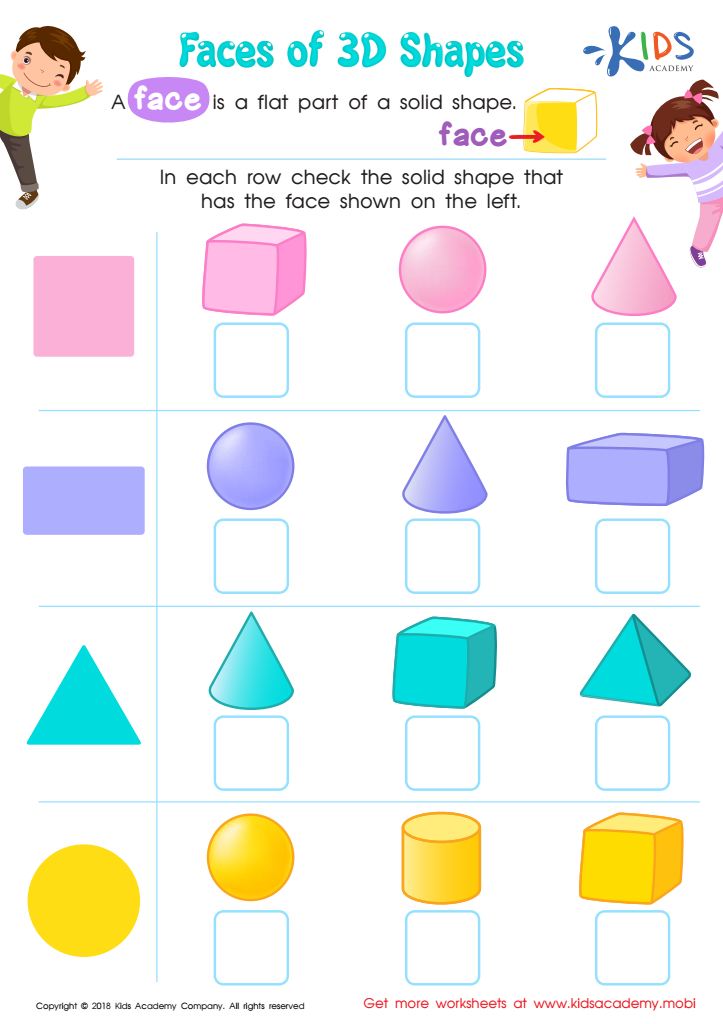
Faces of 3D Shapes Worksheet
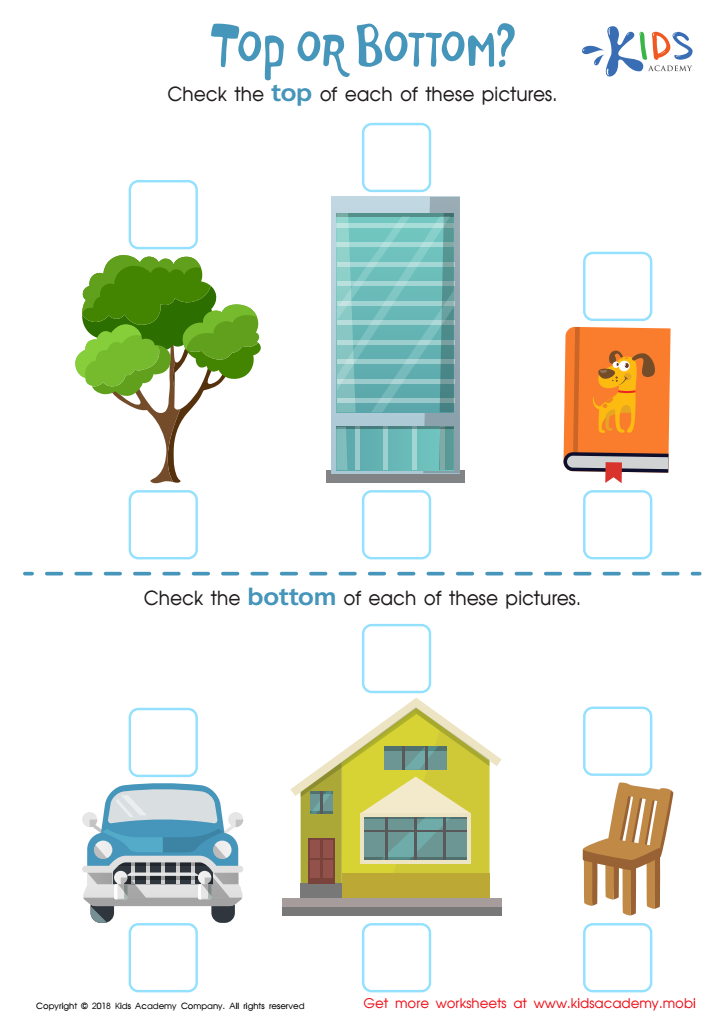
Top or Bottom Worksheet
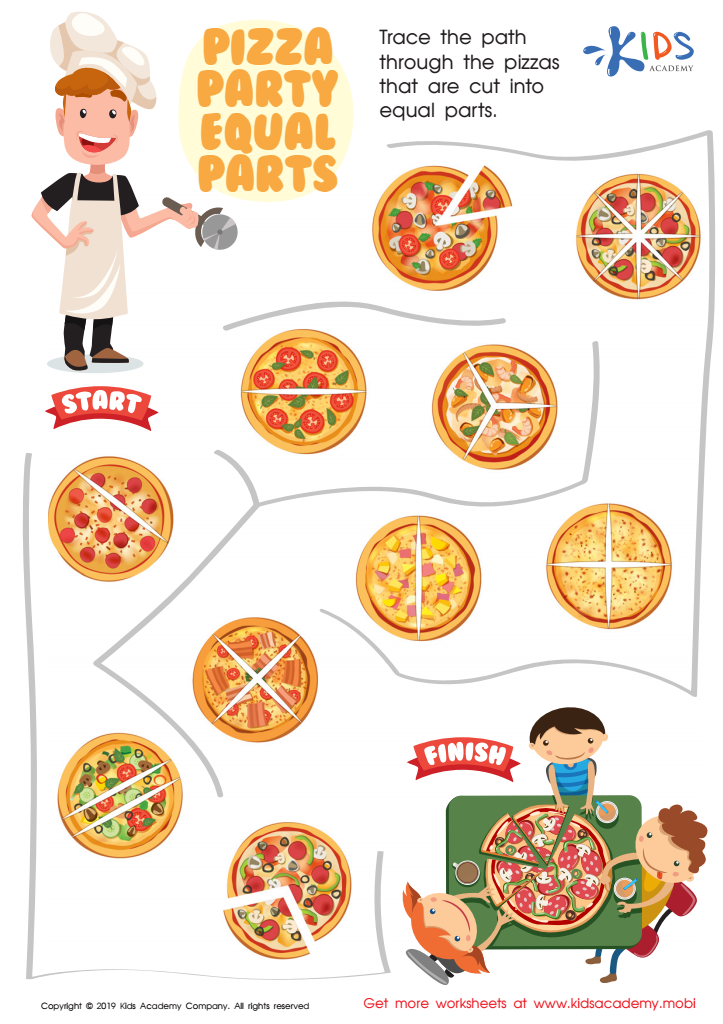
Pizza Party Equal Parts Worksheet
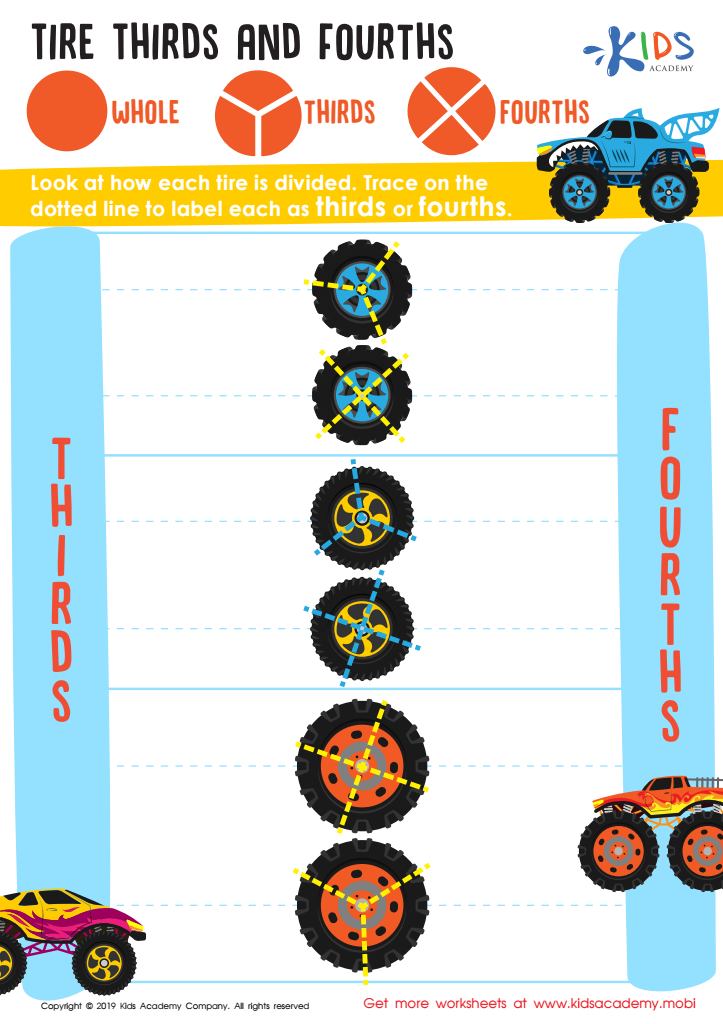
Tire Thirds and Fourths Worksheet
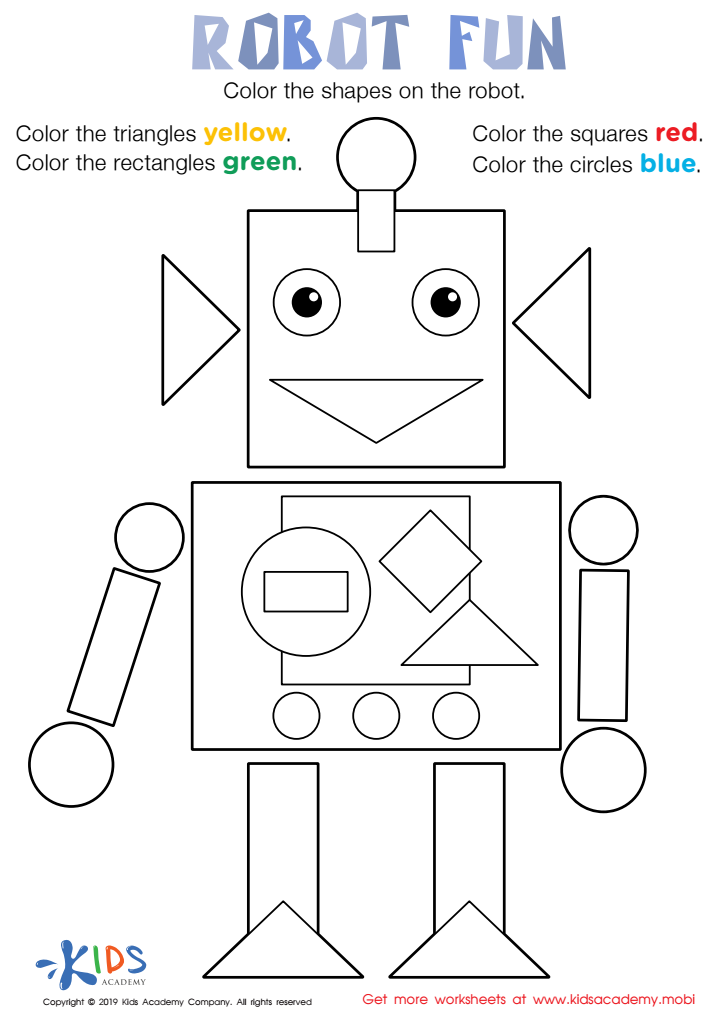
Robot Fun Worksheet
 Assign to My Students
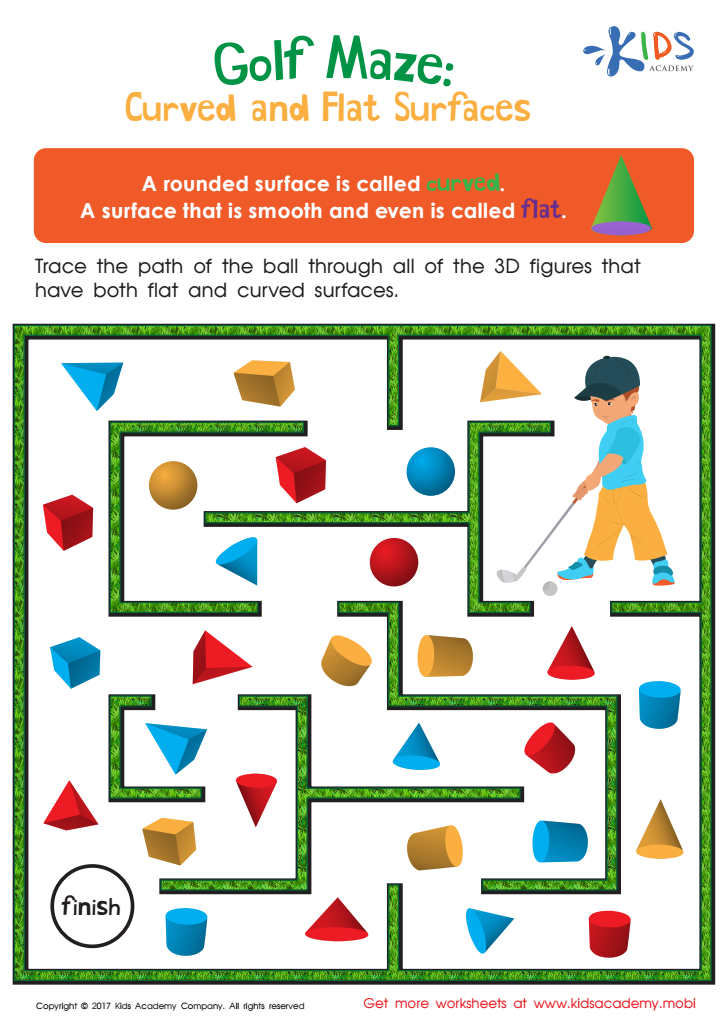
Golf Maze: Curved and Flat Surfaces Worksheet
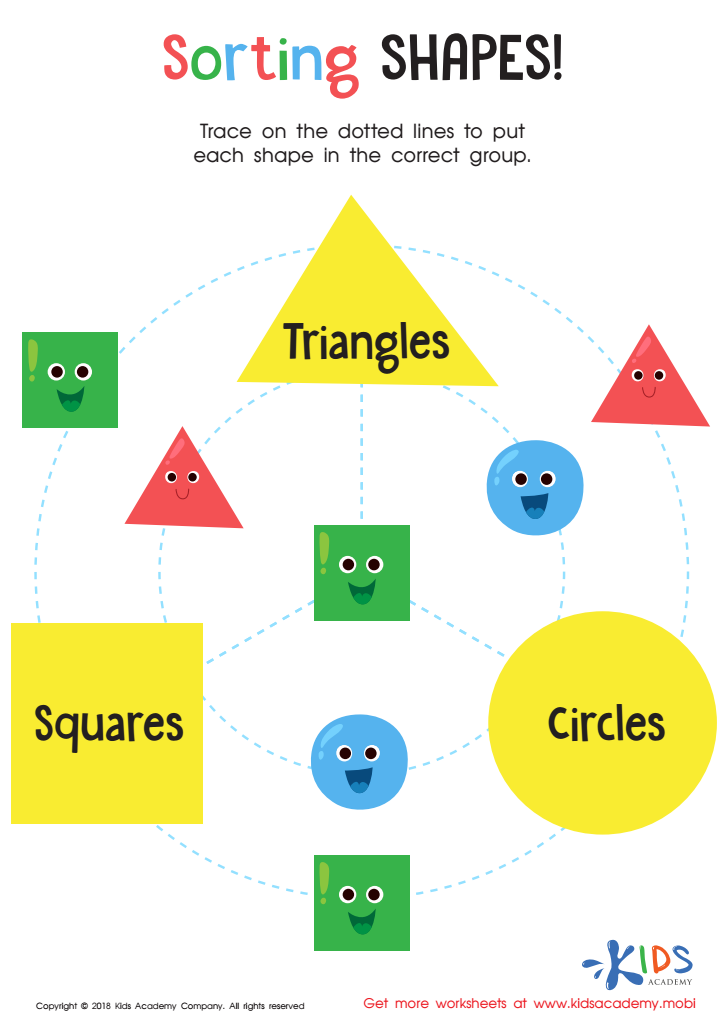
Sorting Shapes - Part 3 Worksheet
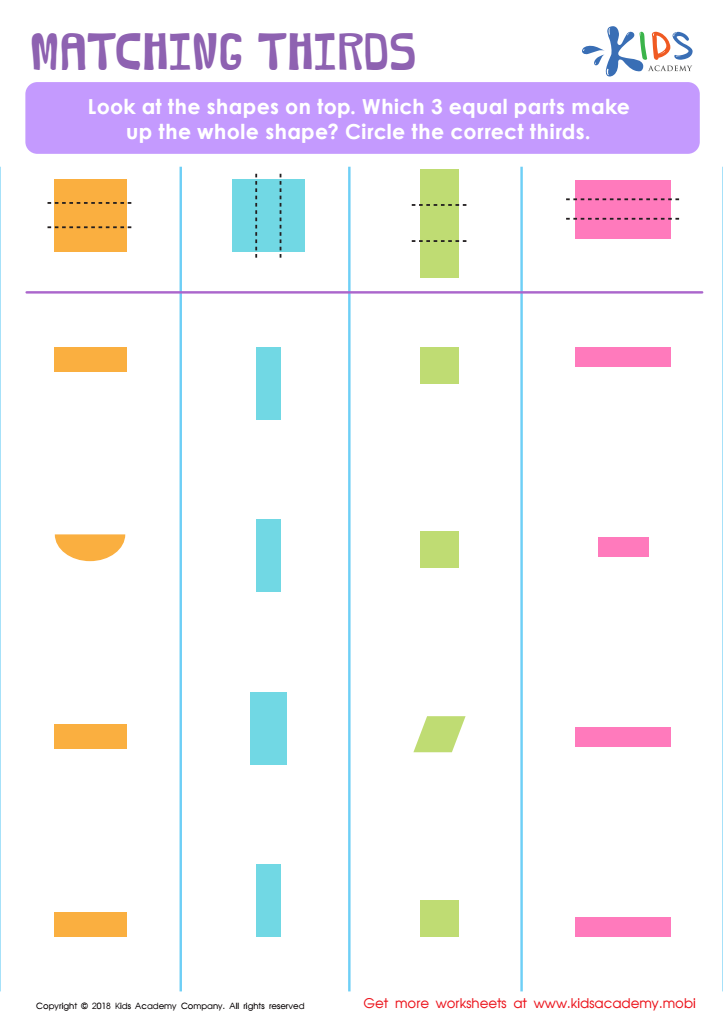
Matching Thirds Worksheet
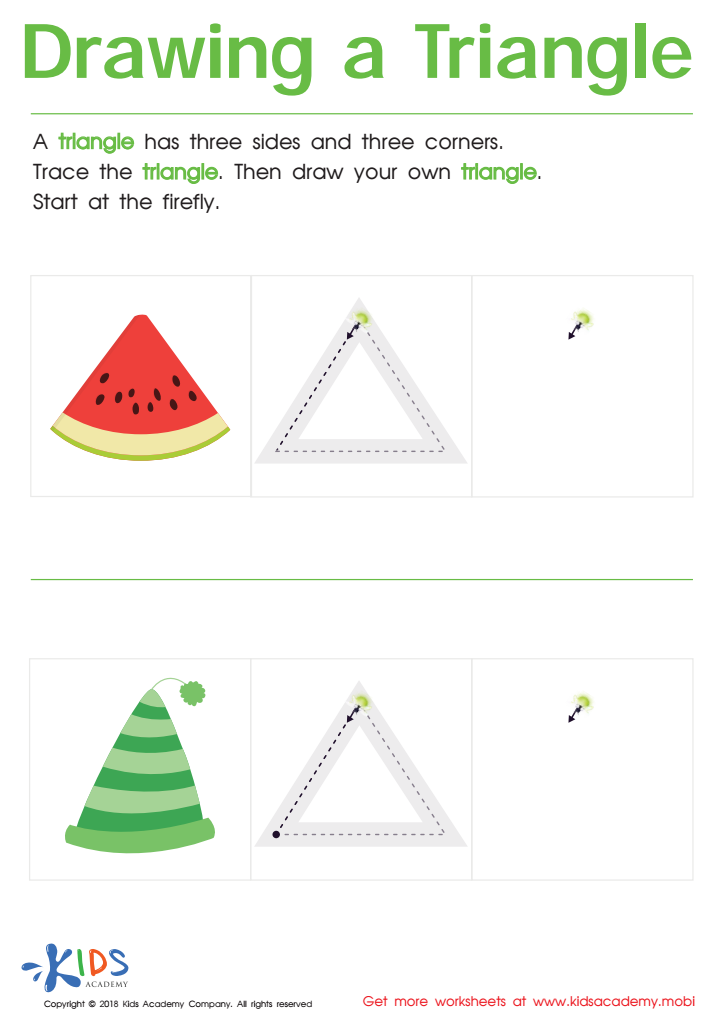
Drawing a Triangle Worksheet
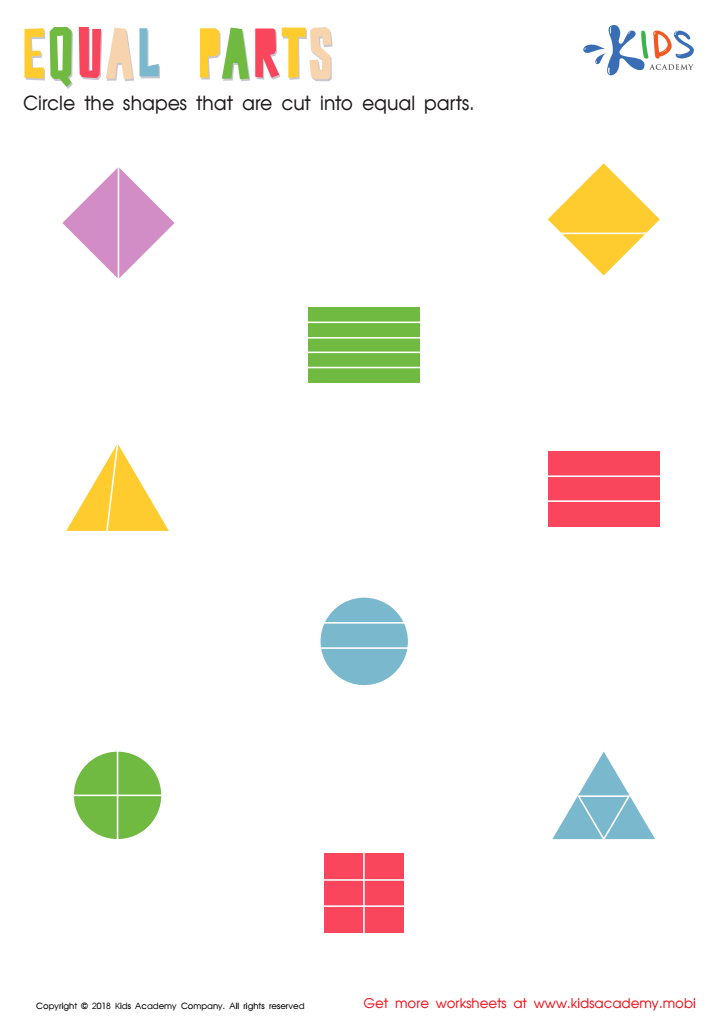
Equal Parts: Shapes Worksheet
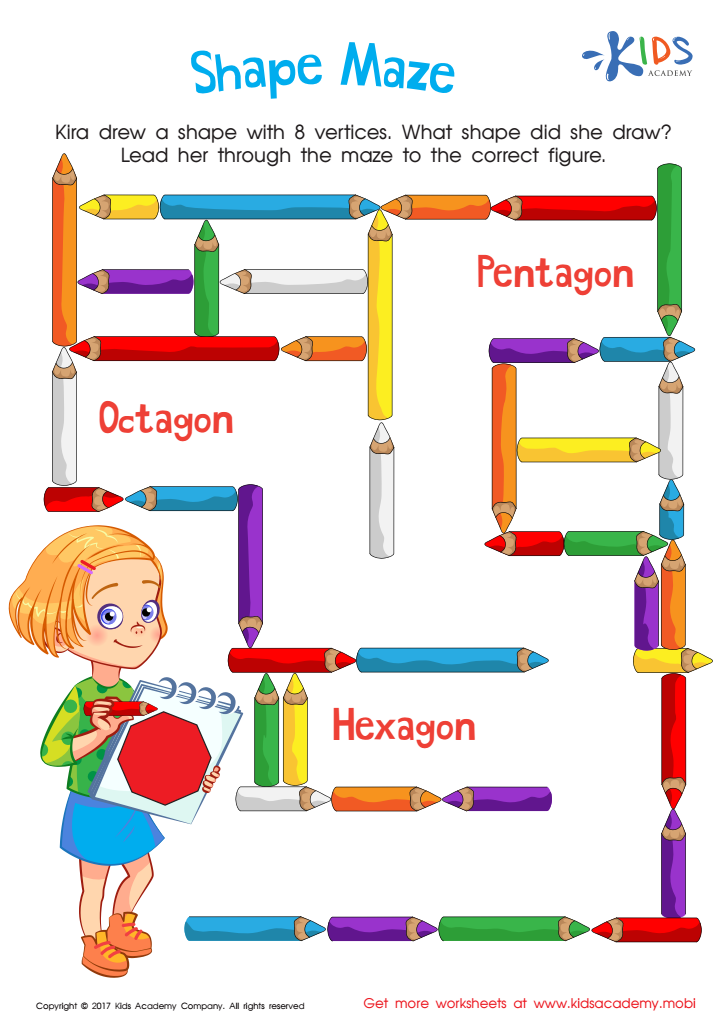
Shape Maze Worksheet








Geometry is a fundamental branch of mathematics that plays a critical role in a child's cognitive development, especially for ages 5-8. At this stage, children are naturally curious and enthusiastic learners, making it an ideal time to introduce geometric concepts. Understanding shapes, sizes, and spatial relationships enhances a child’s problem-solving skills and helps them interpret the world around them.
Parents and teachers should care about geometry for several reasons. First, it lays the foundation for critical thinking and logical reasoning. When children learn to identify and classify different shapes, they also develop skills in pattern recognition and analytical thinking, which are essential in all academic subjects.
Moreover, geometry encourages creativity. Activities such as building with blocks, drawing shapes, and engaging in arts and crafts can foster both spatial awareness and imagination. Additionally, these experiences promote collaboration and communication among peers as children discuss and share their geometric discoveries.
Lastly, geometric skills are highly practical and can be applied in everyday life, from understanding dimensions and measurements to improving navigational skills. By emphasizing geometry during these formative years, parents and teachers equip children with essential life skills that transcend the classroom, paving the way for successful future learning.








